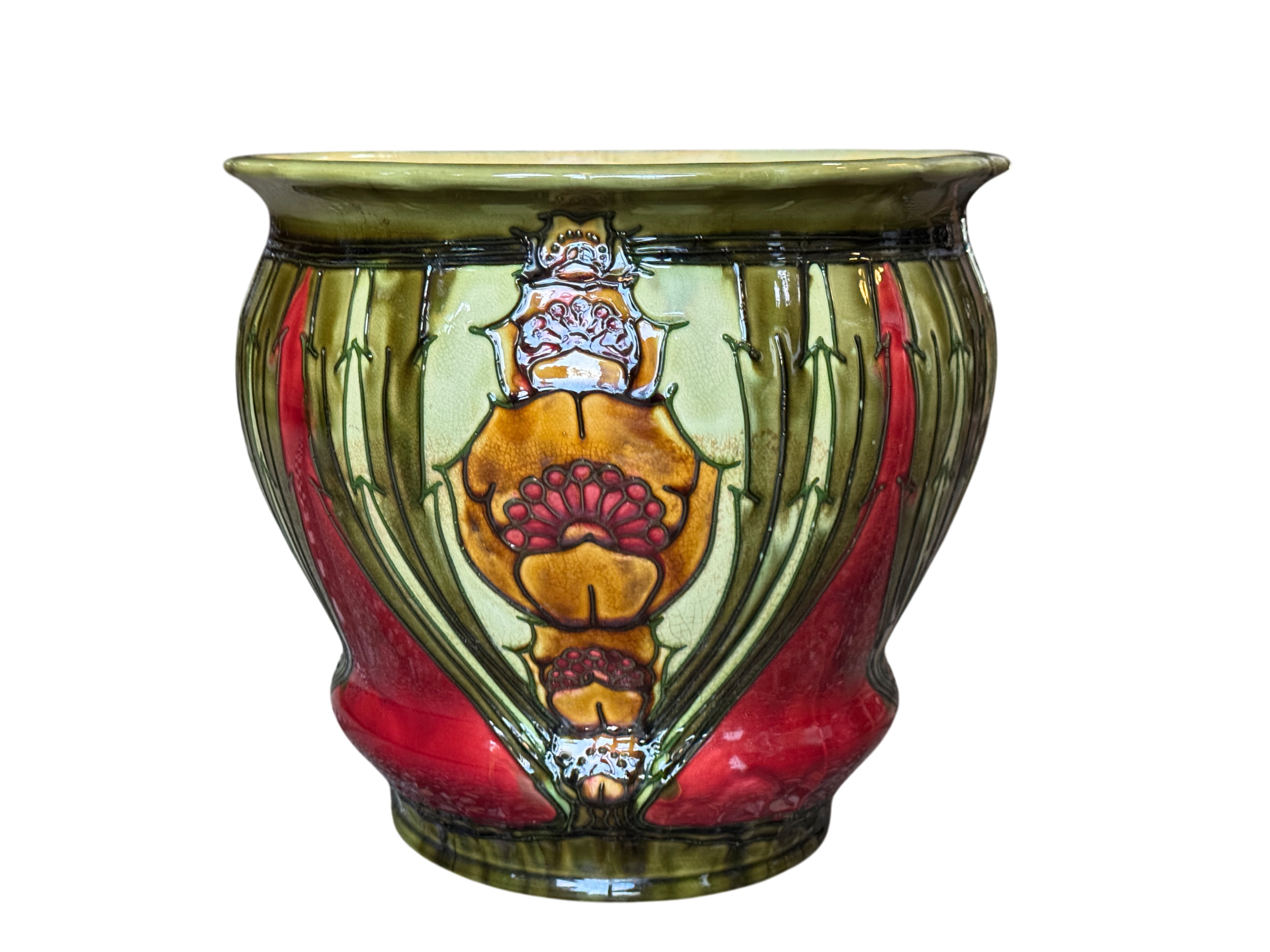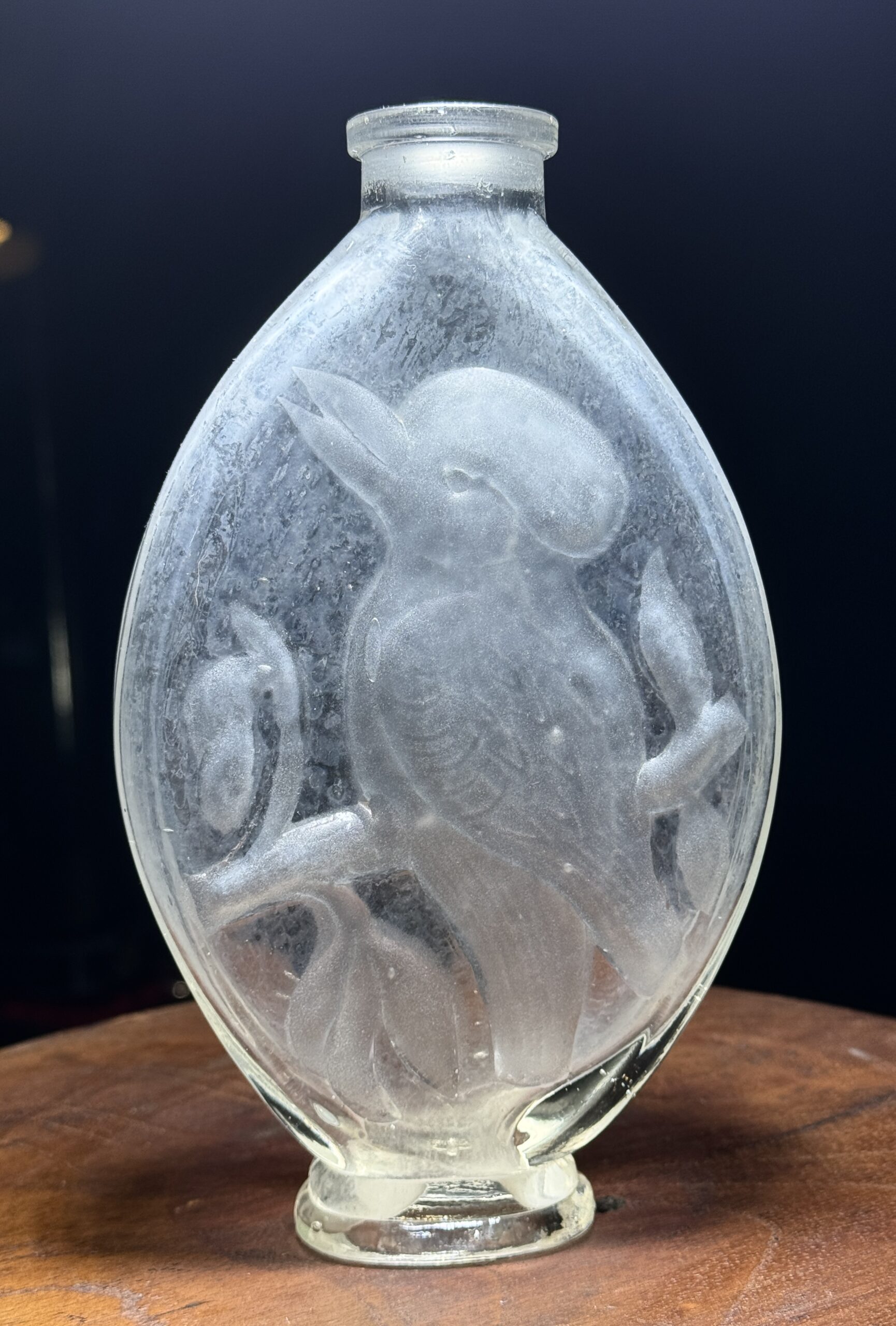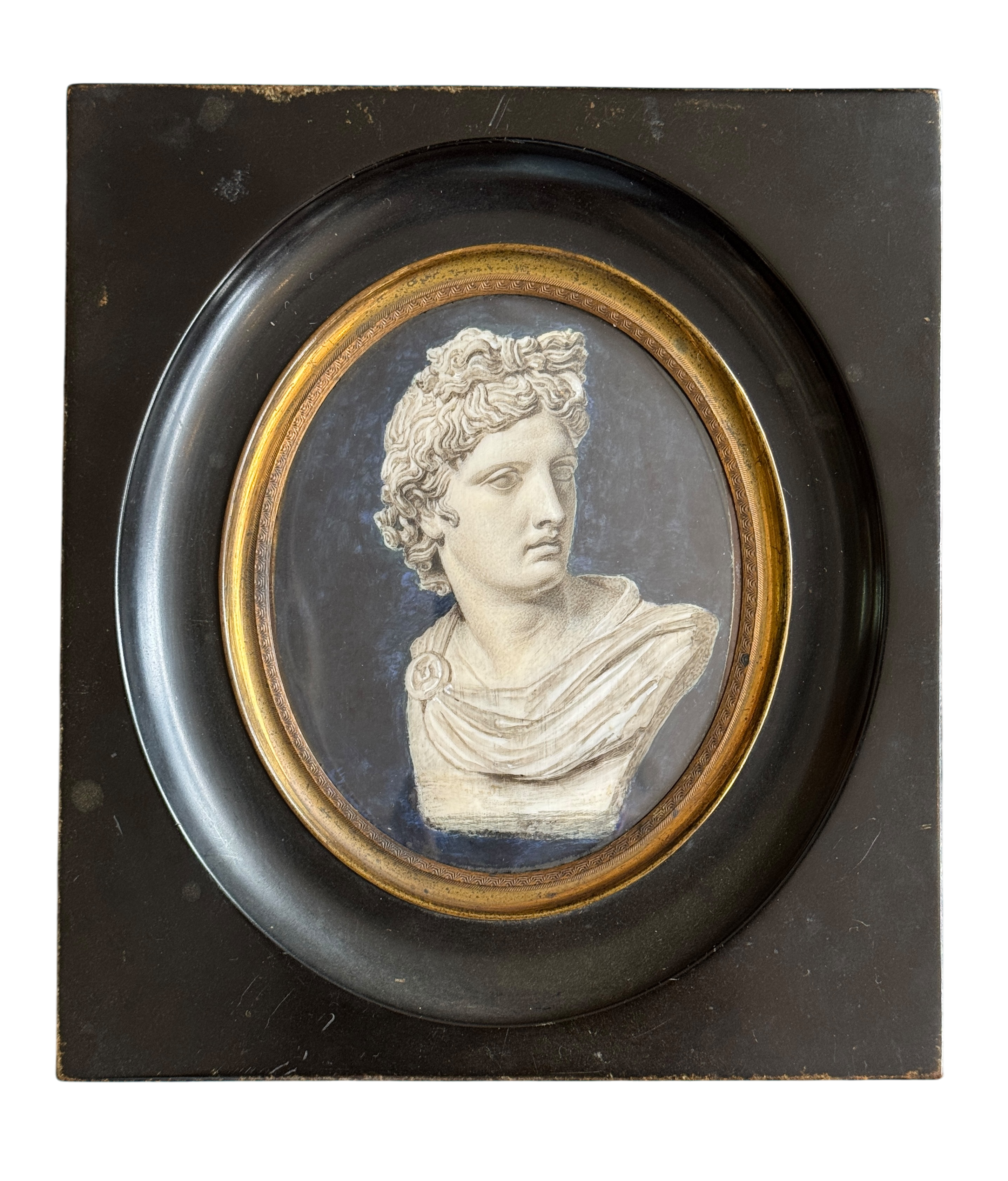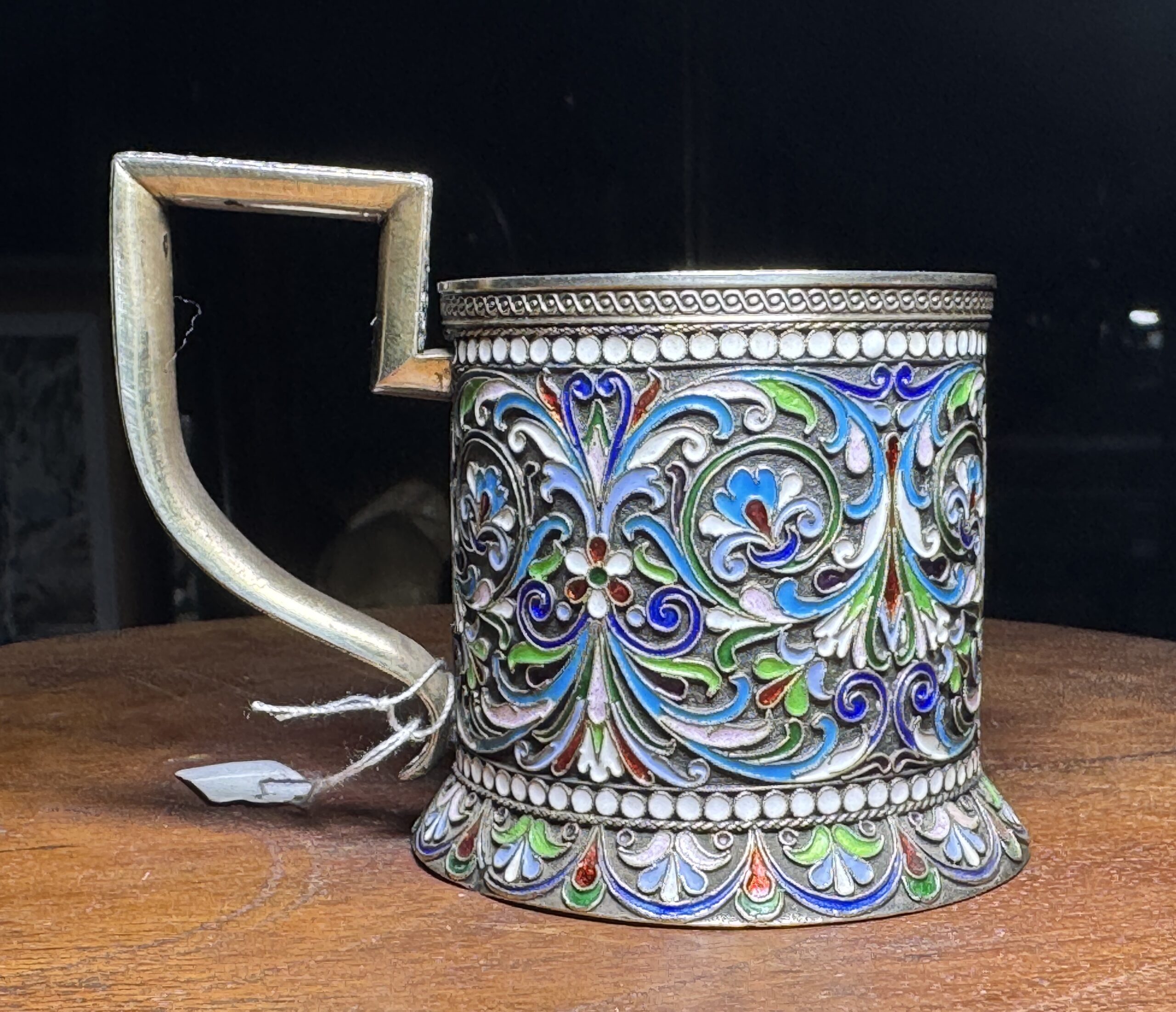
Posted on

Fresh Stock Directory

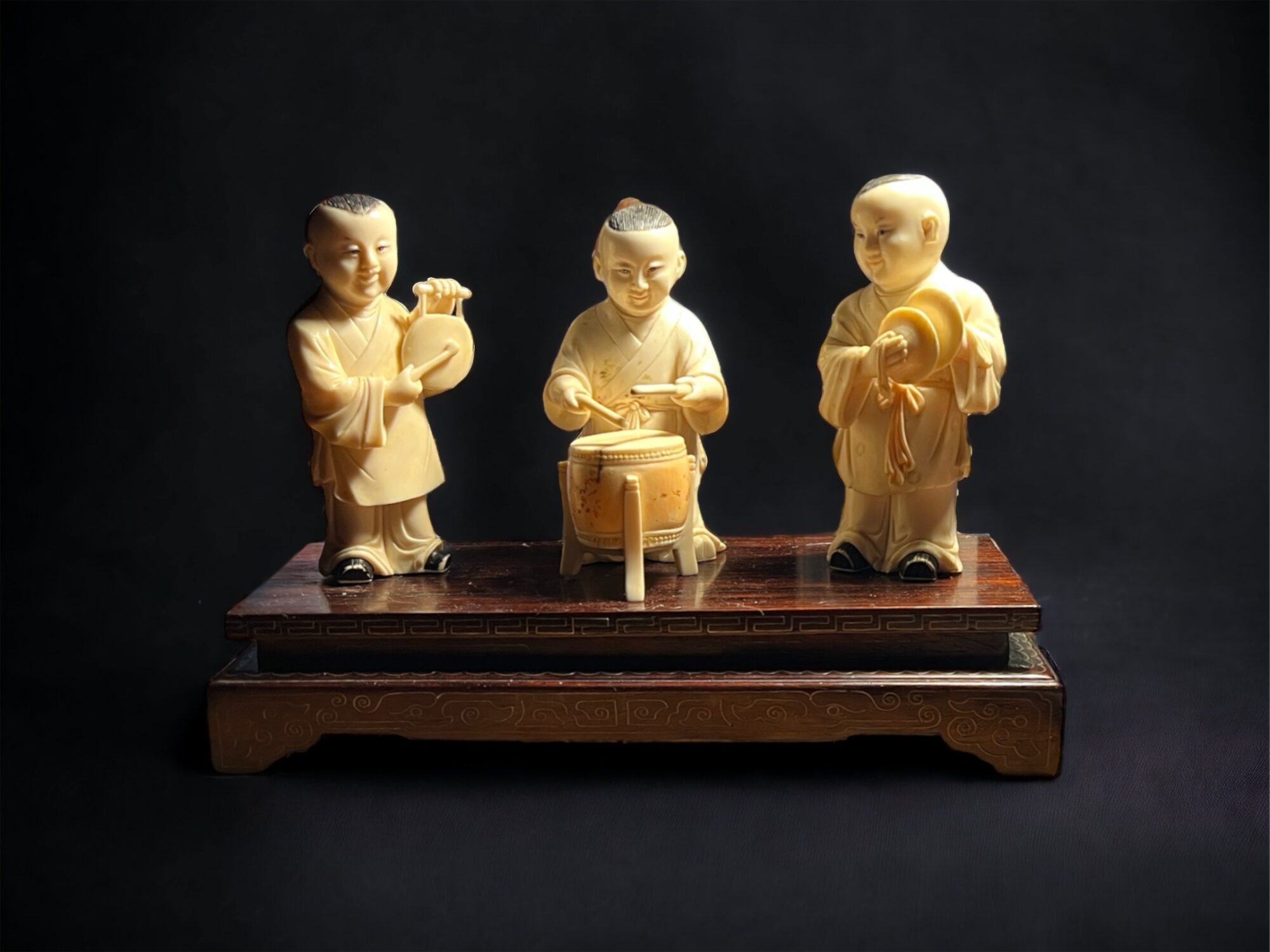
Antique Chinese Ivory Children

Welcome to our Fresh Stock Directory.

Everyone’s looking for something different – so we have divided it up into areas of interest: choose a ‘Gallery’ below to browse the latest items of that type to be uploaded.


Latest Fresh Stock Release Blogs

  • Fresh Stock at Moorabool
    Welcome to our latest Fresh Stock release. There’s quite a range of Fresh items to browse…. Here’s our new way of browsing: enjoy!
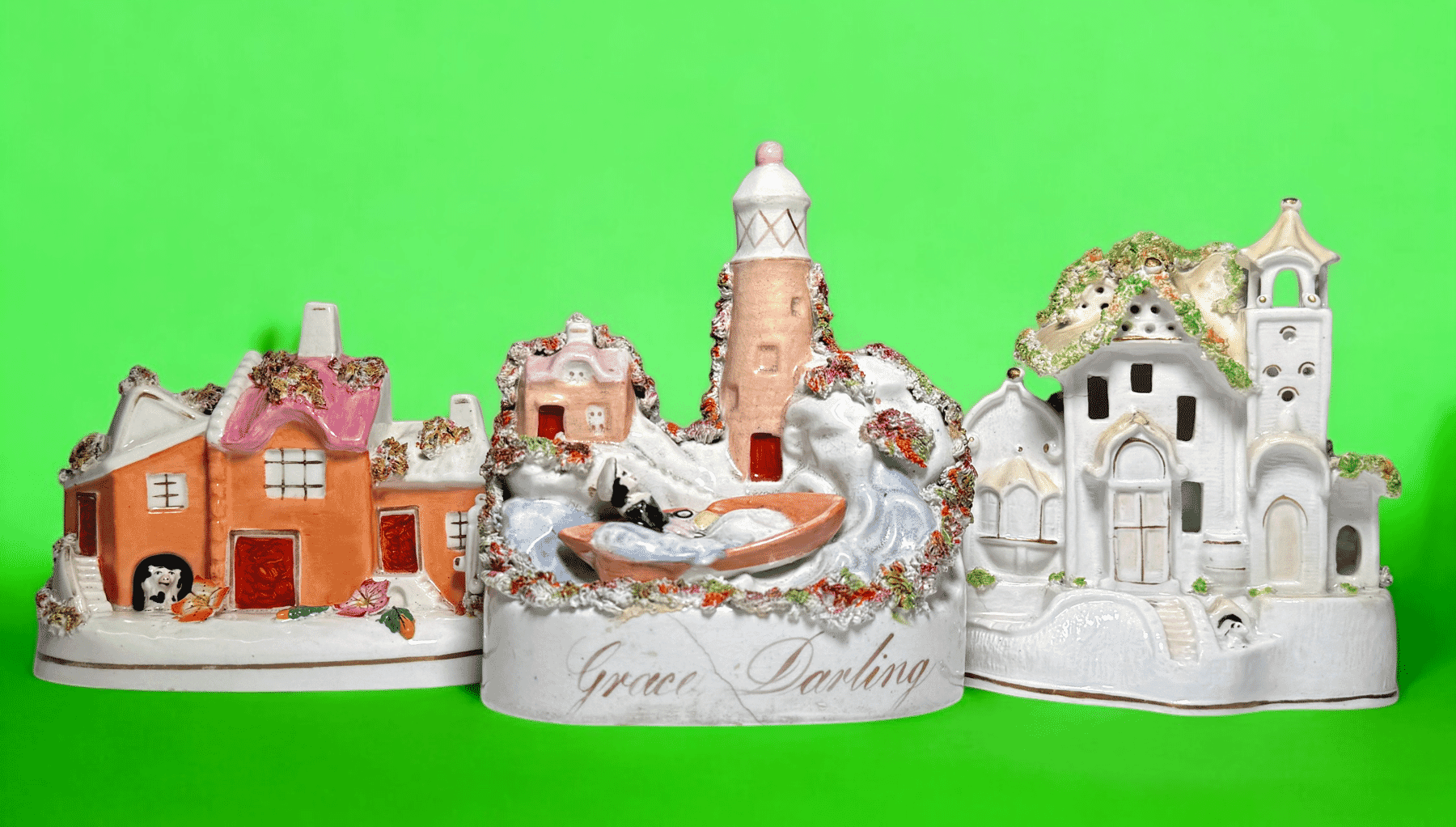
  • Grace Darling, the Heroine of the Sea – in Staffordshire!
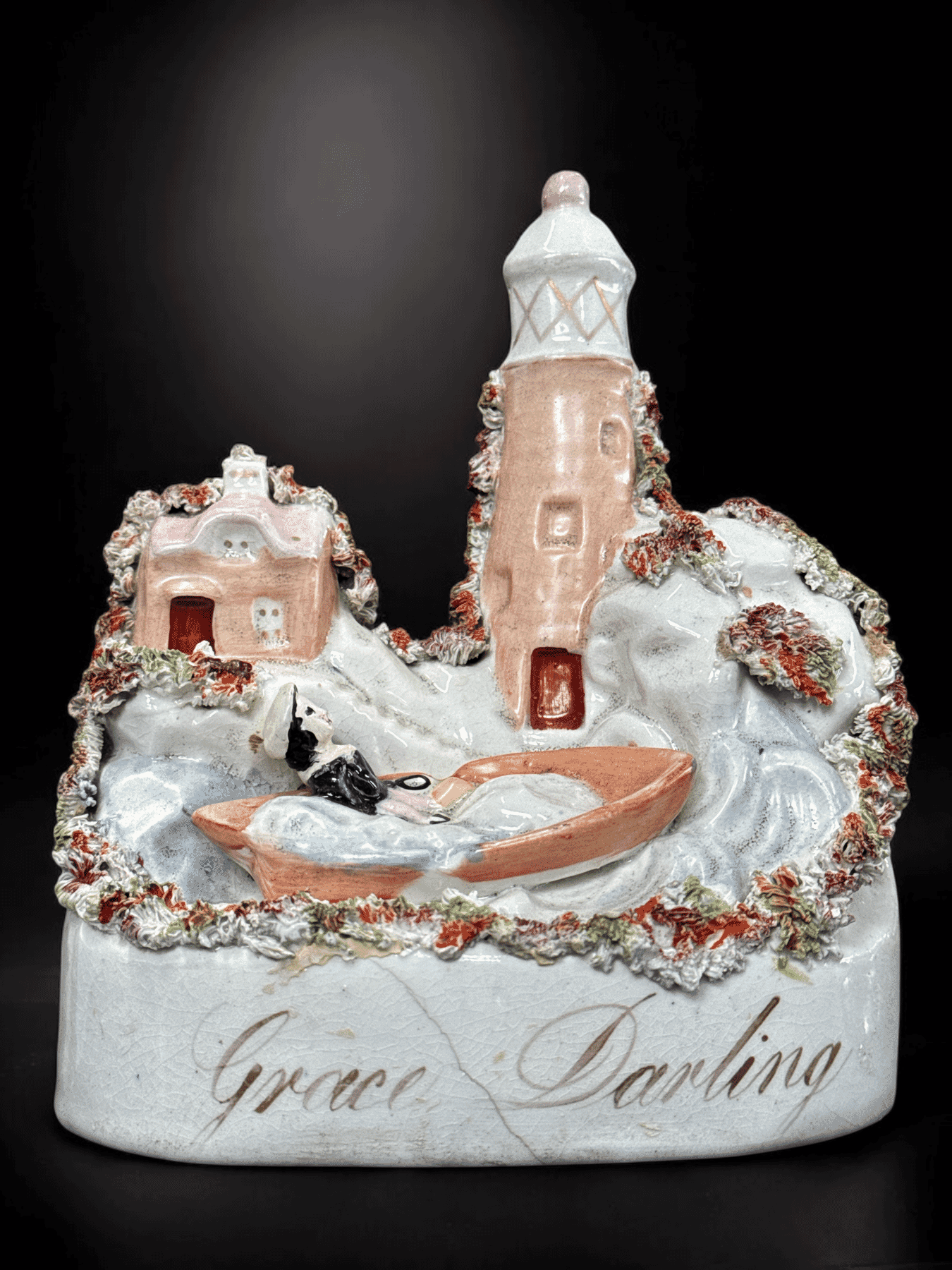
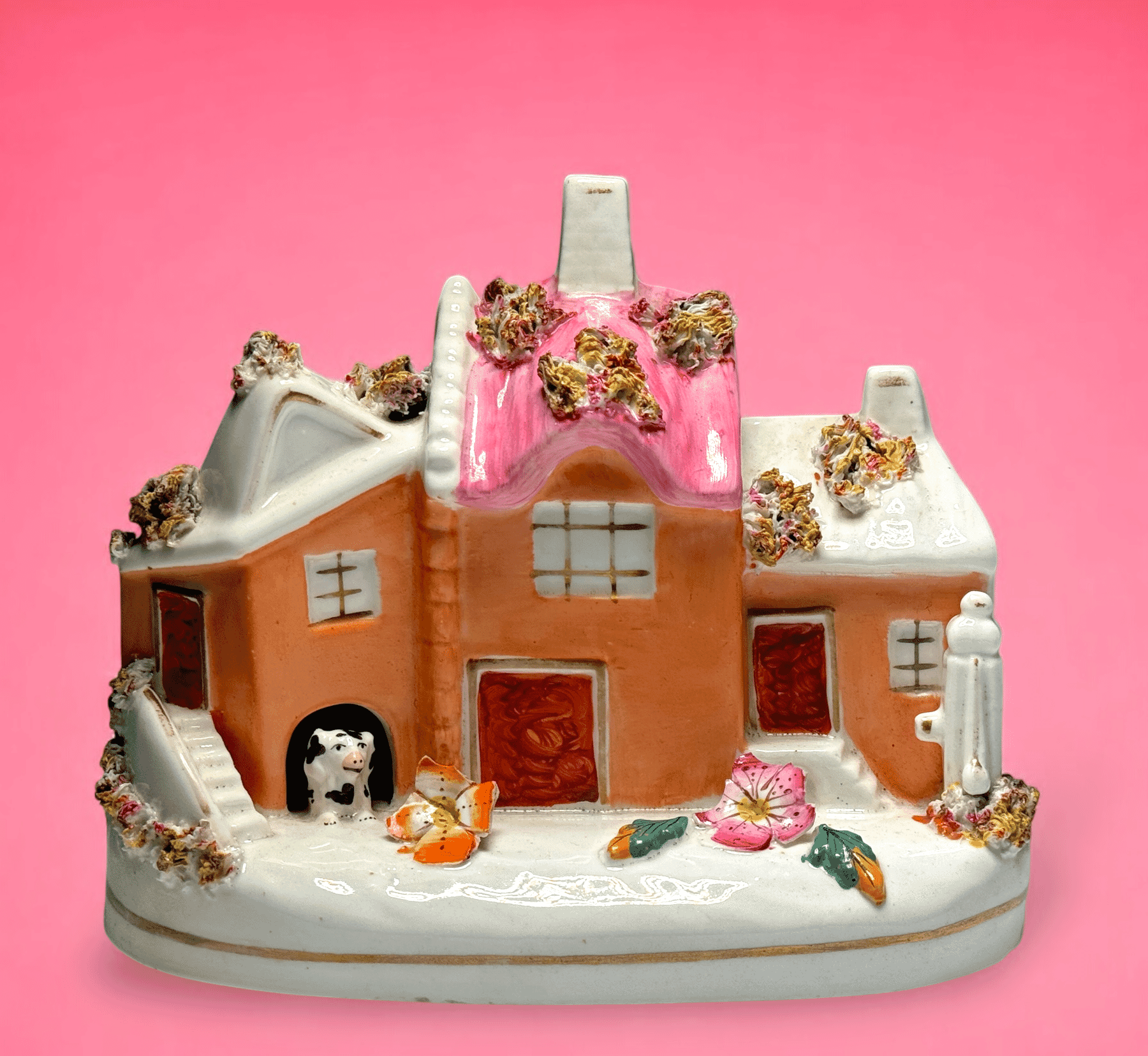
    Grace Darling, the heroic lighthouse-keeper’s daughter is the subject of this rare Staffordshire figure fresh to Moorabool’s stock. But something is very peculiar with this example…. making it possibly unique!
  • An Asian-themed Fresh Stock
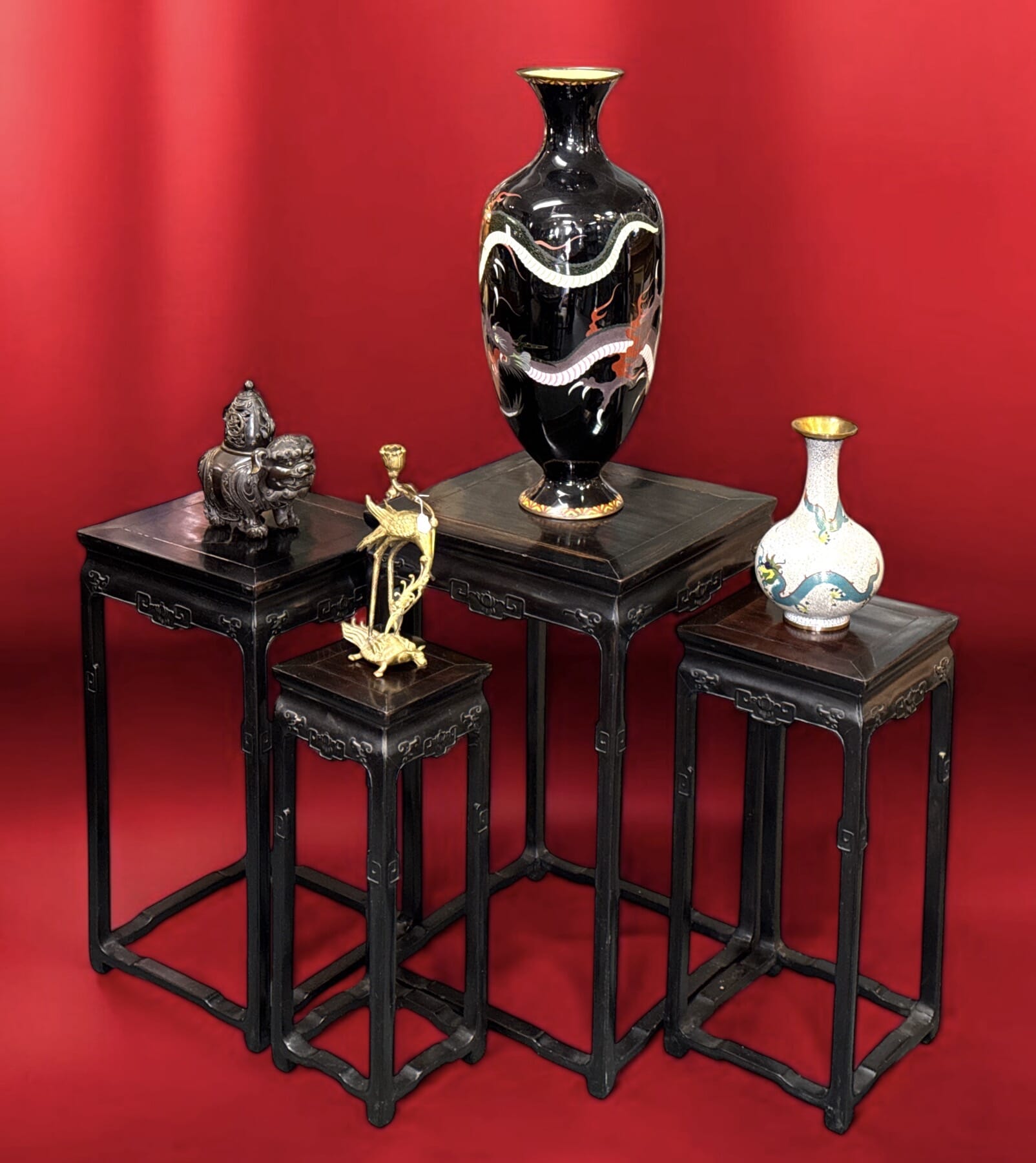
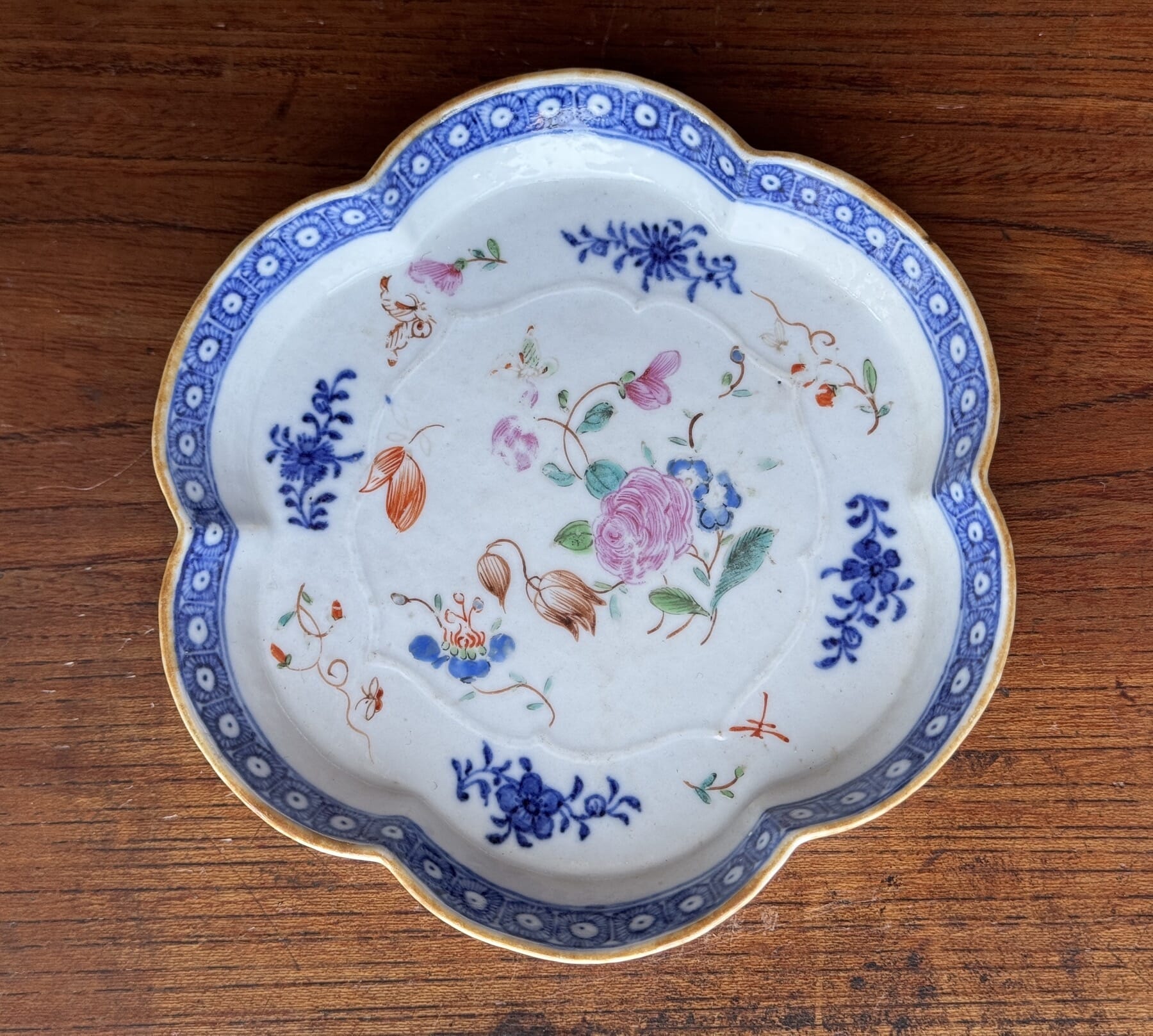
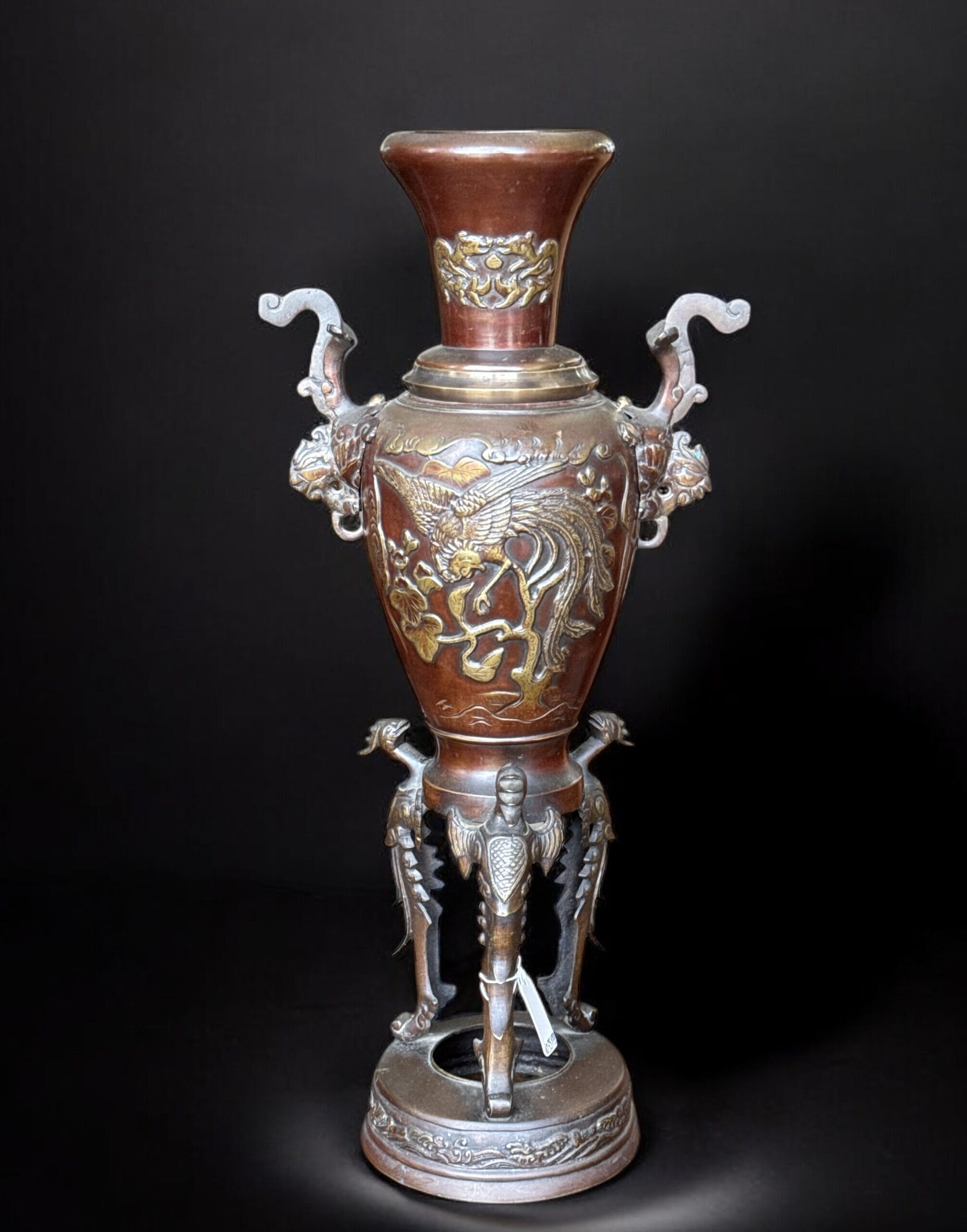
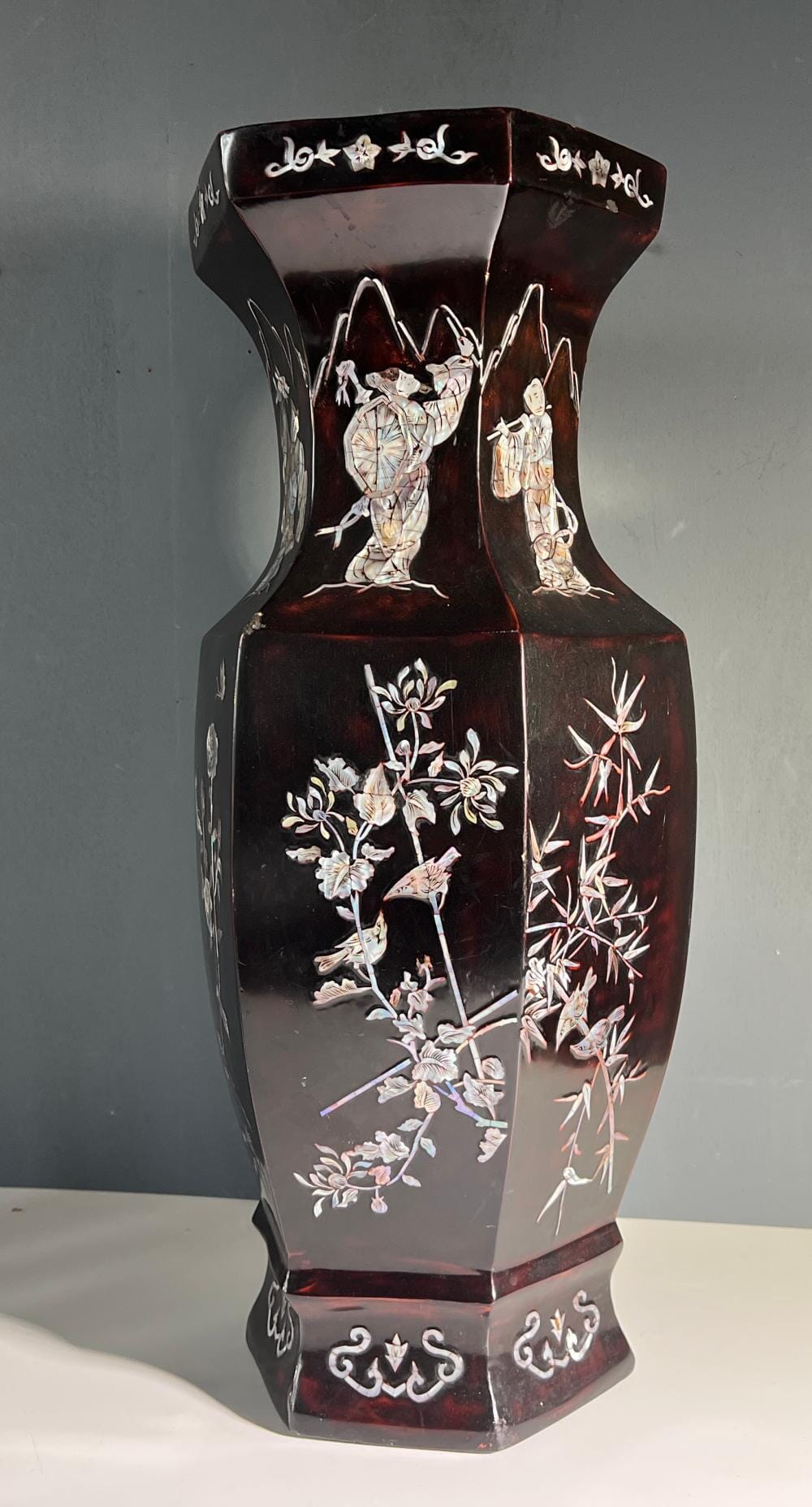
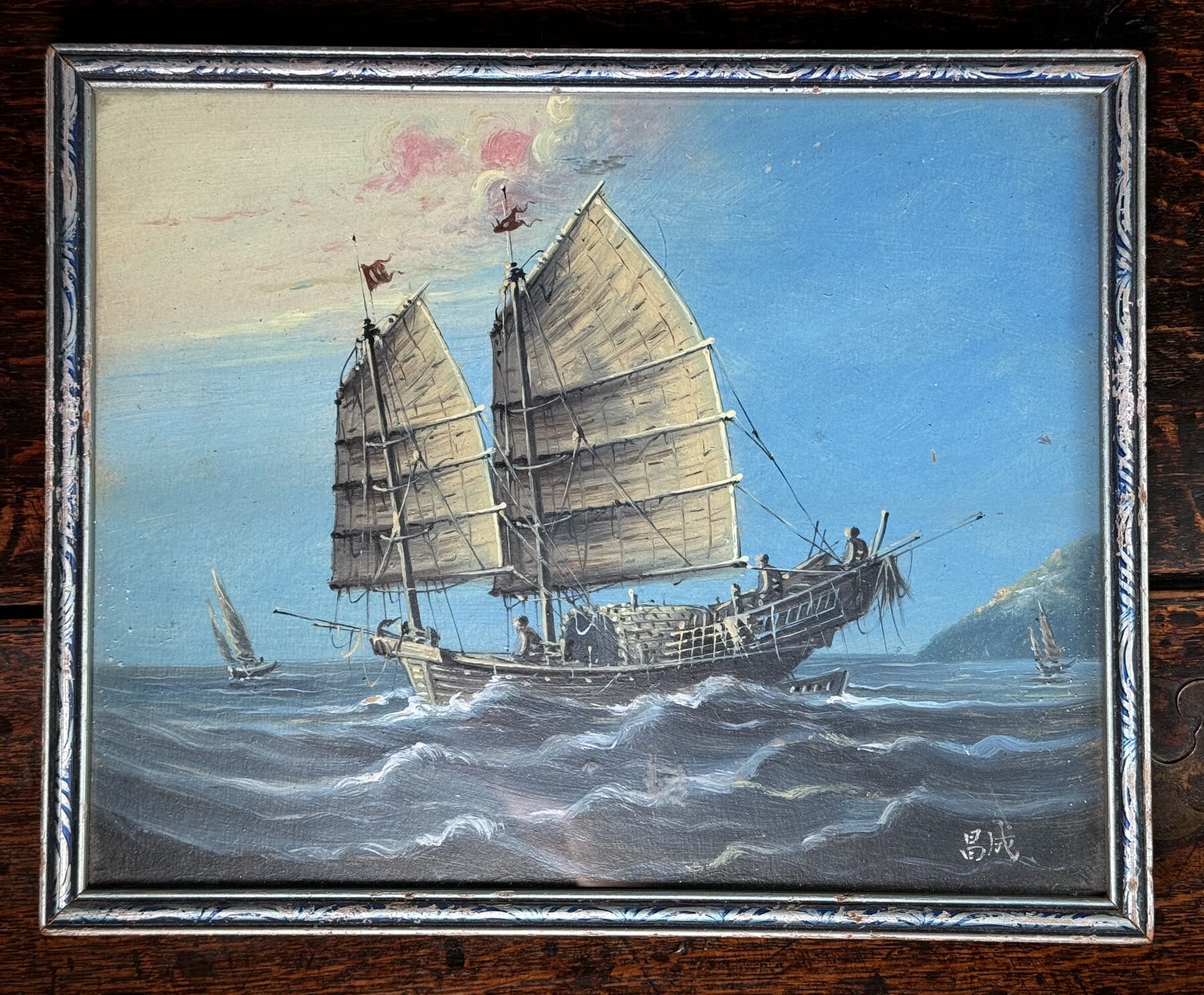
    Fresh Stock with an Asian Theme – a good quantity of items for you to browse from China, Japan, Burma, Thailand, and Sri Lanka….
  • Fresh stock October 7th
    Fresh Stock uploaded to moorabool.com . You’ll find a fine and varied selection, from Georgian Furniture to fine 18th century Porcelain, Australian Pottery, a host of Candlesticks, and interesting Artworks
  • Premium Fresh Stock
    Welcome to our selection of ‘the Best’ for the end of 2024. Some stunning rarities have come to us recently, with many local high-quality collections being dispersed. Enjoy your browse through the following Premium items – with more items being prepared for the near future. Quaker Pegg – “Balm-leaved Archangel” c. 1796 From the English Derby factory comes a piece… Read more: Premium Fresh Stock
  • Derby ‘Adolescent Seasons’
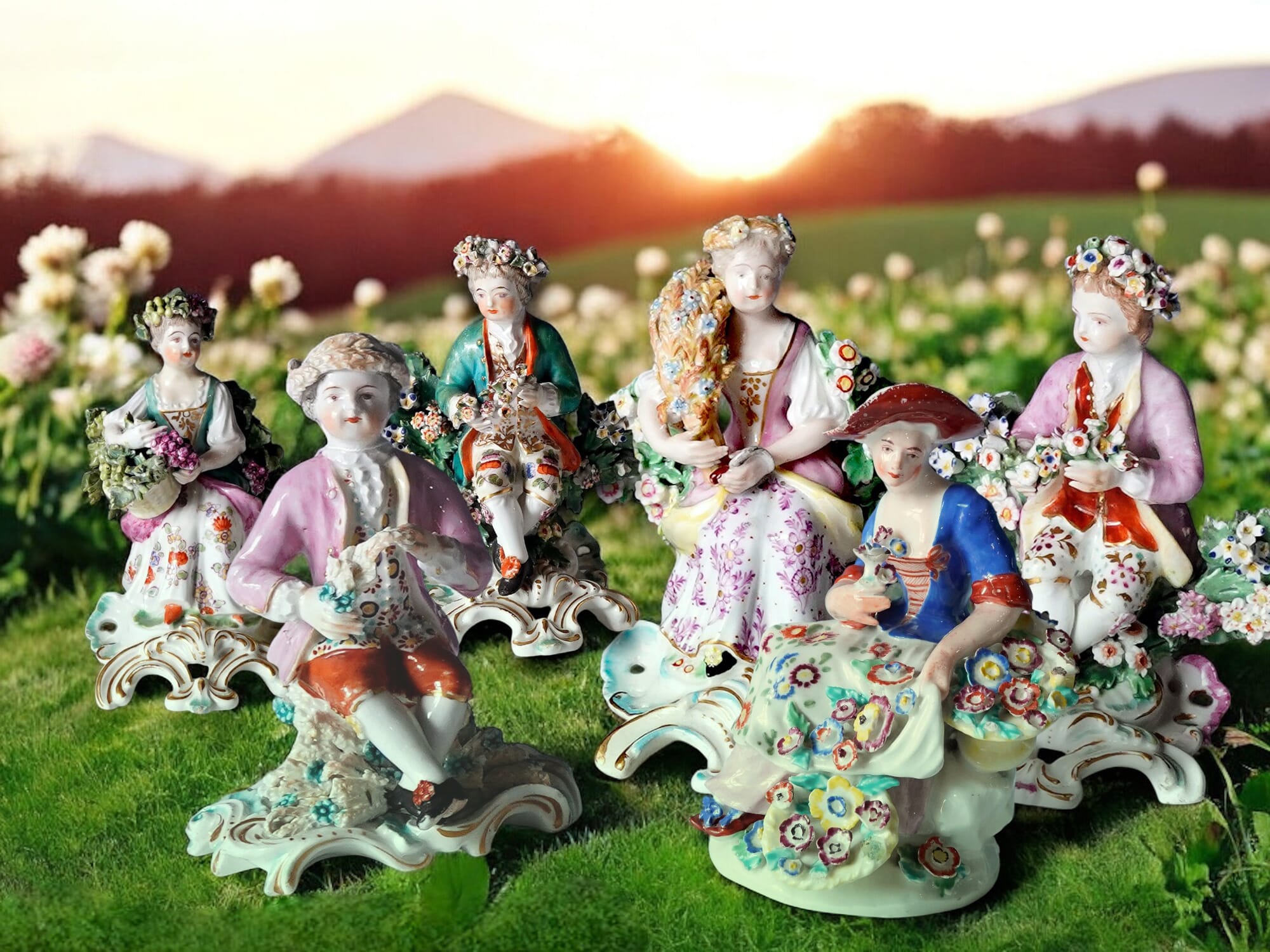
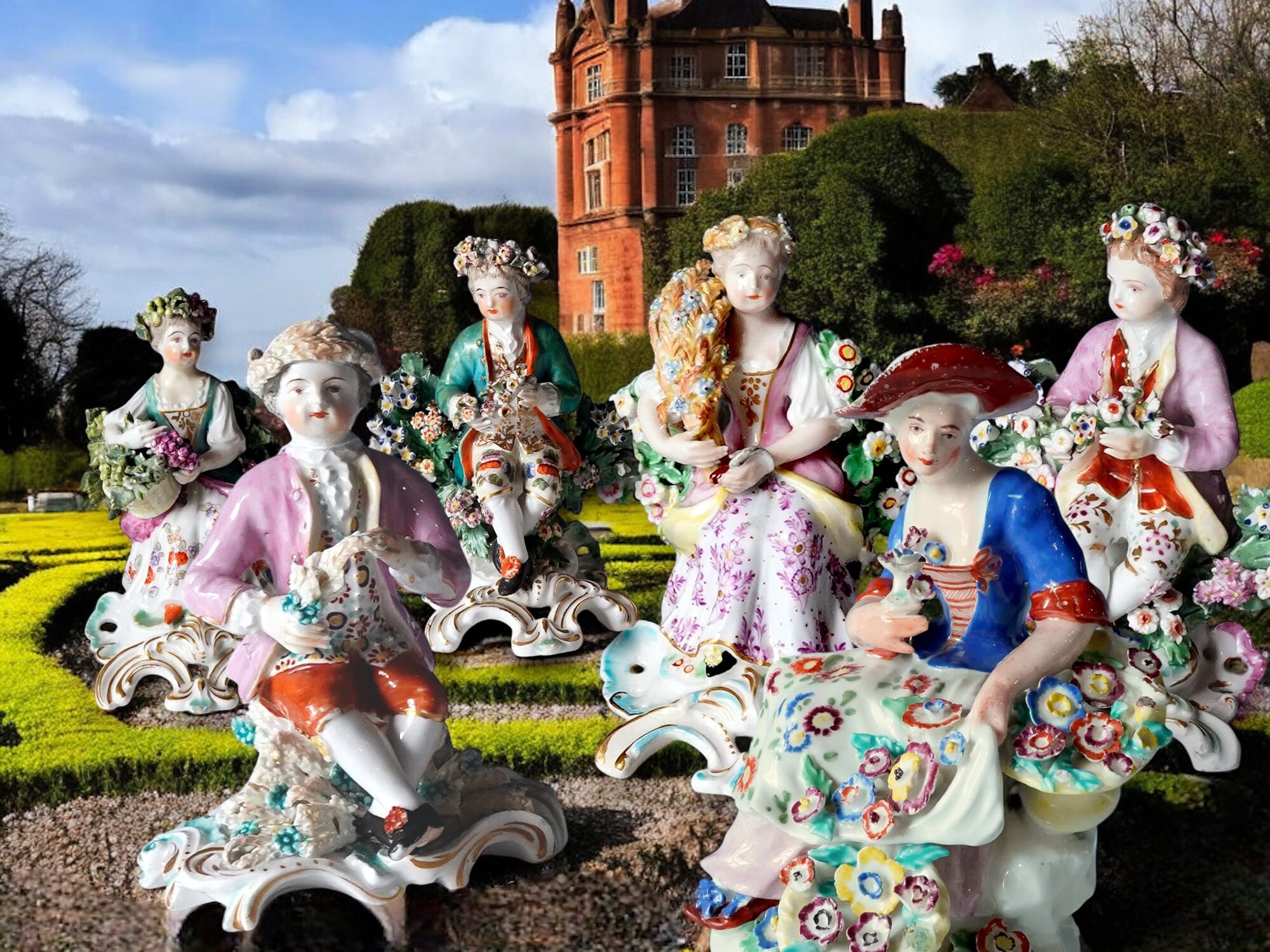
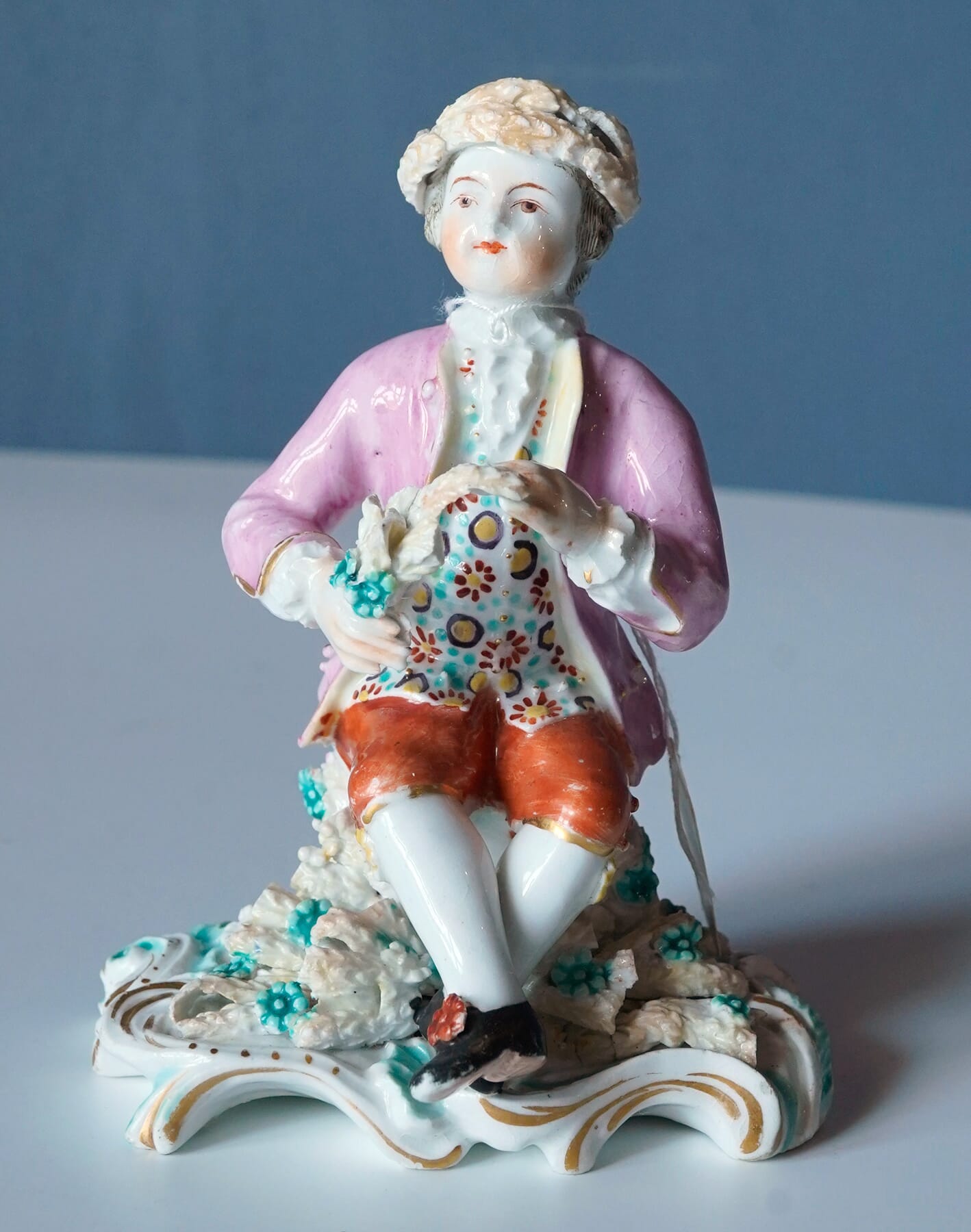
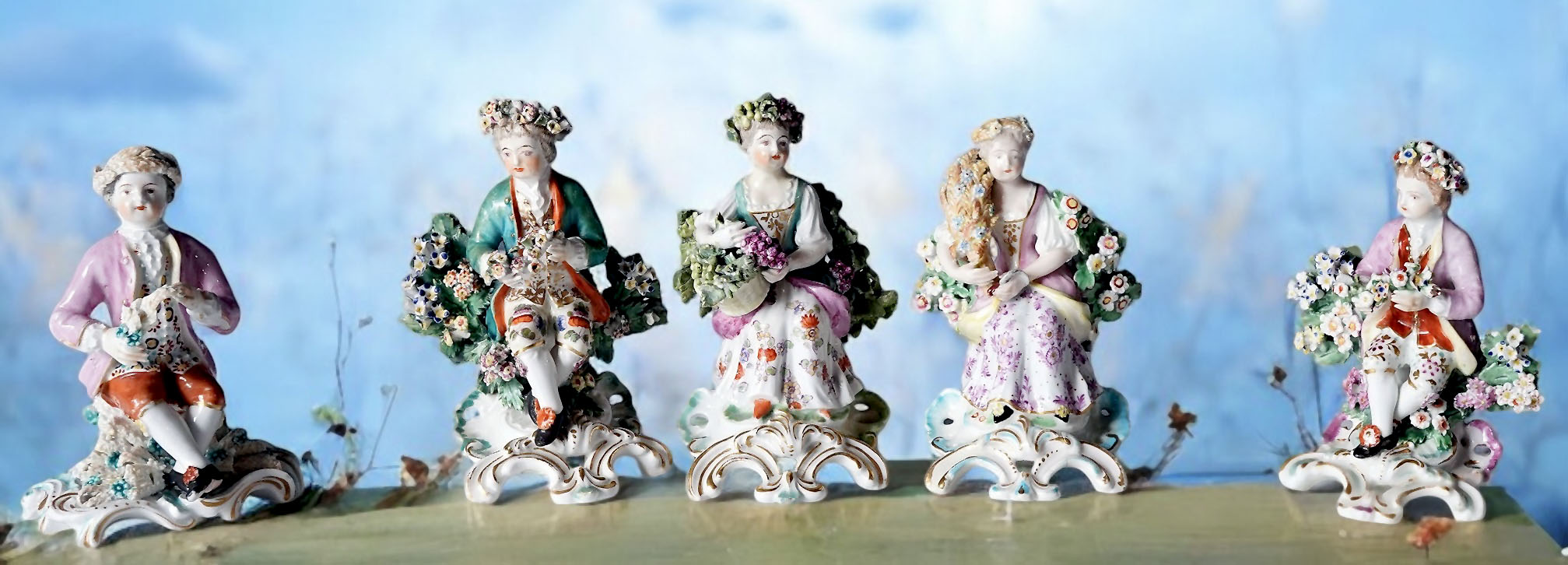
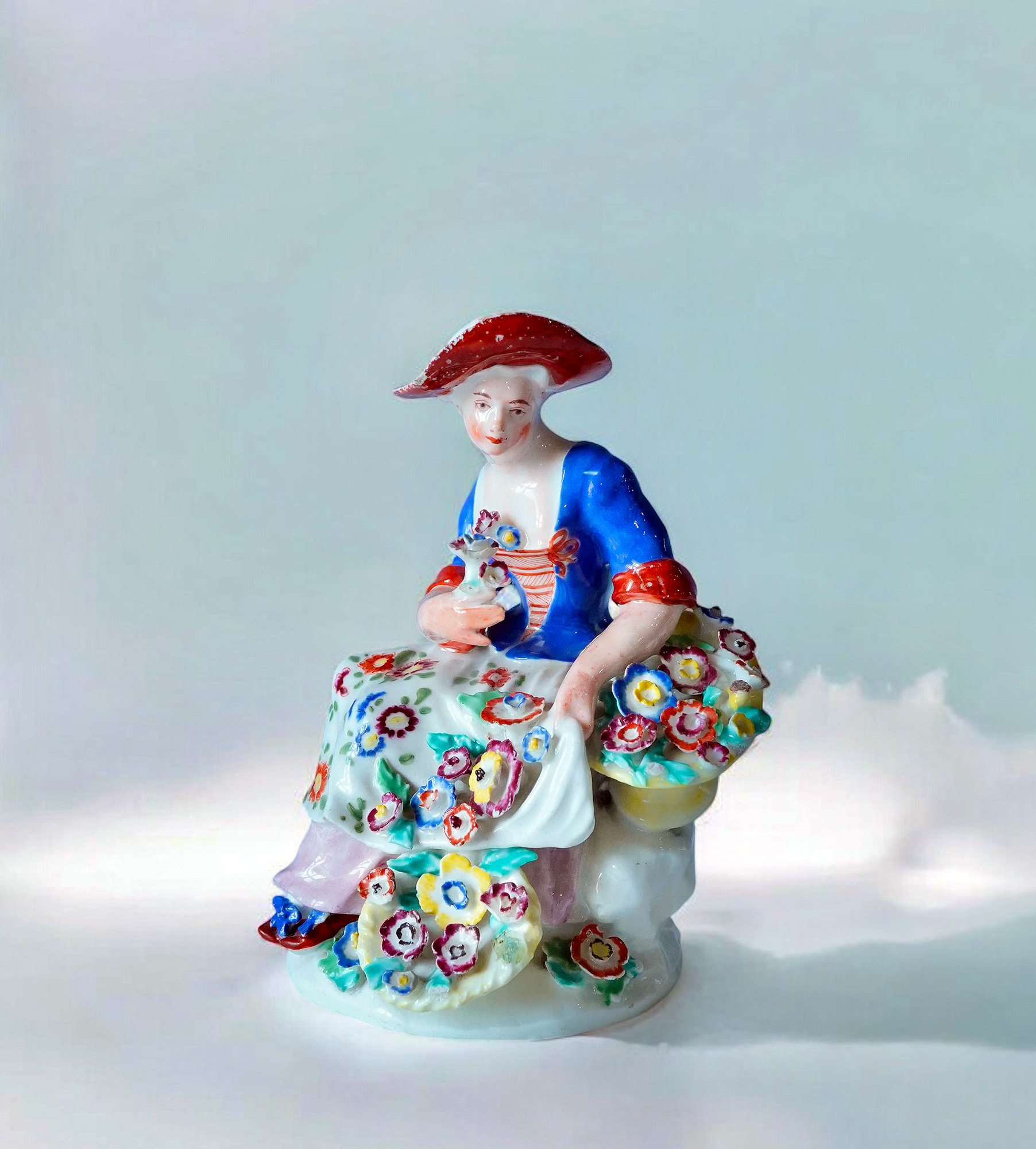
    Moorabool has a fascinating group of Derby ‘Seasons’, modelled as children with their respective attributes. They make for an interesting study, and show the development of the classic rococo-based Derby figures of the latter 18th century.
  • Arts & Crafts Collection
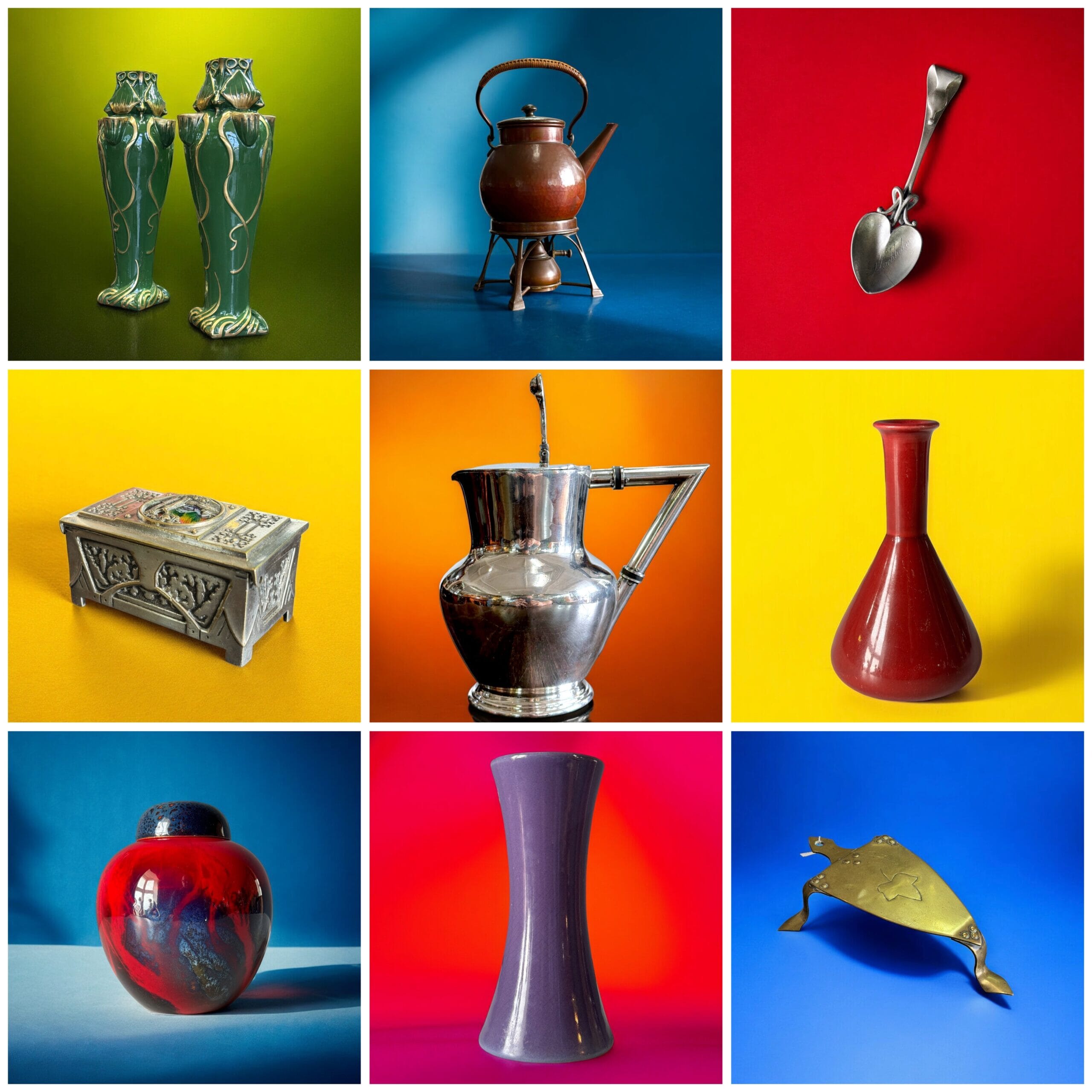
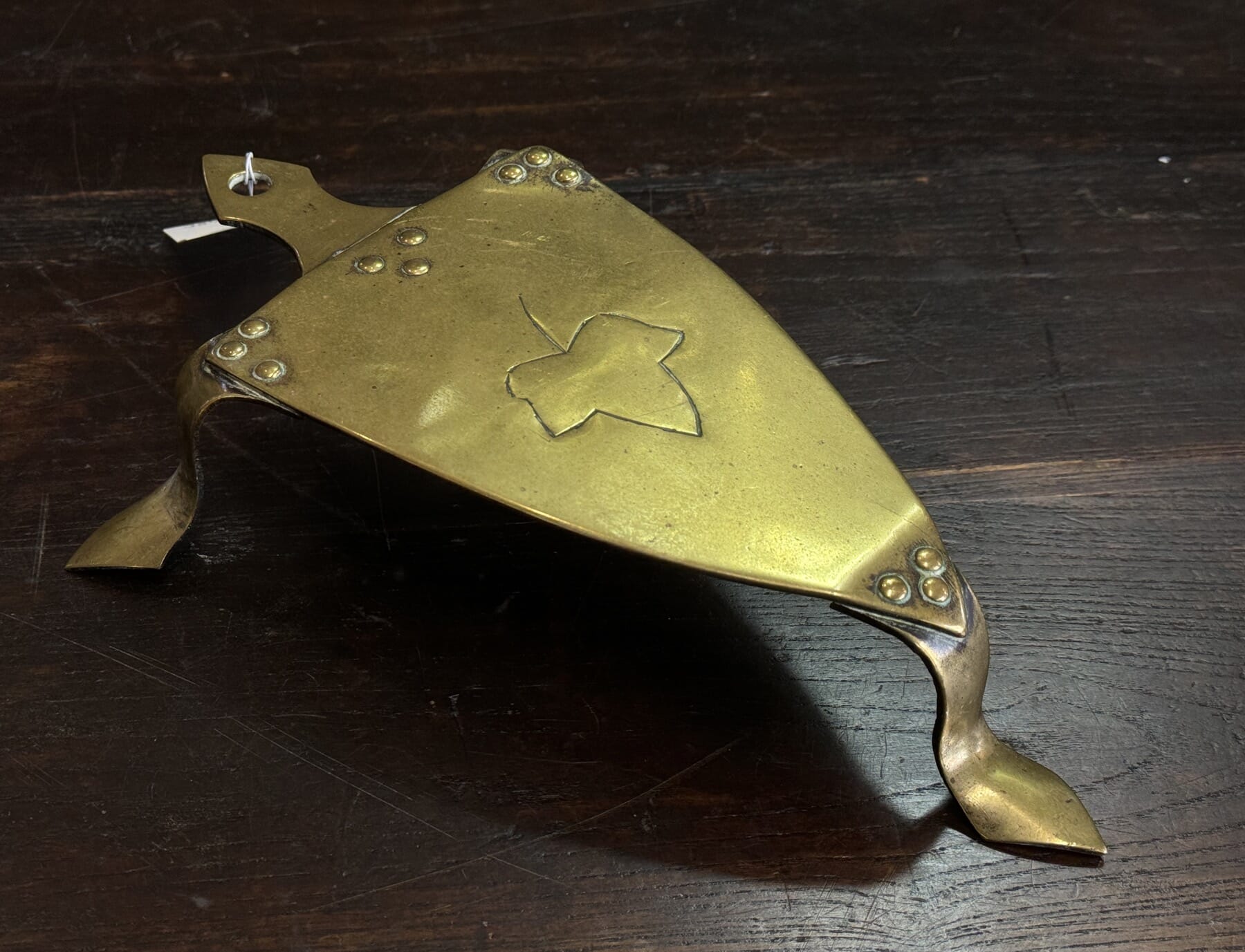
    A fine selection of ‘Arts & Crafts’ has just been posted on Moorabool.com . It’s an interesting survey of the late 19th- early 20th century designs that were a reaction against the overly ornate – and predictable – designs of Victorian England. Often borrowing & intermingled, the French Art Nouveau aesthetic blended with the German/Austrian Jugendstil (youthful-style) and even had a major impact on Australian products – although it did take some time to reach us ‘down-under’ !
  • A Staffordshire Fresh Stock
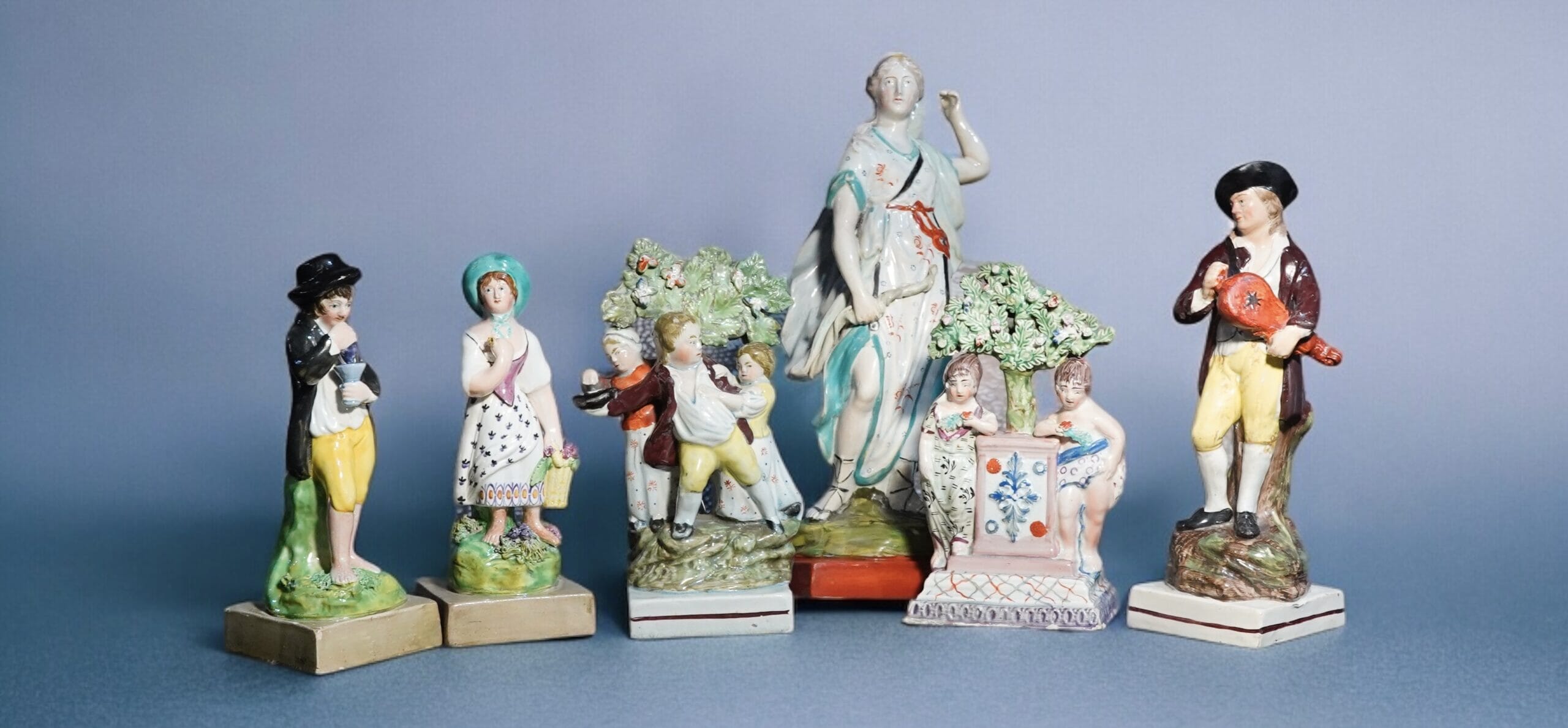
    Welcome to our latest Fresh Stock. This one is a ‘Staffordshire Special’, with some early figures dating to the late 18th – early 19th century – as well as a good selection of classic Victorian pieces. There’s a couple of Highwaymen, one titled ‘Dick Turpin’, the other facing horseman traditionally being his companion Gentleman-Robber, ‘Tom King’ (actually Mathew, not Tom….)… Read more: A Staffordshire Fresh Stock
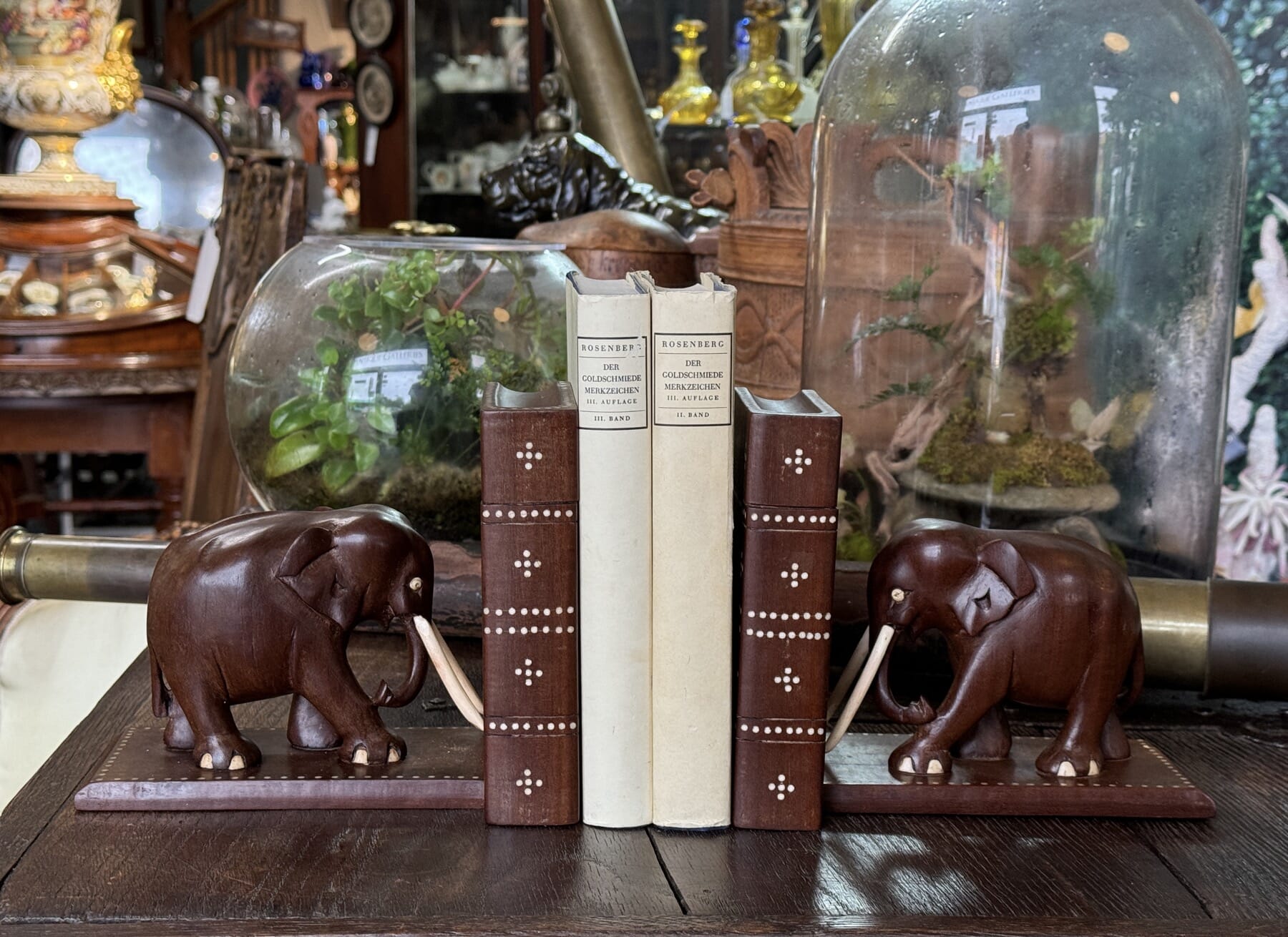
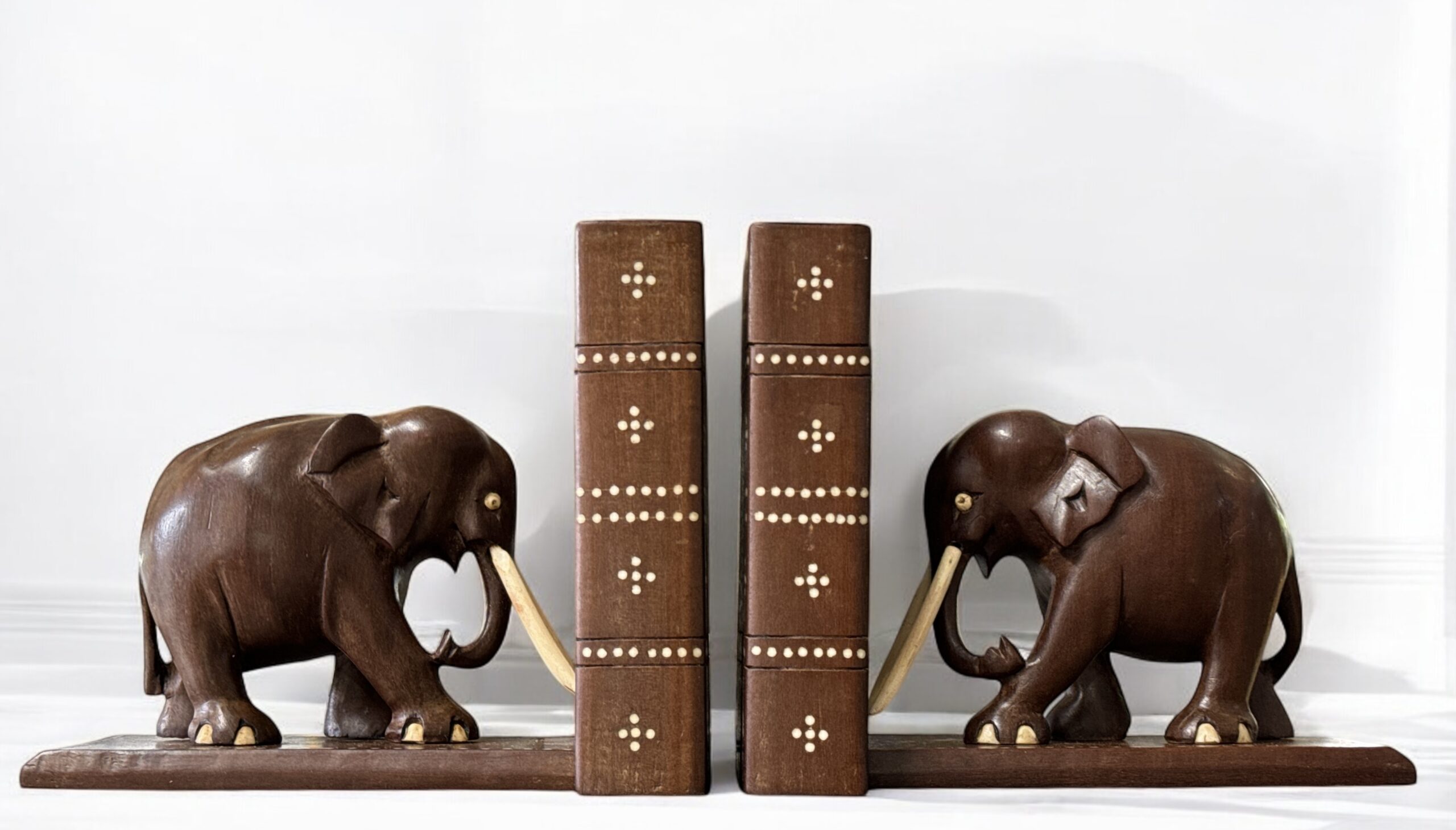
  • Bookends
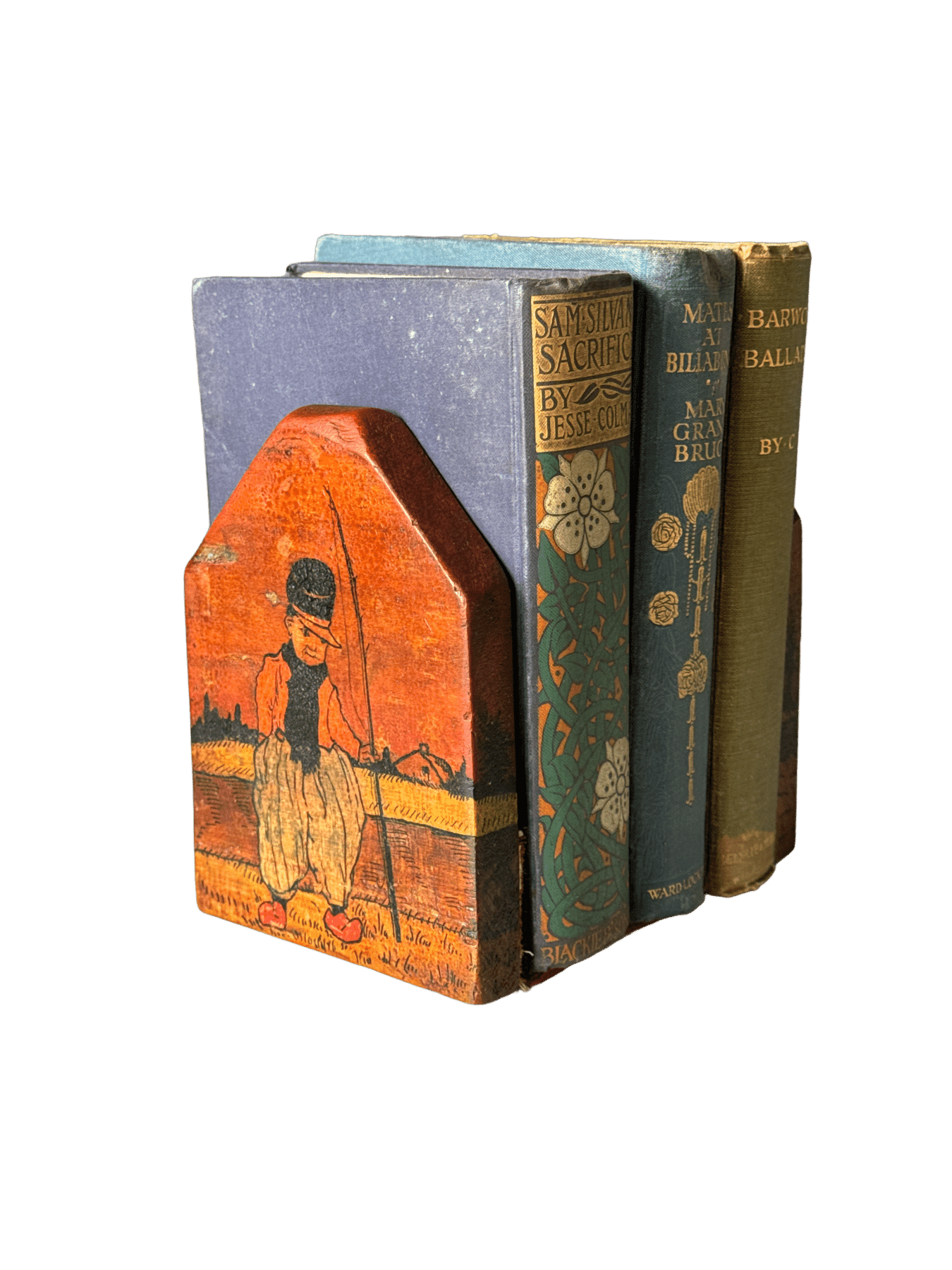
    Always handy, and don’t they dress up a bookshelf?
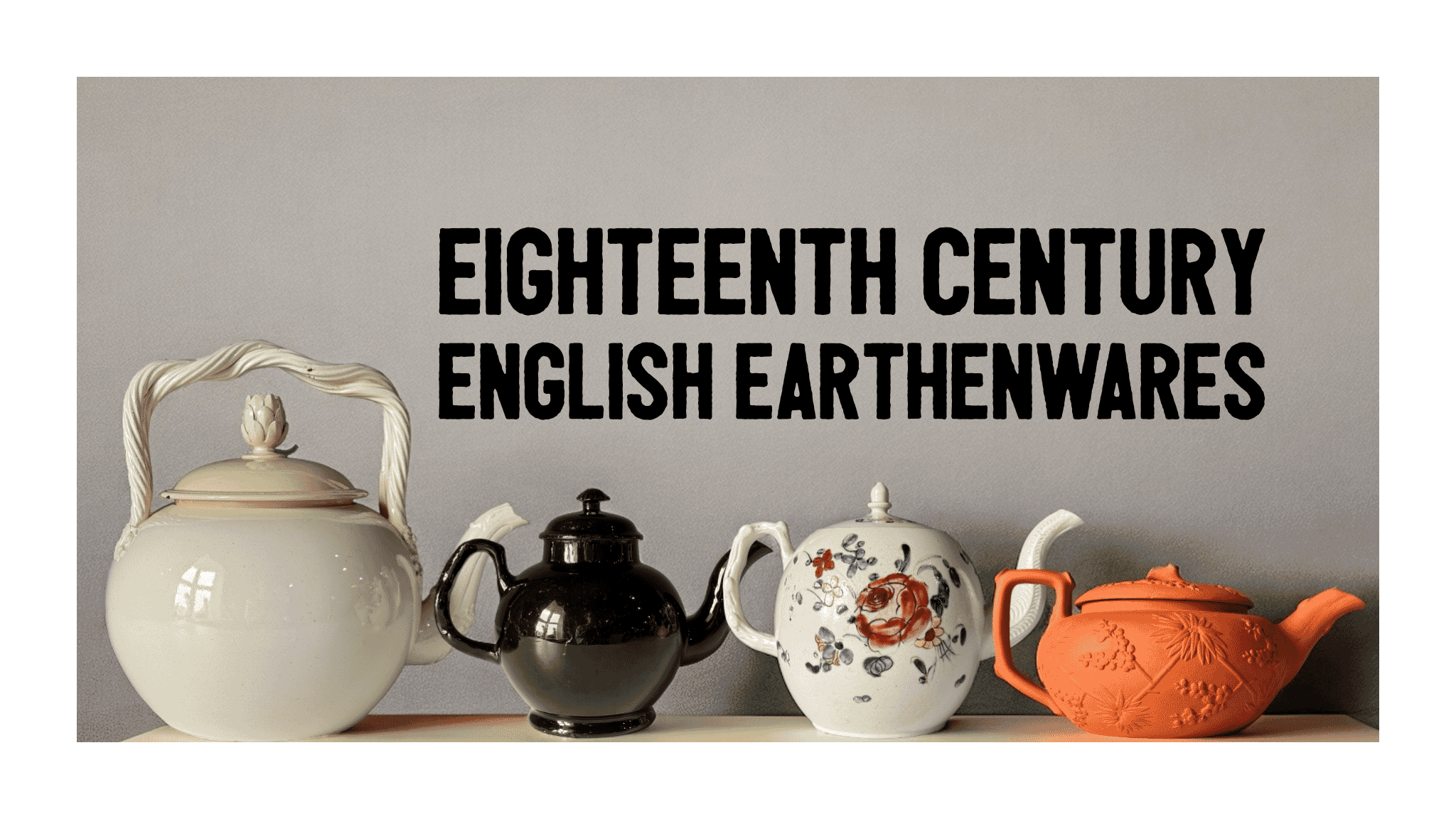
  • 18th Century English Earthenwares
    Creamware Creamware is the term for an English earthenware body with a definite ‘cream’ tone, popular in the latter half of the 18th century and replicated across Europe. It emerged from the experimentation of Staffordshire potters seeking a local alternative to expensive Chinese porcelain around 1750. Their innovation yielded a refined cream to white earthenware with a lustrous clear lead… Read more: 18th Century English Earthenwares

Moorabool Heading
Posted on

A new Spin on Antiques…

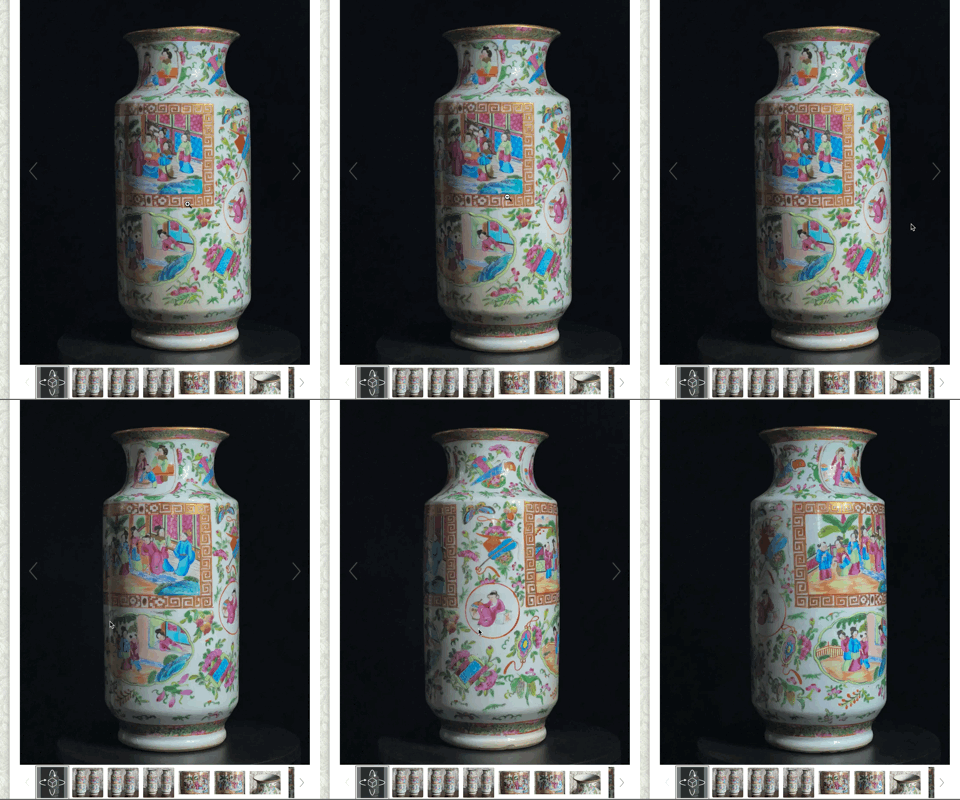
We’ve been busily working on a terrific new way of viewing our stock on Moorabool.com. You may have already noticed our photos are larger than before, and you can explore the pieces in greater detail by zooming in. While that’s a help, we have something even better to offer: Spins!

Spin Sample
Spin me – mouse or finger, both work well! And don’t forget you can zoom in….

As you’ll notice above, we can now take images from all sides and create a ‘spin’! This is perfect for turning something around to see the other side…. and you can zoom in also! The 18th century English enamel salt cellar above needs to be seen from every angle – and this new technique is perfect to show what it’s like in reality.

It does take a little time to set up, so we are doing fresh pieces and some older pieces, with more being added constantly.

If you just want to take a few pieces ‘for a spin’ – follow this link to the Tag ‘360’ – every item that has been done will appear in this gallery.

Have fun spinning!

Posted on

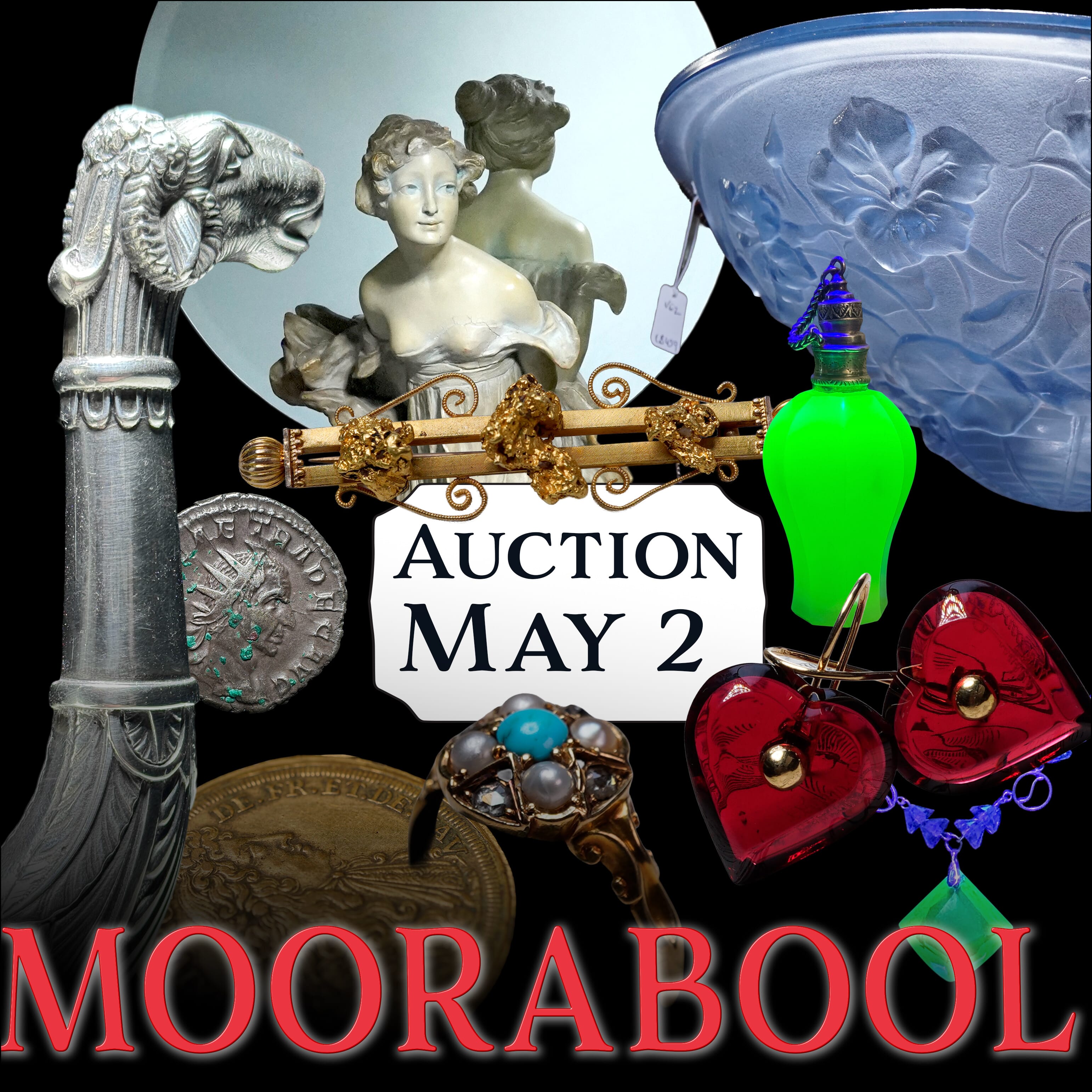
May 2nd Auction

We’re pleased to have our next auction posted on Invaluable – finally!

It’s a wonderful array of items, from the sublime to the ridiculous….

Silver and Metalwork 
The sale’s silver offerings are anchored by two outstanding pieces.

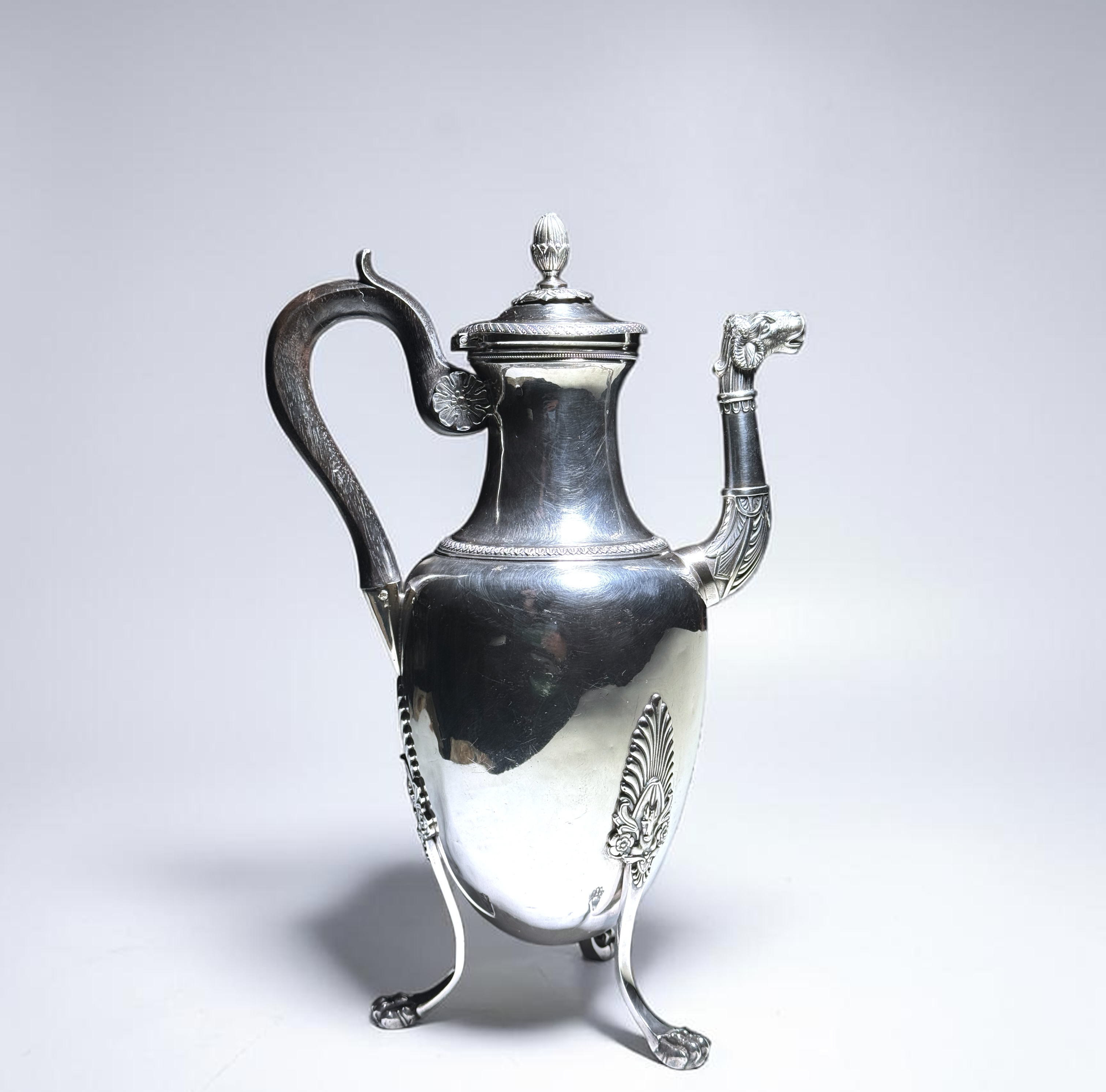
A French First Empire coffee pot bearing the maker’s mark of Naudin Frères, Paris, circa 1809-19. Made in 950/1000 first-standard silver, the body raised on lion’s paw feet with sculptural horse’s-head mounts and a full Bourbon count’s armorial engraving, and is among the finest pieces of early 19th-century French silversmithing to have appeared in a Moorabool sale. At 980 grams and 34 centimetres high, it is a commanding presence.

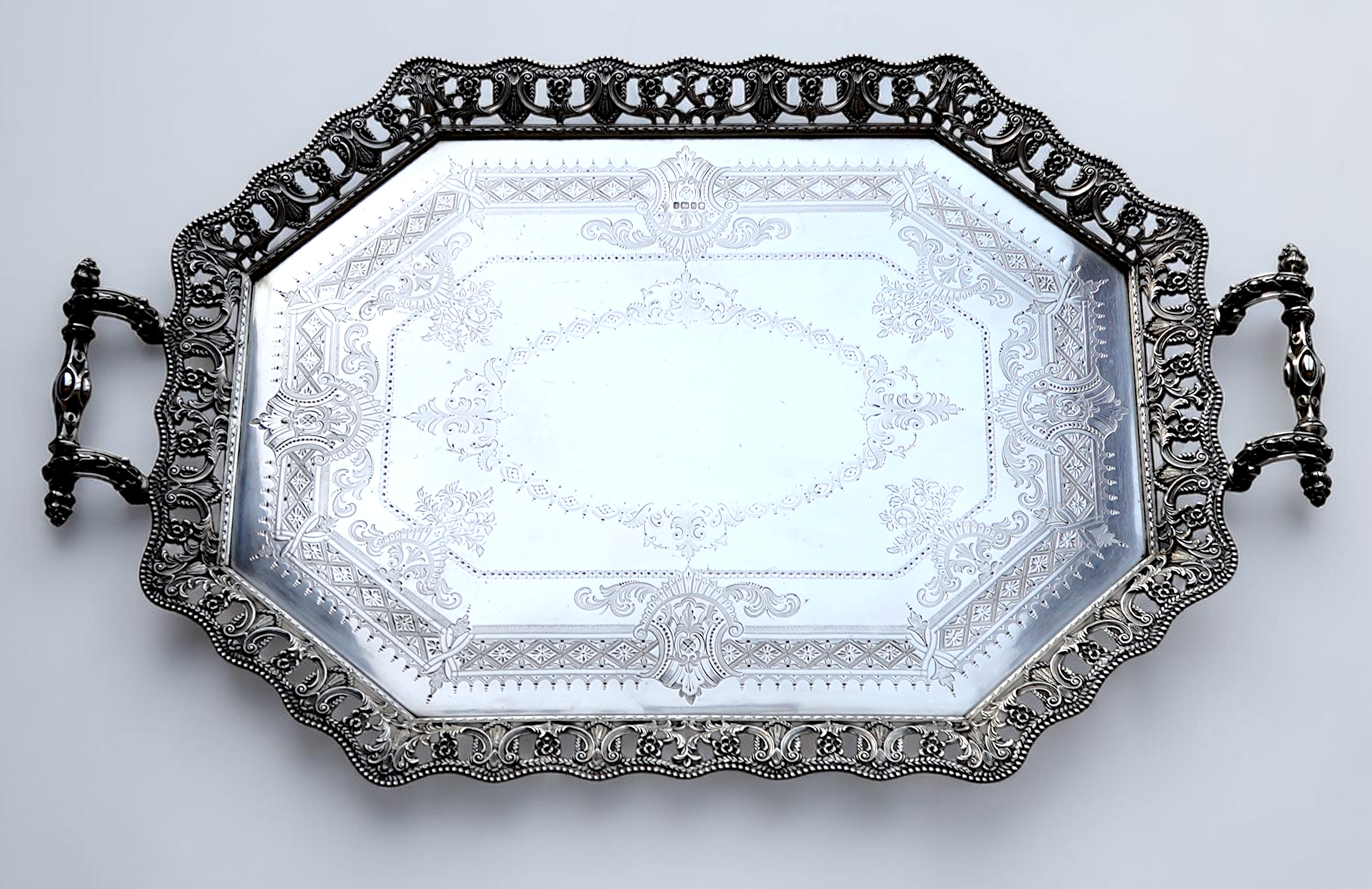
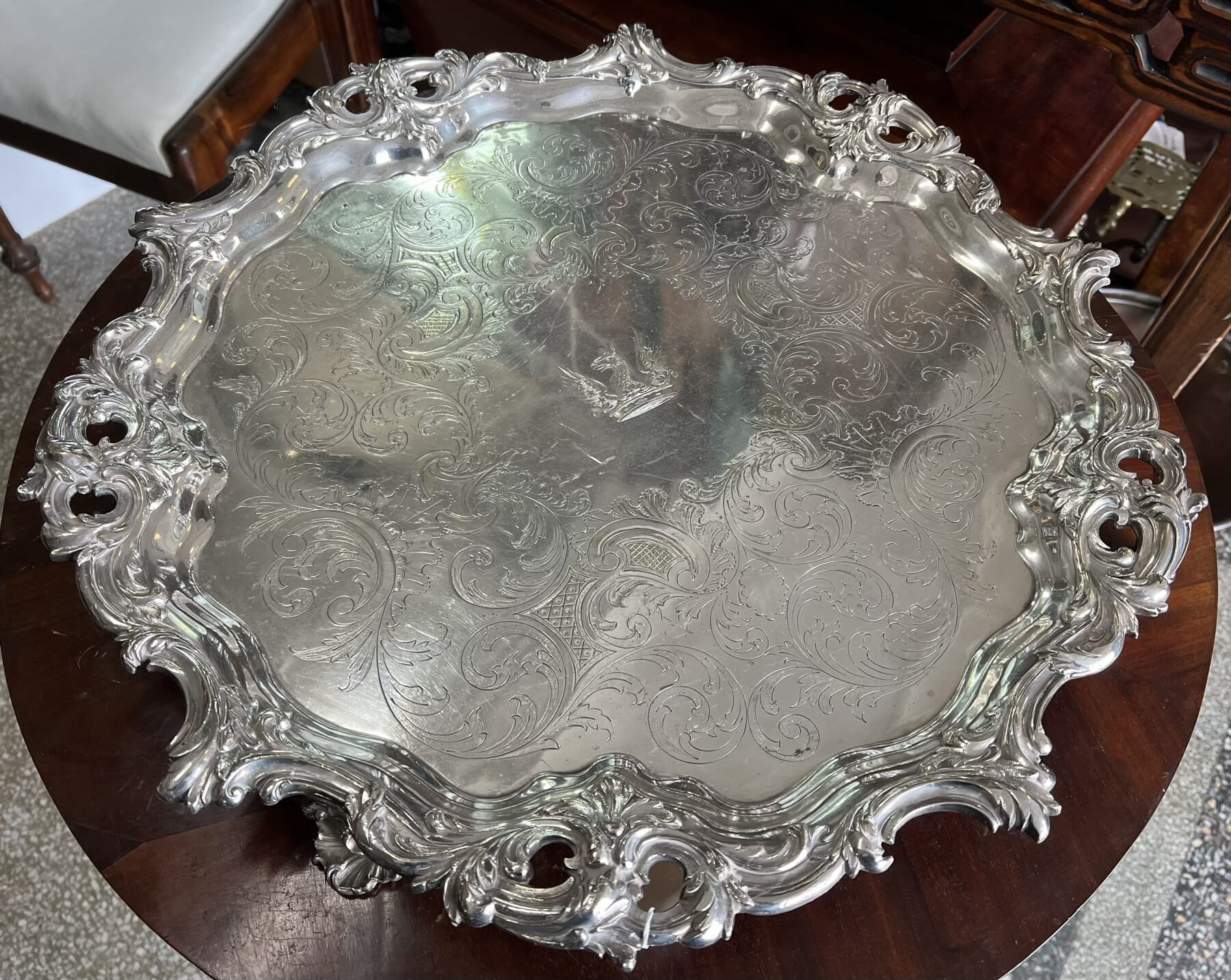
The second standout silver piece is a two-handled sterling silver gallery tray by Martin, Hall & Co., Sheffield, 1875, of extraordinary scale and quality: 5kg of richly engraved Victorian silver, the pierced foliate gallery and bright-cut ornament of the highest Sheffield workmanship. These two outstanding lots have a direct connection to a historically interesting early 20th century Melbourne provenance, the collection of Dr Ryan of Tara Hall, Studley Park Road.

Further silver highlights include a William IV seven-bar toast rack, an Edinburgh 1842 presentation salver, a Georgian marrow scoop & toddy ladle, a Georg Jensen Acorn caddy spoon, a Continental .800 cigarette case with fine beautiful enamel figural panel, and many more Sterling lots.

Gold Jewellery and Gems 
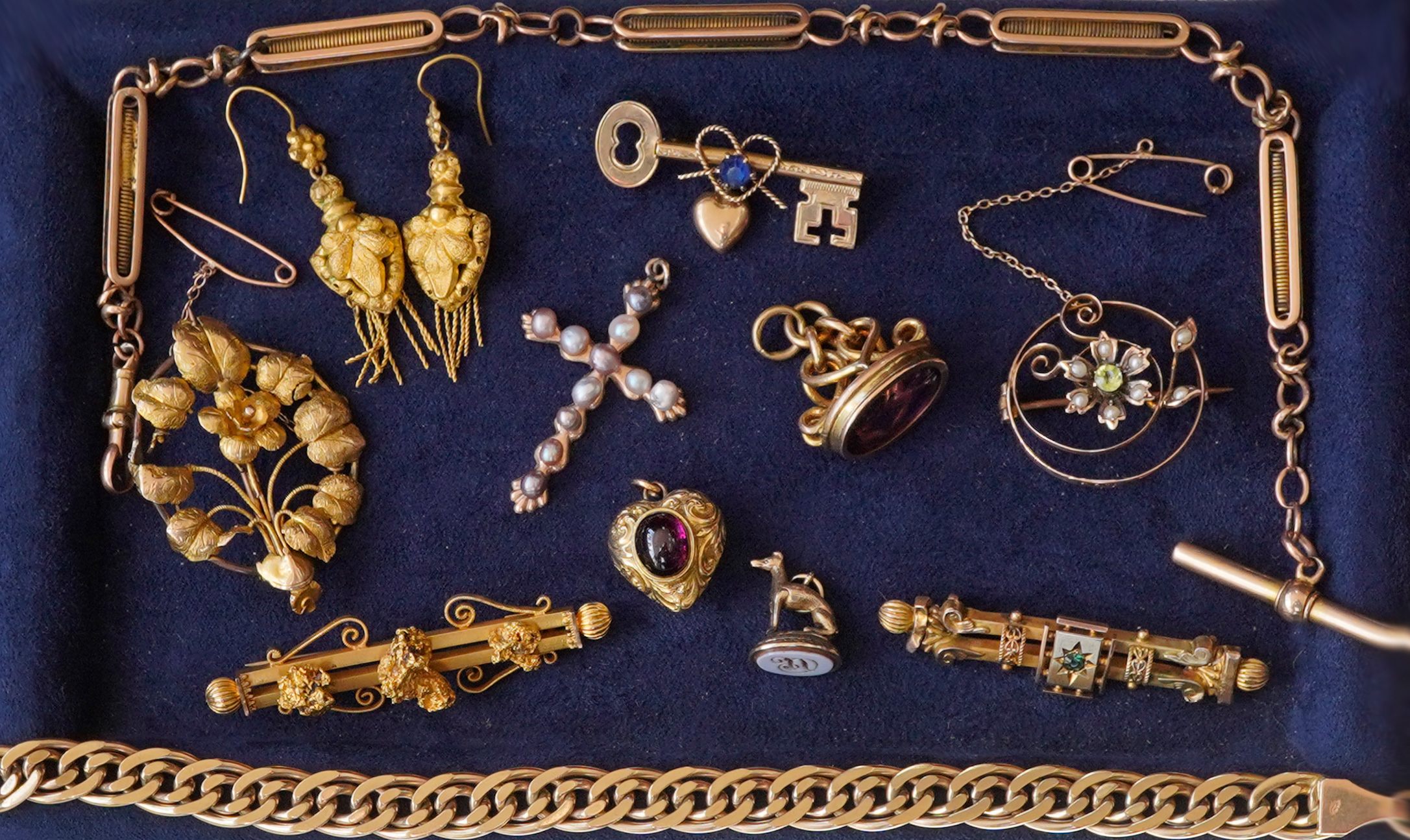
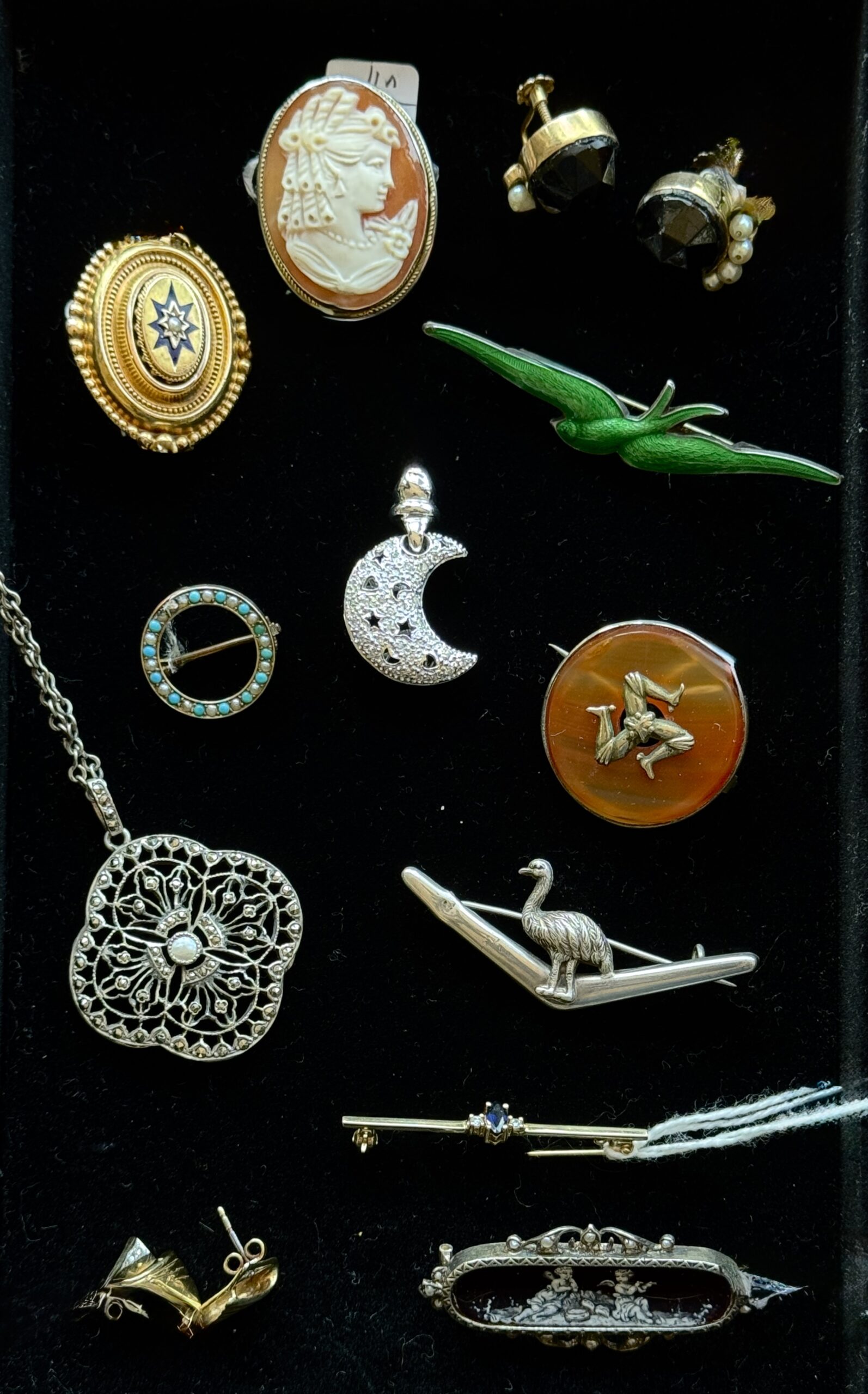
The ‘Vertu’ section is especially well represented in this sale. Colonial Australian gold is represented at its finest by an important 15ct gold bar brooch set with three substantial natural alluvial gold nuggets — unworked and rugged in their mounts, the contrast with the refined wirework frame capturing perfectly the romance of the Victorian gold rush. A more modern 18ct gold Cleopatra-collar necklace of 50.8 grams offers significant intrinsic and aesthetic value, while a Victorian 15ct gold Albert watch chain of 27.9 grams in engine-turned torpedo links represents the pinnacle of the English goldsmith’s art for masculine accessories.

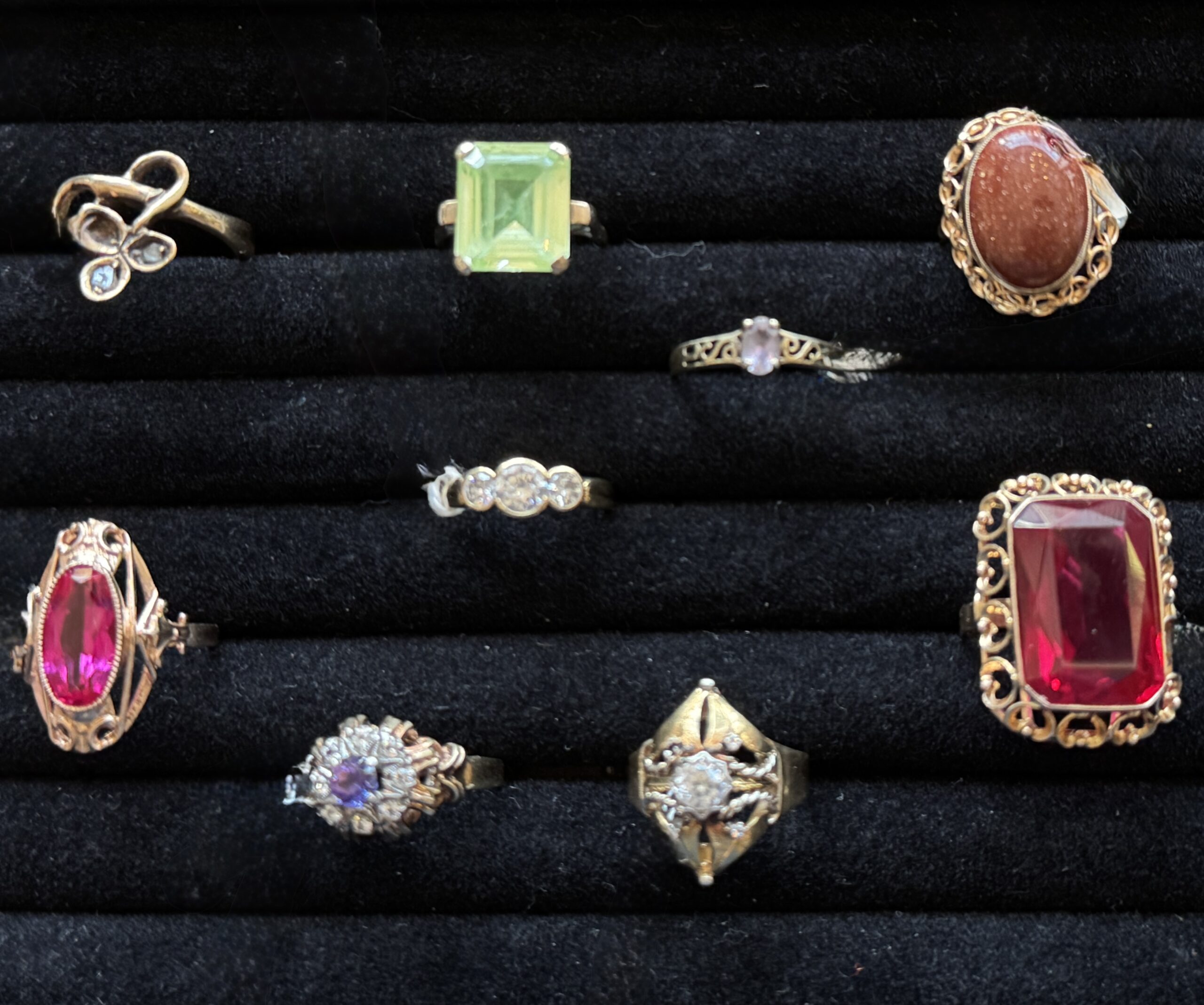
Among the rings, highlights include an 18ct gold three-stone diamond ring, an 18ct Ceylon sapphire and diamond cluster ring with bright cornflower-blue stone of approximately 2.25 carats, an 18ct Birmingham 1870 turquoise, pearl and rose-cut diamond dress ring, and an exceptional 18ct gold sculptural ring by Sandy Kilpatrick of 22.2 grams. Loose gemstones include a cushion-cut aquamarine of approximately 10.45 carats of excellent clarity.

Glass – including Uranium

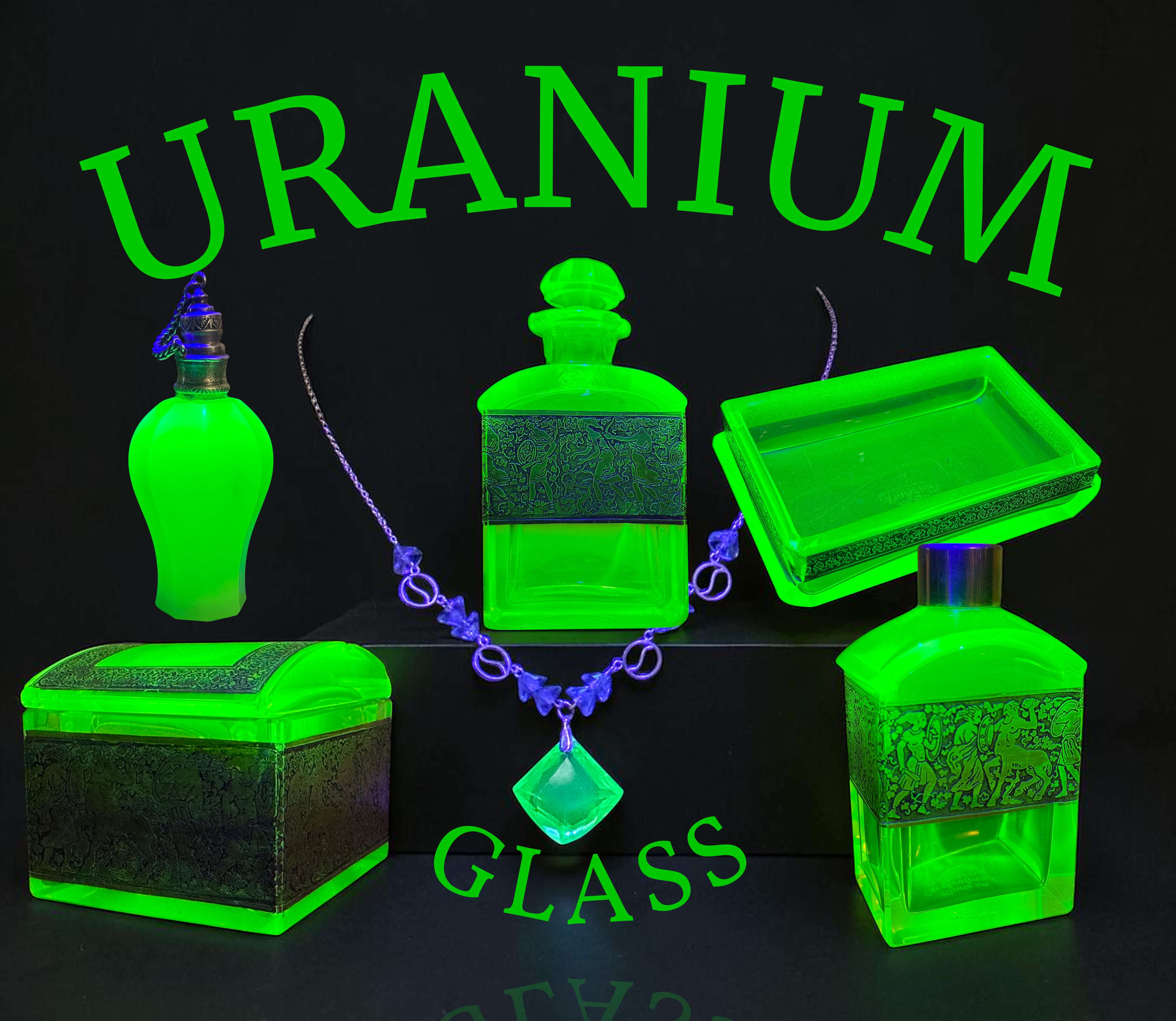
A stylish collection of Art Deco glassware includes figural flower bowls by Muller & Co, Walther & Sohne, and Sowerby. Most startling is a part Moser of Karlsbad dressing table set with acid etched panels, which comes to life under a UV blacklight: they are made from Uranium Glass, rarely seen in this quality. A small perfume is an even earlier piece, and a gold mounted necklace with a large Uranium cut ‘gem’ shows the value placed on this remarkable material in the early 20th century.

Uranium Glass

Horology 
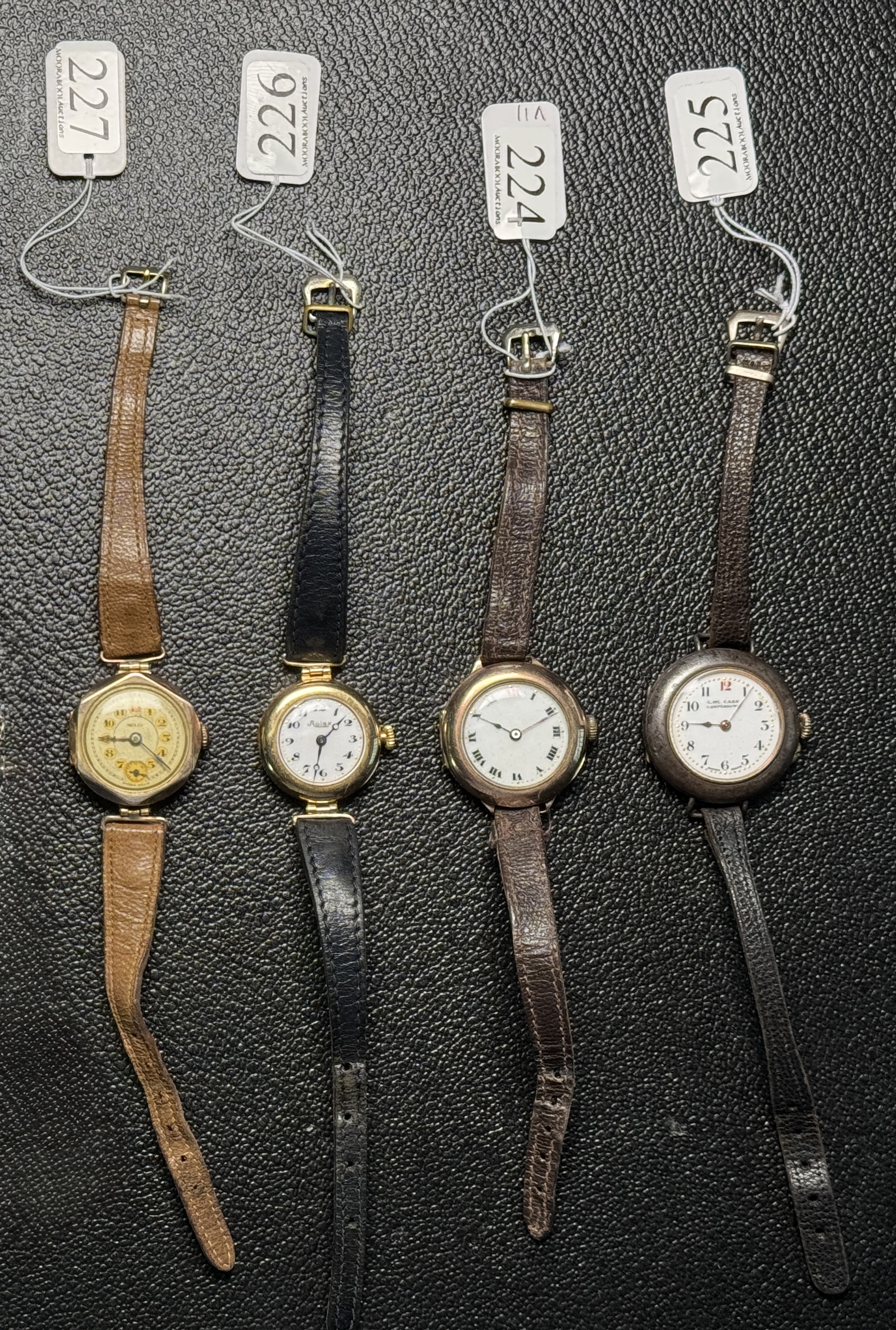
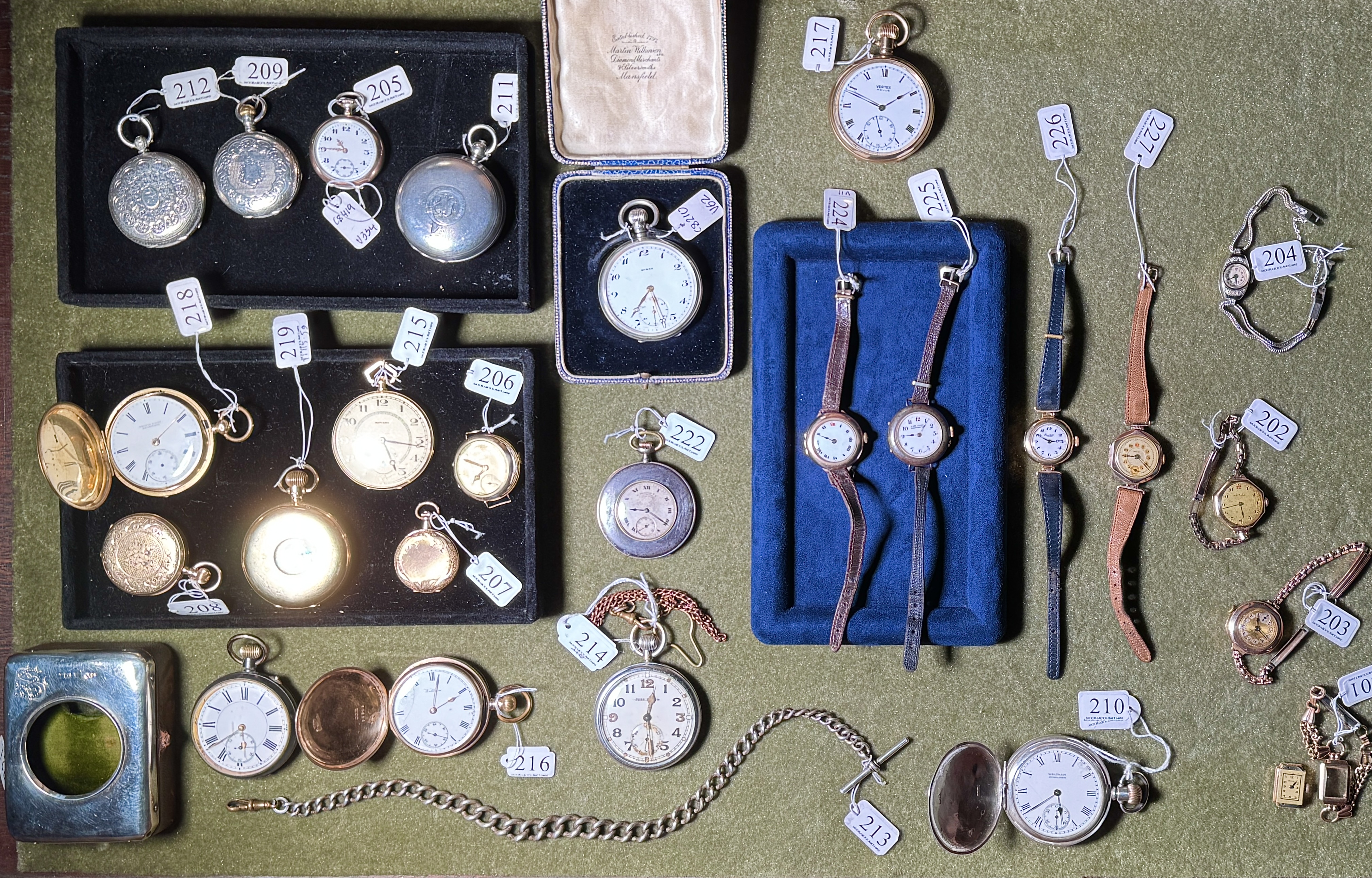
A rare 9ct gold Rolex officers’ trench wristwatch from the Wilsdorf & Davis period, c. 1916, with Aegler Rebberg movement and the characteristic red XII marker, opens a strong watch section. A Movado 18ct gold open-face pocket watch with Grand Prix Bruxelles 1910 engraved to the dust cover is offered from a local estate inheritance, running well. The Zenith 18ct gold half-hunter, c. 1925, with total weight of 115.5 grams including movement, carries a reserve set to reflect substantial intrinsic gold value. Further Rolex pieces include a gunmetal open-face pocket watch retailed by William Drummond & Co., Melbourne, c. 1908–1913. Lady’s watches include an Omega Seamaster Aqua Terra with full box and papers.

Watches
Watches

Works of Art and Sculpture 
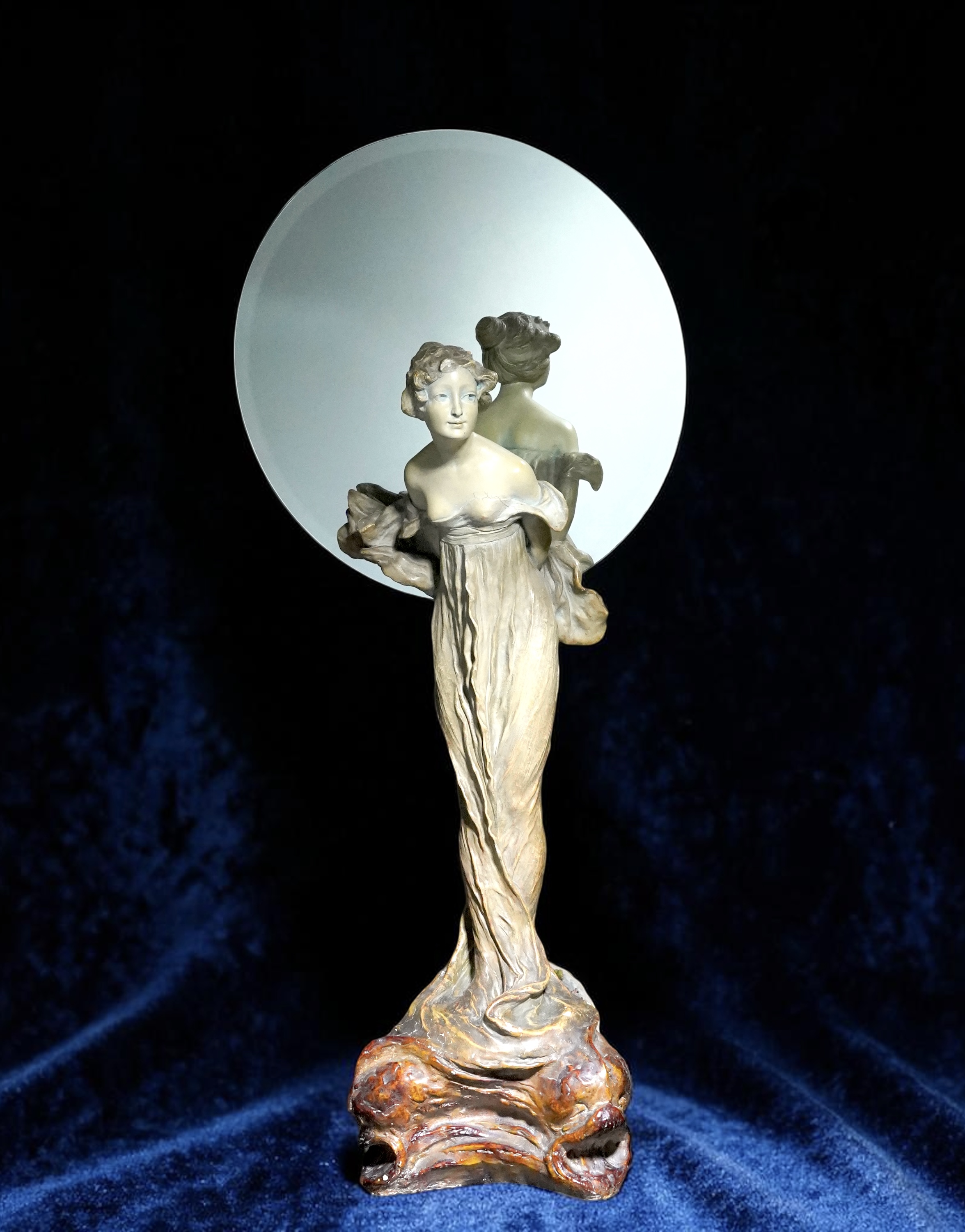
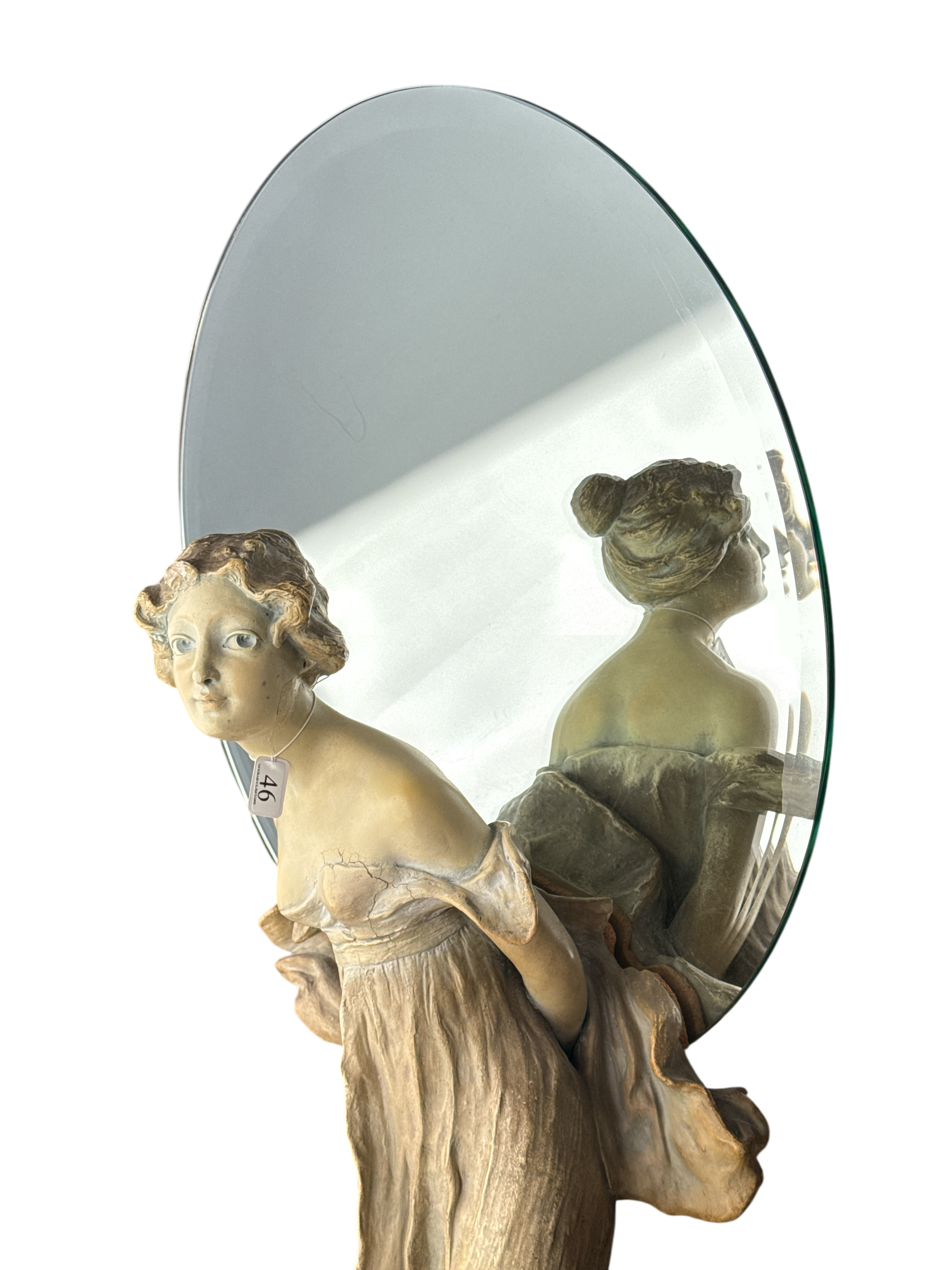
A large Continental Art Nouveau cold-painted terracotta figure of an elegant young woman holding a circular mirror, standing over a metre high and raised on a naturalistically modelled base with dolphin heads, is among the most visually striking decorative objects in recent Moorabool sales. A Chinese Qing dynasty Official’s Hat armchair in hongmu hardwood with elaborate openwork deer-and-lingzhi back splat is offered from an old Geelong family collection.

Asian Works of Art 
Early Asian ceramics from a single collector’s estate (active in SE Asia in the 1980’s) form a specialist section of genuine depth. A Khmer stoneware baluster pedestal vase of the Angkor period (11th–12th century), covered in iron-brown glaze with comparable examples in the Musée Guimet and the National Gallery of Victoria, is the outstanding piece. Ming dynasty Zhangzhou export wares include a qilin dish, a susancai lidded box, and a pair of blue and white vessels. Thai Sawankhalok stoneware runs to eight lots including a large animal-finial storage jar and a mangosteen-form lidded box. Vietnamese Chu Dau and Chinese Longquan celadon are also represented.
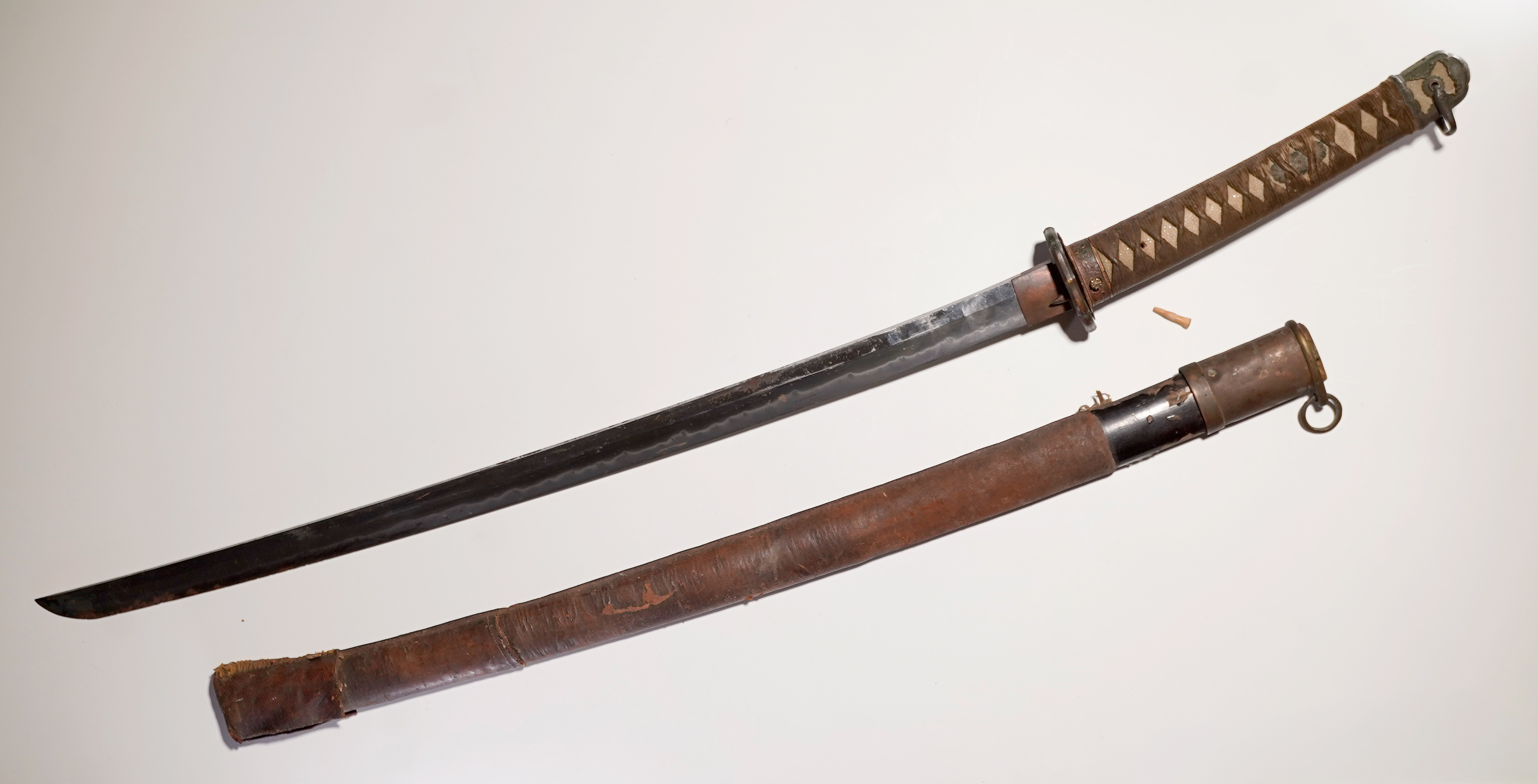
A Japanese katana brought back from WWII by a RAN soldier and recently discovered in his shed turns out to be an important historical piece, bearing the signature of Fujiwara Kanefusa, 23rd generation (Katō Kōichi, 1900–1977). He was one of the most decorated swordsmiths of the wartime era, ranked first seat at the 6th Exhibition of Swords (1941) and awarded kibin no retsu at the Tosho Banzuke (1942) — the highest competitive honours available to an active Japanese swordsmith. 

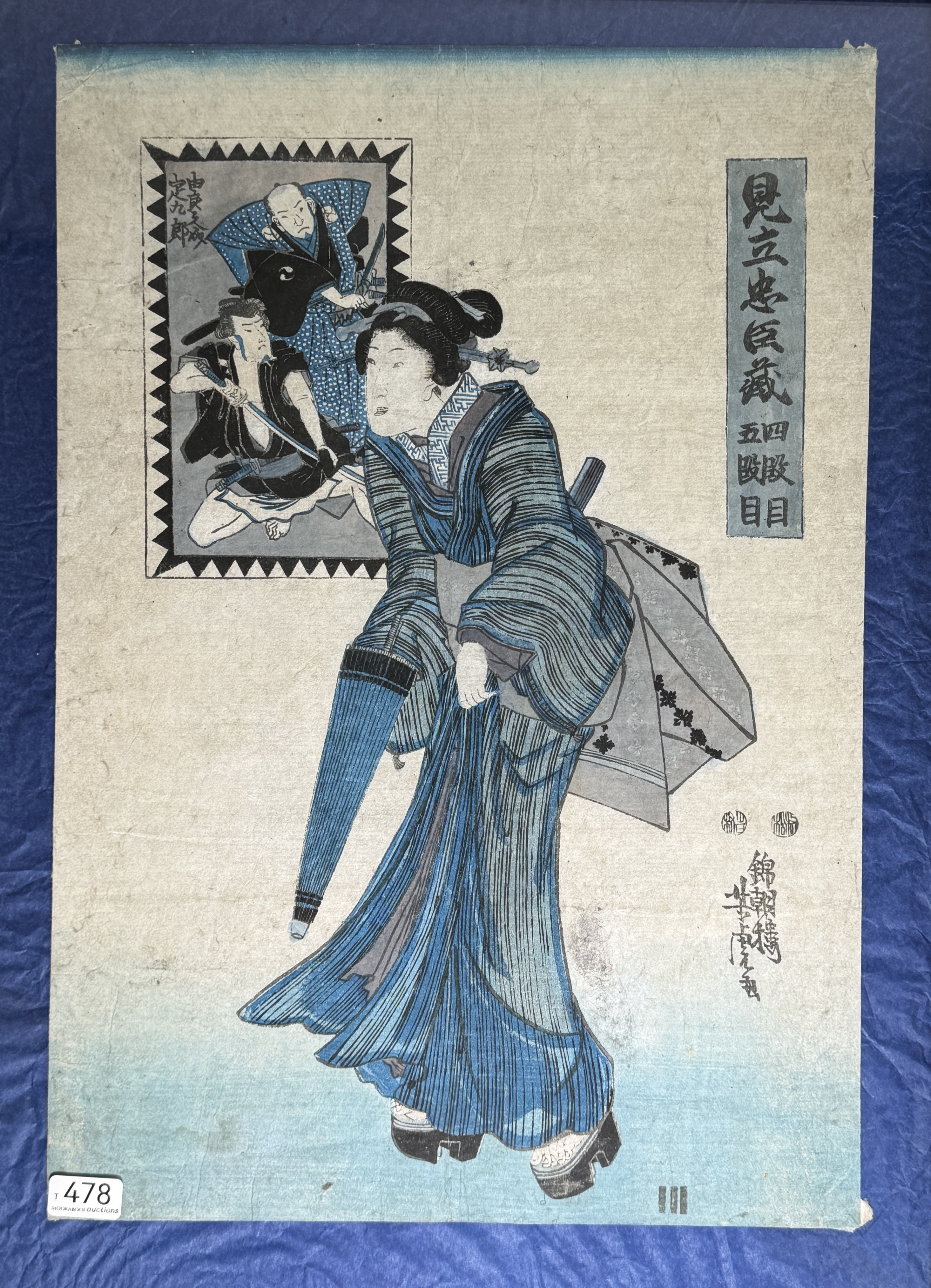
A rare Edo-period woodblock print (nishiki-e) by Utagawa Yoshitora, c. 1847, from the Mitate Chūshingura series, rounds out the Asian section.

Indonesian Textiles 
From the same collection as the ceramics come twenty-five lots of Indonesian ceremonial textiles, including East Sumbanese hinggi kombu with horse, deer and rooster iconography, Palembang limar songket, Torajan sekomandi ceremonial cloth, Javanese batik tulis, and cloths from Flores, Timor and the Solor-Alor archipelago — all in natural morinda and indigo dyes.

Victorian ebonized Aesthetic Movement cabinet, of unusually shallow form, circa 1875

Furniture
Notable furniture includes a large Victorian ebonized Aesthetic Movement cabinet with japonesque gilt decoration and bevelled mirror doors; a French carved walnut armoire of monumental scale with original bevelled mirror plates; a rare Art Deco dining suite of burr birch veneer with possible Victorian Railways provenance, including extending table, eight chairs and matching sideboard; and an Australian cedar chevalier mirror, a 2-drawer desk & a large partners desk.

Books, Coins, Banknotes
Australian colonial books include some with an 1850’s provenance of Parliament of Victoria Library, including a rare first edition of Barrett Browning’s Aurora Leigh, 1857, and Legislative Council of Victoria library bindings on a ‘Jerdan Autobiography’ four-volume first edition. Coins include an Imperial Russian collection staring a gold 1898 5-rouble, alongside a collection of Australian gold sovereigns, Roman coins, and some fascinating French Revolutionary period coins. Banknotes span Soviet, Chinese, Imperial Russian, Caribbean, Hong Kong, and early Australian decimal issues including a consecutive DJF one-dollar run.

And of course, there are numerous ‘bargain box lots’ to discover.

Visit the Auction Catalogue >

Sale Details & Catalogue

This is a sale you can attend in person, or follow the action via our live streaming service on Invaluable.

Art Nouveau Maiden Mirror

Sale is to take place on Saturday 2nd May,
starting at 10am.
16-18 Ryrie St, Geelong
ph 03 52292970

This is a sale you can attend in person, or follow the action via our live streaming service on Invaluable.

Bidding can be done in the rooms, or online using the Invaluable app. We also offer absentee bidding, and in some cases telephone bidding.

Commission via invaluable is 23% hammer price; our in-house commission is 20%. There are no other fees.

Shipping is mostly possible in-house. We assume all addresses outside Victoria will need shipping, and send an invoice in the days following the sale.

Visit the Auction Catalogue >

Posted on

Fresh Stock at Moorabool

Welcome to our latest Fresh Stock release. There’s quite a range of Fresh items to browse….

Here’s our new way of browsing: enjoy!

Posted on

Grace Darling, the Heroine of the Sea – in Staffordshire!

Grace-Darling Staffordshire figure c. 1850

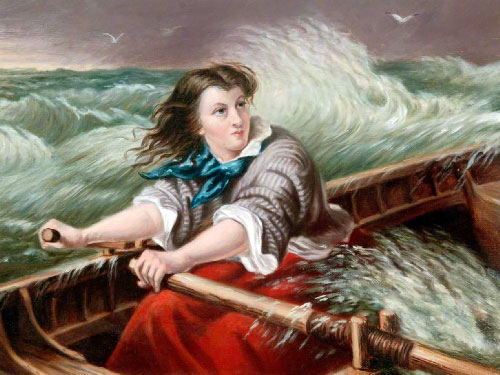
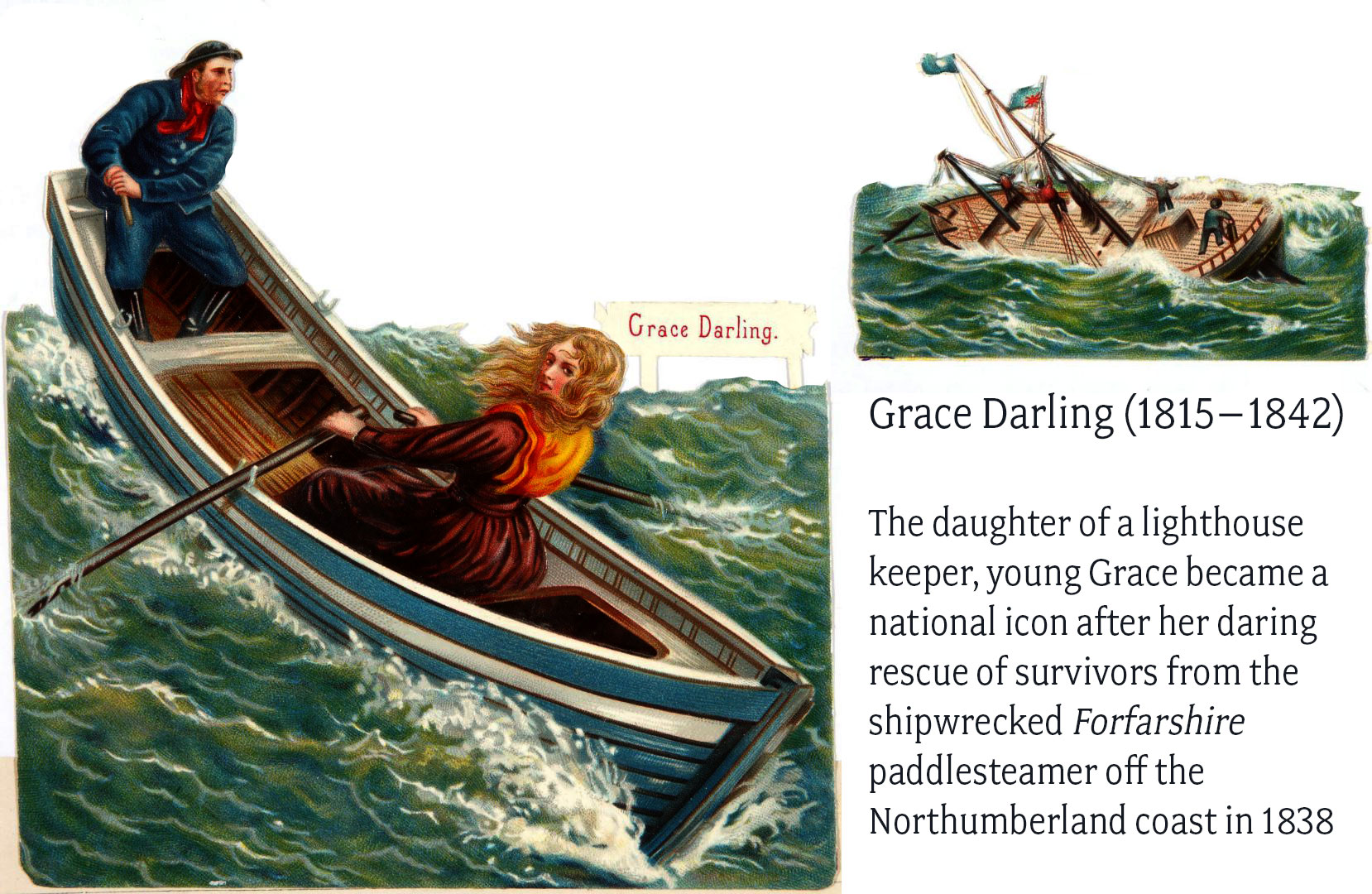
This charming Staffordshire figure commemorates one of the celebrated heroines of the Victorian age—Grace Darling (1815–1842). The daughter of a lighthouse keeper, Grace became a national icon after her daring rescue of survivors from the shipwrecked Forfarshire off the Northumberland coast in 1838. Braving fierce seas in a small rowing boat with her father, she helped save nine lives, against all odds. Just a few years later she died of tuberculosis.

Her youthful bravery captured the public’s imagination, inspiring poetry, paintings—and popular ceramic tributes like this figure.

Grace Darling by Thomas Brooks, a popular victorian Lithograph

Grace’s story epitomised Victorian ideals of courage and virtue, making her a popular subject for ‘mementos’ – including children’s books, several ballads with illustrations, and of course the Staffordshire potters were up with the trend, producing these charming figures for the domestic mantel shelf.

Grace-Darling
‘Grace Darling’ paper cut-out, mid-Victorian

There’s probably a print with the scene depicted, as yet not identified.

Grace Darling Staffordshire Figure c. 1850
OurGrace Darling Staffordshire Figure, in an imagined storm…… c. 1850

What makes this example unique is…. she’s alone her boat! Her father should be in there with her, seated opposite. In this case there is a white-glazed area, which closer examination shows to be a pair of legs and nothing else! It looks like the wave that has almost swamped the small lifeboat the brave girl is rowing has swept her father away, leaving only his trousers!

What has happened is a firing flaw in the factory – he’s come off in the initial firing – or the person responsible for placing him into the original clay moulded blank has missed this small additional moulded piece – so that when it came to be glazed, it was simply smoothed over and glazed, and never painted.

Surely a unique example of a rare figure type!

Posted on

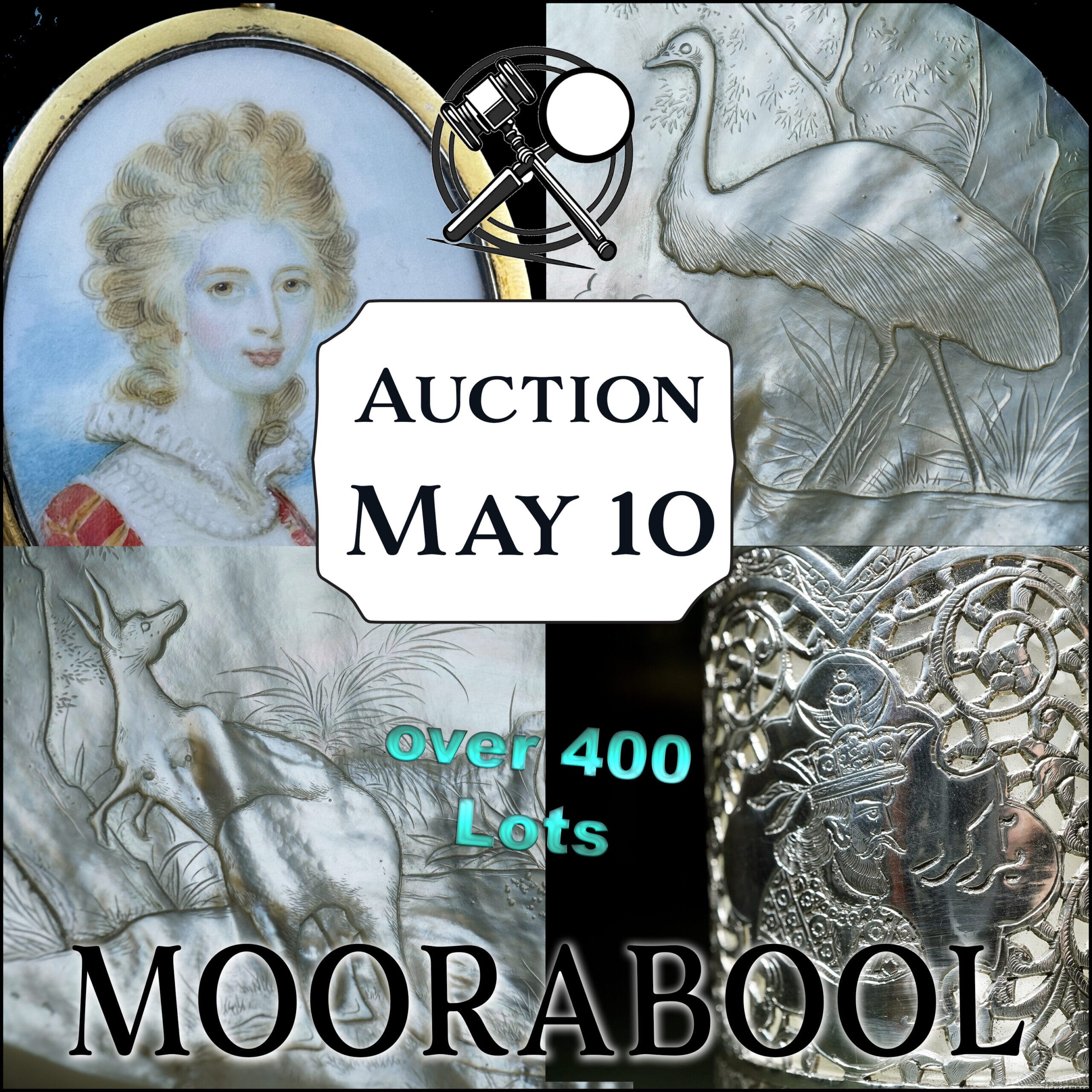
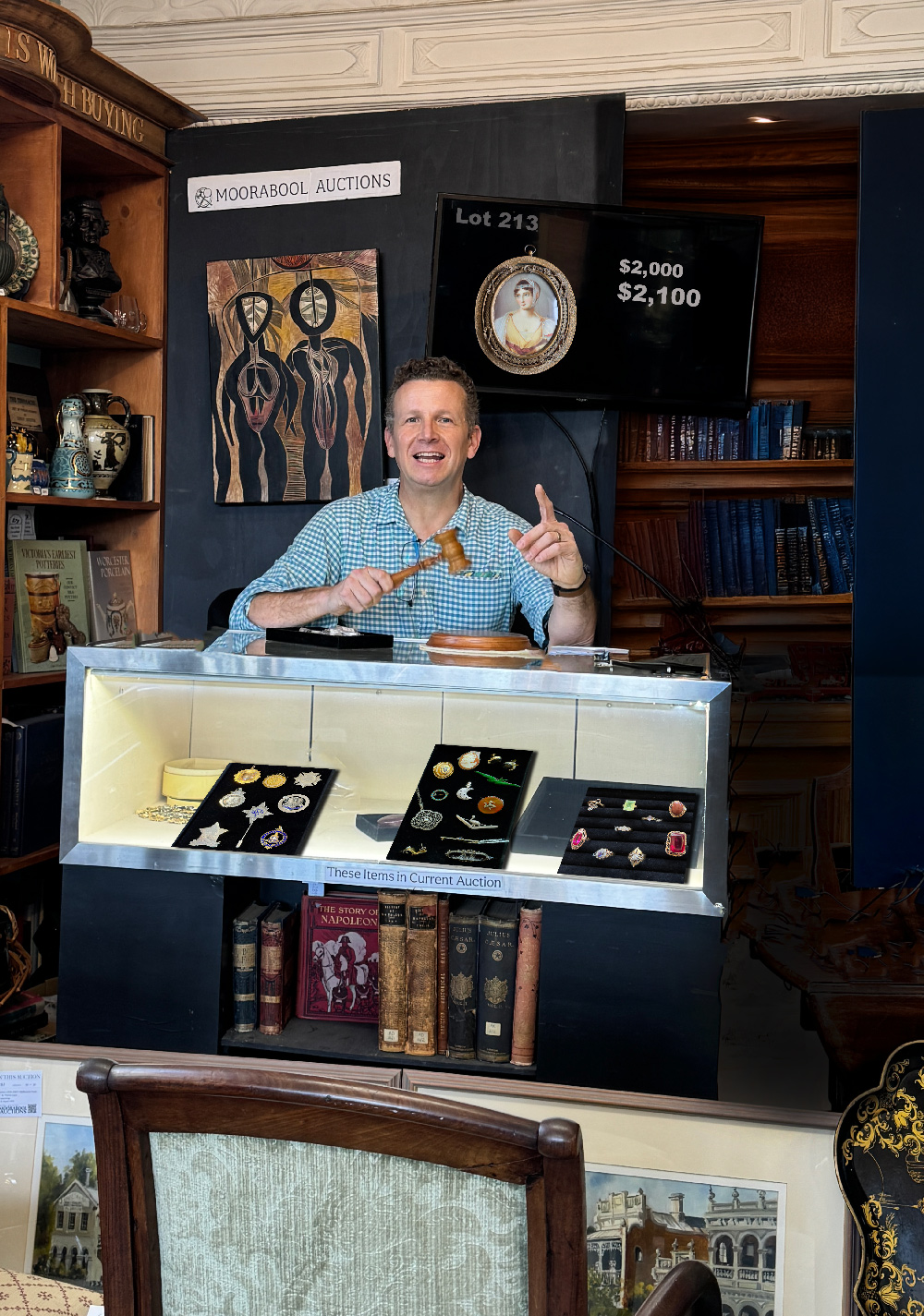
May Auction

Moorabool is pleased to announce their May Auction is now available on Invaluable.

It’s a ‘Live’ auction , meaning those who would like to attend in person can come & bid in our Geelong premises.

Online, it is hosted by Invaluable.com

There’s over 400 lots for you to browse & bid on, from a very small & very expensive Chinese vase, to a number of ‘box lots’ full of interesting items from a local estate that are offered without reserve – ‘bargain boxes’.

Fine Australiana, Russian Silver & Gold, 18th, 19th & 20th century Pottery & Porcelain including collections of Moorcroft & Royal Worcester, useful Furniture, Art, Silver, Glass, Collectables…. there’s something for everyone.

Sale starts at 11am, Saturday 10th May.

Posted on

An Asian-themed Fresh Stock

Welcome to our first ‘Fresh Stock’ for 2025.

Chinese bronze censors, Ming Dynasty, 16th-17th Century

We have a lot of splendid items to prepare for you, and will be releasing them over the next few weeks in groups of similar items – let’s call them ‘mini-Exhibitions’.

Starting with….. Asian.

Chinese, Japanese, Burmese, Sri Lankan…. there’s a great variety of cultures represented here.

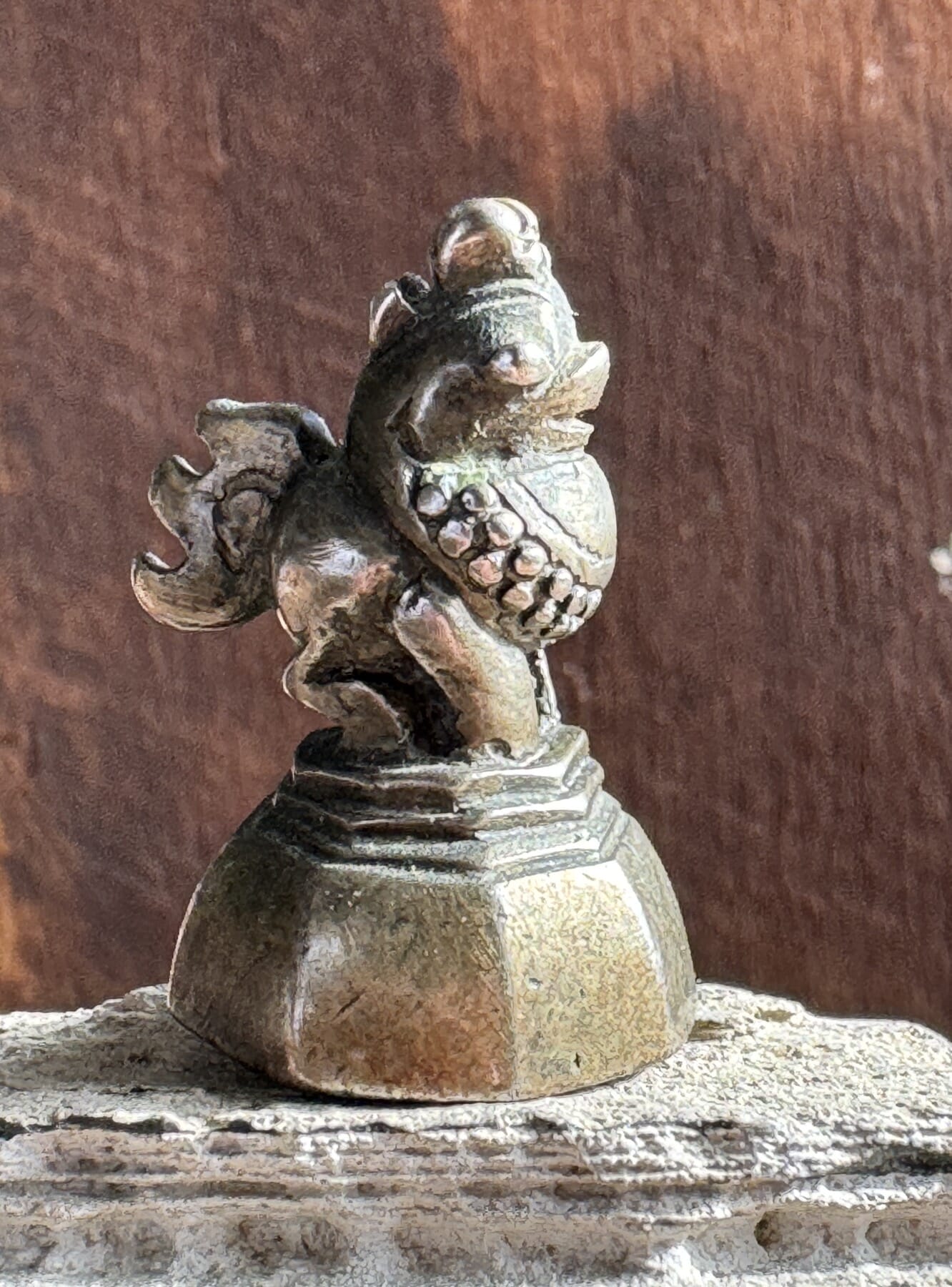
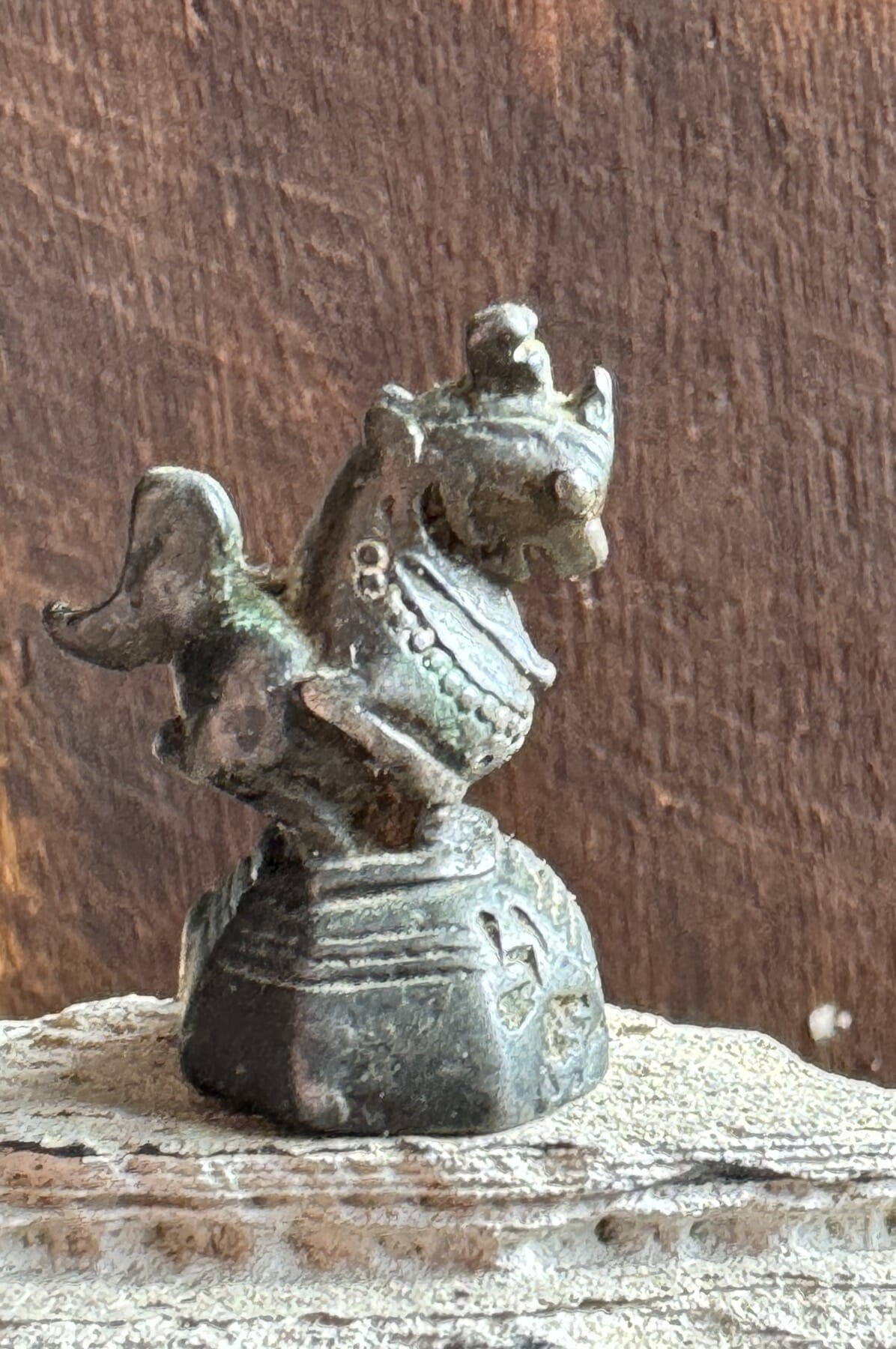
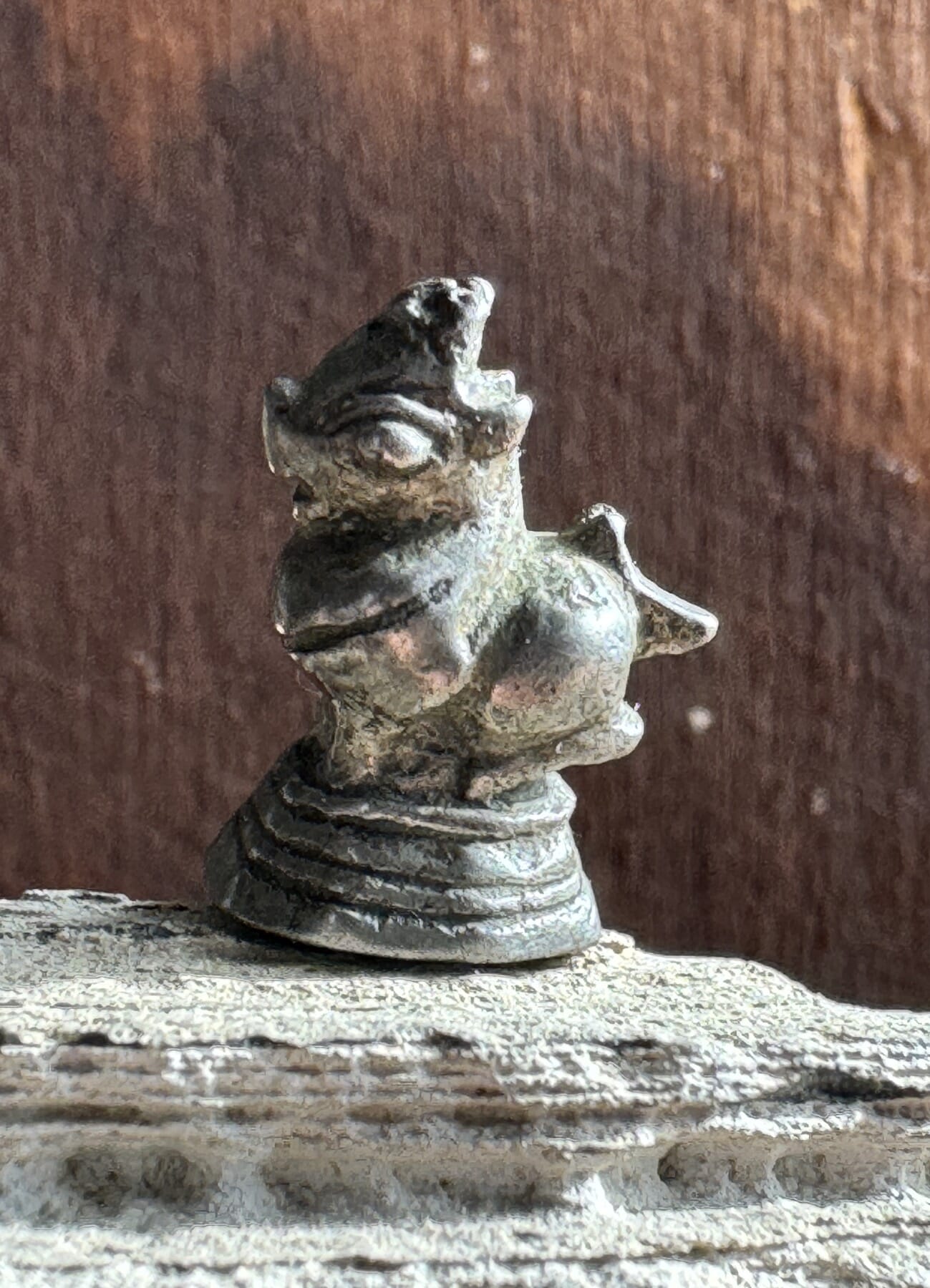
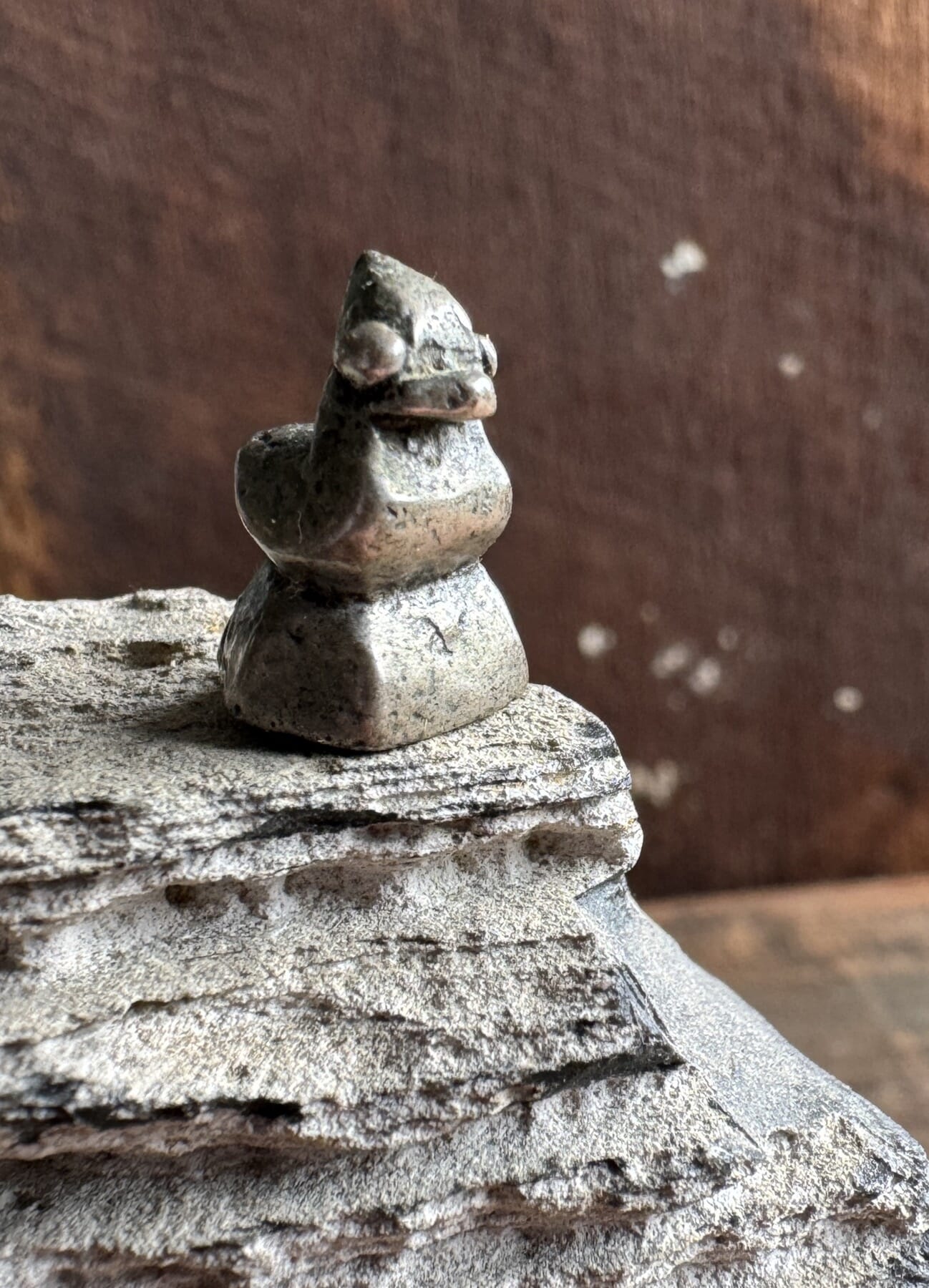
Burmese Opium Weights
Burmese ‘Opium’ Weights

Burmese ‘Opium’ Weights

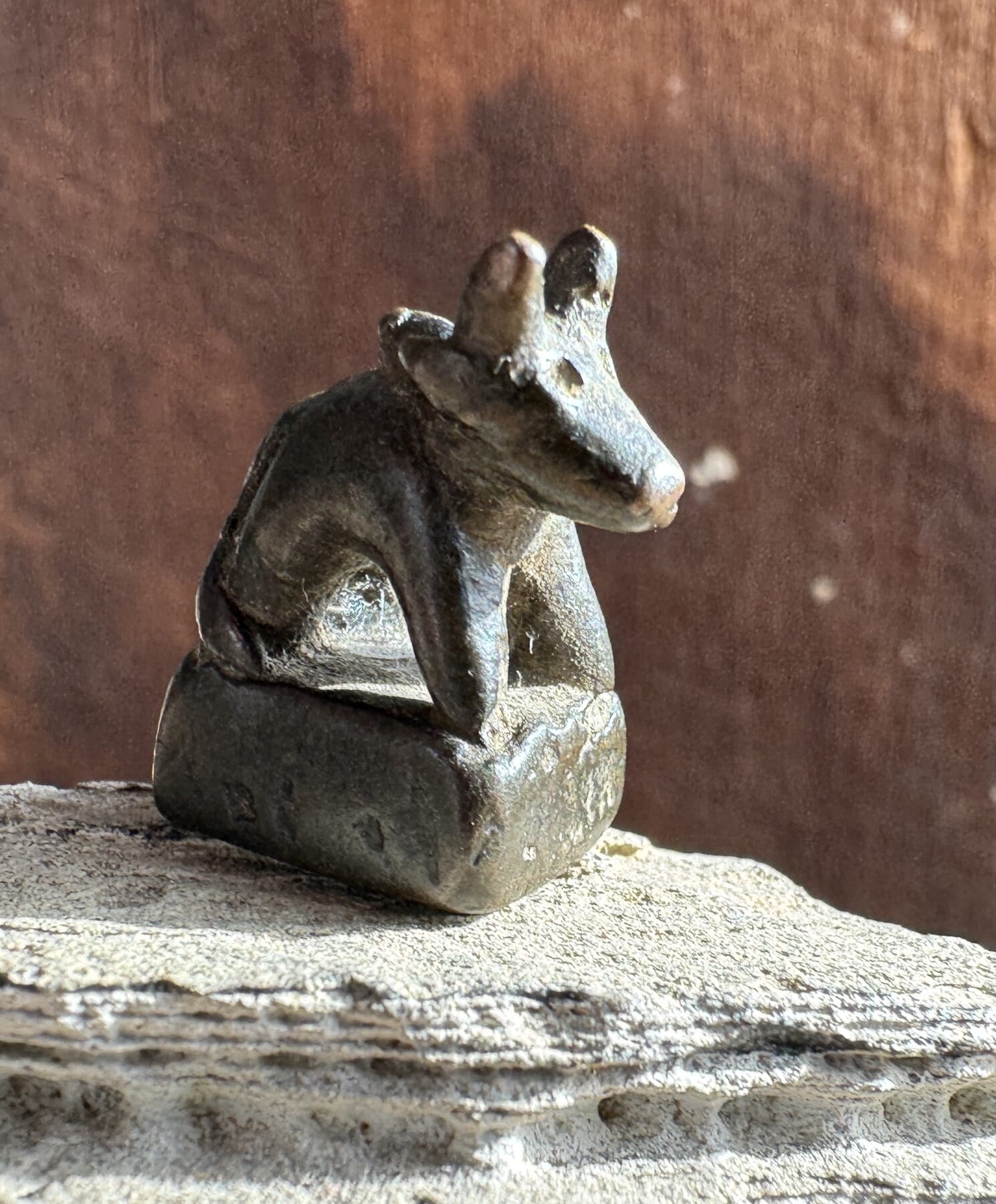
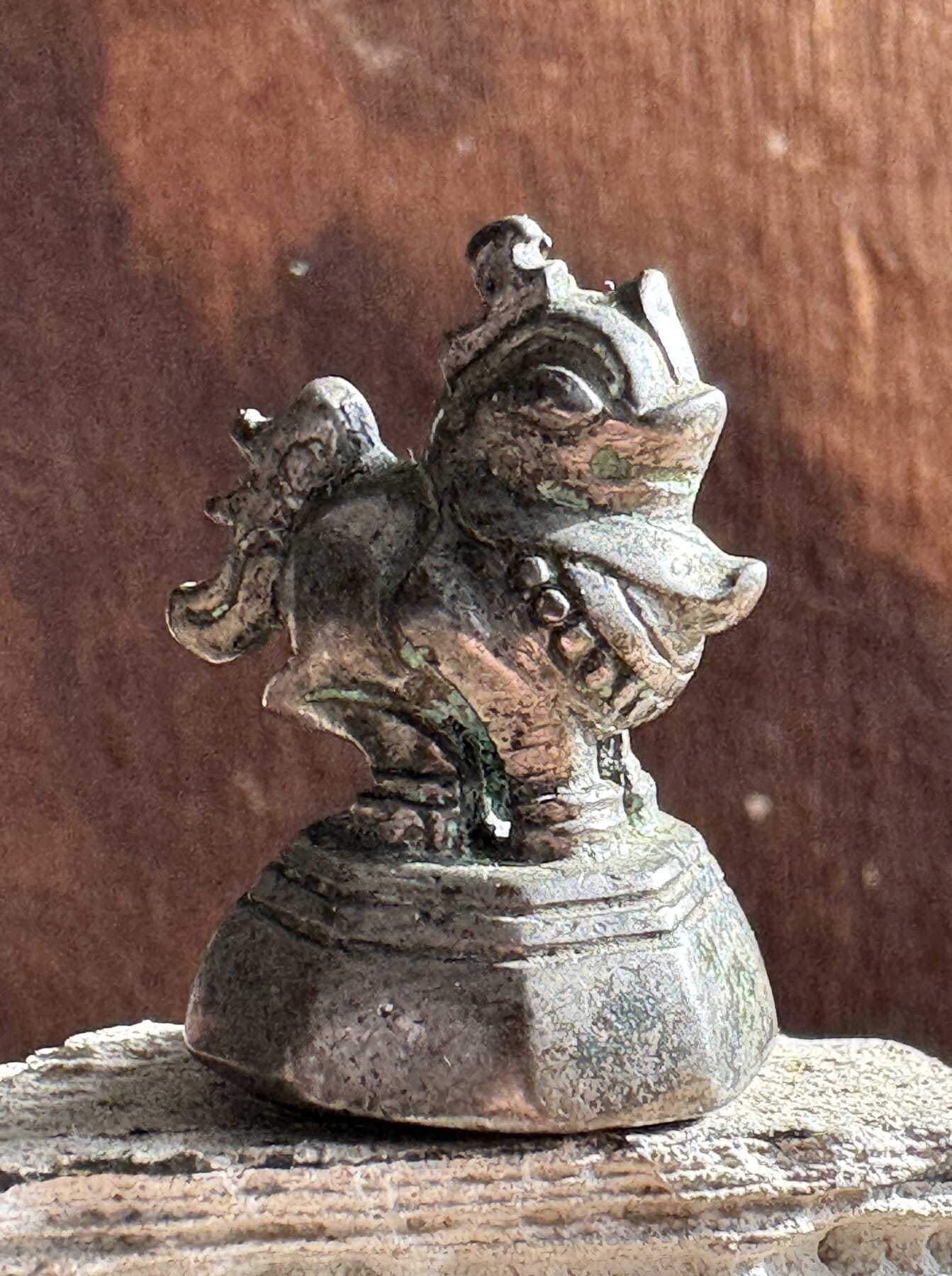
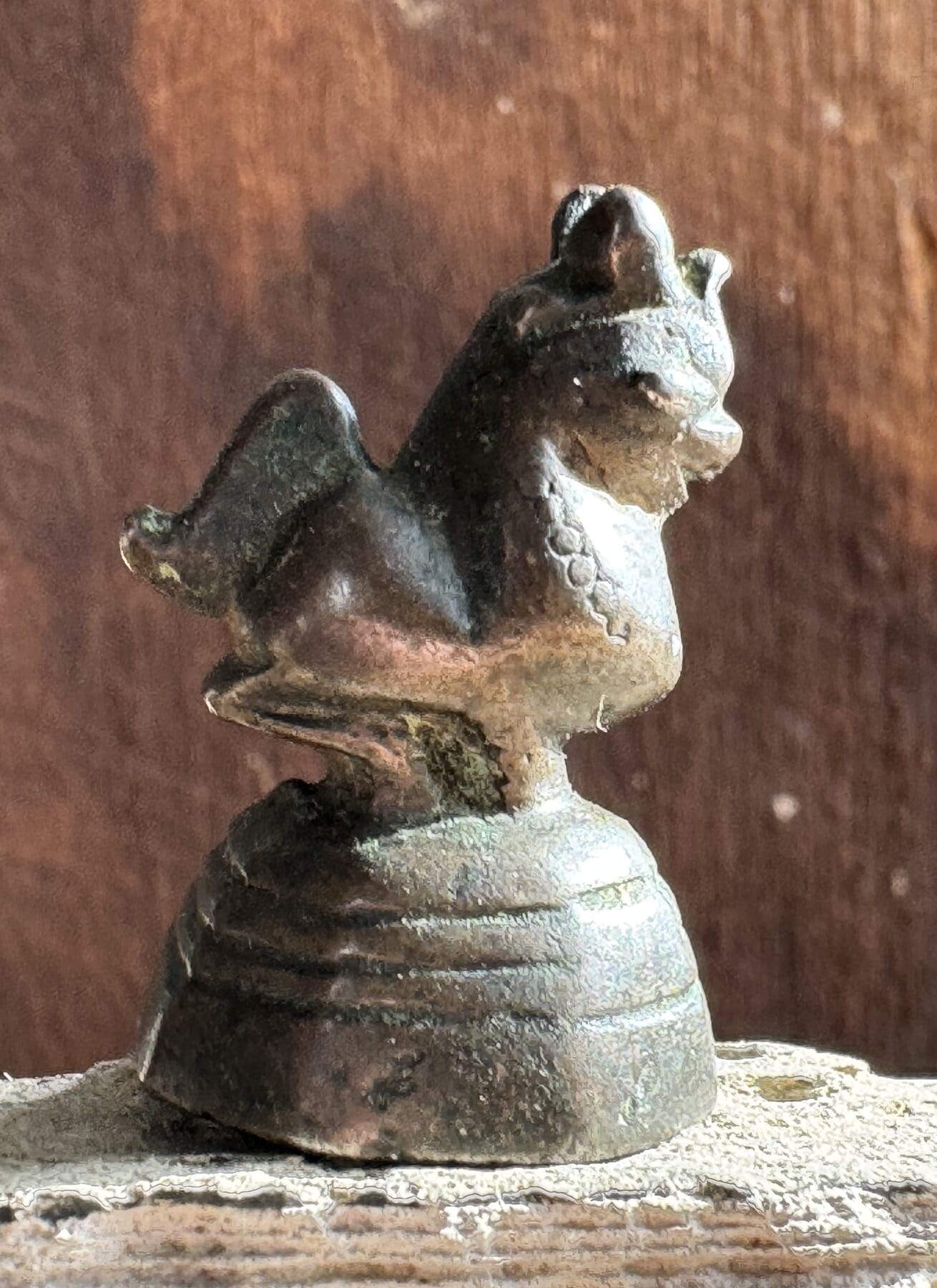
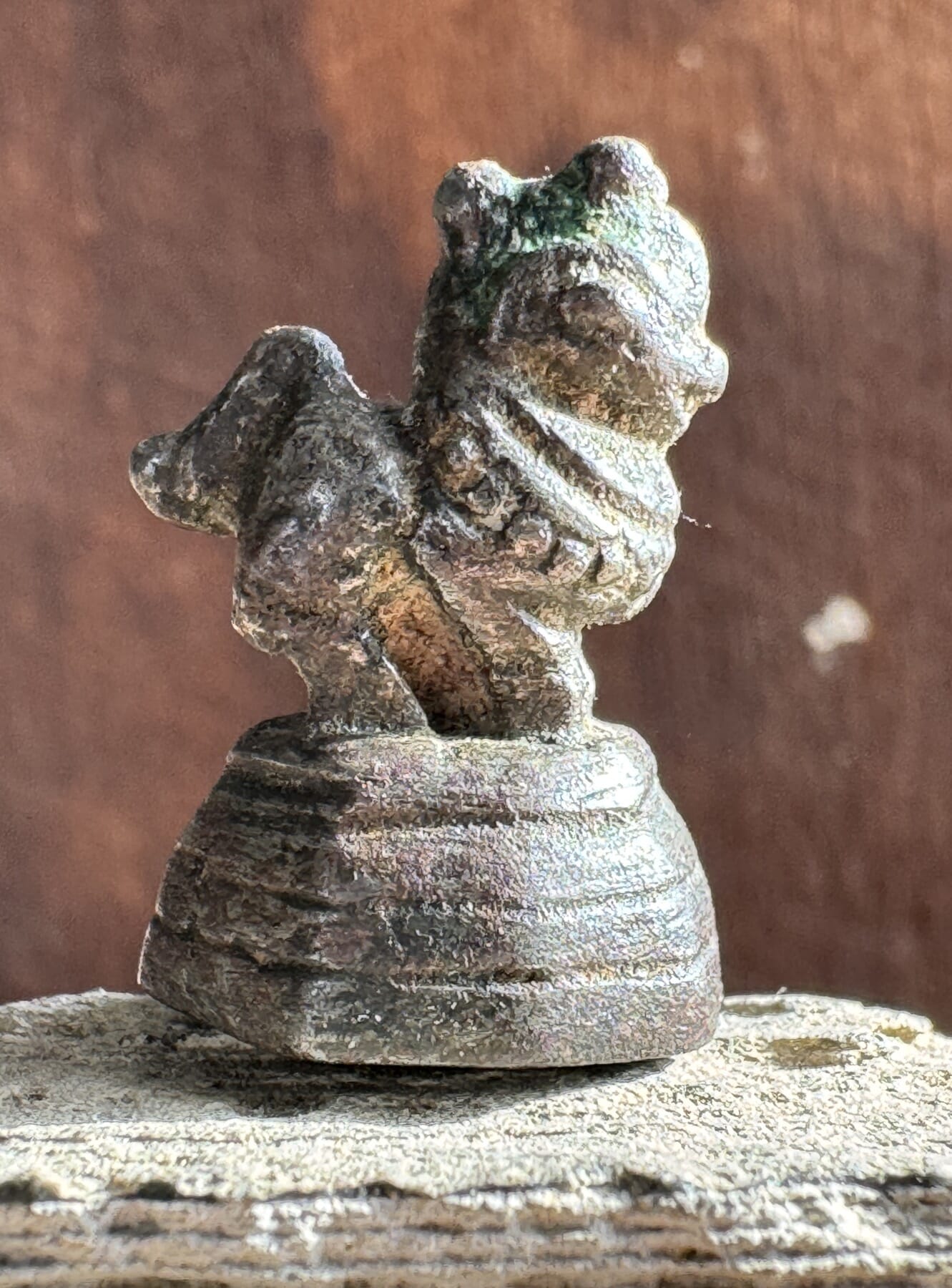
Thee miniature masterpieces are collectively known as ‘opium’ weights, as that was a common use for them in their countries of origin in South-East Asia – but they were used as the measuring weight for any other spice or item that needed weighing. The most commonly seen is a very cute crested duck – represented in this group by the rarely seen minute example, just ##mm tall…. The majority of these examples are a mythical ‘Lion’ creature, with four legs like a horse, a head that almost has a beak, and a wild main and tail – each also featuring a broad beaded necklace. Rarest in this group is a tiny creature we have called a ‘dog’ – but it may well be something else.


From local collections….

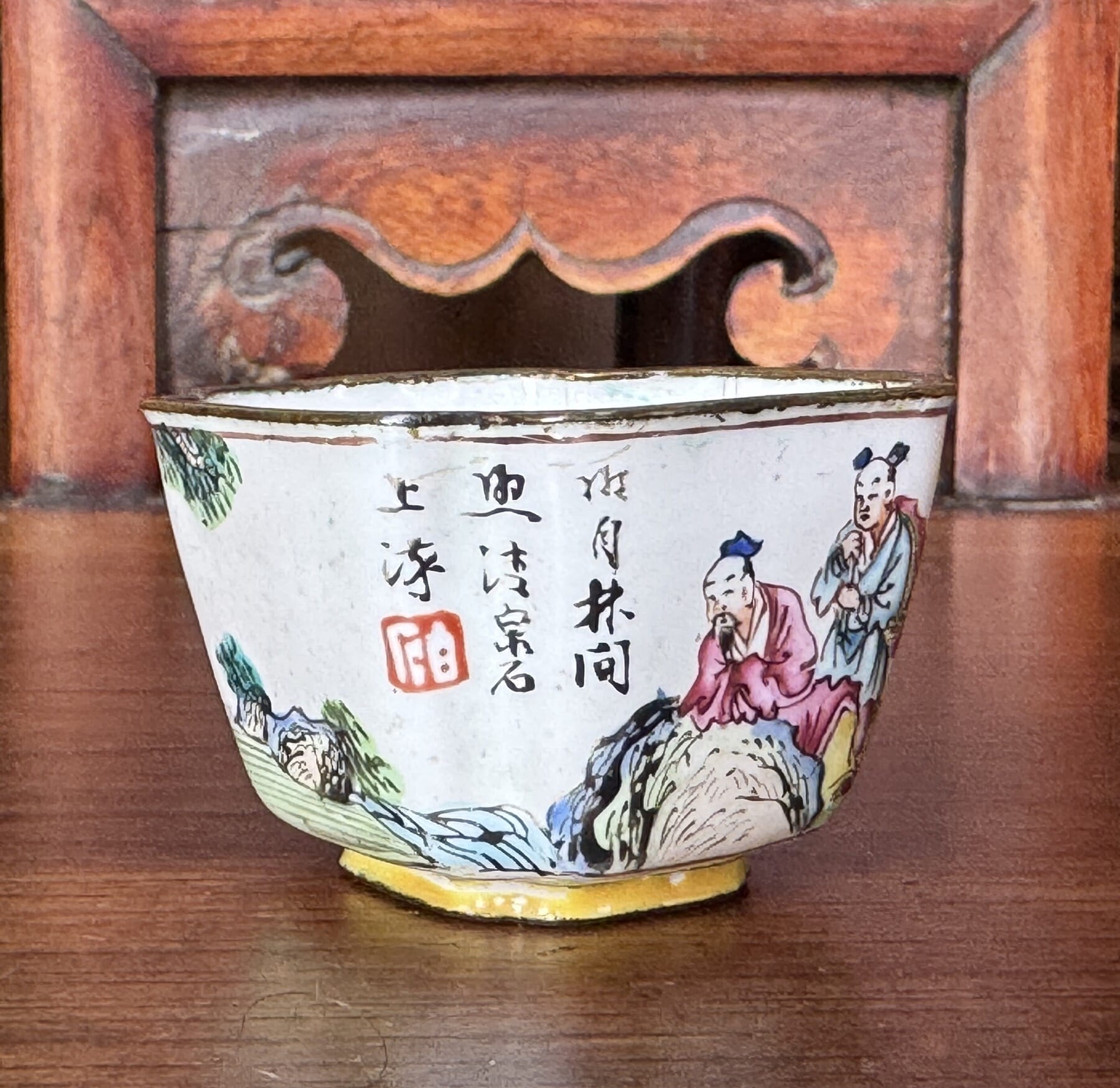
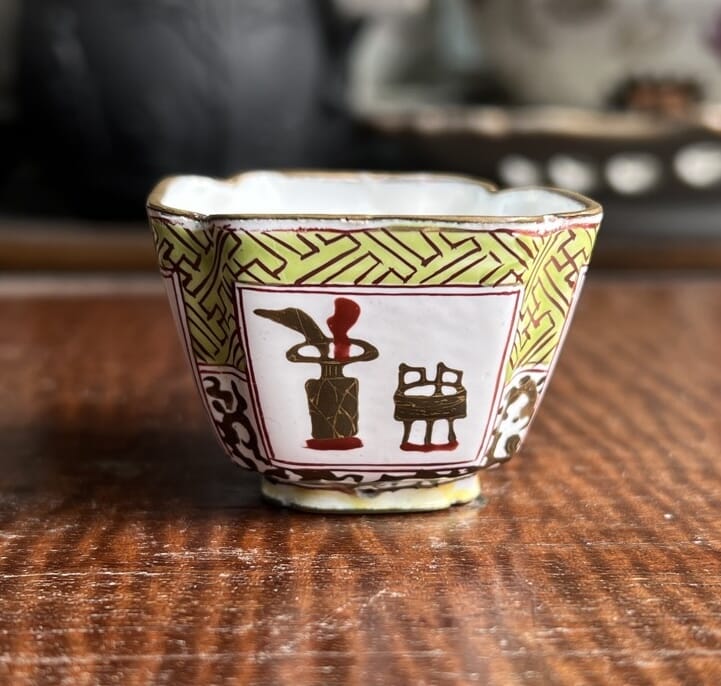
A fine selection of interesting Chinese & Japanese items come from several local collections. One in particular is significant, as it was accumulated in England in the 1960’s before the (now elderly) owner migrated to Australia. This provenance helps us be certain of the authenticity of the items; the copies in the mid-20th century were not as refined as those that are flooding the market today, and therefore more obvious. The downside is there are a lot of damaged, but genuine pieces…. but these are in themselves excellent inexpensive ‘Reference Study Pieces’.


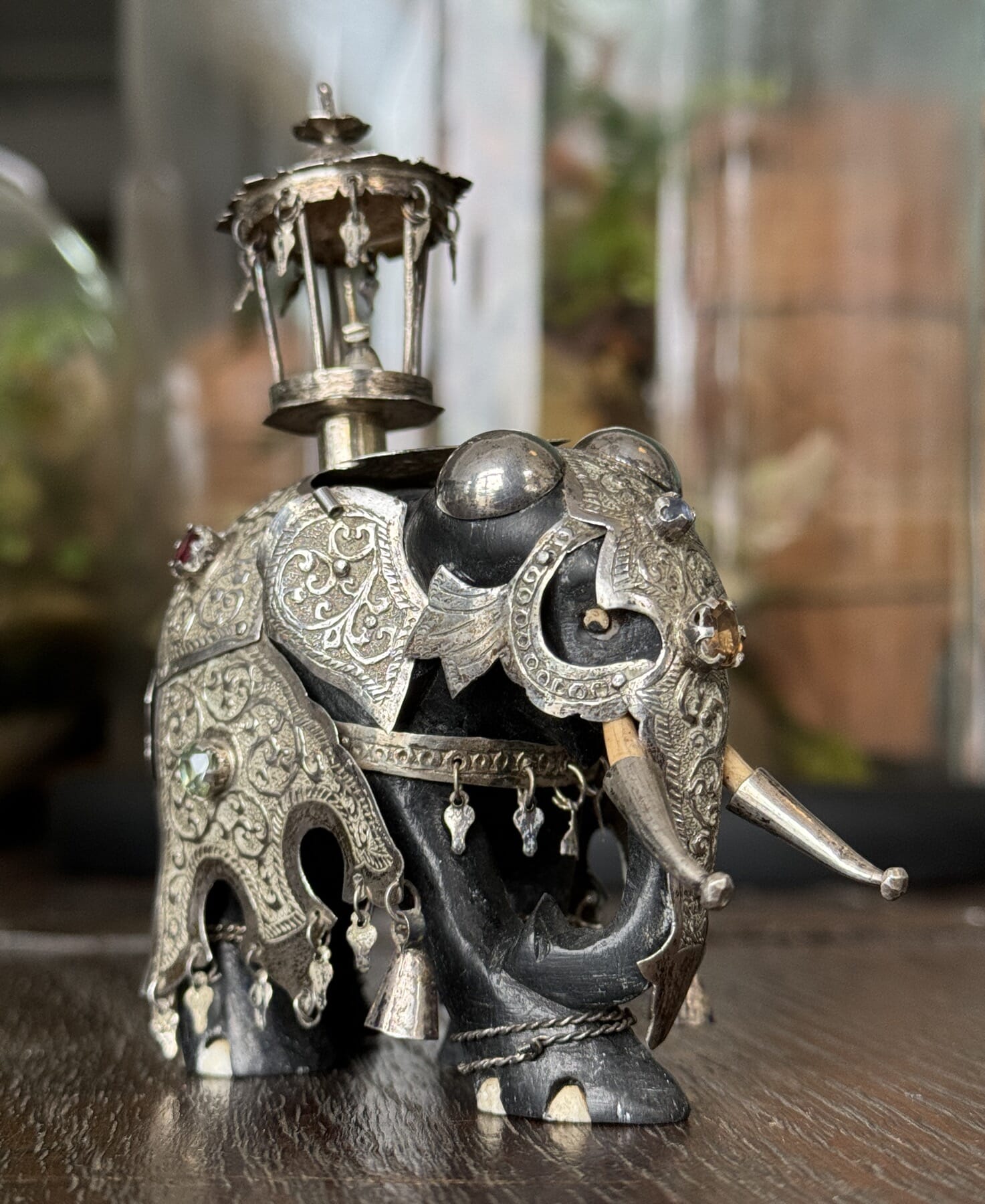
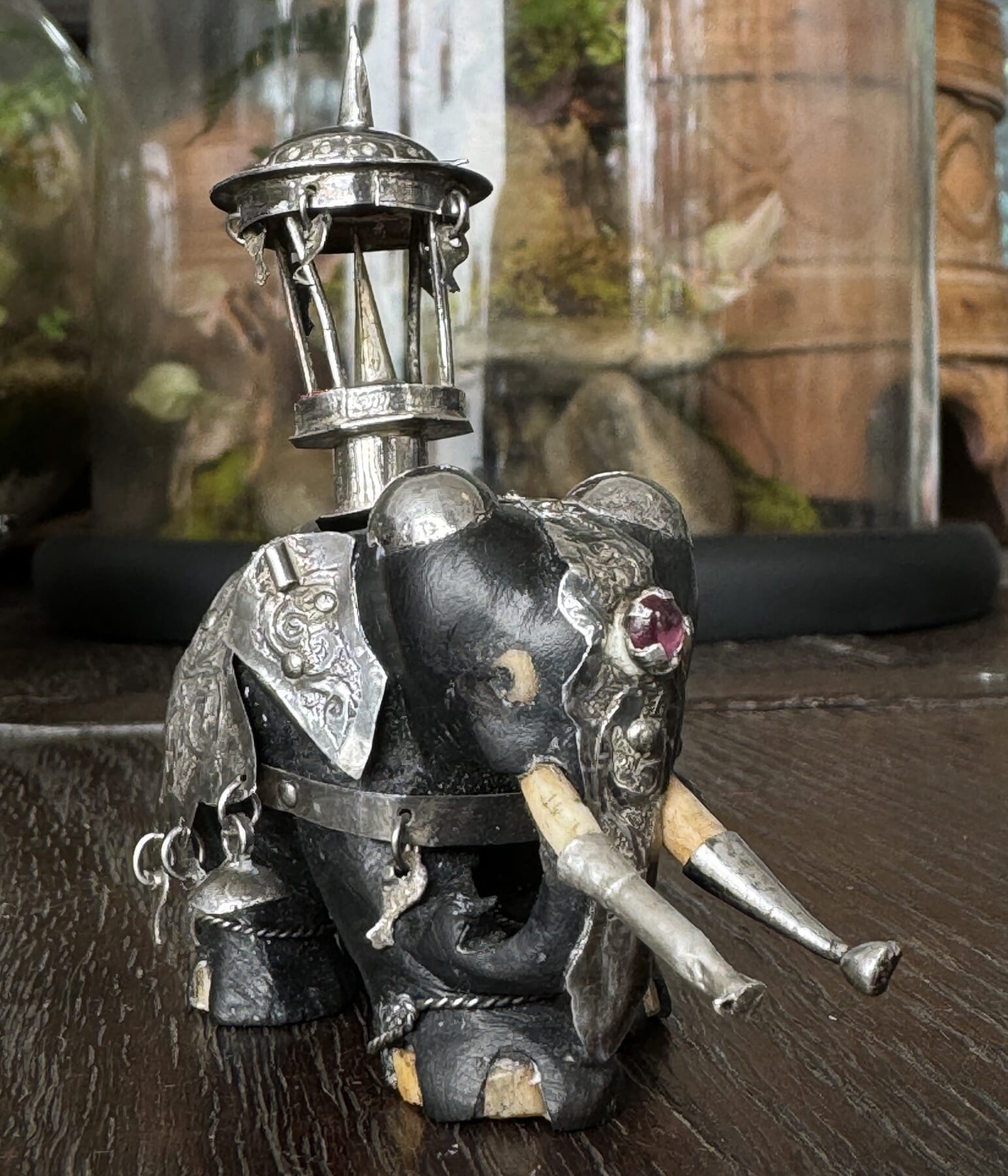
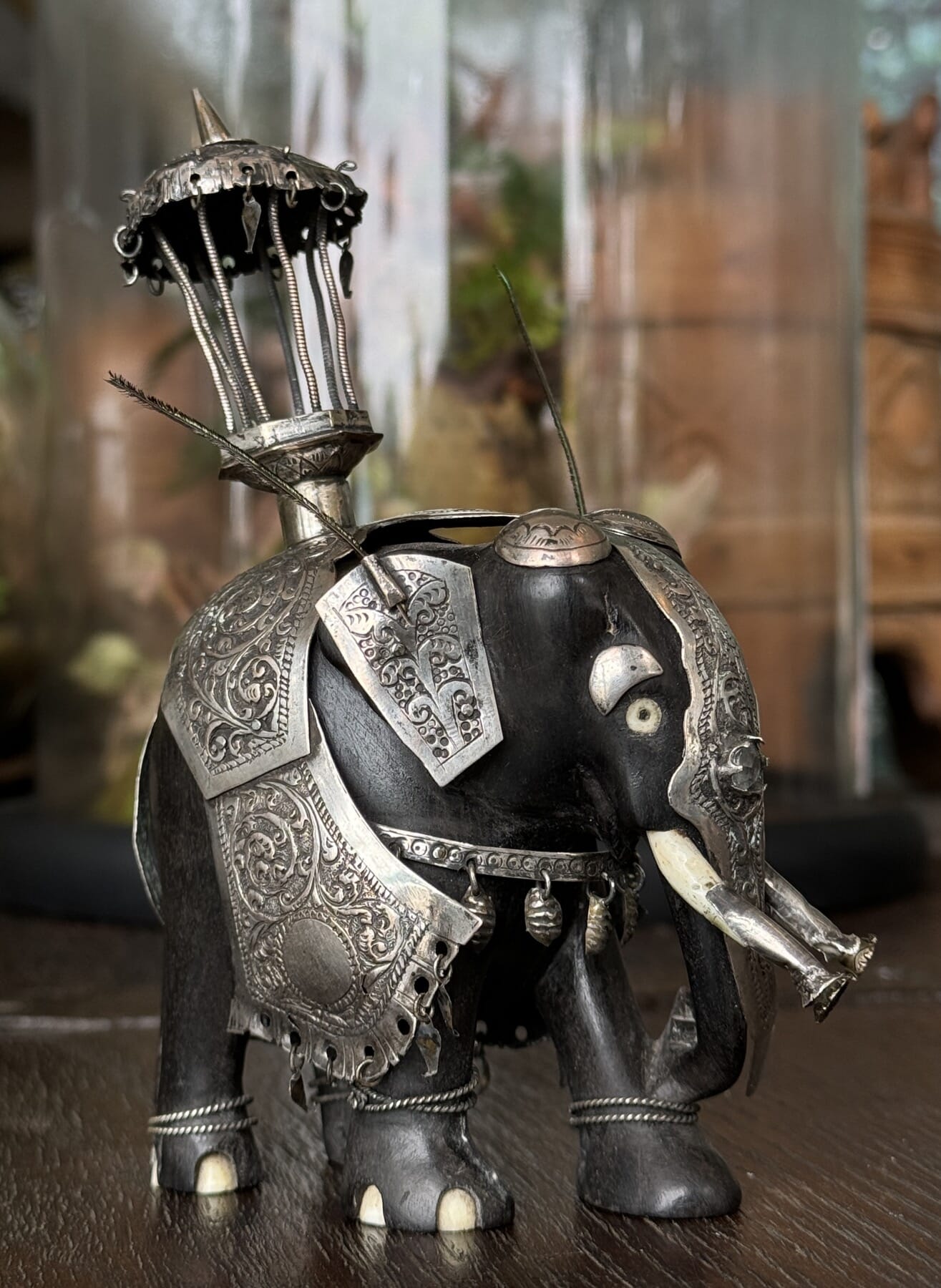
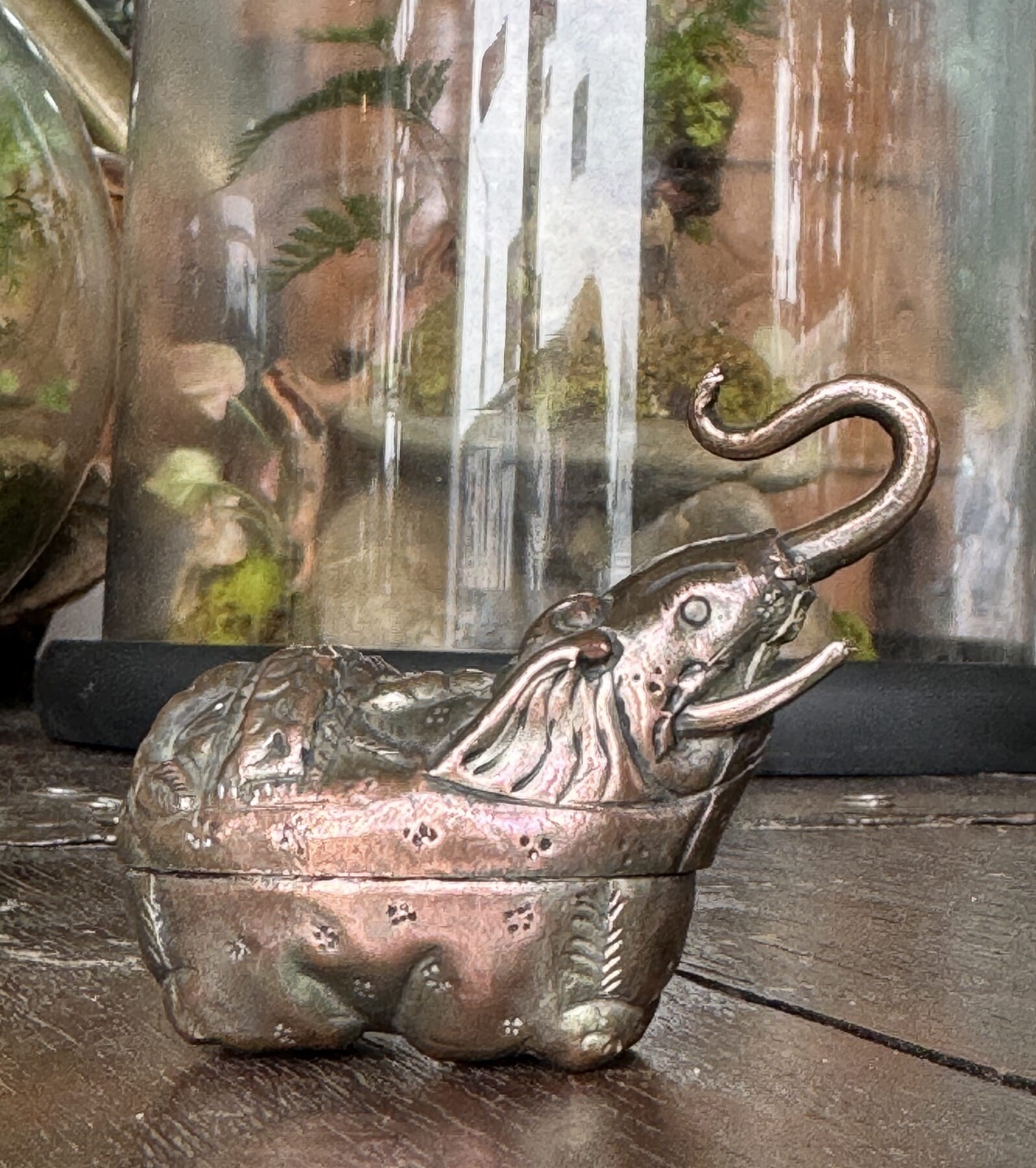
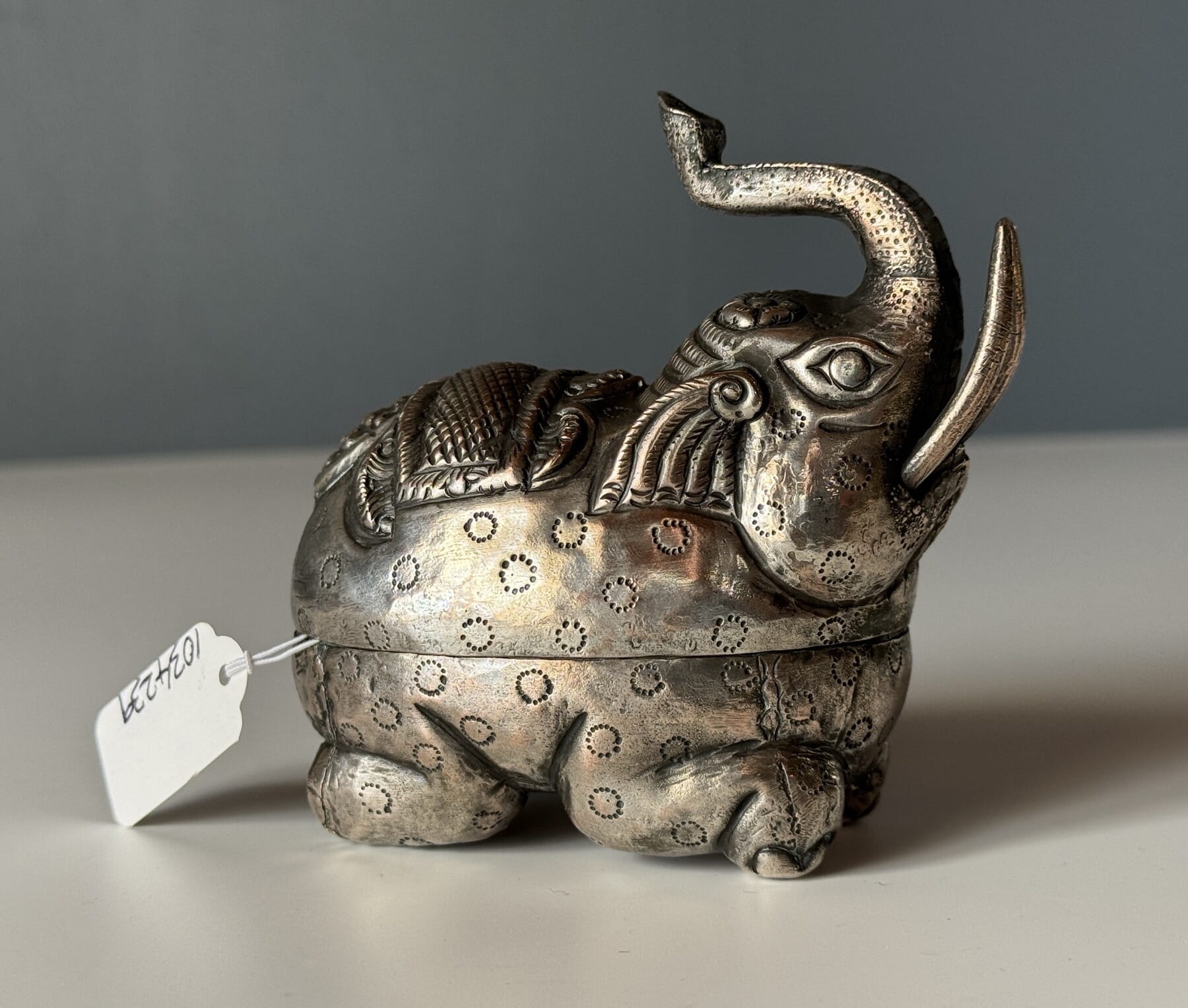
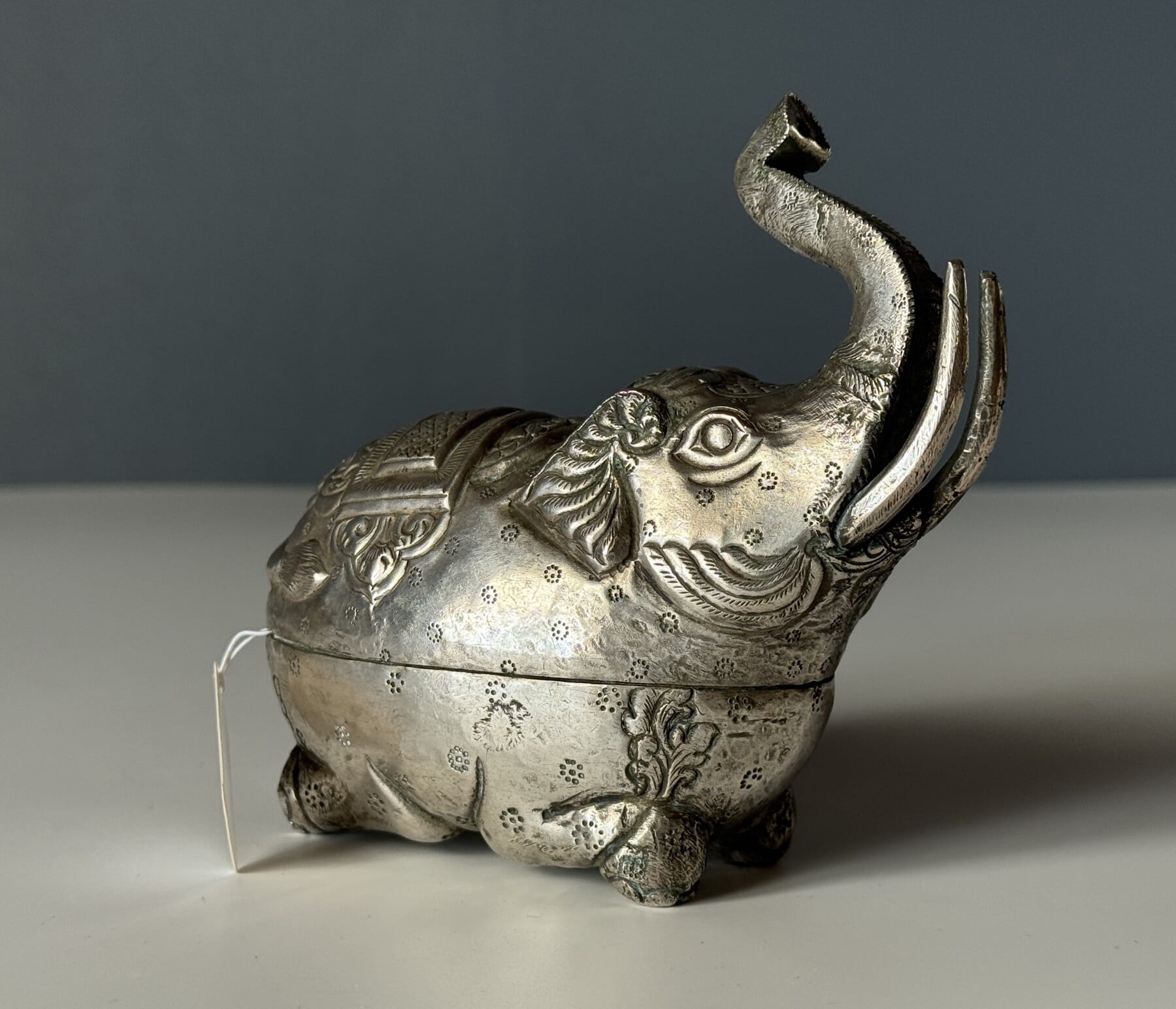
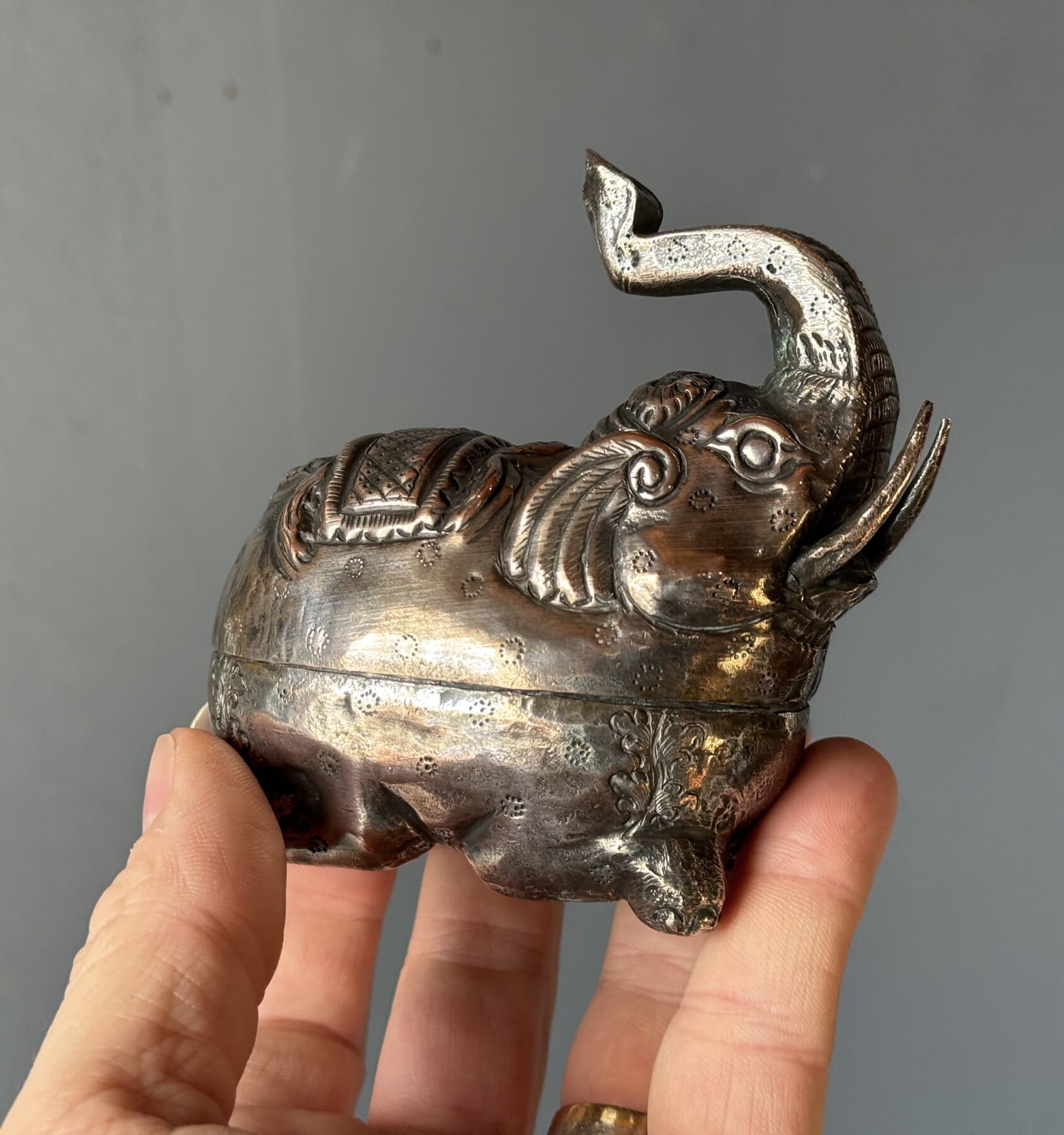
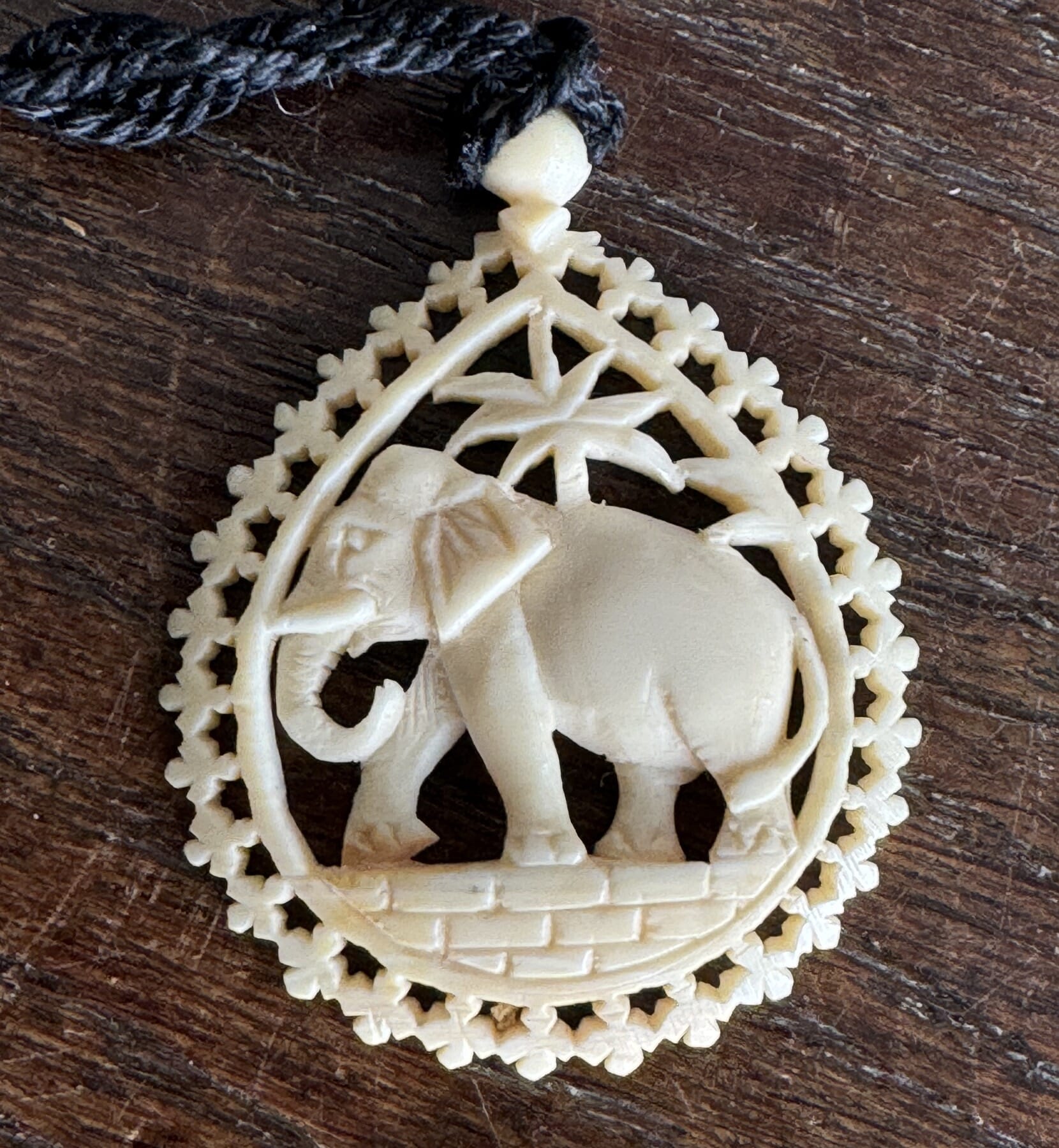
Elephants!

These flamboyant beasts are from Sri Lanka, in particular the city of Kandy.

They represent the annual ceremony known as the Esala Perahera, which is one of the most vibrant and sacred festivals in the country. Celebrated for centuries annually in July or August, this grand procession is dedicated to the Sacred Tooth Relic of Lord Buddha, housed in the Temple of the Tooth Relic (Sri Dalada Maligawa).

The event blends spirituality and culture, with the stars being a mesmerizing parade of elaborately adorned elephants, traditional Kandyan dancers, fire dancers, drummers, and flag bearers. The air is filled with the rhythmic beats of drums and the glow of flickering torches as the procession winds through the city streets at night. At its heart, the largest and most elaborately decorated of the elephants has the honour of carrying the revered golden casket housed in a pagoda on its back, which has inside the Buddha’s Tooth Relic. These silver-clad jewel embossed beauties are a small reminder of an unforgettable experience.

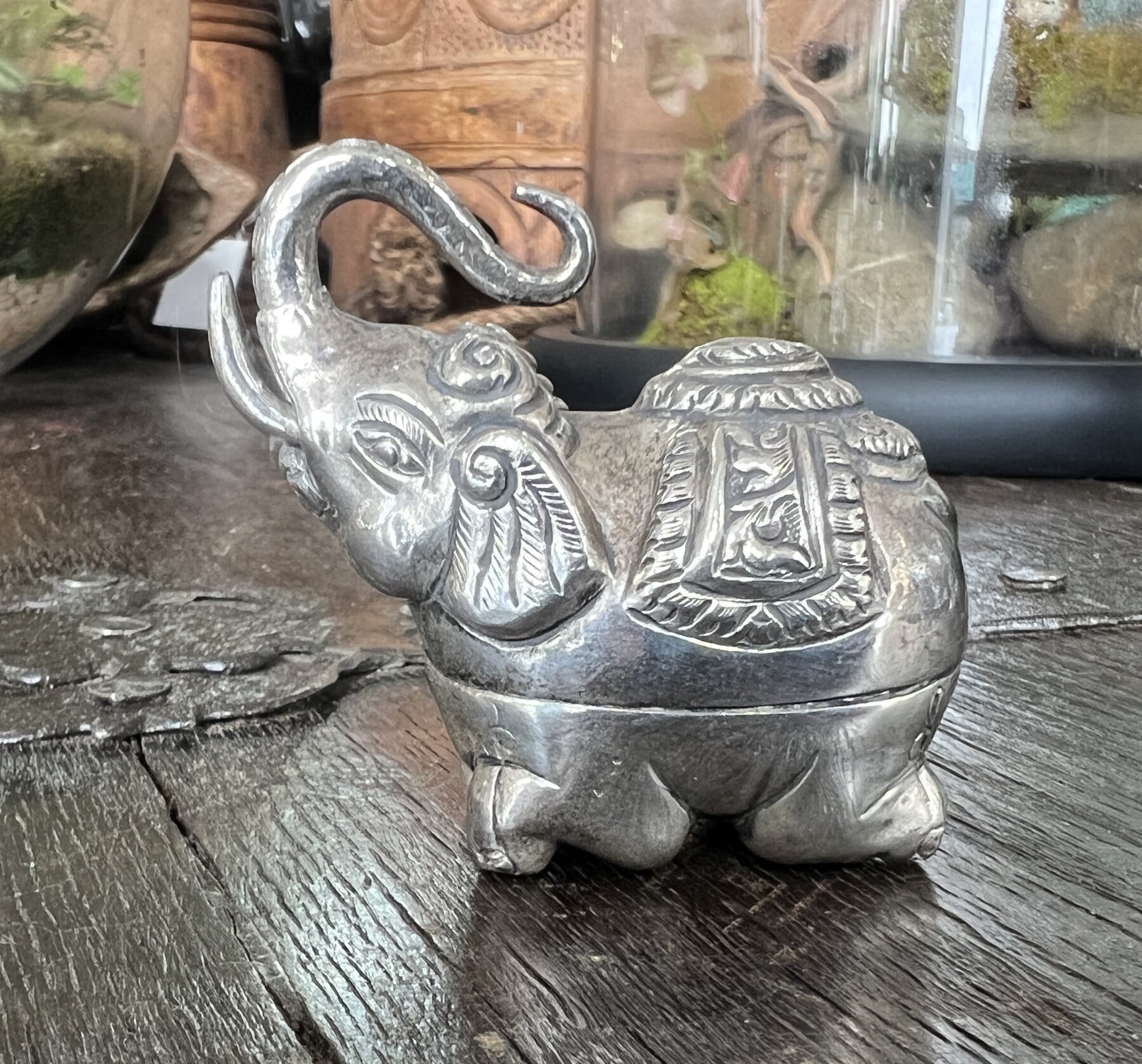
More Elephants!

…. and still more Elephants!


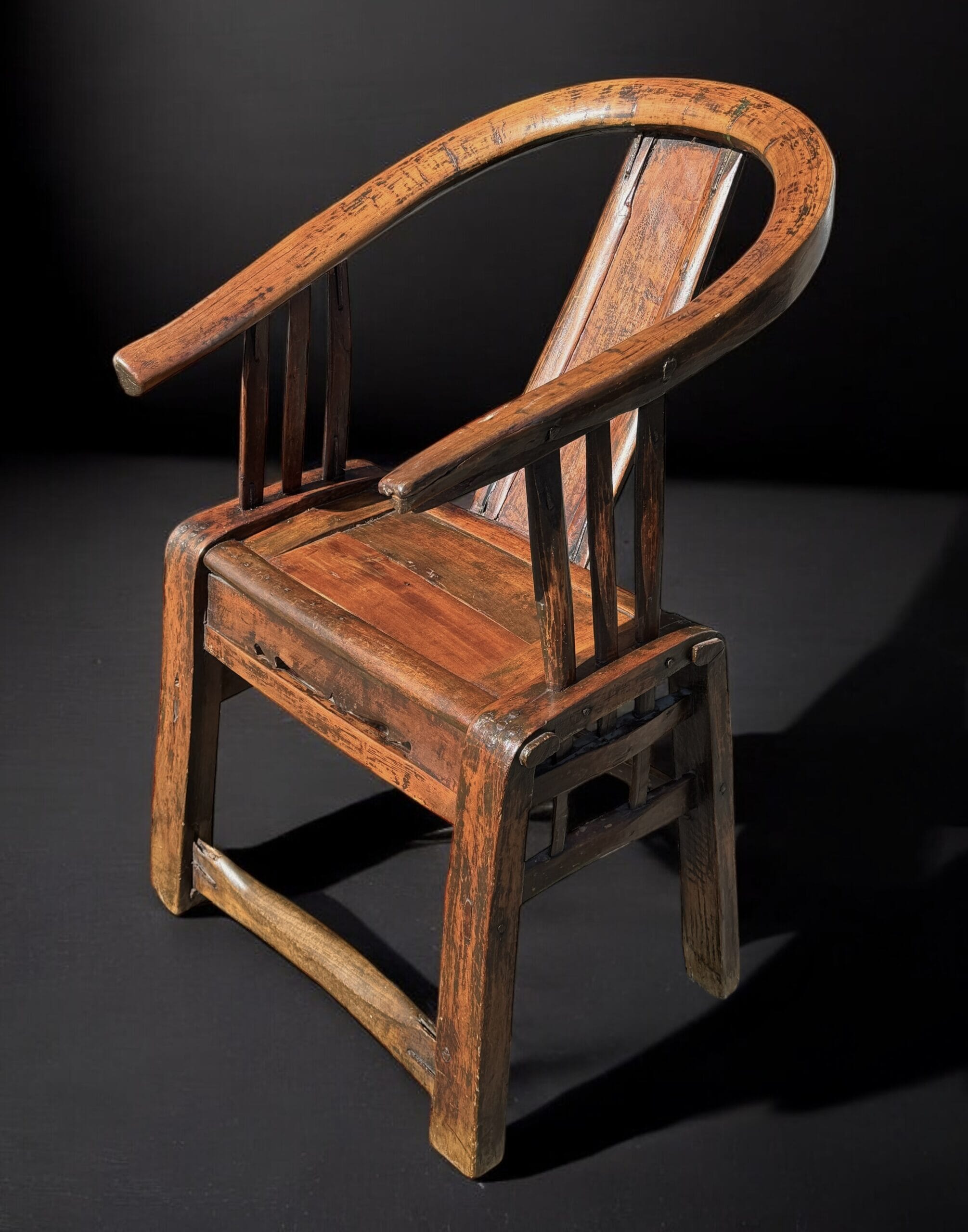
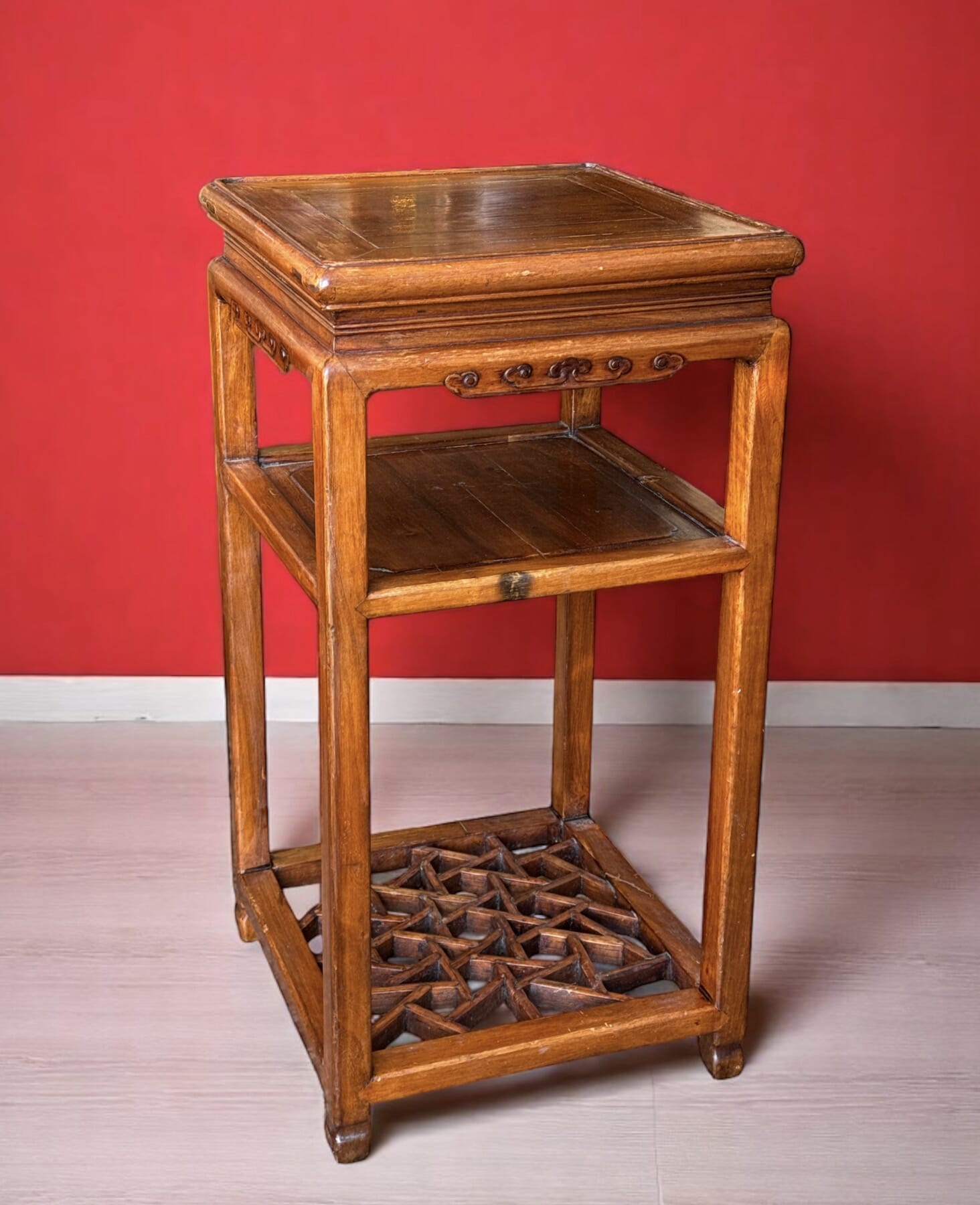
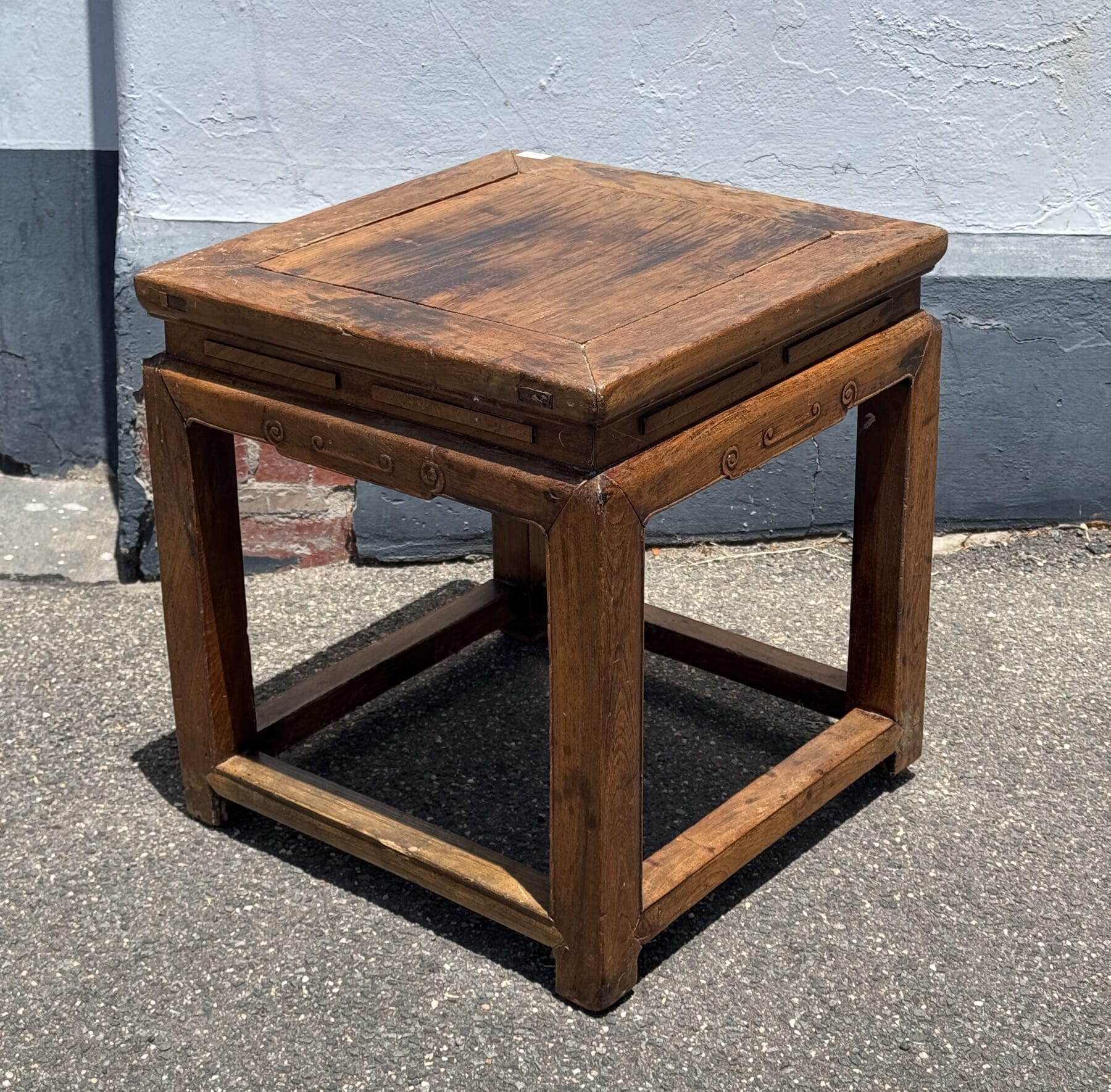
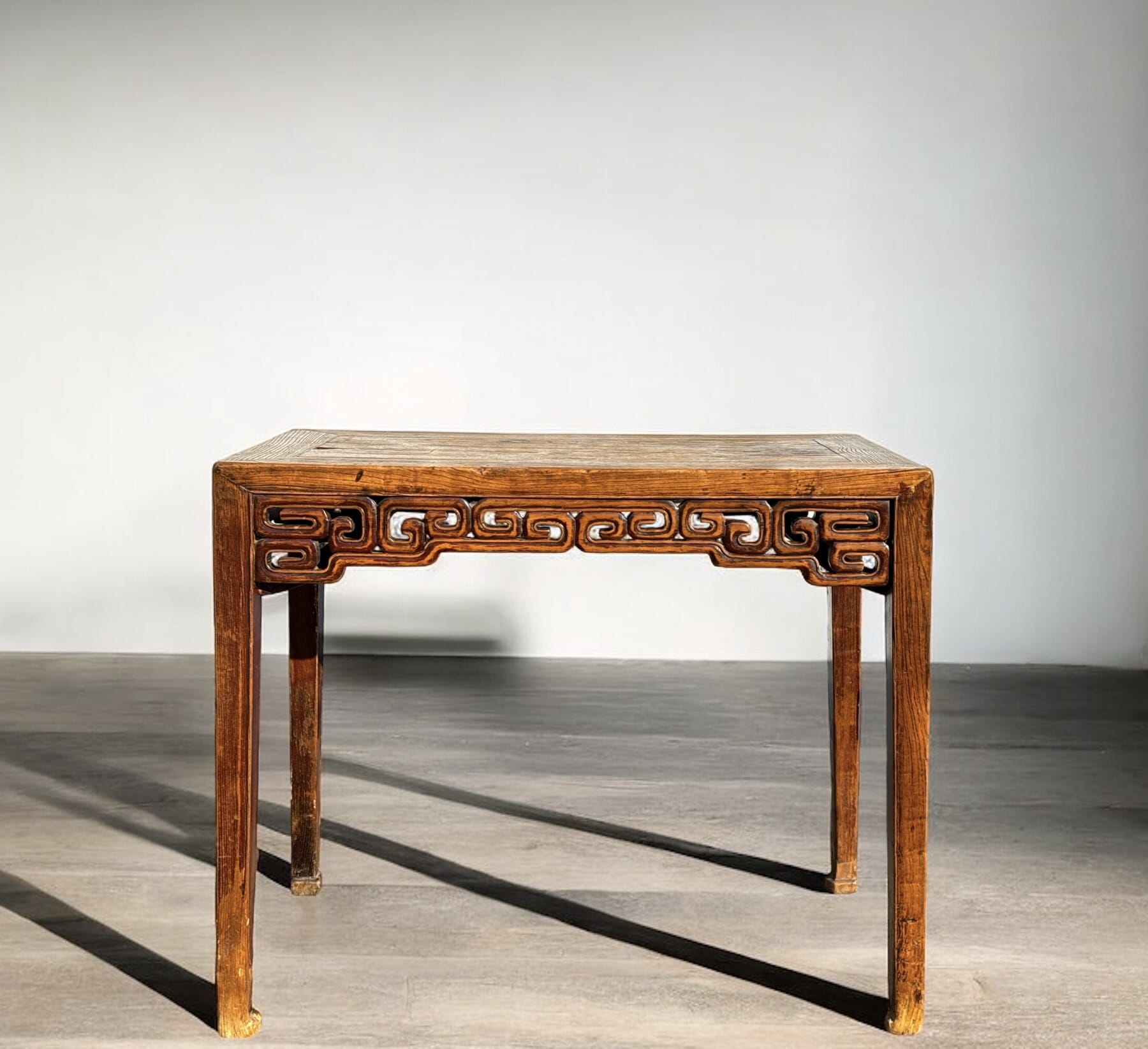
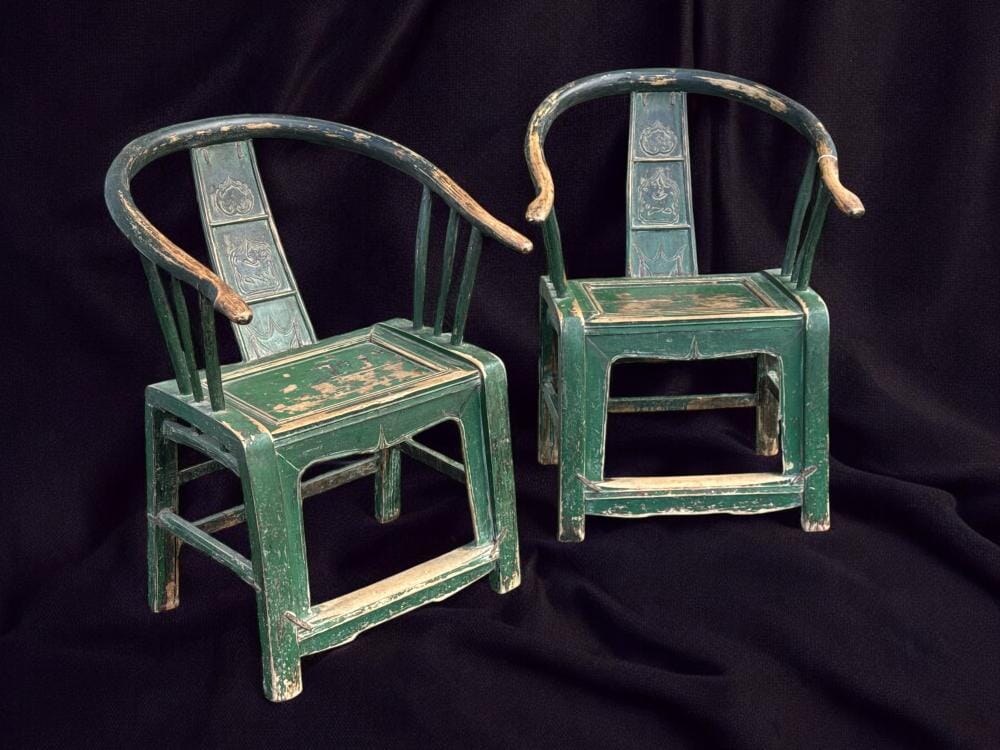
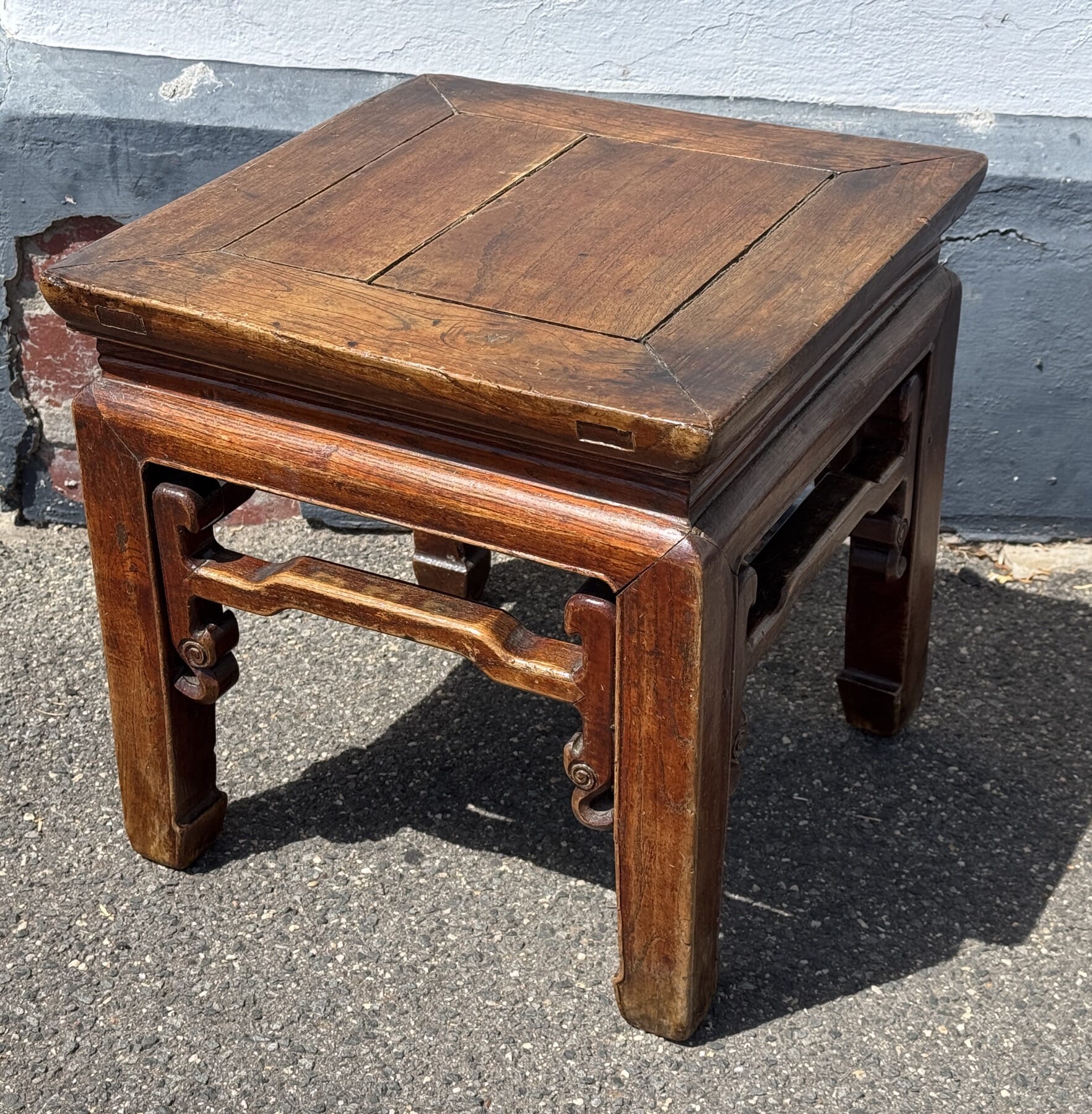
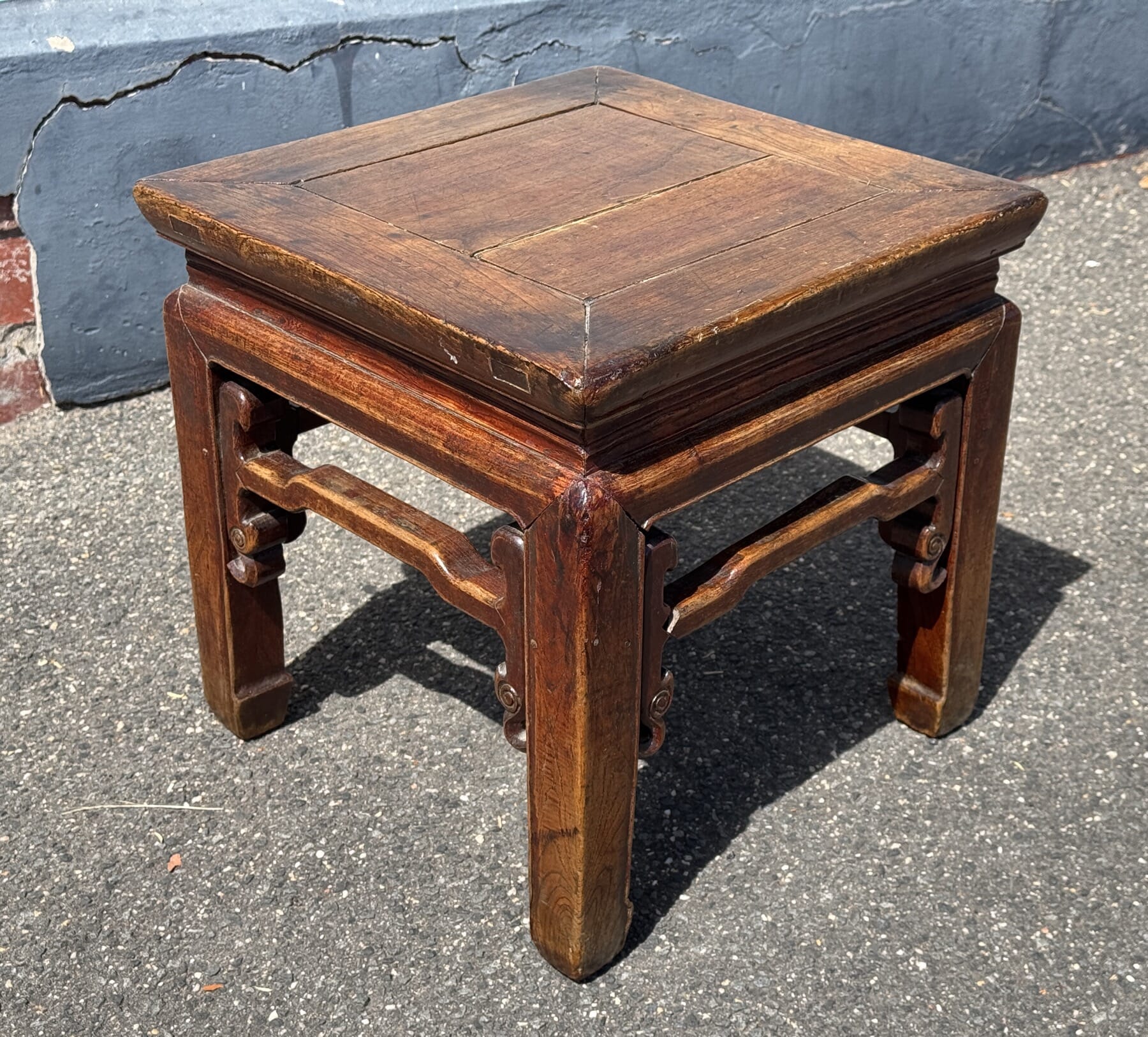
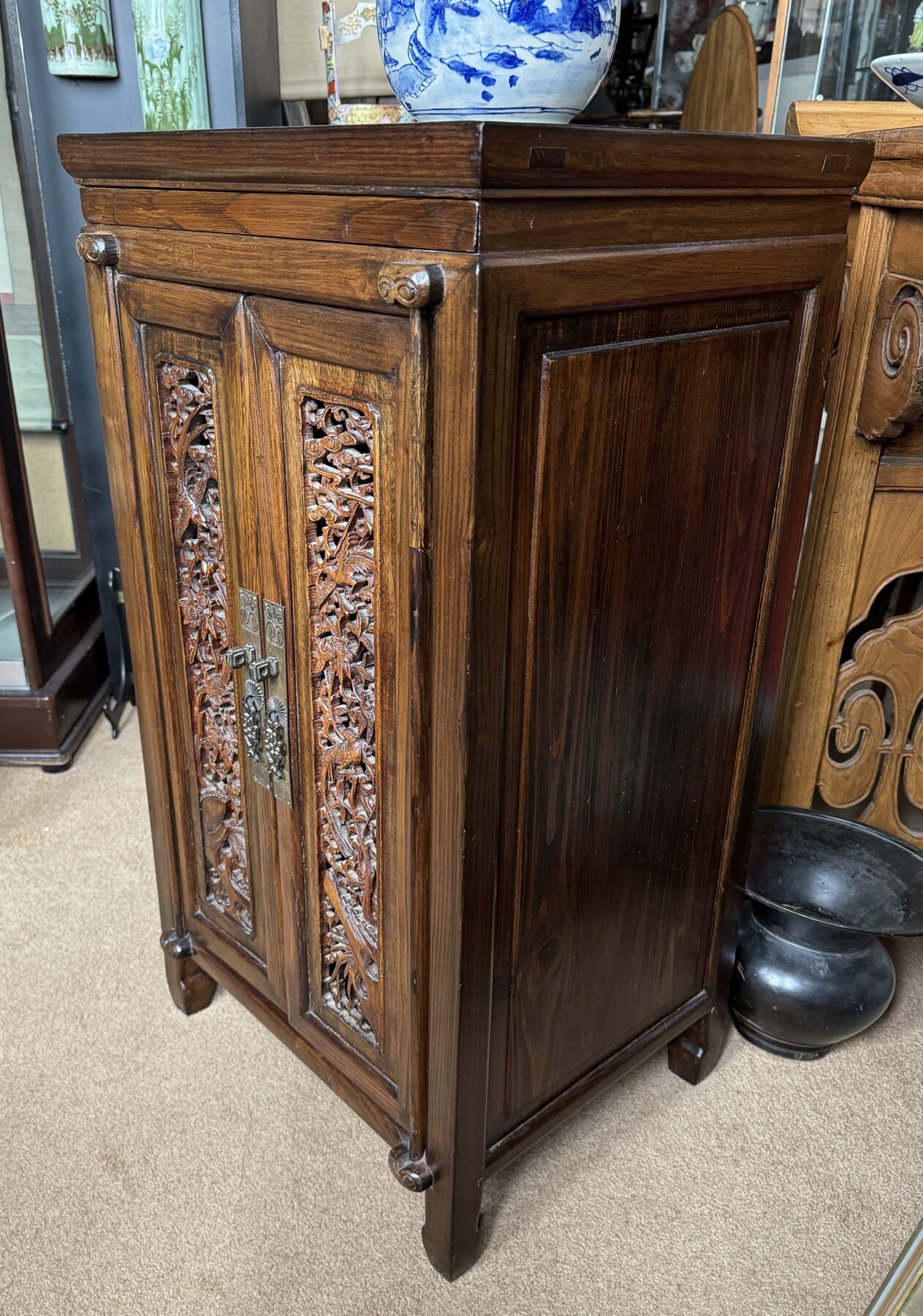
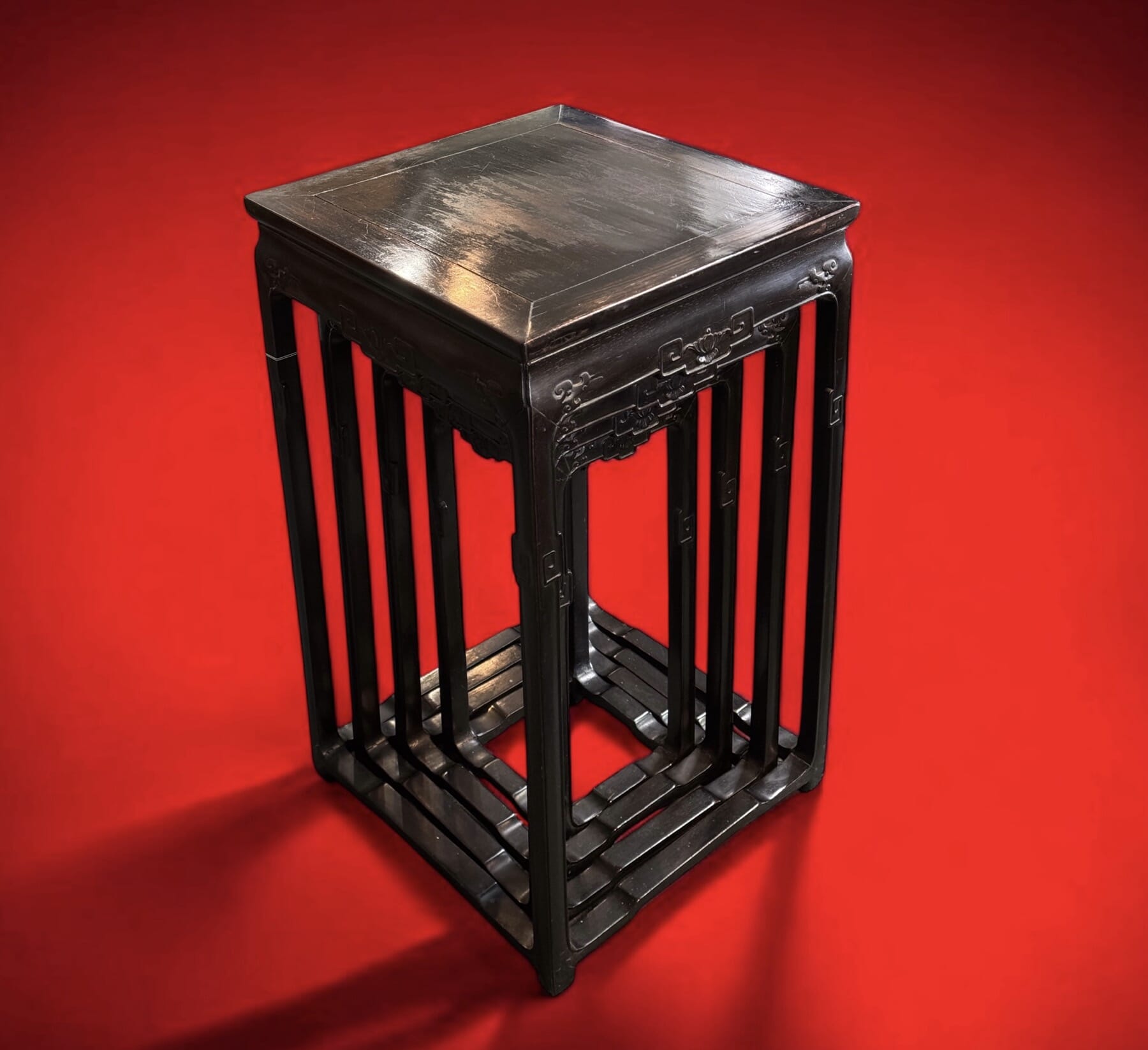
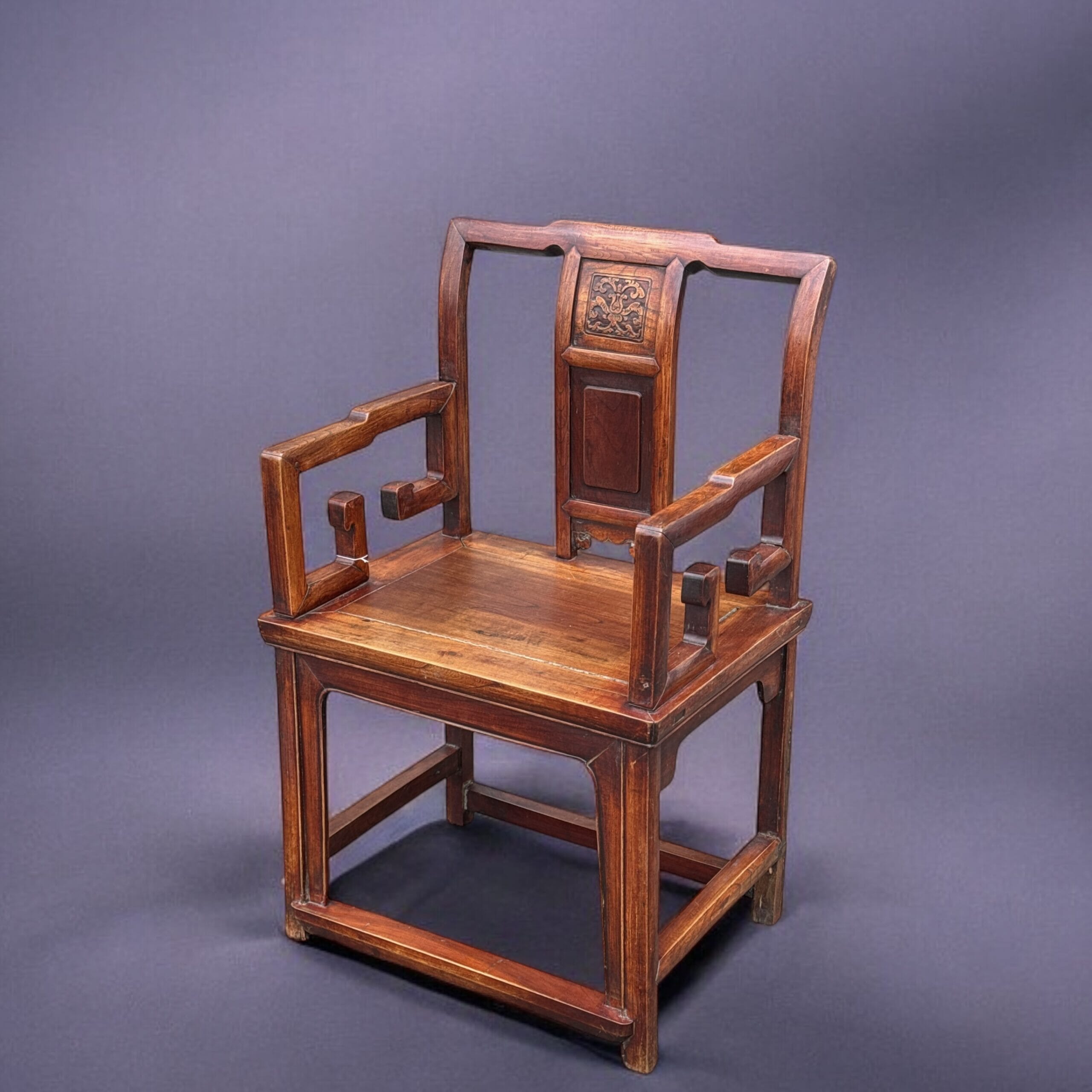
Chinese Furniture


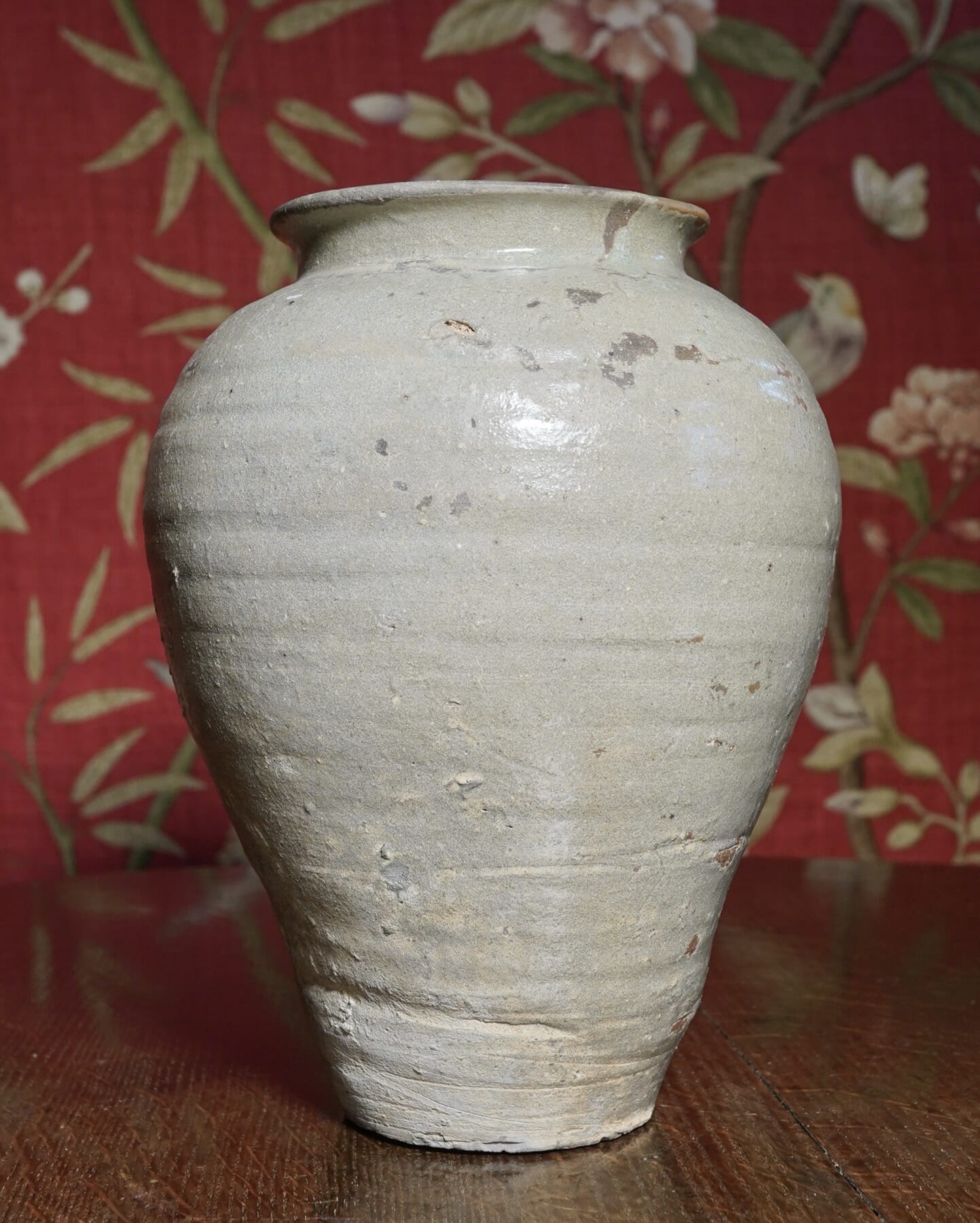
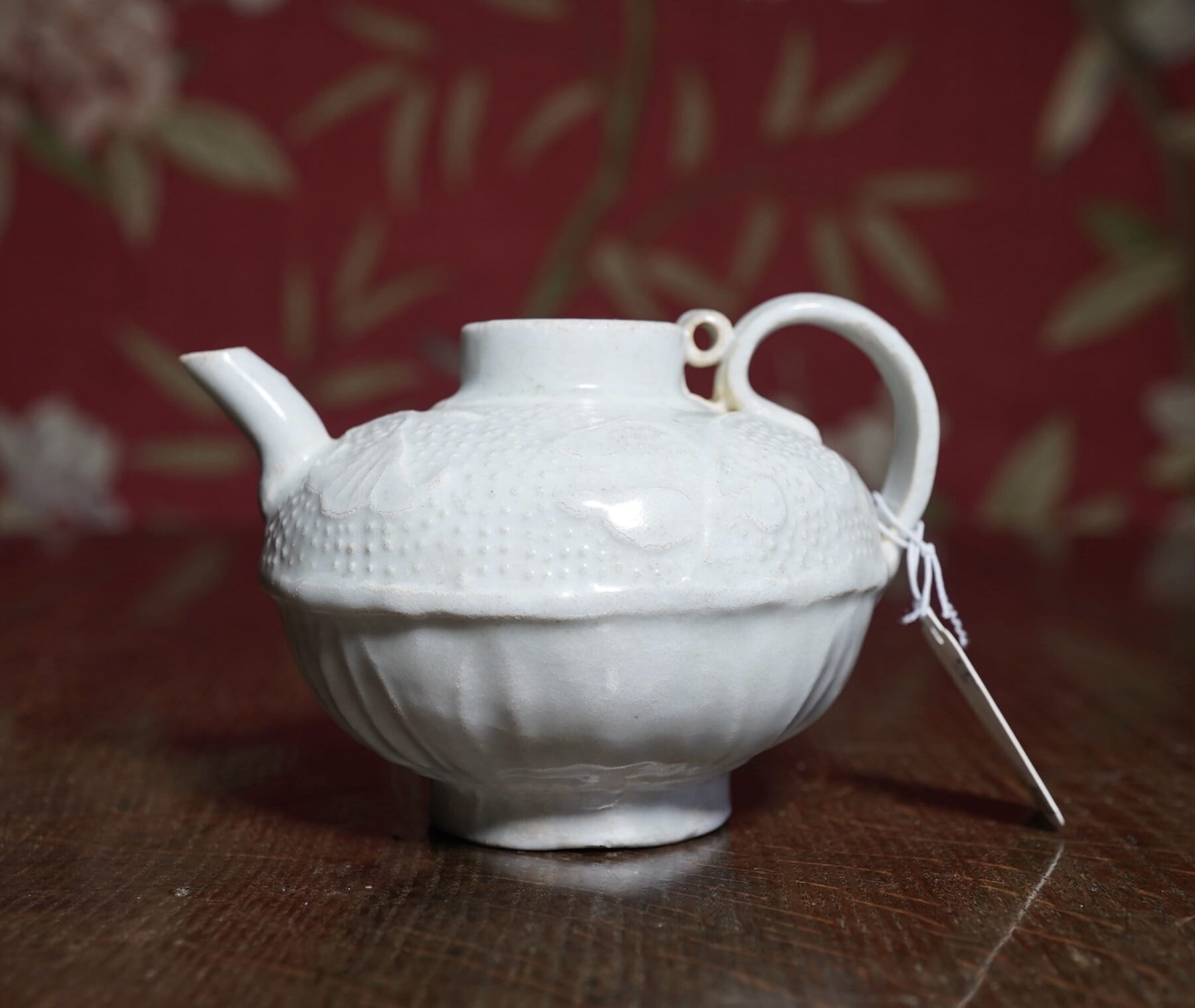
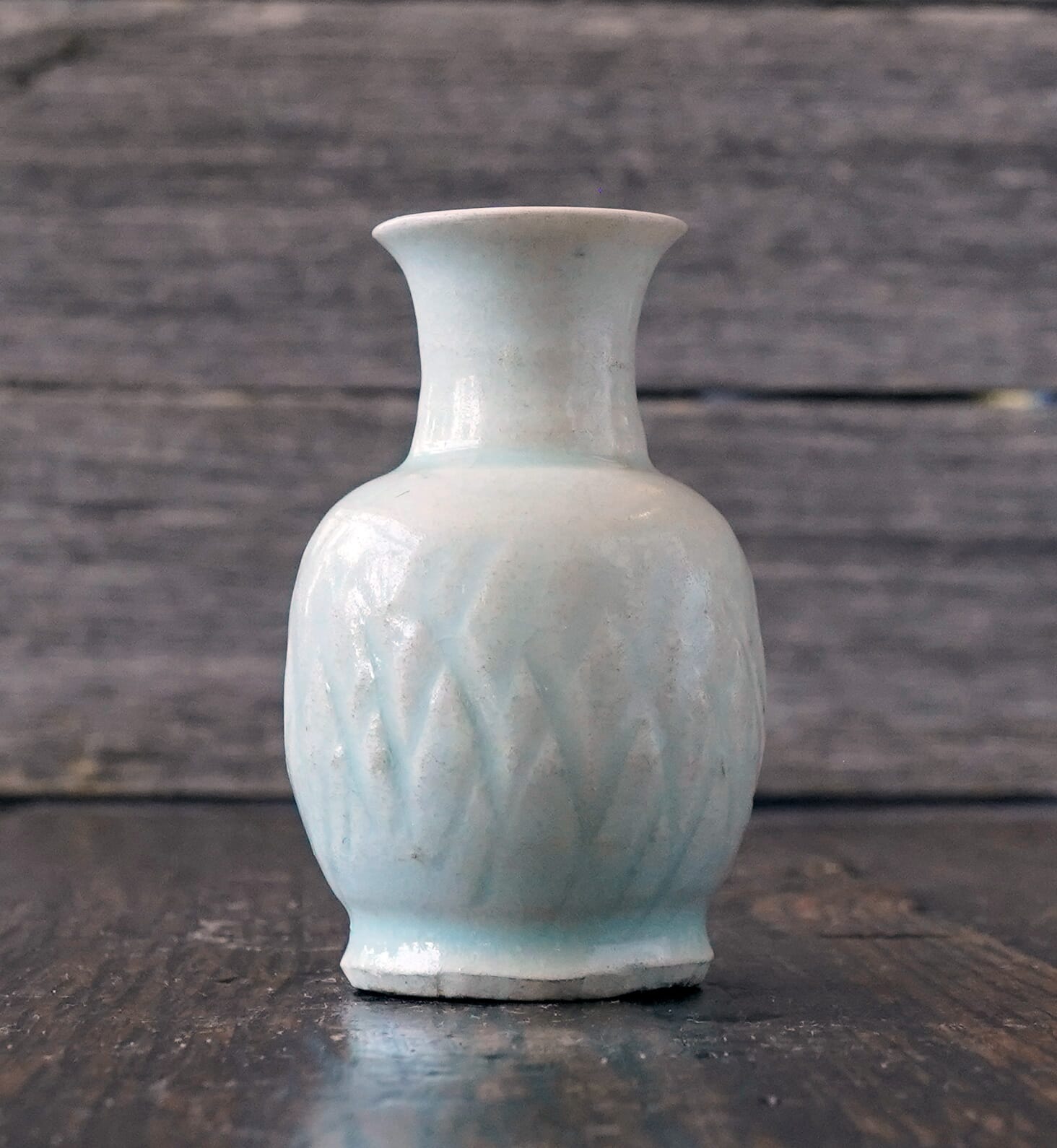
Early Chinese Ceramics


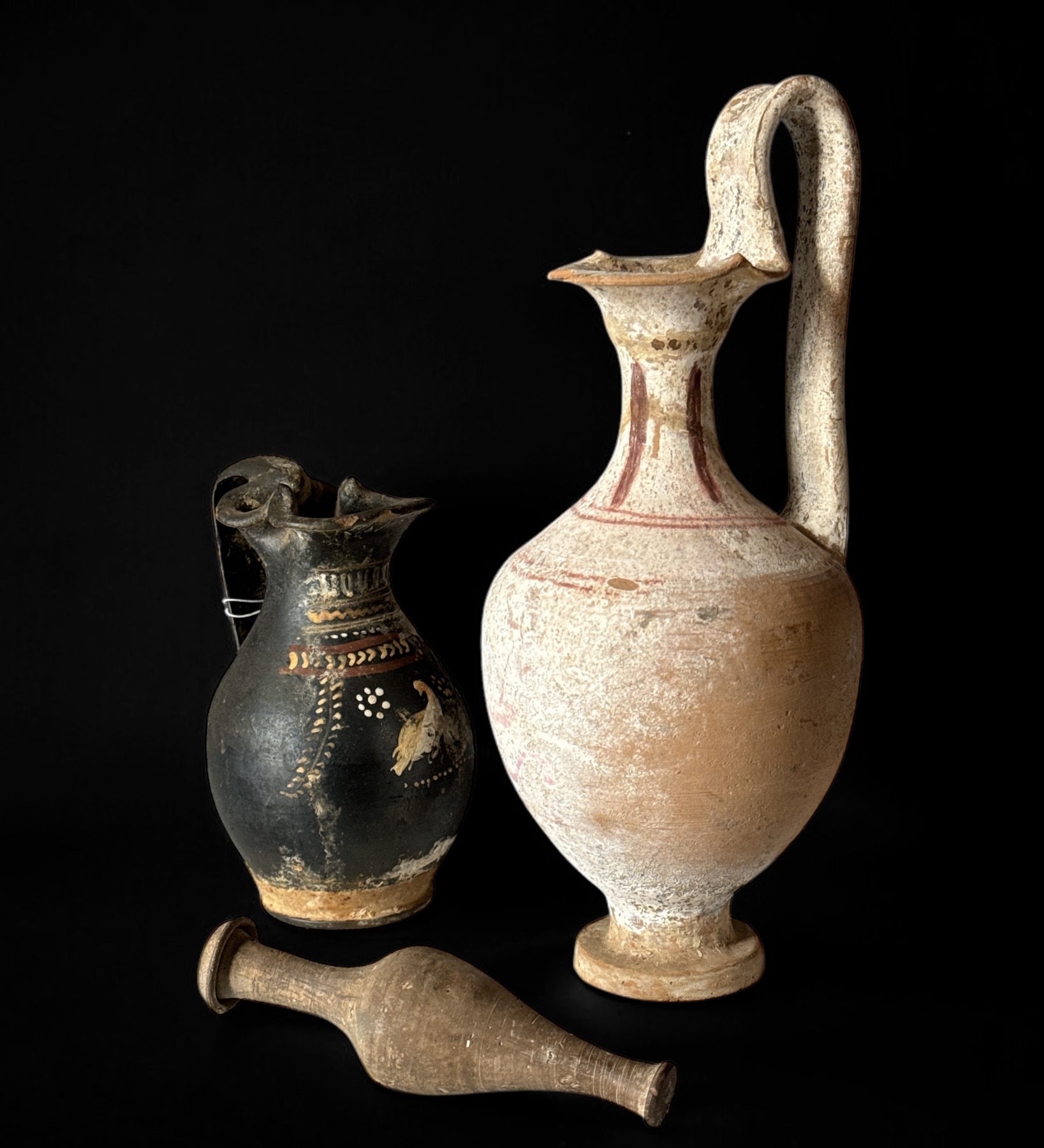
Coming next…… Antiquities

Coming soon…. mini- Exhibitions @ Moorabool:

  • 18th century English Ceramics
  • Continental Ceramics
  • 19th Century English Ceramics
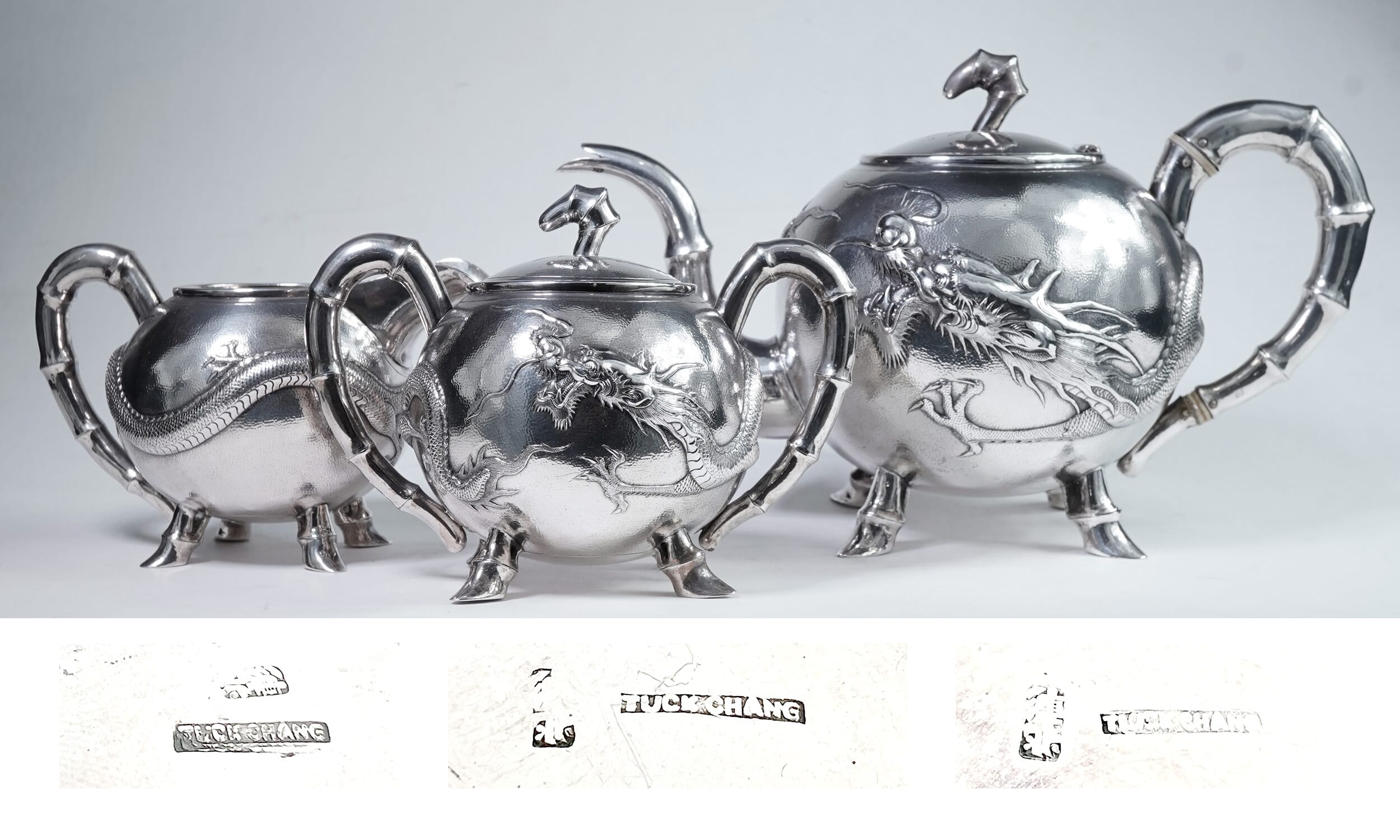
  • Fine English Sterling Silver
  • Some Fine Fresh Furniture

There’s a few houses-full of furniture fresh to stock at Moorabool Antiques. View the latest here:

Posted on

Auction this Saturday, 14 December

We have a terrific variety of items, with some fine quality + very inexpensive offerings – just in time for Christmas!

Have a browse here, via Invaluable.

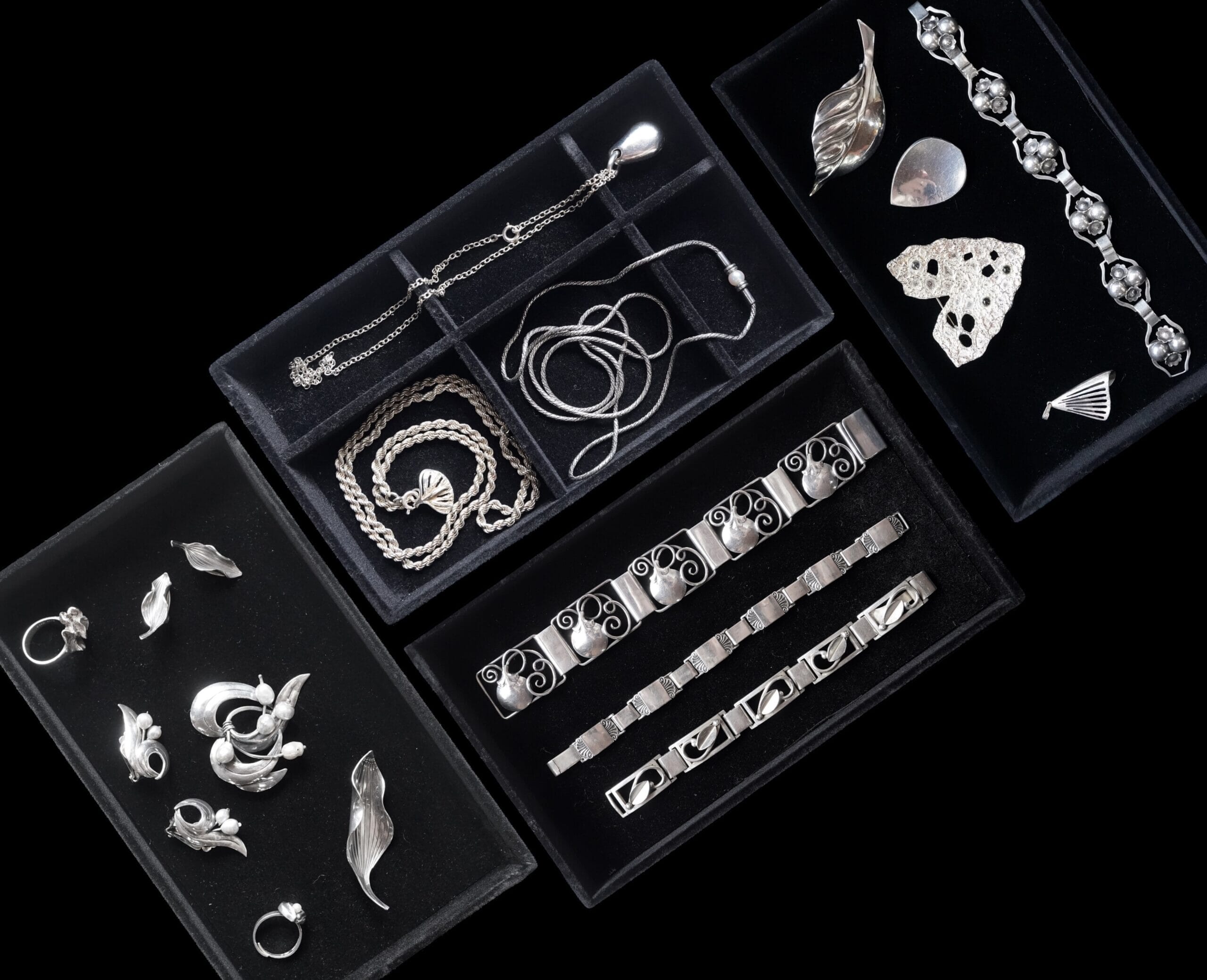
late 19th century camera; Bendigo Pottery frog, c. 1930 Top: splendid 20th c. Sterling Silver Jewellery, Scandinavian.

Over 400 Lots

Including a quantity of works by local Western District artist John Gardner.

Born in 1906, he spent his last years in Geelong – and painted until the absolute last moment. As a result, we see quite a few John Gardners in Geelong. Drawn from several local collections, this auction is a mini ‘retrospective’ exhibition of his work, beginning in the early 1930’s when he travelled up to the Hermannsburg Mission in South Australia and was instrumental in starting Albert Namatjira on his remarkable move from stockman to celebrity artist.

With estimates in the $300-800 range, he’s a somewhat neglected Australian artist, with a fascinating story of talent and determination to overcome a disability that should have stopped him painting……

Read more on John Gardner, and see the timeline of his artworks here >

Sale starts at 10am, Saturday 14th December.

Posted on

Fresh stock October 7th

It’s been a good while since our last ‘Fresh Stock’ – so here’s a bumper issue to make up for it!

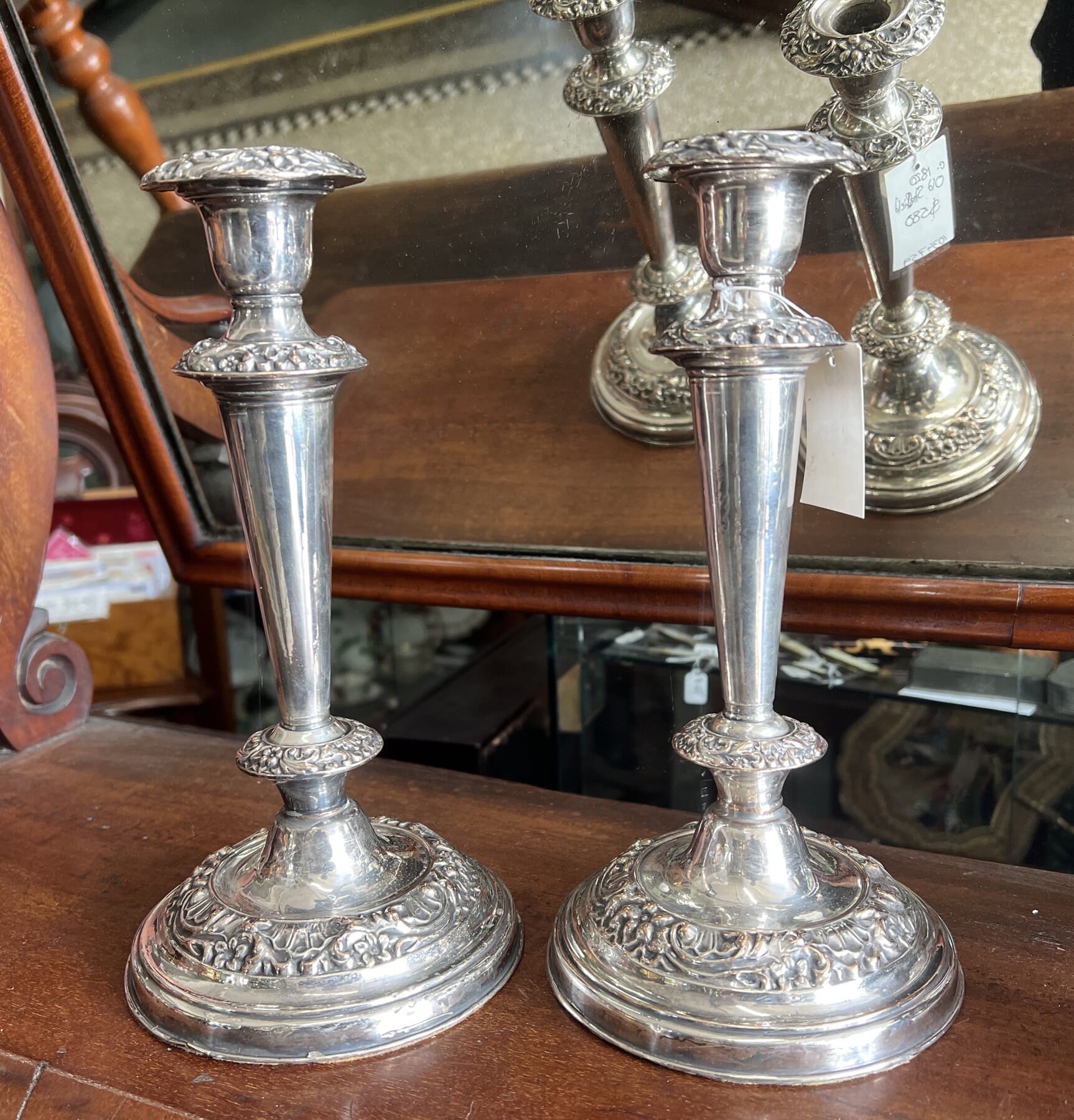
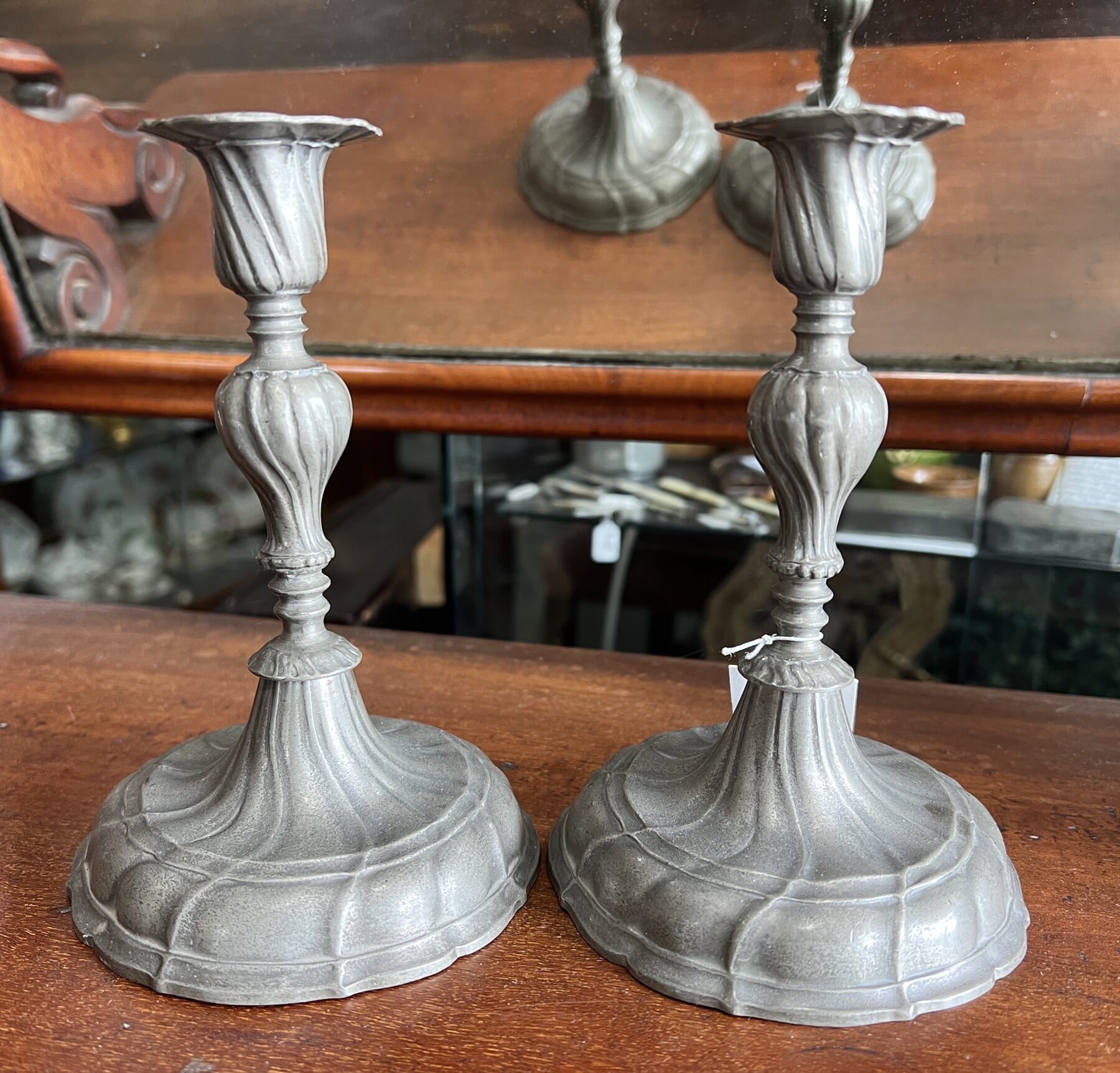
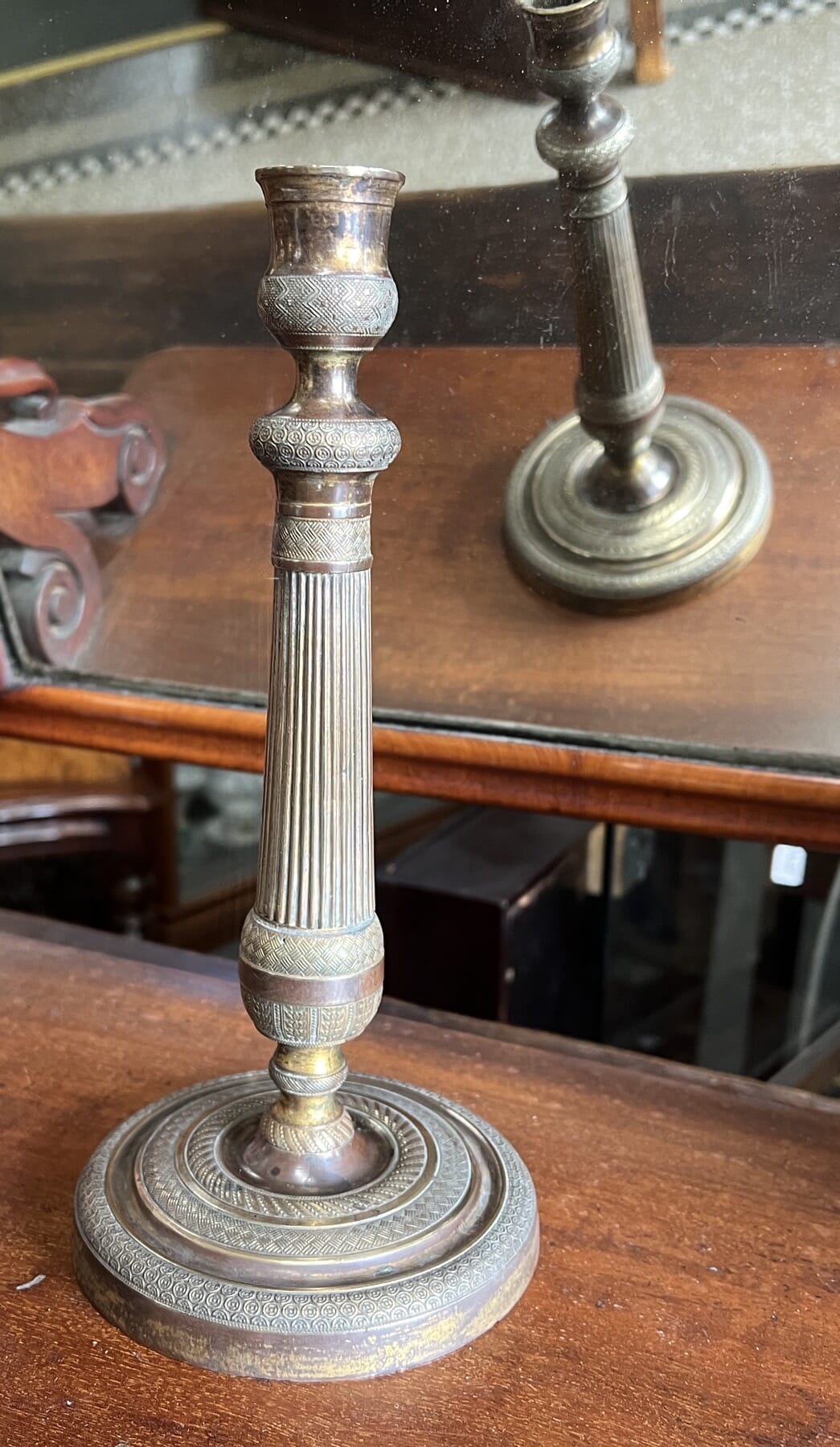
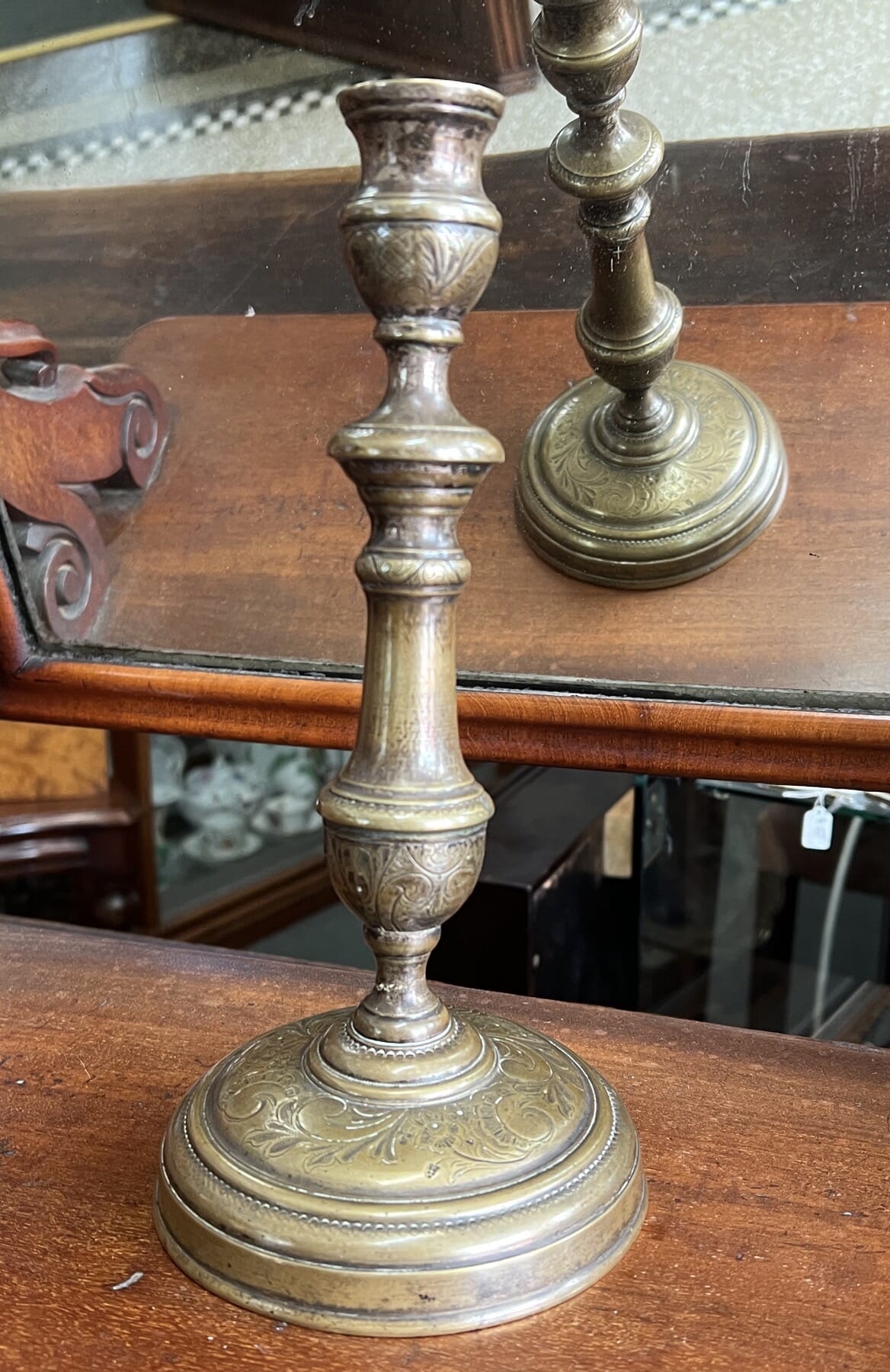
You’ll find a fine and varied selection, from Georgian Furniture to fine 18th century Porcelain, Australian Pottery, a host of Candlesticks, and interesting Artworks.

Enjoy!

FRESH to Stock

Fresh Premium Collection

There’s a fine selection ‘Premium’ rarities Fresh to stock. Here’s a sample: see them all on their own page here >

Virtu

Some small precious items, perfect presents…..

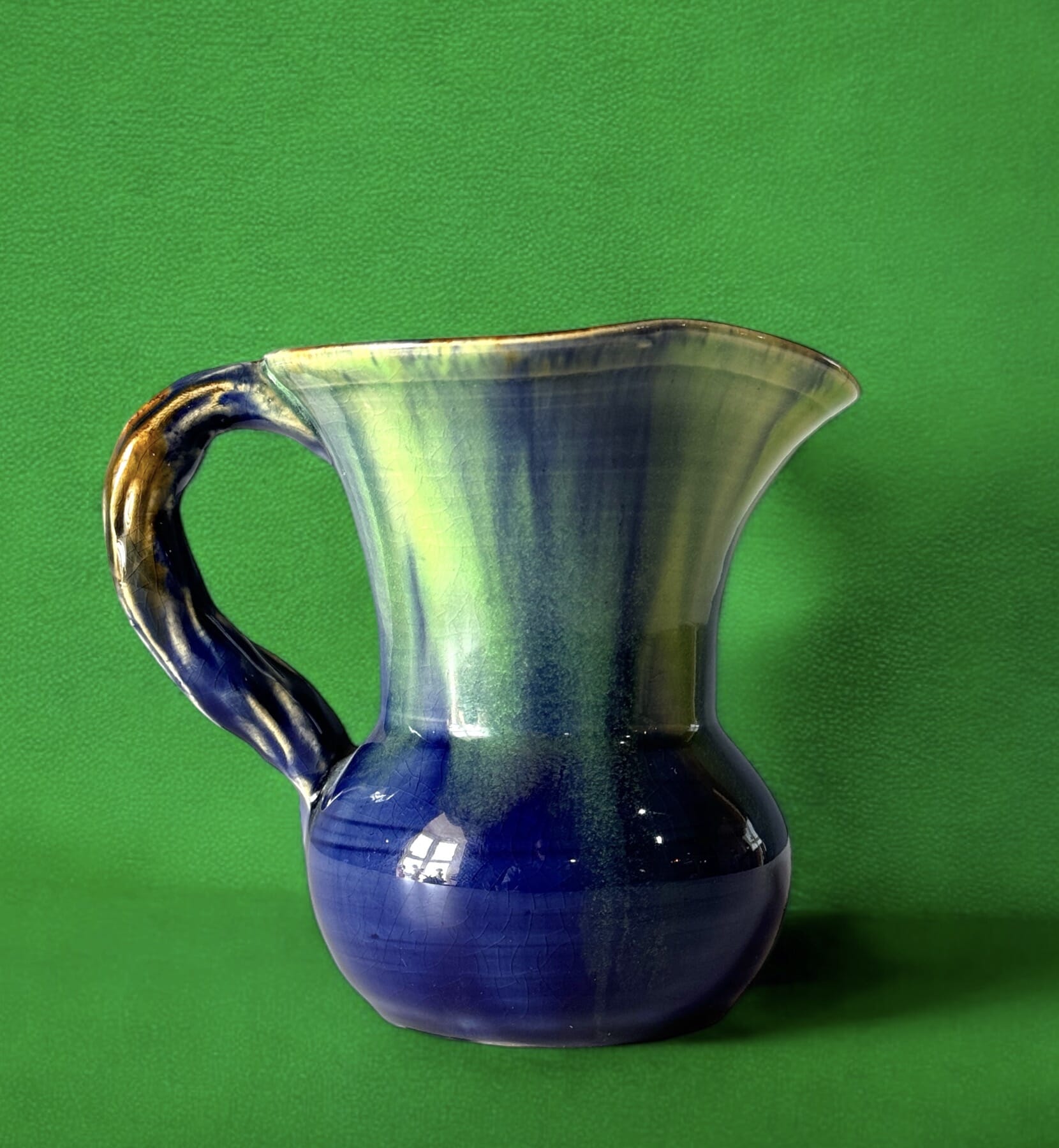
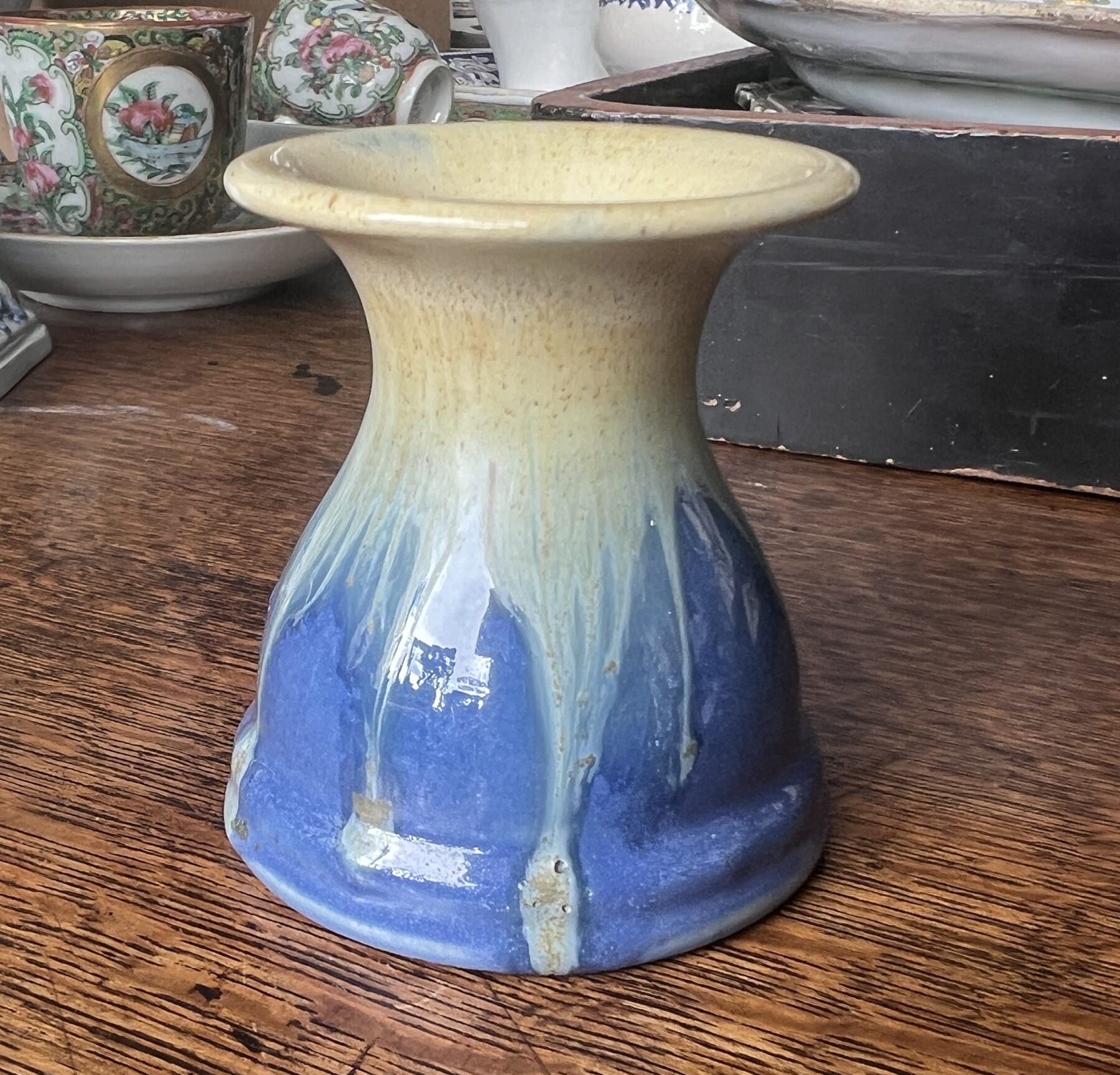
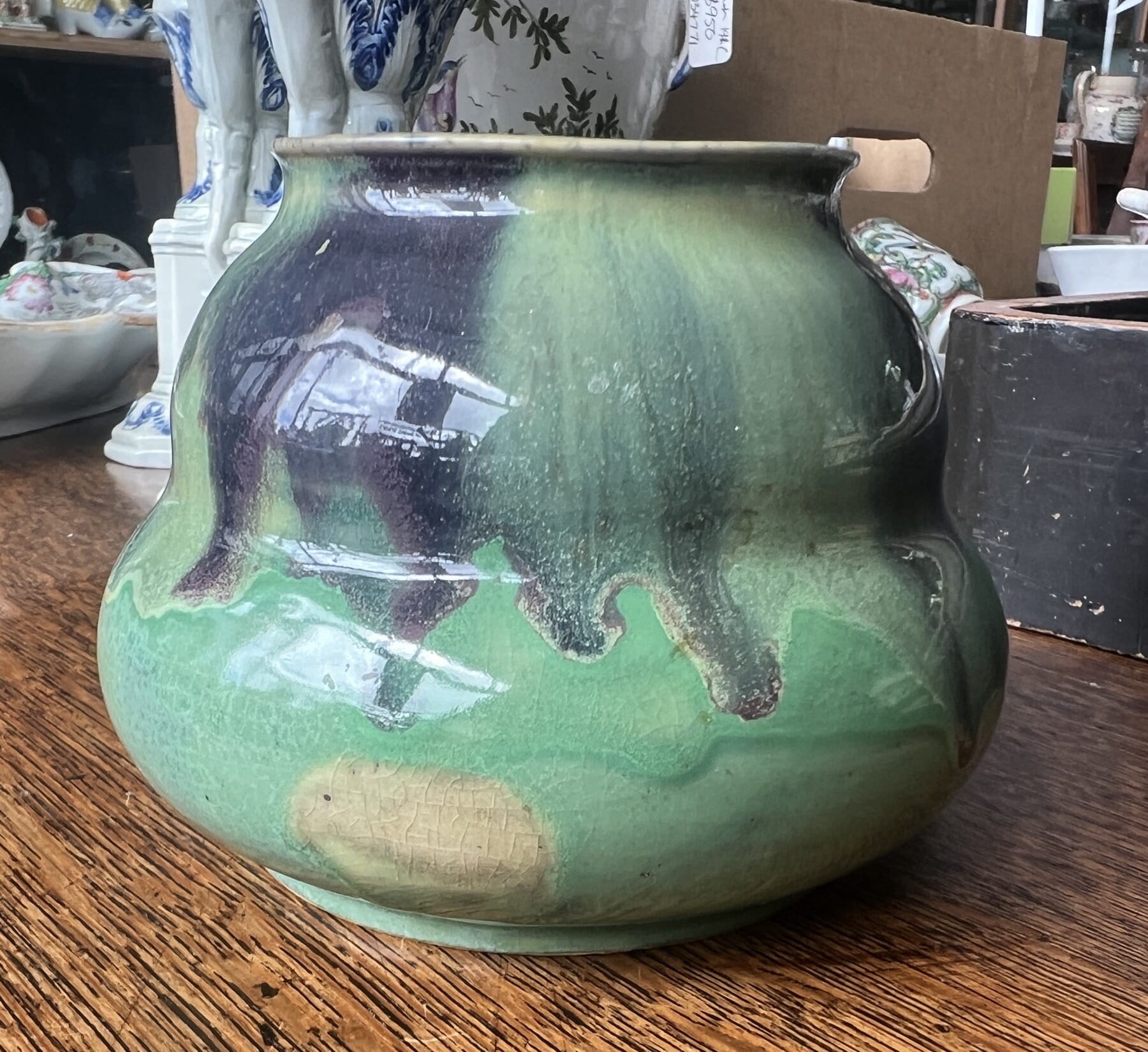
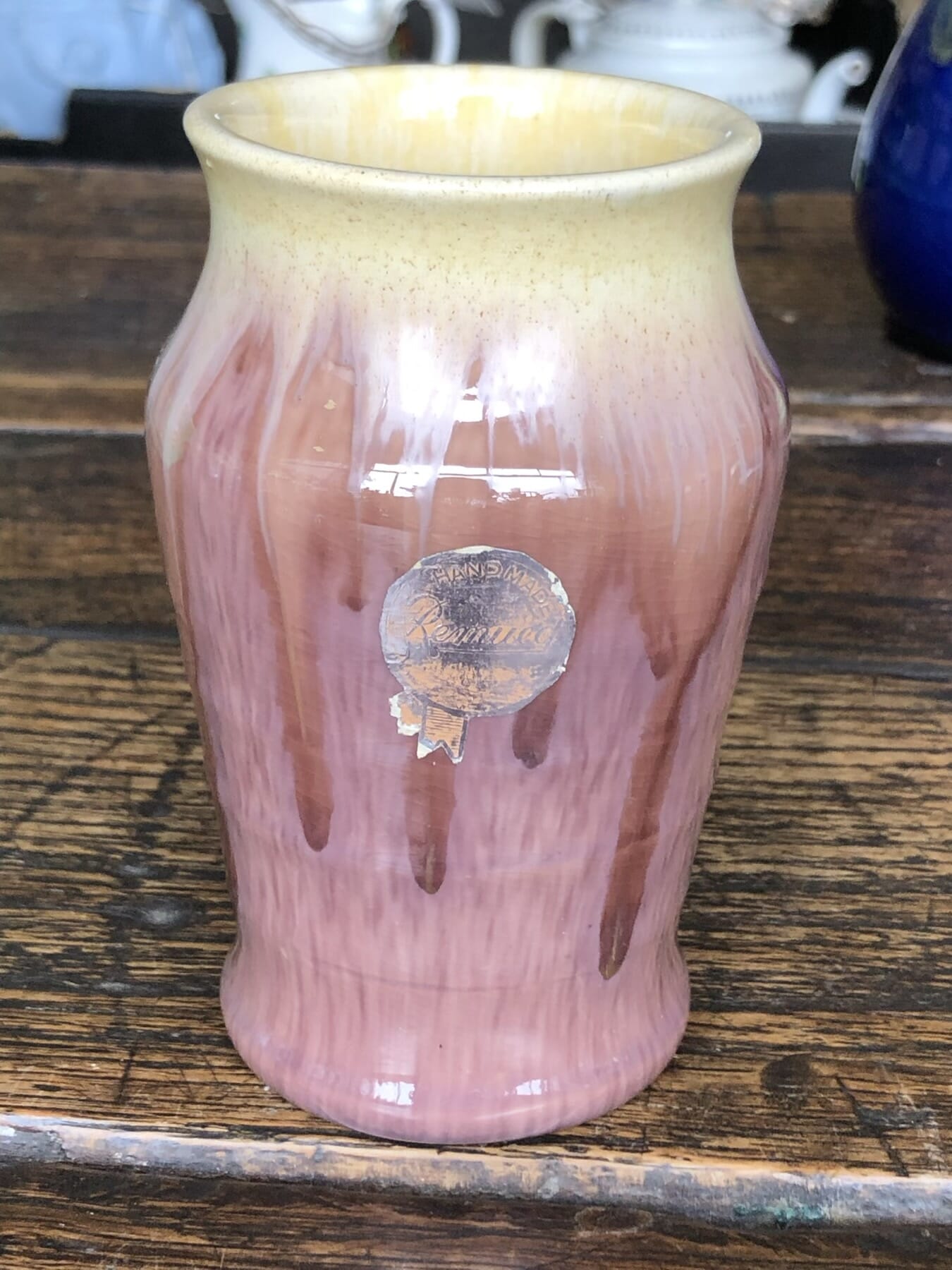
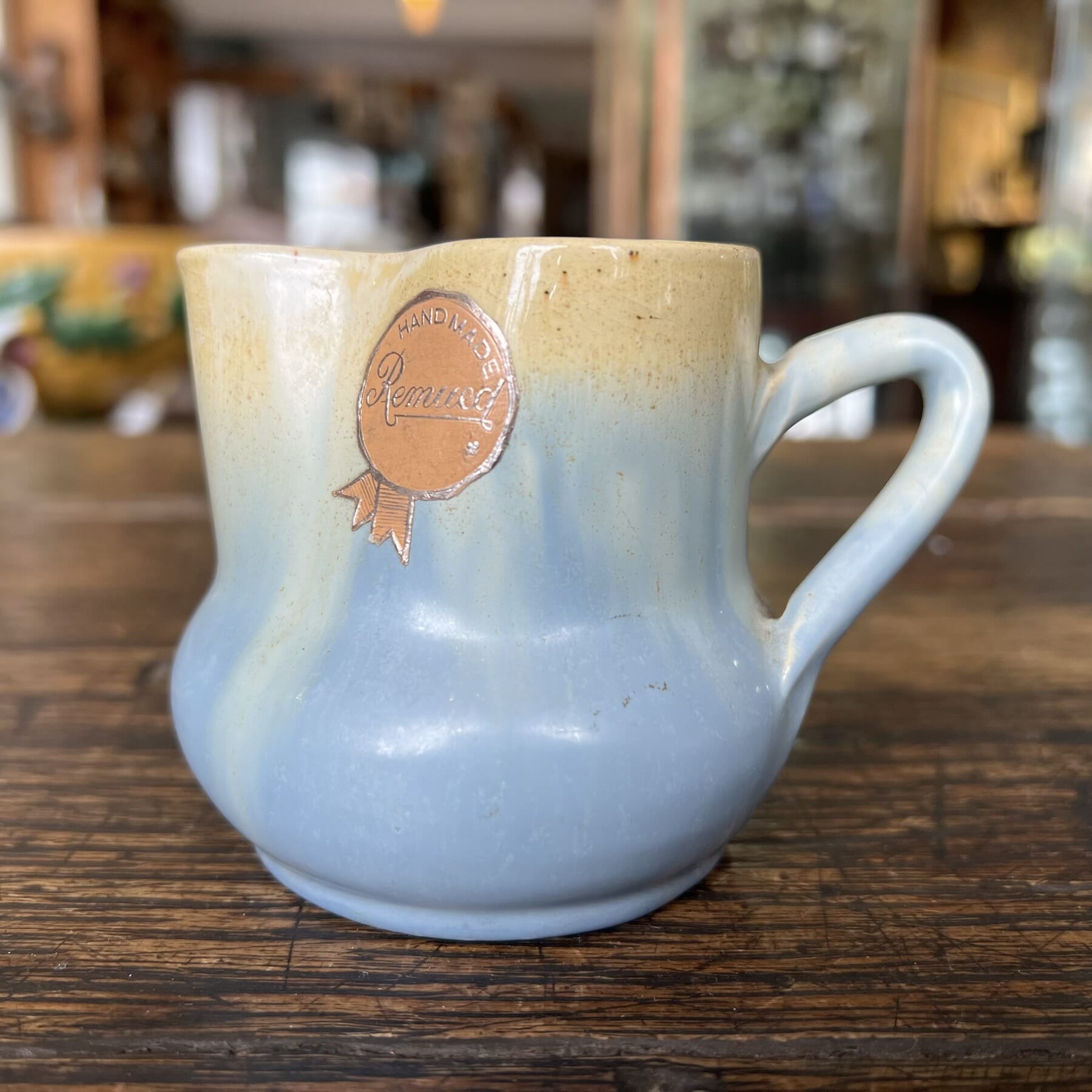
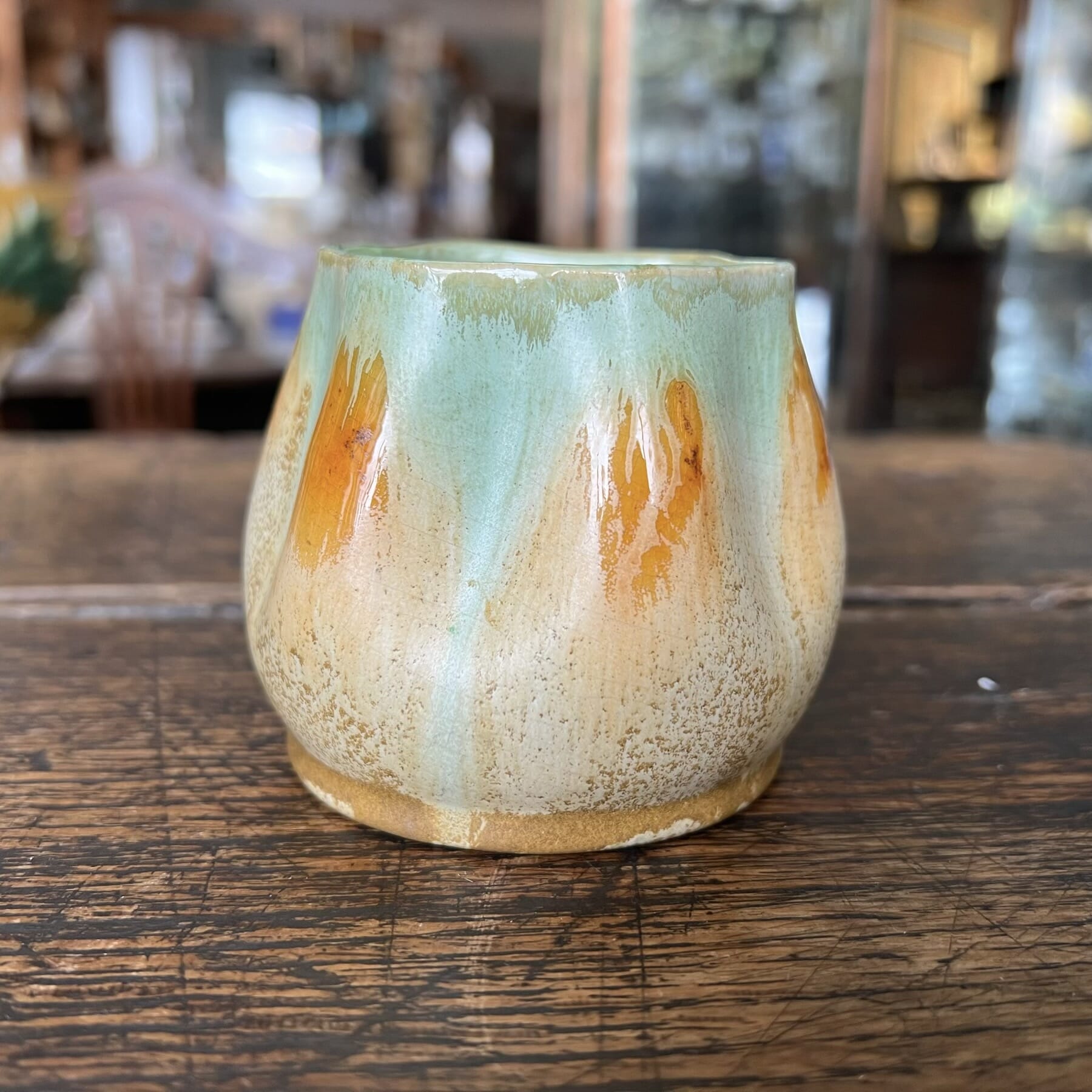
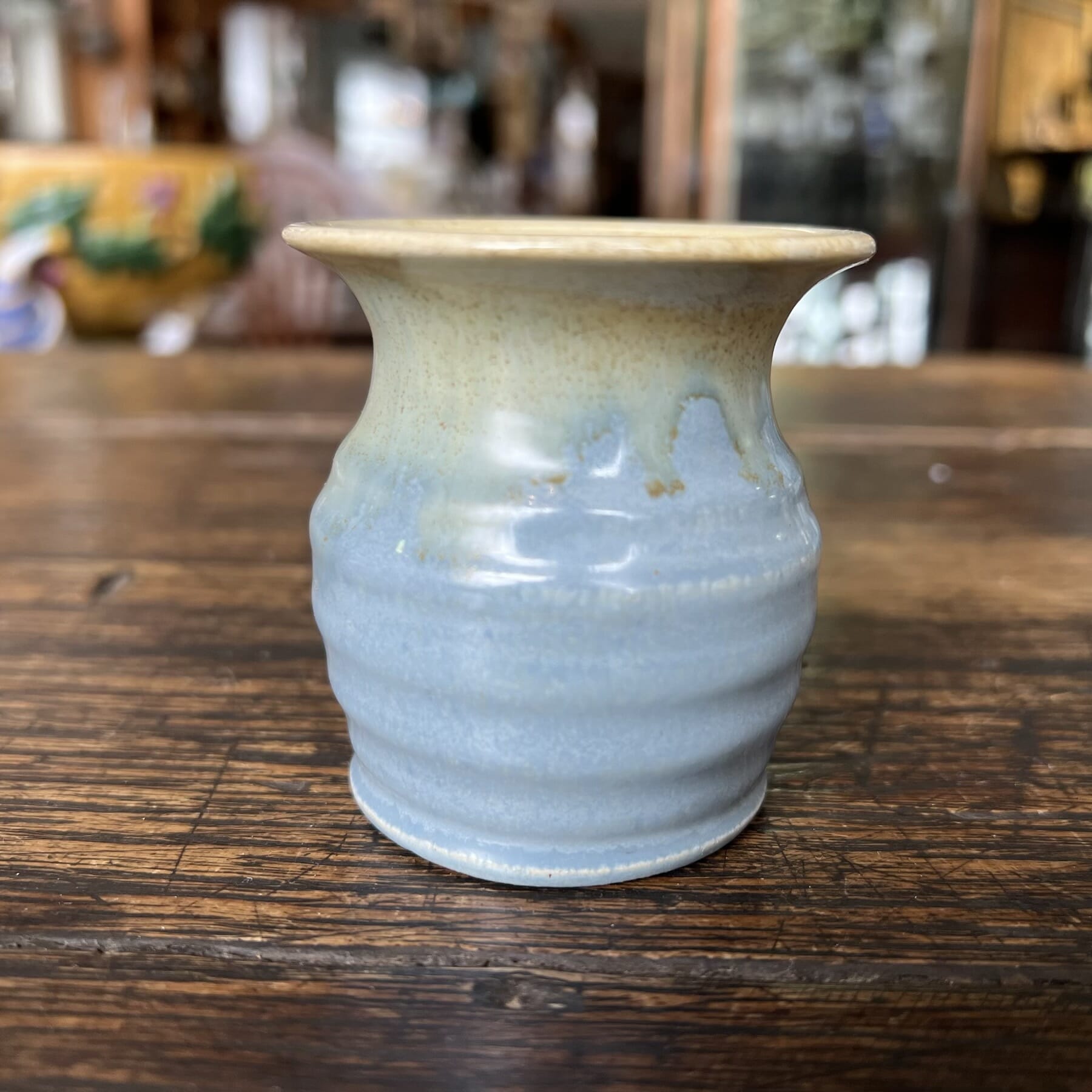
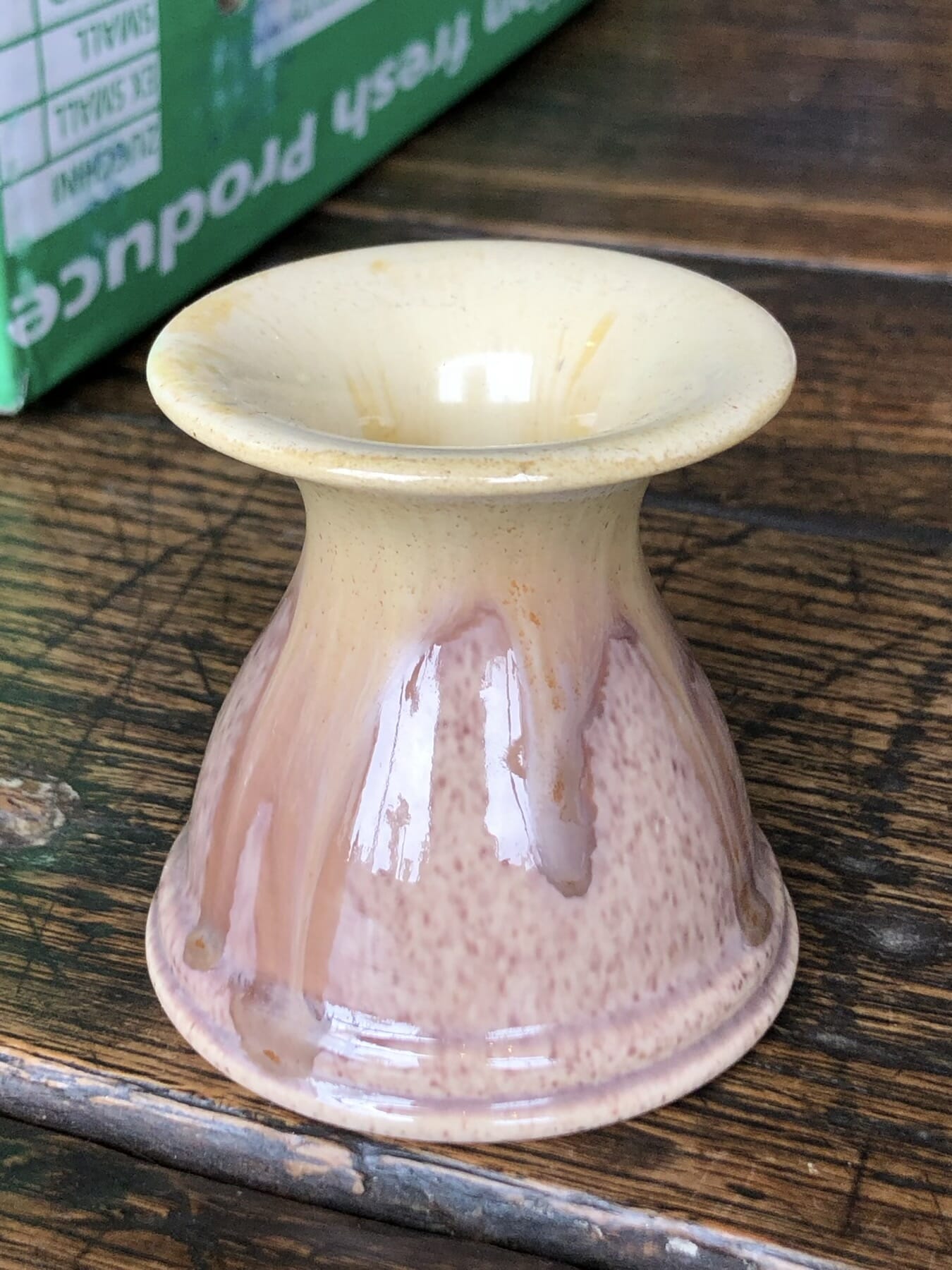
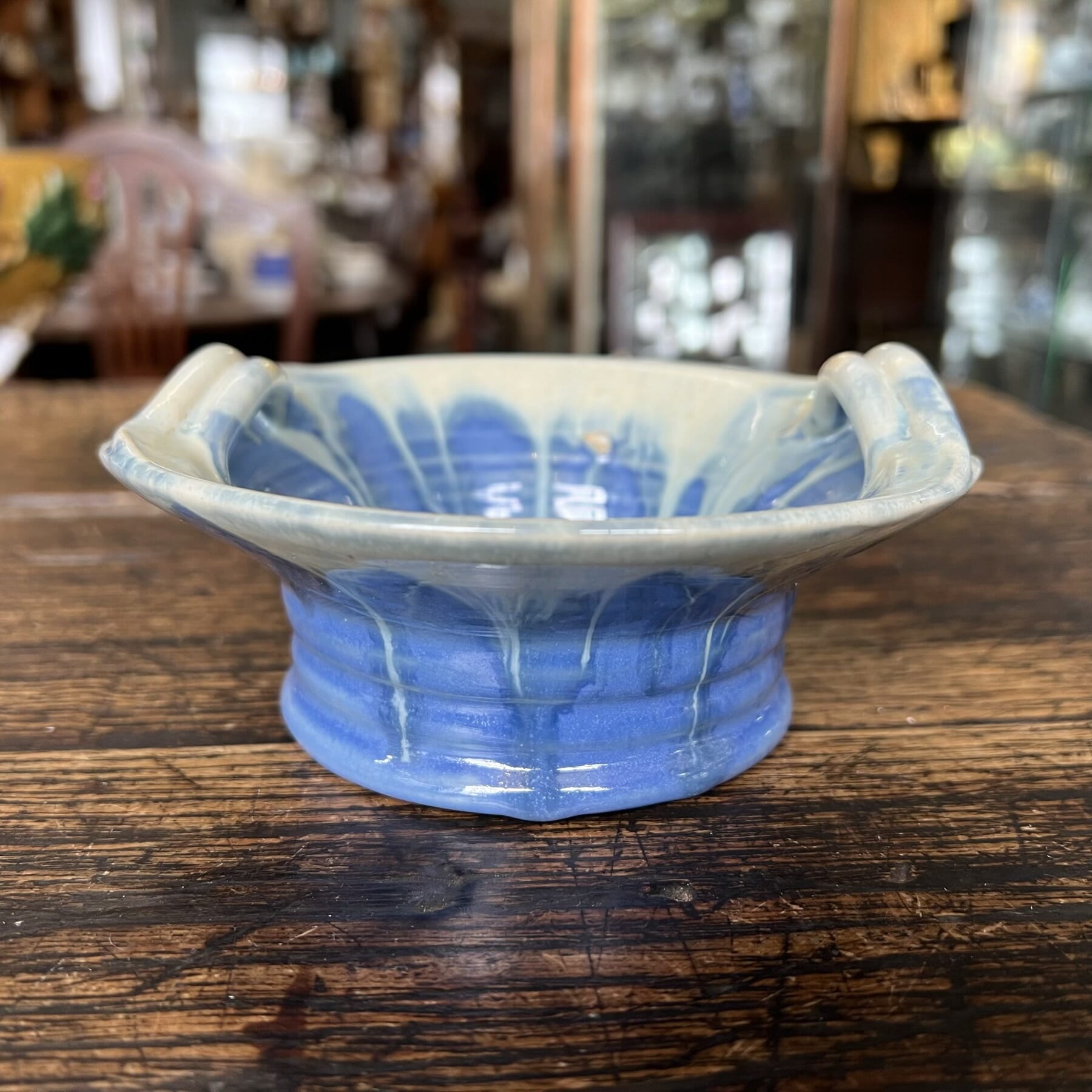
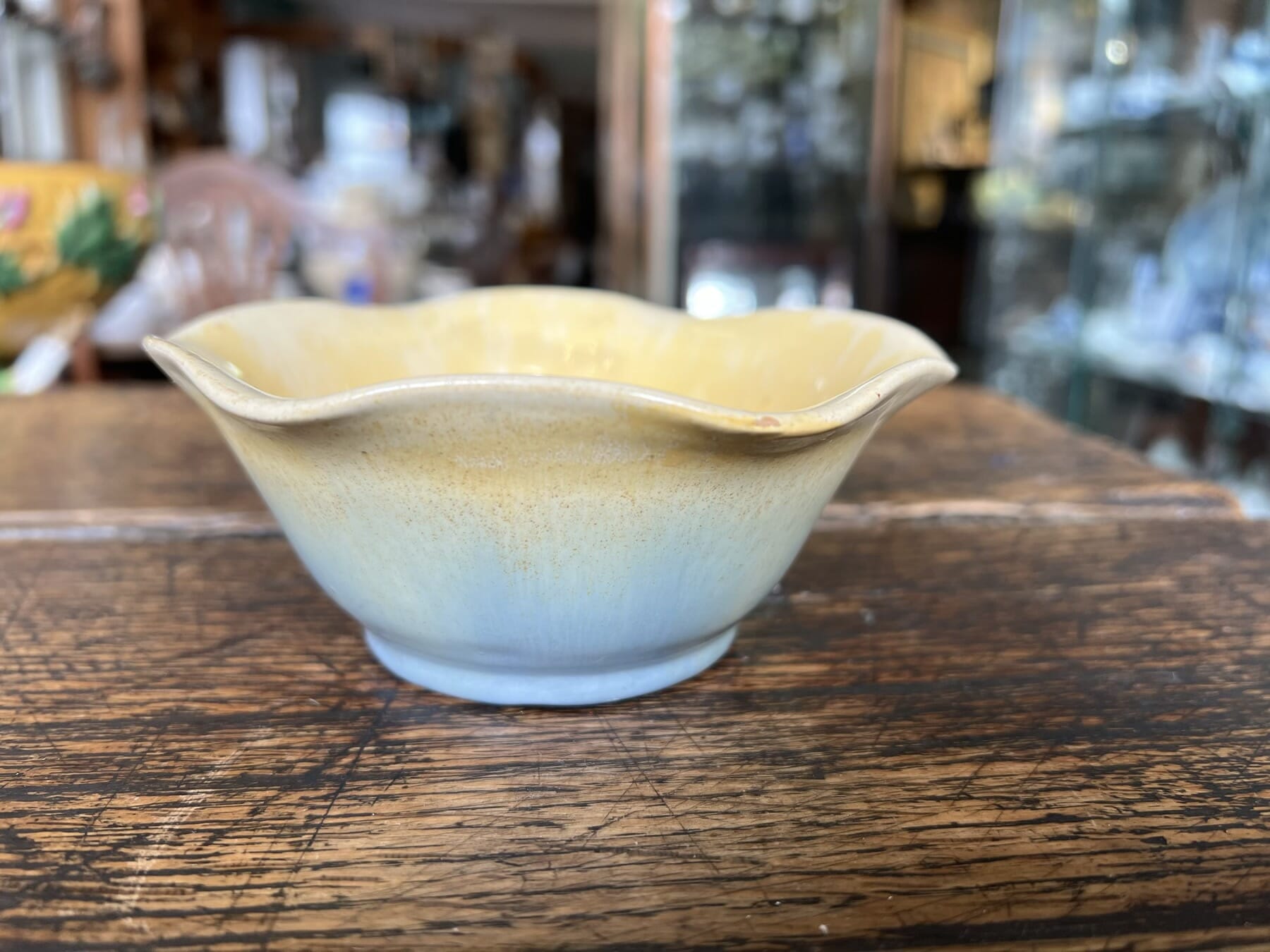
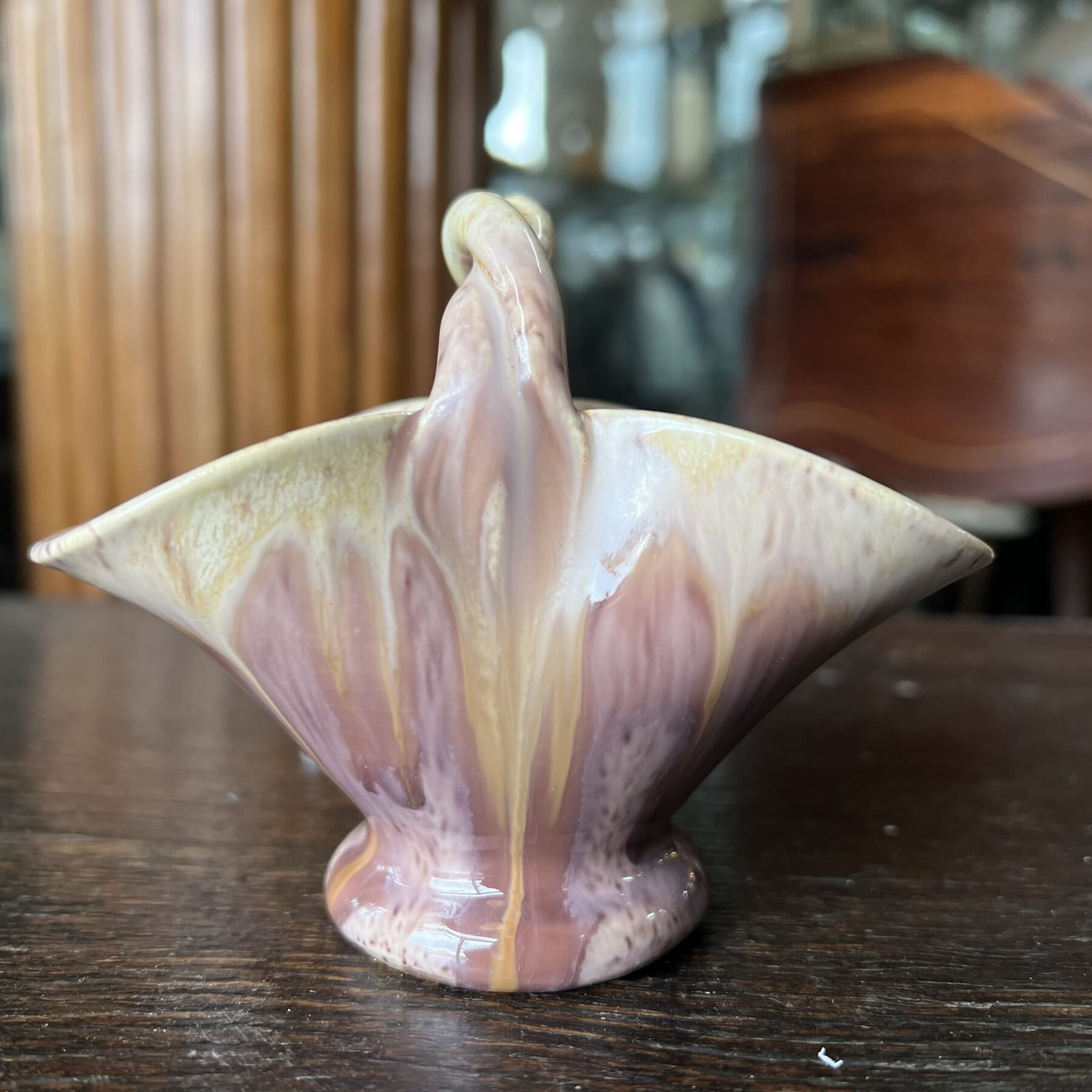
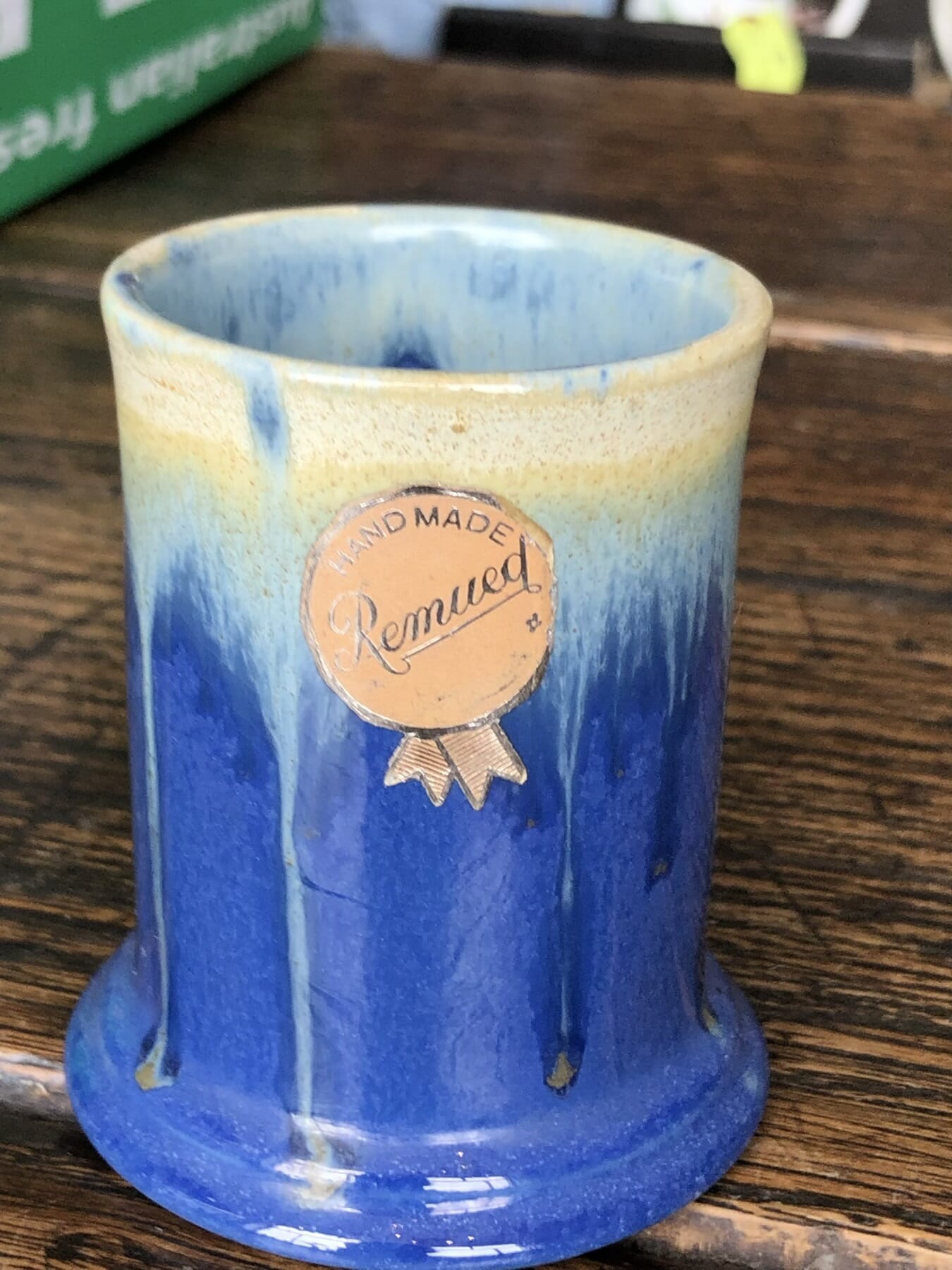
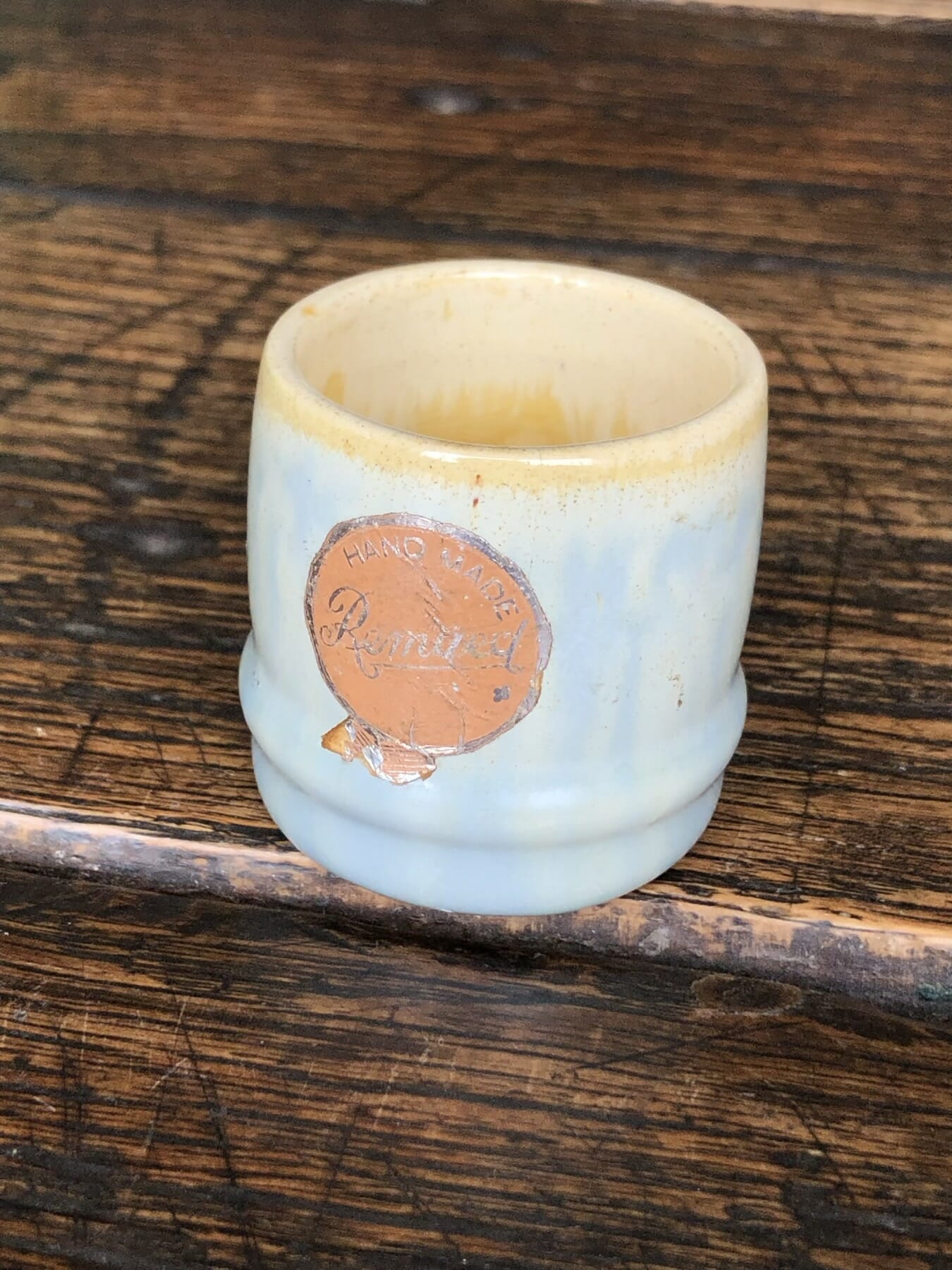
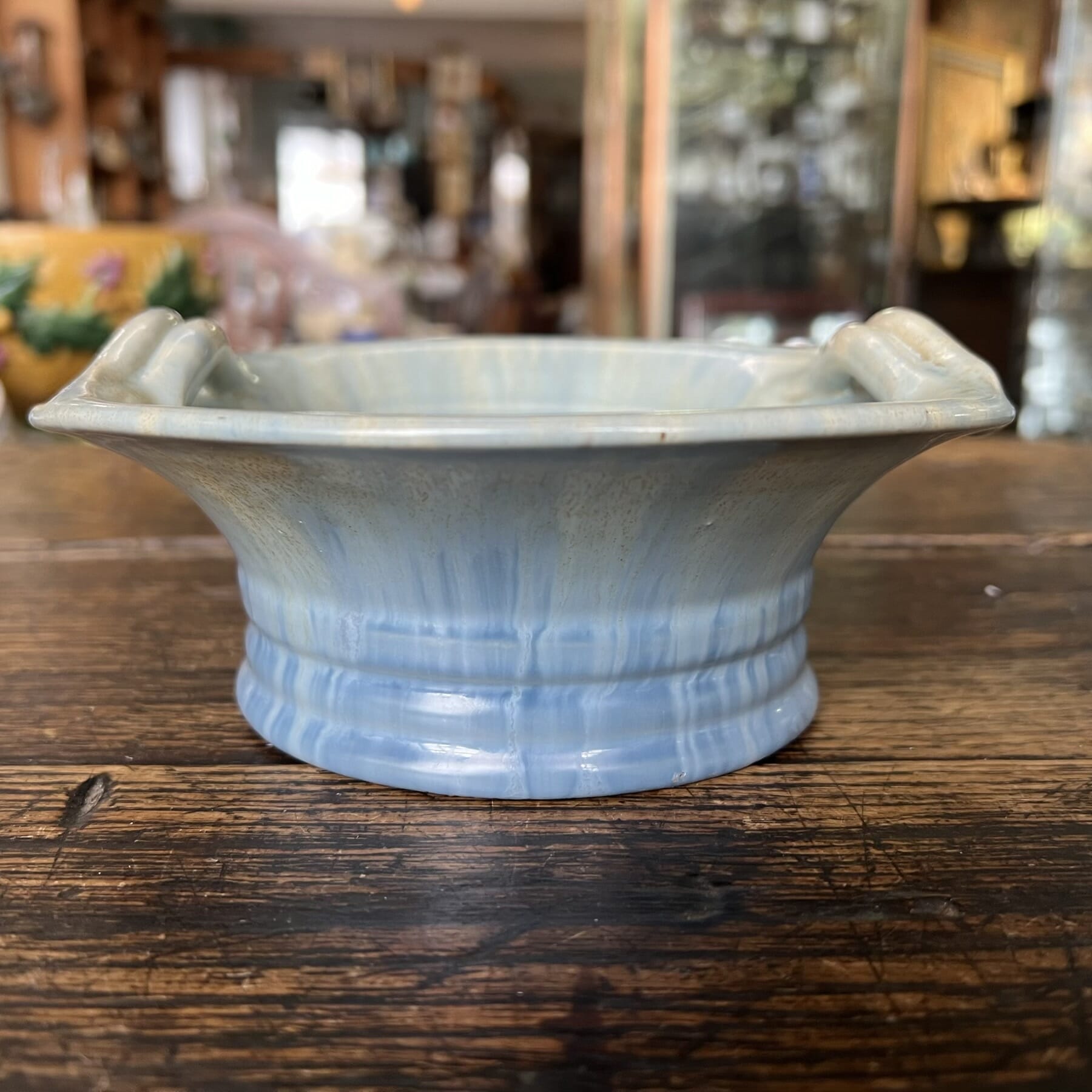
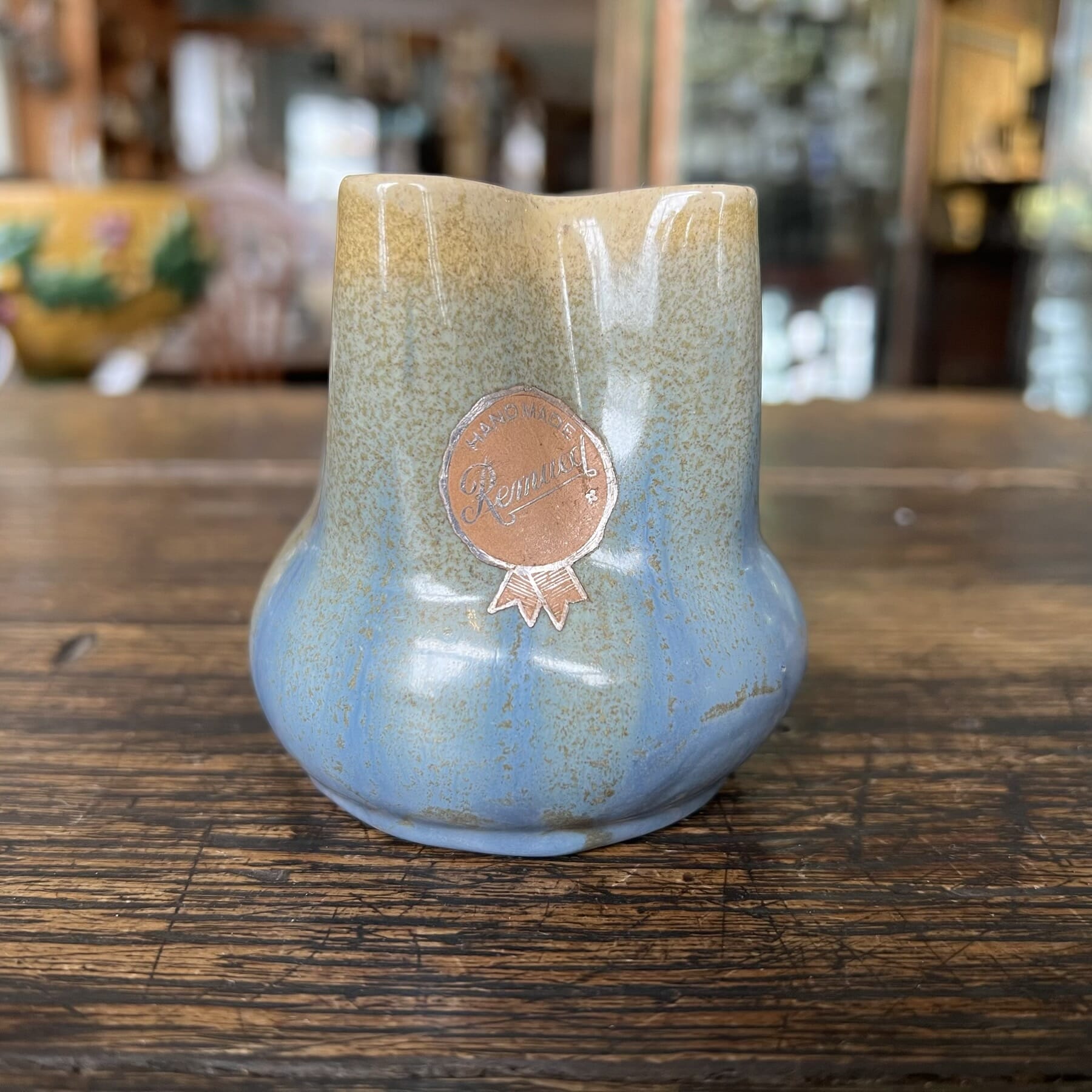
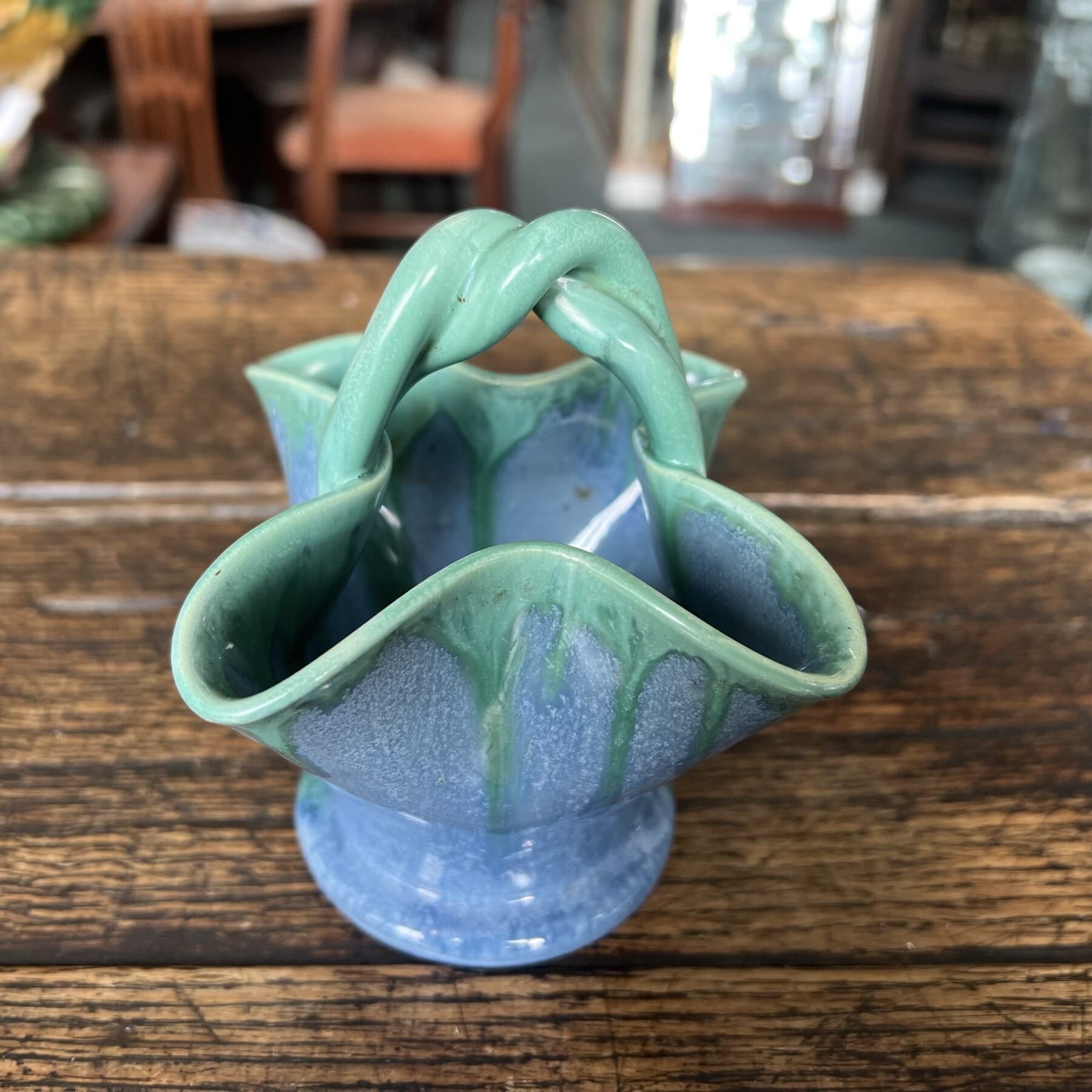
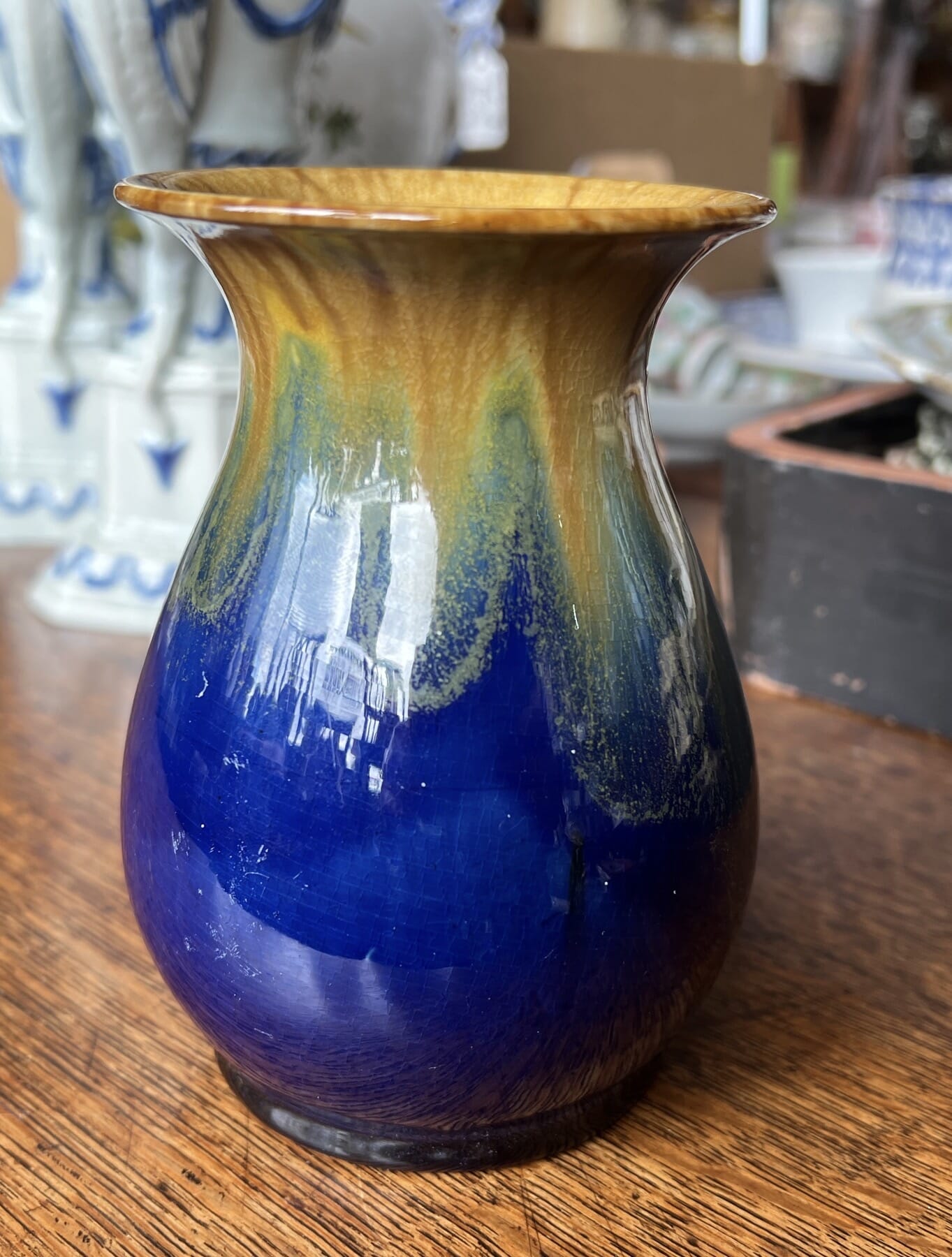
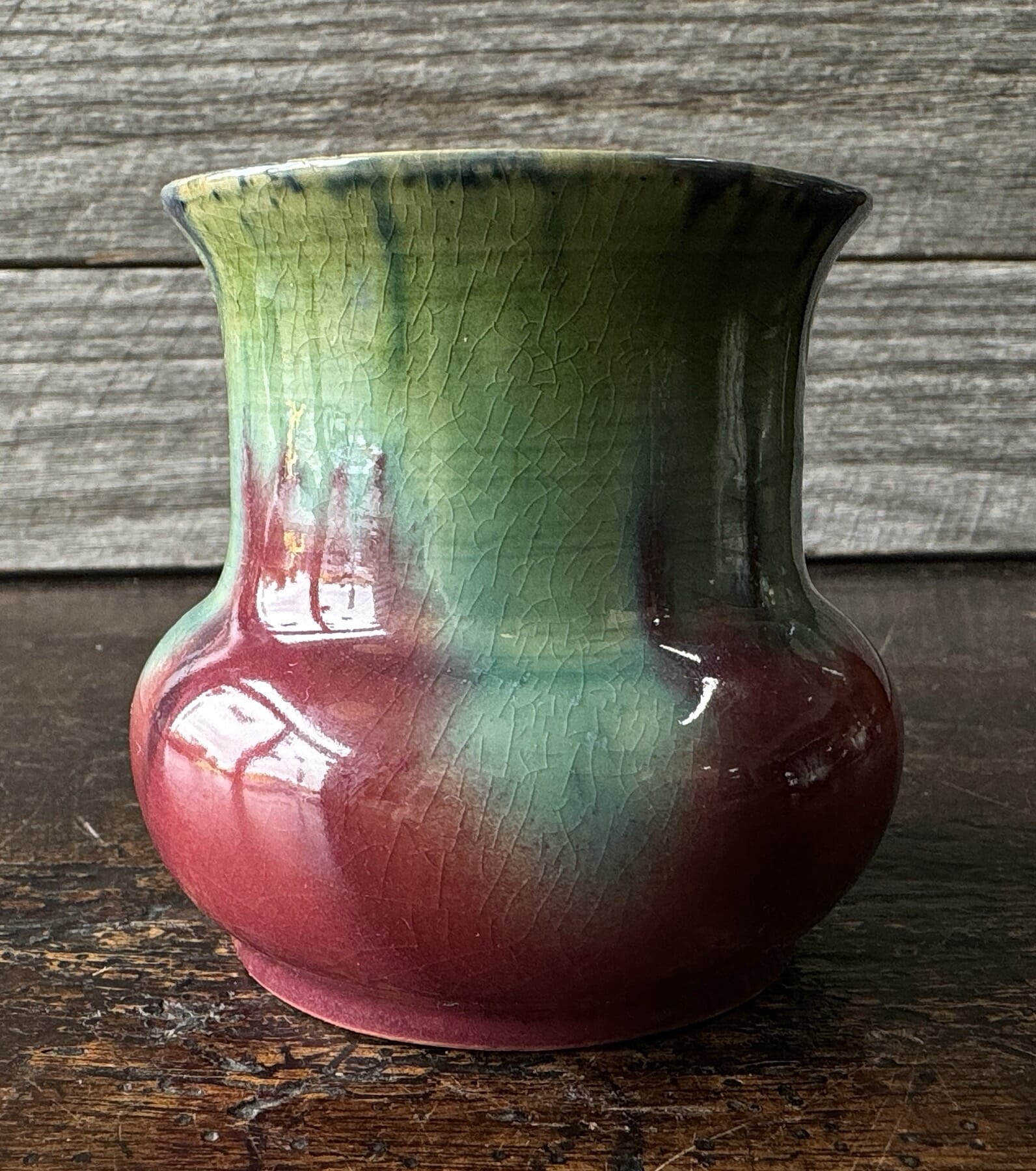
Australian Remued Pottery

Next at MOORABOOL AUCTIONS – Australiana Special

NOVEMBER 2nd – live on Invaluable

Our Auctions continue to grow in content and audience – a terrific way to sell if you are thinking of it, and the perfect place to buy at great prices.

Our next sale is currently being prepared, and features some Australiana rarities, including:

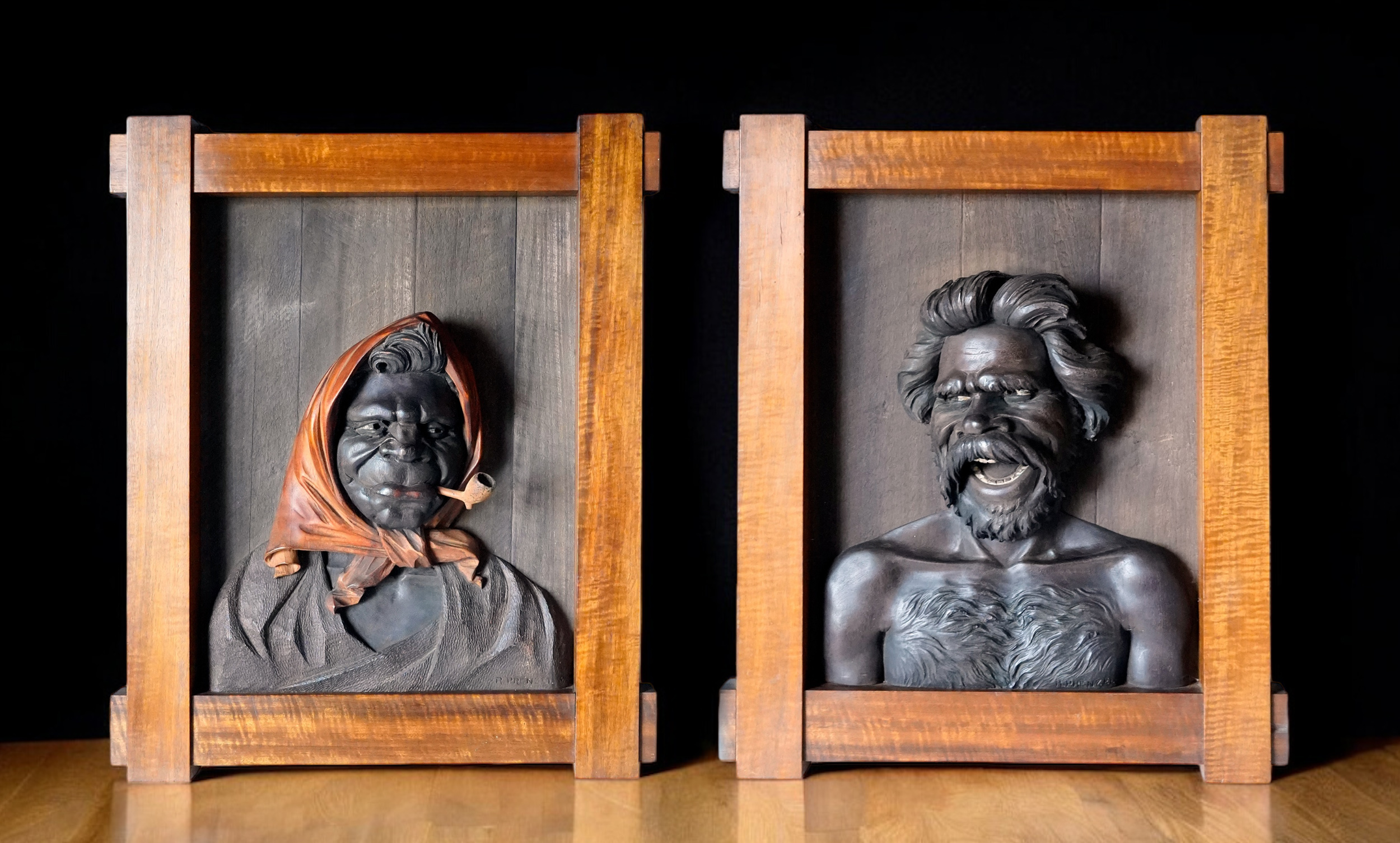
Robert Prenzel, Aboriginal portraits, signed & dated 1921
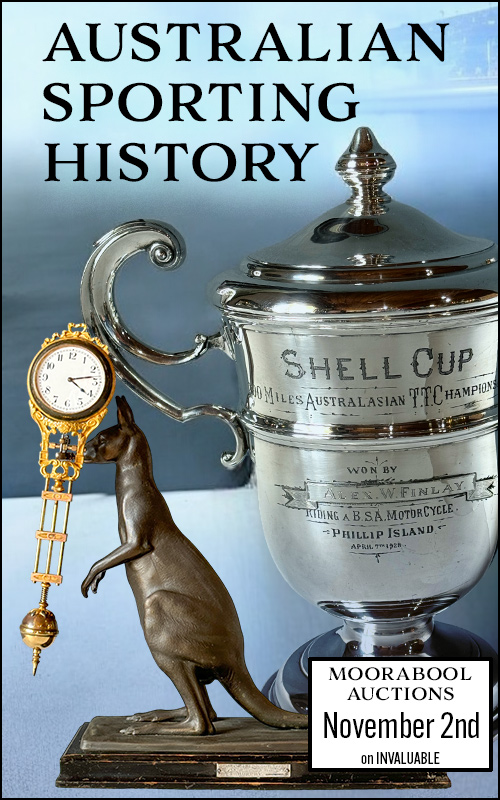
Bronze Kangaroo Mystery Clock, 1935 Australian Racing Prize + the 1928 Shell Cup, 1st Phillip Island Grand Prix

Australian Grand Prix prizes – from the FIRST Australian ‘TT’ Grand Prix, held on Phillip Island in 1928, we have the ‘Shell Cup’, a giant silver-plate affair, won by Alex Finlay on a B.S.A. bike ‘just taken out of the box’!
Rare original German bronze kangaroo ‘Mystery Clock’, 1st prize Time Trials won by Les Murphy in an MG-P in 1935.

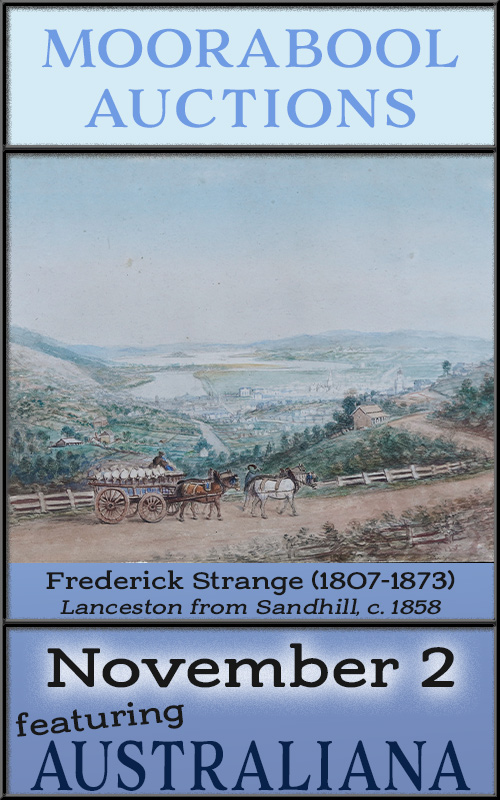
Artworks include a ‘View of Launceston’ watercolour by the extremely rare convict artist Frederick Strange, c. 1858, from the personal collection of Clifford Craig, the original researcher of this interesting colonial identity in the 1960’s.

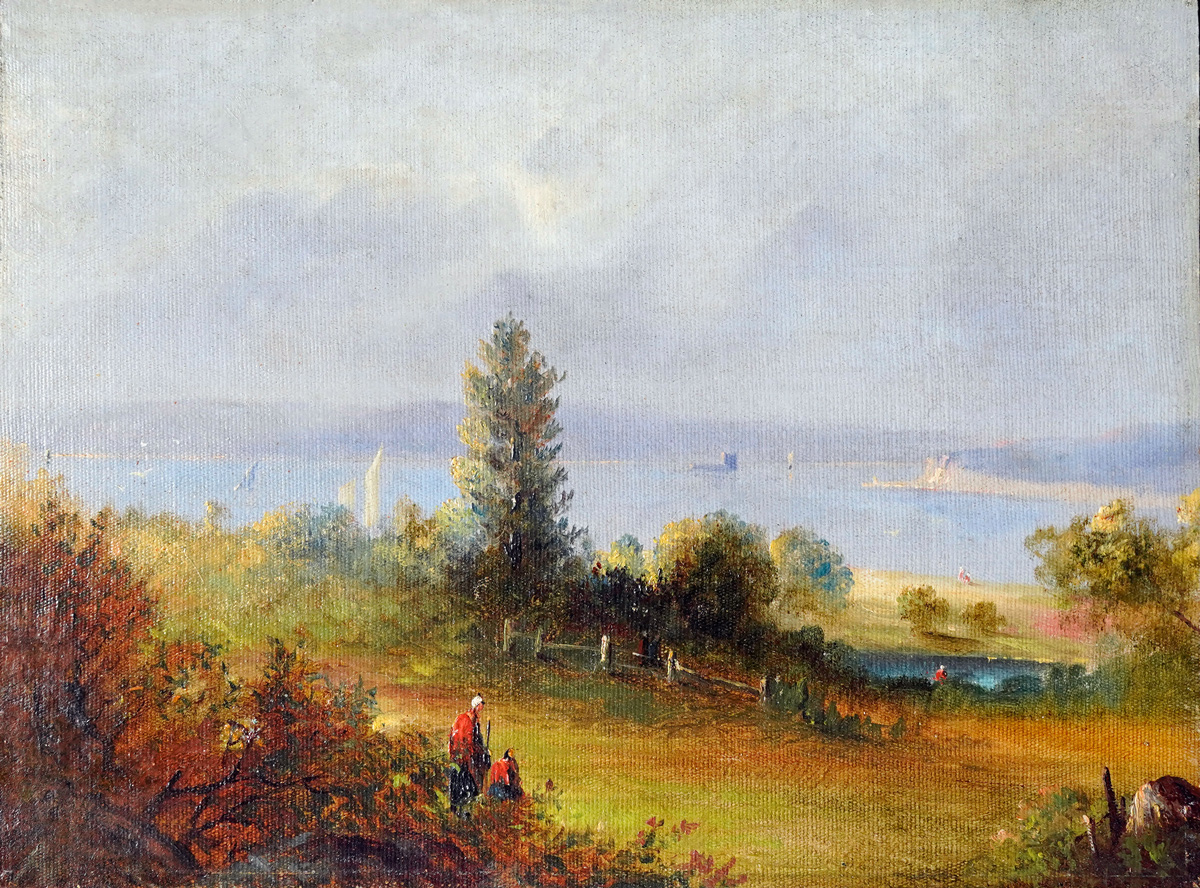
Also Fresh to Market is our recently identified George Peacock oil, ‘View of Sydney Harbour from Carrara House’, circa 1855. We have pinpointed the exact place Peacock painted this view from, with Carrara now being known as ‘Strickland House’, the gardens now public parkland along the waterfront of Vaucluse.

George Peacock, Sydney Harbour from Carrara House, Vaucluse, c. 1855

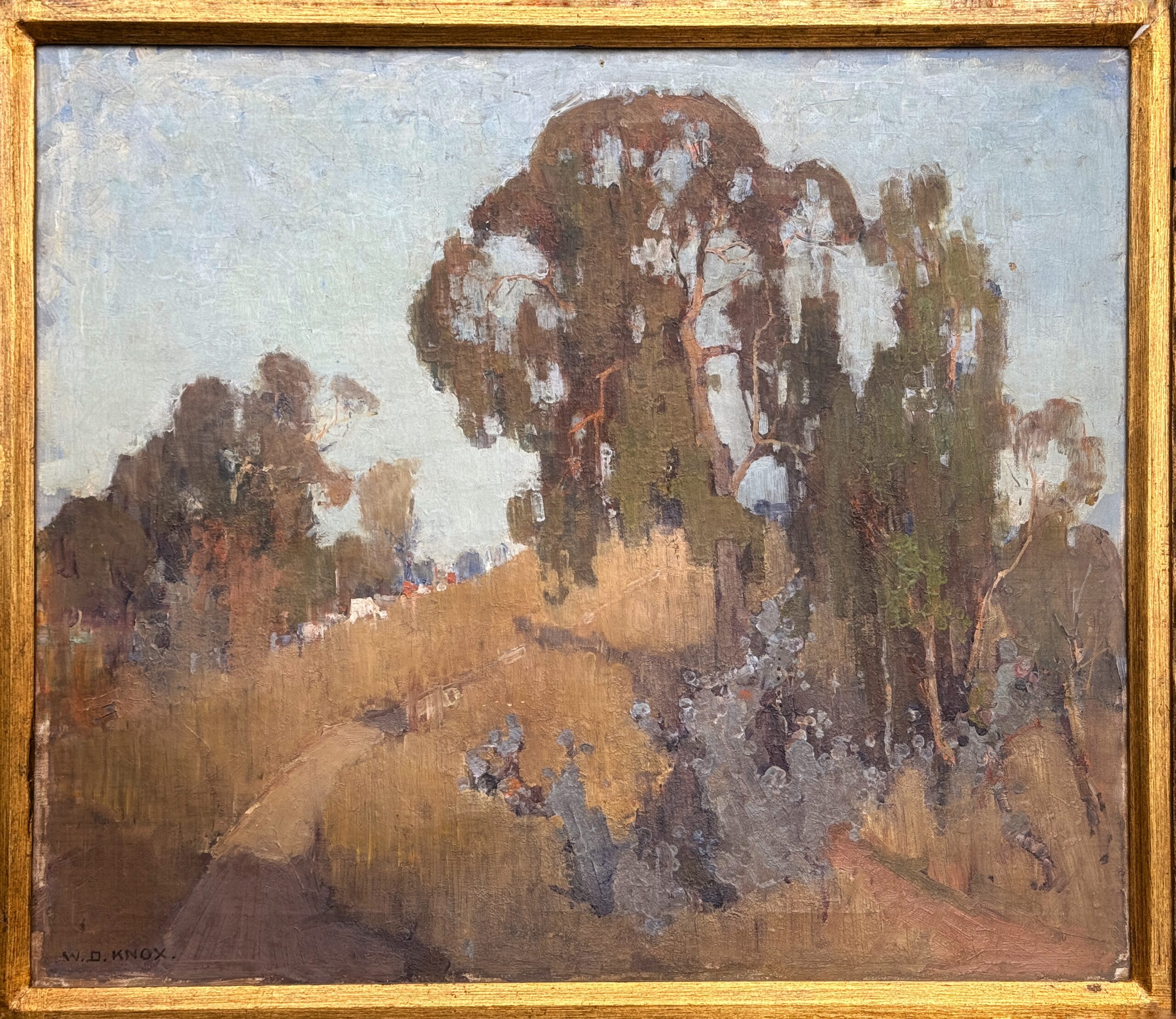
Several desirable oils by W.D. Knox come from the descendants of this fine Australian artist, fresh to the market for the first time.

W.D. Knox oil, one of several from the Knox family
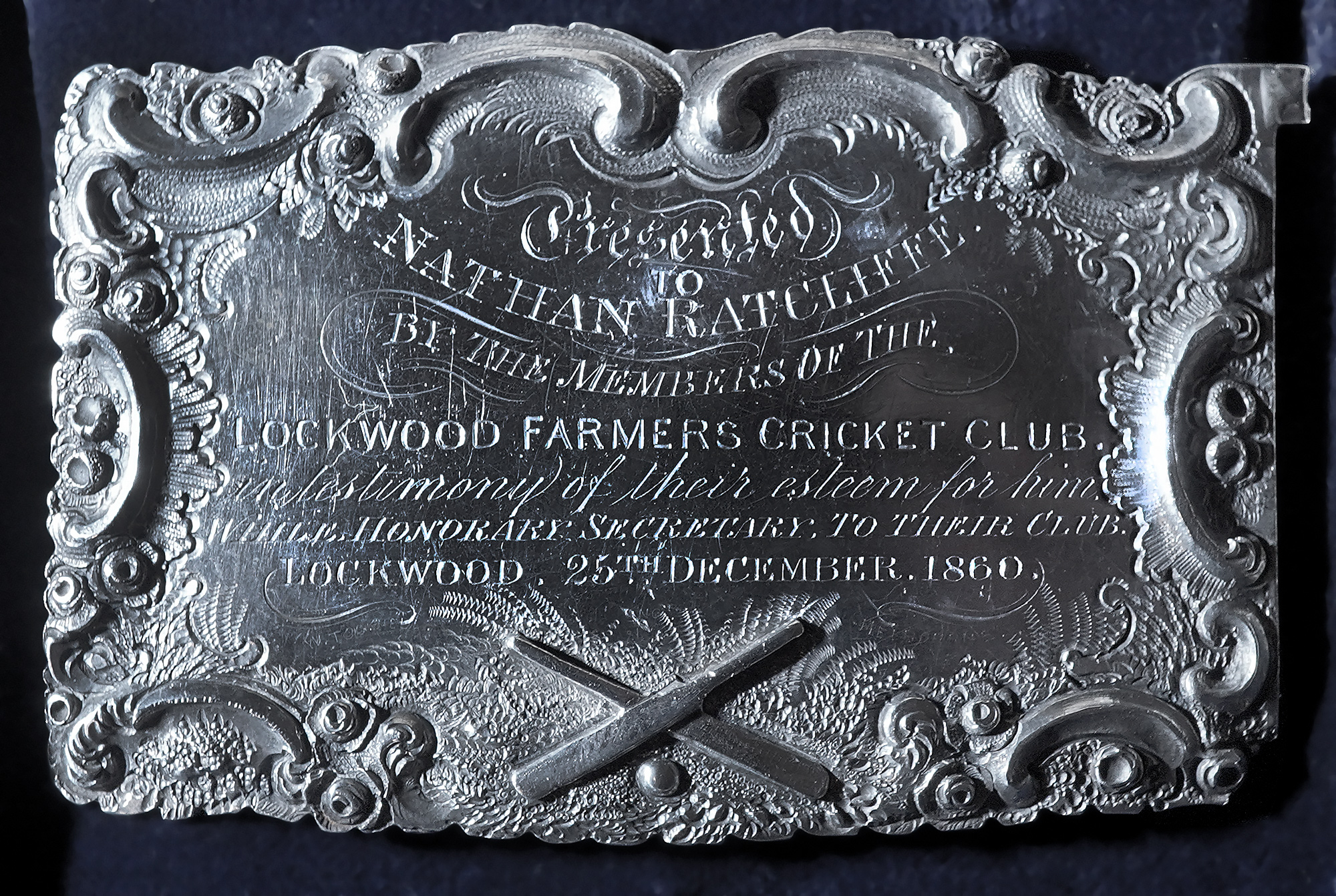
William Edwards Australian Sterling Silver Cricket Award, Lockwood Farmers Cricket Club 1860
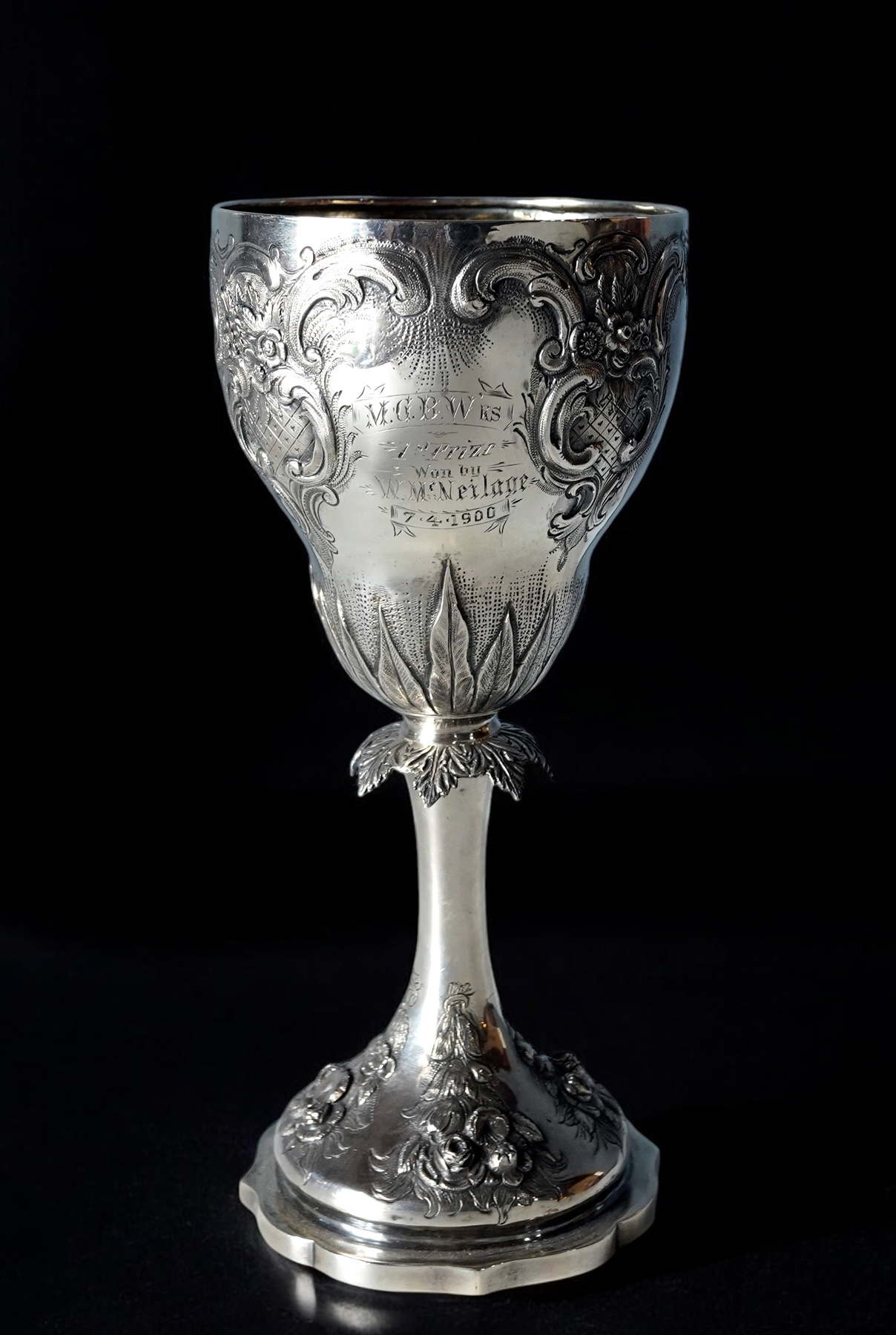
William Edwards attributed: awarded by Arthur Felton himself.

Plus more….. an email will notify all subscribers when the catalogue is uploaded & ready for exploring.

Posted on

Premium Fresh Stock

Welcome to our selection of ‘the Best’ for the end of 2024.

Some stunning rarities have come to us recently, with many local high-quality collections being dispersed.

Enjoy your browse through the following Premium items – with more items being prepared for the near future.

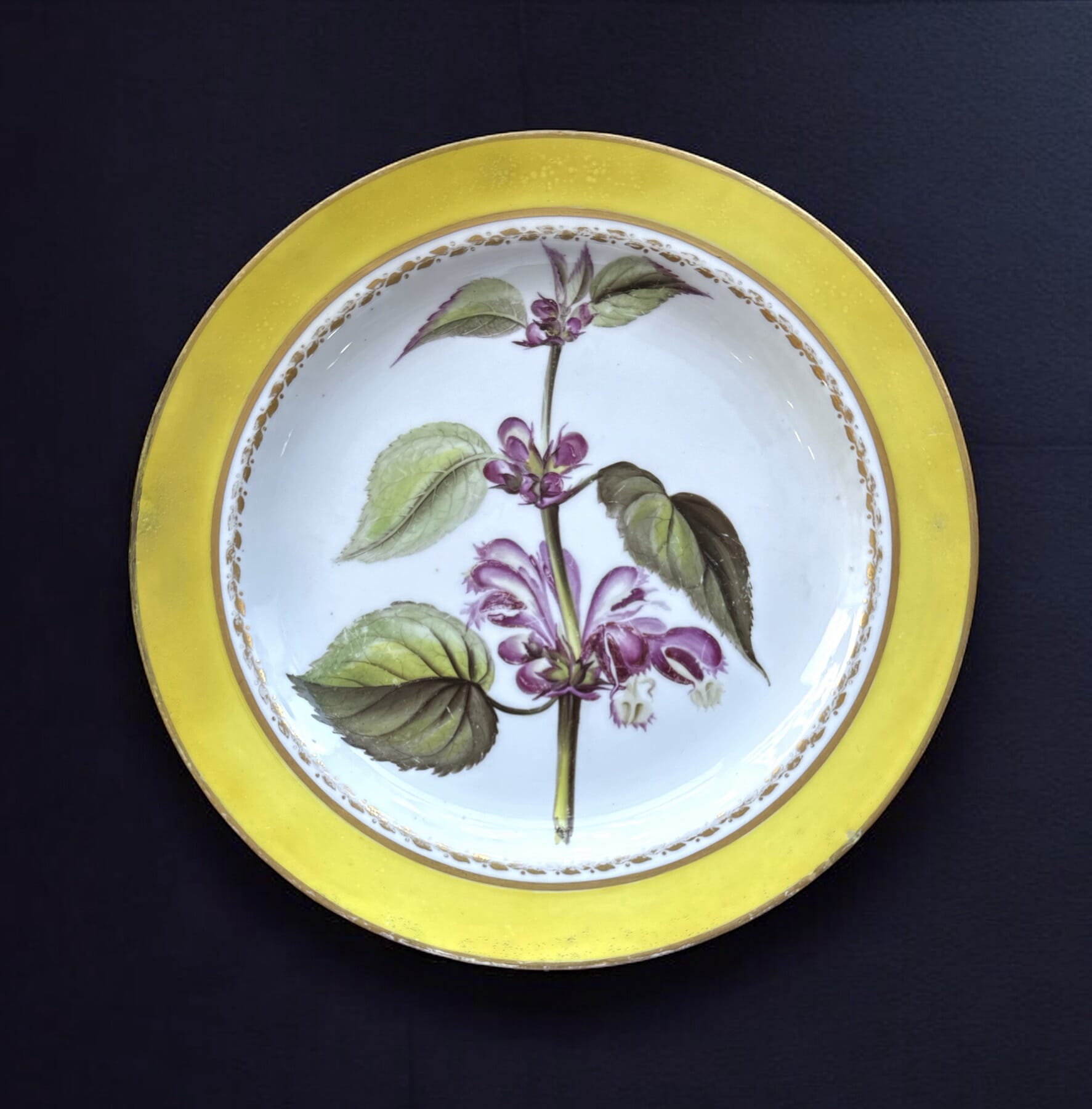
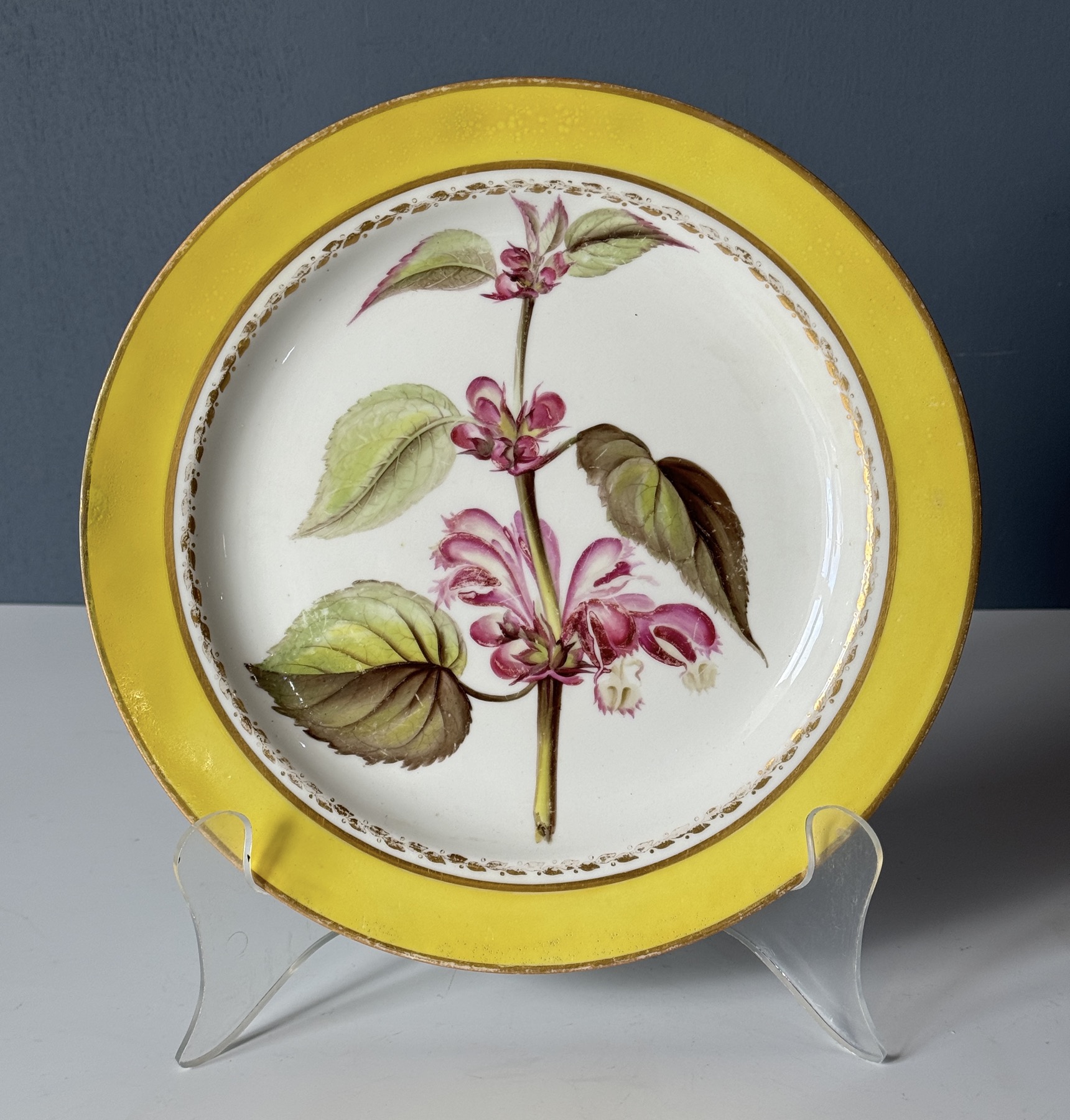
Quaker Pegg – “Balm-leaved Archangel” c. 1796

From the English Derby factory comes a piece by their finest botanical artist, William ‘Quaker’ Pegg.

Derby Quaker Pegg Botanical
Derby ‘Quaker’ Pegg Botanical Plate, c. 1796

William Pegg, known as Pegg the Quaker for his personal beliefs, was born in 1775, the son of a gardener, and came to be regarded as one of the finest painters of flowers on porcelain of all time.

He came to Staffordshire – ‘The Potteries’ – aged 10, in 1788. He was apprenticed as a ‘china painter’ – and would have been tasked with the monotonous jobs like ground colours and gilding rims. He collected prints and learnt how to draw, concentrating on plants – hardly surprising considering his father’s profession.

He had heard John Wesley preach in 1786, and had joined the Quaker ‘Society of Friends’ who followed the thoughts of men like George Fox – “…Thou shalt not make any graven Image, or simulate any figure… male or female… winged fowl… creeping thing… fish… by the express command of God”. He took this to heart, and flowers became his focus.

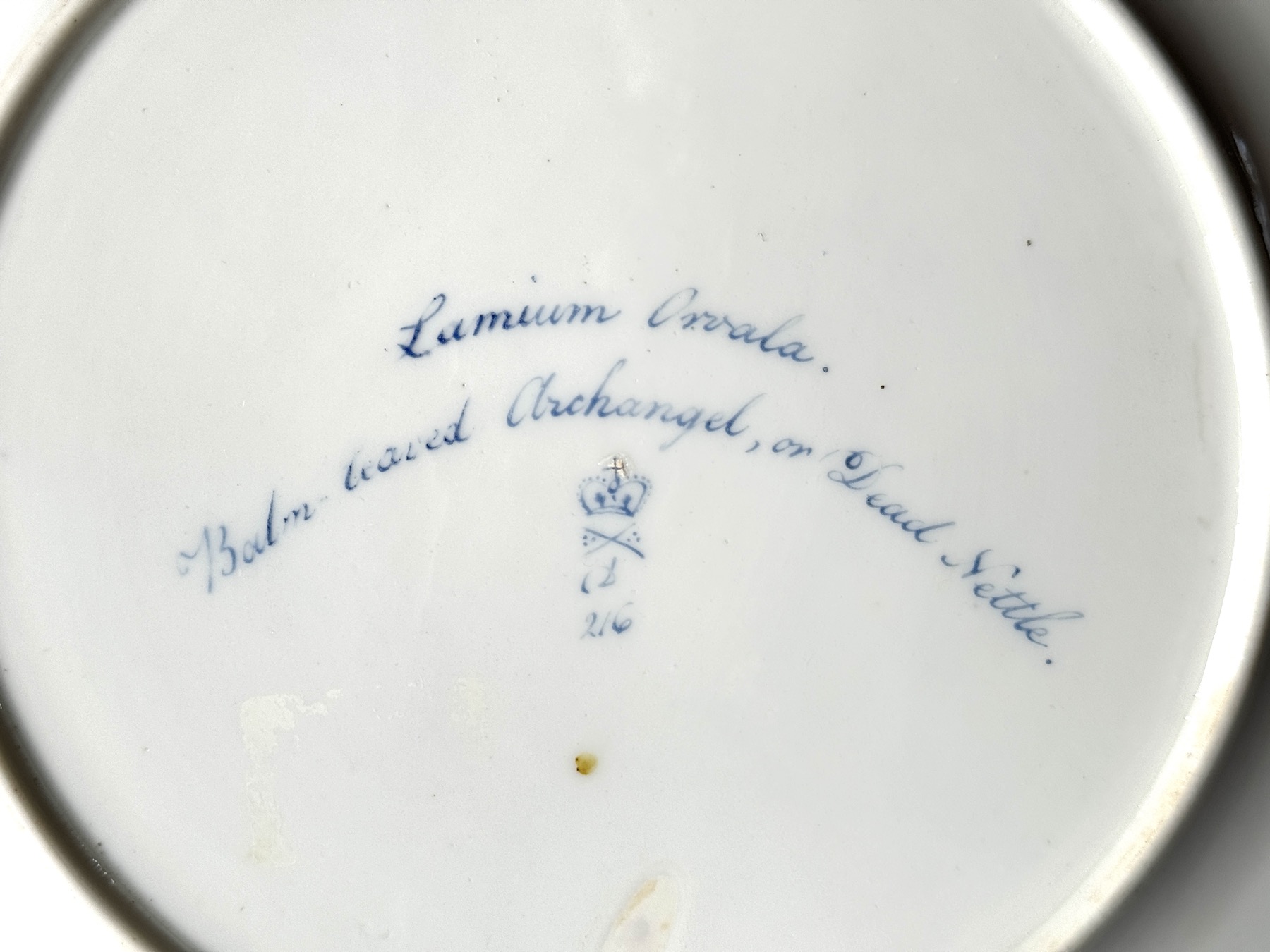
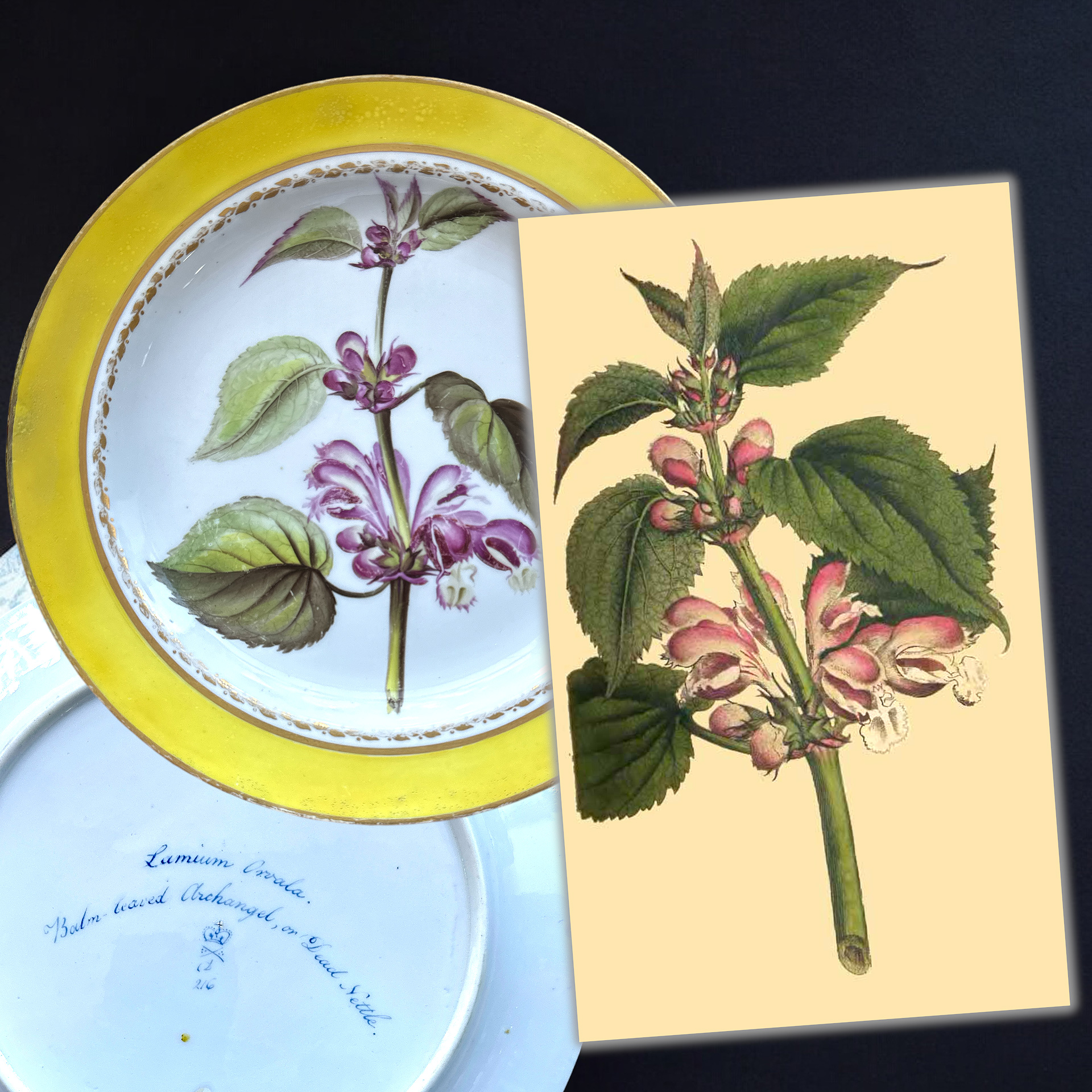
This magnificent yellow-ground plate has a large, accurate specimen to the center. The back has the title in blue – in the distinct script attributed to Pegg’s hand- “Lamium Orvala / Balm-leaved Archangel, or Dead Nettle. “
 This was taken from the most current horticultural publication of the period, ‘Curtis’s Botanical Magazine’, plate 172, published in 1791. Other examples are dated to circa 1796, early in Pegg’s botanical works.

Lamium Orvala / Balm-leaved Archangel, or Dead Nettle.
‘Curtis’s Botanical Magazine’, plate 172, published in 1791.

The Seasons

There’s a number of ‘Delightful Derby’ season figures, illustrating the evolution of their plinth styles.

Verrerie de Sèvres Claret

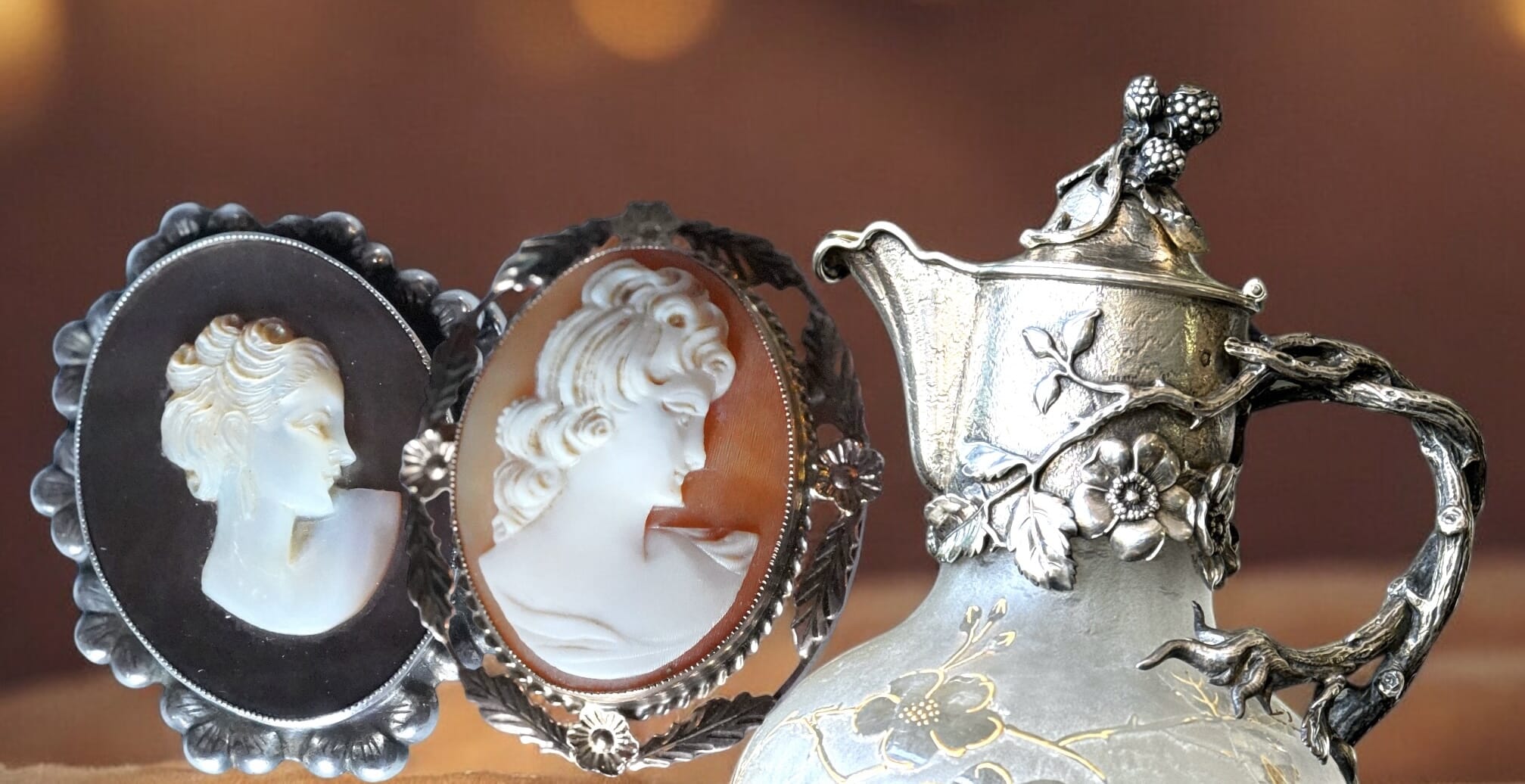
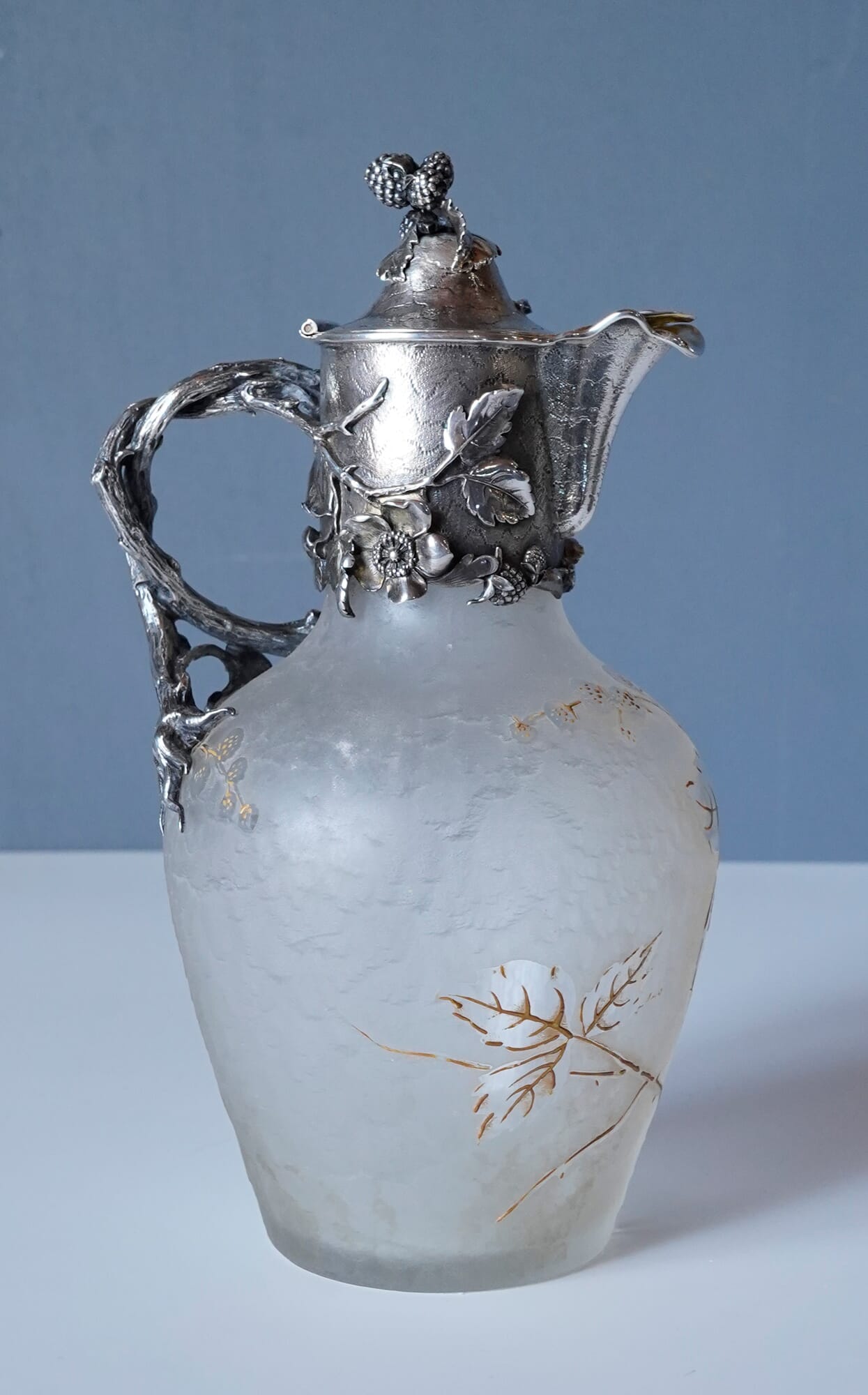
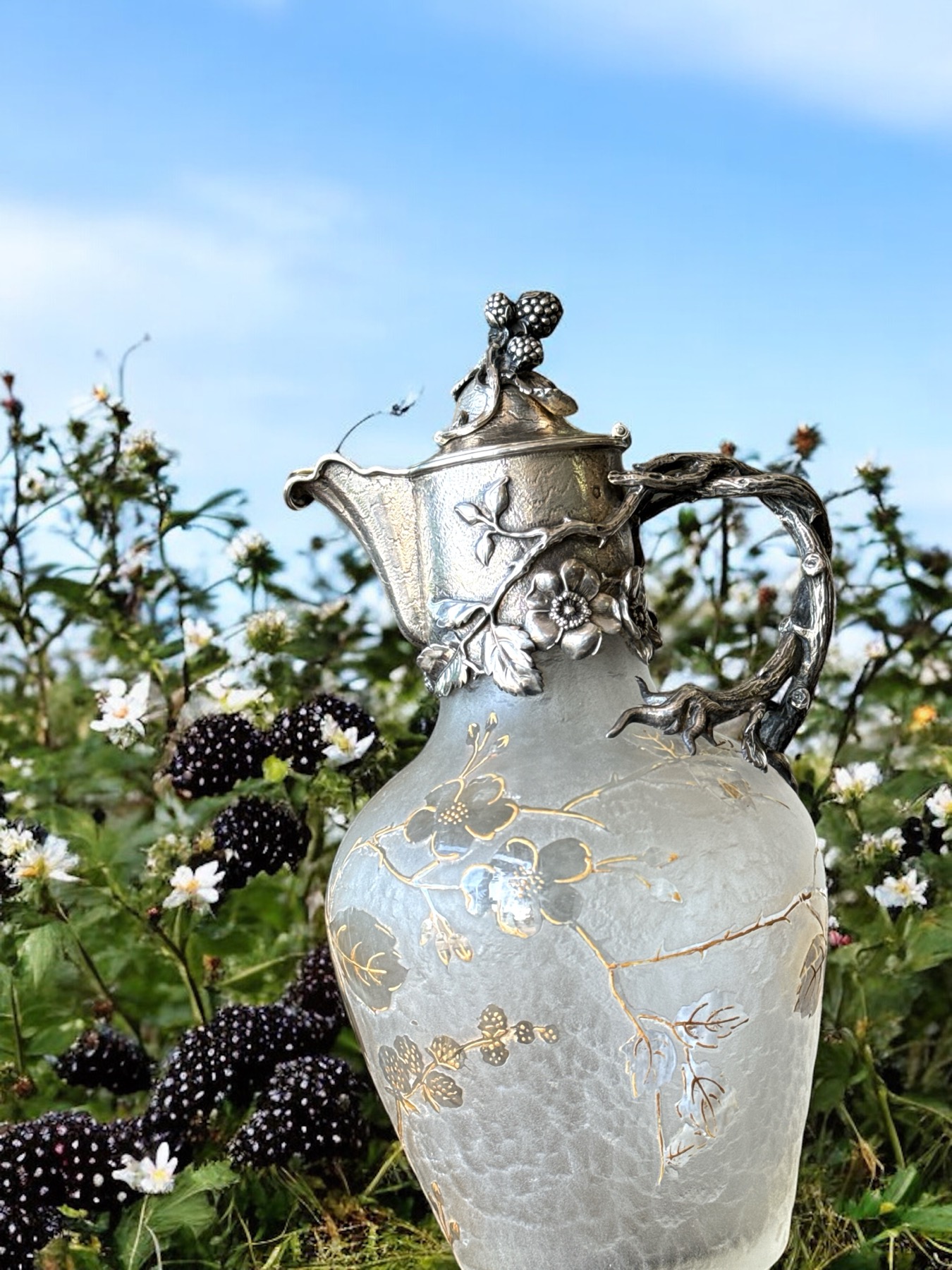
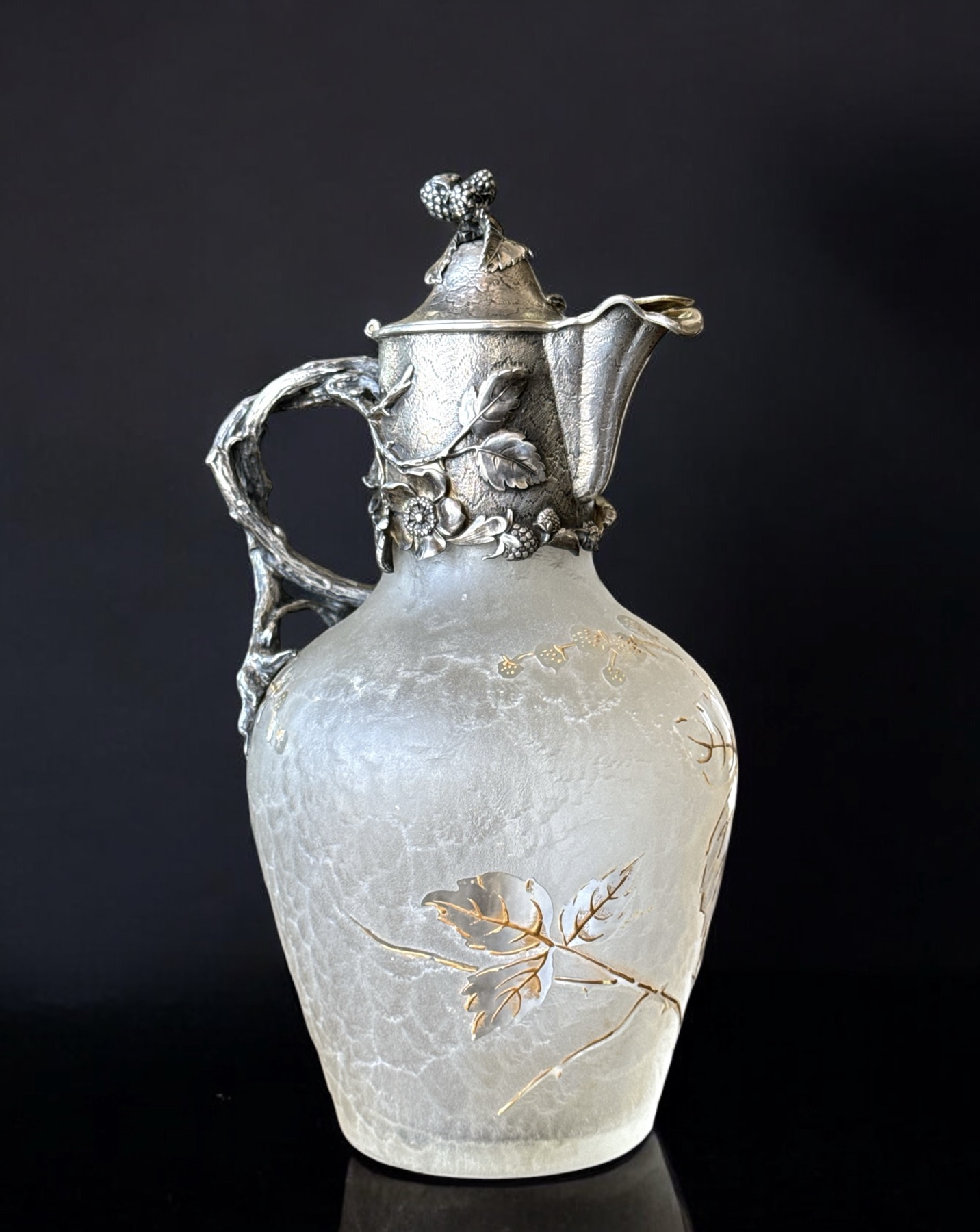
A stunning silver & etched glass claret jug is Fresh to Moorabool. The body is decorated with blackberry canes, flowers and fruit – which continues to the solid silver mounts, with a twisted cane and root as the handle. The result is a spectacular, useful piece of Art Nouveau beauty.

The marks on the piece indicate the components are actually made in different countries. The glass is French, marked for Verrerie de Sèvres – a glass works located on the outskirts of Paris. The silver is Austrian, made in Vienna by the master-silversmith firm, Brüder Franks, the Franks Brothers. It bears the mark of the company – ‘BF’ – and also a ‘winged hammer’, the mark of one of the brothers, Rudolf Frank. The firm was active in the latter 19th , early 20th century in Vienna, making high-quality pieces like this – although the combination of French Glass and Viennese silver is rarely seen.

While the Verrerie de Sèvres was founded during the reign of Louis XV, and located at the place named Sèvres, it was not part of the Royal manufactory, but an independent concern small size, making useful wares for the local market. This changed in 1870 with a new owner, Landier, who began the manufacture of lead crystal glass, and changed the name to ‘Christallerie de Sèvres’. In 1875 he took over an established glassworks in Clichy, enabling him to introduce new techniques of manufacture and engraving. The name was then added to : ‘Christalleries de Sèvres etClichy Réunis’. As the 1890’s began, they were engaged in the multitude of artistic glass styles, and some naturalistic forms were made. This was the beginning of the Art Nouveau movement, and they developed a splendid range of Nouveau taste designs using acid to etch the background of the vessels to give them a natural texture, reserving designs – such as the leaves on this piece – which were then further embellished. Some were mounted there in silver-plate; this example is rare, having solid-silver mounts.
The mark of ‘V / R’ ranking a sailing ship was used on these quality products from the 1890’s. The V and S are the initials of the firm; the ship is similar to the one found on the arms of the city of Paris, indicating its proximity to the ‘centre of culture’.

Next at MOORABOOL AUCTIONS – Australiana Special

NOVEMBER 2nd – live on Invaluable

This is currently being catalogued, but will include over 300 items, with some absolute bargains –

and a number of major pieces of Australian Art & Historical Items.


Robert Prenzel 1866-1941 (German/Australian) – Pair of almost life-size Aboriginal portraits, signed & dated 1921


Includes two Convict artist works ‘Fresh to the Market’:

George Peacock 1806-1890? (English/Australia) – previously undocumented oil painting “Sydney Harbour from Carrara House, Vaucluse” circa 1855 .

Frederick Strange 1807-73 (English/Australian) ‘View of Launceston from Cornhill’ c. 1858 .

William Dunn Knox 1880-1945 (Australian)- previously unseen oil paintings from the Knox family collection including “The Hill”, “Haystack, Olinda”, “Farmhouse”, 1920’s-30’s.

Jan Hendrik Scheltema 1861-1941 (Dutch/Australian) – view in Holland, oil on canvas

Other Australiana includes an Invite to the opening of the 1st parliament, Exhibition Buildings Carlton in 1901; ‘The SHELL Trophy’ important large trophy for the 1st motorcycle Grand Prix to be held on Phillip Island, 1928; a 1935 bronze Kangaroo, used as a Car Racing Trophy 1st prize in Victoria, 1935; an Australian Sterling Silver Belt Plaque awarded to Nathan Ratcliffe of the Lockwood Farmers Cricket Club, by Melbourne silversmith William Edwards, 1860; attributed to William Edwards, a large silver trophy cup circa 1870 awarded by Alfred Felton at his Melbourne Glass Bottle Works in 1900; plus much more – Uranium Glass, Rare Books, Coins, etc. etc. ……..

Catalogue is being prepared, a future email will alert you when it’s all ready to browse.

  • William Edwards Australian Sterling Silver Cricket Award, Lockwood Farmers Cricket Club 1860

Posted on

Derby ‘Adolescent Seasons’

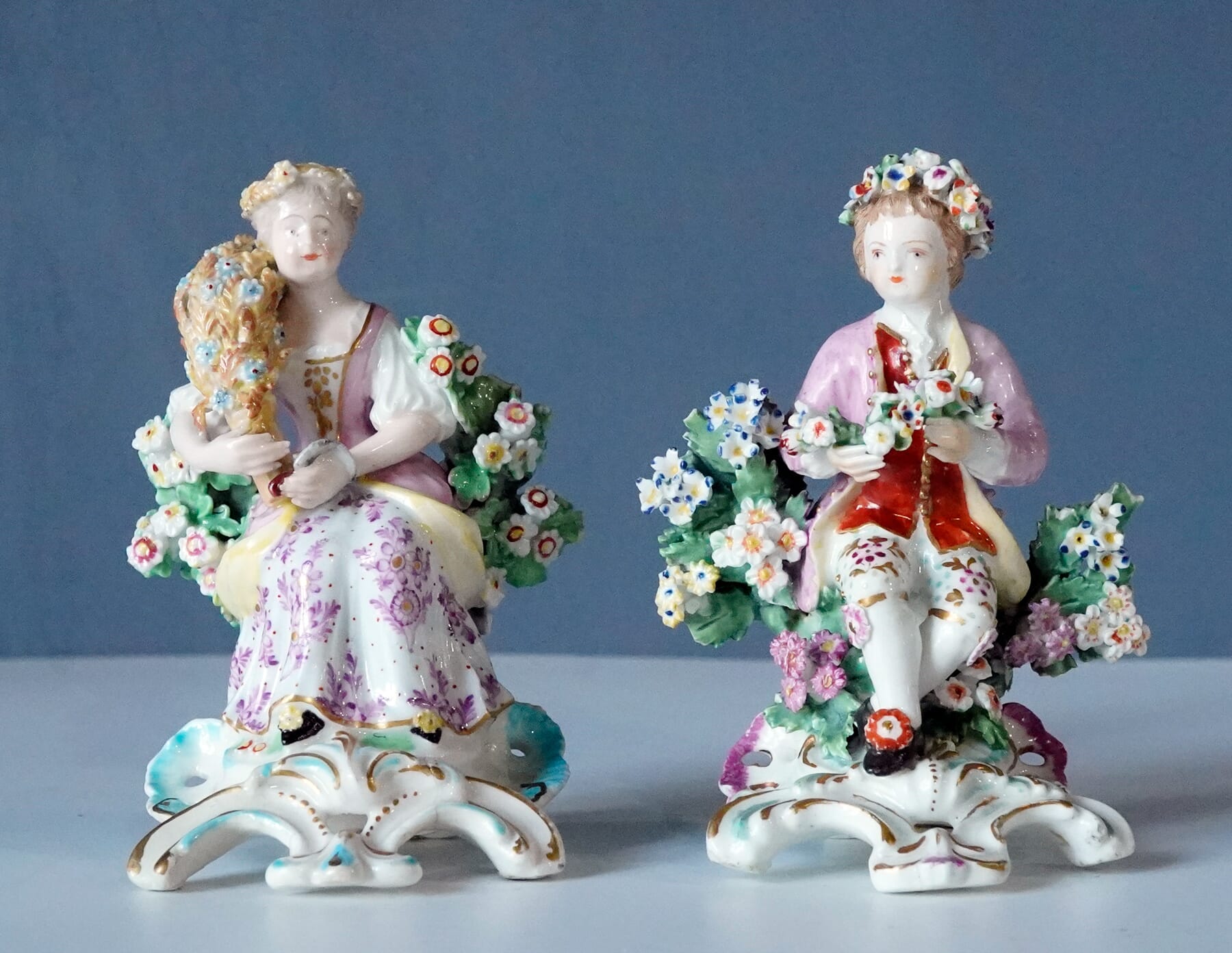
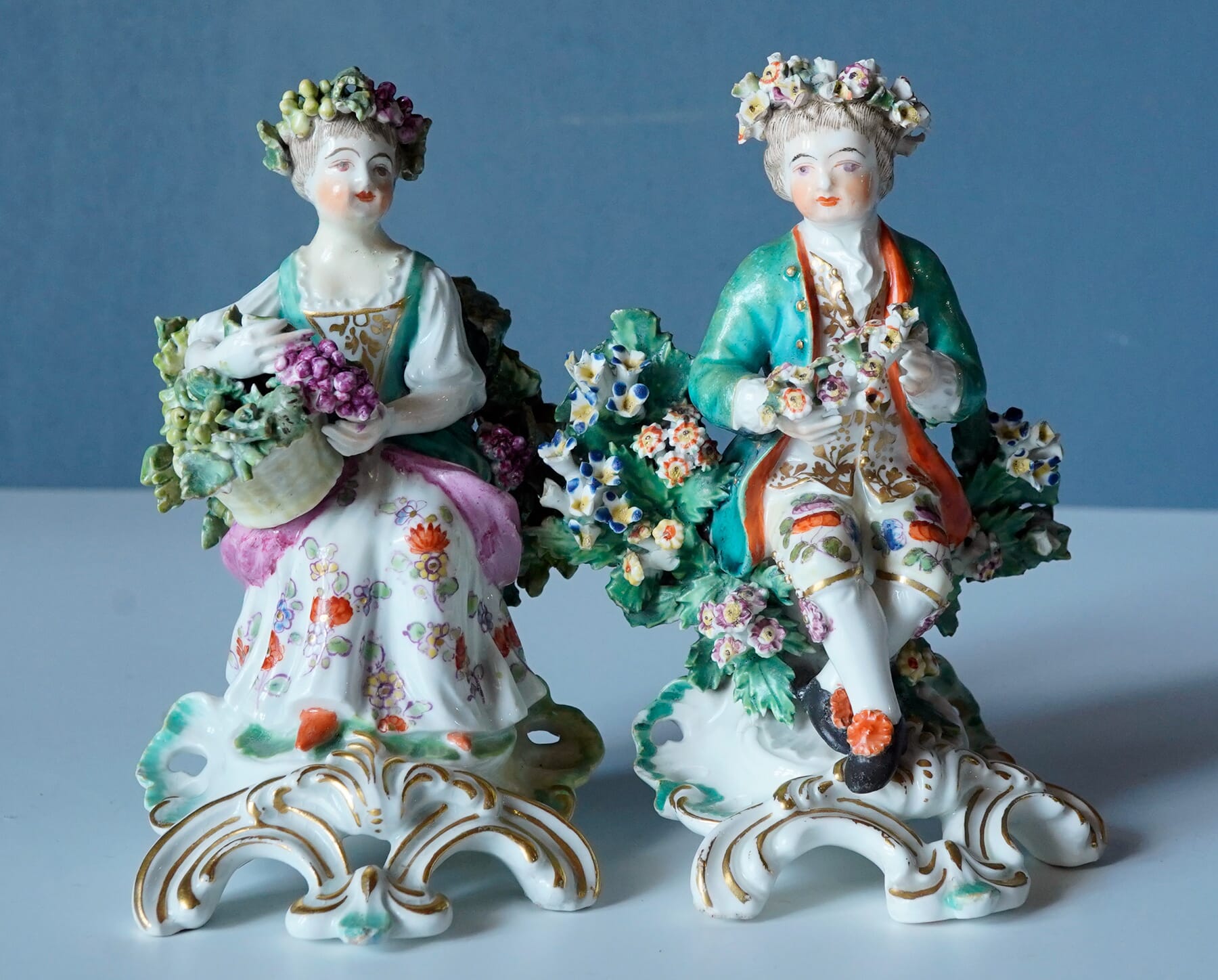
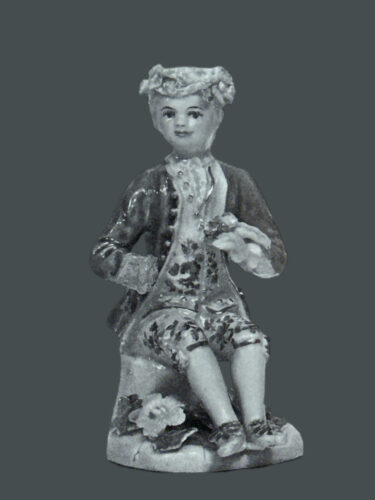
Moorabool has a fascinating group of Derby ‘Seasons’, modelled as children with their respective attributes.

left to right: Spring, Summer, Autumn, Summer, Spring. We have no Winter….

They make for an interesting study, and show the development of the classic rococo-based Derby figures of the latter 18th century.
'Summer', Pale Family type, ref. Bradshaw 'Derby Figures' p72.

The earliest version appears during the mid-1750’s, belonging to a group of distinctly modelled figures that are often decorated in a muted pallet of colours, known as the ‘pale-family’. These appear with a flat slab base, and the modelling is a little stiff. Note this example has lost his hand & the wheat he holds in it.
Circa 1756

‘Summer’, Pale Family type, 1756-59. ref. Bradshaw ‘Derby Figures’ p72.

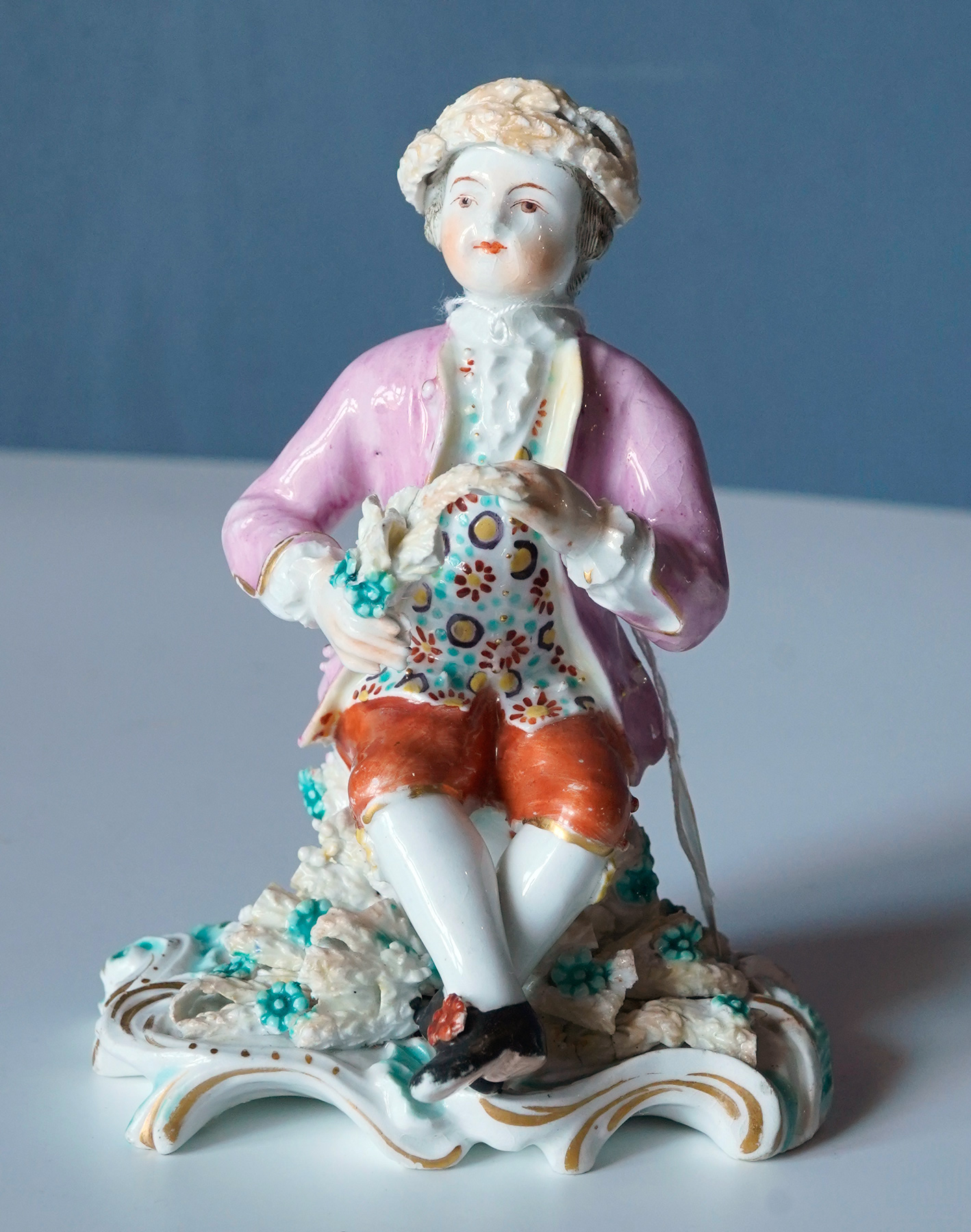
This example, in stock at Moorabool, is late in the ‘Pale Family’ period, or the very beginning of the next period, the ‘Patch Mark’ period, c. 1759-69. The base has an early, rarely-seen rococo scroll moulding, of quite flat form without piercing. The colours are the type used in the 1760’s.

Circa 1760

See this item >

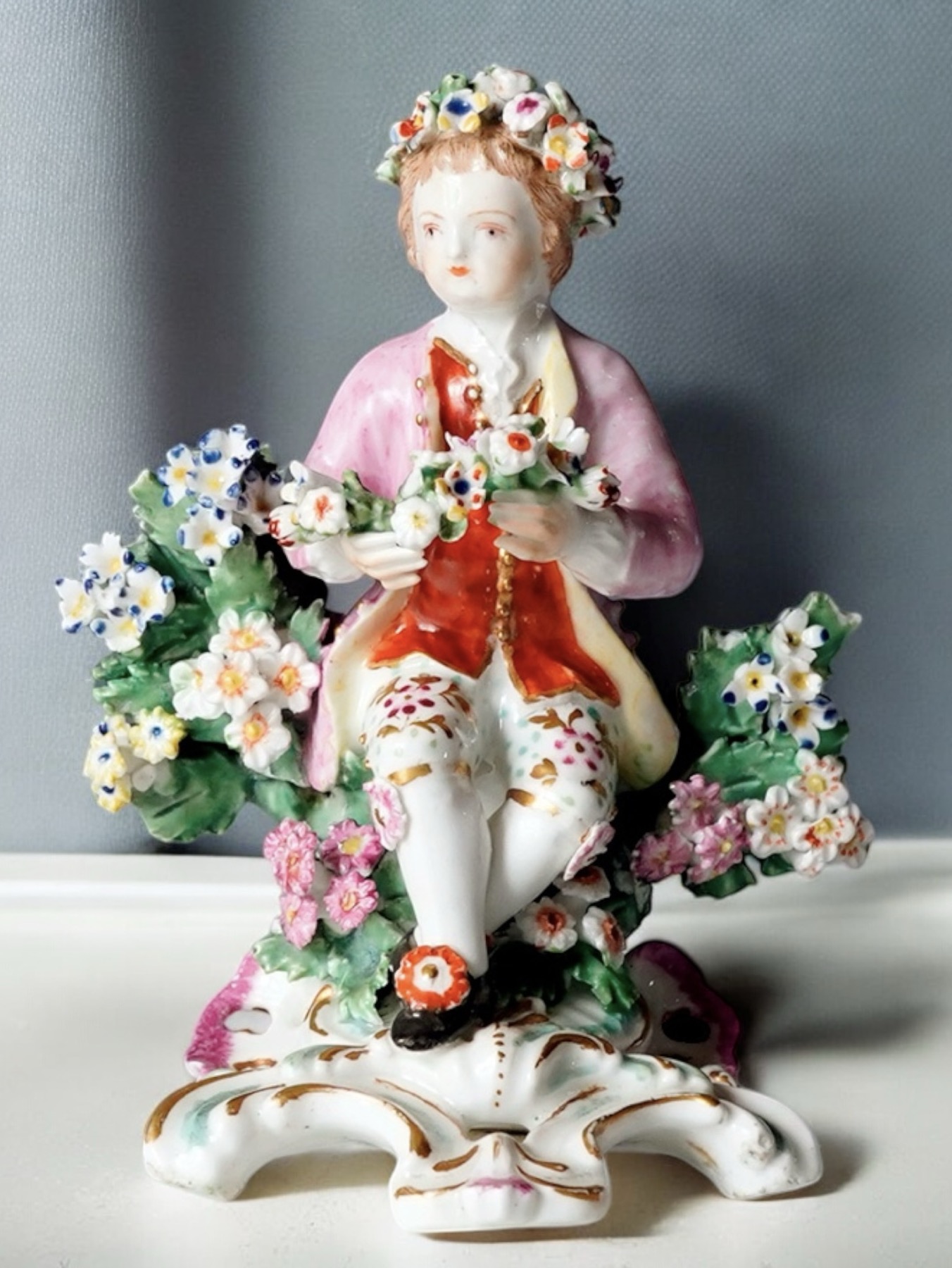
This example, also in stock at Moorabool, shows the latter 18th century style of Rococo scroll base, with scrolls forming feet on which it rests, and a pierced panel to the center.

This boy is representing ‘Spring’, with a garland of flowers.

Circa 1770

See this item (paired with a contemporary ‘Summer’) >

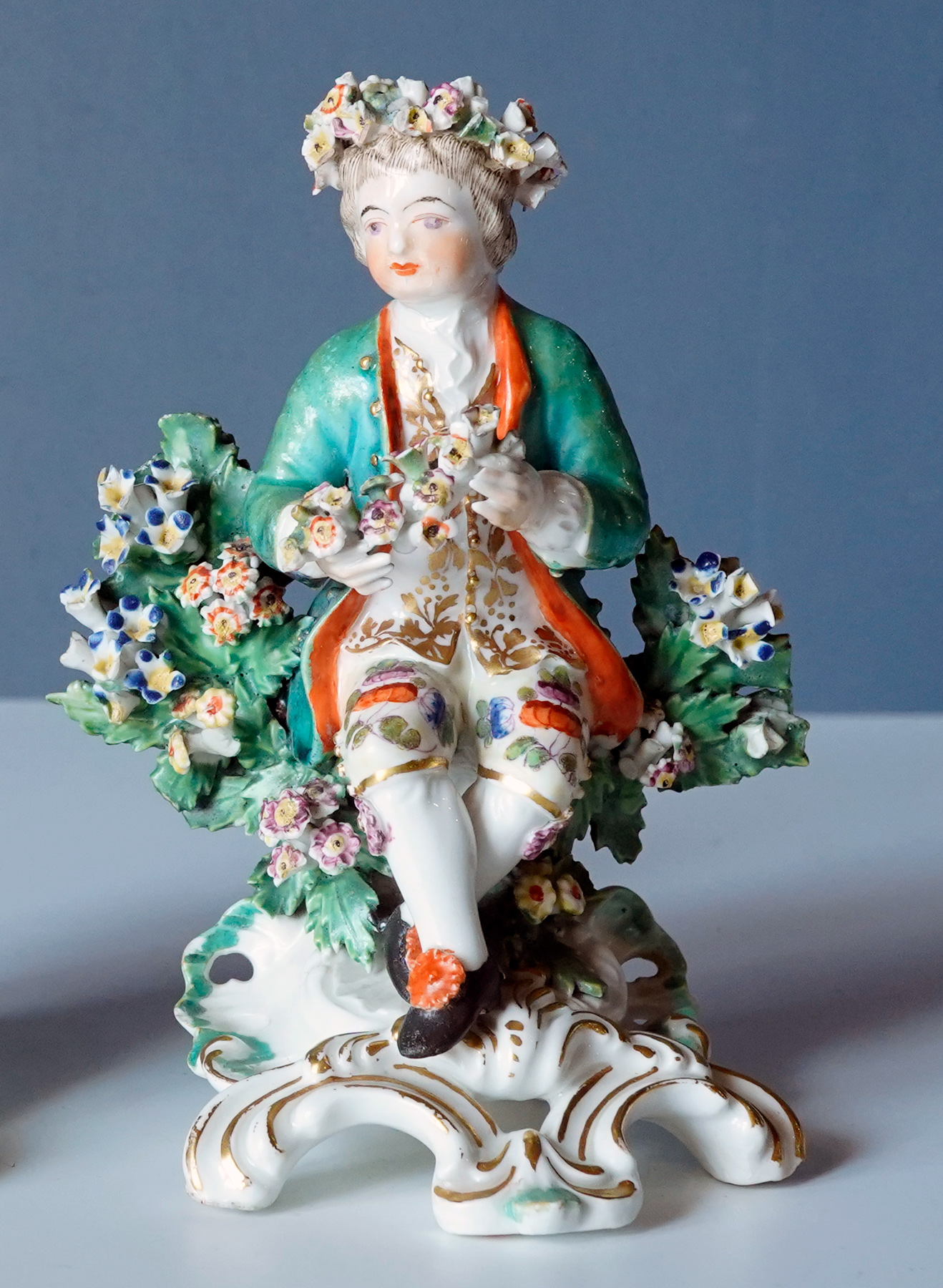
This example, also in stock at Moorabool, shows the latter Rococo scroll base, with scrolls forming feet on which it rests, and a pierced panel to the center.

Once again ‘Spring’, with a garland of flowers. Interestingly, he is not recorded in Bradshaw (Derby Figures), who has only a set of 4 ‘Adolescent Seasons’ listed that are all girls; these boys appear in the earlier sets and were obviously continued into the latter 18th century – it’s a puzzle why he has failed to record them.

Circa 1780

See this item (paired with a contemporary ‘Summer’) >

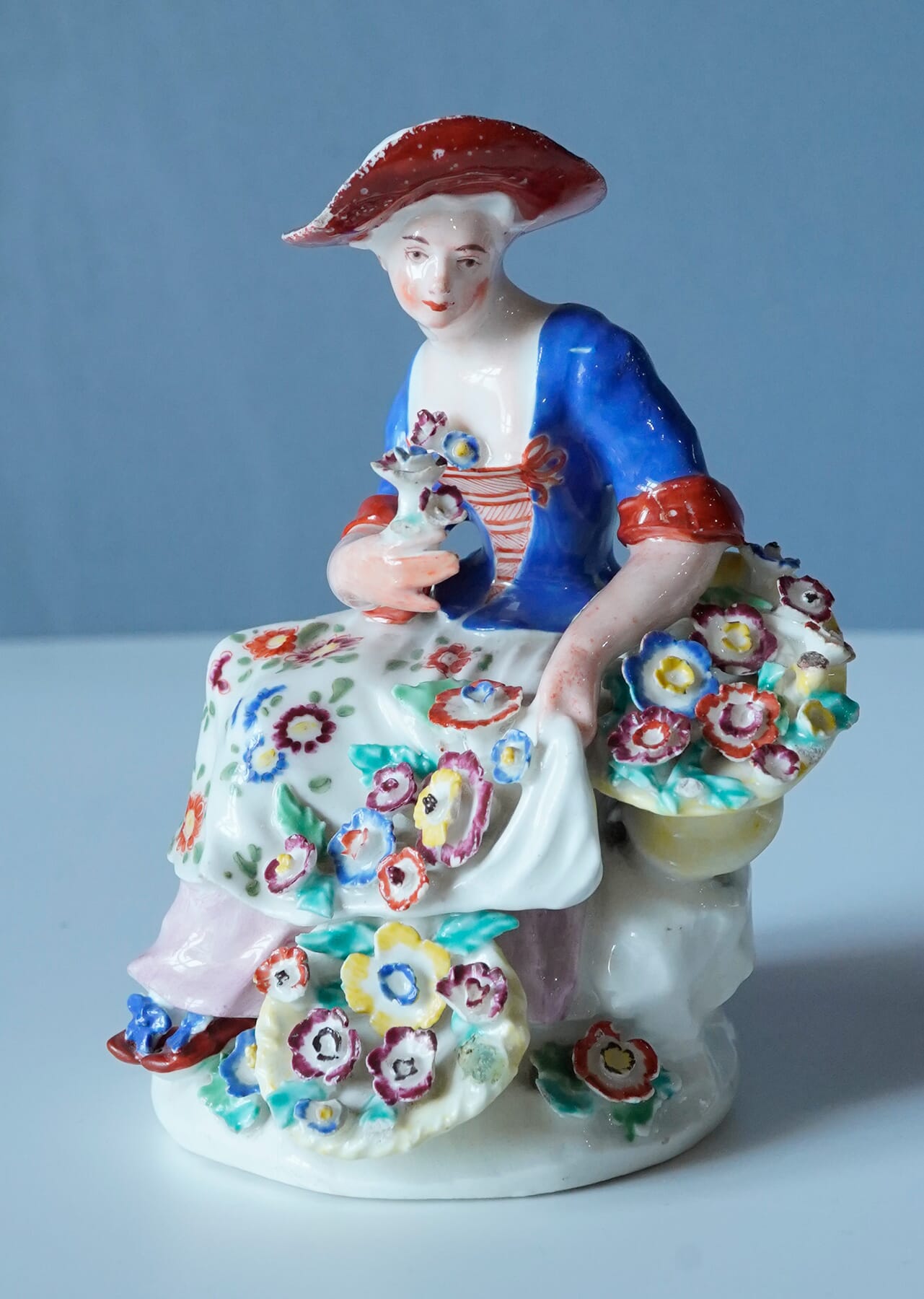
Of course, other factories were actively making ‘Seasons’, with a particularly lovely ‘Spring’ by Bow being a recent addition to Moorabool.com’s stock:

Bow figure of ‘Spring’, with distinct blue enamels, c. 1765. See her here>

Posted on

Arts & Crafts Collection

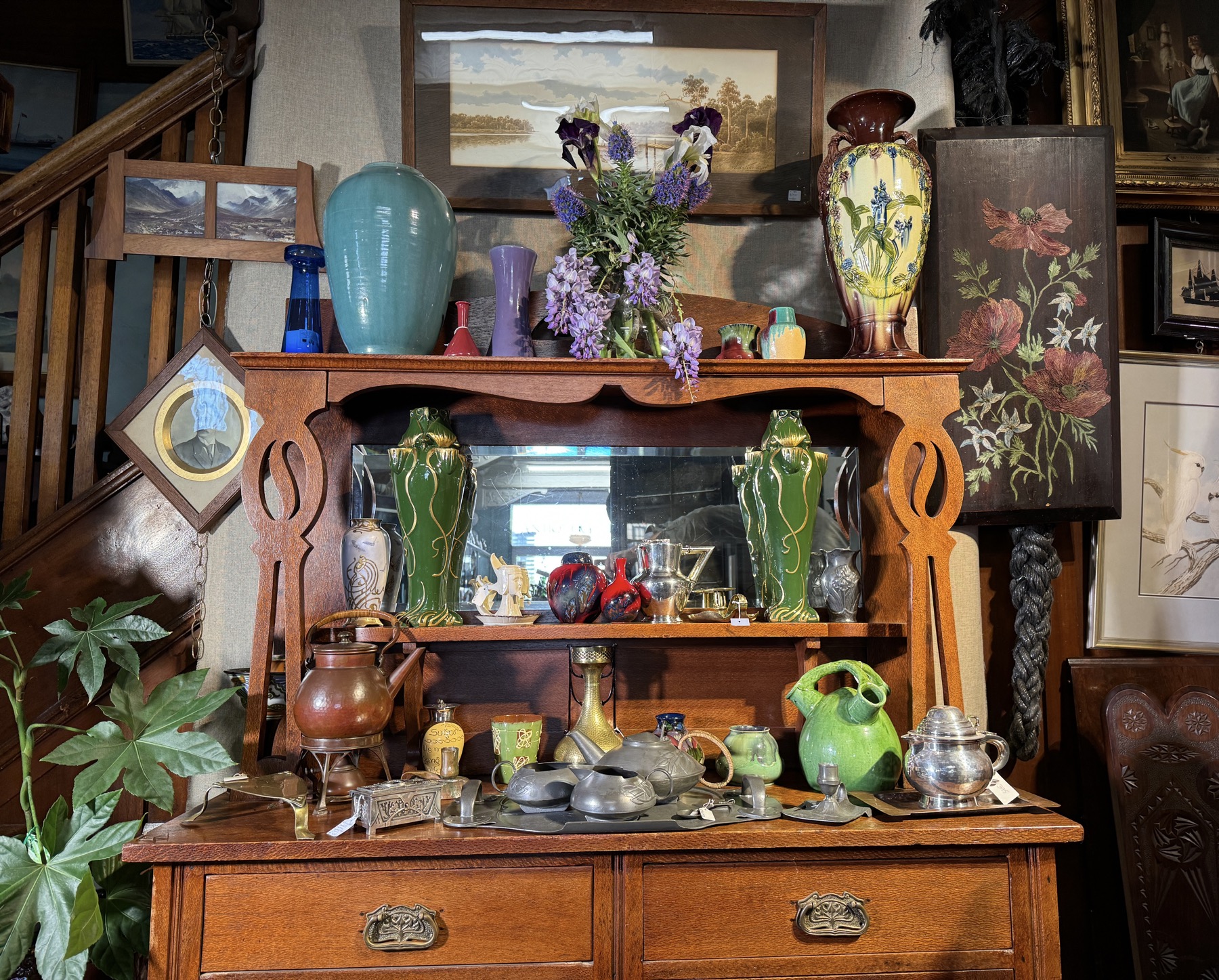
A fine selection of ‘Arts & Crafts’ has just been posted on Moorabool.com . It’s an interesting survey of the late 19th- early 20th century designs that were a reaction against the overly ornate – and predictable – designs of Victorian England. Often borrowing & intermingled, the French Art Nouveau aesthetic blended with the German/Austrian Jugendstil (youthful-style) and even had a major impact on Australian products – although it did take some time to reach us ‘down-under’ !

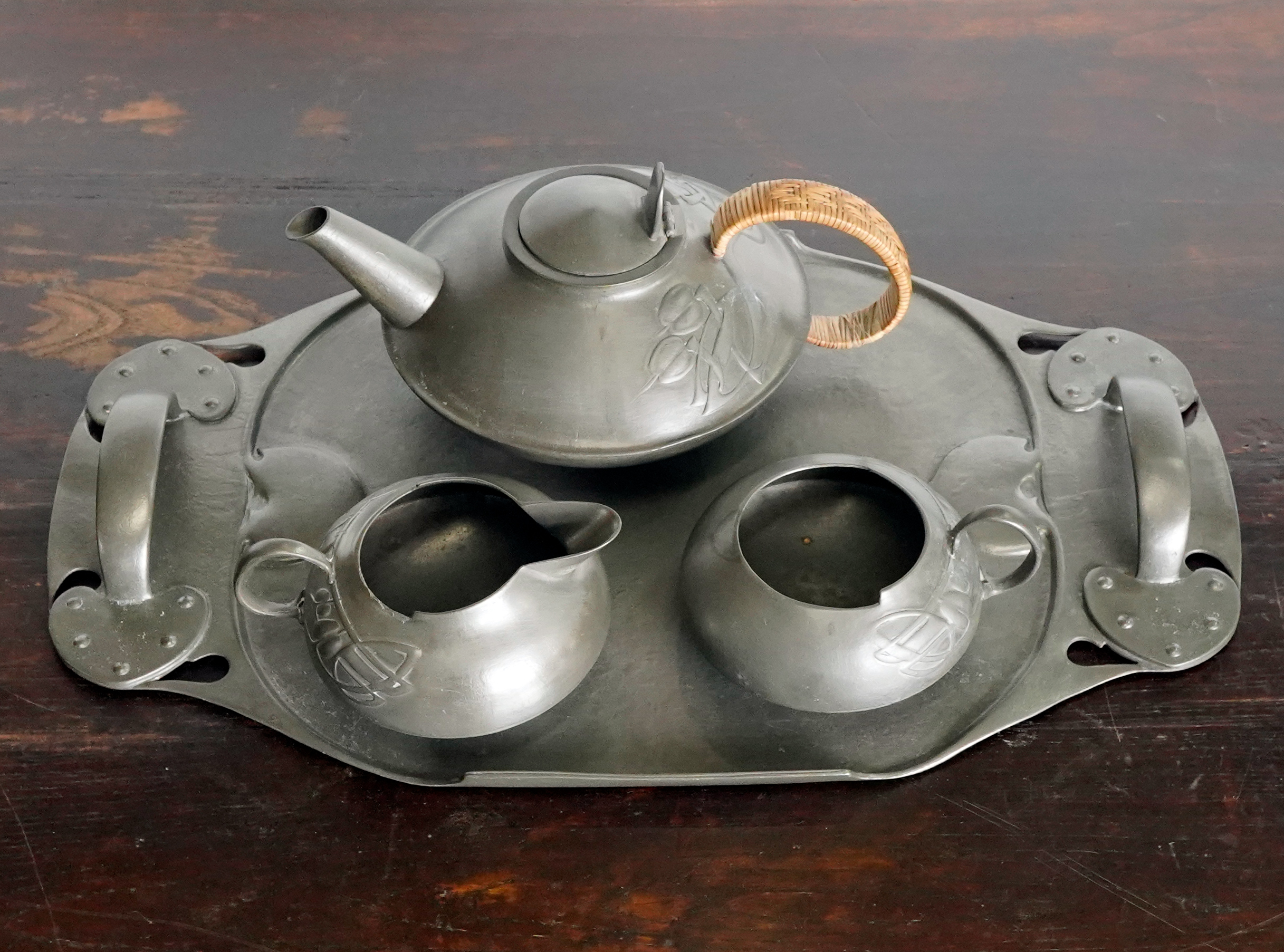
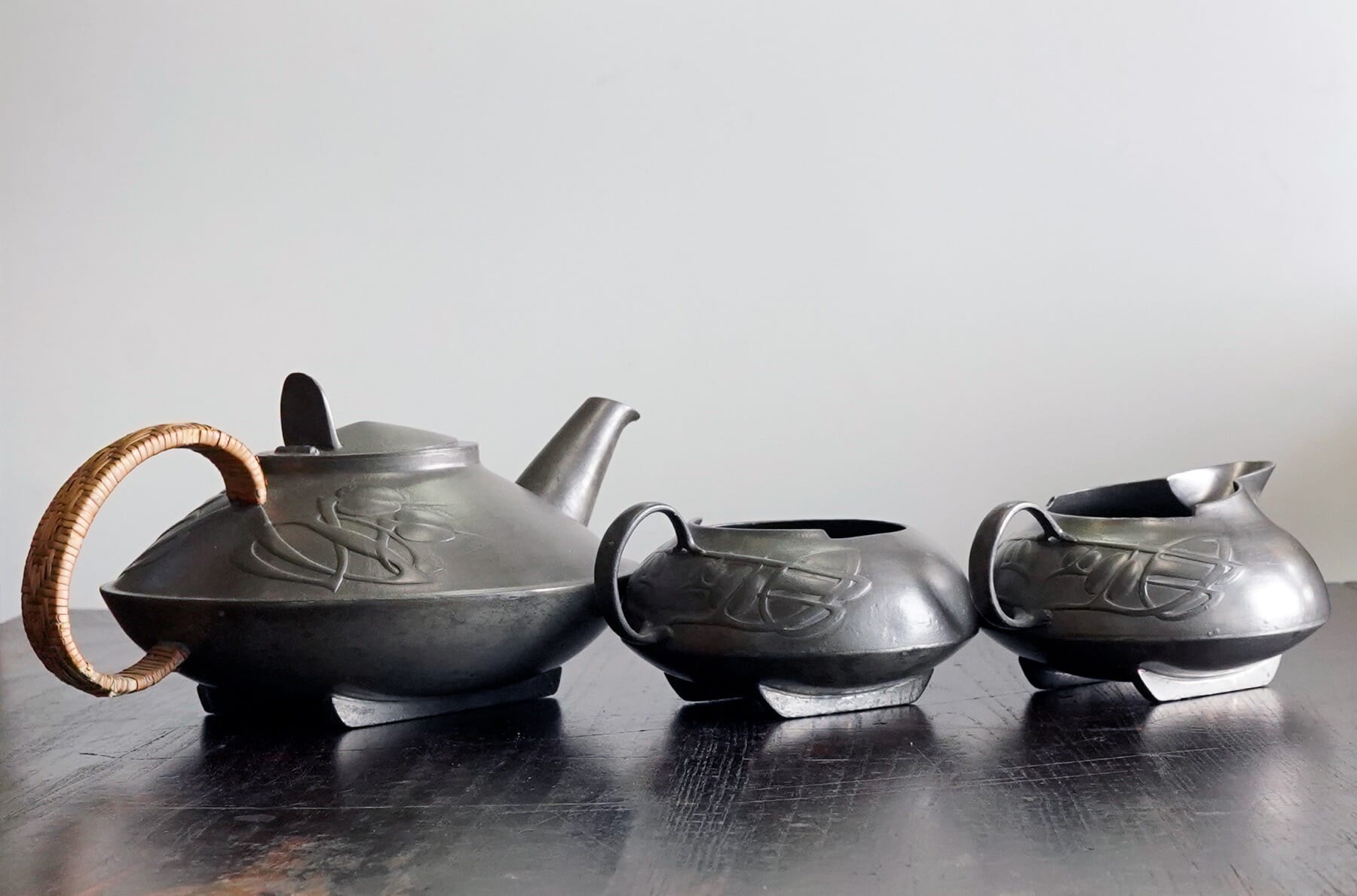
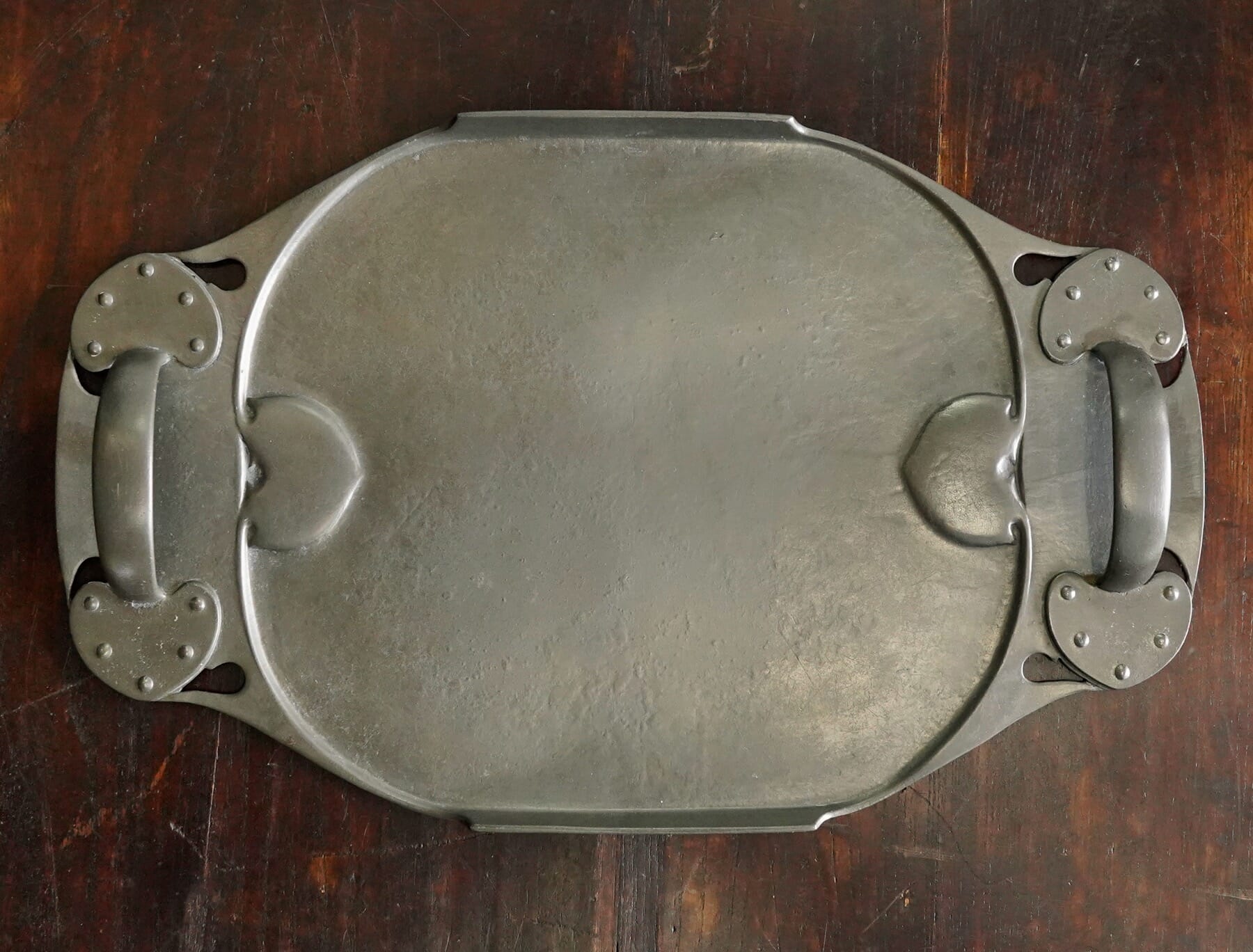
The rarest, and most dramatic is a pewter teaset & a tray, made to the patterns of Archibald Knox (1864-1933) while he worked at the London workshops of Liberty & Co in the first years of the 20th century. Branded ‘Tudric’, the designs are extraordinary, a mix of Art Nouveau and Celtic, with the simplicity of Christopher Dresser and the design principles of the Arts & Crafts (ie rivets attaching handles evident to show how it is made – although in this case, they are only decorative!). The set was in the possession of a Geelong family since around the time of WWI, and so probably since new; however, the tray is design no. 42, while the teaset is design no. 231, each of which had its own tray/teaset designed alongside. The matching of these two pieces is probably a case of a retailer putting the two together to sell them – they do look rather splendid! We have split them again for sale.

Dr Christopher Dresser 19th century Designs

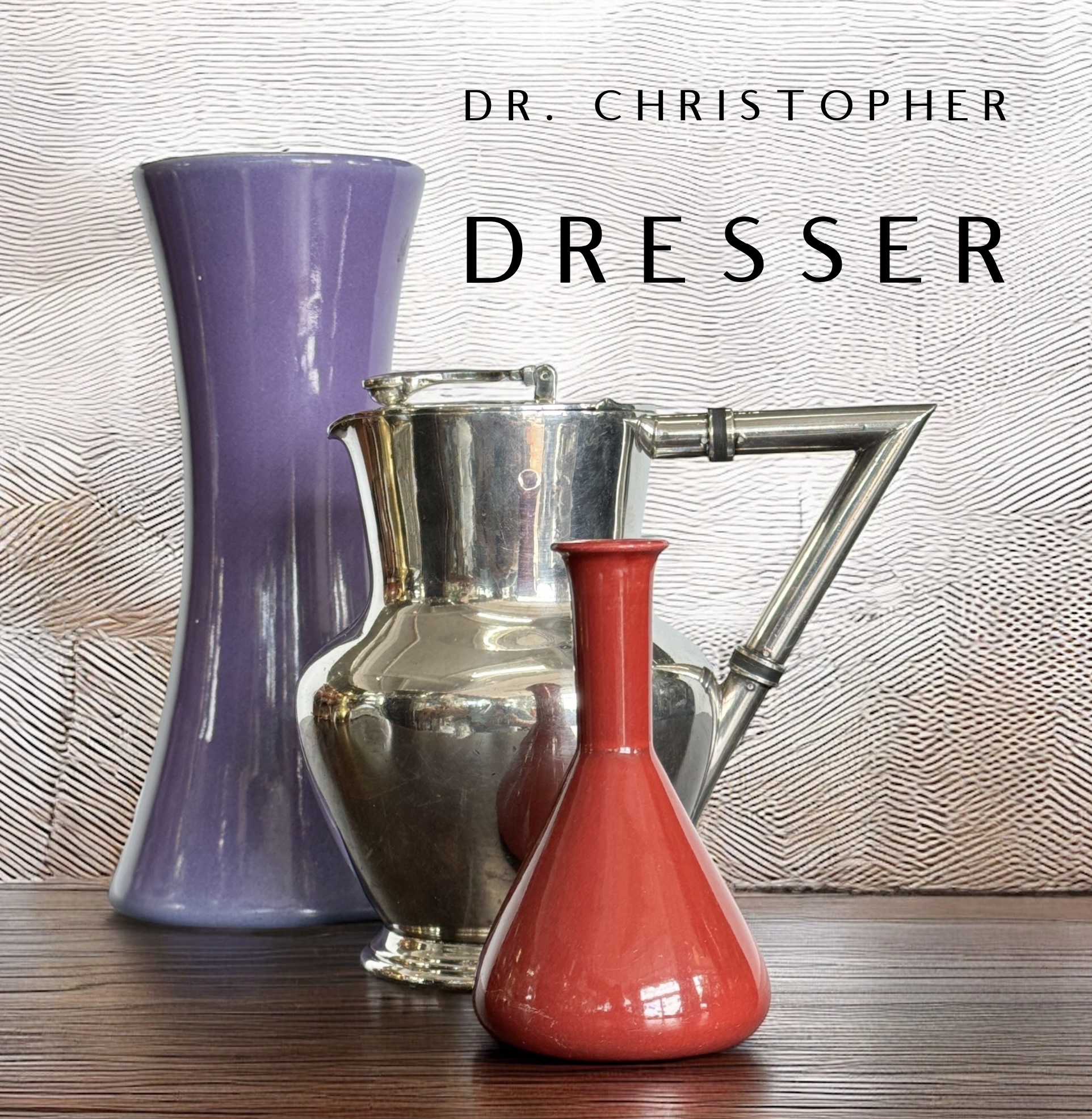
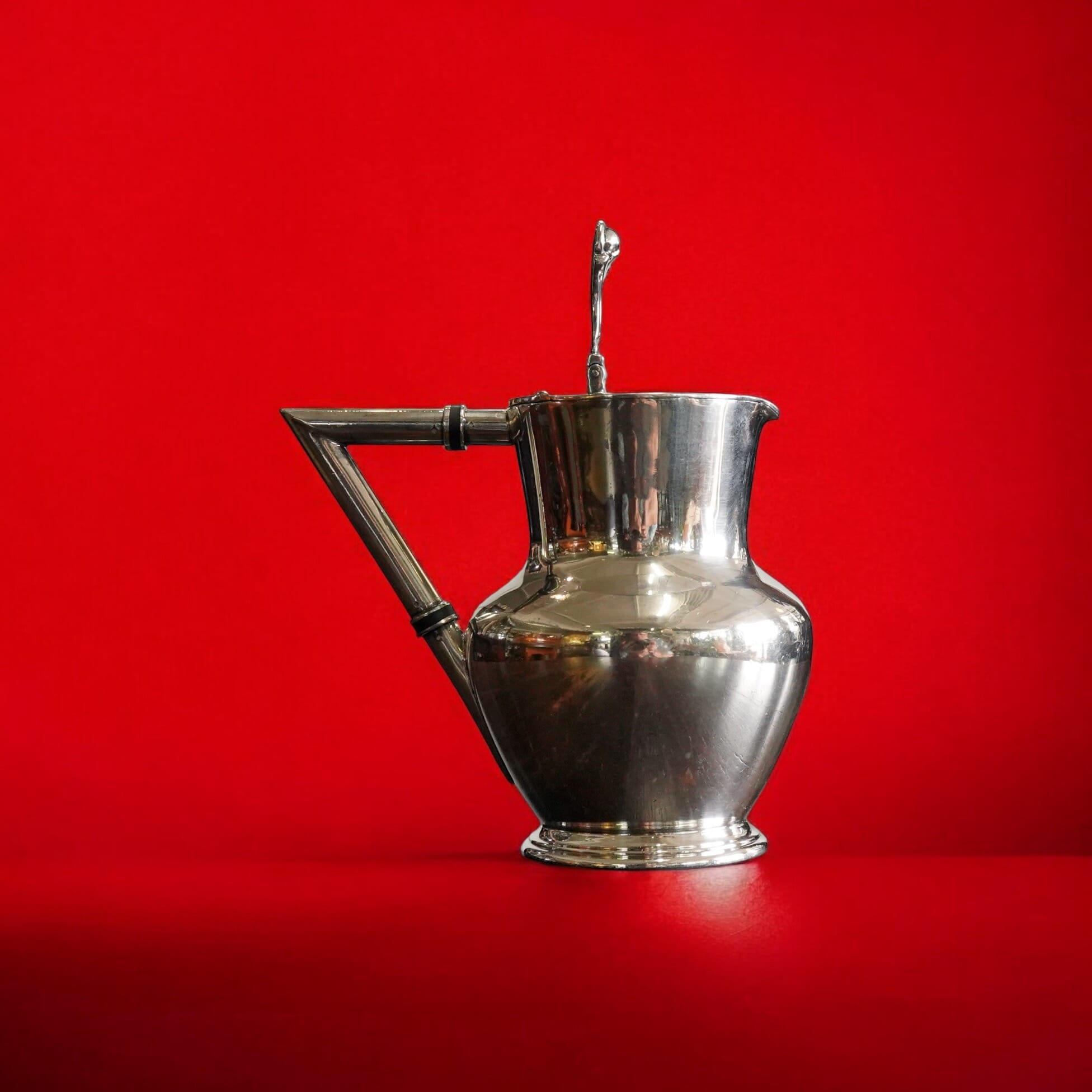
Dr Christopher Dresser (1834-1904) is represented with an interesting ‘modern’ design jug with dramatic angular handle that was years ahead of its time, made by Birmingham silversmith . There’s also some pottery that clearly was inspired by his designs, which were admired & copied across many manufacturers.

Dr Christopher Dresser was a visionary, and as a designer, was far ahead of his time. The pieces illustrated here look 1920’s, but were sketched by him and made in small quantities by numerous firms in the 1880’s; it just took the design world another 40 years to catch up!

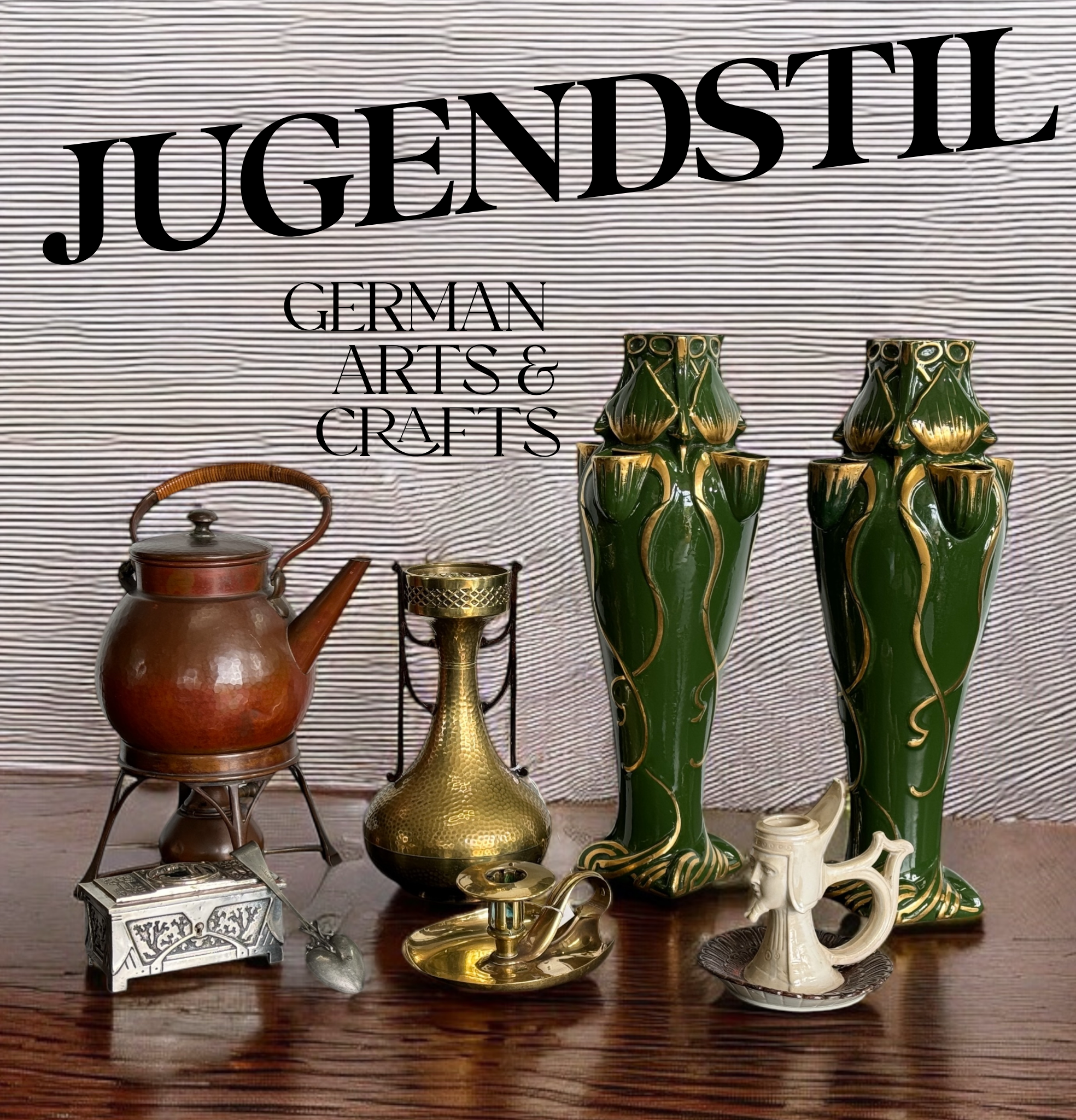
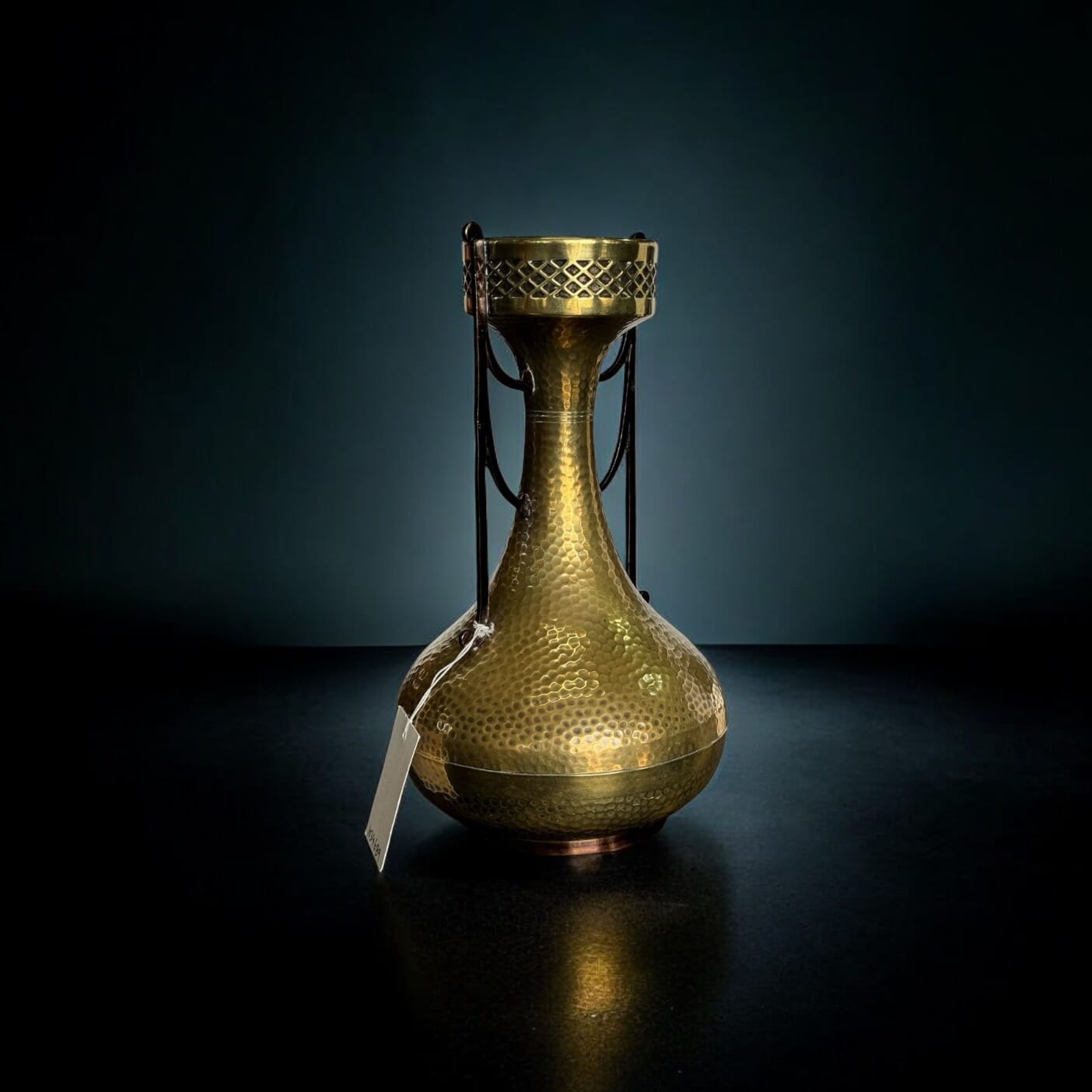
A selection of German / Austrian pieces conform to the Jugendstil (‘youthful-style’) movement. Closely related to the English Arts & Crafts, and the Art Nouveau movement, it was centred in Germany/Austria/Belgium, and lasted roughly 1895-1910. The name comes from an art magazine promoting youth culture, and it was an important part of the emergence of the Secessionist movement – the rejection of ‘legacy art’, ie the classical world, and the invention of a fresh style. This definition applies to the ‘fine arts’ of sculpture and painting, but with the items we are displaying here, clearly defines useful household items as well.

Jugendstil - German Arts & Crafts

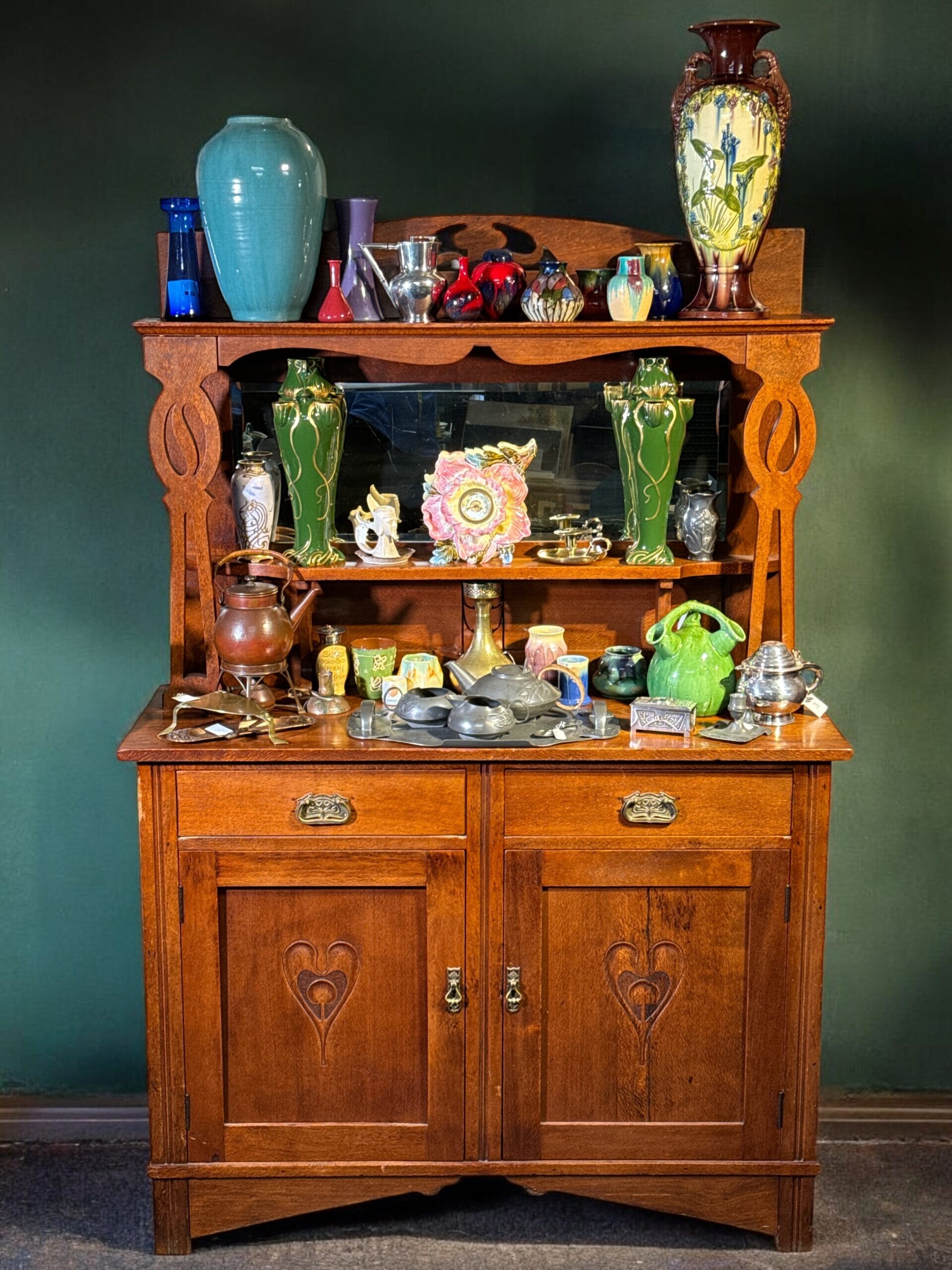
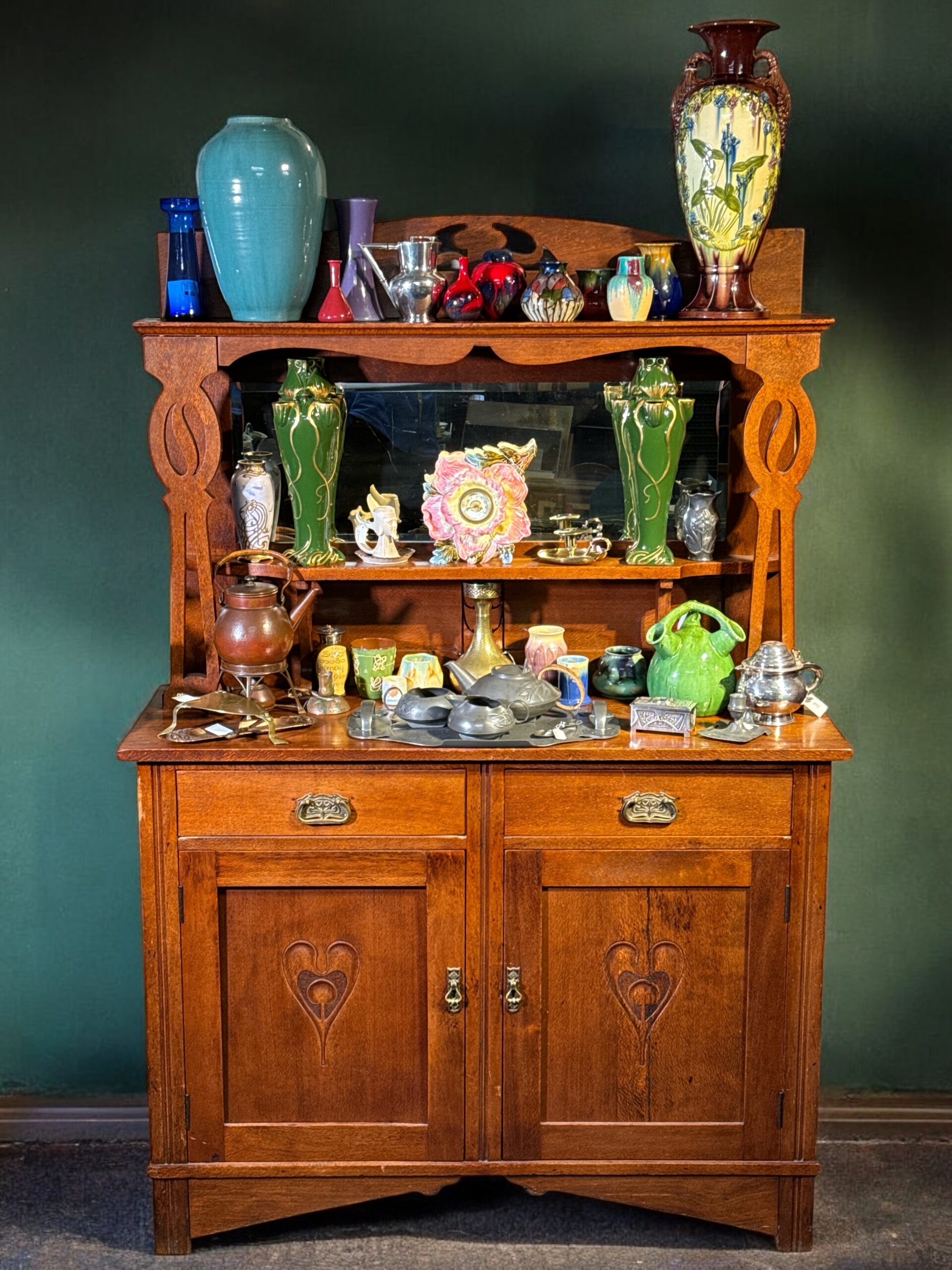
The Australian Silky Oak sideboard is being used for its correct purpose – to display the wonders of the Arts & Crafts period!

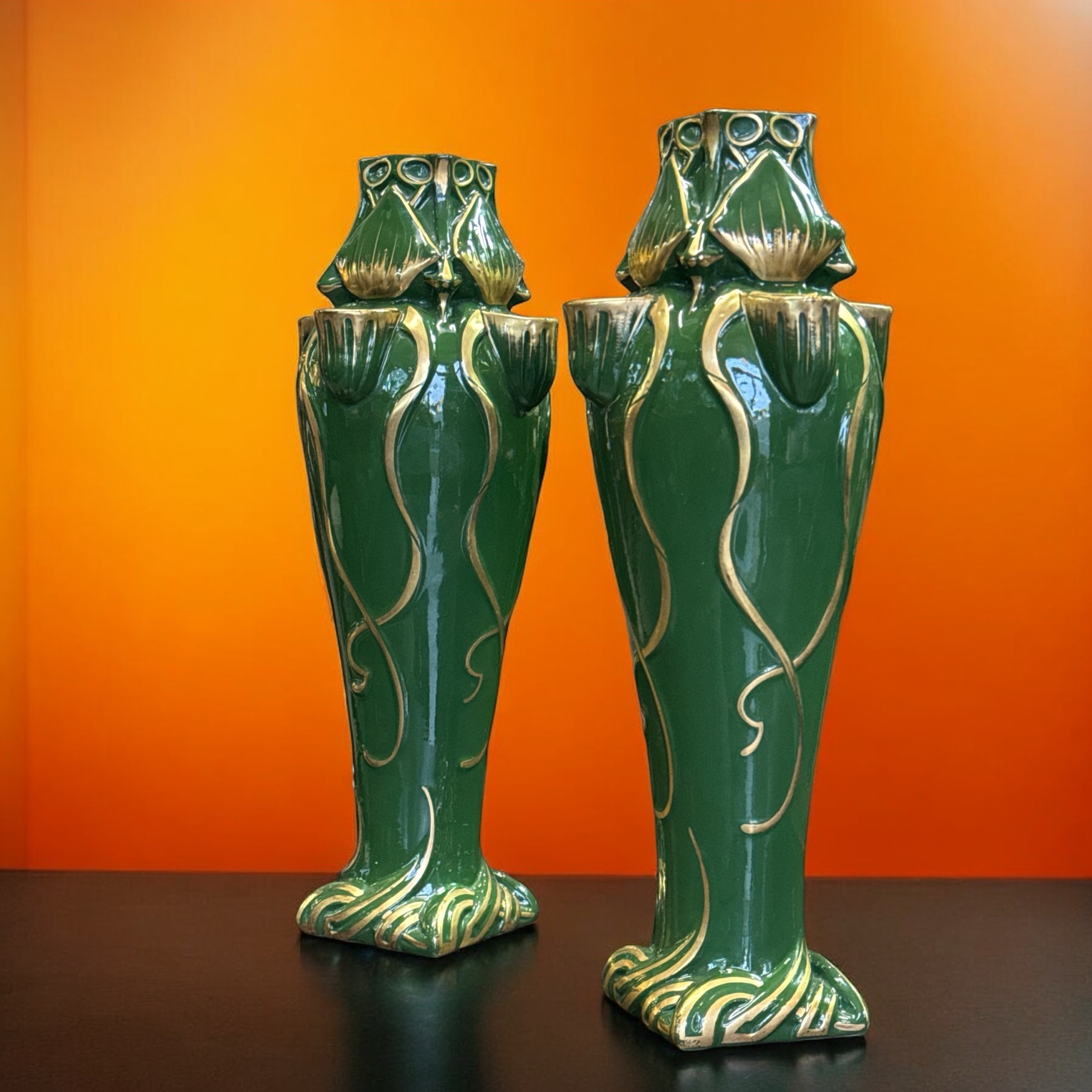
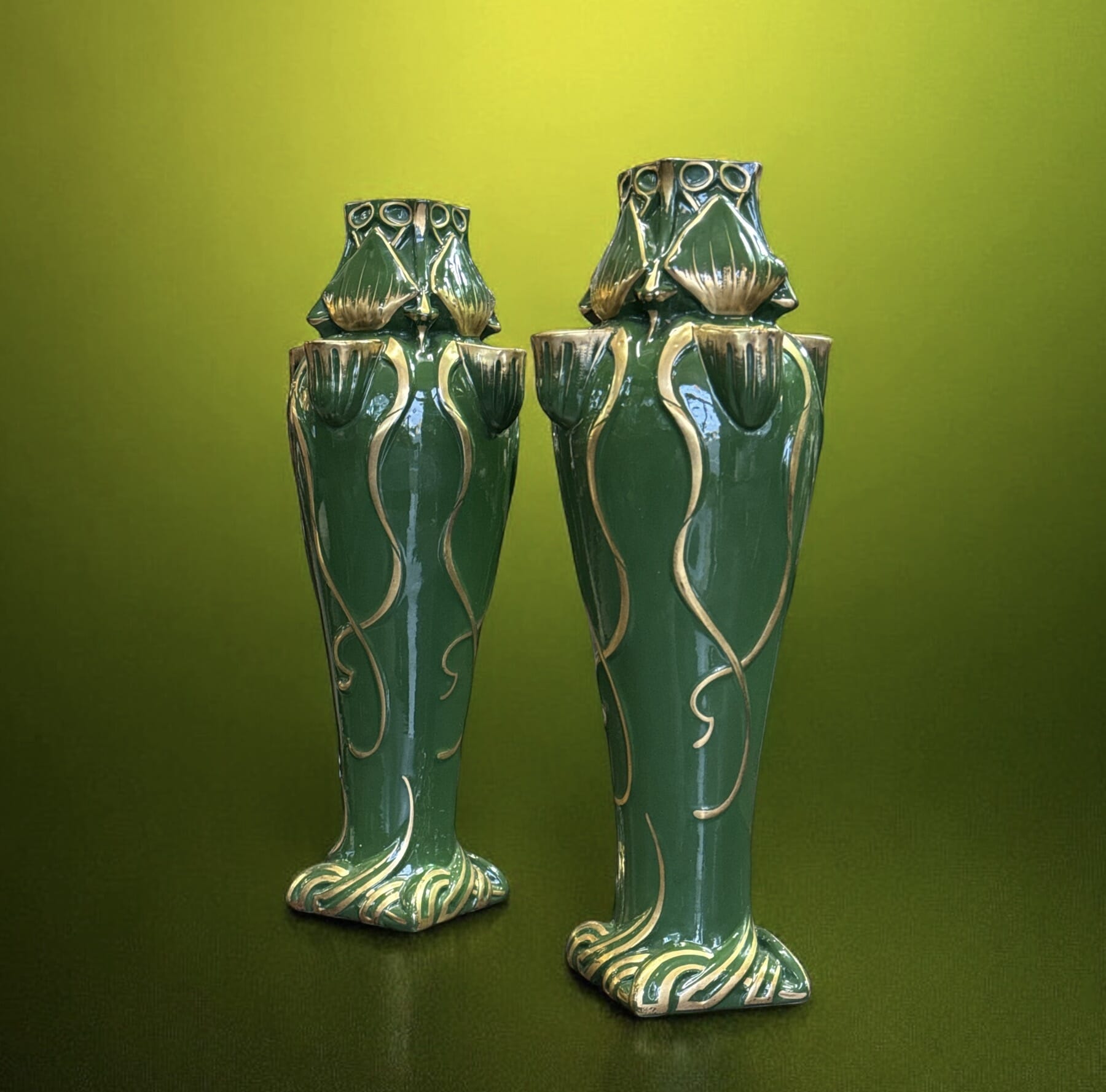
A flamboyant pair of large French vases are pure ‘Art Nouveau’ – and have 5 spouts to the top. Marked with a battle axe, they are from the firm of Gustav Asch in Tours. Most of their products were looking back to the traditional Sevres products, or in the ‘belle époque’ style that was so popular with the Victorians – making these Art Nouveau examples quite rare. Circa 1895-1900.

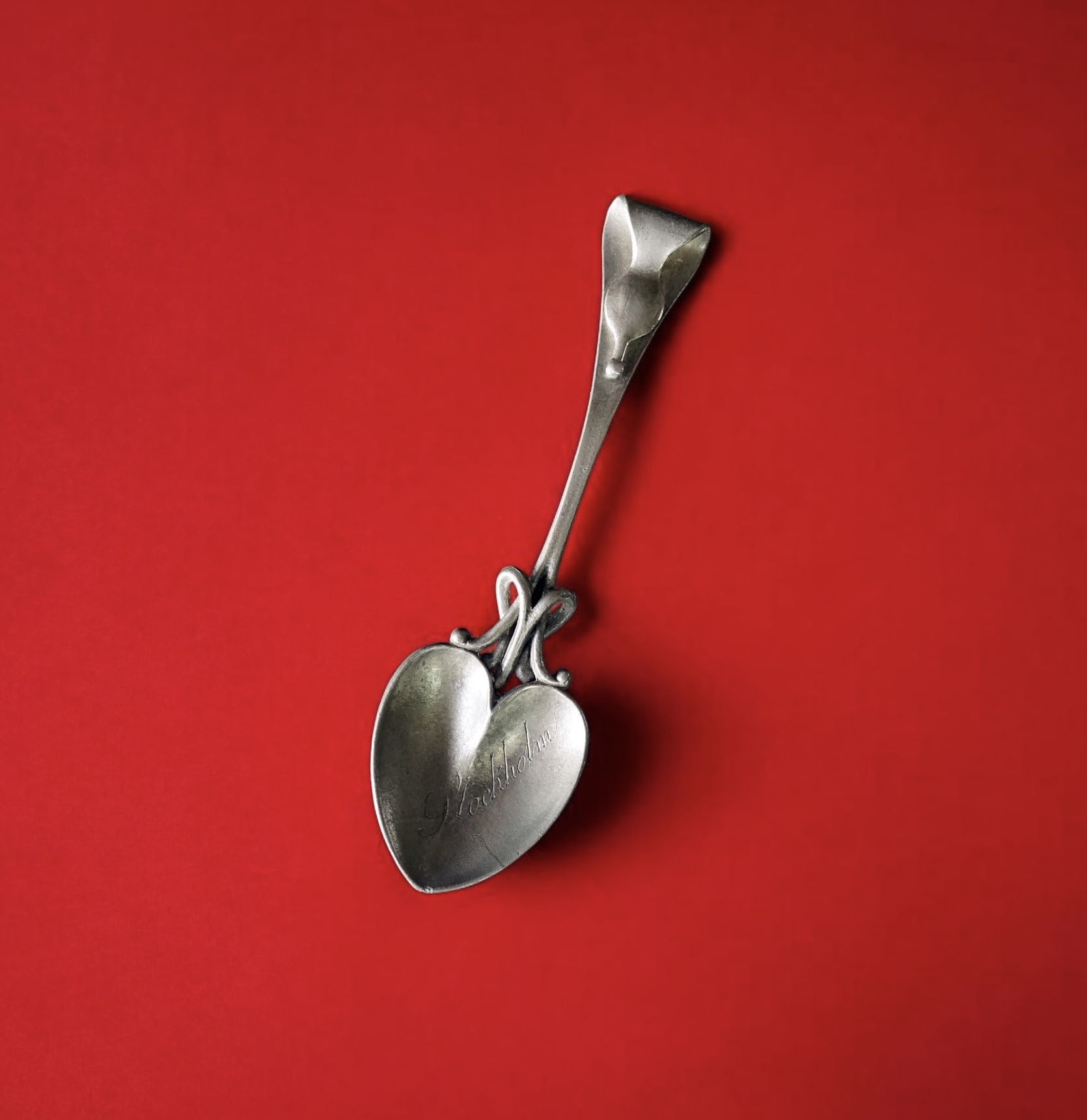
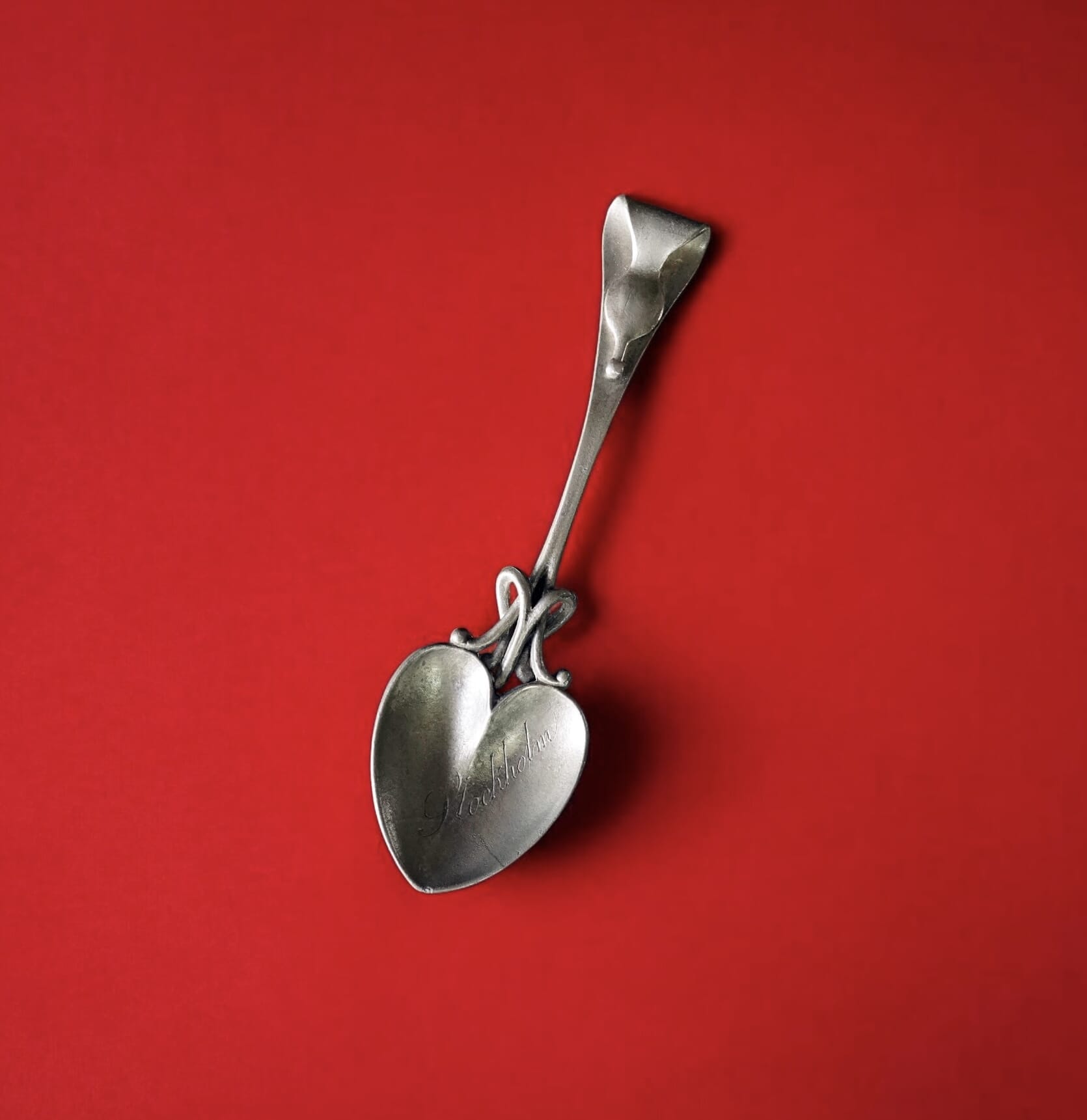
Stylish Swedish ‘Arts & Crafts’ pewter spoon, by Frans Santersson, Stockholm circa 1905.

The heart-shape bowl is engraved ‘Stockholm’, and the handle junction with the bowl is extraordinary – with a looping intertwined designed that looks like a plant shoot.

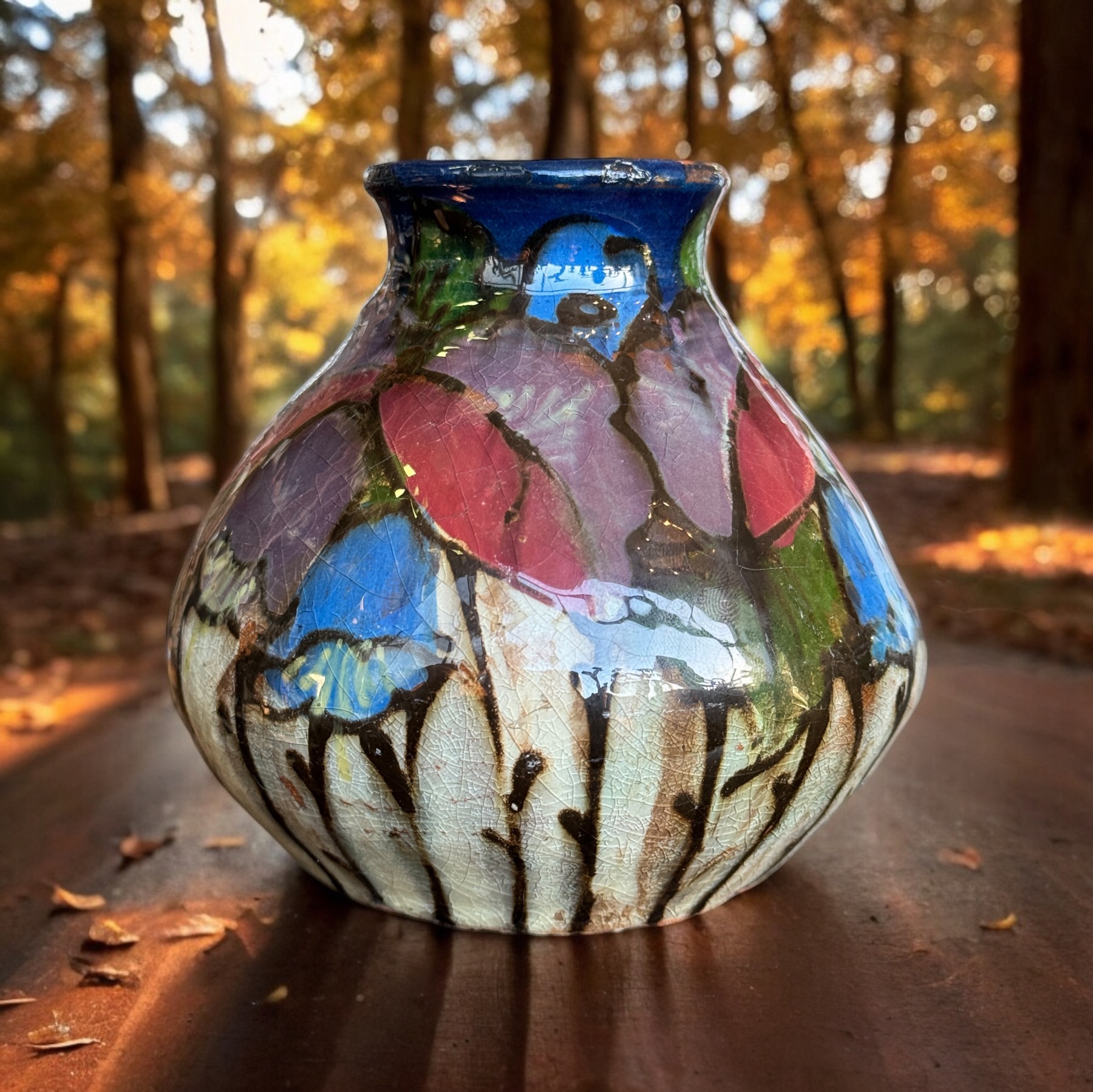
This curious small vase is decorated in slip colours with a frieze of flowers and their stalks. Looking a little like the English Moorecroft, it is marked ”HUBER-ROETHE / VILLIGEN BAD” – for a small German Art Pottery firm Huber-Roethe, Bad Villingen, circa 1905

An English rarity, this large (34cm) simple vessel shows the aesthetic of the Arts & Crafts potters: simple functional design. It also show’s the potter’s inspiration in the Asian designs of Song Dynasty China. Inside is as beautiful as the outside, with the fingermarks of the potter making a graceful fluted pattern right down to the base.

The potter was George James Cox, of the Mortlake Pottery in South London, signed & dated 1912.

ARTS & CRAFTS


AUCTION – later October

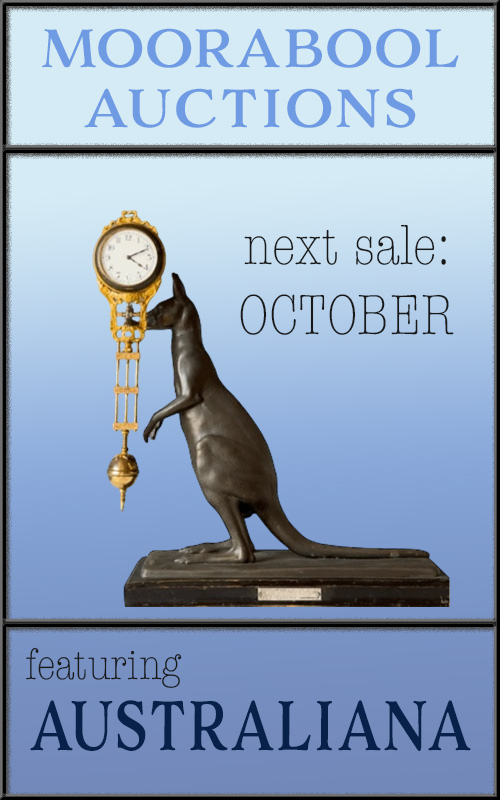
We’re currently preparing our next MOORABOOL AUCTIONS sale – date to be announced, latter October.

It features some fine Australian pieces, including a group of Australian Motorsport Grand Prix prizes.

From the FIRST Australian ‘TT’ Grand Prix, held on Phillip Island in 1928, we have the ‘Shell Cup’, a giant silver-plate affair, won by Alex Finlay on a B.S.A. bike ‘just taken out of the box’!
Shown here is the 1935 Time Trials prize, a rare original German bronze kangaroo ‘Mystery Clock’, won by Les Murphy for fastest time in his MG P-type. We also have the ‘Shell Cup’ he won the same year.

Rare Australian Artworks include a ‘View of Launceston’ watercolour by the extremely rare convict artist Frederick Strange, c. 1858, and our recently identified George Peacock oil (below), another of our convict artists, which we have titled ‘View of Sydney Harbour from Carrara House’, circa 1855. 

More to come!