
Posted on

Stage & Literature

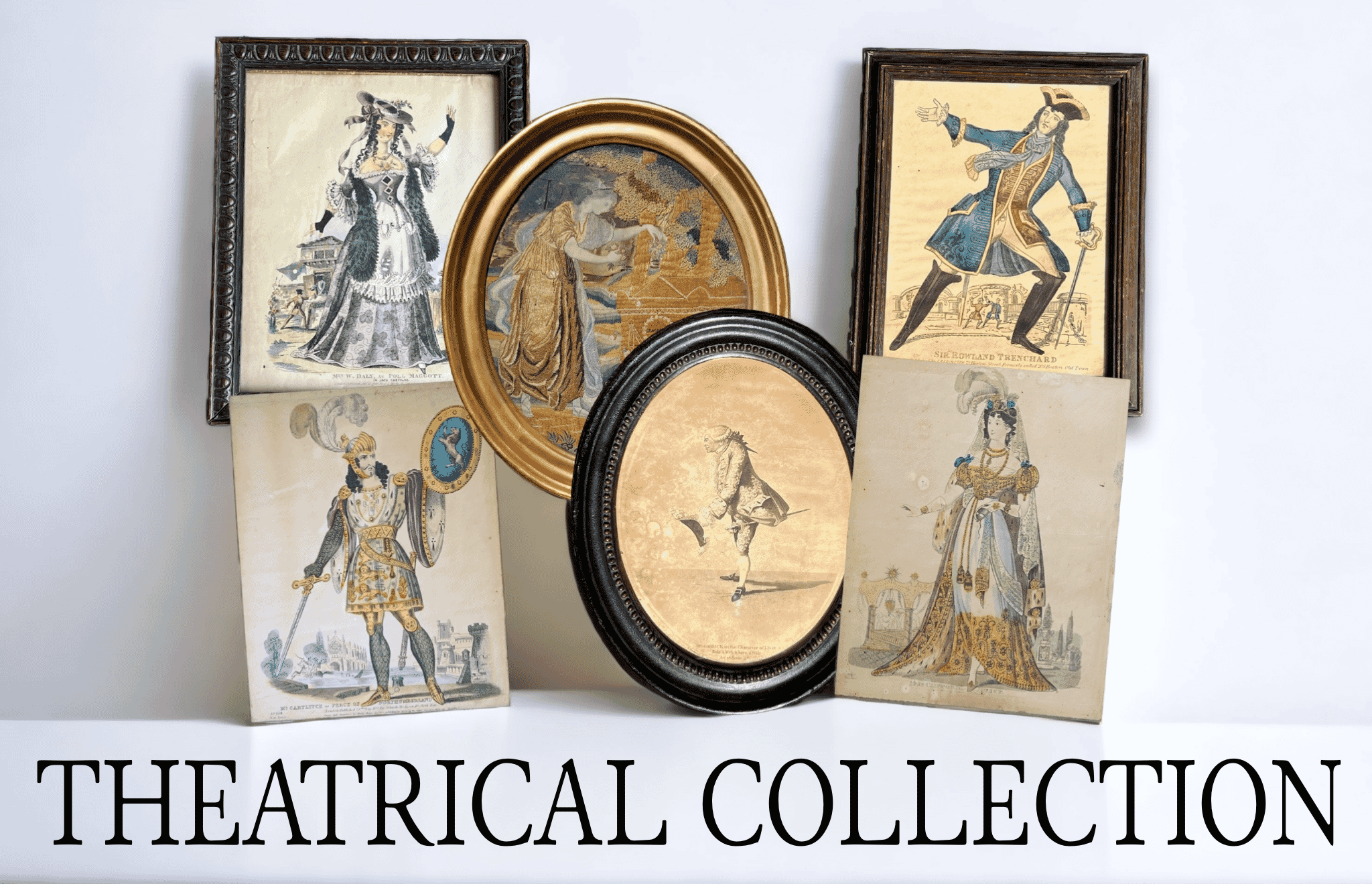
Moorabool's Theatrical Collection
Curated Collections

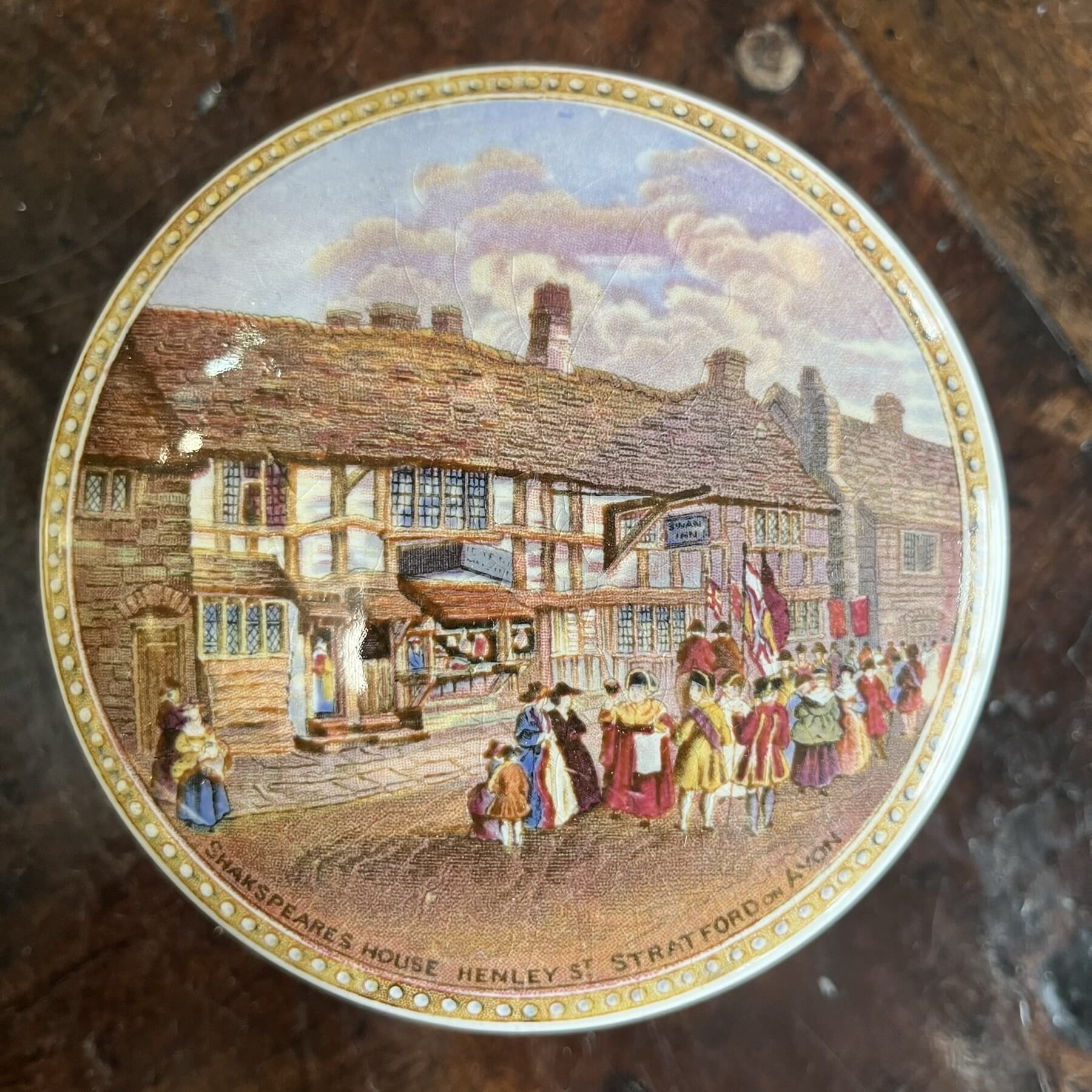
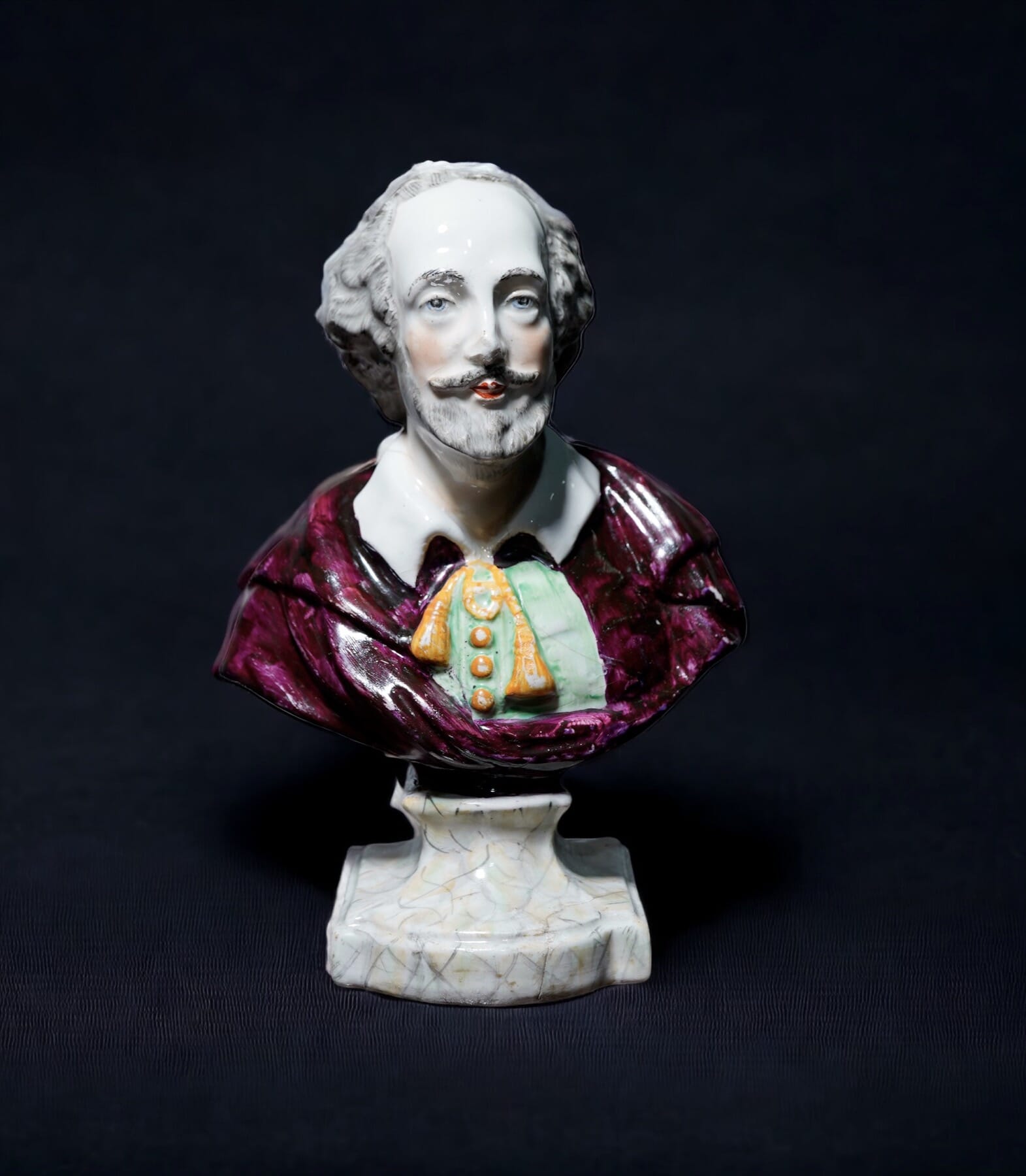
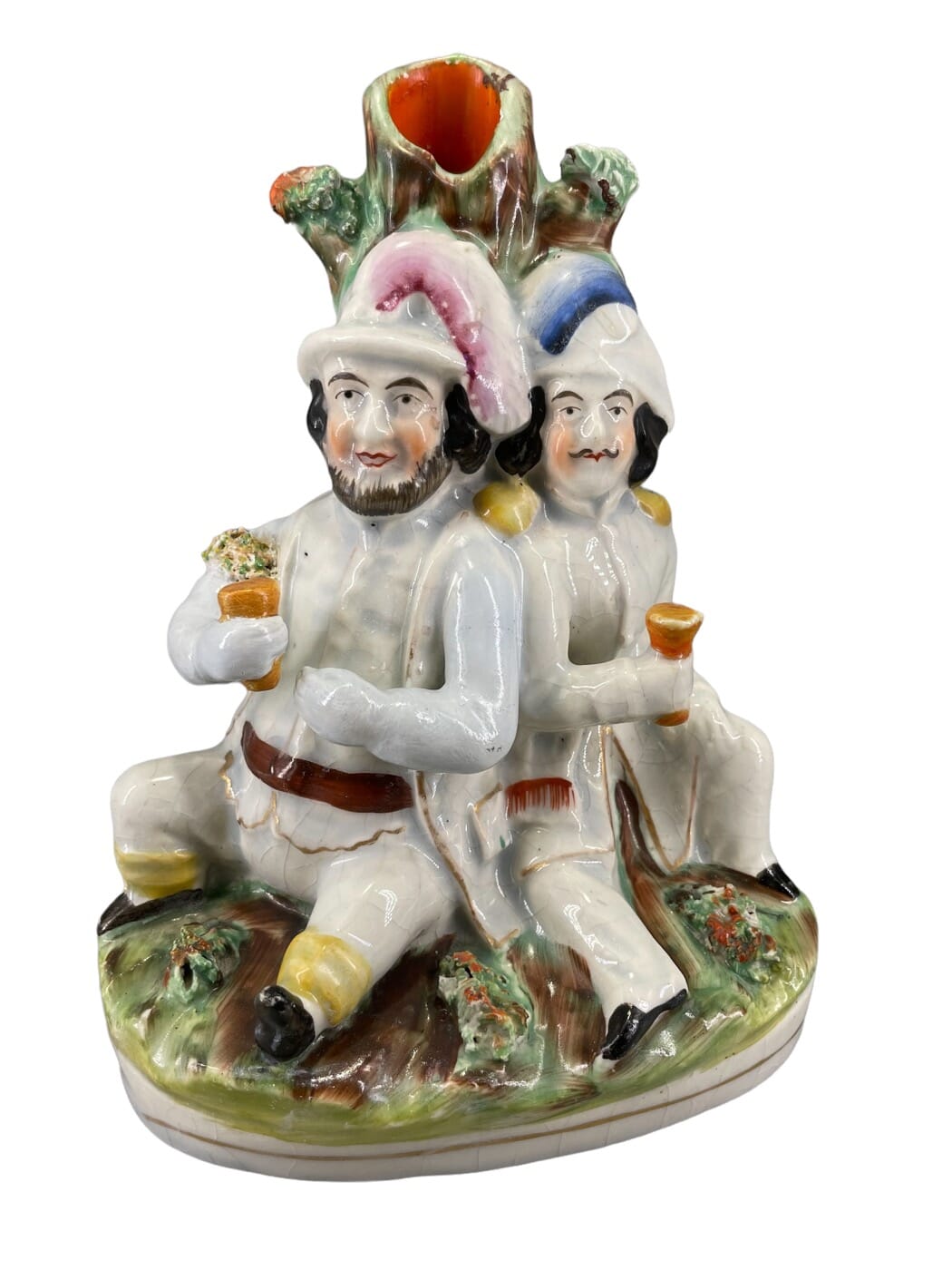
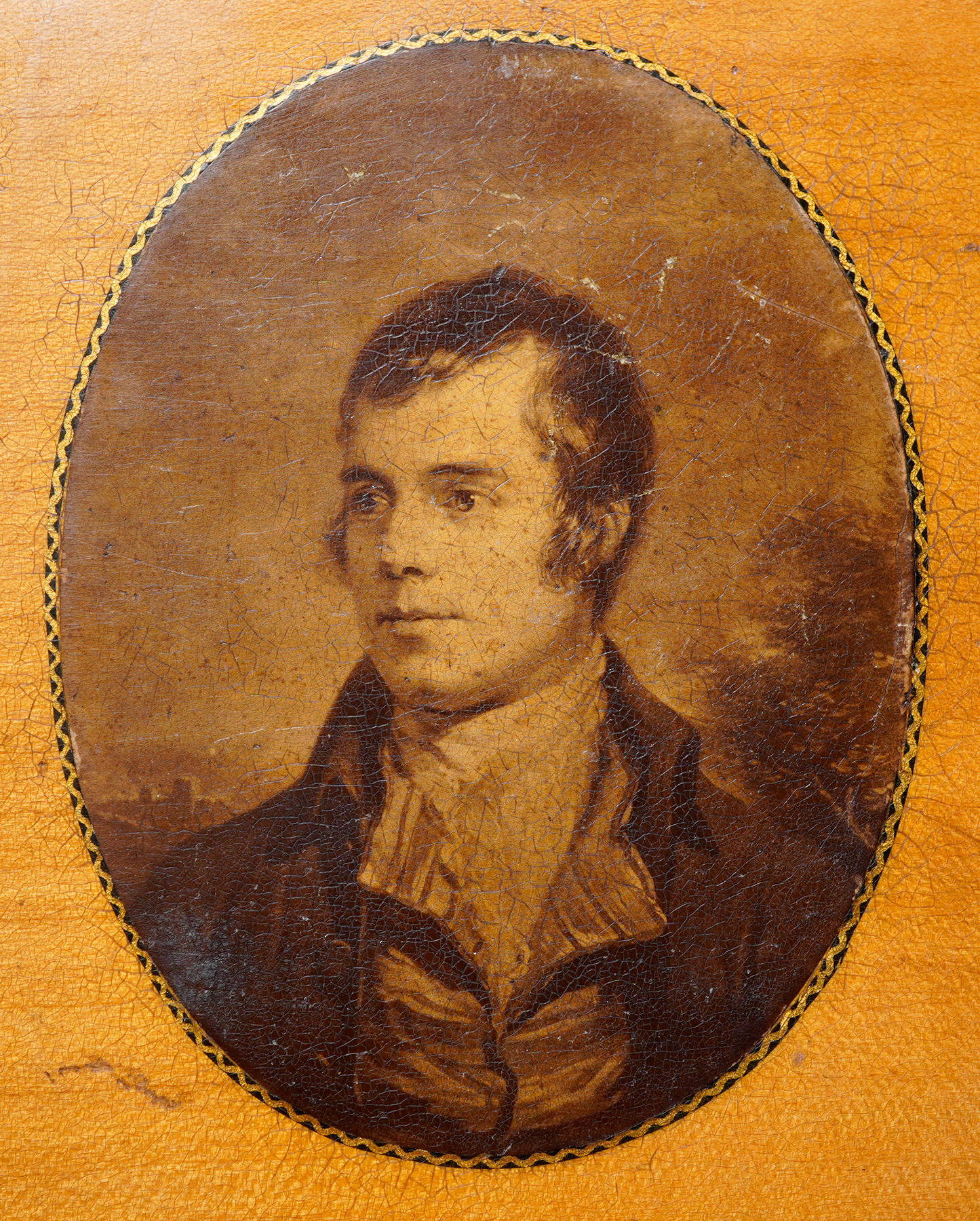
Some interesting items in stock at Moorabool are all about the Stage: this is the pop-culture of the 18th & 19th centuries, featuring the influencers, the stars, and the characters of the popular writers of the day.
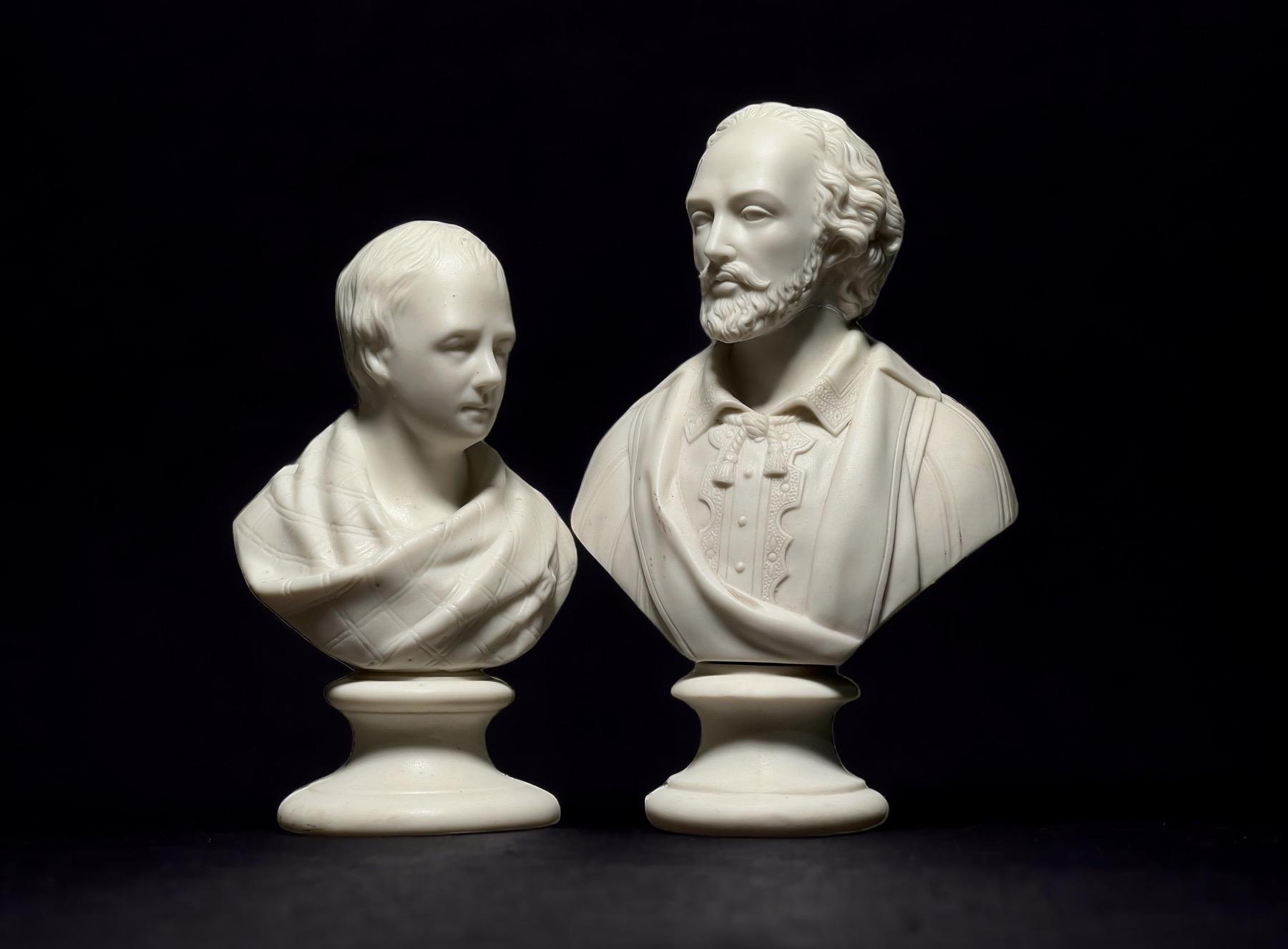
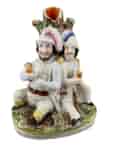
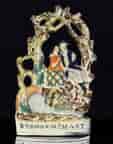
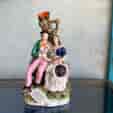
Shakespeare & Sir Walter Scott
Shakespeare & Sir Walter Scott having a chat.
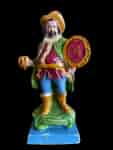
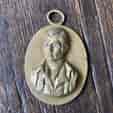
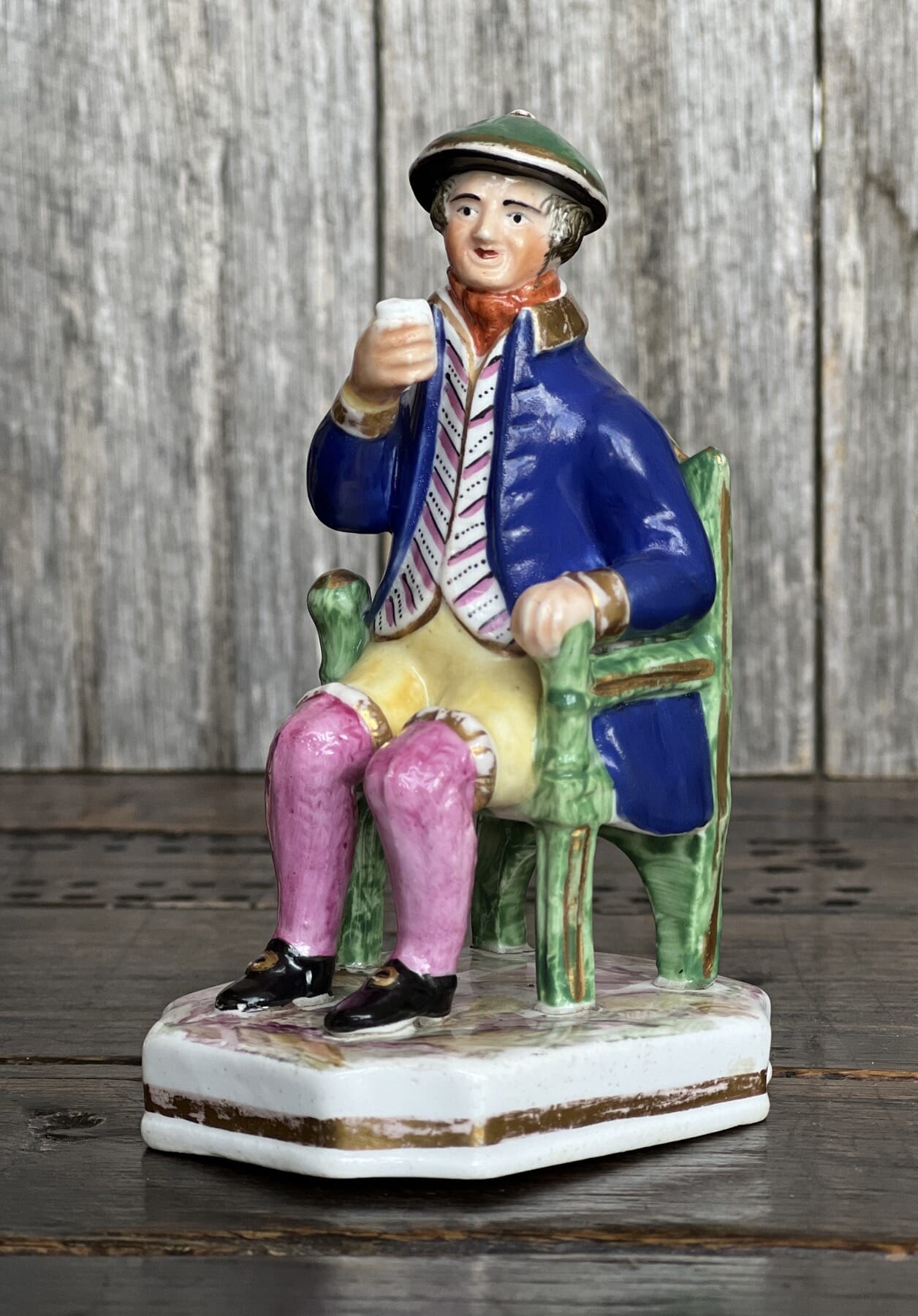
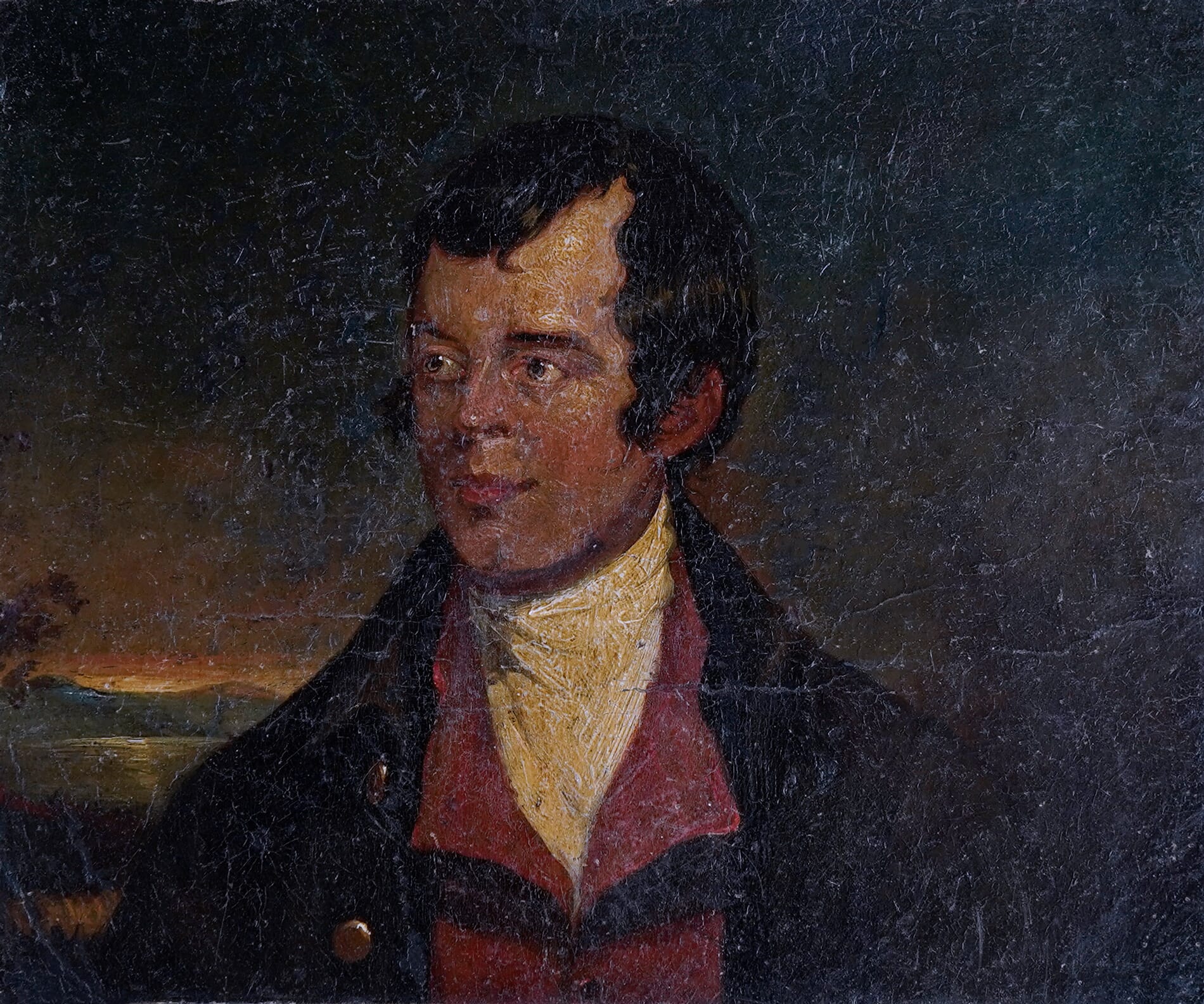
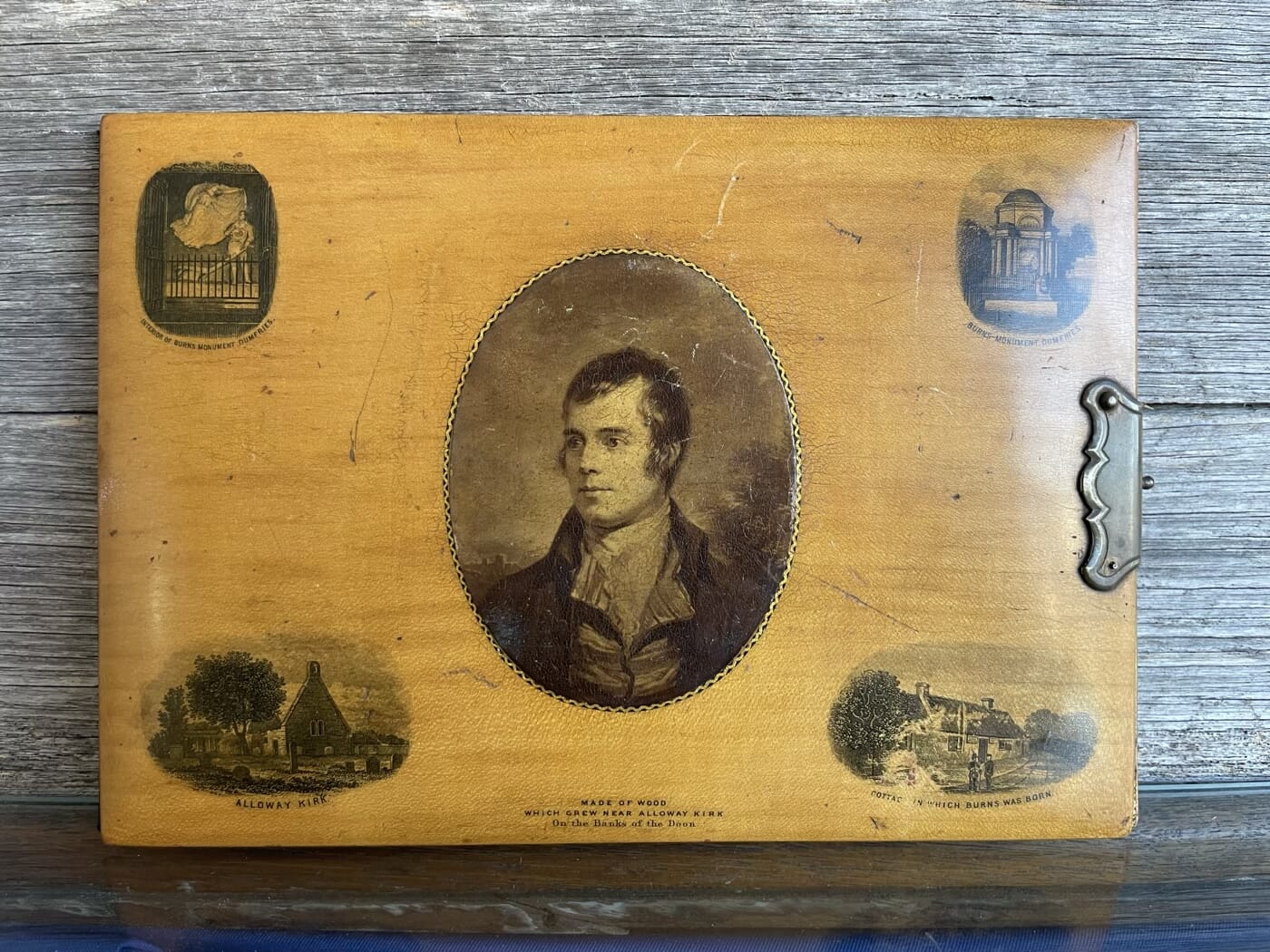
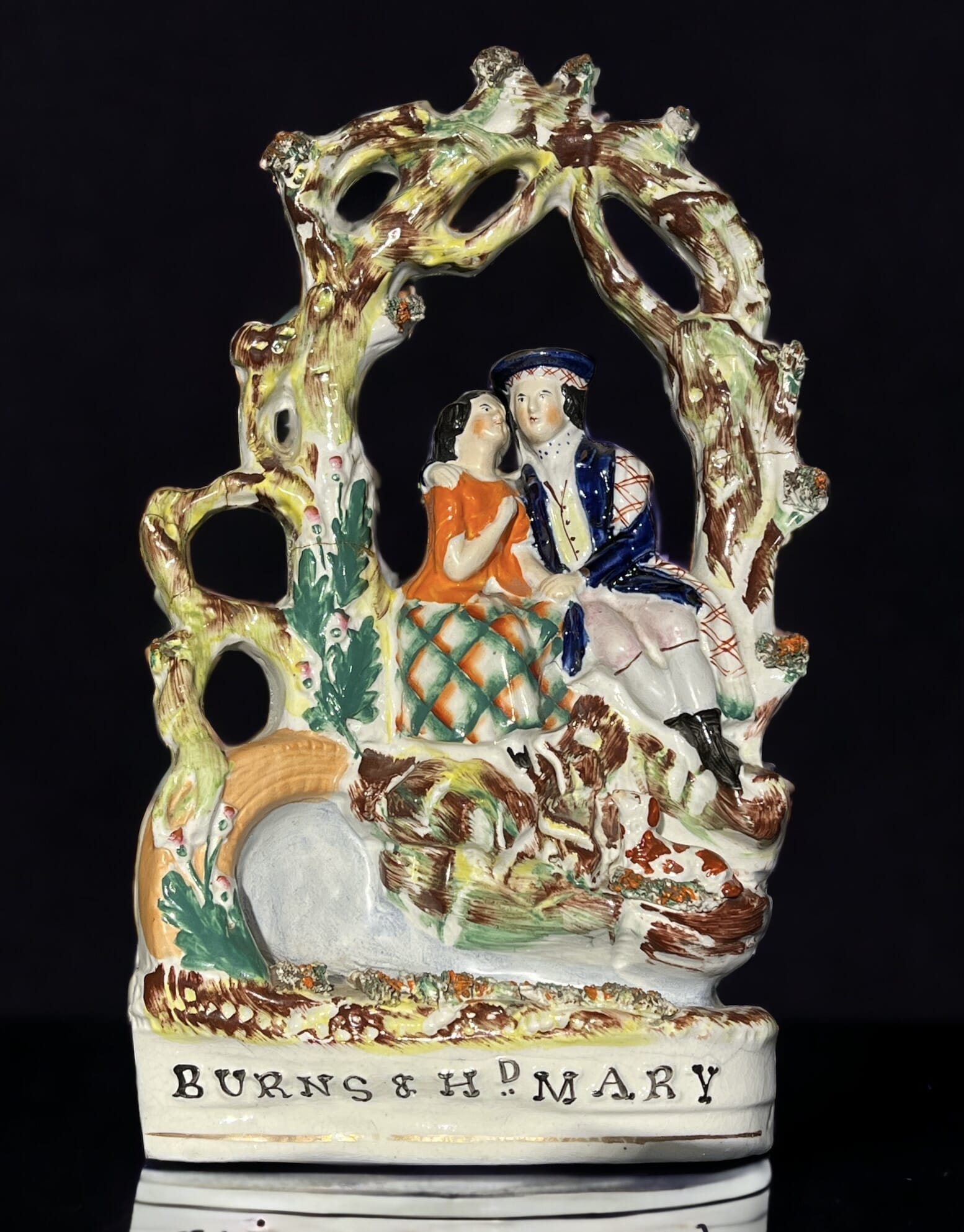
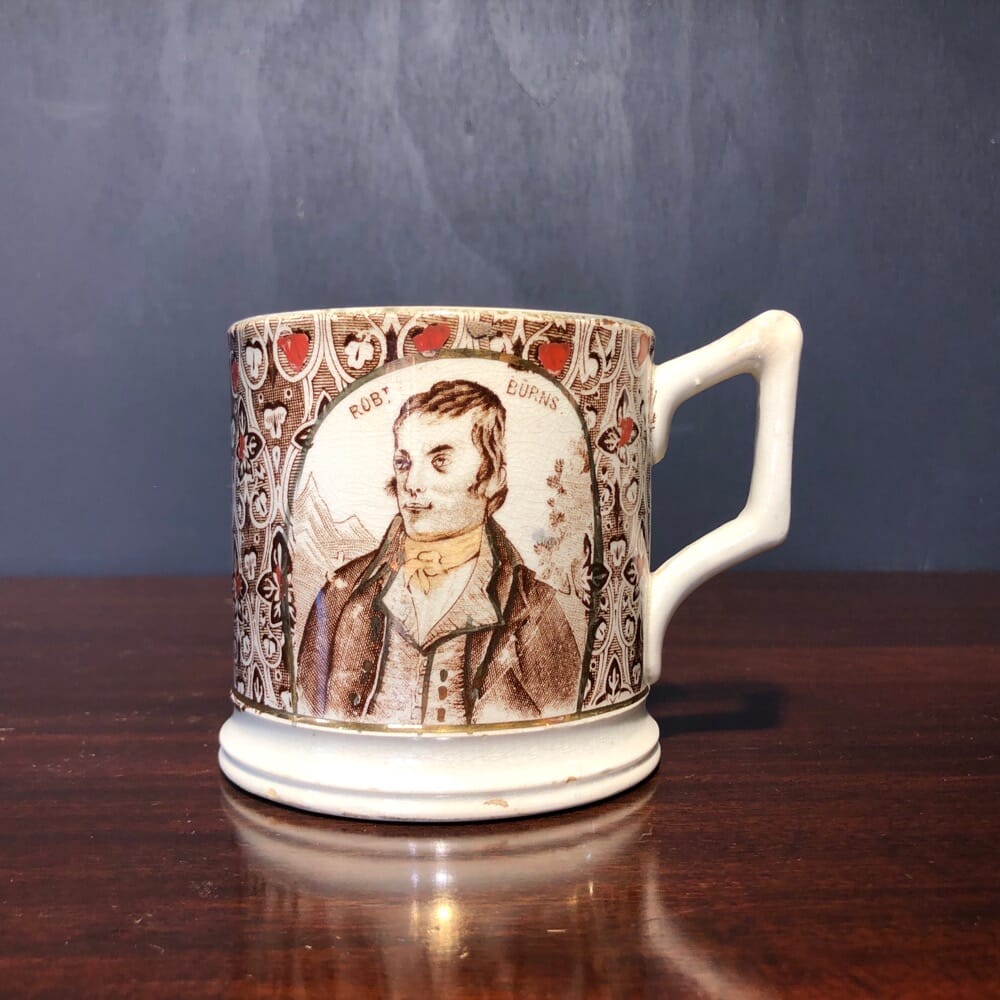
Robbie Burns
Robbie Burns

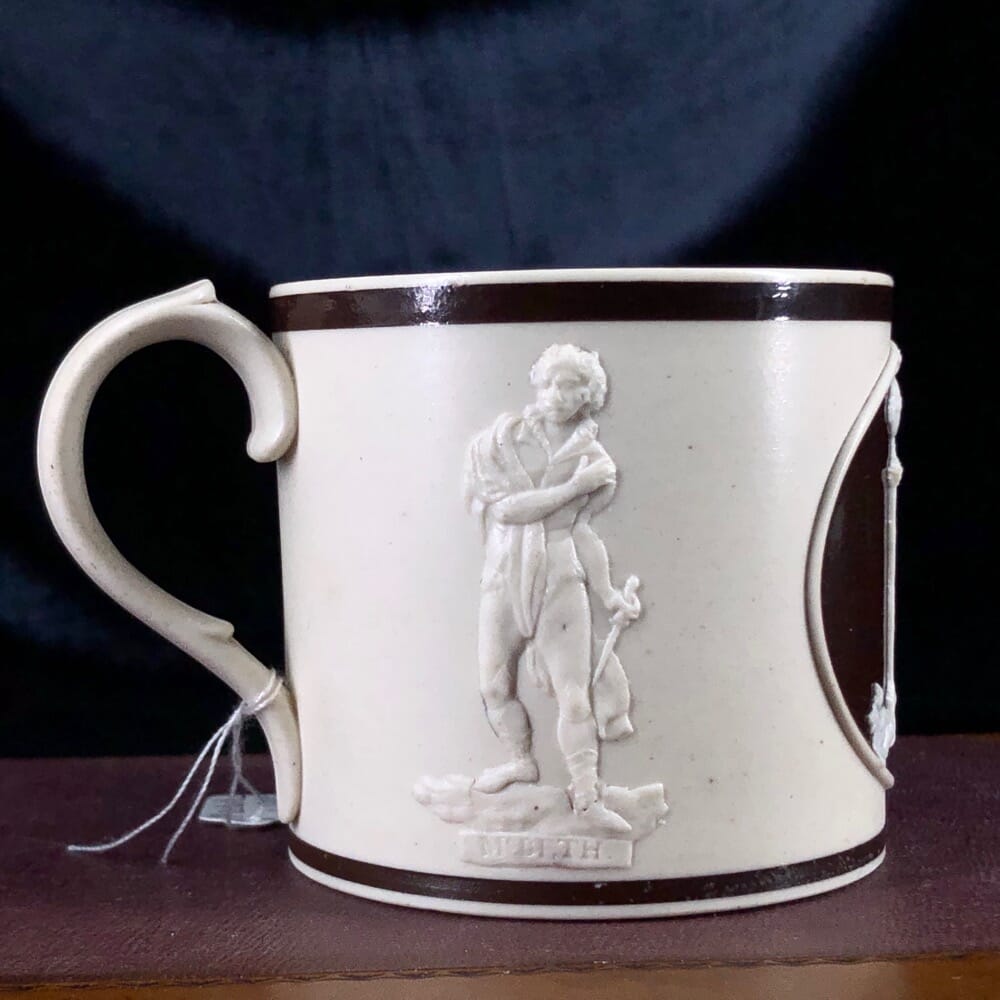
The ‘Top 2’ celebrities we come across in the Antique world are William Shakespeare and Robbie Burns. Their popularity rose & fell over time, just like any celebrity. Shakespeare had the advantage of a head-start, but the popularity of Burns coincided with the explosion in production that came with the Georgian world of the Industrial Revolution. New inventions, techniques and materials were used to make a never ending variety of interesting mementos of both the man and his characters, and in the first half of the 19th century, he eclipsed Shakespeare in popularity. Over the course of the latter 19th & 20th century, Shakespeare regained the lead, until in the present day, Shakespeare is well know and still very popular, while Robbie Burns has faded from the pop-culture scene.

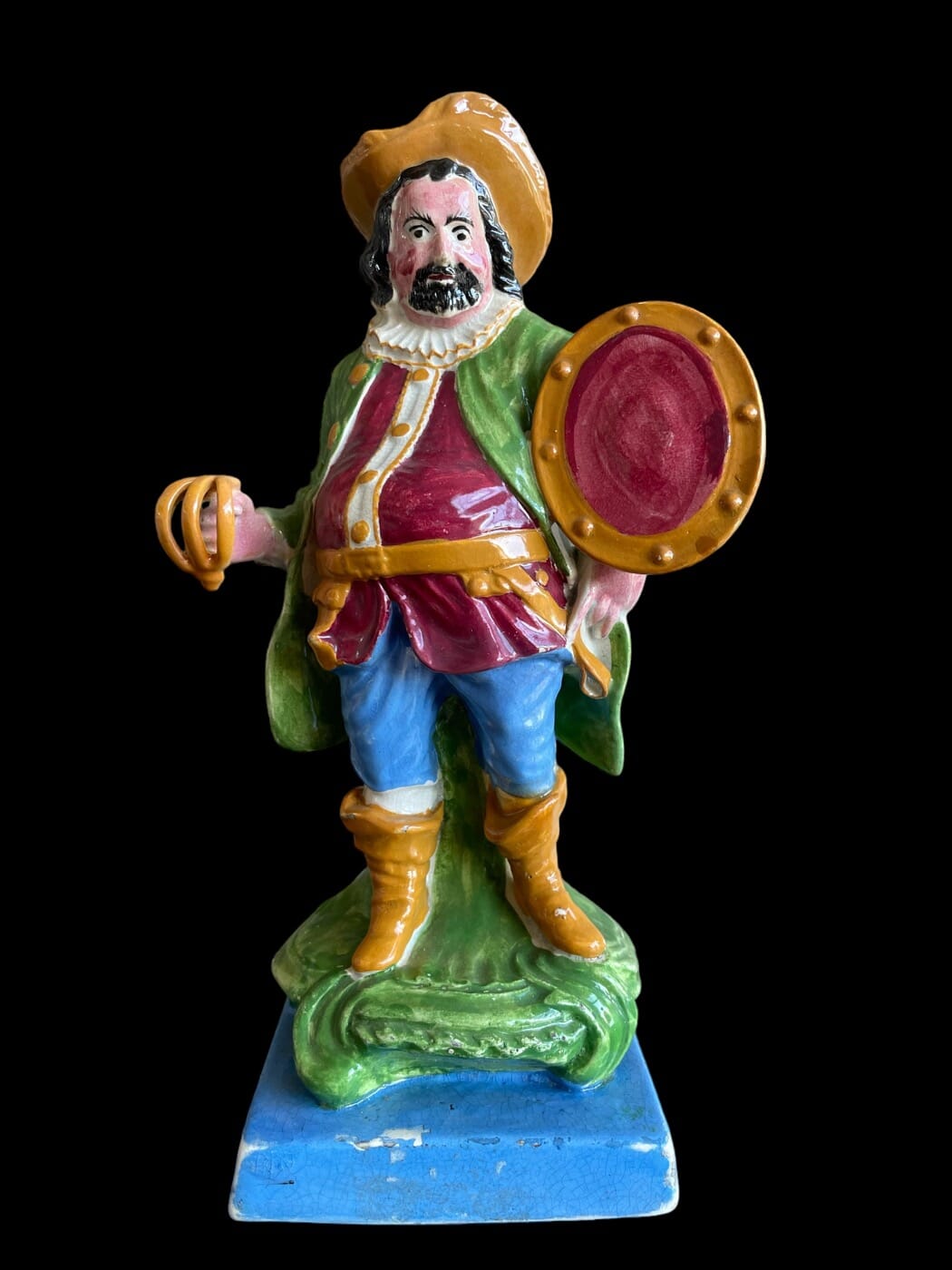
Actors were always popular. Chief amongst these was ‘Falstaff’ – a Shakespeare character who was made in a wide variety of materials over a long period.

And then there’s the more minor celebs. Some of these were ‘child stars’ – famous for a few seasons on the stage. Others are totally inappropriate in the modern world, such as the ‘black-face’ depictions of Africans.

Please enjoy our presentation below…. let the show begin!

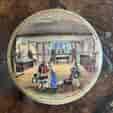
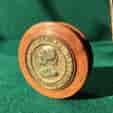
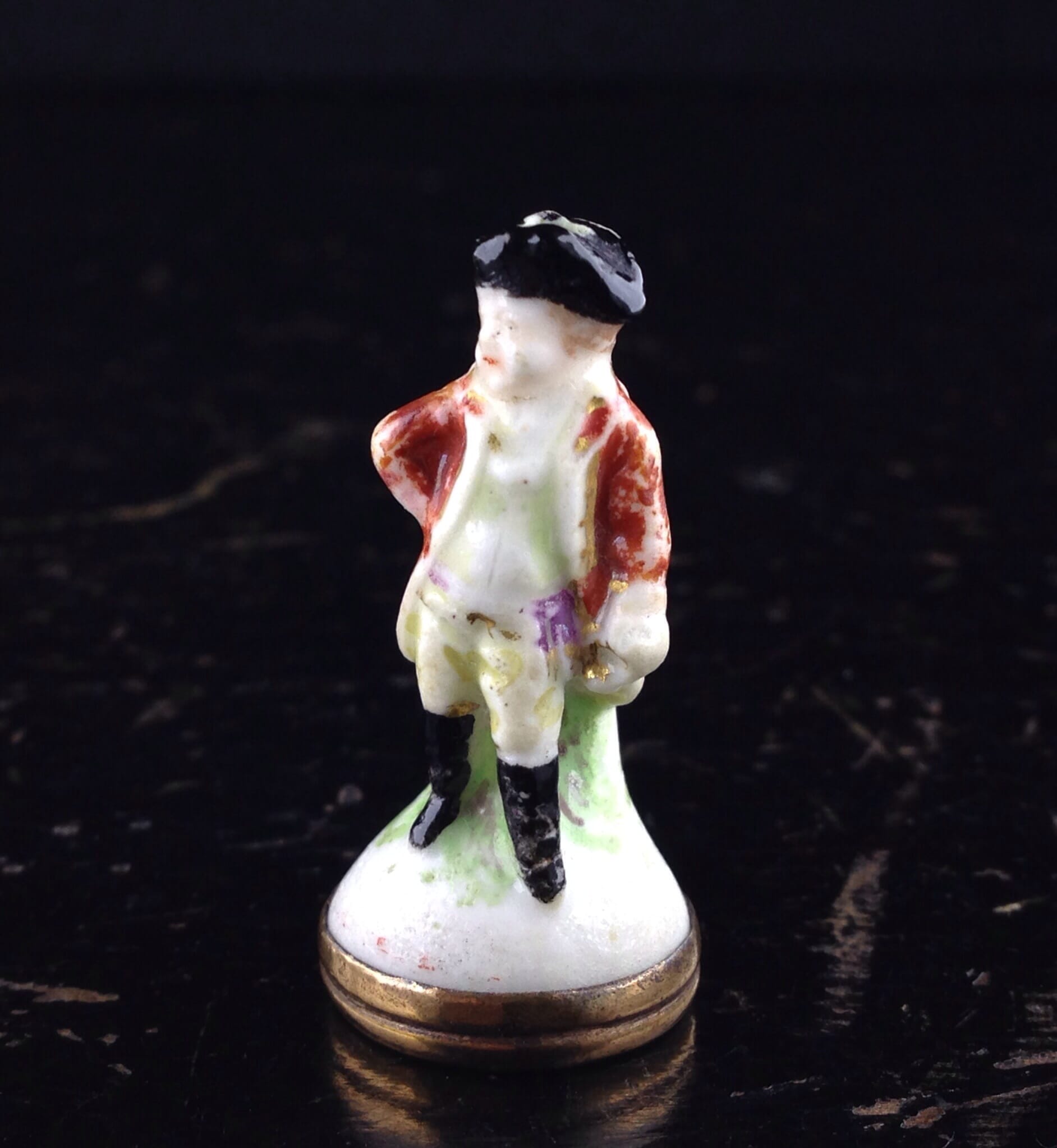
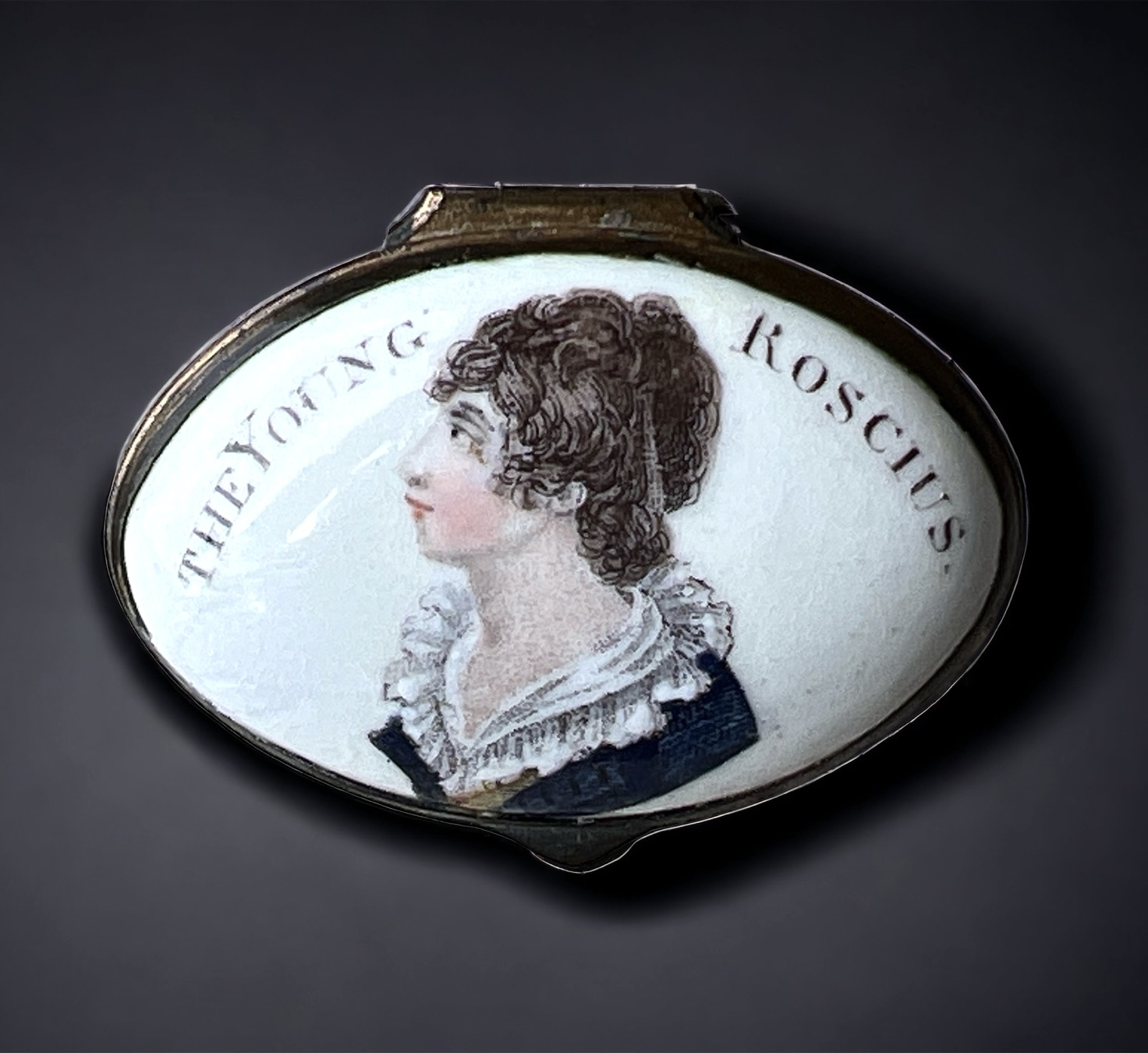
A ‘Child Star’ – This fascinating image on a small English Enamel patch box is taken from a print by G. Thompson, Southfield, 1805. It is titled ‘Mafter Betty ftuding his part – this aftonijing youth was only Thirteen Years of Age last September / 1804’, and depicts the child prodigy, William Henry West Betty (1791-1874).

He debuted on stage in Ireland in 1803, aged 11; over the next few years he was incredibly popular and well-recieved as a child star. For a while, he was the highest ever paid actor, earing 75 Guineas per night while at Drury Lane.

His fame led to Royal introductions, and George III even presented him to the Queen.

After a whirl-wind few years of multiple roles in many venues, he retired the stage in 1808 to study at Christ’s College, Cambridge. After graduating, he did retry theatre, but his lustre was worn – the critics were savage, and he failed to impress. The usual path of famous ‘child-star descent’ followed, ending with a failed suicide; he gave up acting altogether in 1824, although he was always active in some form with theatrical charities.
See this interesting items here >>

The Young Roscius patch box c.1805

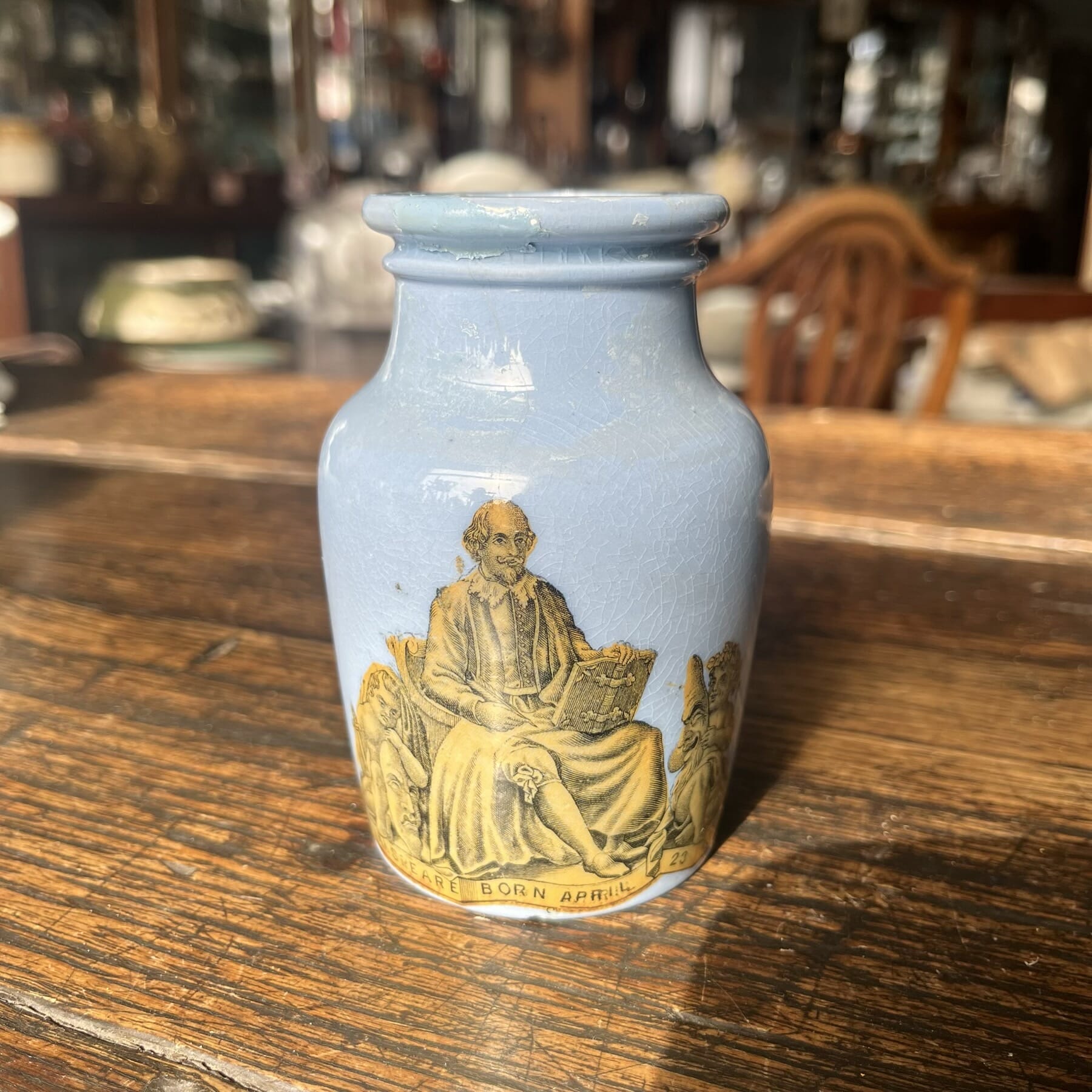
Shakespeare 1564-1616

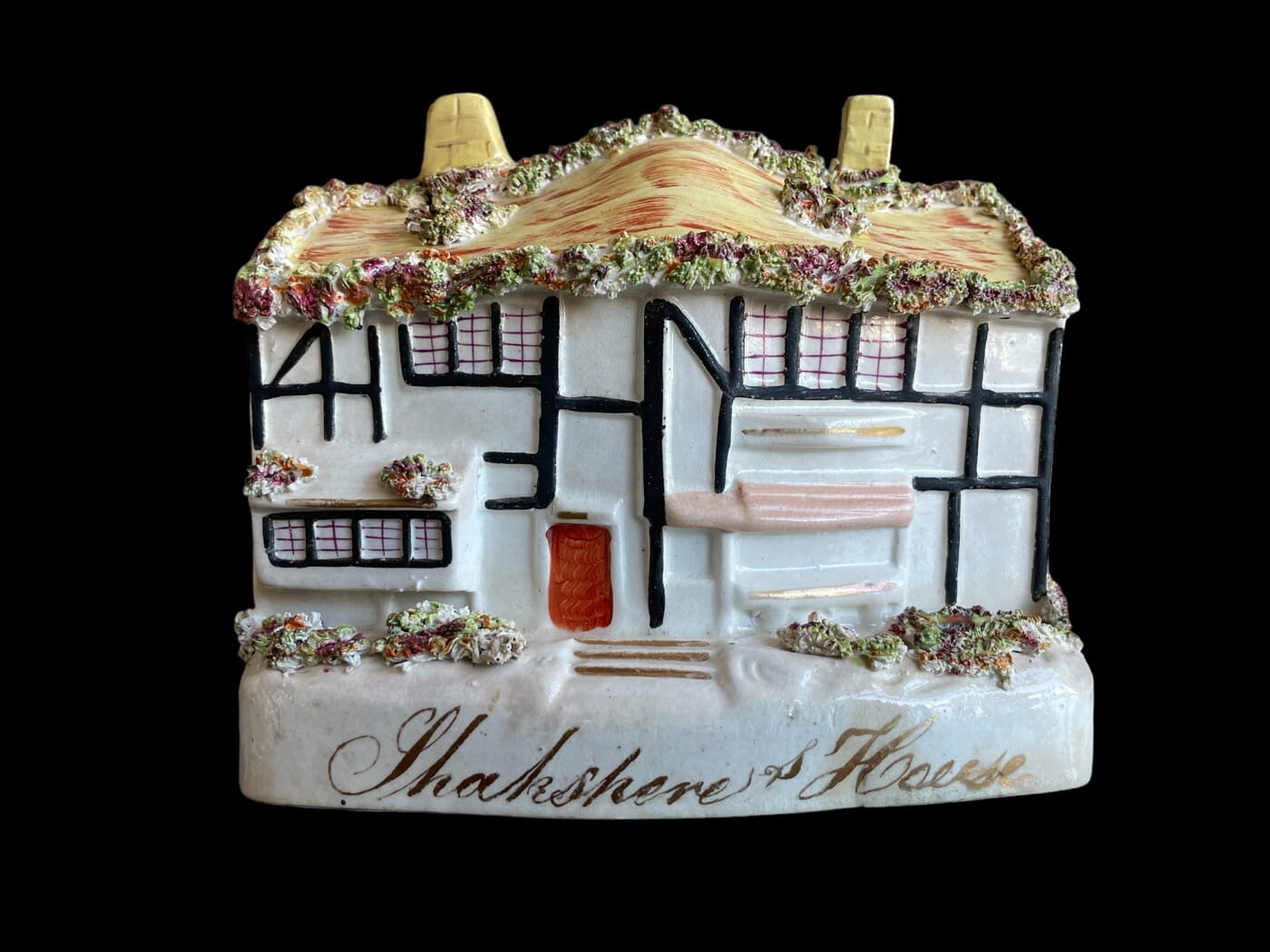
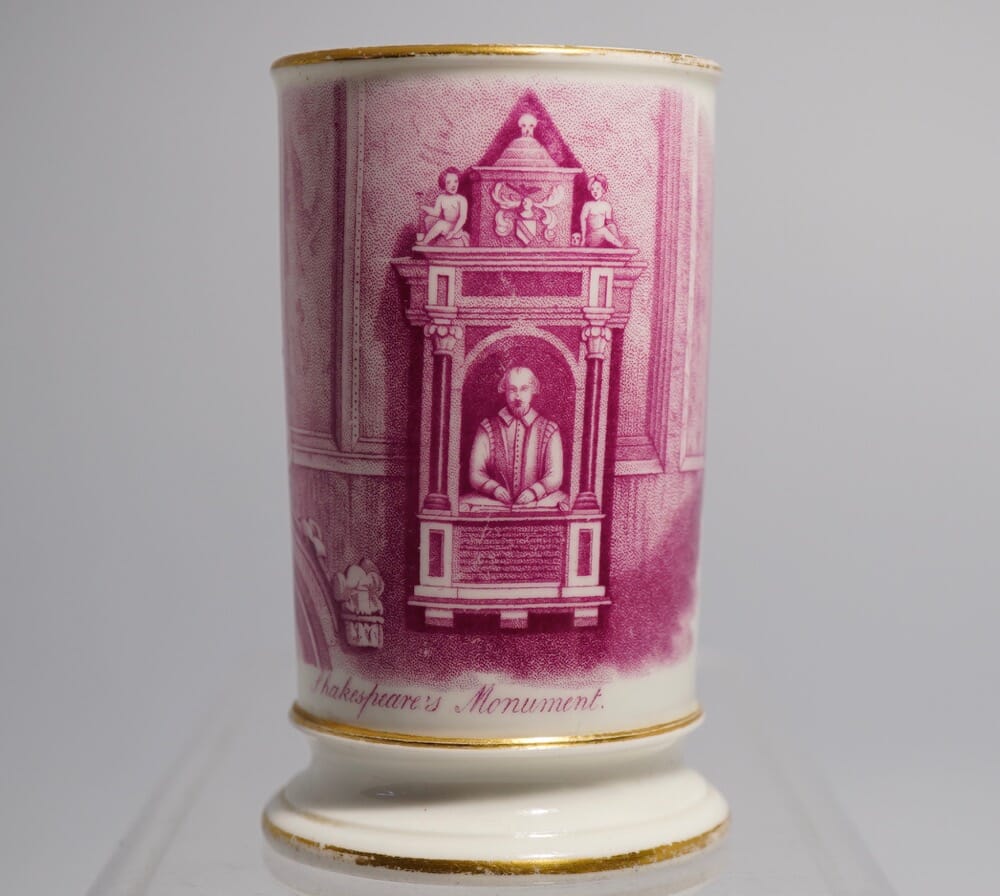
Antique Shakespearian Commemorative items at Moorabool Antiques
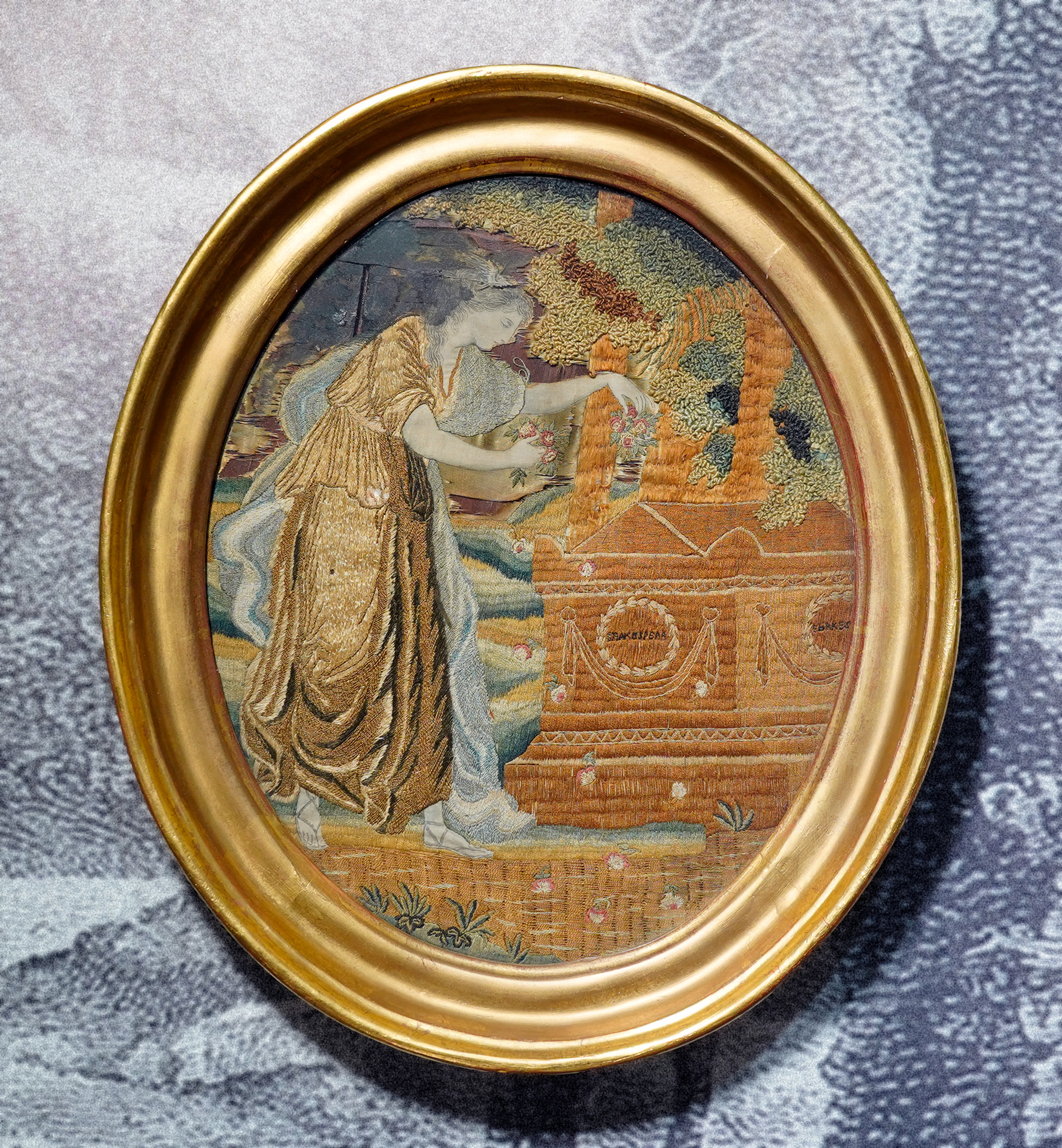
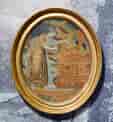
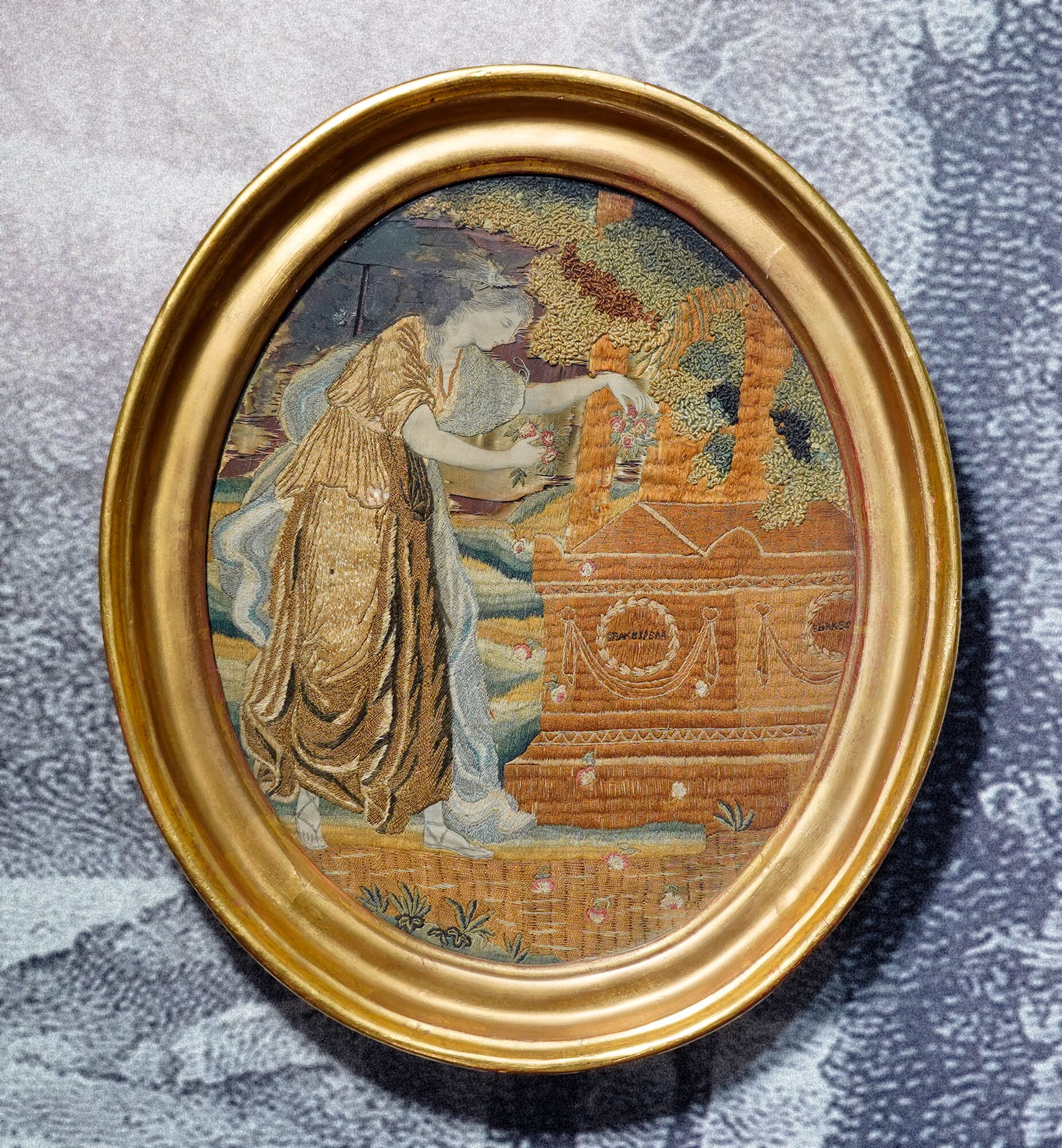
In Memoriam - Shakespeare needlework
In Memoriam – Shakespeare needlework, early 19th century

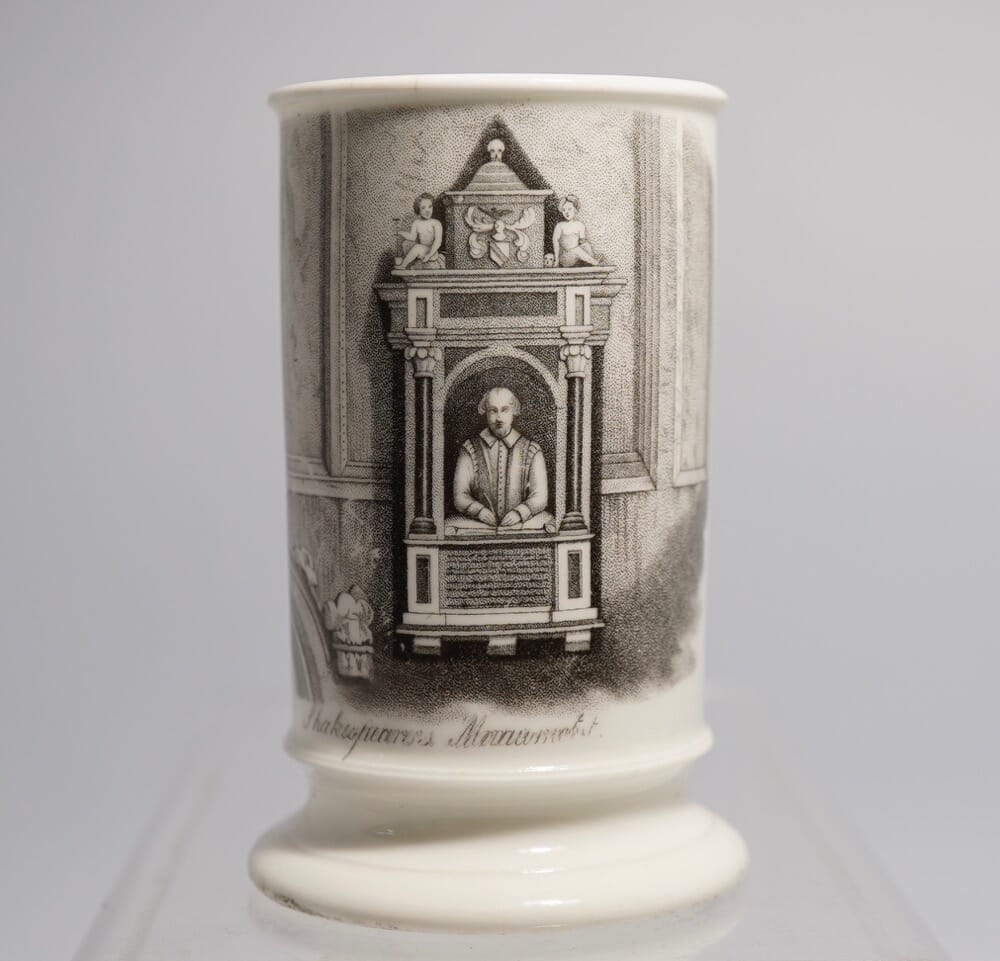
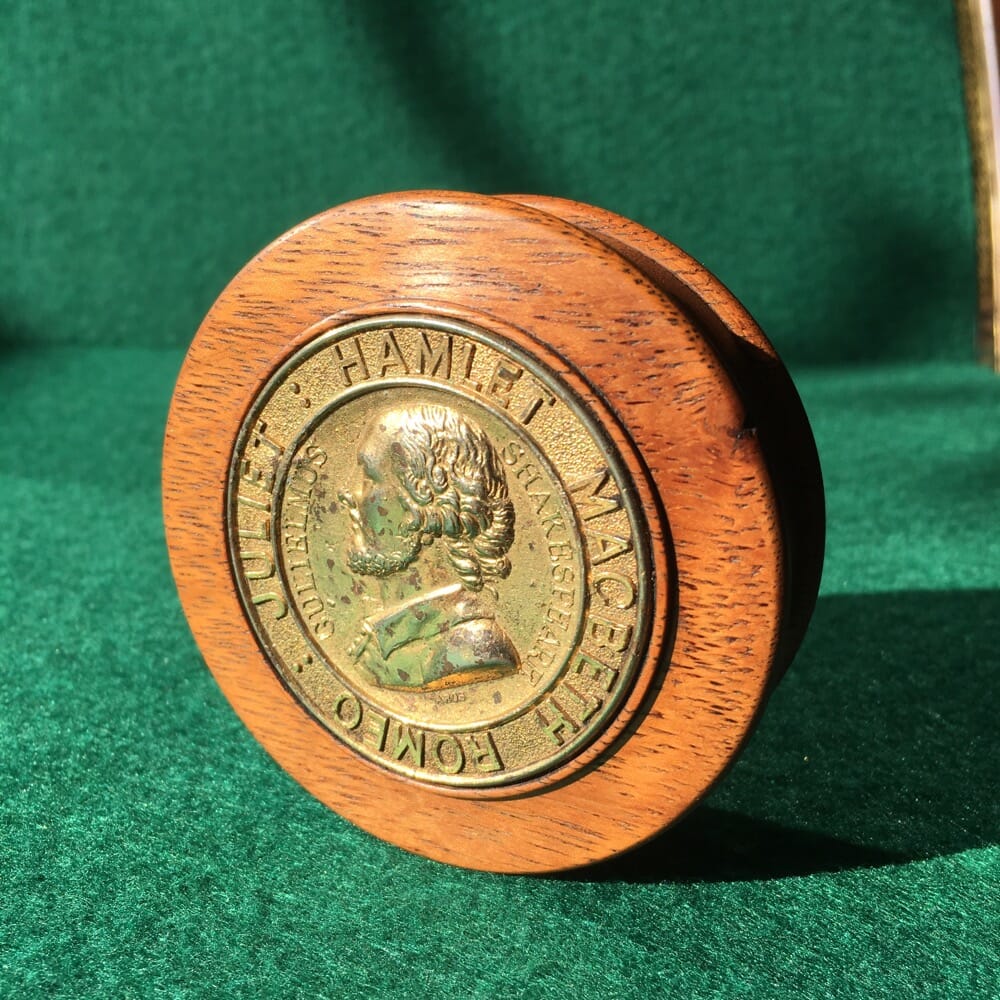
William Shakespeare, often regarded as one of the greatest playwrights in history, wrote his stage plays during the late 16th and early 17th centuries. His literary works have left an indelible mark on the world of literature and theatre, and therefore also the material culture associated. Renowned for his ability to capture the complexities of human nature and emotions, Shakespeare’s plays such as “Romeo and Juliet,” “Hamlet,” and “Macbeth” continue to resonate with audiences worldwide, exploring themes of love, ambition, power, and tragedy. His mastery of language, rich characters, and enduring narratives have solidified his legacy, ensuring that his works remain relevant and influential across generations.

A most unusual piece that illustrates his lasting impression is seen here – a Georgian embroidery, featuring a lady by “Shakespere’s”grave, strewing it with roses.
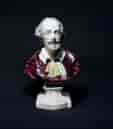
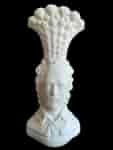
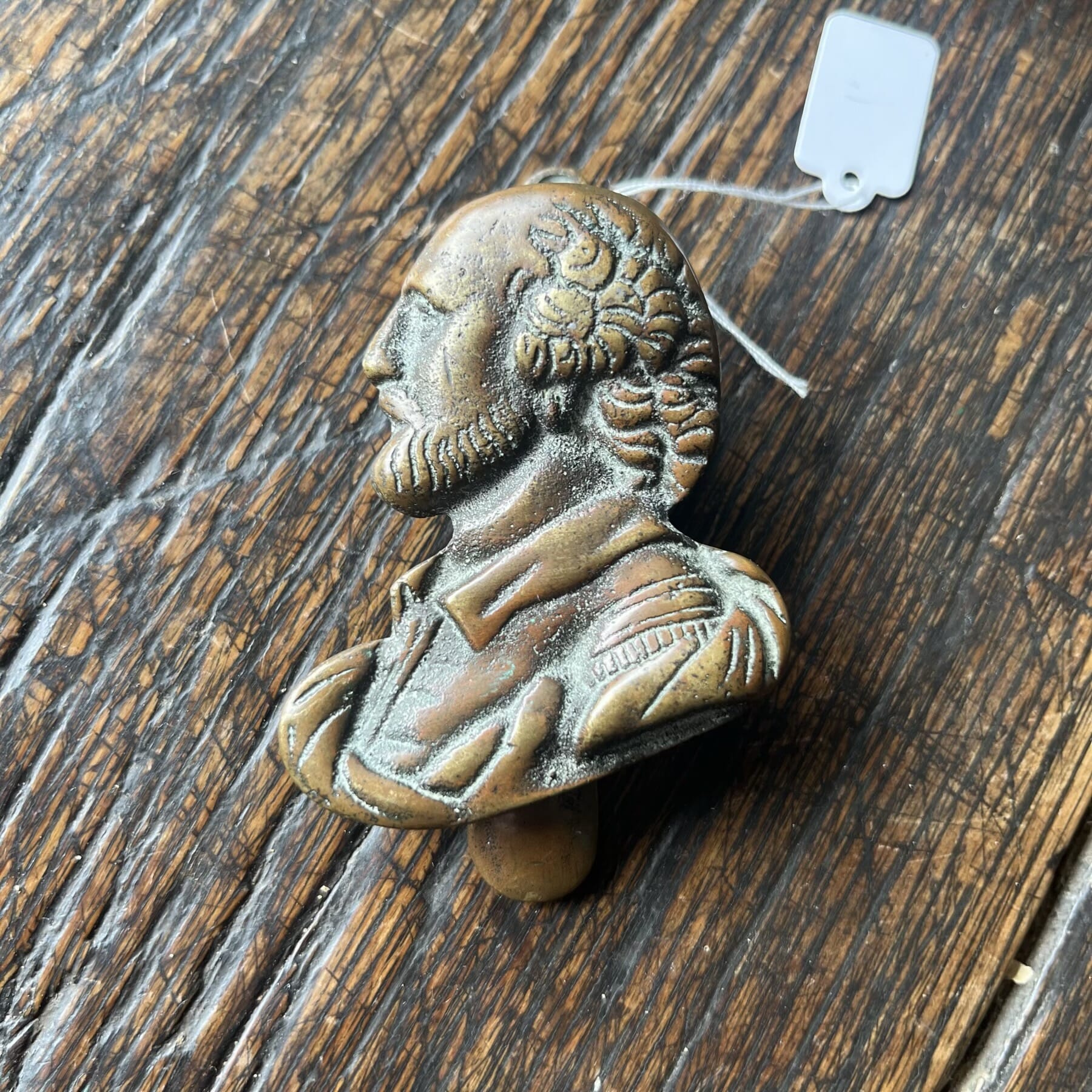
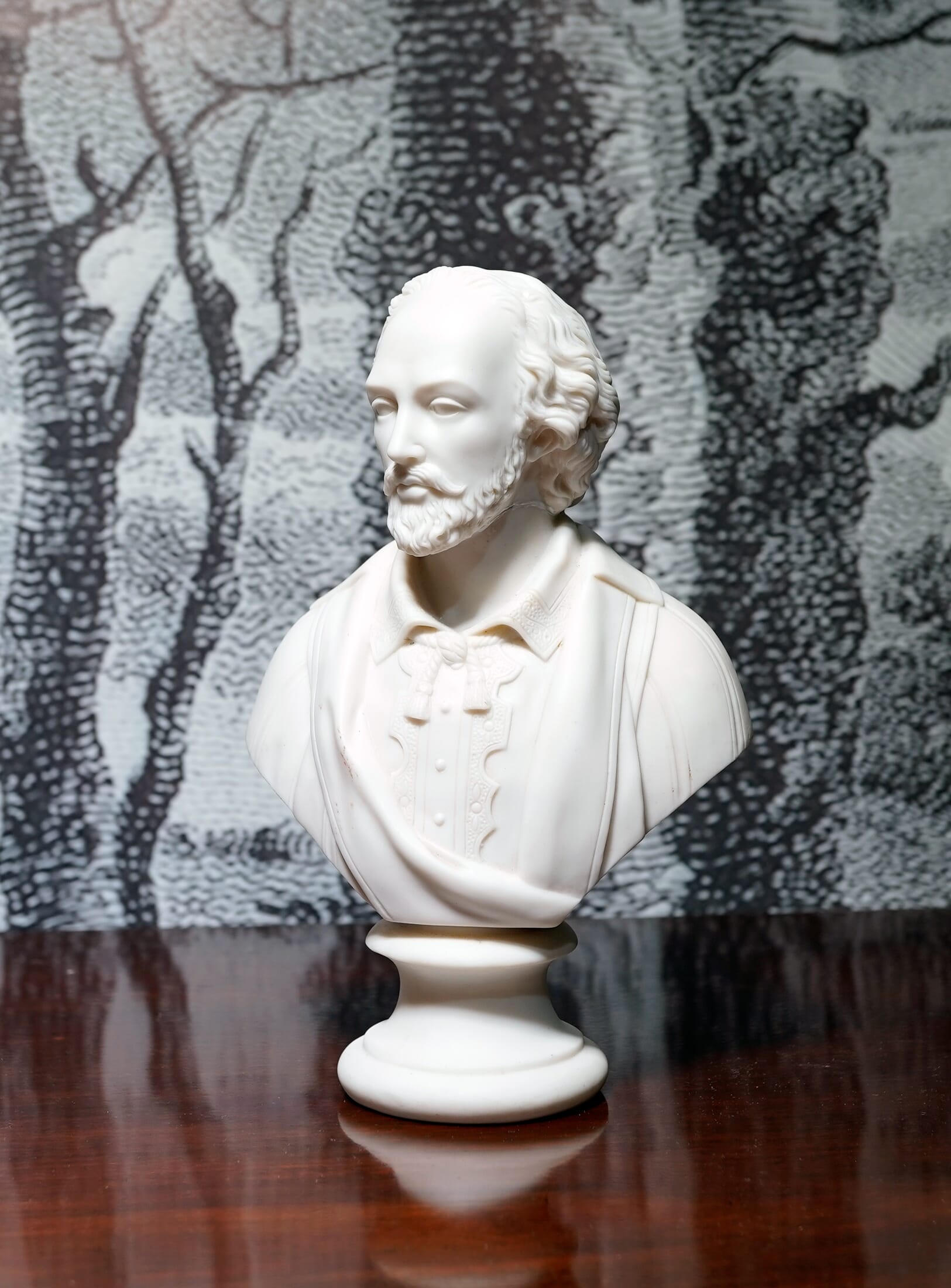
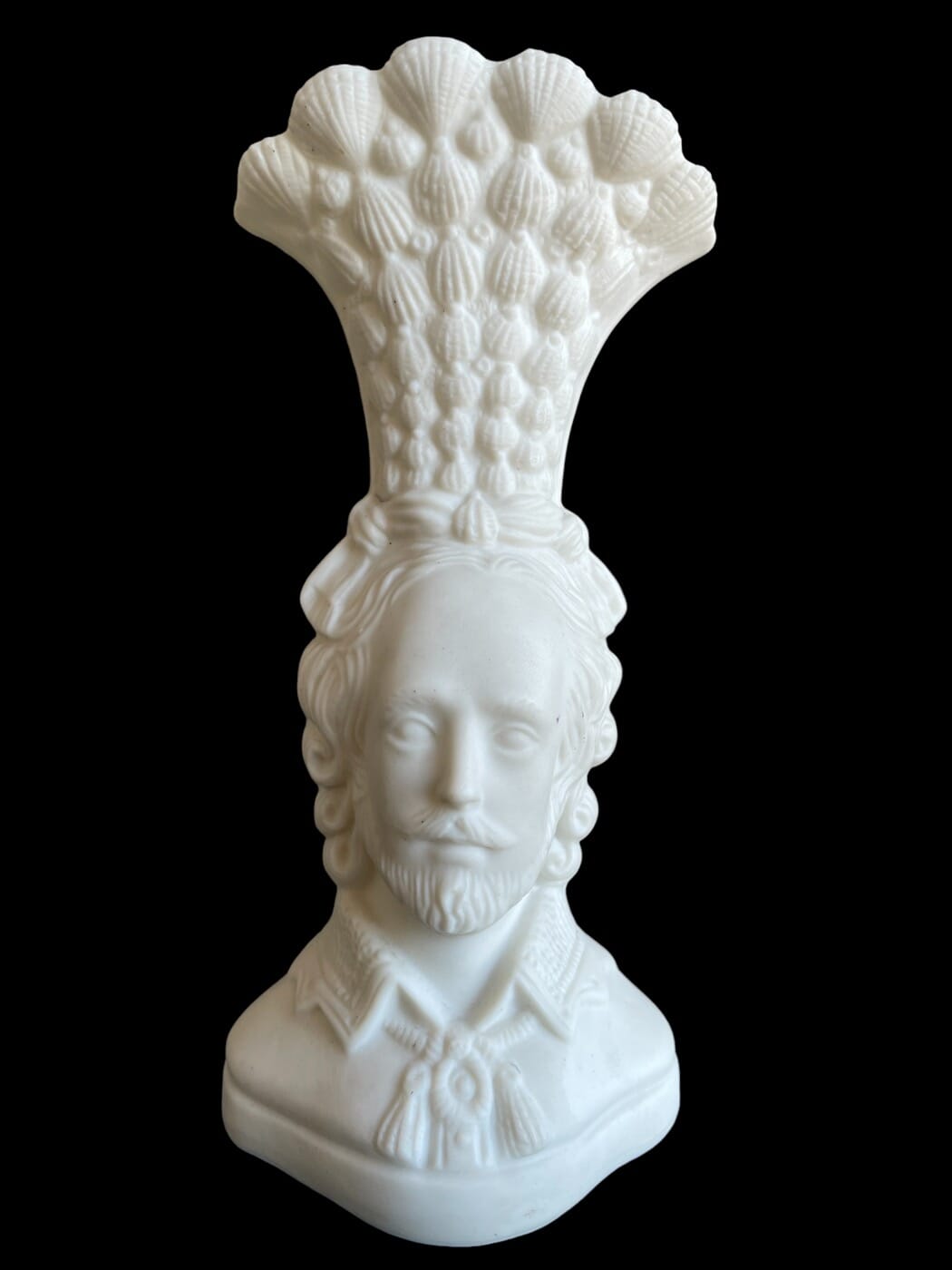
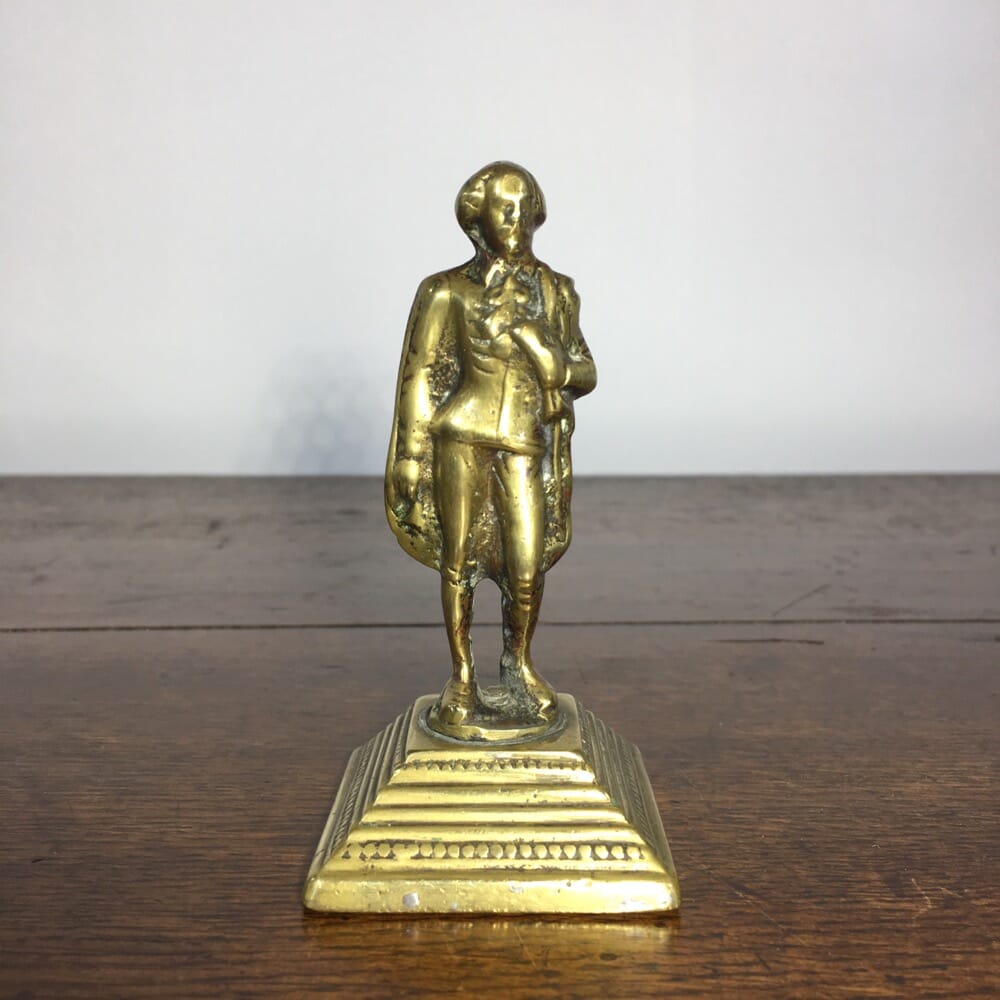
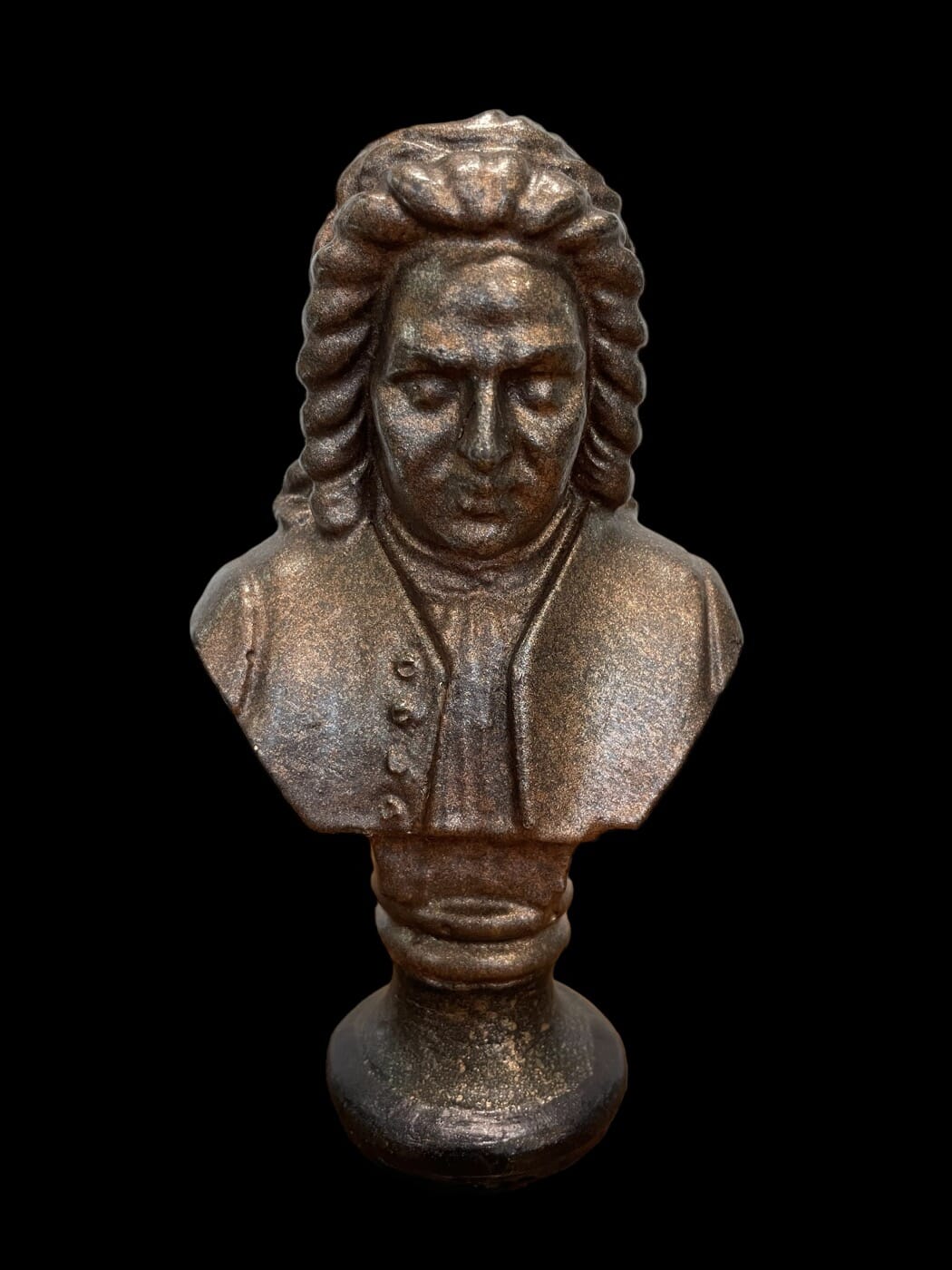
There’s a wonderful range of Shakespeare products, including no end of busts, some better looking than others. But most peculiar is the vase seen below -it has an identical Shakespeare face on either side, for some unknown reason!
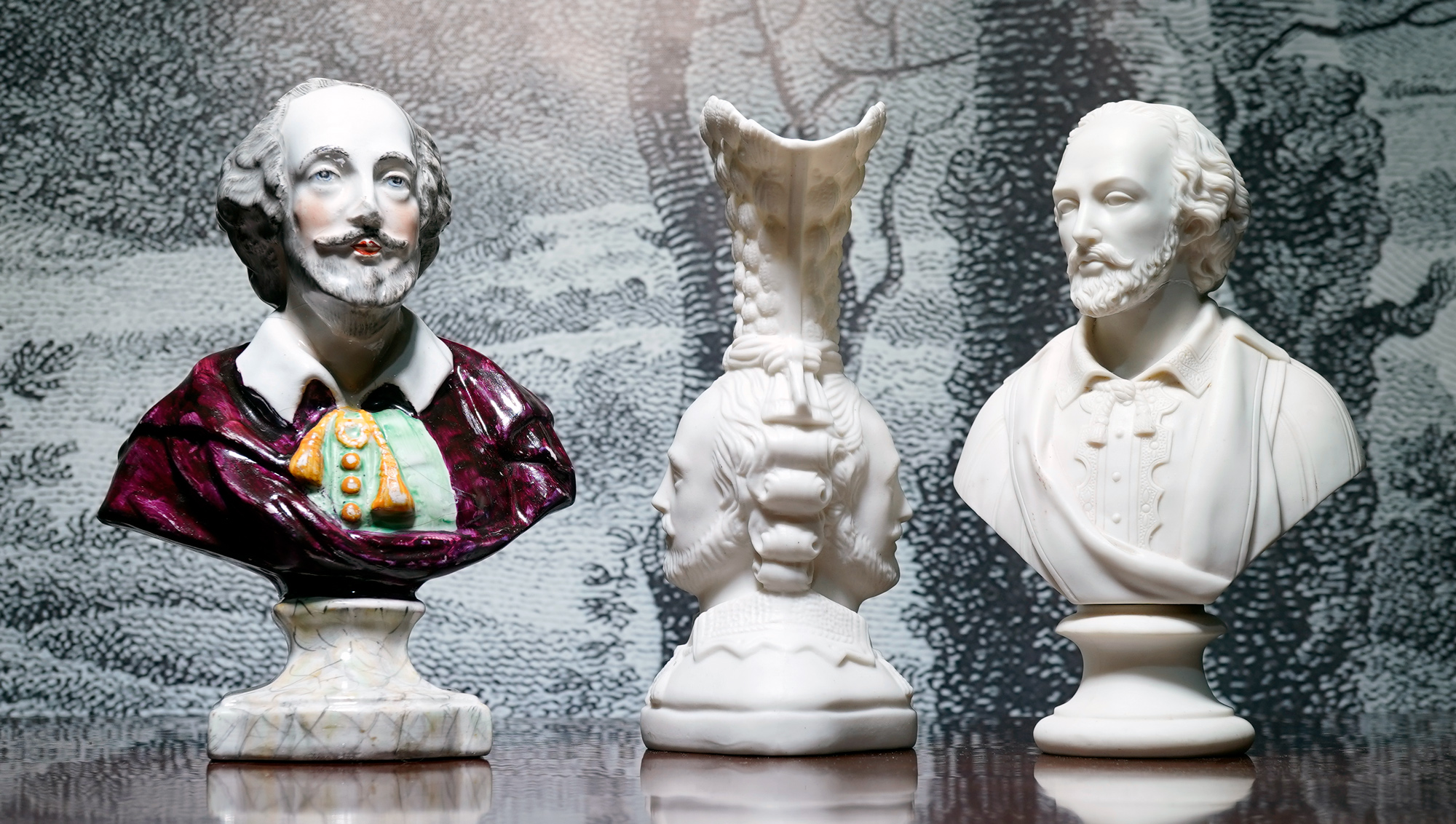
Shakespeare Ceramics
Shakespeare Items at Moorabool Antiques

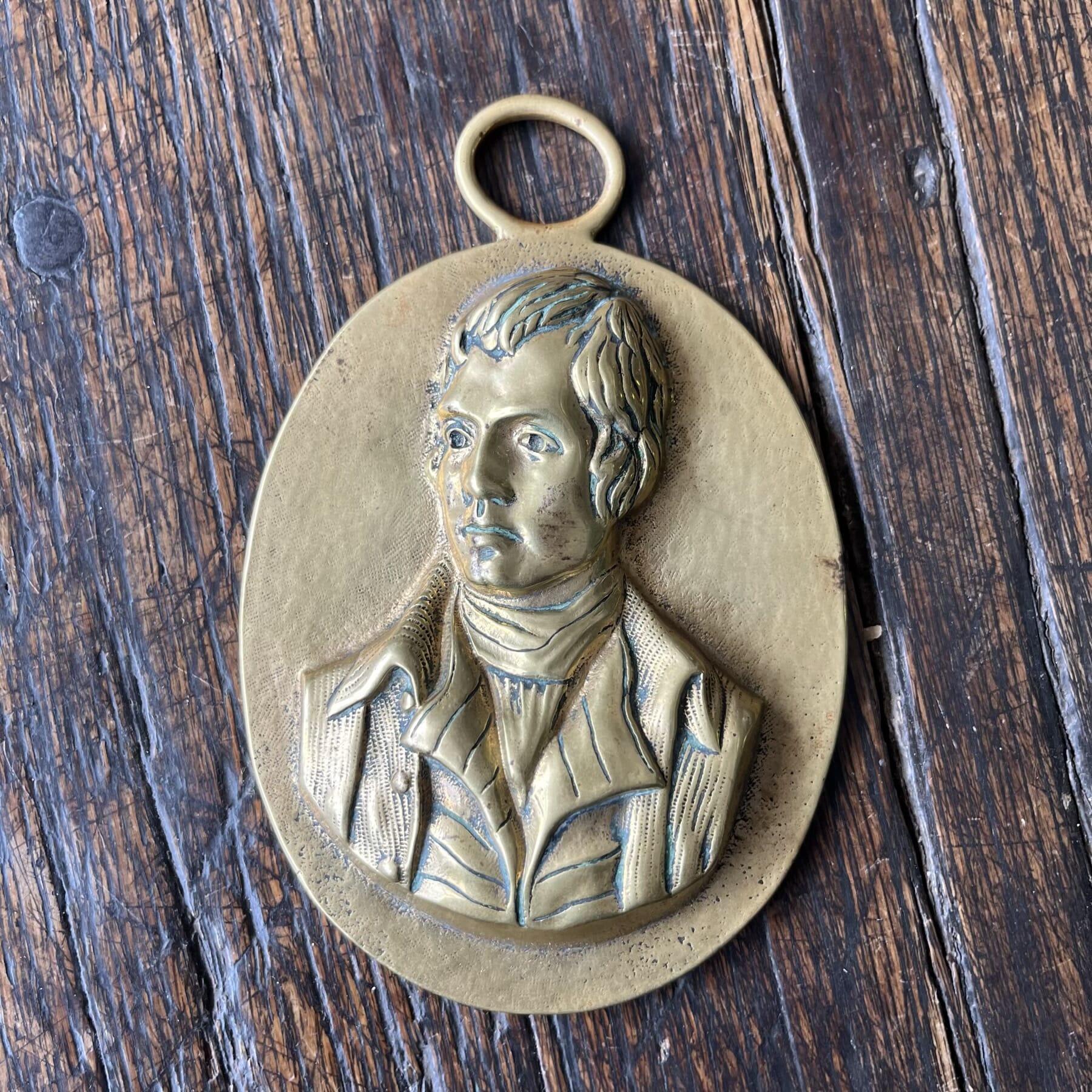
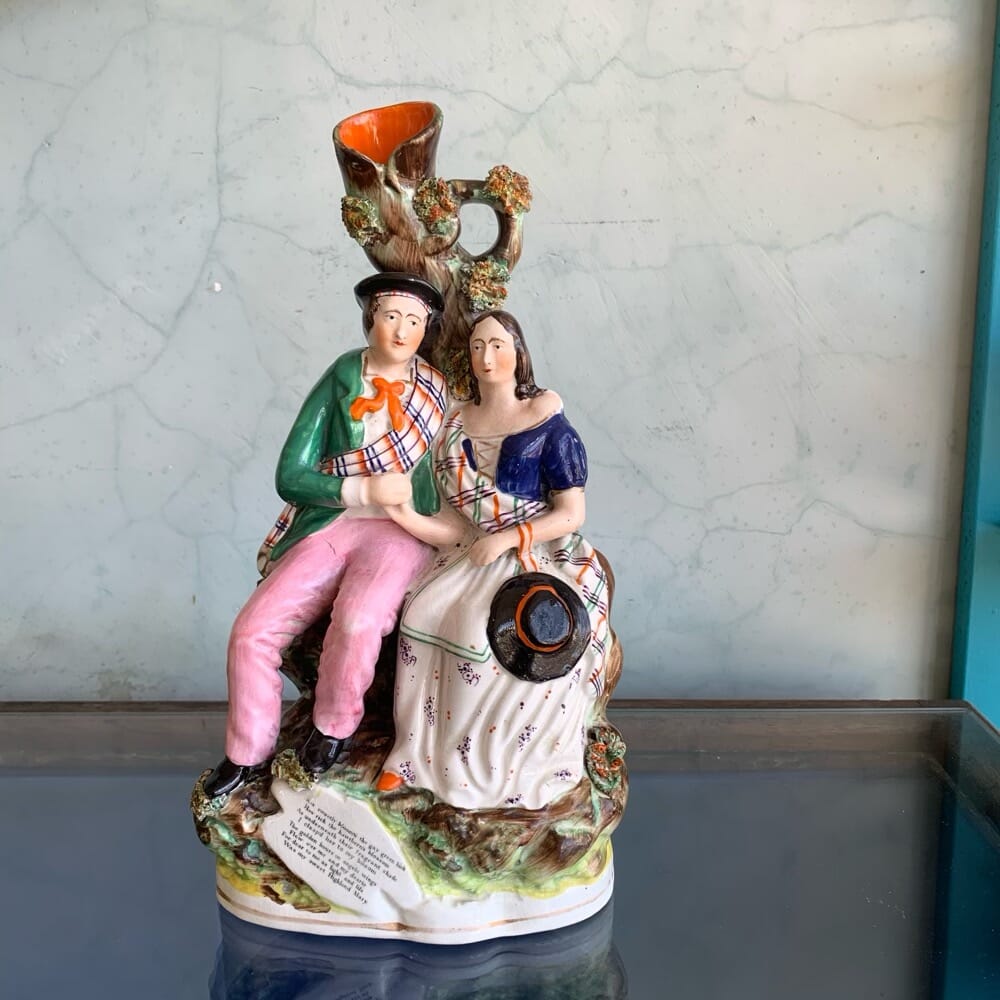
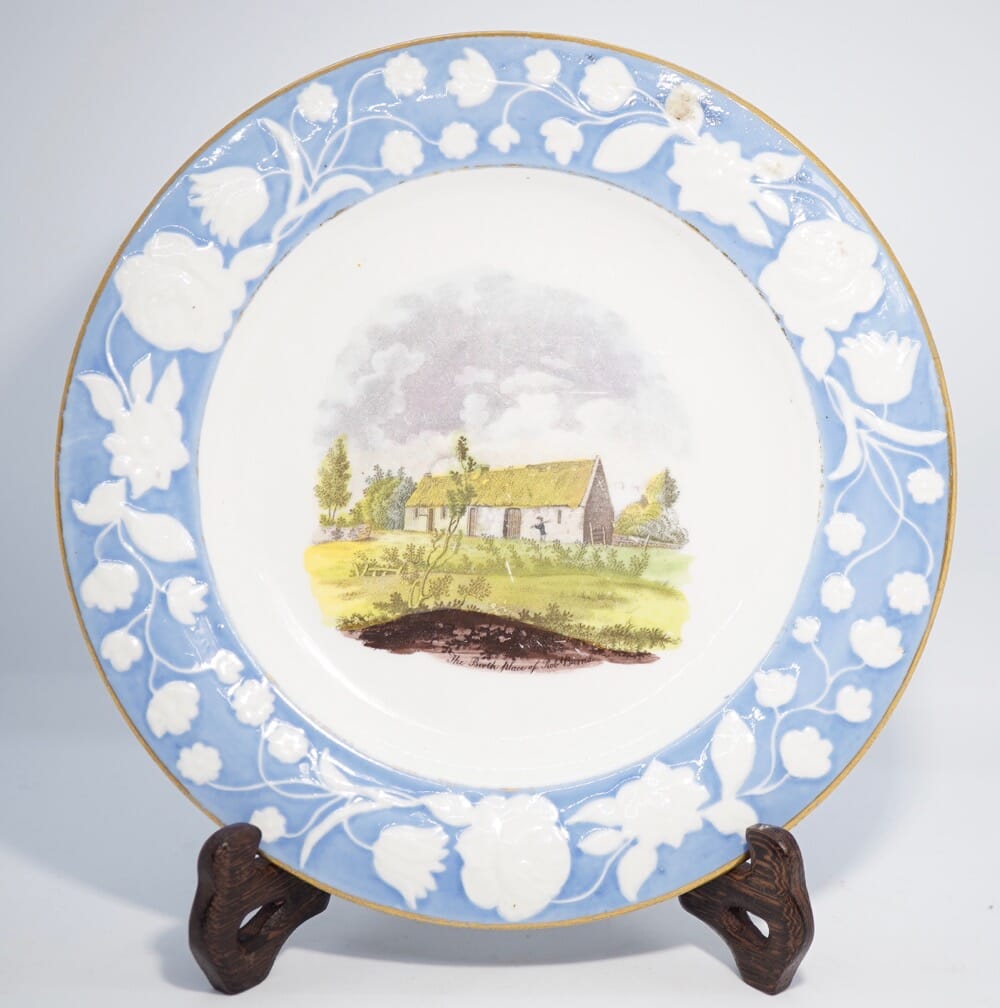
Robbie Burns 1759-96
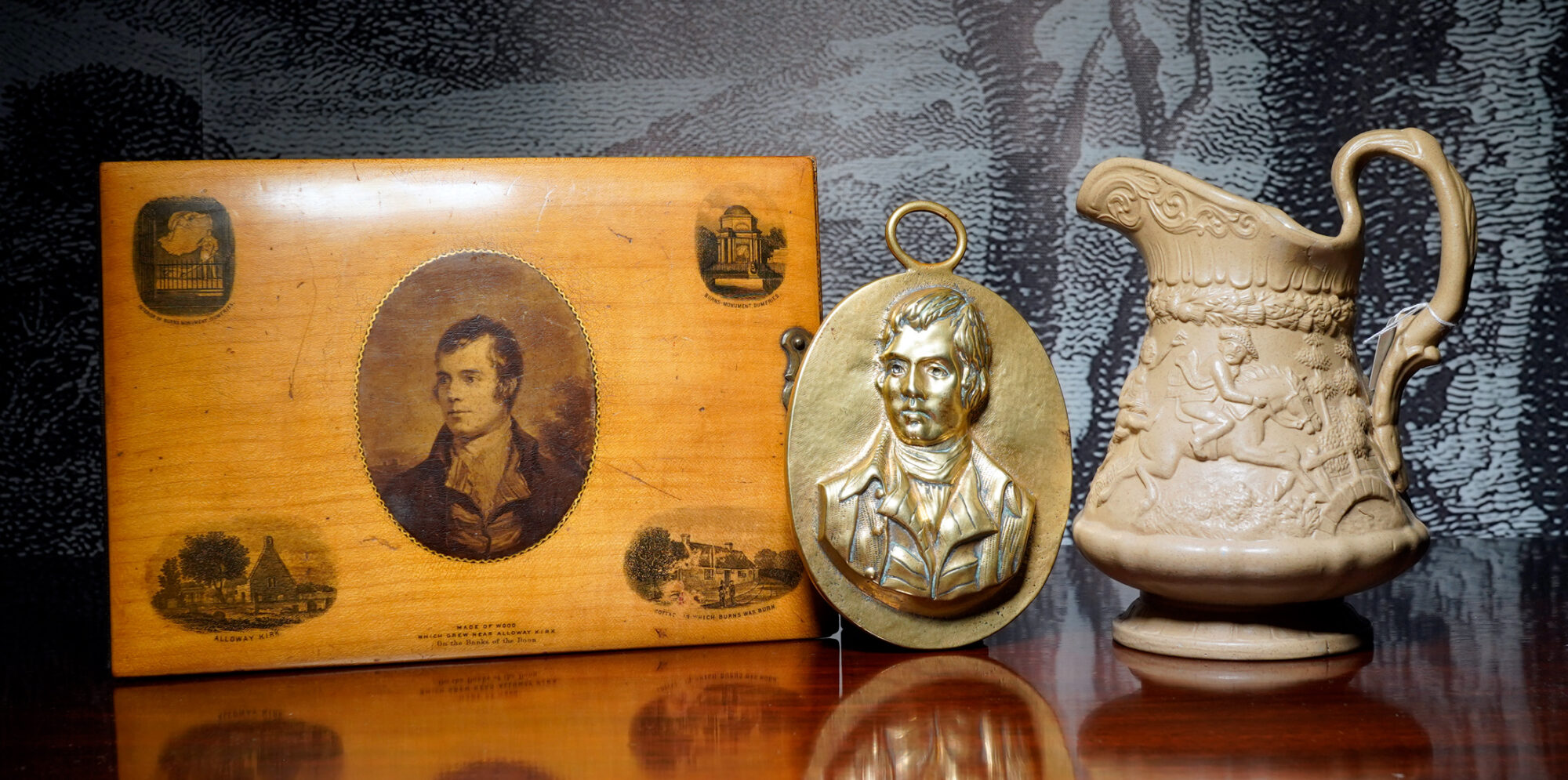
Victorian Robbie Burns Commemoratives

Robbie Burns was a Scottish poet and lyricist born in the 18th century. Celebrated as the national poet of Scotland, he is best remembered for his contribution to Scottish literature and culture through his heartfelt poems and songs. Burns’ works, including the iconic “Auld Lang Syne,” often showcased his keen observation of everyday life, social issues, and the beauty of nature. His ability to capture the essence of the human experience in both Scots dialect and English endeared him to generations.

Charles Dickens (1812-70)

Charles Dickens caught the imagination of the Victorian era by depicting the grim reality of the working classes and their struggle. His characters made excellent material for the Victorian consumers, appearing on ceramics, metalwares, and endless printed material.
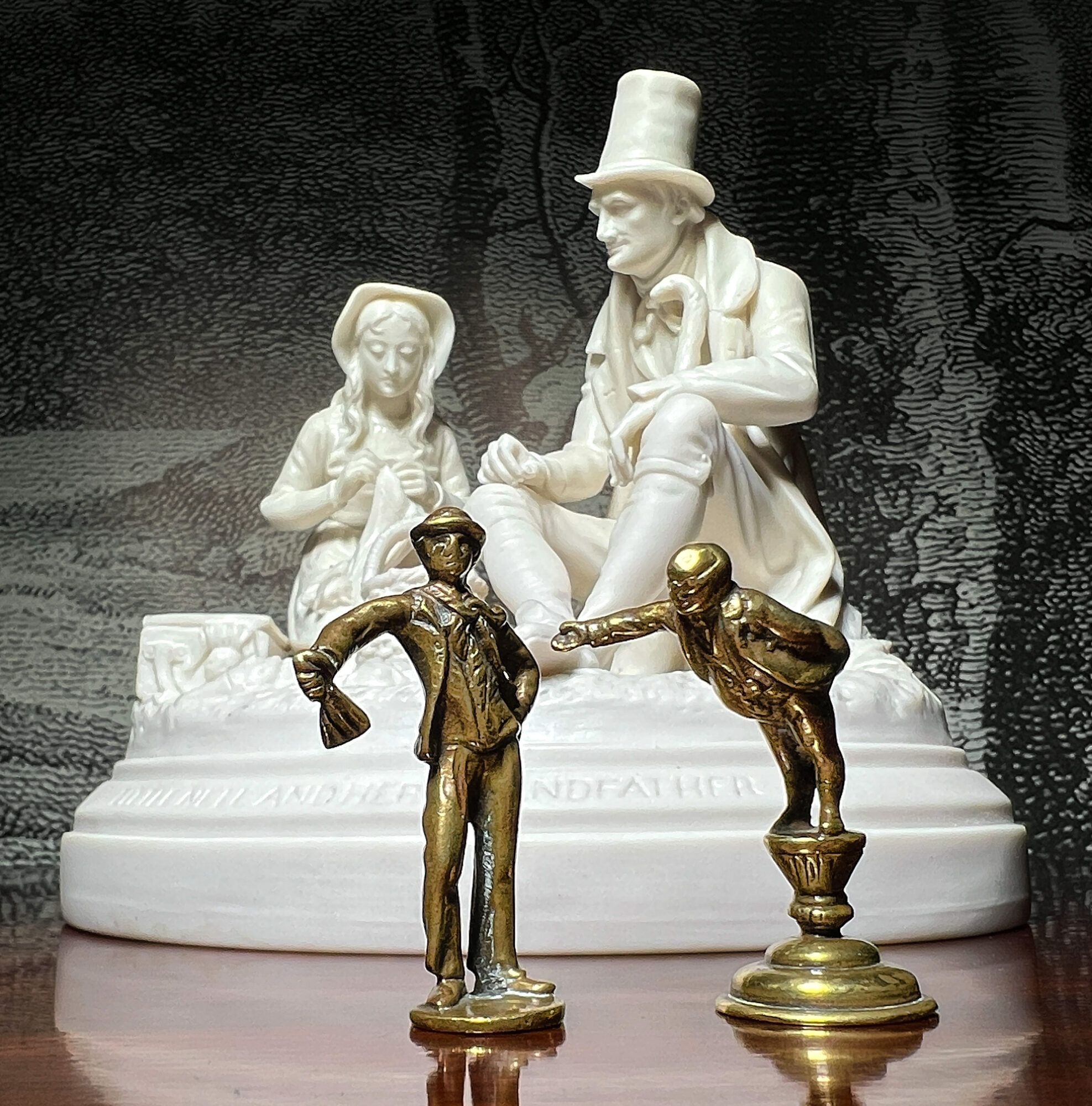
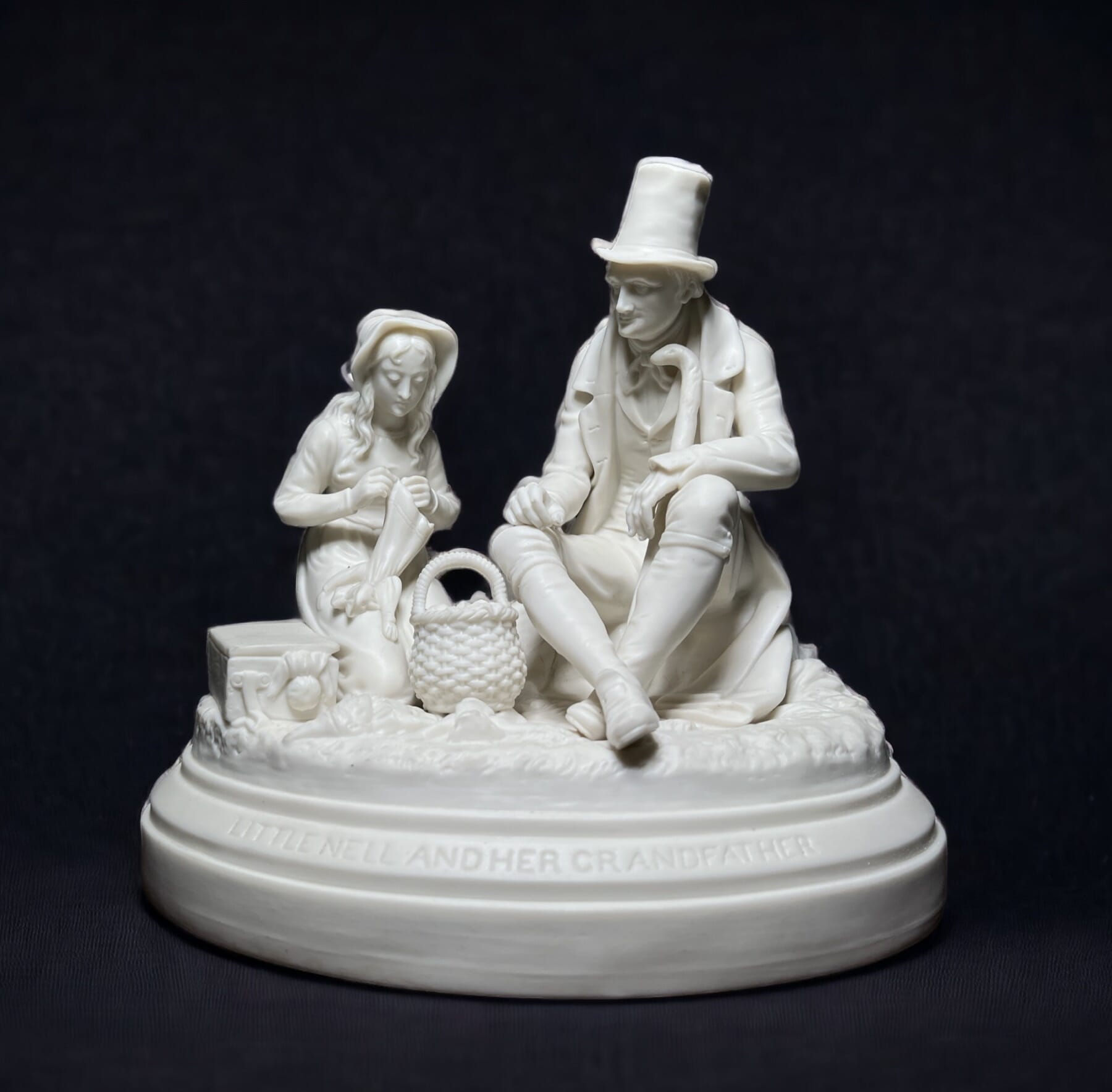
Charles Dickens characters

Other Theatrics

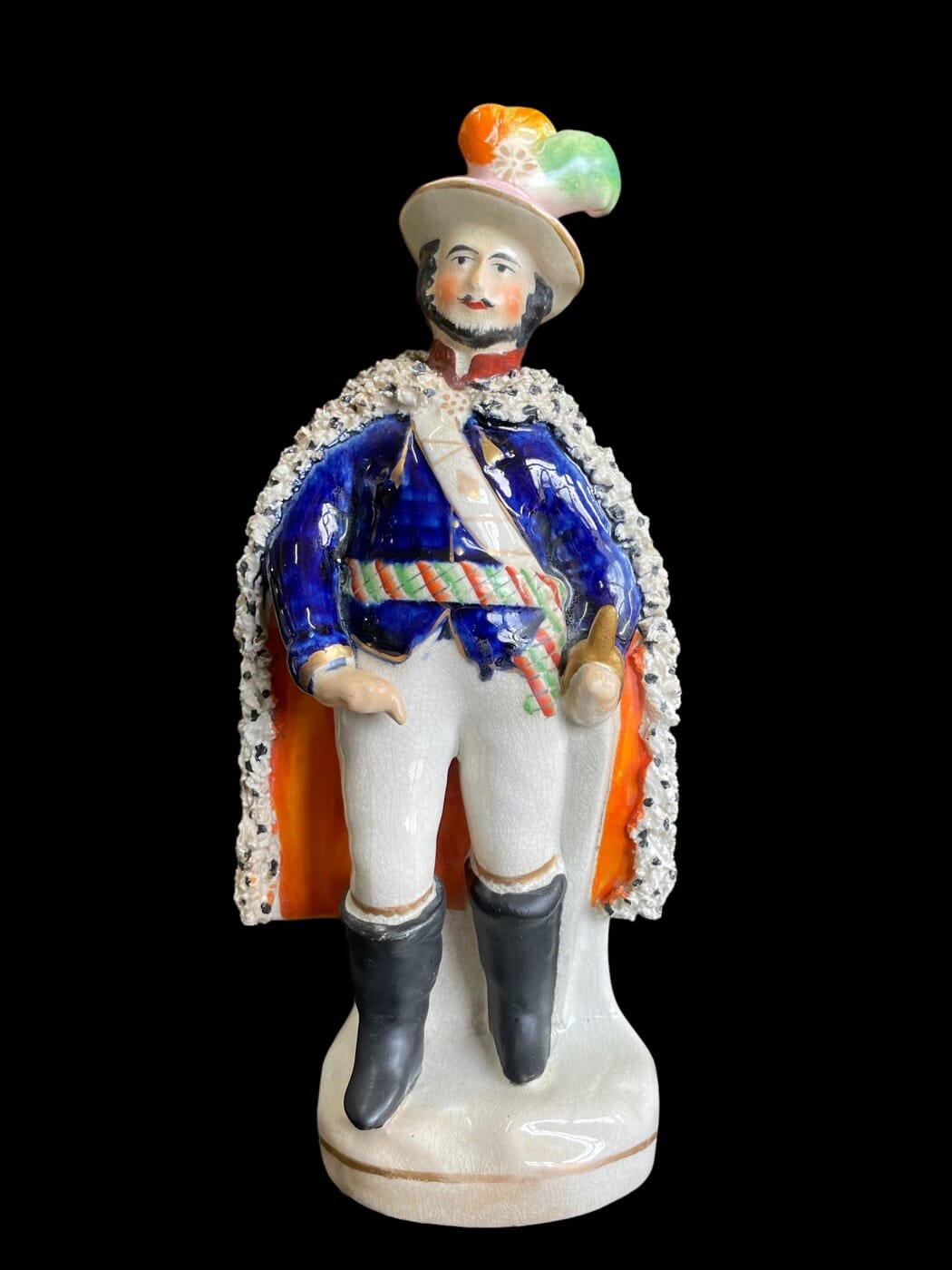
Many other playwrights and authors achieved popularity in Georgian & Victorian England, and had their own ‘products’ – or rather, all the entertainers in the Staffordshire Potteries and the Printing Press owners ignored the concept of ‘copyright’ and made their own souvenir to sell to the public. Some of the printed images are very fragile, intended for a short life-span and therefore rare survivors. Others like the Staffordshire pottery figures have lasted very well…. indeed, long after their original celebrity has been forgotten, and now it’s a challenge to work out who the image represents. Going through the definitive books on Victorian Staffordshire Figures by Harding, there are pages of unknown actors & performers…..
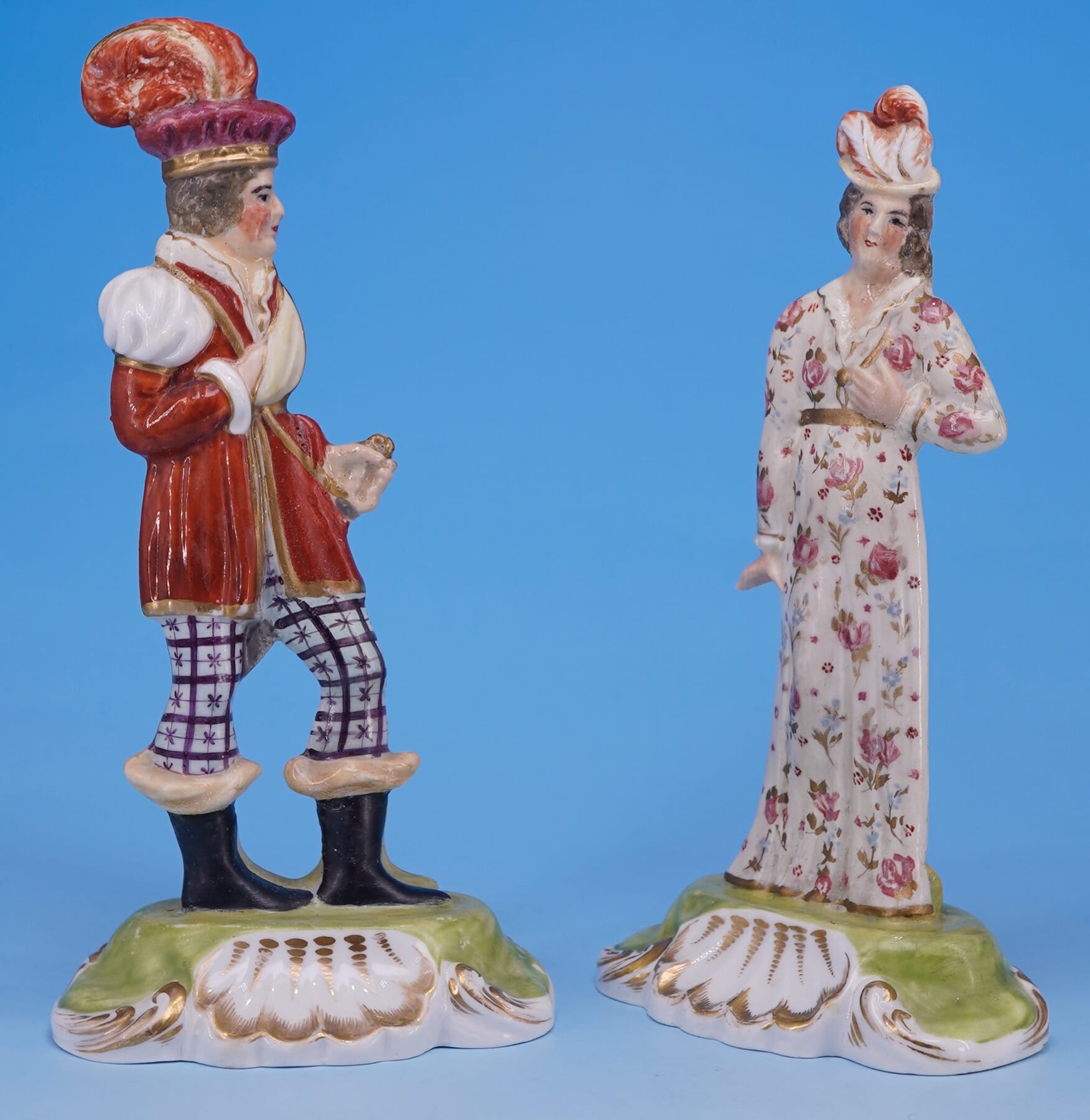
‘Tinsel’ theatrical prints

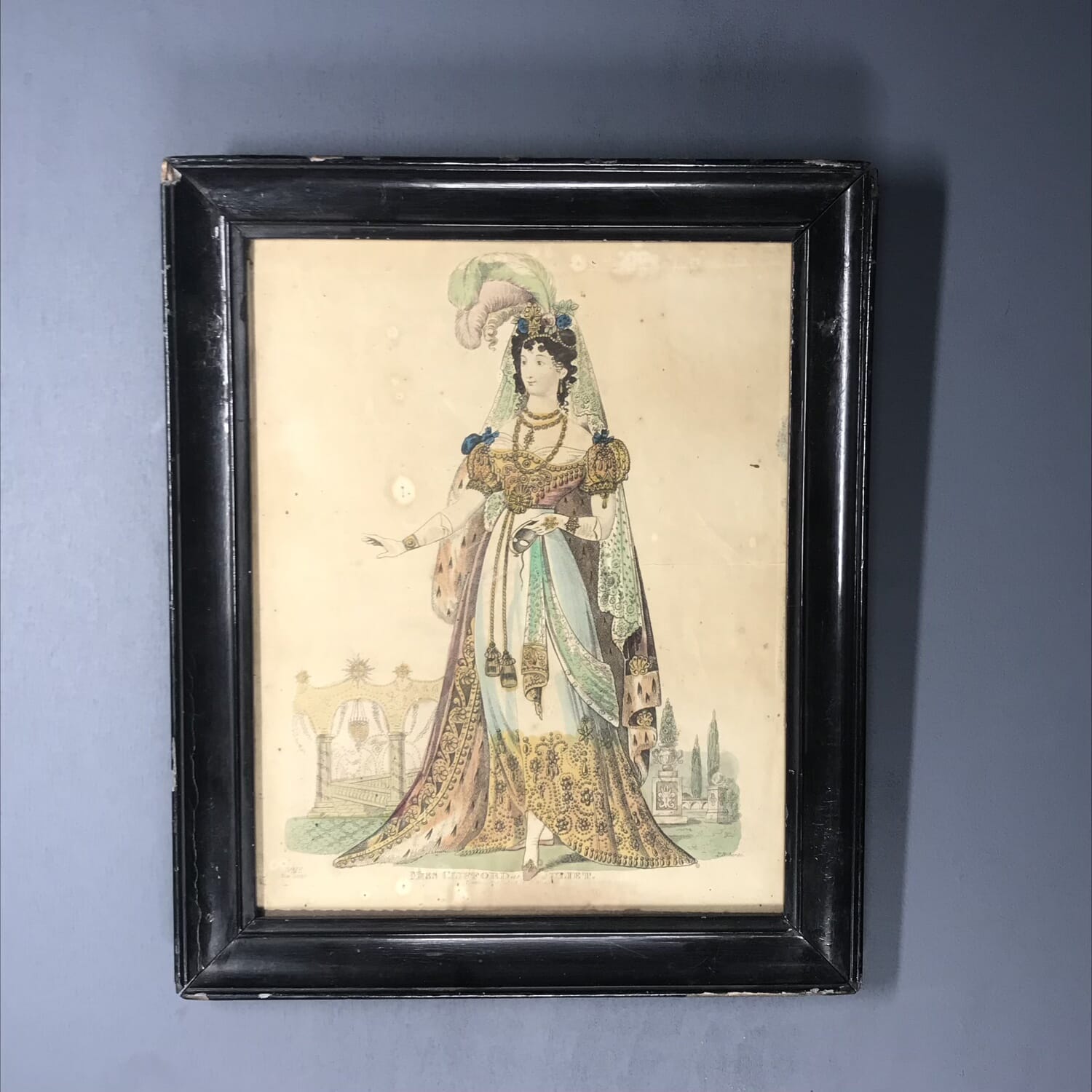
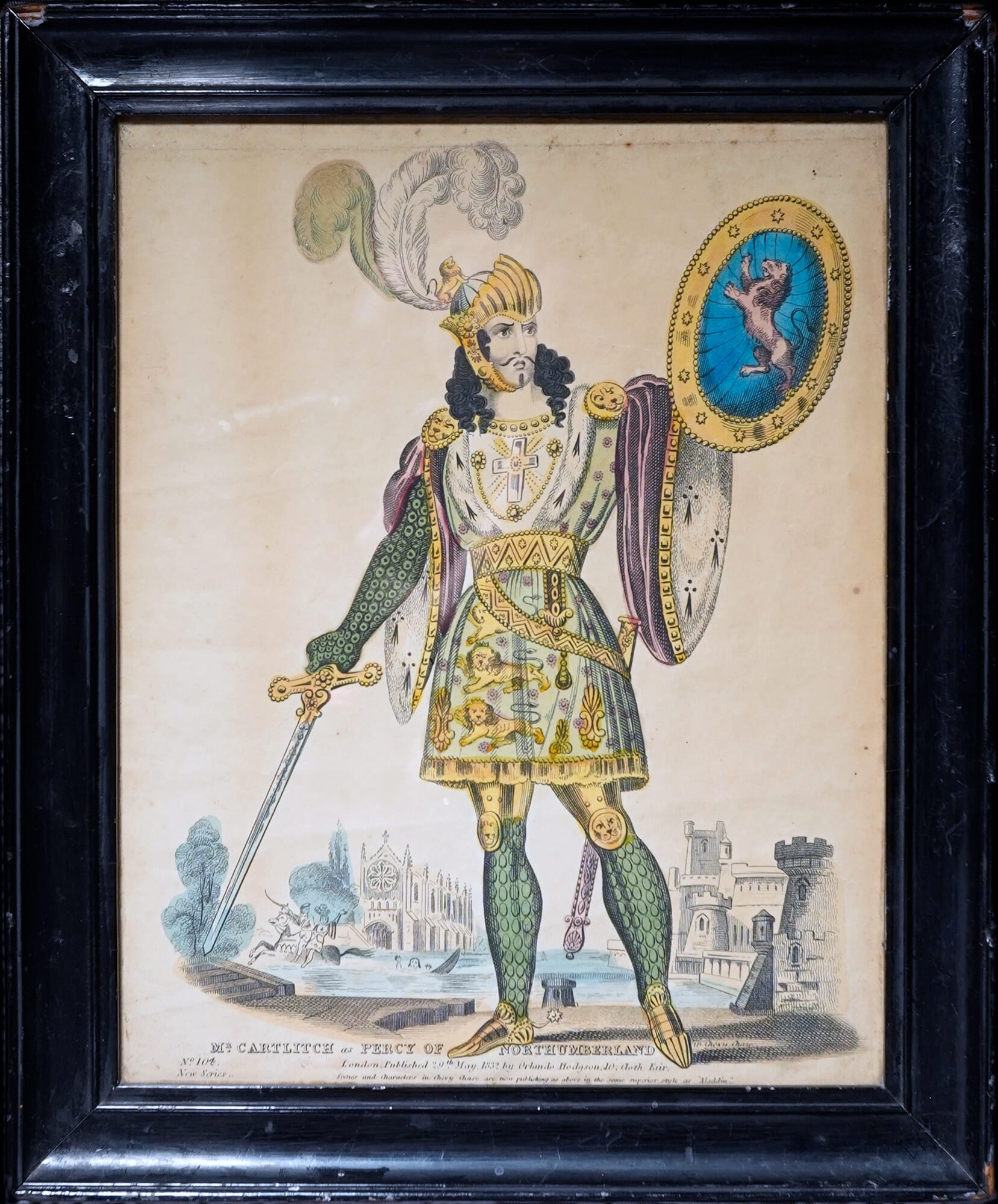
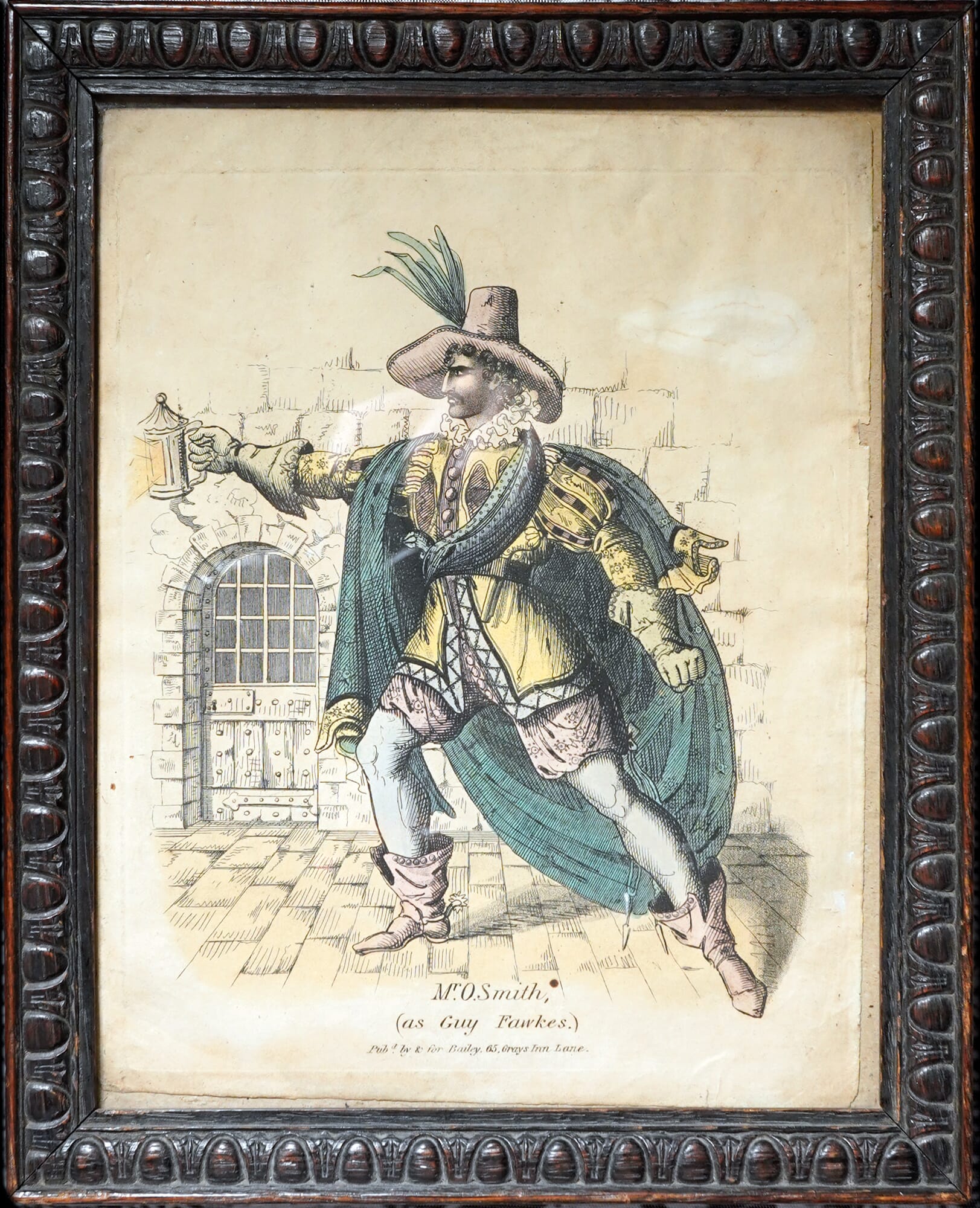
In the late 18th century, printing of cheap prints depicting the latest celebrity in their stage roles became popular. The theatre was the basis of entertainment for the period, as one didn’t have to be able to read to enjoy it – and the printed visual depictions revealed much about the story of the play.
In the early 19th century, this idea merged with the children’s toy world, and the idea of the ‘toy theatre’ was born. Printers produced the stage itself, suitable to cut out & mount on wood or cardboard. Some came in a pre-build form, as seen below. The characters of the popular plays were then printed, ready to be cut out – and the script of the play could then be used to re-enact the play at home – think of it as a do-it-yourself Netflix production!
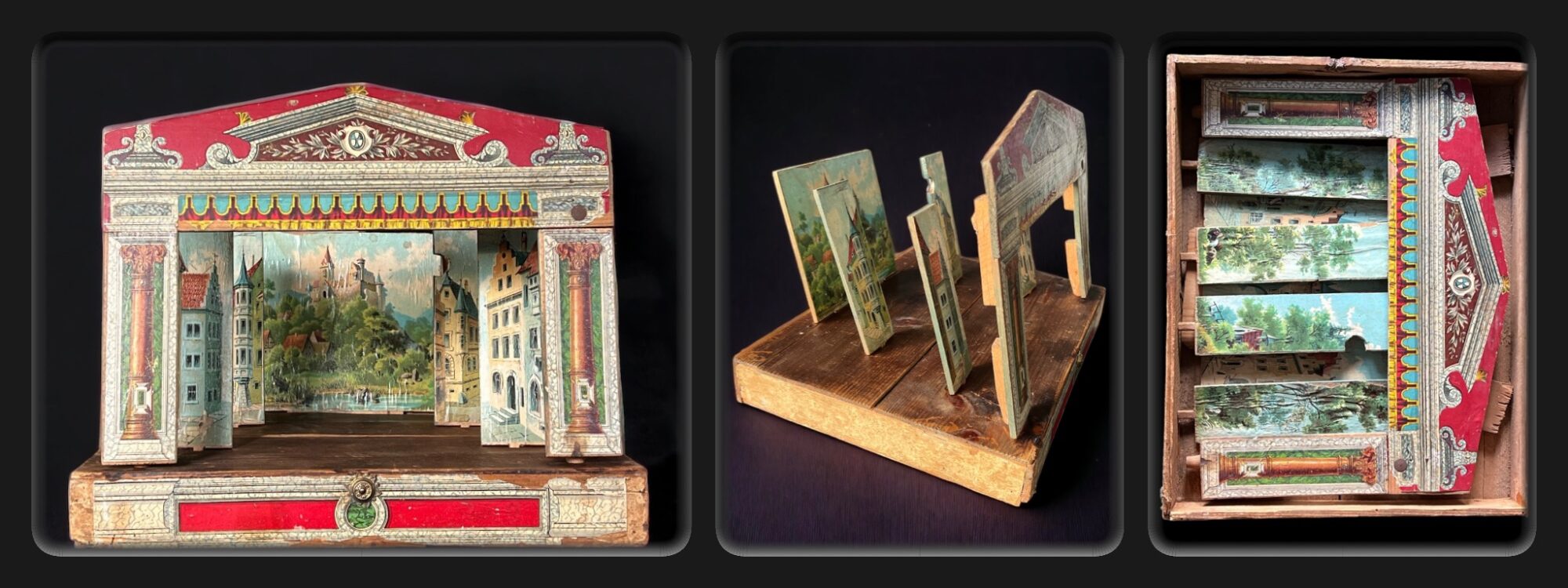
Toy Theatre - 19th century
Toy Theatre – 19th century – coming soon to Moorabool Antiques


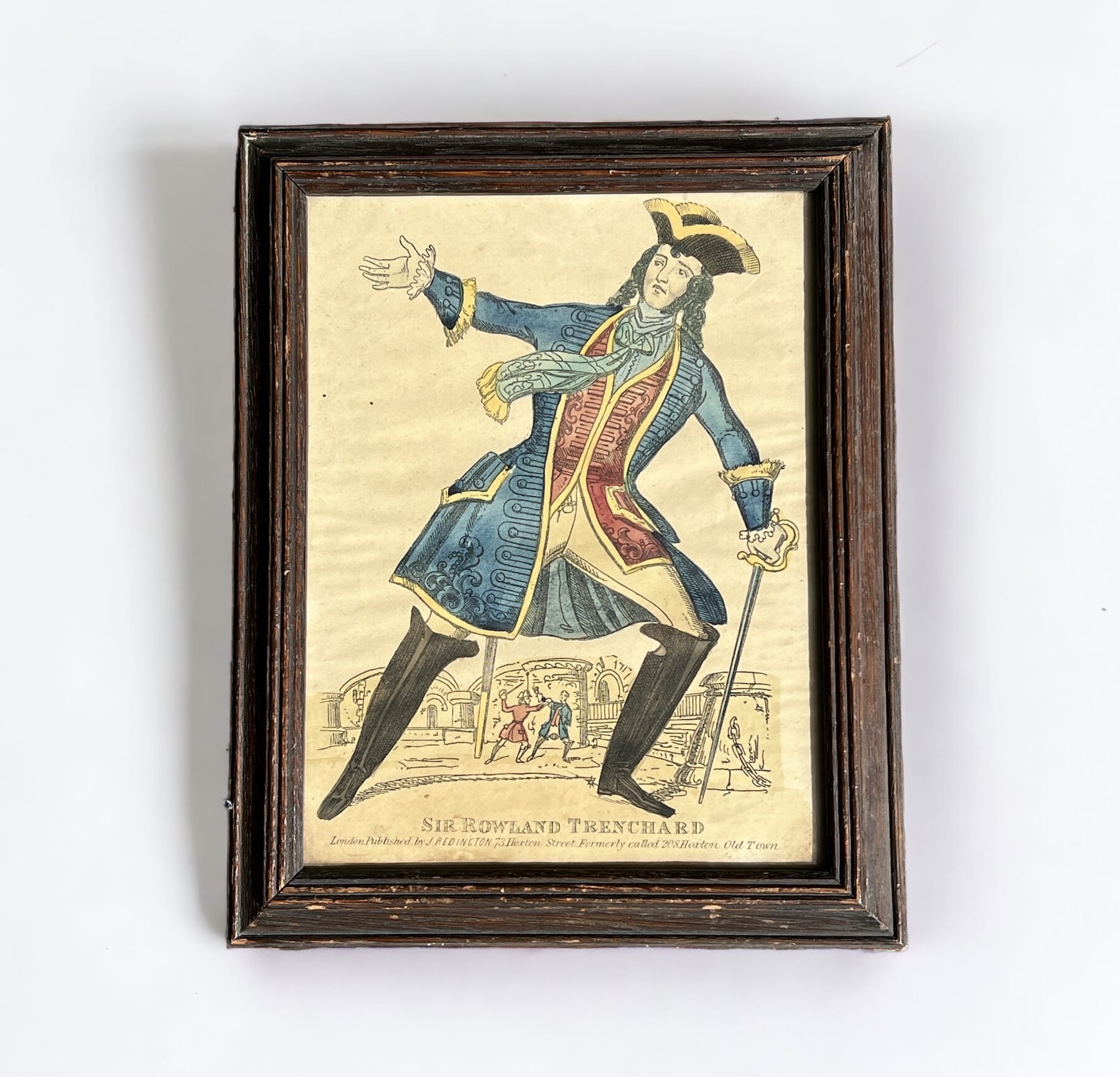
The printers made small figures suitable for cut-outs, but also larger prints depicting the characters, with small sections of backdrops behind them. They were the equivalent of a filmstar or pop-star poster for the wall today. These are generally called ‘Tinsel Pictures’ for the following reason: they were sold plain for a penny, tuppence for coloured, and intended to have an industrious child glue ‘tinsel’ (sparkly pieces of foil, beads, and pieces of bright cloth) onto the figures to beautify them. You could imagine them being a terrific present from a parent to a child at Christmas – a ‘pop-star’ of the day along with a bag of glittery tinsel to make them look pretty. The same idea is still current, with the ‘bead pictures’ being a modern day descendent.
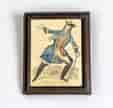
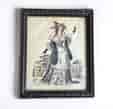
The following pictures are ‘Tinsel’ type, although just the coloured versions without additions.
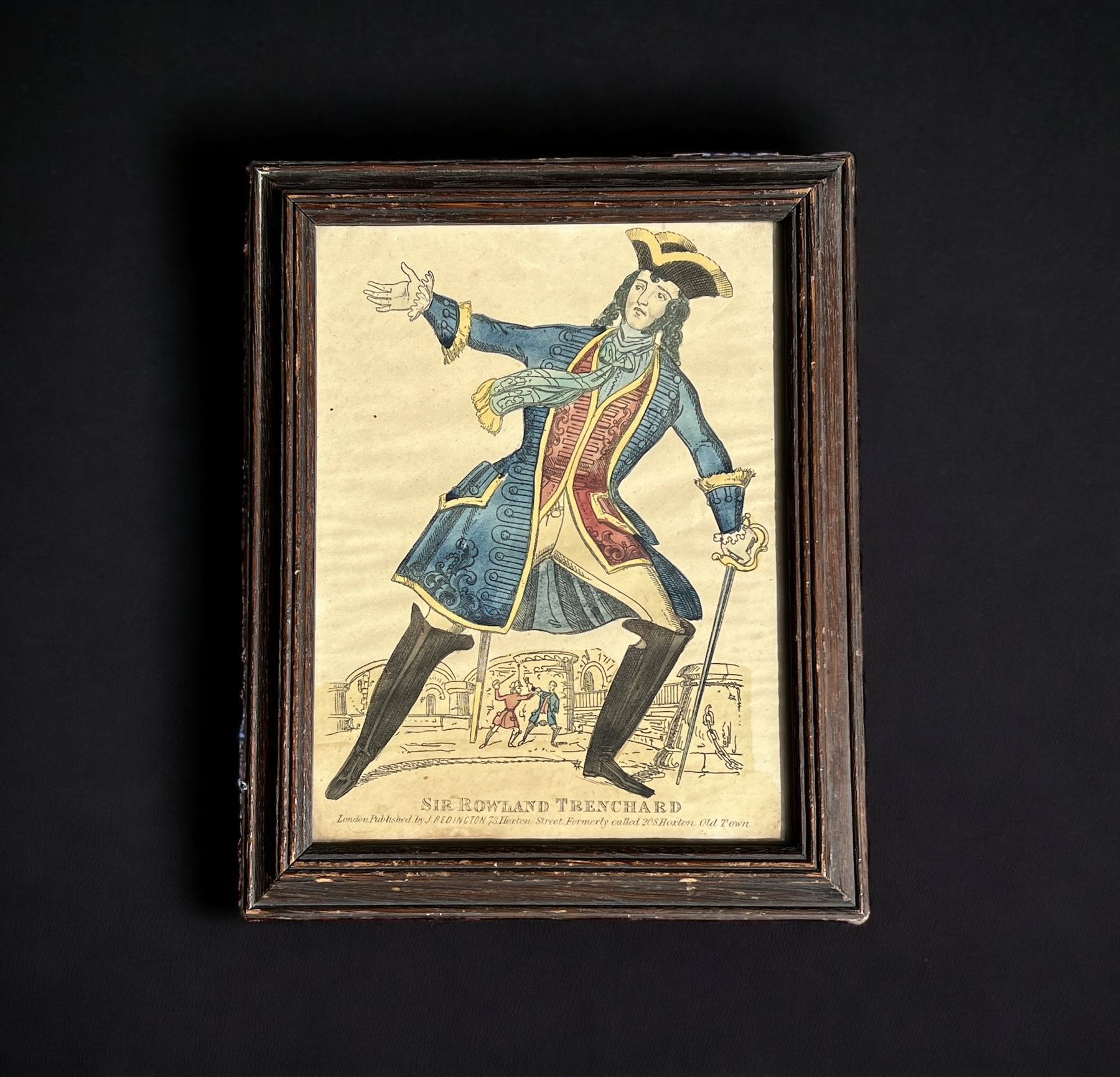
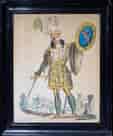
Sir Rowland Trenchard, from Jack Sheppard, pub.  Redington, c.1850
Sir Rowland Trenchard, from Jack Sheppard, published by J. Redington, c.1850

This dramatic Theatrical print depicts Sir Rowland Trenchard, a character from William Harrison Ainsworth’s novel ‘Jack Sheppard’, 1839. This was a historical romance about the 18th century celebrity-criminal, Jack Shepherd (1702-24). It’s a ‘True Crime Series‘ in today’s pop-culture lingo.

In the story, split into three periods, Trenchard comes from the central portion, where he is raising his nephew, Thames Darrell. However, he is described as ‘immoral’, and has his charge removed into the care of a Mr Wood – who also fosters the young Sheppard, thus entwining their lives in preparation for the third part, where Sheppherd hangs out with the wrong crowd and turns to a life of crime. This comes to a head when his foster-mother is murdered by one of his thief companions in a staged break-in. After multiple captures and escapes, Sheppard is finally captured and hung before a large crowd of Londoners….. roll end credits.
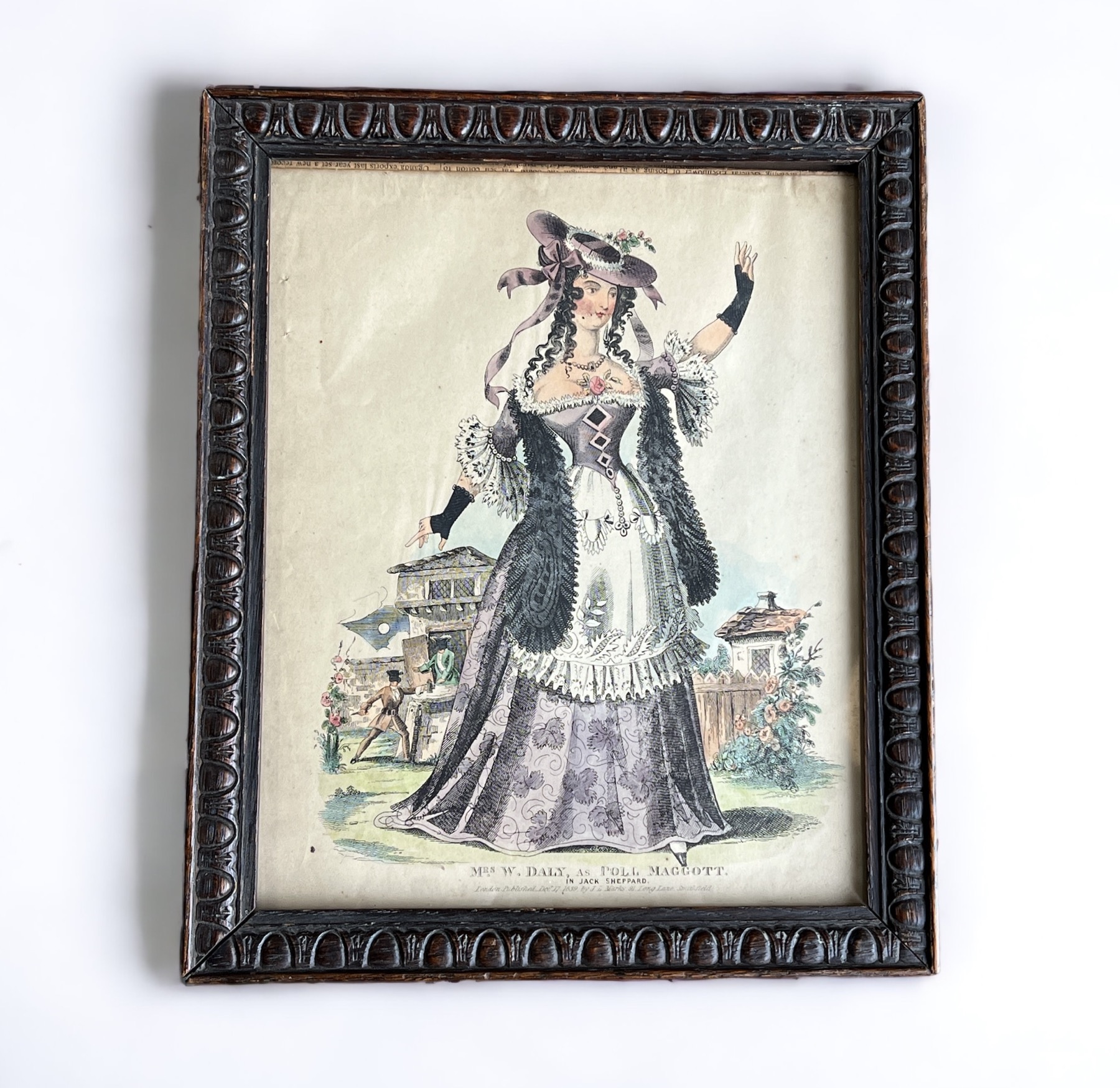
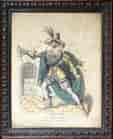
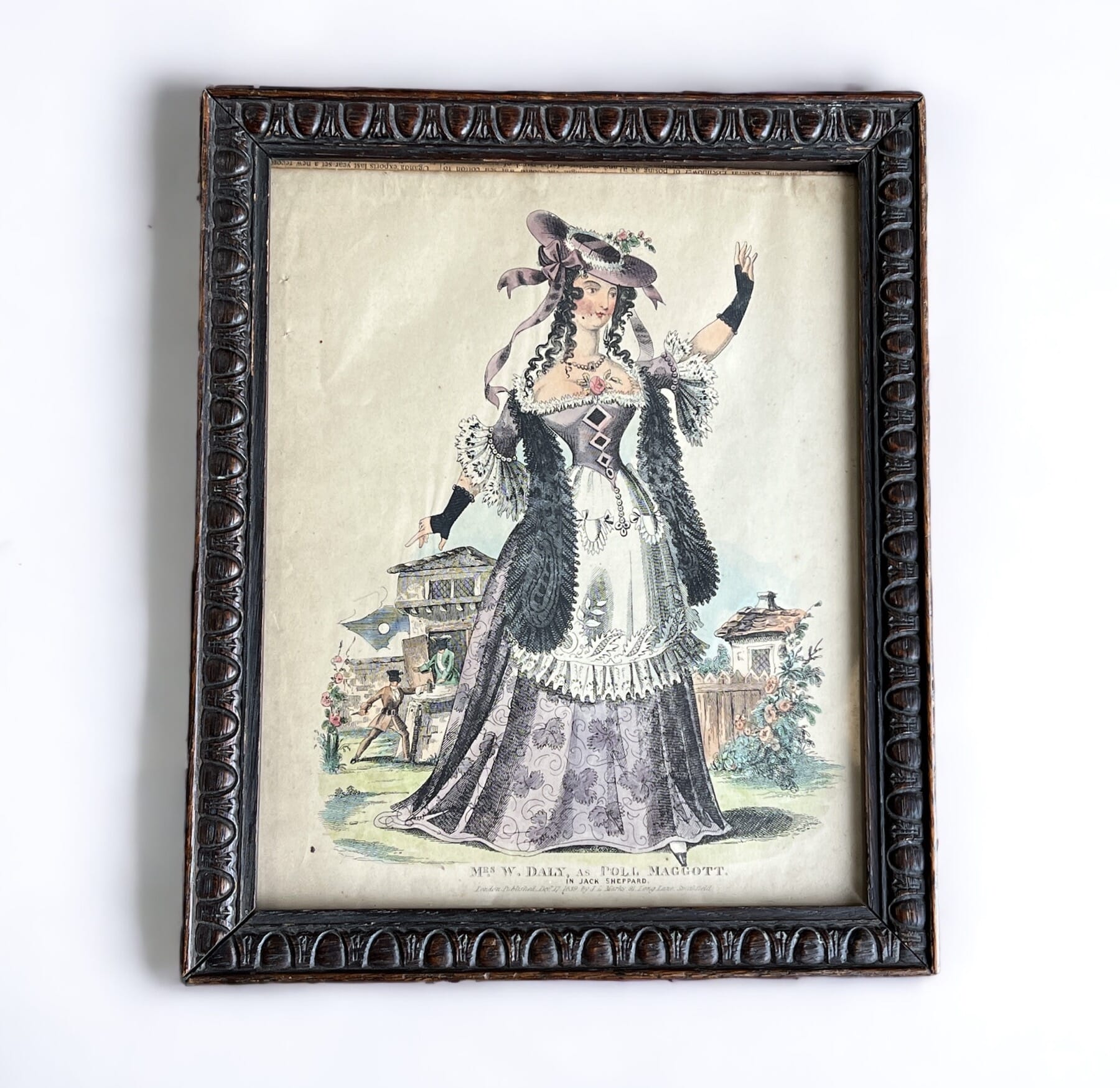
Polly Maggott, from Jack Sheppard, printed London 1839

This character is Poll Maggott, also a part of the Jack Sheppard story. She’s based on the real-life Poll, who along with another girl, Bess Lyon, were responsible for edging Jack into his brief but glorious life of crime. This print has her played by Mrs W. Daly, and as it was published December 17th, 1839, it is from the original play of the story.

Jack Sheppard was published in parts in  Bentley’s Miscellany from January 1839 until February 1840. Charles Dickens was Ainsworth’s friend at this stage – and the editor of Bentley’s, where he also ran his stories. However, this friendship soured rapidly after the runaway success of Jack Shepherd: while it eclipsed Dickens’ most popular novel, ‘Oliver Twist’, it wasn’t envy that drove them apart, but controversy about the values being depicted in the works. While Dickens is a great ‘moralist’, eager to balance the dark deeds of his villains with redemption, often as a tear-jerking end scene, Ainsworth was more realistic: critics condemned the ‘unredeemed crimes’ in this “evil work of popularity”, which has “now gone to its cradle in the cross-roads of literature, and should be henceforth hushed up by all who have—as so many have—a personal regard for its author”.  What would these critics make of the average Netflix drama these days!

Shortly after, Dickens and Ainsworth were no longer friends – the price Ainsworth paid for his popularity. The stage play of the novel was presented right away in 1839, while the novel was still popular. It opened at London’s Adelphi Theatre – the same popular West End venue still hosting the latest shows to this day. This was the first of many shows mounted over the next few decades – but due to the controversy, and the fear of polluting the minds of vulnerable audiences and turning them to a life of crime – the Lord Chamberlain slapped a 40-year ban on the play being held in London under the well-known title! No doubt this controversy contributed to the work’s popularity, much as bans do today to a modern audience – they make  greater demand to see what the controversy is about.

This print is typical of the mass-market souvenir produced for this once popular piece of pop-culture.

Paul Pry & Lubin Log – the John Liston roles.
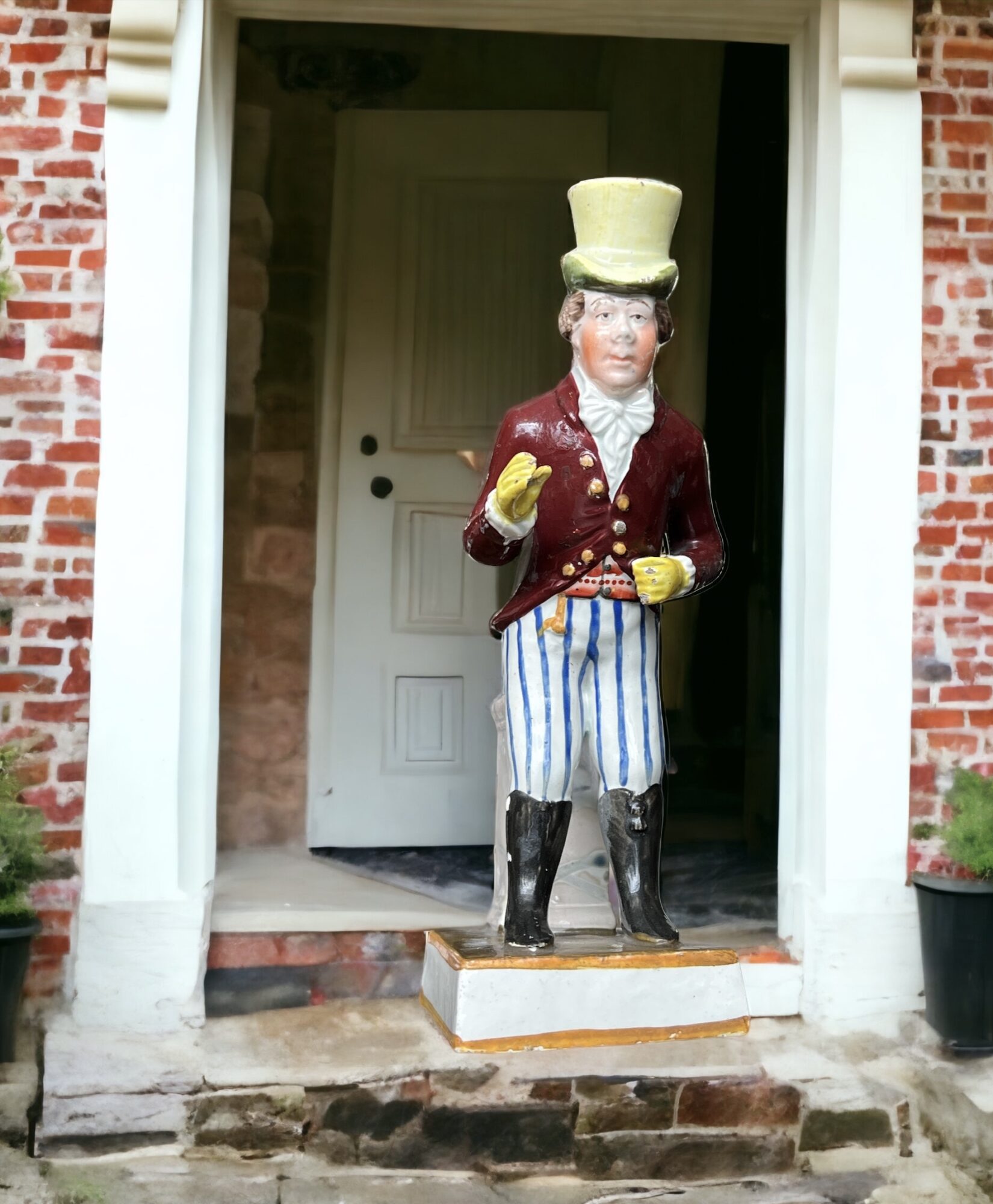
John Liston as Paul Pry, Staffordshire Pottery figure c. 1820
John Liston as Paul Pry, Staffordshire Pottery figure by Enoch Wood, c. 1825

A popular Georgian stage character was ‘Paul Pry’. As his name implies, he was a busy-body, always prying into other people’s business. A favourite technique to snoop was to leave a coat or hat behind when leaving from a visit, then calling back to collect it without the supervision of the host. John Liston was a stage celebrity of the early 19th century, and he played the part of Paul Pry to great reviews.

See our Paul Pry figure here >
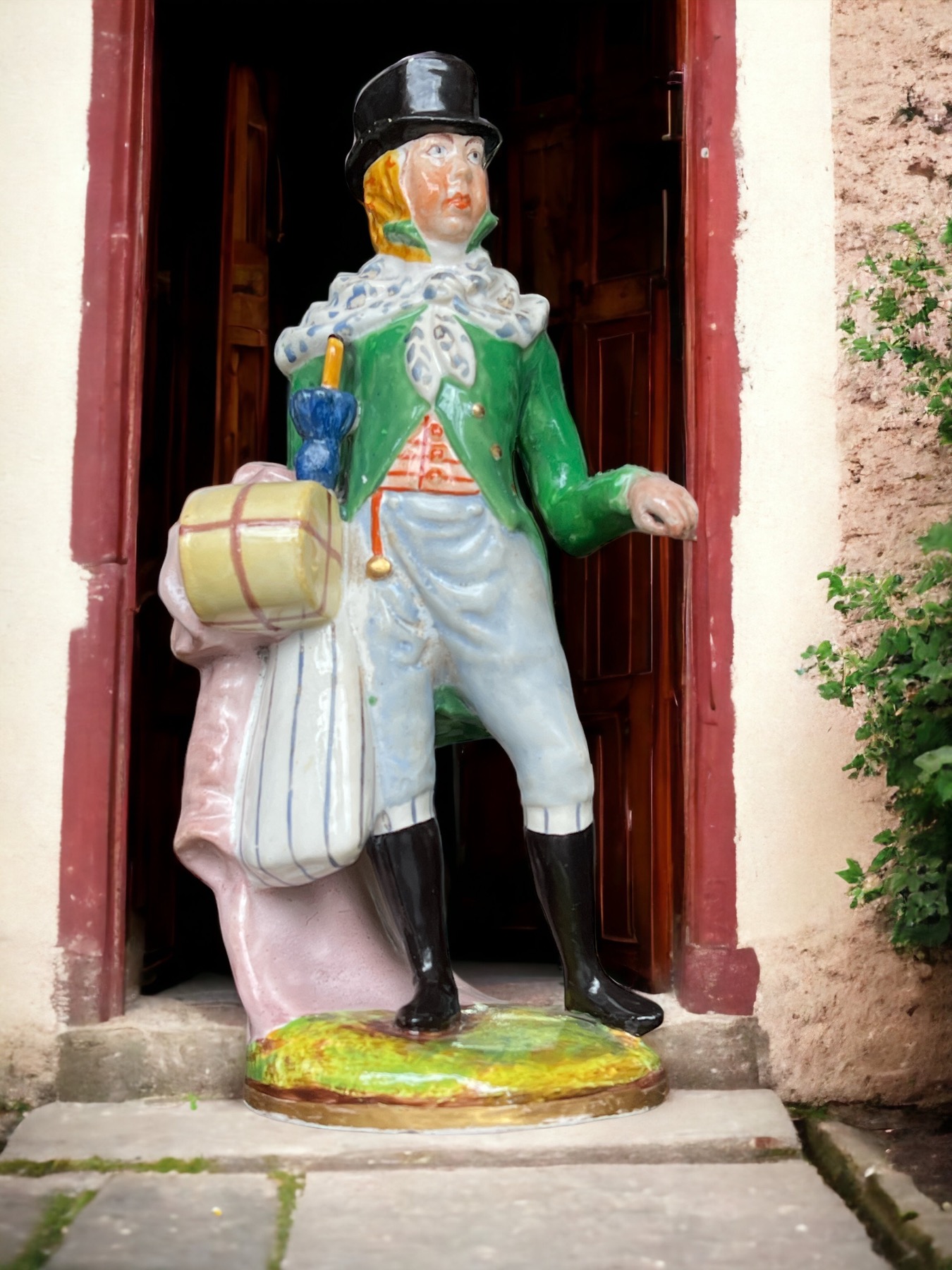
Staffordshire figure of Lubin  Log, in Love, Law and Physic  by James Kenney 1819
Staffordshire figure of Lubin Log, in Love, Law and Physic by James Kenney 1819

Another early 19th century Staffordshire figure of a character/actor is often also labeled ‘Paul Pry’ – but Myrna Schkolne (of www.mystaffordshirefigures.com) argues that this is not correct: the busy-body character of ‘Paul Pry’ is well depicted in the first figure, but in this character there is a different personality. He’s almost sneering, definitely arrogant, and seems to carry a hatbox, parasol, and elaborate ladies coat…. Rather, it’s the upstart cockney ‘Lubin Log’, recently ‘come into money’ and out shopping so he can impress a lady – who naturally doesn’t want to have anything to do with him. This is the plot of  ‘Love, Law and Physic‘ written by James Kenney in 1812.

See the Lubin Log figure here >
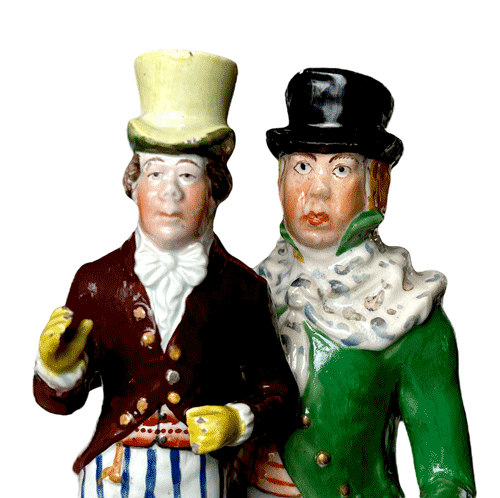
John Liston as Paul Pry & Lubin Log, early 19th century
John Liston as Paul Pry (left) & Lubin Log (right), early 19th century

The one thing binding these two interesting figures together is that the actor John Liston played both parts in their different plays. If you look at the face of both, there’s a similarity.

John Wesley (1703-91)
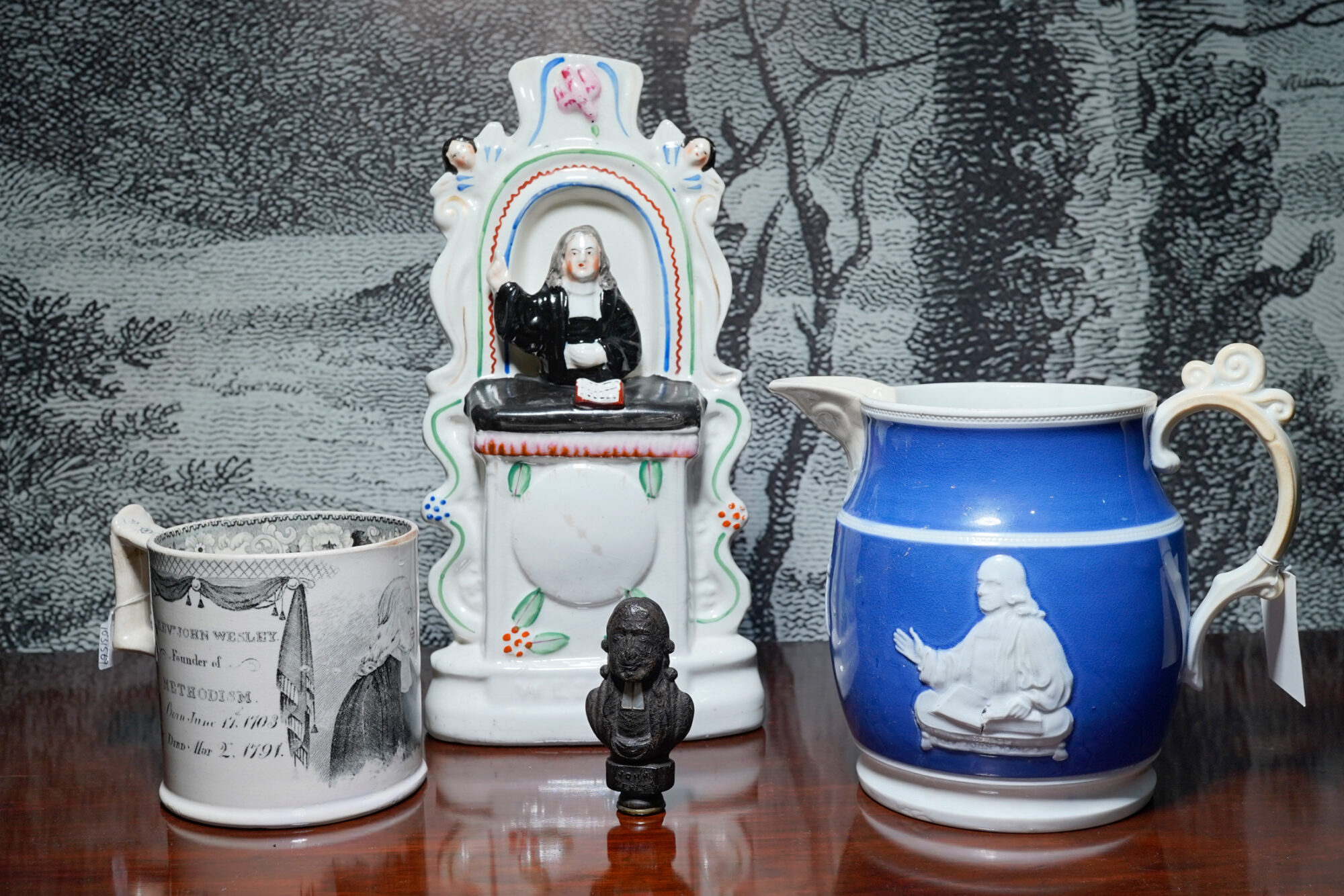
John Wesley commemoratives, circa 1839

Another ‘pop-culture’ theme involves the religious characters, chief of who was the English evangelist, Wesley. His independent Methodist theology was wildly popular both during his lifetime, and after he died – indeed, he’s still well regarded today.

His first sermon was a date to be commemorated: the 1739 – 1839 Centenary was a moment recorded in a wide range of pieces.
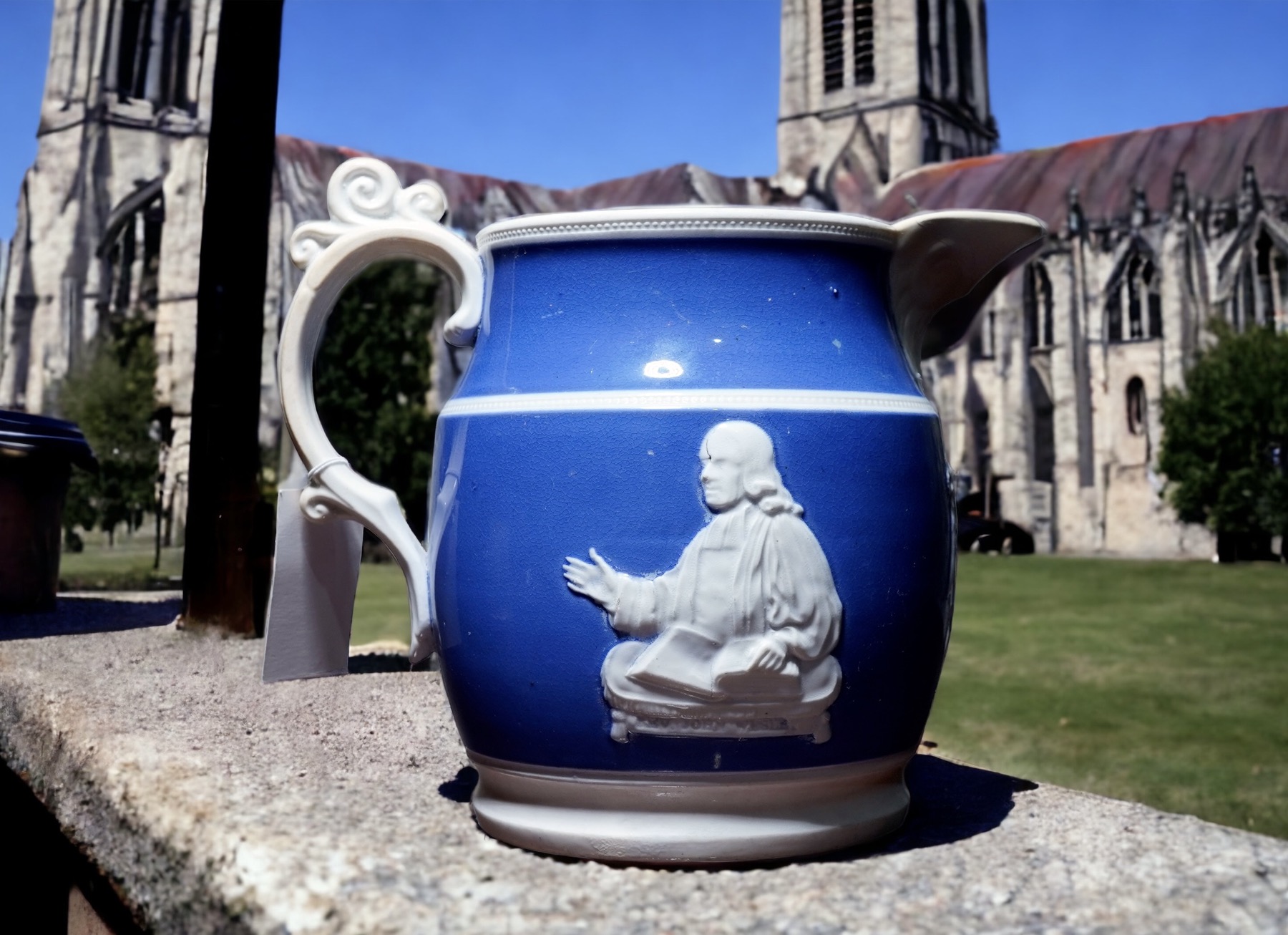

John Wesley jug
John Wesley jug
Posted on

Fresh Stock – Ceramics, Art, and…. Batons!

It’s an eclectic mix today, with a fine selection of diverse items to browse.


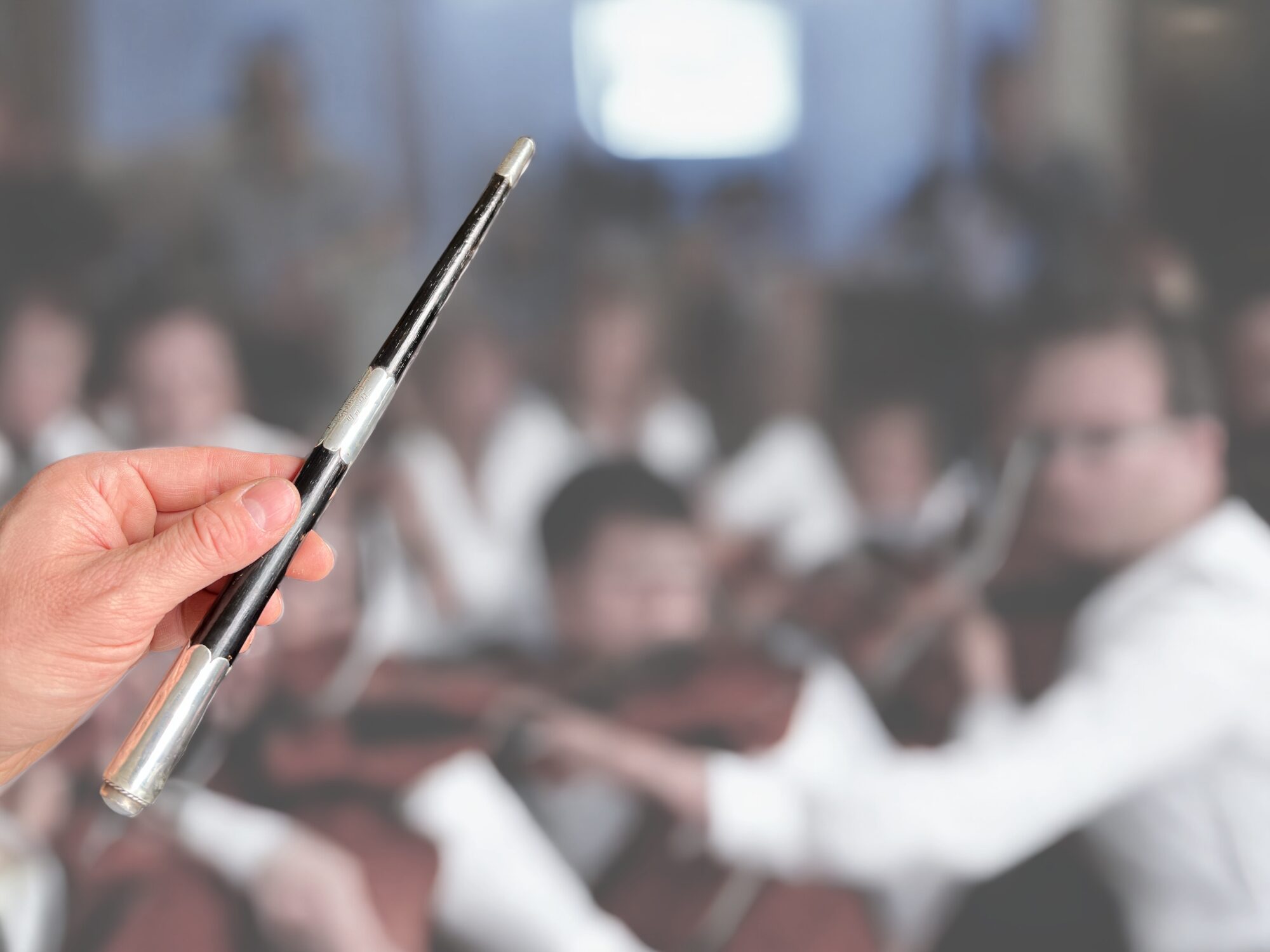
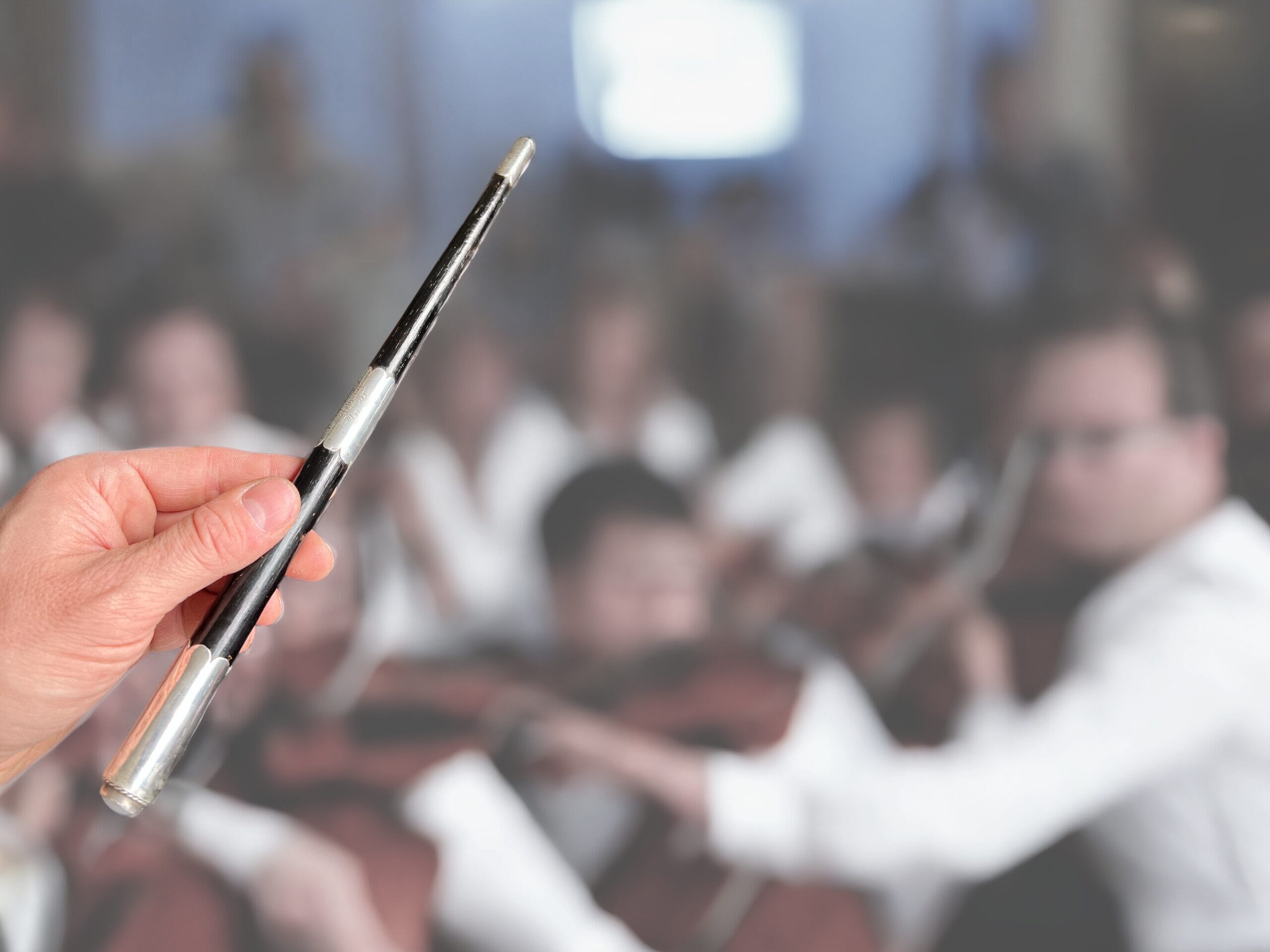
There’s some fascinating ‘Local Music History’ items, in particular conductor’s batons.
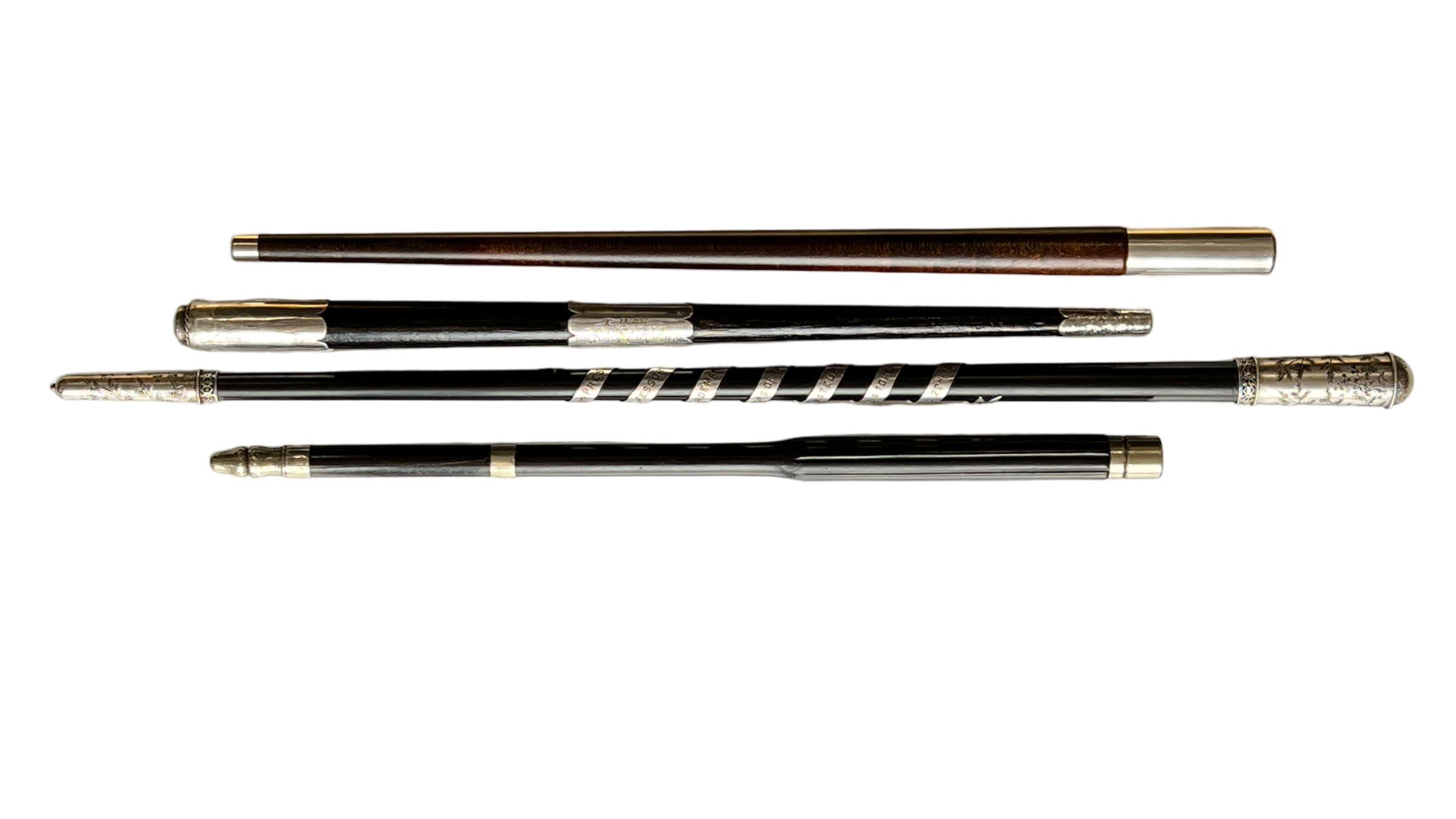
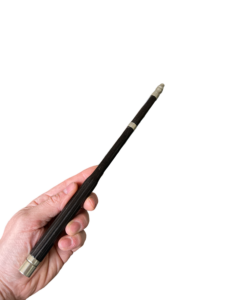
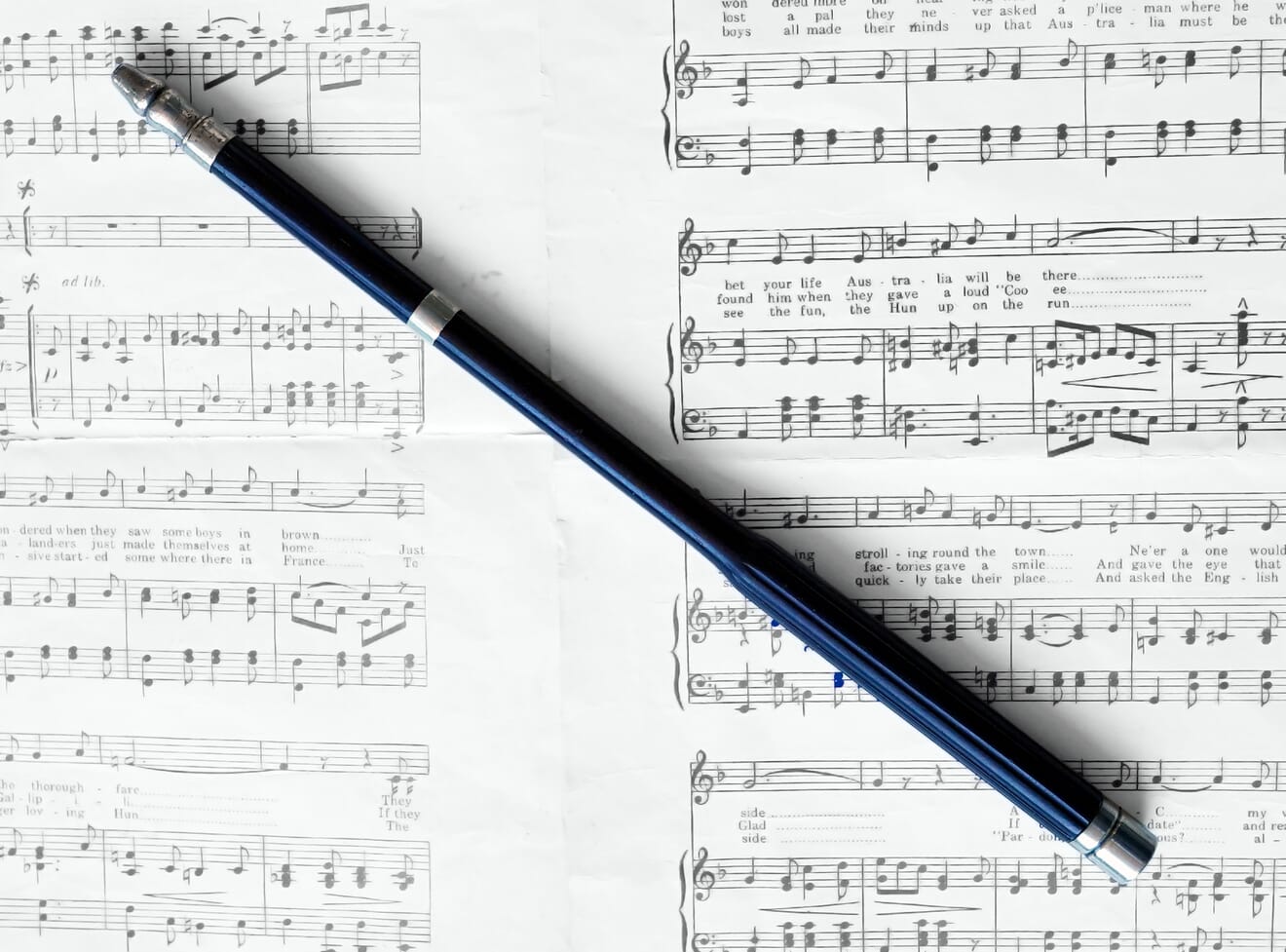
The first is a presentation piece, made in Melbourne and still in its original box, with a lengthy inscription explaining its significance: given to Professor Hardeman in 1897 by the Richmond Amateur Orchestra. This opens up some fascinating research, where we found an 1897 newspaper description of the event which describes the exact baton in great detail!

1897 Australian Silver mounted conductor's baton, Hardeman, Richmond Orchestra

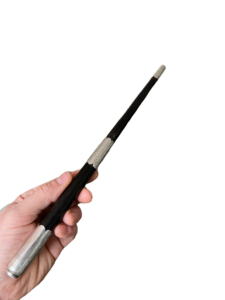
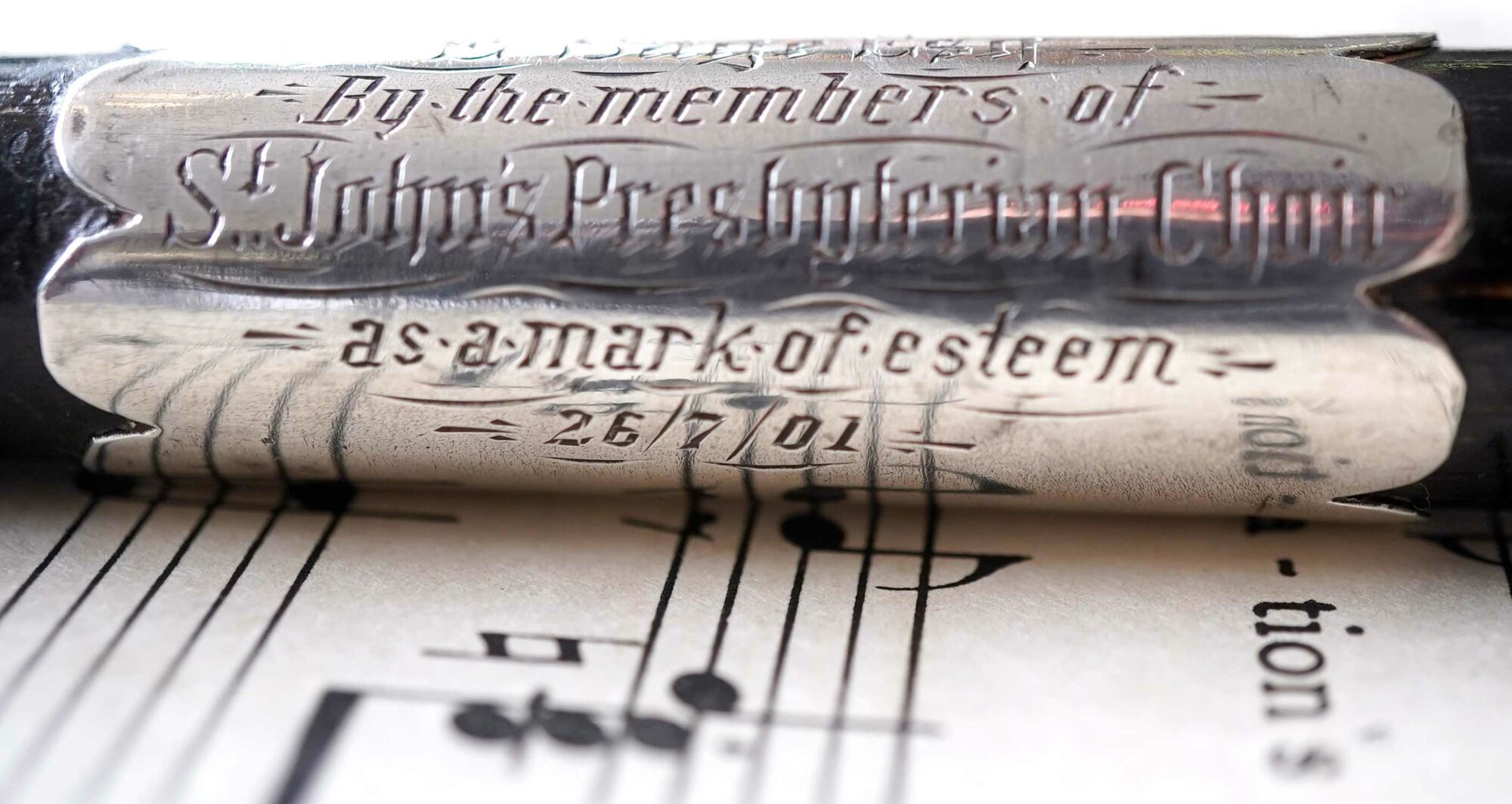
The second is a simpler form, presented to E. Sage by the St Johns Presbyterian Choir, Ballarat. This interesting piece has a moonstone set in the end, and would have been made by a local jeweller.

As well, there are some other batons of a similar period – very useful for anyone considering a career in amateur (or professional) orchestra!

Antique Conductor's Batons - Moorabool Antiques Geelong
Antique Conductor’s Batons
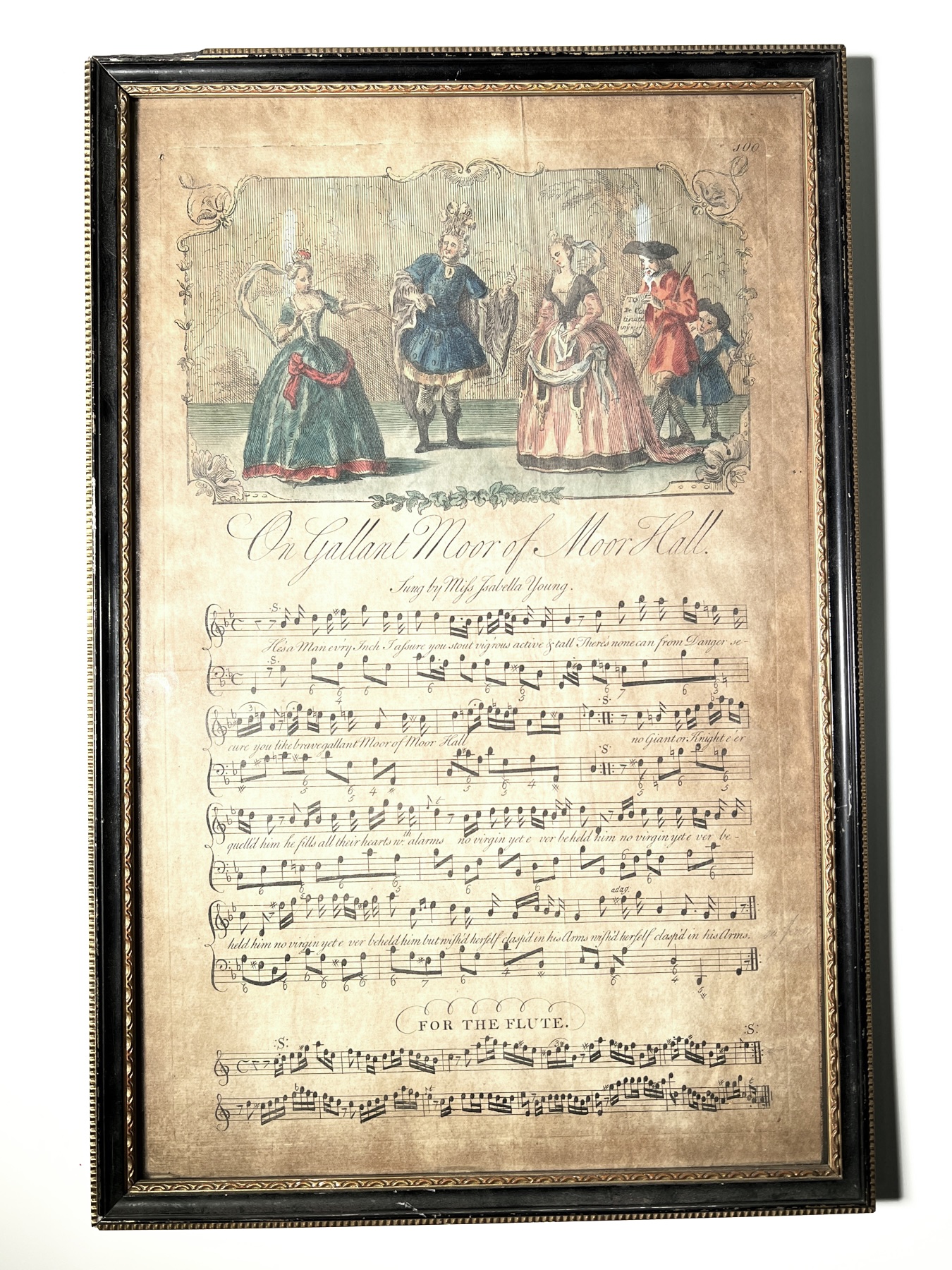
Moor of Moor Hall, c. 1740

This illustrated piece of music was printed in London in 1740.
It’s from a ‘Burlesque Opera’  first performed in 1737,  ‘The Dragon of Wantley‘.

It contains the line: “He’s a Man every inch I assure you, stout vig’rous active & Tall…” !

While on the surface it’s a comic tale for entertainment, the lyurics are open to interpretation – the Dragon perhaps representing the excesses of a corrupt government, and Moore the hero who defends the common people…. a theme still very active in today’s politics and pop-culture….

Fresh Art

Fresh Stock

Posted on

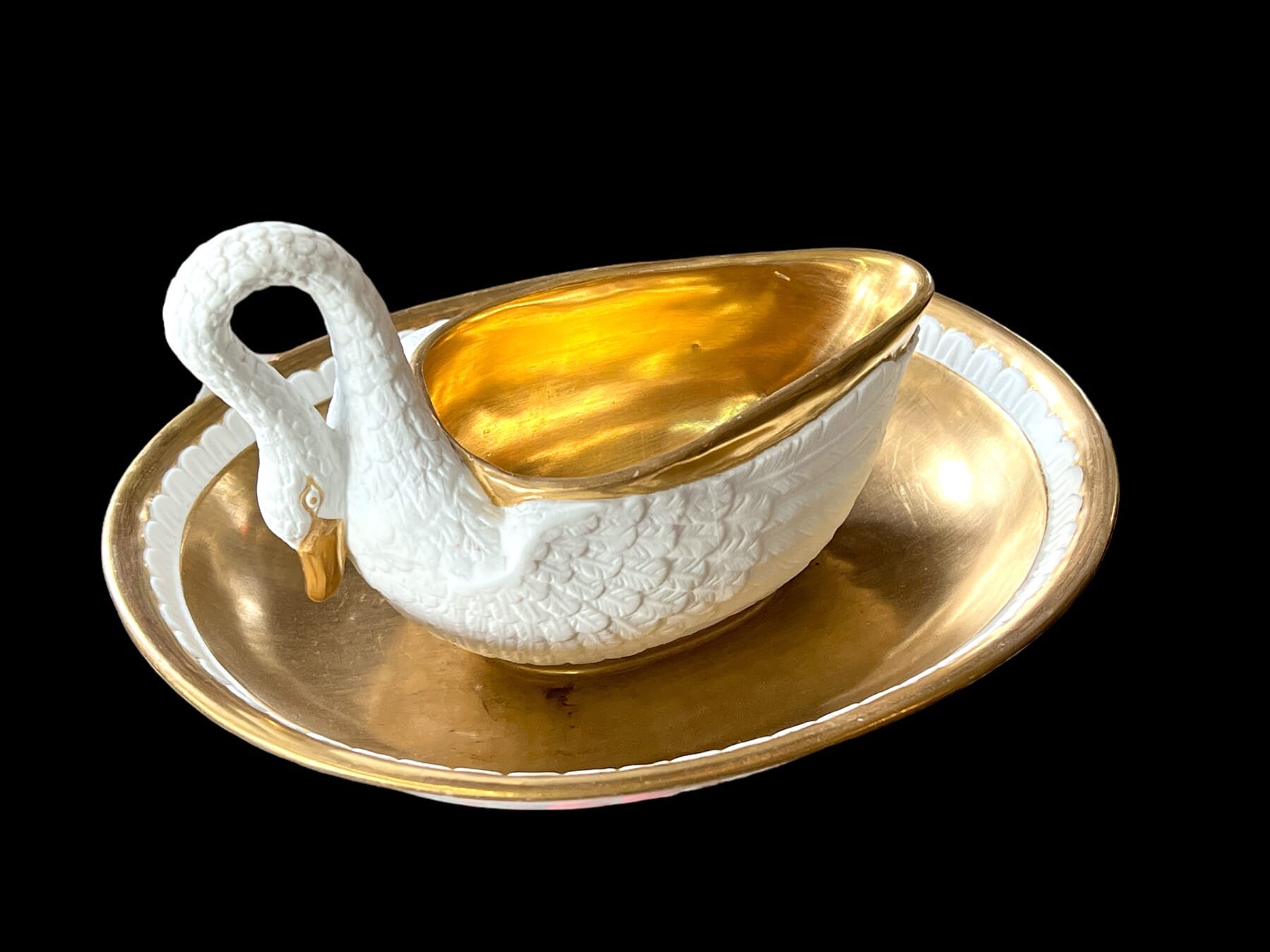
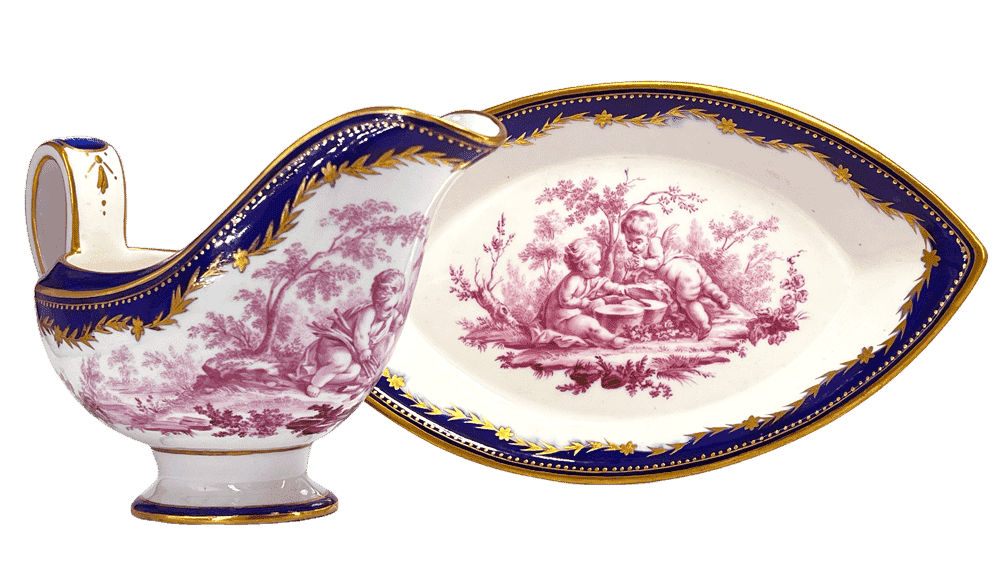
A Tournai Sauceboat

Tournai Sauceboat c.1770

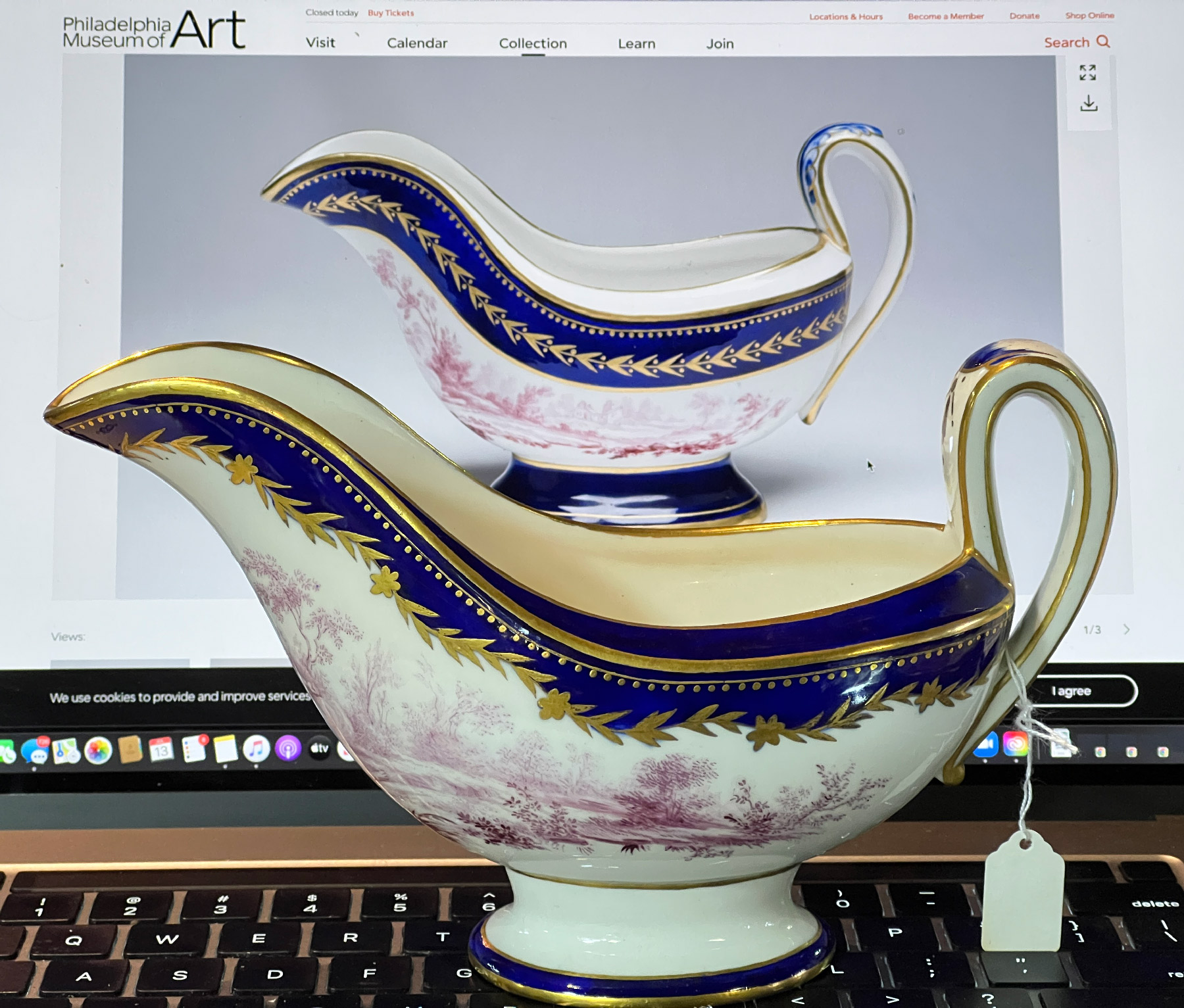
This extraordinary example of Tournai porcelain shows the quality they were able to produce.

Tournai Sauceboat c.1770

Dating to circa 1770, the elegant form with robust yet stylish handle, and boat-shaped stand, is a premonition of the Neoclassical simplicity which comes to dominate French design in the last decades of the 18th century. While this aspect looks forward, the decoration is the opposite. It is taken from a print published mid 18th century, after a painting by Francois Boucher, and is the essence of the Rococo style.

The mark is always misunderstood: ‘crossed swords are Meissen’ is the usual assessment, however this piece is clearly soft-paste porcelain, not the hard-paste of Meissen. As a vast number of other makers ‘borrowed’ crossed swords, it is easily attributed to one of these fraudulent makers, like Samson of Paris.
However…. this mark is well documented on Tournai porcelain. In the underglaze blue & white products, it is not uncommon. Gold on glaze is rare, but does appear on their better decorated pieces, suggesting it was a mark for their ‘premier products’.

There is a single example in public collections, not published in the literature. This is a sauceboat in the Philadelphia Museum of Art (id=#1968-172-1) , documented on their website. It lacks the stand, but has the same lavish decoration – with a few variations.

A stunning recent discovery shows Tournai porcelain at its best - a Sauceboat & Stand with Cherubs after Boucher, c. 1770
In the fore is our example; the back shows the Philadelphia Museum’s slight variation.
Posted on

Conductor’s Batons

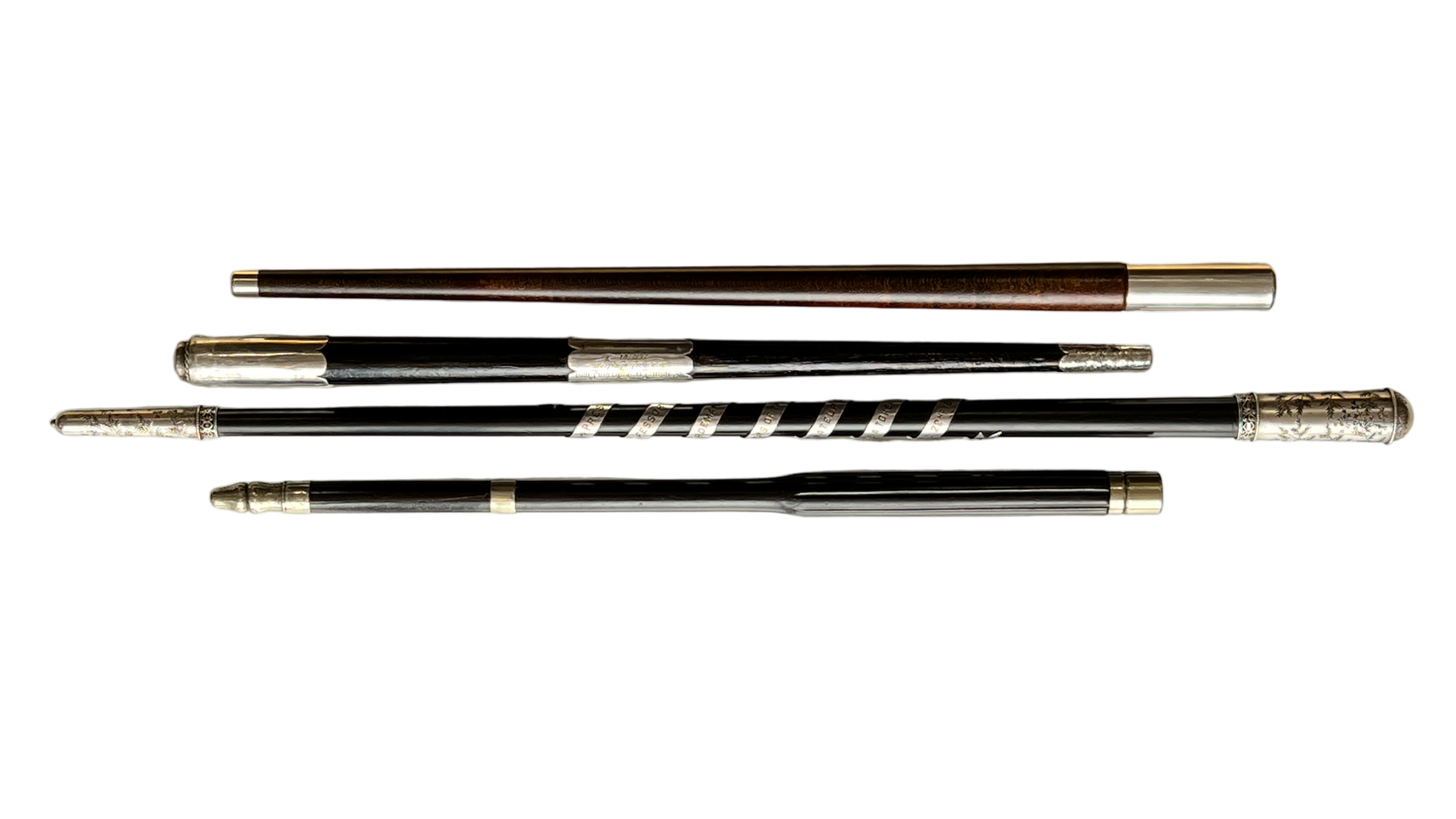
Any conductor needs a few batons – and Moorabool has a few of these rarities ‘fresh to stock’.

They include three with inscriptions – some fascinating records of social history, one just a baffling enigma.

Antique Conductor's Batons - Moorabool Antiques Geelong

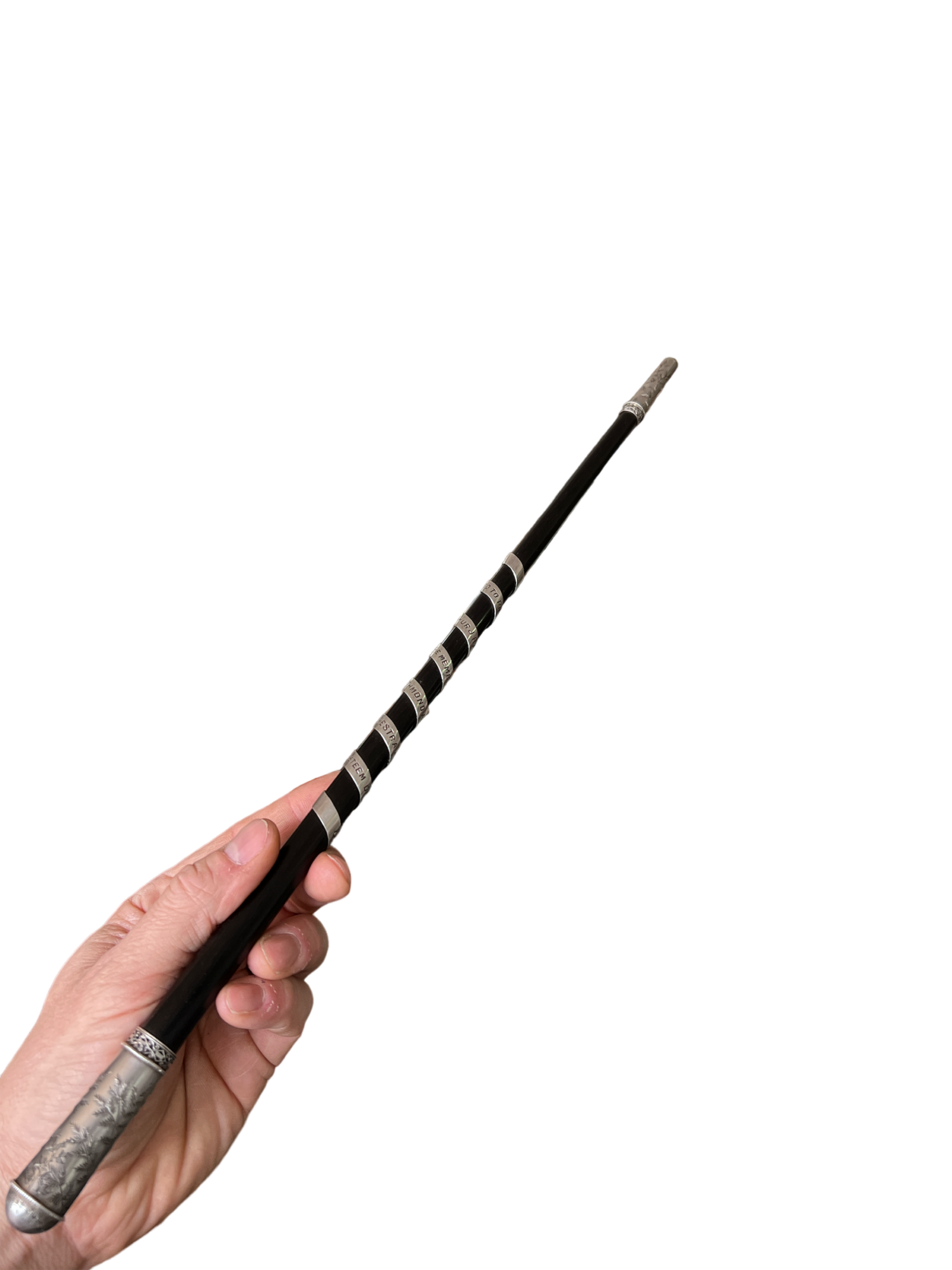
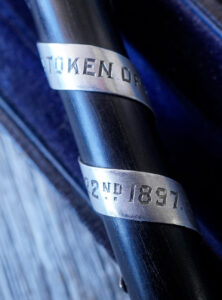
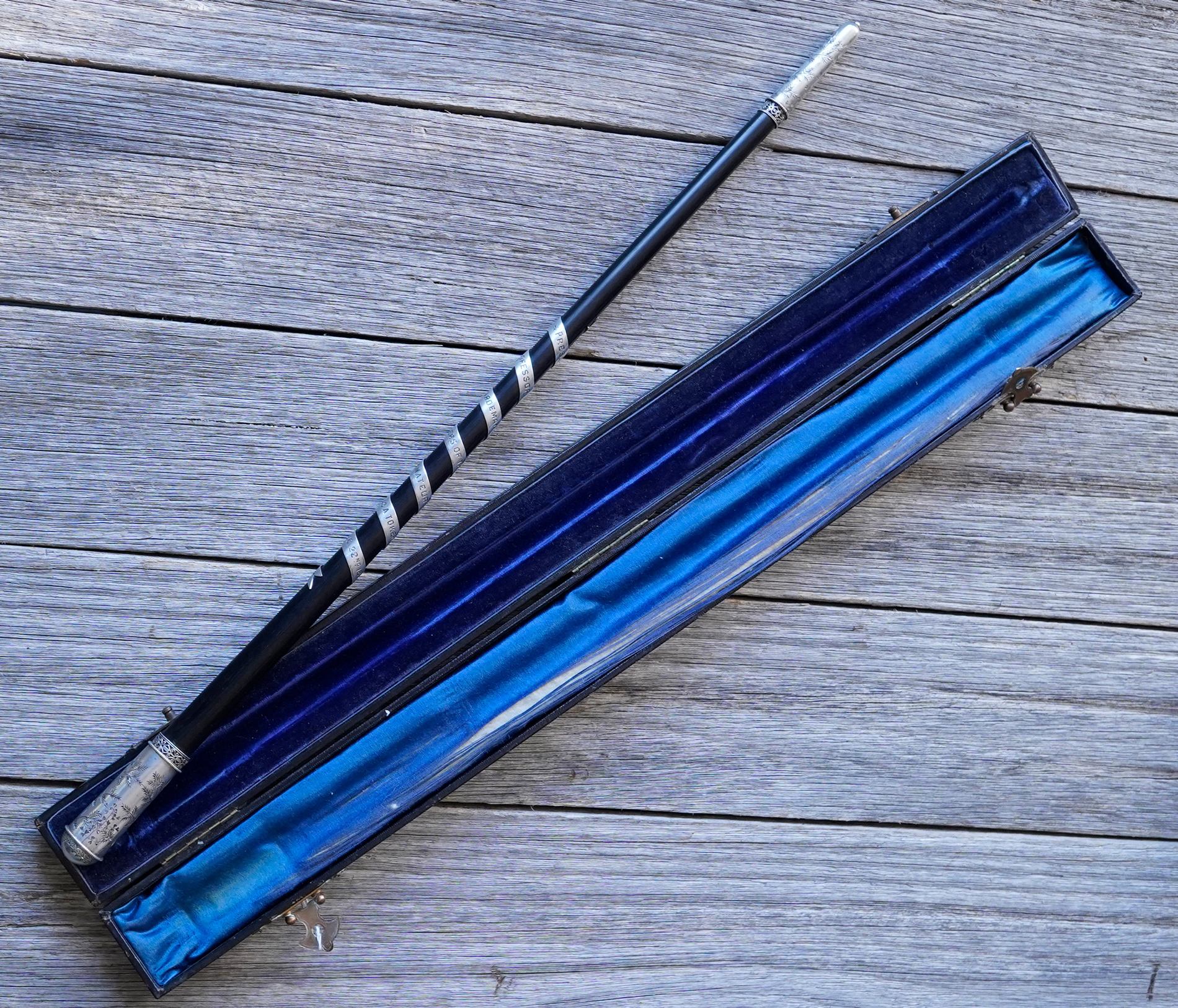
Perhaps you’re needing a baton for your Amateur Orchestra – like ‘Professor’ Arthur Hardeman? He was the recipient of a magnificent ebony example with silver mounts including an inscription winding its way down the shaft on a long silver ribbon: “Presented to Professor Arthur J Hardeman by members of the Richmond Amateur Orchestra as a Token of Esteem, 1897” .

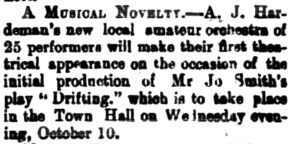
Hardeman was a Melbourne musician, son of a Pianoforte dealer, and seems to have made his living giving lessons and performing with his ‘orchestra’. They gave him this magnificent Melbourne-made baton in 1897… as outlined in the newspaper article of the time:

Professor Hardeman's Presentation Baton, 1897
Professor Hardeman’s Presentation Baton, 1897
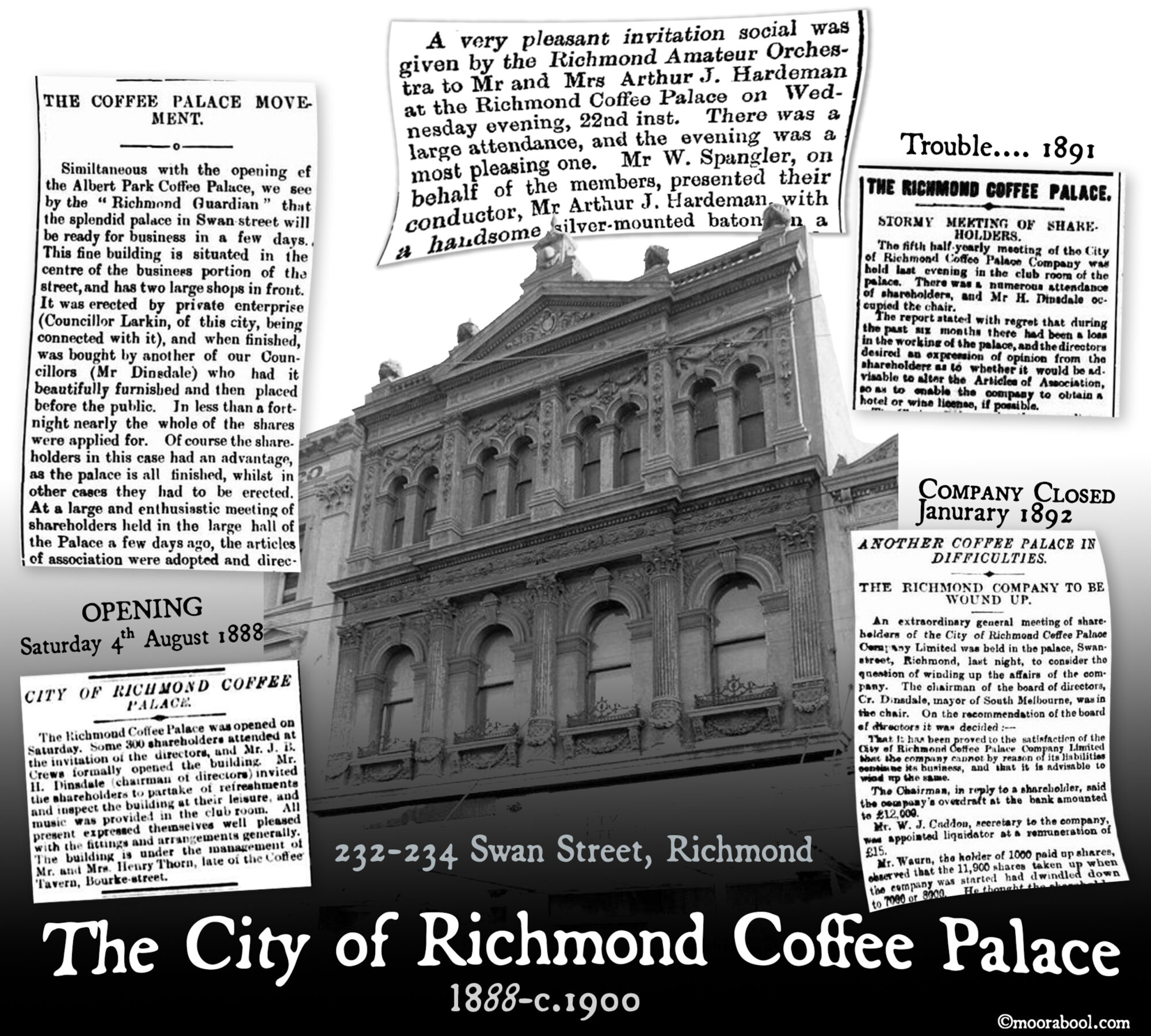
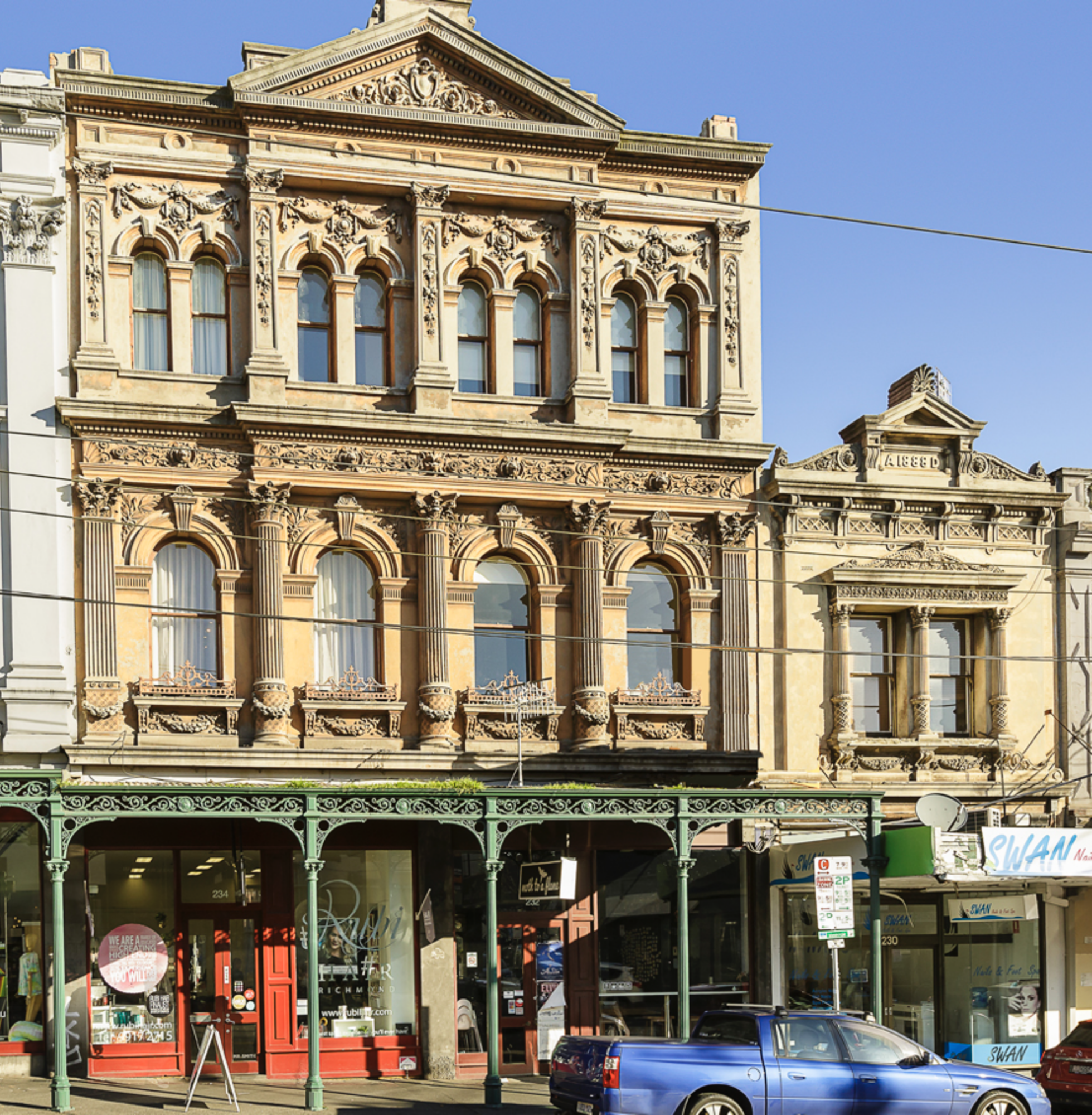
The City Of Richmond Coffee Palace, 232-234 Bridge Road, Richmond, constructed 1888

There’s a wealth of social history to be explored on this subject, including the untold story of the ‘City of Richmond Coffee Palace’, and ‘Professor’ Hardeman’s interesting background.

Read more about the baton & the presentation in our special blogpost on this piece >>

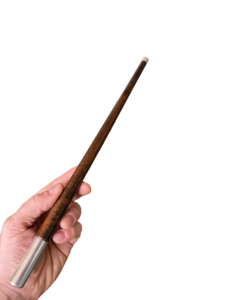
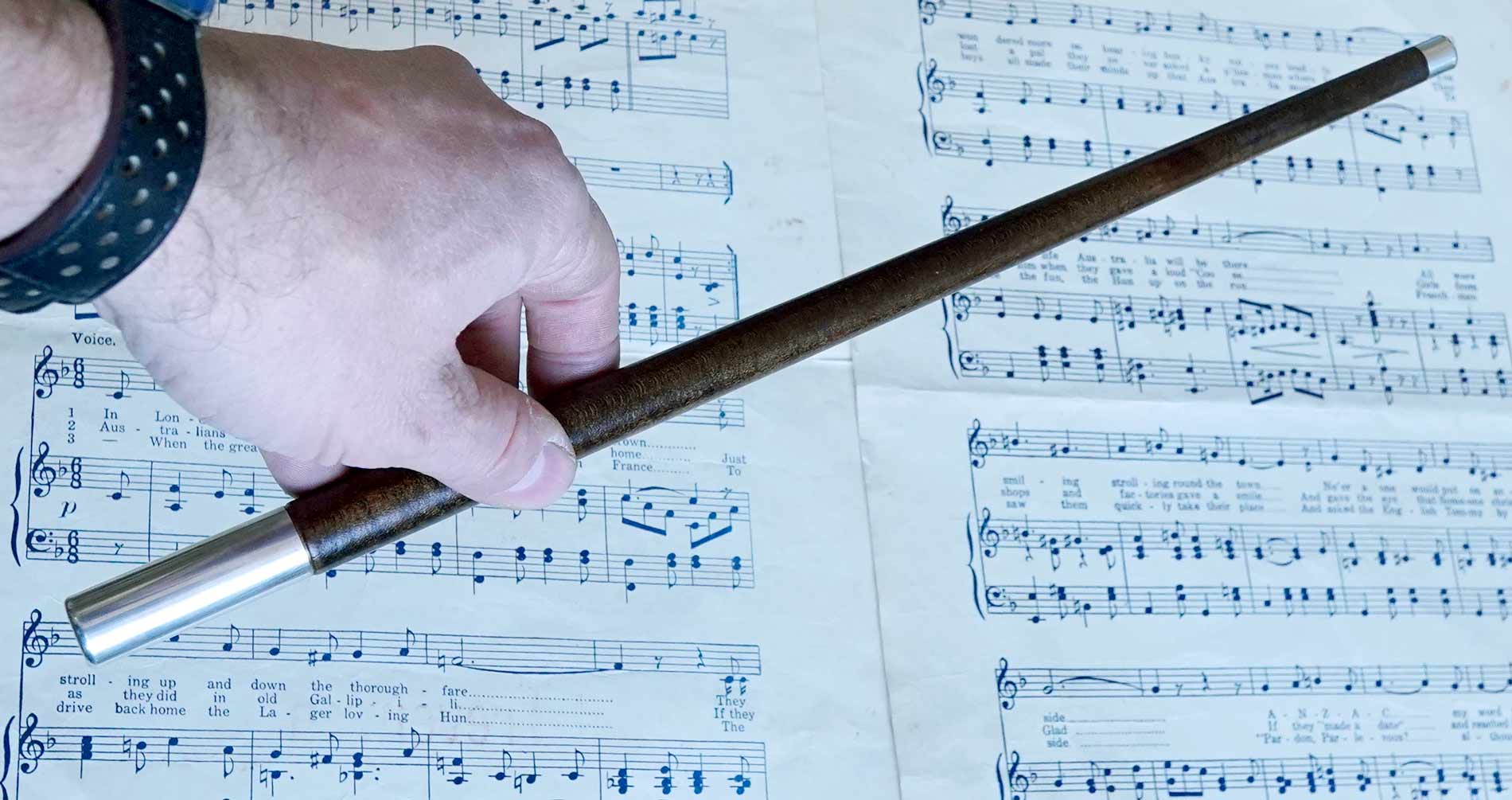
There are several other batons also, all fresh to stock – quite a collection. The other definite Australian example is also ebony, and has a presentation inscription also: “Pres’ted to E. Sage Esquire, by the members of St John’s Presbyterian Choir, as a mark of esteem, 26/07/01”.

E. Sage's Presentation Baton, Ballarat, 1901
E. Sage’s Presentation Baton, Ballarat, 1901
E. Sage's Presentation Baton, Ballarat, 1901
E. Sage’s Presentation Baton, Ballarat, 1901

E. Sage was a Ballarat identity, very active in the musical entertainment world from the 1890’s. He taught piano and voice in Ballarat, and helped form a musical group, called the ‘Curlew Orchestra’, for the ‘purpose of promoting the study of instrumental music and the entertainment of the inmates of the charitable institutions, and generally assisting by concerts in aid of worthy objects’.

Sage, StJohns Choir, Ballarat Star July 1905

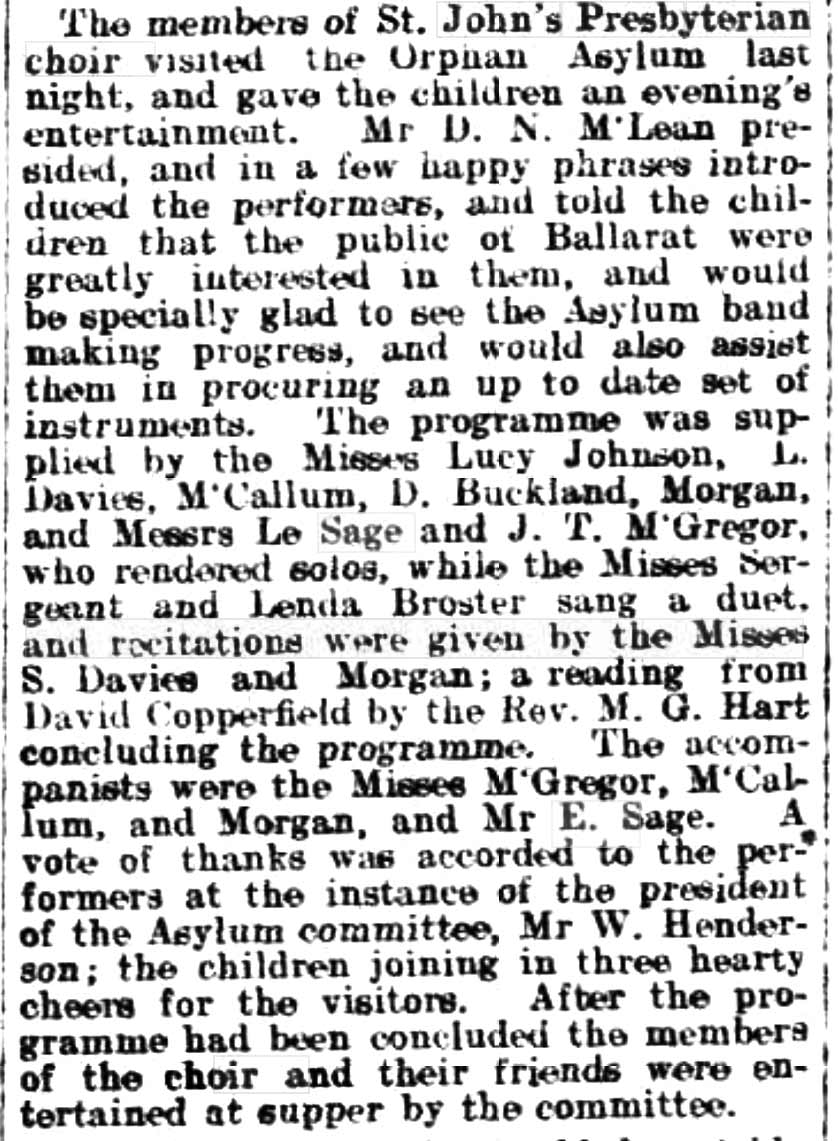
In 1902, for example, there’s a report of an event he presided over: “The members of St John’s Presbyterian choir visited the Orphan Asylum last night, and gave the children an evening’s entertainment. Mr D. N. McLean presided, and in a few happy phrases introduced the performers, and told the children that the public of Ballarat were greatly interested in them, and would be especially glad to see the Asylum band making progress….”

RUN FOR YOUR LIFE American silver & Walnut Baton
RUN FOR YOUR LIFE American silver & walnut conductor’s baton

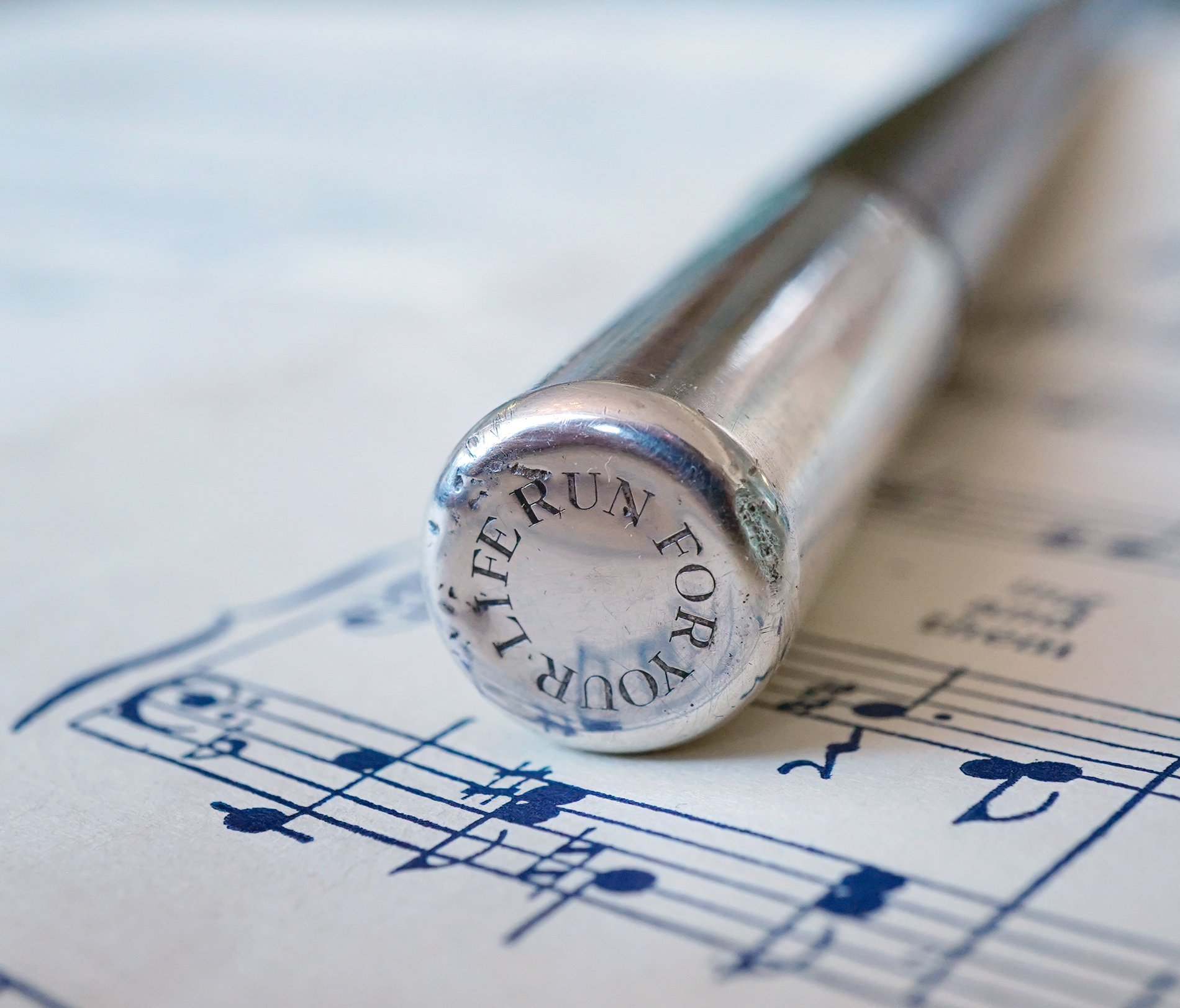
Another rather puzzling baton has a cryptic message: RUN FOR YOU LIFE ….. is engraved onto the end. This example is American Silver, by Reed & Barton. It dates to the 1910-20 period – but nothing turns up valid to a musical origin when you look for the words inscribed. Maybe someone has an idea of what ‘RUN FOR YOUR LIFE’ might be relating to?
Let us know, if you do!

RUN FOR YOUR LIFE - American Reed & Barton silver mounted baton, c. 1920
RUN FOR YOUR LIFE – American Reed & Barton silver mounted baton, c. 1920
Antique Ebony Conductor's Baton
Antique Ebony Conductor’s Baton

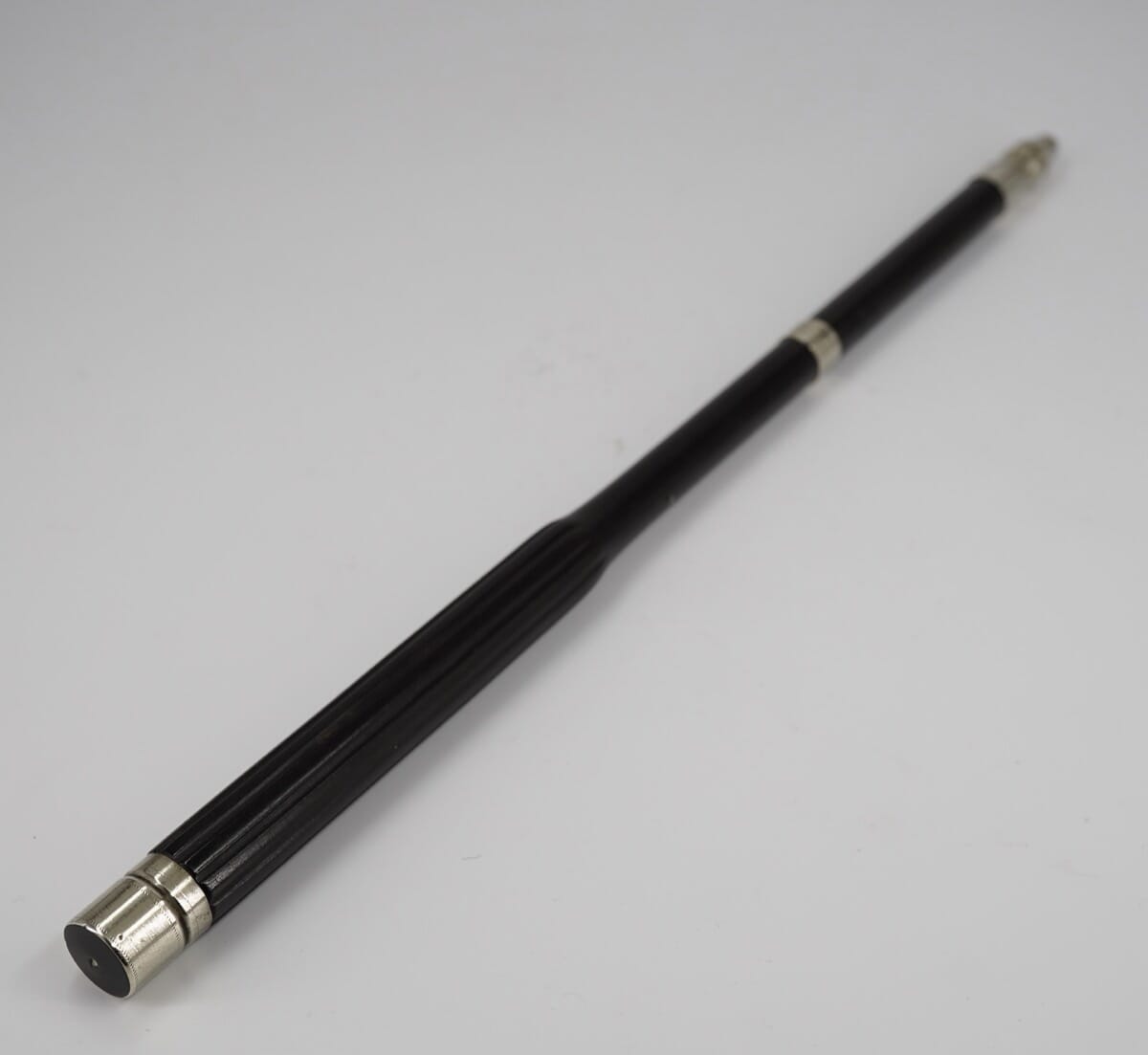
The final one is just a nice baton, no inscriptions. It has a ribbed body, making it much easier to hold. All we need is an orchestra to try it out on……

Posted on

Australiana Discovery: a Conductors Presentation Baton & the untold story of ‘The Richmond Coffee Palace’

Australian Silver presentation conductor's baton, Hardeman, Richmond Amateur Orchestra 1897

While the vast majority of Victorian items we see are perfectly anonymous, once in a while we find a piece with an inscription or dedication; thanks to the excellent free resource that is Trove Australia, we can use such information as names, places & dates to find the original Newspaper reports of the events for which it was engraved.

A recent piece of local history which fits this scenario is a beautiful ebony & silver conductor’s baton, in original leather-clad case.

Australian Silver presentation conductor's baton, Hardeman, Richmond Amateur Orchestra 1897
“Token of Esteem – Dec. 22nd 1897”

Arthur J Hardeman was born in Birmingham in 1864. One of five siblings, his father is listed in the 1881 census as living in Rudlan (Flint), Wales, occupation ‘Piano Forte Dealer’. In 1884, the whole family migrated to Australia on board the ‘Melanope’, still listed as a ‘Piano Forte Dealer’. The family lived in Richmond.
Arthur set about becoming a teacher, advertising lessons from the Eastern Arcade in the city in 1886. He also advertised classes in Geelong, although he is still listed as living in Richmond.

He also had an idea of forming a musical group, advertising in the Age in January 1886: “AMATEURS.— Wanted. String Band, Pianist, Trombone, E flat bass, side Drum. Hardeman, Age office.”

The Richmond Amateur Orchestra’s first performance, October 10, 1894

The ‘Richmond Amateur Orchestra’ was formed in 1894 by a group of 25 local musicians under Arthur J Hardeman.
Their first performance was on the 10th October, 1894, a Wednesday evening performance of ‘Jo Smith’s play “Drifting” ‘.

By 1897, the year this baton was purchased & presented to Arthur, there were 30 in the group. They provided music for numerous stage performances, as well as musical interludes for other stage shows.

1897 Australian Silver mounted conductor's baton, Hardeman, Richmond Orchestra

The ebony is a luxury imported wood; the silver-work is not hallmarked but appears to be silver – the engraved maiden-hair ferns and inscription show the same metal throughout. It would have been made by one of the numerous Melbourne silversmiths, housed in a handsome silk-lined leather presentation box, and custom engraved for the musicians of ‘Professor’ Hardeman’s musical group in time for them to present it to him a few days before Christmas, 1897.

The inscription reads: “PRESENTED TO PROFESSOR ARTHUR J HARDEMAN BY THE MEMBERS OF THE RICHMOND AMATEUR ORCHESTRA AS A TOKEN OF ESTEEM DEC. 22ND 1897”

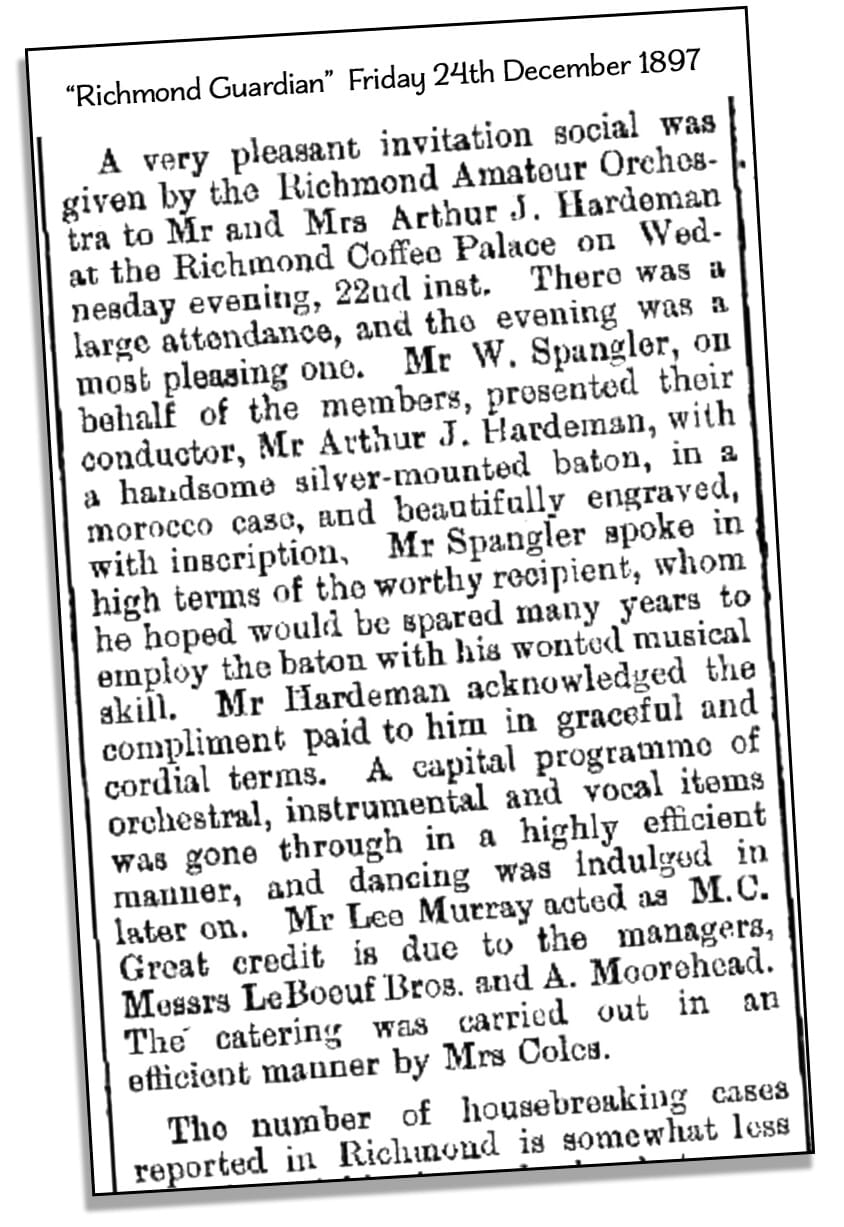
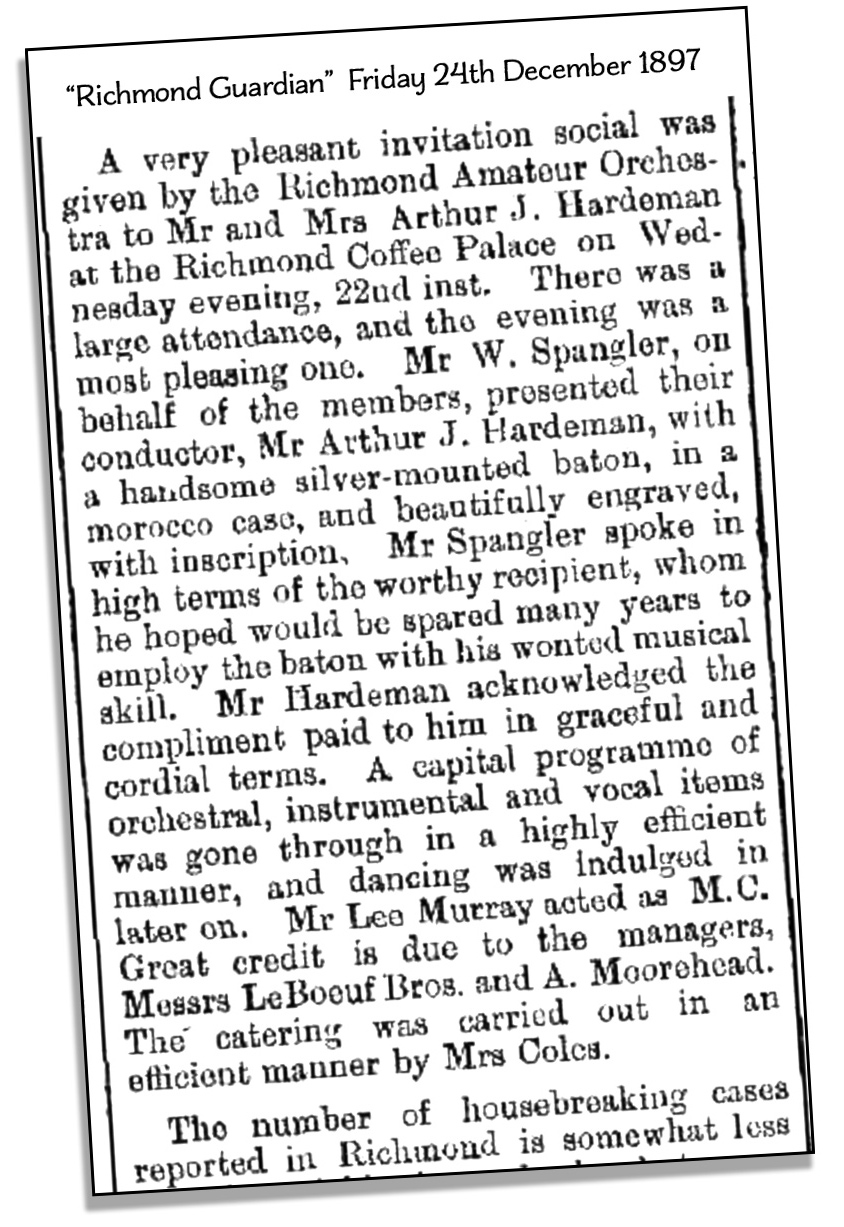
The event is recorded in the “Richmond Guardian” newspaper, Friday 24th December 1897:

“A very pleasant invitation social was given by the Richmond Amateur Orchestra to Mr and Mrs Arthur J. Hardeman at the Richmond Coffee Palace on Wednesday evening, 22nd inst. There was a large attendance, and the evening was a most pleasing one. Mr W. Spangler, on behalf of the members, presented their conductor, Mr Arthur J. Hardeman, with a handsome silver-mounted baton, in a morocco ease, and beautifully engraved., with inscription, Mr Spangler spoke in high terms of the worthy recipient, whom he hoped would be spared many years to employ the baton with his wonted musical skill. Mr Hardeman acknowledged the compliment paid to him in graceful and cordial terms. A capital programme of orchestral, instrumental and vocal items was gone through in a highly efficient manner, and dancing was indulged in later on. Mr Lee Murray acted as M.C. Great credit is due to the managers, Messrs LeBoeuf Bros, and A. Moorehead. The catering was carried out in an efficient manner by Mrs Coles.”

Presentation of the Hardeman Baton, 1897

Moorabool is very pleased to offer this fascinating piece of social history.
There’s also some interesting research below on the ‘City of Richmond Coffee Palace’, an undocumented piece of Melbourne’s history which we have unearthed in the process of researching this baton.


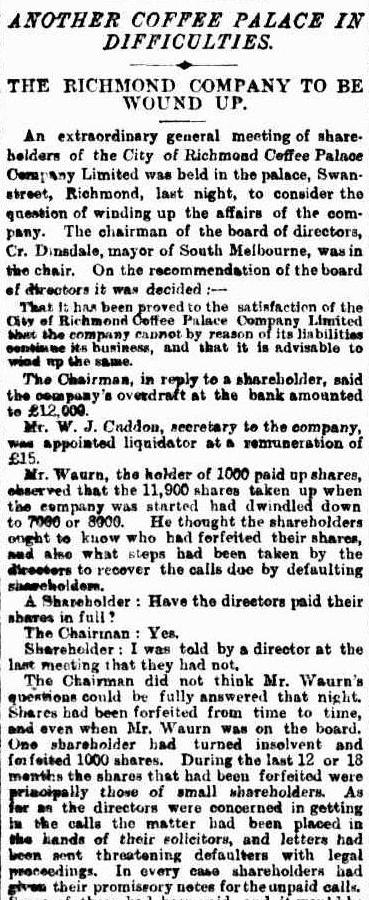
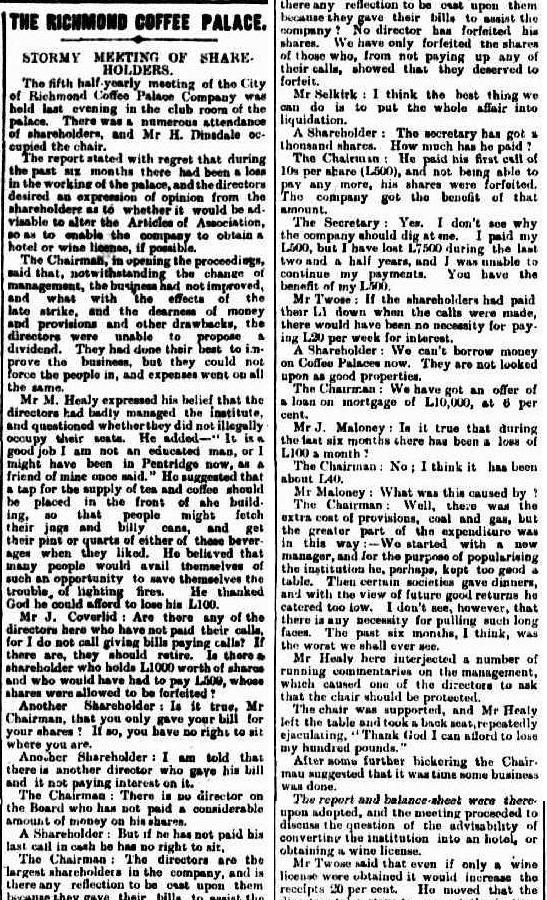
The City of Richmond Coffee Palace was a briefly popular entertainment venue. ‘Coffee Palaces’ were extremely popular in the boomtown days of late Victorian Melbourne, being an alternative to the pub -only more family friendly, without the alcohol. The ‘City of Richmond Coffee Palace’ was established with the funds of public shareholders in 1888 – but just 3 years later found itself in trouble, running at a loss. A ‘stormy’ public meeting was held in 1892, addressing concerns of profitability; the idea was controversially put forward to apply for a liquor license to make some money; naturally, the core of Temperance share-holders were outraged! It was wound-up as a share company in 1892, a director pinning the blame on the Bank of Victoria, which had raised the interest rate on the loan the company had from 6 to 8 %…… and a liquor license secured. It was still known as the ‘Richmond Coffee Palace’, but you could get a little bit of something else mixed into your coffee!

It was in this entertainment complex the party was held and this baton presented. It’s a fascinating piece of Melbourne’s history.

The City Of Richmond Coffee Palace, 232-234 Bridge Road, Richmond, constructed 1888
The City Of Richmond Coffee Palace, 232-234 Bridge Road, Richmond, constructed 1888. This is not documented elsewhere.
  • The City Of Richmond Coffee Palace, view in Swan Street today
  • The City Of Richmond Coffee Palace
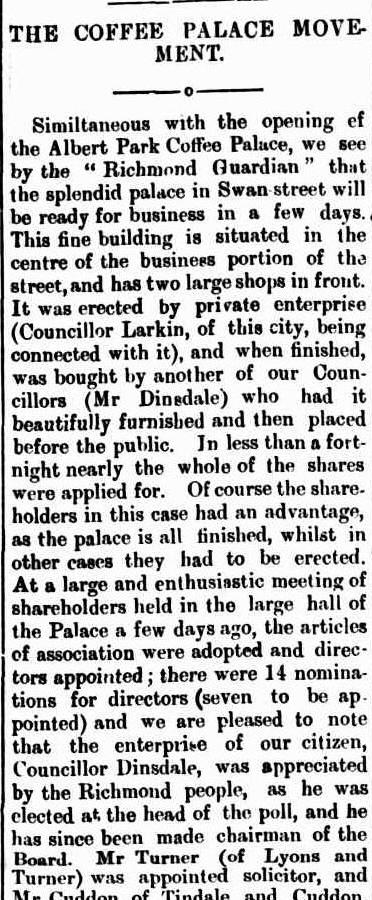
  • Richmond Coffee Palace opens, 4th August 1888
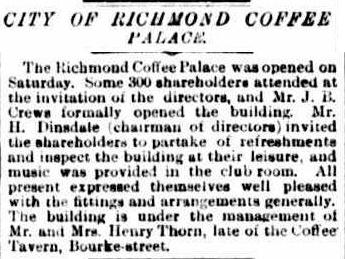
  • The End of the 'Coffee Palace' concept, Newspaper report 1893
  • Australian Silver presentation conductor's baton, Hardeman, Richmond Amateur Orchestra 1897
Posted on

Fresh Stock – Fine Fans, Coffee Cans, Usable Glasses, Vertu…

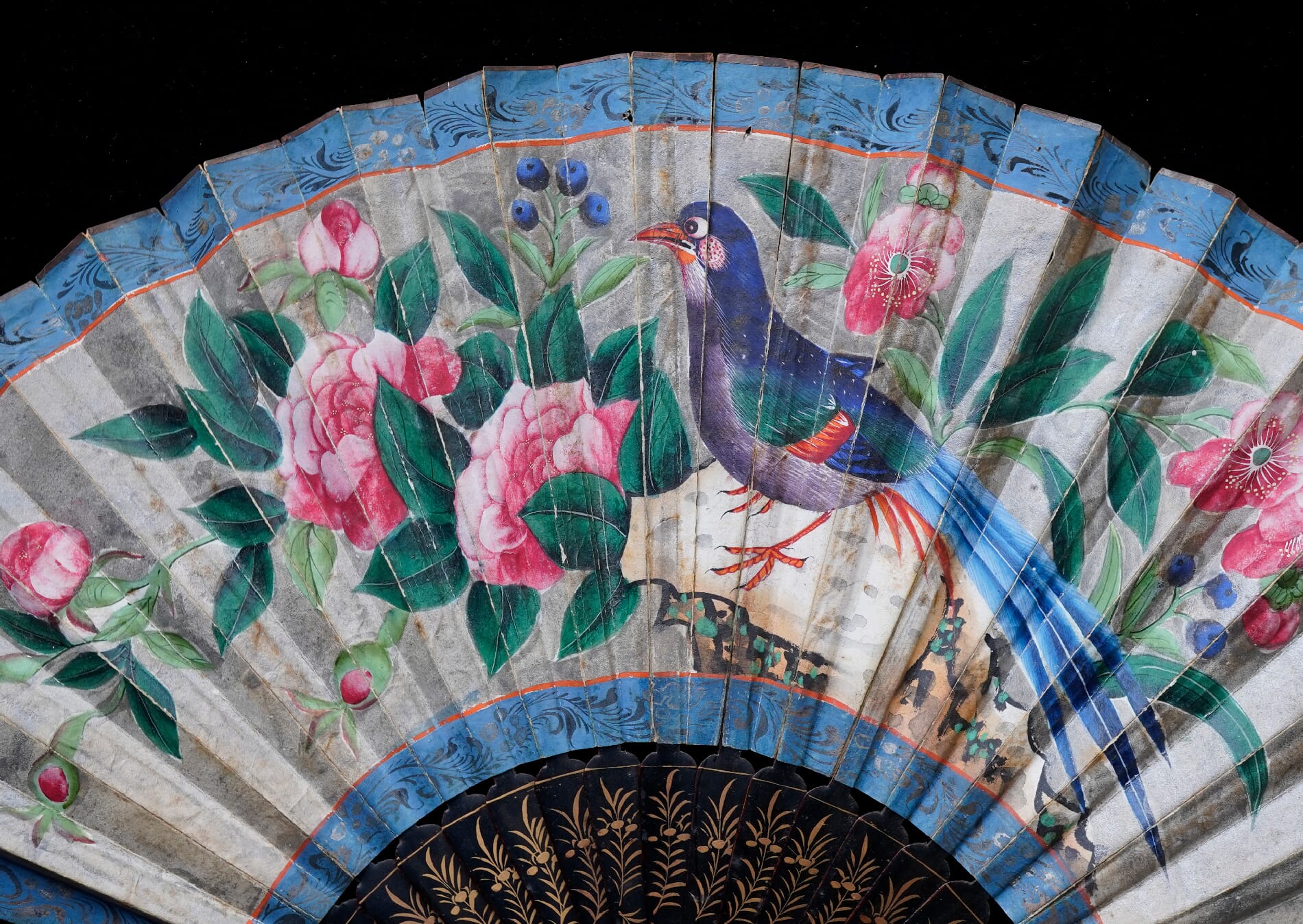
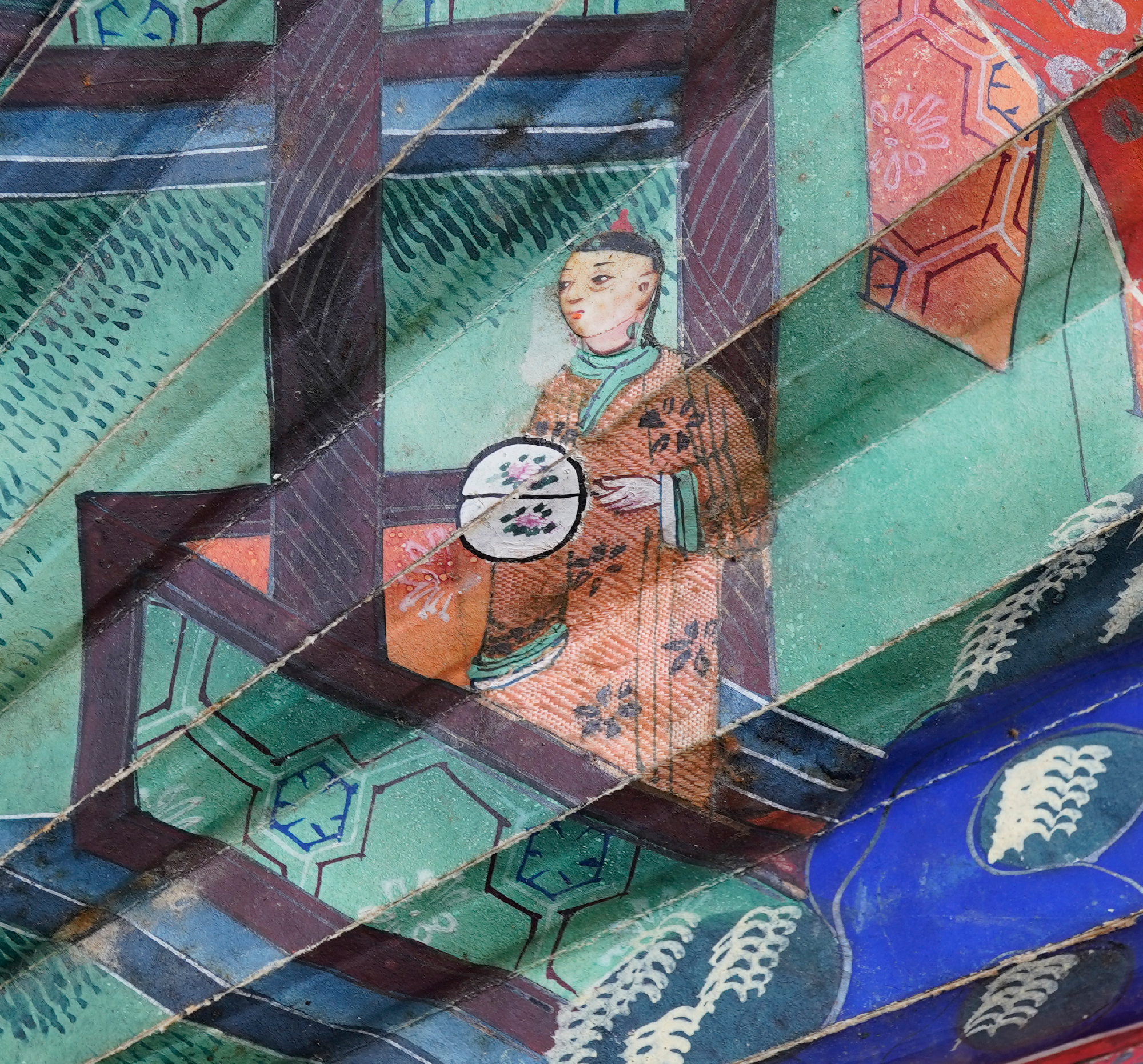
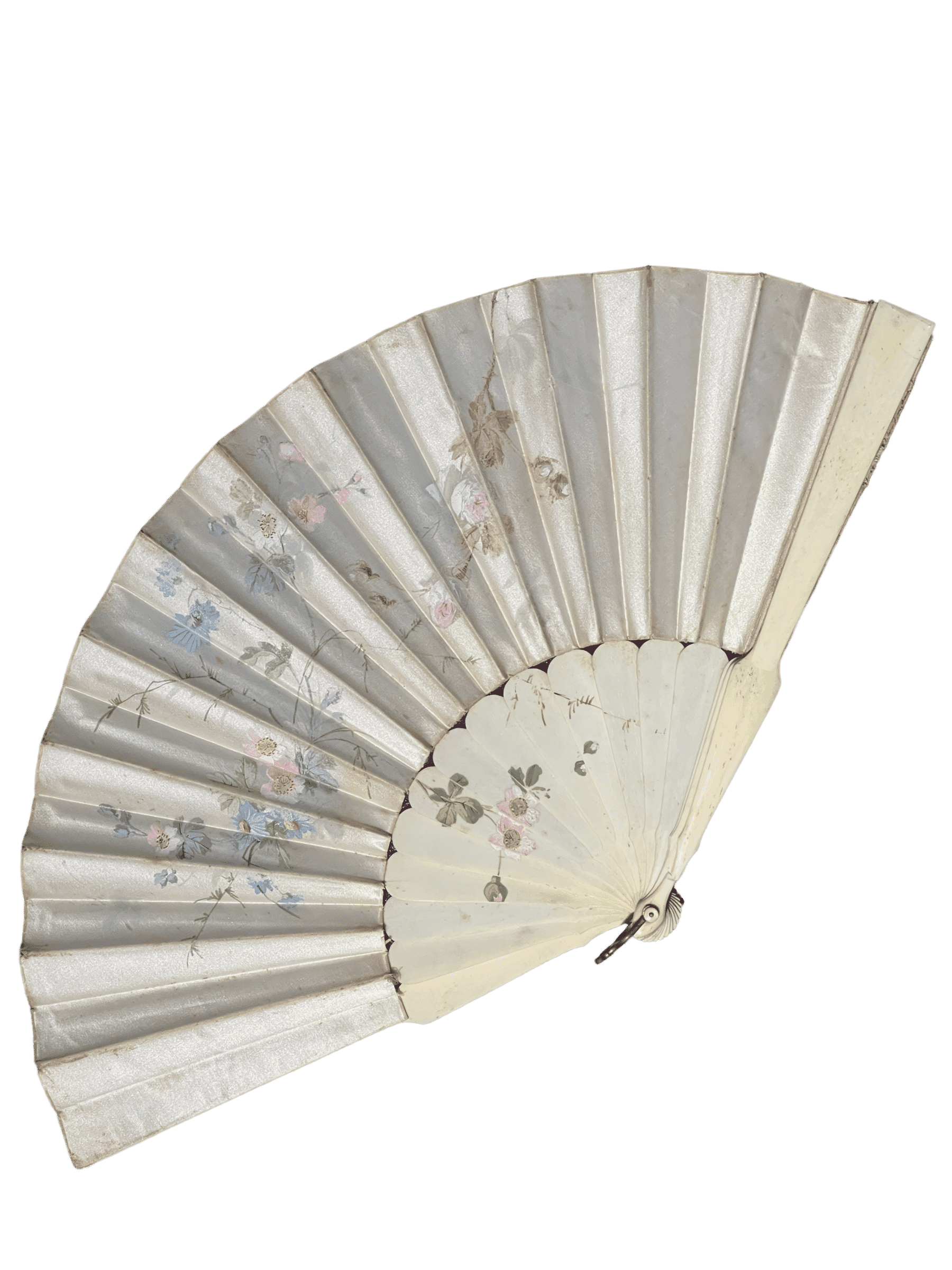
Chinese Export Bird Fan - dertail - c. 1850

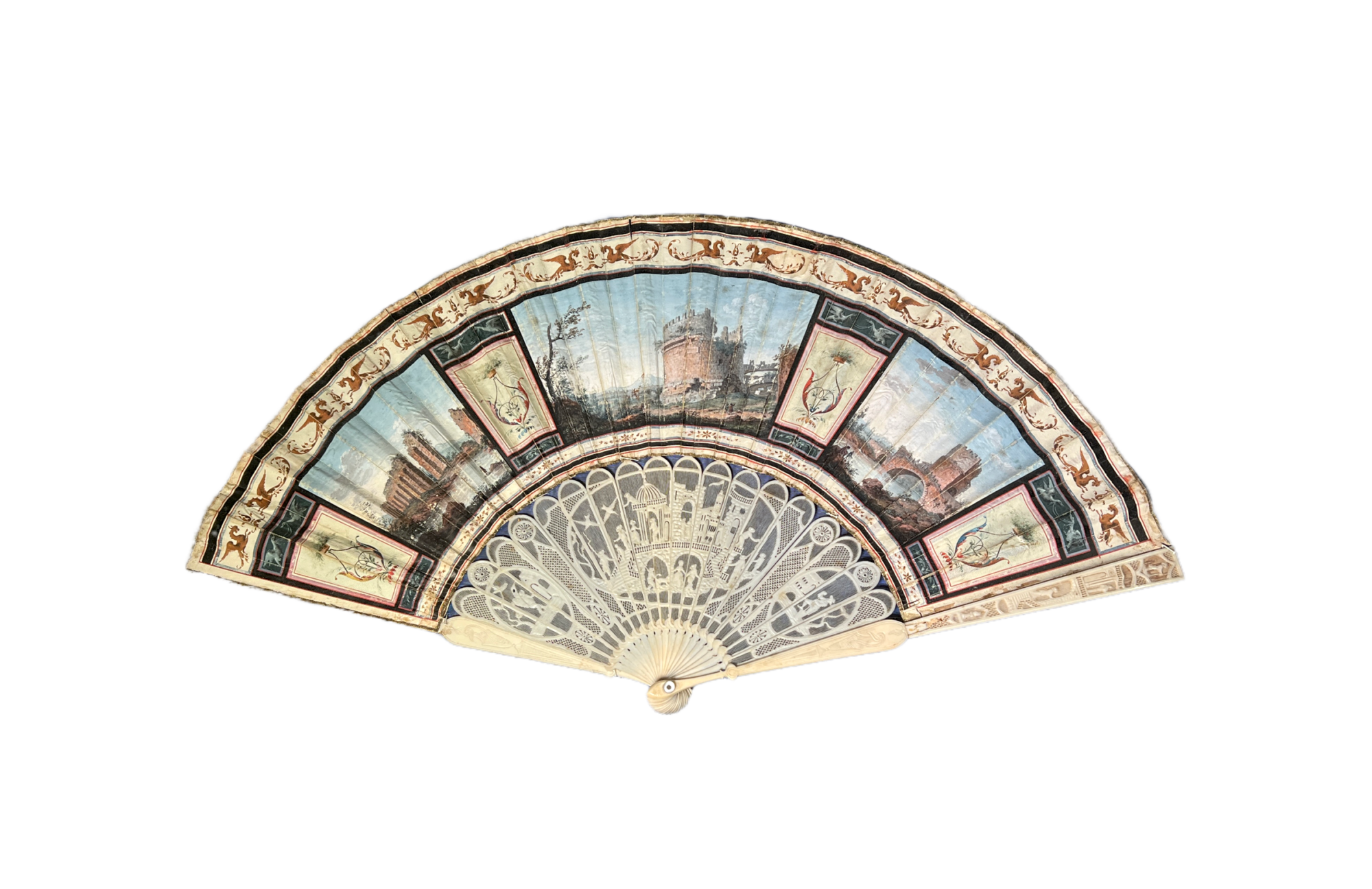
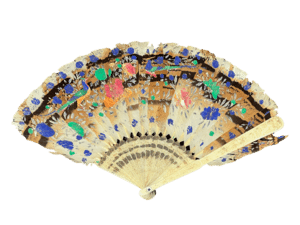
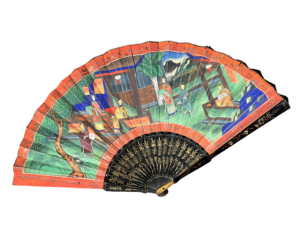
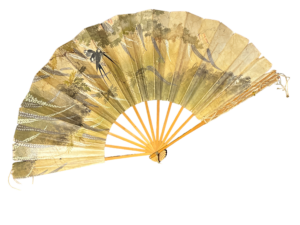
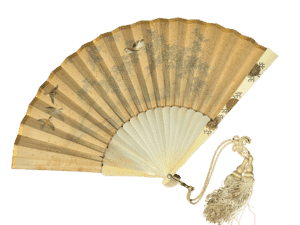
An exciting selection of Fresh items have just been posted on moorabool.com. We have a wide variety of quality items this release, everything from an 18th century fan painted with Roman Ruins, to a Melbourne Silversmith’s presentation trowel for a Camberwell church, made by the President of the Carlton Football Club – who was also a rarely-identified colonial silversmith!

Fans

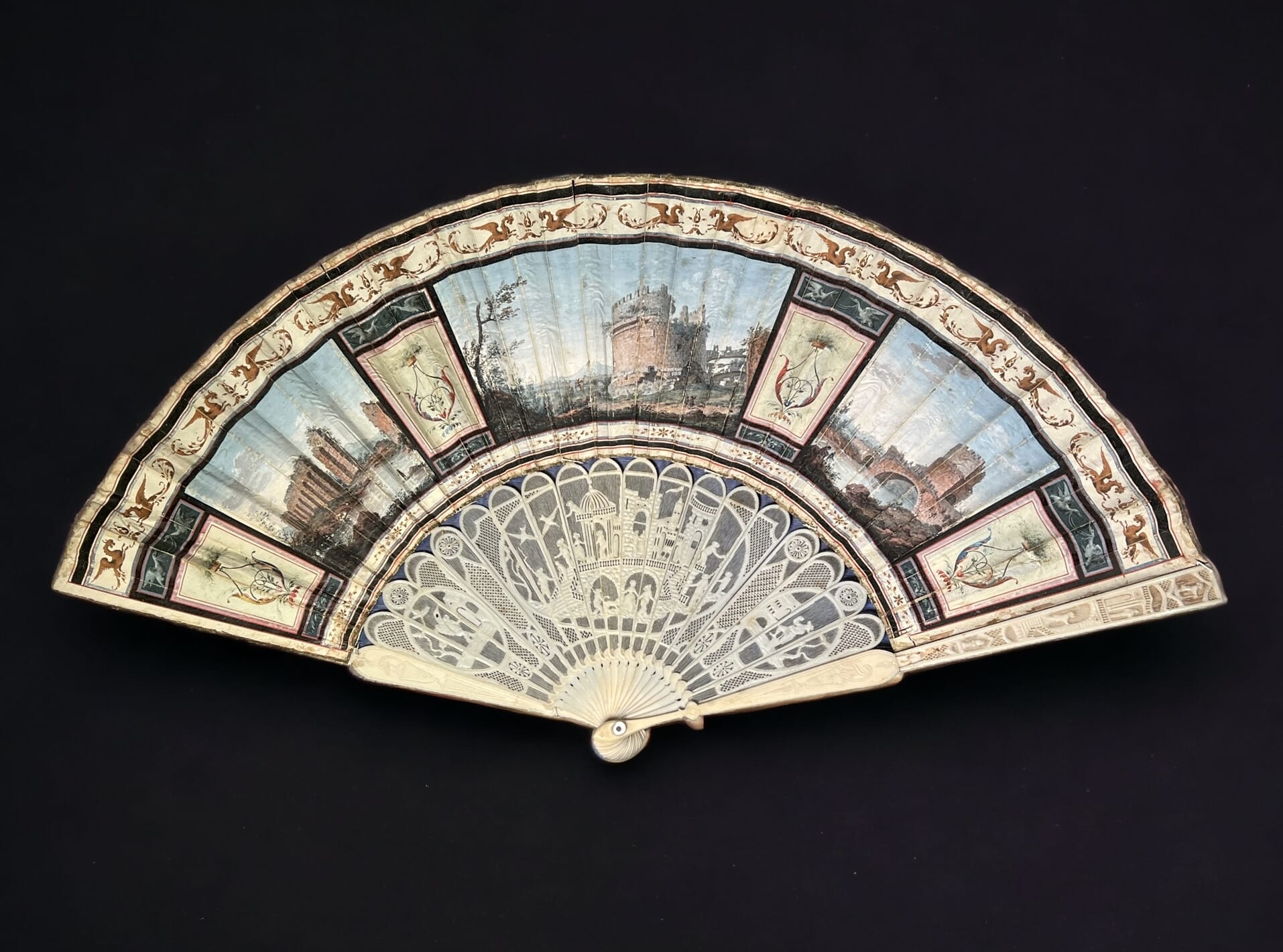
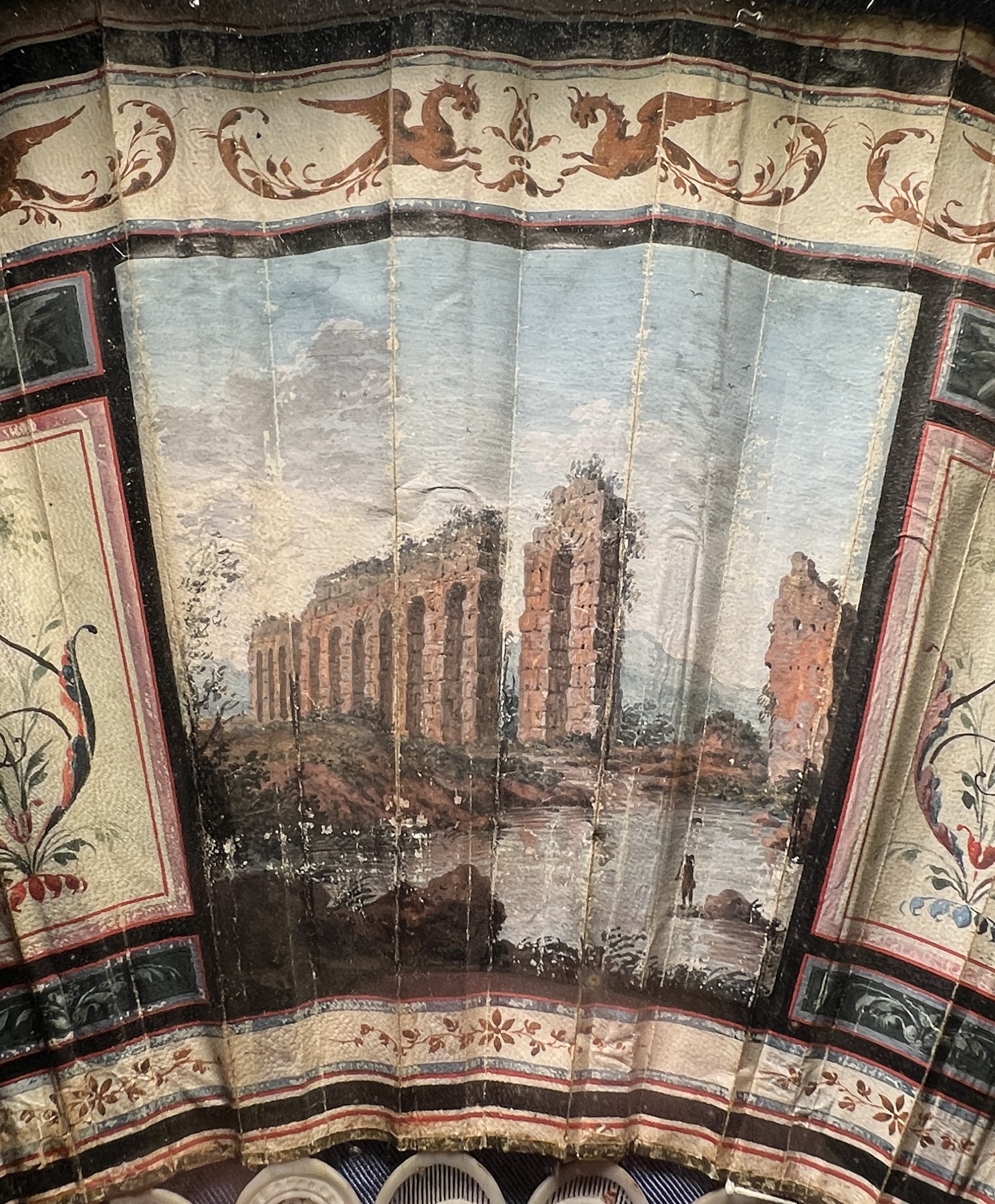
'Grand Tour' fan, Views of Rome, Italian c.1785
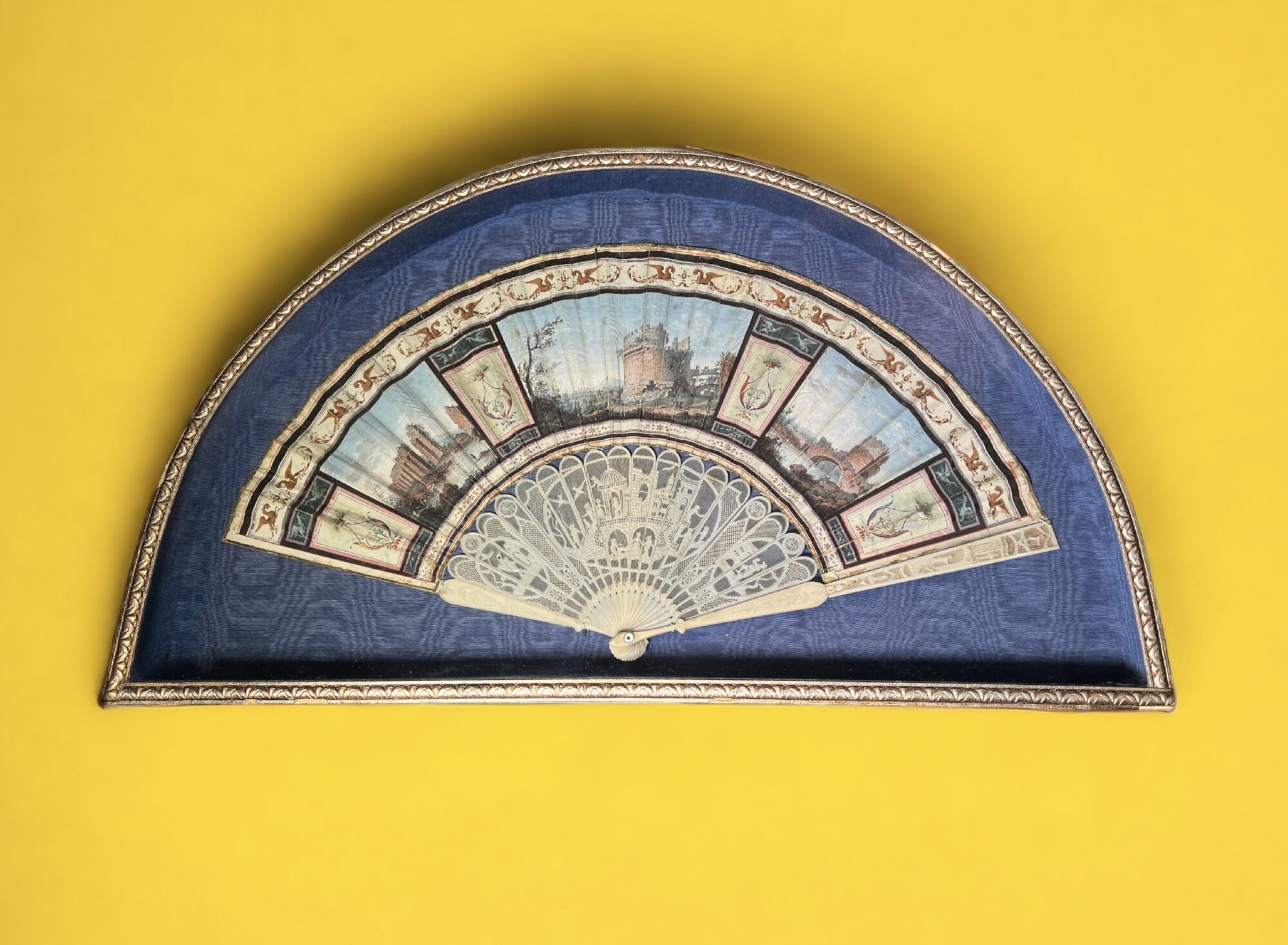
‘Grand Tour’ fan, a Masterpiece painted with panels of ‘Views of Rome’, Italian c.1785
Grand Tour fan, Rome, Pompeii, Rococo carved scenic sticks, c. 1785
A Roman viaduct painted on the Italian fan, c. 1785

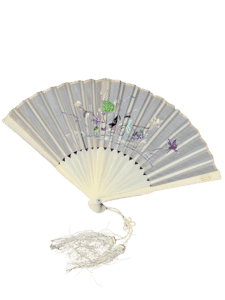
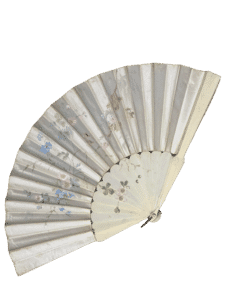
Are you a Fan fan? They were once a social necessity, not for keeping cool, but for hiding behind in social encounters…. at least in a European context. Those Europeans who headed to warmer climates must have been very glad of them though, as they were a handy way of keeping cooler in the hot colonial climates.
We have a fine selection, some of which come from the collection of the late Lorraine Rosenberg. She was the driving force behind Moorabool Antiques from the beginning in the 1960’s, and an avid collector of textiles & fans.

The key piece in today’s release is a French ‘Grand Tour’ fan from the late 18th century: the detail on this is stunning, with hand-painted views of Roman ruins and very finely carved sticks. The lines that make up the background are almost as fine as a hair!
Grand Tour fan, Rome, Pompeii, Rococo carved scenic sticks, c. 1785
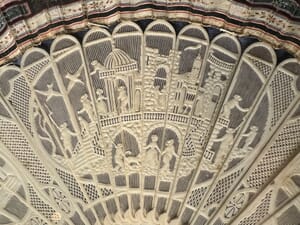
A ‘pleasure folly’ with lots of activity, superbly carved to the sticks, with a fine web of cuts making the background. note the size of the pin-head, upper right.
Grand Tour Italian Fan
Grand Tour Italian Fan in wall mounted box-frame.

It is conveniently housed in a custom made ‘fan box’, designed to hang on the wall.


None of the others have this mounting – they are all foldable & unmounted – but we are able to provide a fan shadow-box on request, please ask for a quote.

  • Antique Fans at Moorabool Antiques, Geelong
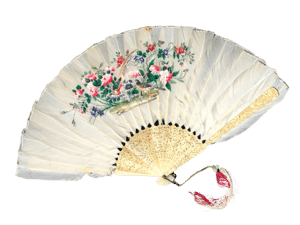
  • Chinese white feather fan, fine Birds & Flowers painting, intricate carved ivory ends, c. 1820
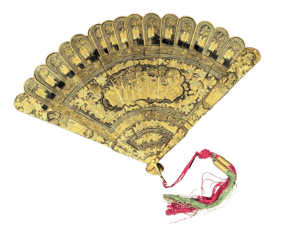
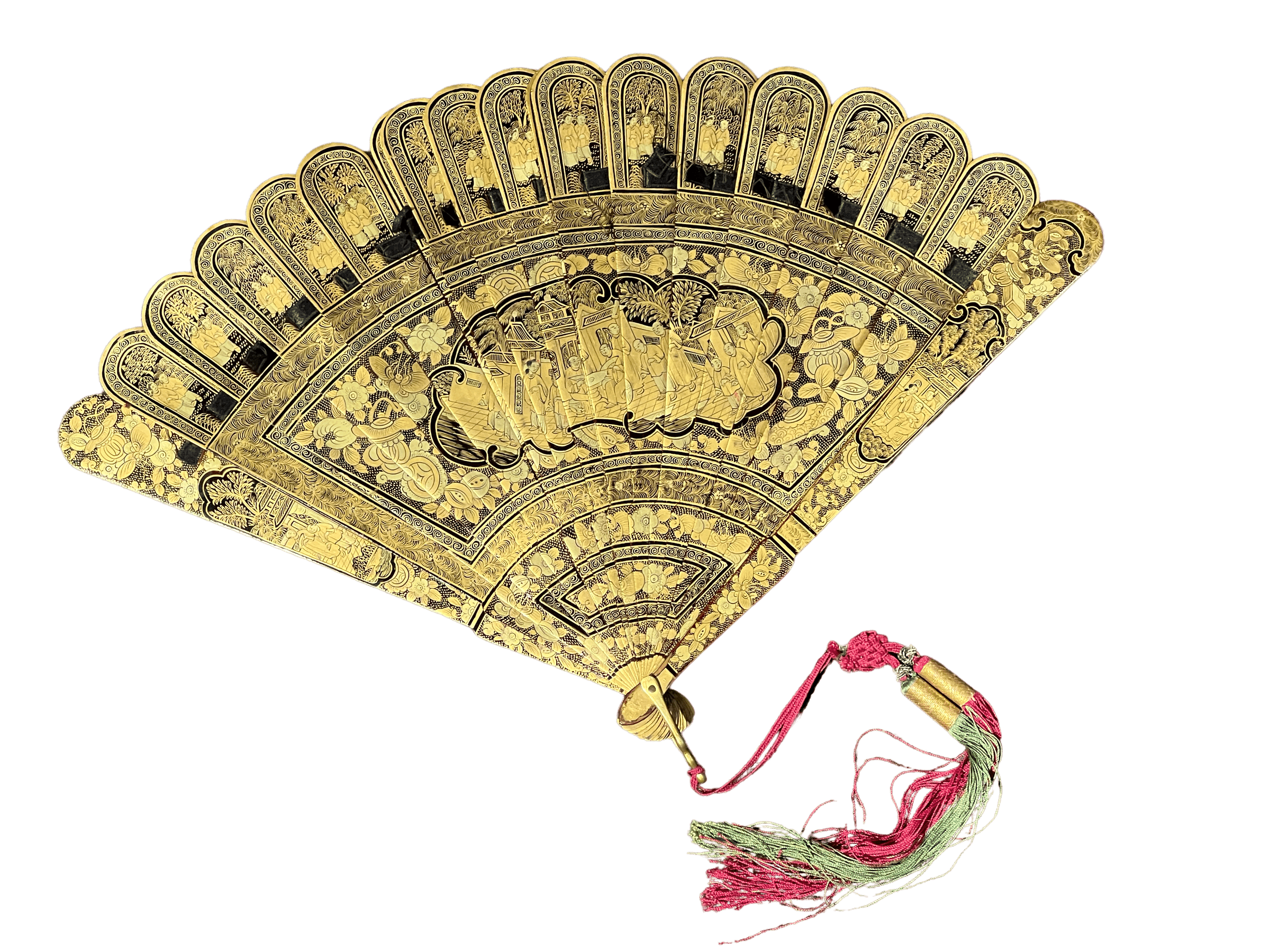
  • Chinese Export brisé black lacquer fan, fine gilt scenes, Canton c. 1840
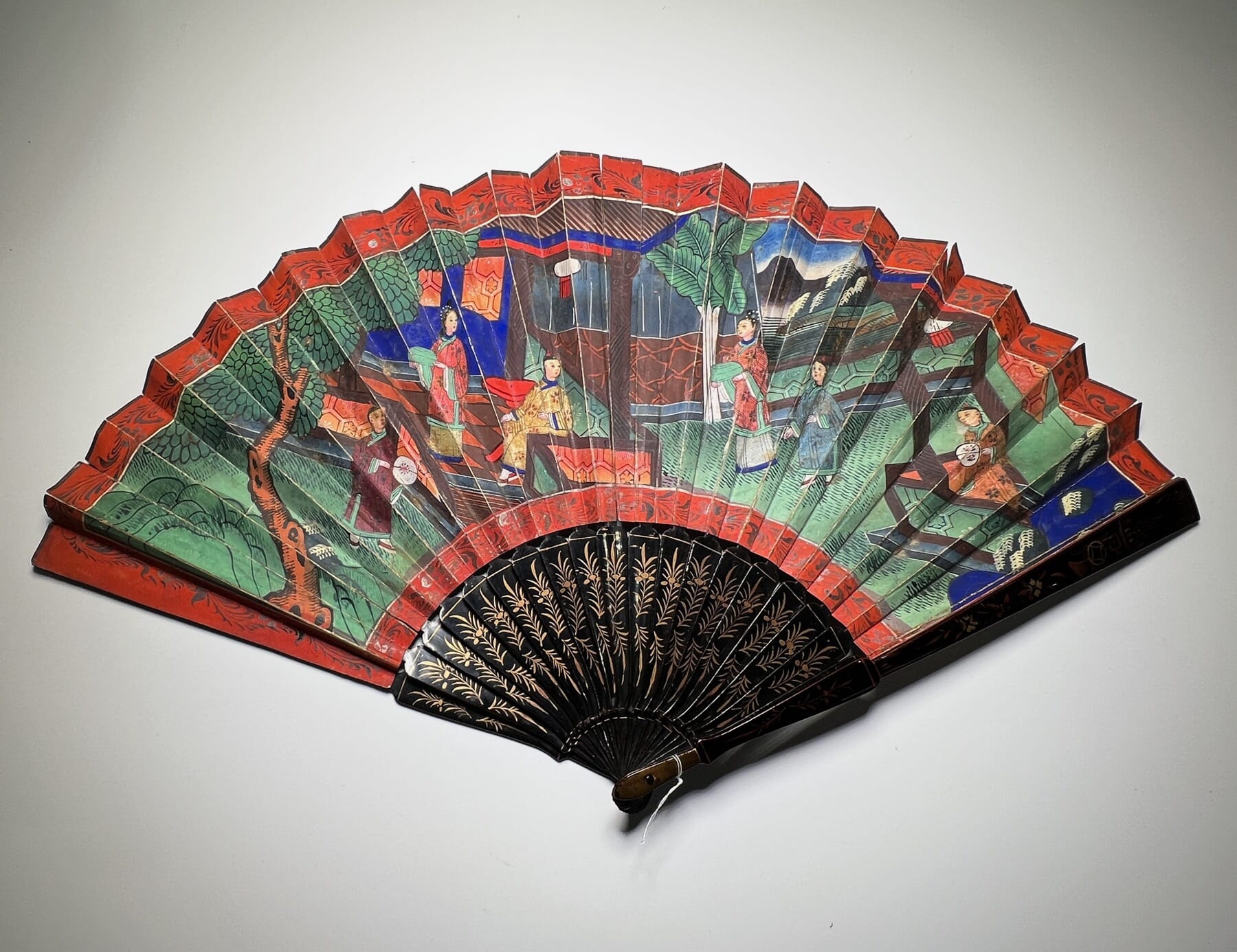
  • Chinese Export Lacquer & Painted Fan c. 1850
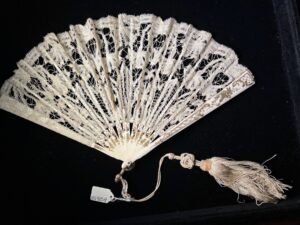
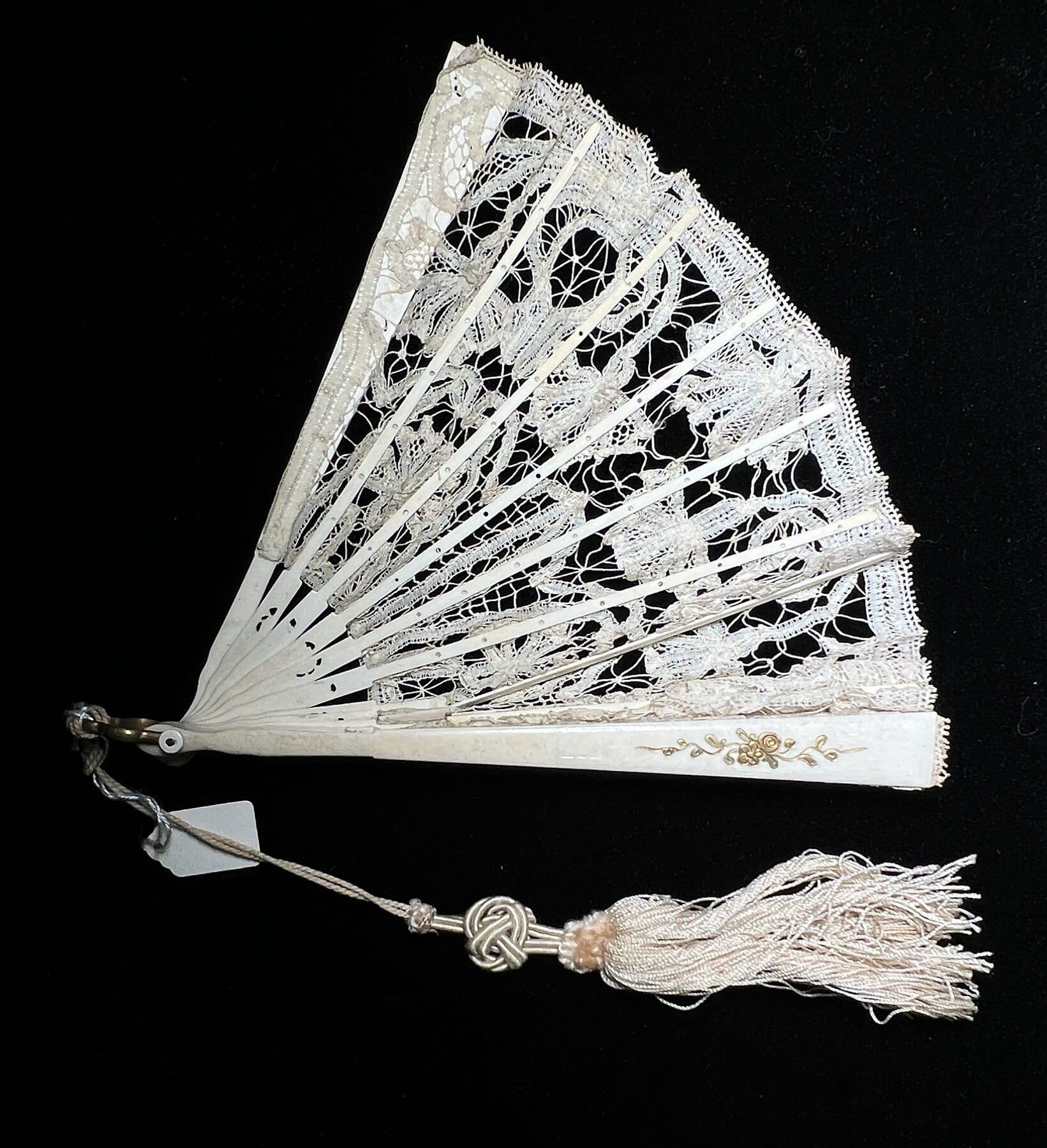
  • Brussels Lace Fan c. 1860

The Chinese Export fan below features applied silk costumes to the inhabitants, and ivory faces beautifully detailed.
In this gent’s hand is a fan – of course!

Dates to circa 1850.

See the fans here…. with more to come shortly.

A Camberwell Rarity

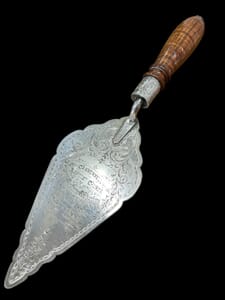
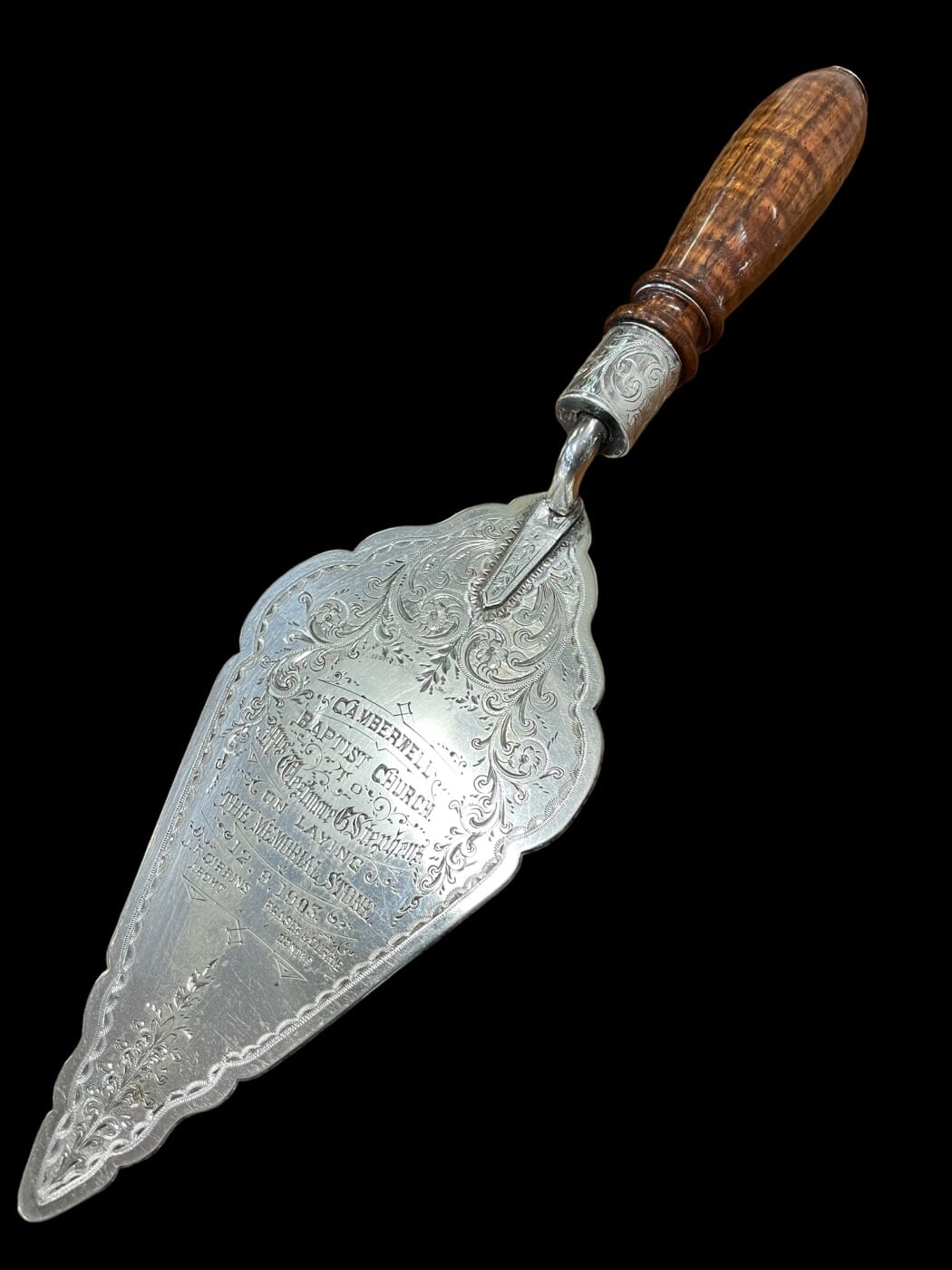
The Melbourne-made presentation trowel in today’s ‘Fresh Stock’ is a terrific piece of Australiana. It has a fiddleback Blackwood handle, and a silver-plate blade, beautifully inscribed:

Australian Silver & Blackwood Trowel, Robertson Silversmith Melbourne 1903

“CAMBERWELL BAPTIST CHURCH / Mrs Westmore G Stephens / ON LAYING / THE MEMORIAL STONE / 12.9.1903. / J.F. Gibbins Archt. / Fraser & Currie Contrs.”

It turns out this was a building built in 1903 on the site of the present building, a brick church constructed in 1940. We tried to find the stone that this trowel was used to ‘lay’ – but no luck, perhaps a Melbourne local may know…. email us if you’re familiar with the church, located right near the Camberwell Junction.
The maker of this trowel is also not very well documented. Robert Robertson came to Melbourne in 1852, and operated as a jeweller throughout the goldfish years, using a rarely seen hallmark ‘RR’. When his son joined the firm, it was ‘Robert Robertson & Son’ – try saying that fast! This piece bears another rarely seen mark, not in the literature – ‘R&S ROBERTSON’.

Robert-Roberston-SIlversmith-Melbourne
Robert Robertson, Silversmith & Footballer – Melbourne, 1887


Research into his career as a silversmith revealed very little documentation – he was a wholesale silversmith, meaning he made pieces for retail jewellers, and they often put their own hallmarks on the pieces they sold. However, he is well documented for a very ‘Melbourne’ reason: Australia Rules Football!

He took up the ‘new’ sport very early, possibly playing in an 1869 match for the Carlton Football Club. He twice captained the team in 1871, was the Carlton Vice President 1871-73, and then from 1874-84 was the Carlton Football Club President!

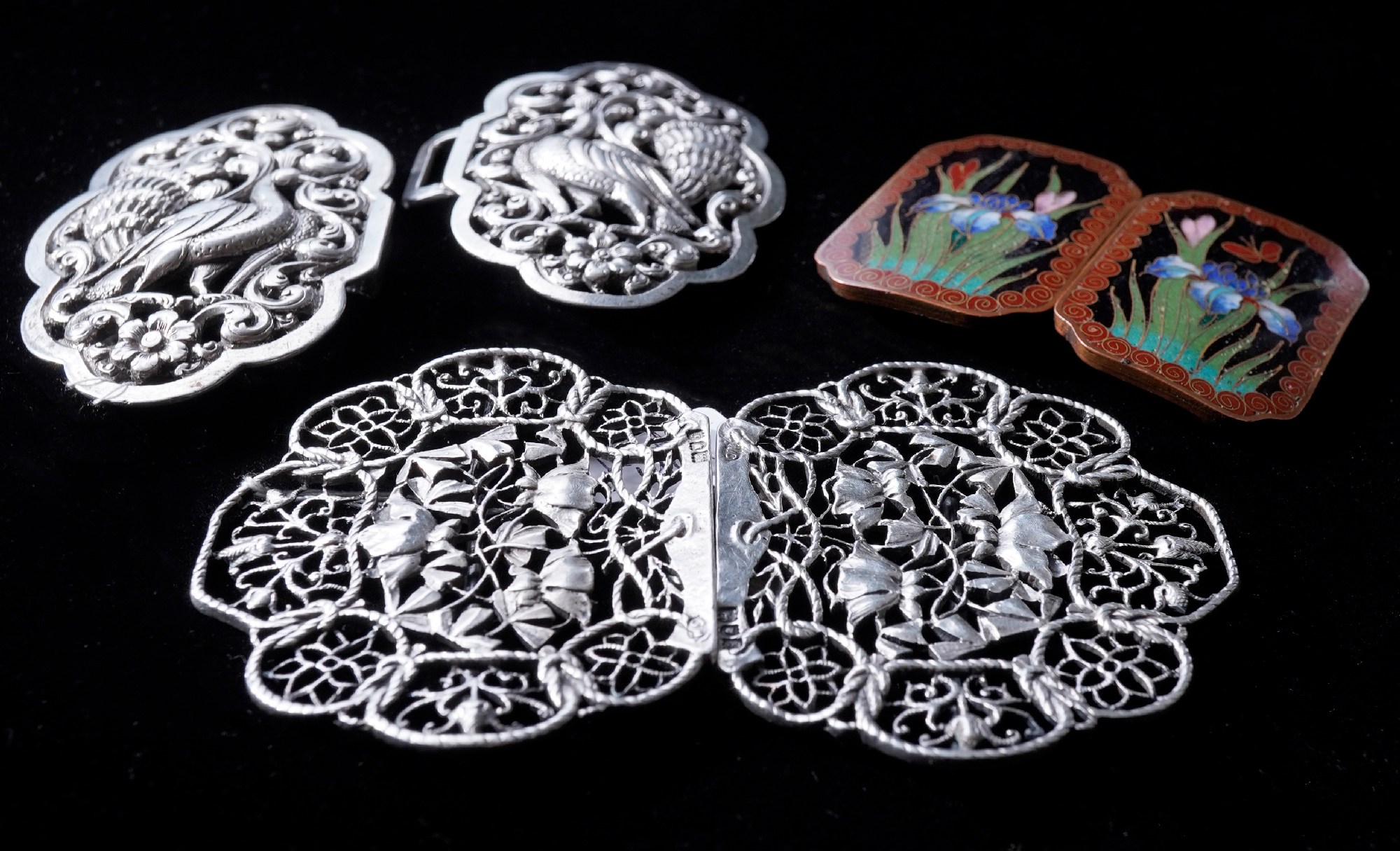
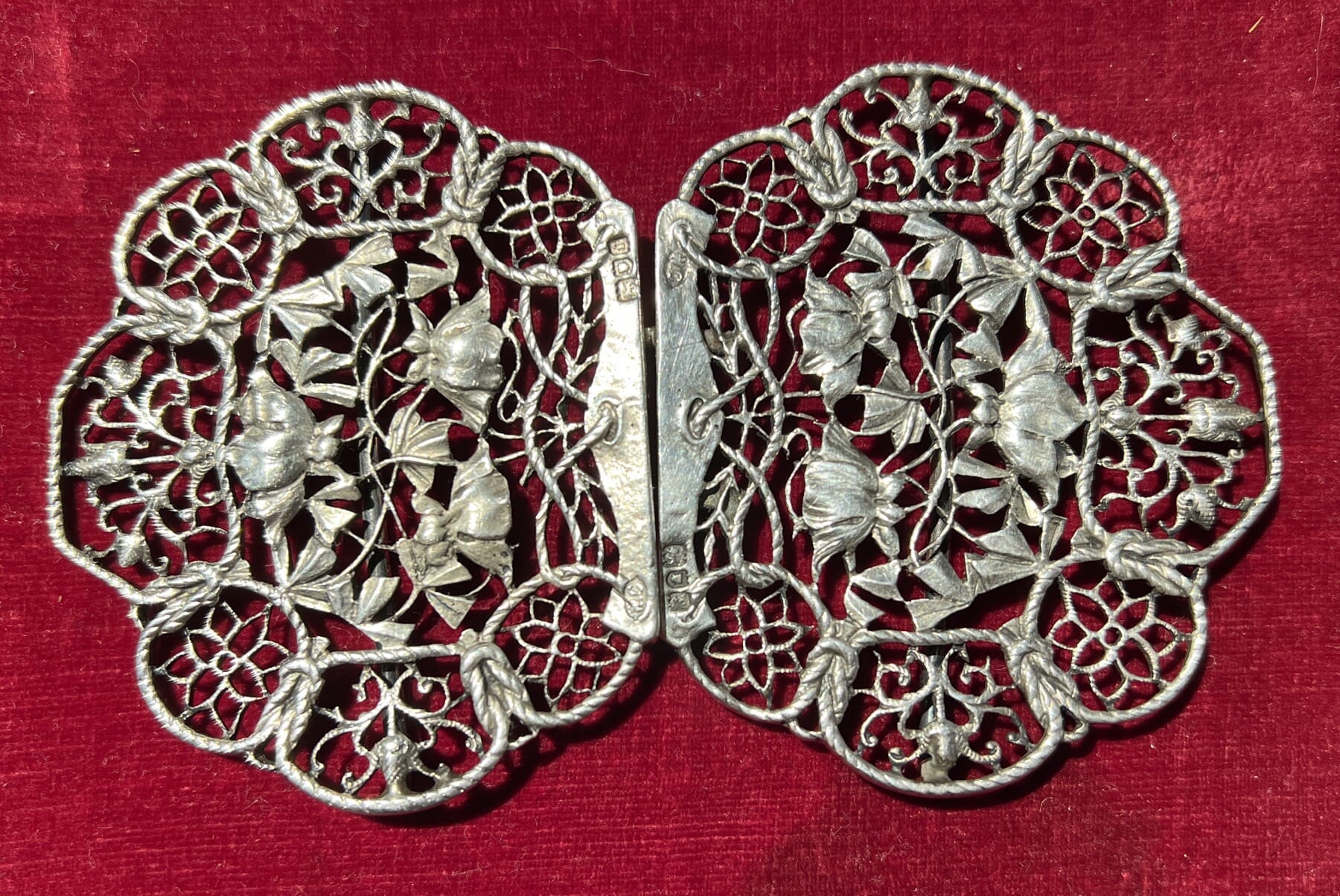
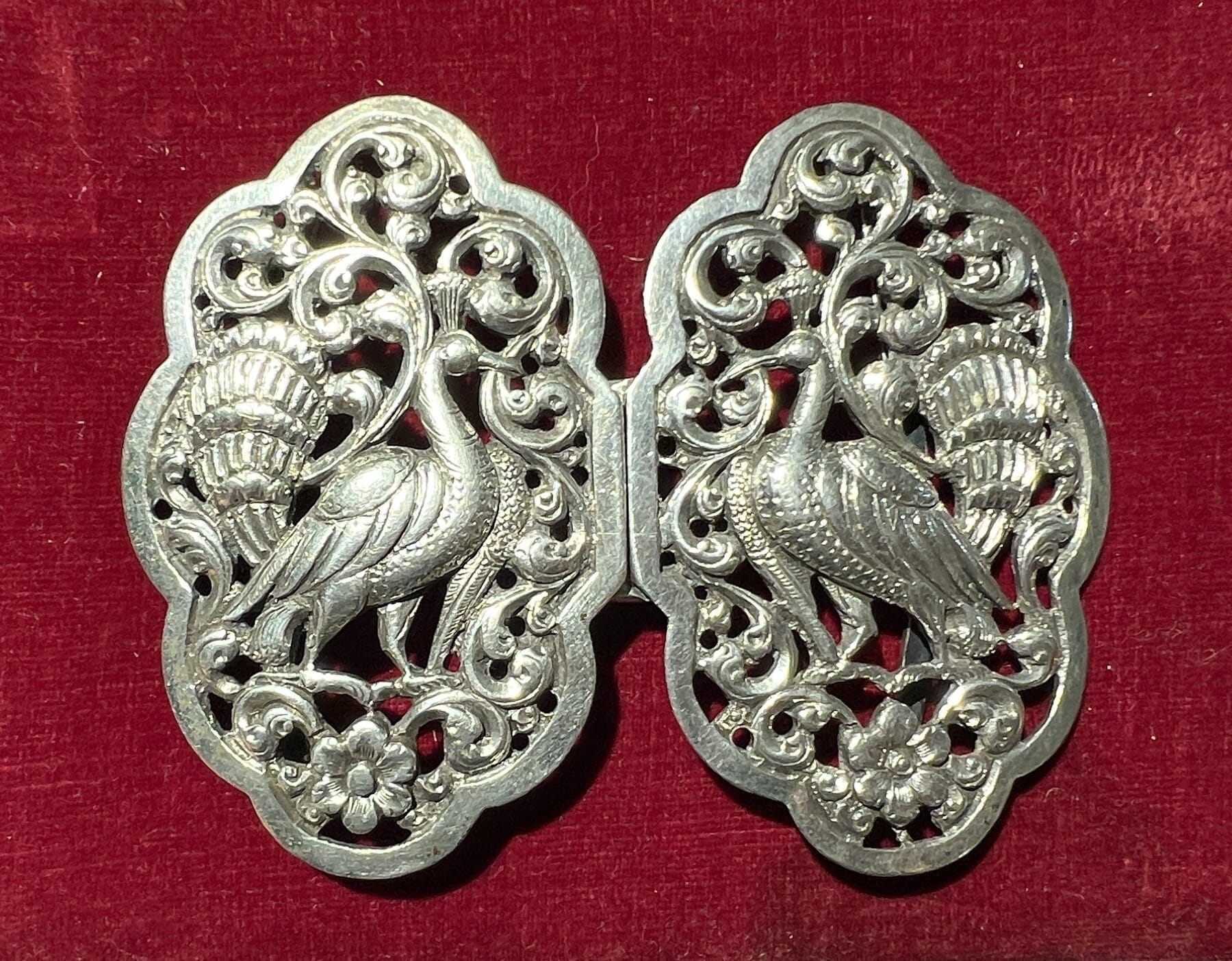
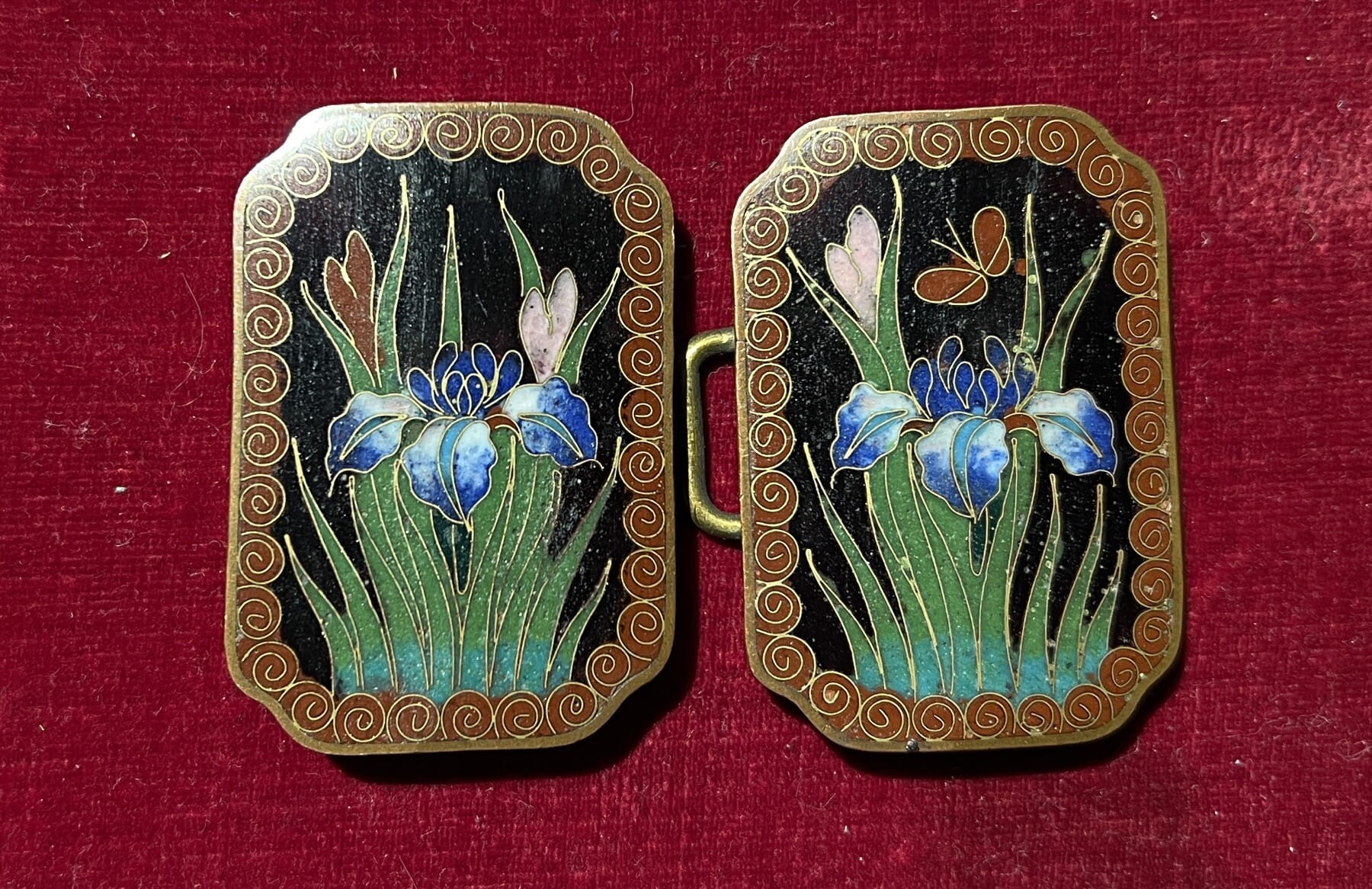
Beautiful Buckles

These exquisite items were used by the fashionable Victorian lady to clasp their thin belts they wore at their waist. The Art-Nouveau example in particular is a very fine example.

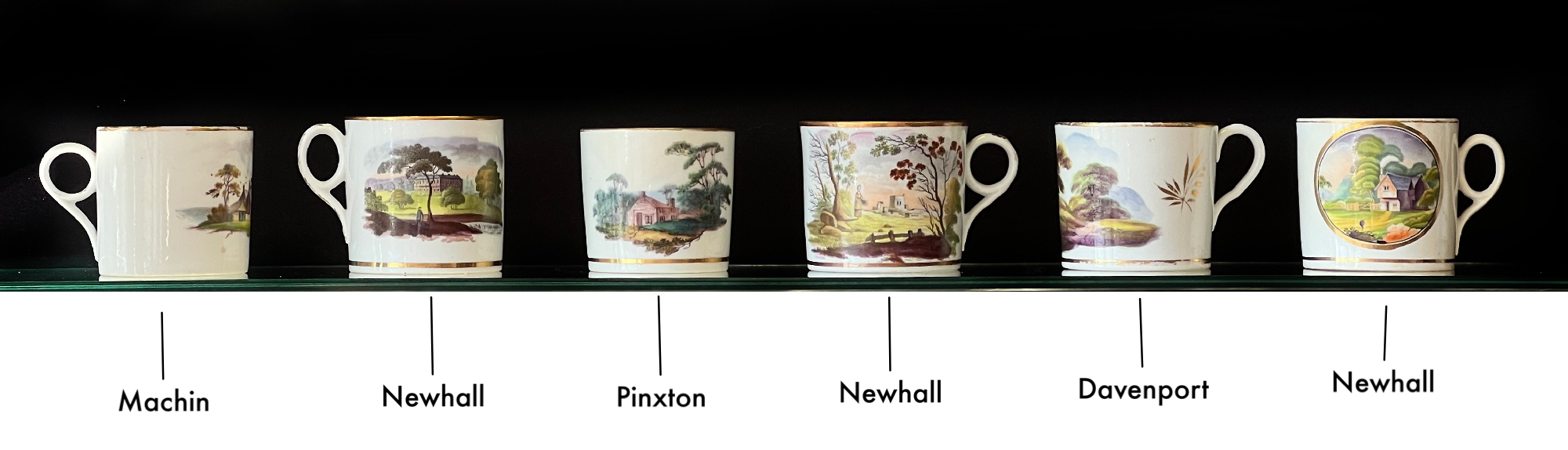
Early 19th century English Porcelain Coffee Cans at Moorabool Antiques, Geelong

Coffee Cans

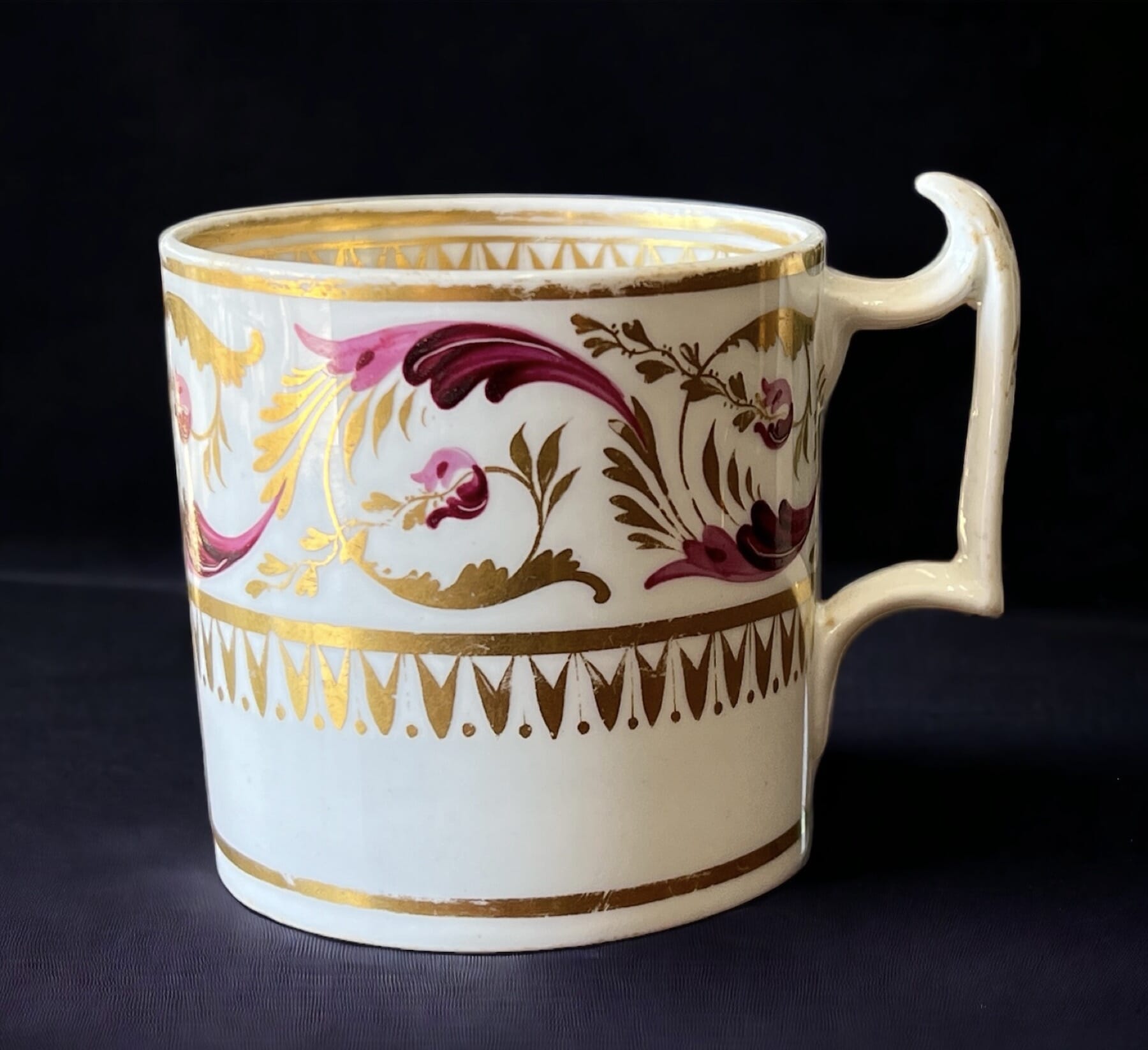
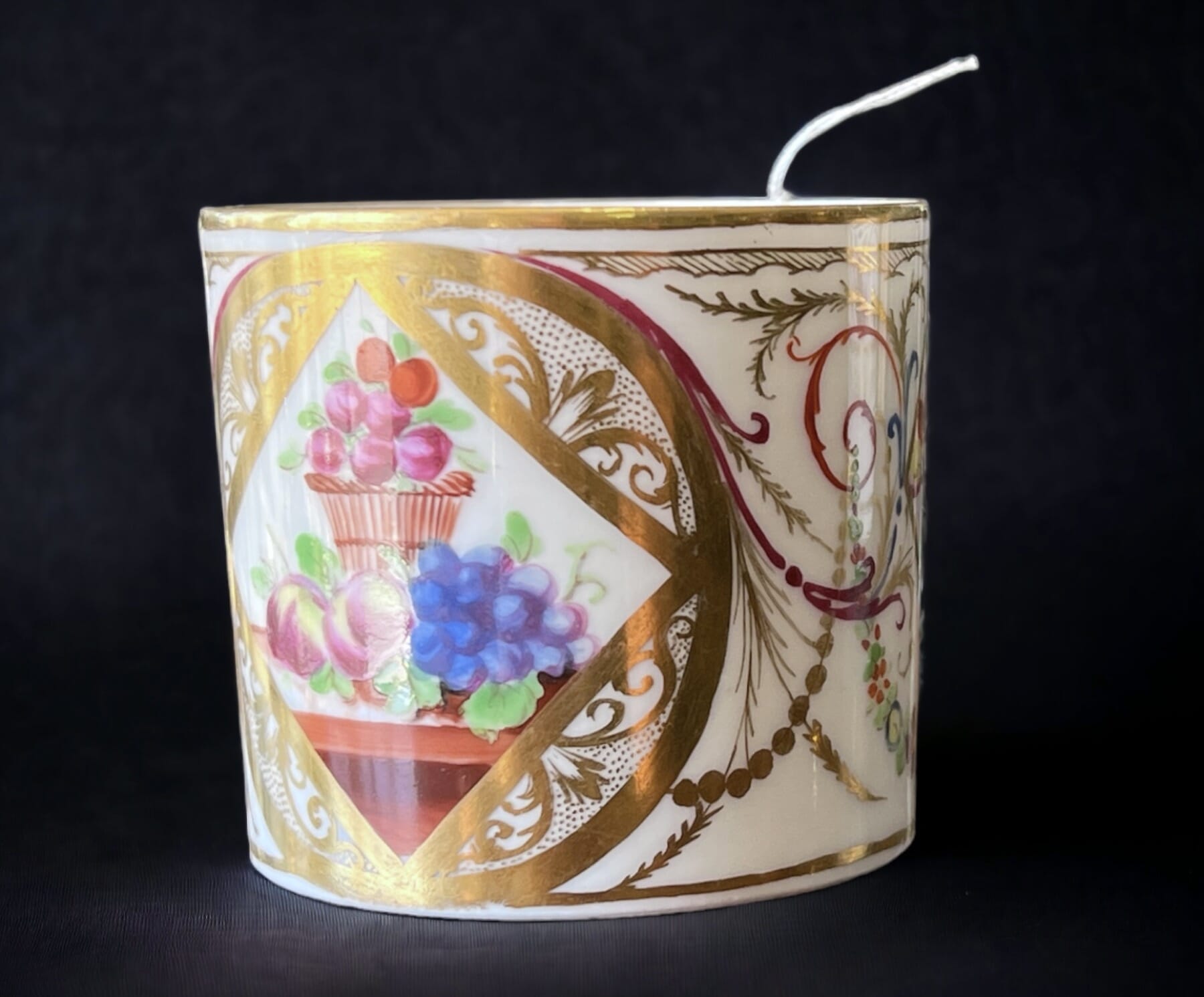
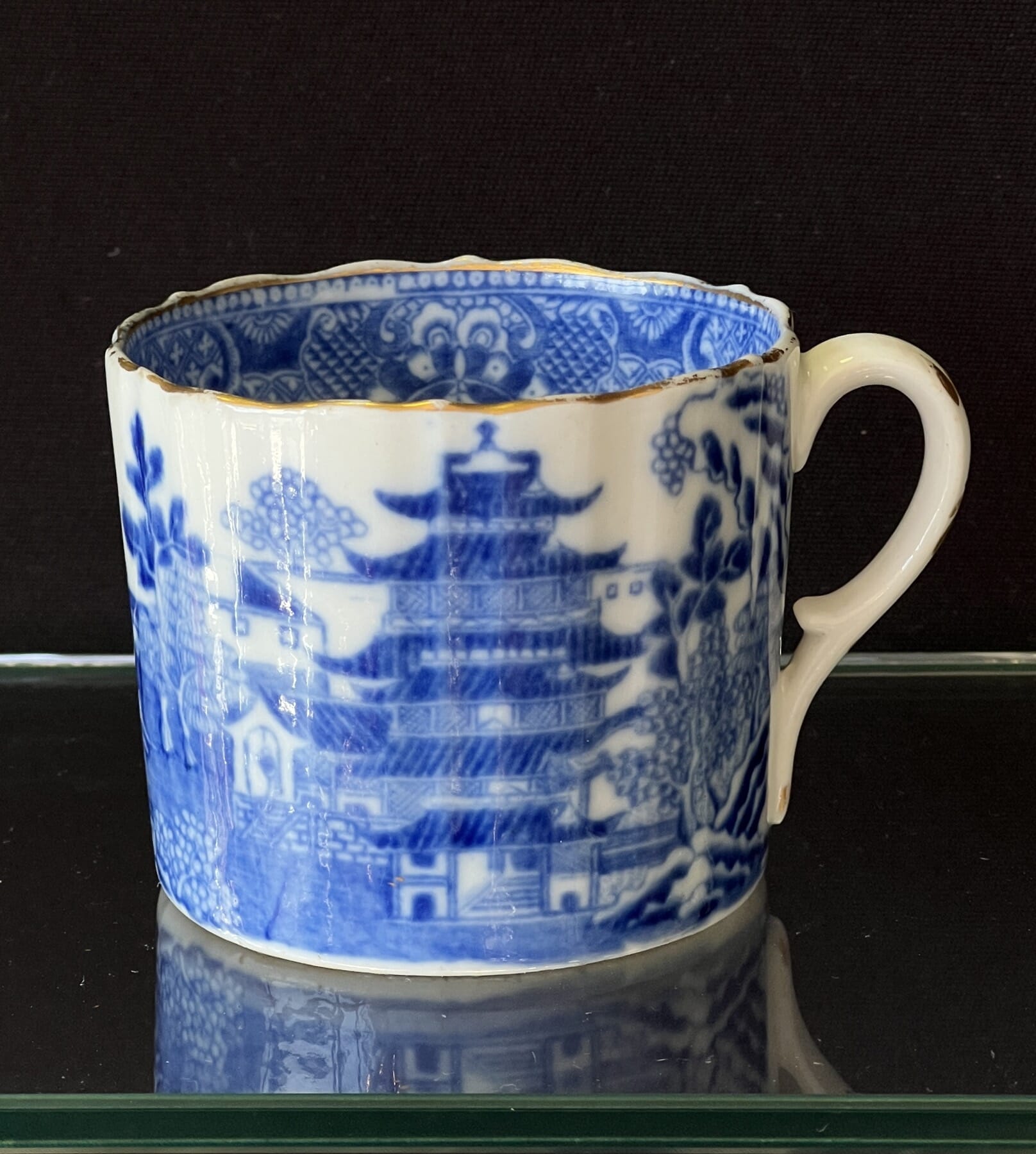
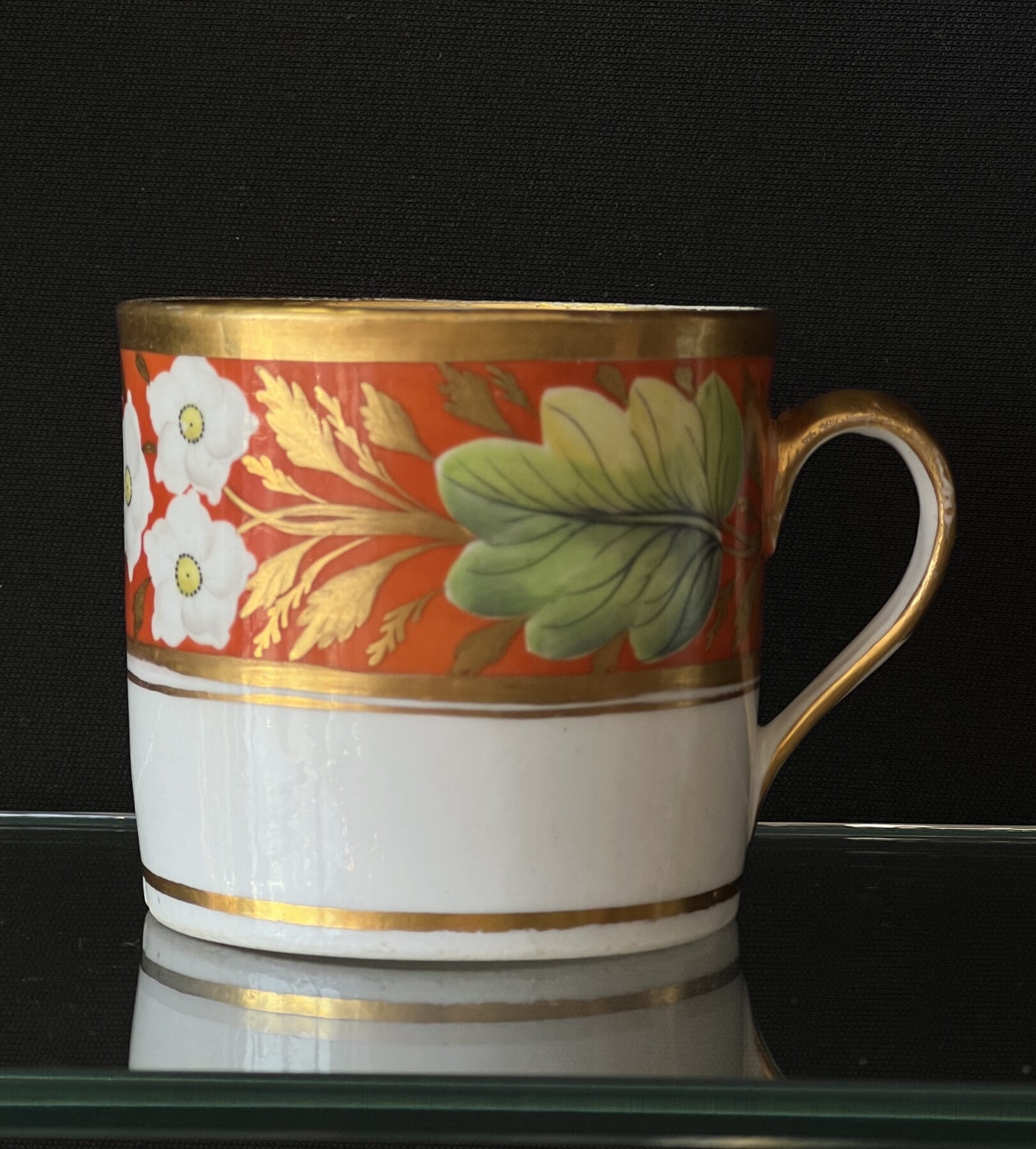
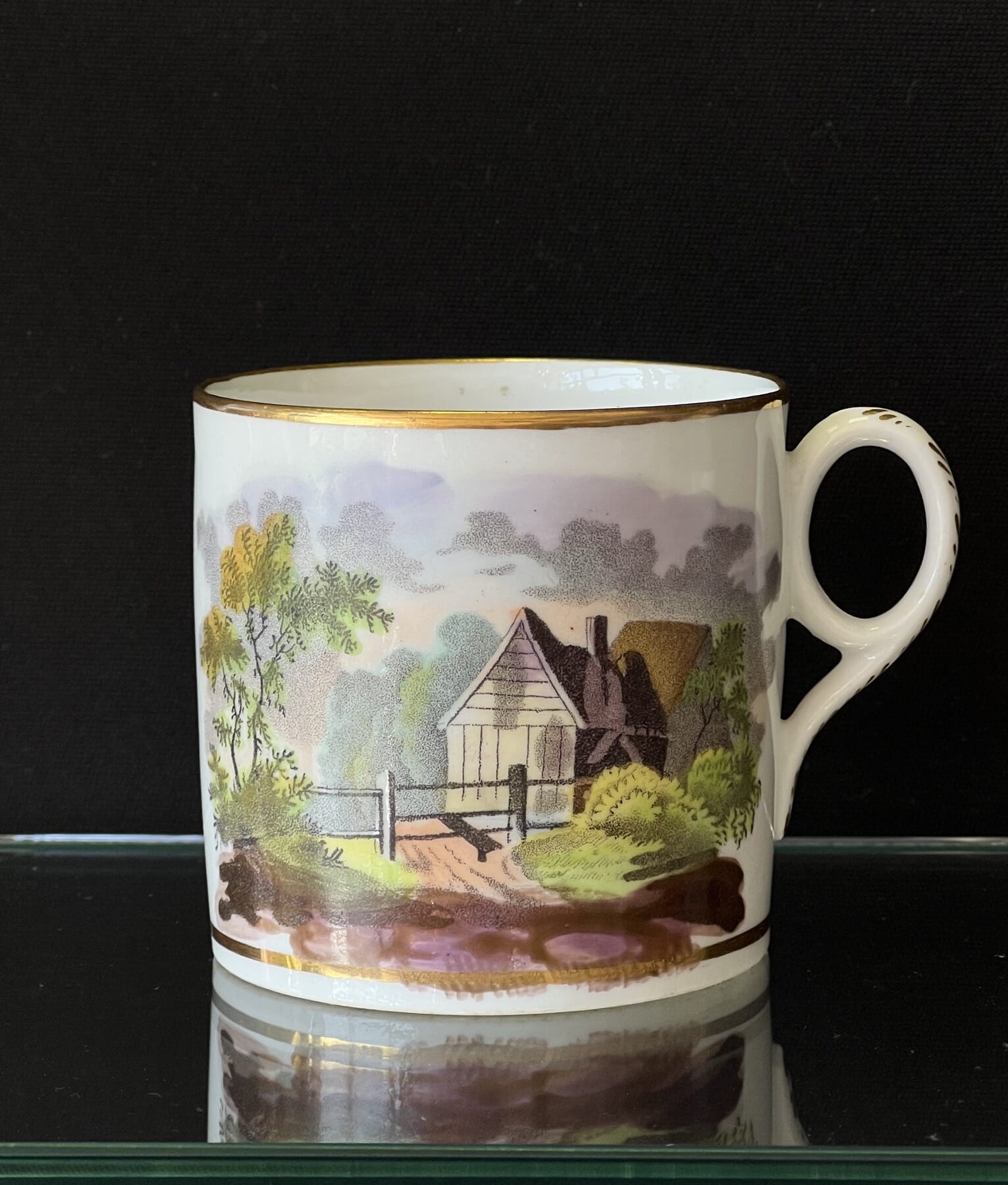
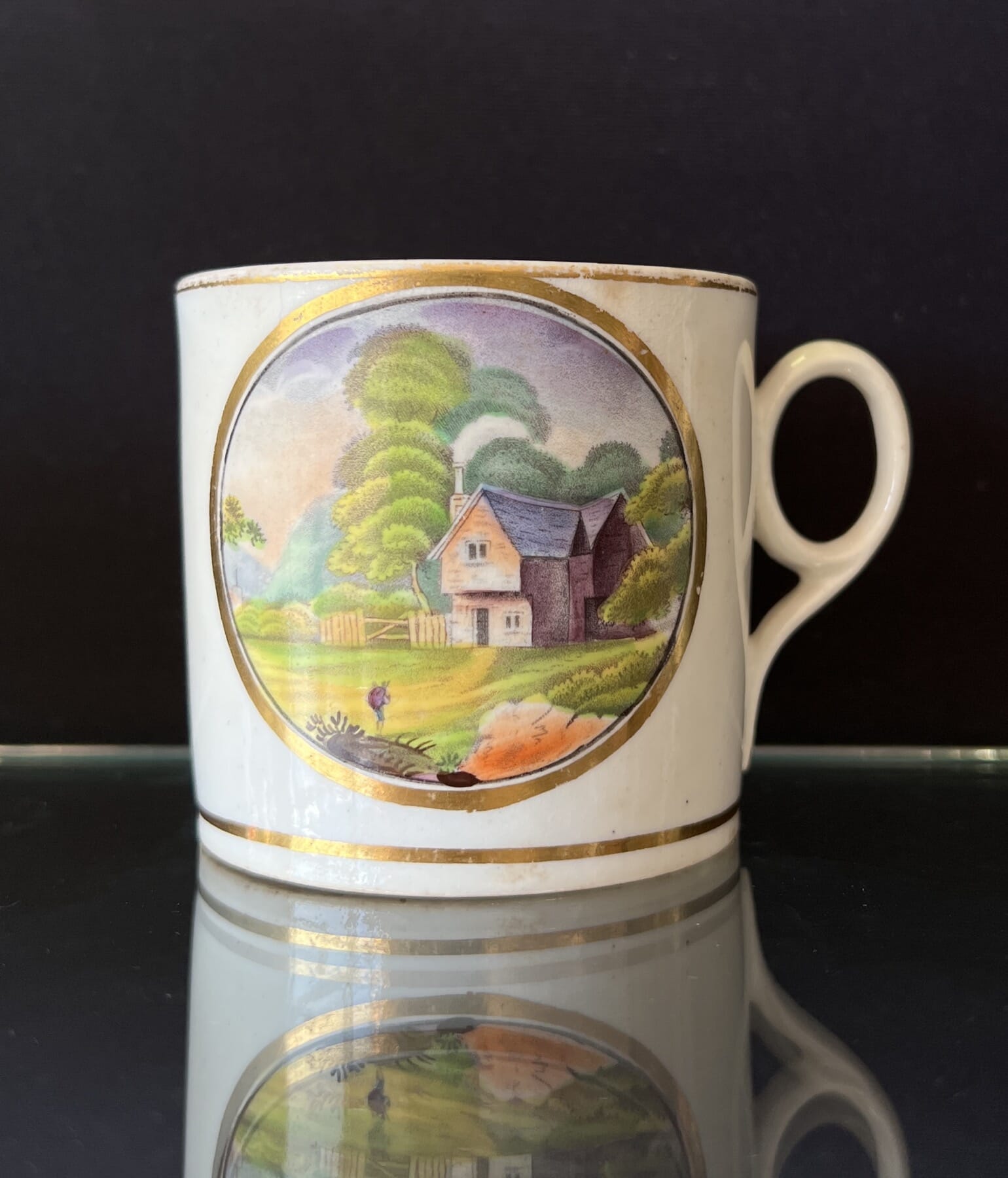
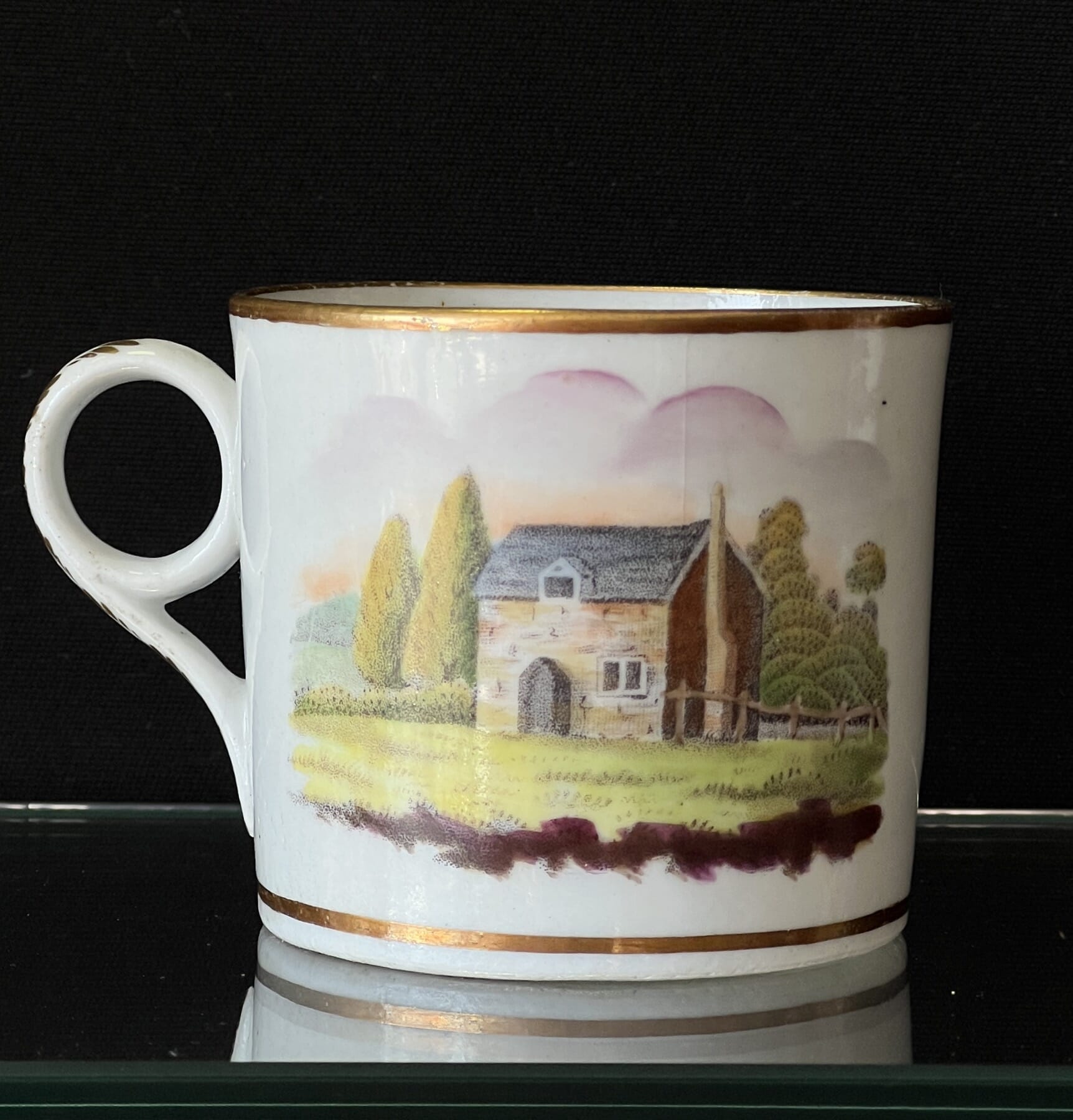
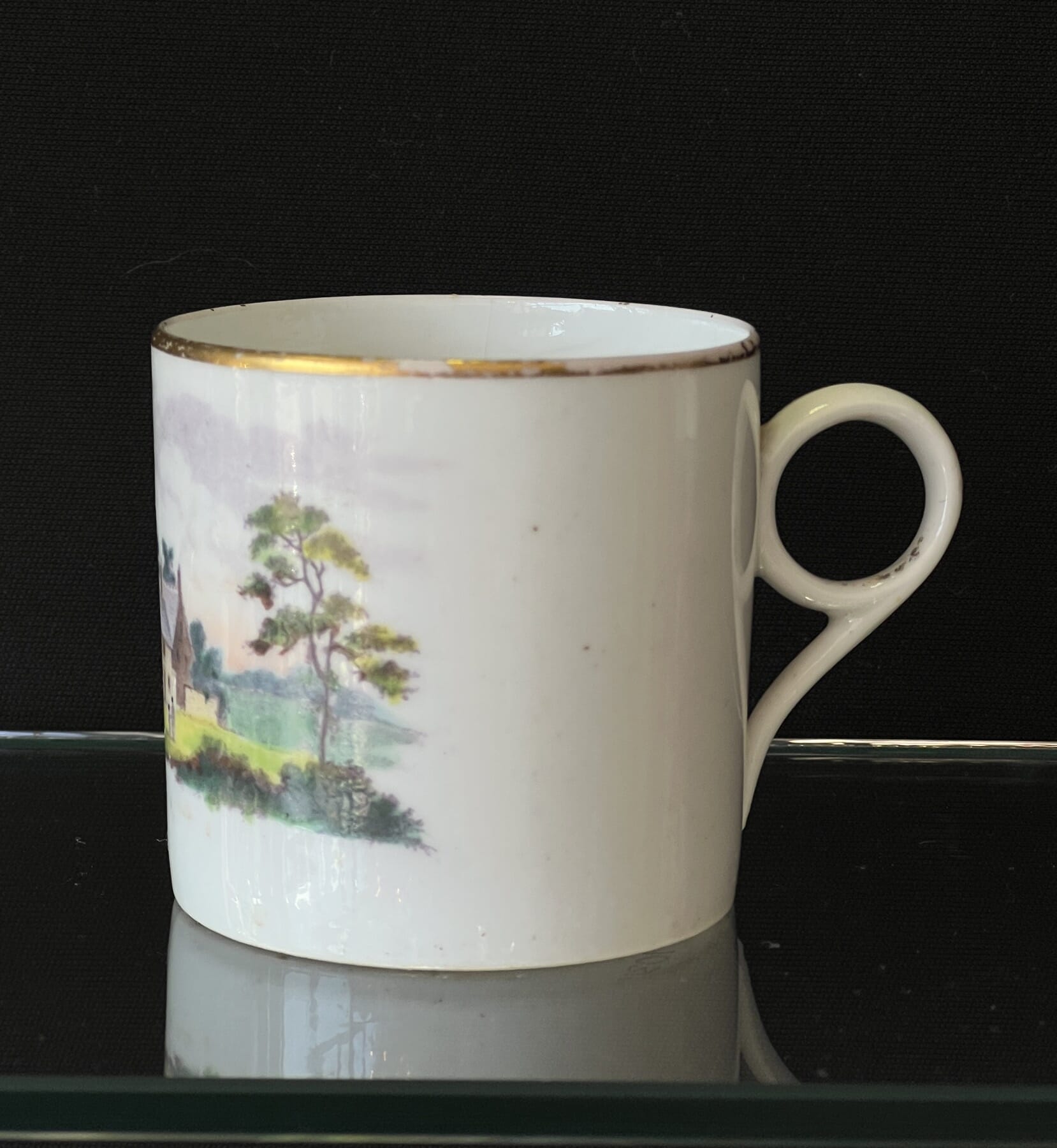
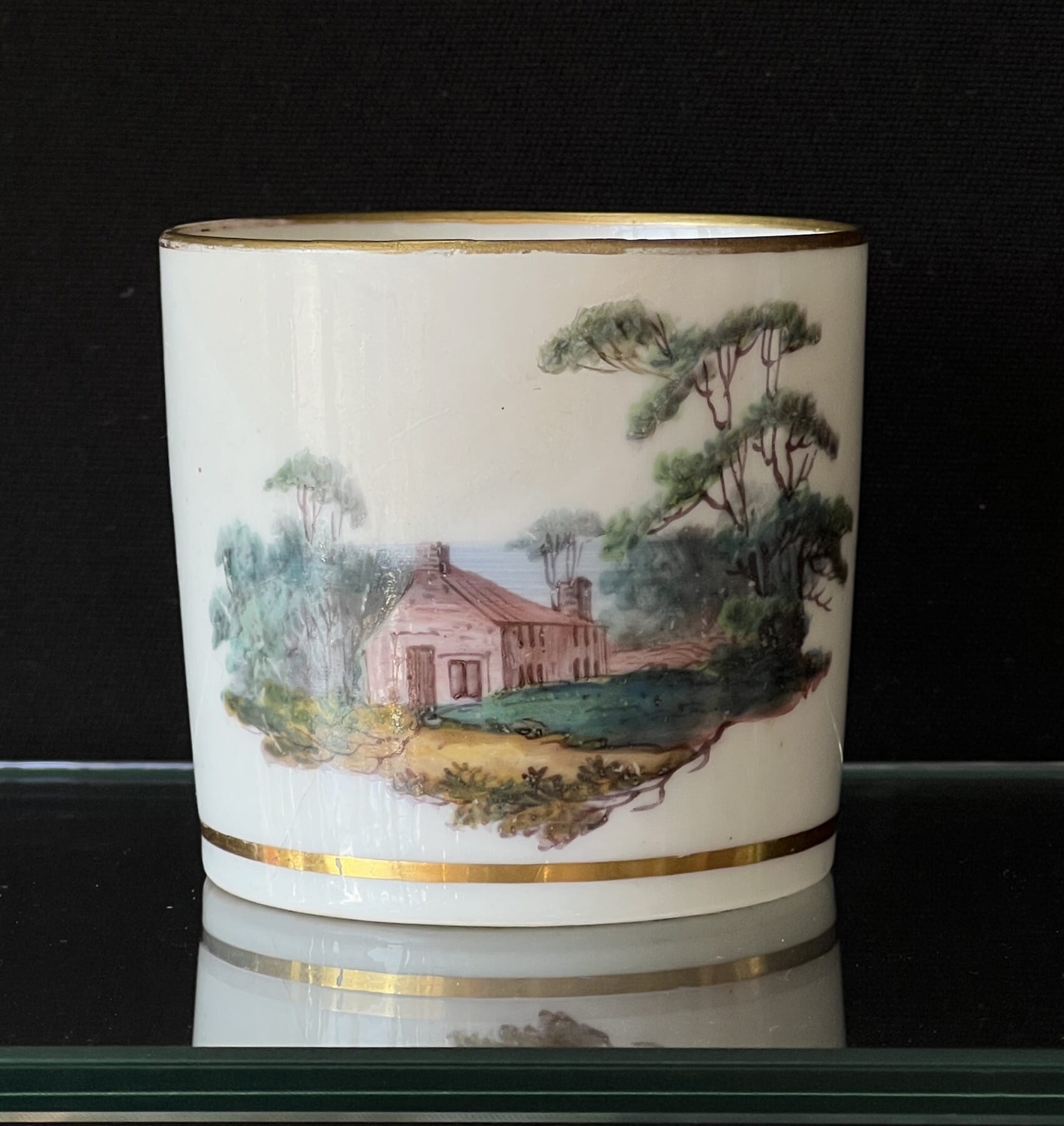
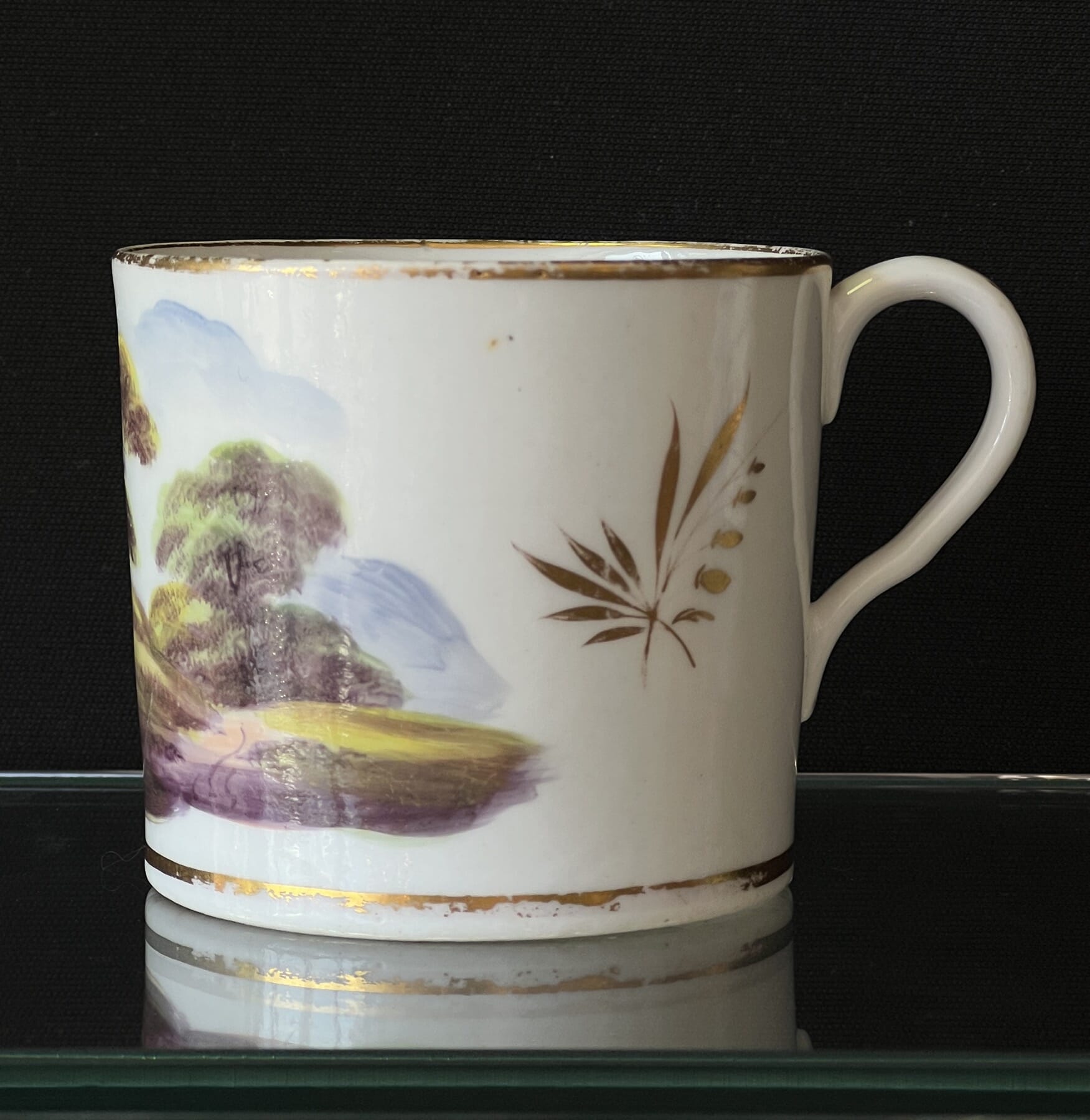
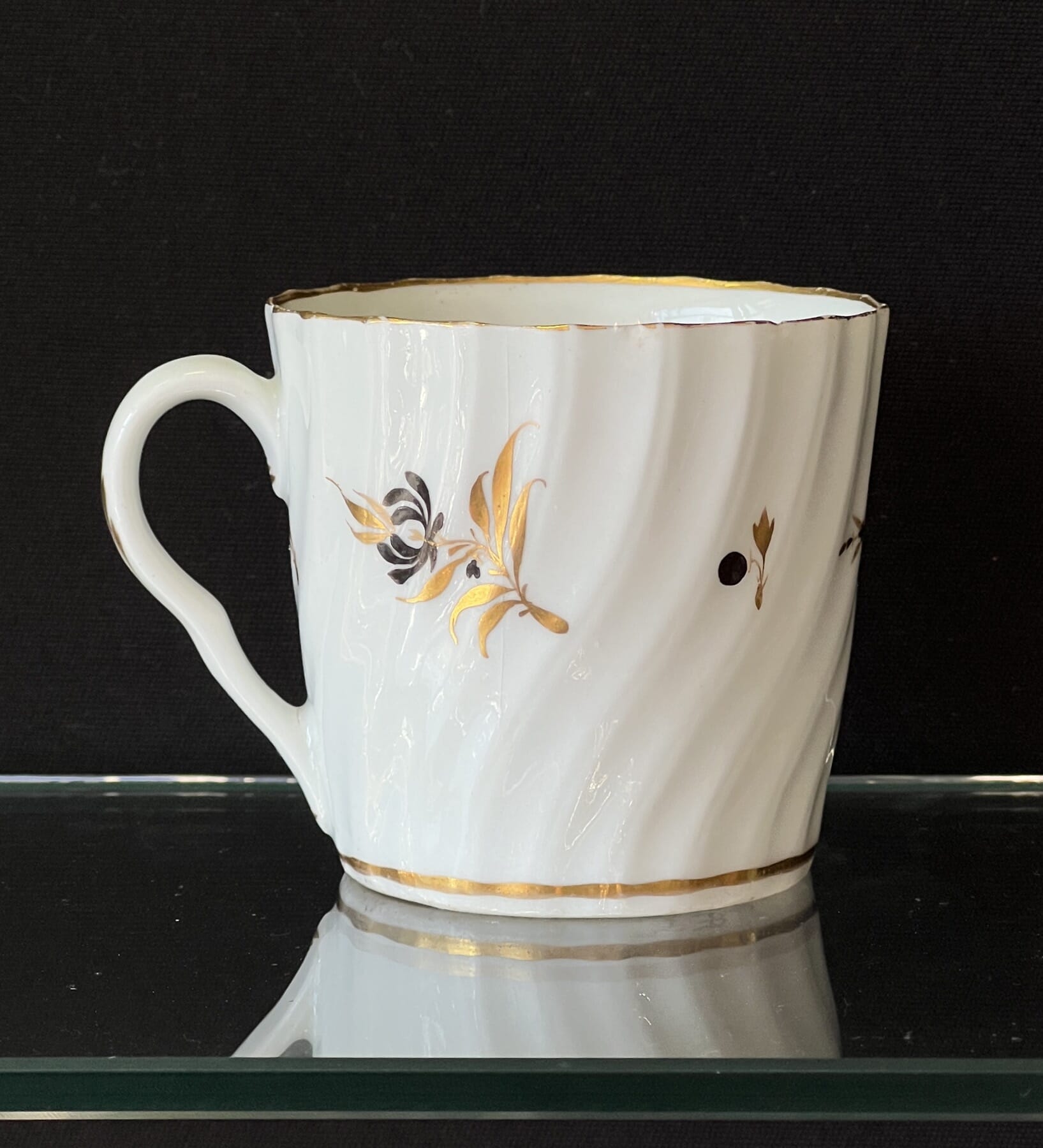
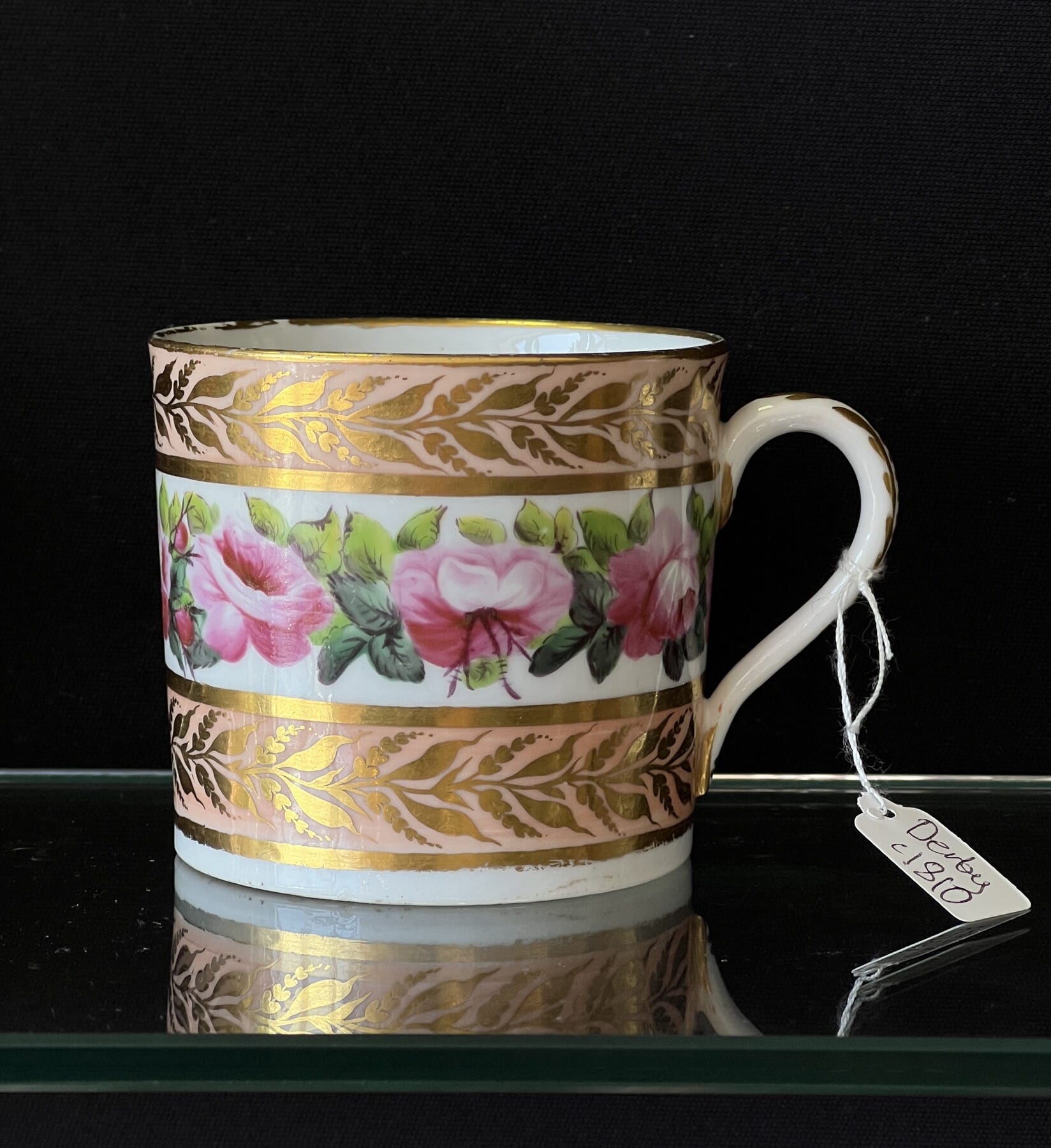
For all Coffee Can Collectors – here’s a gorgeous group of miniature masterpieces, including a selection of landscapes…. plus other early 19th century makers, including Pinxton, Machin, Spode, Derby, Coalport, Flight Worcester, Derby, Coalport, and two fine French examples.
Fresh to Stock

Previews…..

We have some exciting pieces due to be released shortly – have a preview here:

Posted on

Fresh Stock: Arts & Crafts, Ida R. Outhwaite fairy, WMF, + More…

Welcome to the latest offerings from Moorabool Antiques.
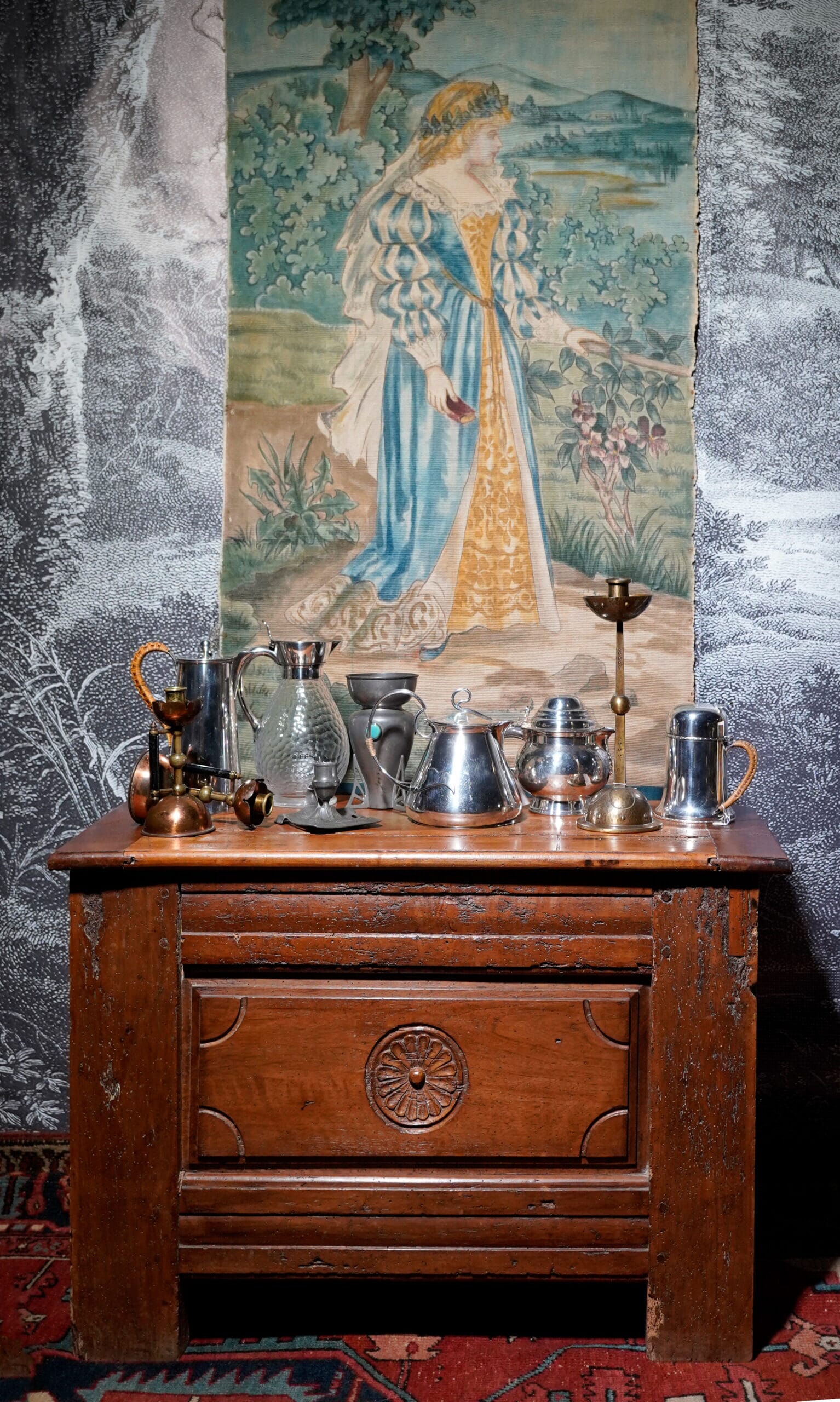
Fresh to stock is a wonderful selection of Furniture, Silver, Pewter, Ceramics & Pottery with one thing in common….. they belong to the fertile artistic period in the late 19th/early 20th century, where styles such as the Pre-Raphaelites, the Arts & Crafts, the Art Nouveau, and the more ‘Modernist’ designs all found their roots.
Fire-screen containing an actual lyre bird’s tail between glass, circa 1900 – ex-Moorabool Antiques stock.

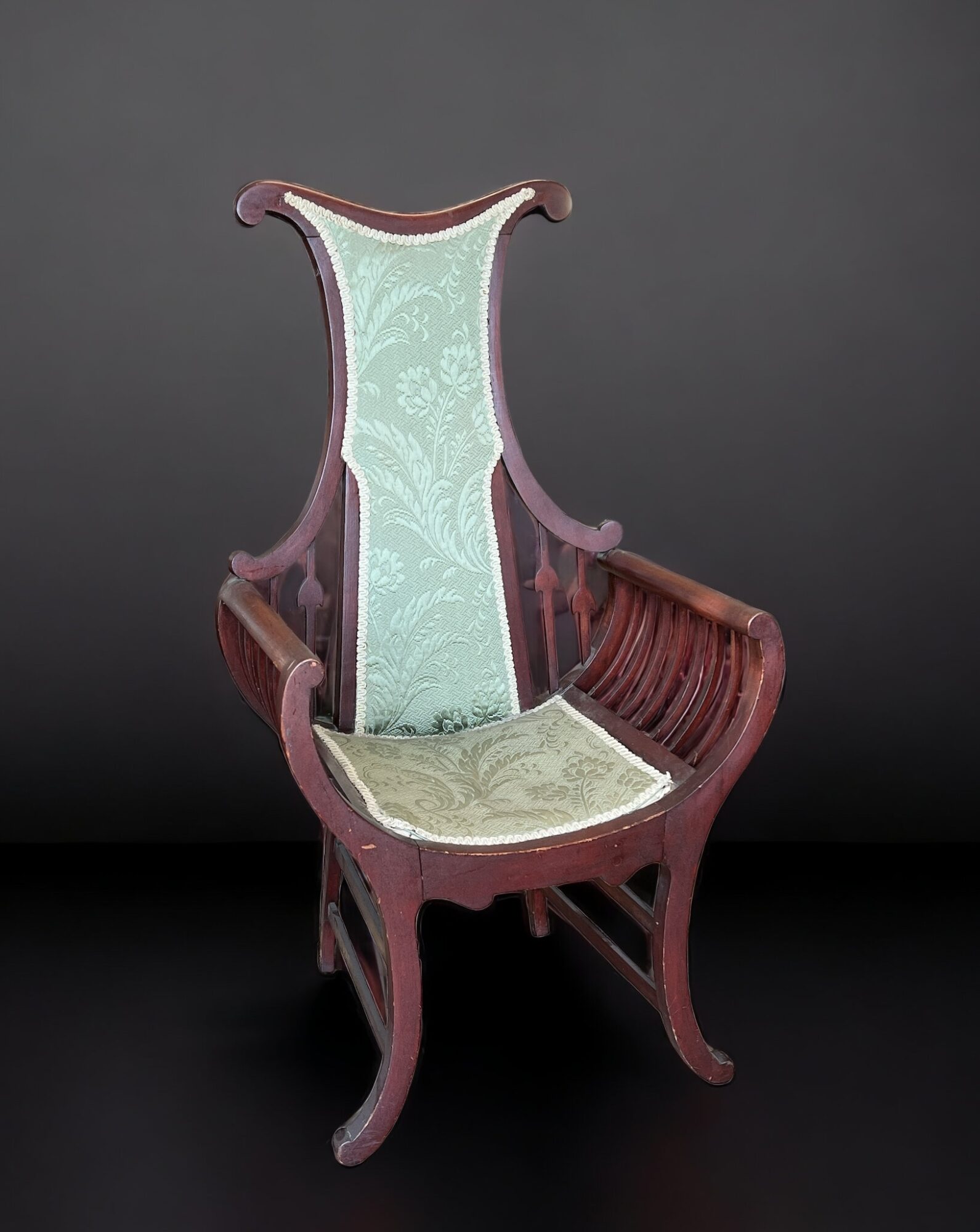
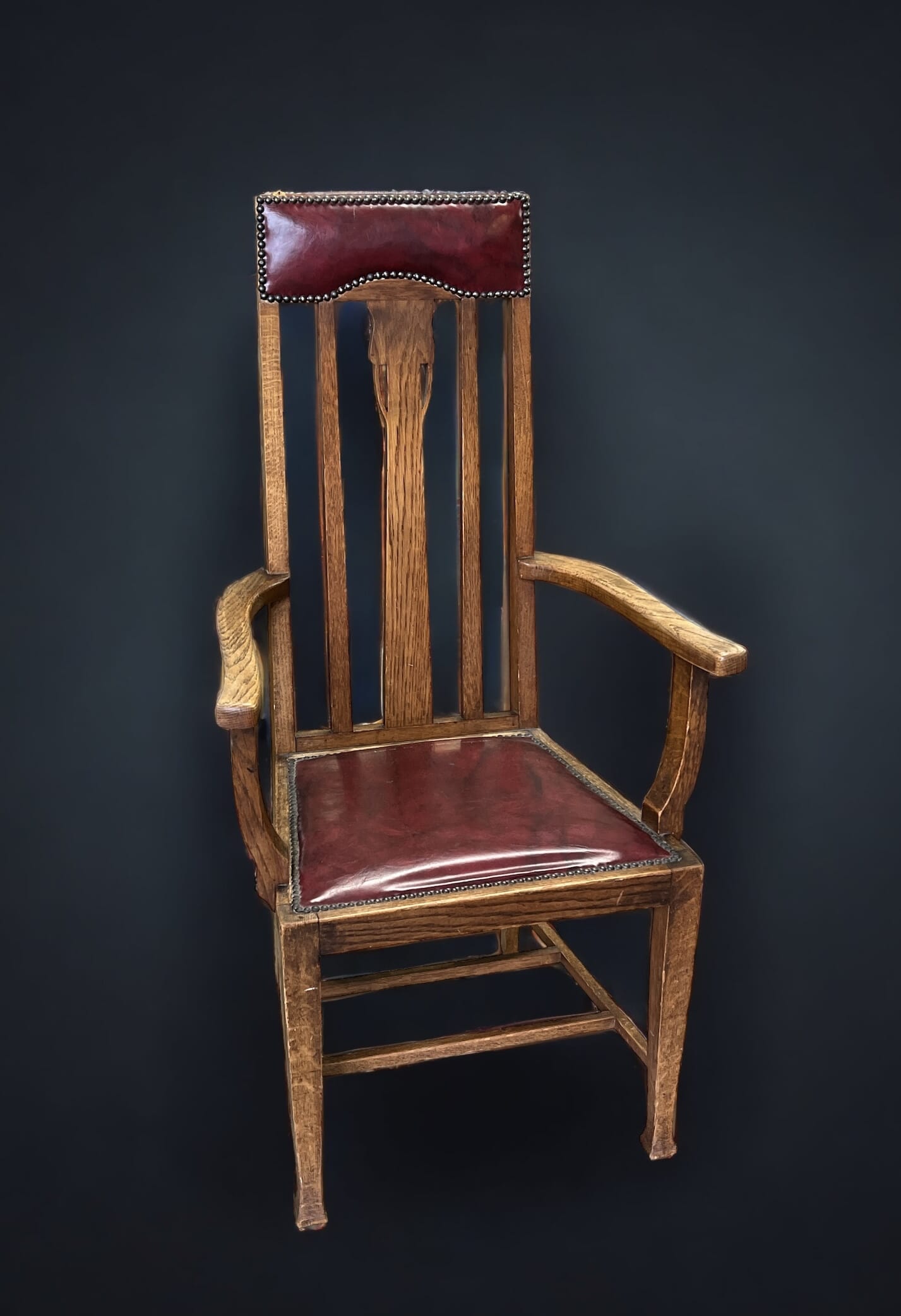
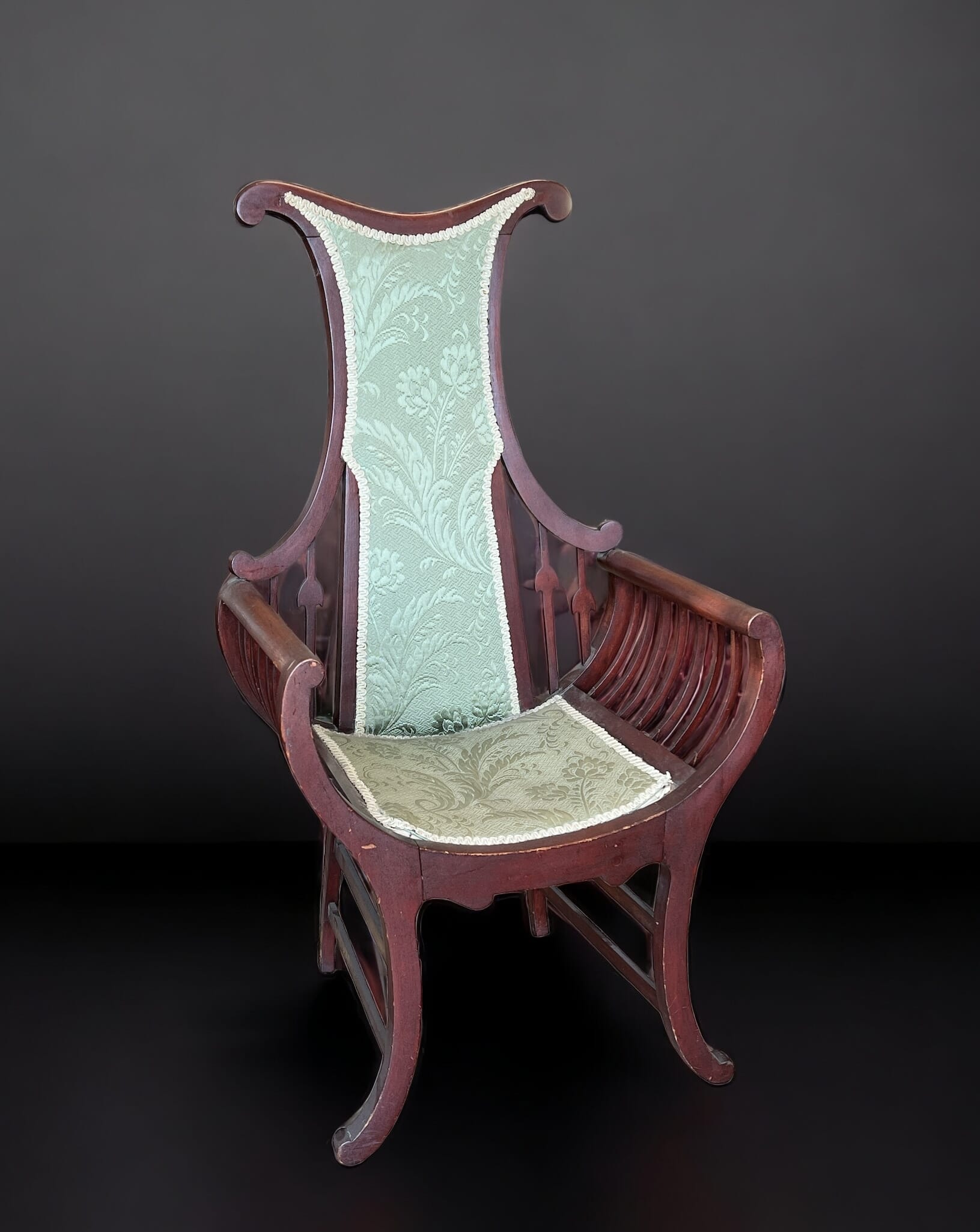
In Australia, the period saw a flourishing group of artists exploring the rest ideas from Europe, but giving them an Australian meaning. The elaborate Art-Nouveau style of the ‘throne chair’ in today’s Fresh Stock is a fine example: made from Australian hardwood, the remarkable design is a complete departure from the Victorian tradition of how a chair should look. The tall, skinny back is rather distinct, taking on the form of a lyre bird’s tail.

Australian Hardwood Art Nouveau chair, Lyre-bird back, c. 1910

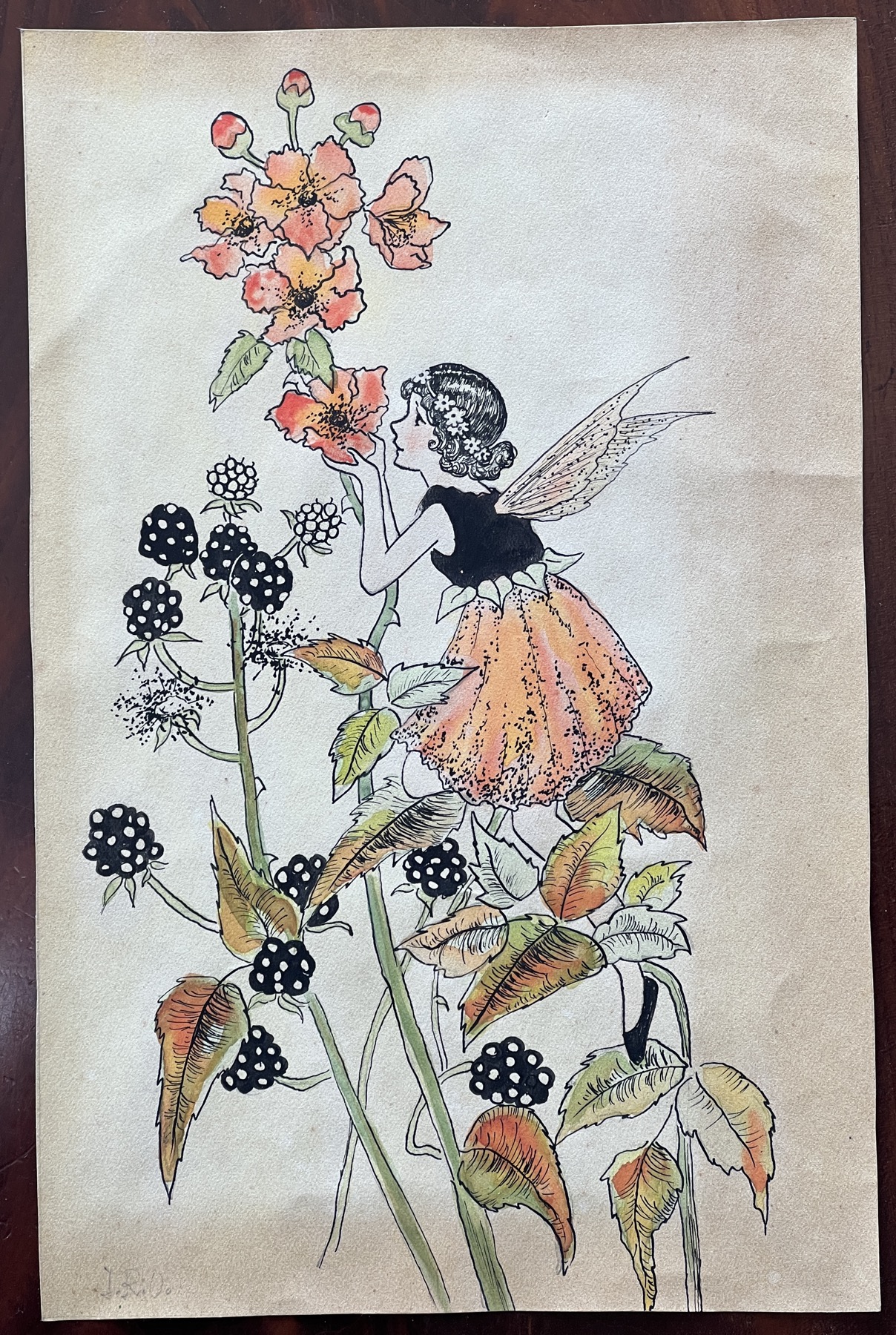
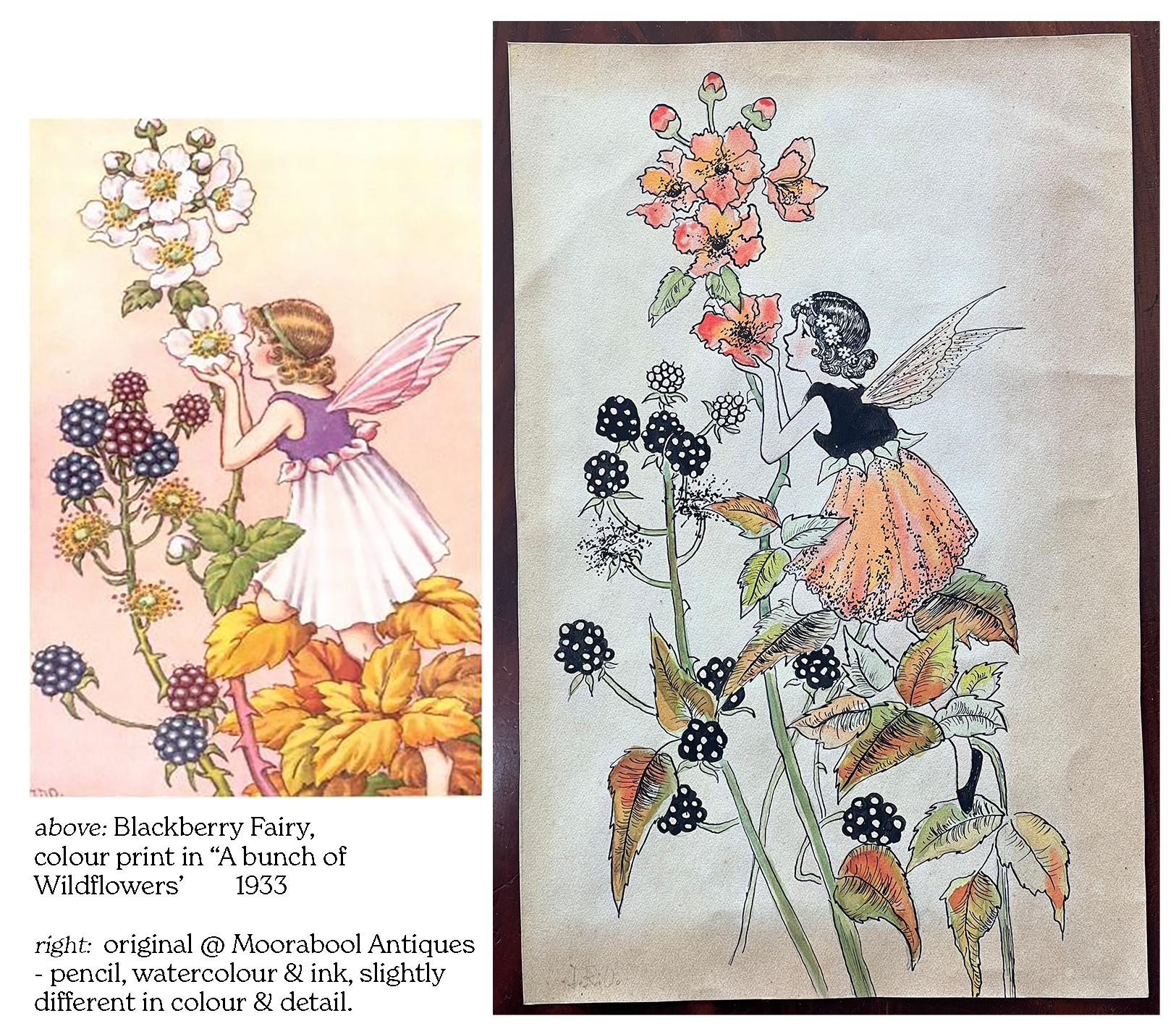
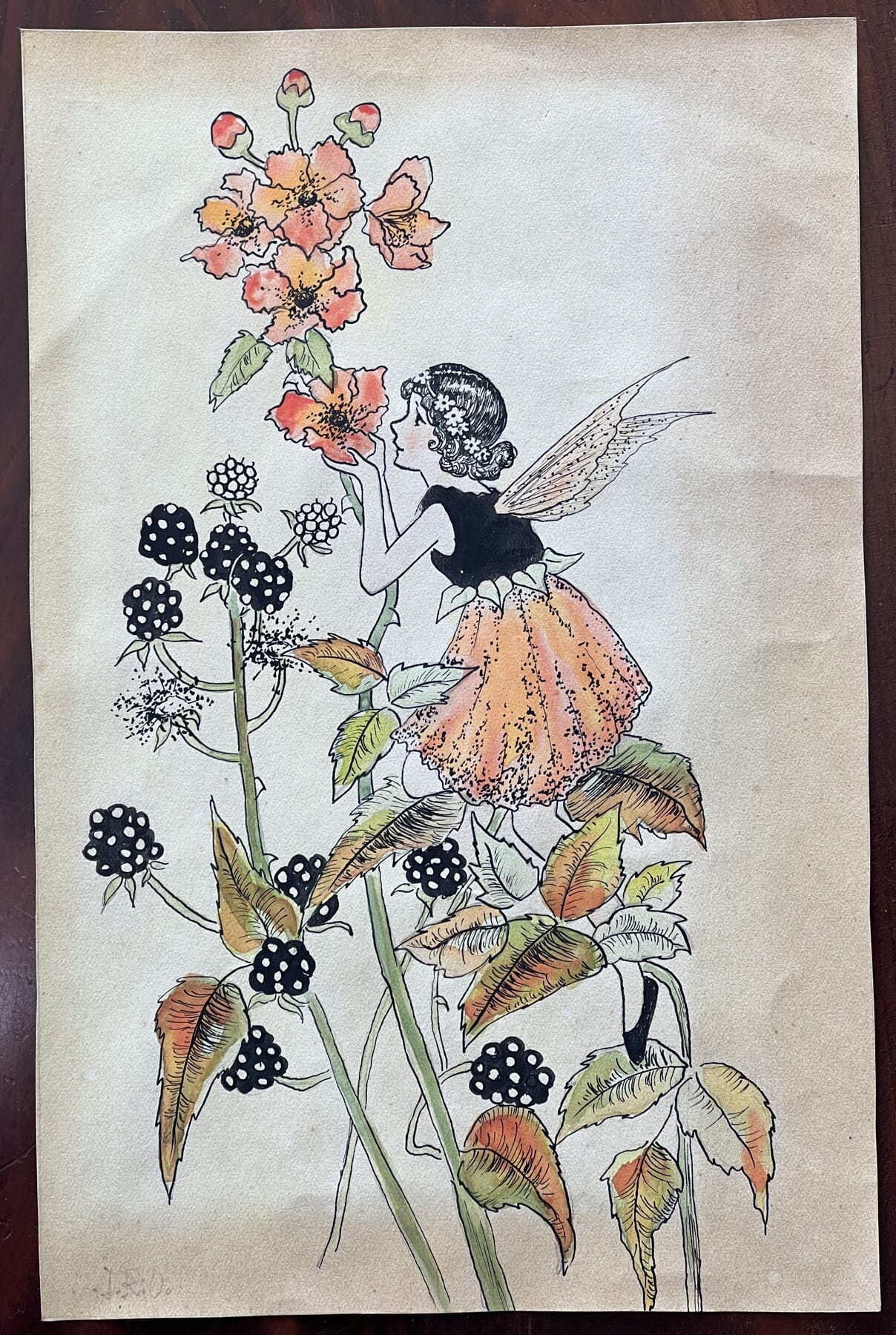
One of the highlights of this year is the watercolour recently identified amongst the many paintings in the collection of the late John Rosenberg. It’s an Ida Rentoul Outhwaite fairy, familiar from the many children’s books she illustrated in the 1920’s-30’s. While her style is borrowing from the overseas greats of book illustration of the time – Beardsley, Rackham and Greenaways – she invents an endless contrast to anything else produced prior by incorporating the Flora & Fauna of Australia.
(This example is not the best to illustrate this theme, as it has nothing Australian in it – the Blackberry being an introduced pest, and therefore also its attendant fairy!)

Ida Rentoul Outhwaite original watercolour, c.1933 at Moorabool Antiques
Ida Rentoul Outhwaite's 'Blackberry Fairy' from 'A bunch of wildflowers' 1933 - with original signed sketch
Spot the Difference!

While many of these are now broken up for their prints, this example isn’t a print: it’s an original pencil sketch, which has been coloured with watercolours & finished with her signature black ink outline and details. It is a prototype sketch for the illustration of ‘The Blackberry Fairy’, one of 6 colour prints included in her 1933 publication ‘A Bunch of Wildflowers’. It was badly framed in such a way that the signature – her initials ‘I.R.A.’ – were covered by the mount! Taking it off & discovering the printed version was quite a thrill: note the differences between our version and the printed version, indicating there must be another with the different details out there, from which the print for the book was made.

Henry Wilkinson and Co, 1892
Silverplate jug showing Christopher Dresser influence, Henry Wilkinson and Co, made in 1892. This precise date is possible as the hallmark was only registered that year – and they also sold out & therefore ceased to use it the same year!

The greatest of the Art & Crafts ‘influencers’ was Dr Christopher Dresser. His design philosophy was radical in the Victorian world, which by the 1870’s was stagnating, repeating earlier designs in ever-more complex convulsions of rococo scrolls and classical columns. Instead, he looked to the East – being the first European to be granted a travel passport in Japan in the 1870’s, where he travelled from end to end, examining Japanese crafts and then bringing the simplicity and elegance of good design back to England. He spent a huge amount of effort influencing manufacturers to create elegant, useful wares. In today’s fresh stock are a number of pieces that look like they should be made well into the 20th century – but are in fact 19th century products. Dresser freely distributed his designs, and published a number of books on the subject; many potters and metal workers used these designs as they caught the attention of the ‘hip-crowd’ of the late 19th century. He was the ‘Social Media Influencer’ of his time!

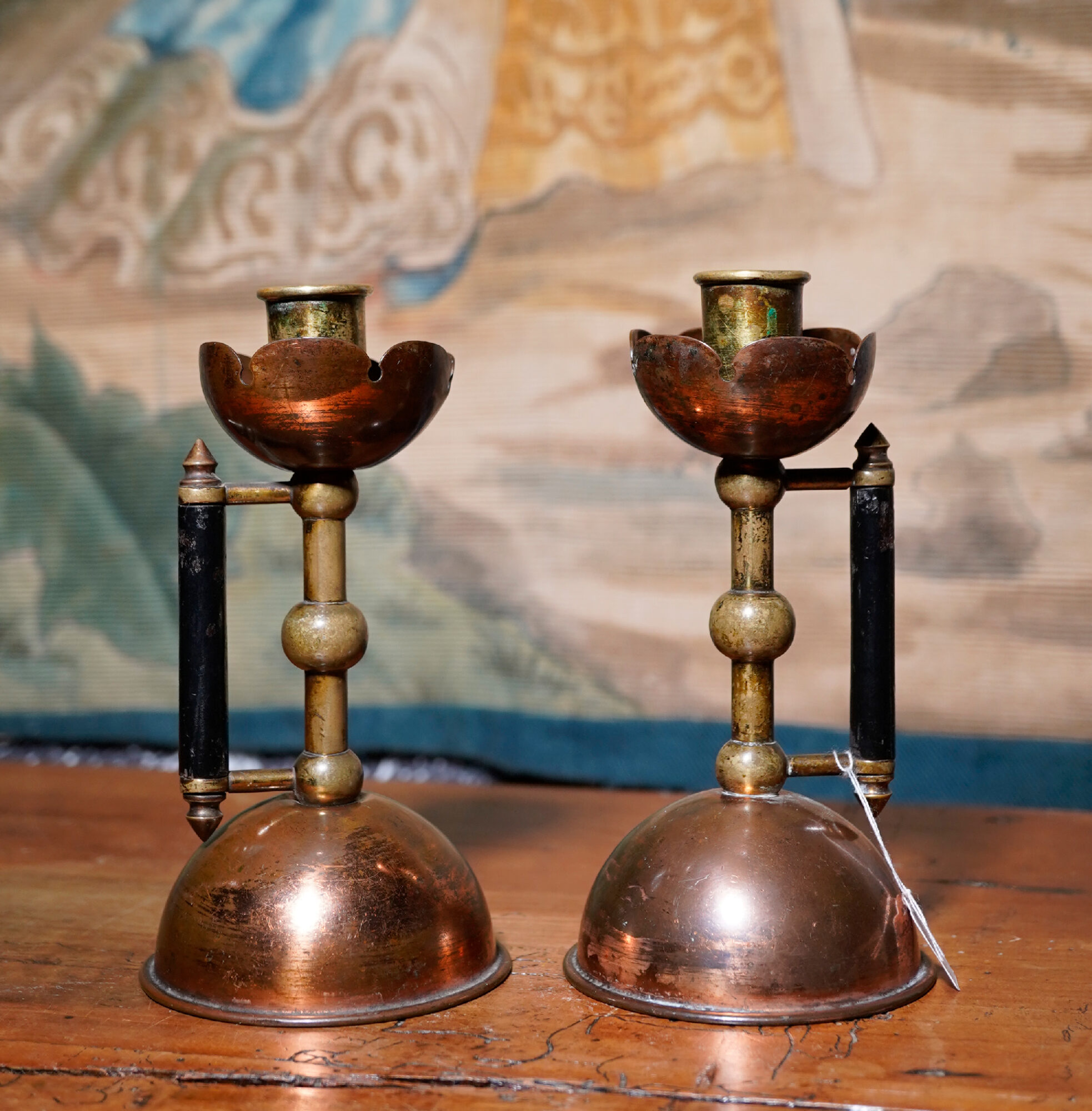
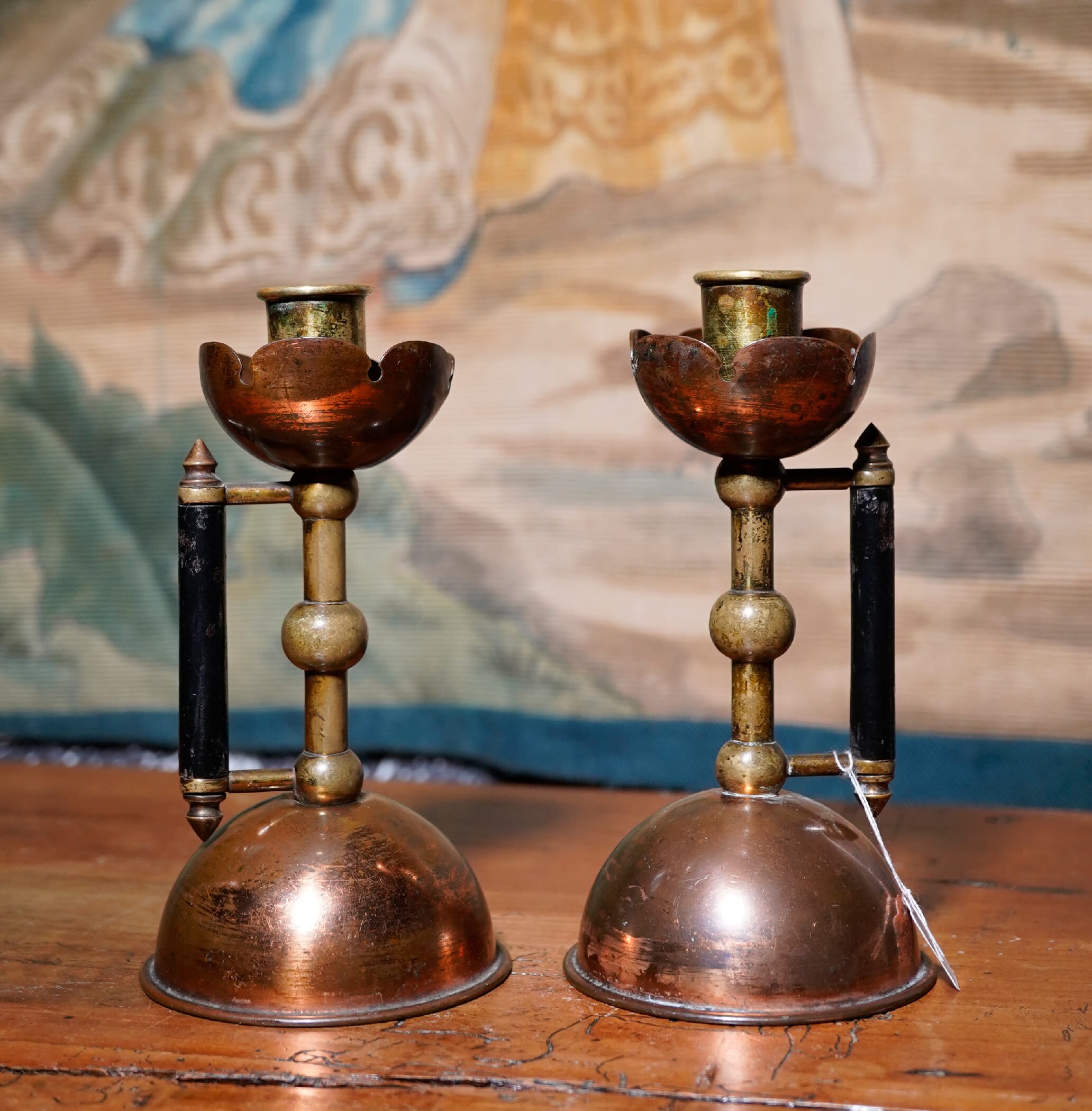
Pair of Christopher Dresser candlesticks, designed & made 1885, probably by Benham & Froud for the Art Furnishers' Alliance, London.
Pair of Christopher Dresser candlesticks, designed & made 1885, probably by Benham & Froud for the Art Furnishers’ Alliance, London.
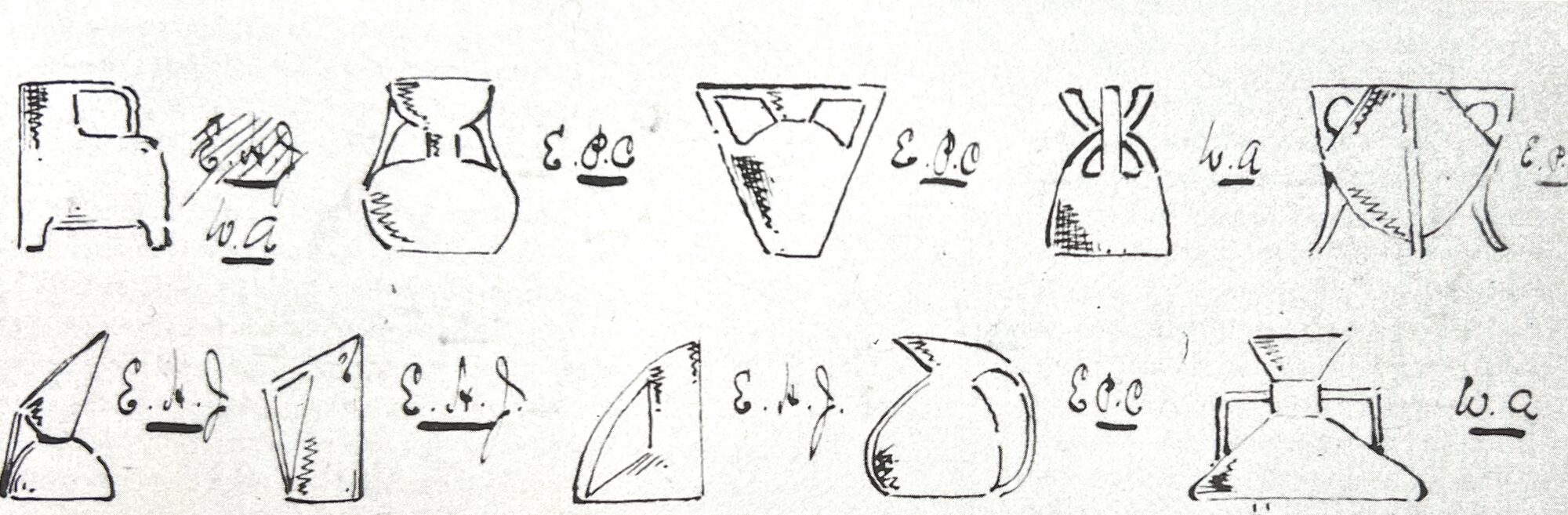
Designs of Dr Christopher Dresser, from his account book for Linthorpe Art Pottery, 1881. Now in the Getty, LA.
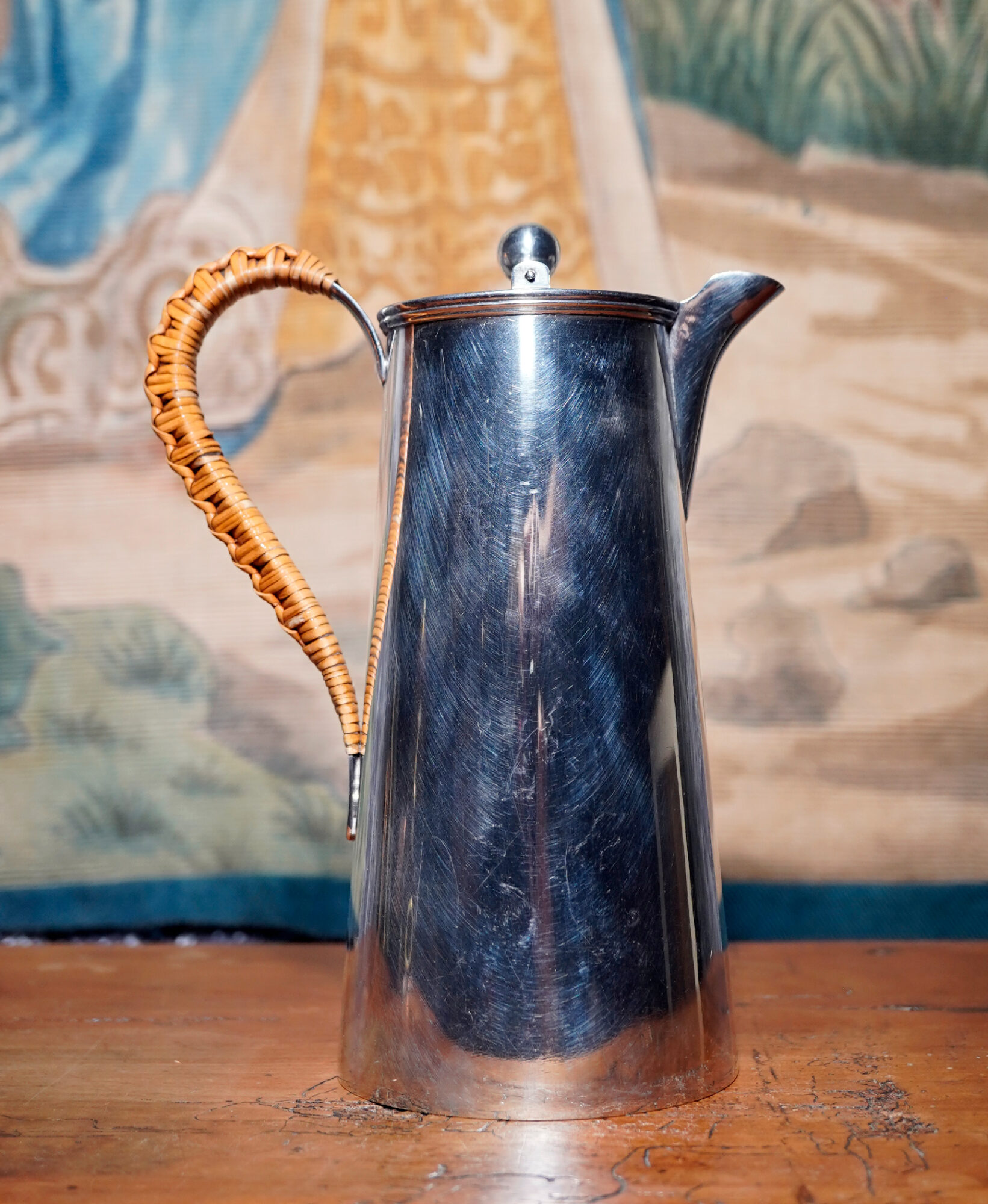
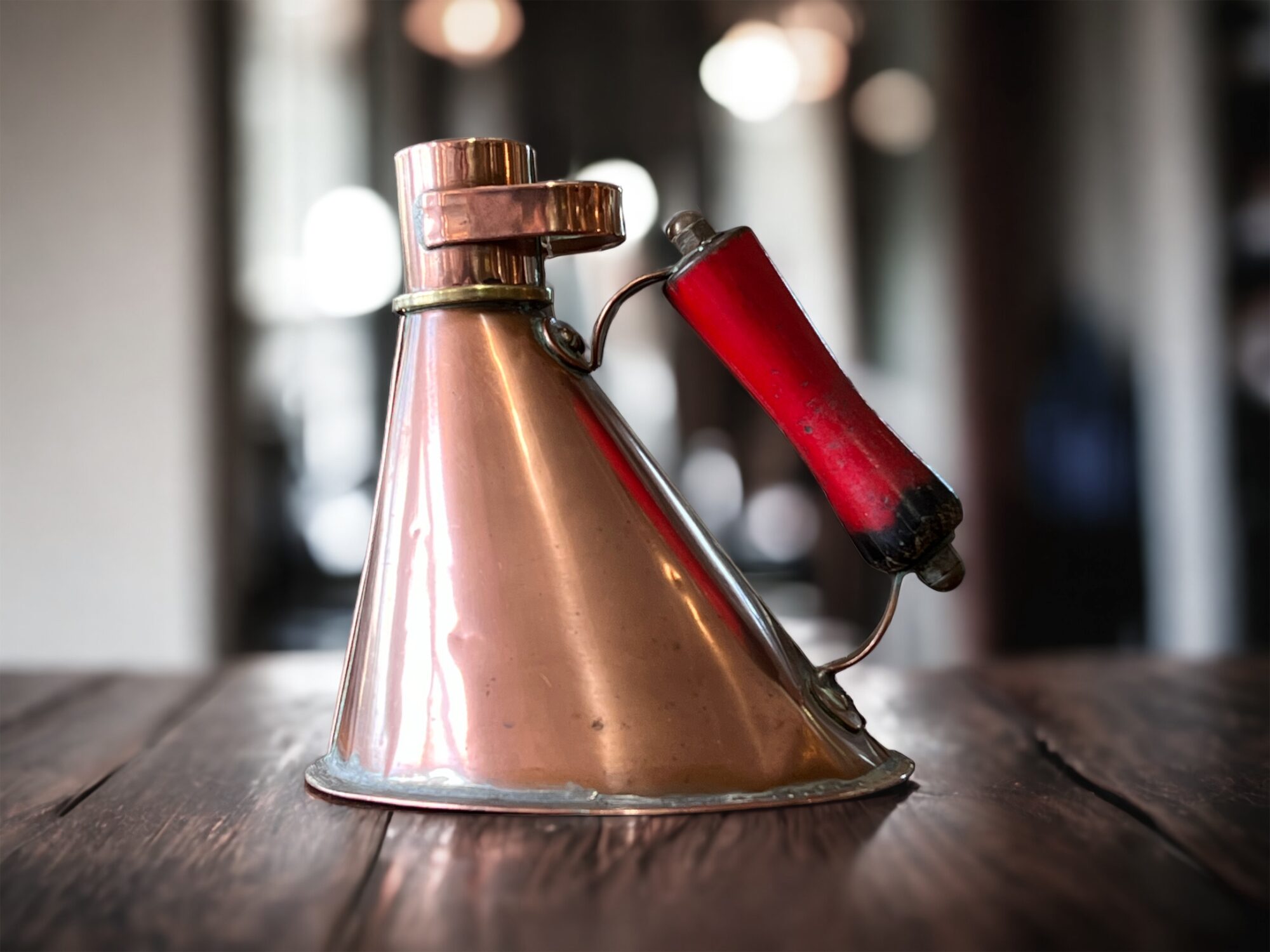
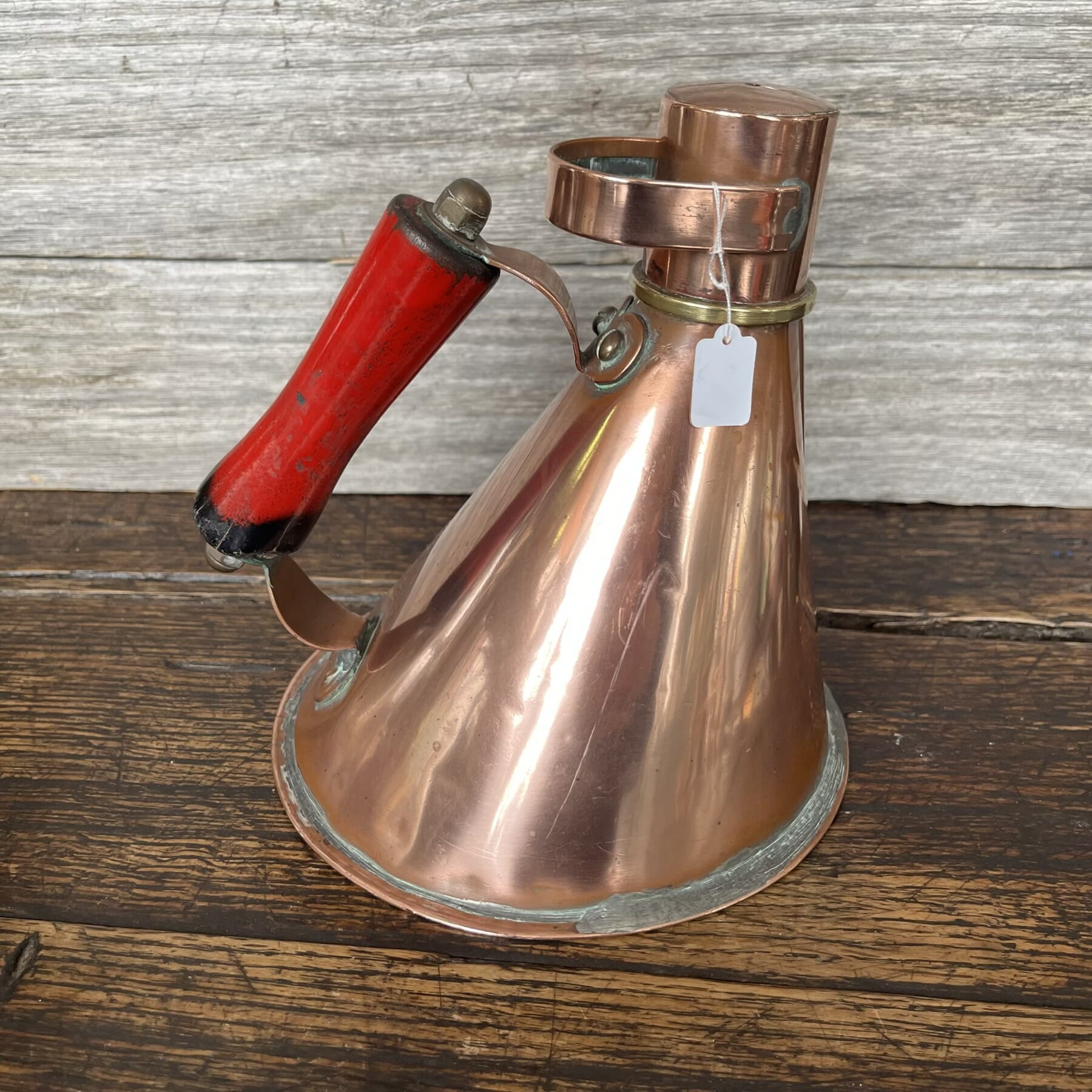
A case of mistaken identity…. this piece looks a lot like a famous Dresser design, and the craftsmanship is very similar to makers of Dresser pieces such as Benham & Froud – however, it is an industrial item, being an oil can from a canal boat!
This reflects Dresser’s own philosophy very closely: form follows function: the broad base is stable in choppy seas, and the form is simple for a metal worker to create from flat sheets. The handle angle ensures steady flow of the contents, in all a very well designed piece, created by a practical industrial mind – just no Christopher Dresser’s.
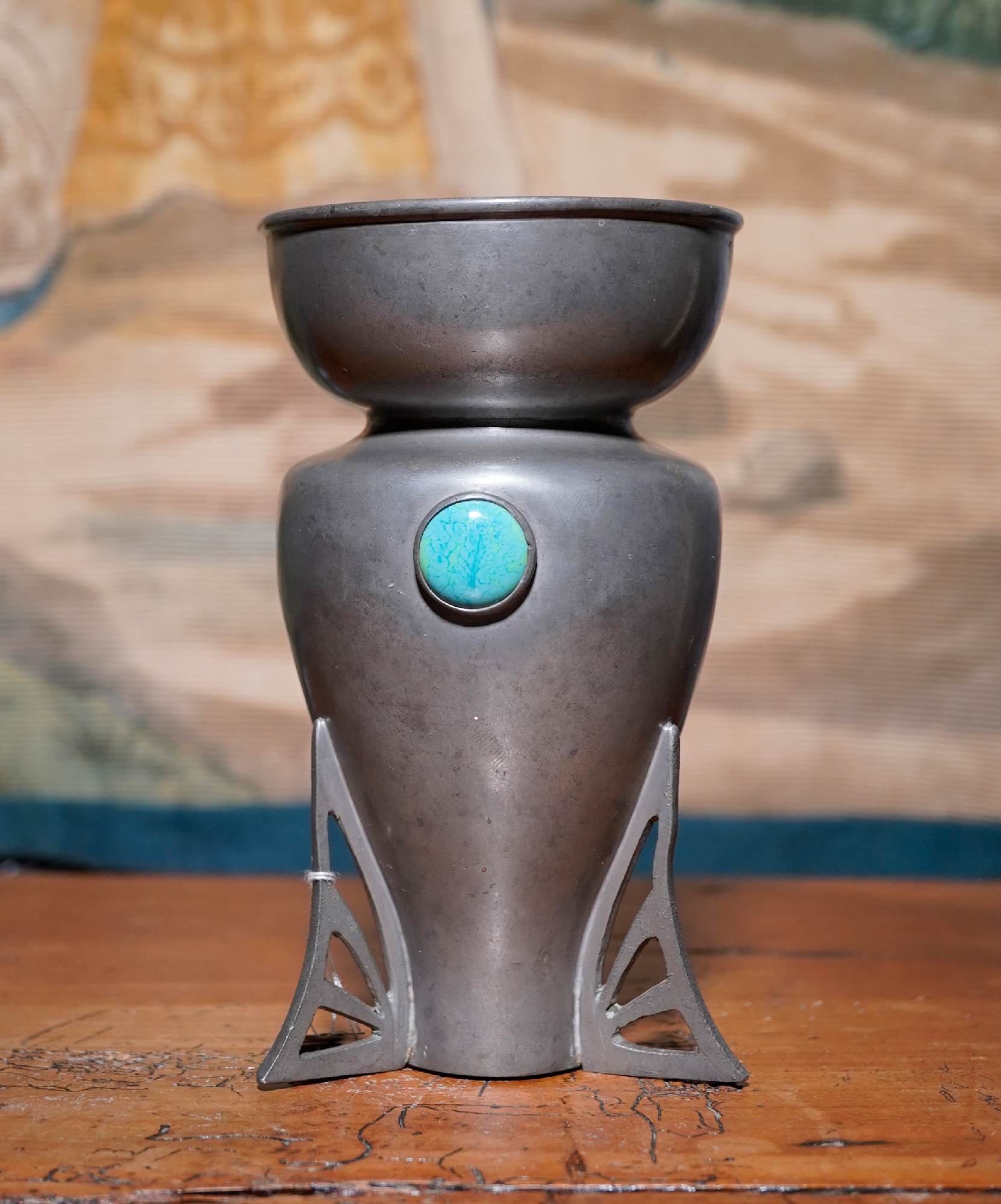
Arts & Crafts vase, Hutton
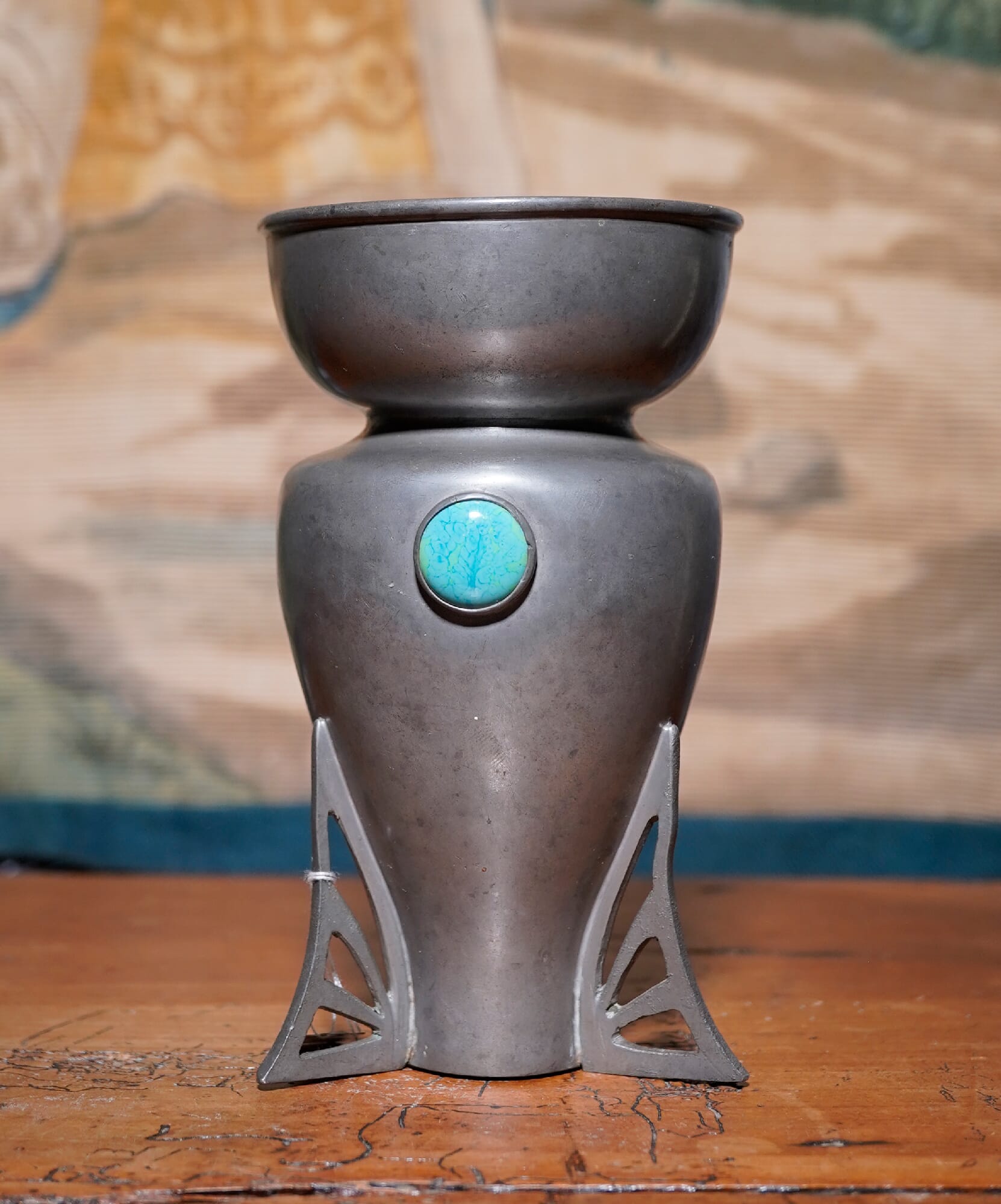
Arts & Crafts Pewter vase, by W. Hutton, Sheffield, c.1905. The inset ceramic plaques are possibly from the Ruskin Pottery in Staffordshire, known to have provided similar pieces to other manufacturers. The design is very similar to those of Archibald Knox, at the same period, circa 1905.
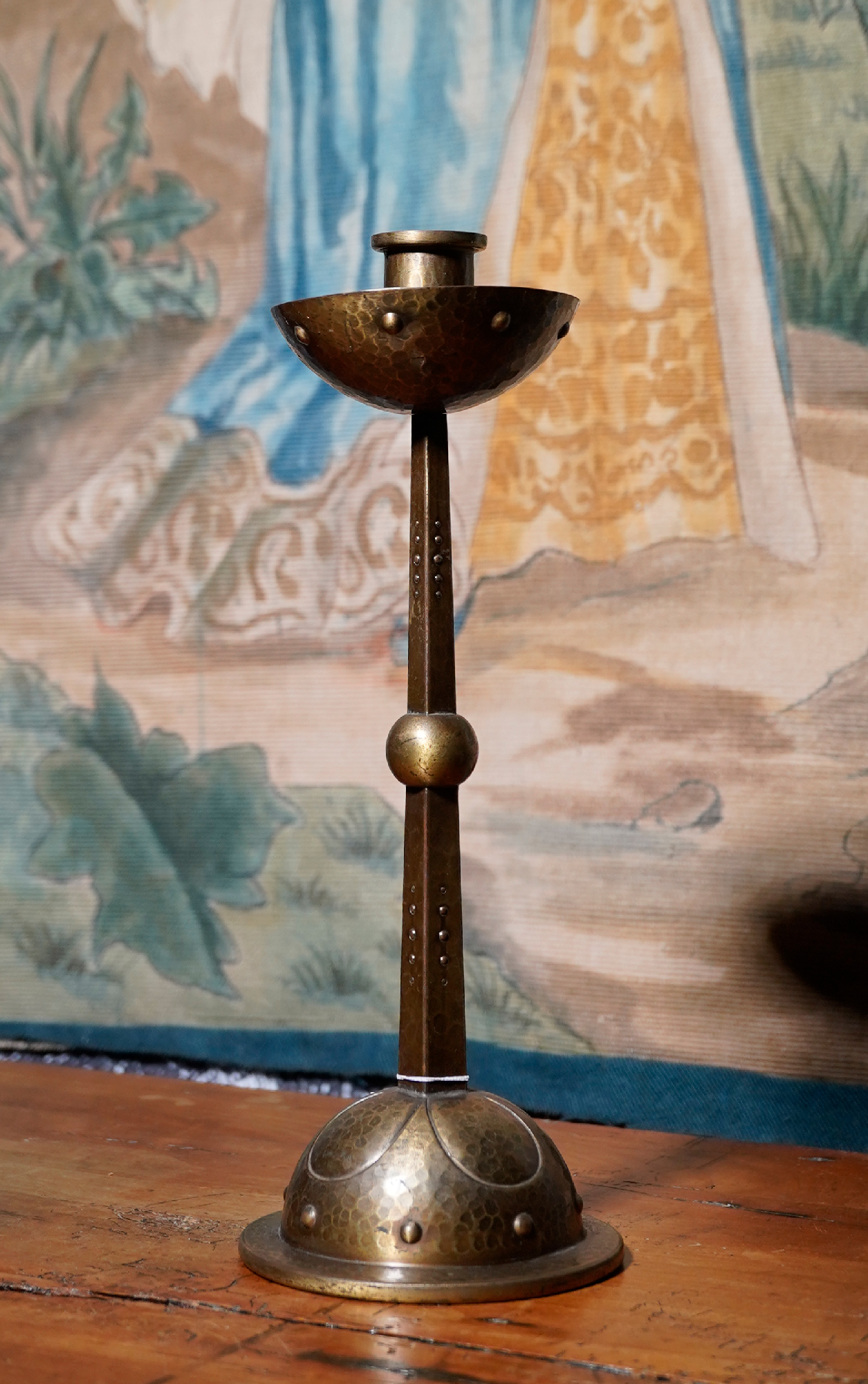
WMF Jugendstil candlestick, circa 1900
WMF (Germany) Jugendstil candlestick, circa 1900

On the Continent, the Arts & Crafts movement took its own direction. In Germany, the Jugendstil , literally translating as ‘Youth Style’, produced some remarkable objects that still appeal to the modern eye due to their ‘sophisticated simplicity’.
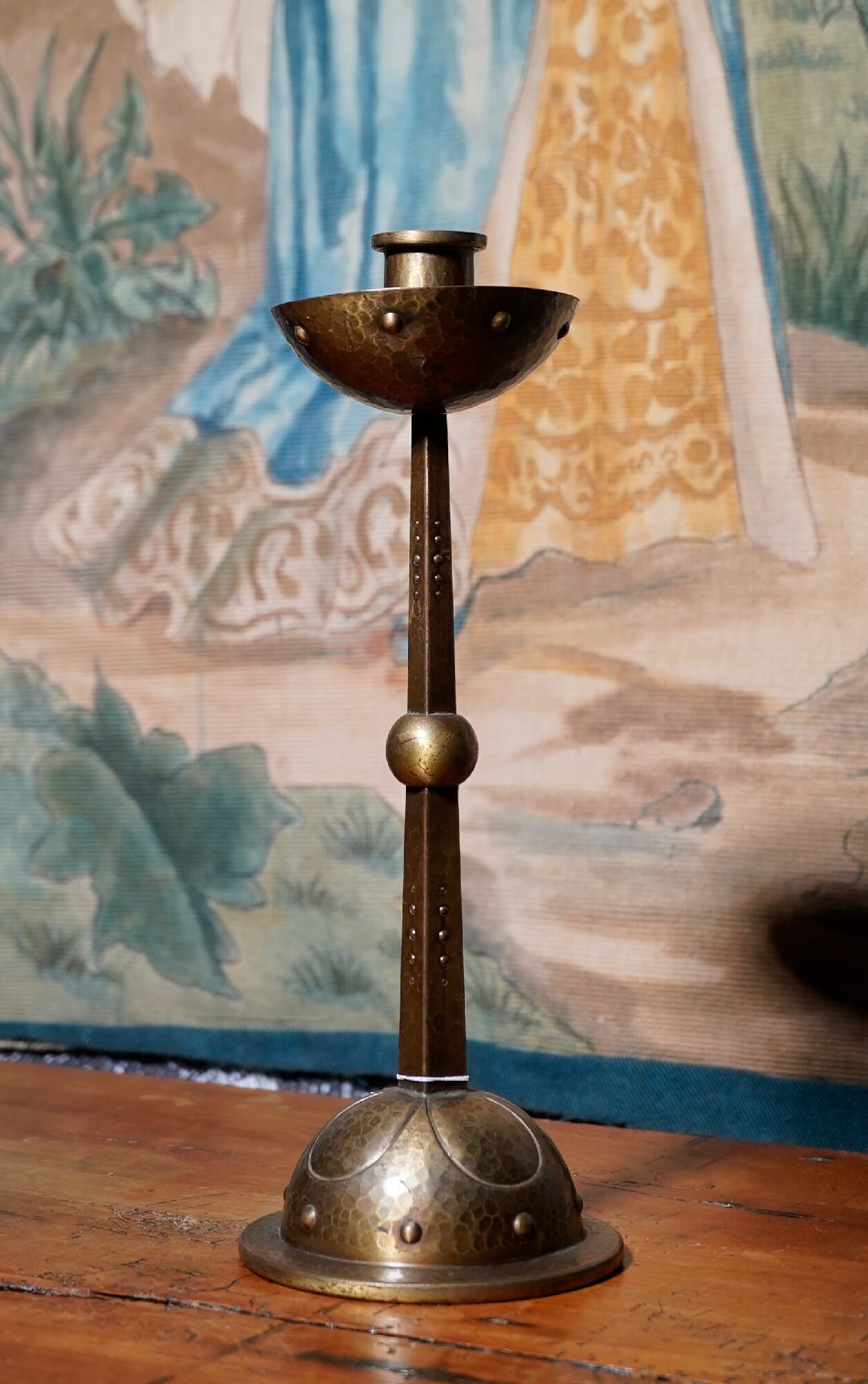
The candlestick shown here is WMF, circa 1900, and retains the rare original patinated finish. It has a style that could date to anywhere in the 20th century, but was actually conceived in the last years of the 19th – remarkable.

On a different trajectory was the French designs we know as ‘Art Nouveau’. This style borrowed from the preceding Rococo style, with organic forms that appear to grow – but took it to new extremes.

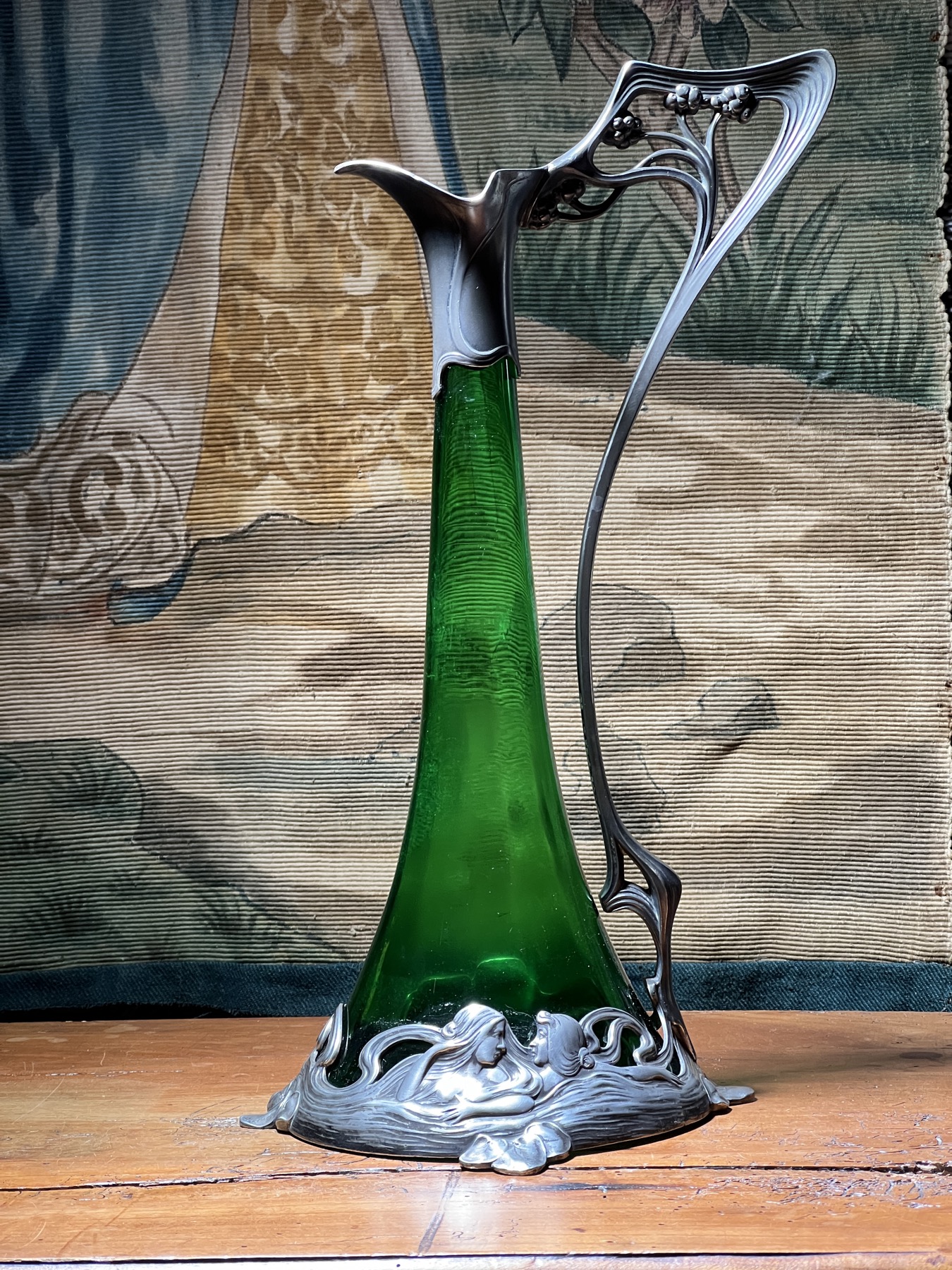
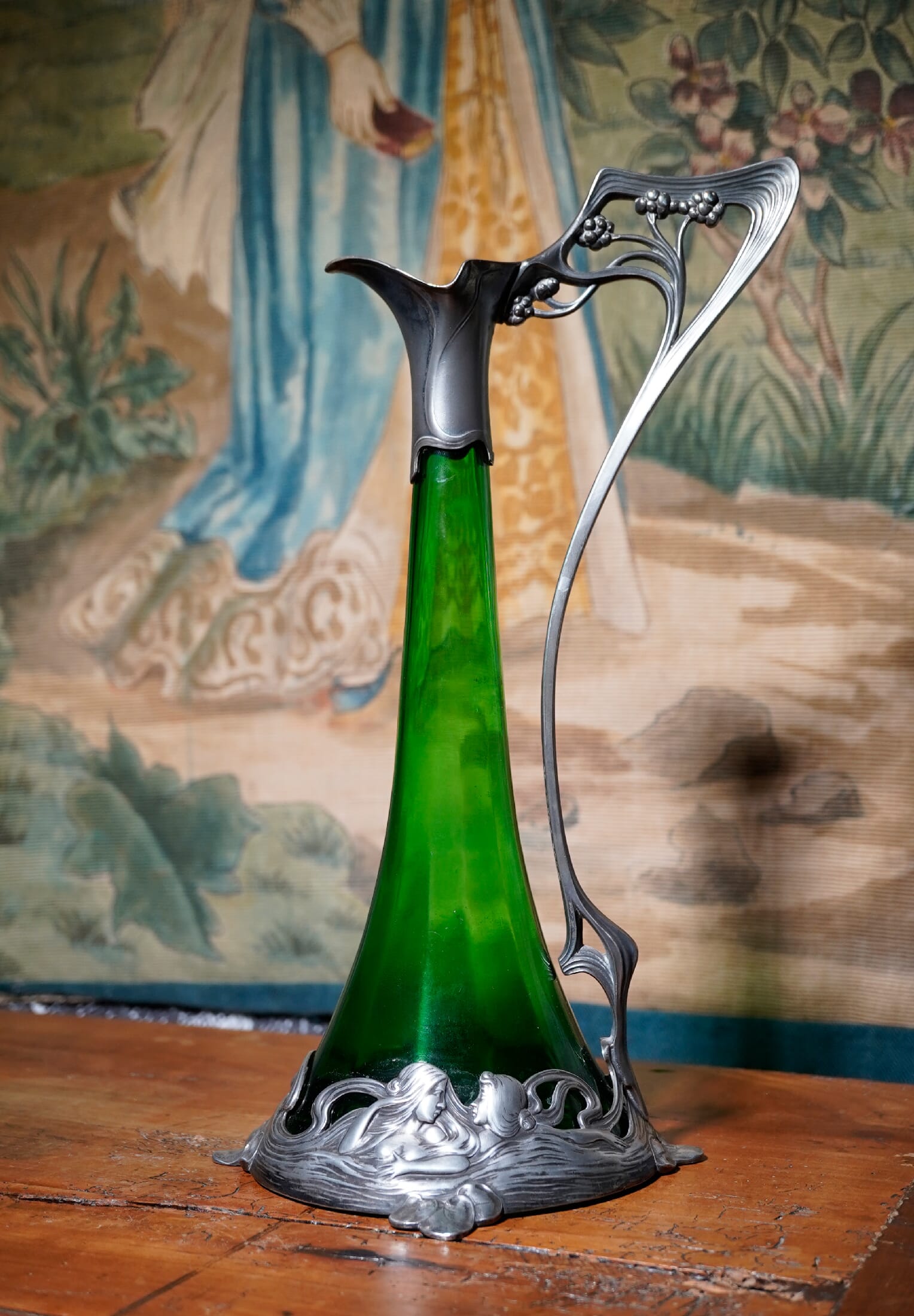
WMF Art Nouveau waternymph claret jug, circa 1900


Also by WMF is this remarkable claret jug. The very tall, skinny sea-green glass vessel is encased & protected by a flowing stream around the foot, from which emerge water-nymphs: the ‘waves’ are actually their long flowing hair. An organic handle that looks like it grew rises up to the pewter mouth, with a beautiful spray of flowers moulded in the round within the protected elbow.

It’s a splendid example of Art Nouveau at its best.

Pre-Raphaelite wall hanging, circa 1880

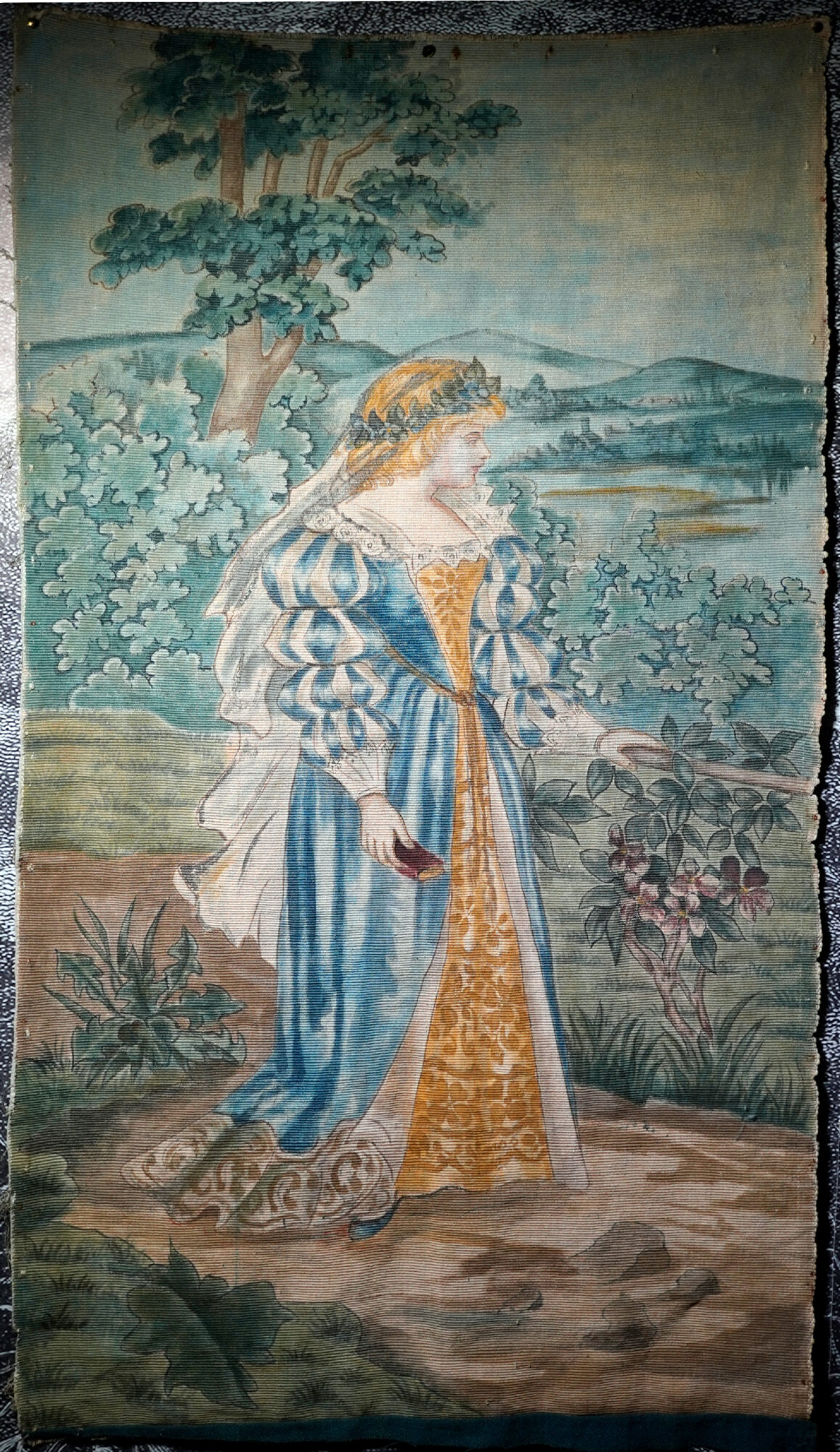
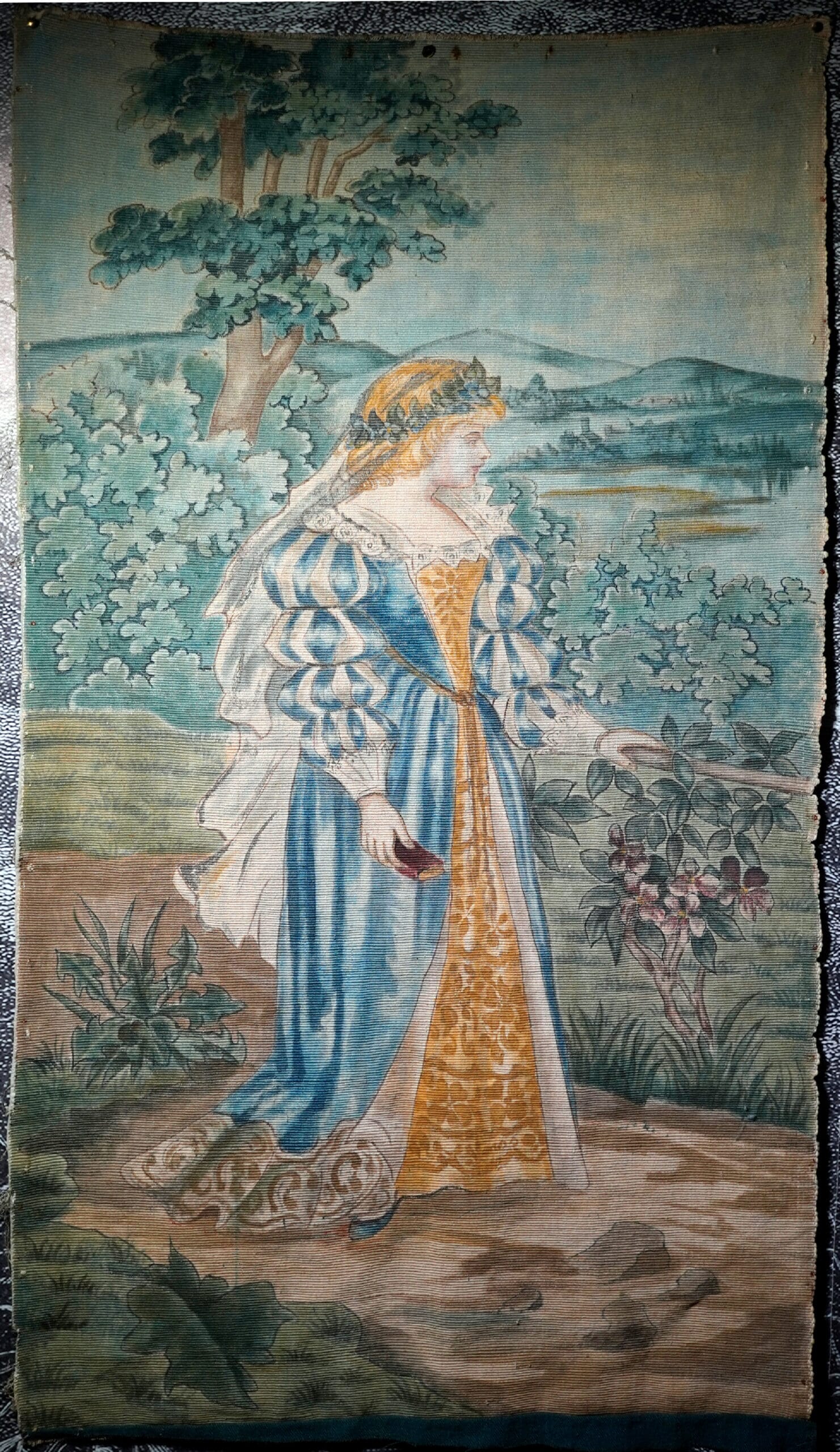
This large wall hanging is an example of anther closely related style of the period, the Pre-Raphaelites. Formed by mostly painters who sought to break away from the genre painting of the Victorian era, instead of looking for something new, they looked back – deciding that anything from Raphael onwards was not worth looking at, but the earlier artists were more valuable as as influence. This beauty depicted here in watercolour on a heavy fabric (probably upholstery fabric) is a fine example of the ideal; she is splendidly dressed in middle-ages clothing, and holds a book in one hand showing her intellect. Behind her is a landscape containing trees and a distant town amongst hills – the whole very reminiscent of the actual tapestry weavings of William Morris and his wife, May. While this example is ‘only painted’, it is very well done – the paints would have soaked into the fabric quickly, and great skill is shown in the control and tonal variation achieved. It is in fact a cross-over from the Textile Arts to the Fine Arts of painting – unfortunately not signed, but by a very competent artist.
Presently unframed, it was once stretched on a wooden stretcher. It would be fine as a wall hanging as-is (if kept in a dark place) – or to fully respect it, we can have it framed in a UV-resisting glass frame to preserve it for the future.

Please enjoy all the other unmentioned pieces shown below!

Fresh Stock

Posted on

A Box or Two….

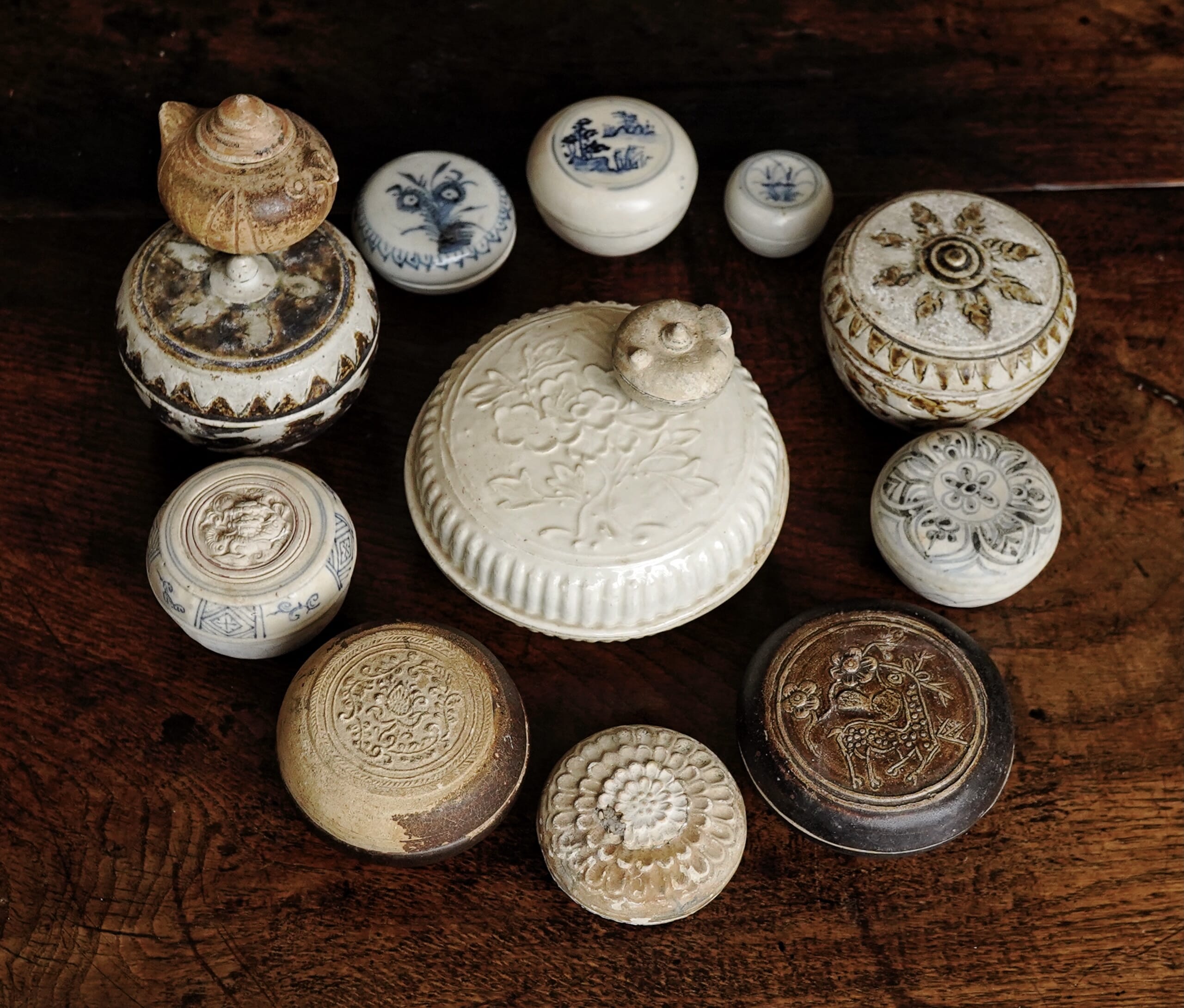
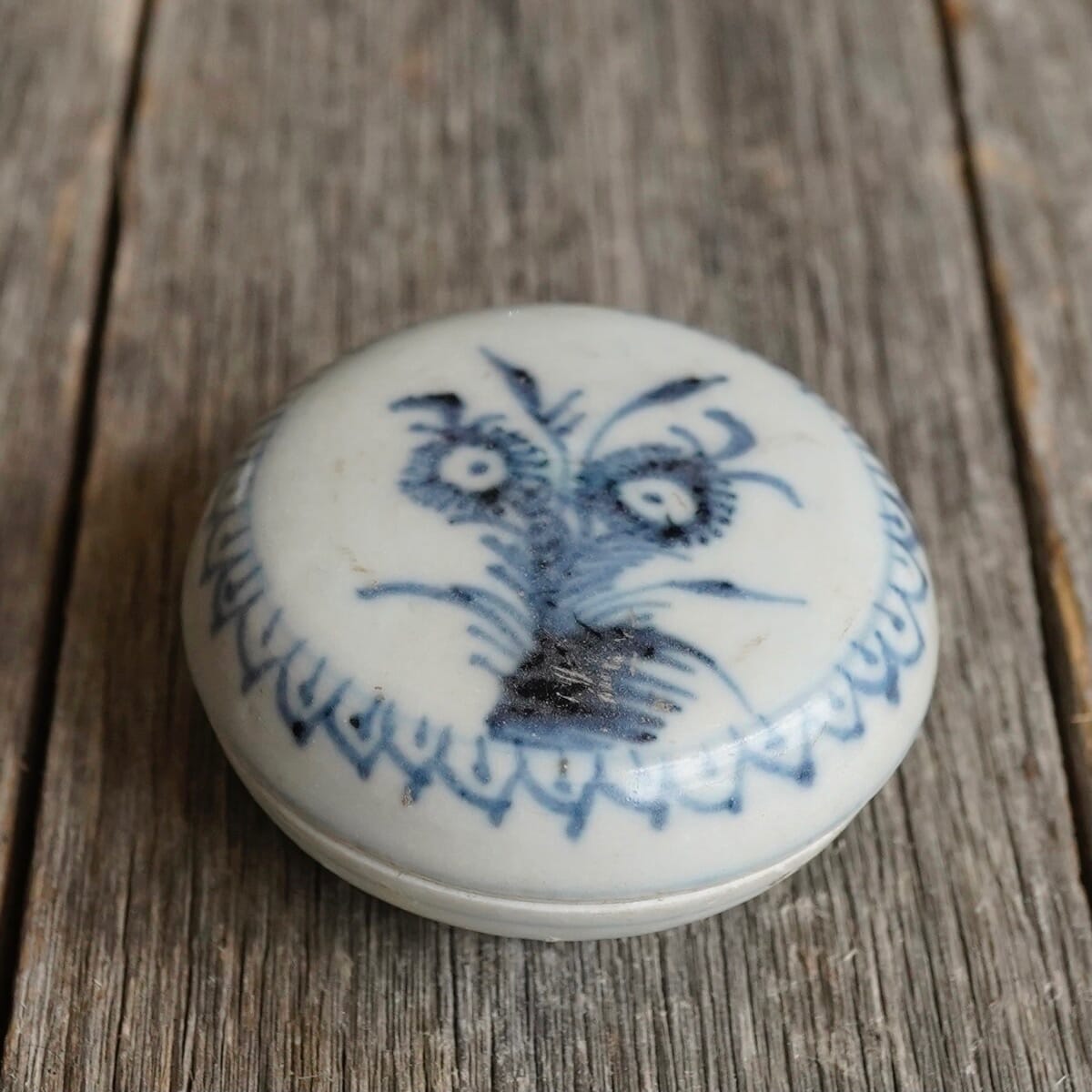
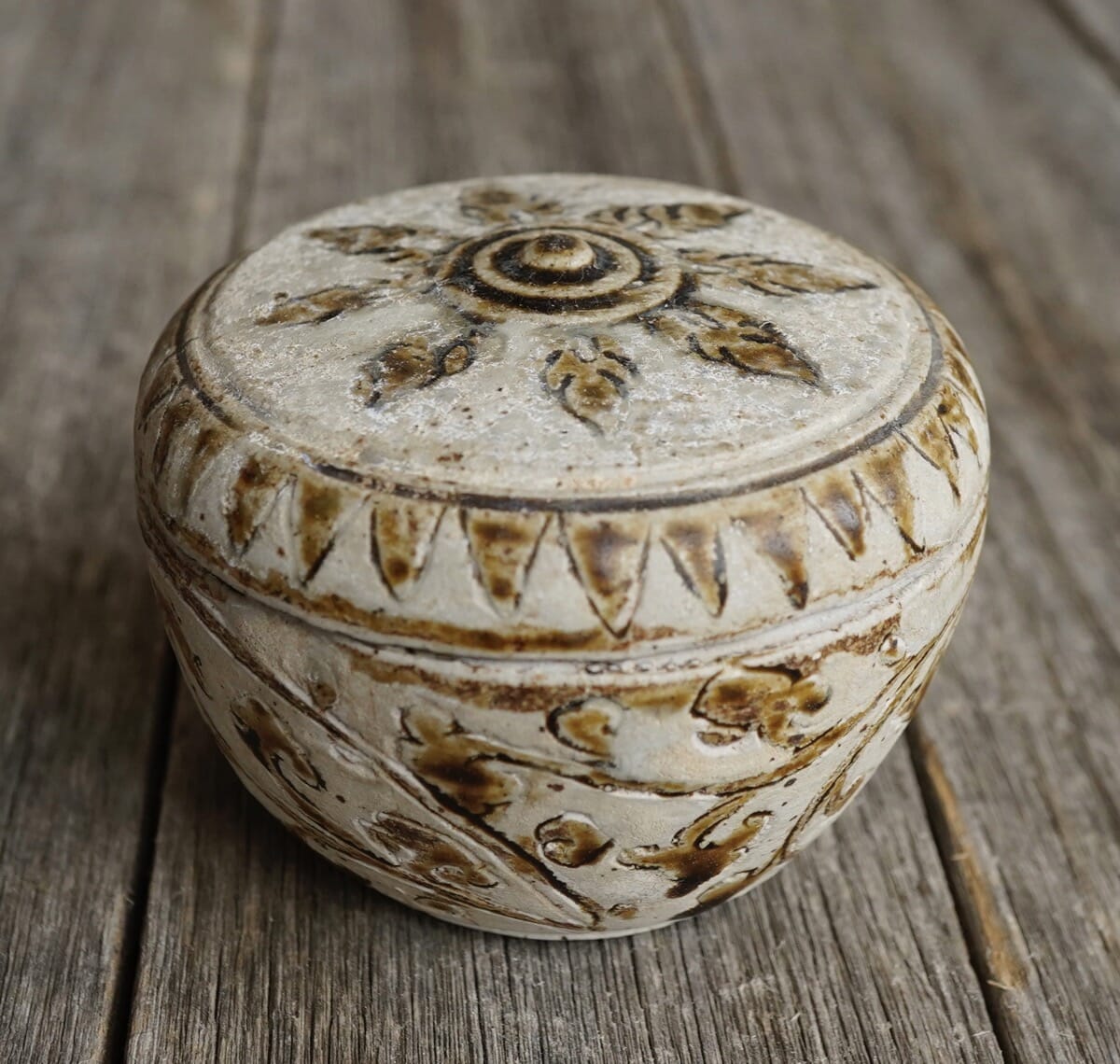
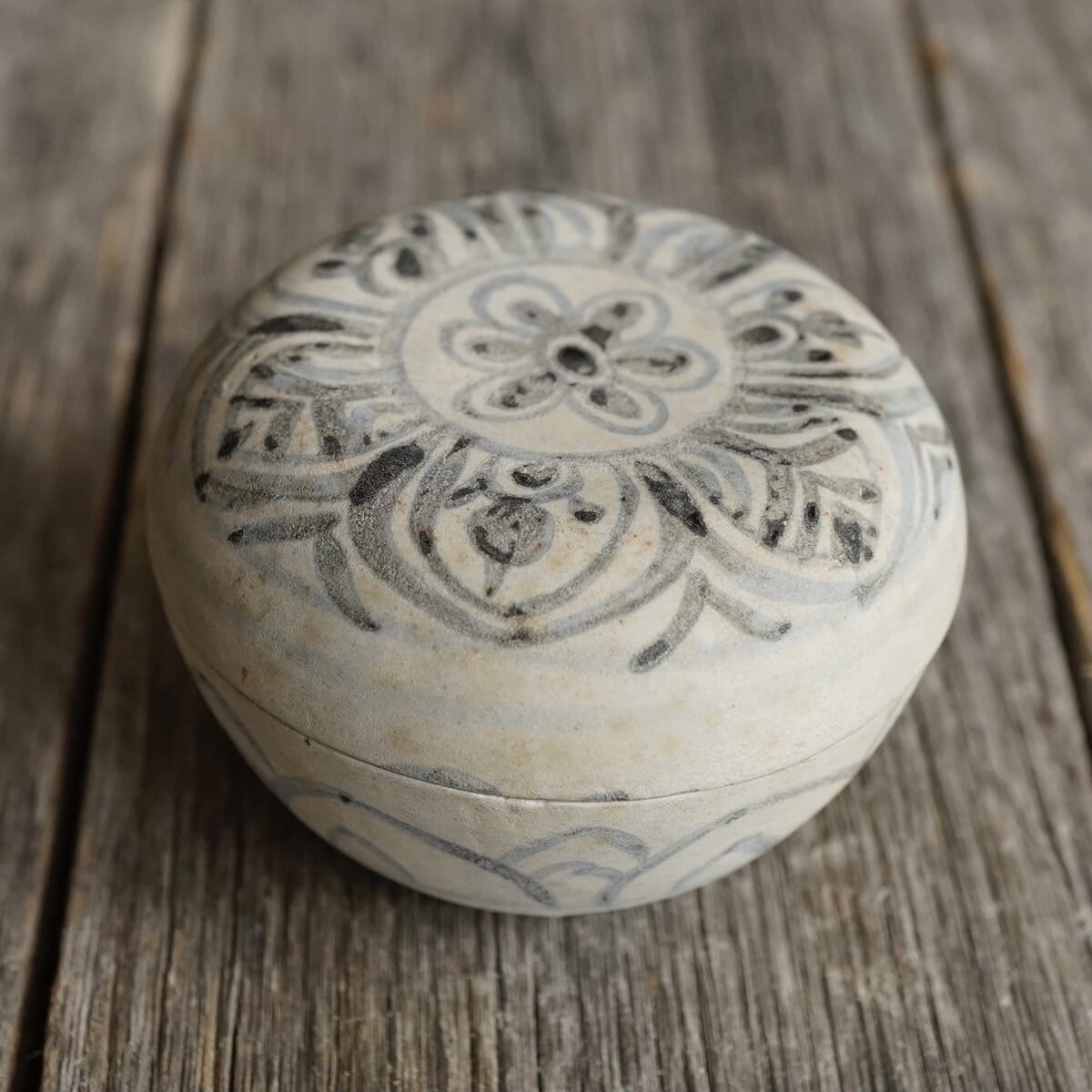
Soth East Asian Ceramic Boxes

Some fascinating ancient boxes, just released on Moorabool.com

We’re pleased to offer a small selection of South-East Asian ceramic boxes, fresh to Moorabool.com.

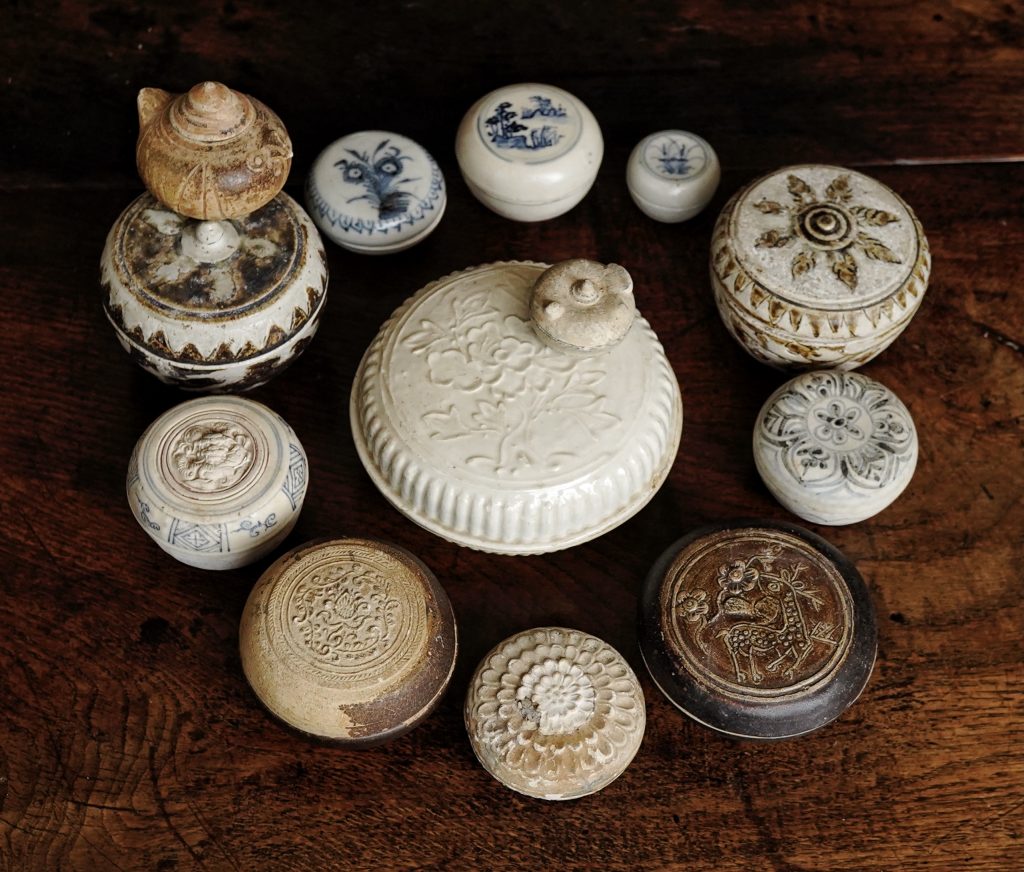
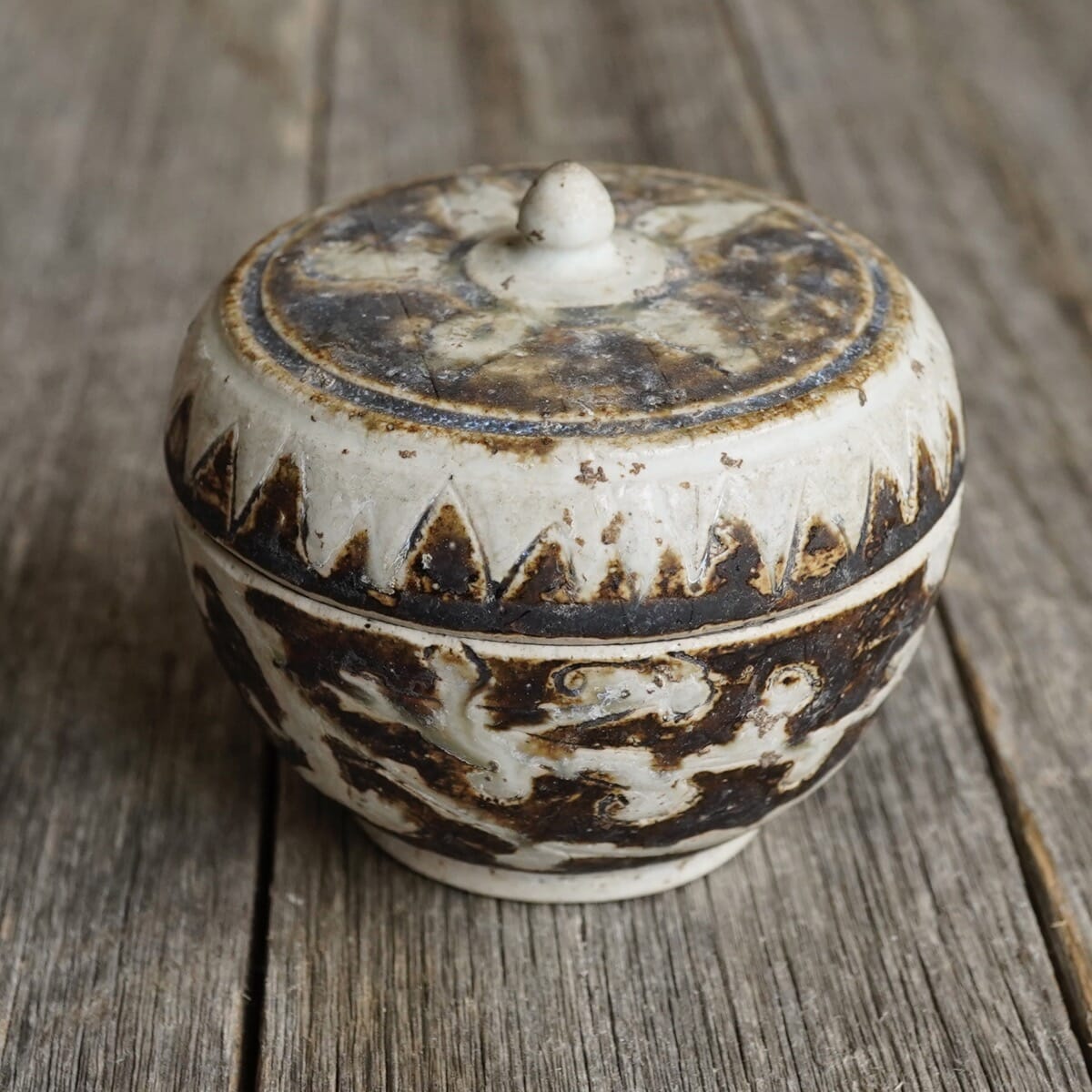
Collection of South East Asian Ceramic Boxes

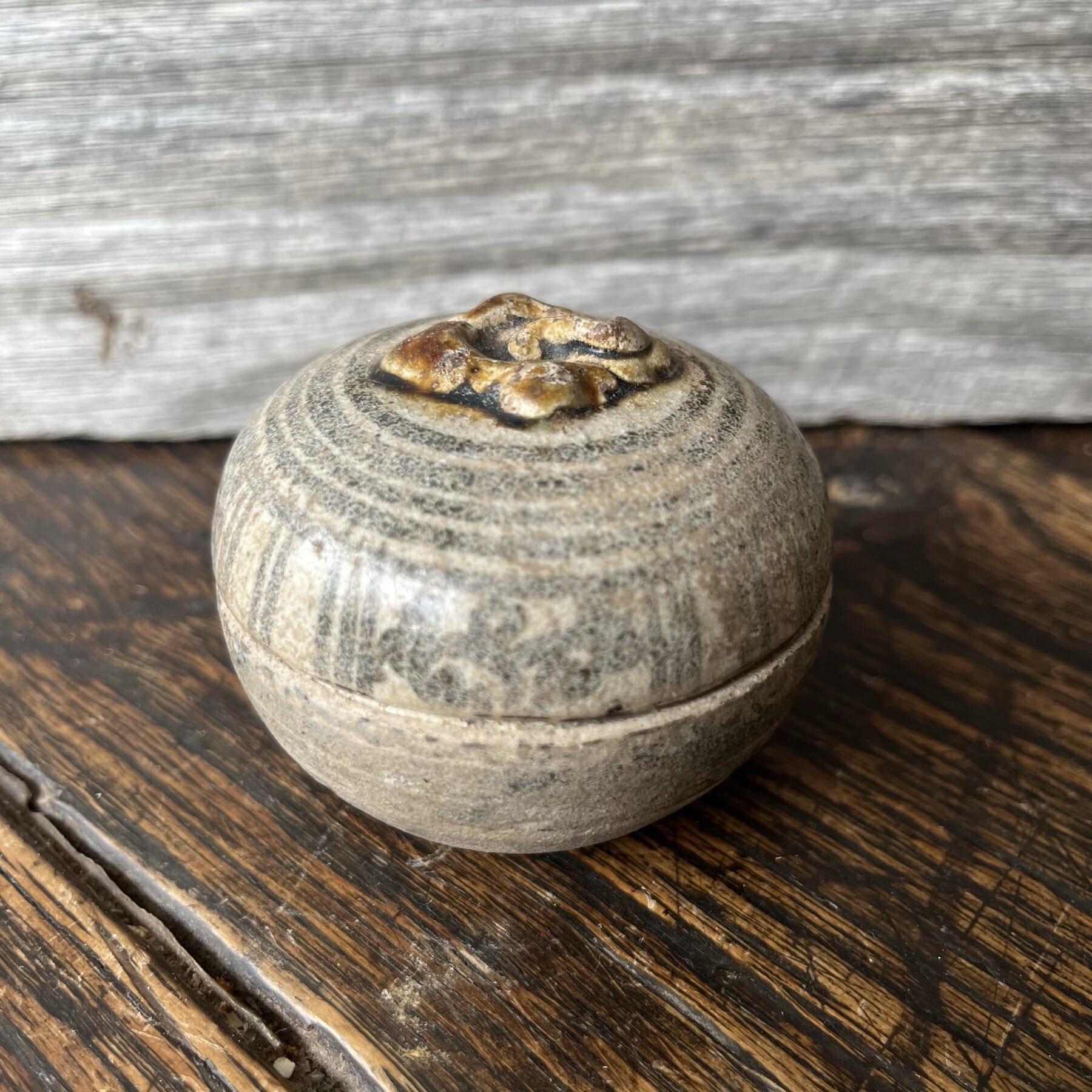
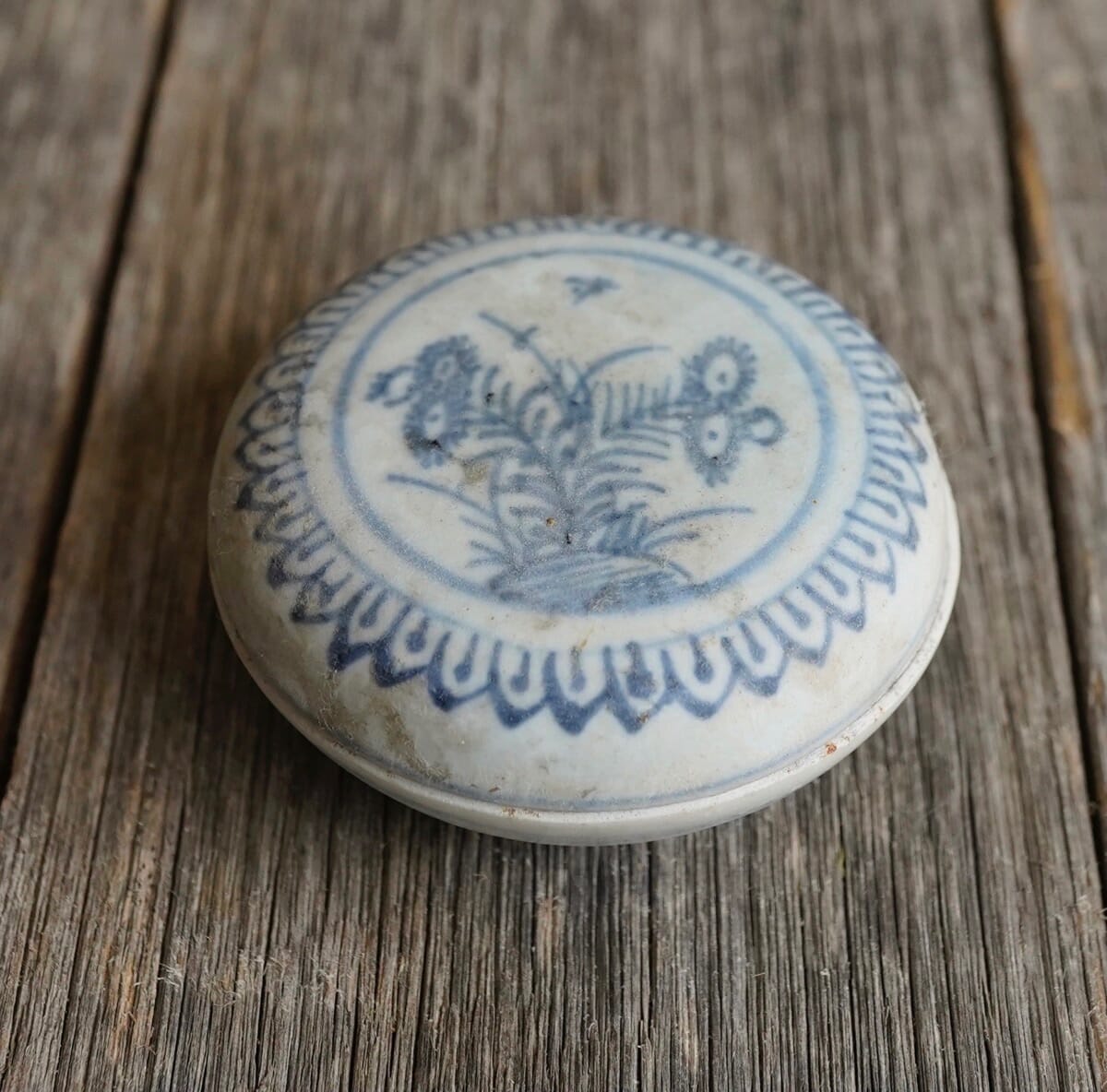
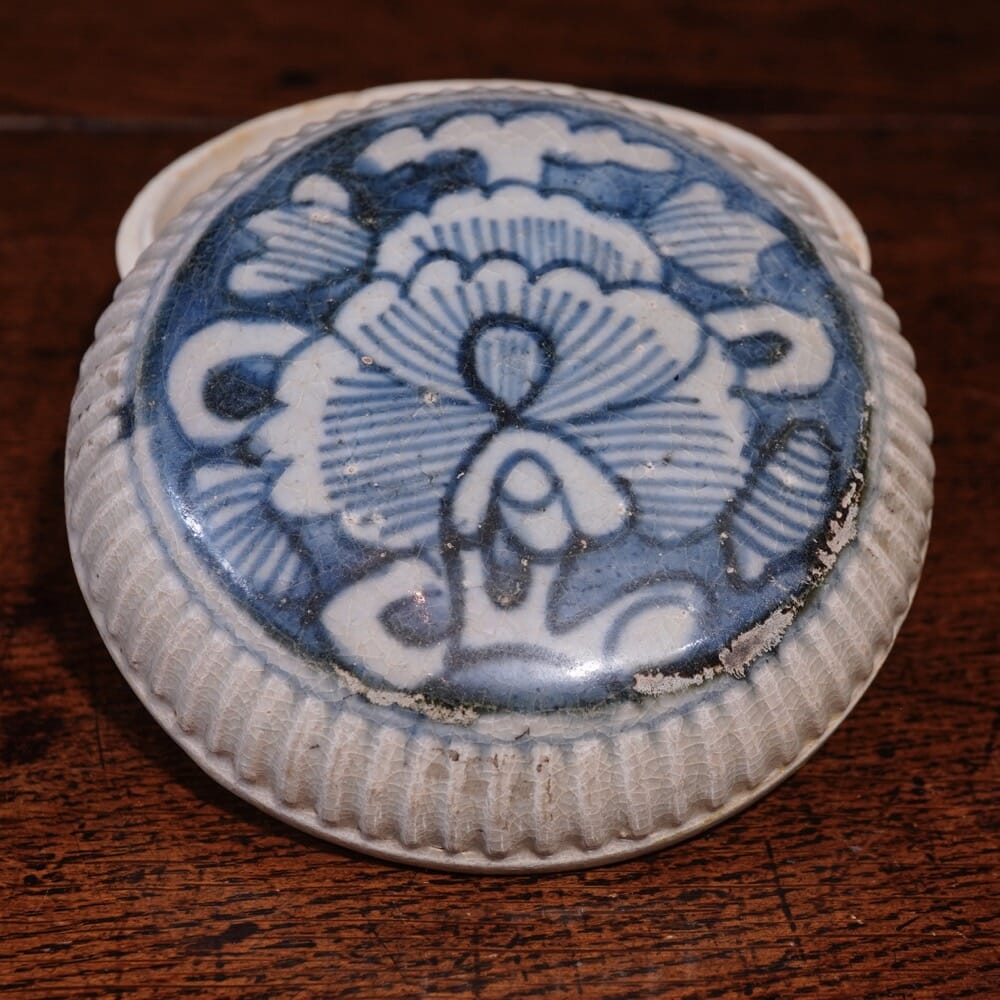
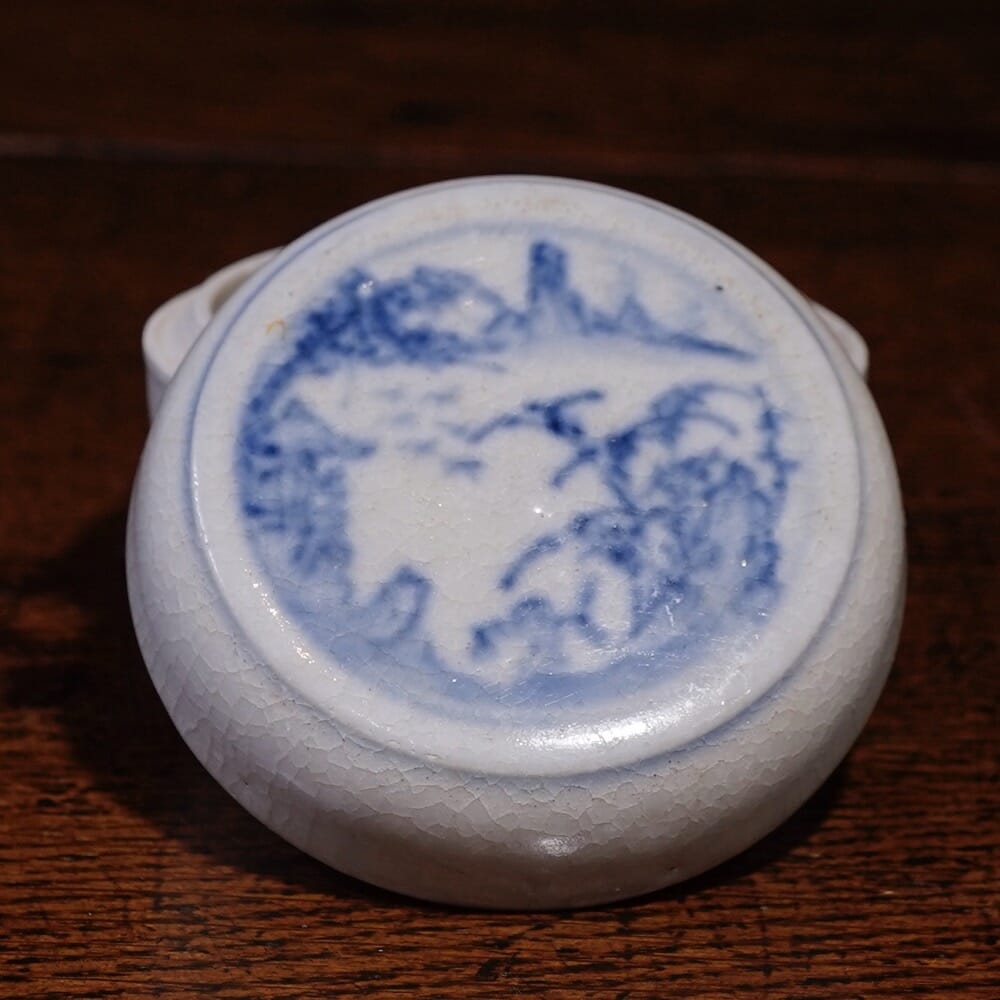
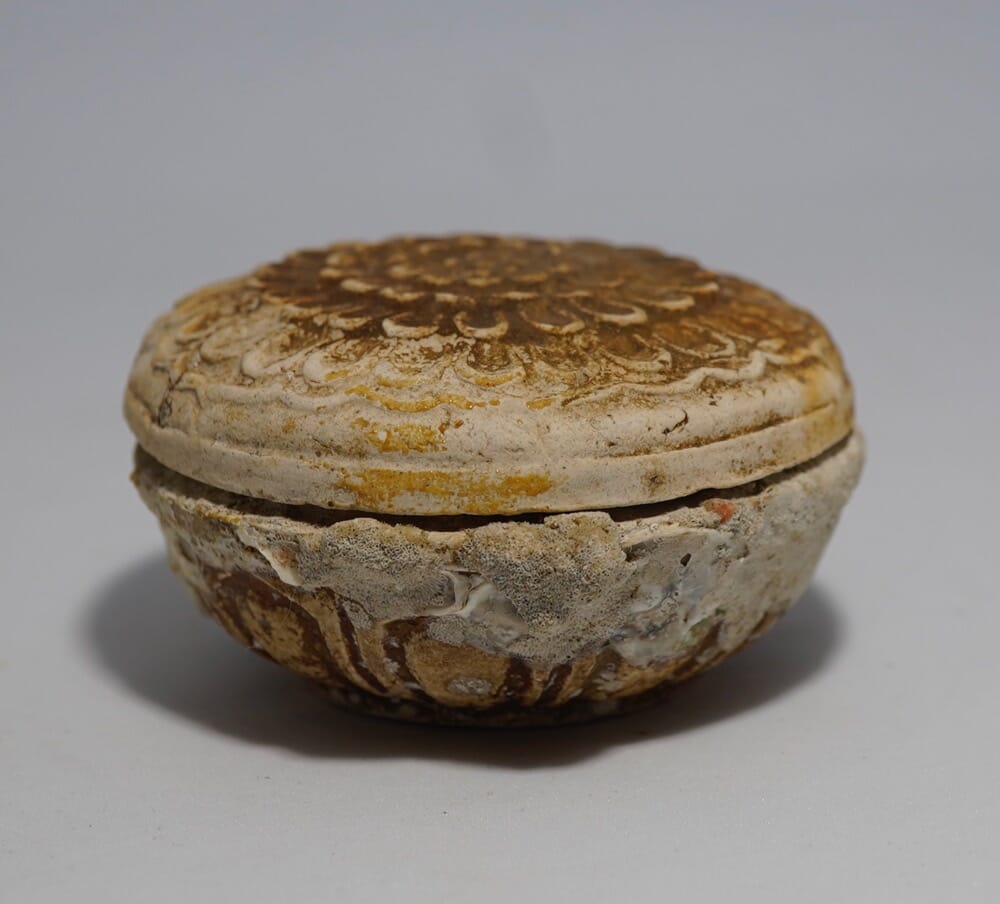
These pottery and porcelain objects were produced in vast quantities in certain places as trade goods, and as a result are found all across South-East Asia.

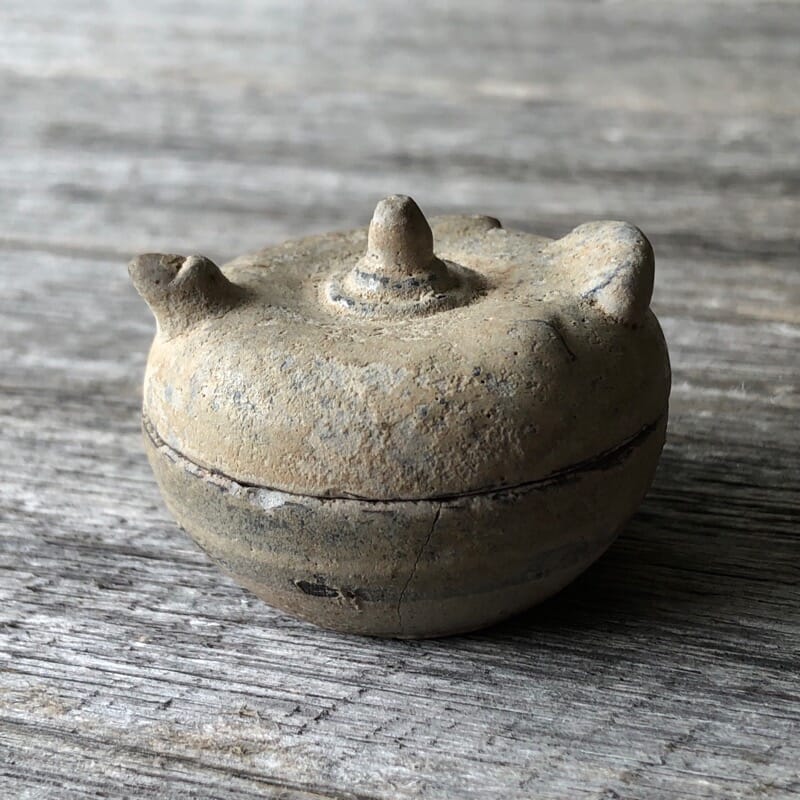
Khmer bird pot, 12th century

The earliest we have are the Khmer examples, with one delightfully shaped like a small plump bird; his beak and eyes protrude from one side, balanced by a tail at the rear. A small conical cap to the top is almost a miniature Buddhist stupa….

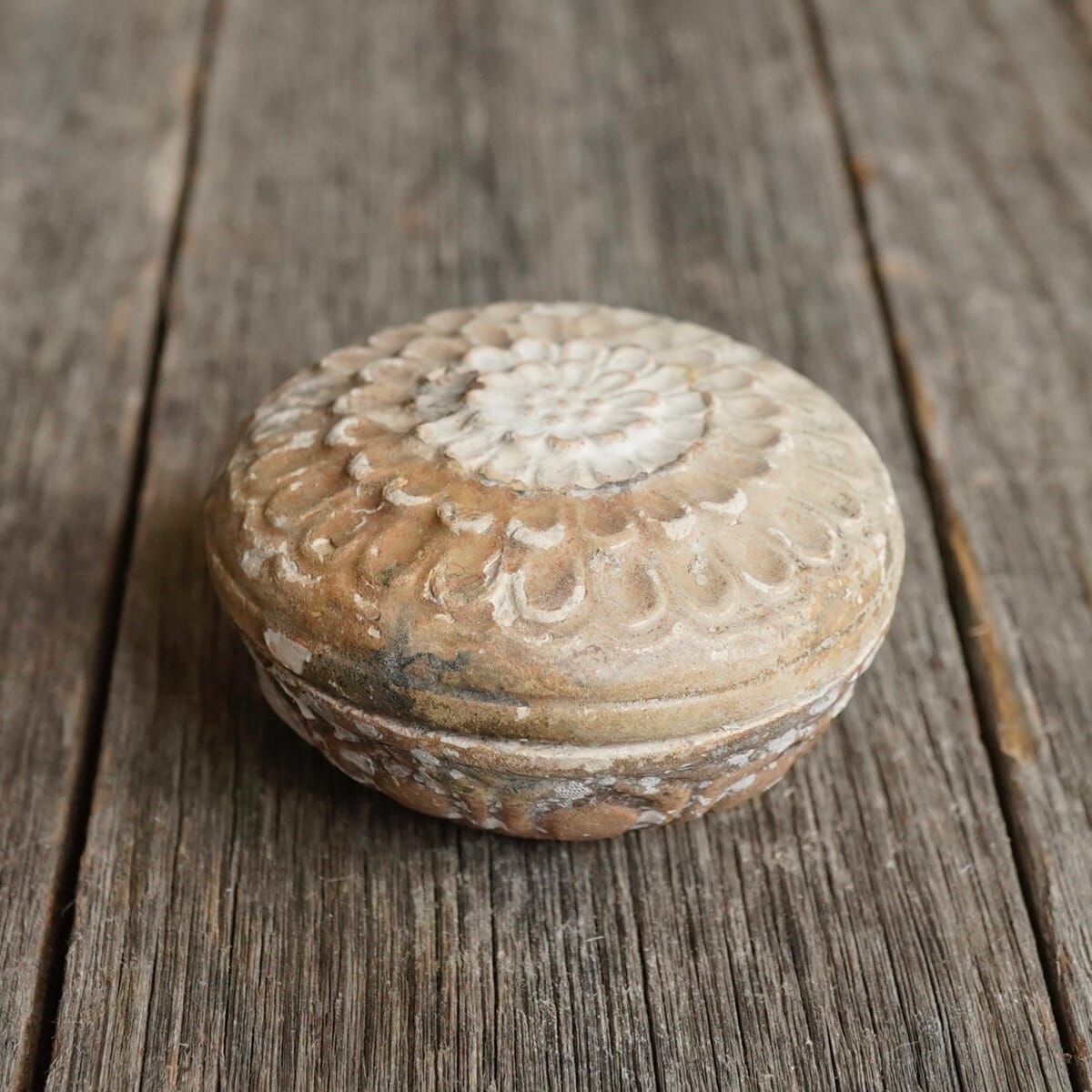
Song Dynasty, 13th century
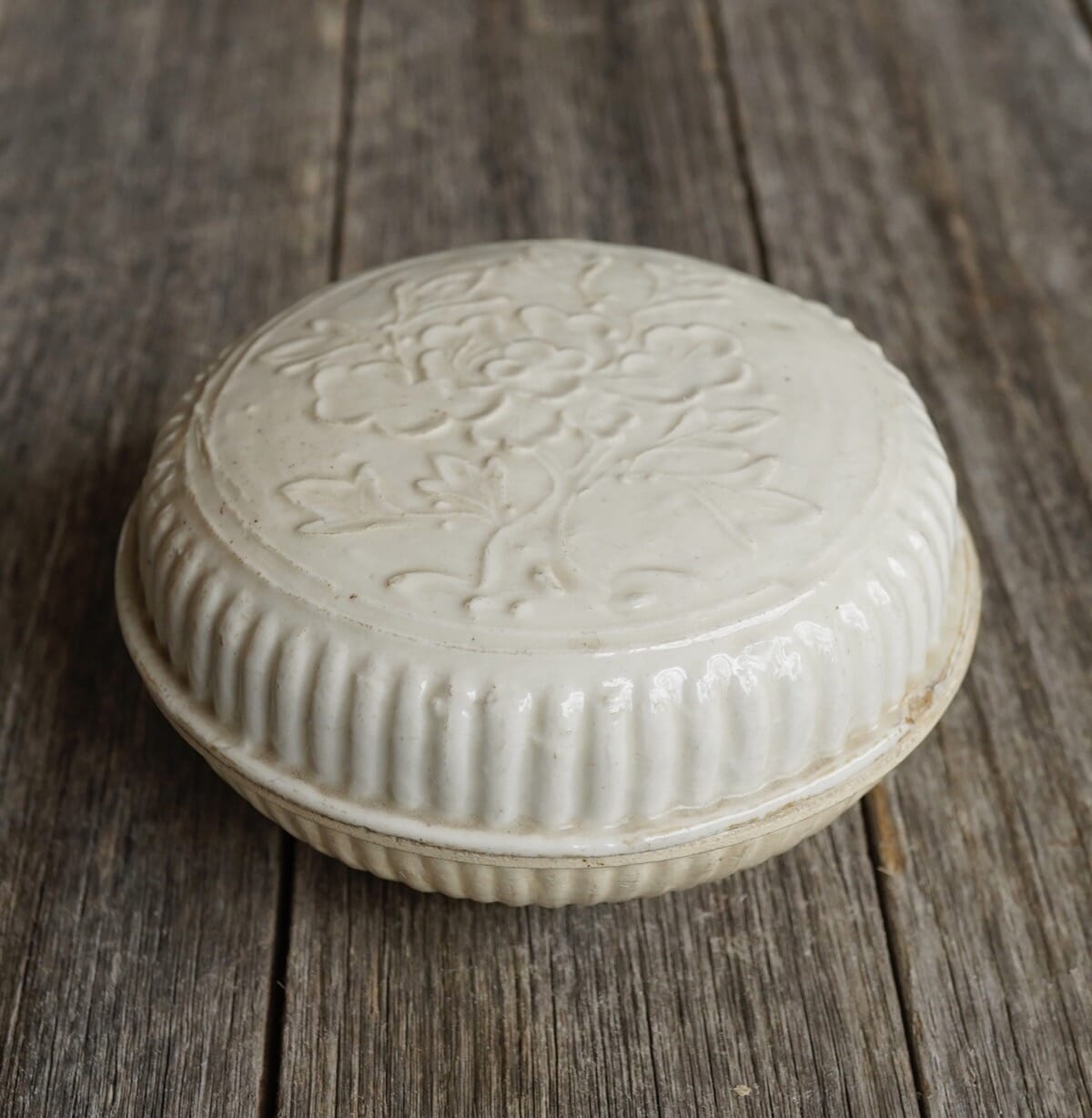
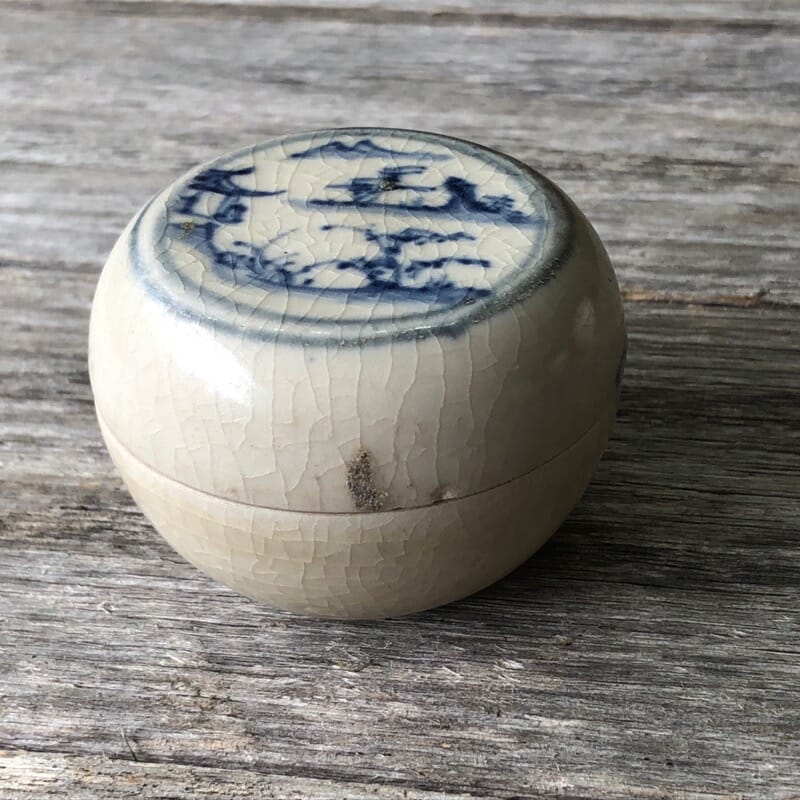
Song Dynasty Qingbai, 13th century

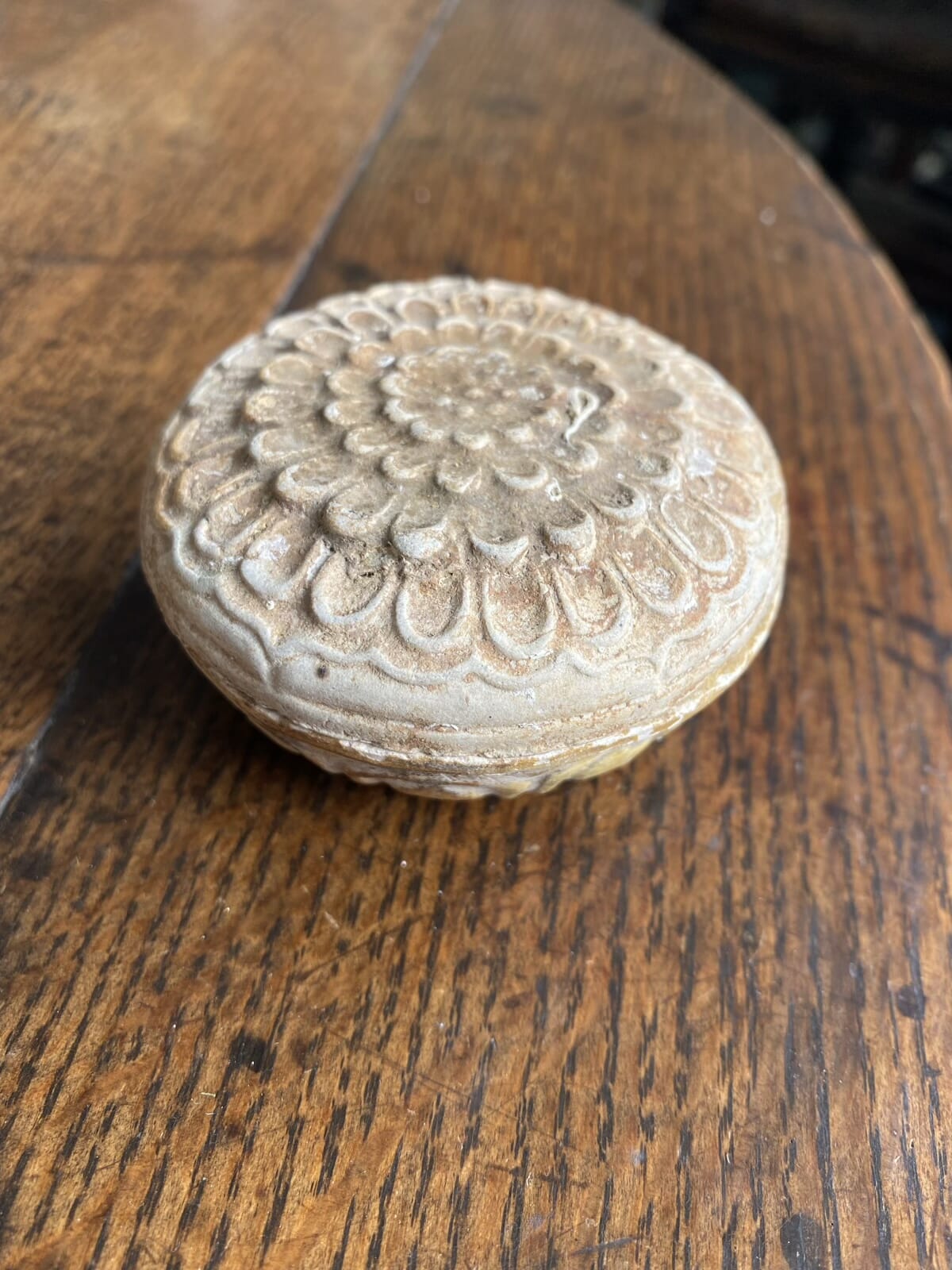
Equal date is the amazing large white glazed porcelain box with a peony rose moulded to the top. This is from Song Dynasty China, 12th-13th century, of a type known as ‘Qingbai’.

Thai 15th century

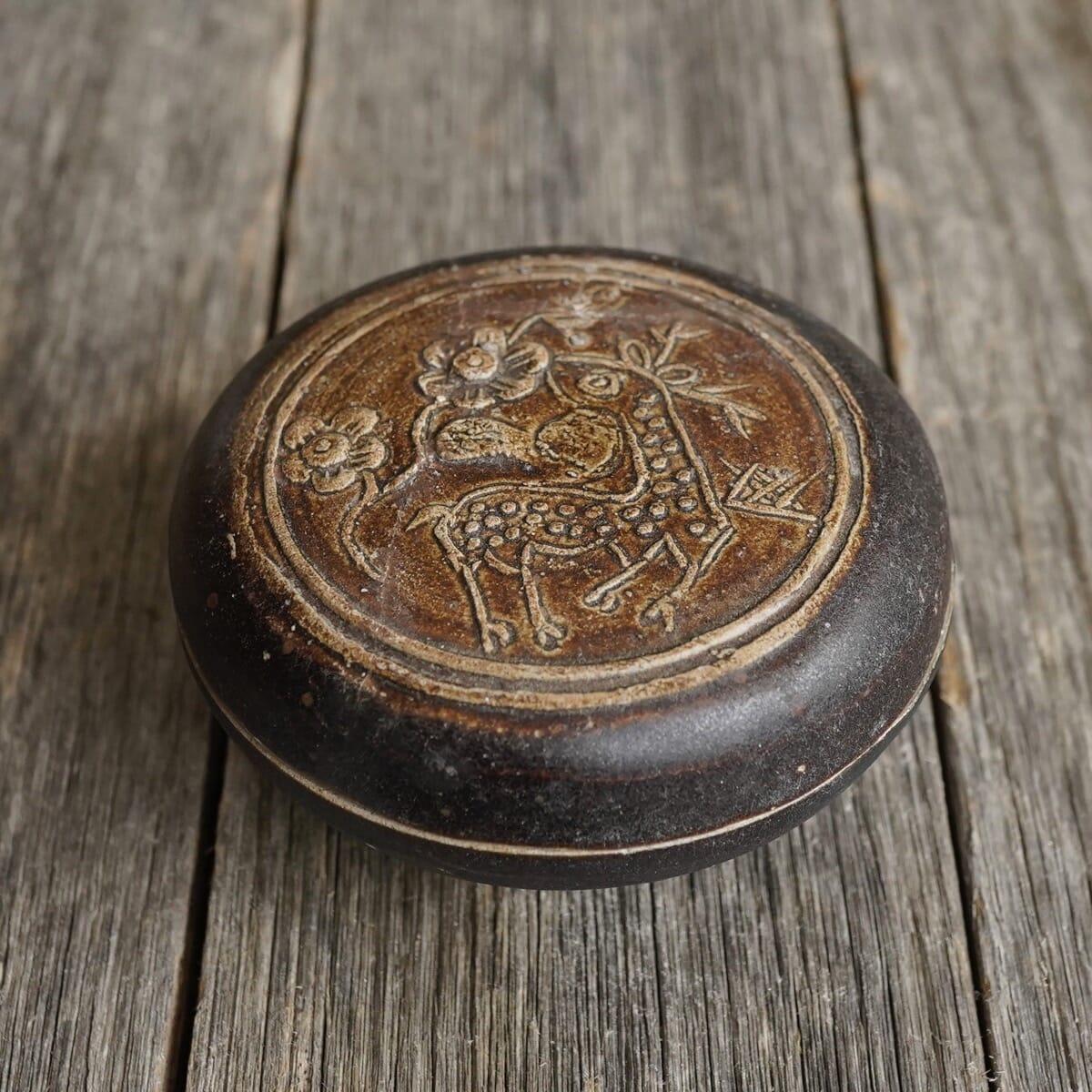
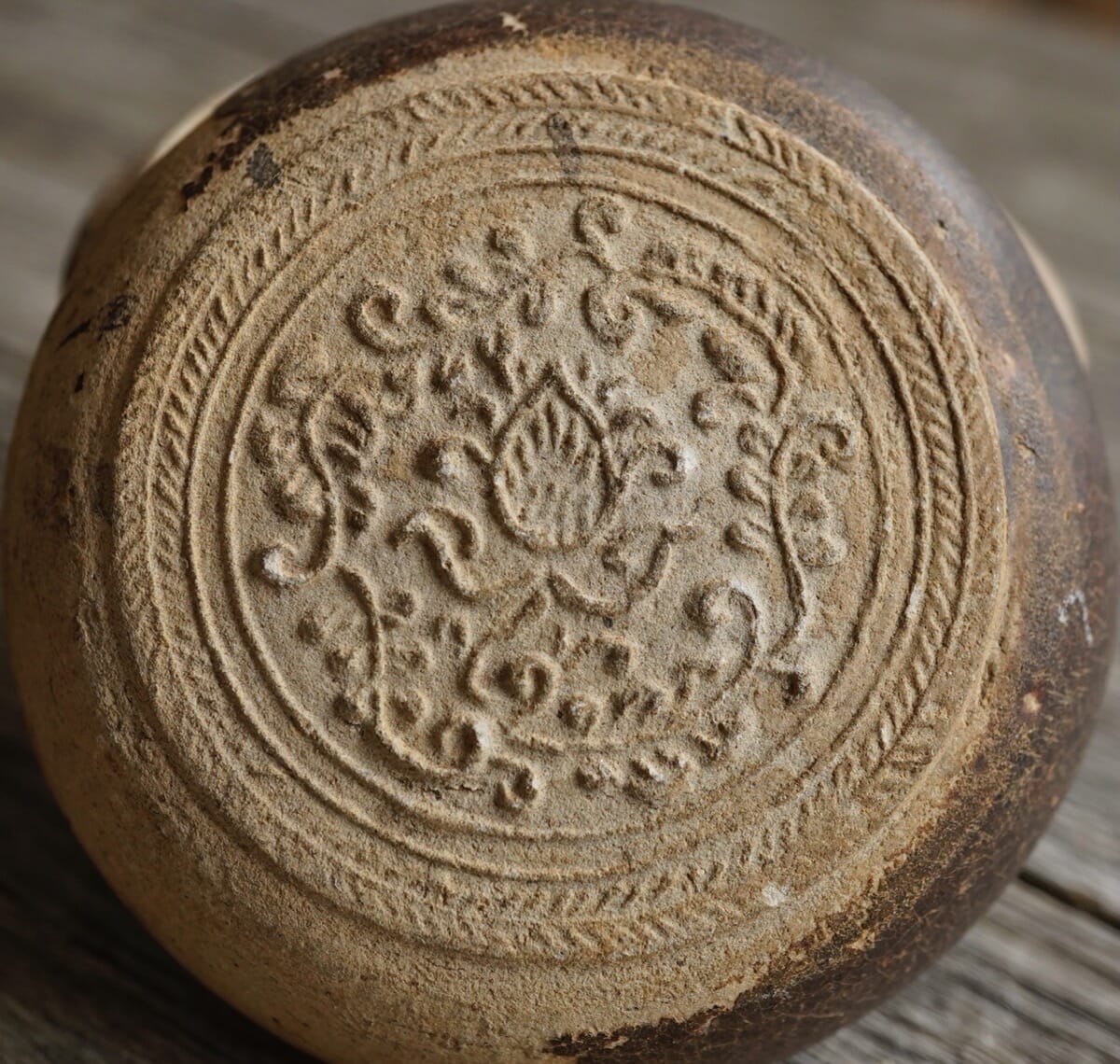
I like the Thai pieces from the 15th century for their sophisticated moulded patterns. The ‘Deer’ and the ‘Flower’ boxes we have are particularly tactile pieces, encouraging you to explore their design with your fingertips.

Swipe Left, South Australian Museum:Swipe Right, our example. Thai, Swankalok,

The other Thai pieces are a larger form, made to hold more. These are a distinct high-fired stoneware, and the kiln sites for these were traced & excavated in the 1980’s in Thailand, known as Sawankalok. Australian scholars were a major part of this study, and an important collection of these pieces can be seen in the Art Gallery of South Australia. Interestingly, there is an almost identical box to one of our pieces there, the only difference being a complete reversal of the colour scheme; ours is like the ‘negative’ of theirs!

What were they used for?
The answer to that is “whatever you need a box for!”
Much like a Tupperware box today, they would have been used for whatever the locals needed a small container to hold. In some regions they were probably highly prized expensive imports, used in such prestigious occasions as wedding dowries and burials of the more wealthy. In some of the Indonesian island kingdoms, for example, they are found in ‘caches’, large groups of buried ‘treasure’ including ceramics and precious metals – probably a local wealthy person burying their prized possessions in a time of conflict and never coming back for them.

Hoi An Shipwreck, c. 1490


Another amazing source of these boxes are shipments that never made it to the market place. Boxes from well-known shipwrecks that we have include the Vietnamese products from the late 15th century Hoi An wreck, and a few from the early 17th century Ming Dynasty Bihn Thuan wreck, sold off in Melbourne a few years ago.

Here’s a selection currently in stock:

Posted on

Fresh Stock 20th July – Birds & More

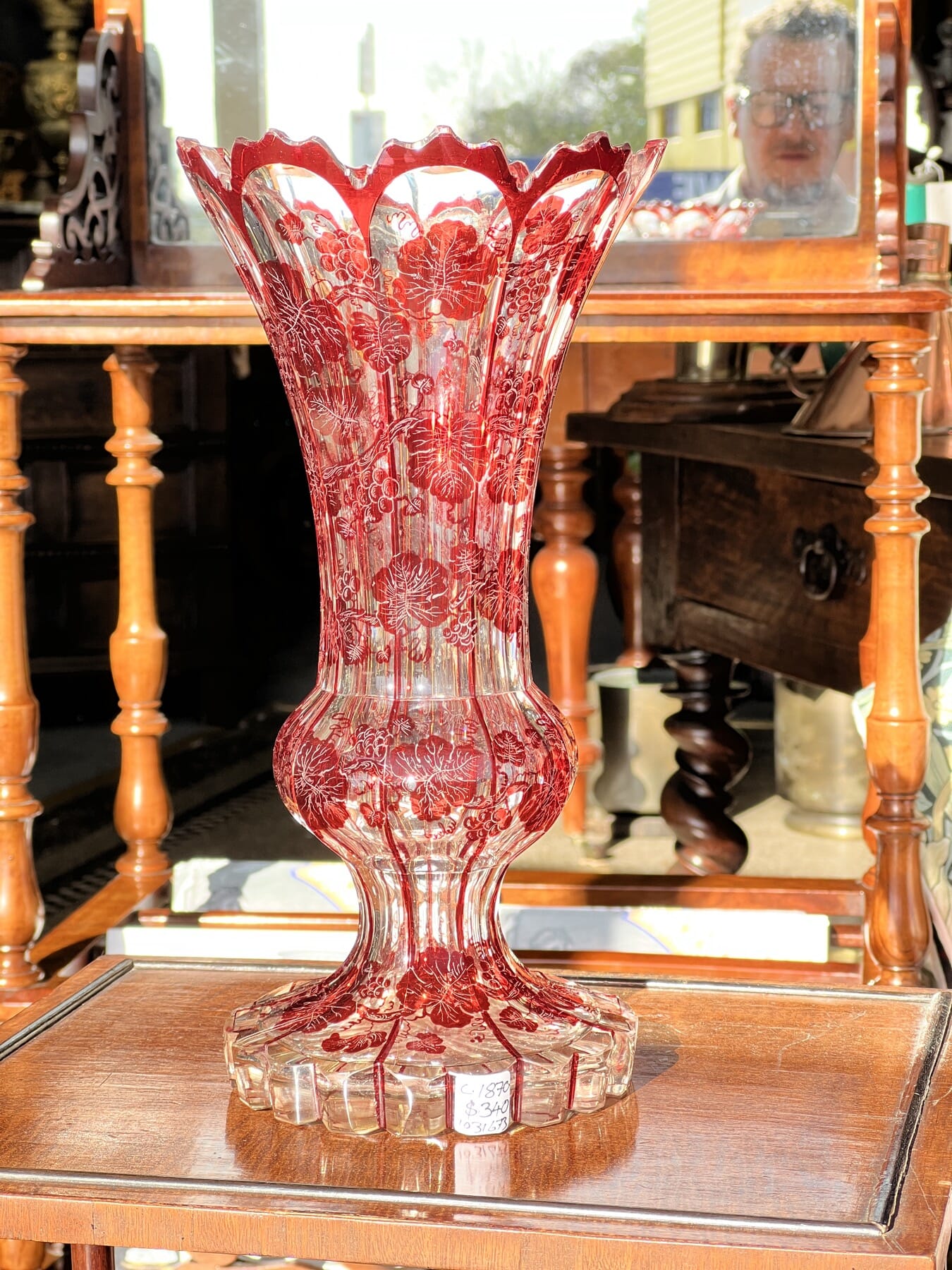
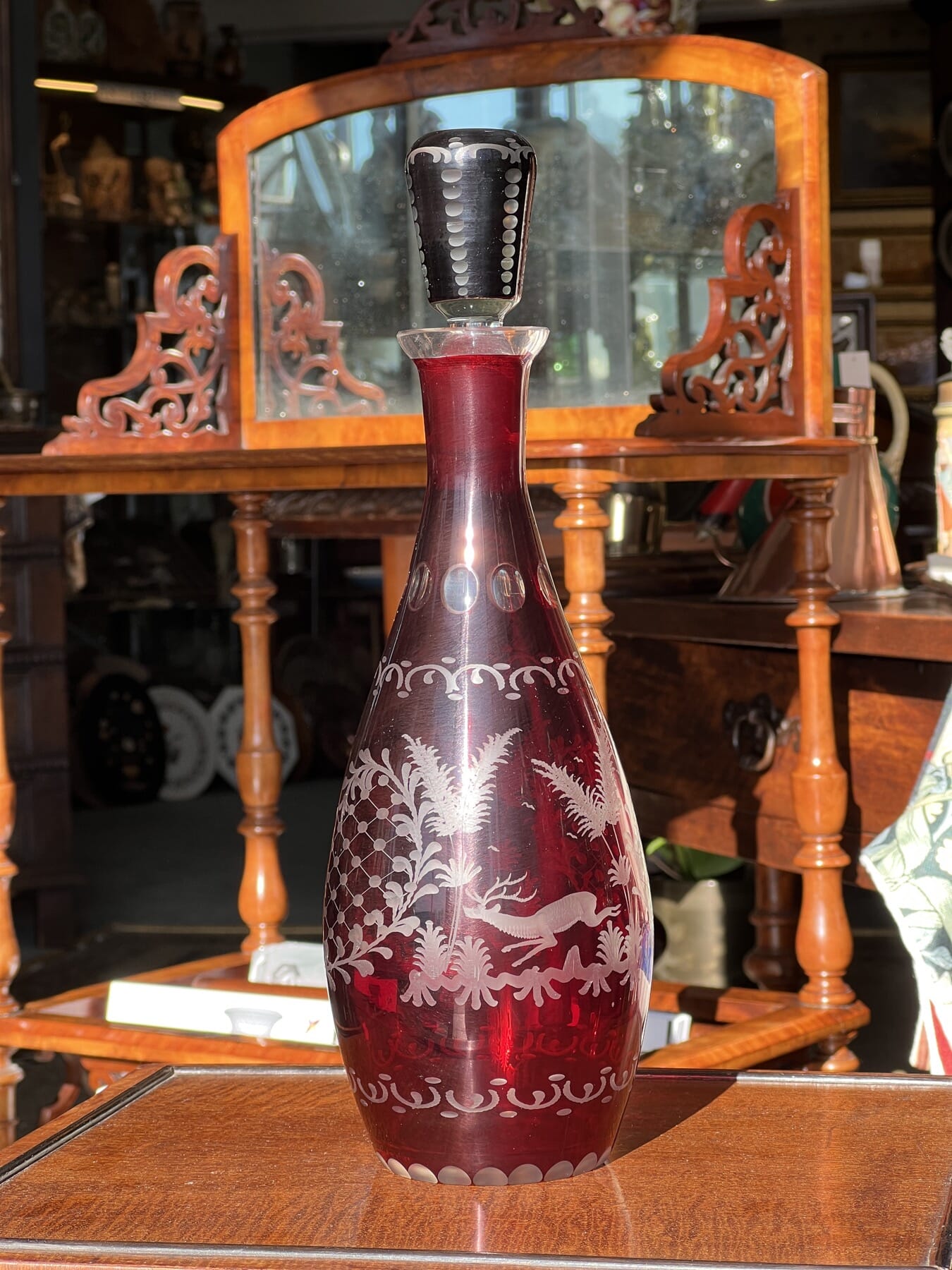
Welcome to our latest ‘Fresh Stock’. We have an excellent selection for you , including a fine flock of bird-art, some stunning Victorian pieces,Ruby glass, and more silver.

Preview Graphic

First, a quick website tip: have you seen our new ‘PREVIEW’ section?
This area will be kept up-to-date with items currently being prepared for Fresh Stock.
Some pieces are more difficult to catalogue than others – in particular, the Art with the indistinct signature, and the Porcelain with no marks at all…. you’ll be able to see items that have just come in, and information added as they are researched. Finally, they will be released as a ‘Fresh Stock’ release.

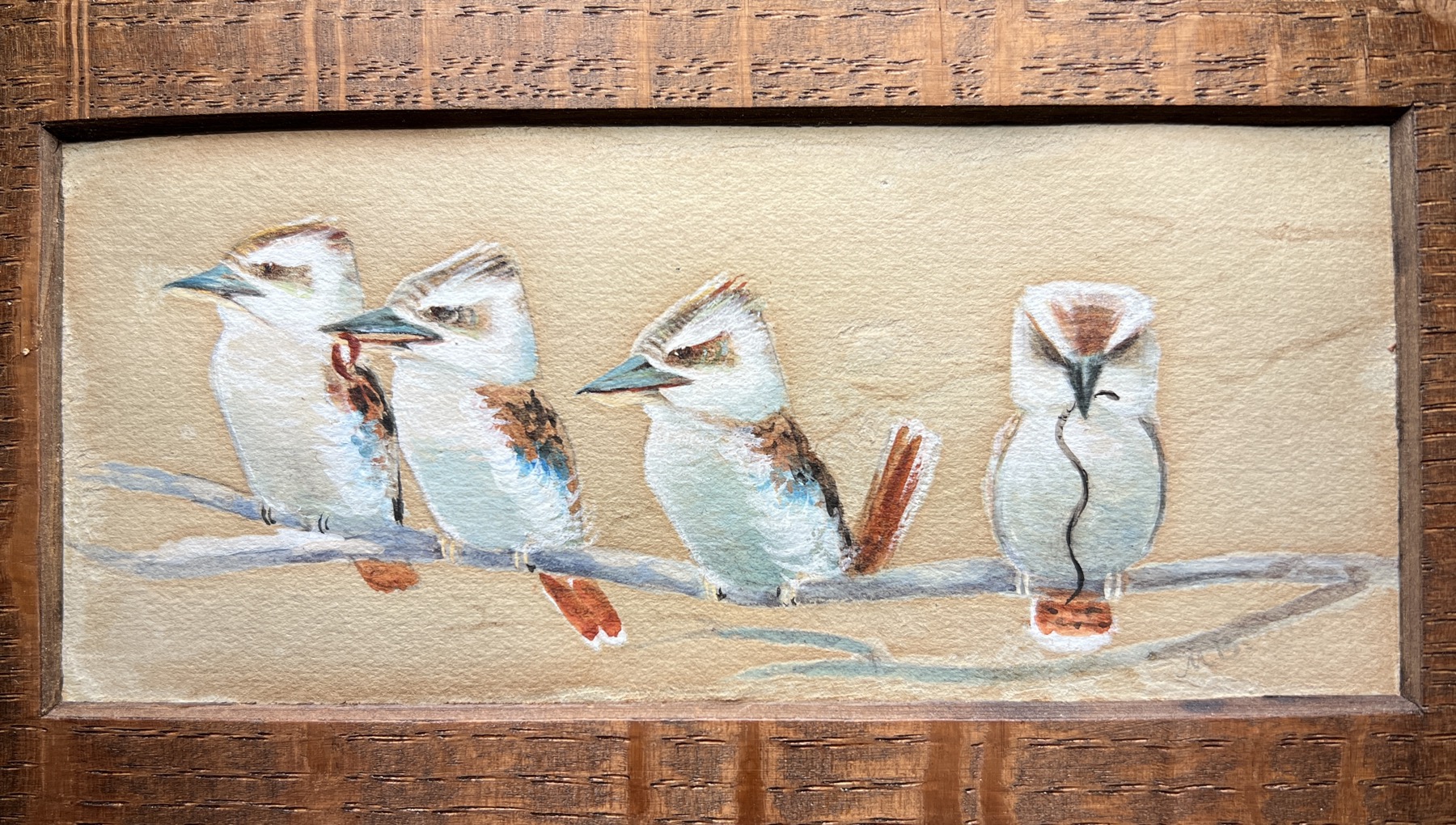
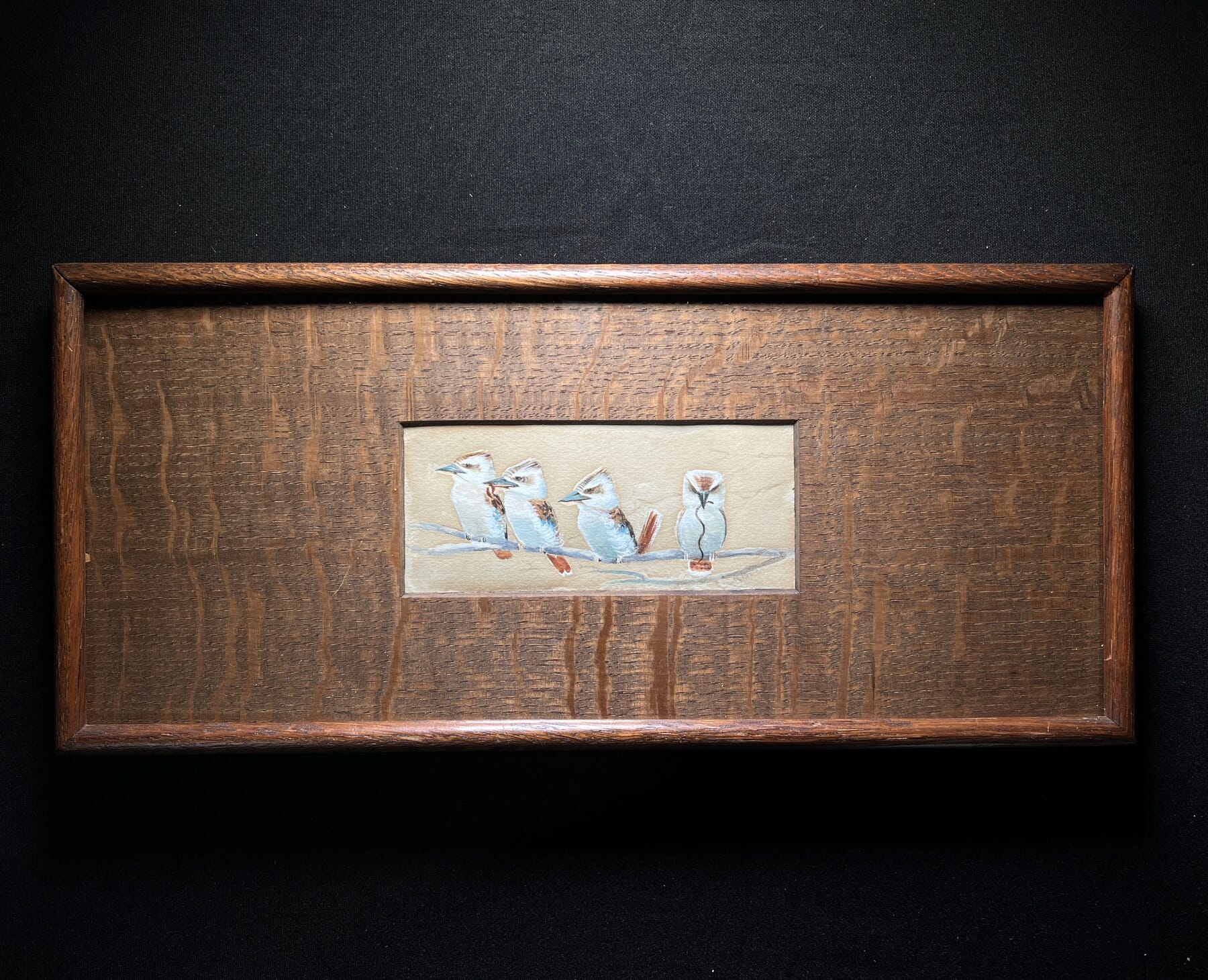
Kookaburra Artwork c. 1907

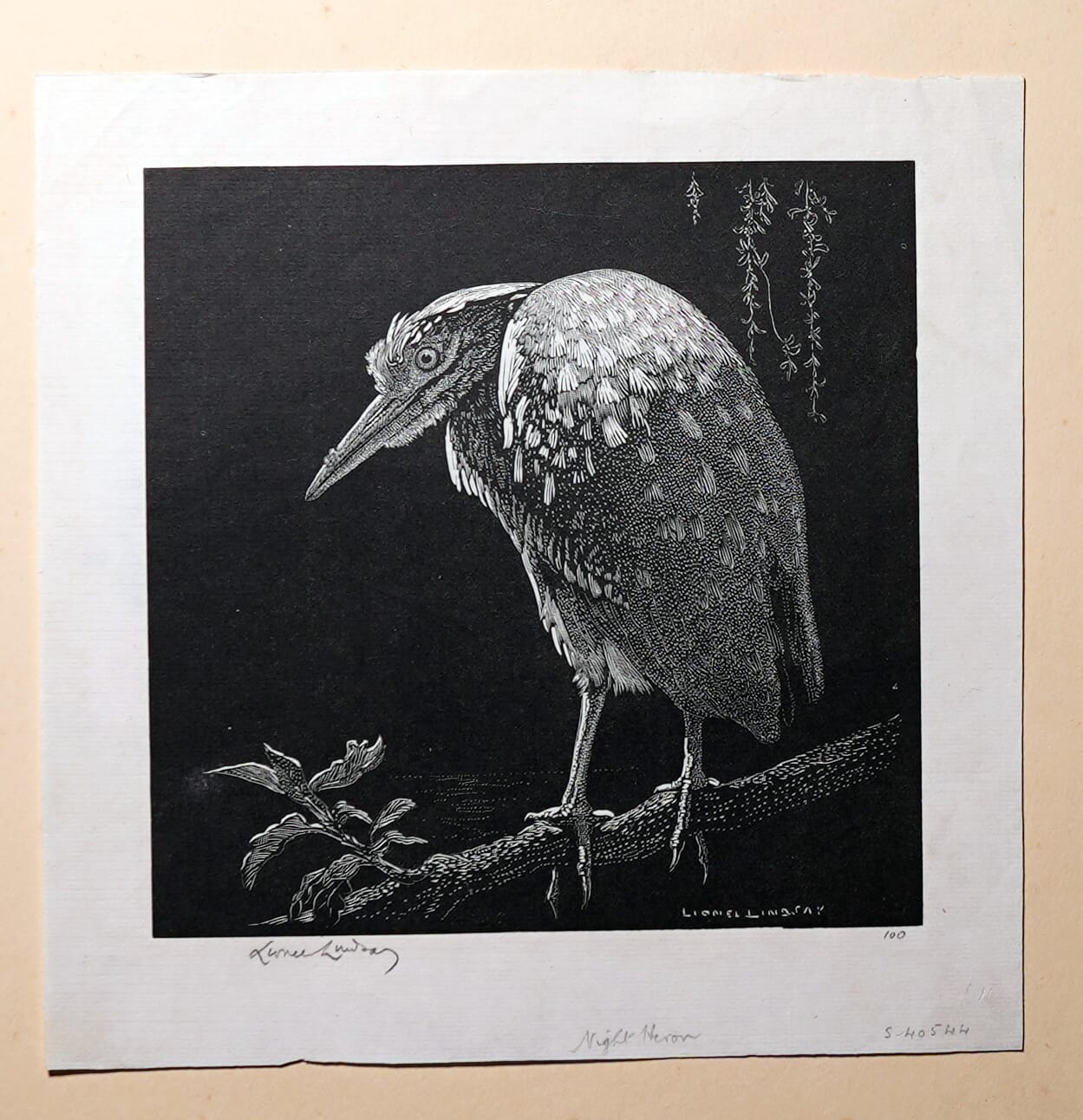
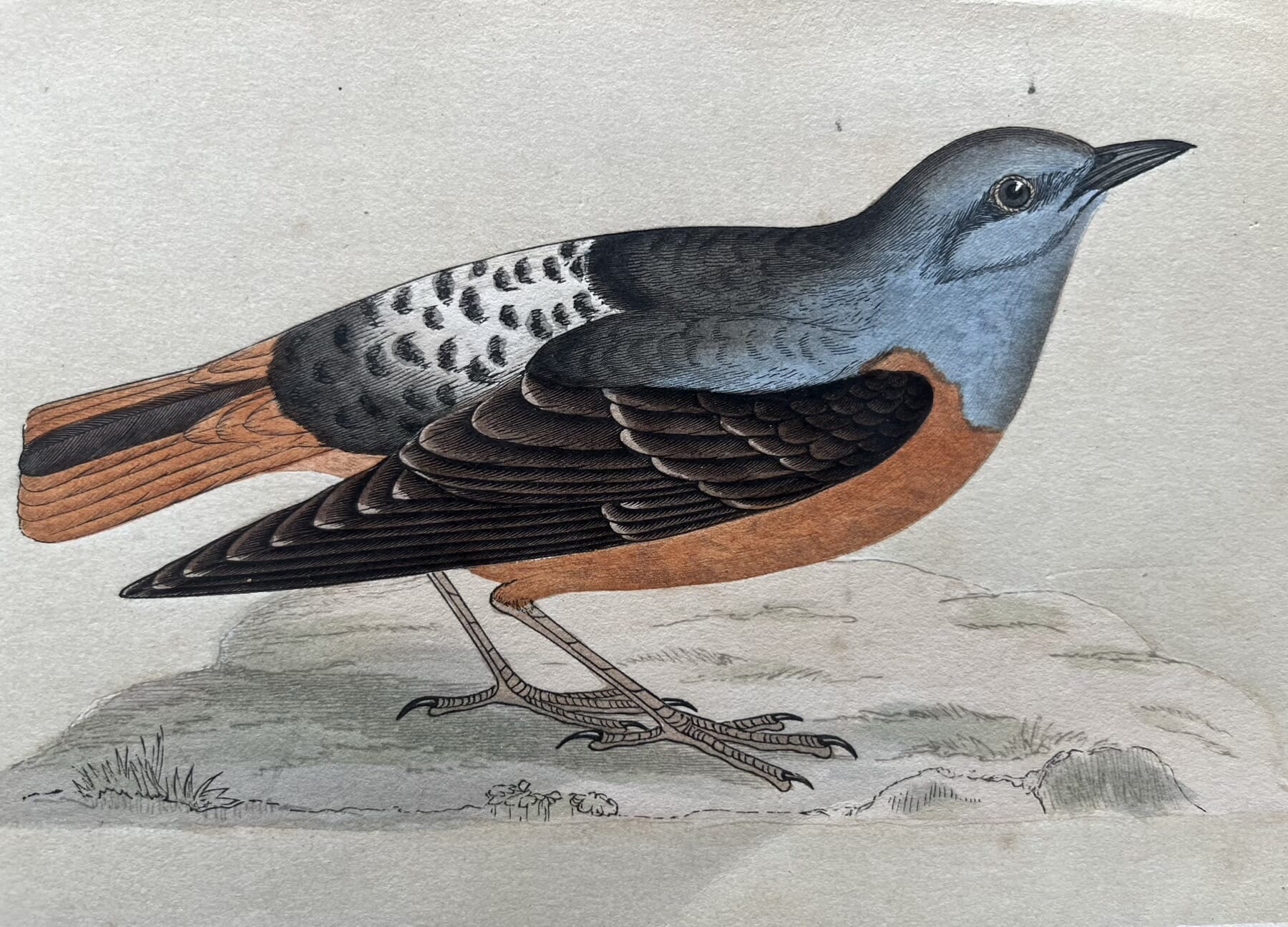
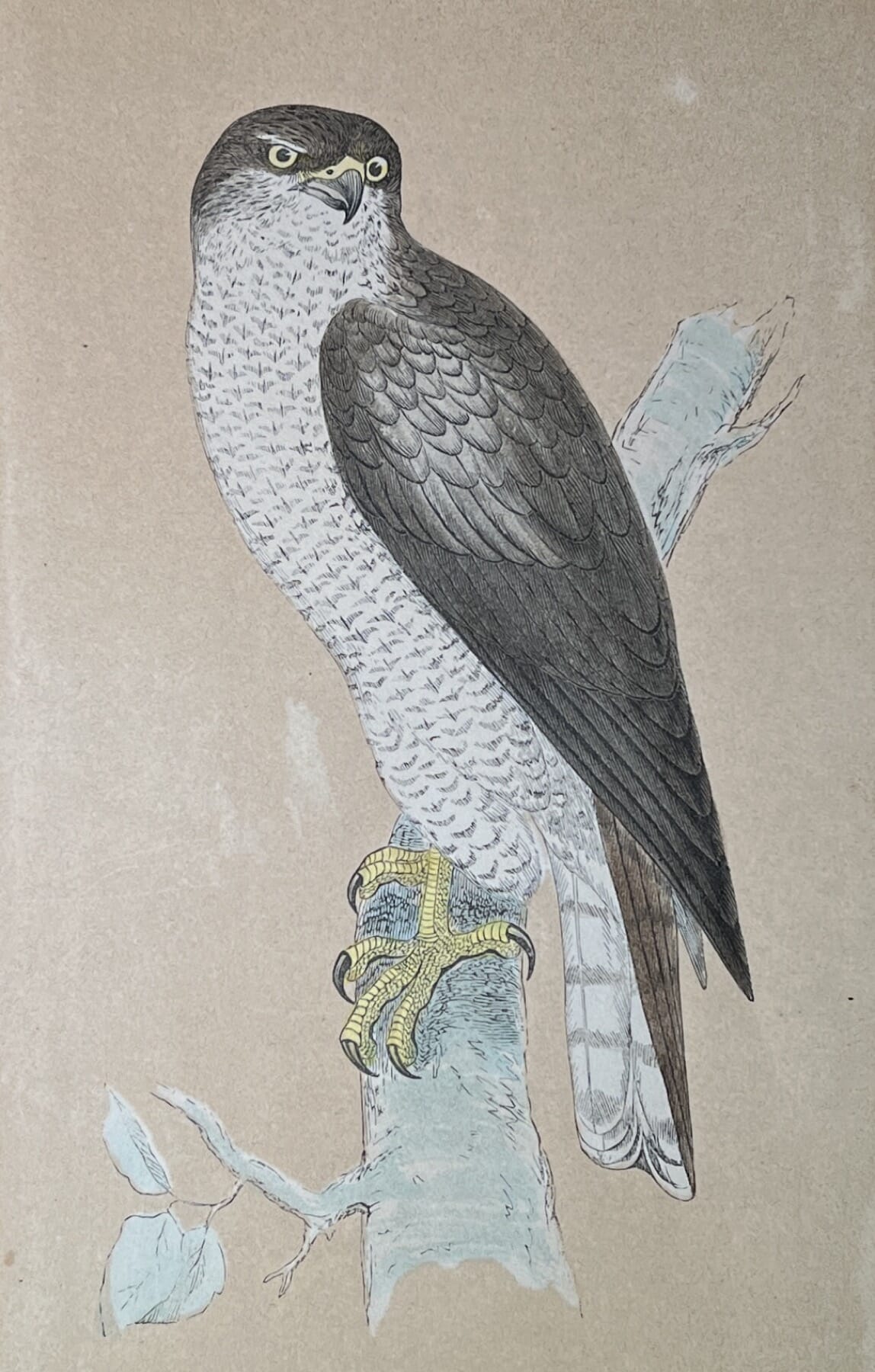
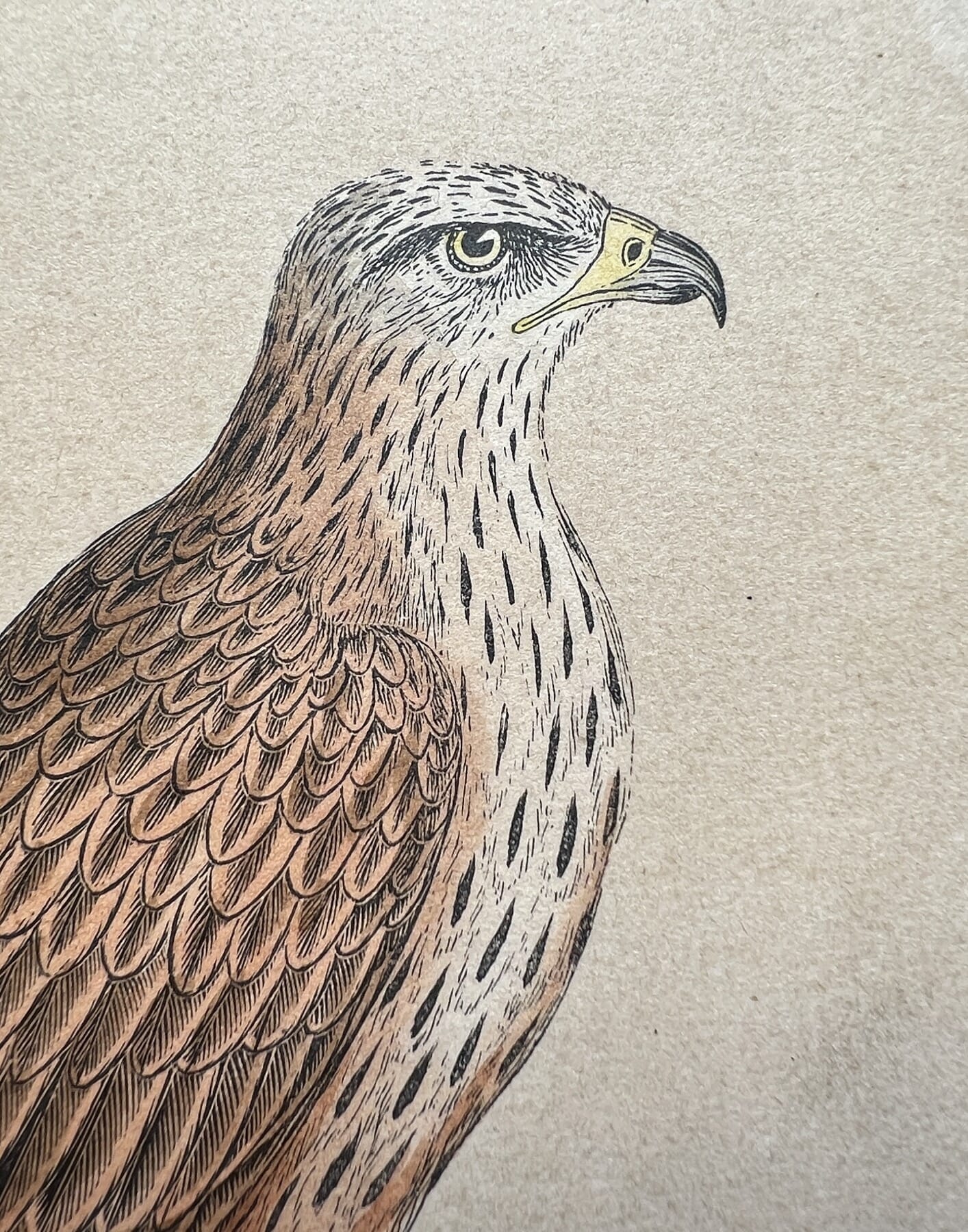
Ornithological Delights

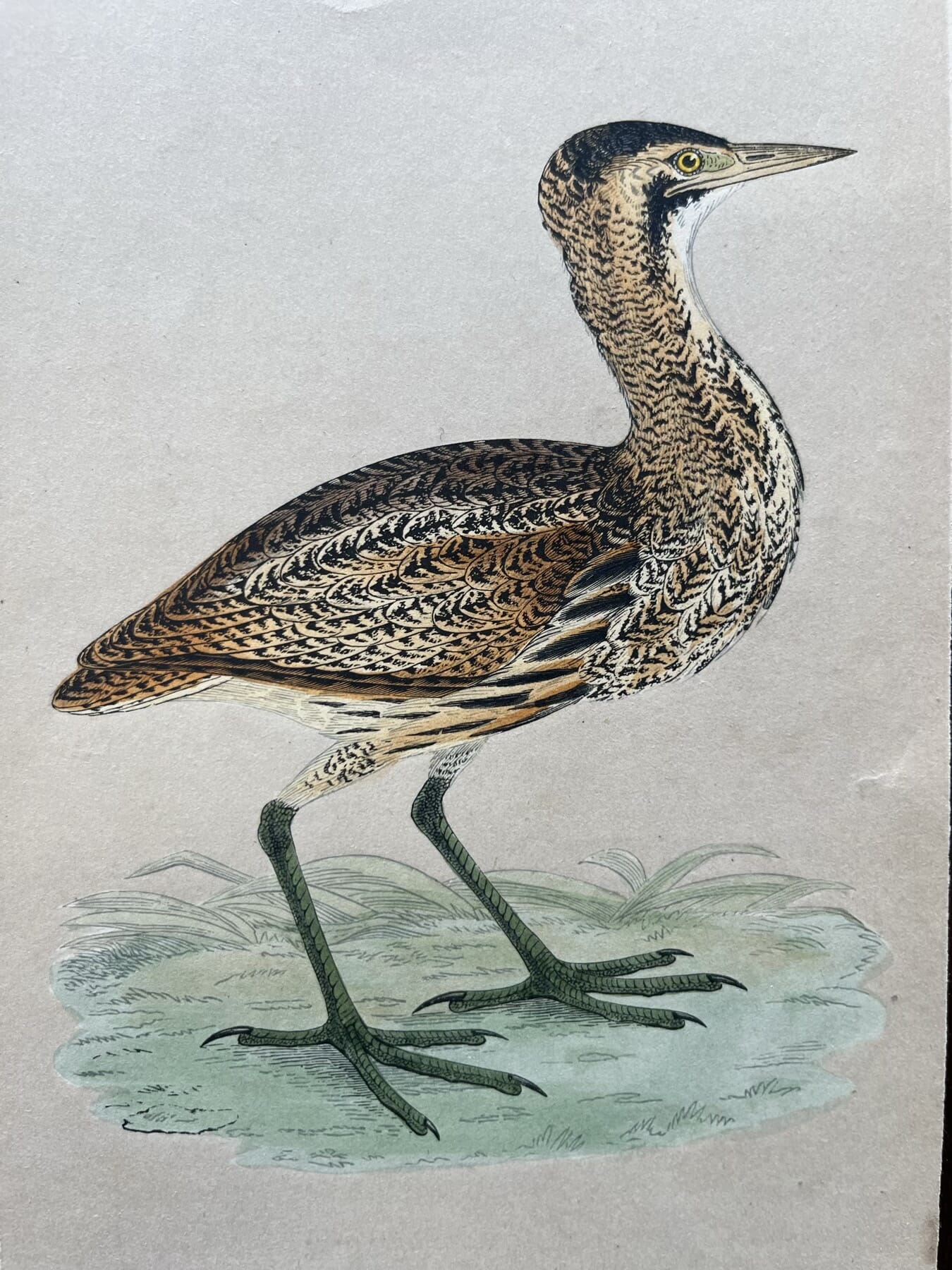
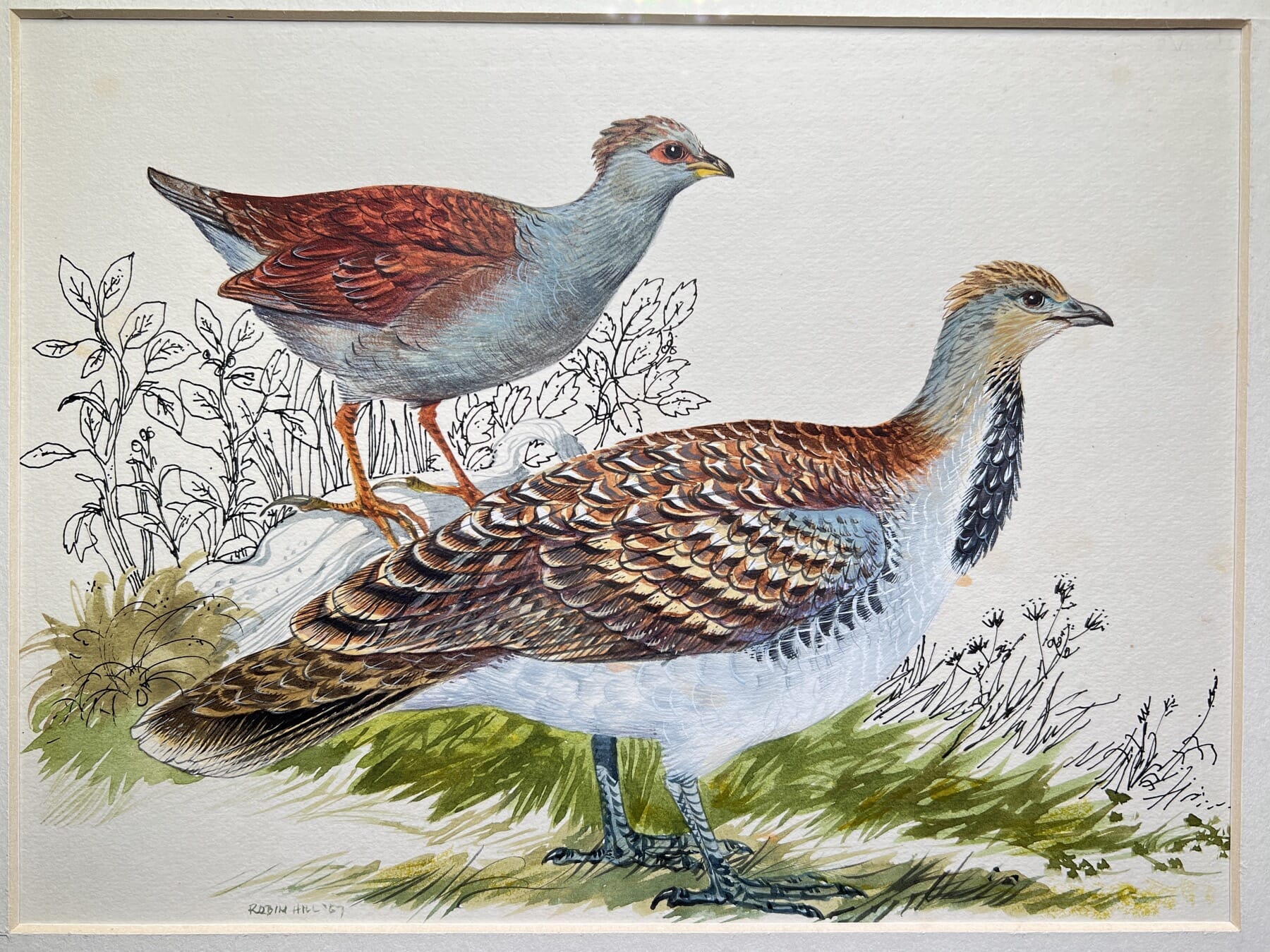
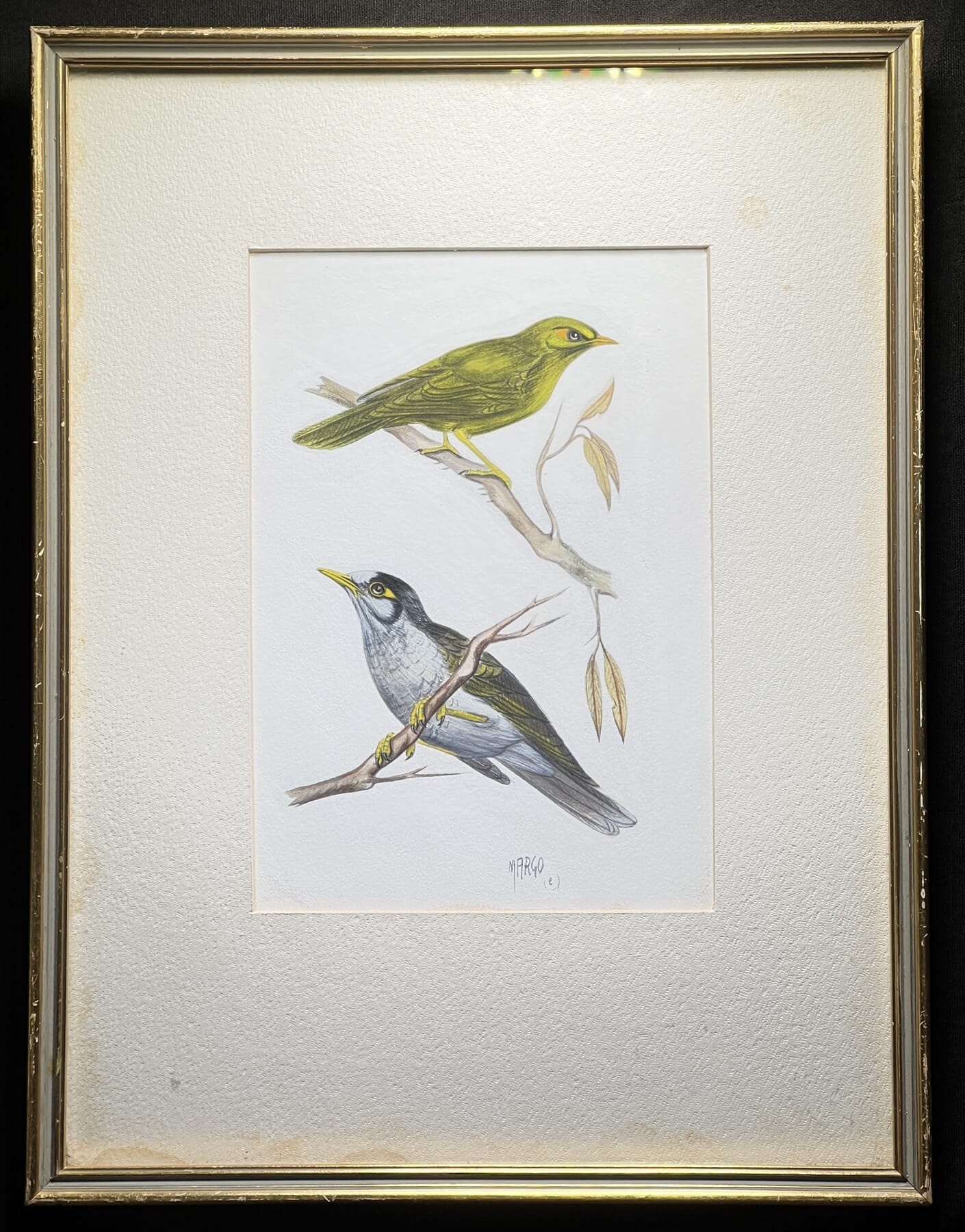
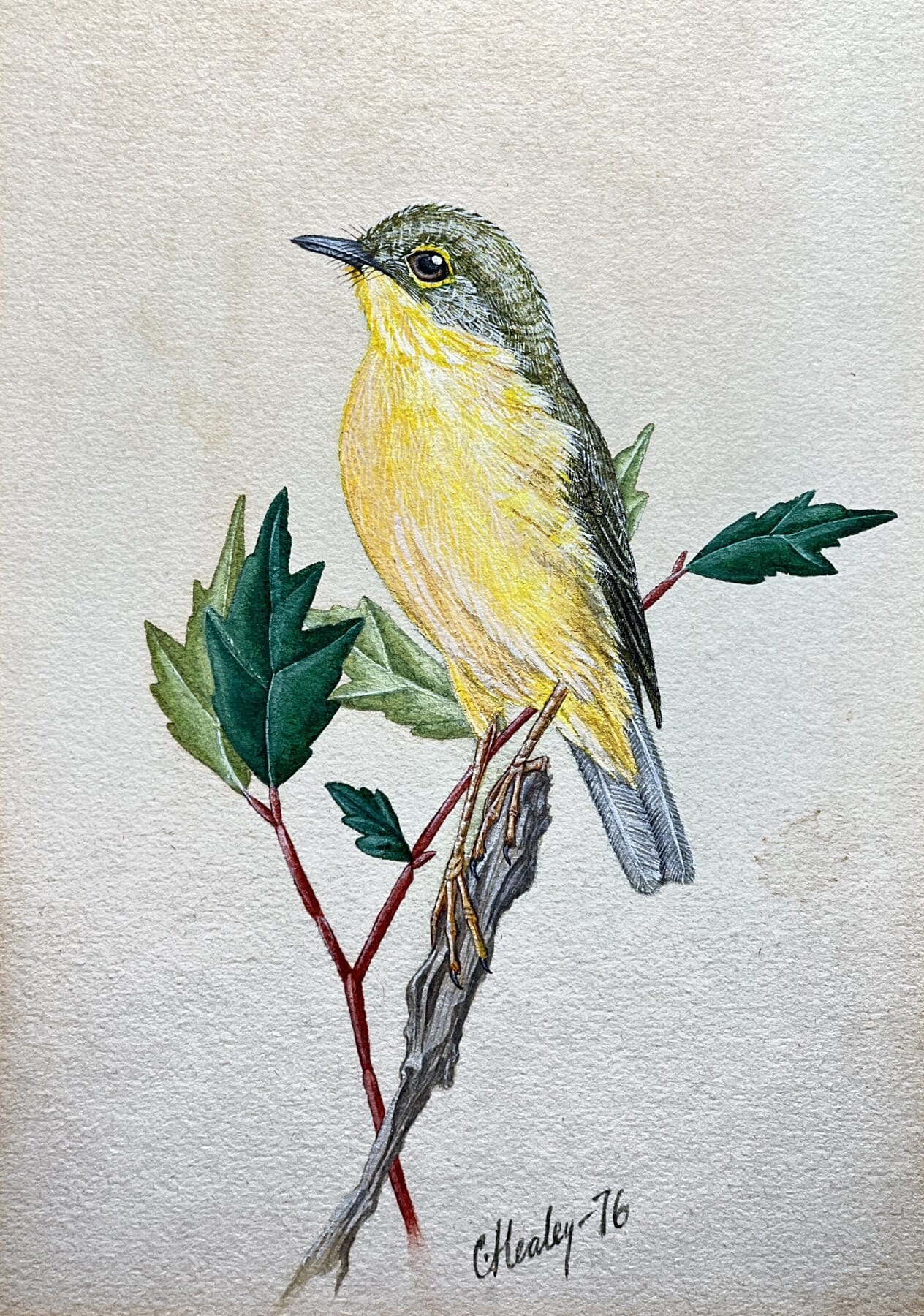
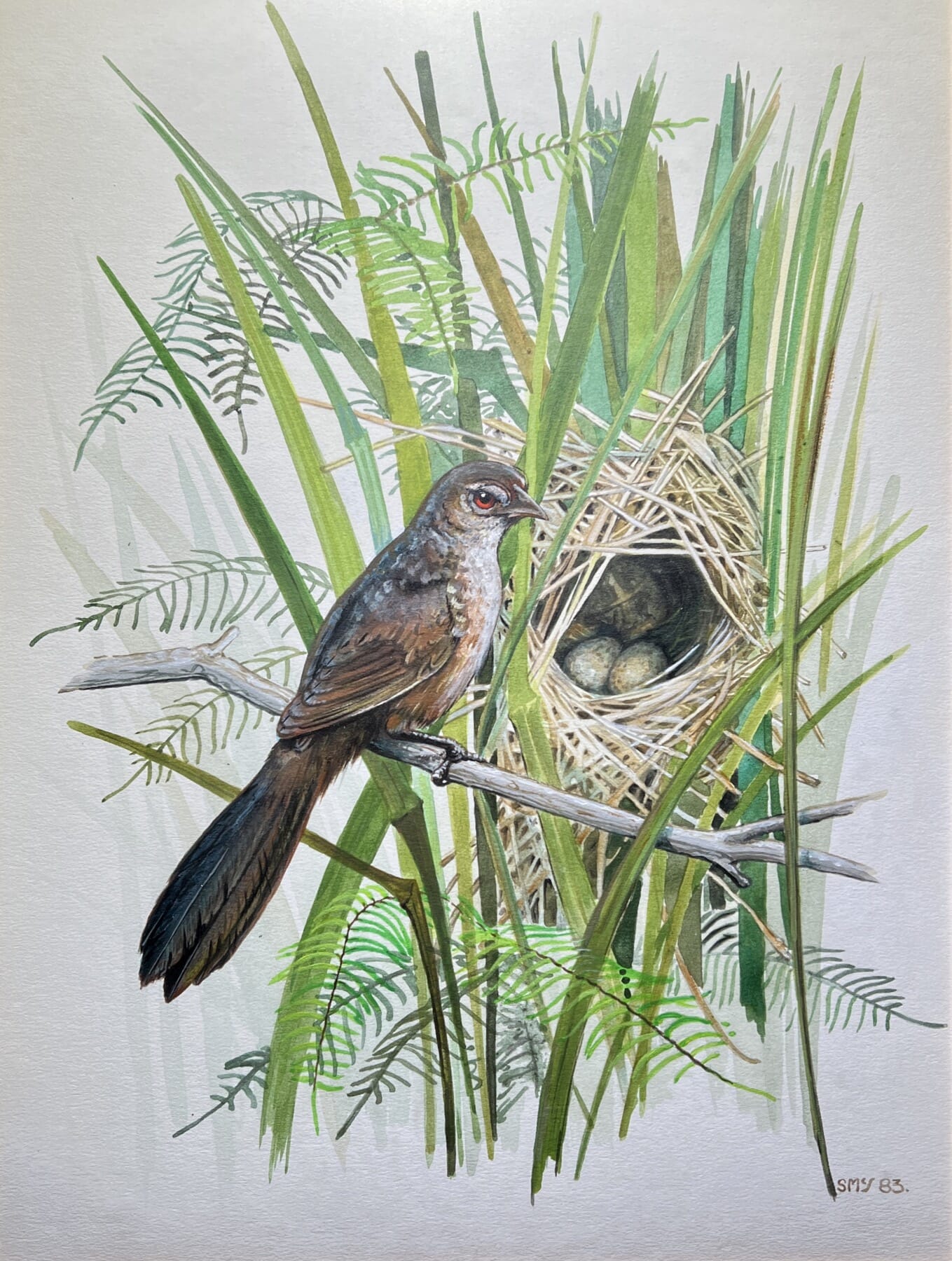
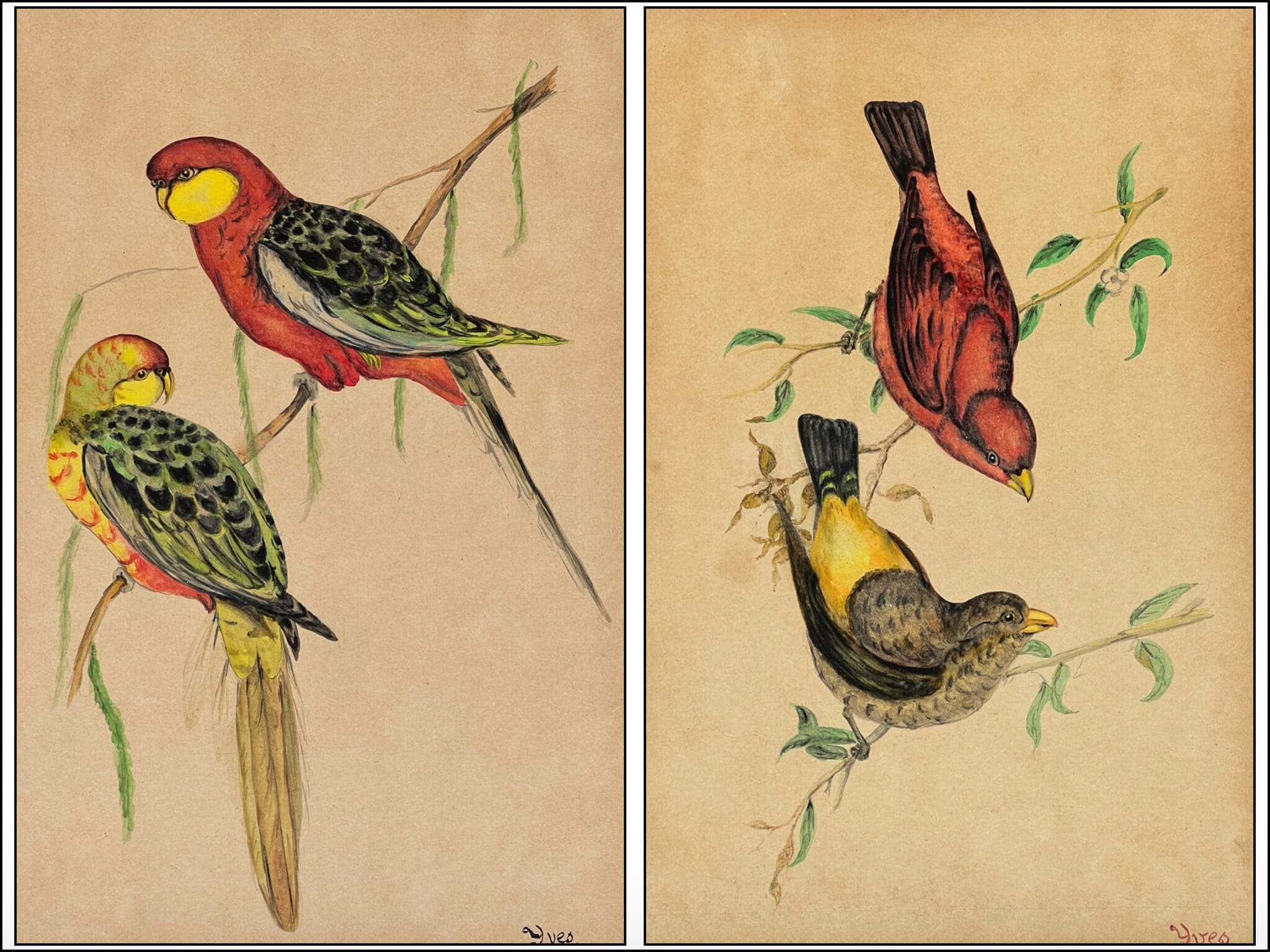
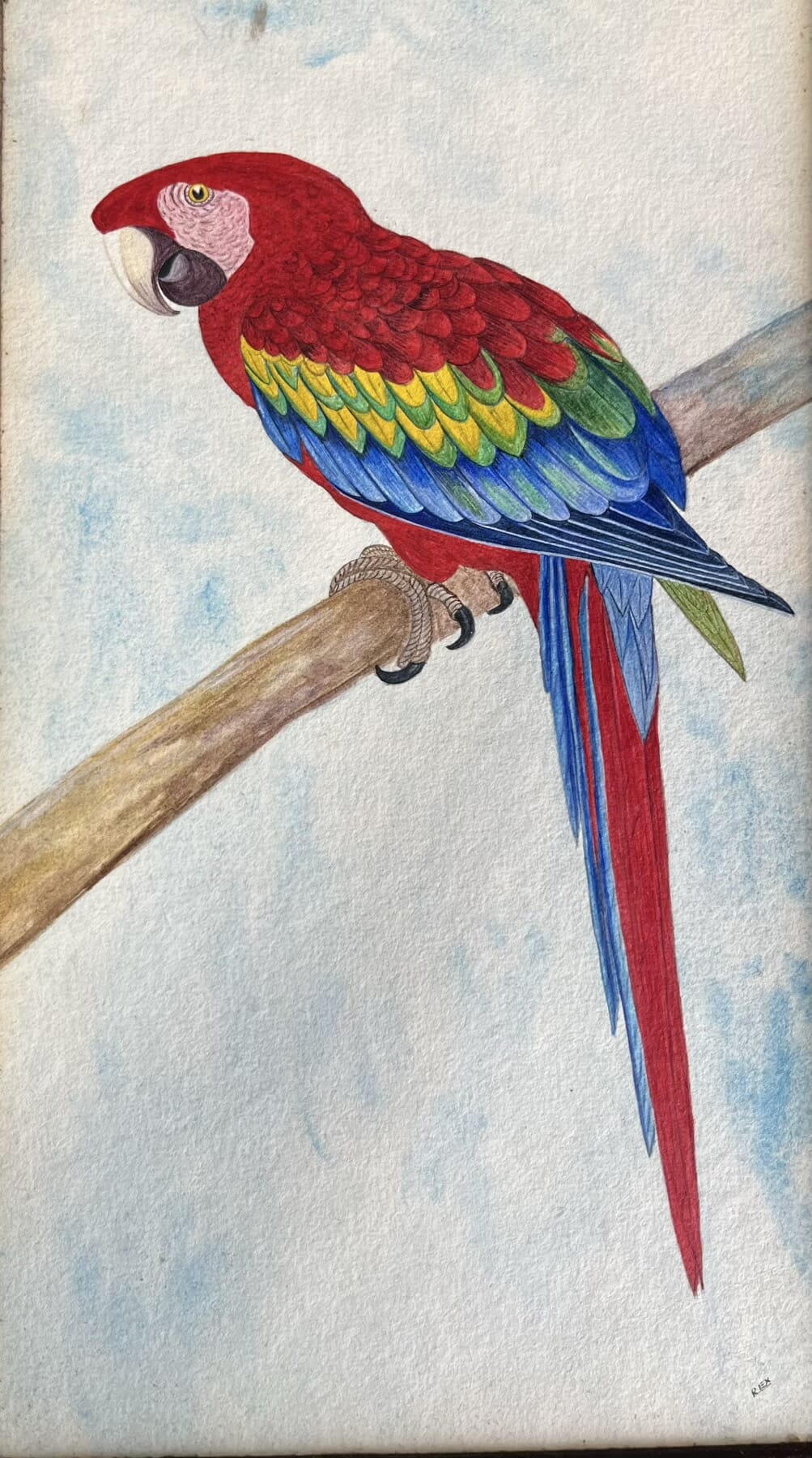
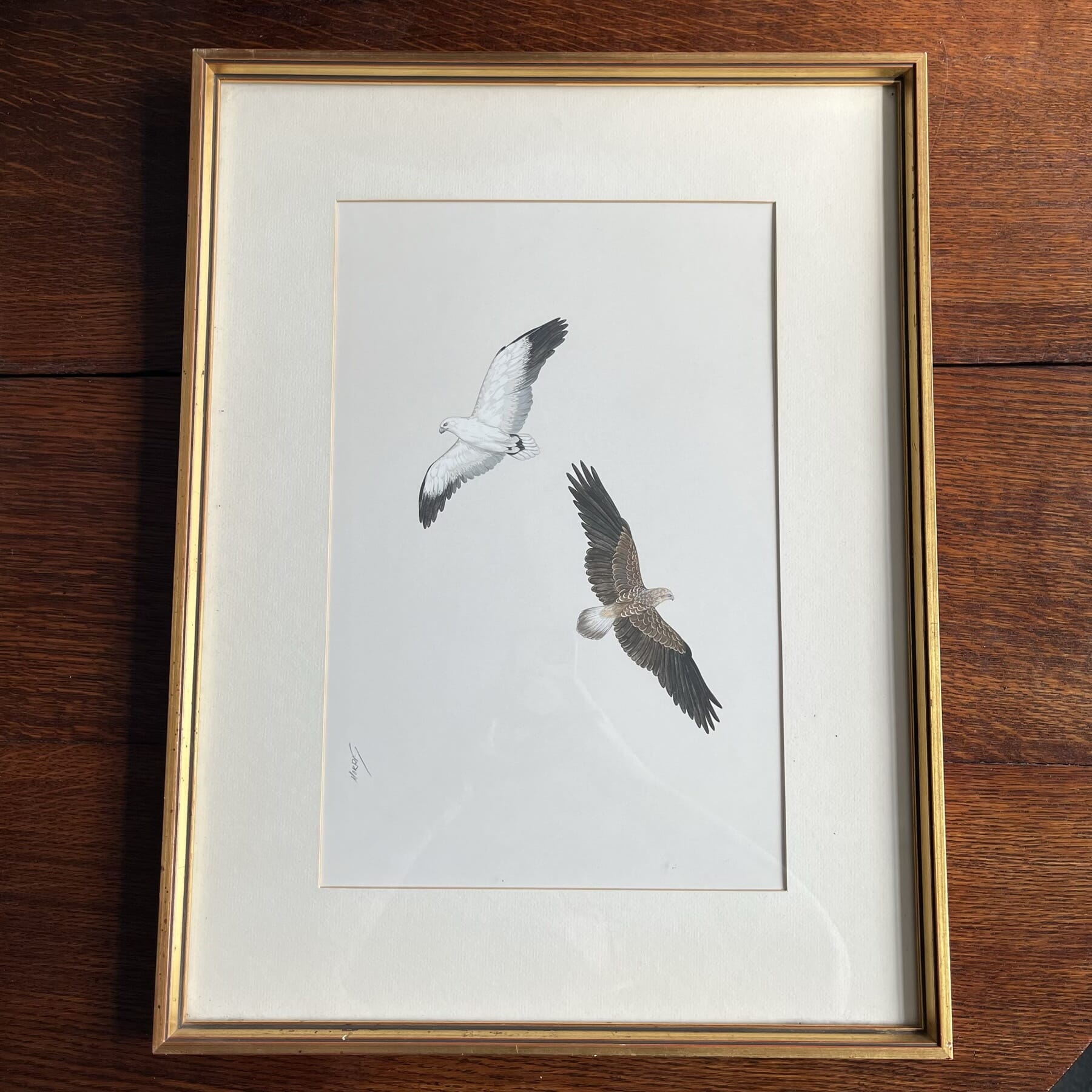
We have a group of Birds…. a flock, for sure. Some of these are prints, but others are original artworks. Several are the original painting from books on birds……. enjoy!

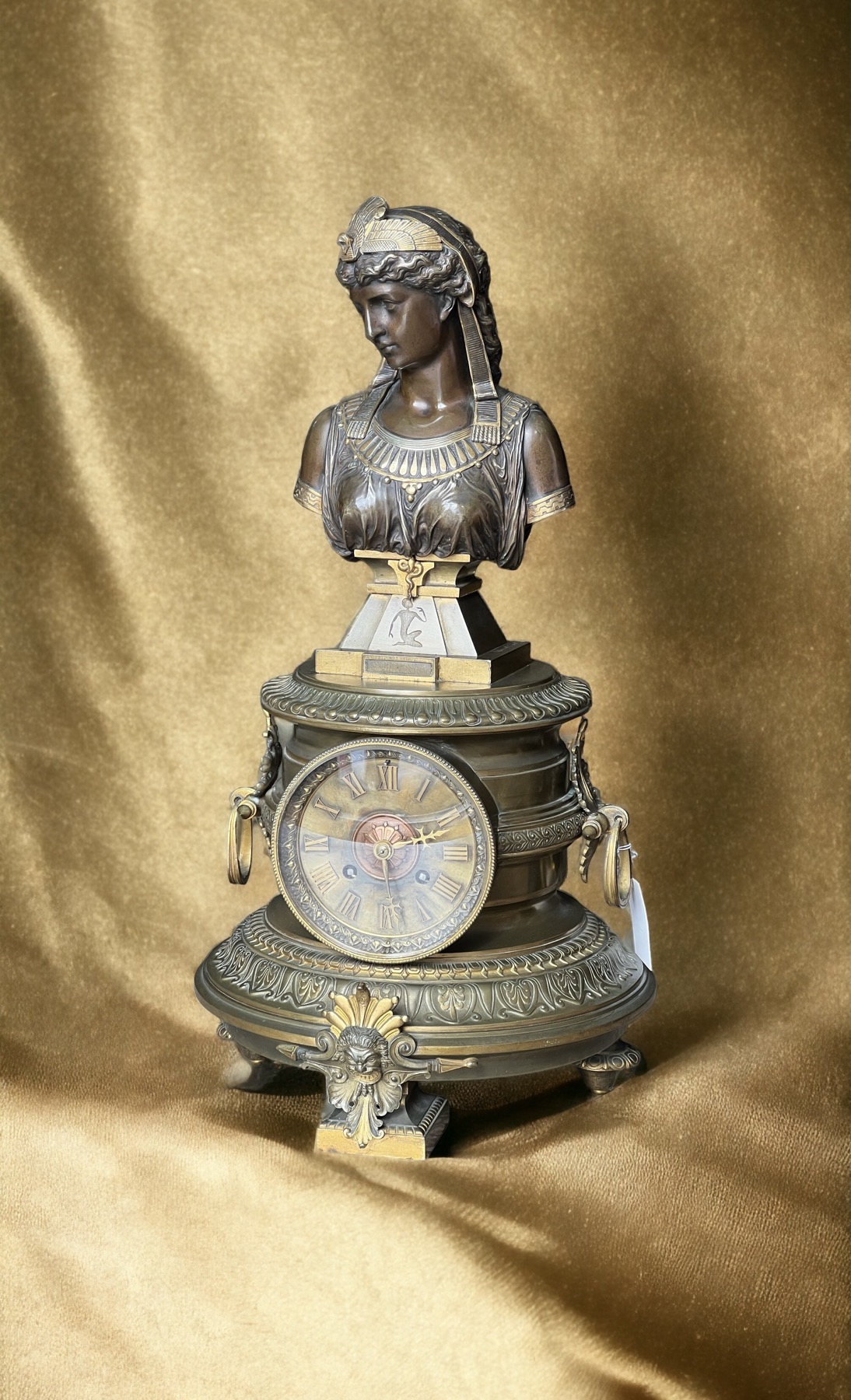
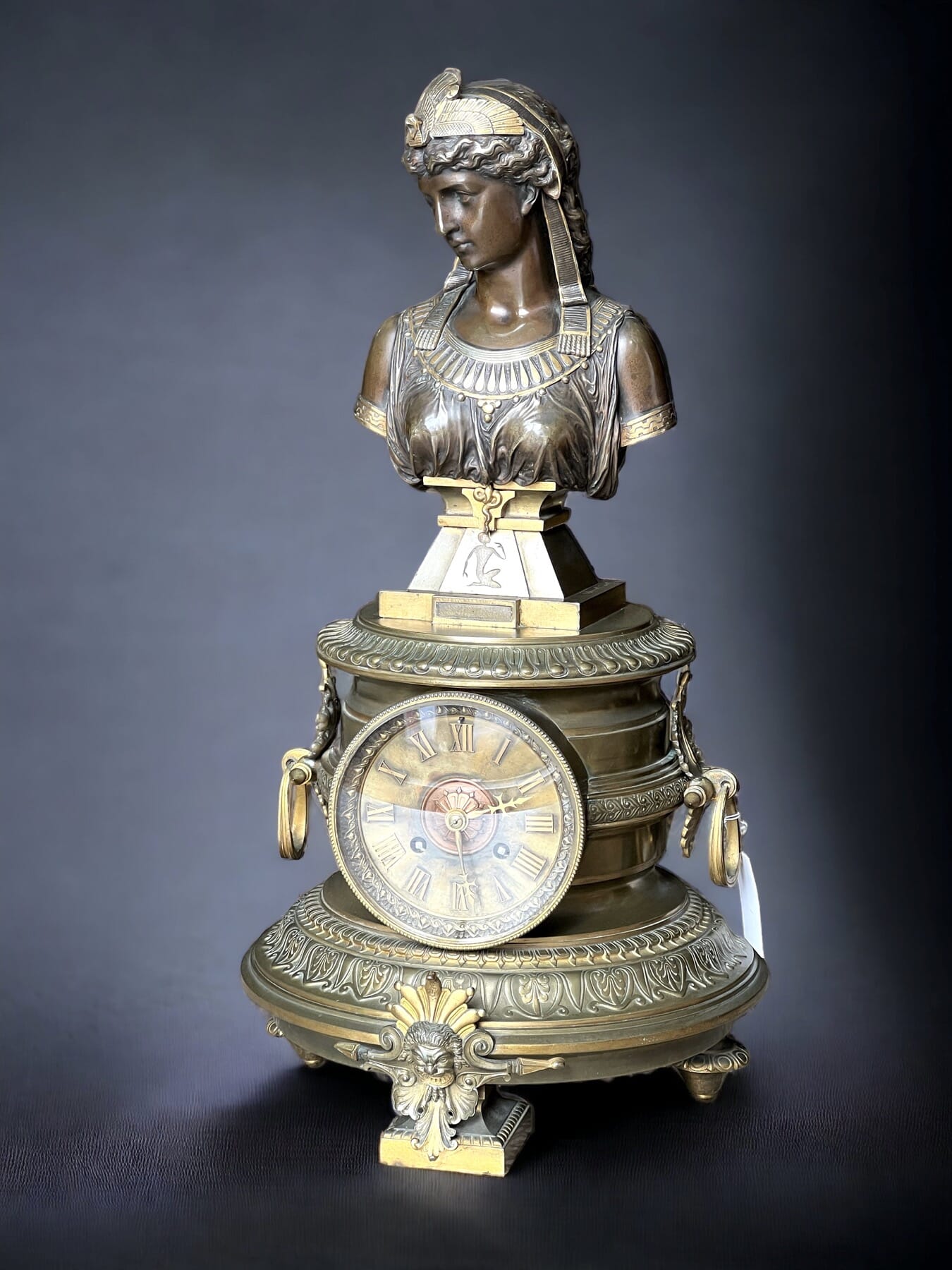
French ‘Cleopatra’ Clock, c.1895

Cleopatra French Clock 1895
‘Cleopatra’ French Clock, circa 1895

This impressive large & heavy clock is French, a fine example of the Egyptian Revival fashion of the late 19th century.
The top is dominated by a superb partially gilt bronze bust of Cleopatra, by the prominent French sculptor Eutrope, and the works are by the top Paris maker, Lemaire.

FRESH to STOCK…….

Posted on

Upcoming Ceramics

Preview Graphic

Have a sneak-peek at what’s being prepared for Fresh Stock in our Ceramics Department.

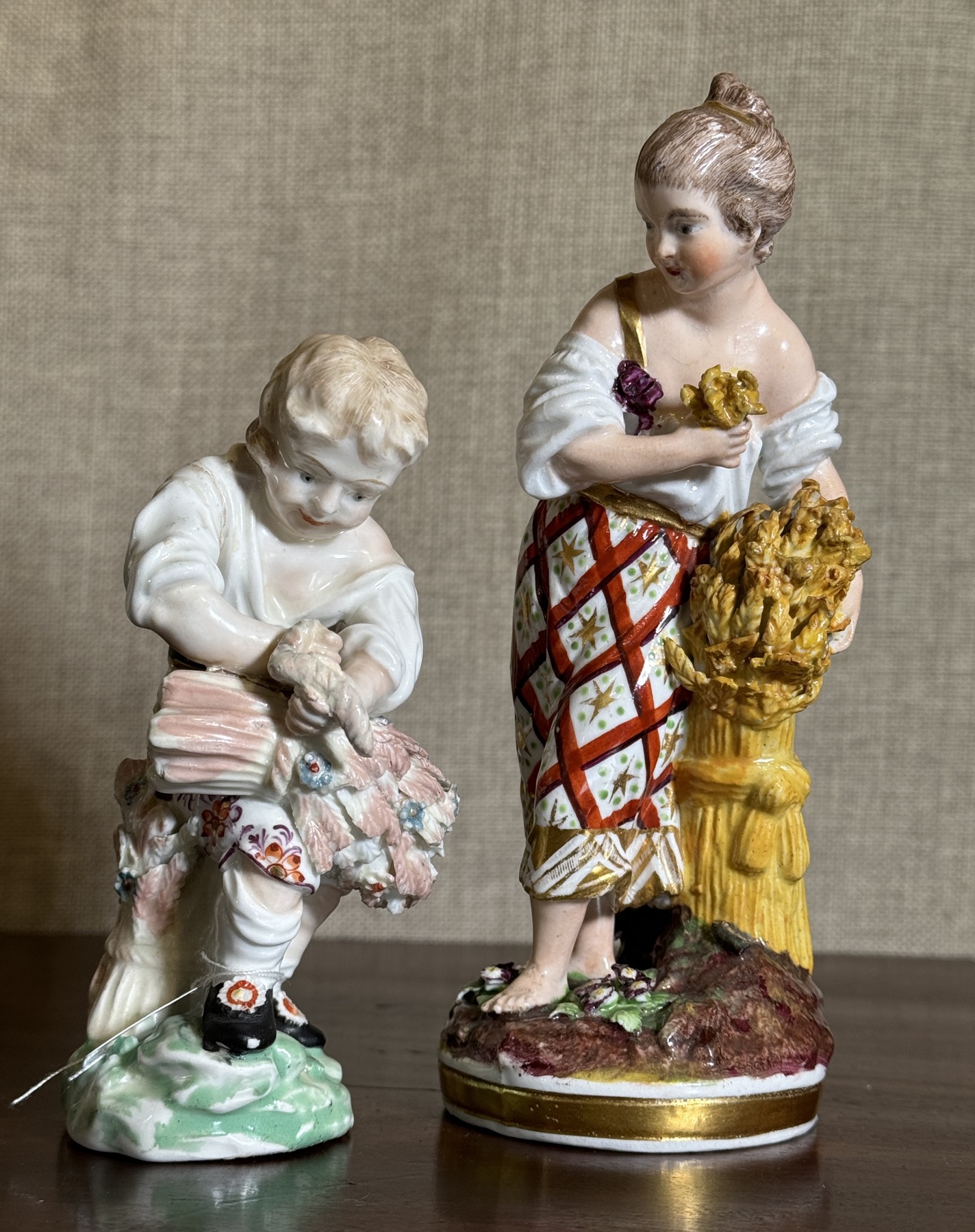
Two Derby figures of 'Summer', showing a child with a sheaf of wheat: left is a boy from the 'Rustic Seasons', c. 1780; right is a girl from the 'French Seasons', c. 1810.  She seems to be criticising his sheaf-binding technique!

Two Derby figures of ‘Summer’, showing a child with a sheaf of wheat: left is a boy from the ‘Rustic Seasons’, c. 1780; right is a girl from the ‘French Seasons’, c. 1810. She seems to be criticising his sheaf-binding technique!

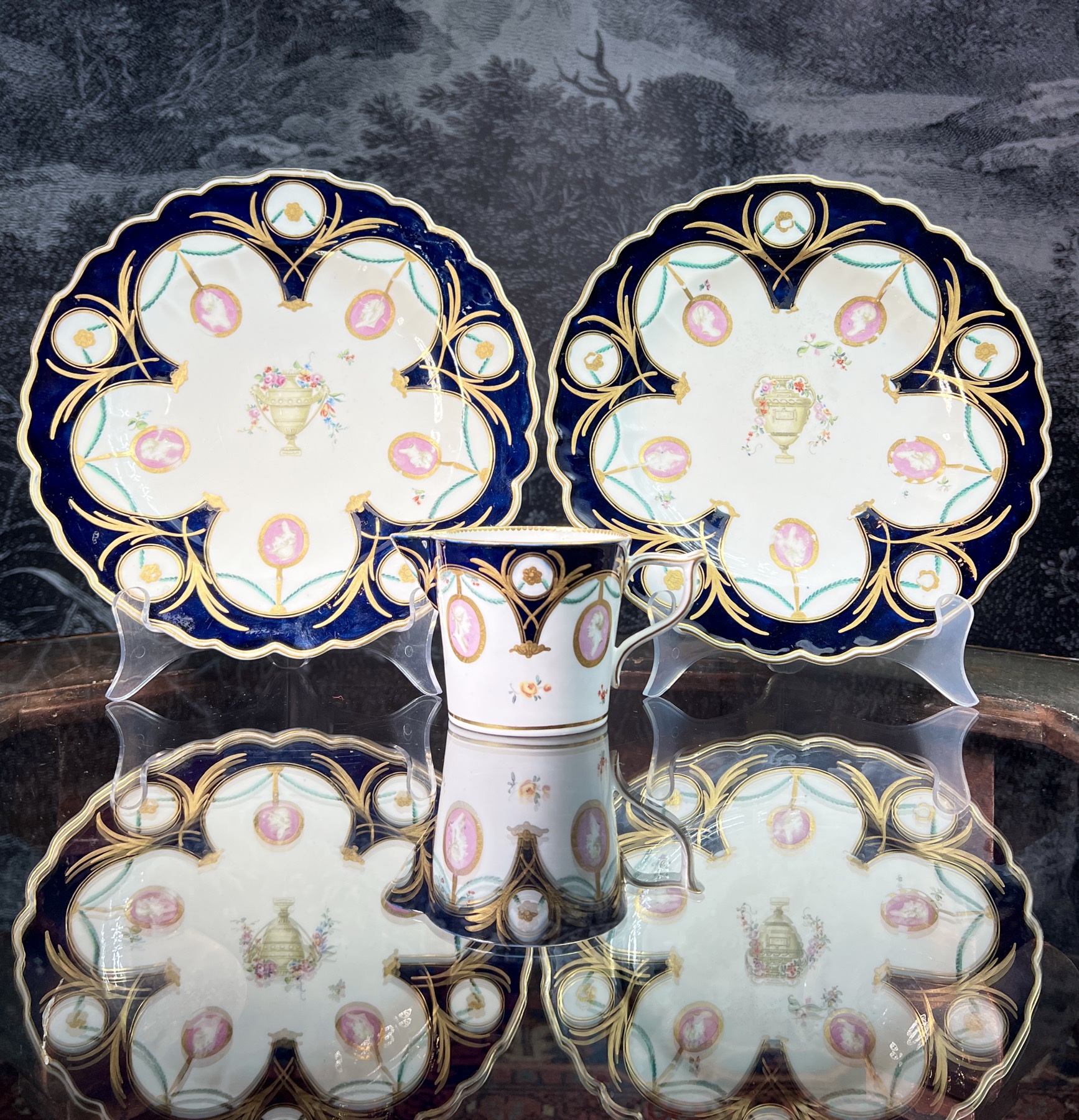
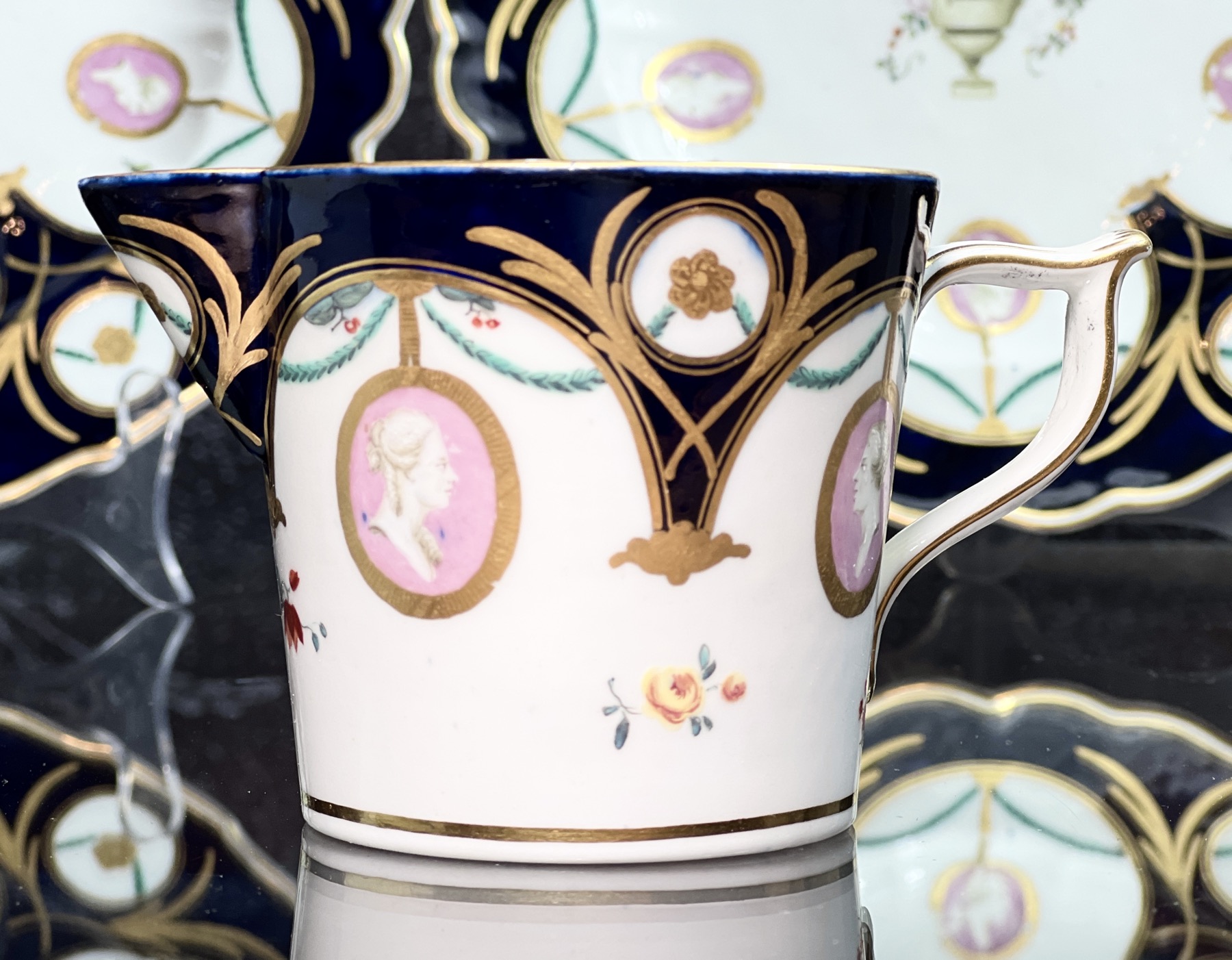
A stunning group of Gold Anchor Chelsea,

with a very distinct pattern of classical style profiles on pink grounds; a custom pattern, or a factory pattern?

Australiana Preview heading
Antiquities Preview Header
Art Preview Header
Furniture Preview Header
Vertu Preview Header