Posted on

Some Stunning Sèvres

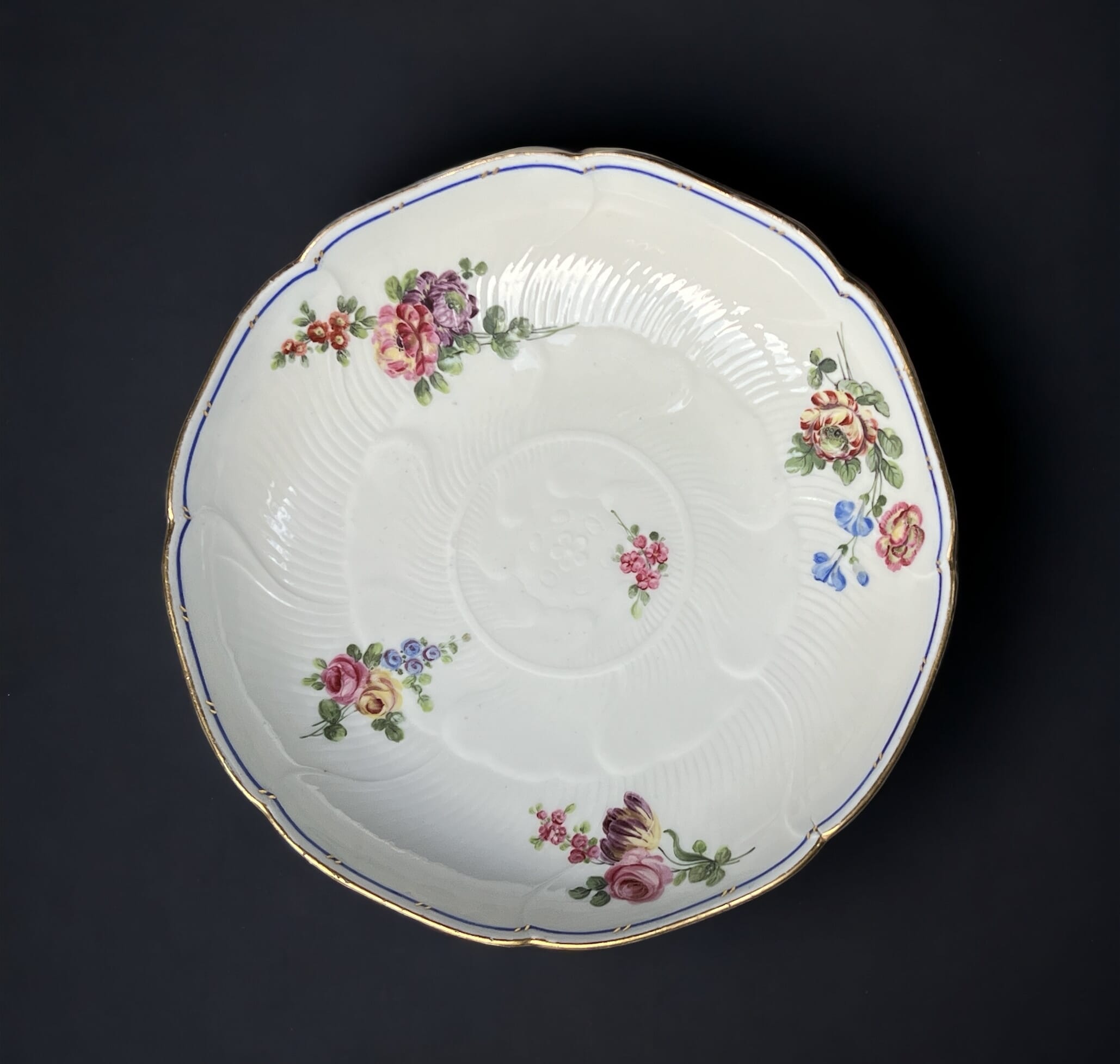
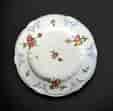
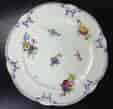
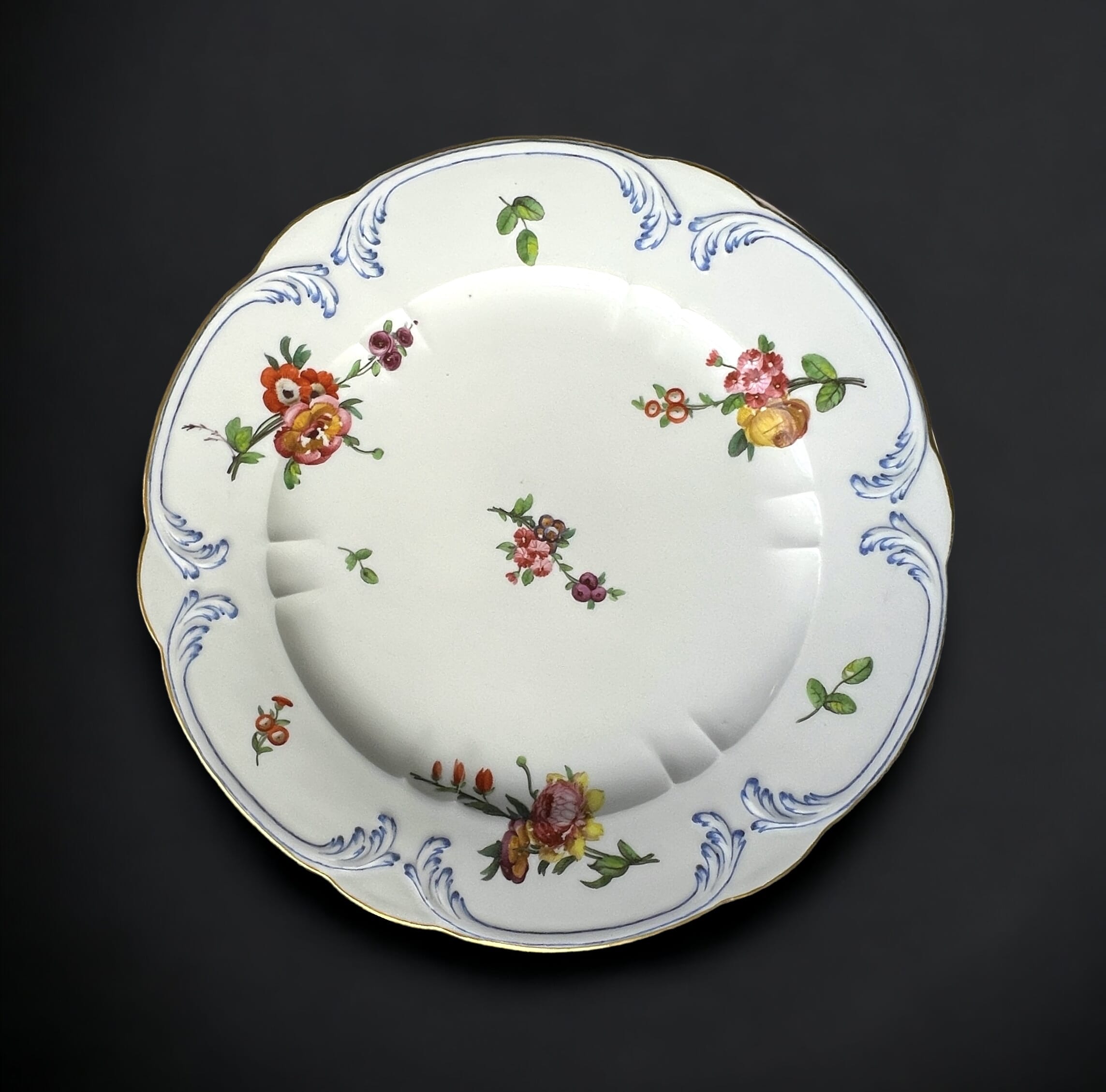
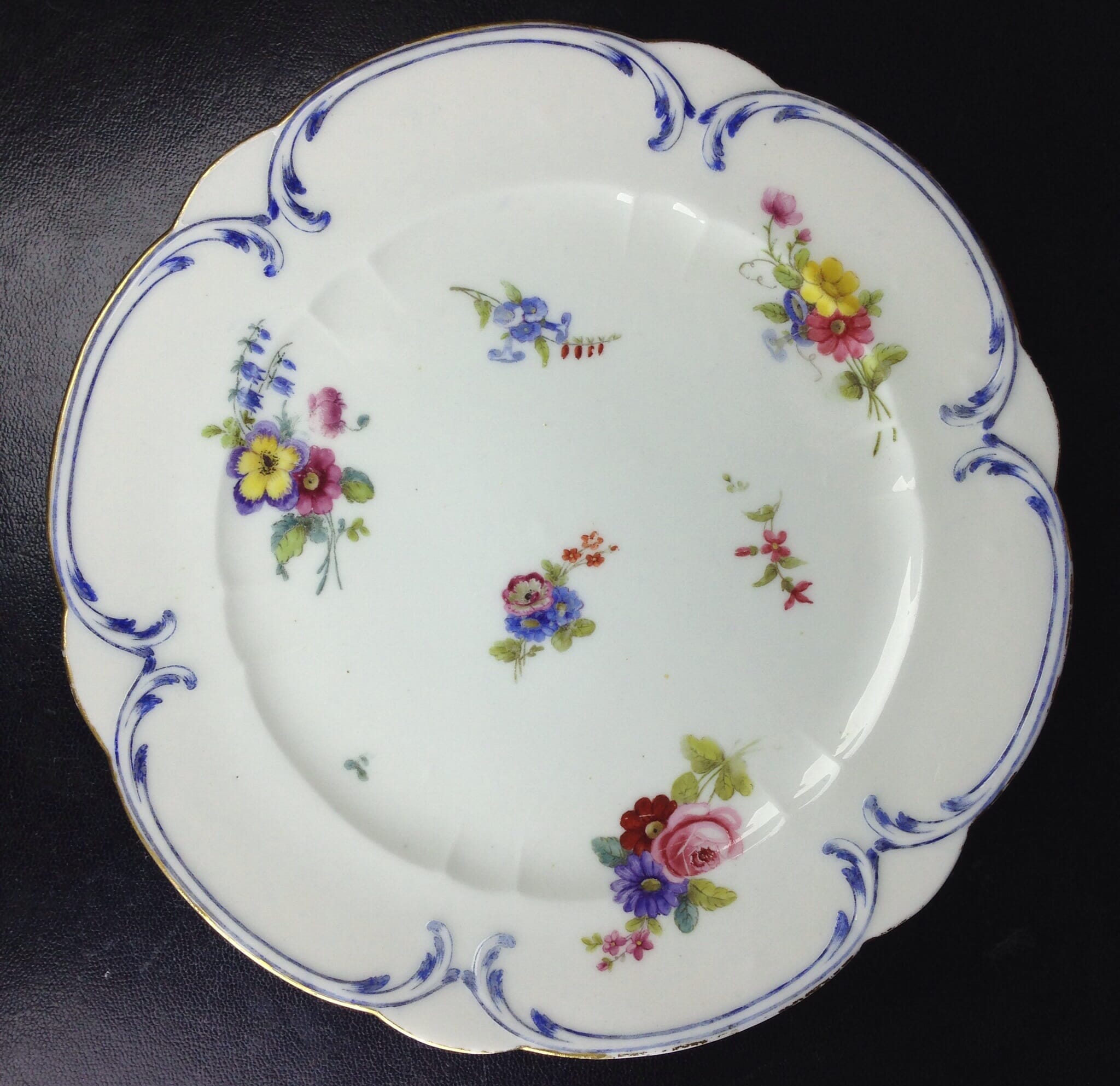
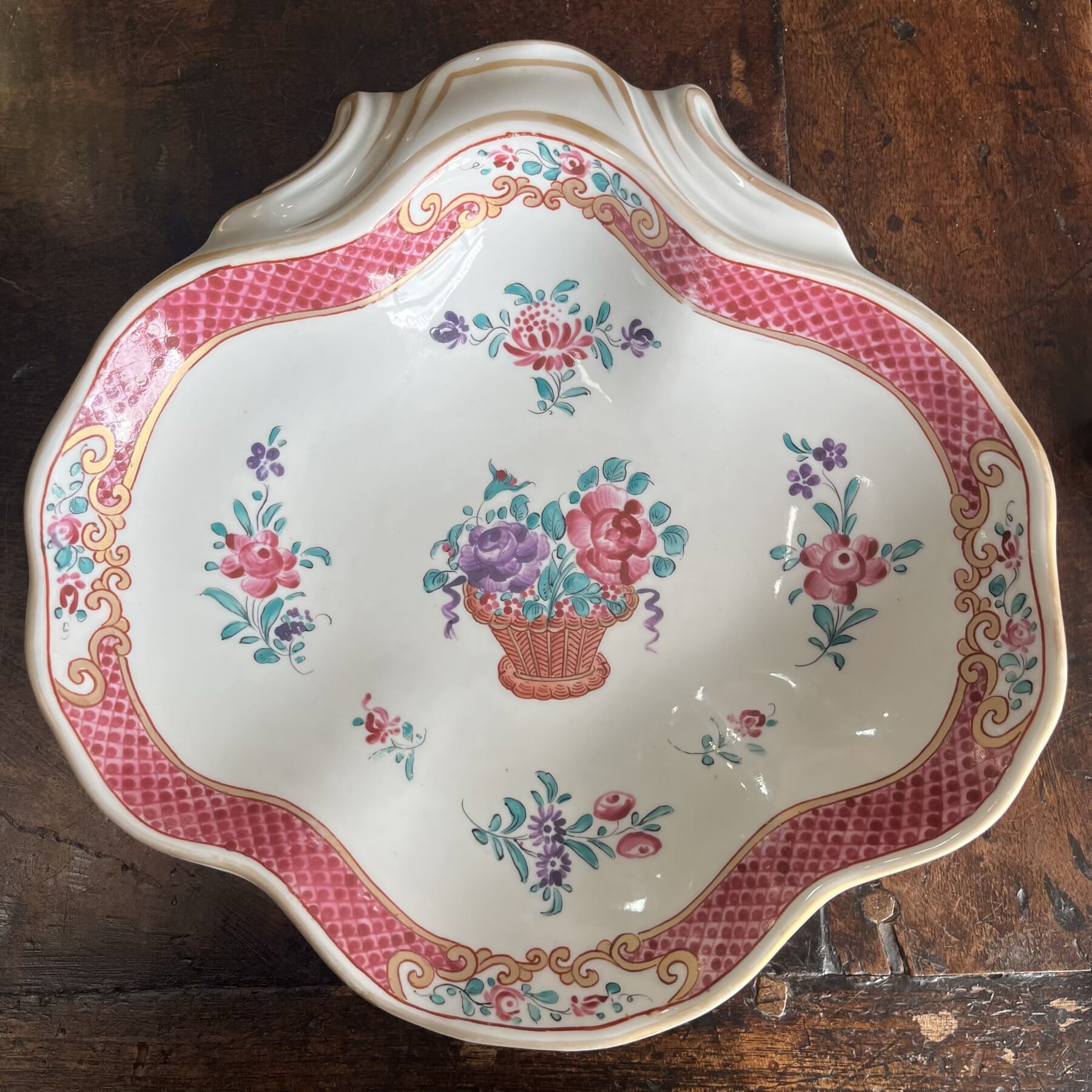
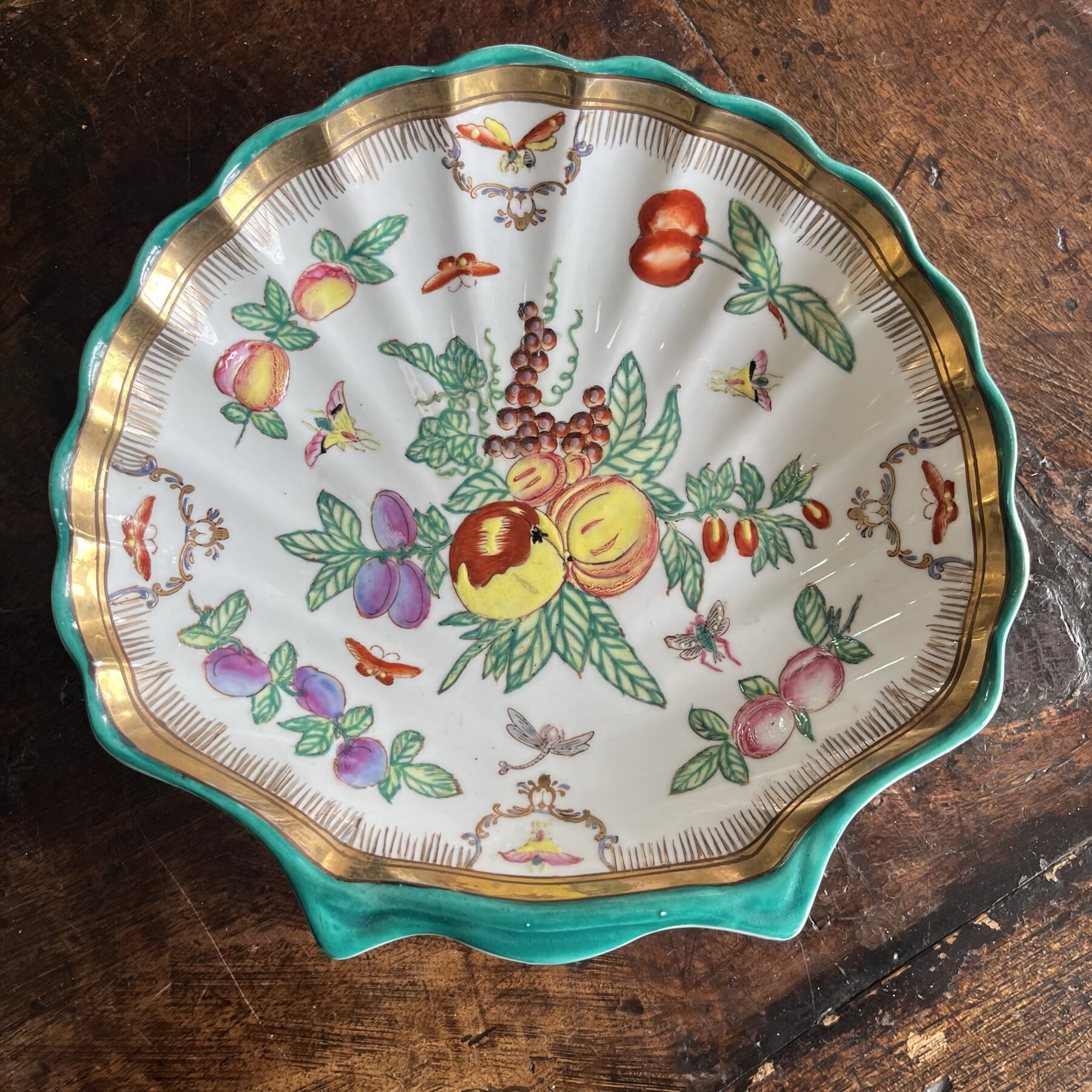
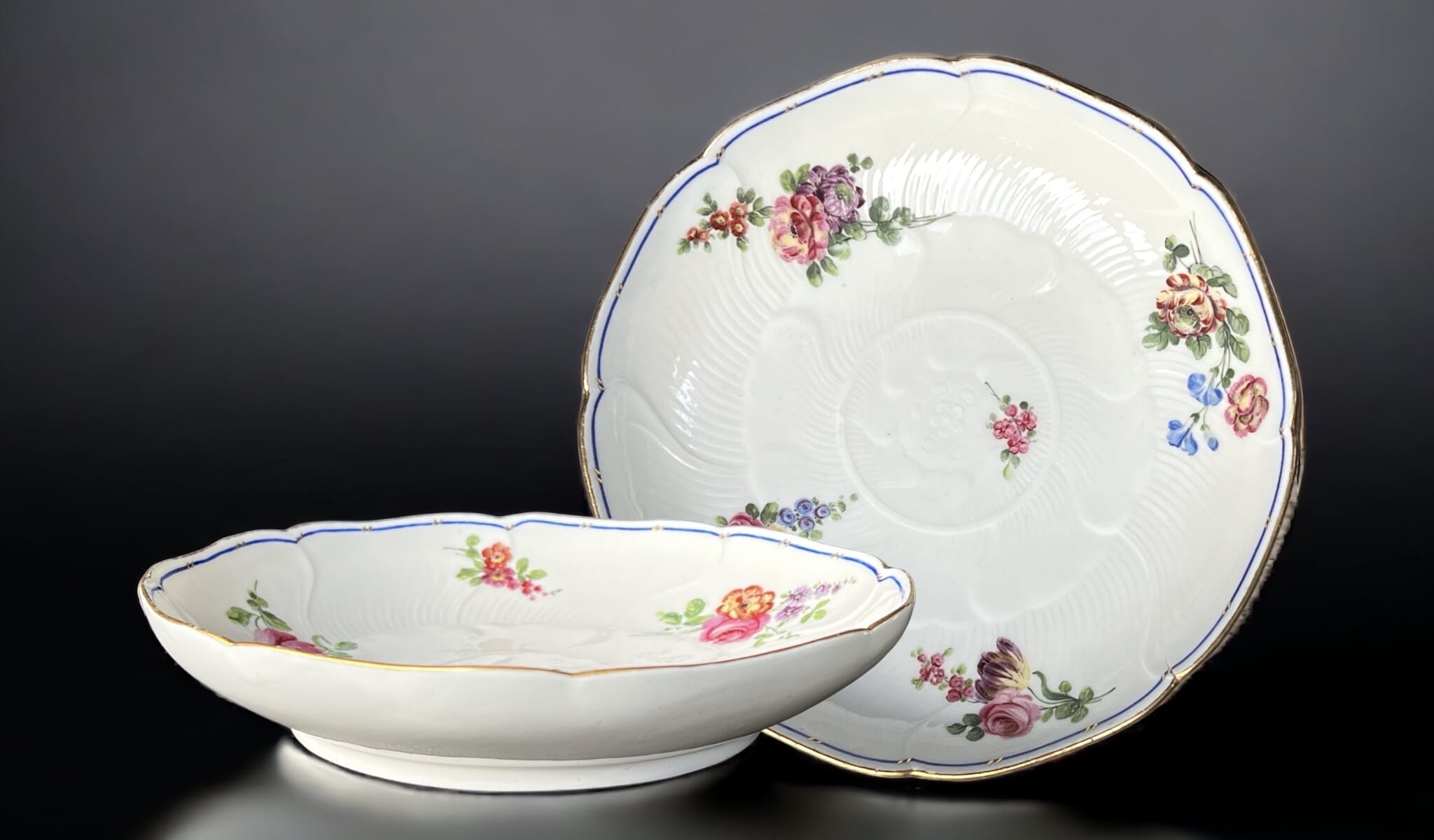
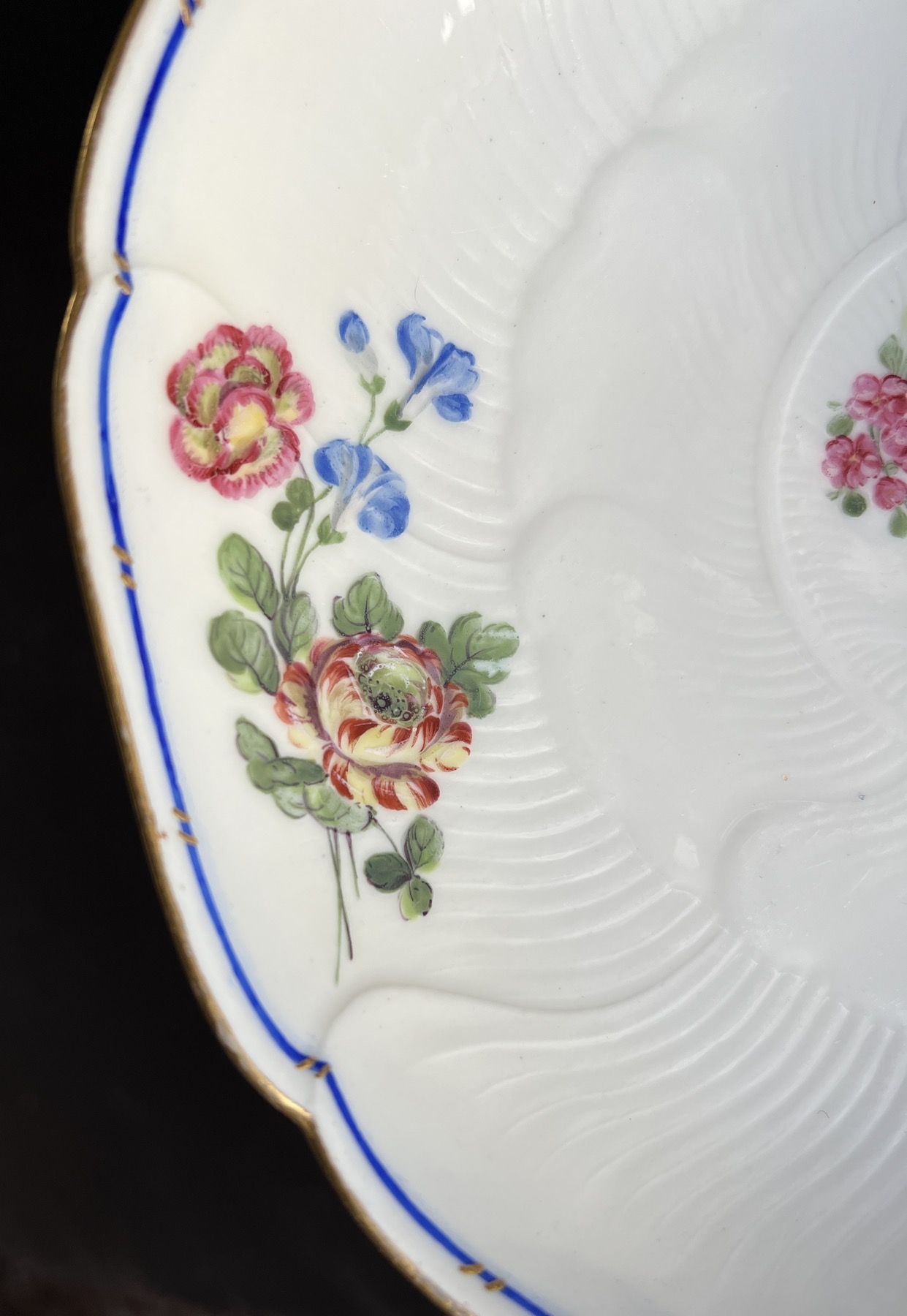
Sèvres lotus-moulded dish, compotier rond, flower sprays, dated 1764

There’s a splendid pair of Sèvres dishes fresh to Moorabool.
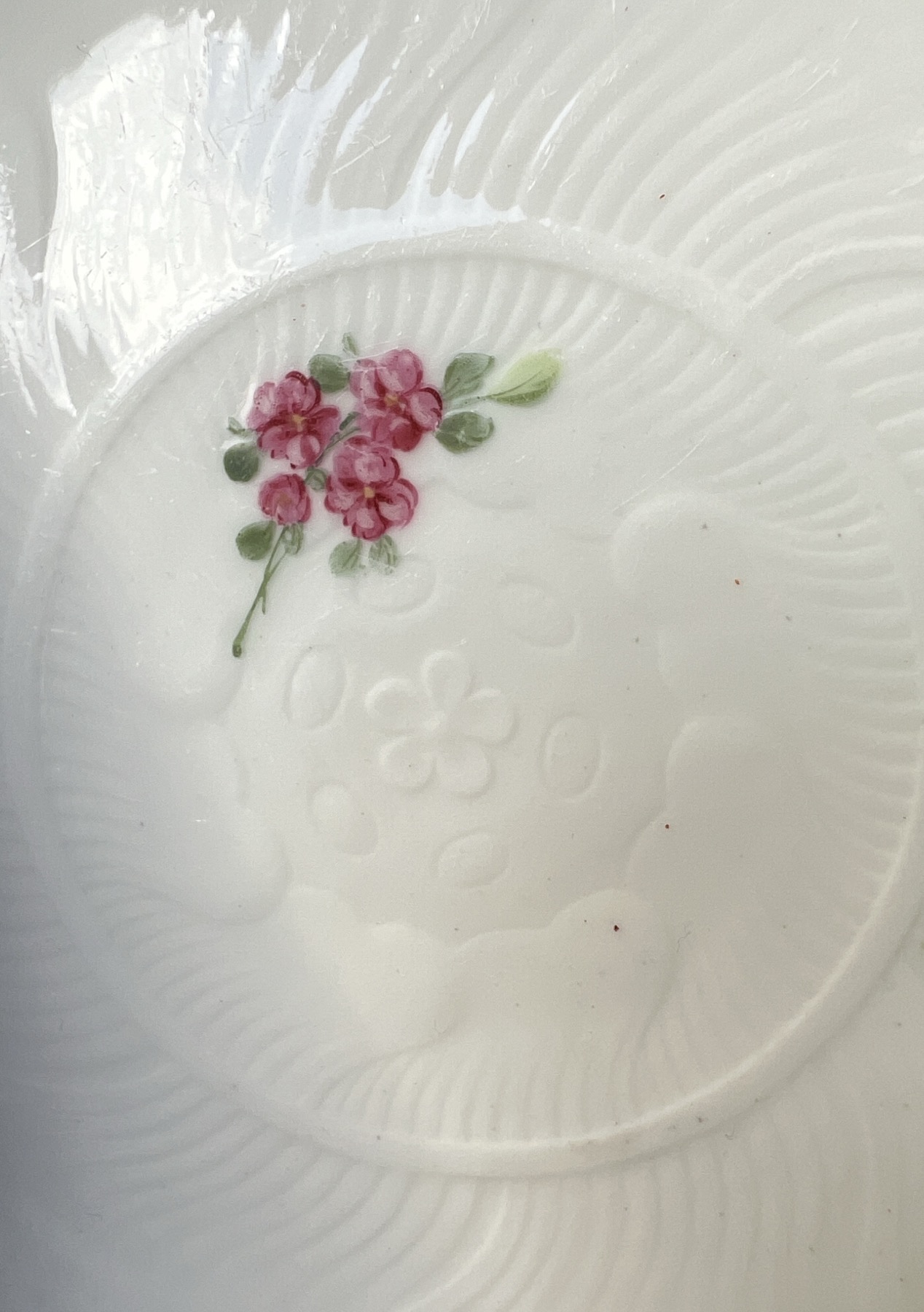
Sèvres Porcelain, 1764

This shape is a compotier rond, and was a component of the large services, used alongside other shaped serving dishes in the centre of the table. A setting for a dozen might have two compotier rond, while the larger services, such as the massive Service Camaïeu Carmen de Fontainebleau (used by the Royal Family) had several dozen of this elegant dishes available.  
Sevres 1764. Moorabool Antiques, Australia

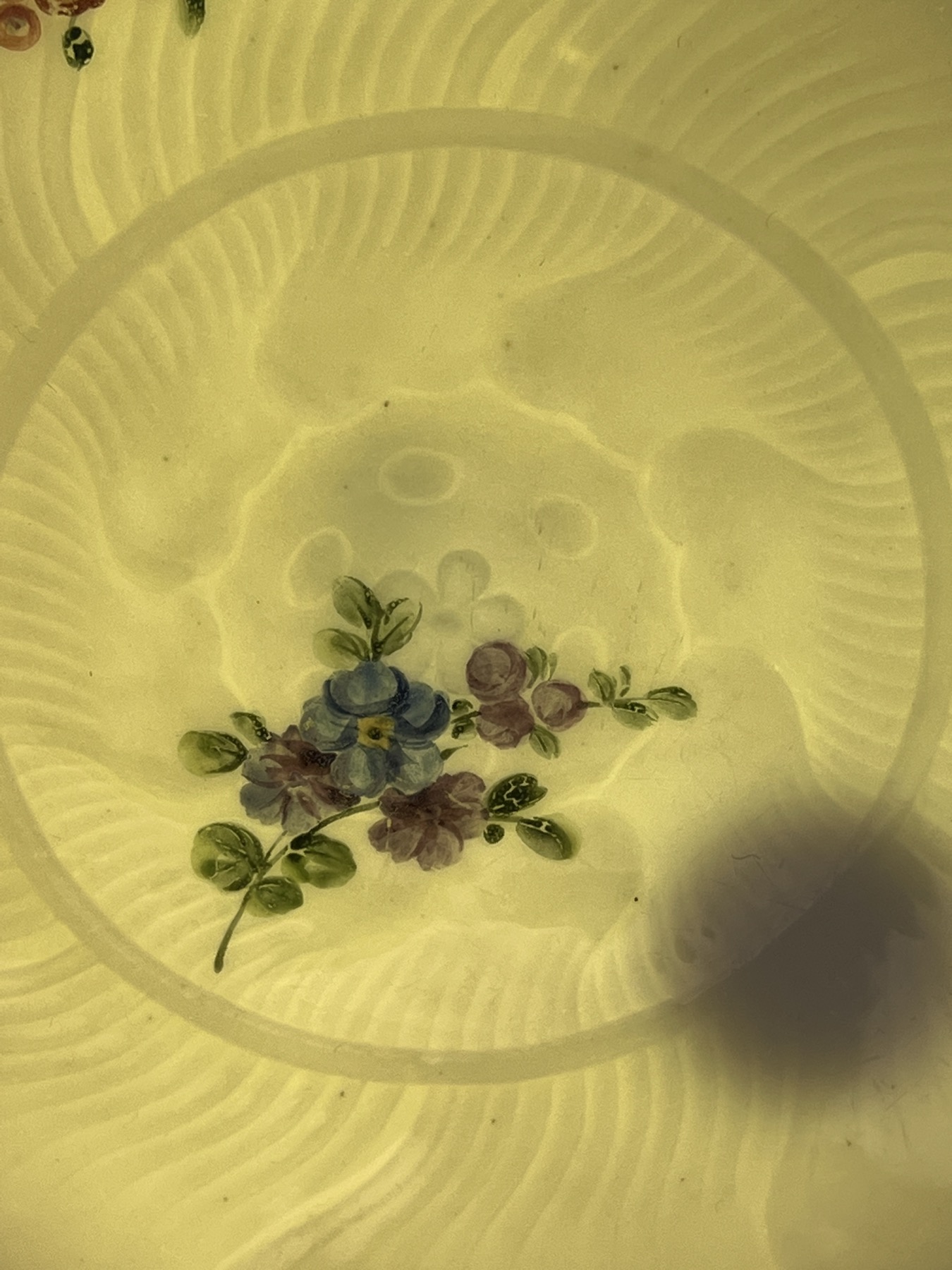
The moulded pattern allows the beauty of the moulded porcelain to show in a way the more painted patterns cannot. 
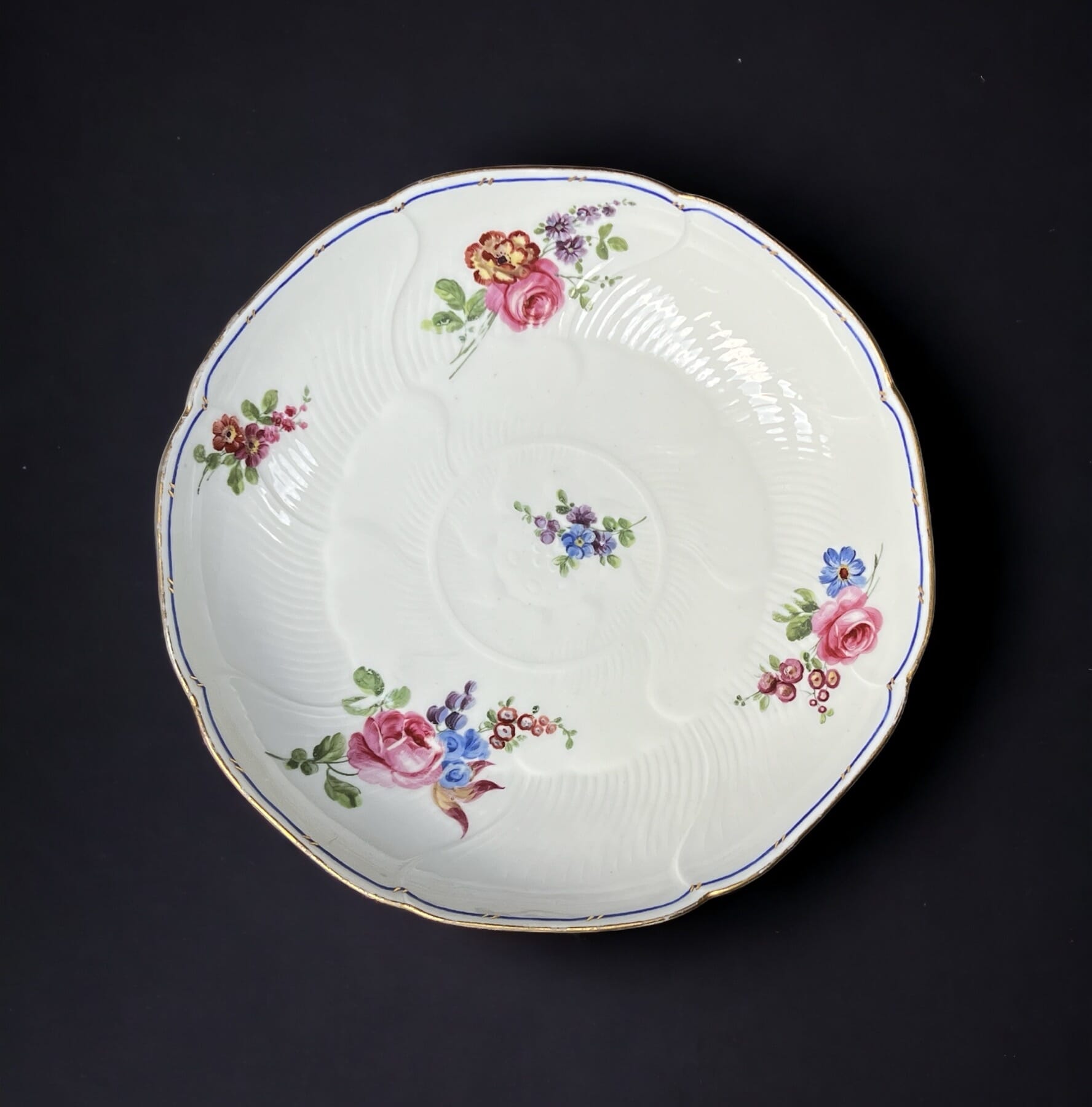
The elegant lotus flower design is borrowed from Chinese Export origins, where lotus-moulded dishes were a common sight in the early 18th century. 
Sevres 1764. Moorabool Antiques, Australia

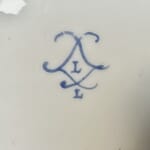
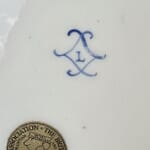
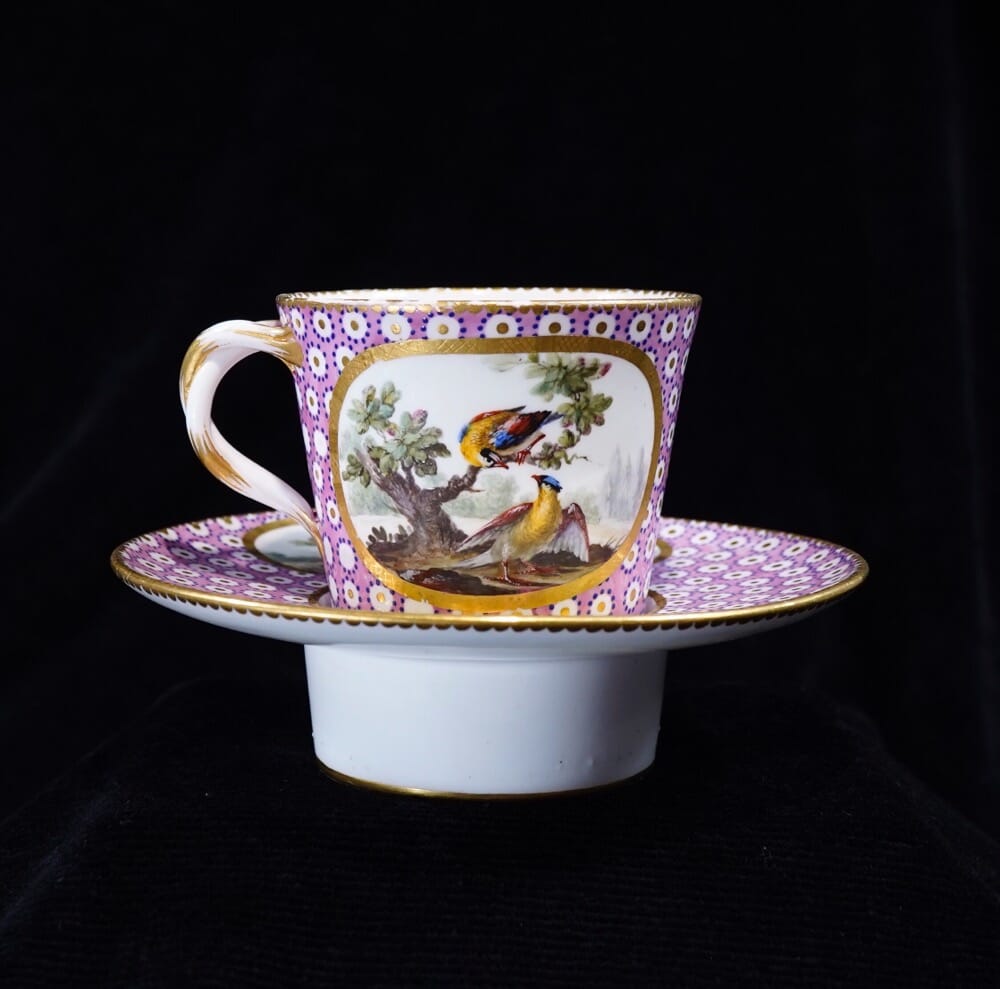
One of the dishes simply has the crossed ‘L’s’ mark, enclosing the date letter ‘L’ for 1764. The other example is the same, but also has a painter’s mark: ‘L’. This allows us to put a name on the painter of the flowers: Louis-Françoise Lécot . He appears in the factory wages lists in 1763, after possible earlier unpaid work as a pupil from about 1761. He worked as a flower painter in 1764 – but is then absent from any reference the following year, giving him the working period 1763-4…. a perfect match for this dish. He does re-appear, after spending 6 years somewhere else, when he is documented as a hard-paste artist in 1771 (as opposed to the soft-paste that was the only body available at Sèvres in the 1760’s). His work is then remarkable and distinct, specialising in dramatic imitation lacquer pieces, with gilt or platinum/silver chinoiseries painted in the highest Rococo manner, or the exotic ‘Etruscan’ grotesques inspired by discoveries in Italy during the 1770’s.
These styles were the latest fashion for the French aristocrats, and bring to mind the lavish productions of the high-end Paris firms competing with Sèvres for the top-end customers. As Sèvres was the King’s factory, he enforced a monopoly on the industry, where colours & gilt decoration was exclusive to his own factory; the loop-hole found by eager factory owners was to attract an aristocratic patron to protect them – Clignancourt was under the protection of the Comet de Provenance (the future Louis XVIII) and Rue Thiroux was under the protection of the Queen, Marie Antoinette. Both produced very high quality hard-paste products in the 1770’s, and would have eagerly employed a Sèvres-trained artist such as Lécot. Locré & Russinger, otherwise known as La Courtille, was another such factory, minus the aristocratic protection; they ran afoul of the King’s Sèvres monopoly, with 2,000 pieces of illegal coloured & gilt porcelain being seized in 1780 – indicating they were producing a large amount of high quality hard-paste wares. Despite this set-back, they continued to make superbly decorated pieces as if nothing had happened….
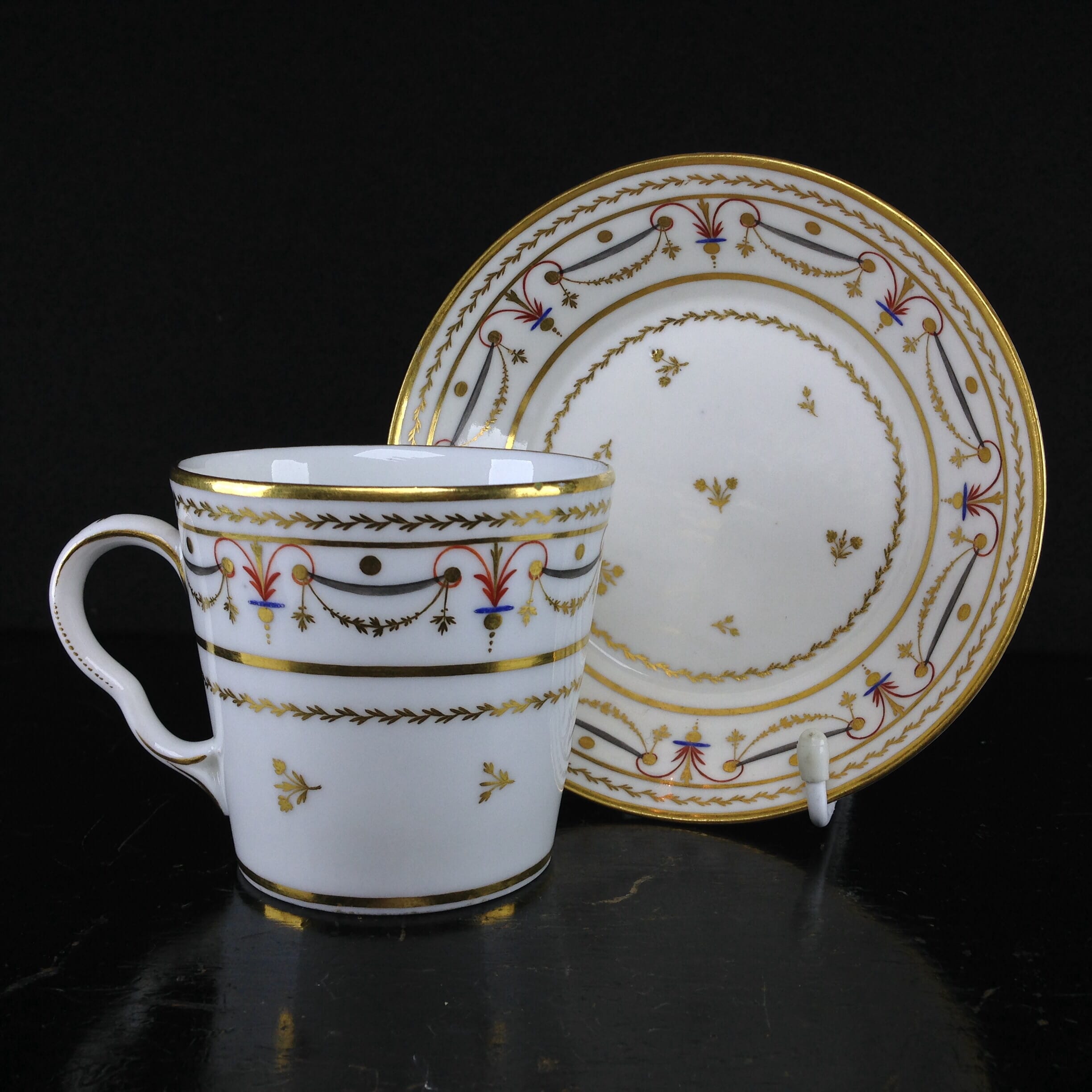
Could Lécot have spent his time in some such Paris porcelain manufacture, learning the technique for decorating the hard-paste porcelain body? While he was away, Sèvres purchased the recipe for pâte tendre (hard paste) from Pierre-Antoine Hannong, the youngest son of Paul-Antoine Hannong, whose father had established the faience works in Strasbourg in the early 18th century . As often happens with generations, Paul-Antoine made a success of the firm when he introduced the first hard-paste porcelain production in France, in the mid-1750’s. He died in 1769, and his son, Pierre-Antoine became head. Two years later, he sold the secret of Hard-Paste to the Sèvres factory. They took a while, but once the right ingredients were sourced, Hard-Paste was made (alongside Soft-Paste) from the mid 1770’s onward.

Lécot decorated garniture, 1775-6 Christies 2000
A Lécot decorated Sèvres garniture, 1775-6 – sold at Christies NY in 2000 for $1.1 million US….

When he returned in 1771, Lécot was able to paint on the new Hard-Paste body. He worked on some truly impressive hard-paste orders, and all major collections seem to feature his dramatic 1780’s Chinoiseries. This early example of his Soft-Paste work from his brief appearance at Sèvres in 1763-4 is a lovely rarity.

ref. Rosalind Savill, The Wallace Collection Catalogue of Sèvres Porcelain, London, 1988, Vol. III, pp. 1043-4 for more on Leçot.


Jean Bouchet, active at Sèvres 1757-93
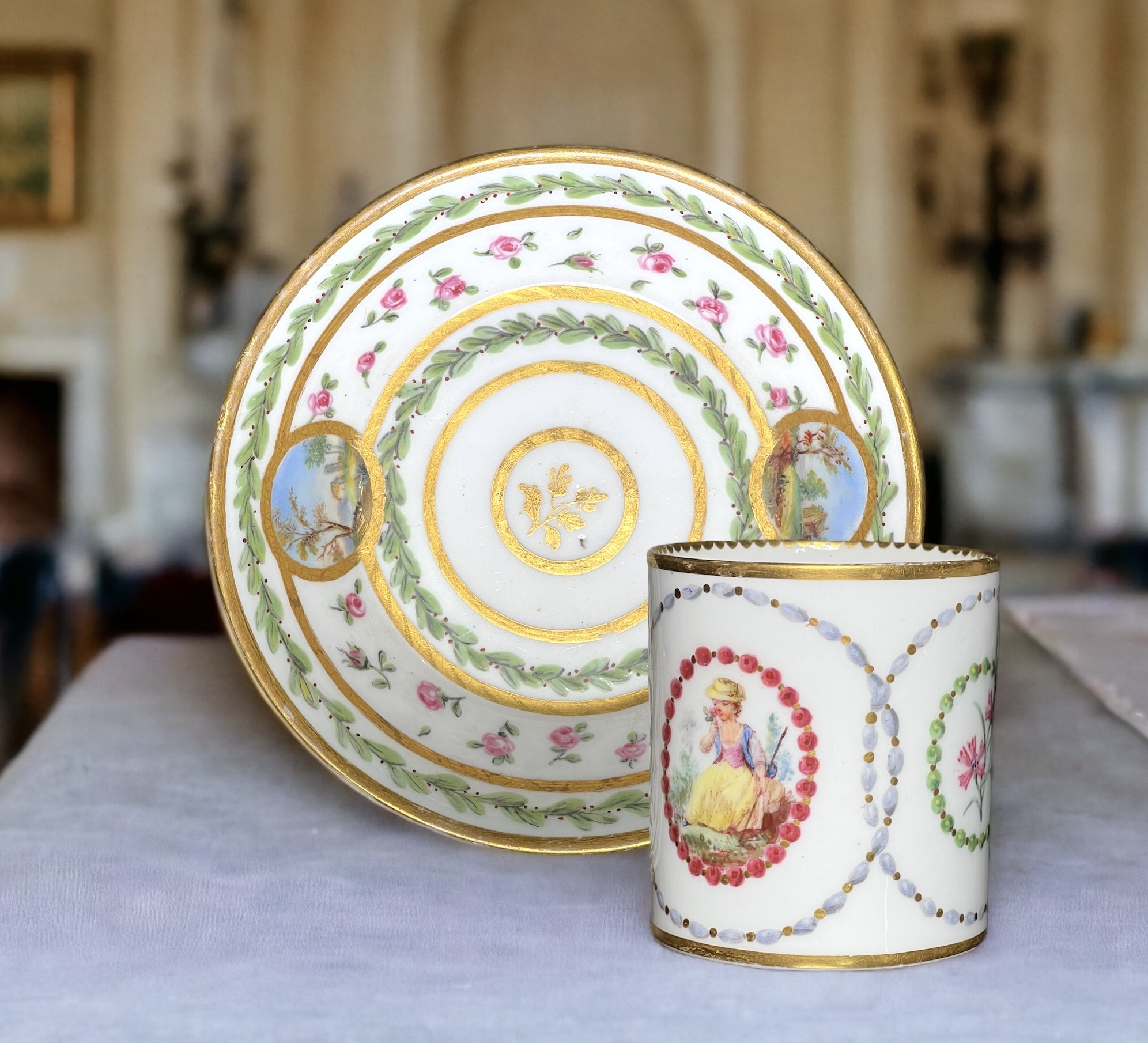
Sèvres coffee can & saucer, scenic panels by Jean Bouchet, dated 1781
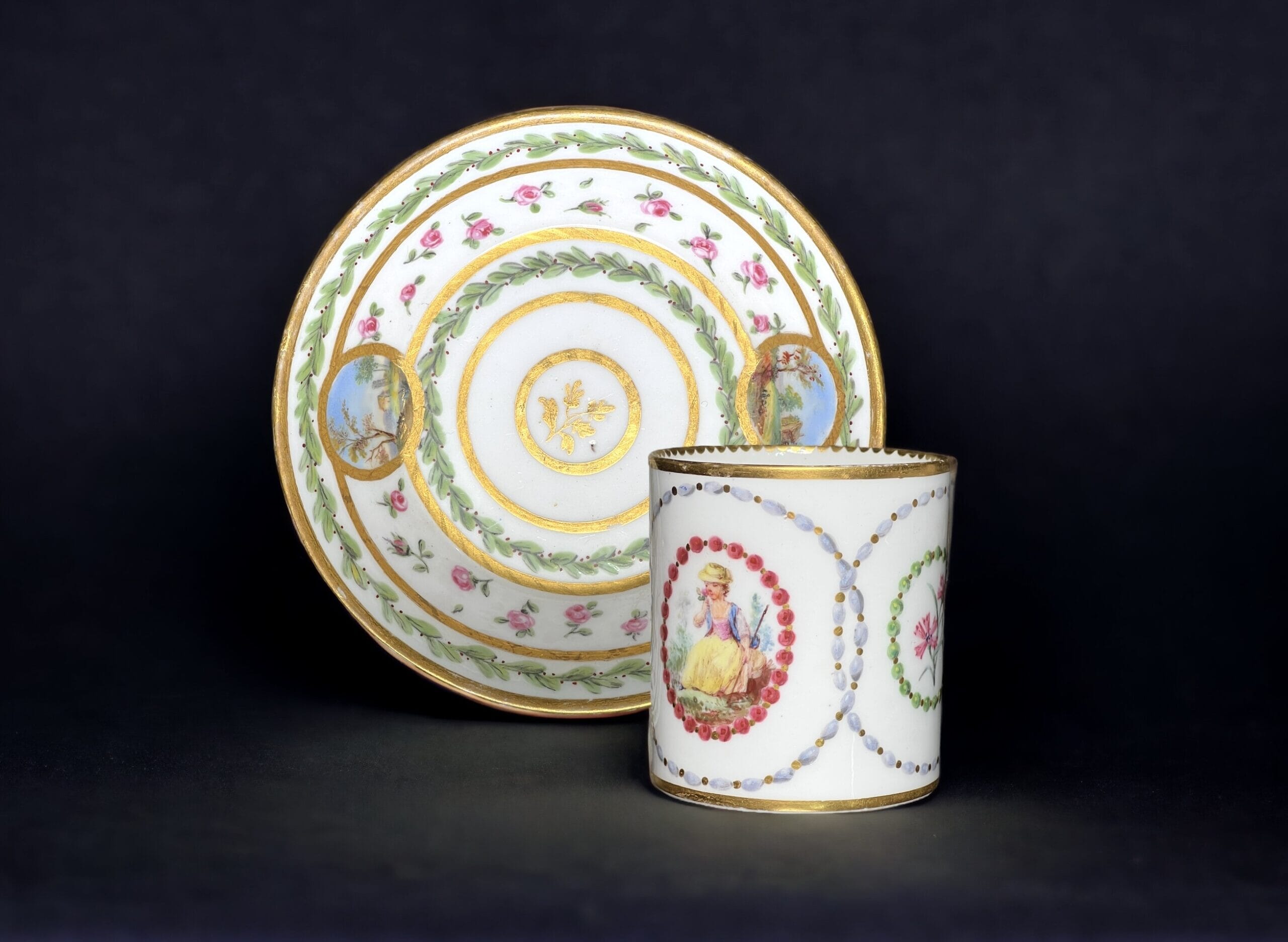
Sèvres cup & saucer, scenic panels by Jean Bouchet, dated 1781

This lovely cup and saucer are a ‘recently married’ pair. While the saucer has been in the Rosenberg Reference Collection in Geelong for a while as a fine example of Sèvres, the cup is a recent acquisition; remarkably, it is the same artist at work at Sèvres in the same year, 1781. While there is a difference in the details, the overall harmony makes them a delightful rarity. And of course, they have a story to tell…..

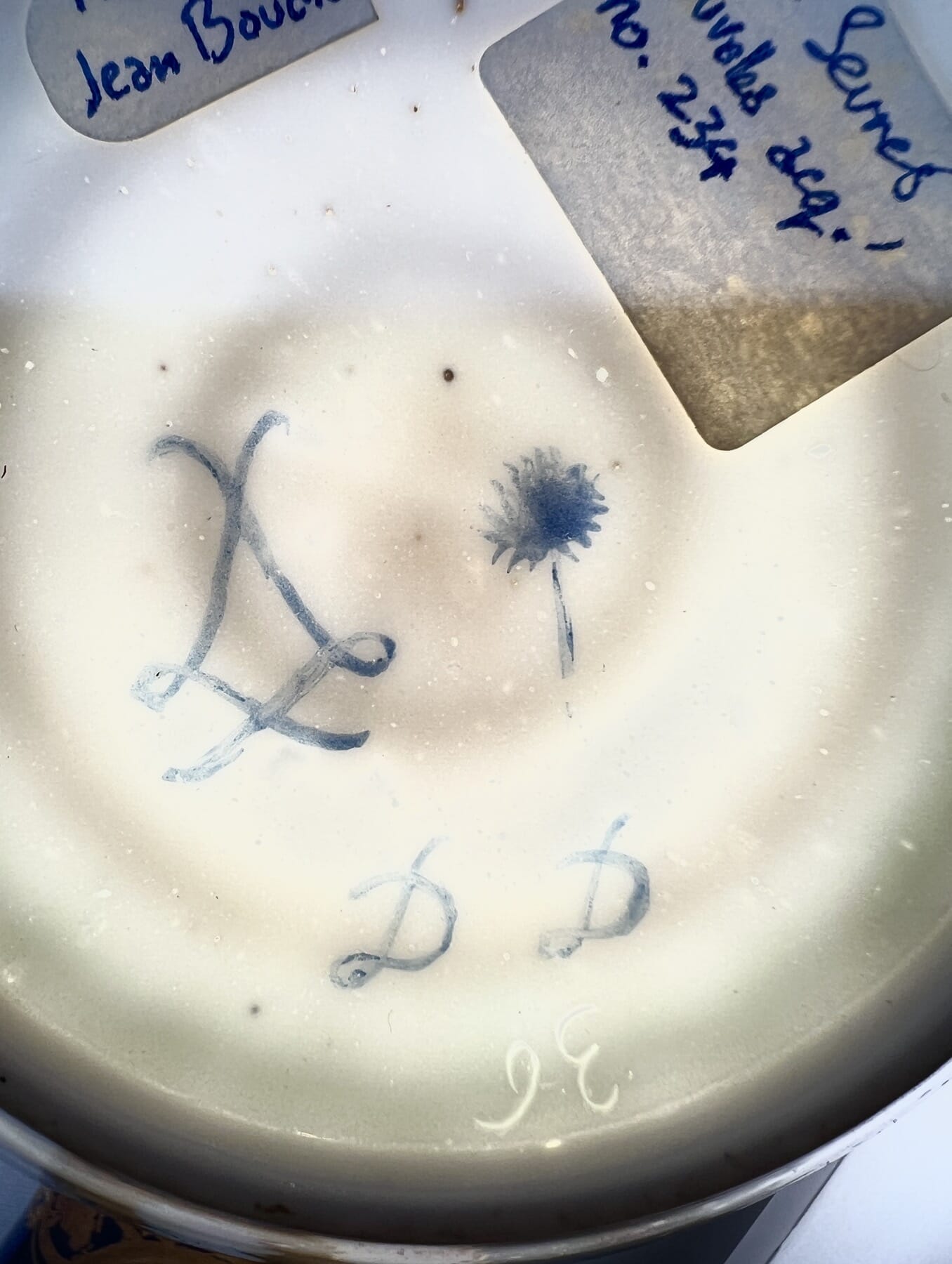
The artist is Jean Bouchet. He used a pictorial mark, a ‘tree’. While in the factory records – and the subsequent publications that used this as their source for what the marks looked like – he carefully drew a realistic tree with roots, trunk and layered foliage, while in practice he simplified it into something that looks like a furry lollypop…. This would have taken much less time & concentration!
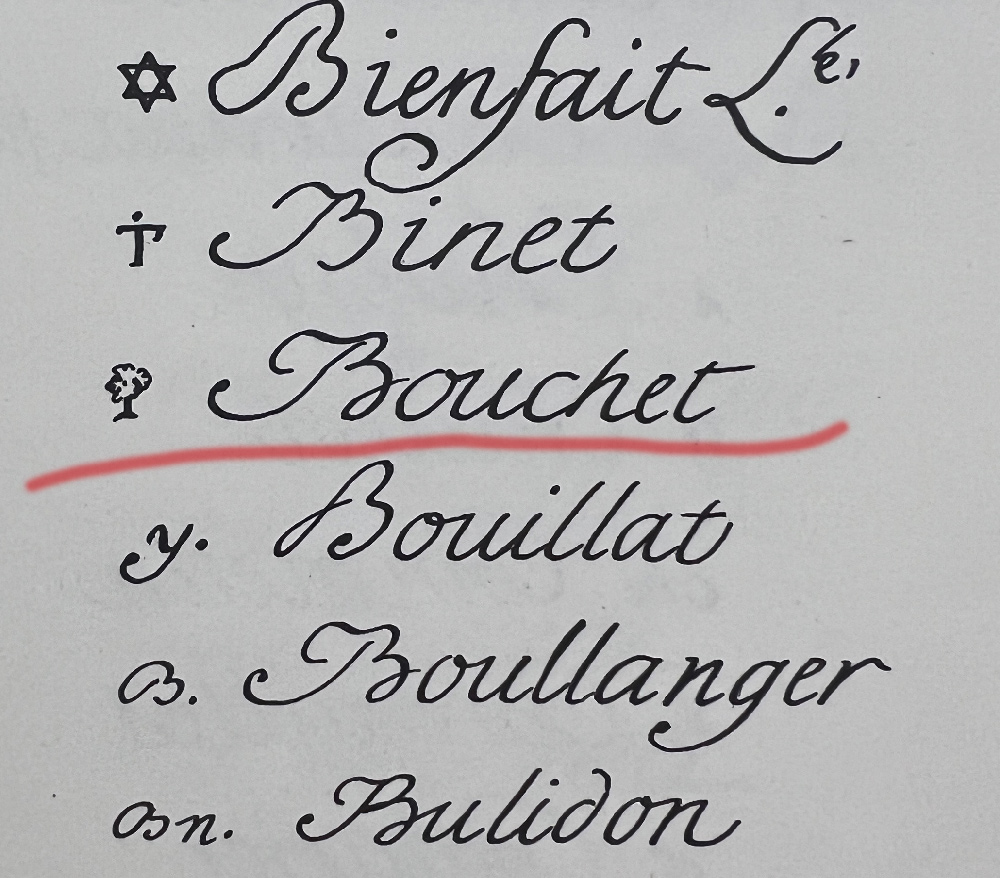
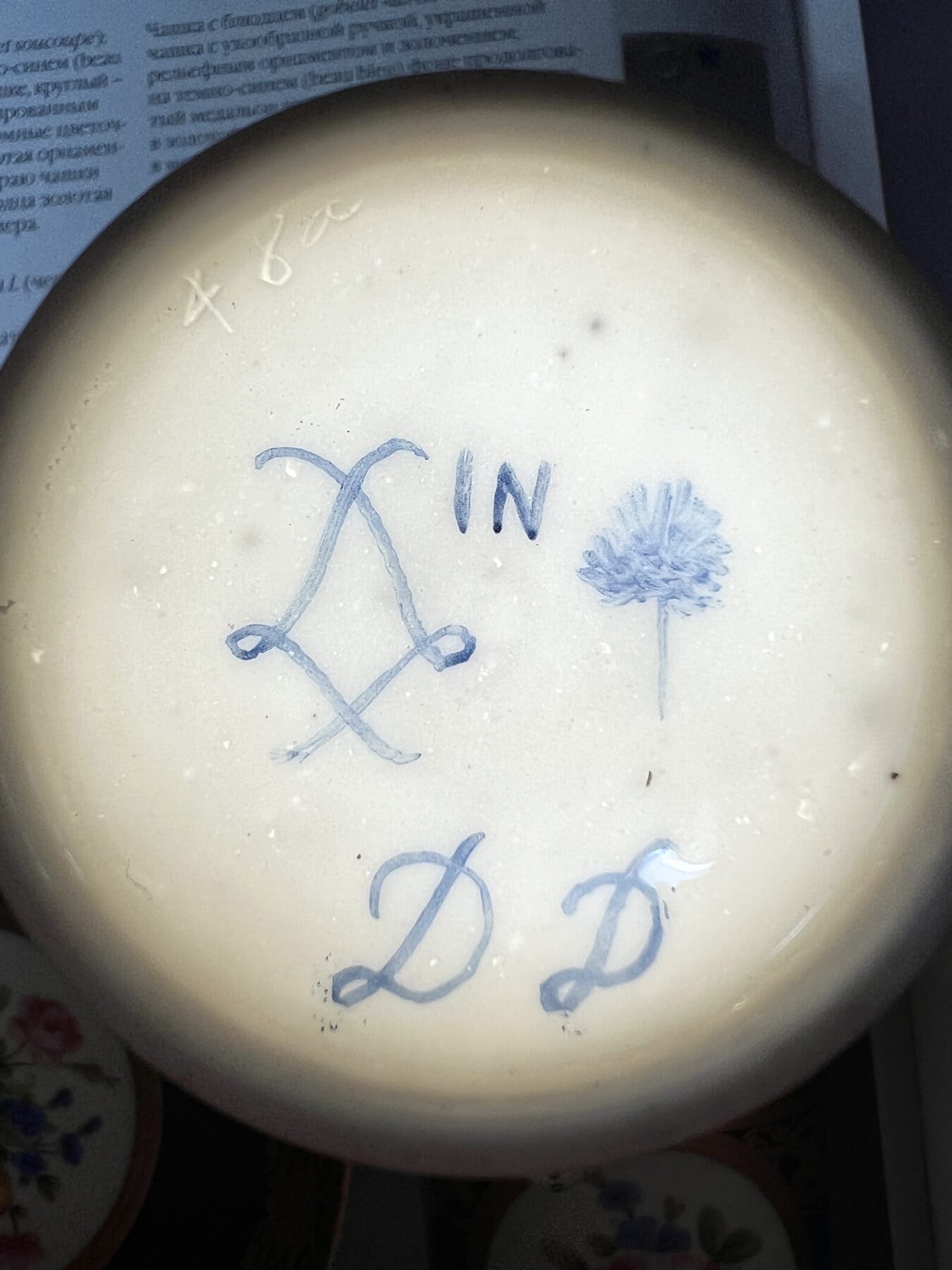
The cup and the saucer are both 1781, dated with the same ‘DD’ in a distinct cursive script, the hand-writing of Jean Bouchet; there is also his distinct mark, a tree symbol. He is recorded as active at Sèvres 1763-93, a painter of human figures, landscapes, and flowers. He is very well represented in major collections, with his small landscapes being very appealing to original customers and present-day connoisseurs alike.

Jean Chauvaux jeune‘s ‘bead’ borders

The cup has another painter’s mark also – ‘IN’, the mark of Jean Chauvaux jeune, a gilder active 1765-1802. As there is not a great deal of gilding on the cup, we would suggest he was responsible for the unusual ‘bead necklace’ painting of the borders, where they are given highlights & shadows to make them appear rounded.

The incised workman’s marks 36 & 48a are both recorded by Saville in the Wallace Collection’s catalogue, vol III pp1130&1133. ’36’ is recorded 1770-90’s, while ’48a’ is recorded 1777-92. There are no names associated with these individuals.

In the British Royal Collection, both ’36’ and ’48a’ are present in several assemblages, including a set of very similar cups & saucers from the same period.
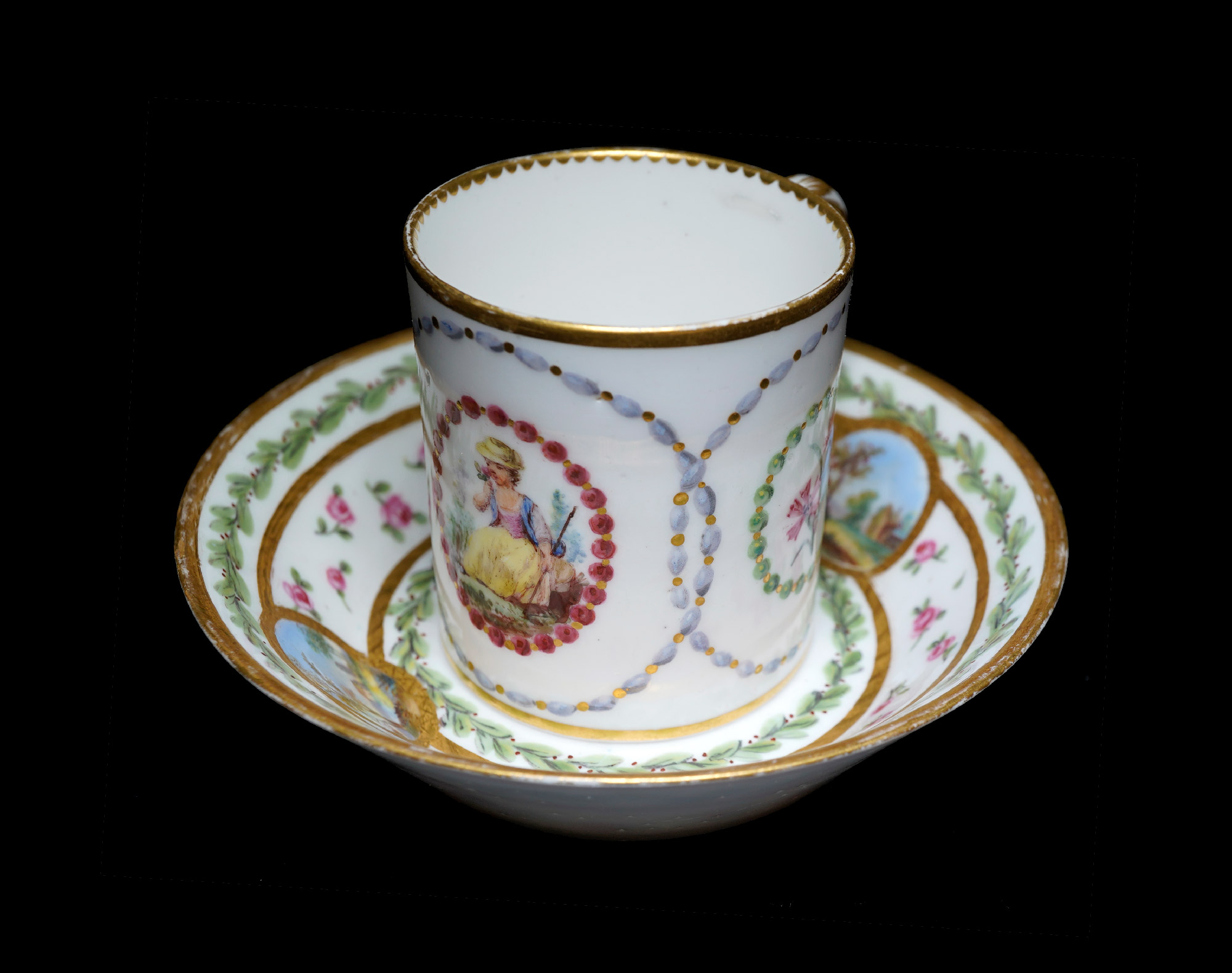
Sevres Cup & Saucer By Bouchet 1781
Sevres Cup & a Saucer by Jean Bouchet, 1781. Moorabool Antiques, Geelong

See our cup & saucer here >>

A complete déjeuner by Jean Bouchet, in the V&A Museum, London

It’s rare to see a complete group of porcelain from this era still together. This set in the Victoria & Albert Museum, South Kensington, is a fascinating rarity to study. It was bequeathed to the museum in 2015, and leading expert Rosalind Savill has identified it as one of four déjeuners bought by Christian IV, Duke of Zweibrücken, on the 14th June 1775. This was just 3 days after the event of the decade in France, the coronation of Louis XVI which the Duke naturally attended. Their cost was 840 livres, the equivalent of tens-of-thousands in today’s currency…. an expensive souvenir!
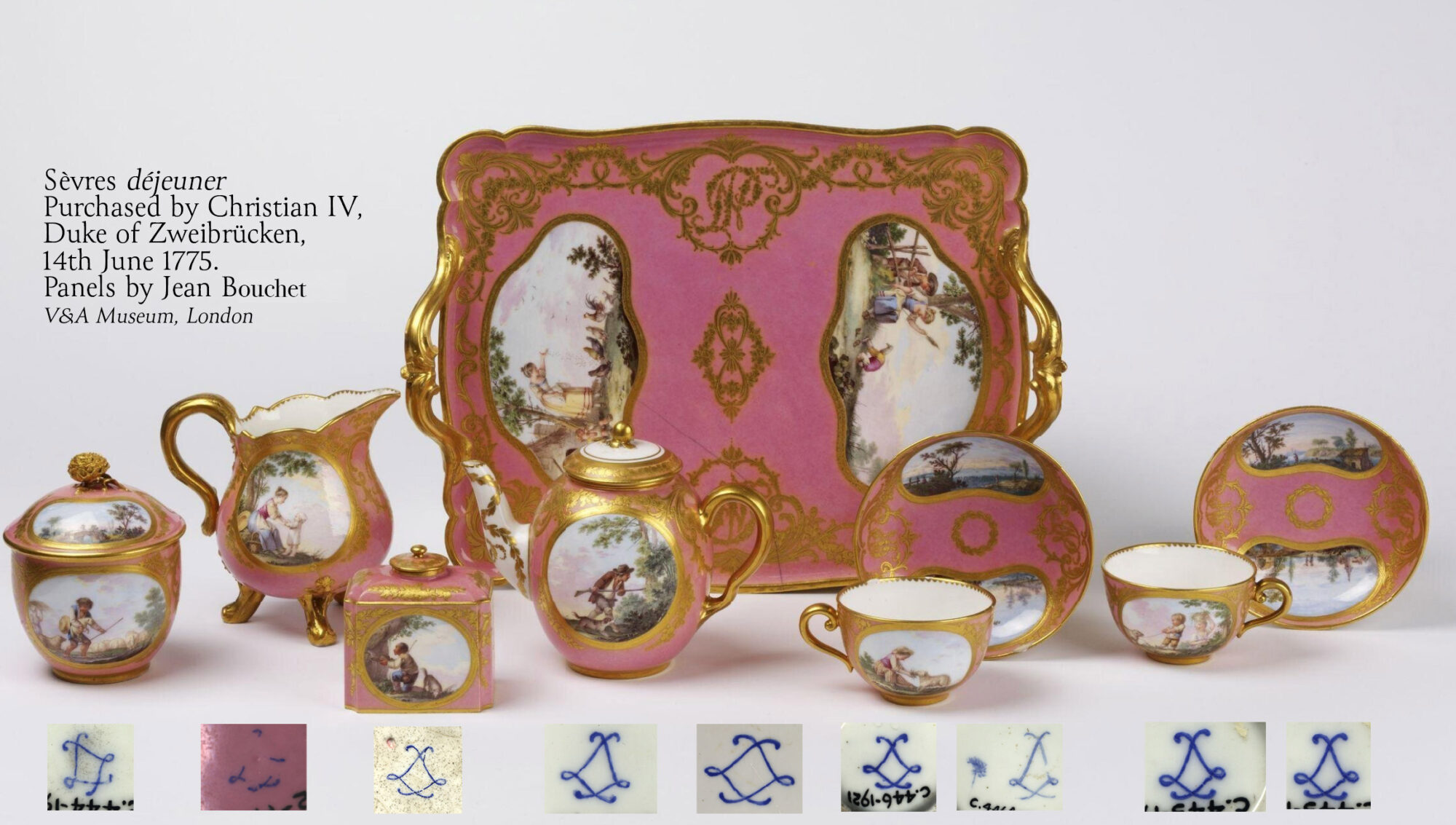
Marks correspond to the piece above. Note no date letters, and only a single artist’s mark. See this at the V&A Museum here >>
1777 Sevres Plate by Michel - explainer -©Moorabool.com
1777 Sevres Plate by Ambroise Michel- see below. ©Moorabool.com

The marks on Sèvres should follow the rules and be very logical, but in practice they can be quite random. The system was there to provide the company with a way of tracking the various production steps and those responsible for the work: in a perfect scenario, the répareur, or workman who puts it all together, incised his particular mark, and both the artist and the gilder would include their mark. Then the factory mark, the crossed ‘L’s’ for Louis were painted, and inside them the code for the year it was decorated.


As you can see in the dejéuner set examples above, this isn’t always the case: of the nine components of the existing set, just a single example has a painter’s mark, here the ‘tree’ of Jean Bouchet, and none have a year mark! It is only the monogram found on the tray, along with the factory records recording Bouchard’s work on the commission, and the solid provenance that allow this remarkable set to be dated. This helps explain the number of non-conforming Sèvres items we come across, which have no date code or artist’s mark. They were quite probably part of a set where only a few items were marked.

Reference:  Savill, Rosalind: A Sèvres Porcelain Tea Service in the Victoria and Albert Museum with Surprising Credentials, French Porcelain Society Journal, Vol. II, 2005, pp. 39-46.

Of course, fraud is always a concern, and later-decorated pieces can often be non-conforming – but usually, a date code is part of the deception, with the first years ‘A B C’ for 1754, 55 & 56 being the favourite – the trouble is, the style of decoration & object type was often not yet invented at that date, a dead giveaway!


Our Sèvres Stock

Posted on

Early Vienna Figures

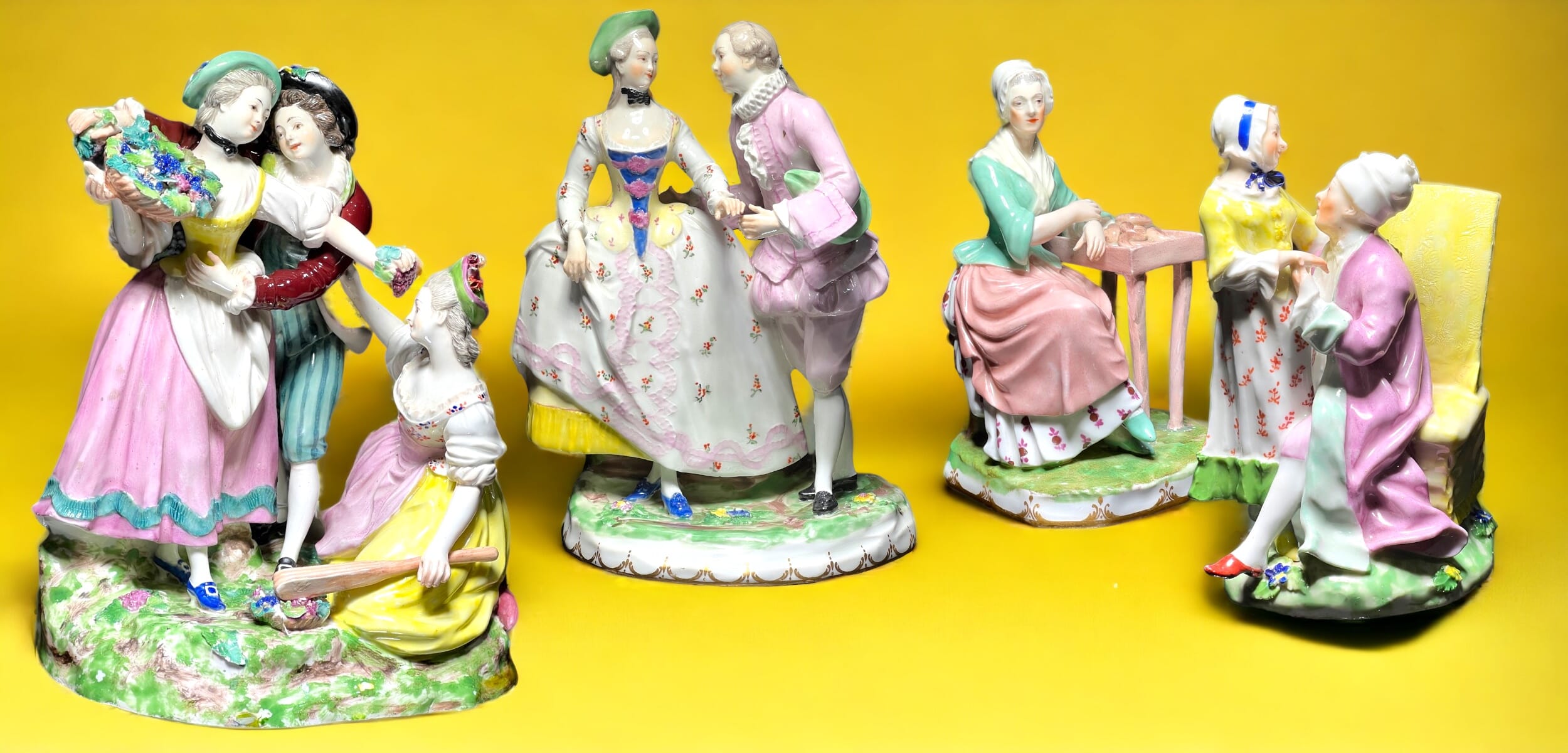
Early Viennese Porcelain Figures
Vienna Figure Group
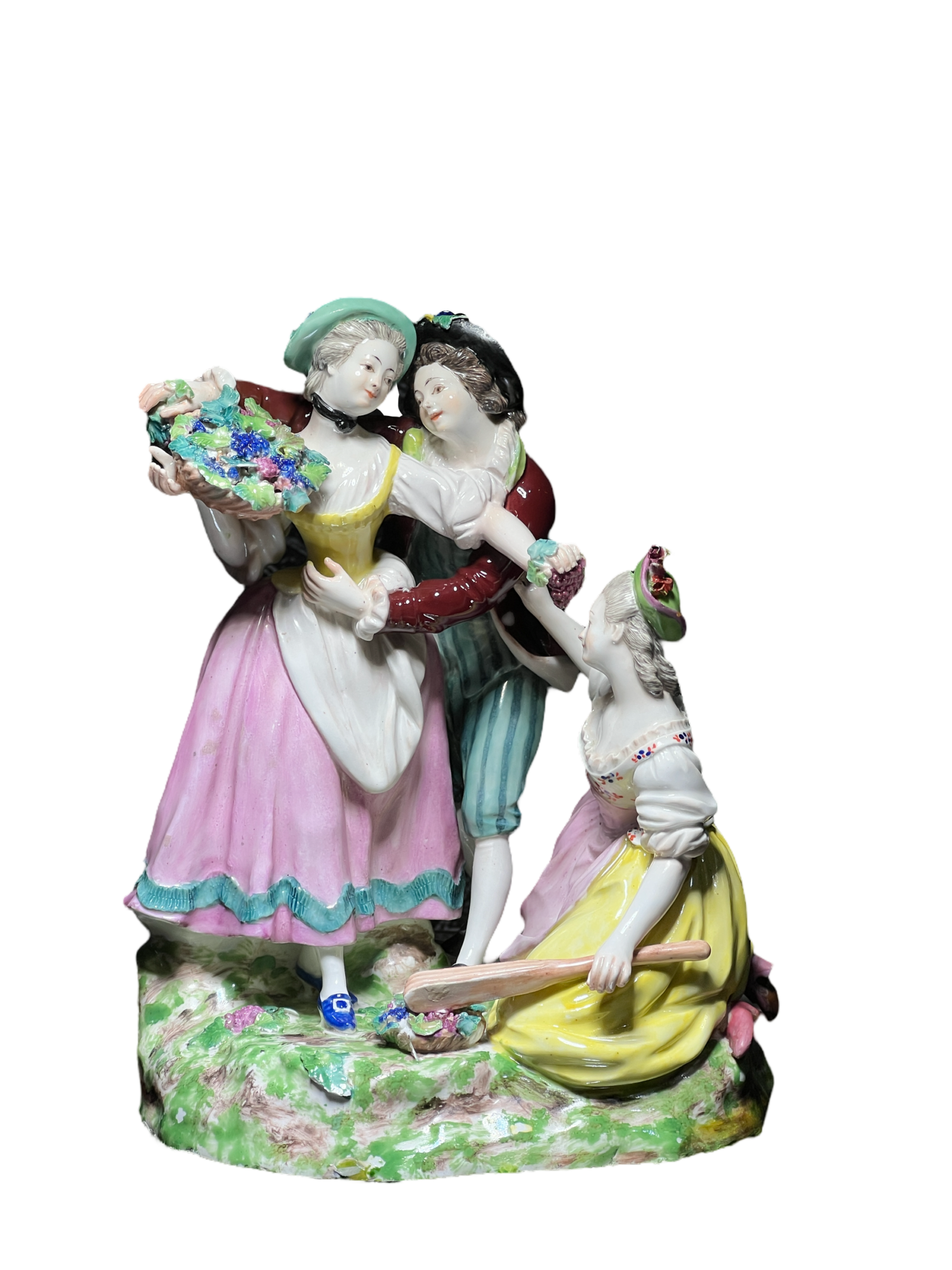
Vienna Figure Group circa 1765

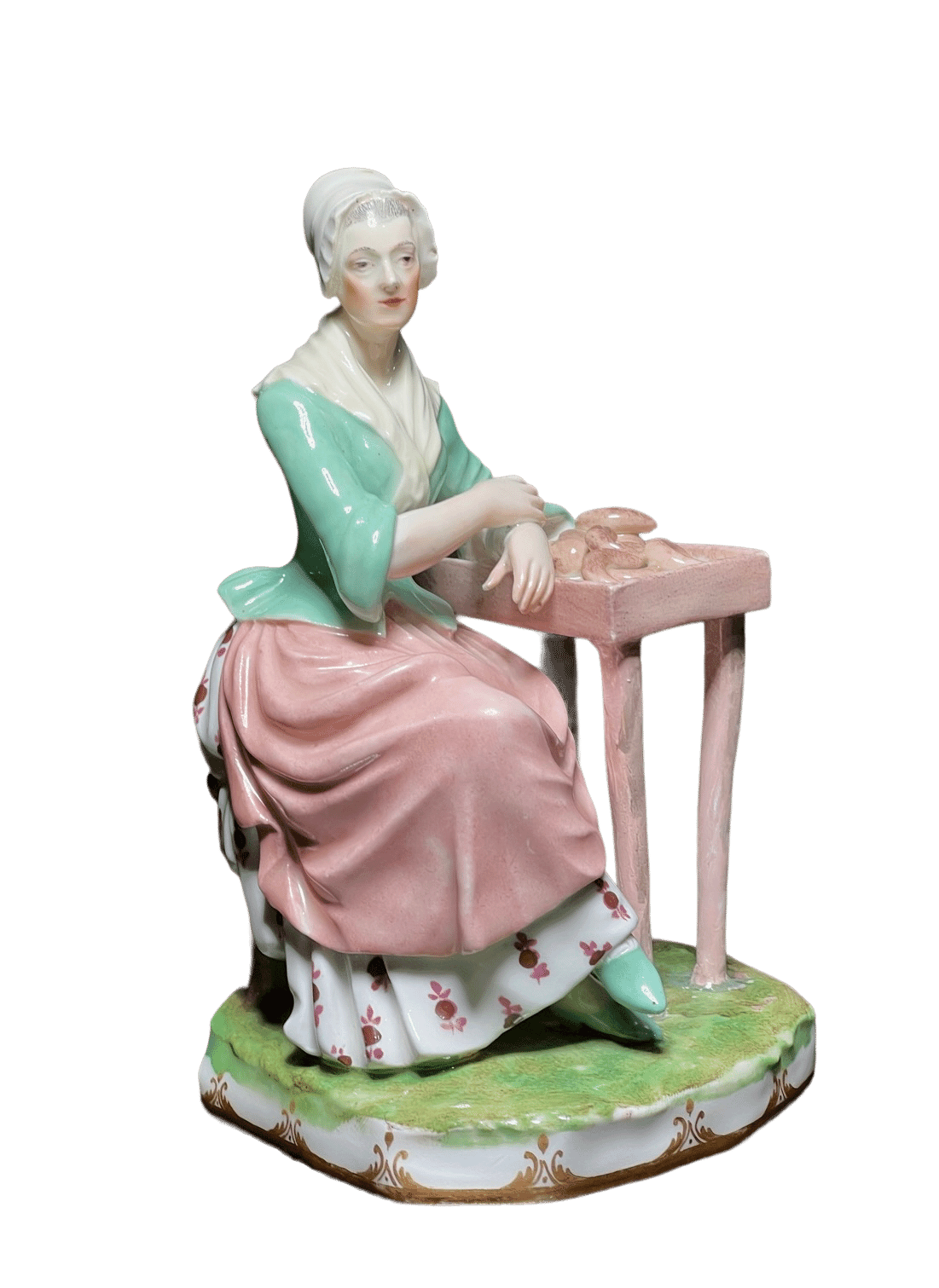
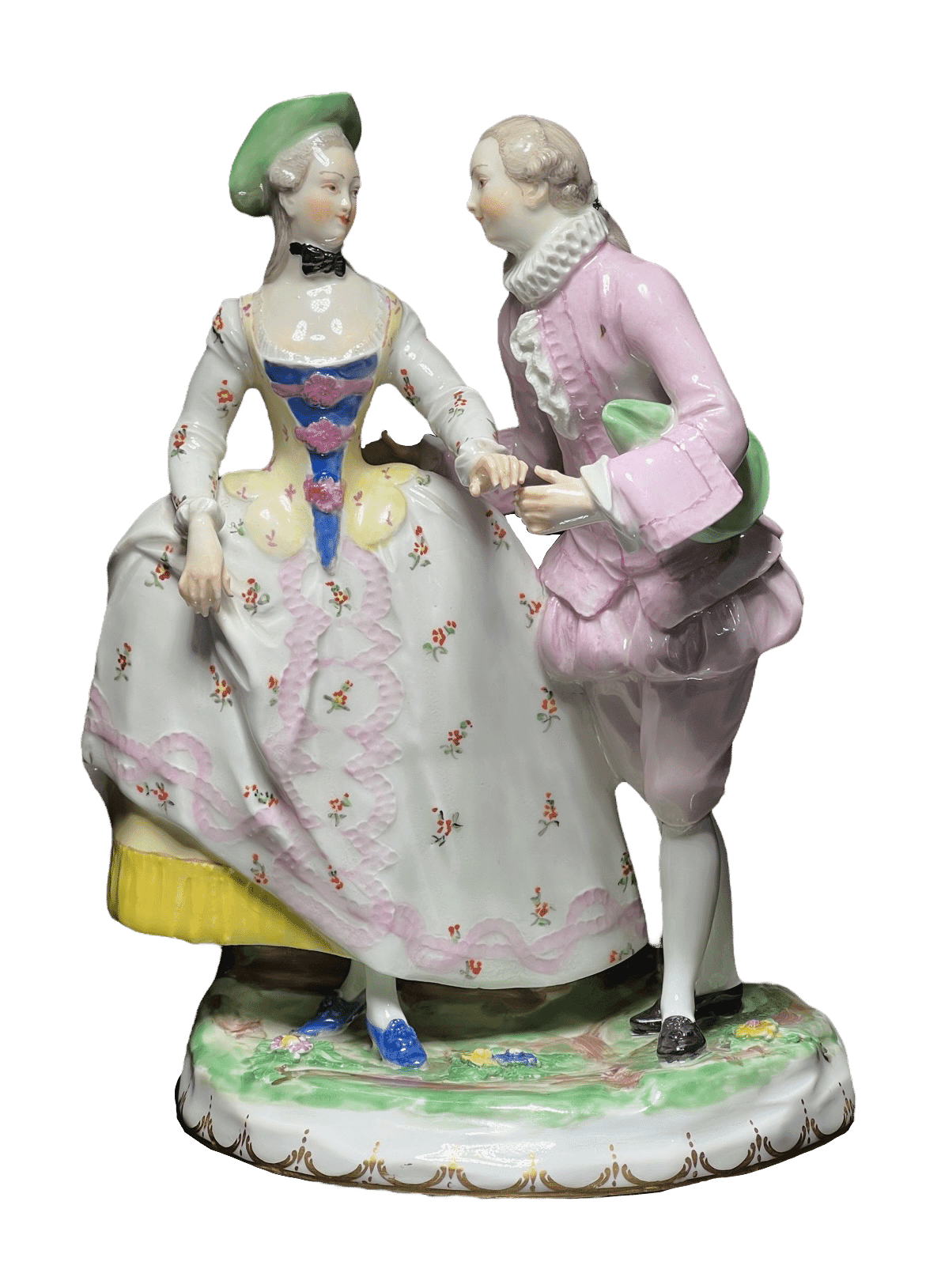
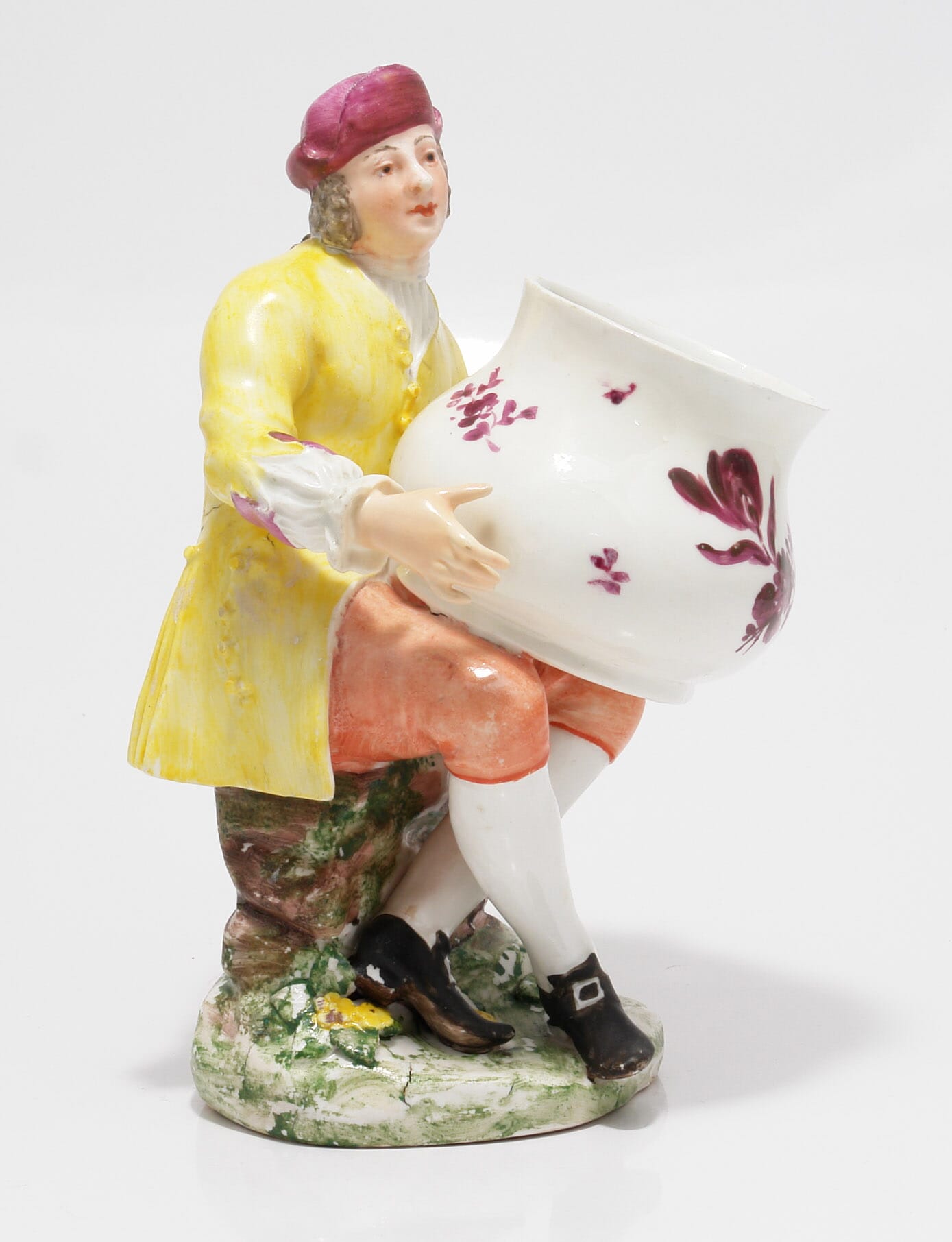
The second porcelain manufacturer in Europe after Meissen (1709) was in Vienna, in 1718. While the initial establishment of private businessman du Paquier ultimately declined, it was revived by the state itself in 1744 when Empress Maria Theresa bankrolled the Imperial State Manufactory, Vienna. The blue shield mark came shortly after (sometimes called a beehive, as when viewed upside down it resembles one….).

Vienna figure circa 1765
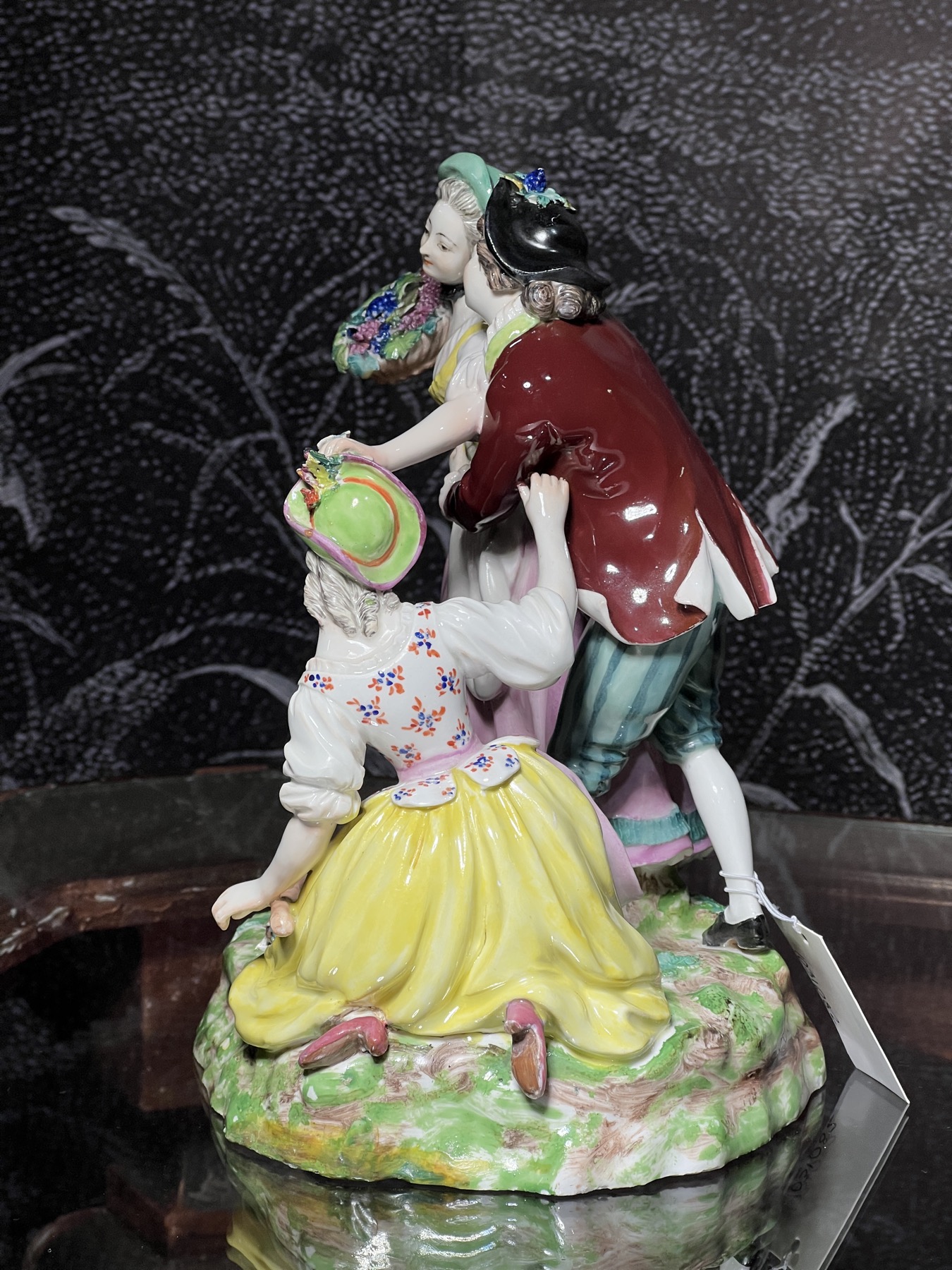
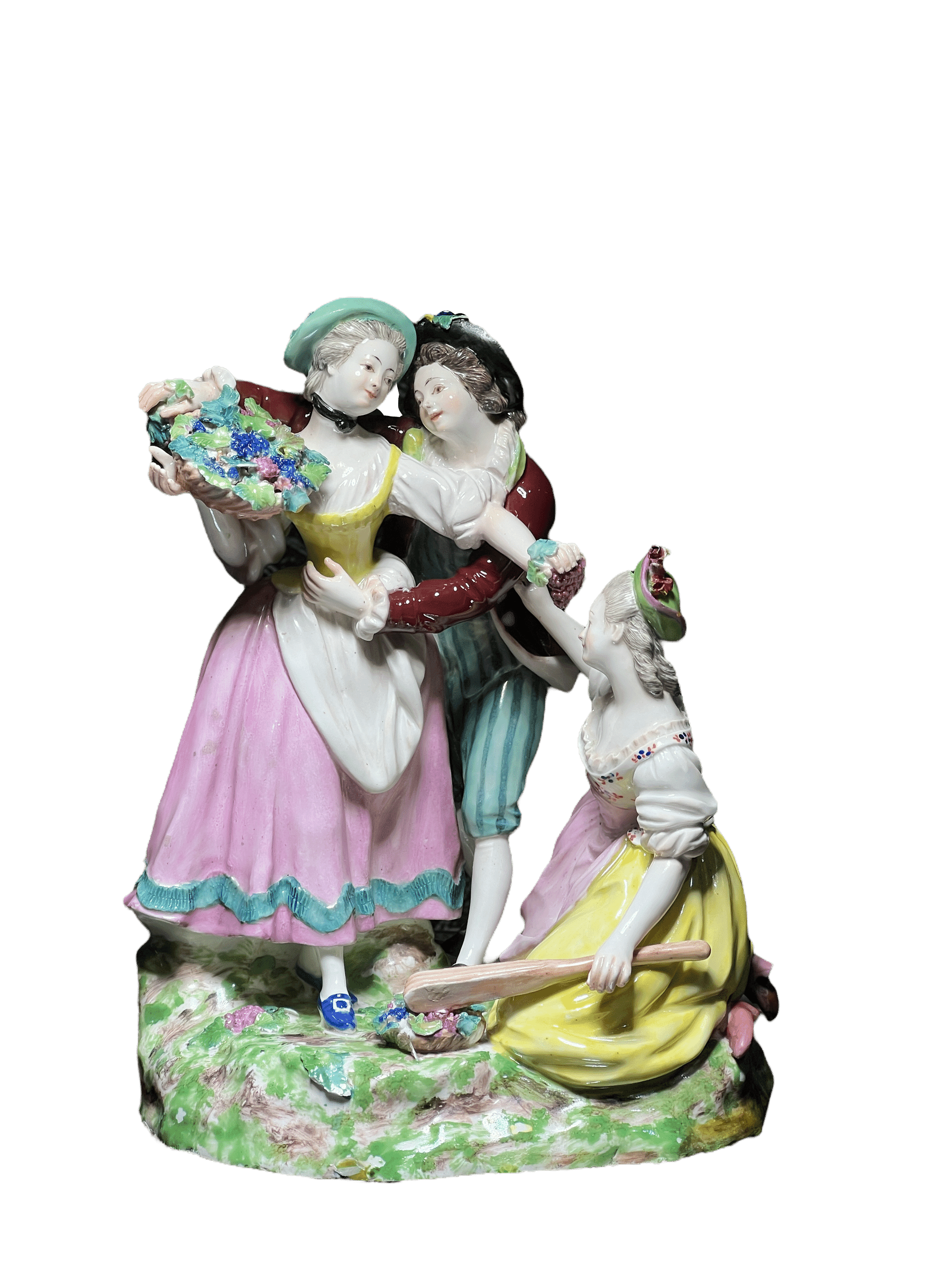
Vienna figure of ‘Autumn’, circa 1765

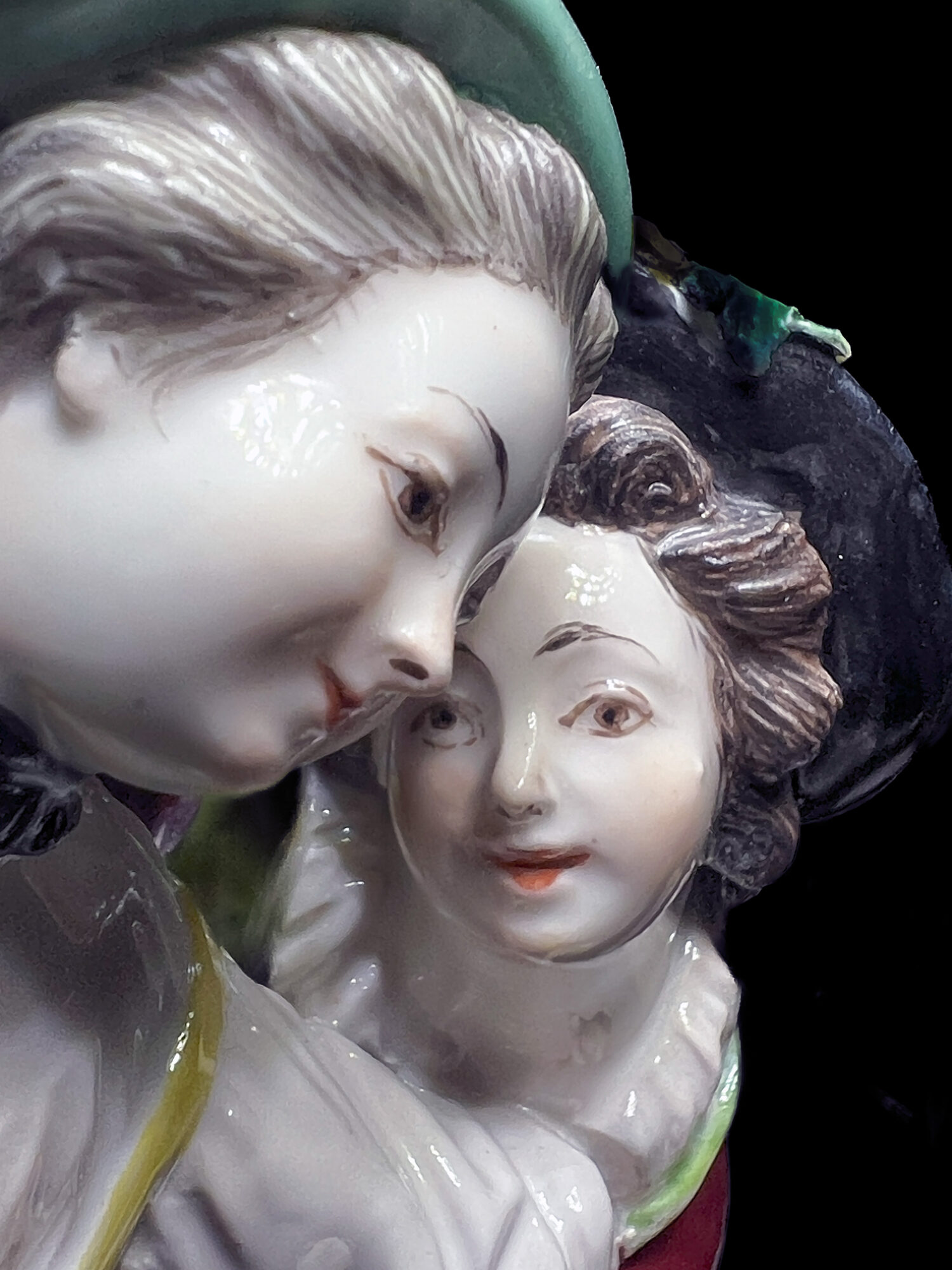
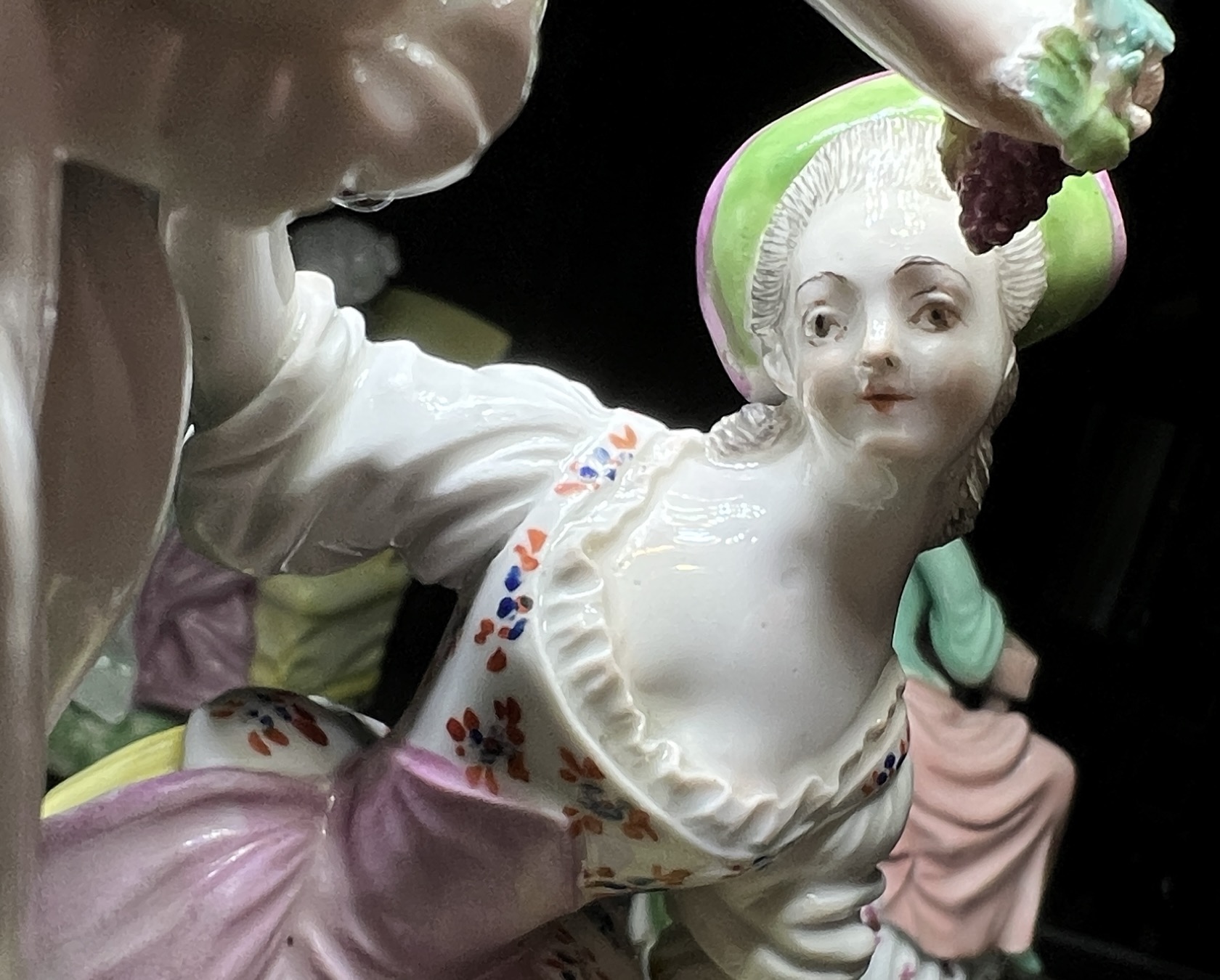
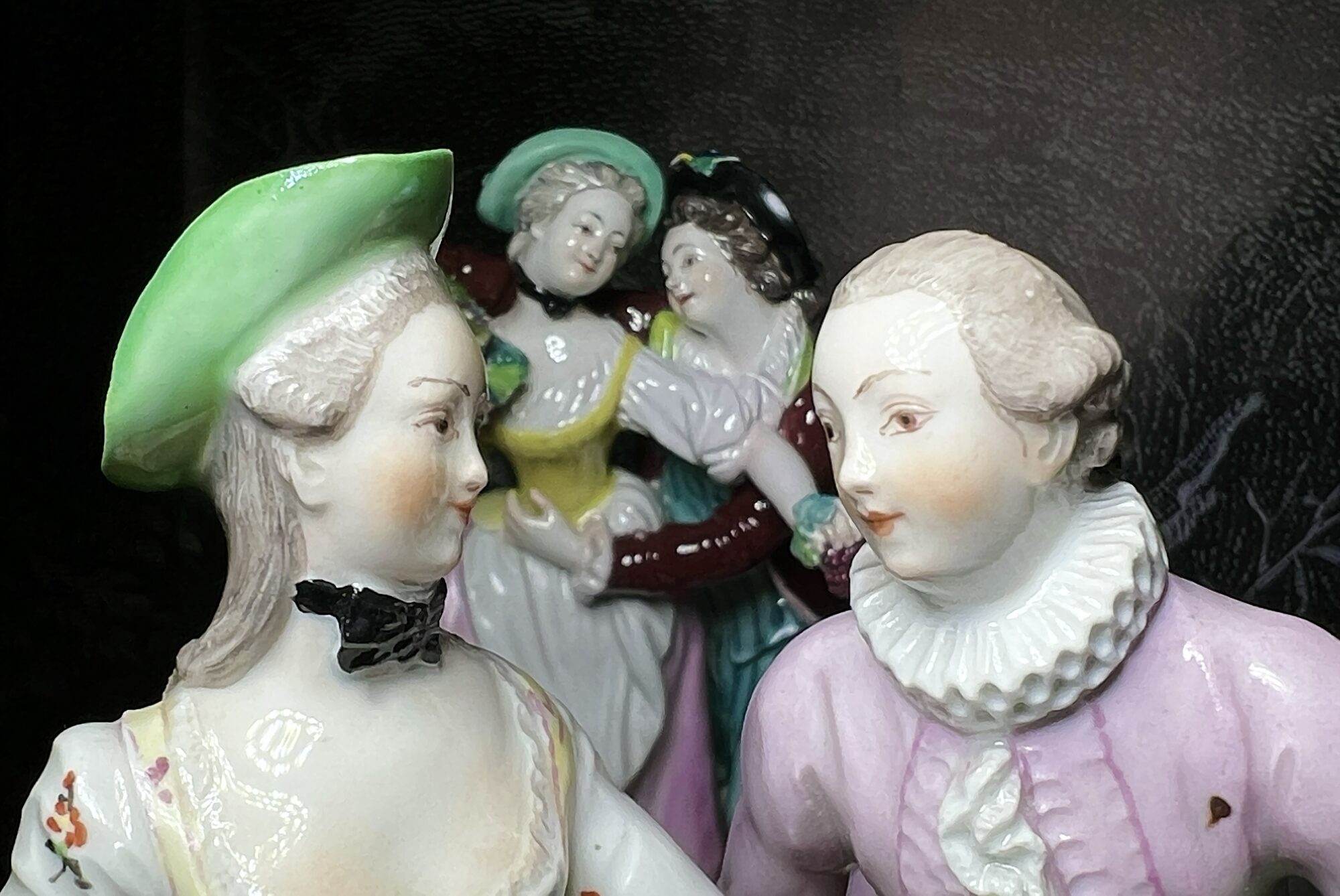
This remarkable figure dates to the 1760’s, and along with others in the same theme, would have been part of a grand table decoration for the banquets of an important household. The figures depict idealic ‘pastorale pastimes’, such as the harvesting of grapes seen here, and show us a favourite occupation of the Rococo courts in Europe: dress-up balls.  

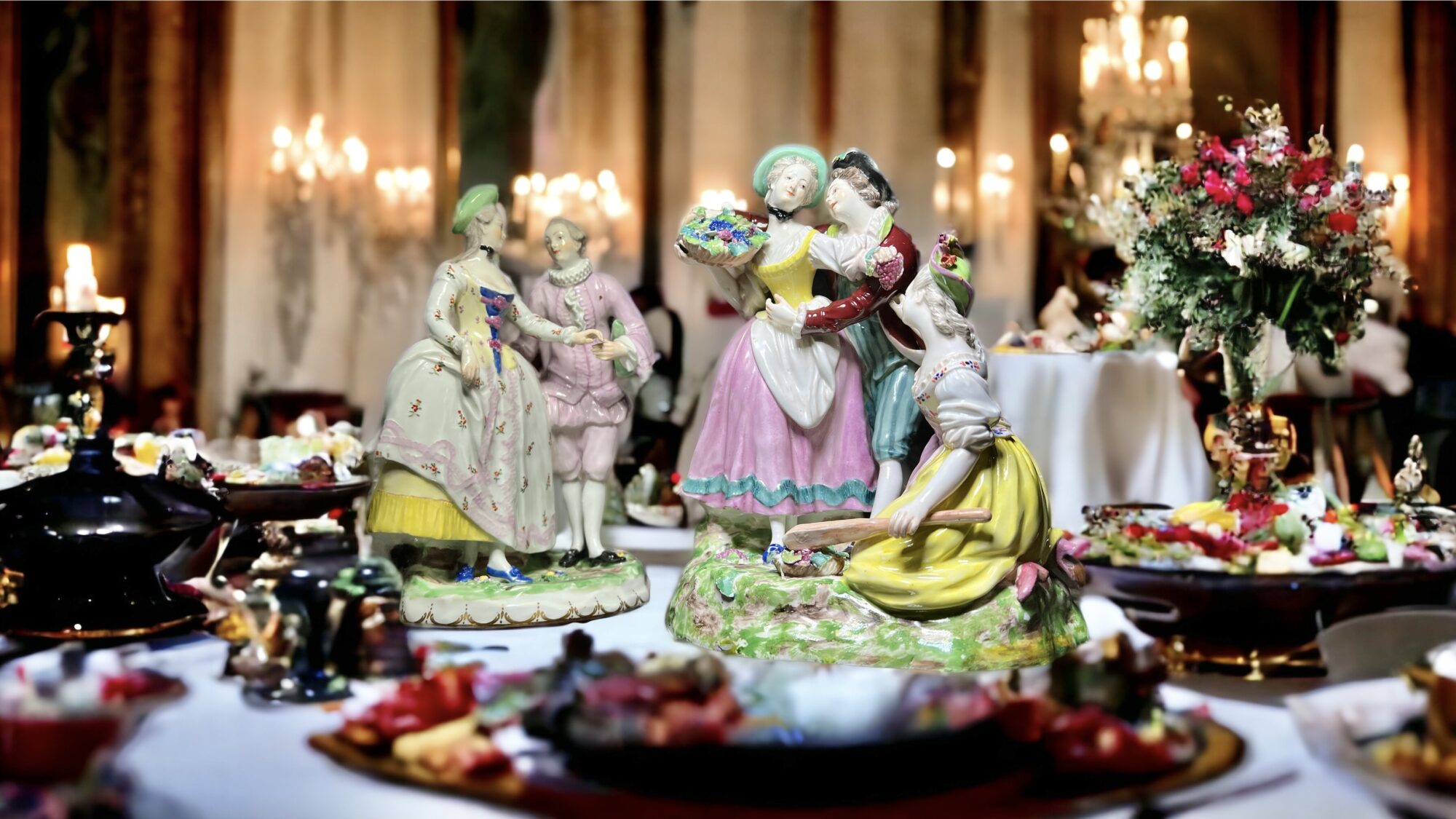
Marie Antoinette as a shepherdess is an image well remembered in the present, and such themed events were a common occurrence in the 18th century. Grand balls were held with attendees all dressing in ‘pastorale’ costumes, imaginative interpretations of the life of the ‘common folk’. Imagine such a ball, with an associated dining experience included. Sitting at the table in one’s costume, there was a splendid representation of the pastoral ideal in the form of the colourful figures spread down the tabletop between the guests. They were the perfect conversation starters, and with the lively & expressive interactions of the characters seen in these Viennese figures, no end of witty comments would be possible. 

18th century Viennese Table Figures in use
Vienna Porcelain c.1765

This example is one of a group of four figures depicting the seasons. With the grapes being harvested, it is Autumn; in the same Prague collection are two other figure groups matching (the key difference being 3-figures on a single oval base) – ‘Reaper as allegory of summer’ and ‘Ice skater as allegory of Winter’. Missing is a figure of spring; presumably the ladies depicted will have baskets of ‘spring flowers’ or fruits. 

Viennese Porcelain c.1765

The modeller who incised ‘Q’ is well represented in any collection with early Vienna figures. 

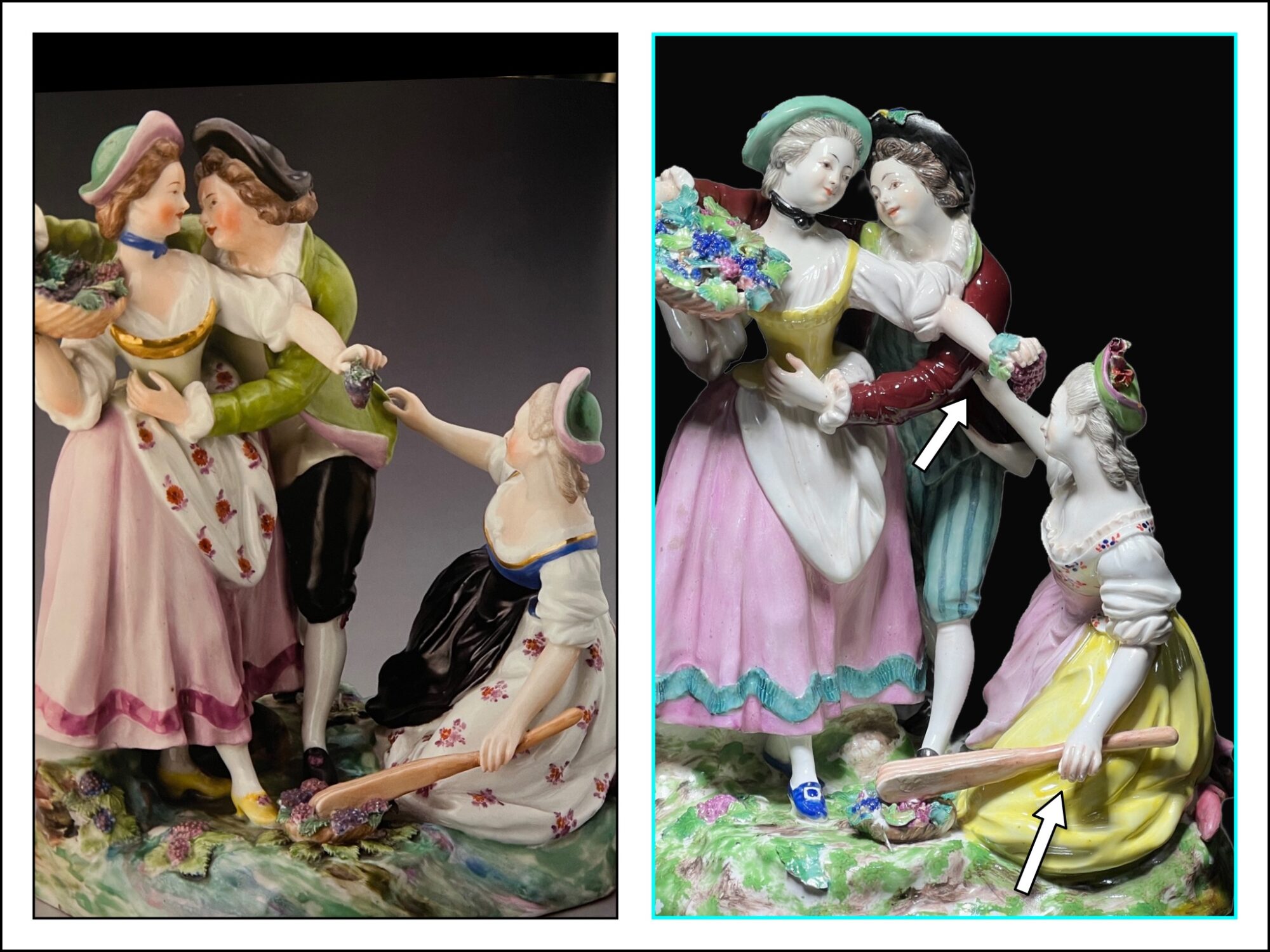
This example differs very slightly in the construction of the components, with the kneeling woman’s hand resting under the man’s armpit rather than on his coat tail, and her other hand not actually grasping the tool. The colour palette is the same yellow, pink, blue, and tones of green & brown, but the Prague example also includes two instances of gold being used. 

Left: Prague collection Right: Moorabool Antiques, Australia

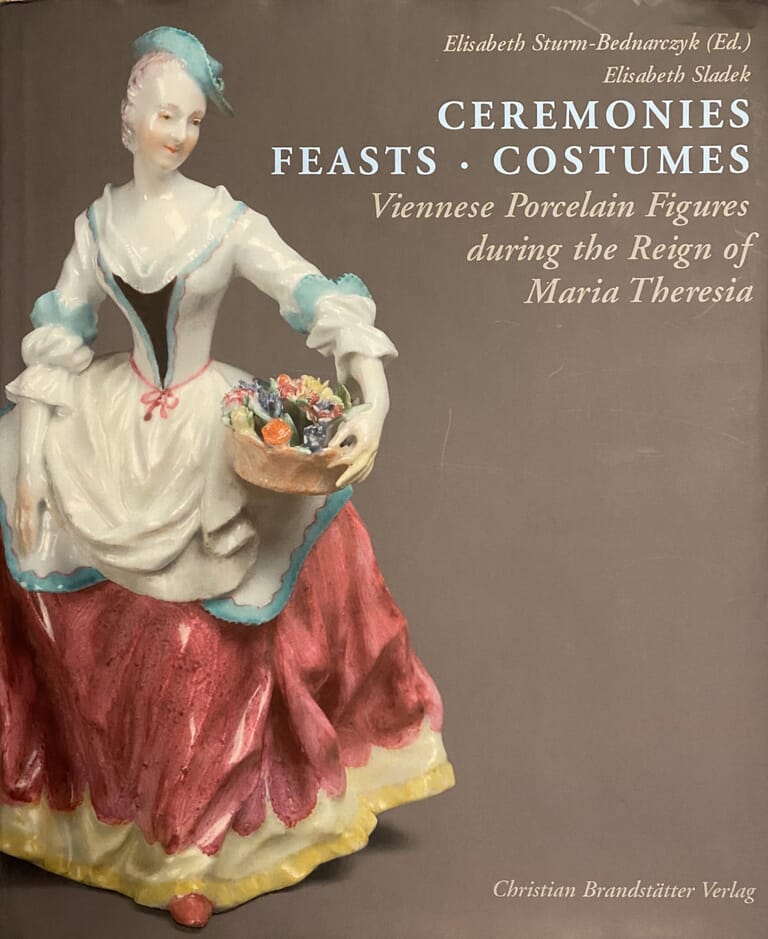
The definitive book on these early figures ‘Ceremonies Feasts Costumes : Viennese Porcelain Figures during the reign of Maria Theresia’ is a splendid 2007 publication with large clear illustrations, detailing hundreds of Vienna figures from the 1740’s until the 1780’s. A private businessman, Du Paquier, had started the porcelain works in Vienna as early as 1719 ( making it the second true porcelain manufacturer in Europe, after Meissen), but by 1744 he was financially struggling, and the Viennese State purchased the works. This was of course ruled by Maria Theresia, the Empress of Austria, and she loved a good party… the porcelain works were an excellent source of the needed table wares, and this included table figures.

Refer p148 of this book for an example of the above figure, also the frontispiece of the book; fig. 228 “Wine grower as an allegory of autumn”, c. 1765 (Decorative Arts Museum, Prague).

Viennese Porcelain c.1765
Viennese personalities of the 1760’s.
18th century Viennese Table Figures
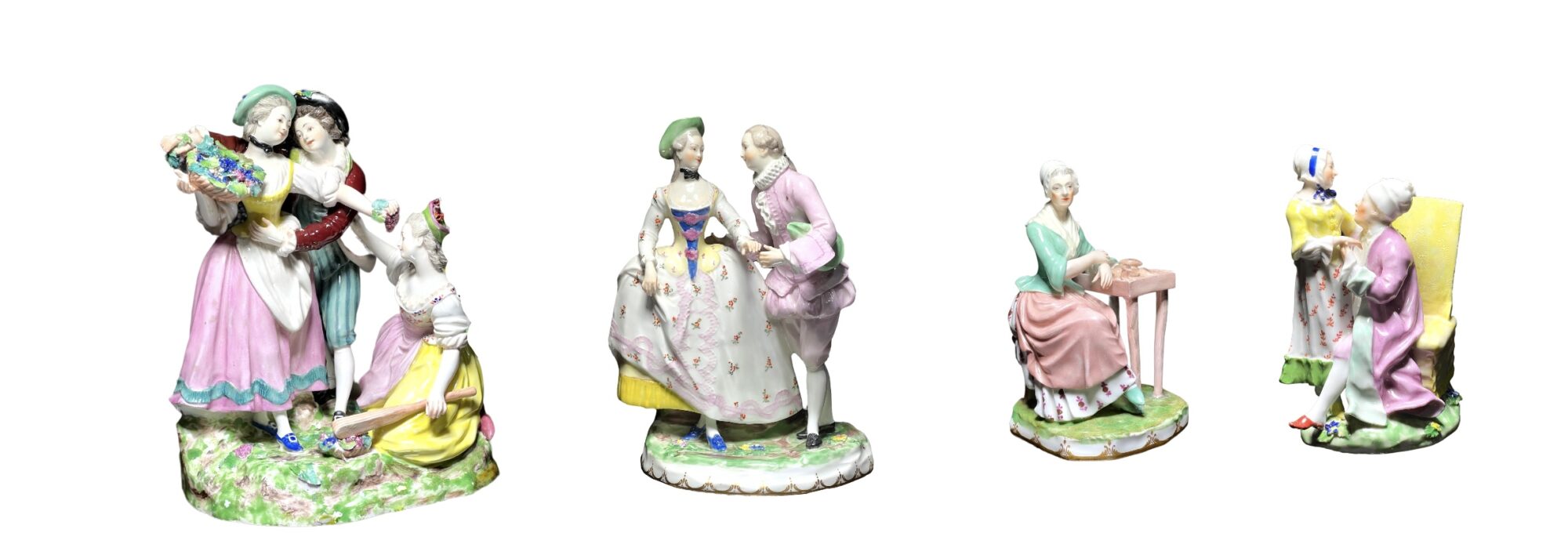
Moorabool’s selection of Viennese Porcelain figures, 1760’s.
Posted on

Fresh Stock – Early Staffordshire Figures, Chinese Musicians, Pewter, Glass, a touch of Class….

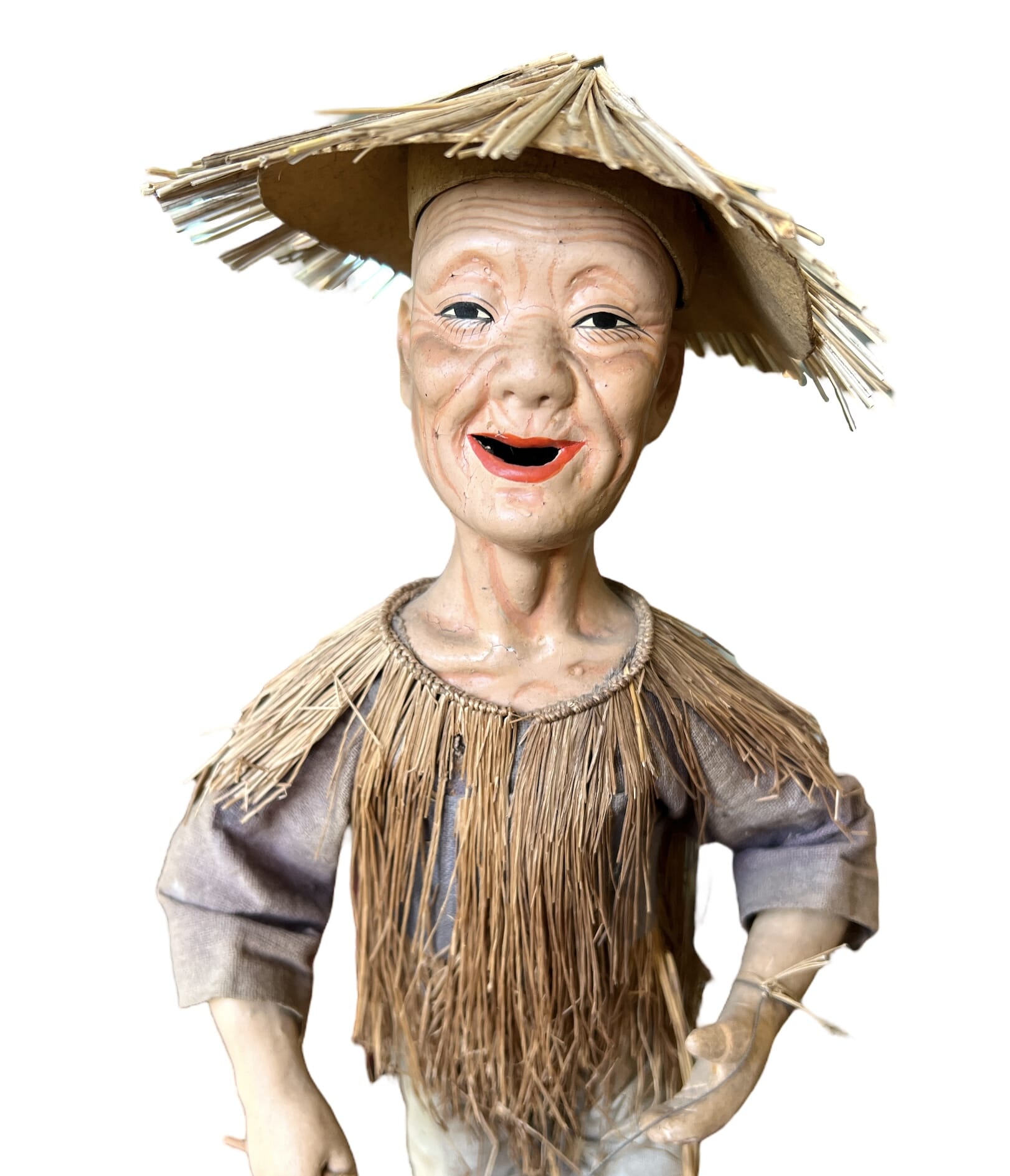
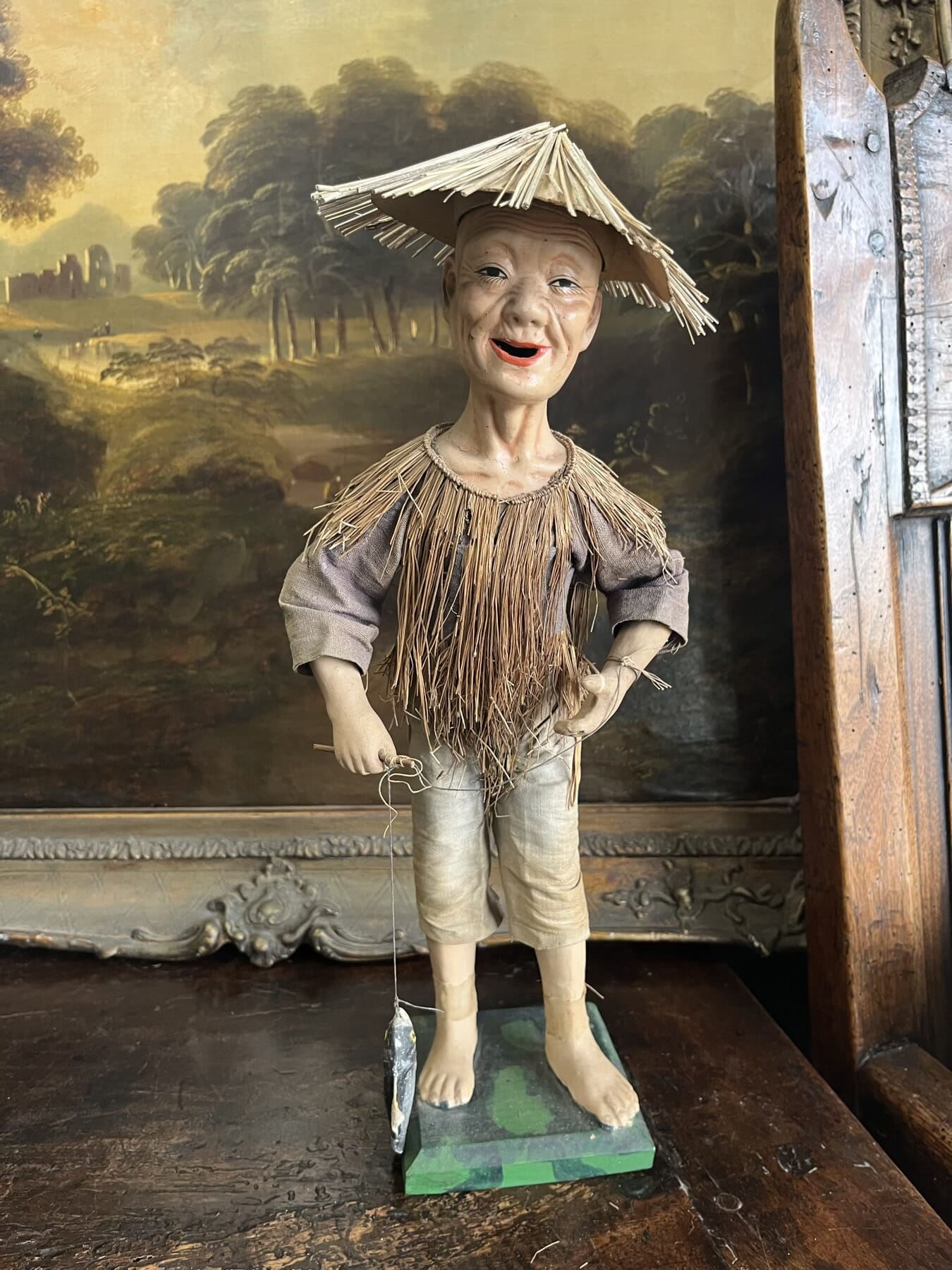
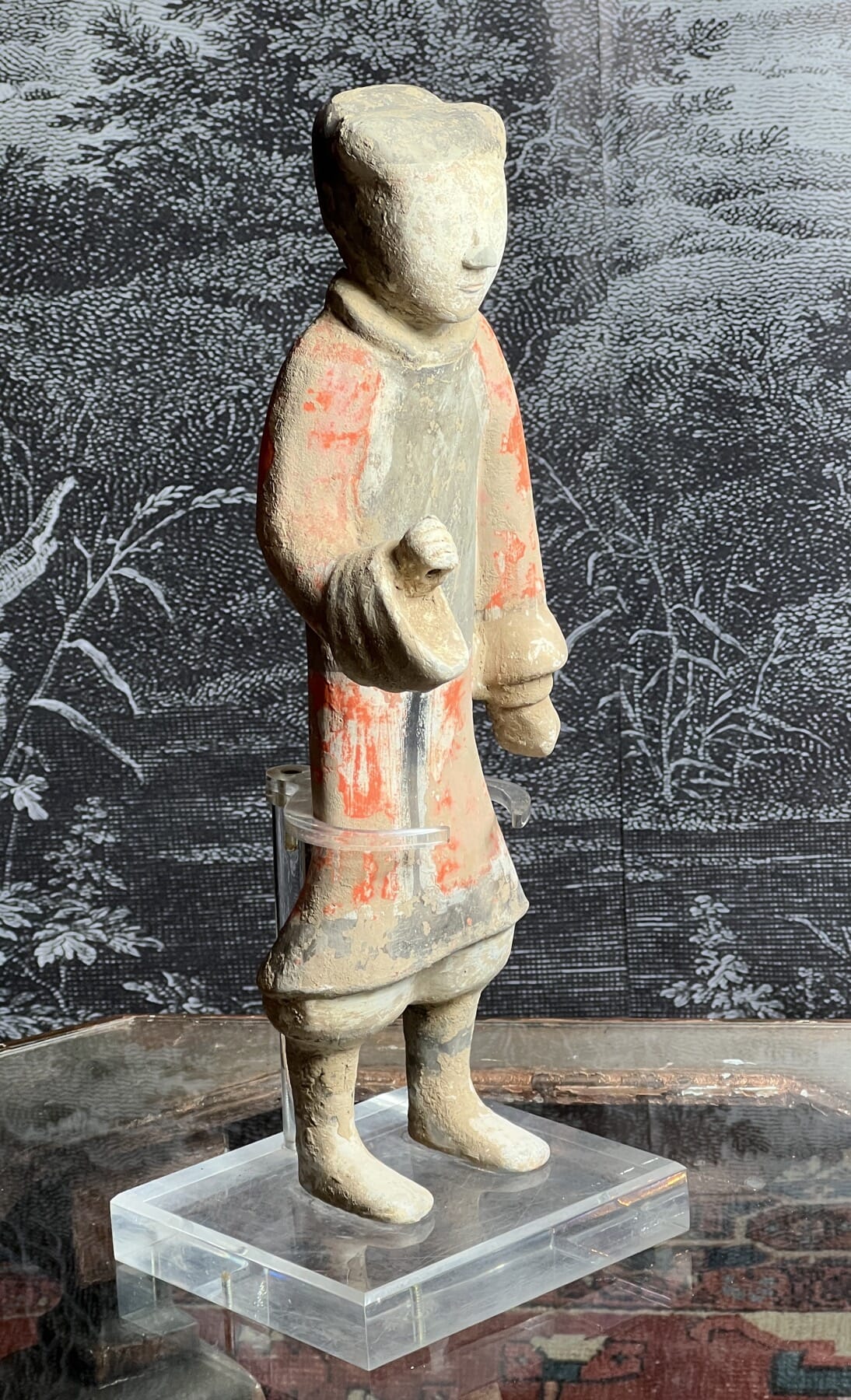
Chinese Fisherman clay figure

Some stunning Fresh Stock items @ Moorabool Antiques this week!

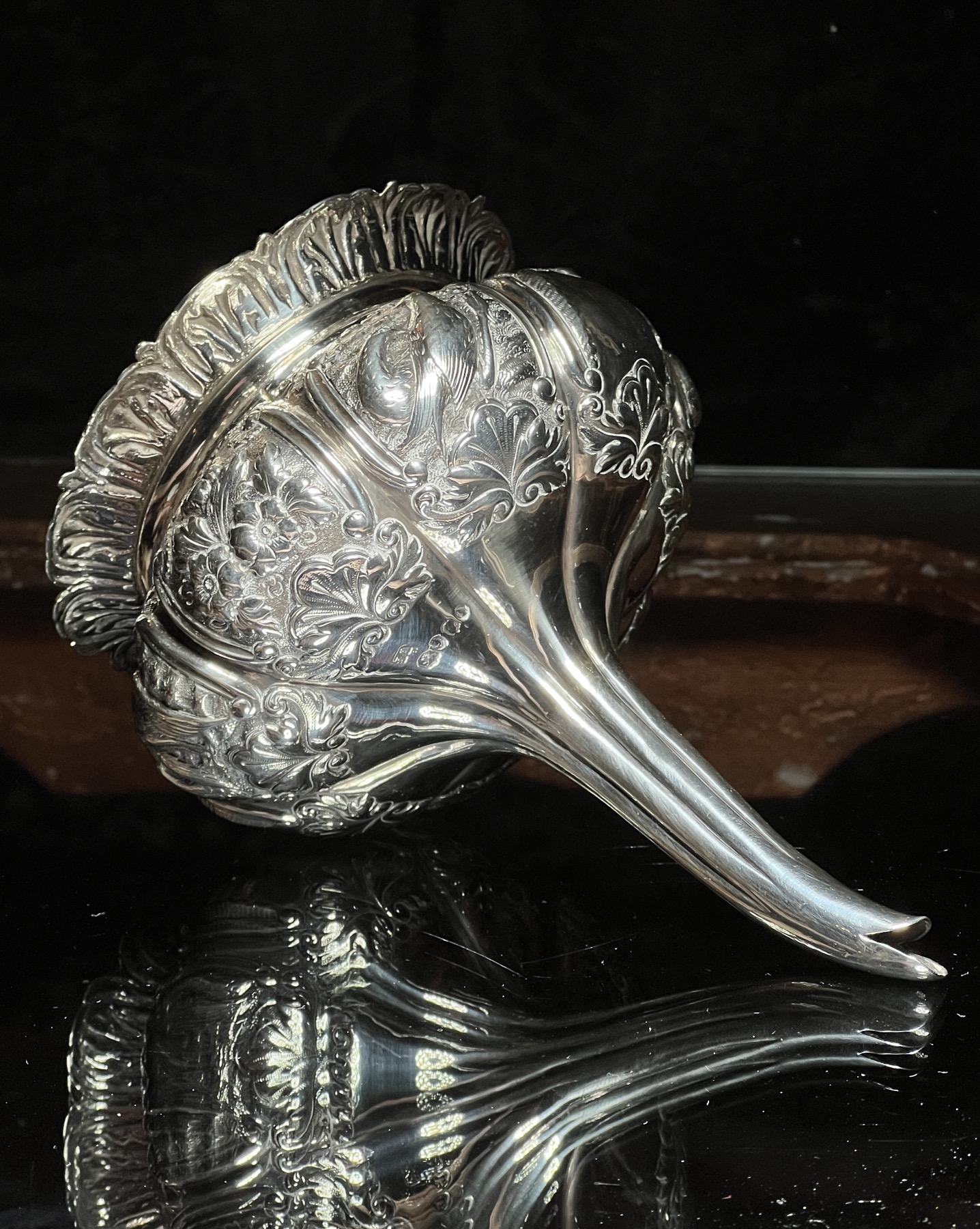
Richard William Atkins & William Nathaniel Somersall, London, 1834  Sterling Silver Wine Funnel
Richard William Atkins & William Nathaniel Somersall, London, 1834 Sterling Silver Wine Funnel

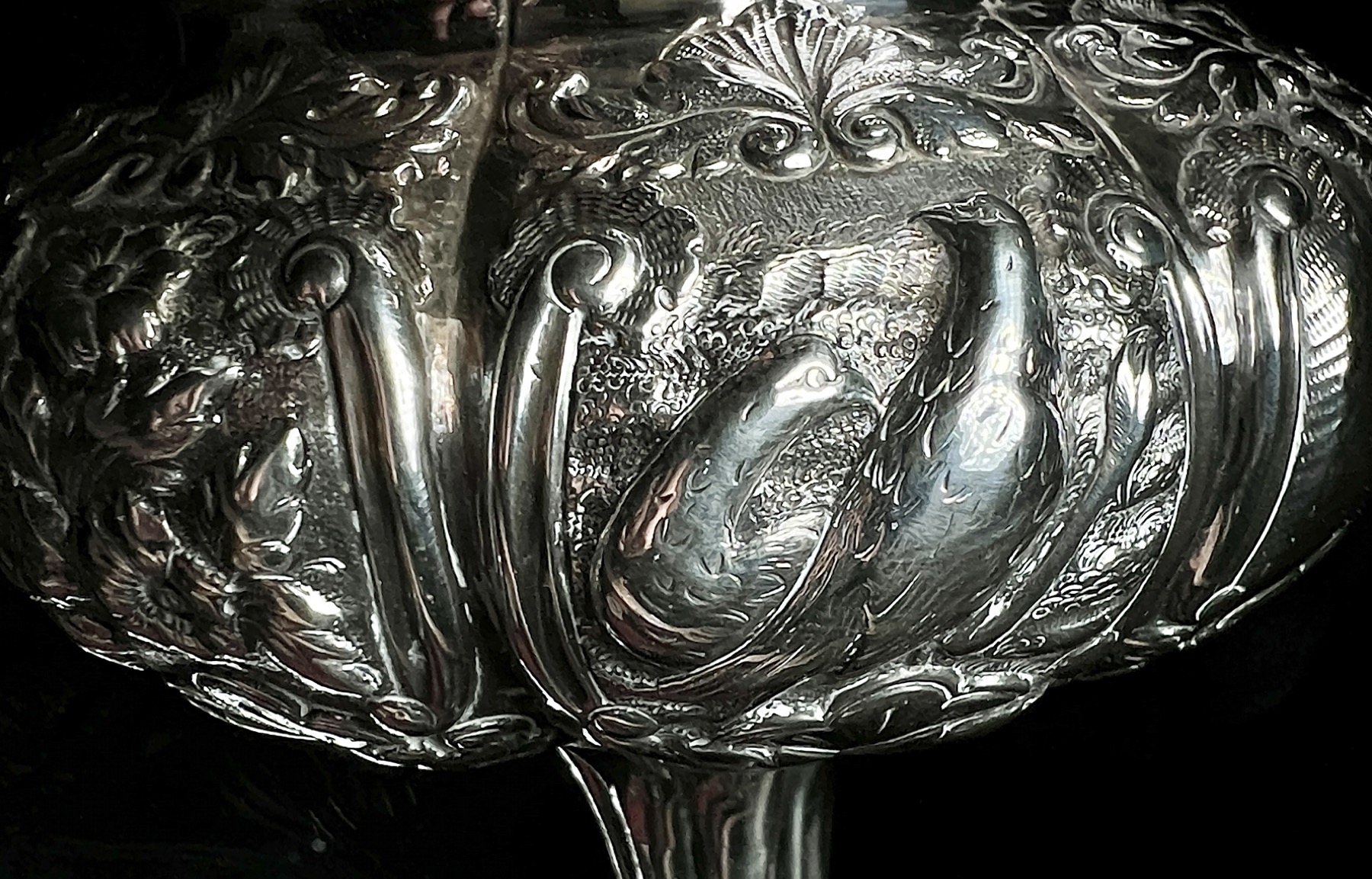
This is the ultimate wine funnel: a Sterling Silver lobed example, with 6 repoussé panels and 2 left blank for initials, the separate insert with acanthus leaf rim & gilt wash interior…. It was London-made in 1834, during the reign of William IV, the silversmiths being Richard William Atkins & William Nathaniel Somersall. While plain silver wine funnels are not uncommon, the embellishment of this example makes it an exceptional piece – and very usable!

Richard William Atkins & William Nathaniel Somersall, London, 1834  Sterling Silver Wine Funnel
Decoration of Sterling Silver Wine Funnel
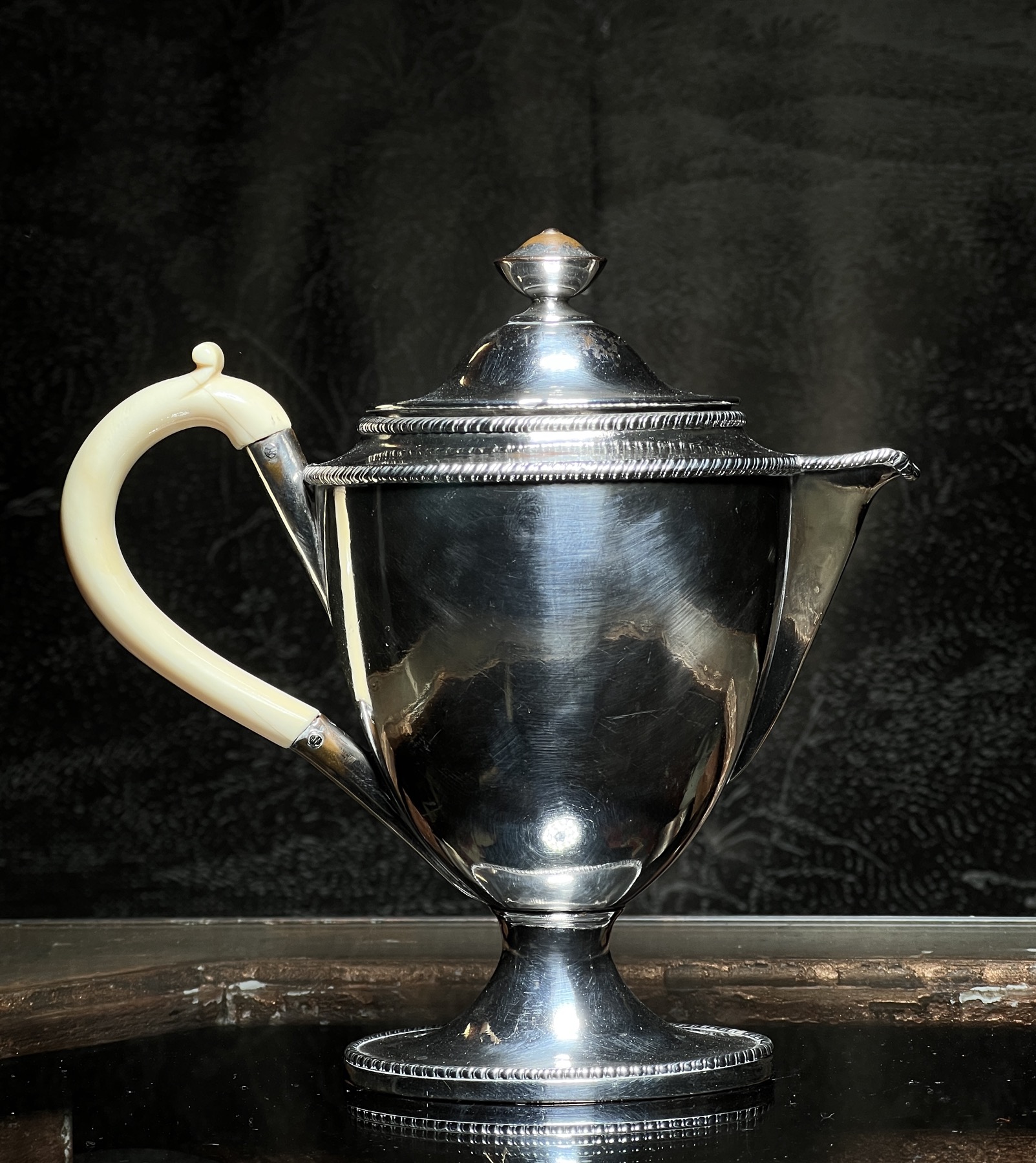
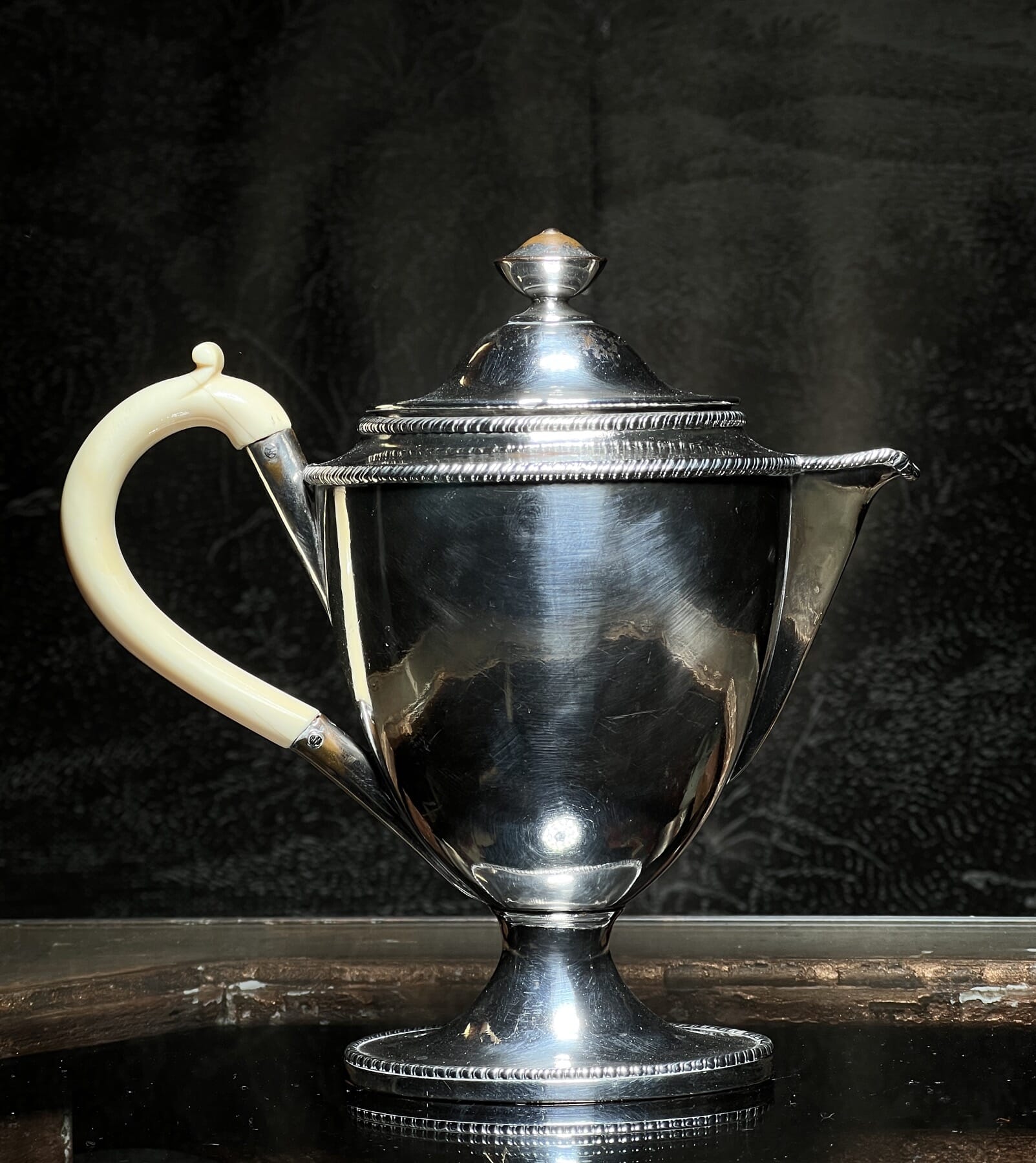
Old Sheffield Plate Argyle, c. 1795

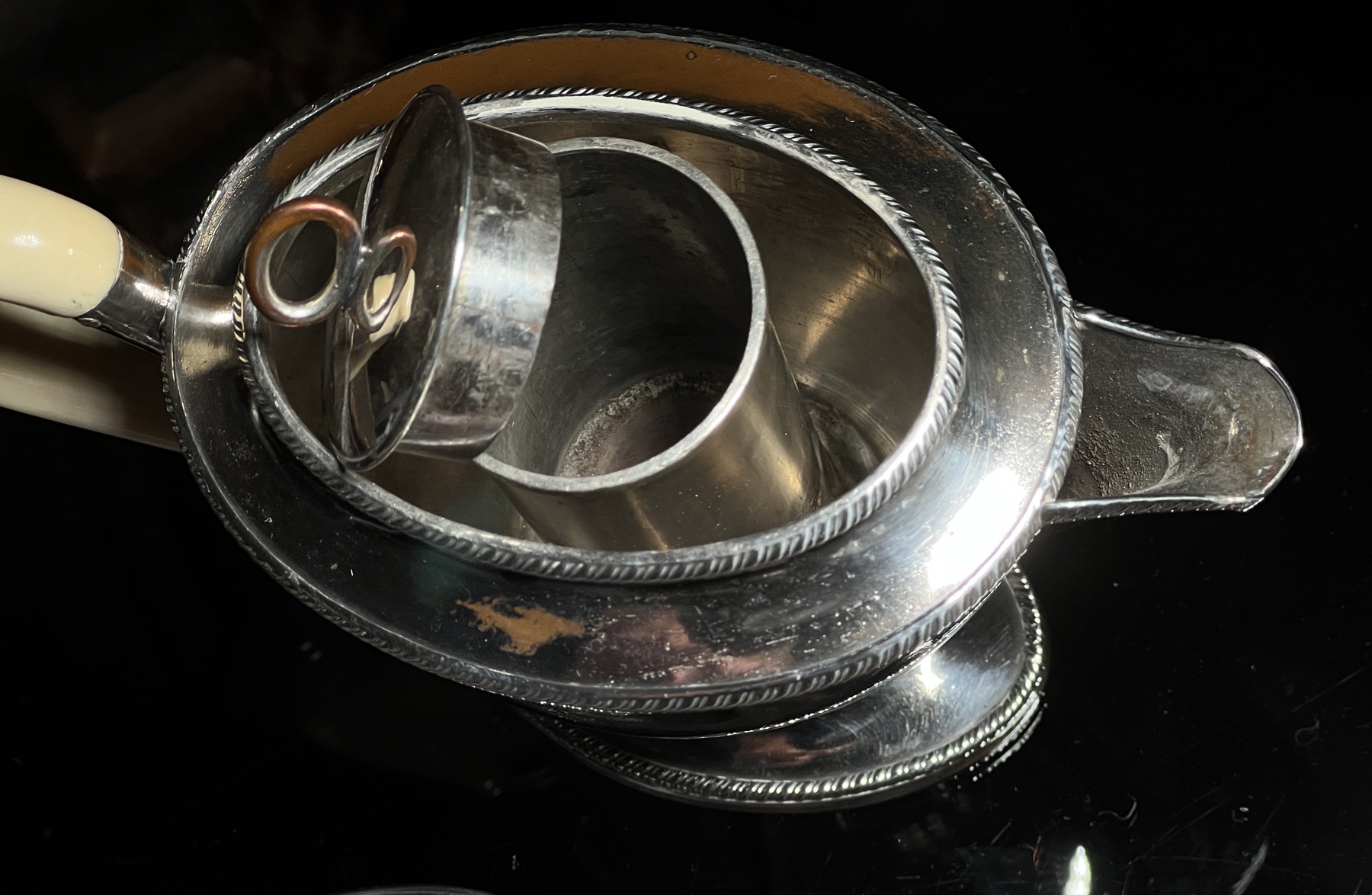
This lovely piece of Old Sheffield Plate is a rarity. Known as an ‘Argyle’, it has an internal partition with a lid to take some hot water – this then keeps the contents warm. Legend has it that the Duke of Argyll, back in the 18th century, came up with the bright idea after bemoaning the cold gravy inevitably served on the Duke’s table, as the kitchens were a long way to bring gravy through the cold draughty castle, cooling too much on the journey. The insert made it lovely and warm…. or so the story goes. This is a particularly elegant example in the Adams Neoclassical style, with a dramatic ivory handle.

Old Sheffield Plate Argyle, c. 1795
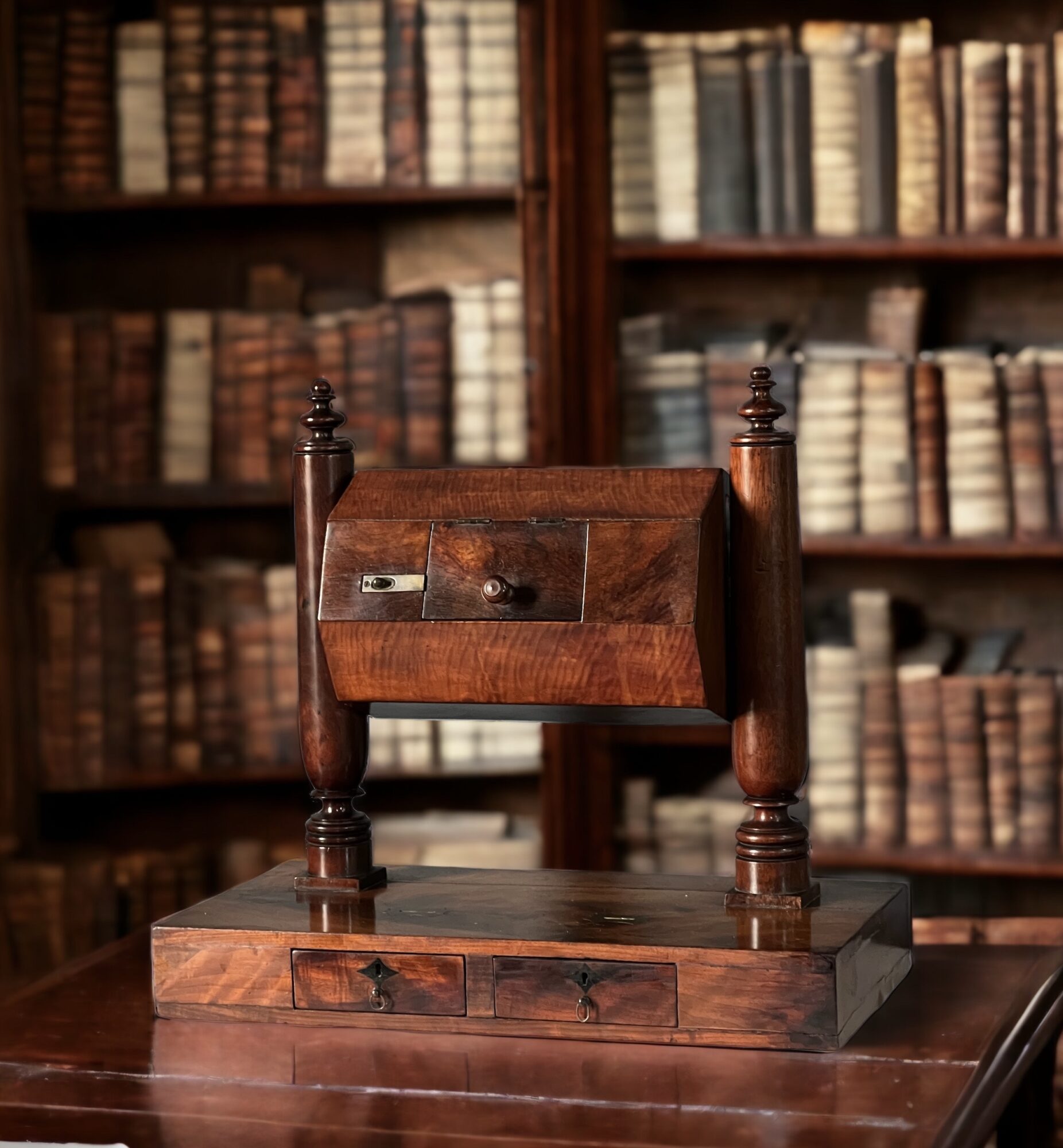
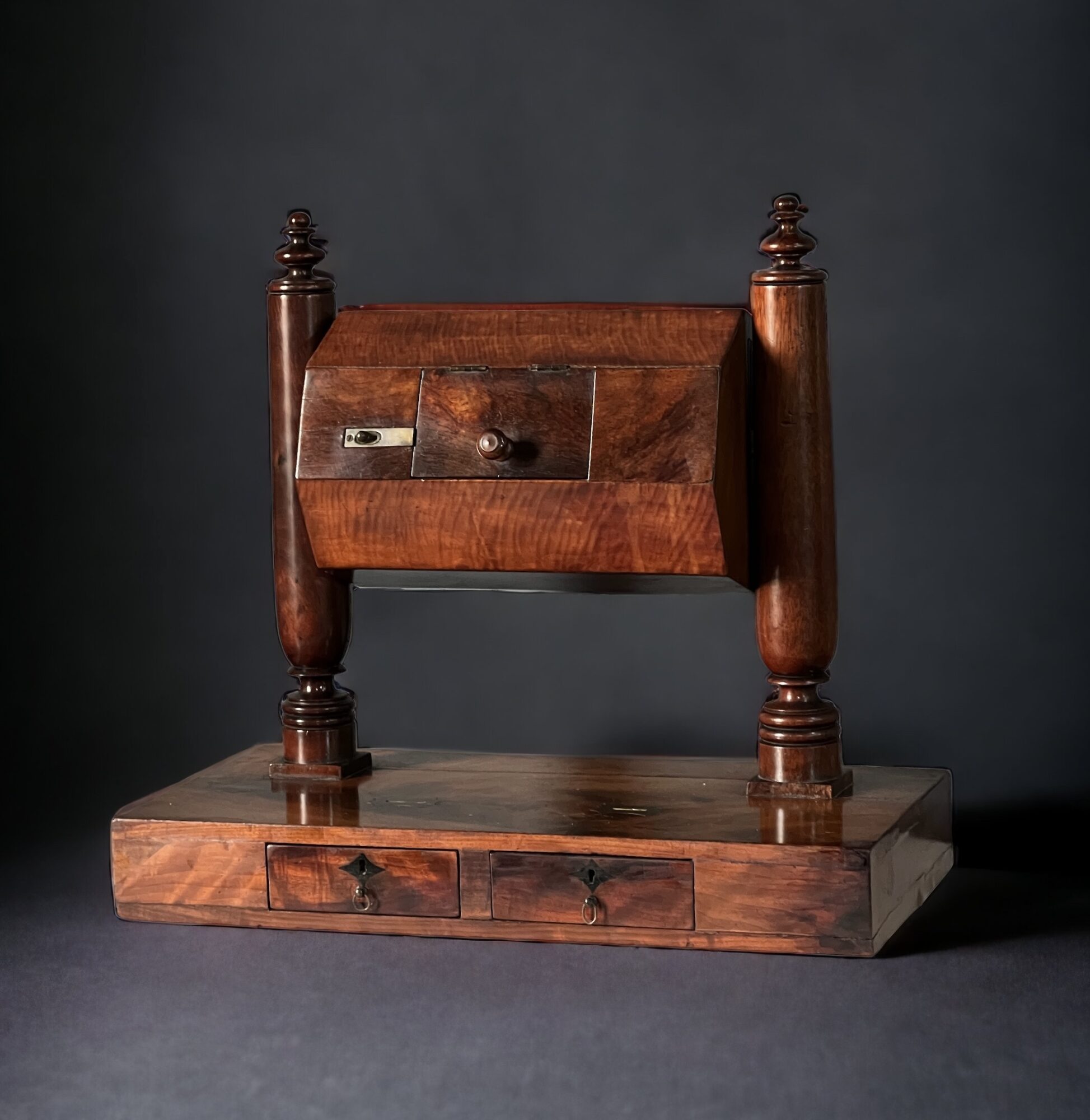
Mahogany Voting Machine, 19th century

A most unusual piece begging to be used is a ‘voting machine’, also from the William IV period.
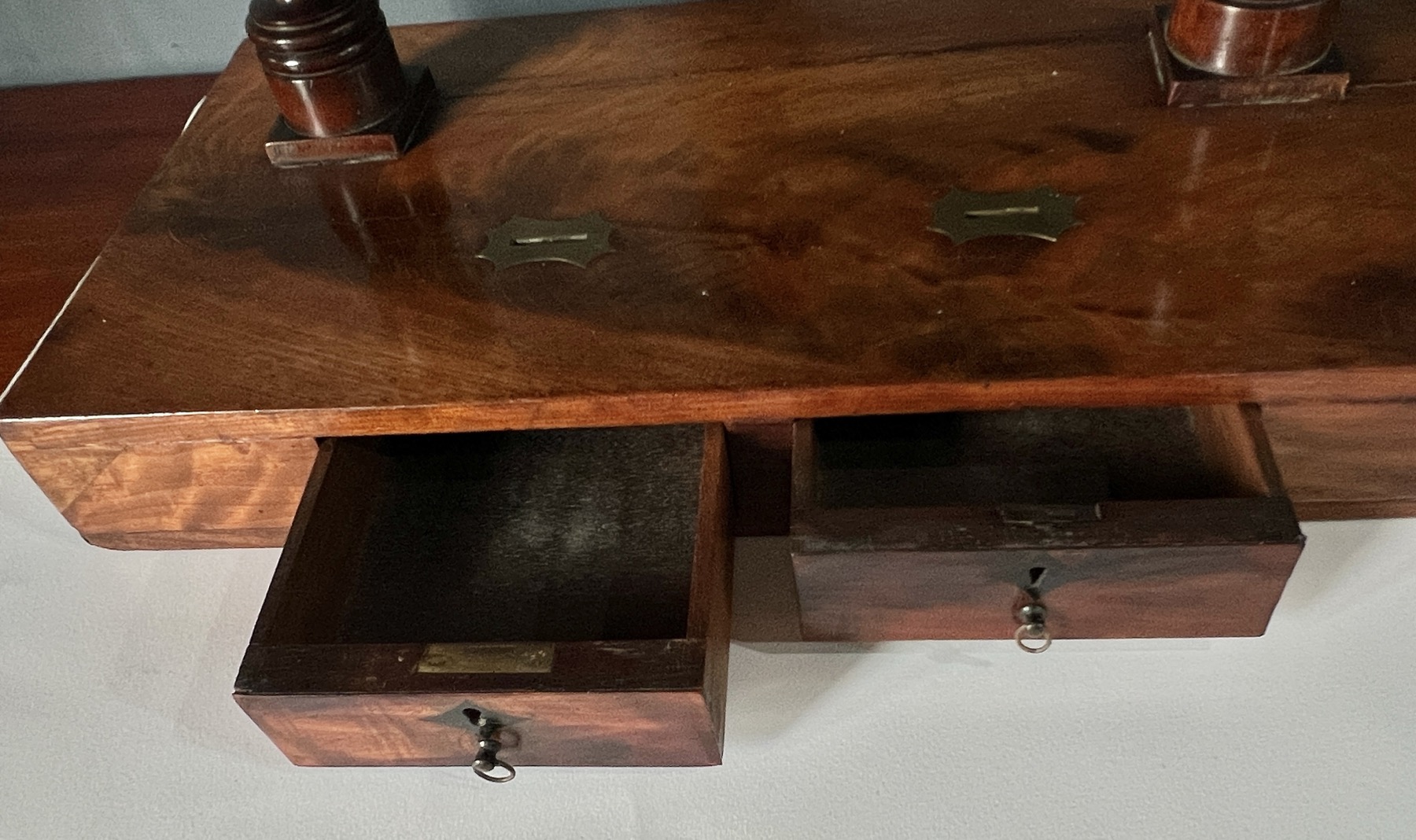
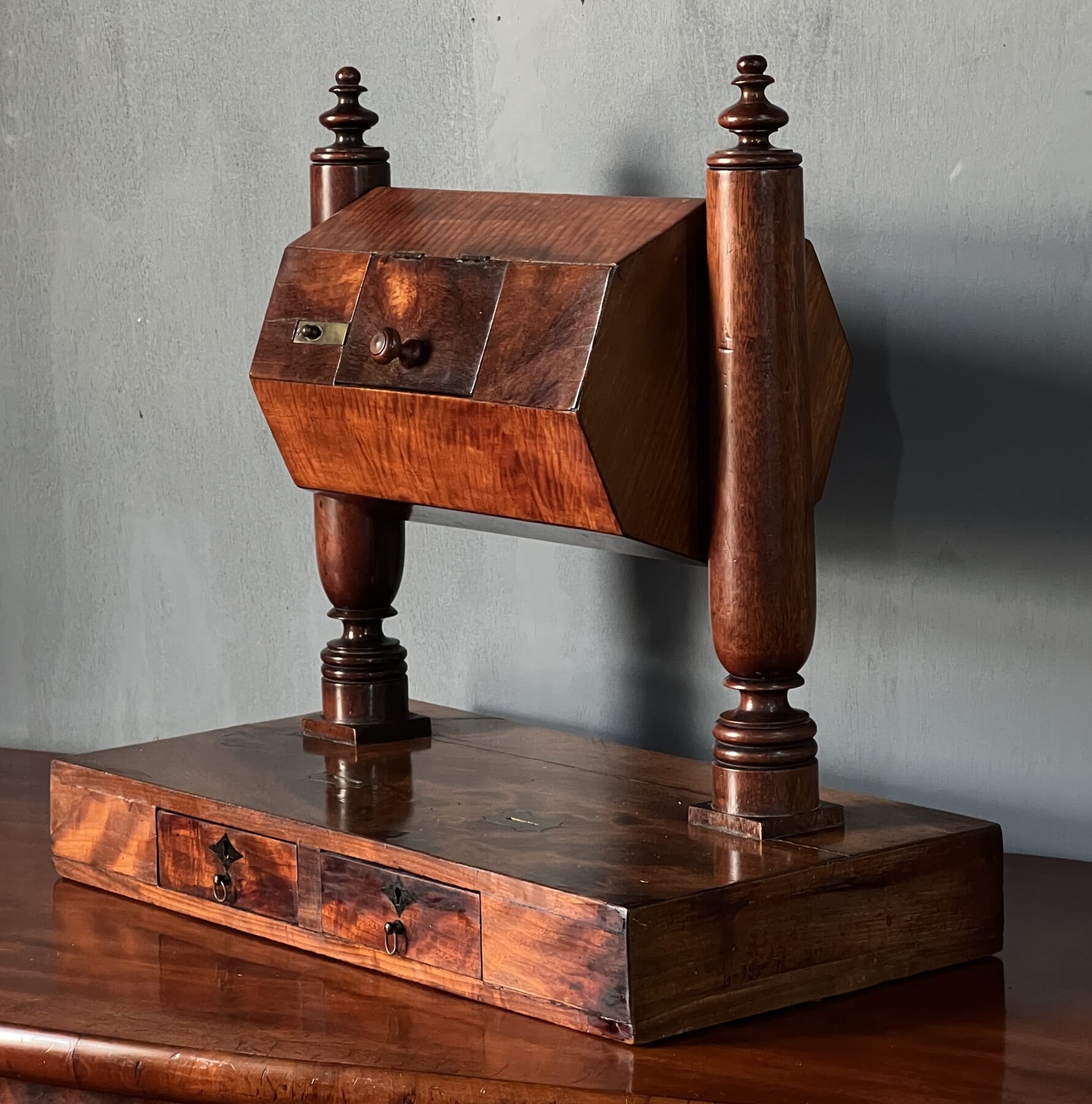
It is mahogany, with satinwood & rosewood veneer. The octagonal revolving drum has a hatch into which the nominations (names) can be placed & tumbled for a random selection, while below are two lockable drawers with brass slots above to take tokens for a vote – presumably ivory black & white for ‘Yes’ and ‘No’ votes. We imagine it being used in a gentleman’s club to make all those important decisions….

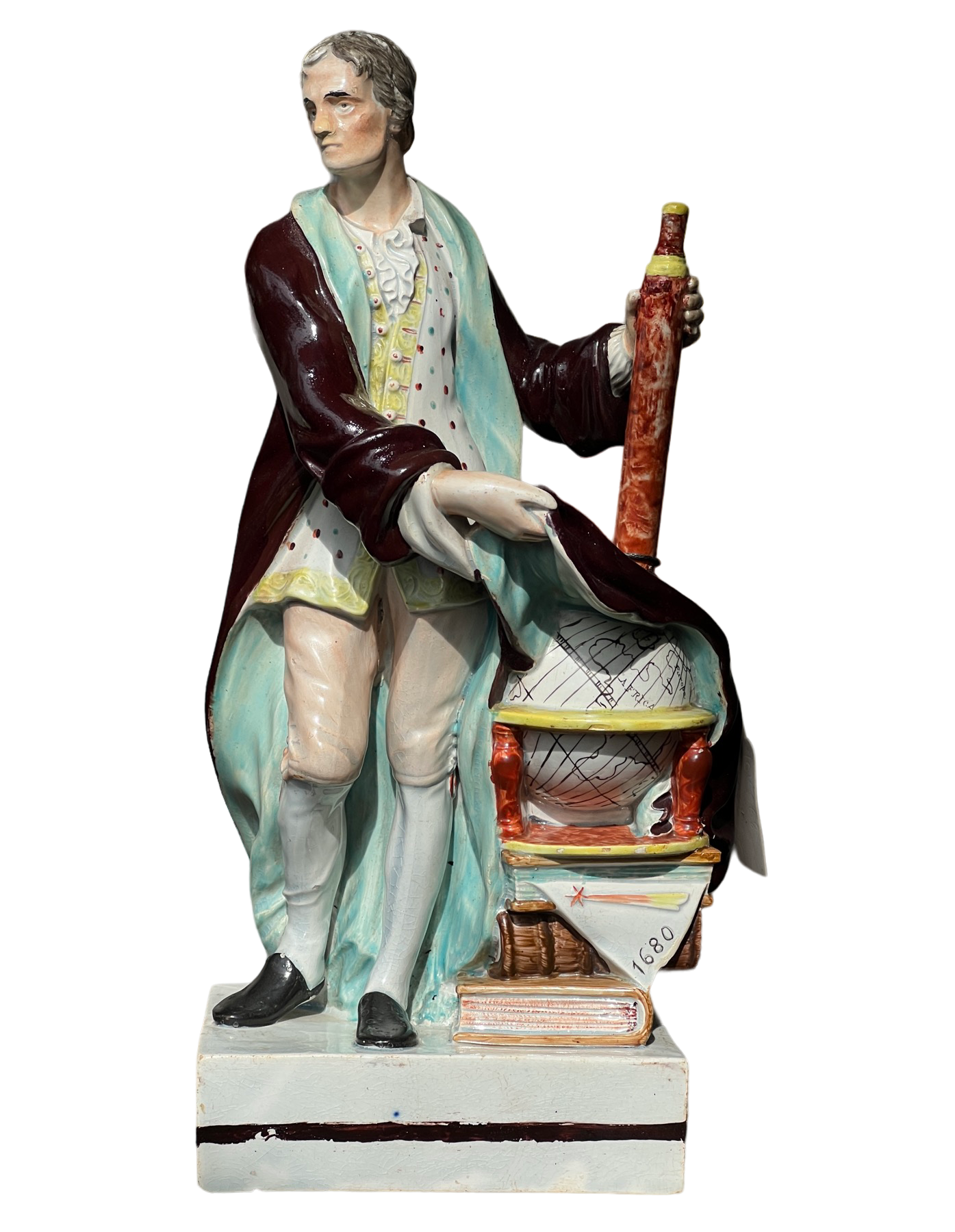
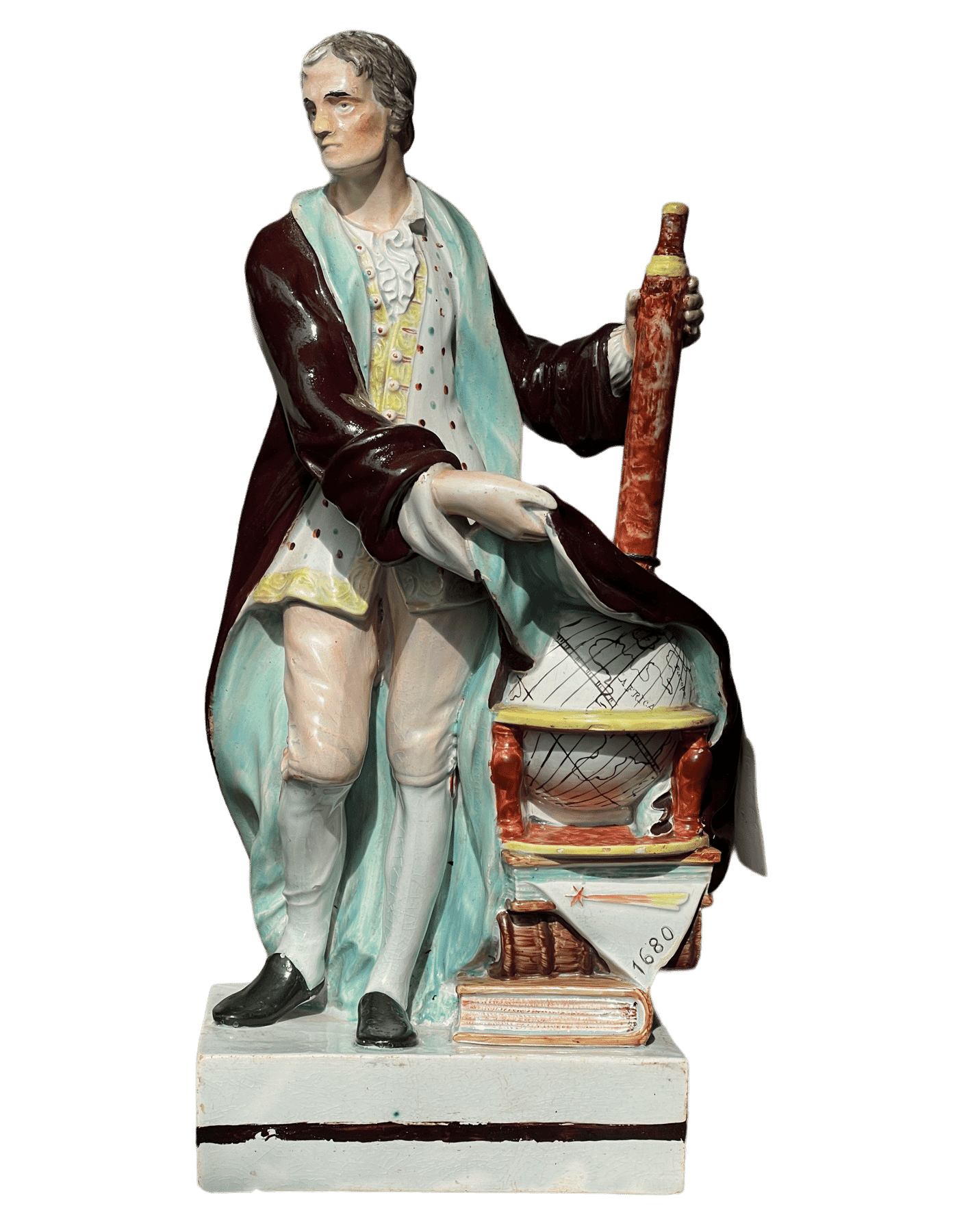
Sir Isaac Newton, Leeds Pottery Marked Figure c.1790 at Moorabool Antiques, Geelong

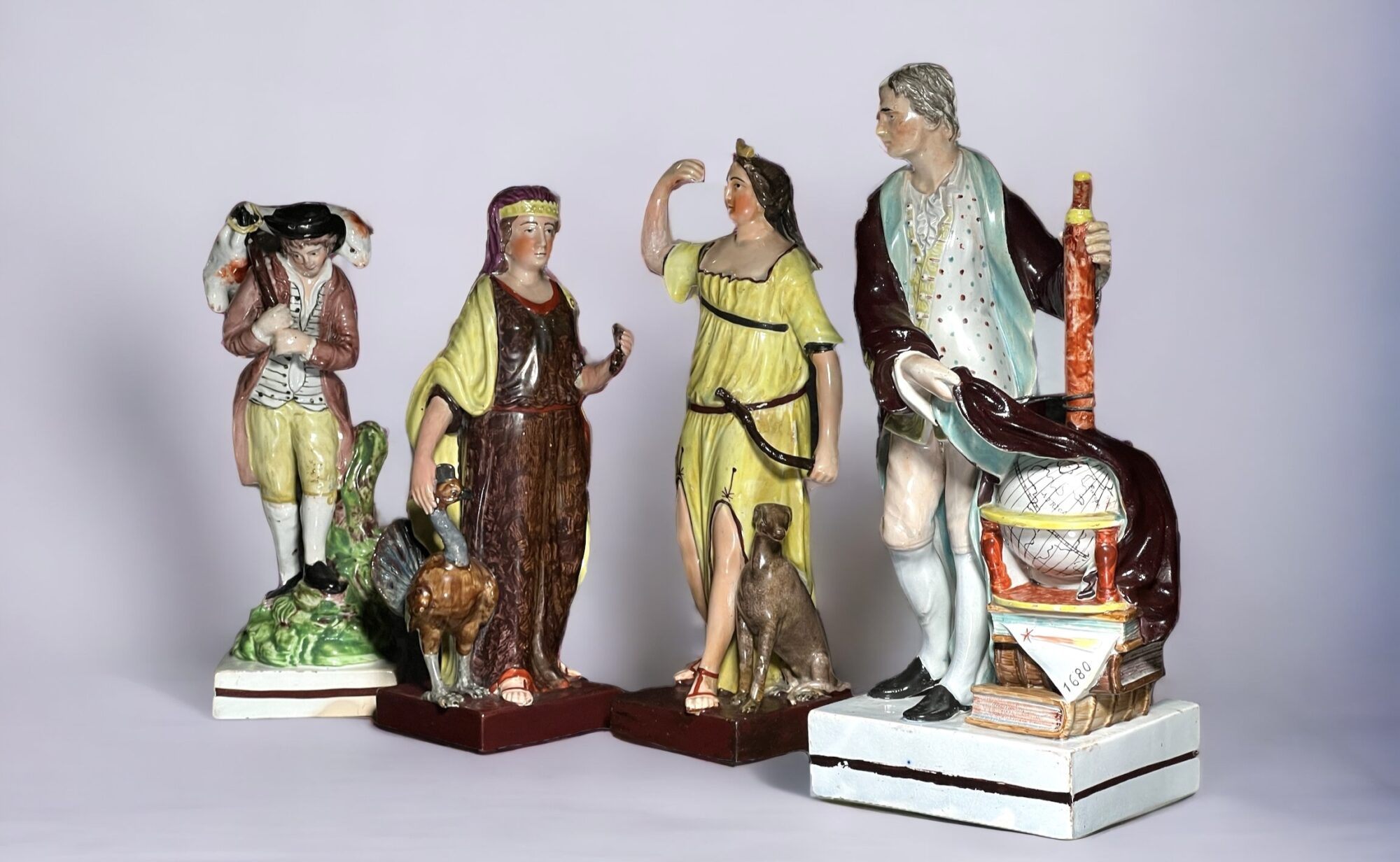
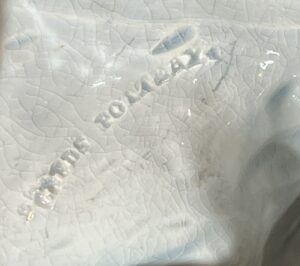
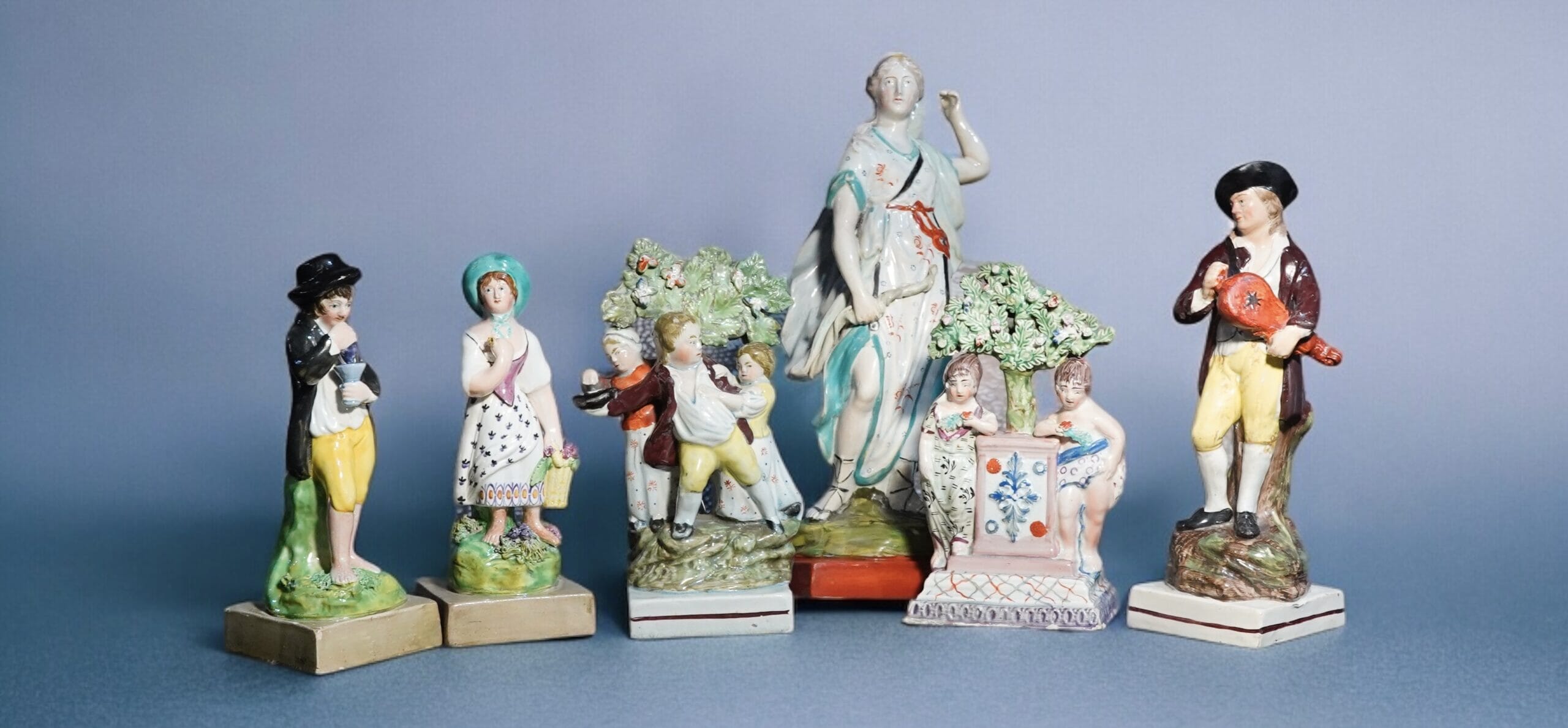
Some early Staffordshire rarities have just been released. Rarest of all is a figure of Sir Isaac Newton, almost unique in having an impressed “LEEDS POTTERY” mark – there is one other example with the mark recorded, in the Leeds Museum.

Rare LEEDS impressed mark on Newton figure

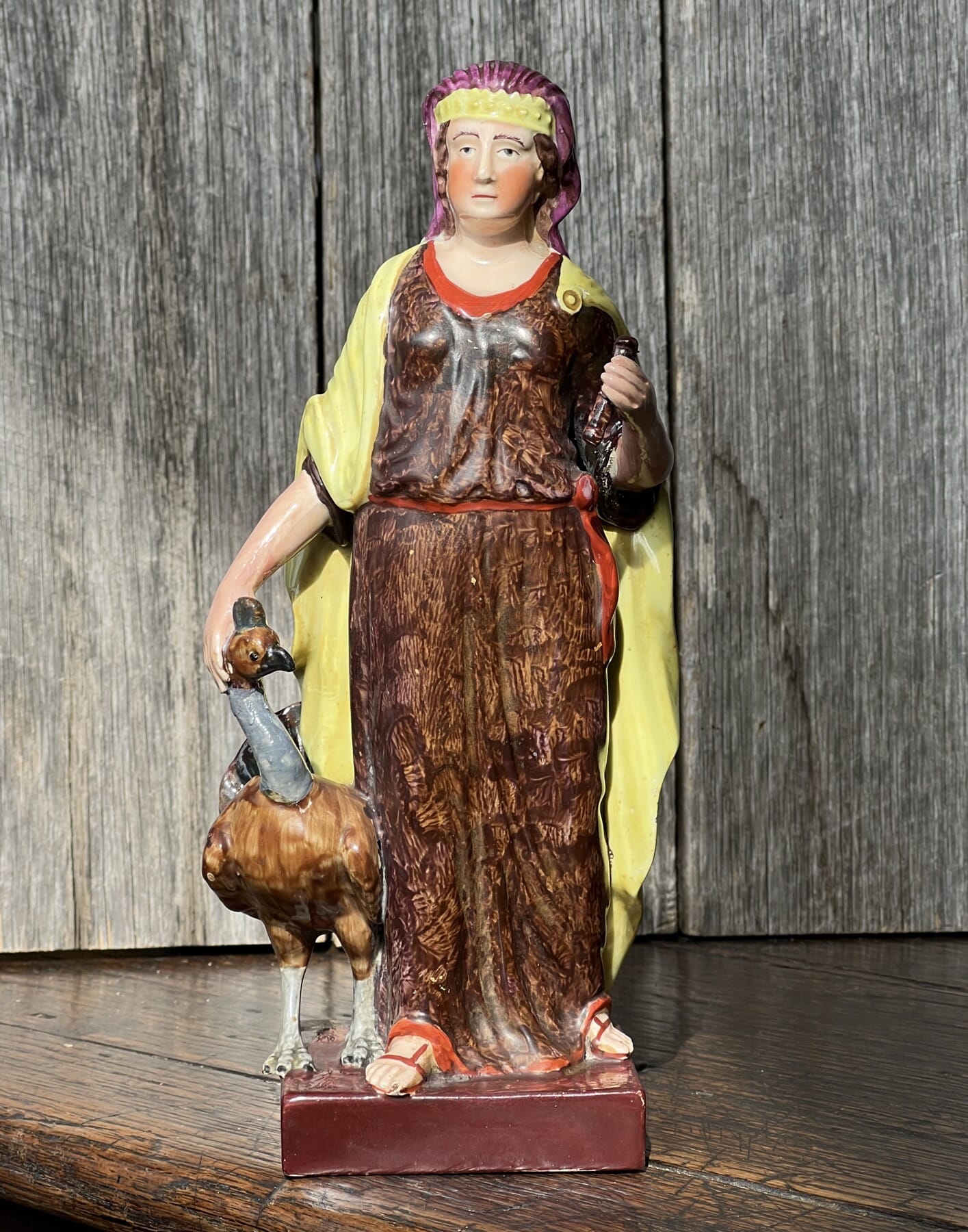
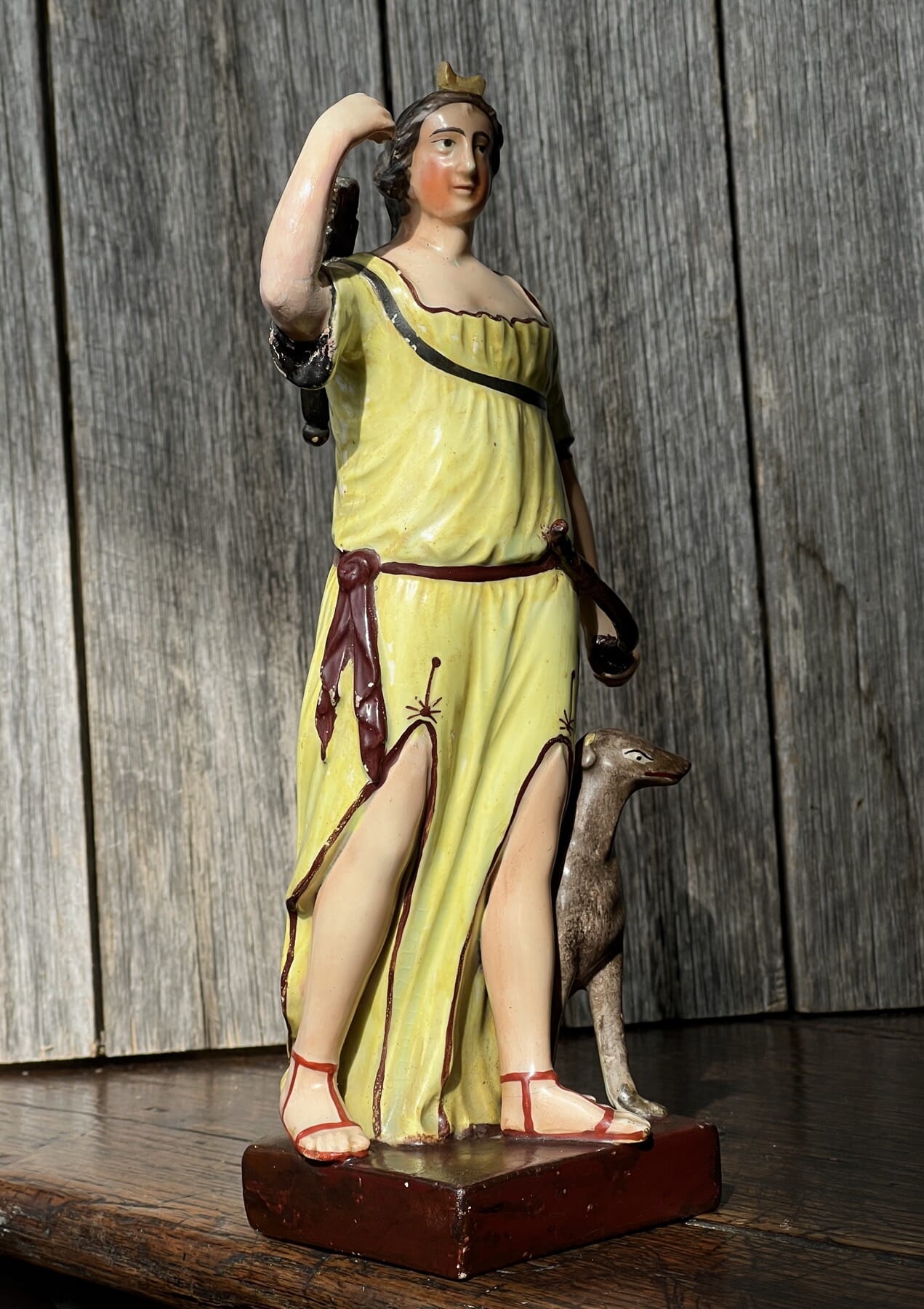
Accompanying it are two goddesses, Juno with her peacock and Diana with her dog – of a type known, rather unimaginatively, as the “Brown Base Group’ – until a maker can be identified.

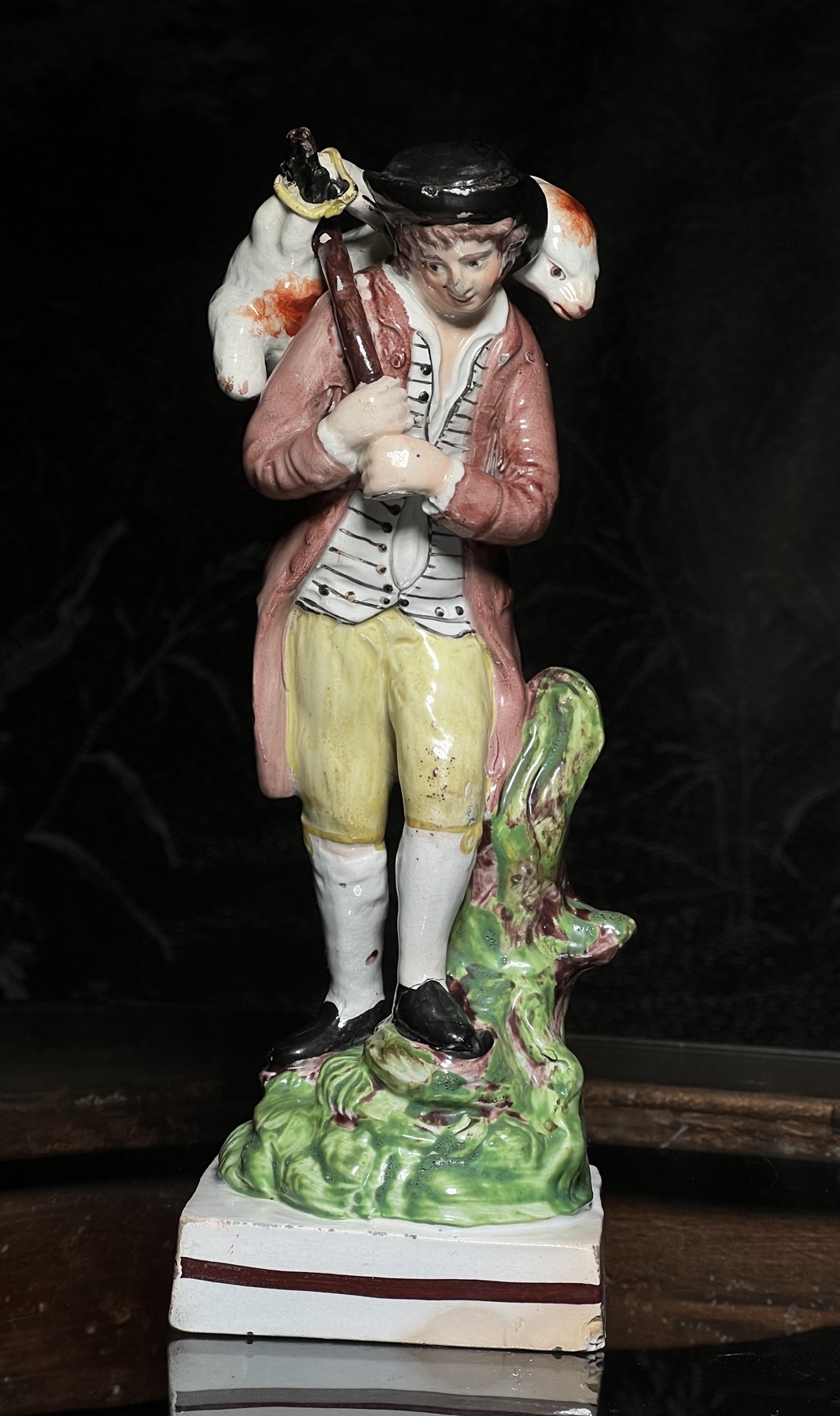
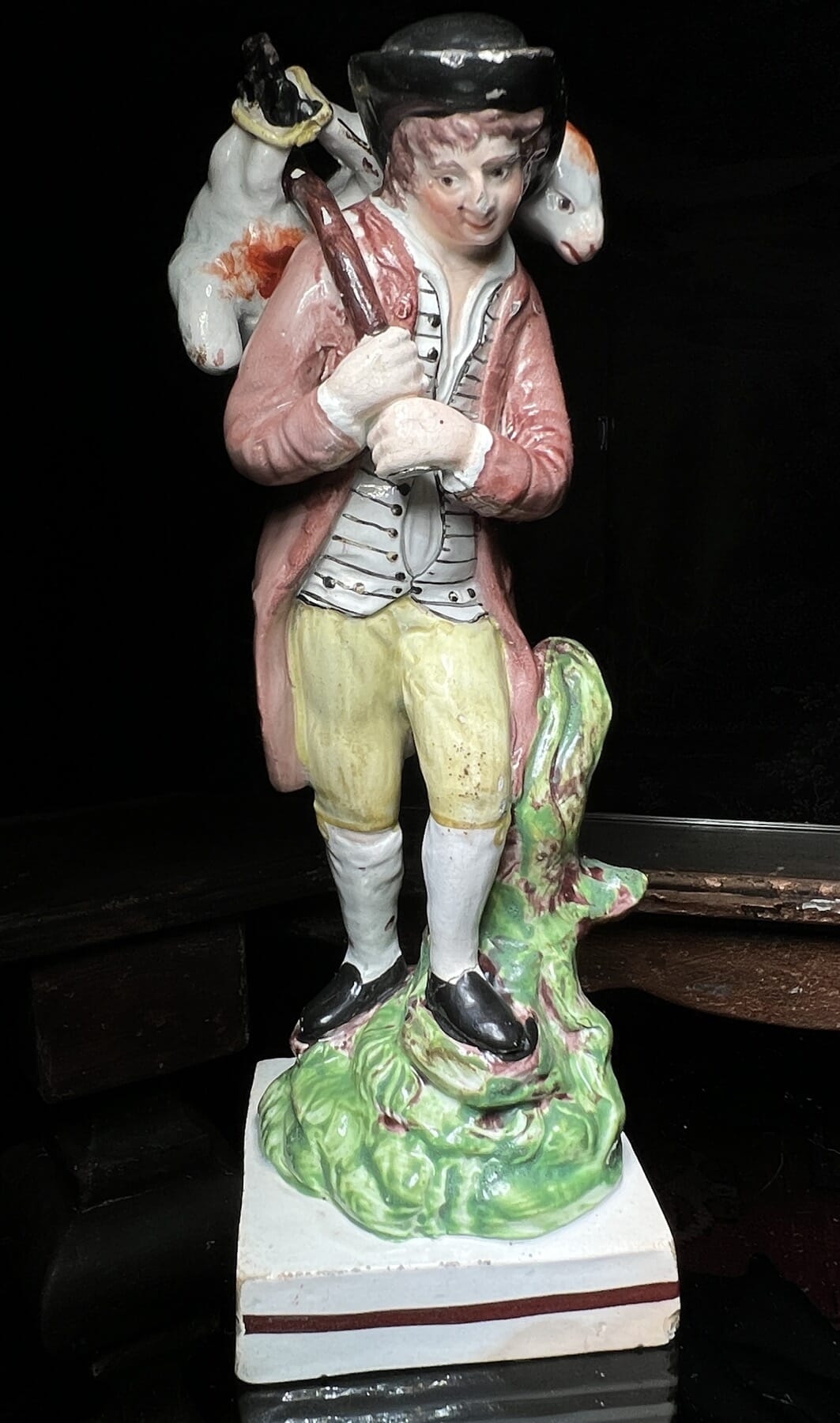
The Lost Sheep Returns, Woods Staffordshire figure c. 1790

The third is more identifiable, and yet also poses a question: it’s ‘The Lost Sheep Returns’, after the parable of the lost sheep. Standing on a square plinth base, it is one of the early detailed figures usually attributed to the Woods of Staffordshire. A ‘rule of thumb’ is that Ralph Wood examples have no brown line to the back panel of the plinth base, while Enoch goes all the way around. This example has a line all the way – and with some other small details, suggests a fresh attribution to Enoch.

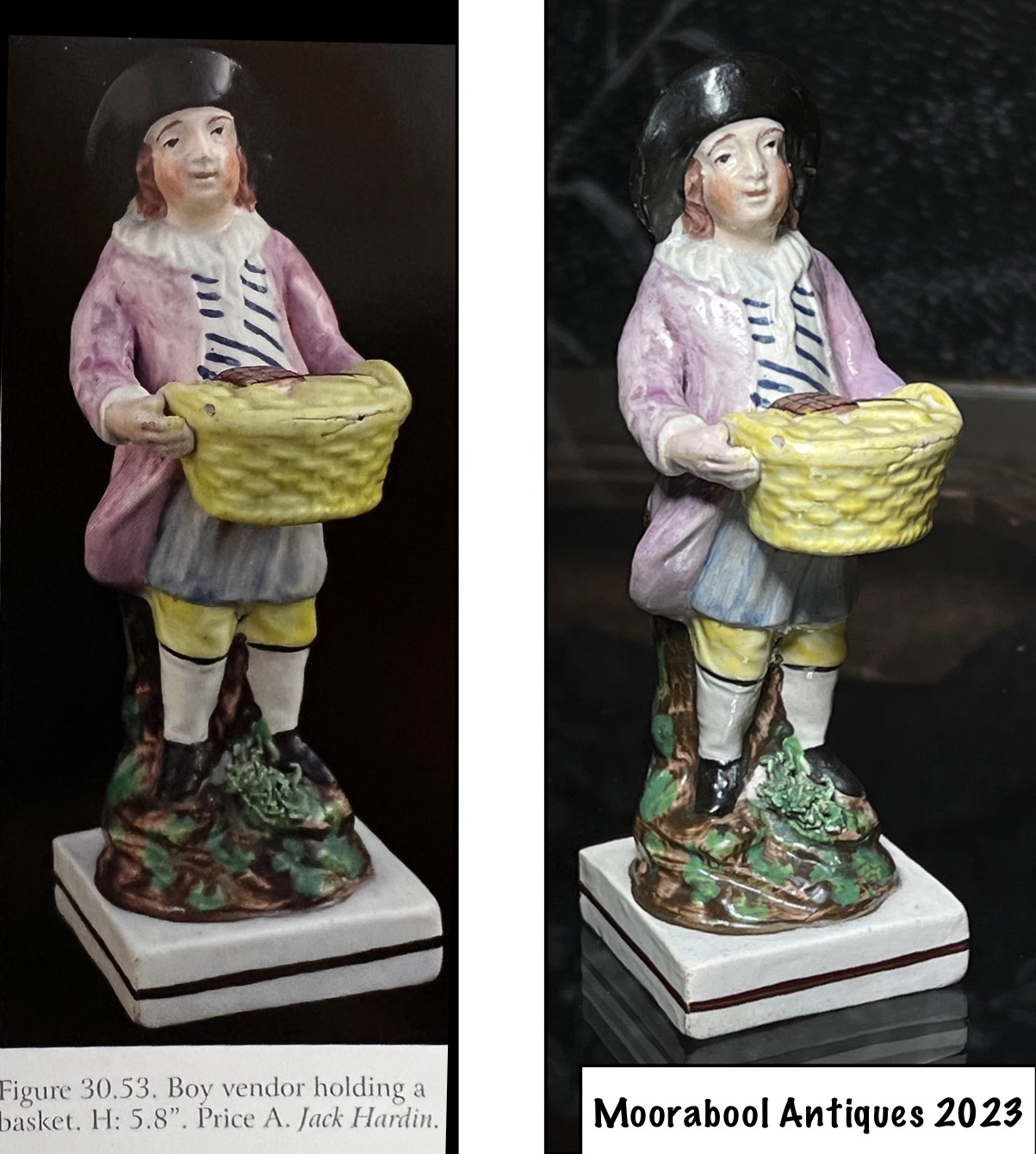
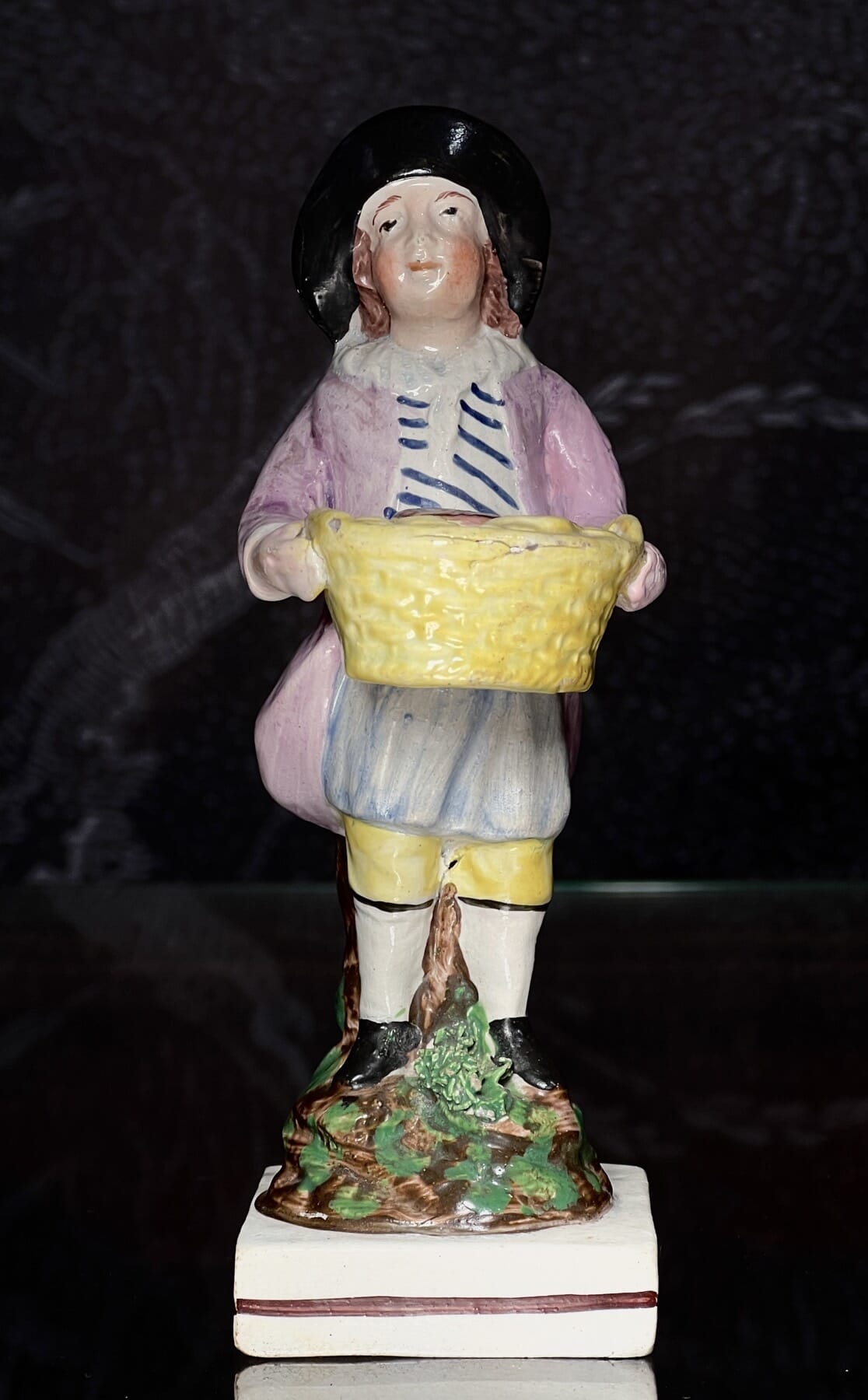
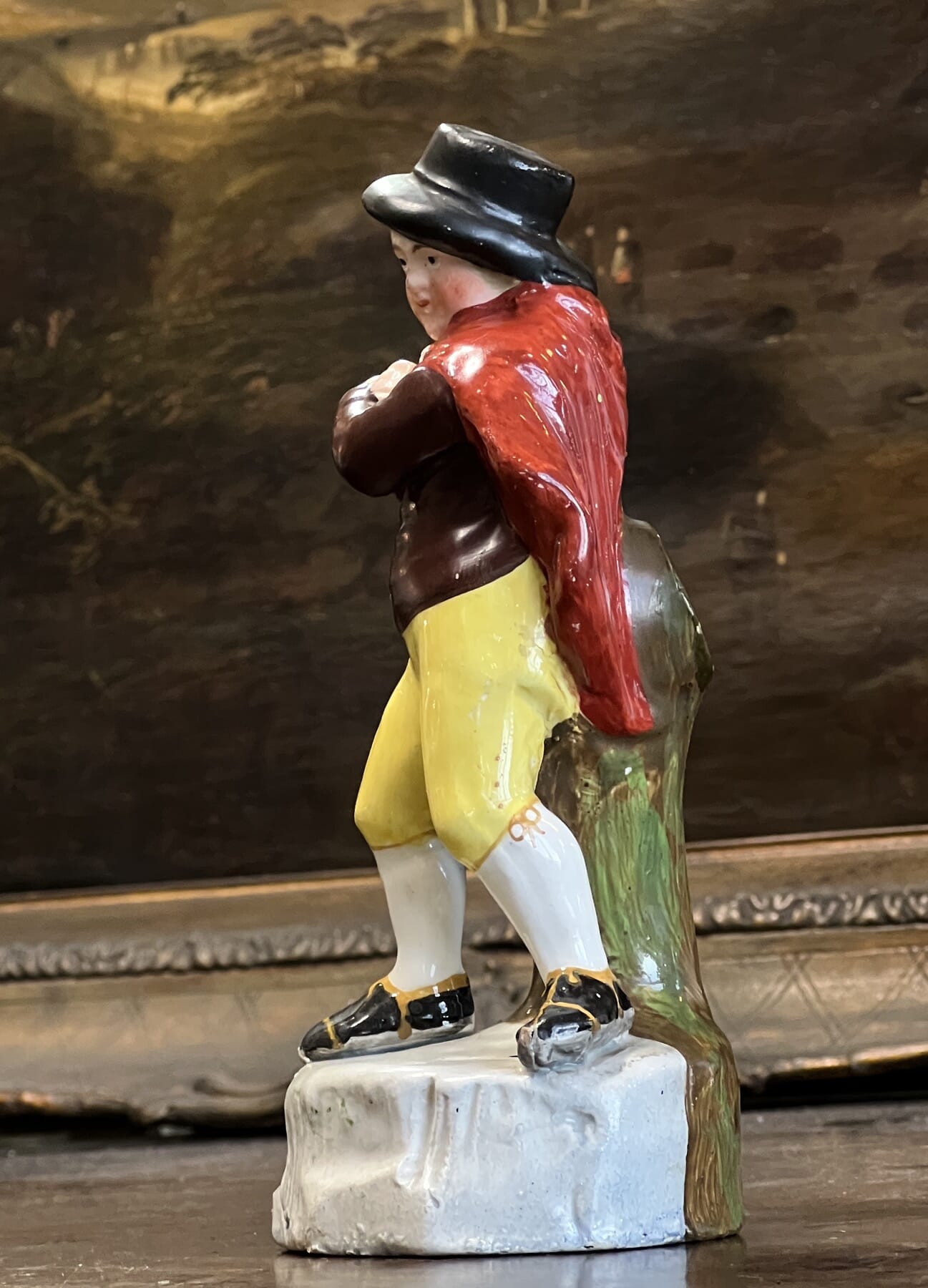
A smaller early Staffordshire figure just released is also of interest: we have our go-to resource for identification, Myrna Schkilne’s ‘Staffordshire Figure 1780-1840’. In volume 1, there’s an example of this figure, illustrated below …..

Spot the Difference! Early Staffordshire 'Sweetmeat seller'
Spot the Difference! Early Staffordshire ‘Sweetmeat seller’
(clue: there is no difference…. it’s the exact same figure!)

Yes, it’s the exact same figure! It’s noted in a collection in the 2013 publication, and somehow has made its way to Australia in the past 10 years…..

Asian fresh Stock

All Fresh Stock

Posted on

Fresh Stock Directory

Antique Chinese Ivory Children

Welcome to our Fresh Stock Directory.

Everyone’s looking for something different – so we have divided it up into areas of interest: choose a ‘Gallery’ below to browse the latest items of that type to be uploaded.


Latest Fresh Stock Release Blogs

  • Fresh Stock at Moorabool
    Welcome to our latest Fresh Stock release. There’s quite a range of Fresh items to browse…. Here’s our new way of browsing: enjoy!
  • Grace Darling, the Heroine of the Sea – in Staffordshire!
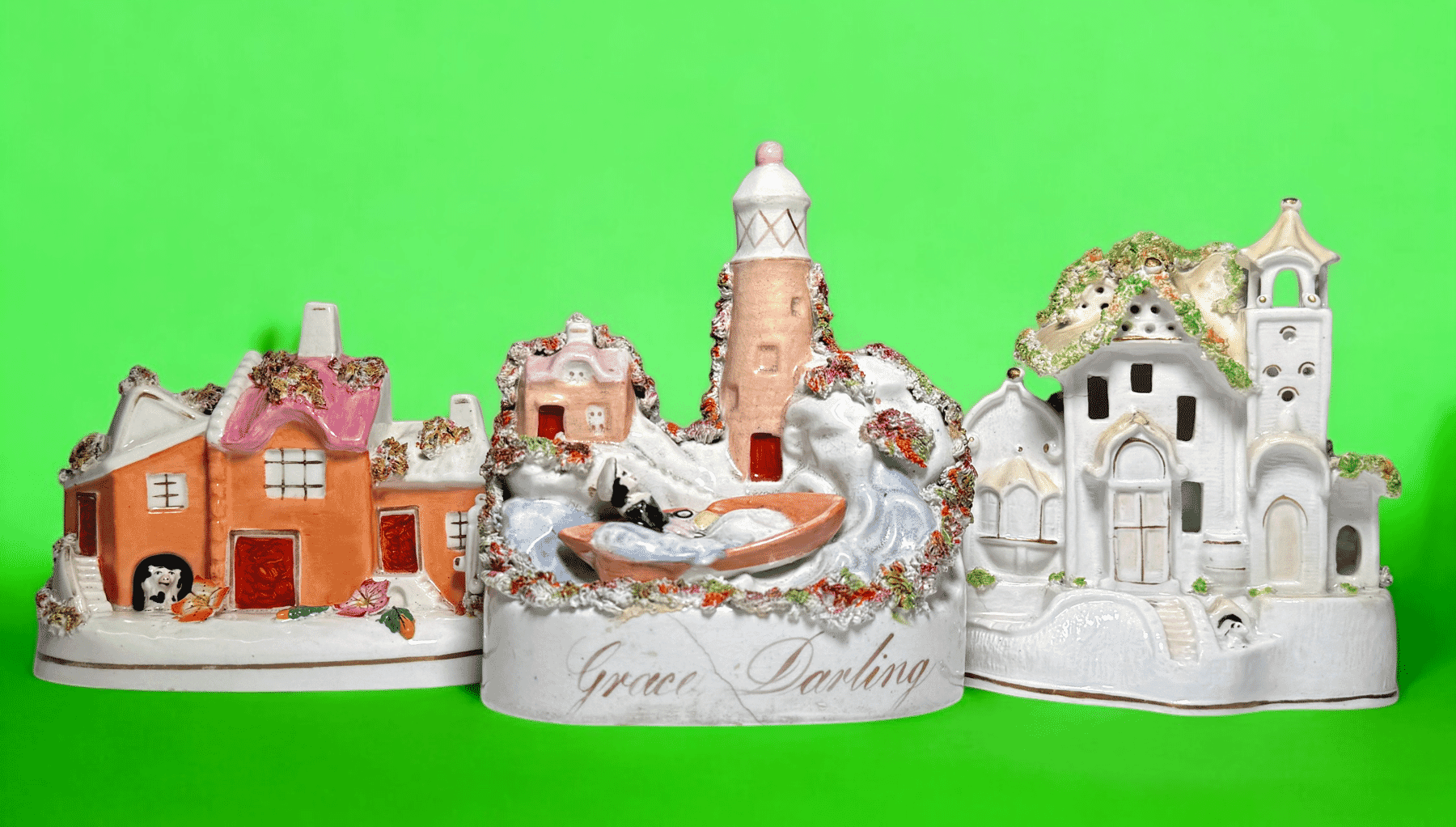
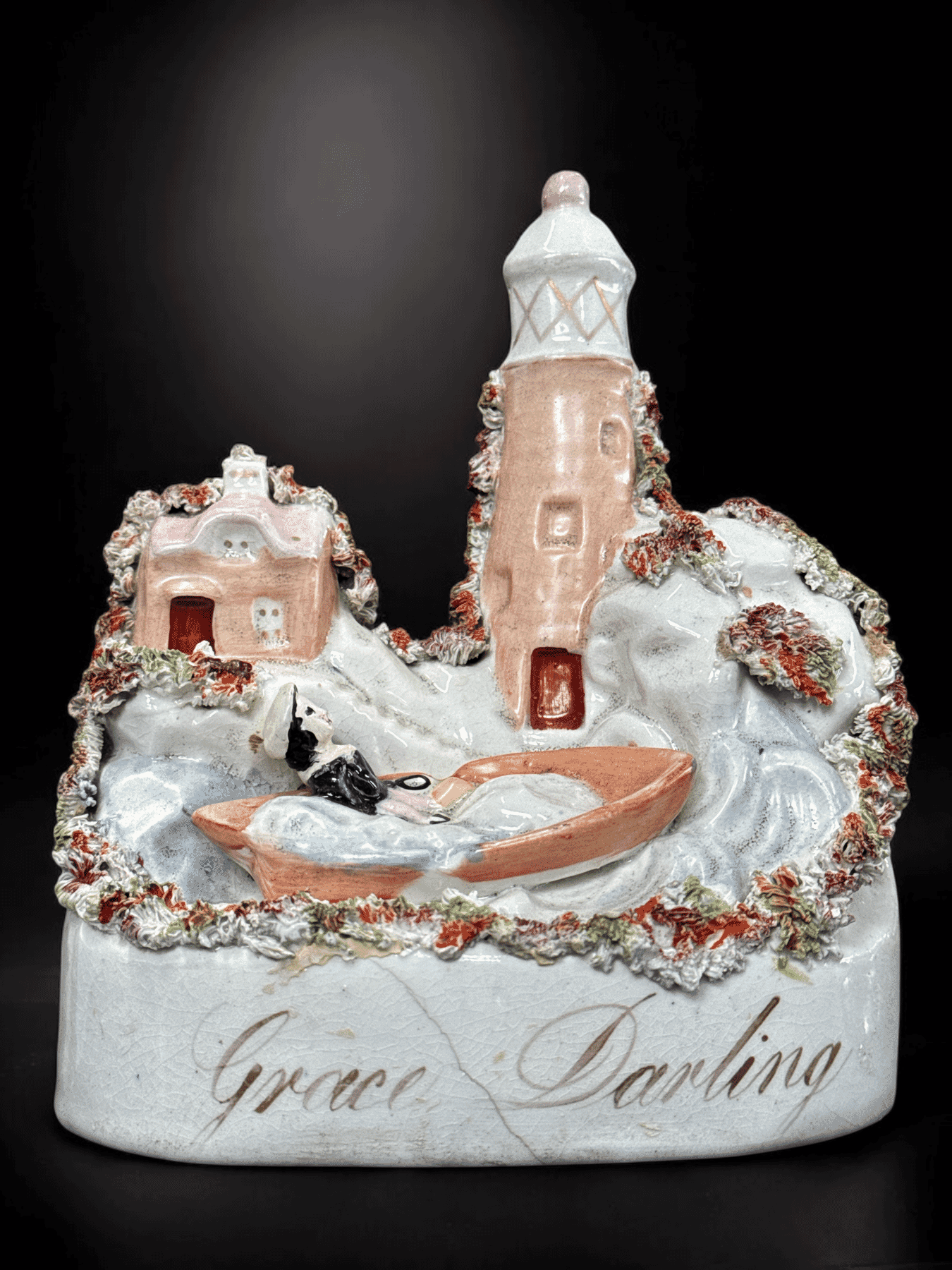
    Grace Darling, the heroic lighthouse-keeper’s daughter is the subject of this rare Staffordshire figure fresh to Moorabool’s stock. But something is very peculiar with this example…. making it possibly unique!
  • An Asian-themed Fresh Stock
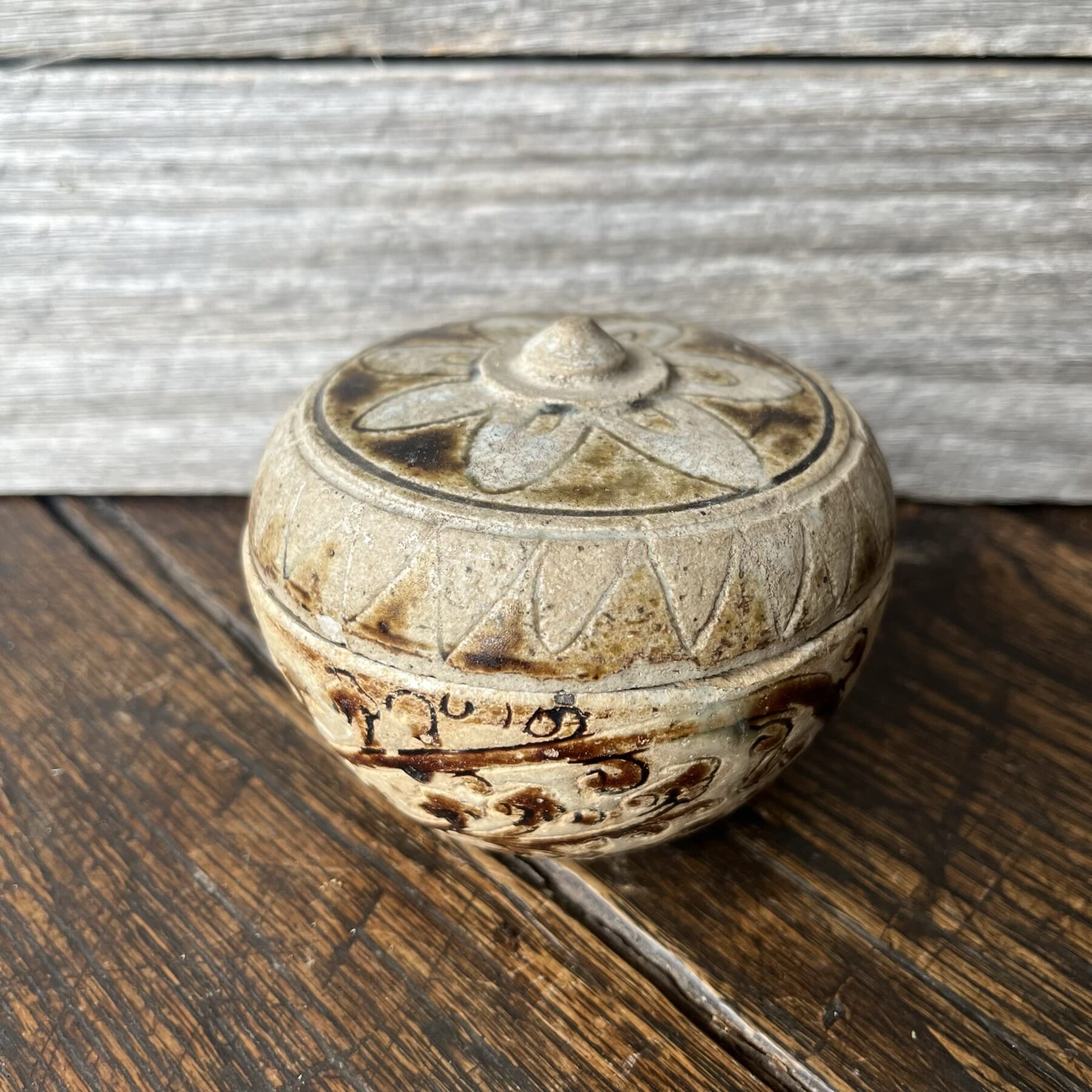
    Fresh Stock with an Asian Theme – a good quantity of items for you to browse from China, Japan, Burma, Thailand, and Sri Lanka….
  • Fresh stock October 7th
    Fresh Stock uploaded to moorabool.com . You’ll find a fine and varied selection, from Georgian Furniture to fine 18th century Porcelain, Australian Pottery, a host of Candlesticks, and interesting Artworks
  • Premium Fresh Stock
    Welcome to our selection of ‘the Best’ for the end of 2024. Some stunning rarities have come to us recently, with many local high-quality collections being dispersed. Enjoy your browse through the following Premium items – with more items being prepared for the near future. Quaker Pegg – “Balm-leaved Archangel” c. 1796 From the English Derby factory comes a piece… Read more: Premium Fresh Stock
  • Derby ‘Adolescent Seasons’
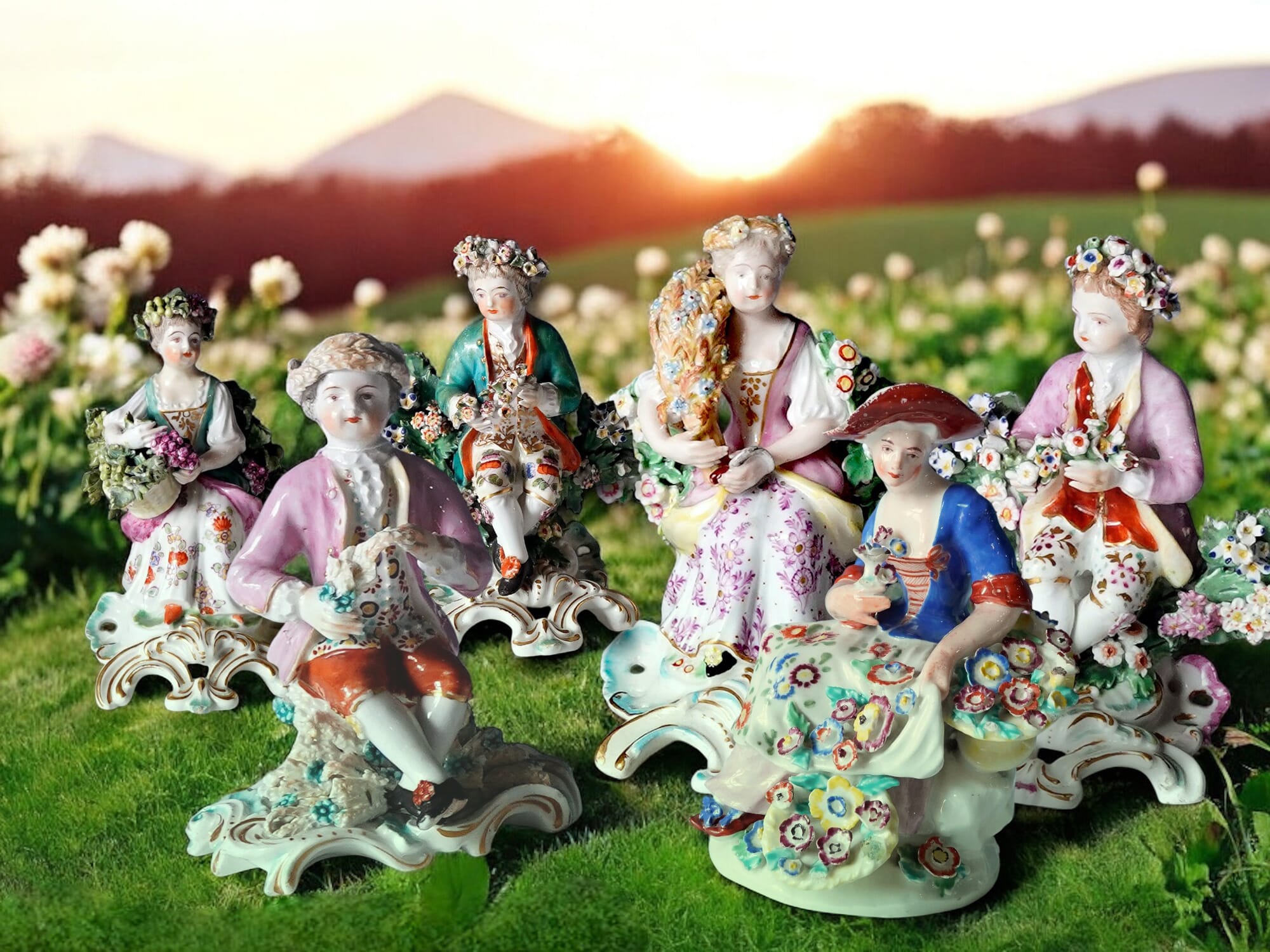
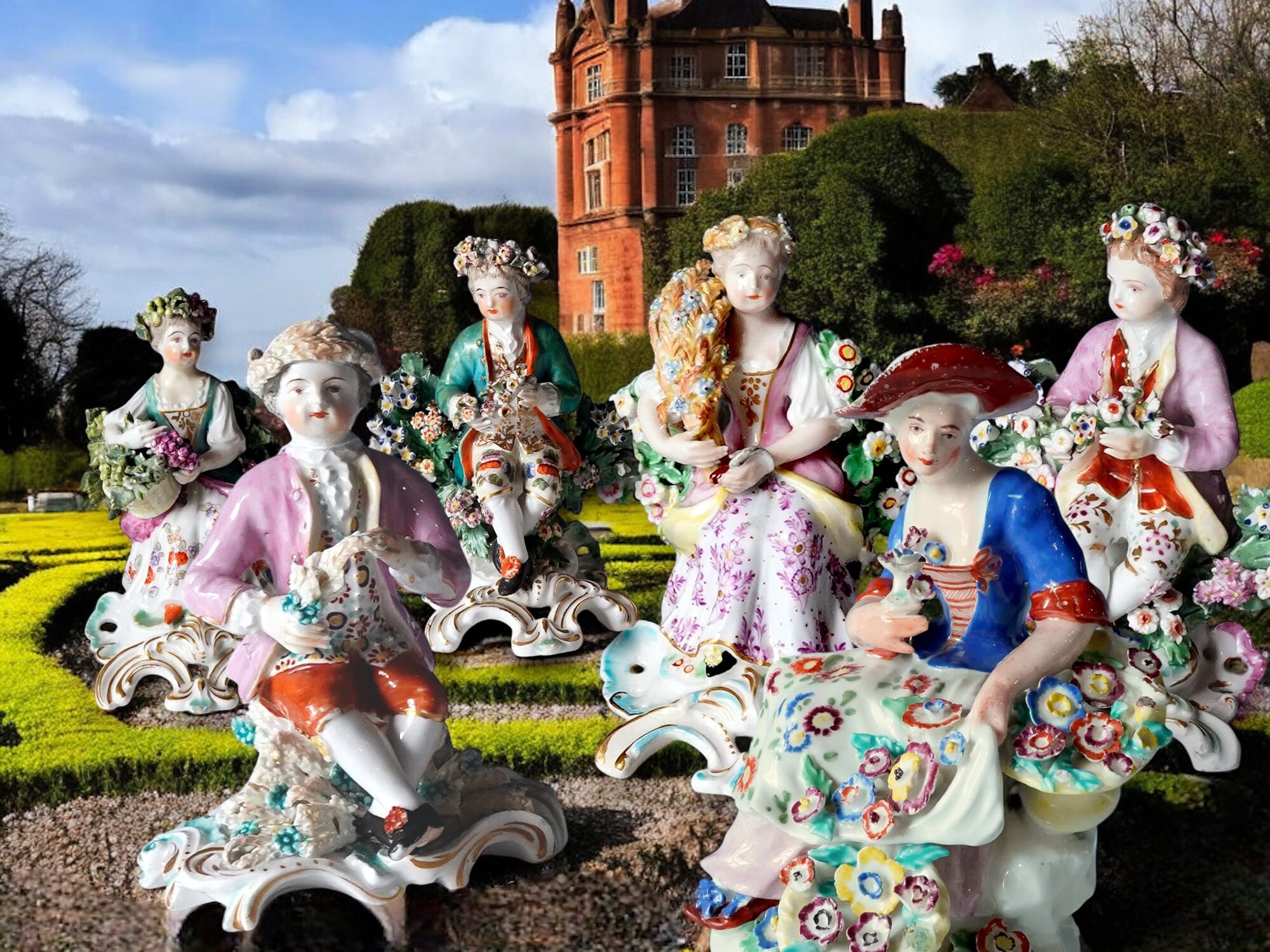
    Moorabool has a fascinating group of Derby ‘Seasons’, modelled as children with their respective attributes. They make for an interesting study, and show the development of the classic rococo-based Derby figures of the latter 18th century.
  • Arts & Crafts Collection
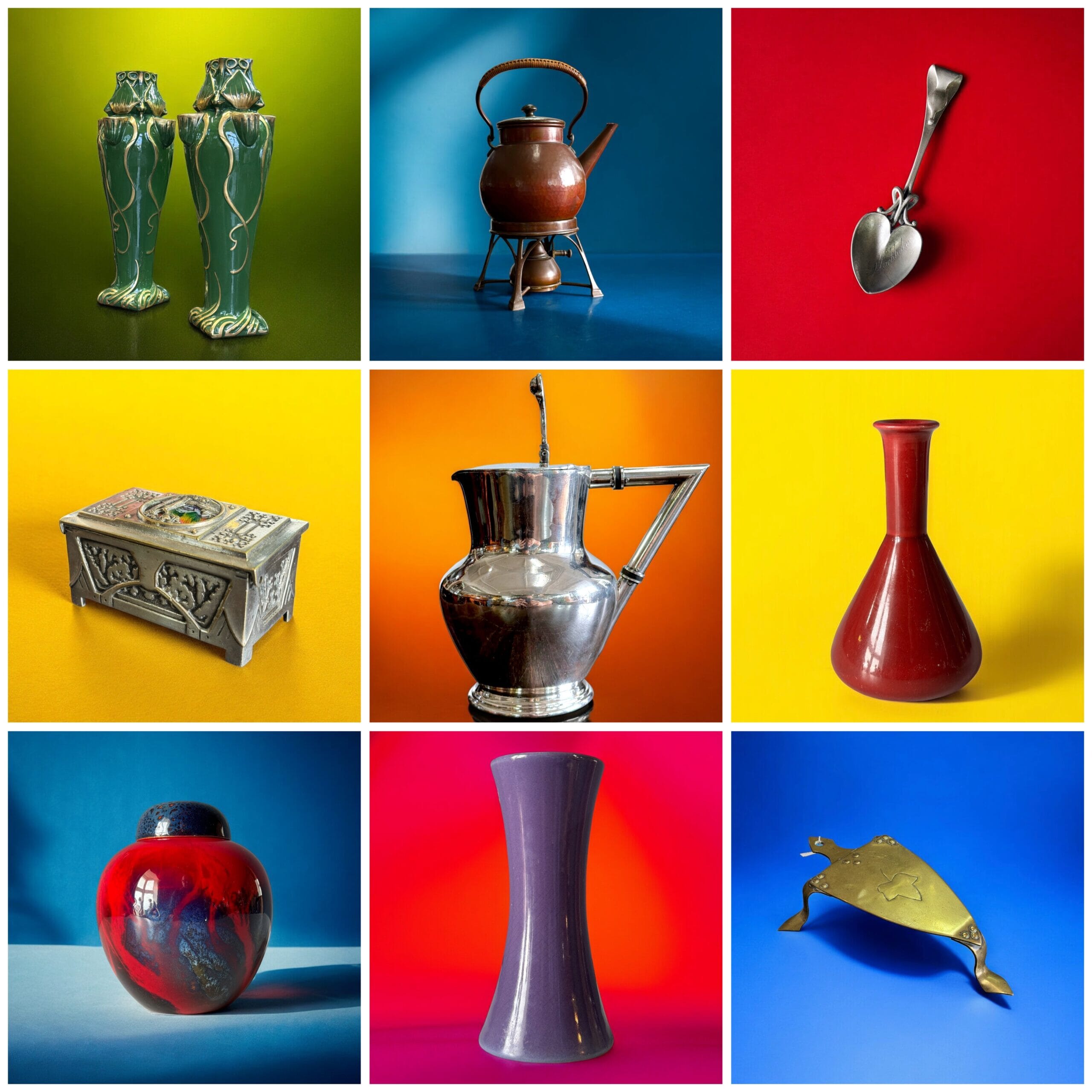
    A fine selection of ‘Arts & Crafts’ has just been posted on Moorabool.com . It’s an interesting survey of the late 19th- early 20th century designs that were a reaction against the overly ornate – and predictable – designs of Victorian England. Often borrowing & intermingled, the French Art Nouveau aesthetic blended with the German/Austrian Jugendstil (youthful-style) and even had a major impact on Australian products – although it did take some time to reach us ‘down-under’ !
  • A Staffordshire Fresh Stock
    Welcome to our latest Fresh Stock. This one is a ‘Staffordshire Special’, with some early figures dating to the late 18th – early 19th century – as well as a good selection of classic Victorian pieces. There’s a couple of Highwaymen, one titled ‘Dick Turpin’, the other facing horseman traditionally being his companion Gentleman-Robber, ‘Tom King’ (actually Mathew, not Tom….)… Read more: A Staffordshire Fresh Stock
  • Bookends
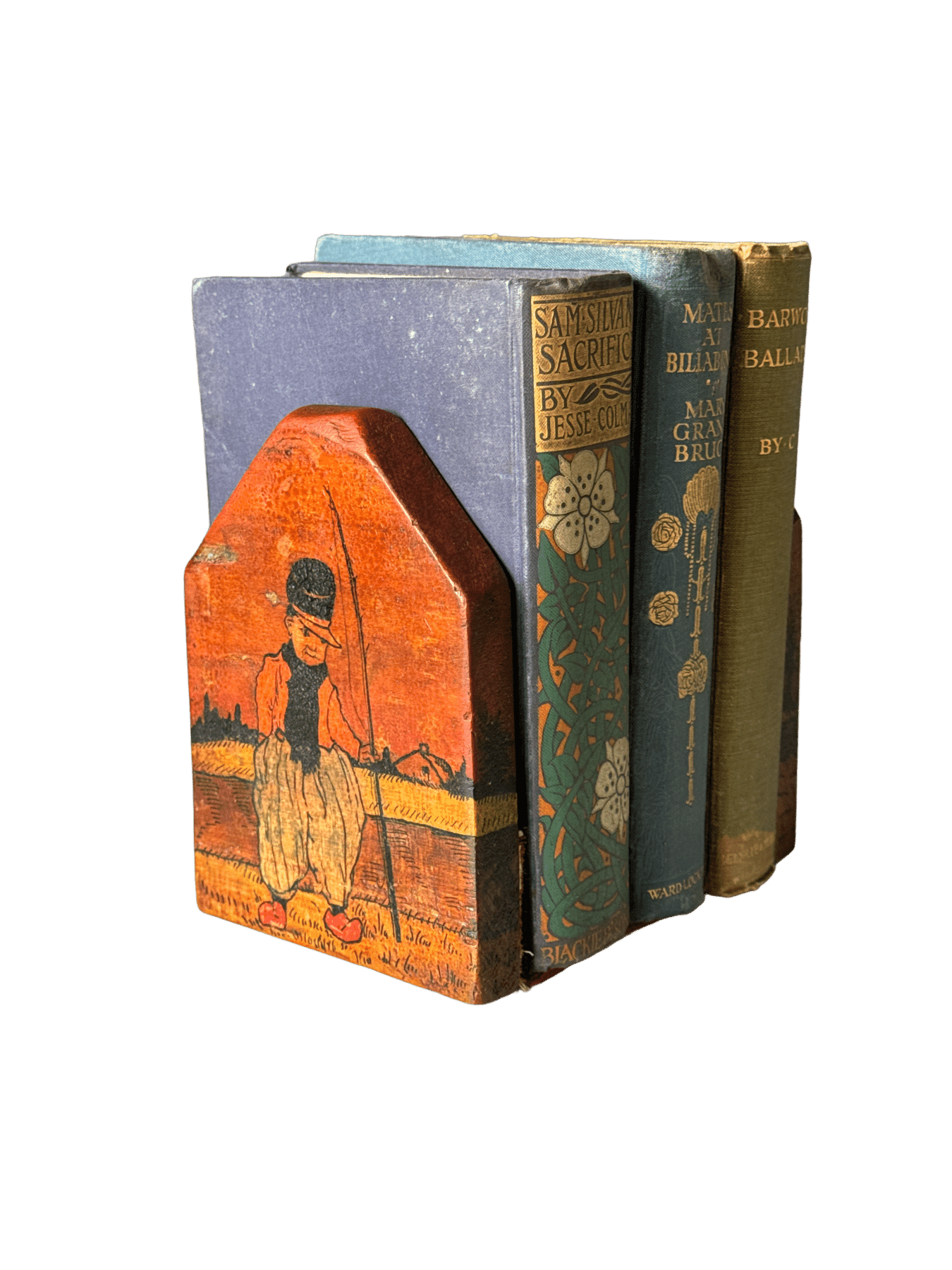
    Always handy, and don’t they dress up a bookshelf?
  • 18th Century English Earthenwares
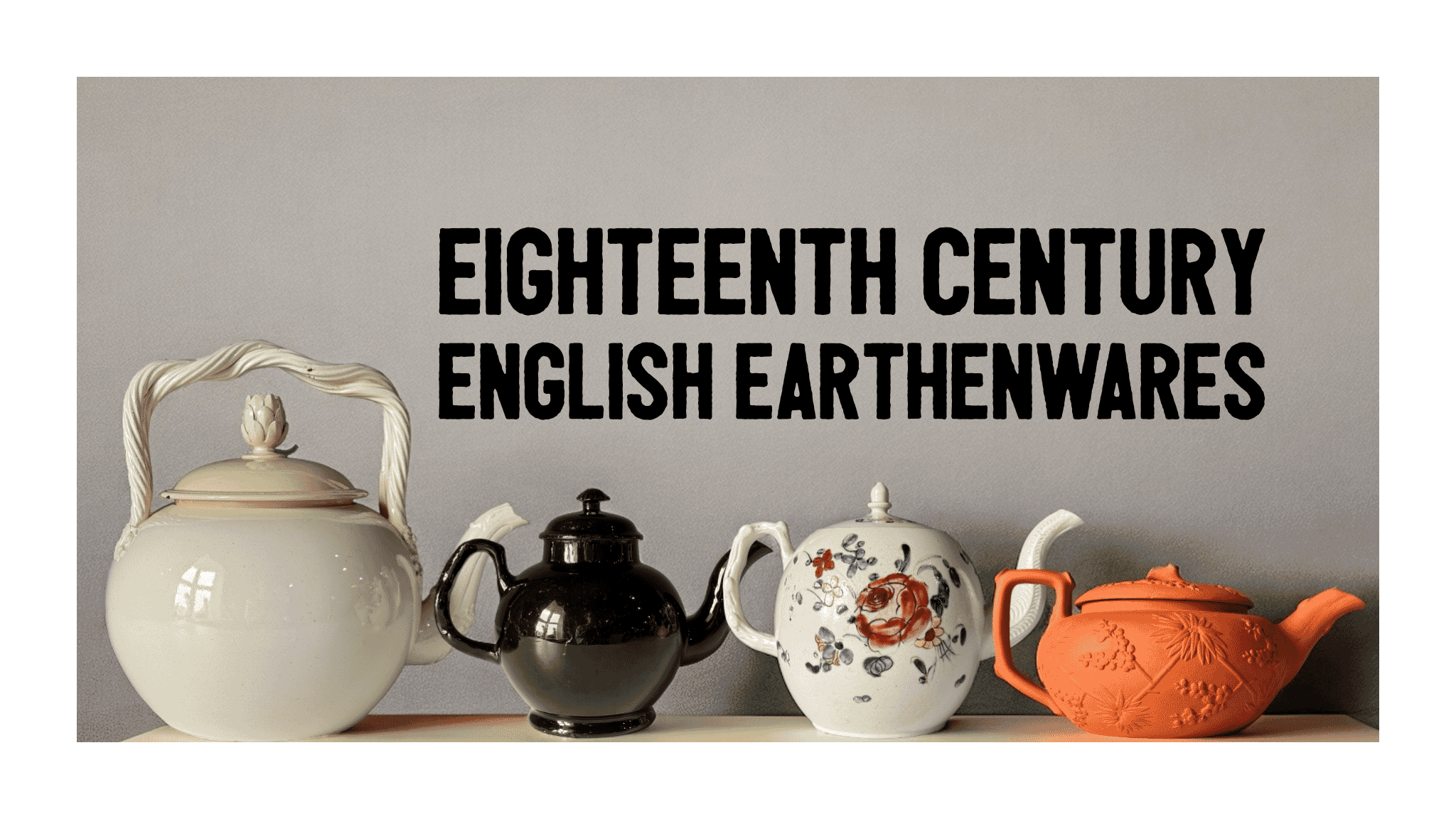
    Creamware Creamware is the term for an English earthenware body with a definite ‘cream’ tone, popular in the latter half of the 18th century and replicated across Europe. It emerged from the experimentation of Staffordshire potters seeking a local alternative to expensive Chinese porcelain around 1750. Their innovation yielded a refined cream to white earthenware with a lustrous clear lead… Read more: 18th Century English Earthenwares
Moorabool Heading
Posted on

Fresh Stock – Stunning Glass, Derby Figures, Chamberlains Deskset, Asian, and more…

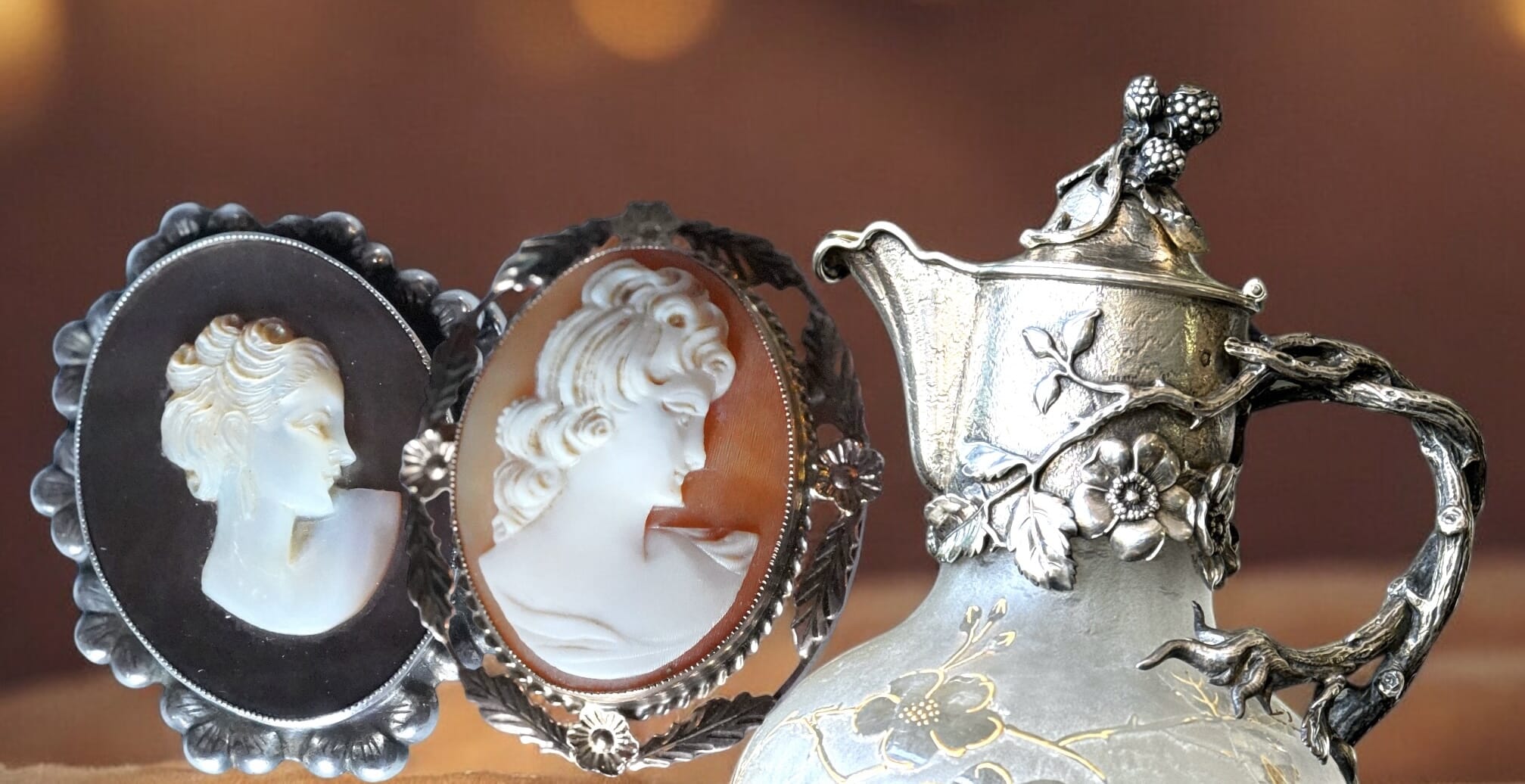
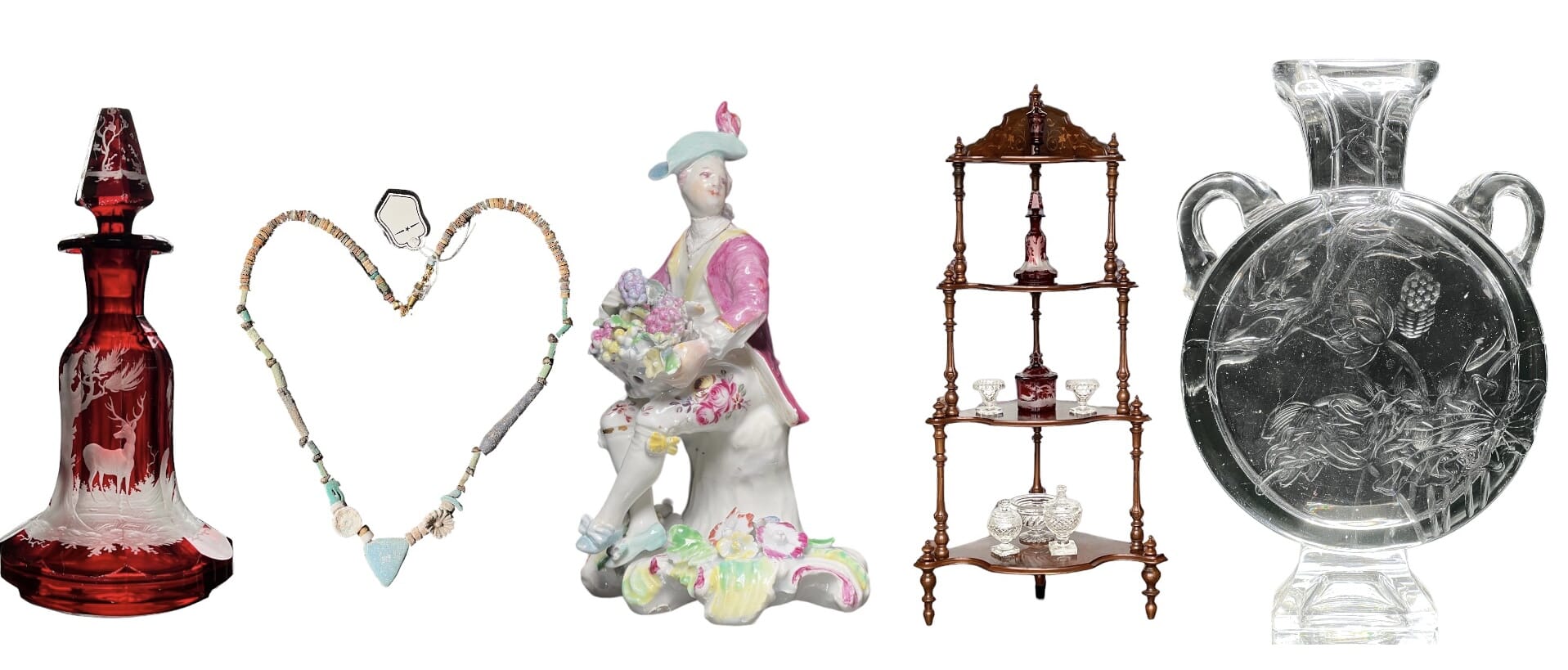
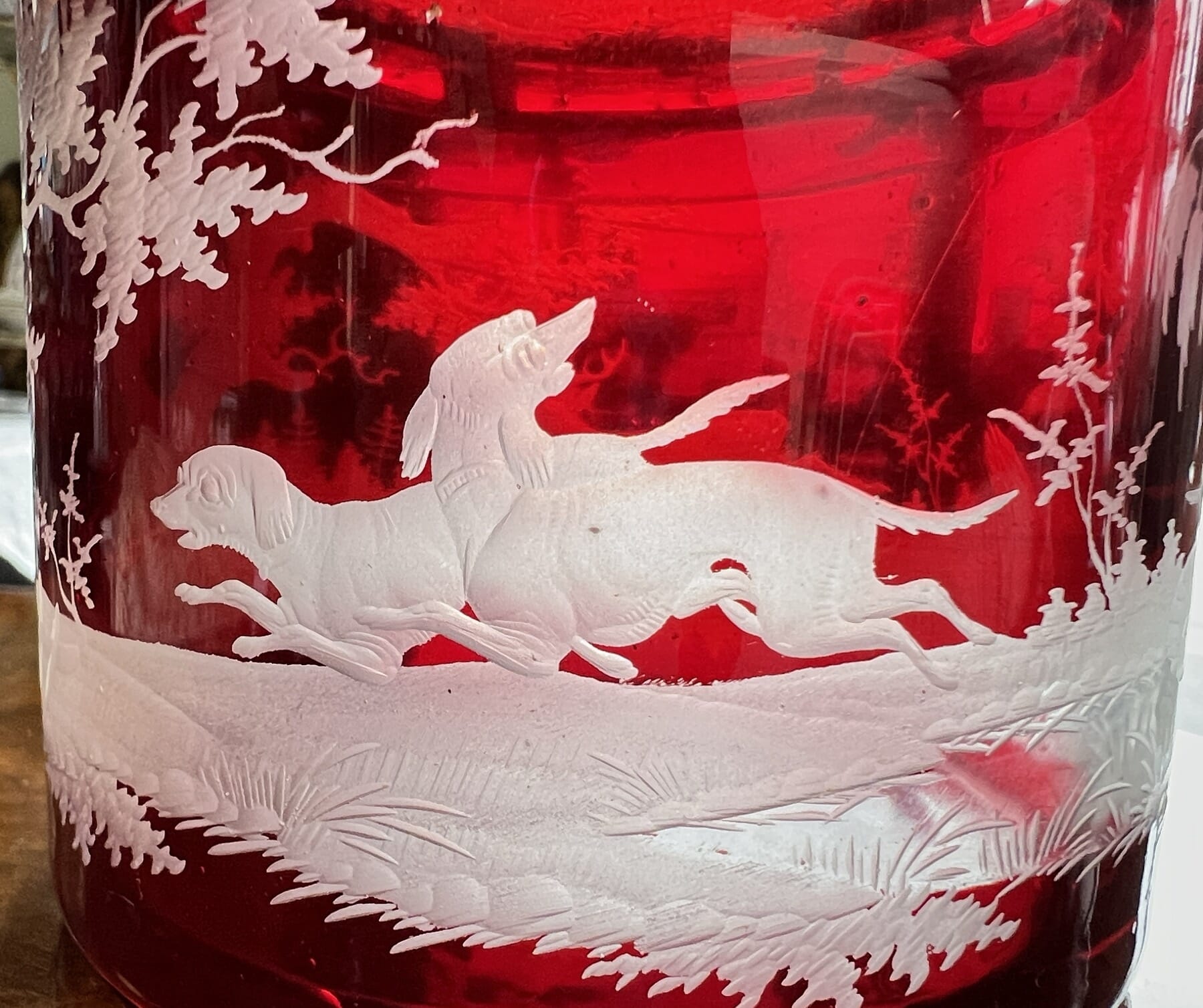
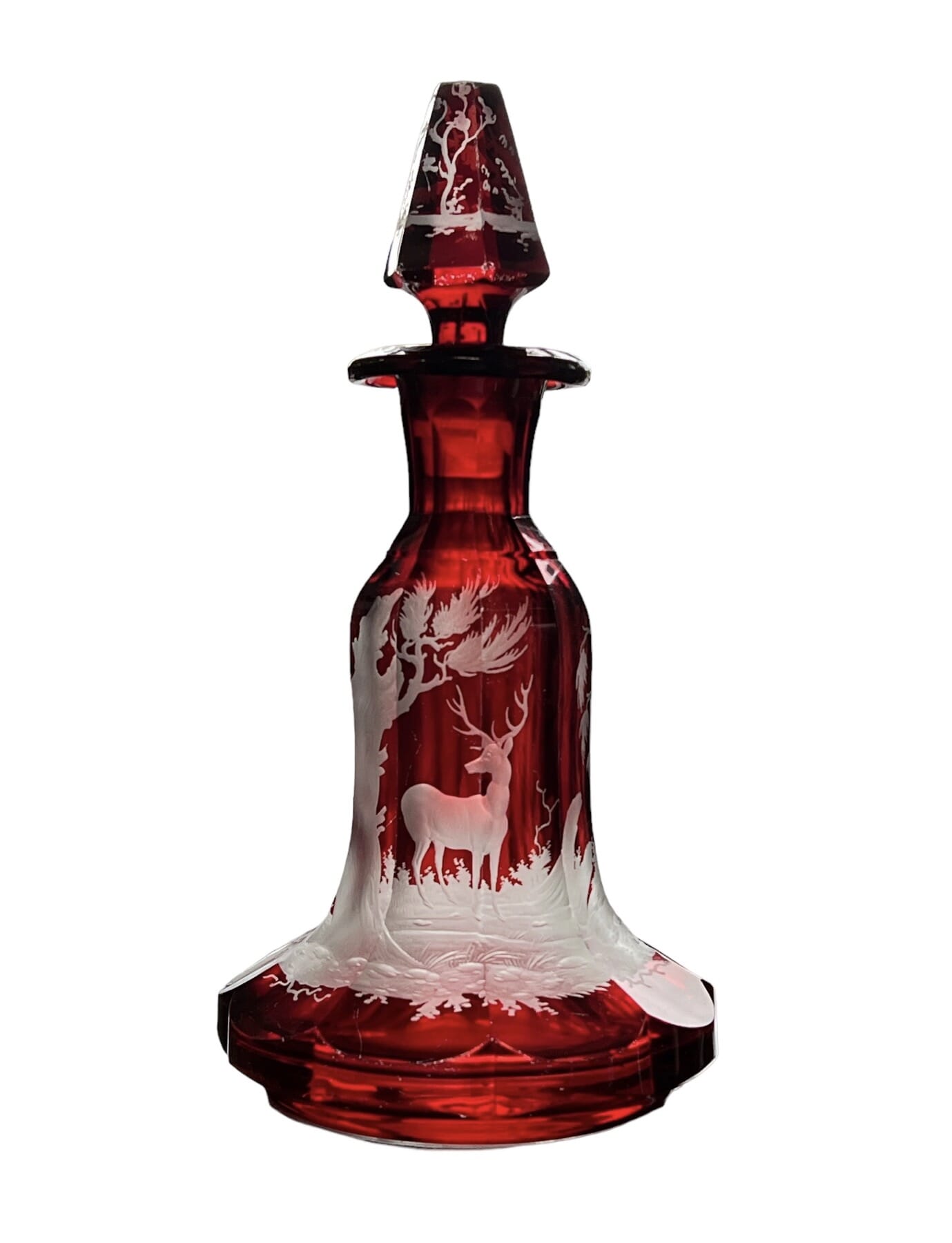
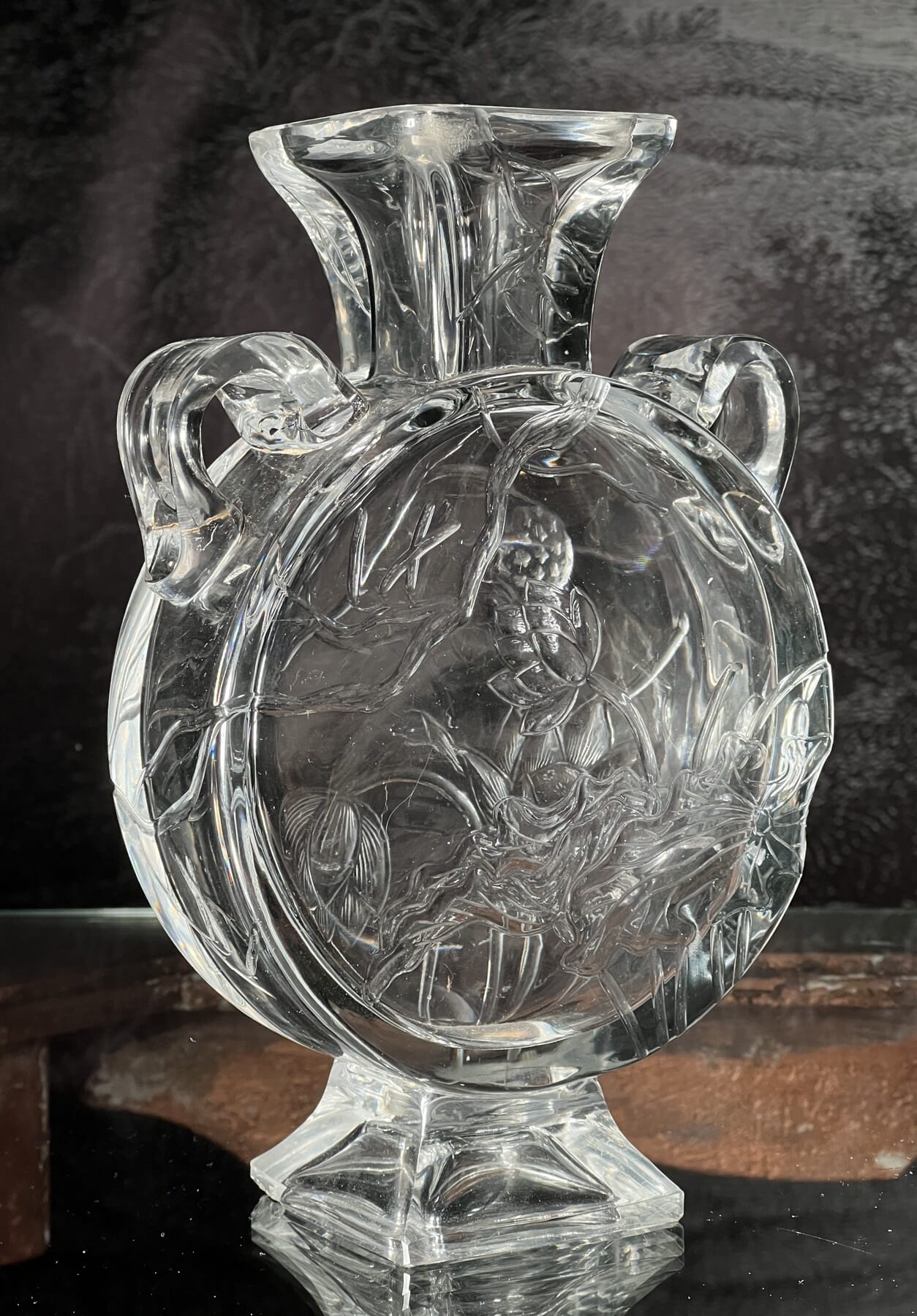
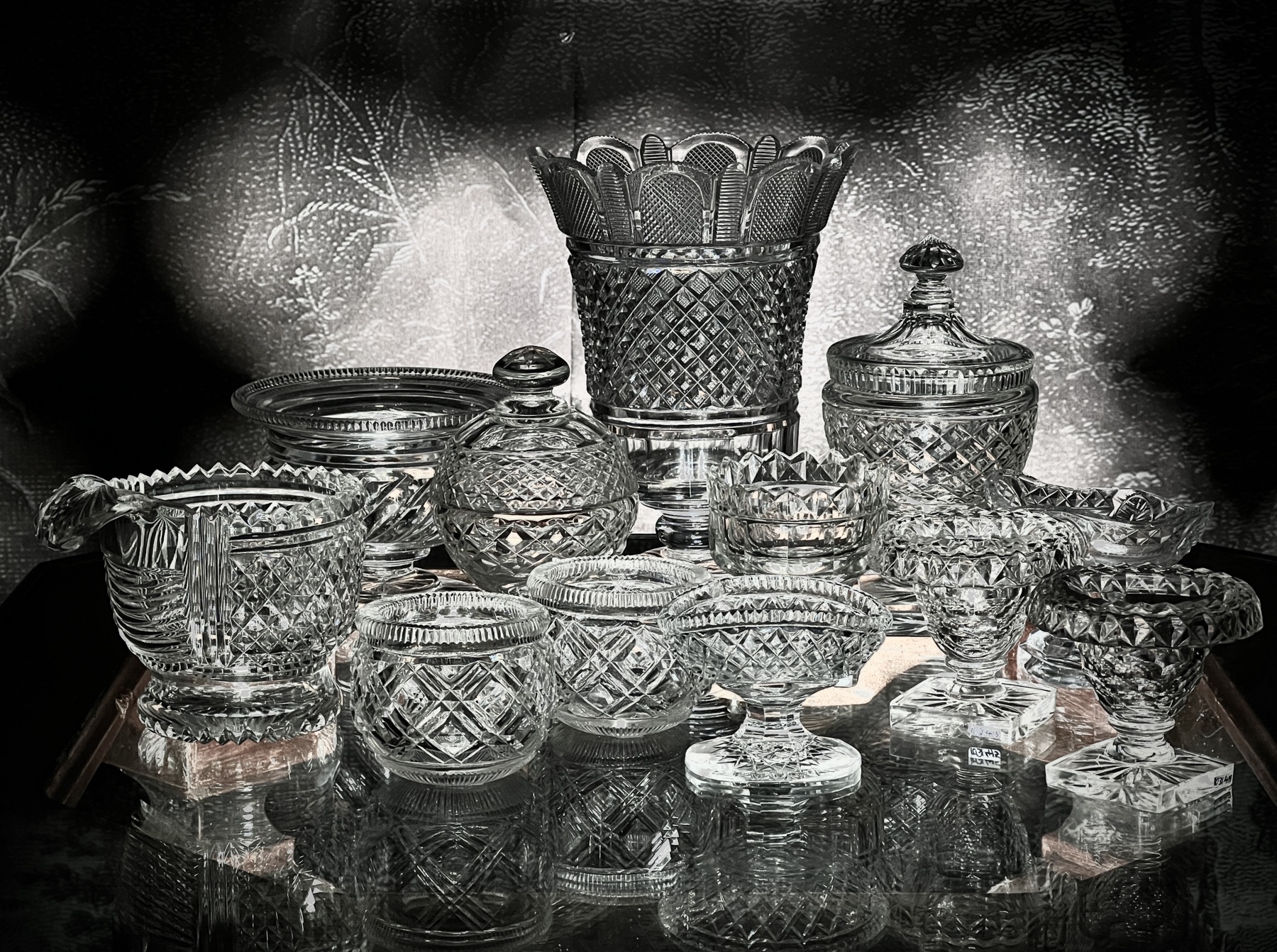
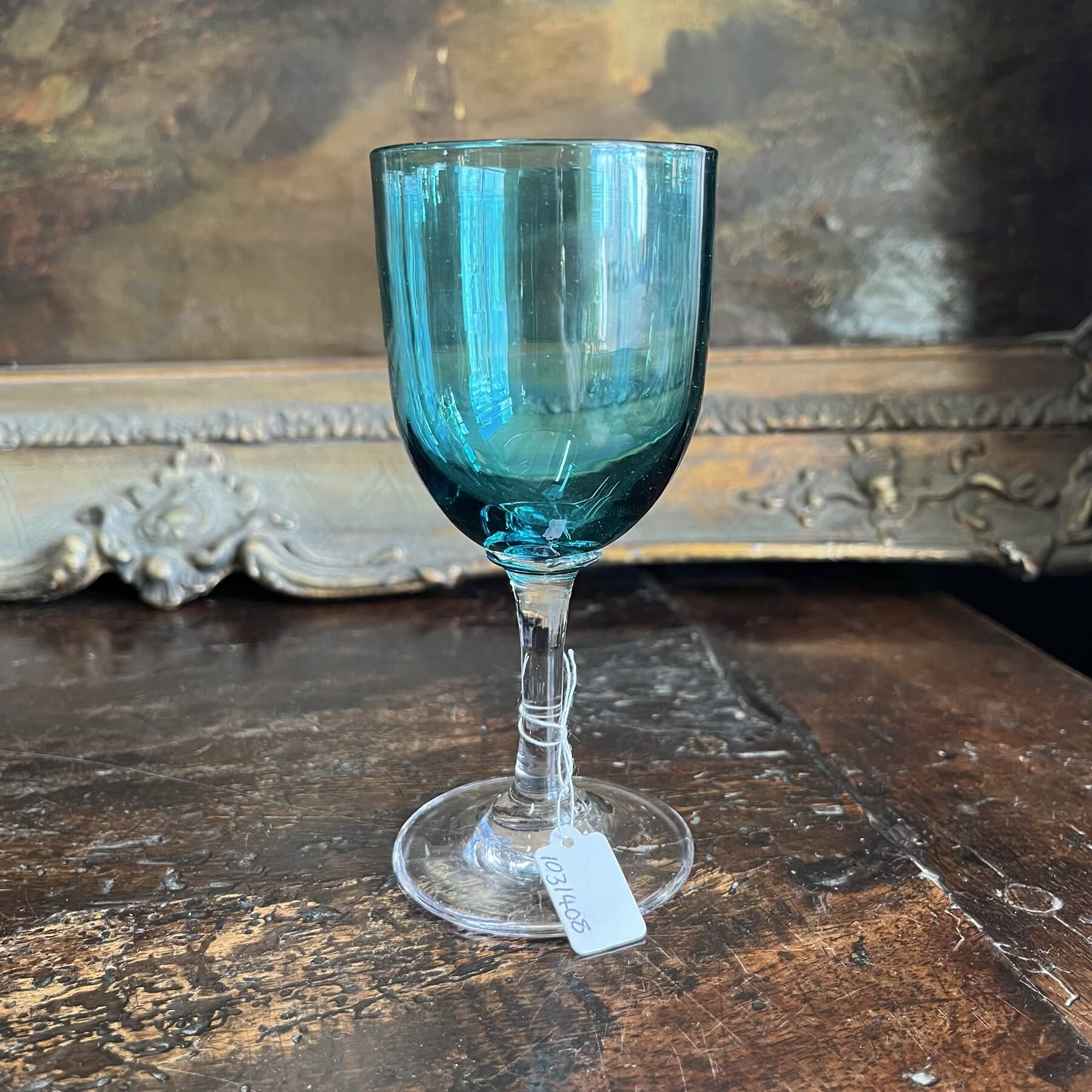
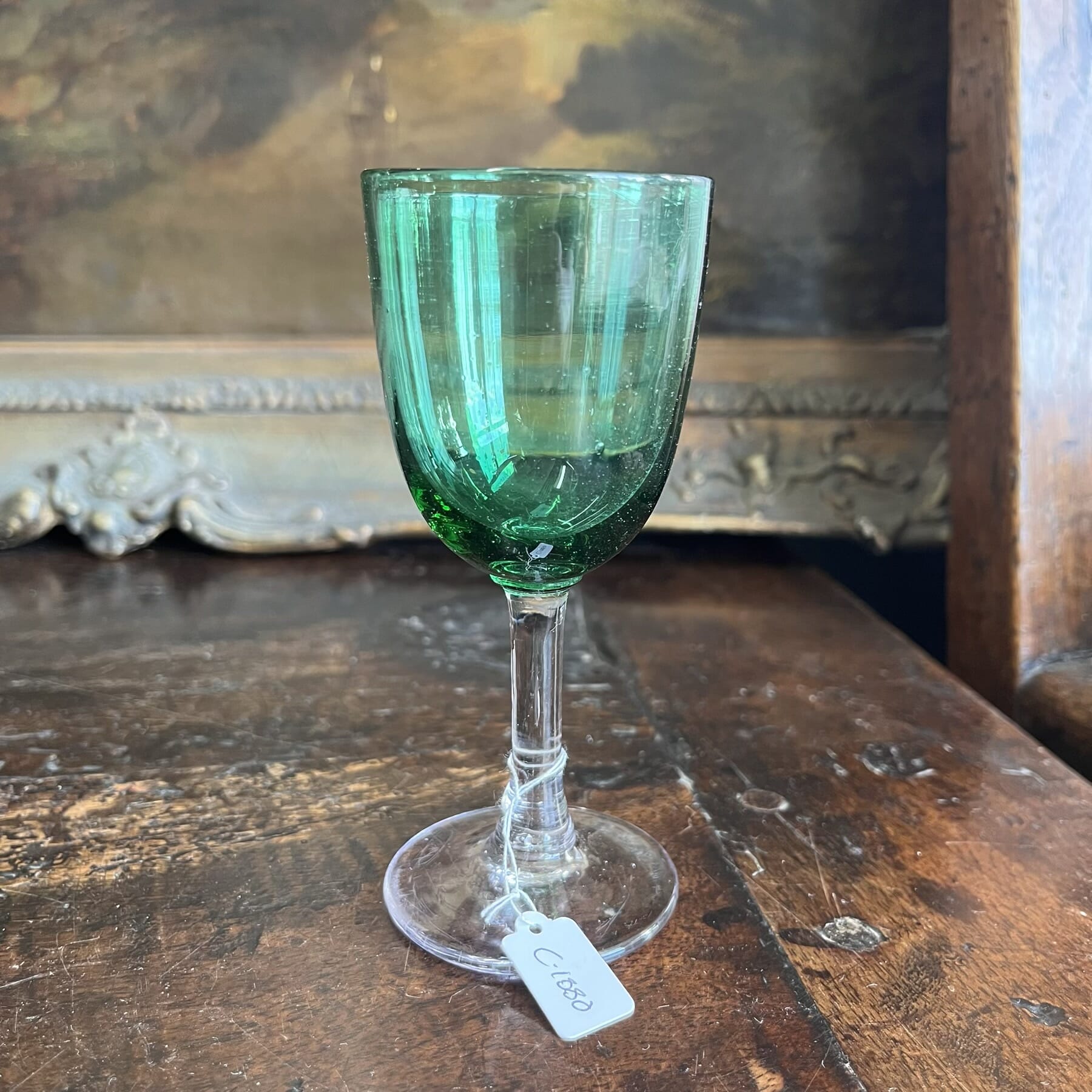
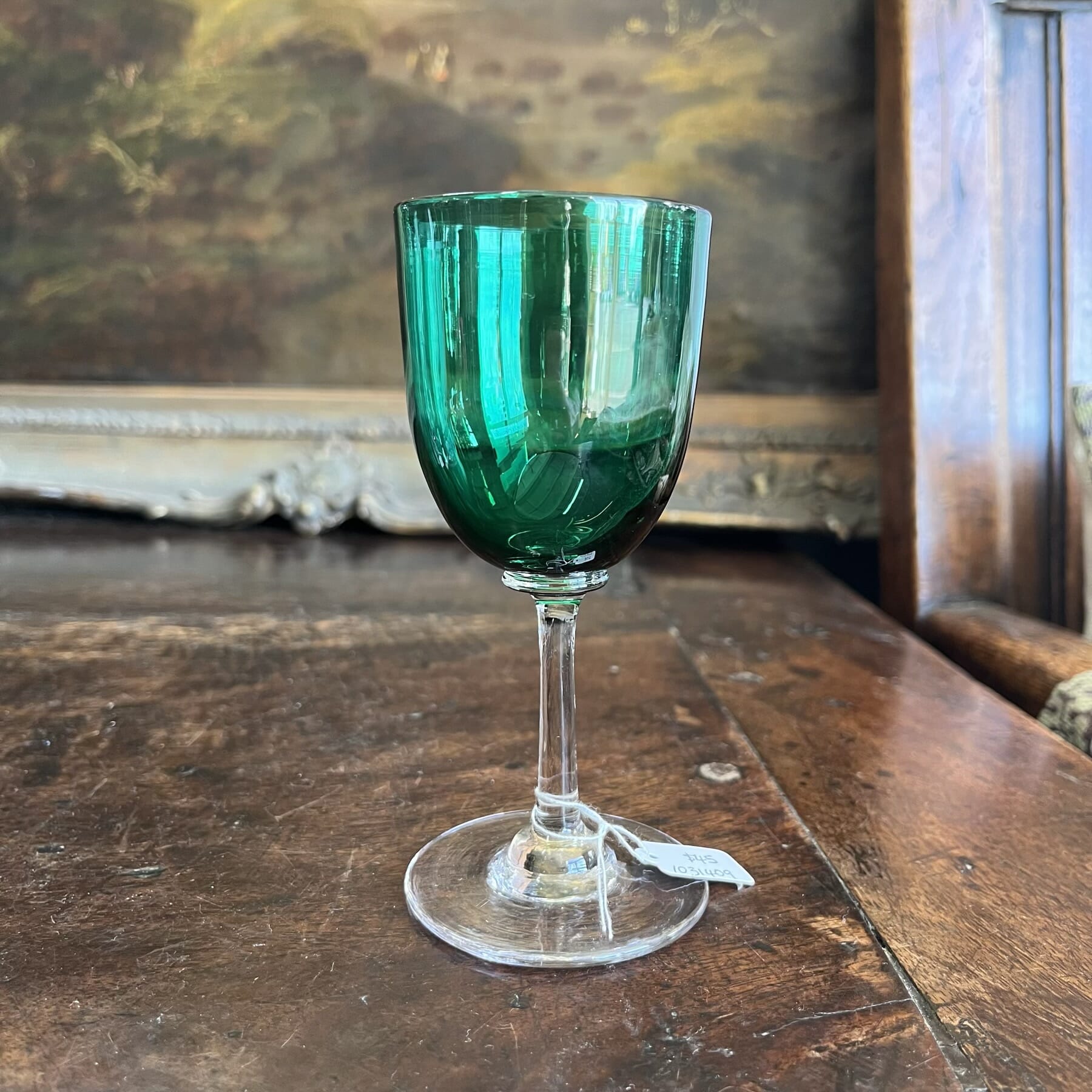
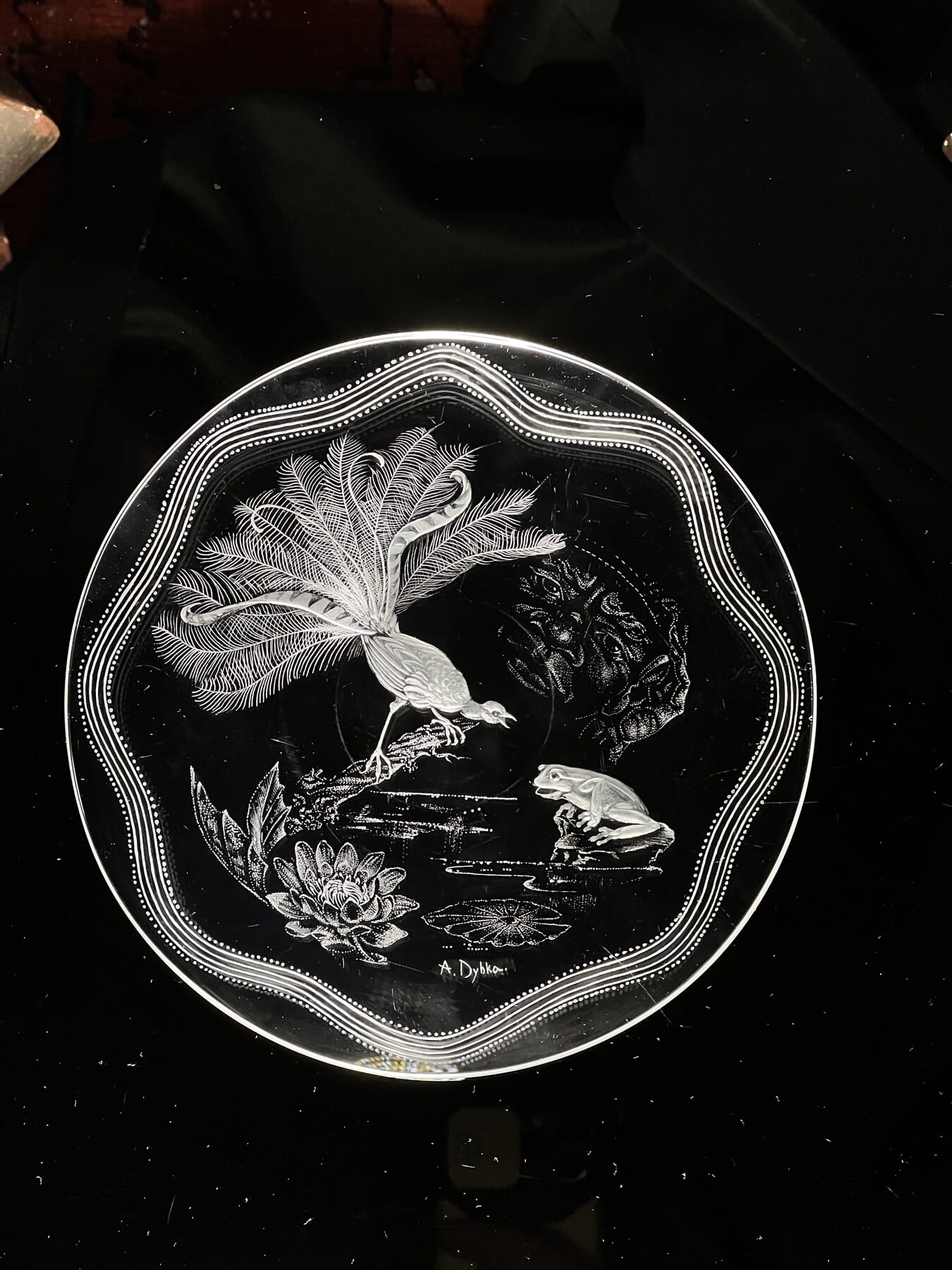
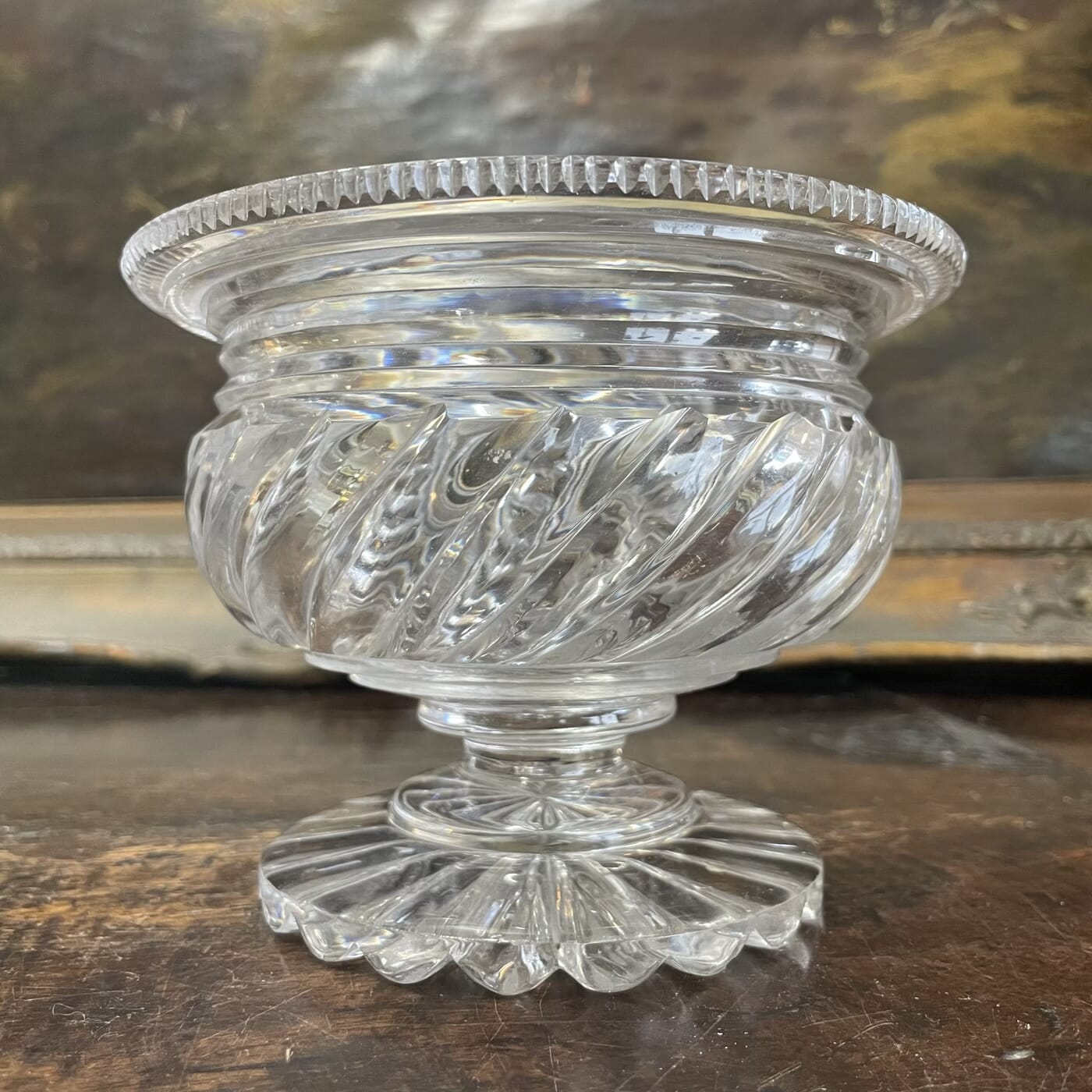
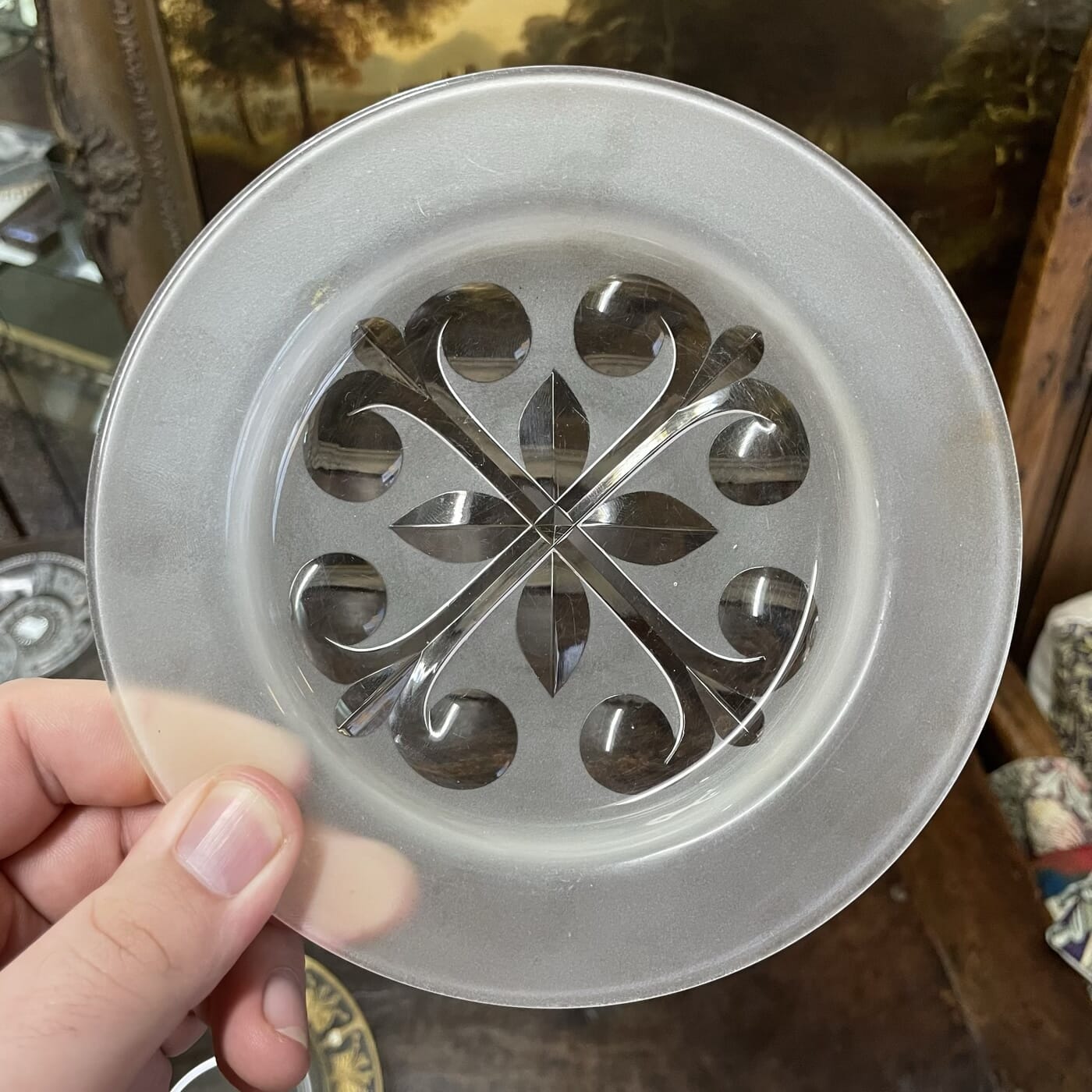
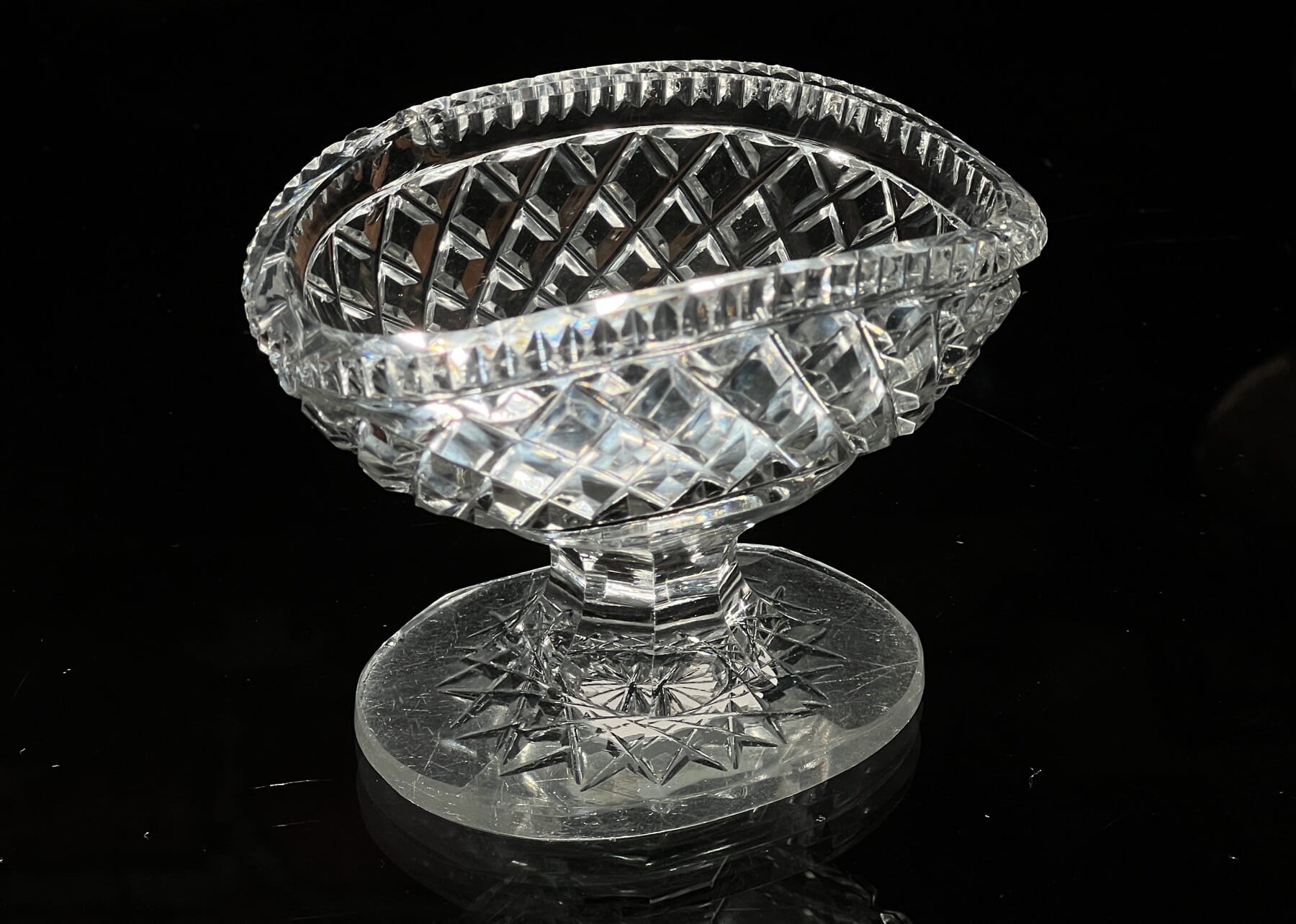
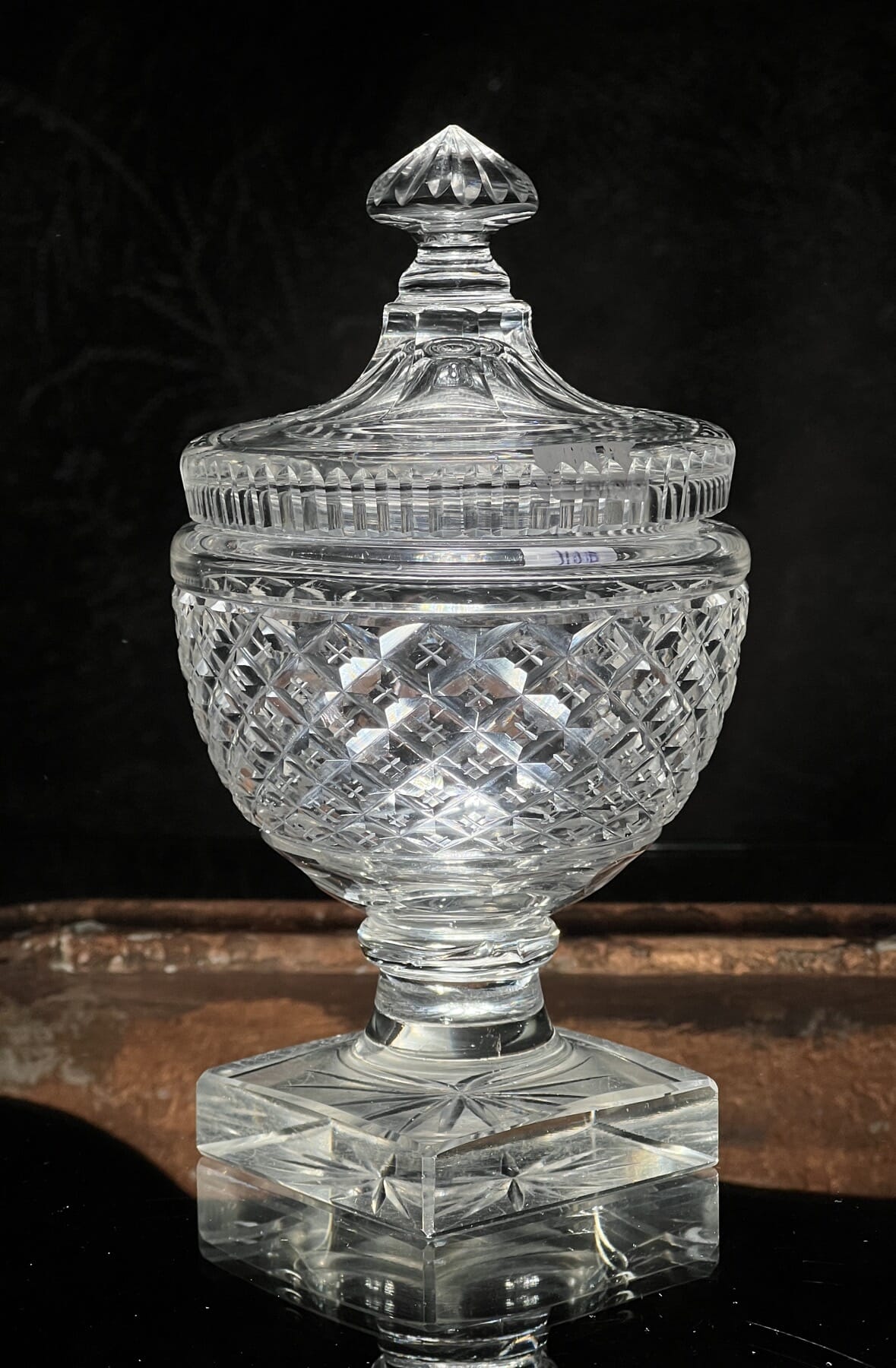
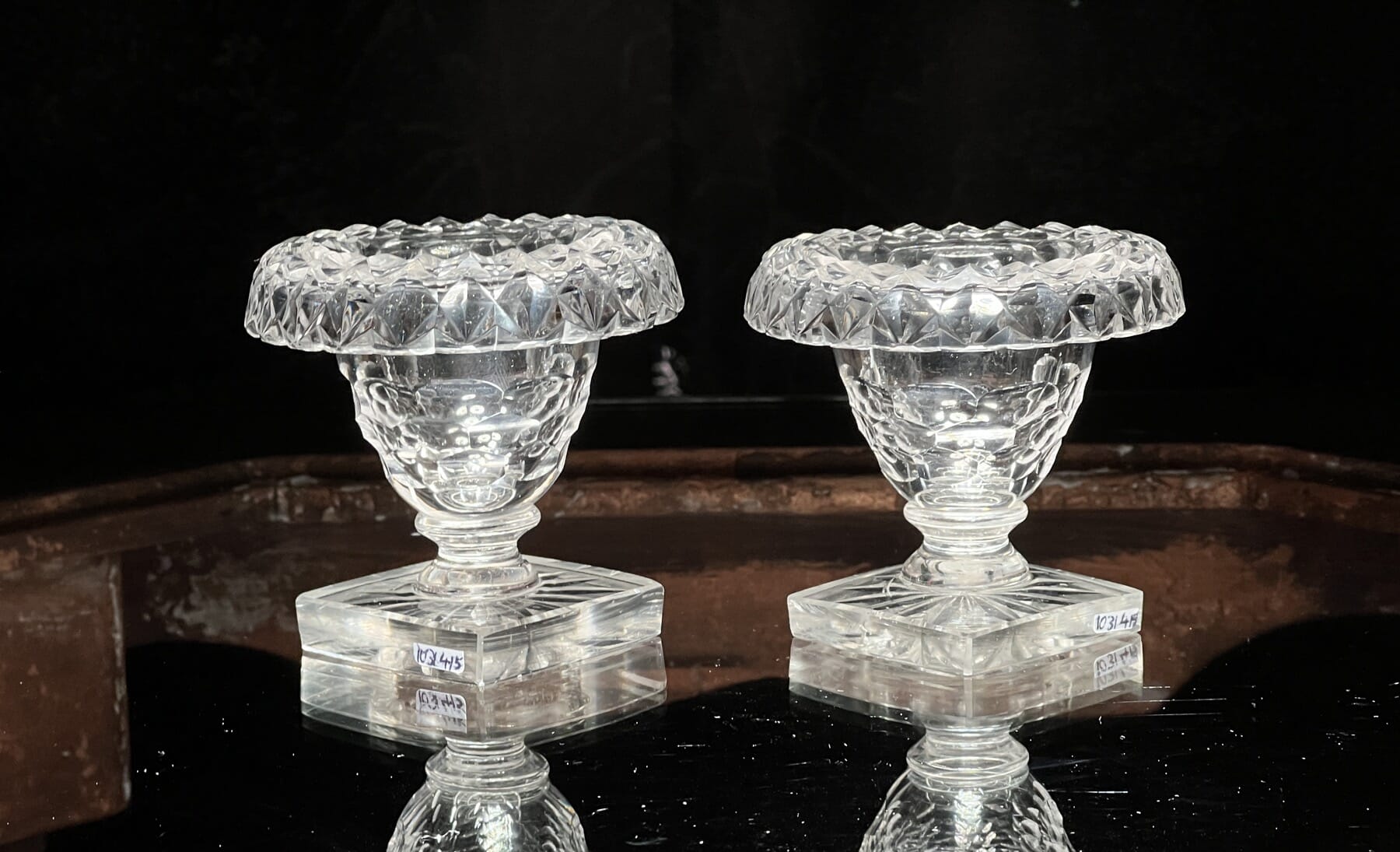
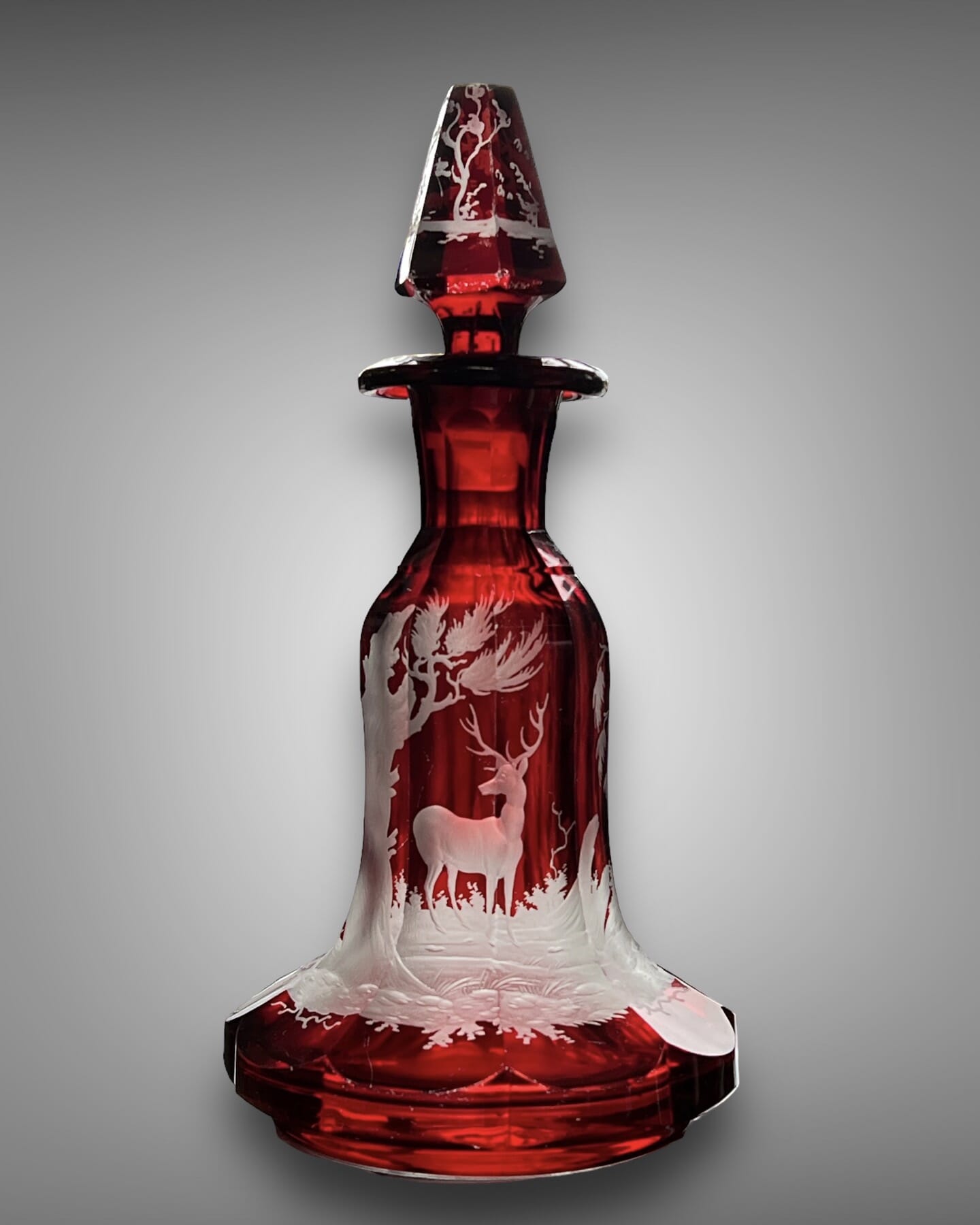
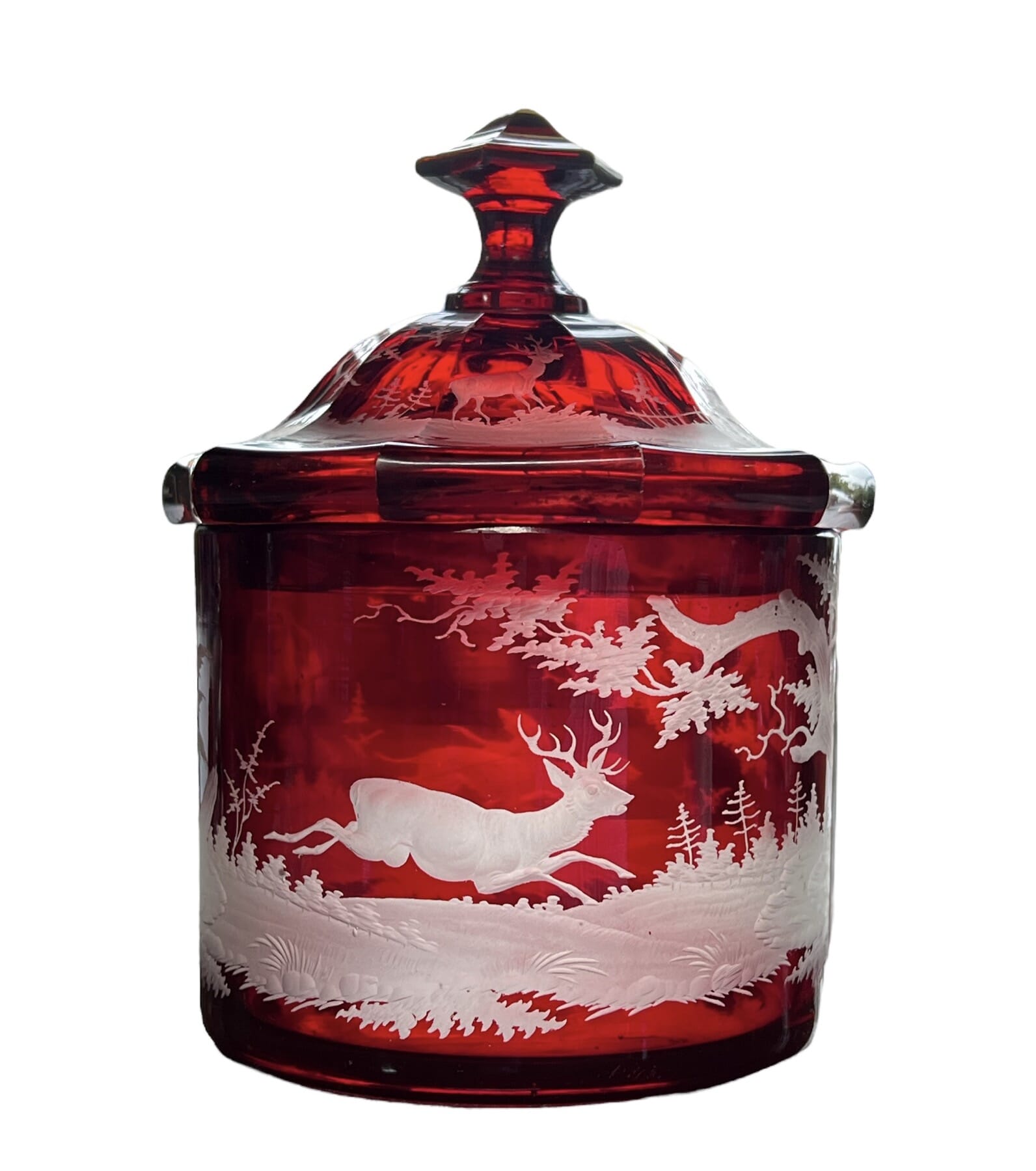
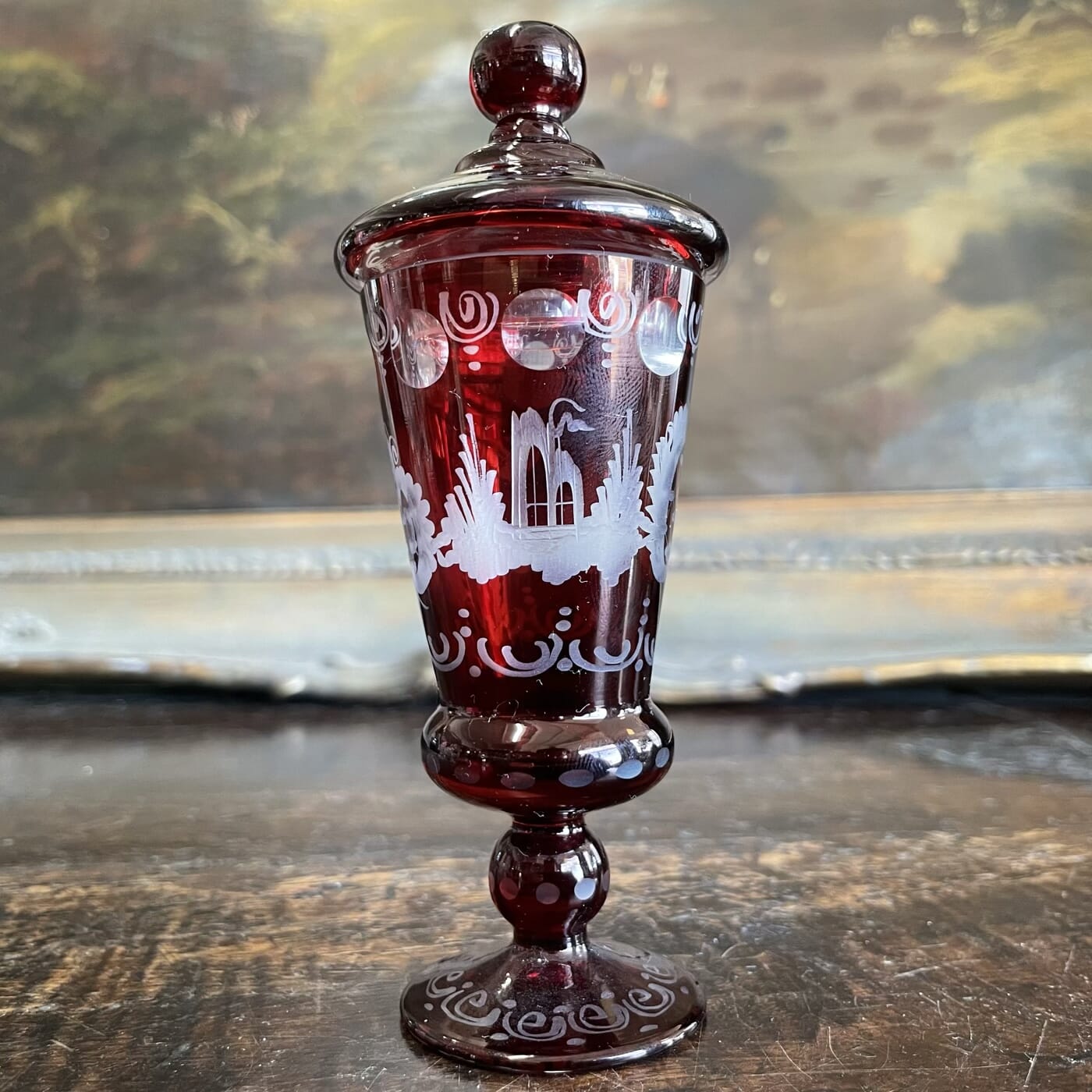
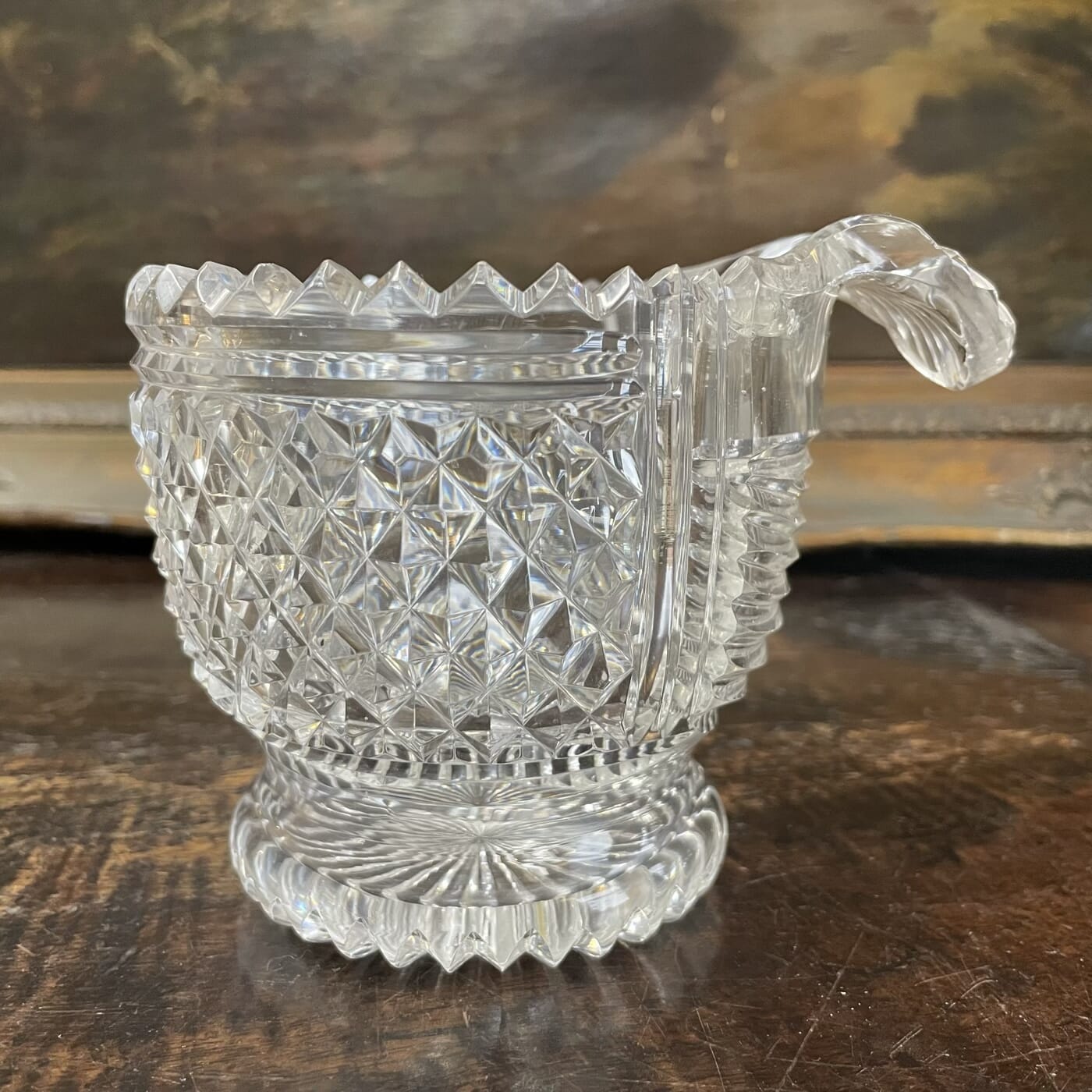
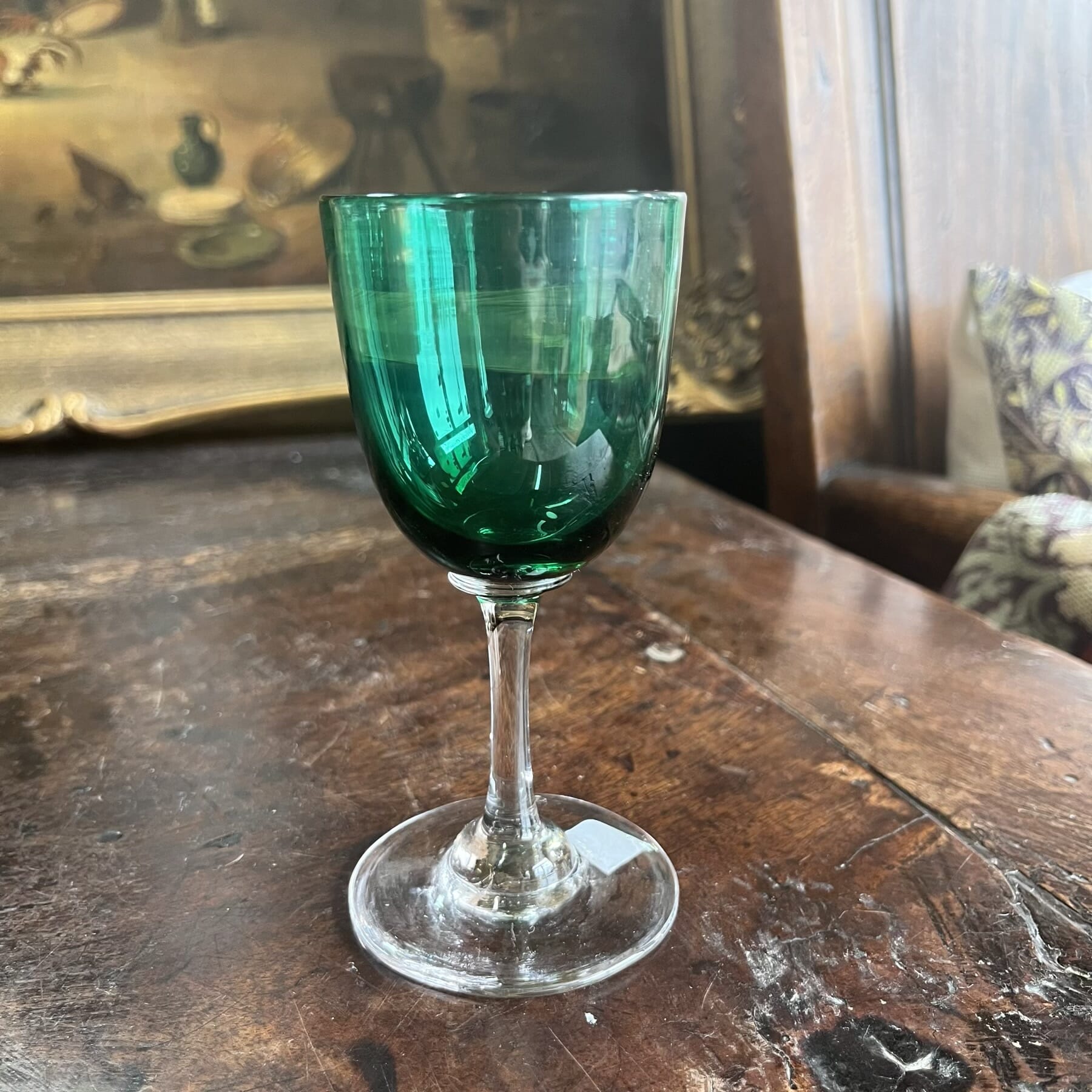
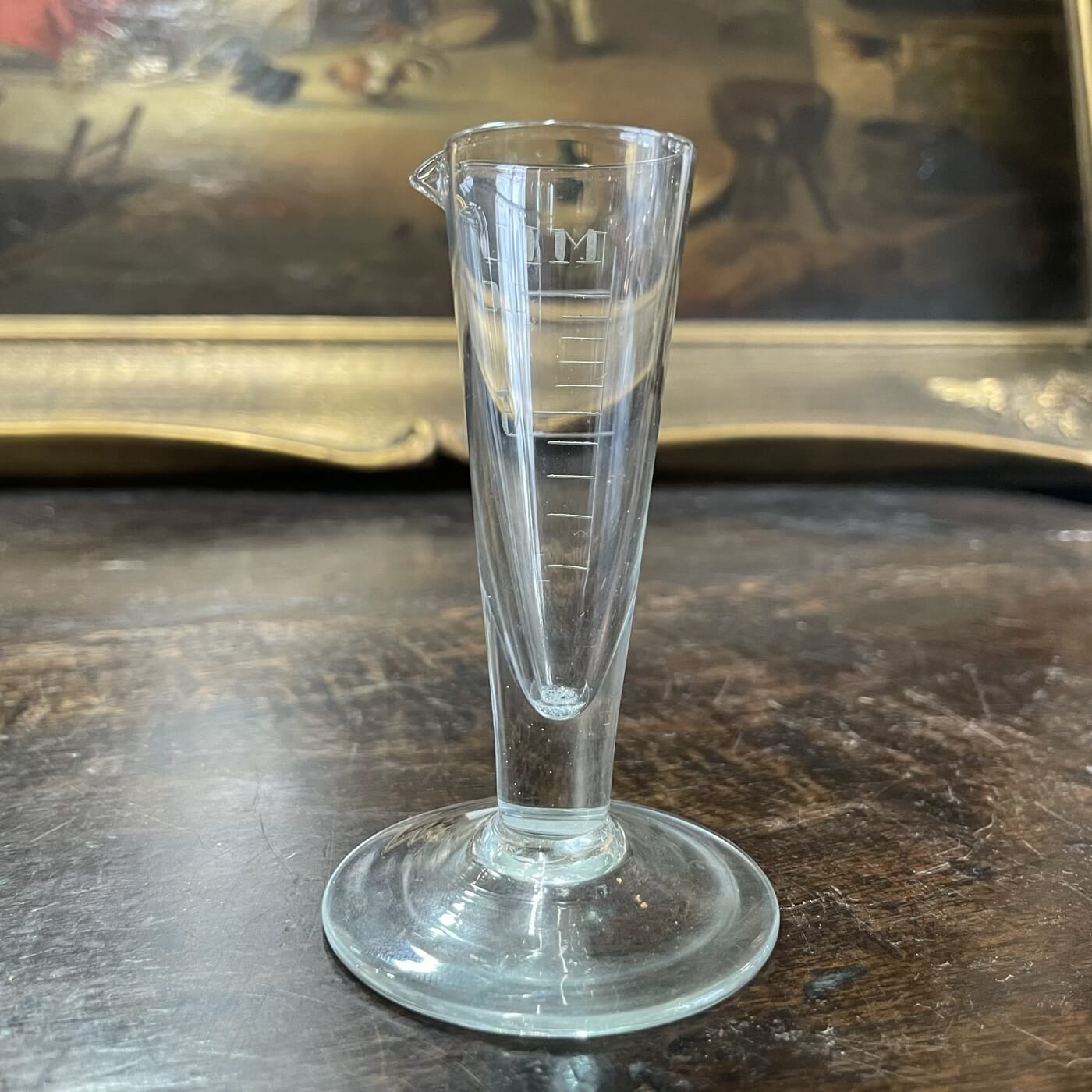
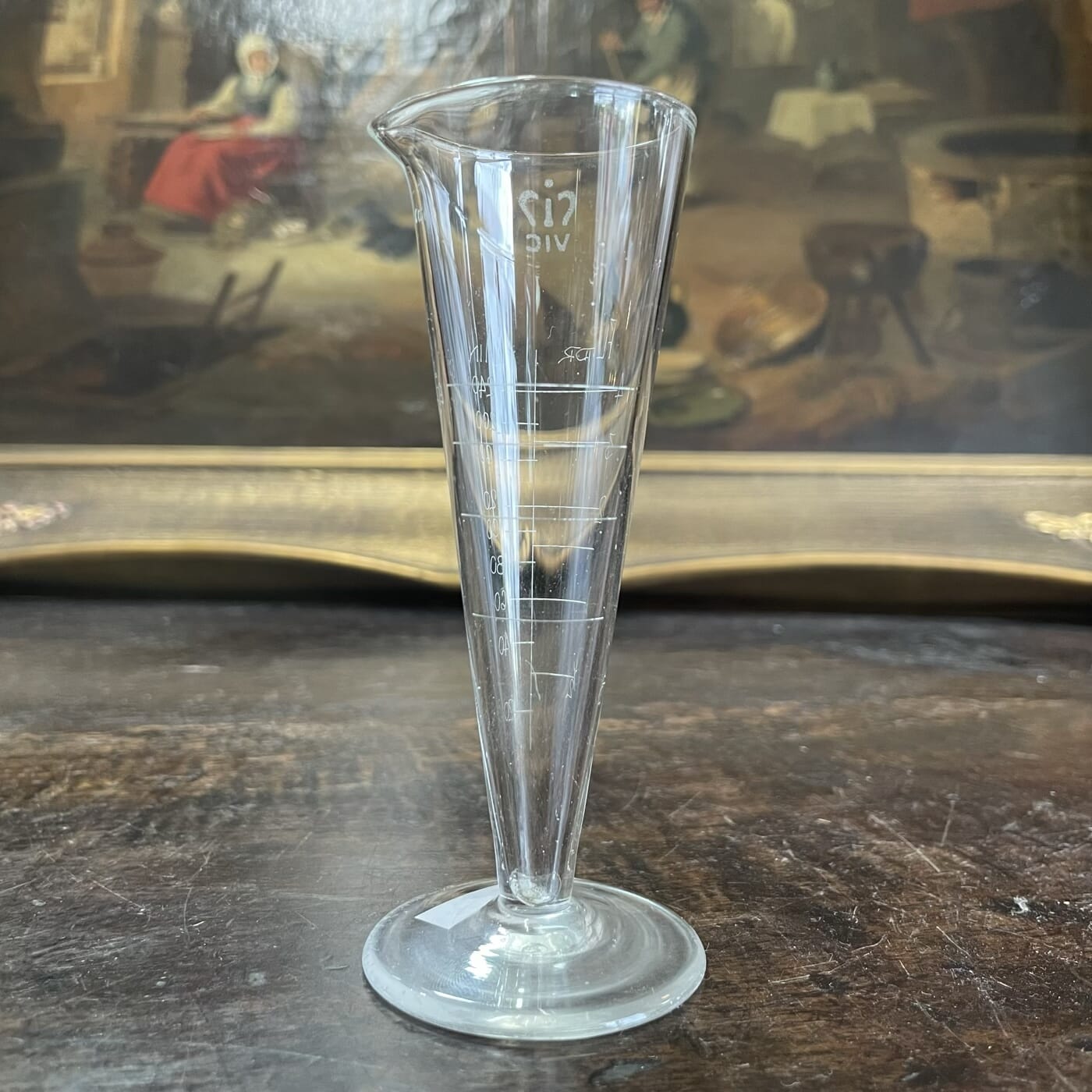
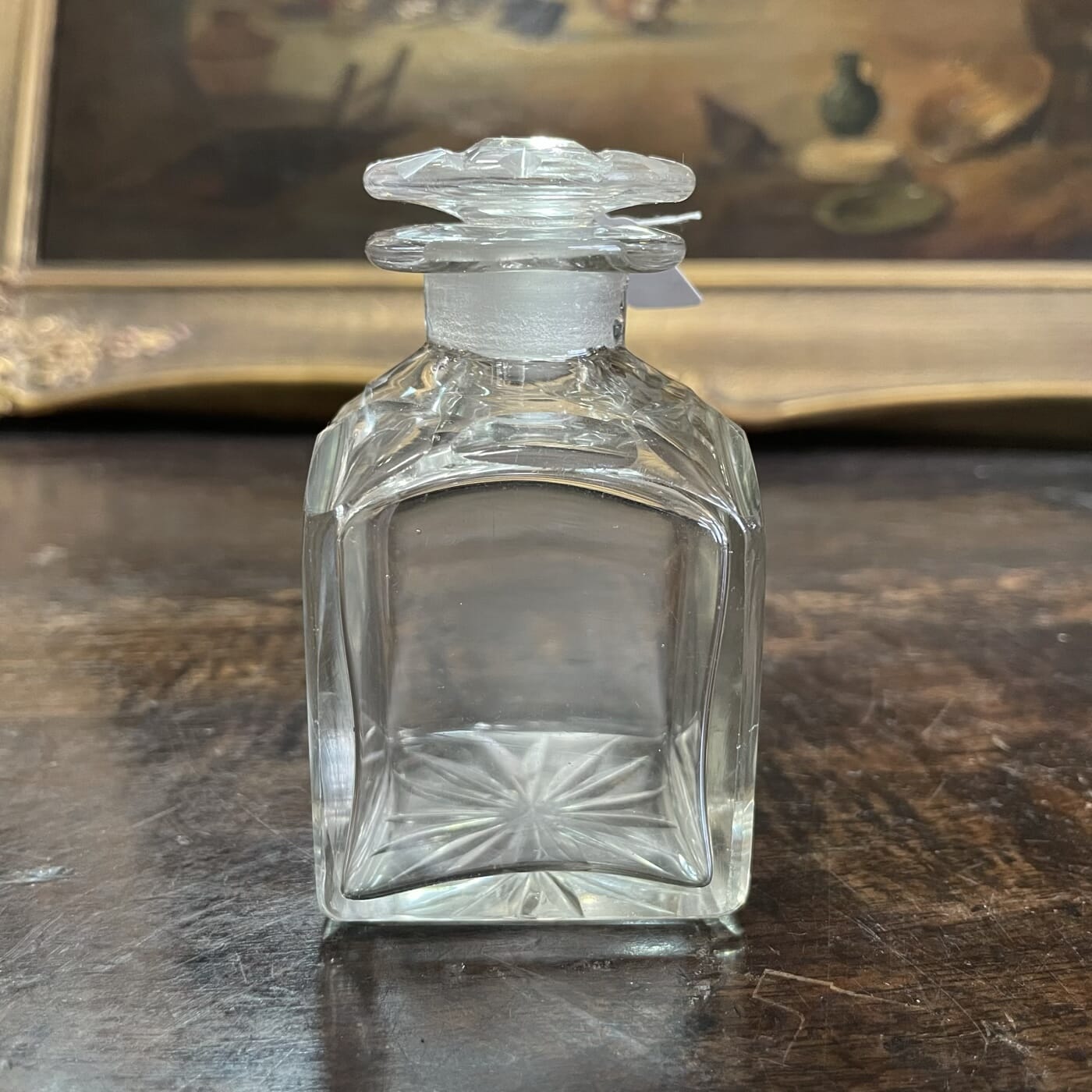
In this Fresh Stock, there’s a range of gorgeous Georgian & Victorian ‘Crystal’ – all very usable – and some stunning cameo cut pieces, with ruby examples from Bohemia, a remarkable mounted Moonflask from Reed & Barton, USA, and a very recent Australian piece by the late Anne Dybka with an Aboriginal Dreamtime tale illustrated.

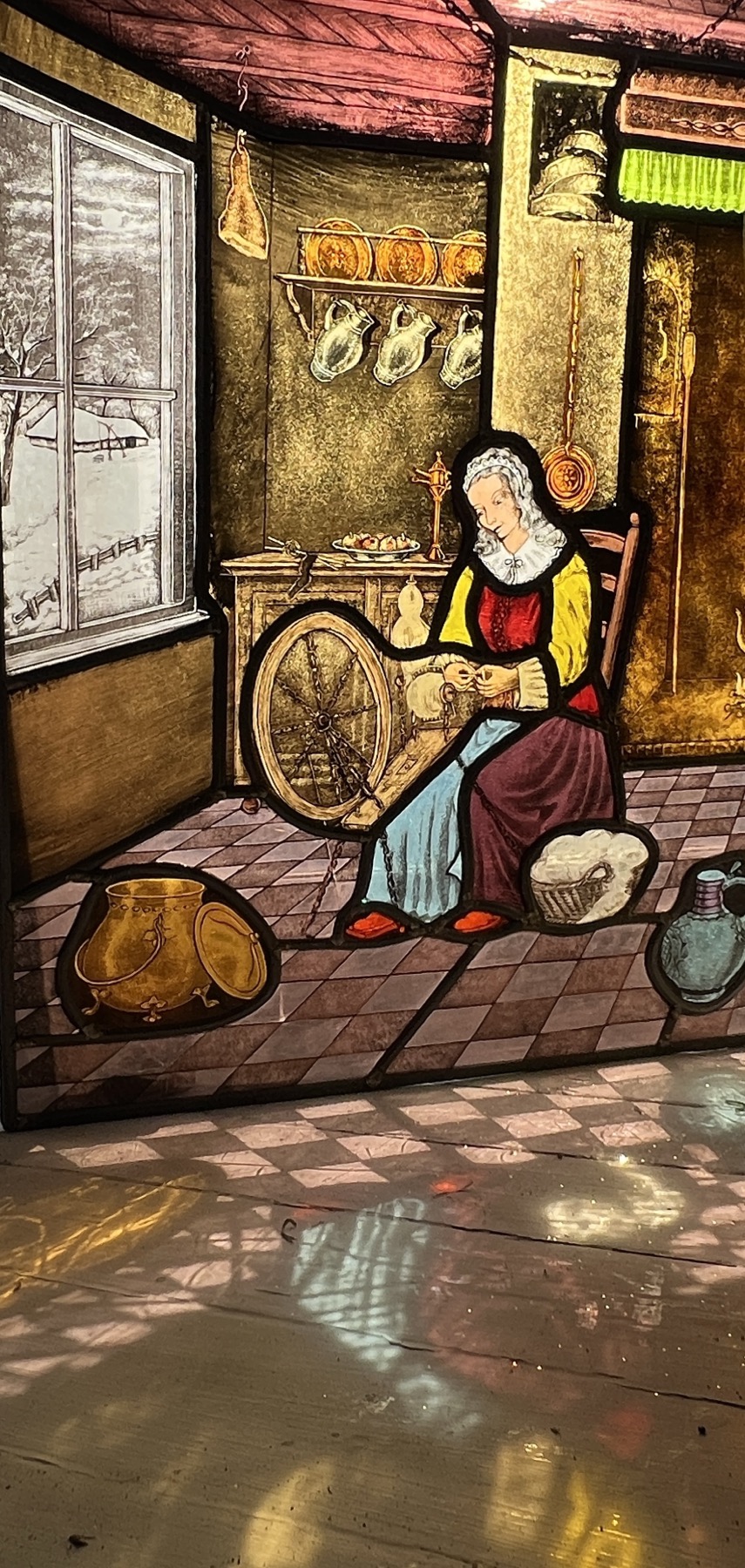
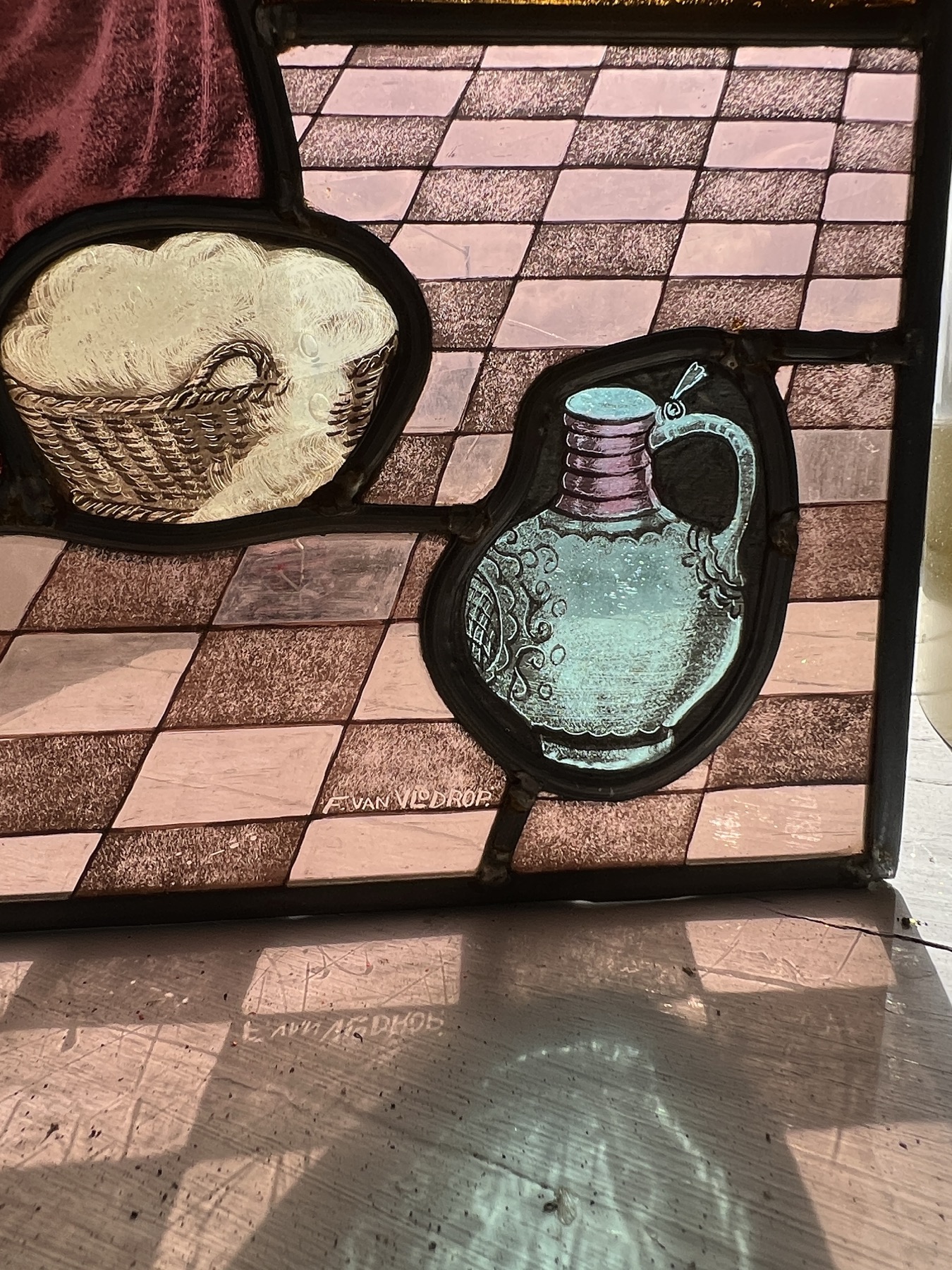
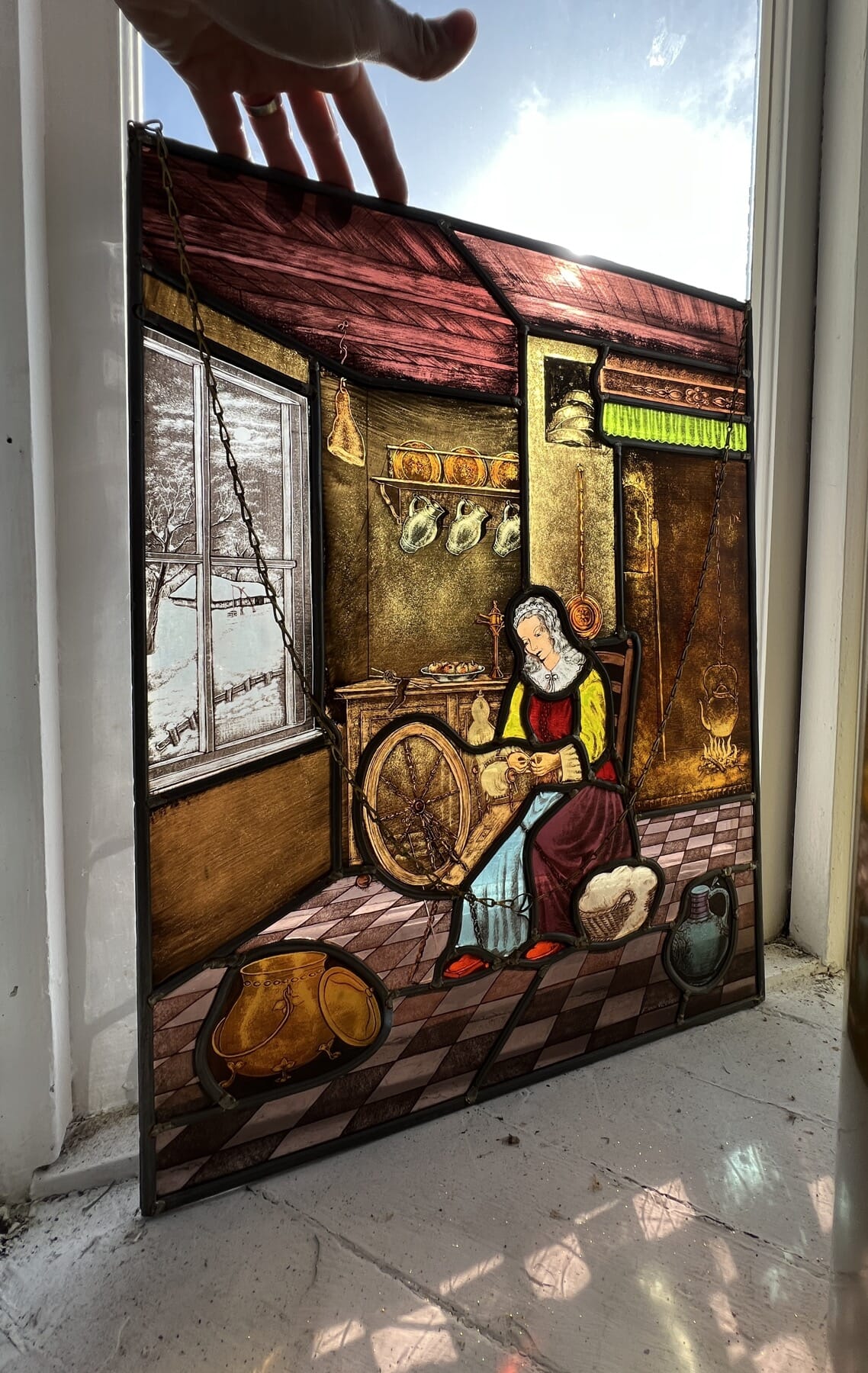
Stained Glass panel by van Vlodrop

Stained Glass Panel by Van Vlodrop, 1960's

This large & colourful stained glass panel is mid-20th century – but by an artist who was trained in the Medieval art form. Frans Van Vlodrop was born in The Netherlands, but set up his studio in Dessel, Belgium. Surrounded by Medieval masterpieces of stained-glass art, he produced pieces that are based on the 16th-17th century, but with a definite ‘midcentury’ look – particularly in the way he did his faces.

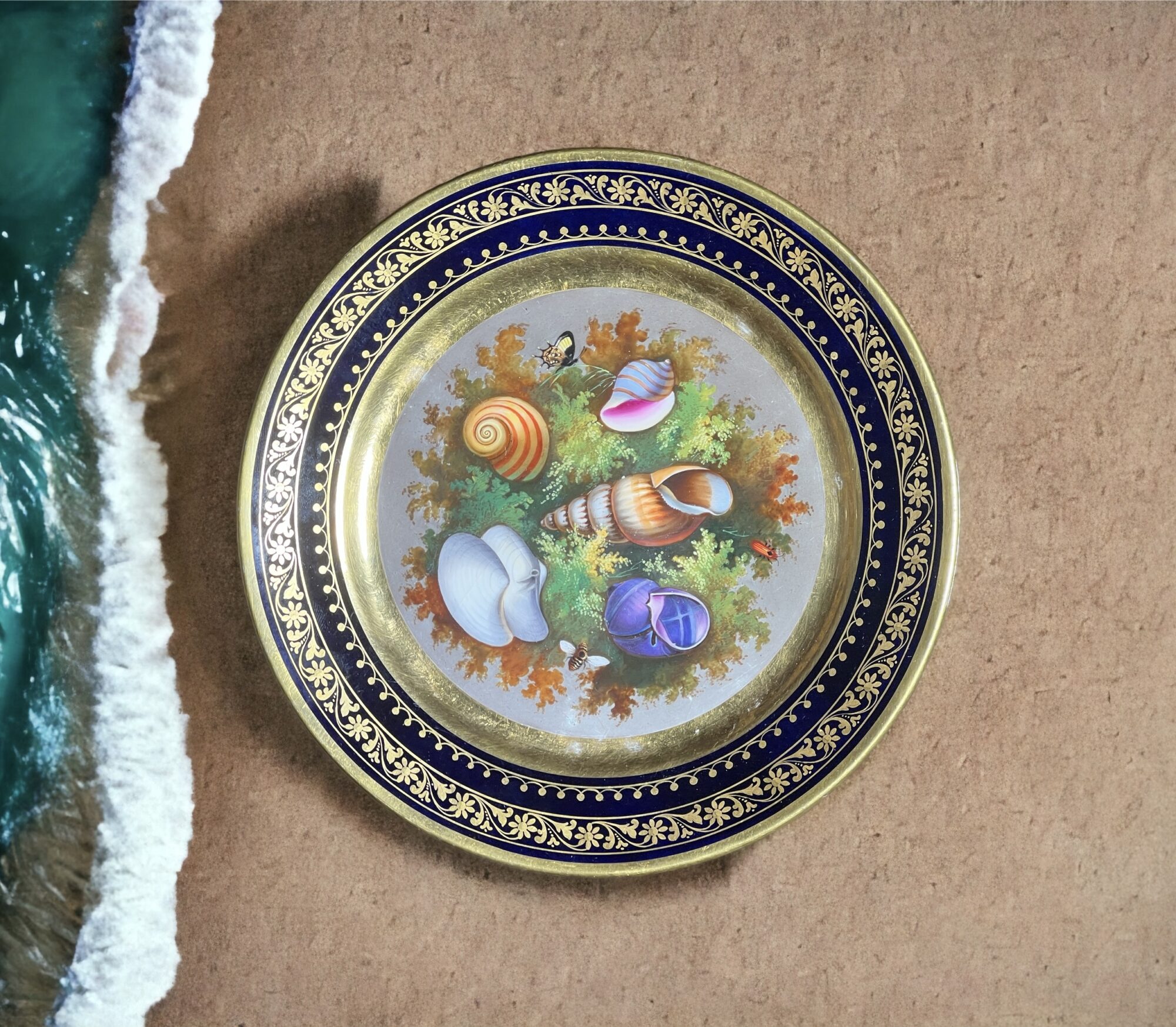
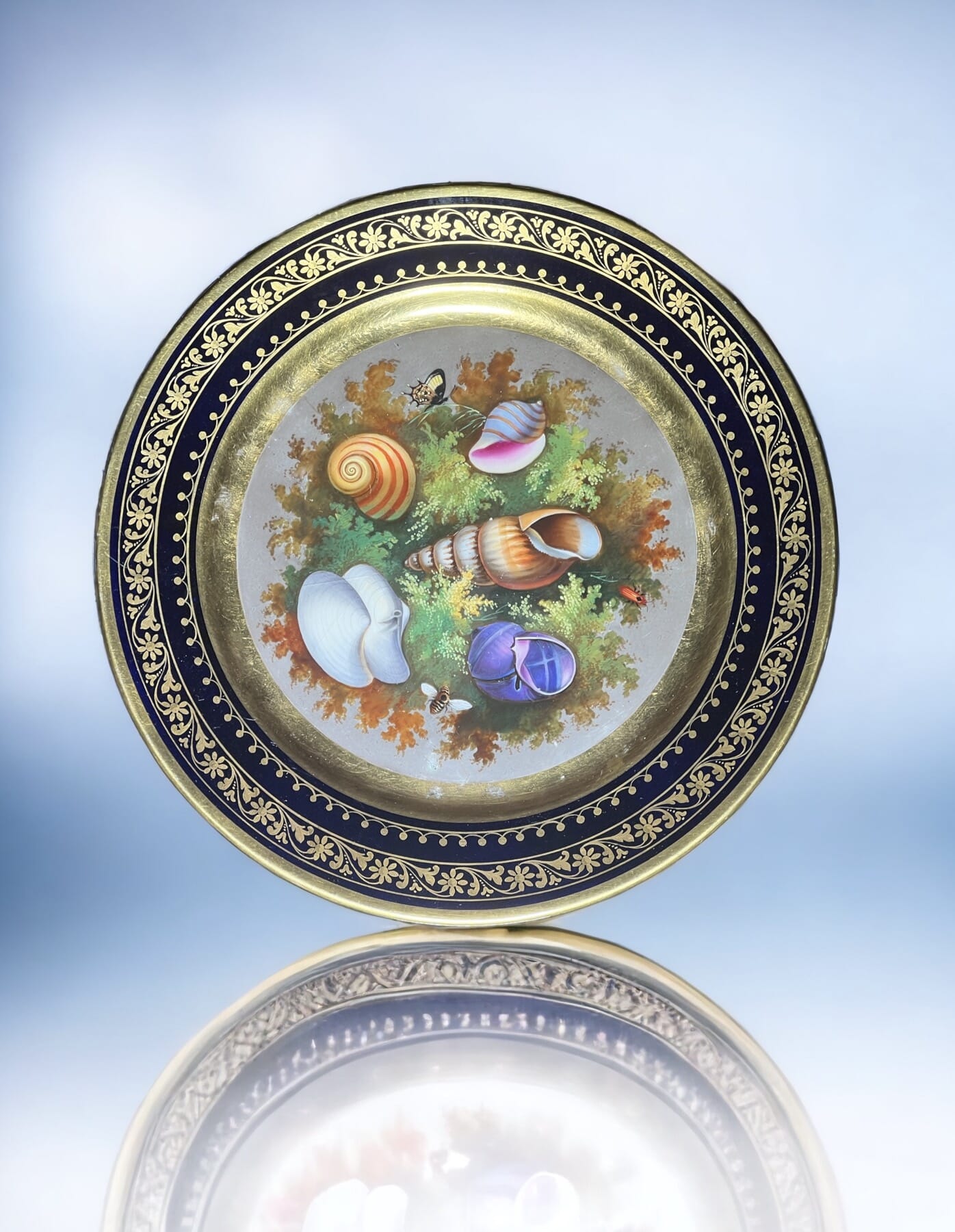
Darte Frères Paris Porcelain ‘Seashell’ plate, c. 1820

Darté seashell plate

This dramatic plate is a splendid example of the best Paris Porcelain, produced in the early 19th century.

It seems to be from a single dispersed service, each piece with a different group of shells on seaweed, with different insects. They all share the detailed gold borders on mazarine blue grounds, and most have the red-stamped ‘Darte’ mark which this example lacks.

This is the Paris factory formed by three brothers in 1795, well respected for stunning quality products in the early 19th century Napoleonic & later era. The combination of seaweed, shells, and insects seems to be unique.

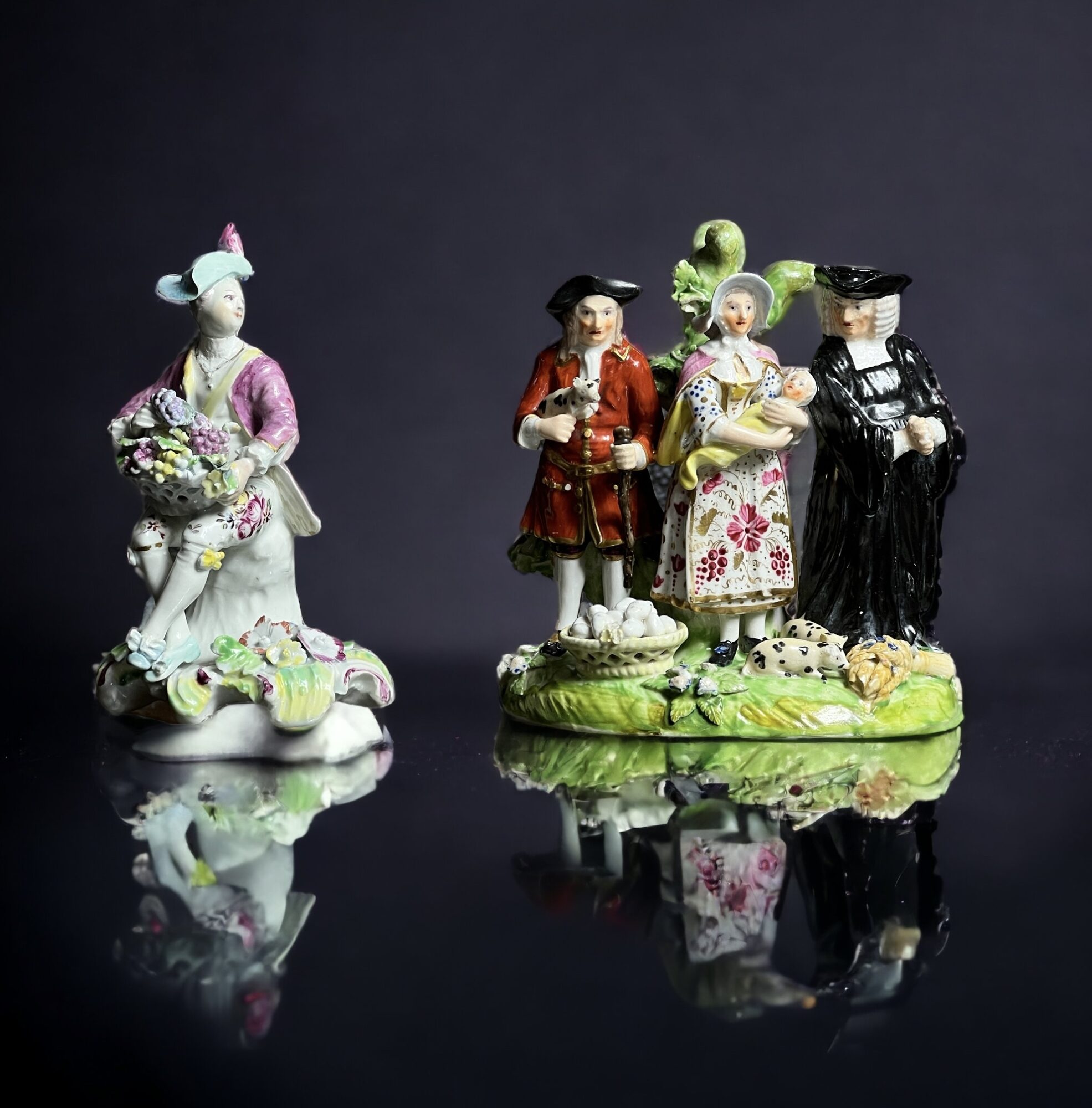
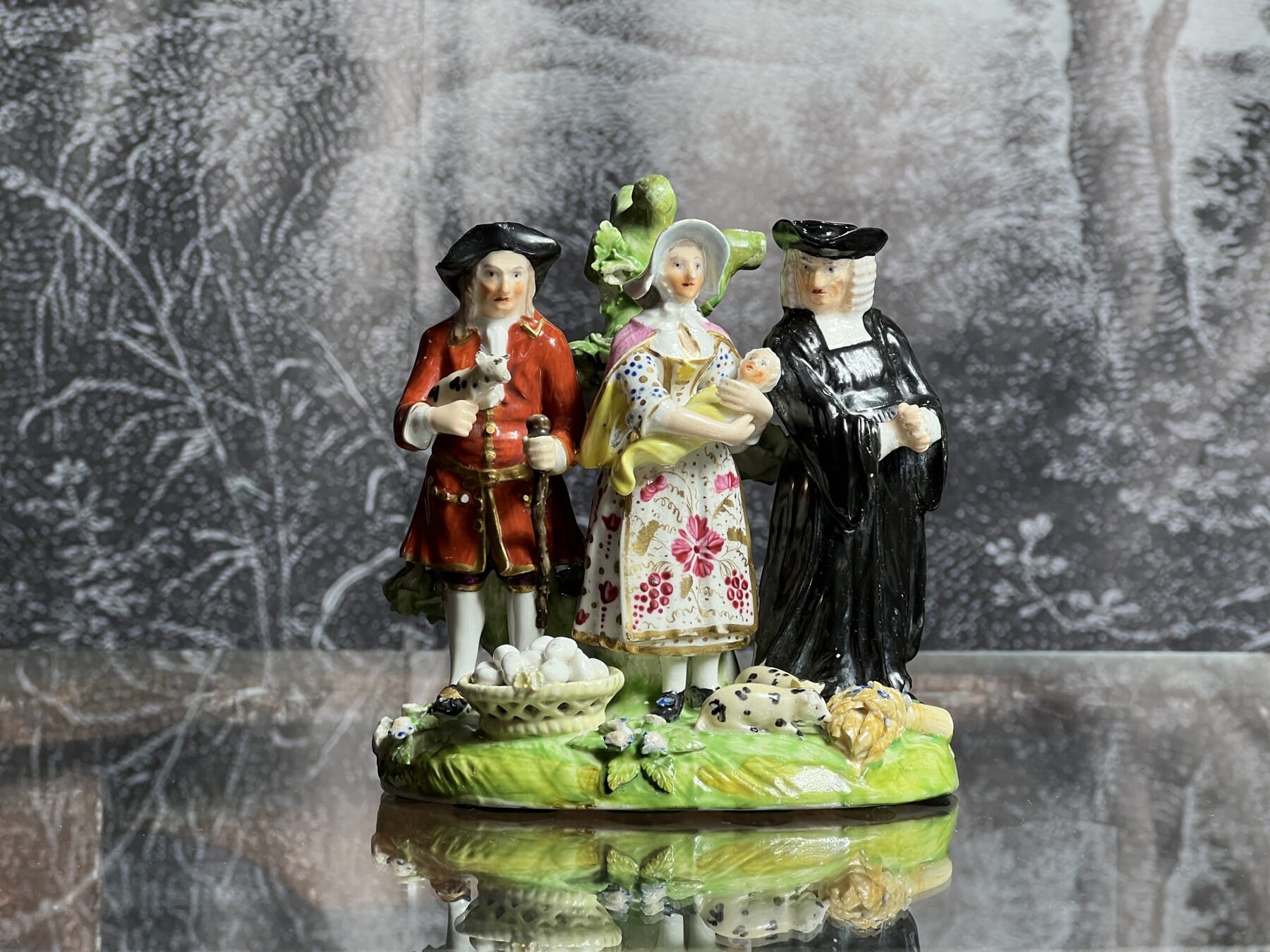
18th Century Derby Figures

18th century Derby Porcelain Figures at Moorabool Antiques, Australia

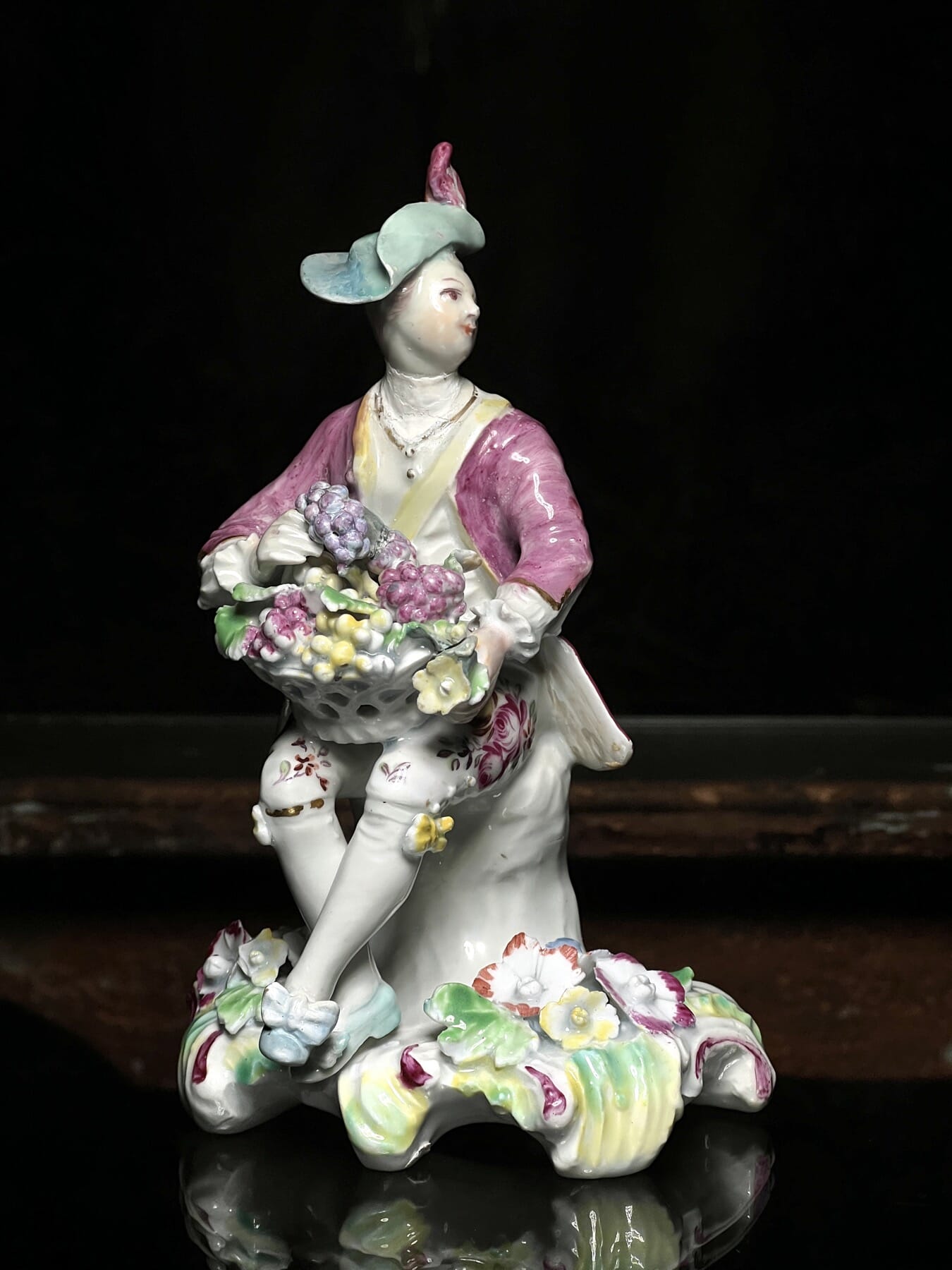
A Derby figure known as the ‘Grape Seller’ belongs to the earlier period of production, circa 1756-59. Due to the very pale colour palette used, it is known as the ‘Pale Family’.

The second figure is a delightful version of the ‘Tythe Pig’ group. This depicts a popular poem of the Georgian era – where the village vicar comes to take his tythe- a portion of the farmer’s production – and the farmer’s wife offers him a screaming baby, one-tenth of her brood – he promptly takes flight!

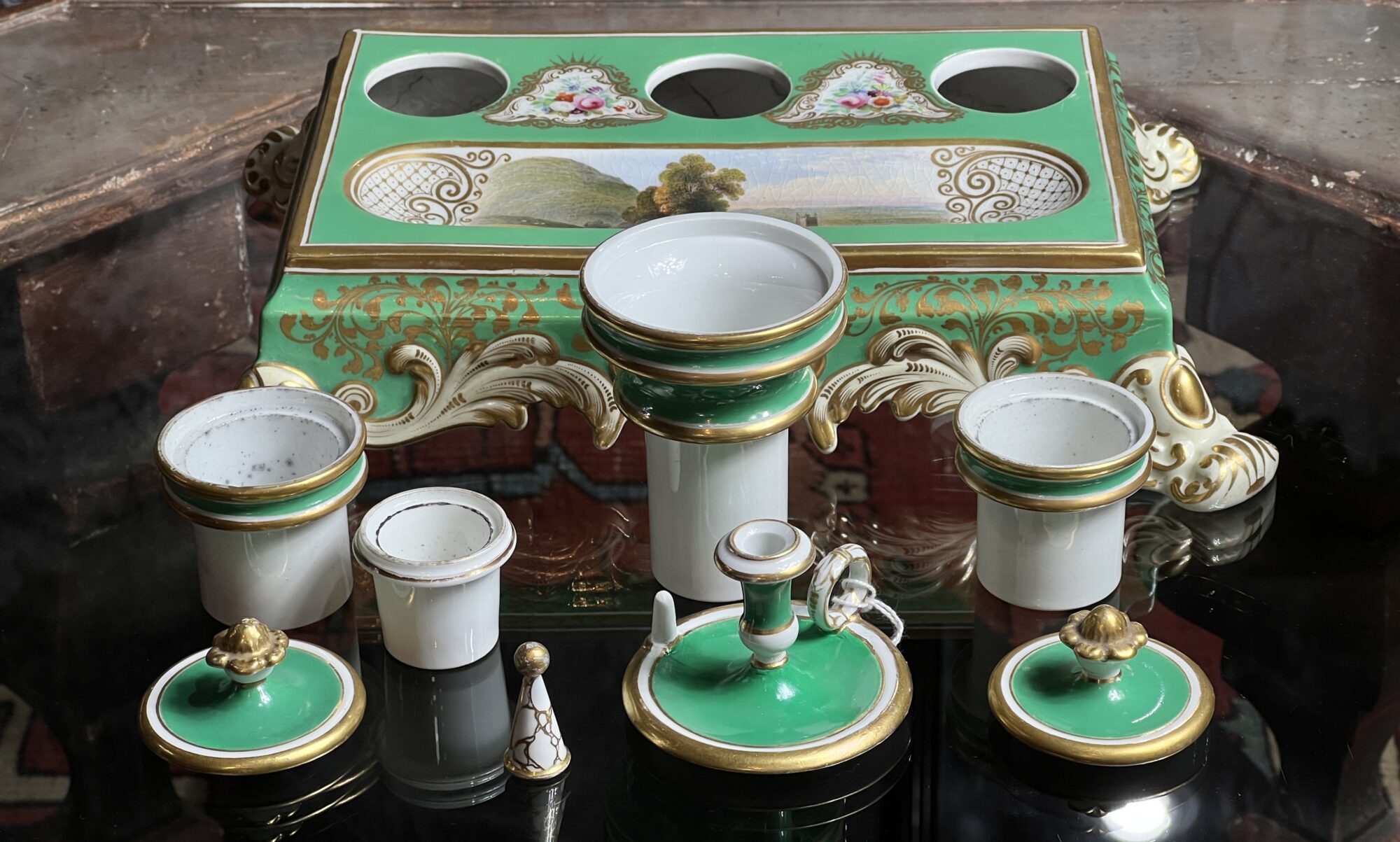
Rare Chamberlain’s Worcester Deskset with ‘View of Malvern’

Chamberlain's Worcester Inkstand c.1830
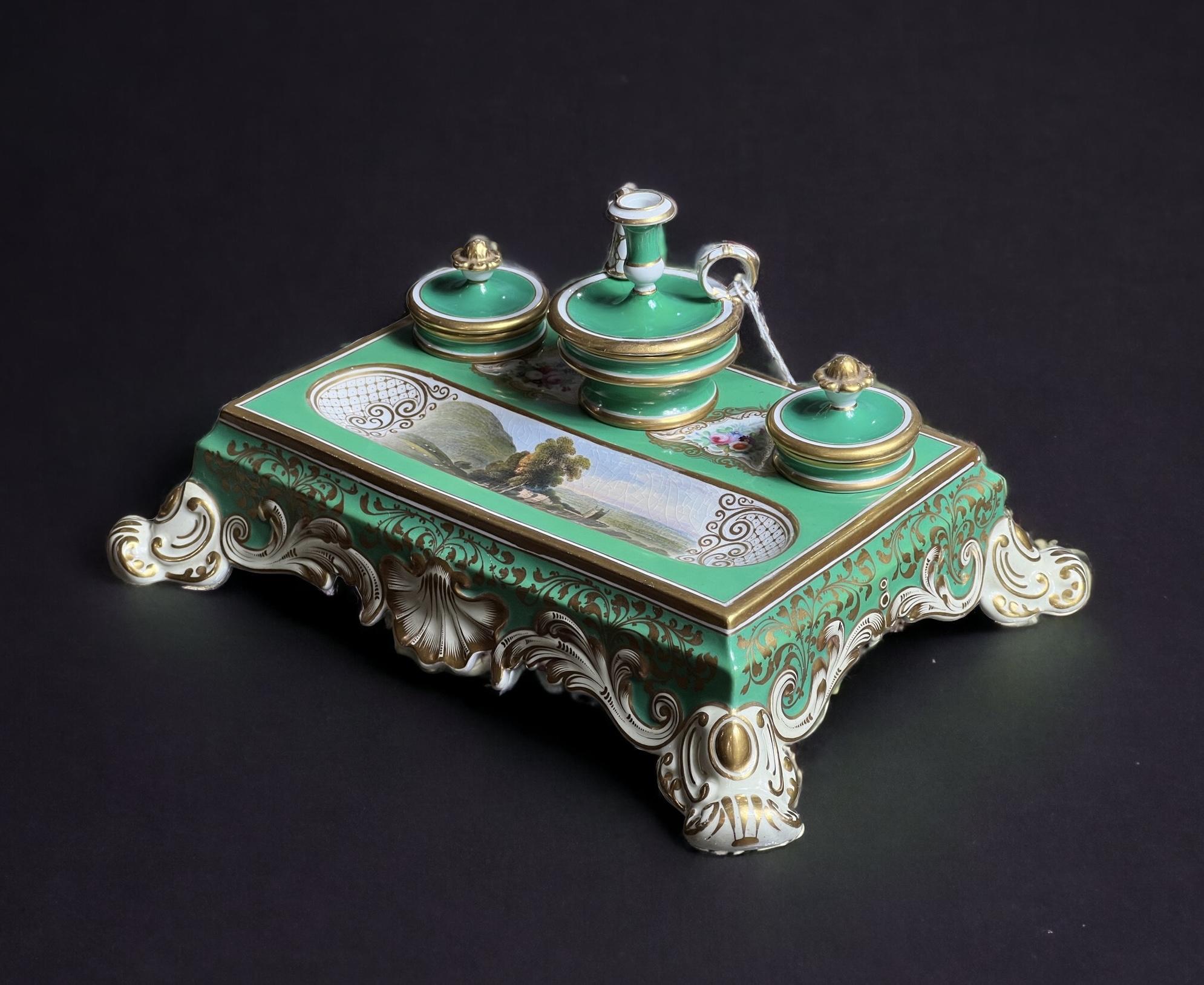
Chamberlain’s Worcester Inkstand c.1830

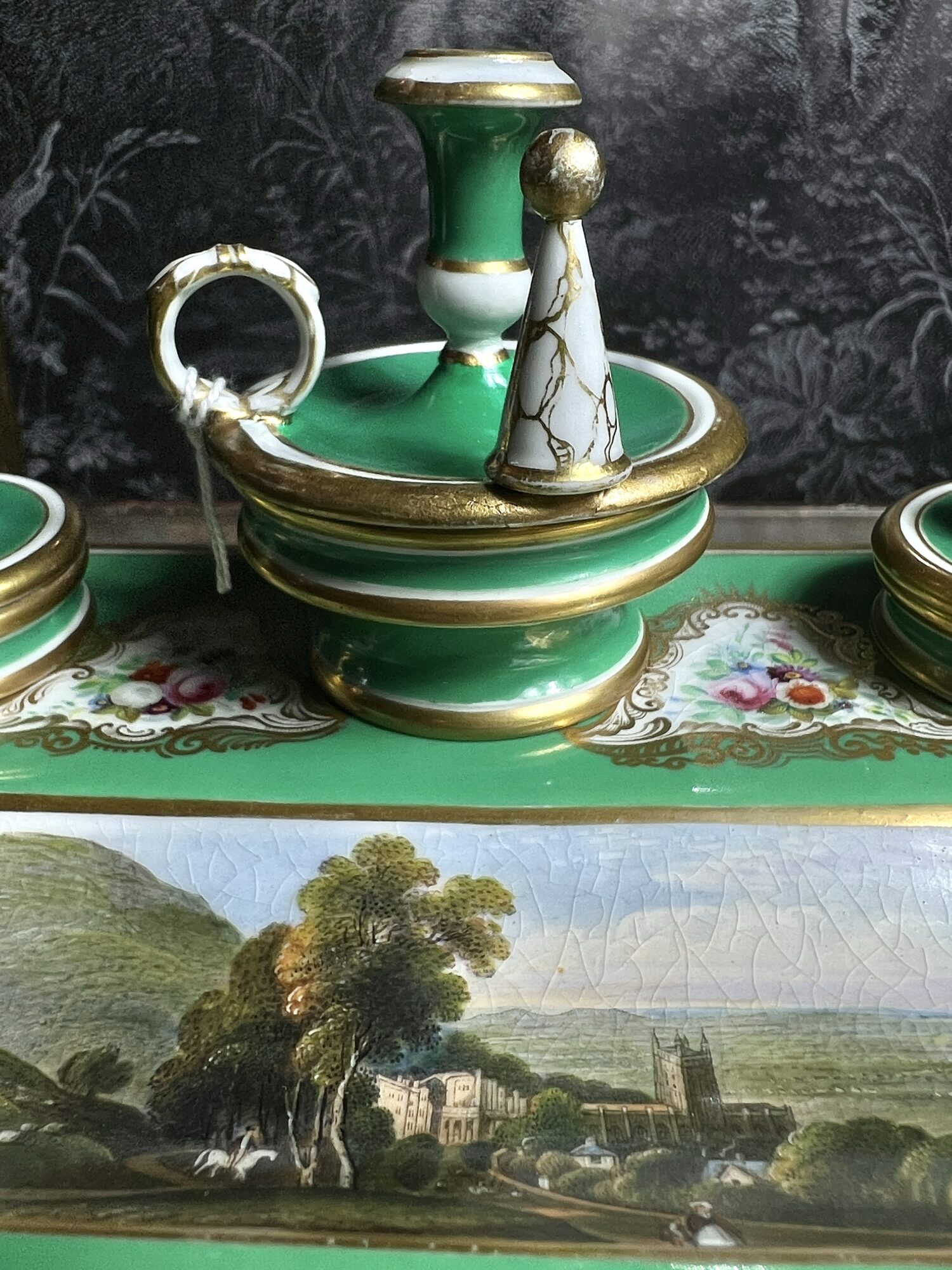
A dramatic Chamberlain’s Worcester desk accessary for the early 19th century writer. It has capacity for two different inks, and the central chamberstick is there to melt your sealing-wax stick – which can be stored in the deep cylinder beneath, revealed when it is taken off the stand to use. It also has its original candle snuffer, for when you have finished.

This makes it a remarkable rarity – while a few forms of desk sets are in the literature, no comparable example to this could be found, especially with the original fittings.

What makes this piece particularly charming is the scene painted along the pen-stand; it’s a panoramic view of Malvern, showing the town amongst rolling hills, complete with a flock of very white sheep.

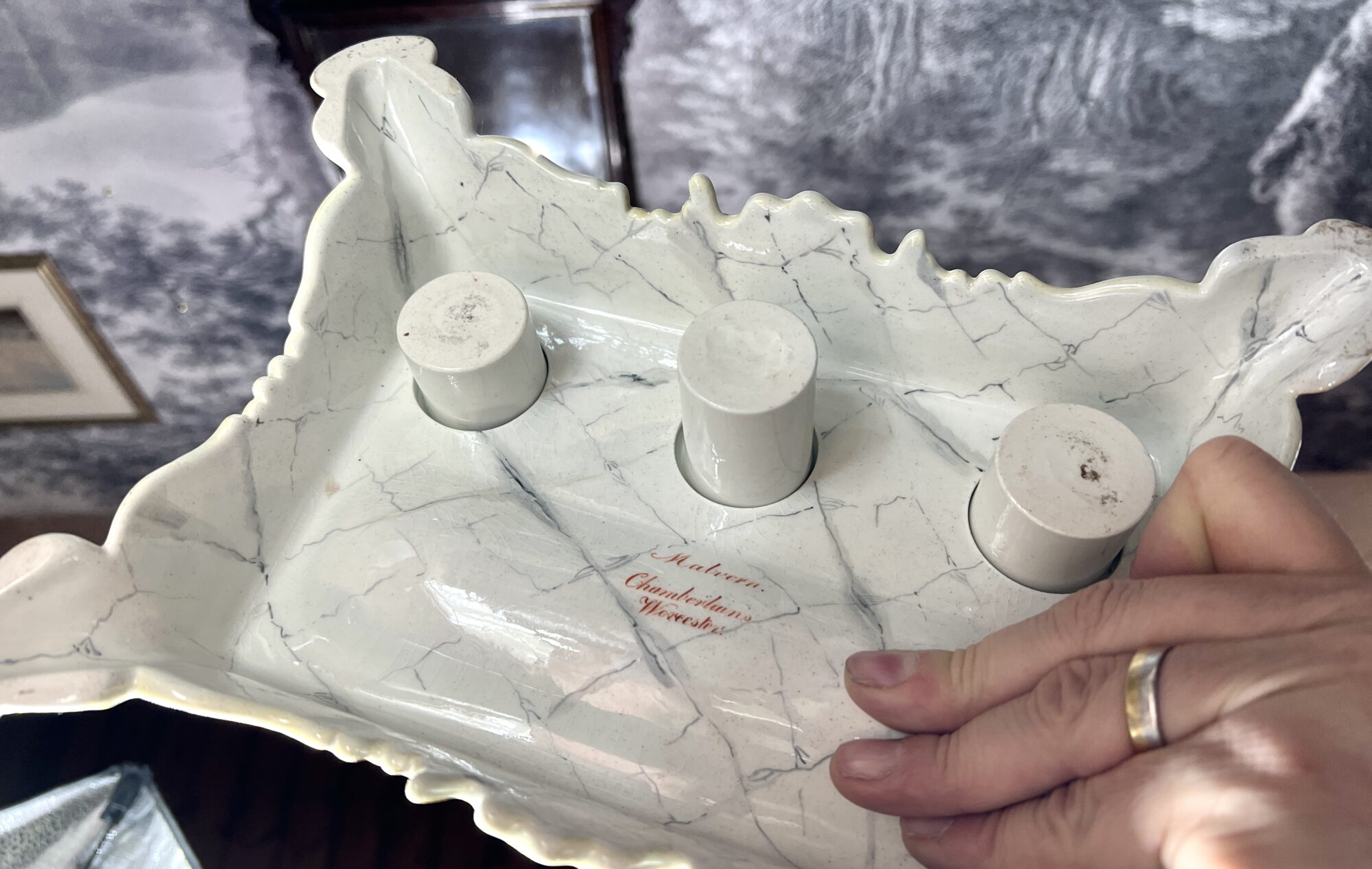
The surprise is when you carefully peer underneath; the red script ‘Chamberlain’s Worcester’ mark is set on a space in the marbled affect that completely covers the underside – very unusual!

Fresh Glass

Fresh Cutlery

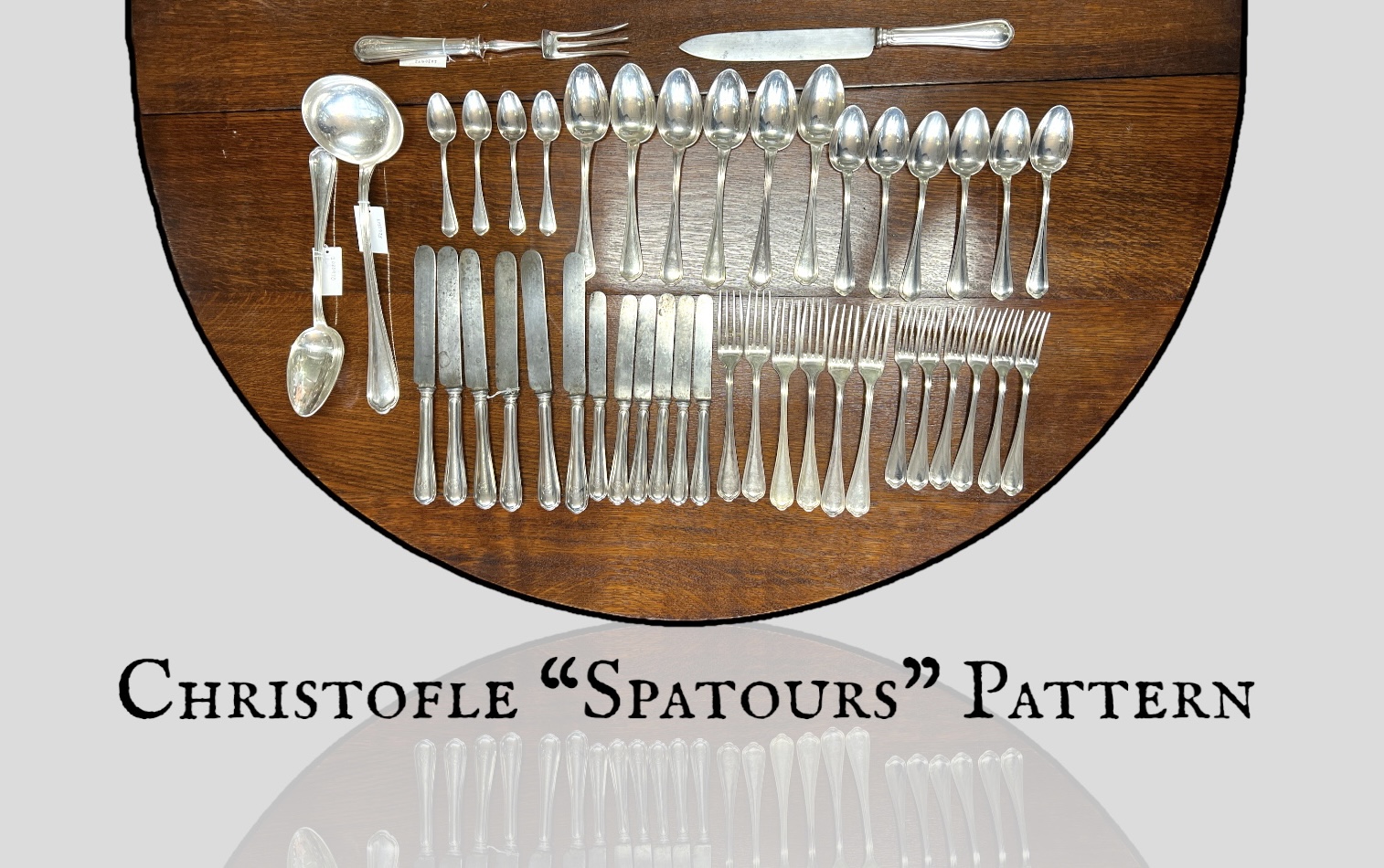
Christofle Spatours Pattern Cutlery at Moorabool Antiques, Geelong

Fresh Furniture

Fresh Antiquities

Fresh Chinese Stock

Posted on

Fresh Stock – Clews, Paisley, and some Staffordshire Figures.

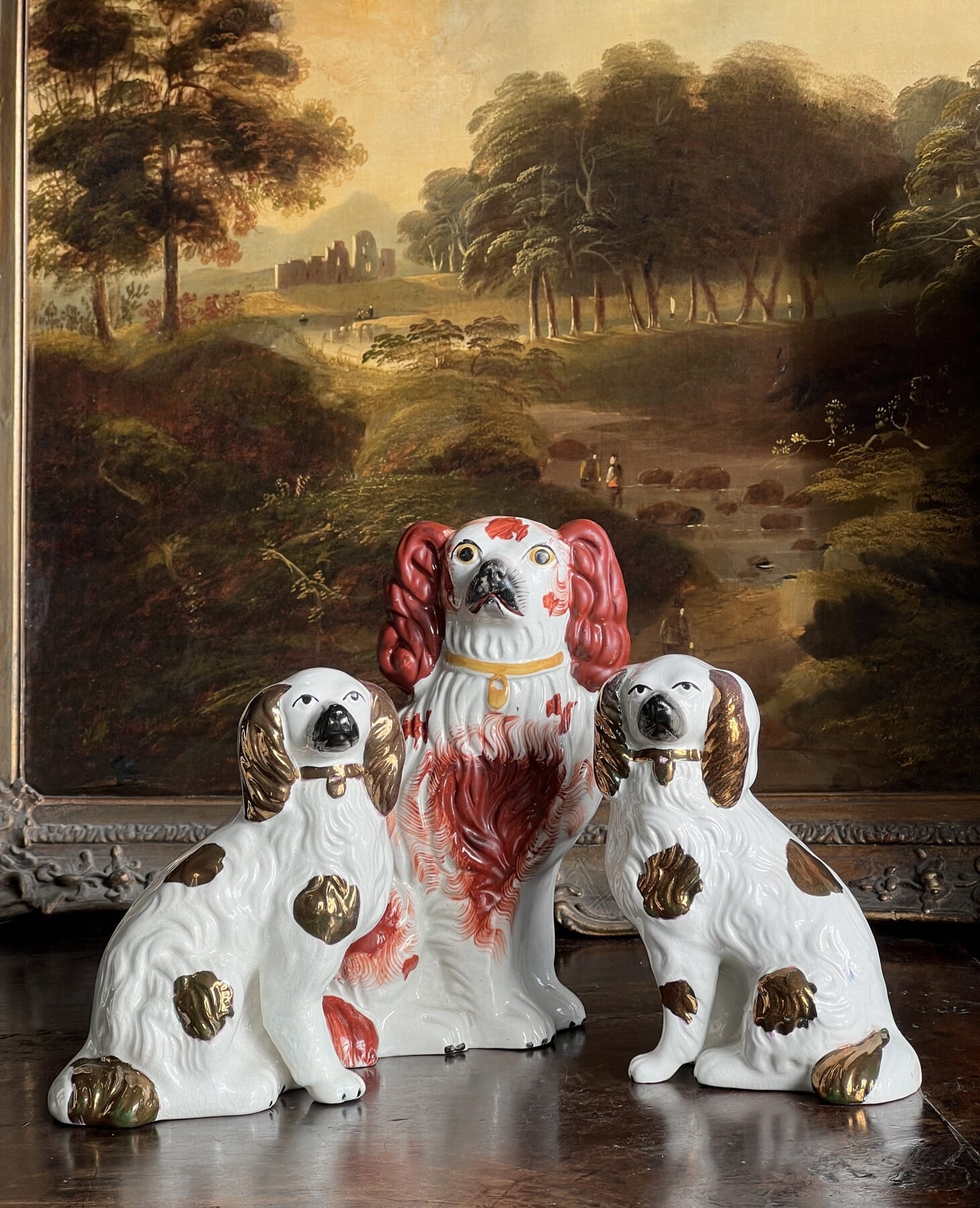
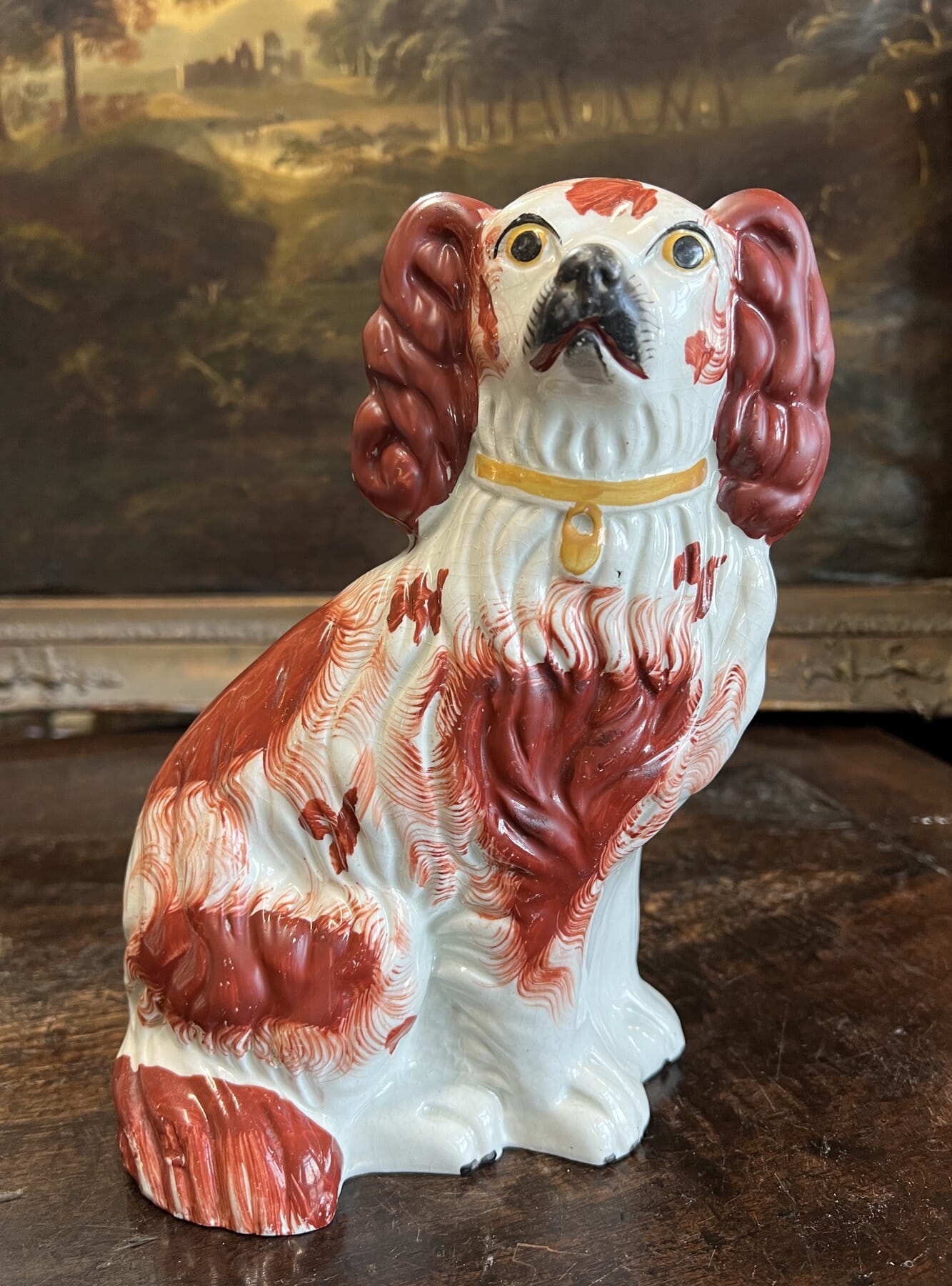
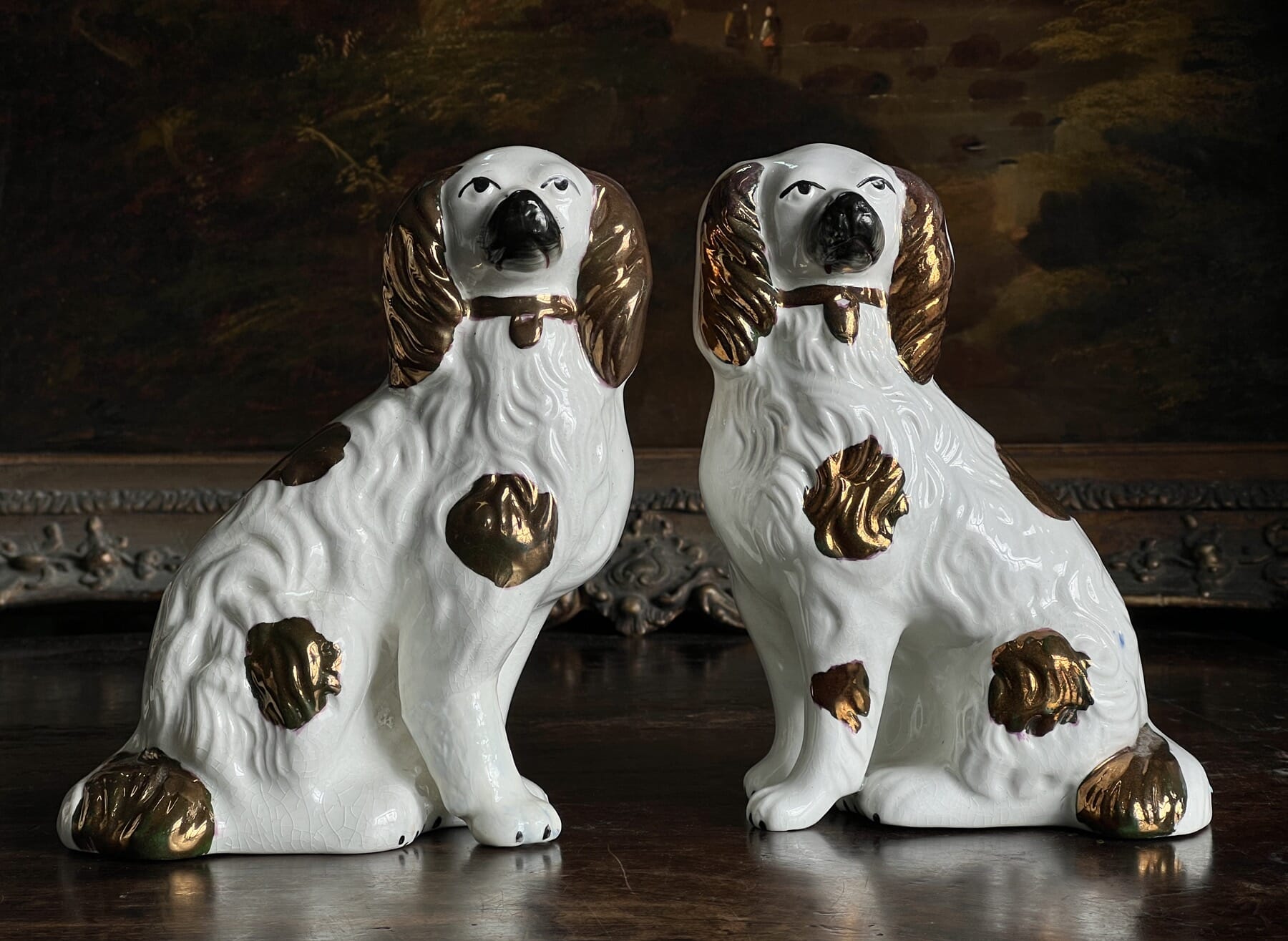
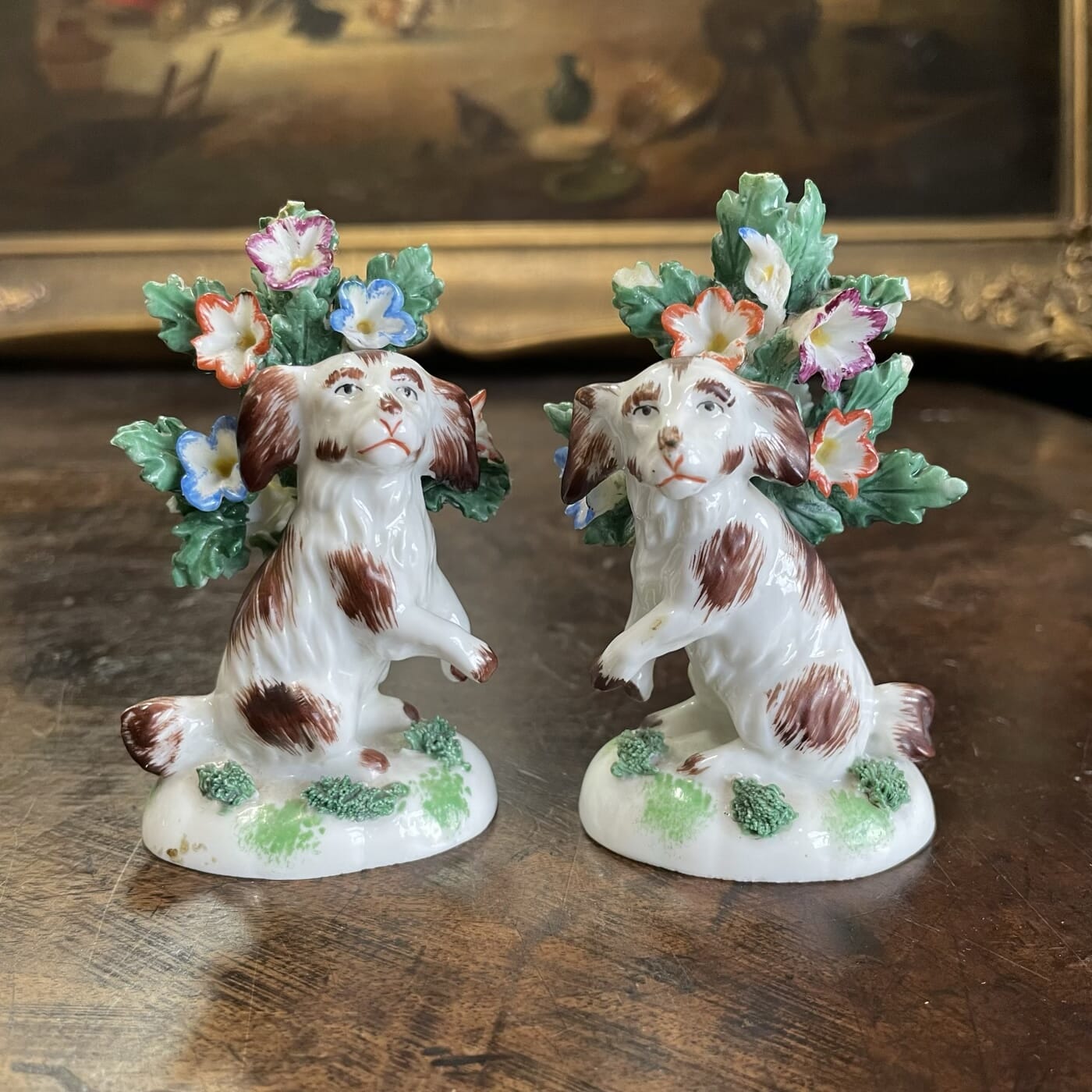
Staffordshire Dogs at Moorabool Antiques, Geelong

There’s some fascinating items in today’s varied ‘Fresh Stock’.
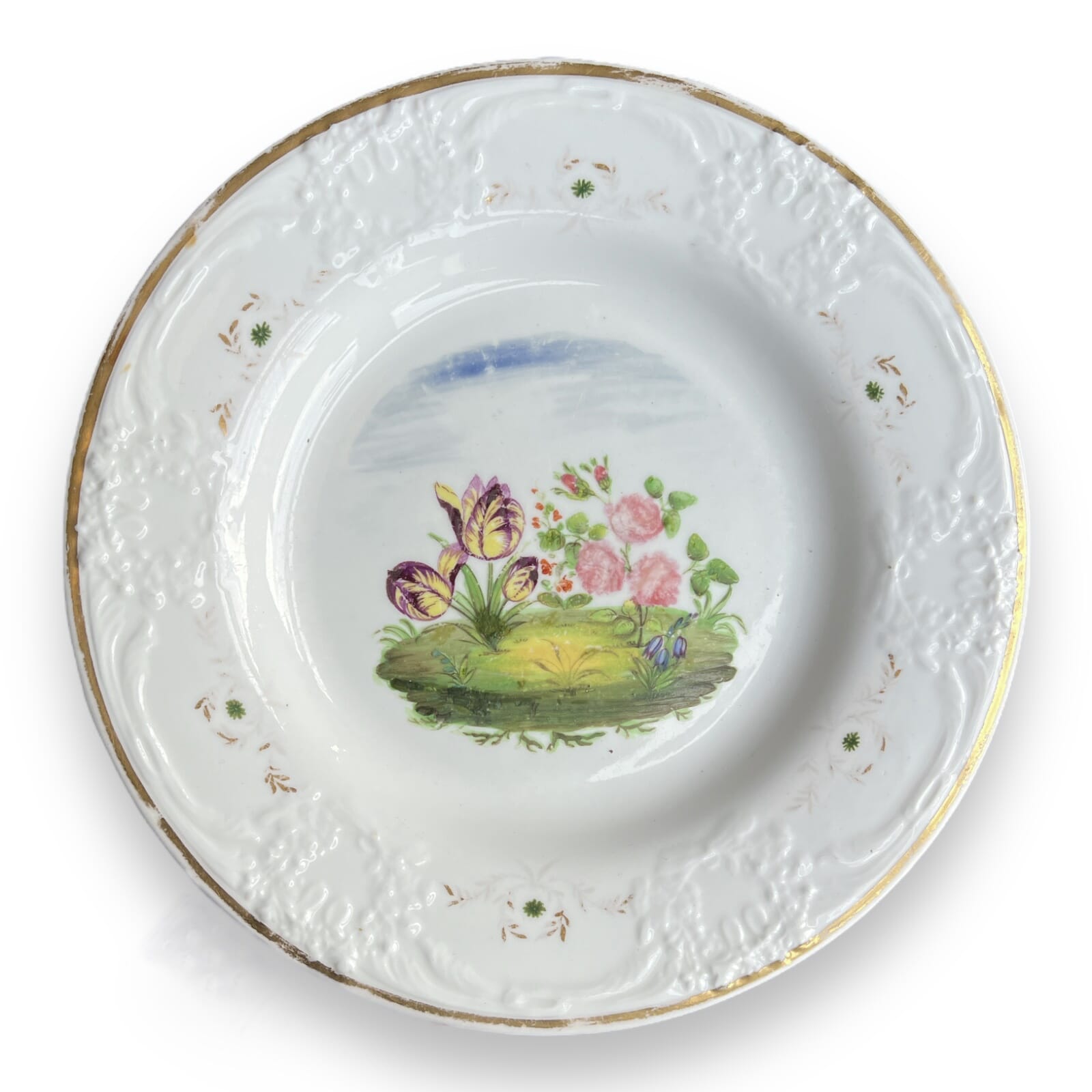
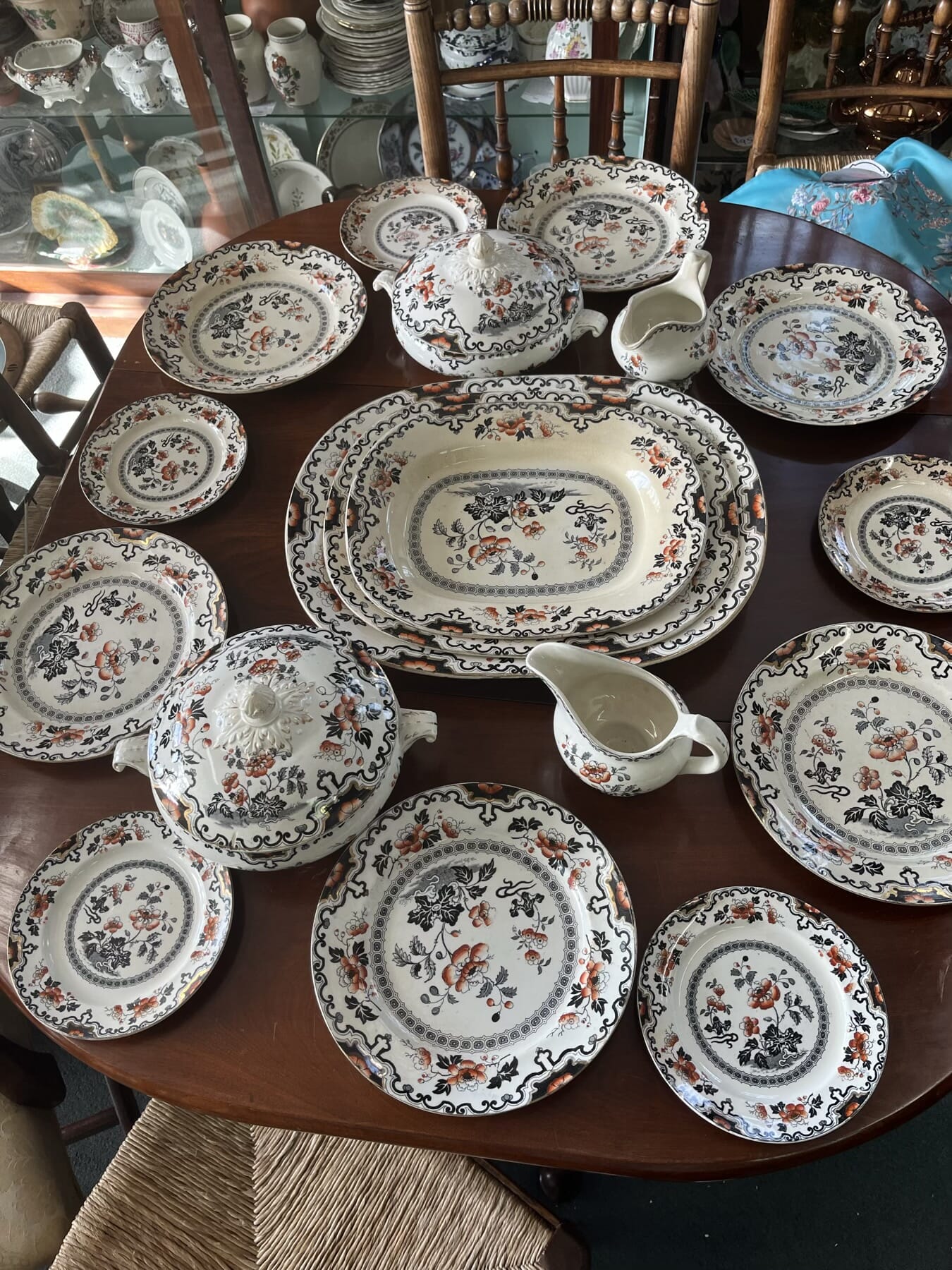
Let’s start with some porcelain: a part of an English service came in recently, instantly recognisable as a small factory only recently identified: Clews. This was exciting as it contains a documentary piece – the oval serving dish has a pattern number. Why is this exciting? none of the other pieces do, and it now allows us to identify this particular pattern as ‘Clews 169’.


Did you know…. if you hold your mouse over the word ‘Clews’ , it will pop-up a definition – click on it & it will take you to an in-depth page dedicated to Clews!

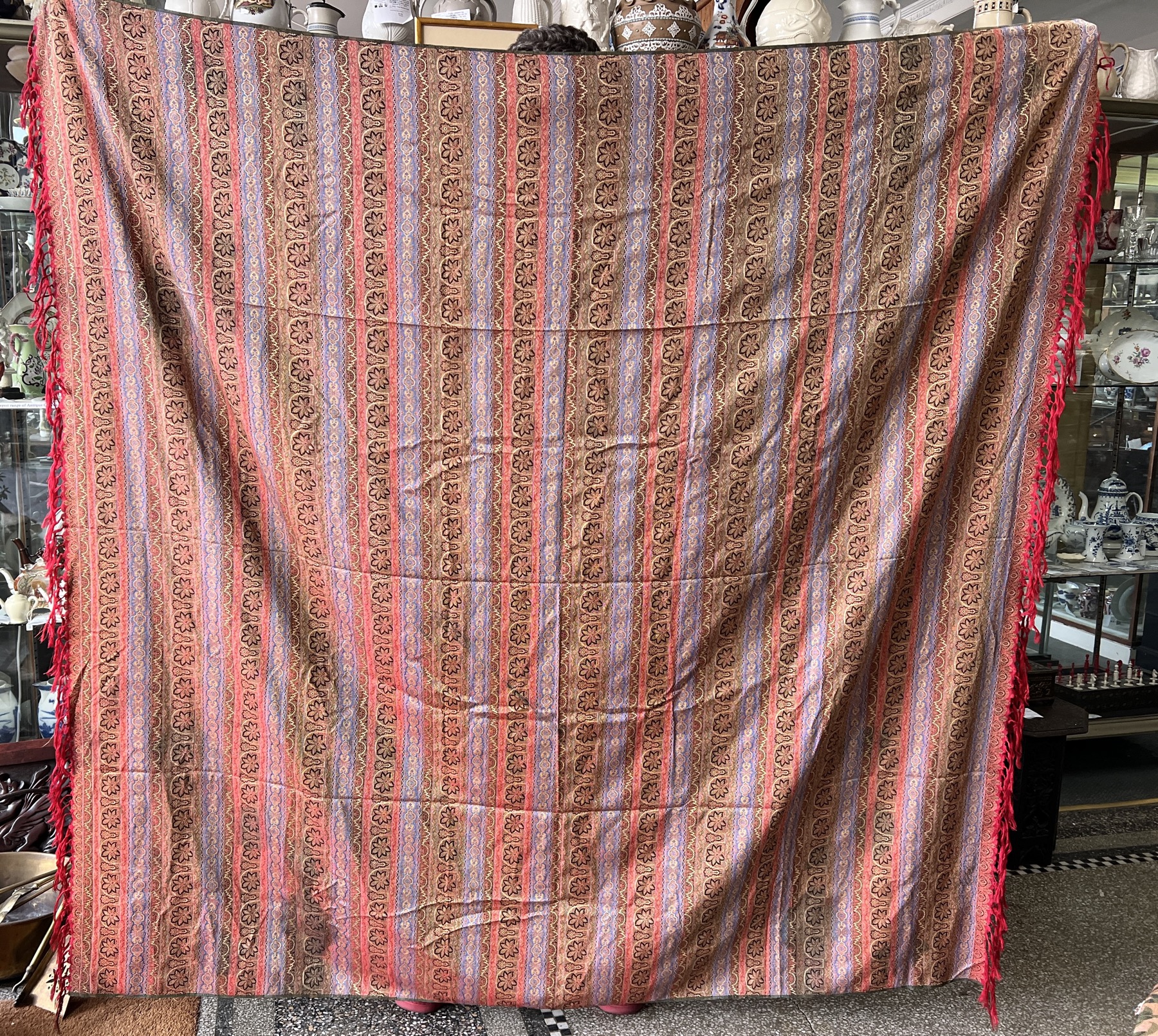
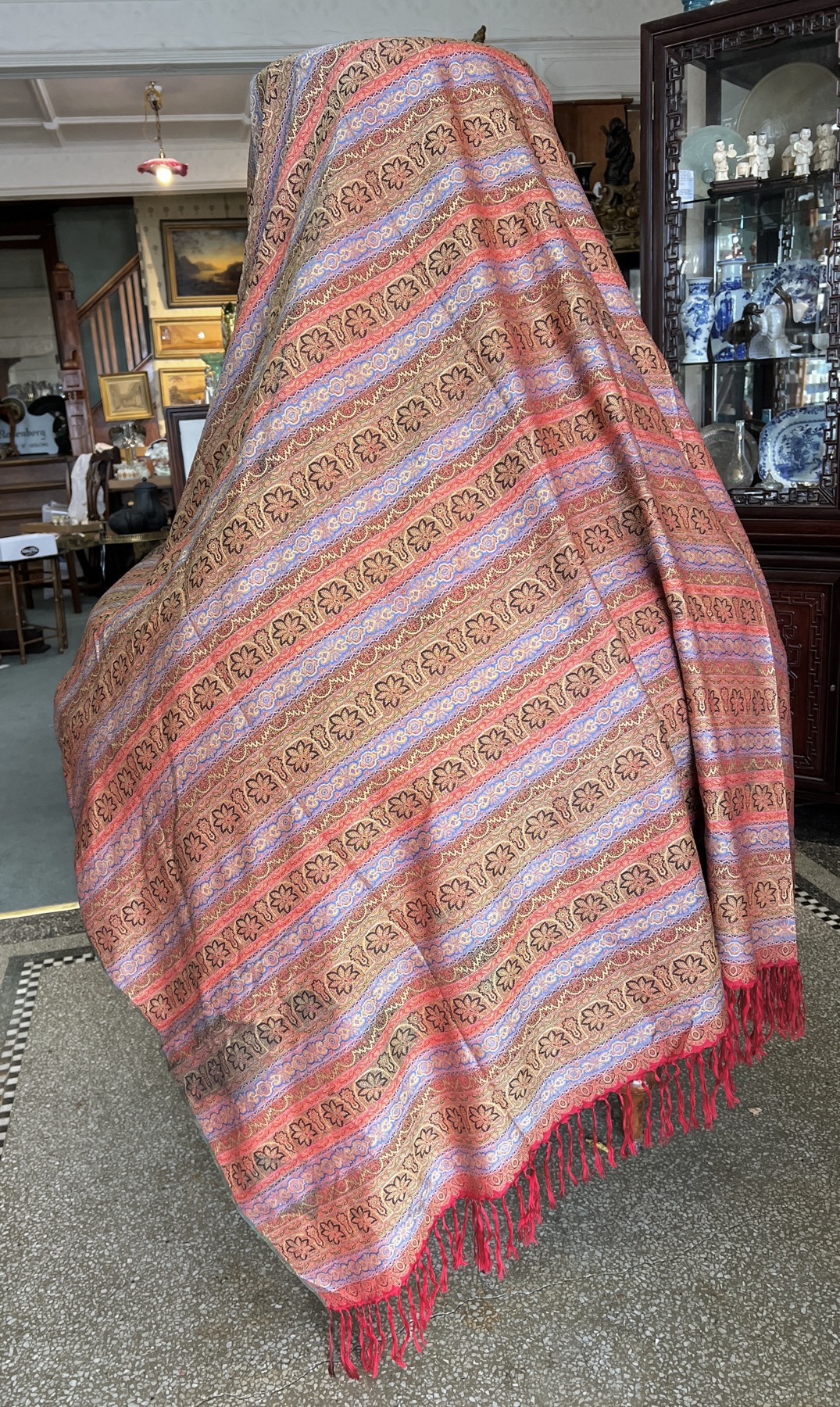
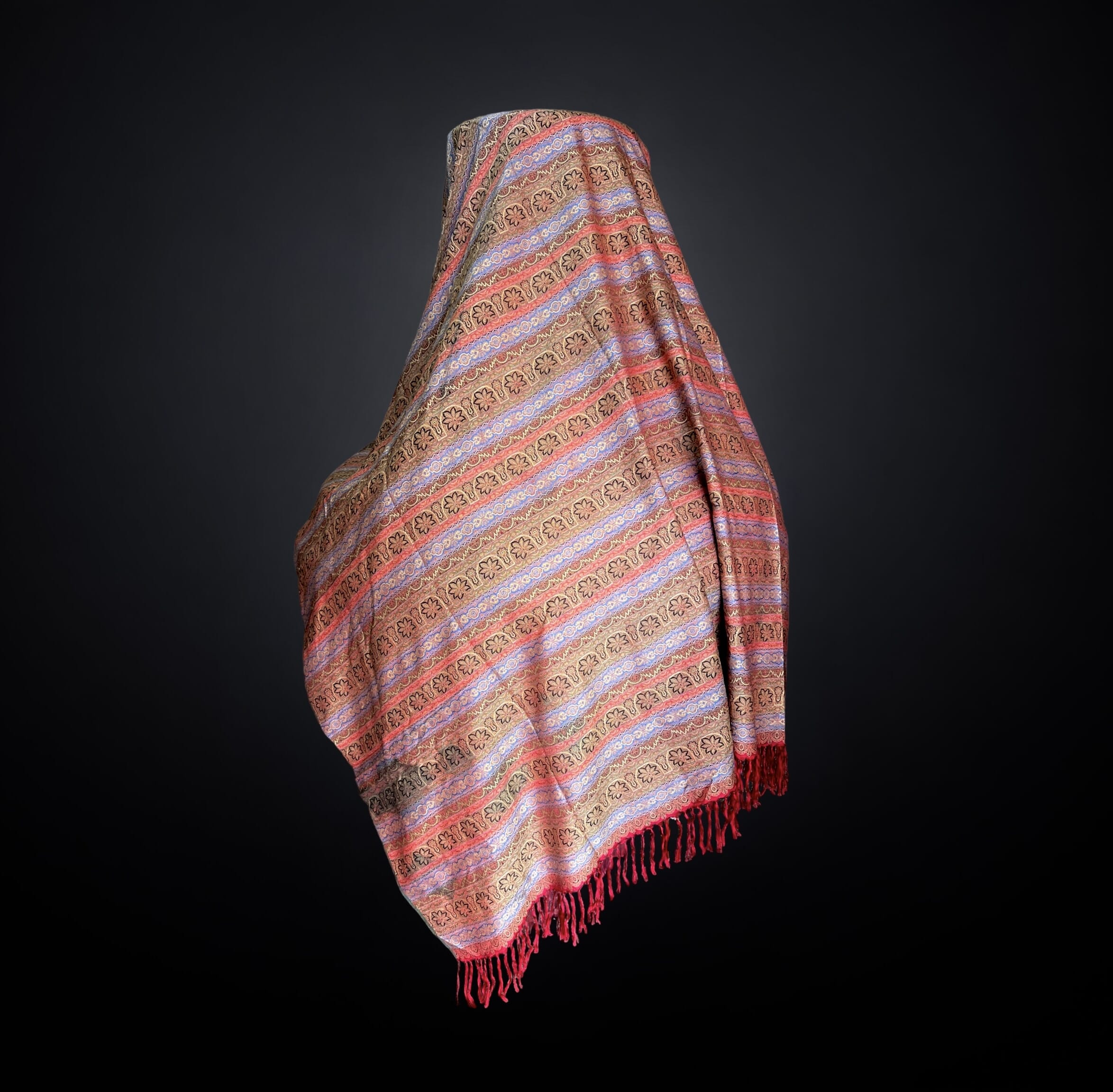
Paisley Cashmere Shawl , mid 19th century

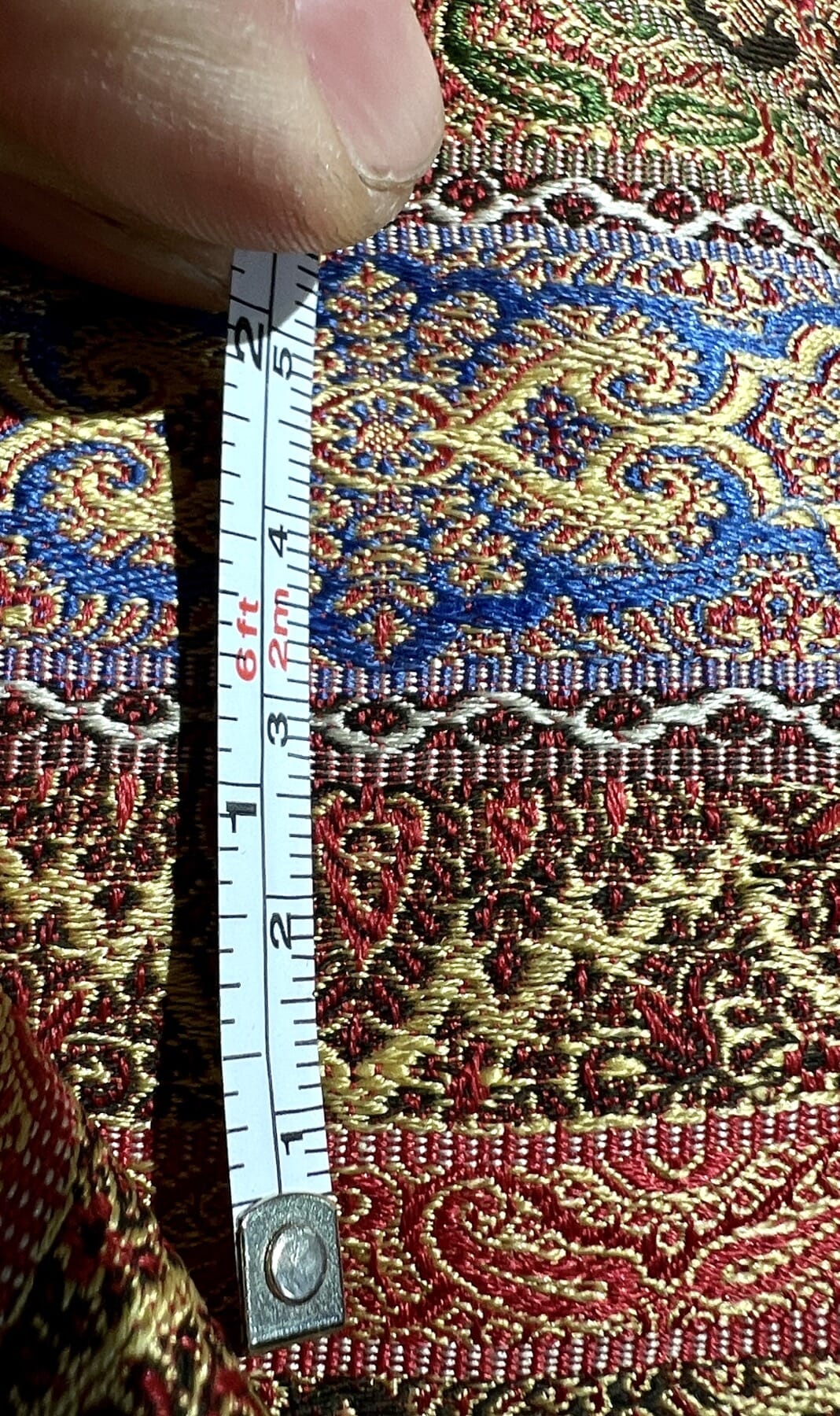
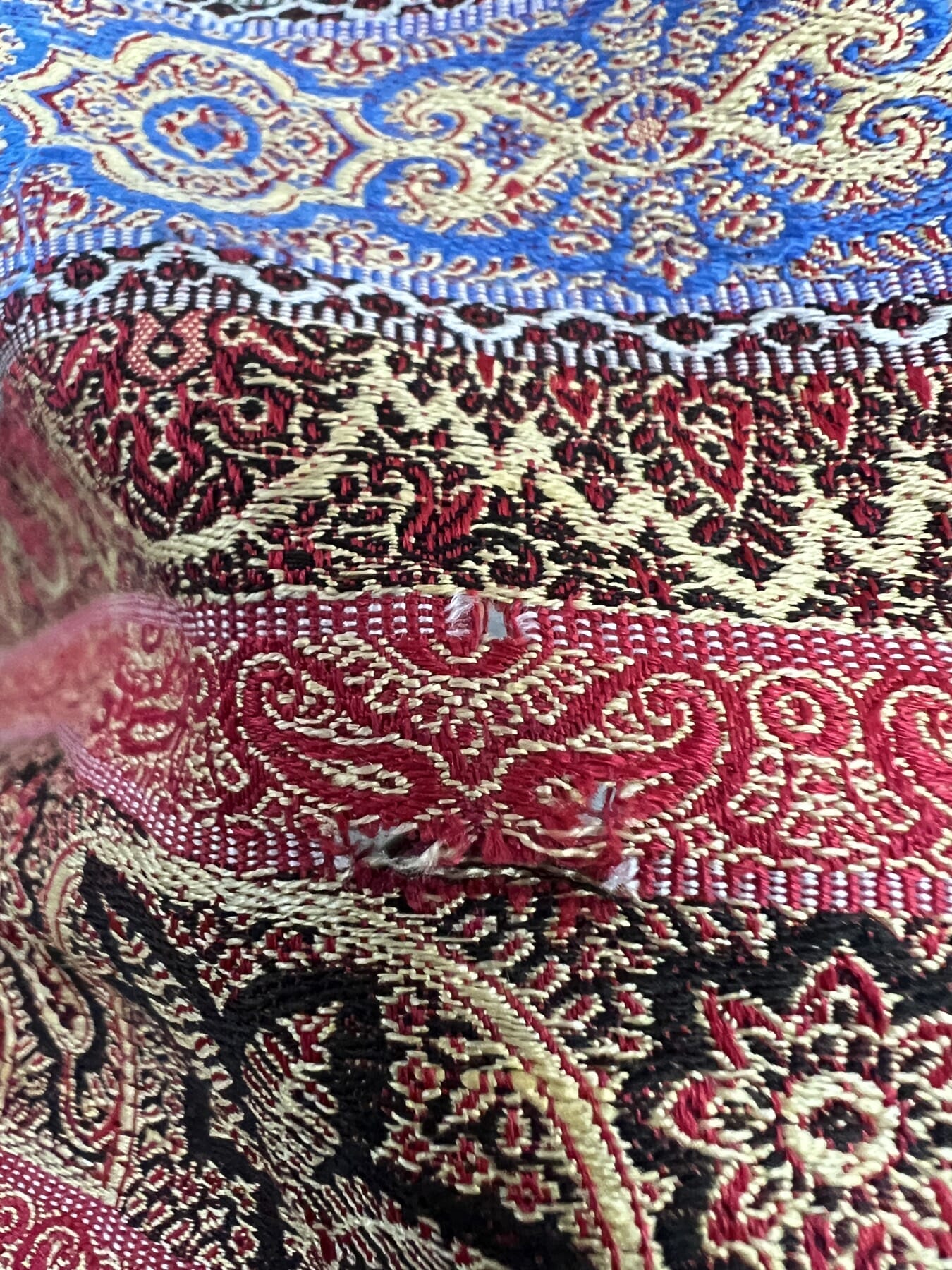
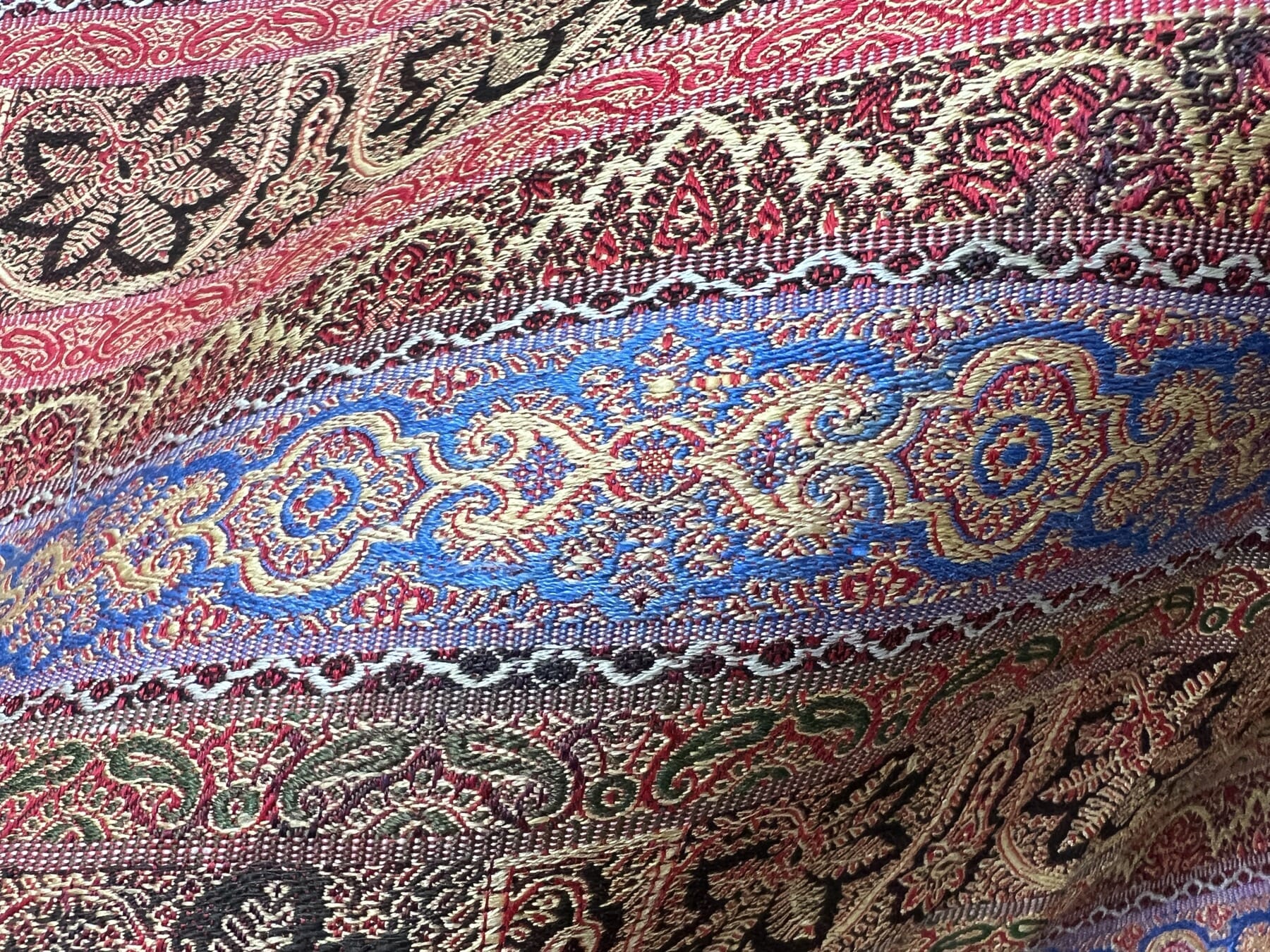
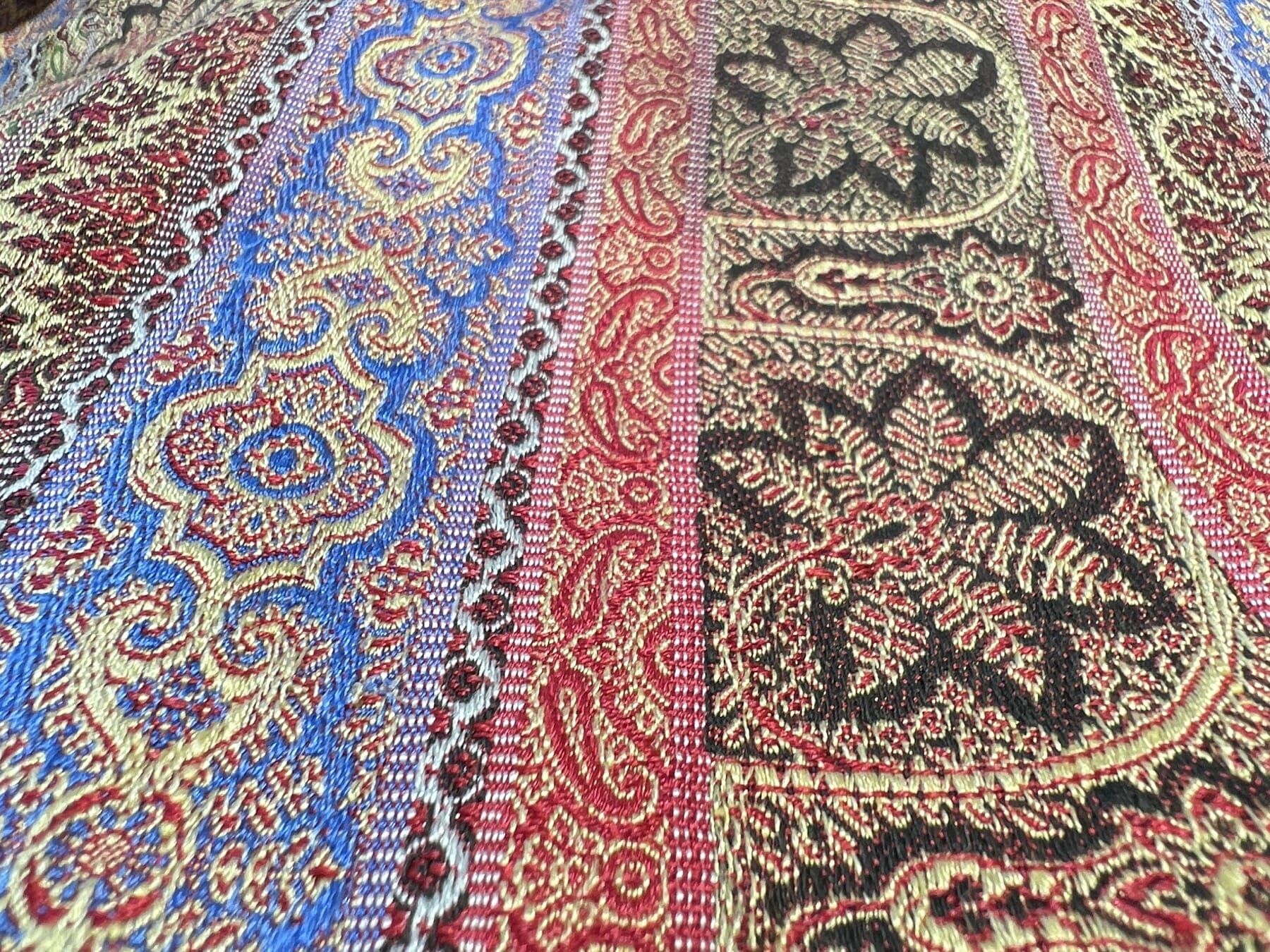
A fabulous piece is a very rare textile – rare because it is in almost pristine condition. It’s a Paisley Cashmere Wool shawl, dating to the mid-19th century when the Cashmere industry in the UK was at its peak. This example is superb, both in the fineness of the weave, the sophistication of the design – which is double-sided, not single as some are – and more rare, the brilliant unfaded condition.

How can we date it? When it came in from a local charity shop (on whose behalf we are selling it), it had a note, written with a fountain pen, stuck on with a 19th century pin, which read: “Came to Australia in 1861”.

It seems someone came to Australia with it in their luggage- and when they arrived, perhaps it was too precious to wear, so it’s been sitting in a drawer ever since!

Paisley Shawl at Moorabool Antiques, Geelong
Antique Paisley Shawl at Moorabool Antiques, Geelong

It was intended to be worn – the photo below is a beautiful Pre-Raphaelite painting, by William Holman Hunt, depicting his wife, Fanny – tragically she died before he finished the painting in 1868.
Having handled the same quality Paisley shawl as she is wearing, Hunt must have spent an age fussing with the super-fine detail of the repetitive pattern of the shawl in his painting: truly a toil of love….

STAFFORDSHIRE

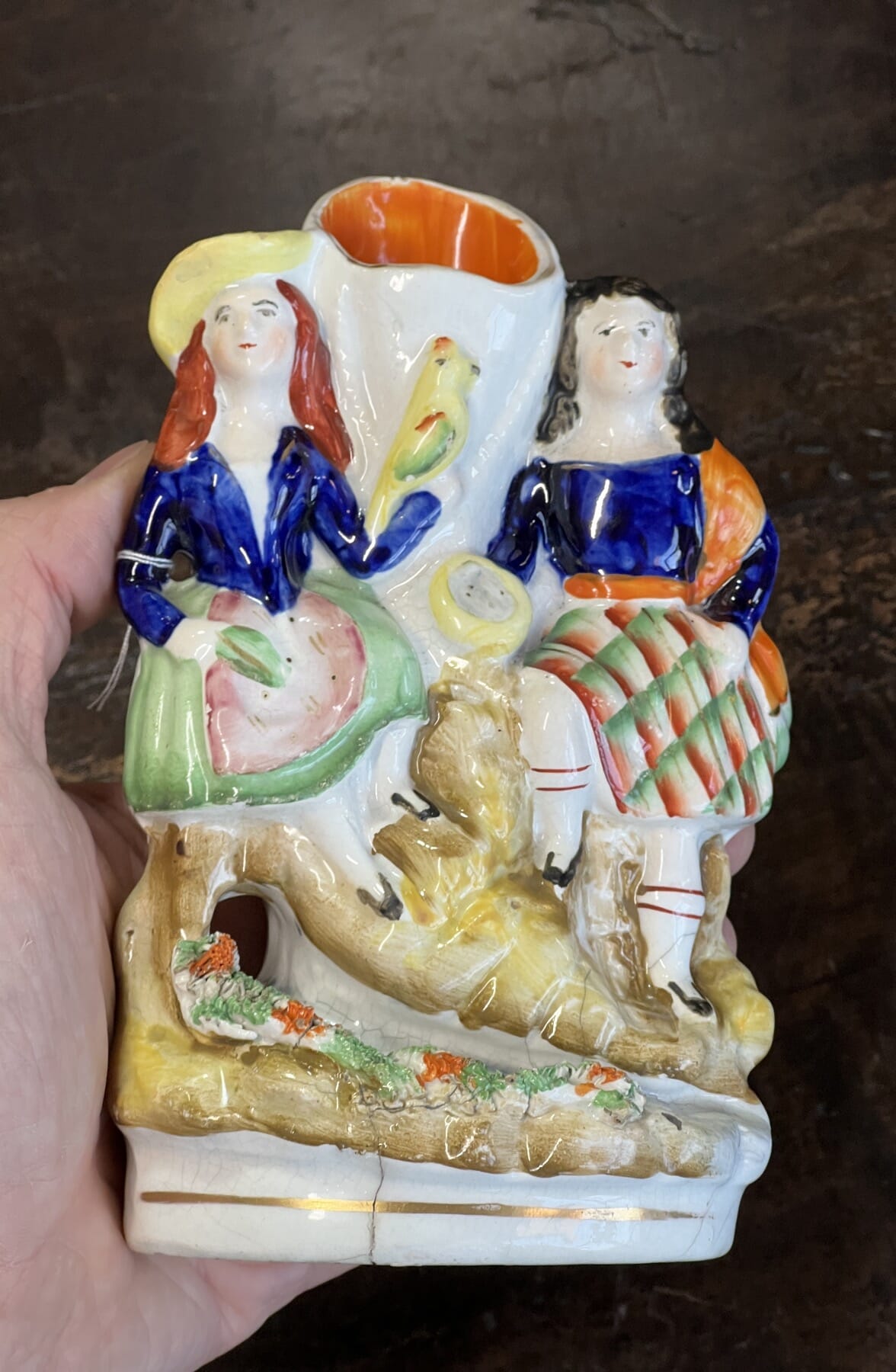
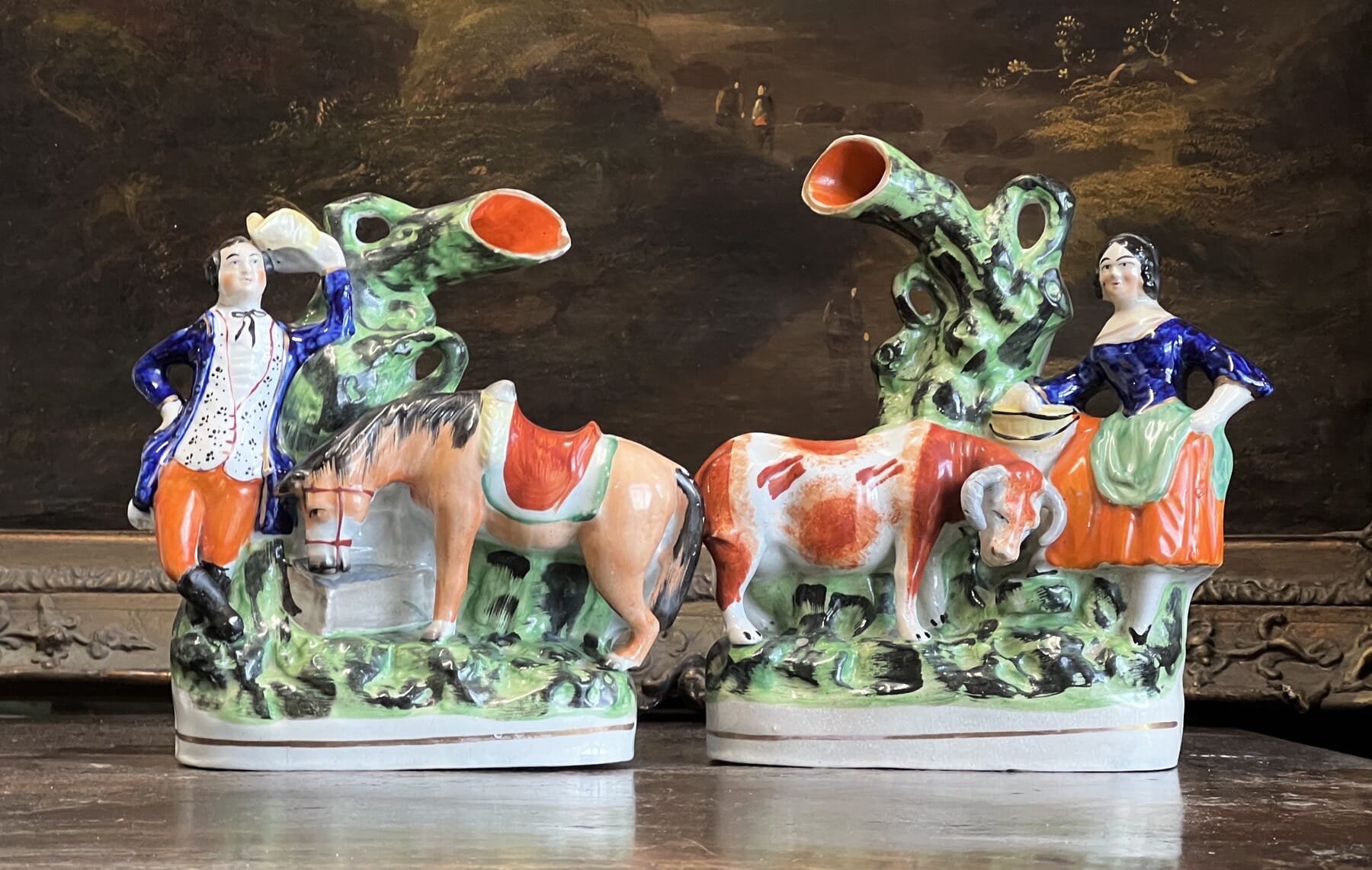
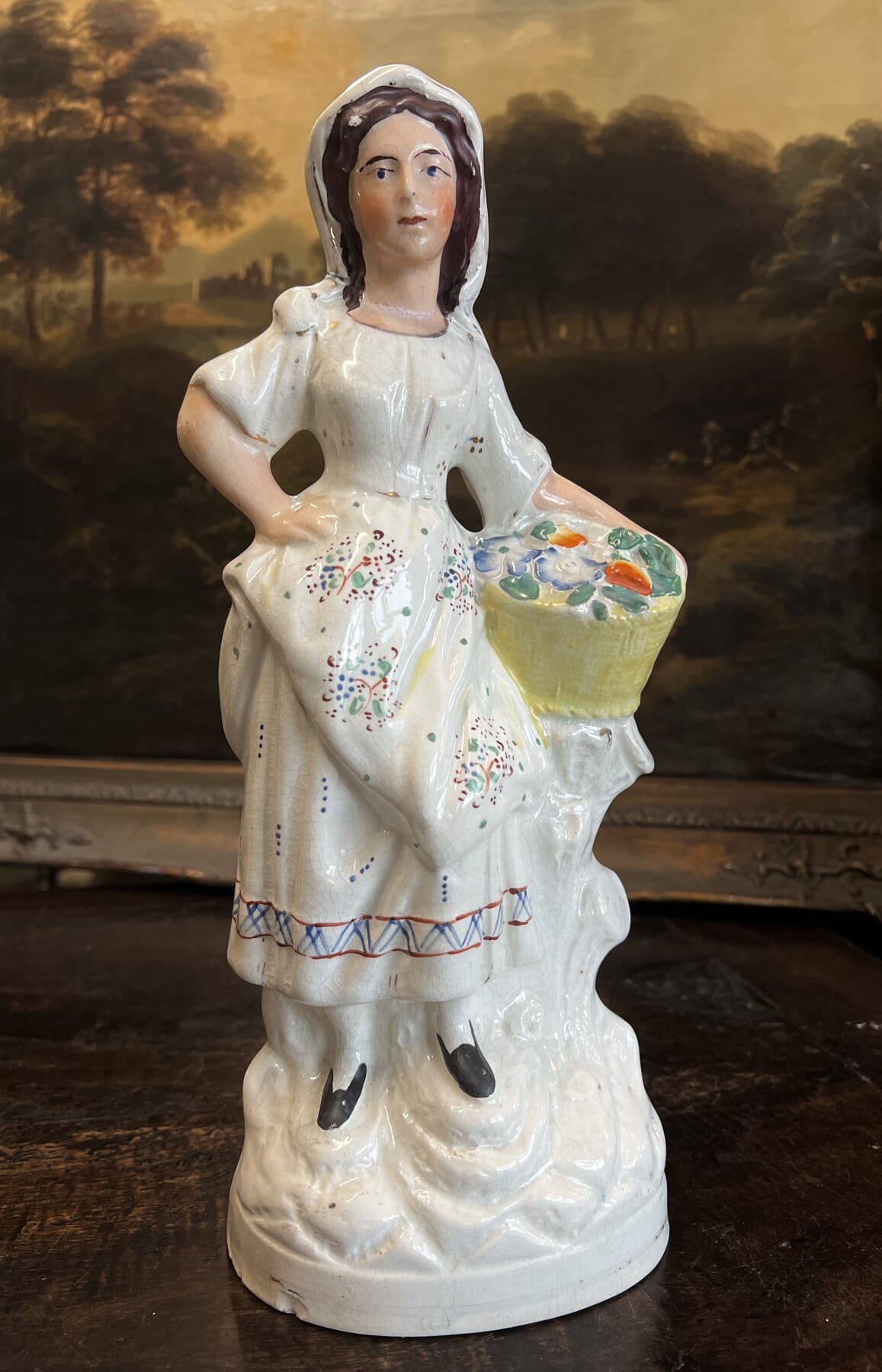
There’s a group of interesting Staffordshire Figures, including some charismatic dogs.

Posted on

Fresh Stock at Moorabool

Today we have a varied selection for you to browse.

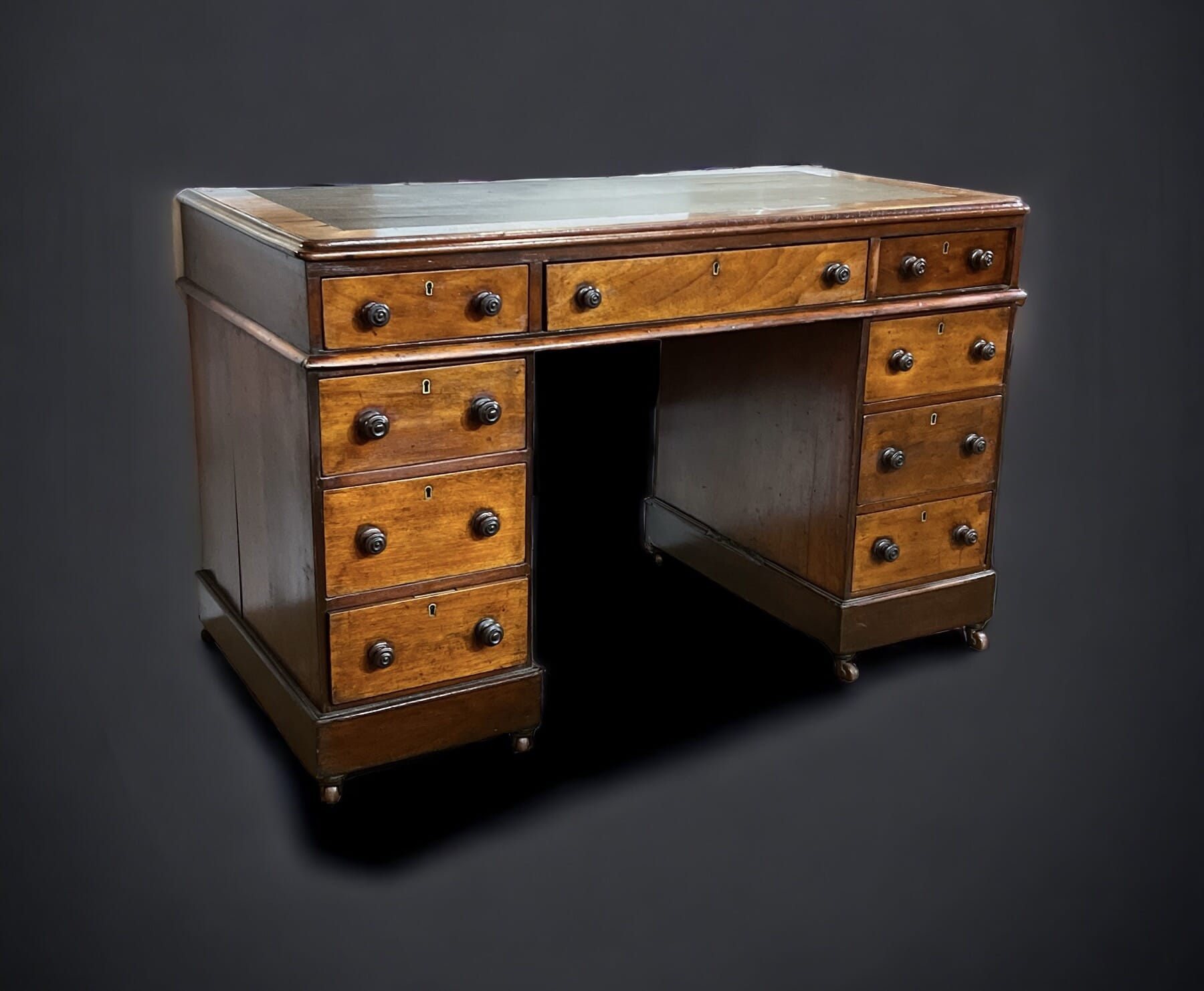
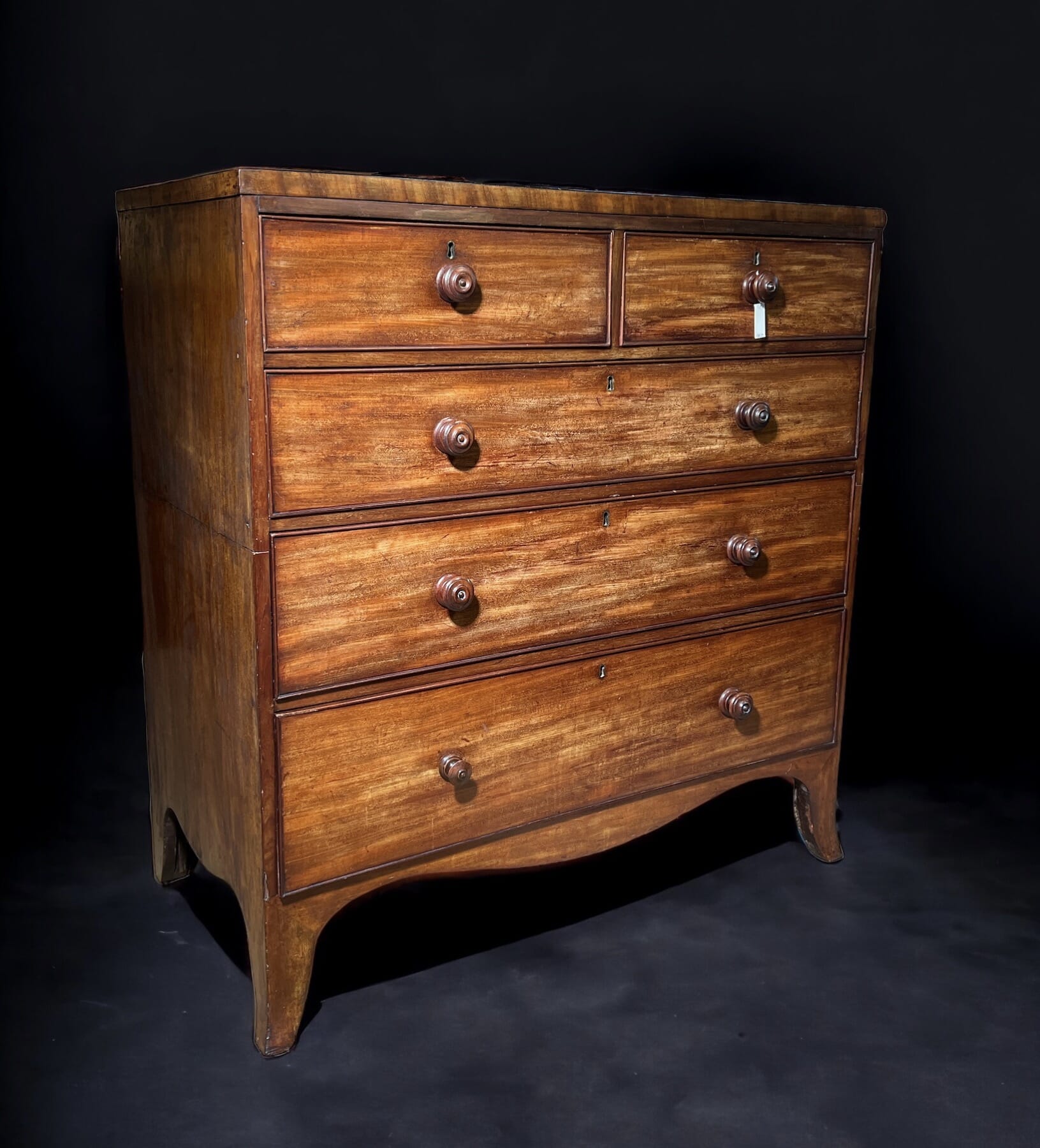
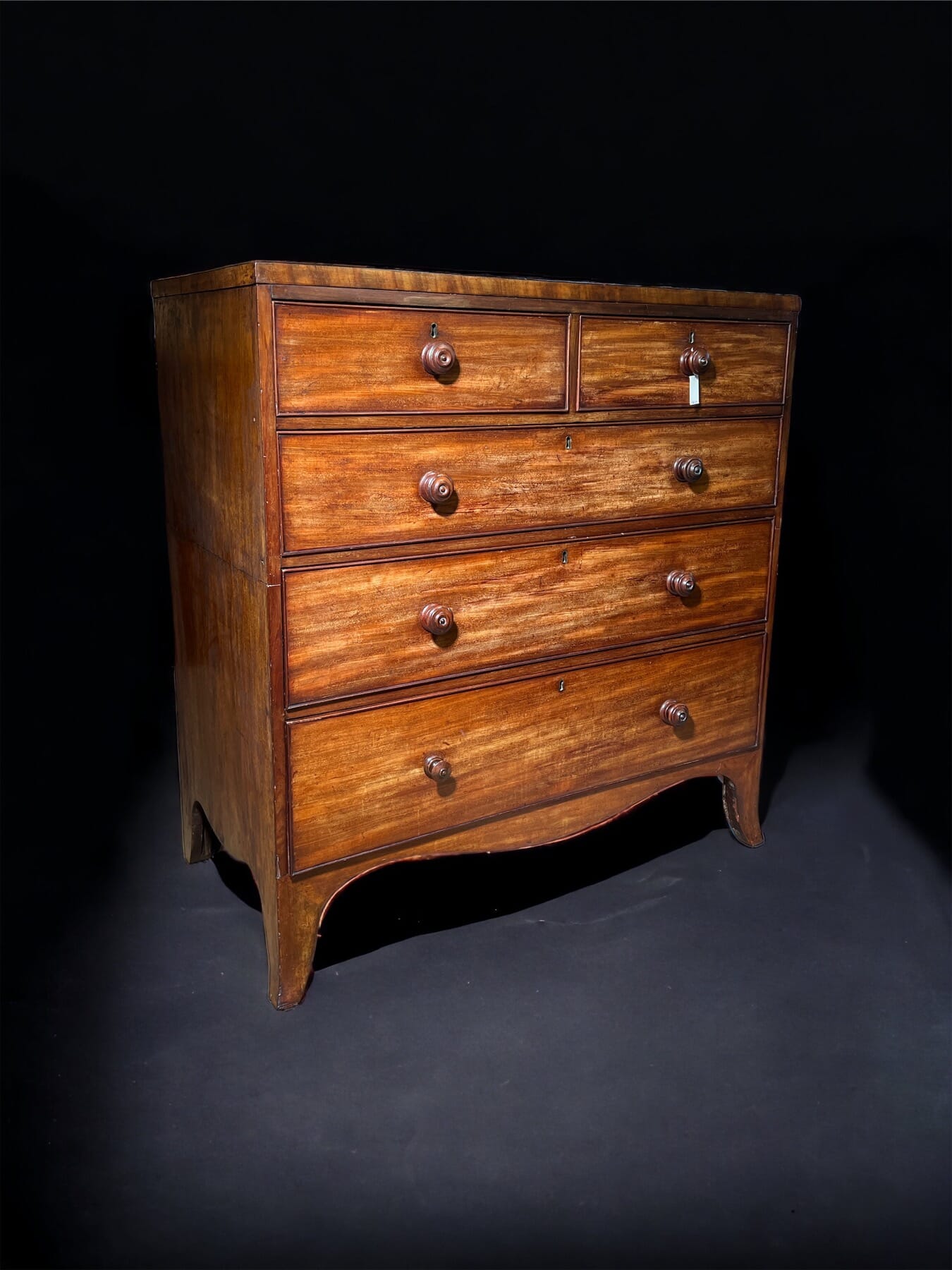
There’s a group of Georgian & Victorian furniture including an Australian Cedar desk and a George III Mahogany chest-of-drawers – both very useful and decorative at the same time.

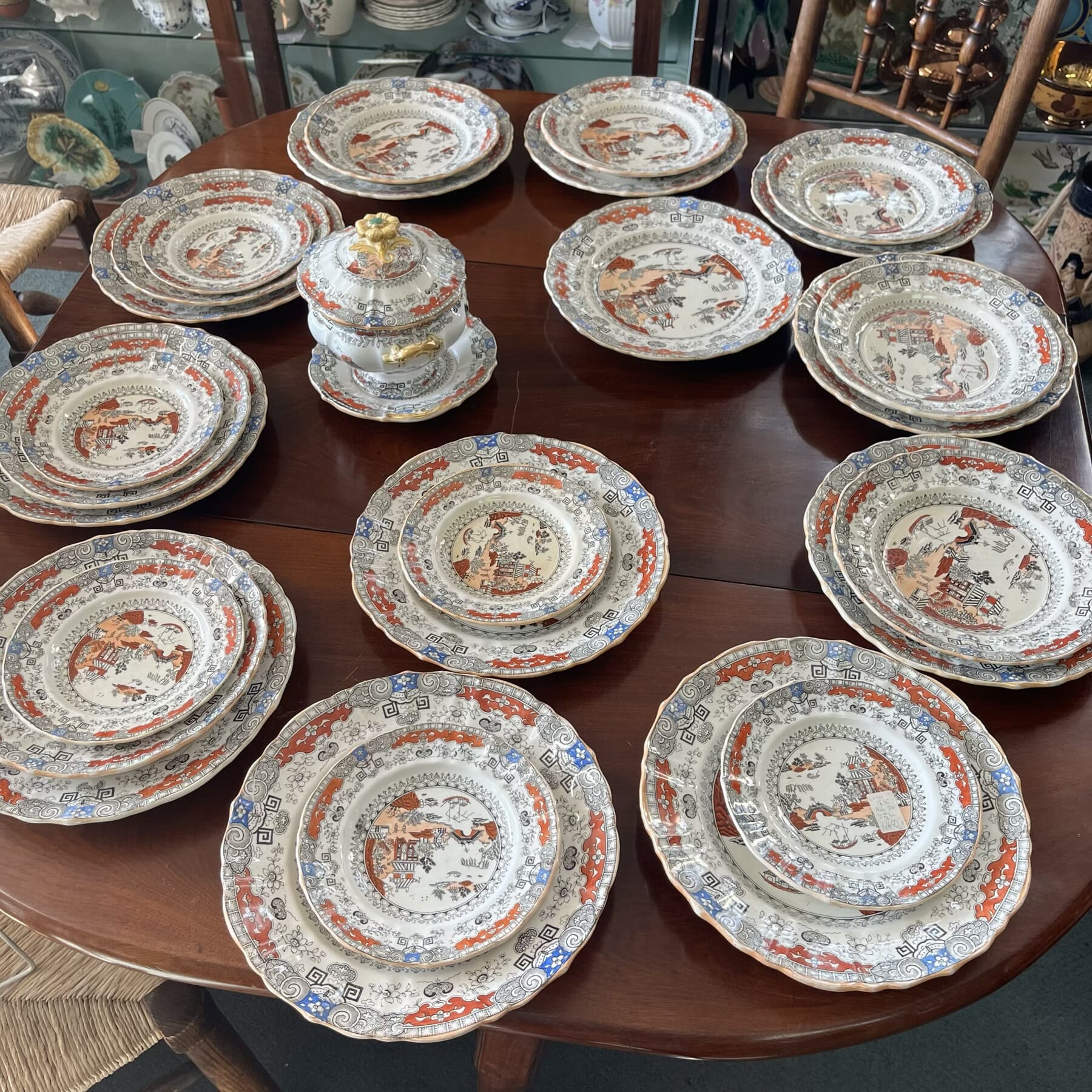
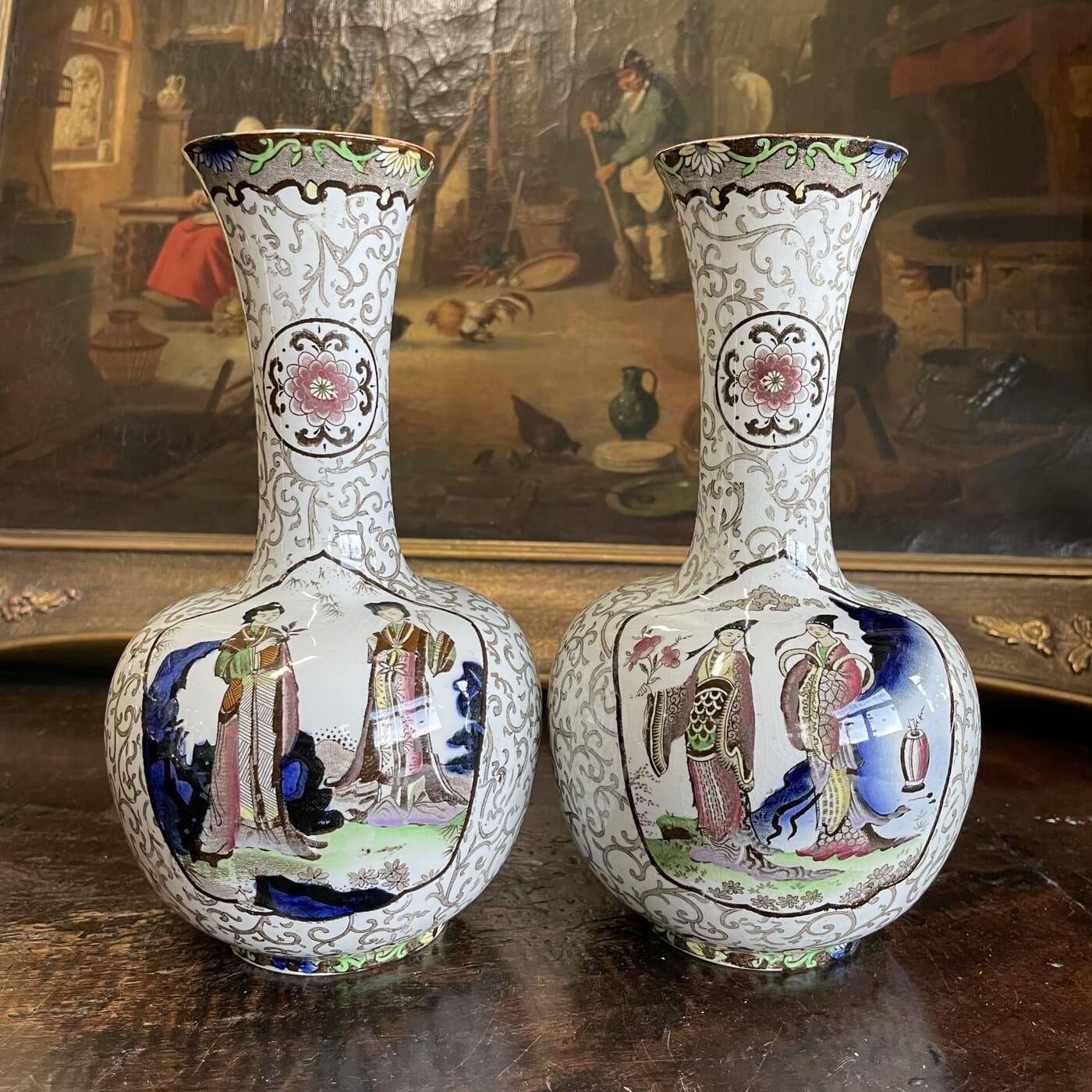
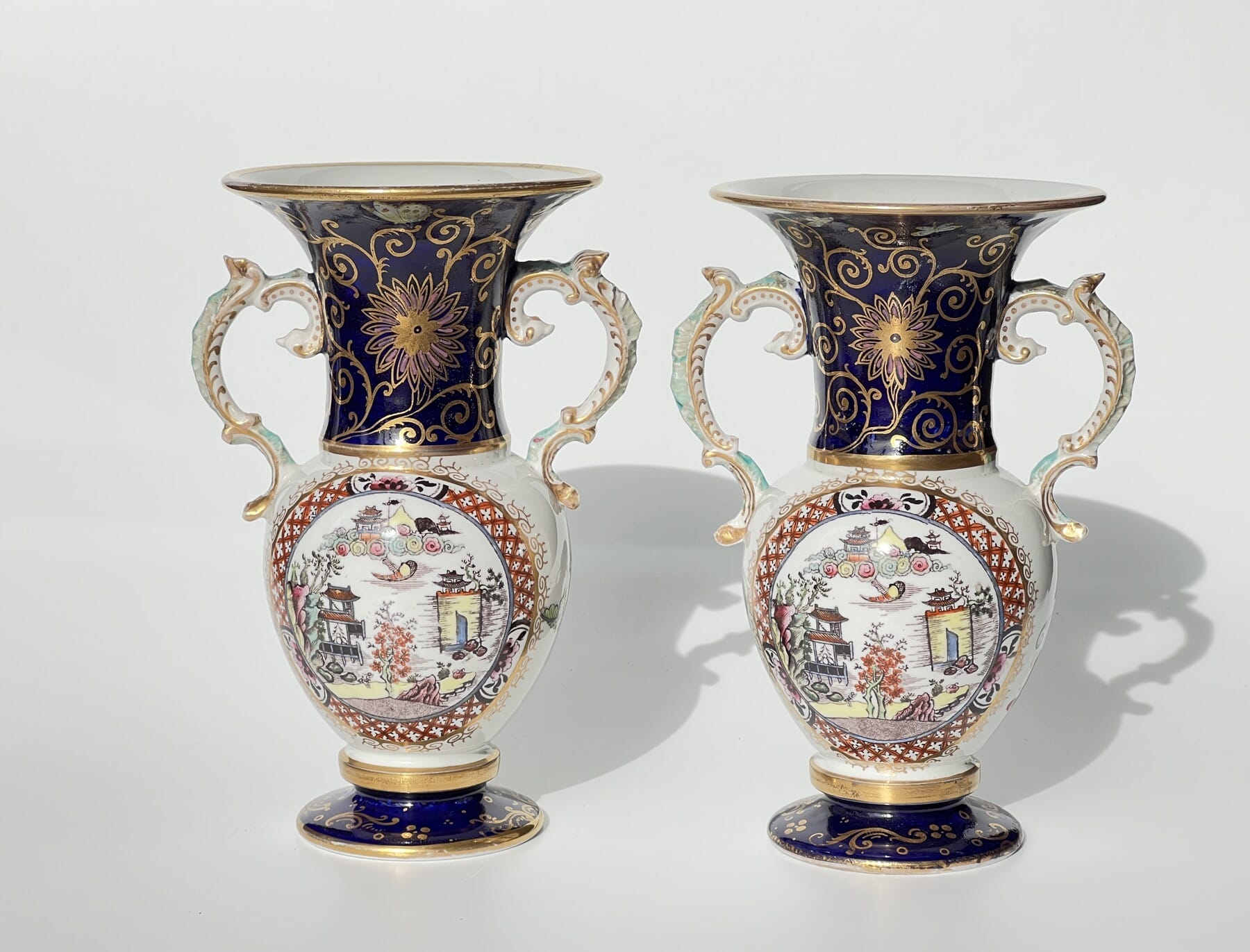
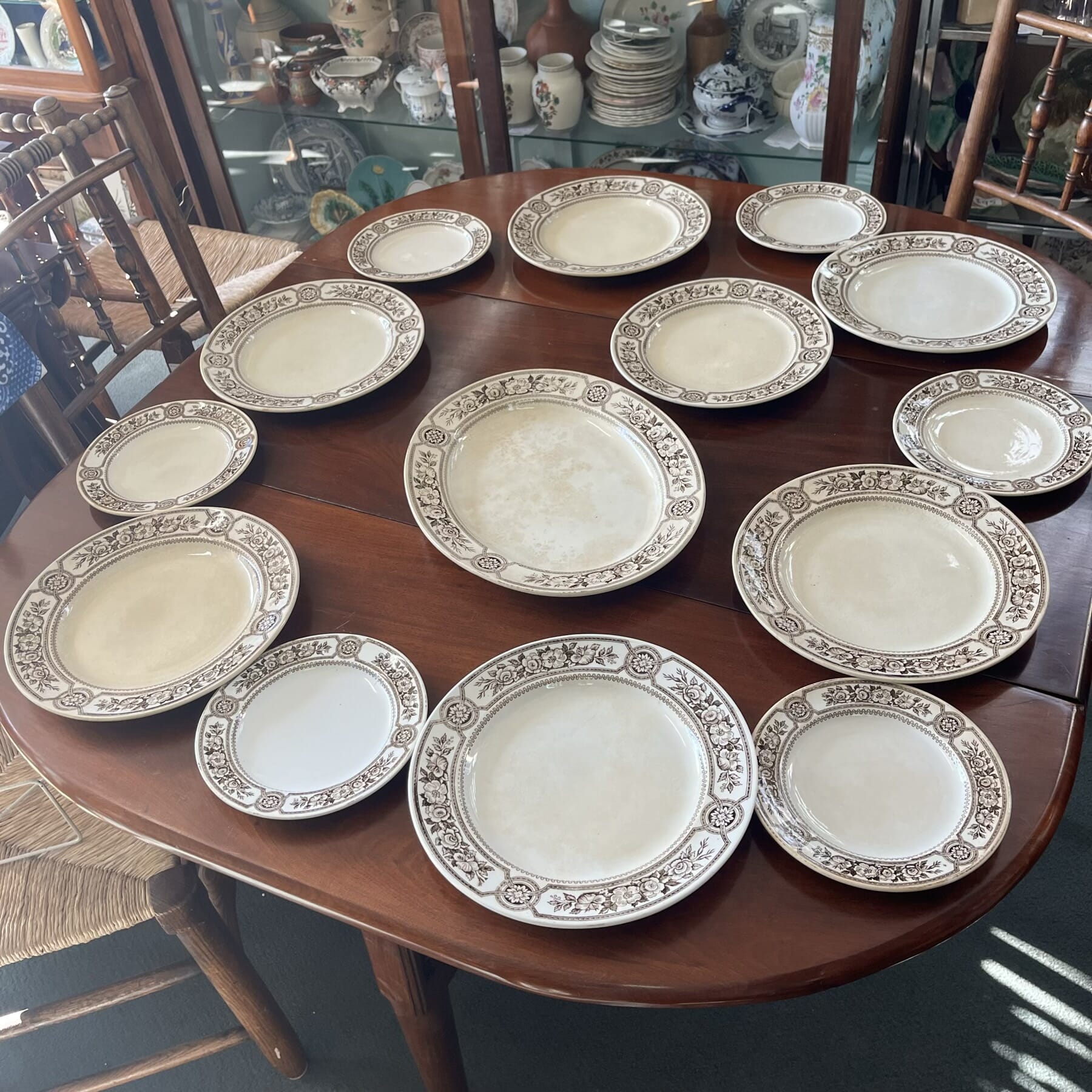
There’s an interesting selection of ceramics, including a rare pair of Mason’s Ironstone vases, and a Mason’s table service that would be fun to use.

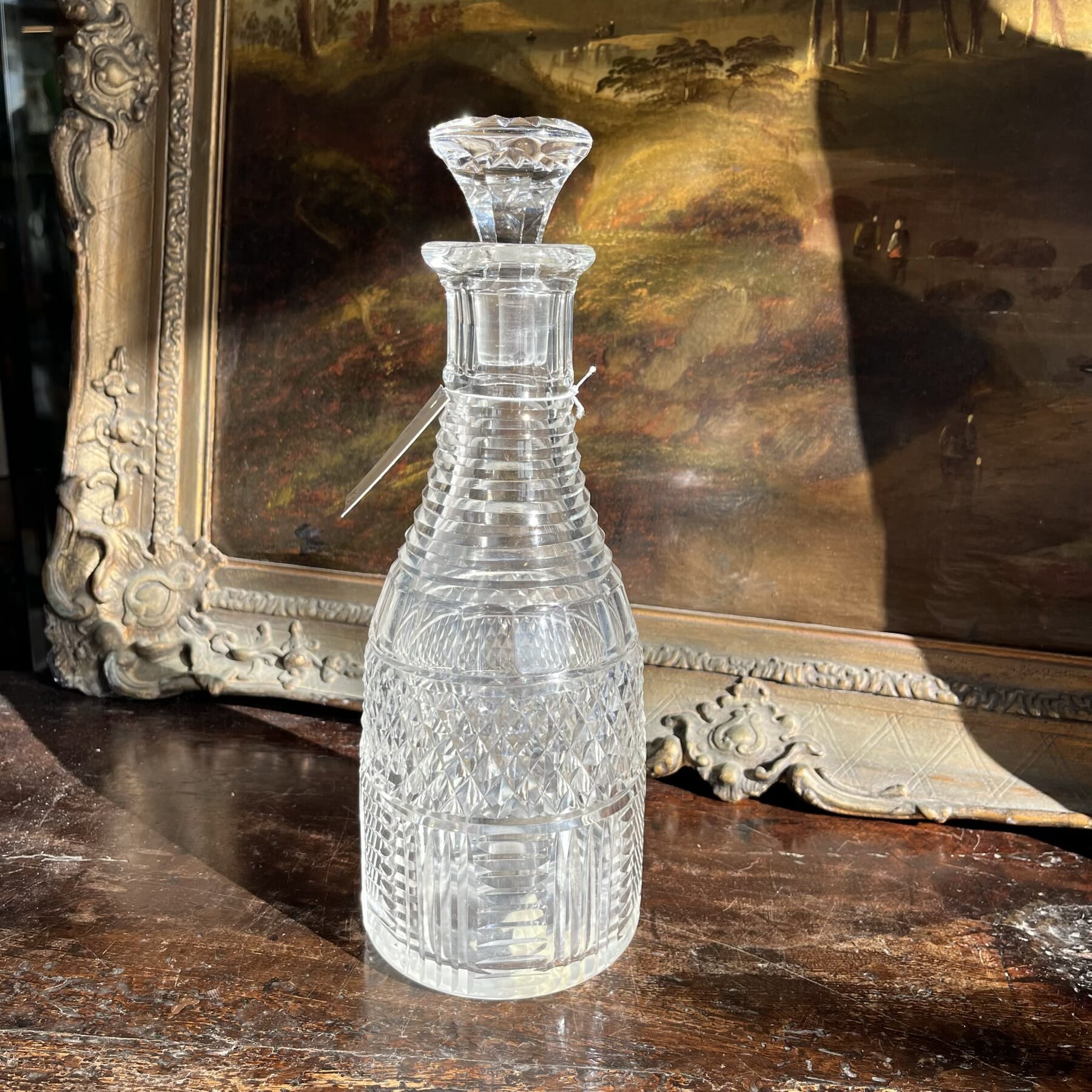
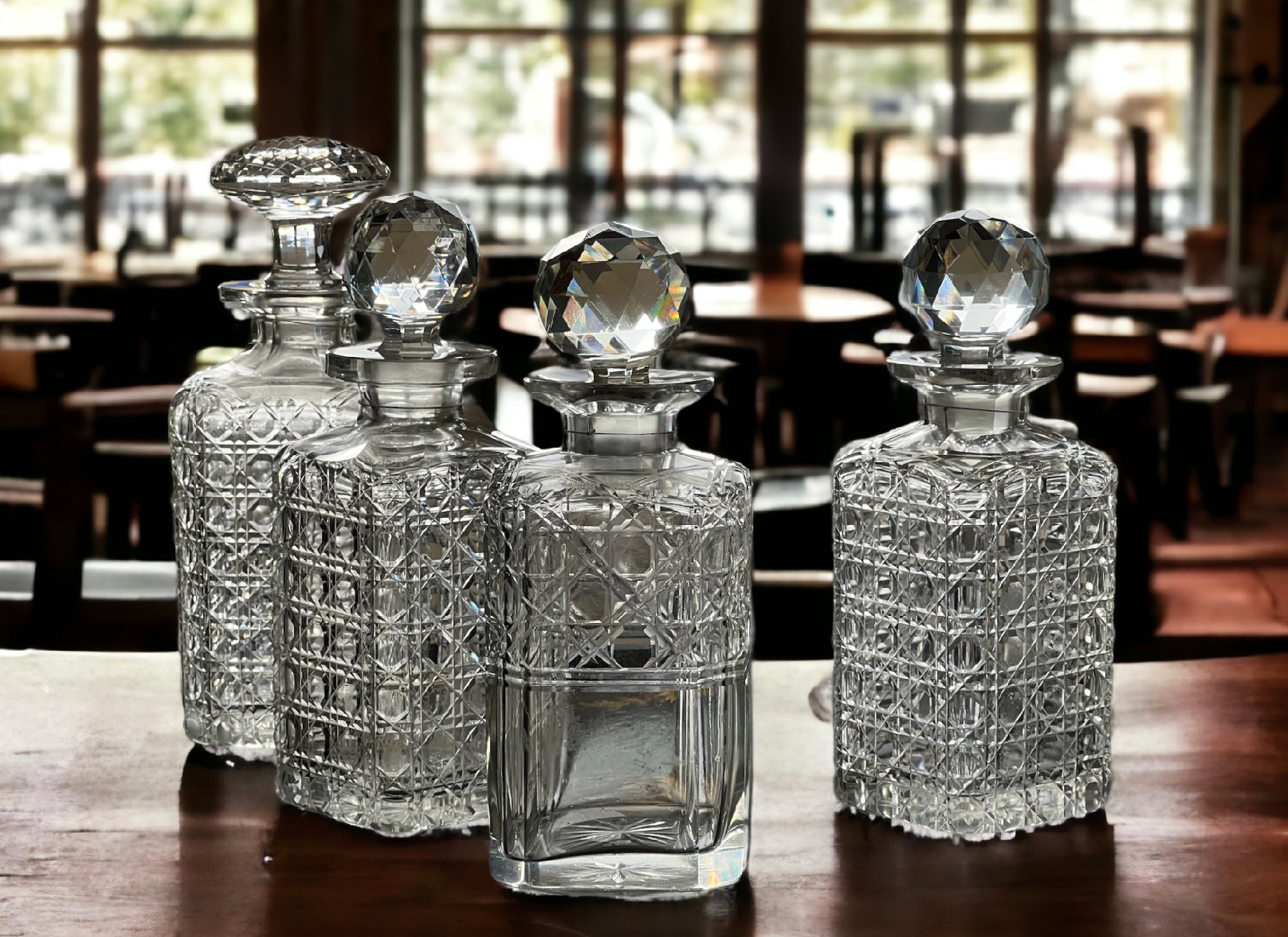
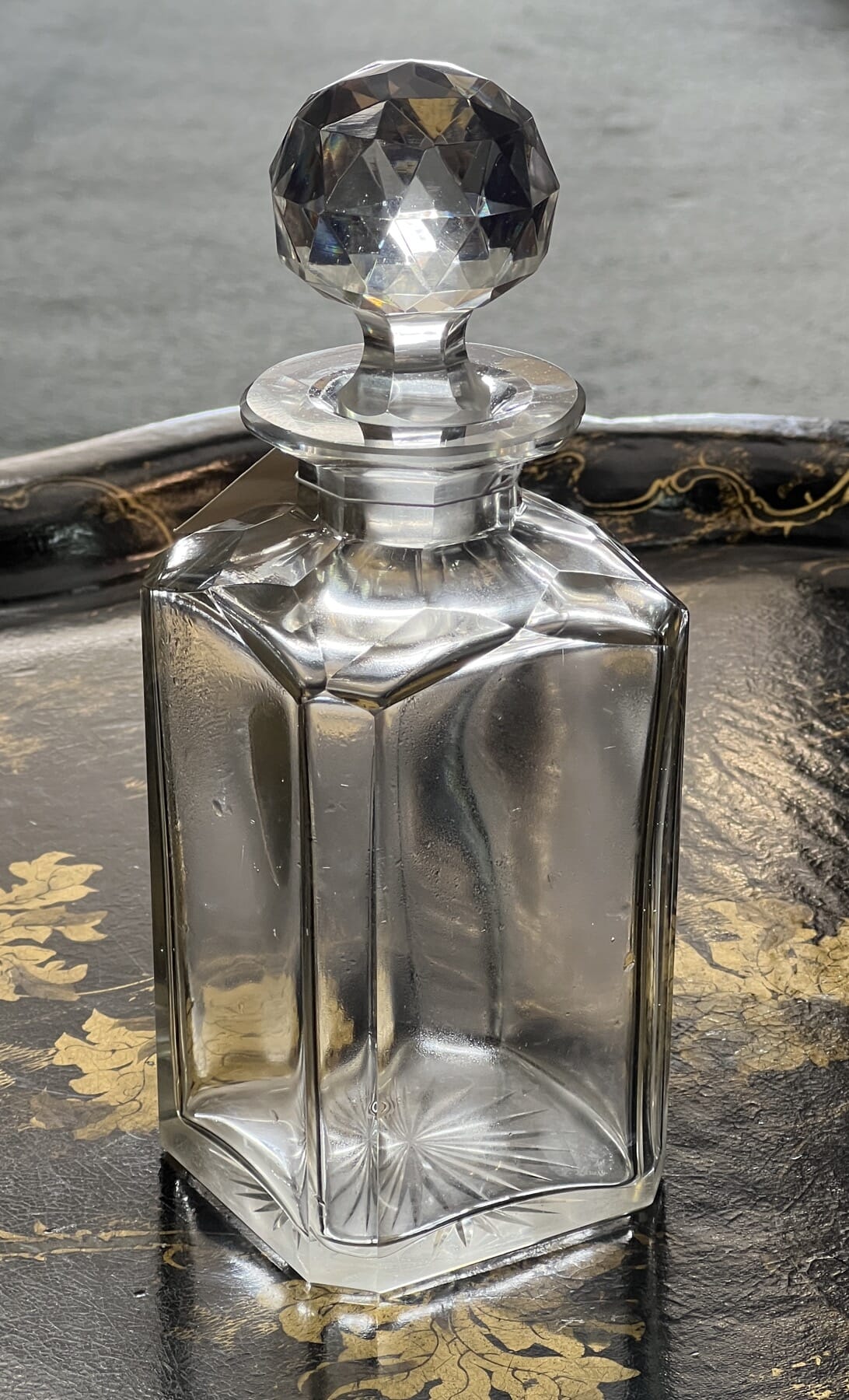
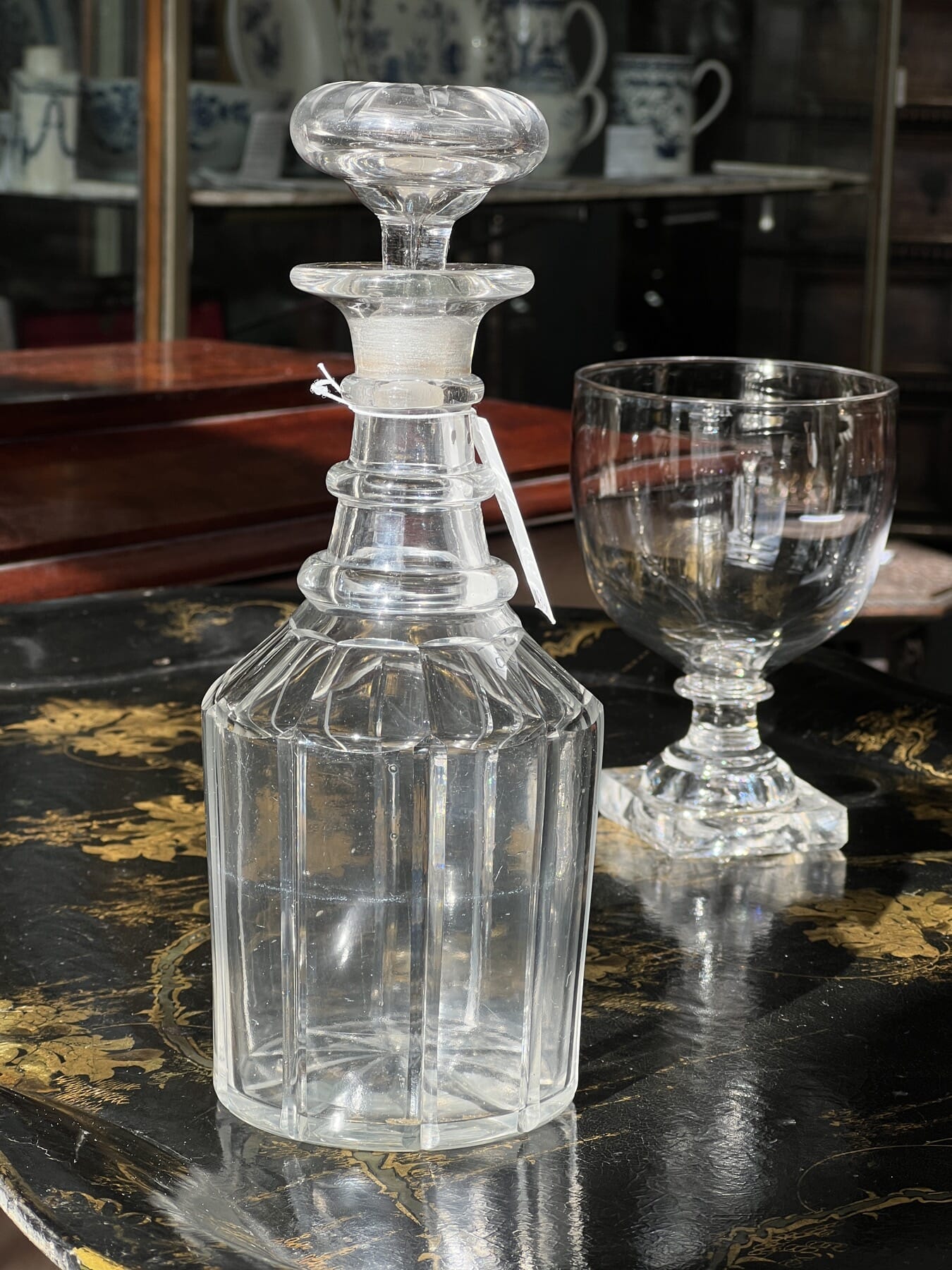
Whiskey Decanters

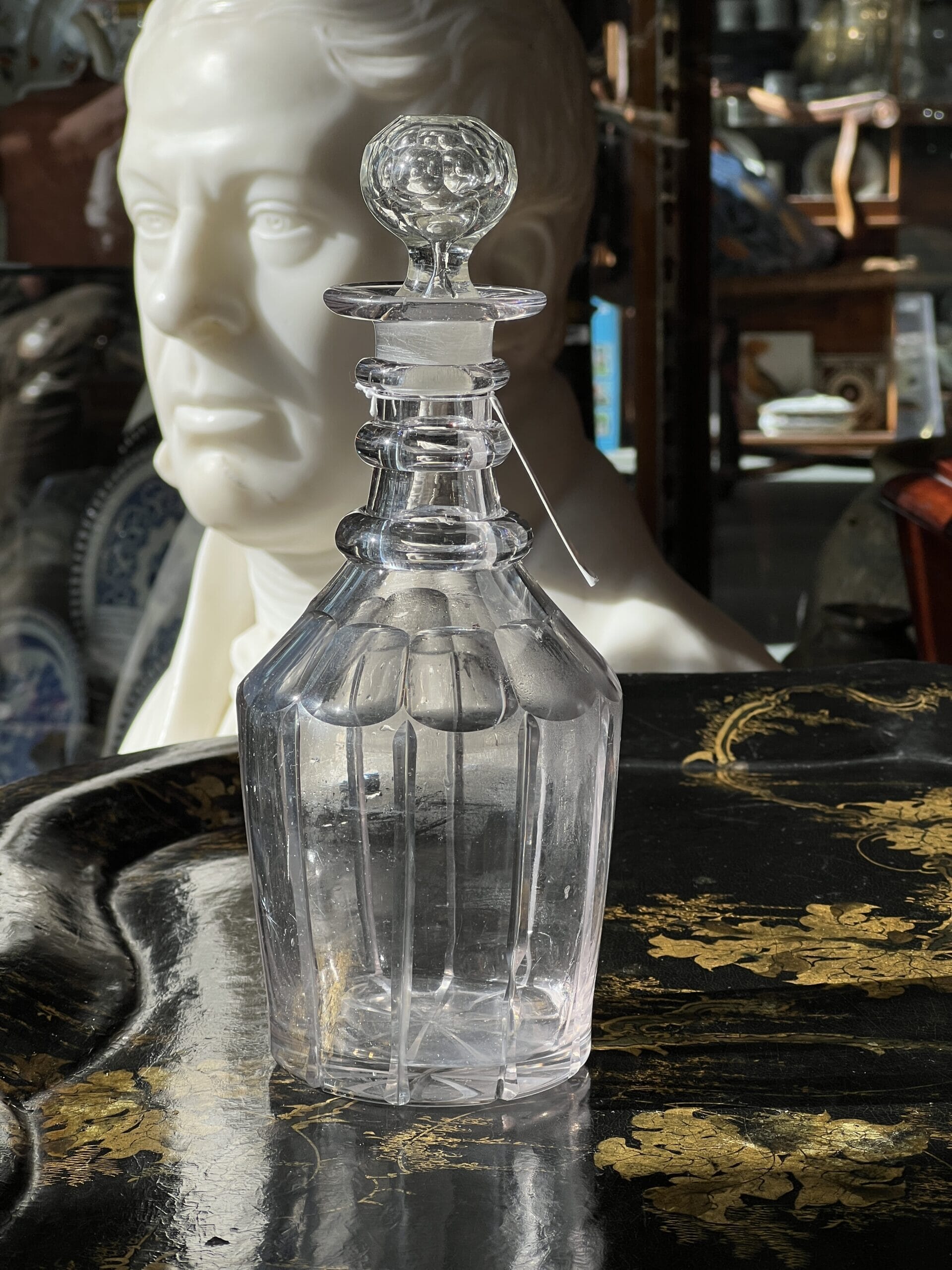
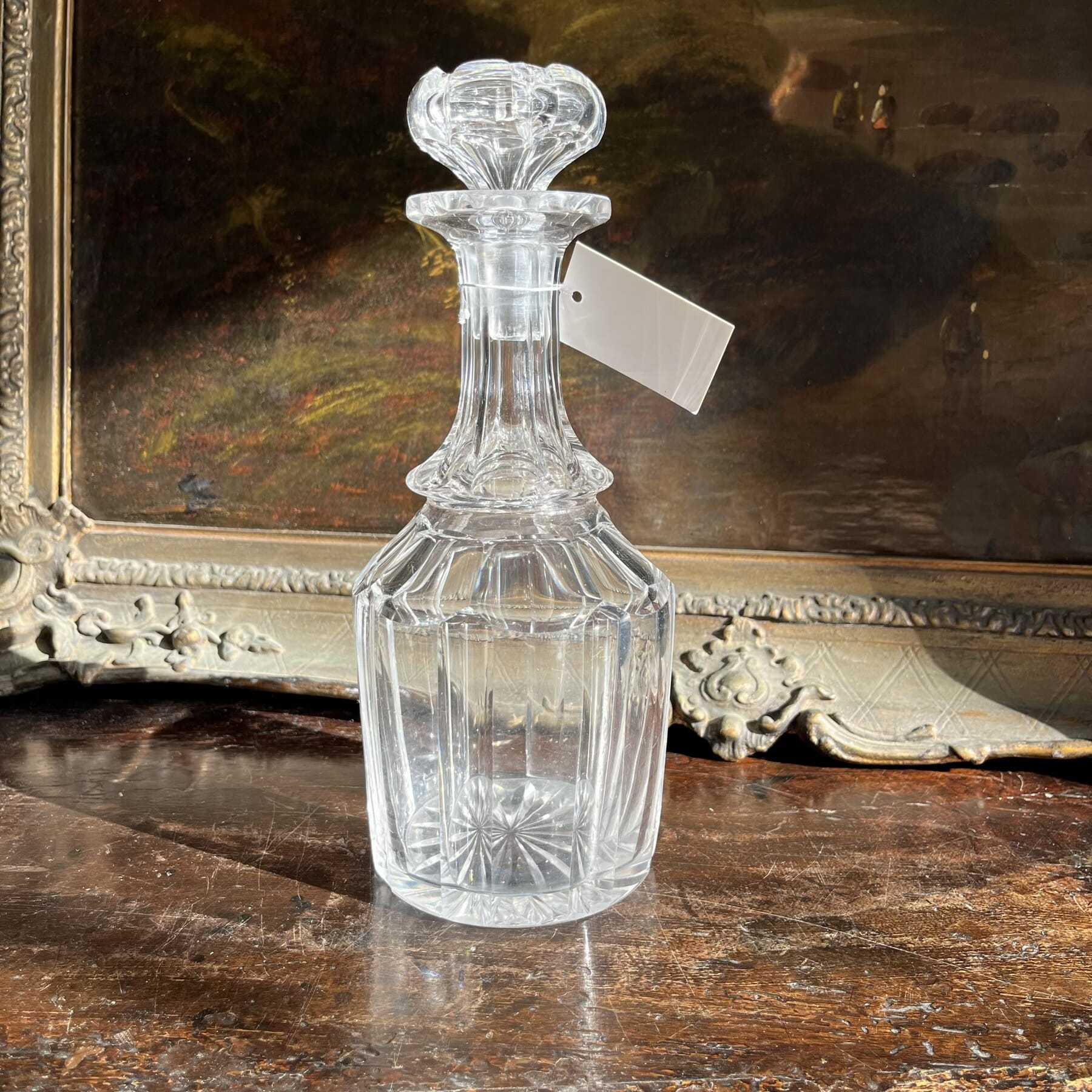
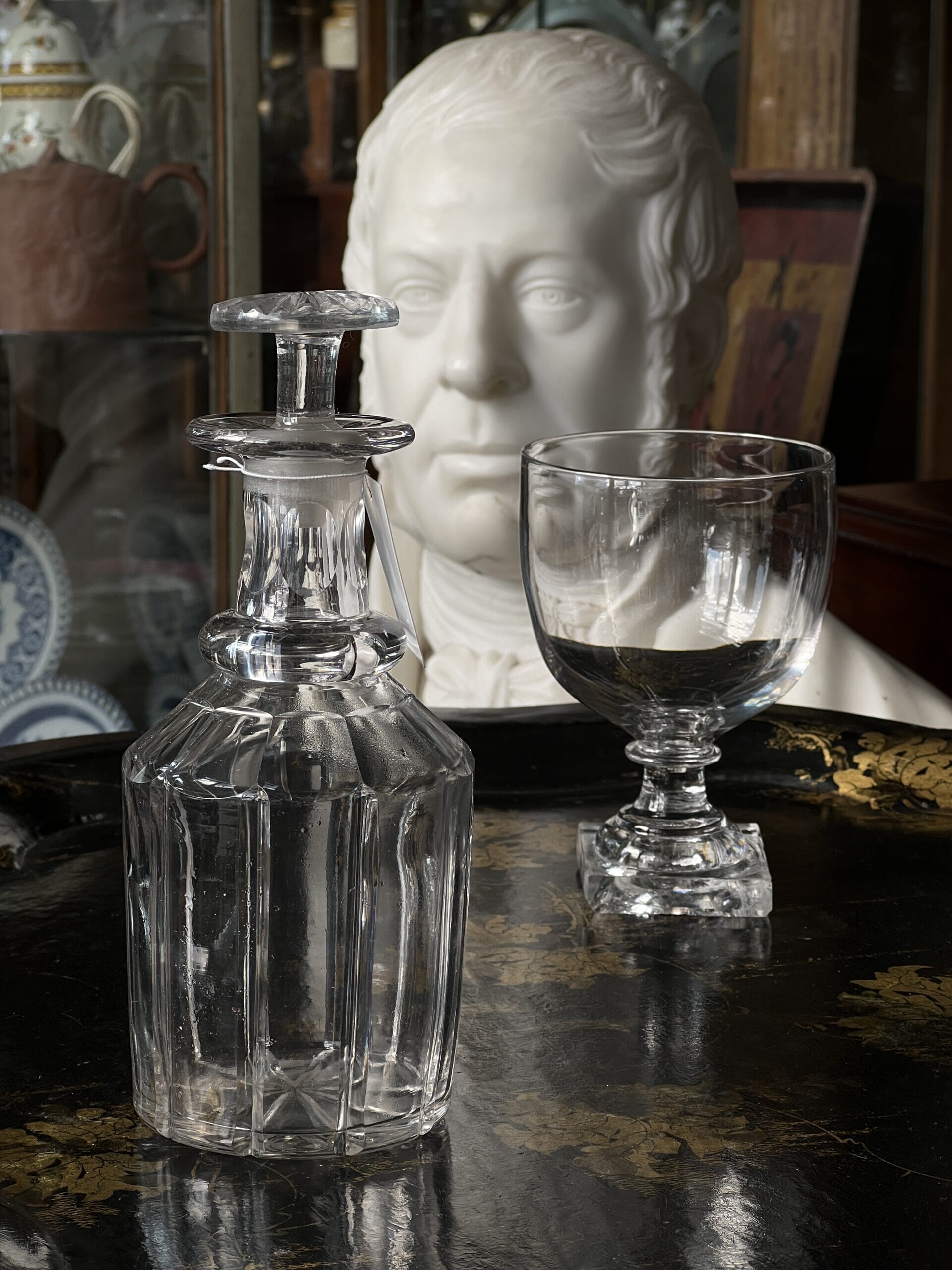
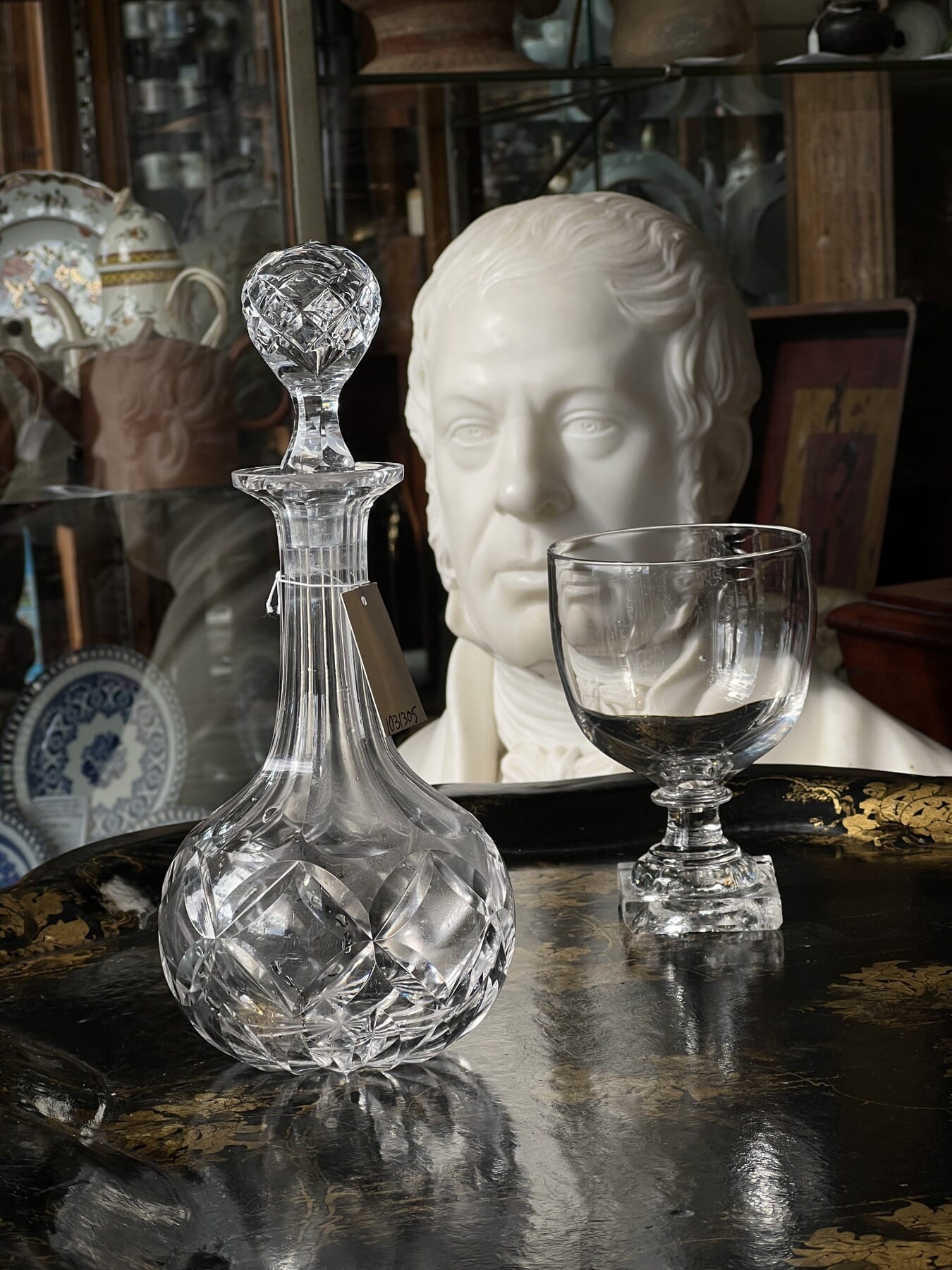
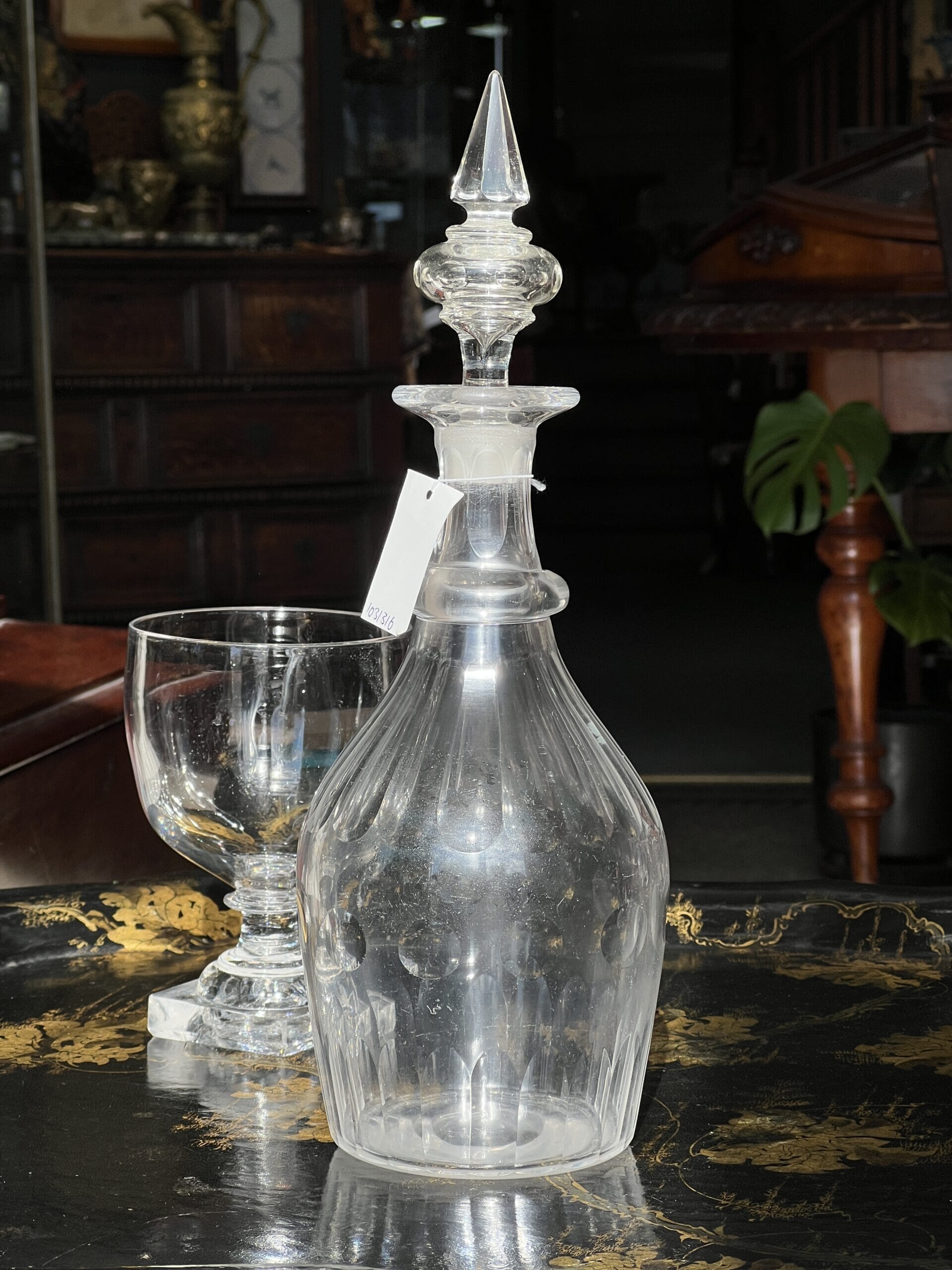
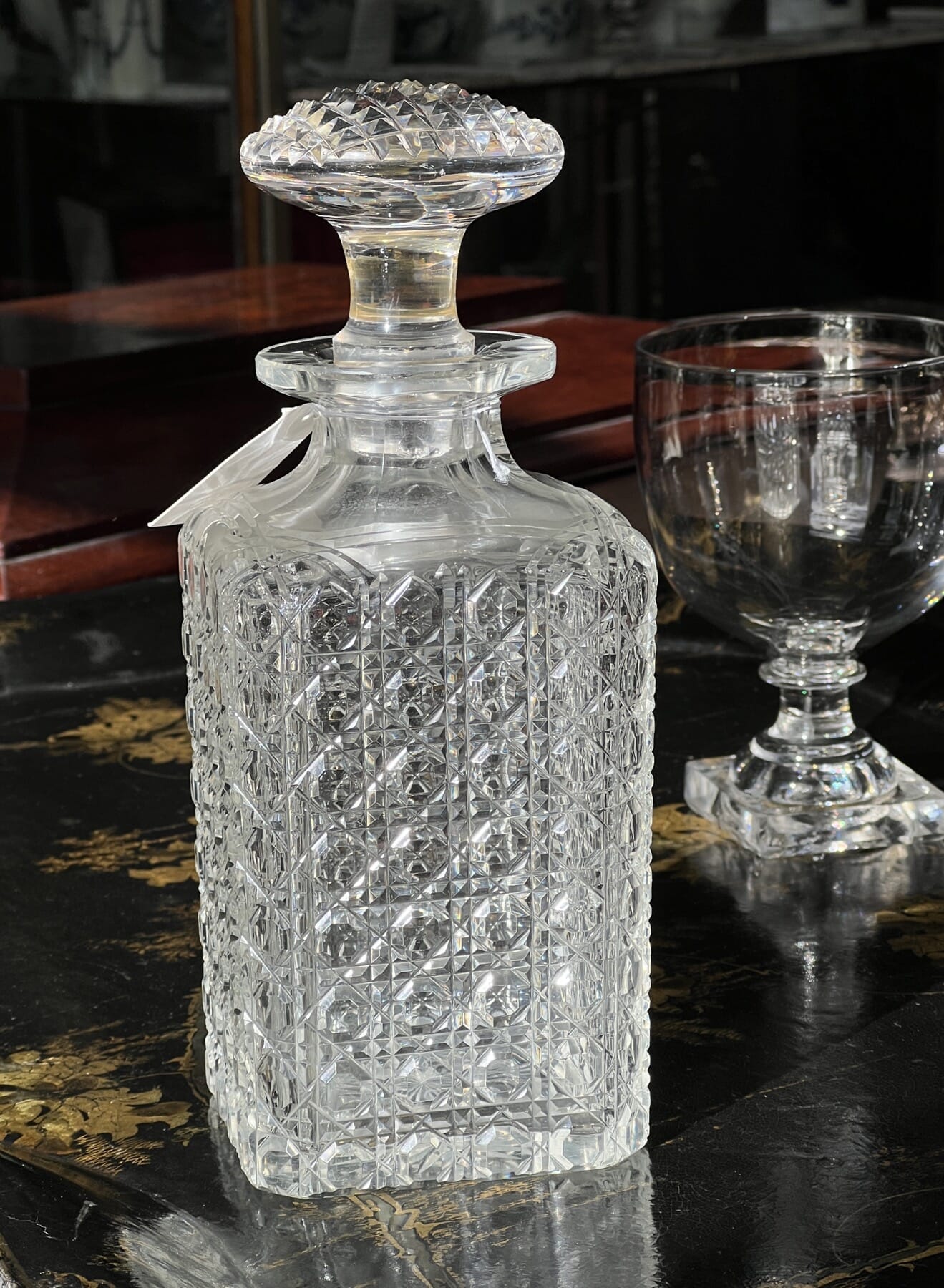
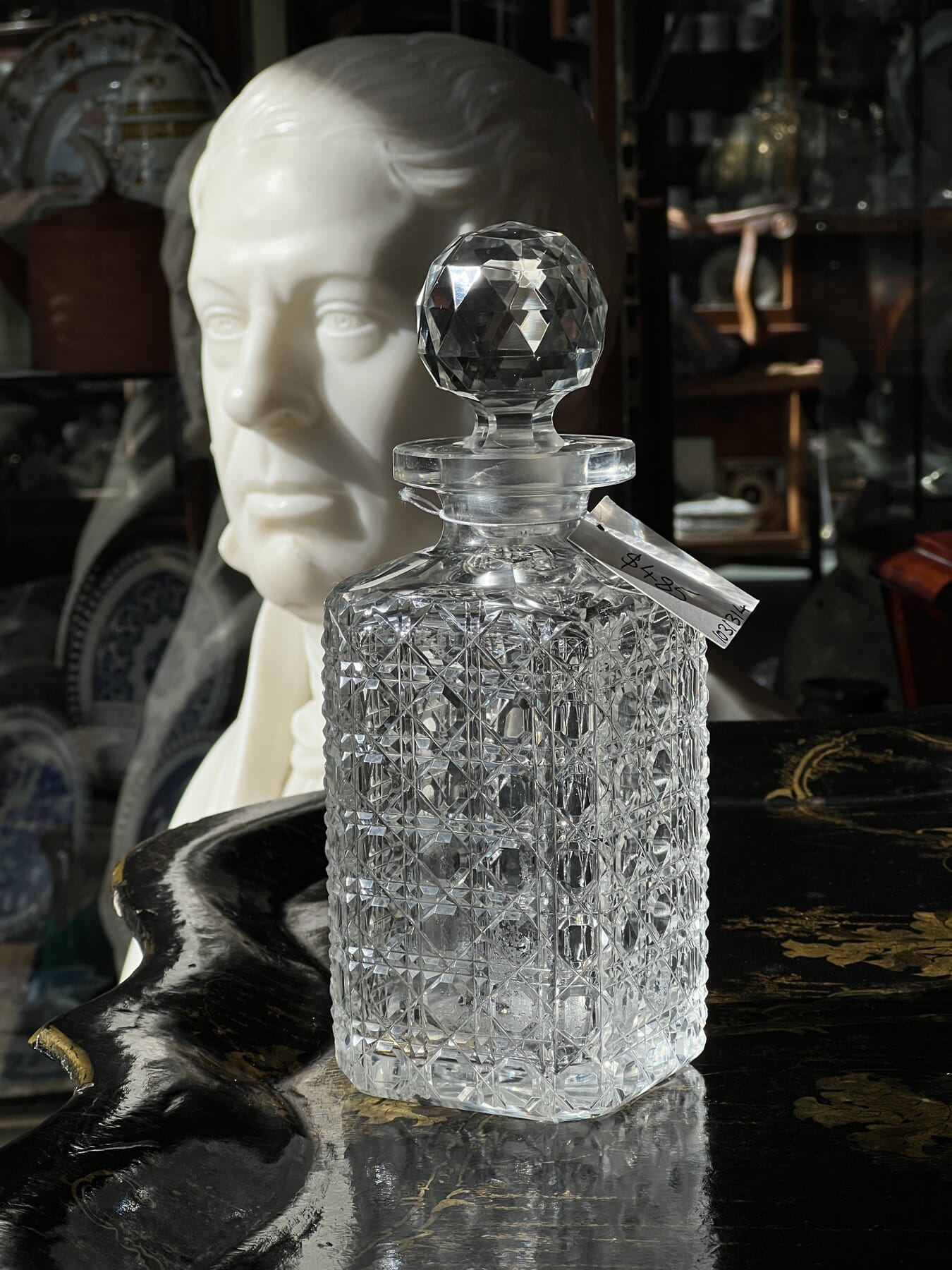
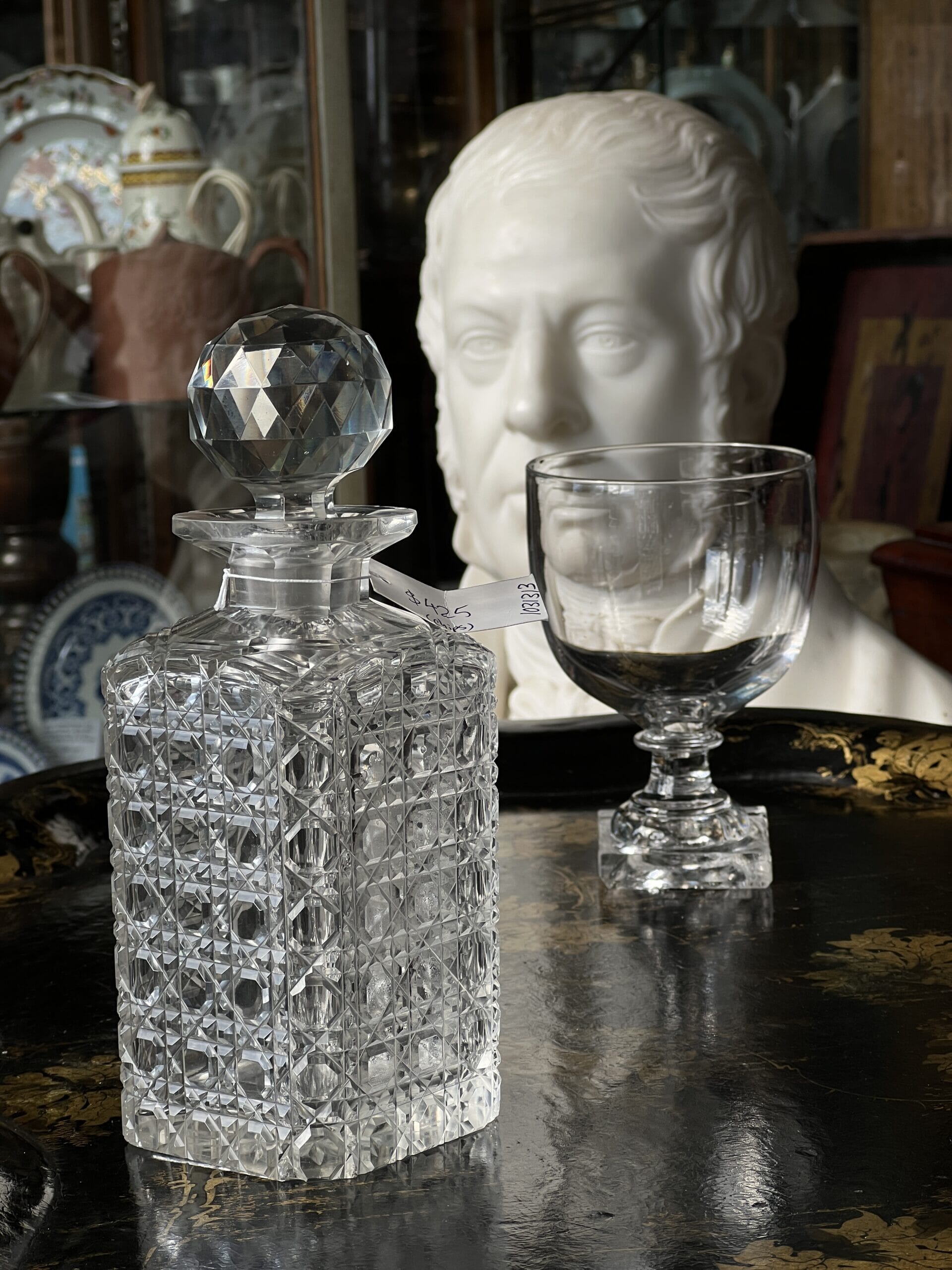
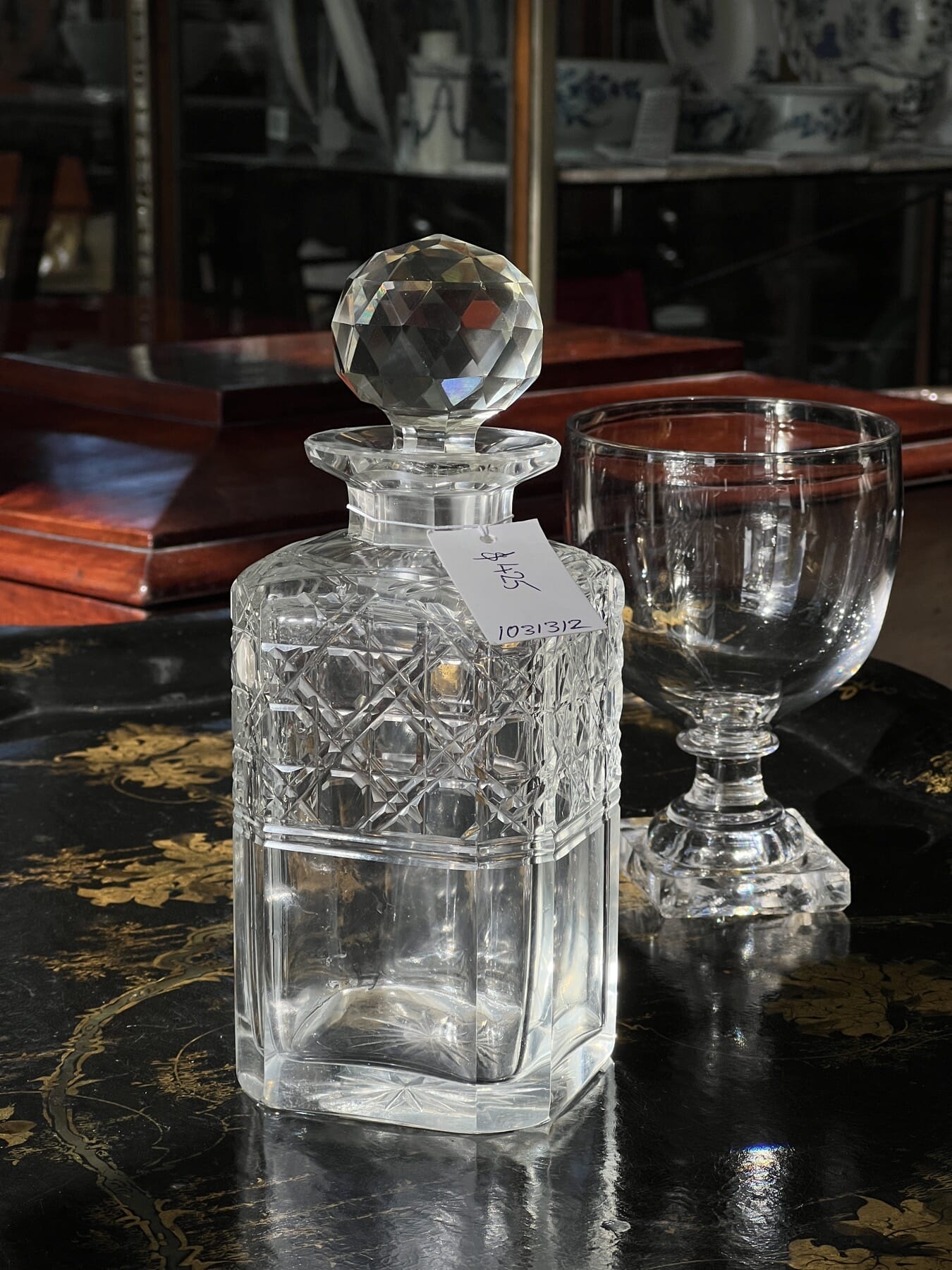
Always in demand & hard to find, we are pleased to have a selection of Whiskey decanters- or which ever spirit you choose to put in them! We always have plenty of round examples, but square decanters don’t stay in stock very long, they are in high demand.

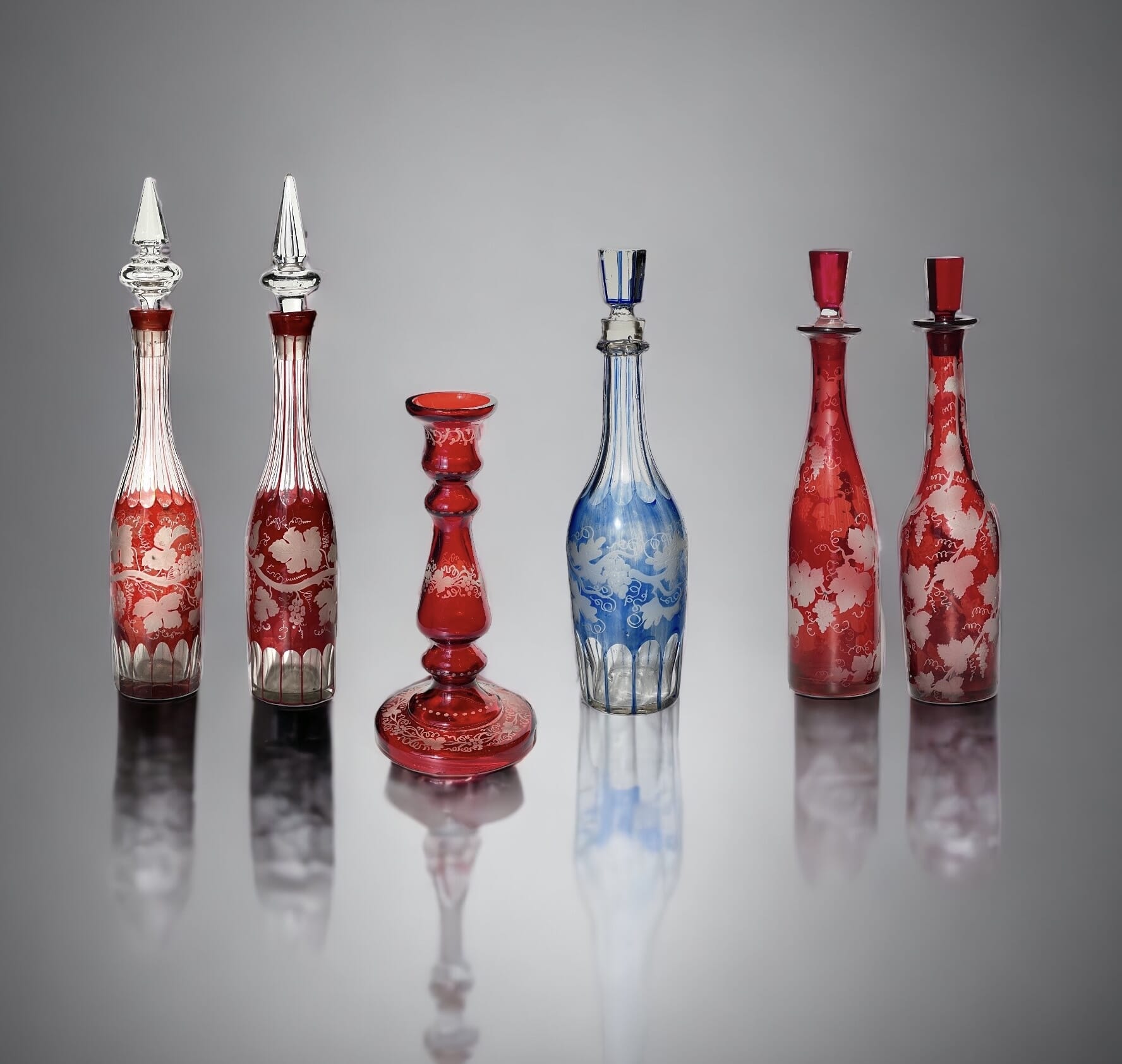
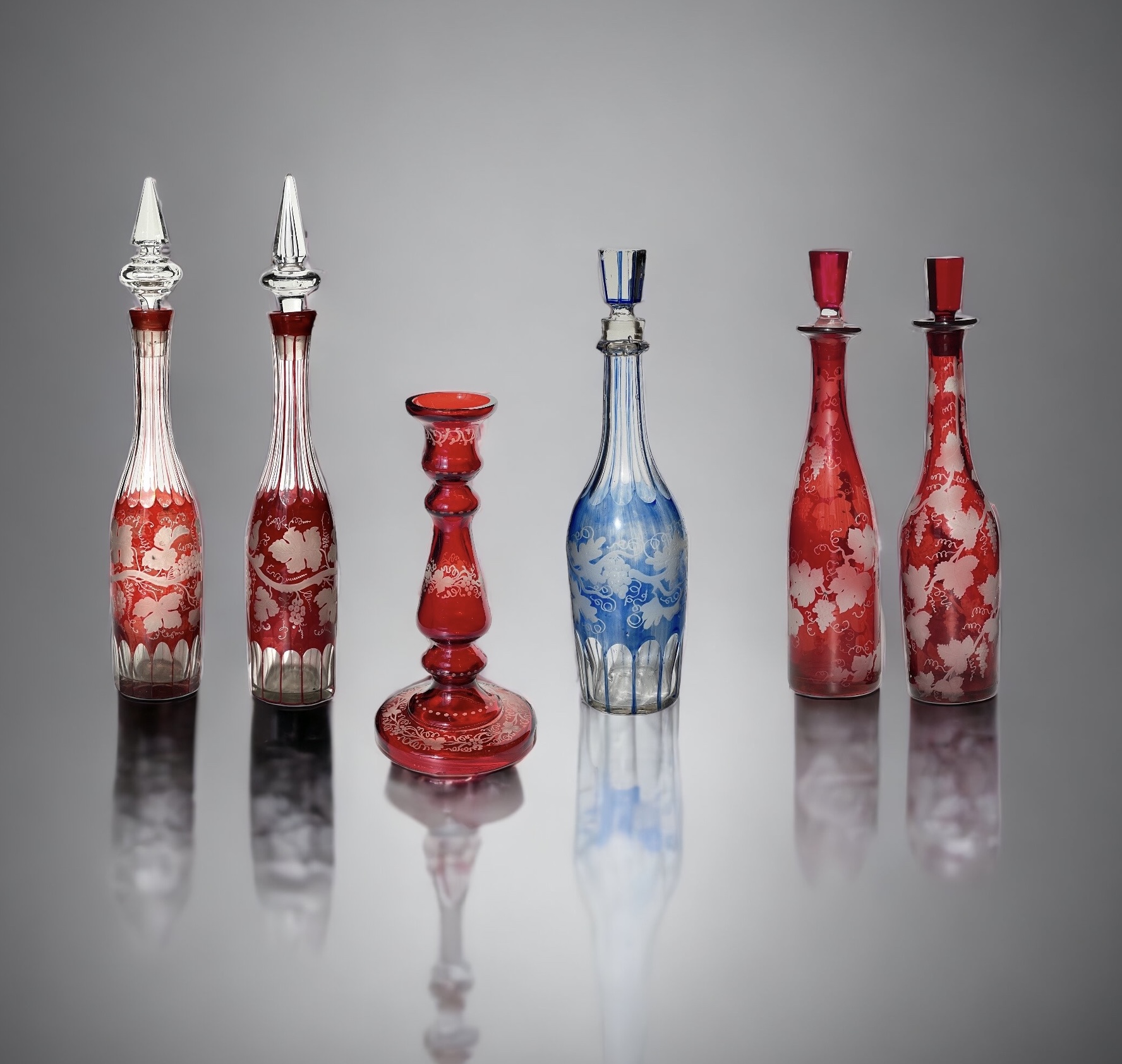
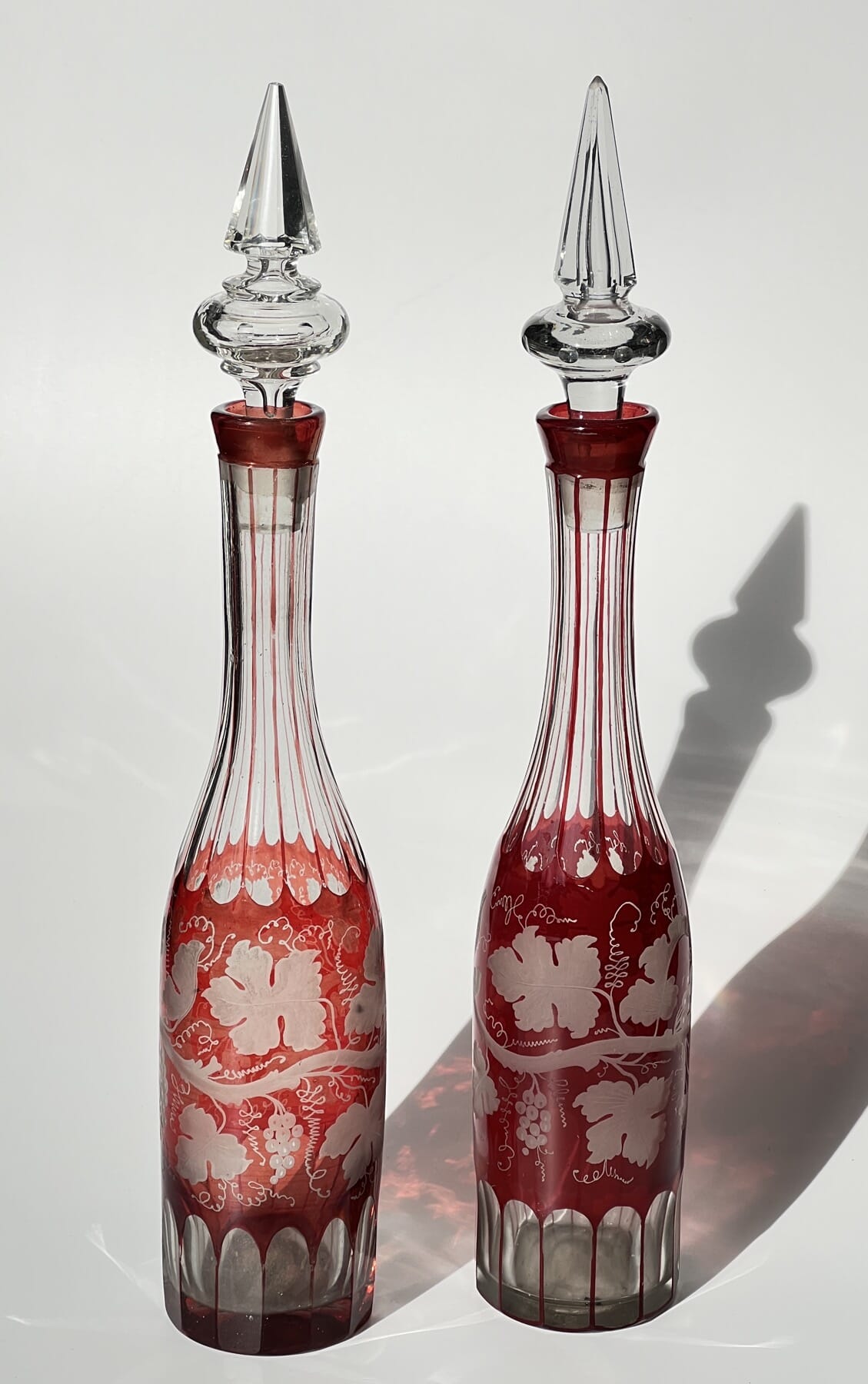
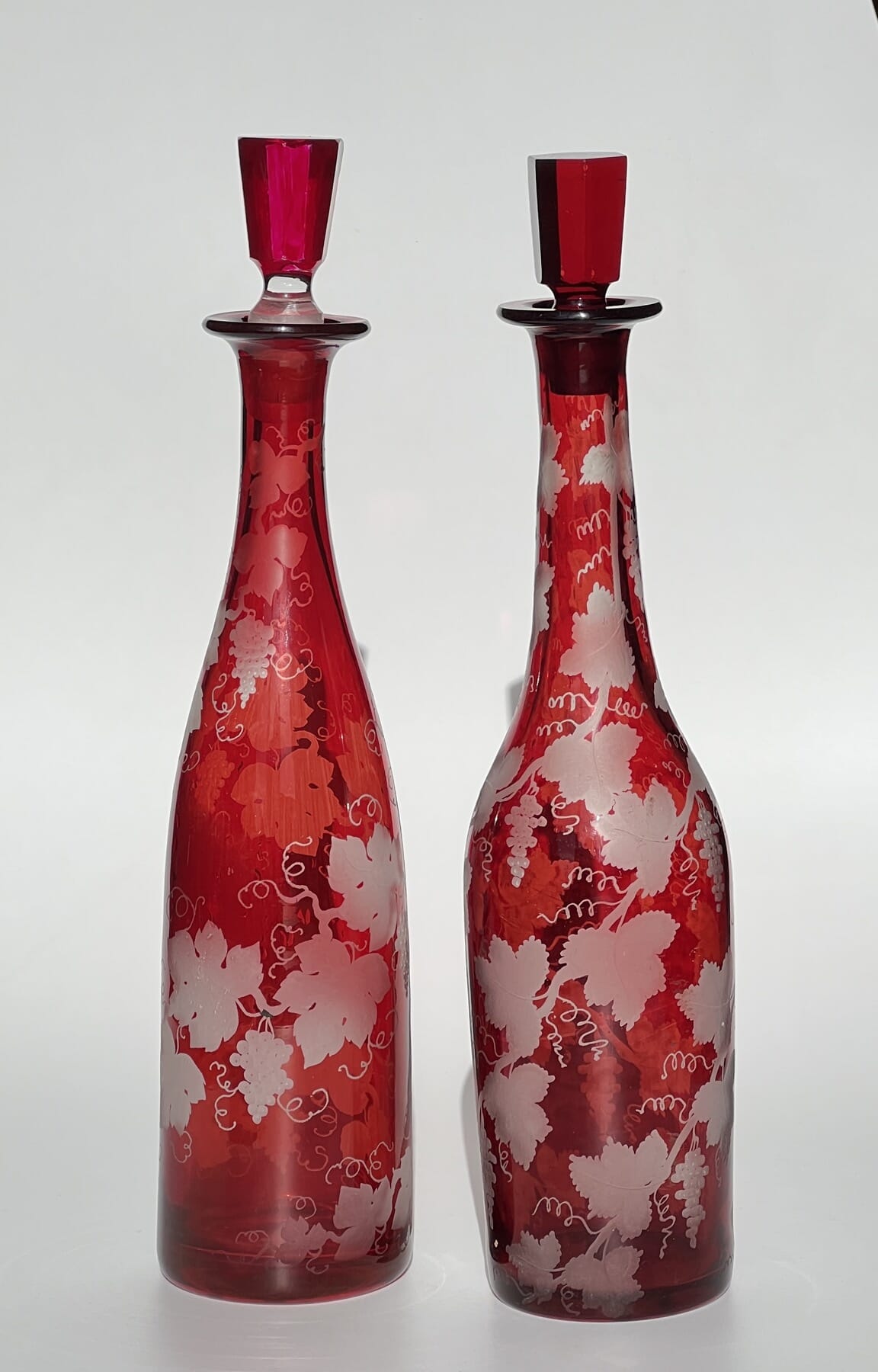
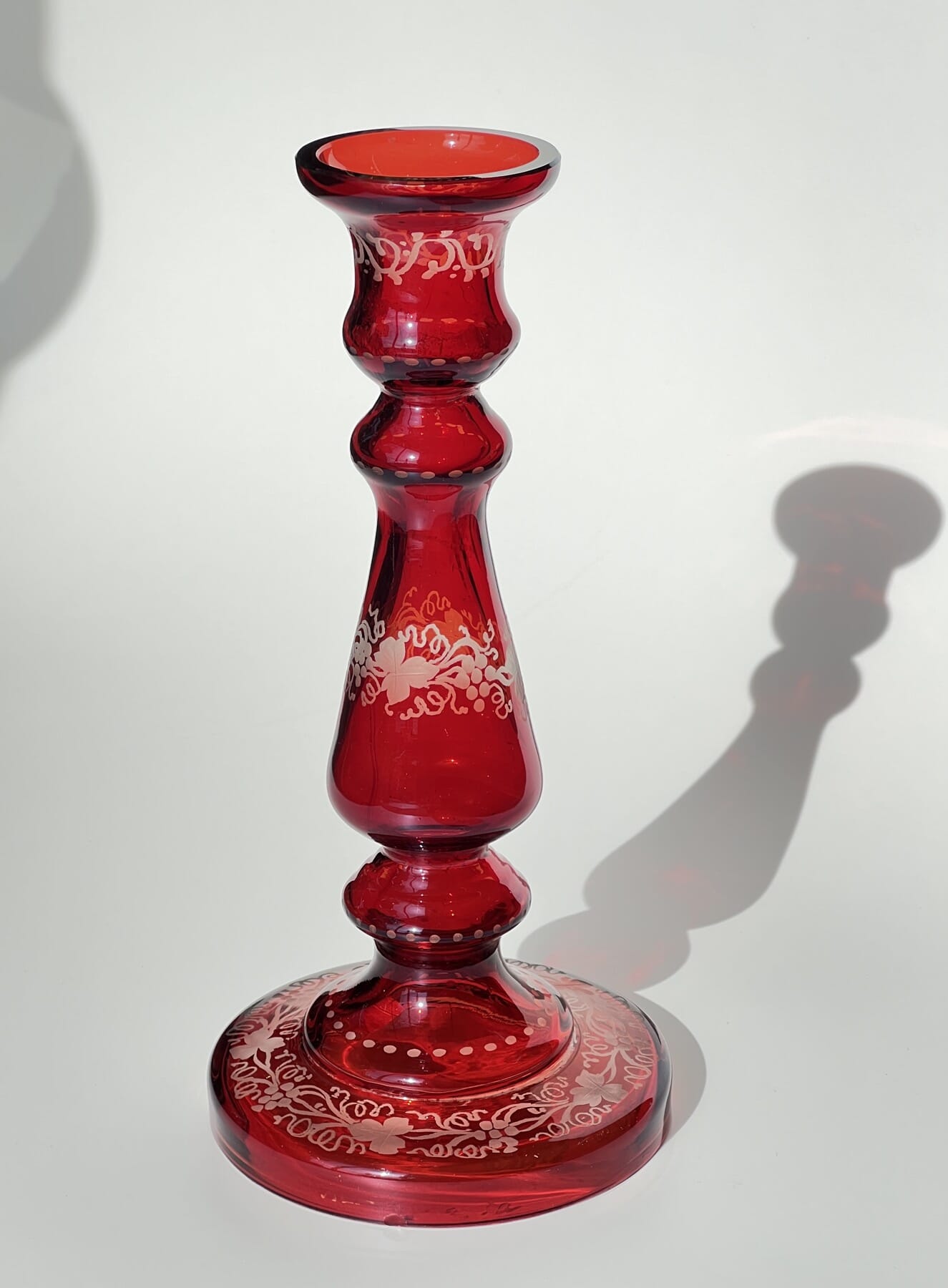
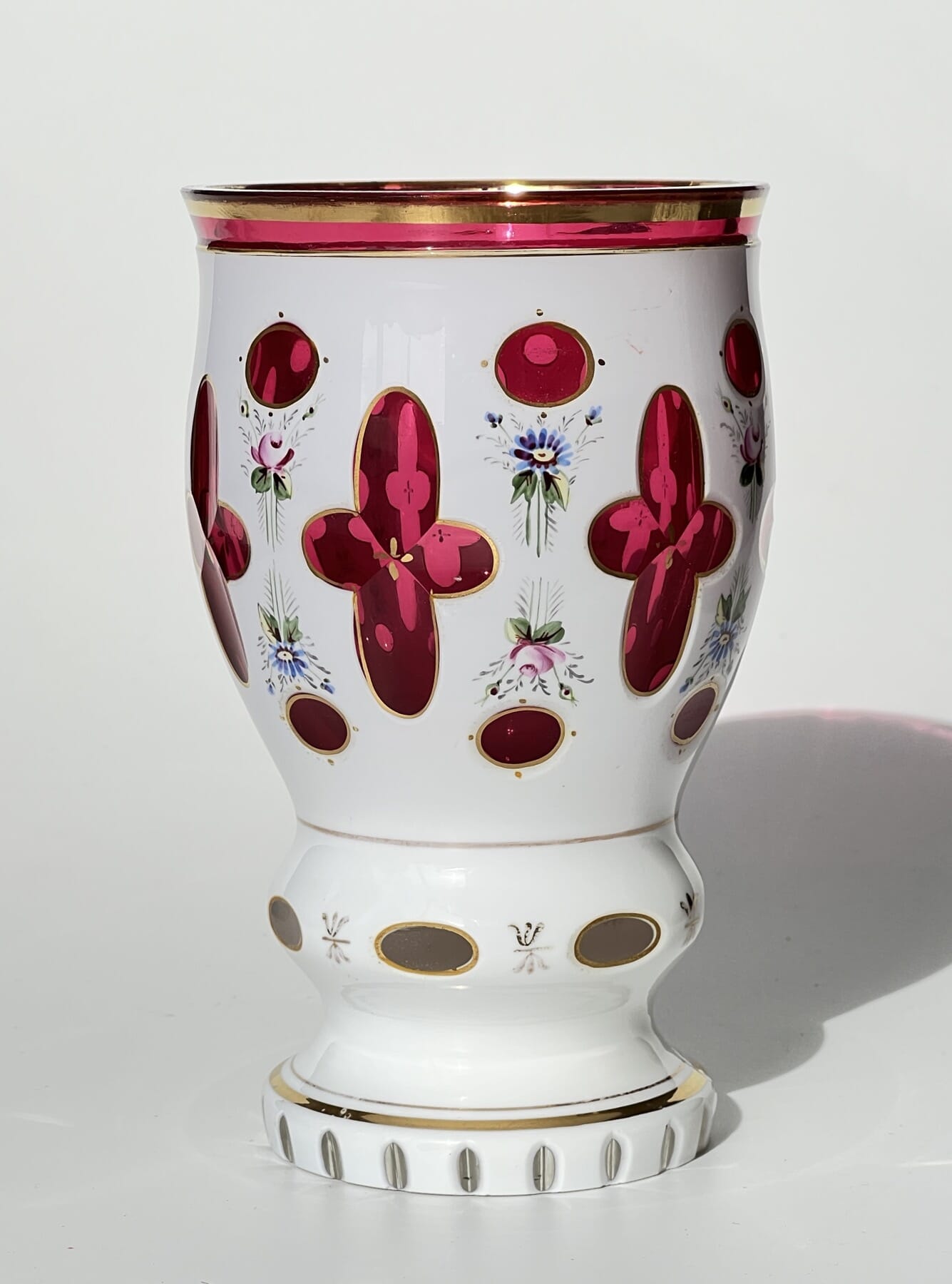
Not quite as useful, but very decorative are several Ruby & a Blue flash decanters from the 1880’s. There’s also a rare perfect condition Ruby glass candlestick – rare because getting the candle stub out inevitably led to damage to the fragile glass.

Lots more to see, and many more exciting items in the next while, including quality Chinese & Asian, 18th Century British & Continental Ceramics, and a cheerful collection of Staffordshire Figures.

Enjoy!

The Latest Stock

Posted on

Fresh Asian Antiques @ Moorabool

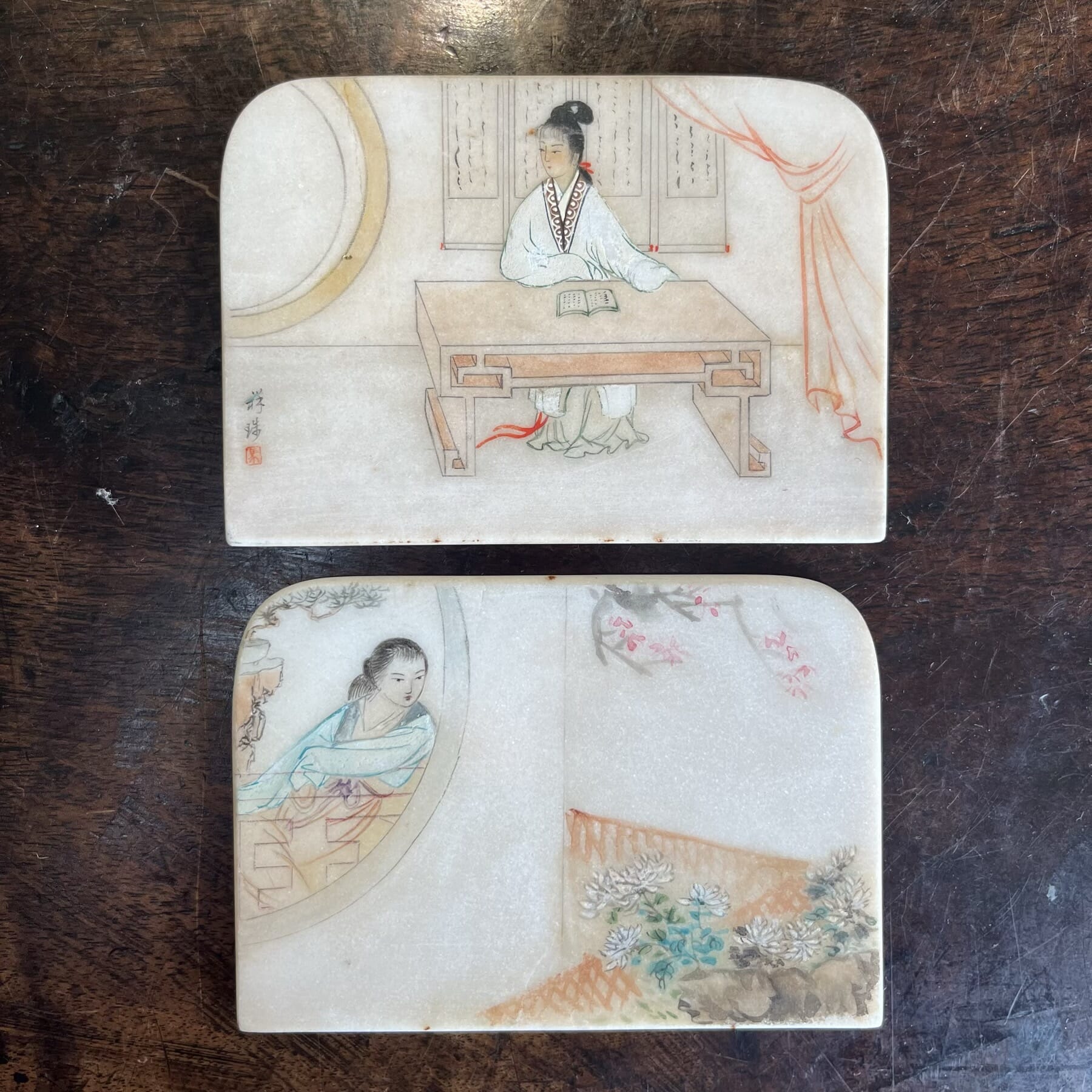
Chinese & Japanese Antiques at Moorabool Antiques, Geelong

Welcome to the first of a series of Asian Specials.
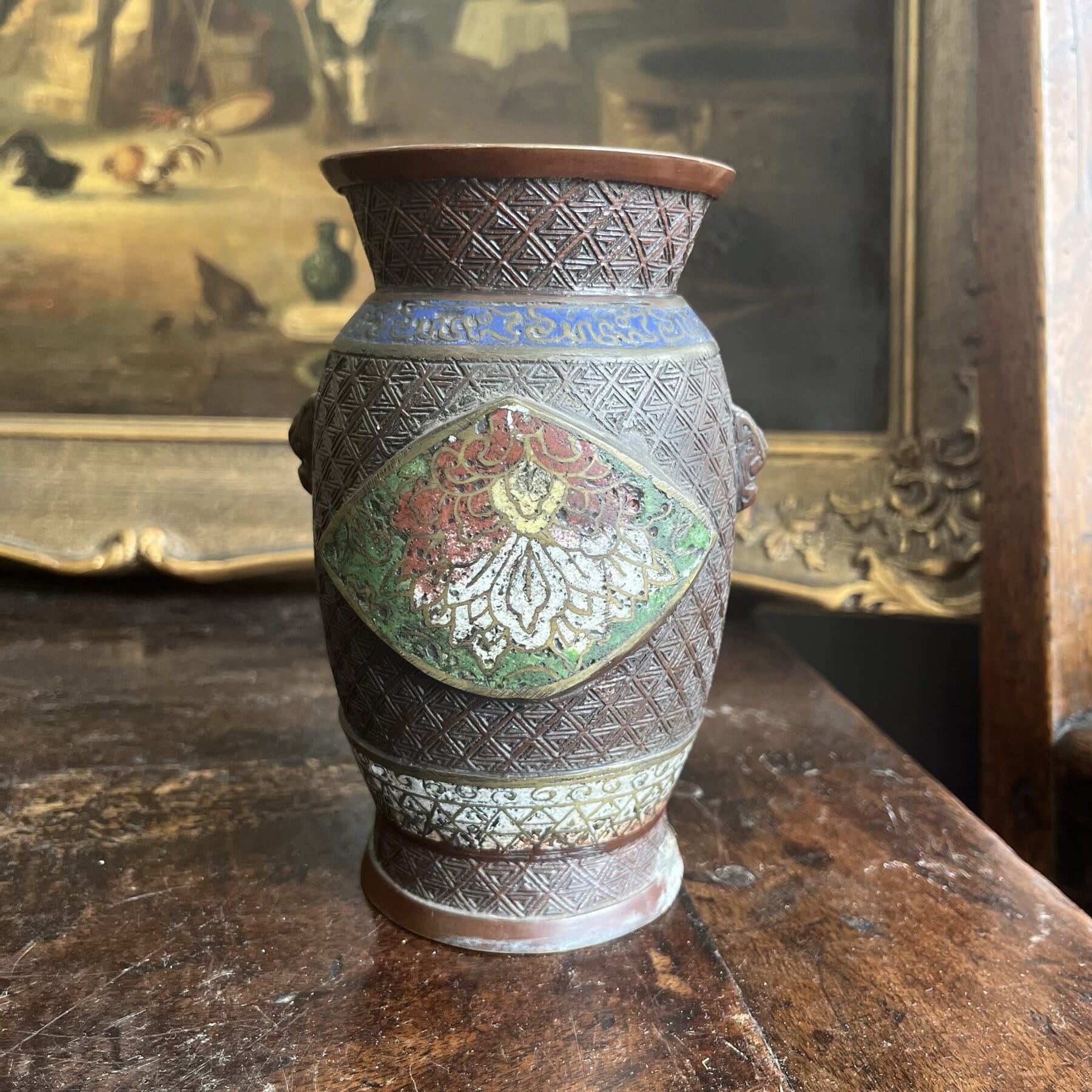
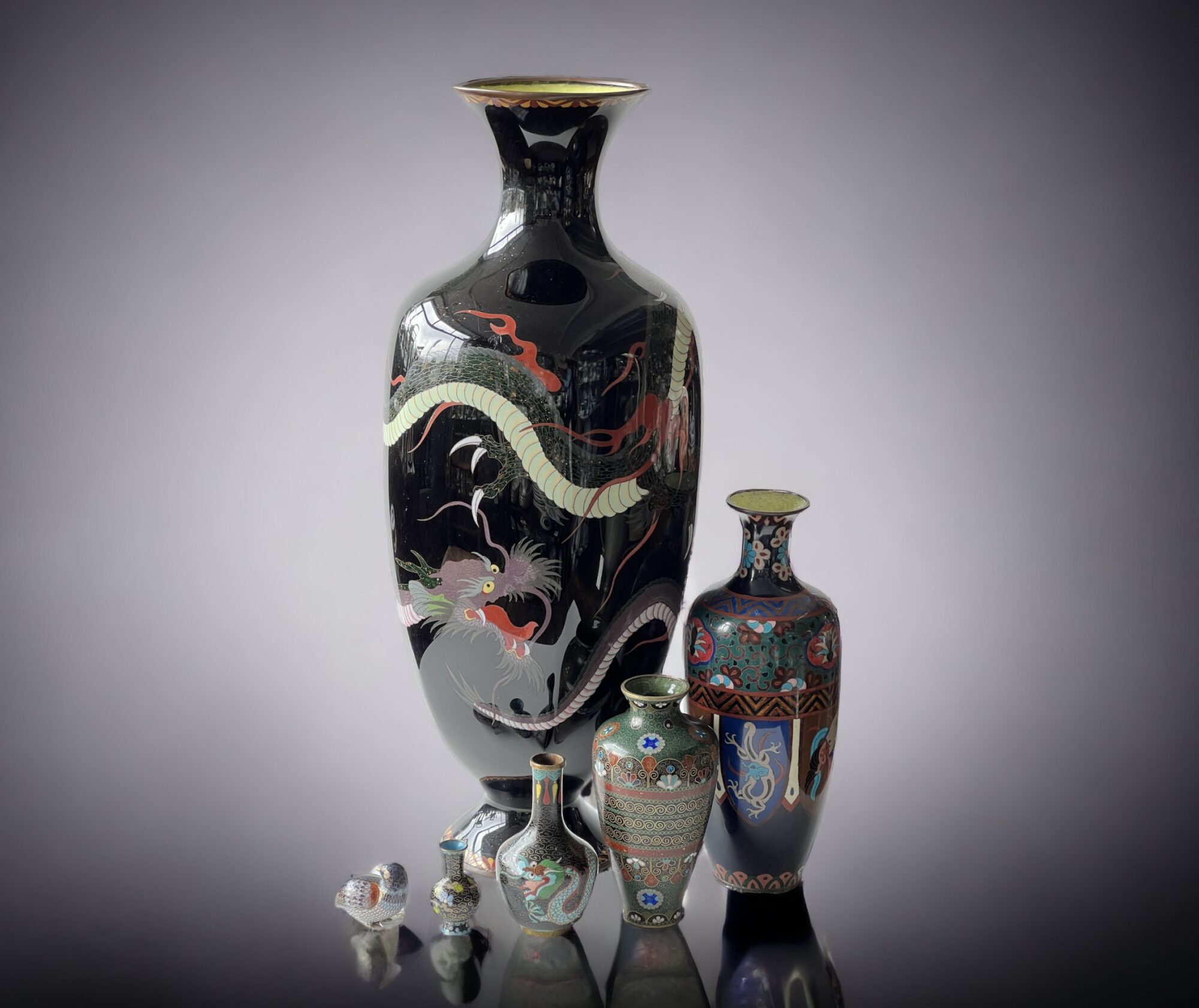
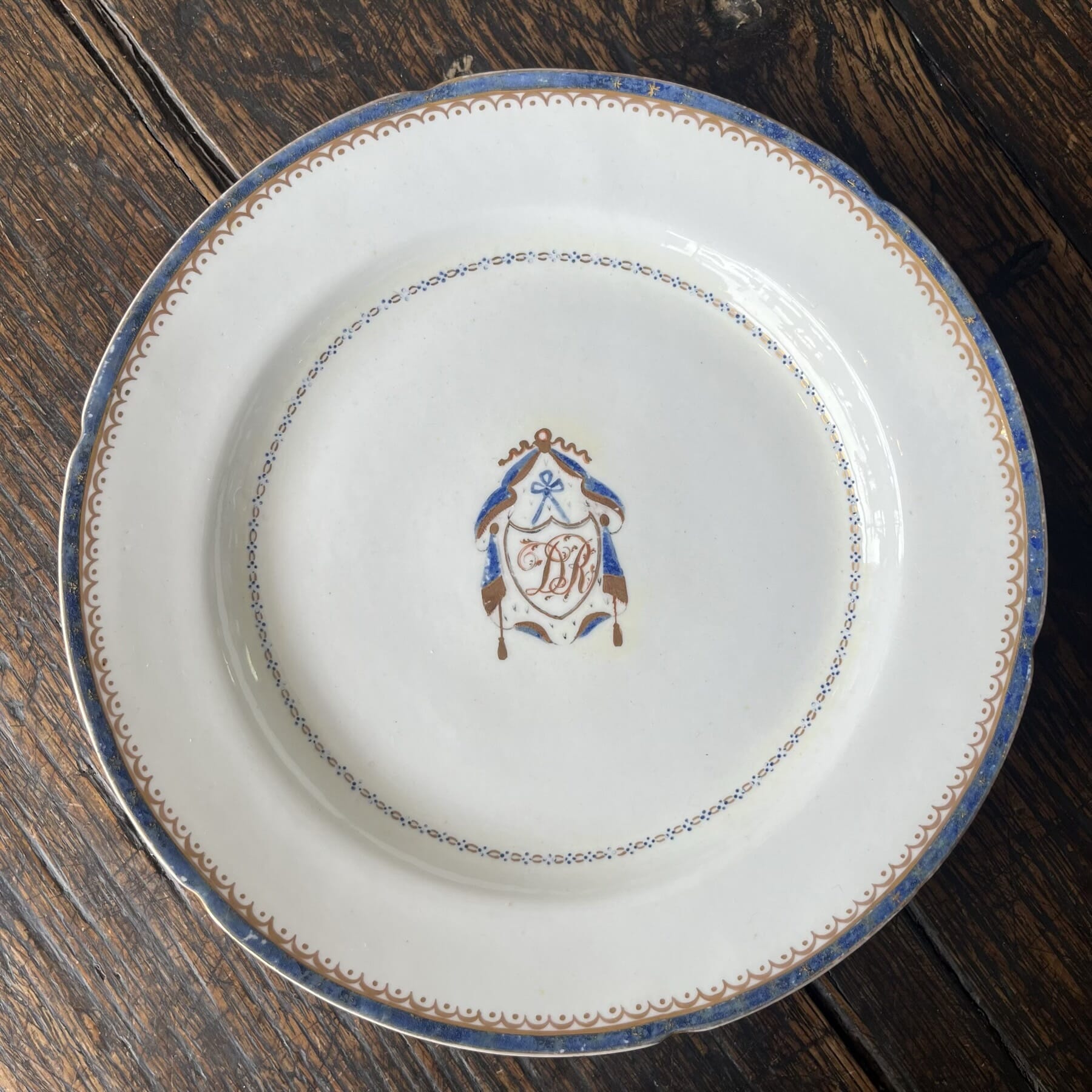
We’re amazed at the Asian items that turn up in Australia. From Ming Bronzes to Japanese Cloisonné, there’s a wealth of fine Chinese, Japanese, Korean & other South-East Asian works to find. This is due to two things; we’re close to Asia, and Australians are great travellers. Naturally, they bring things back with them!

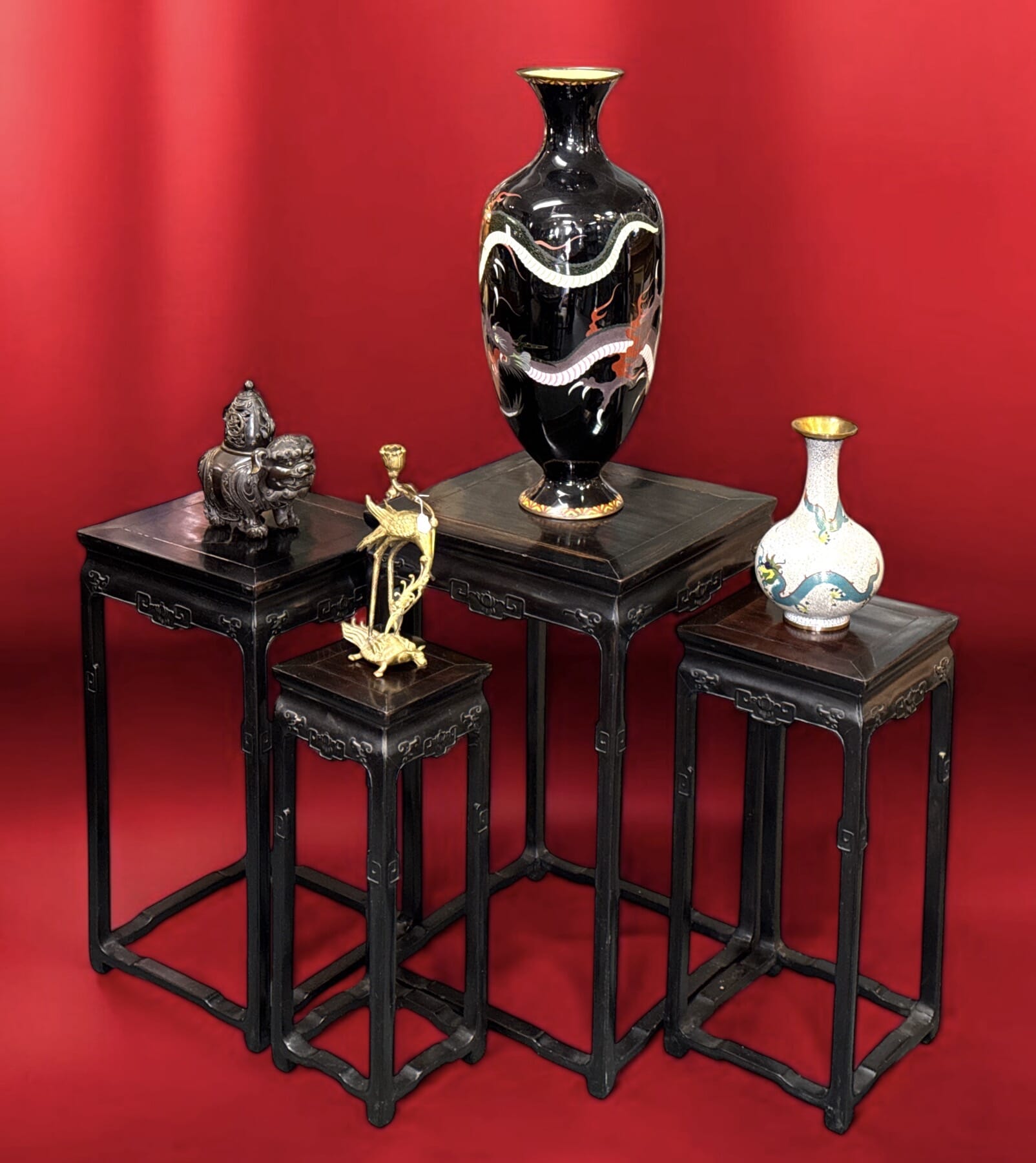
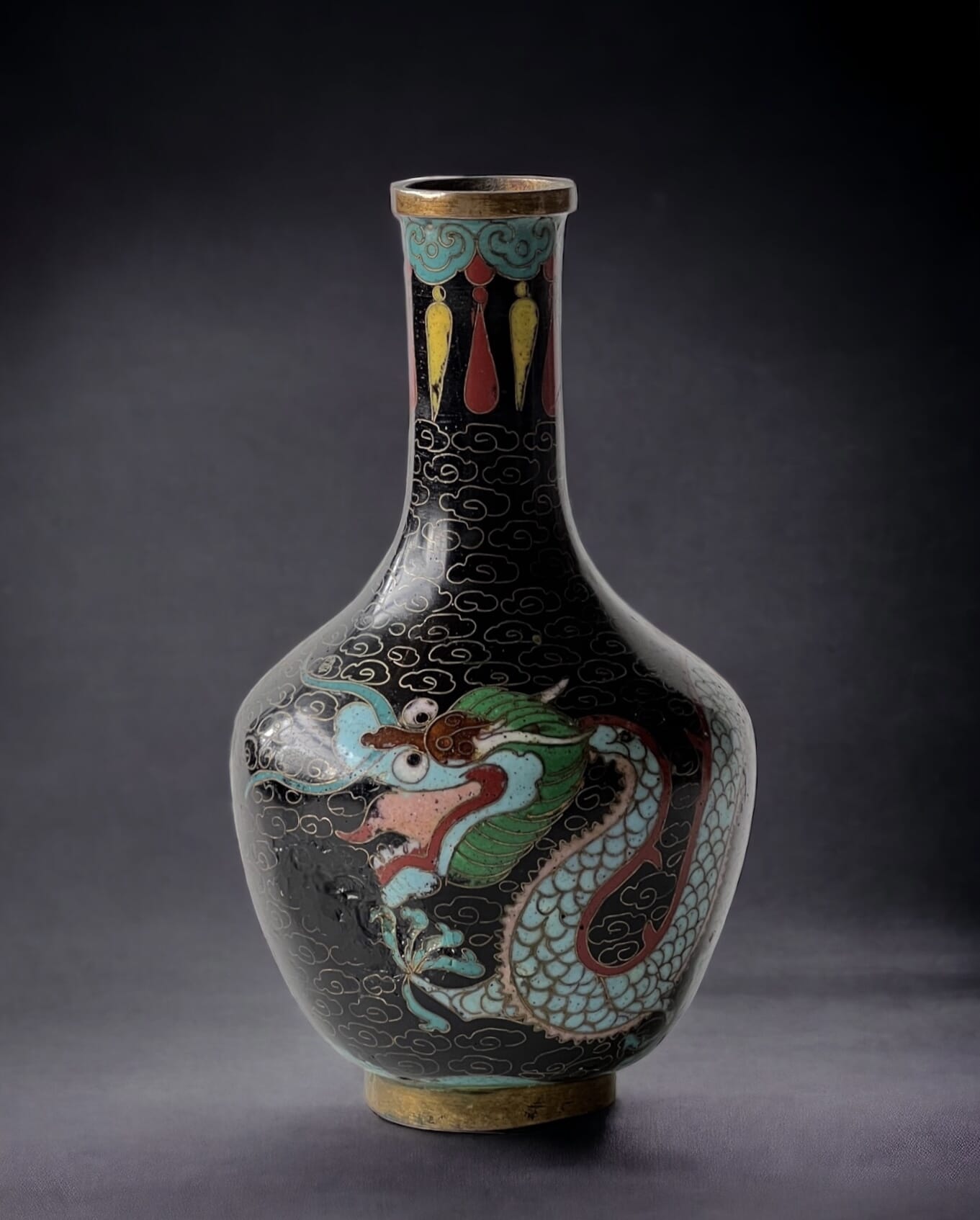
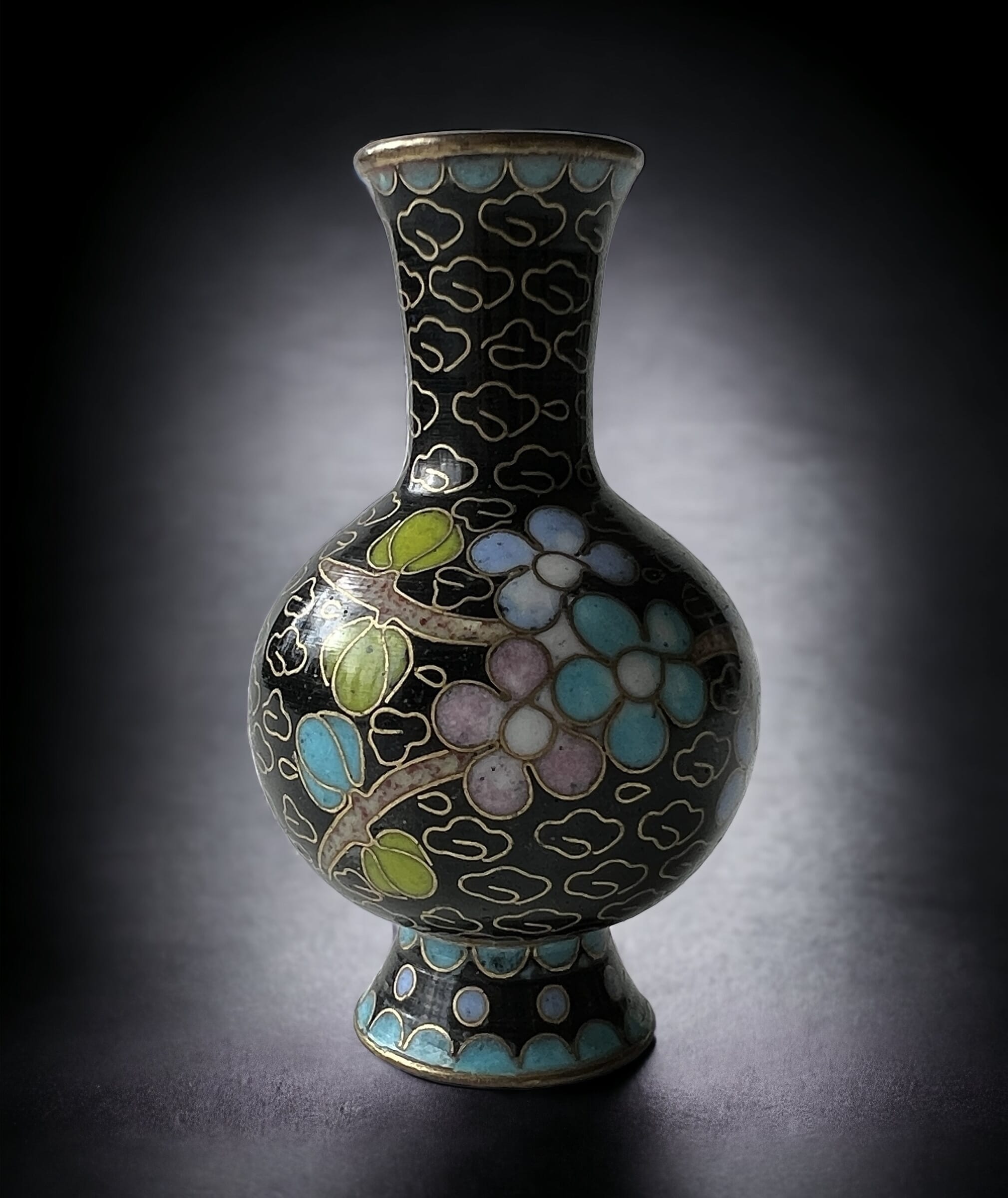
Chinese & Japanese Cloisonné at Moorabool Antiques, Geelong

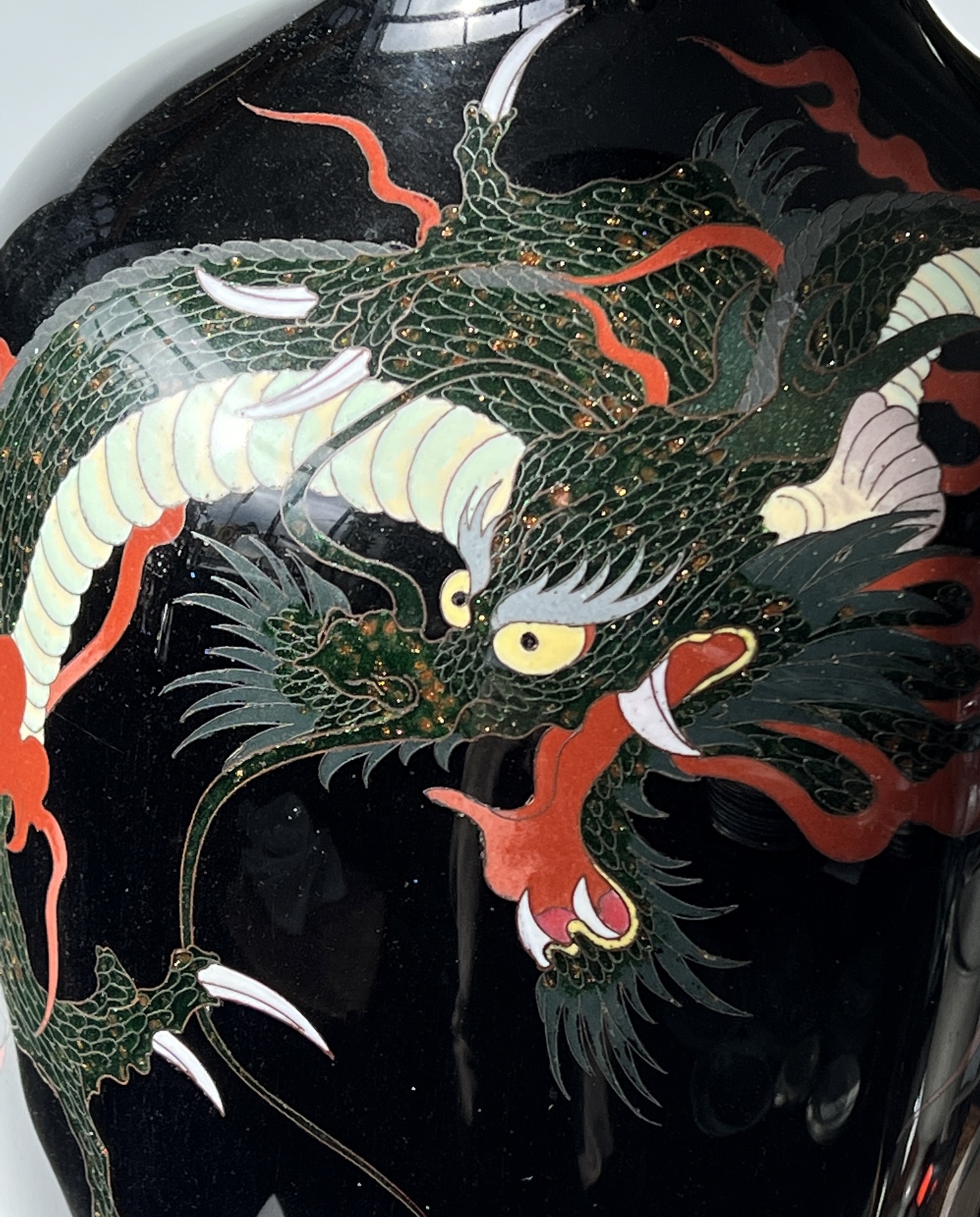
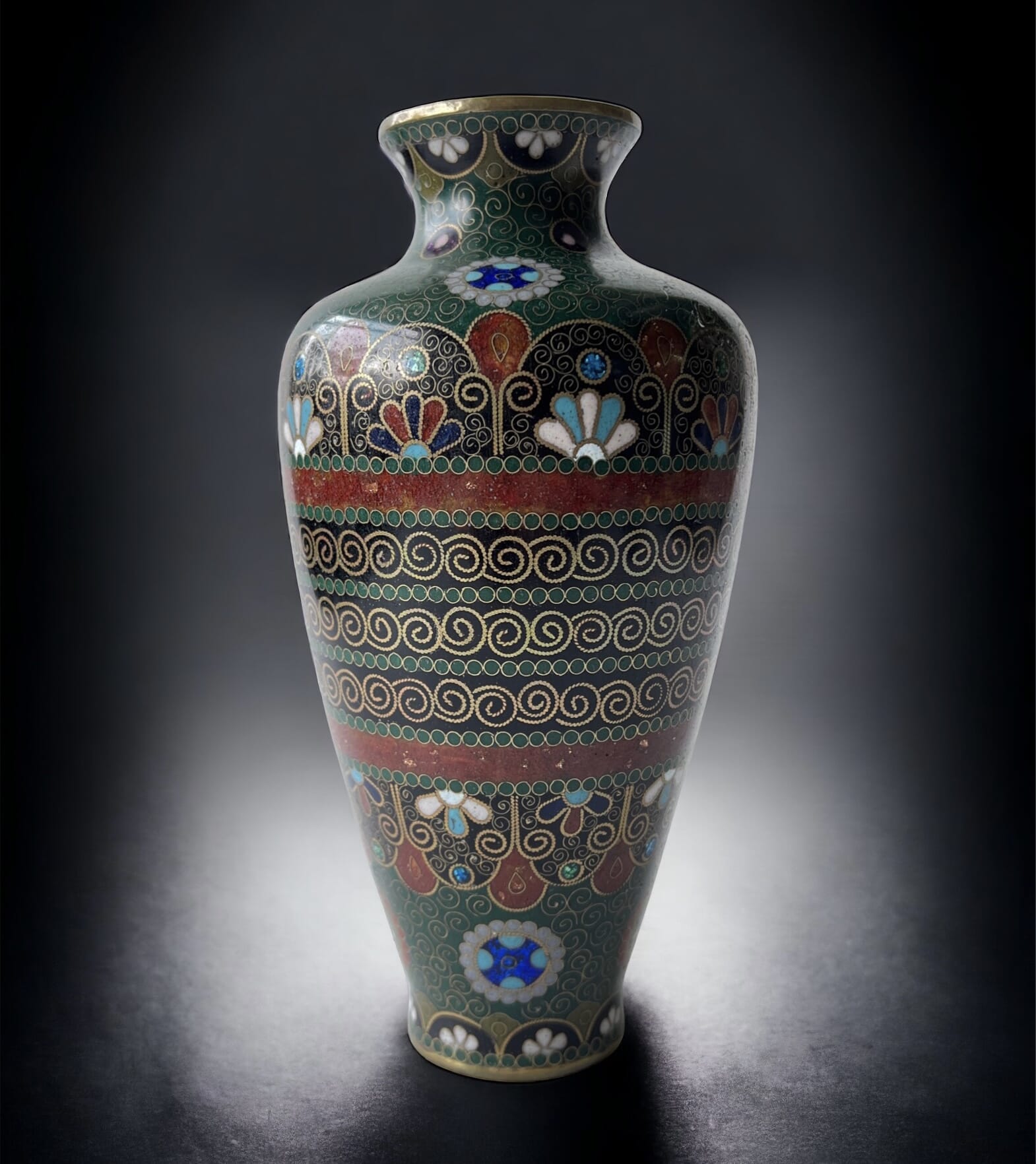
This week, we have a group of Japanese & Chinese Cloisonné – including a remarkable piece, an oversize Japanese vase notable for the pair of ferocious dragons dramatically writhing their way around the vase. This vase is giant – 61cm high! – and dates to the later 19th century. The bright enamel colours and glossy black background make it a dramatic display piece.

Antique Japanese CloisonnéDragon Vase
Dramatic Japanese Dragon…..
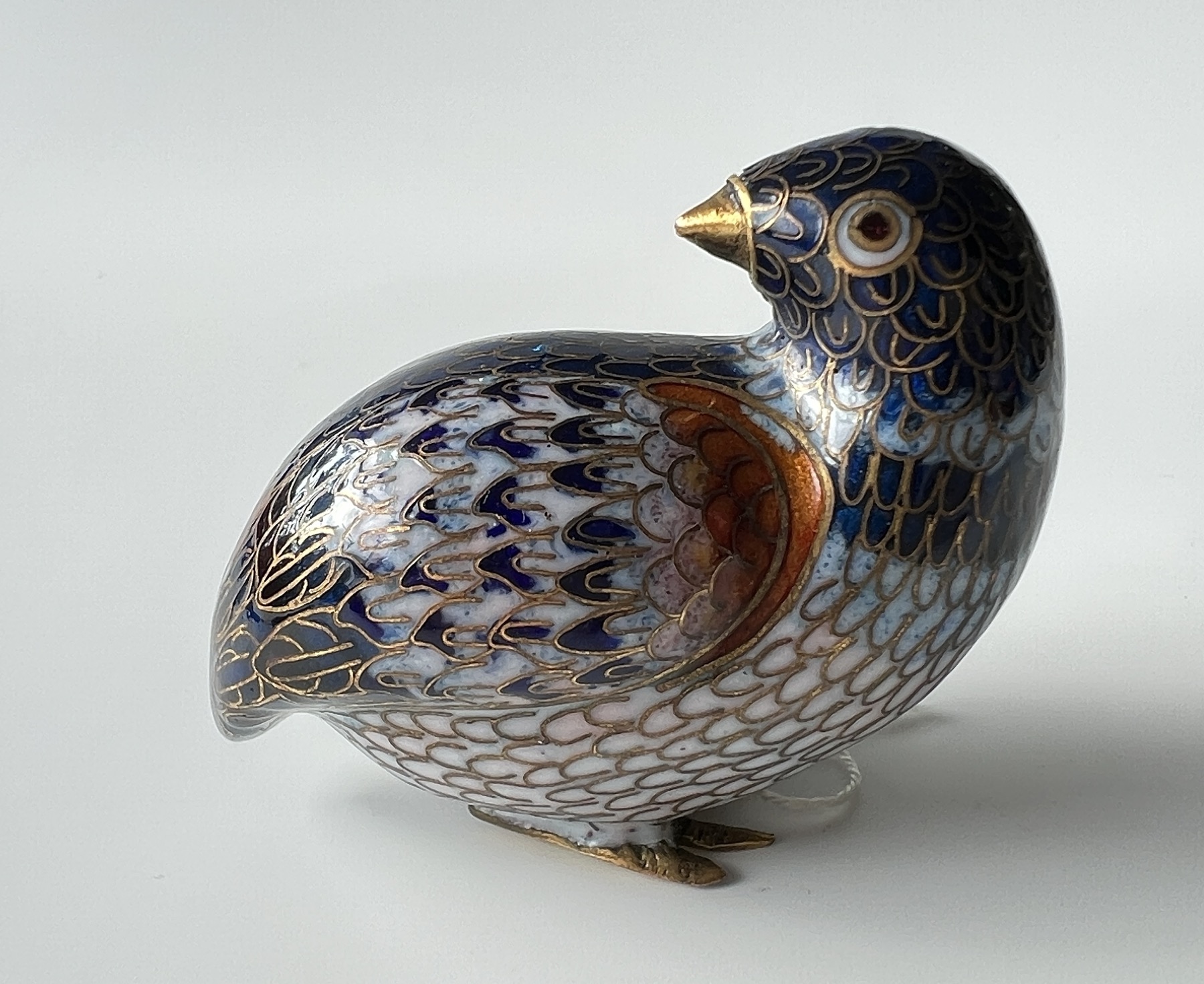
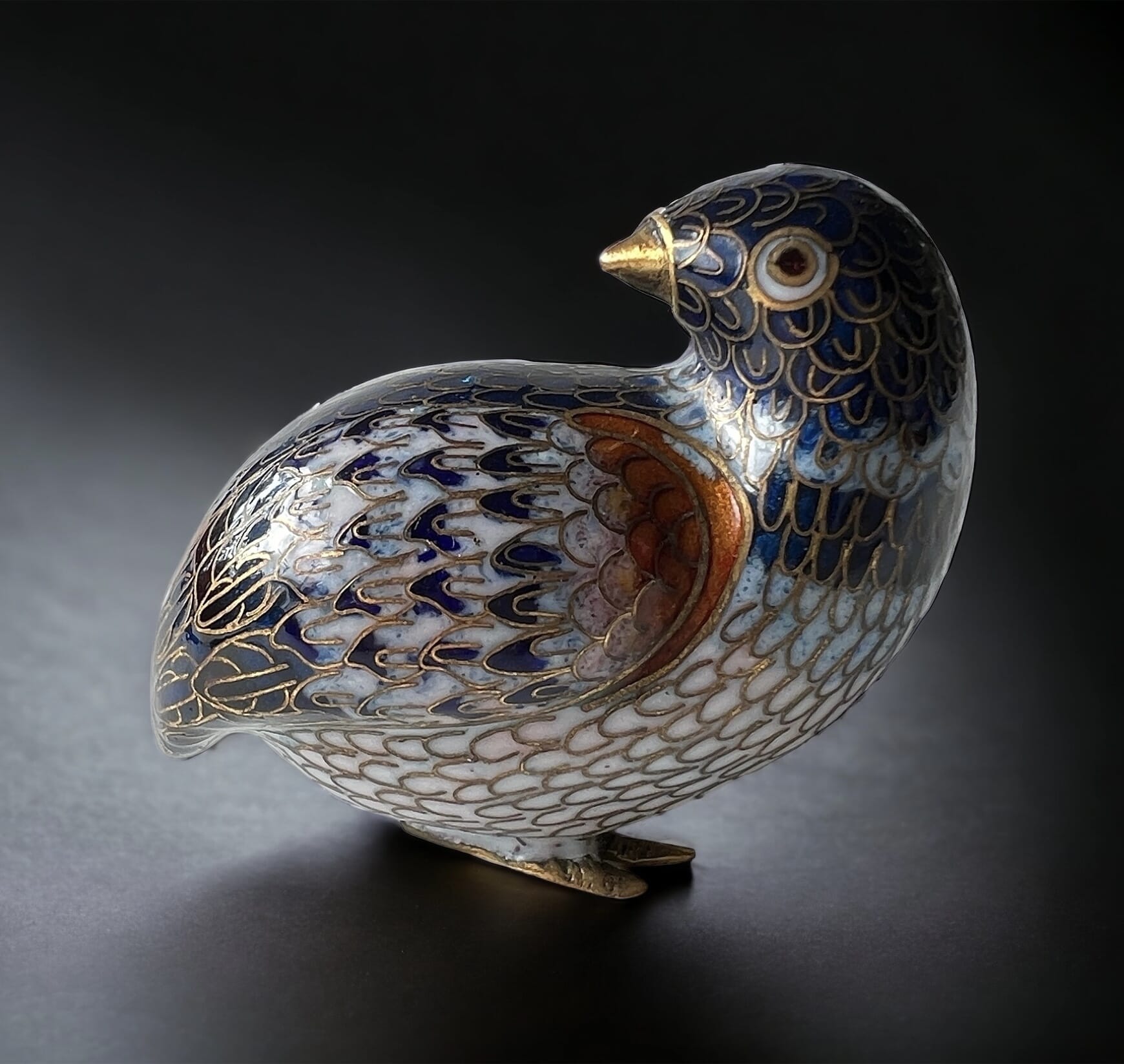
Antique Japanese Cloisonné Quail


On the opposite extreme is a tiny – fits in the palm of your hand, so actually life-size – quail in cloisonné, also Japanese & super cute!

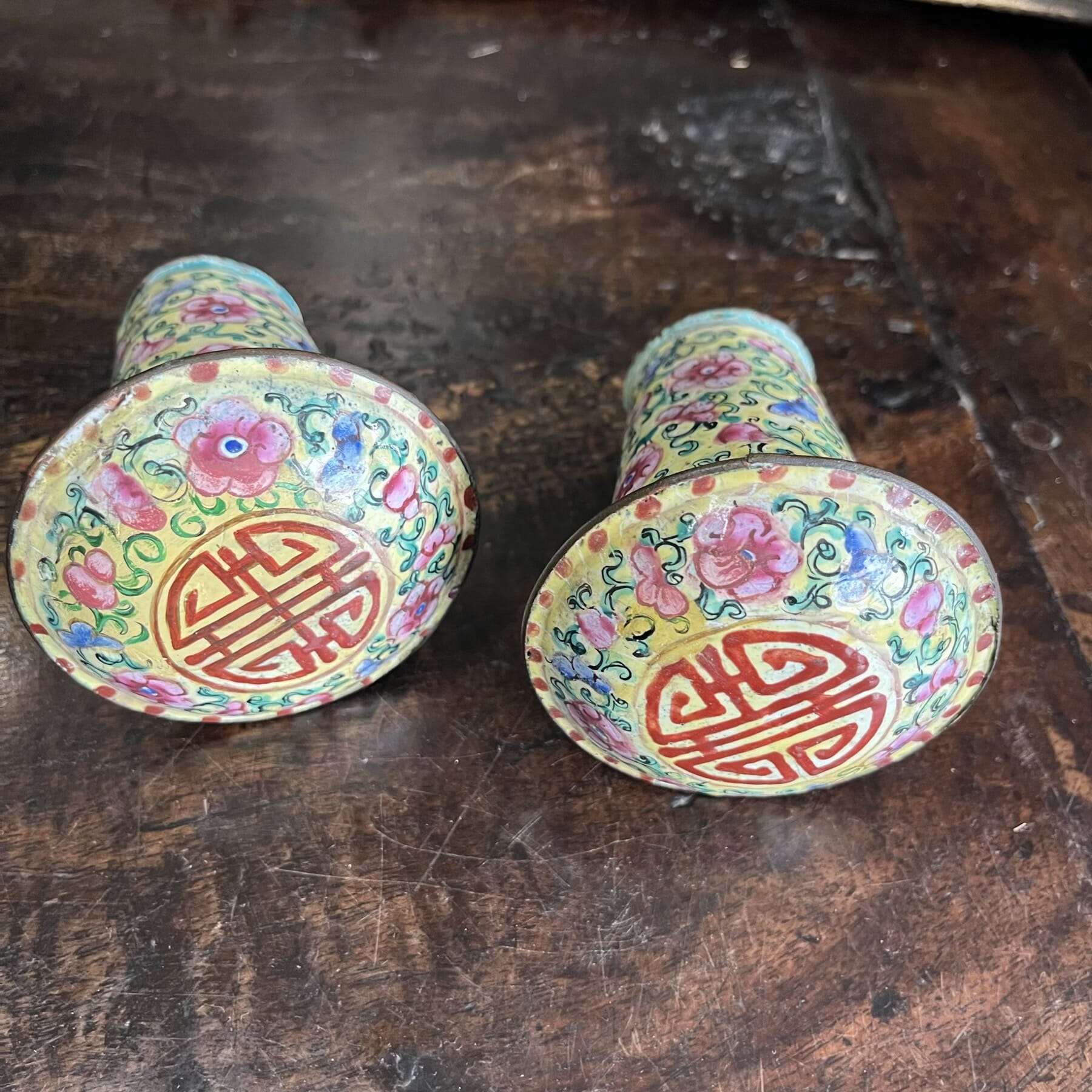
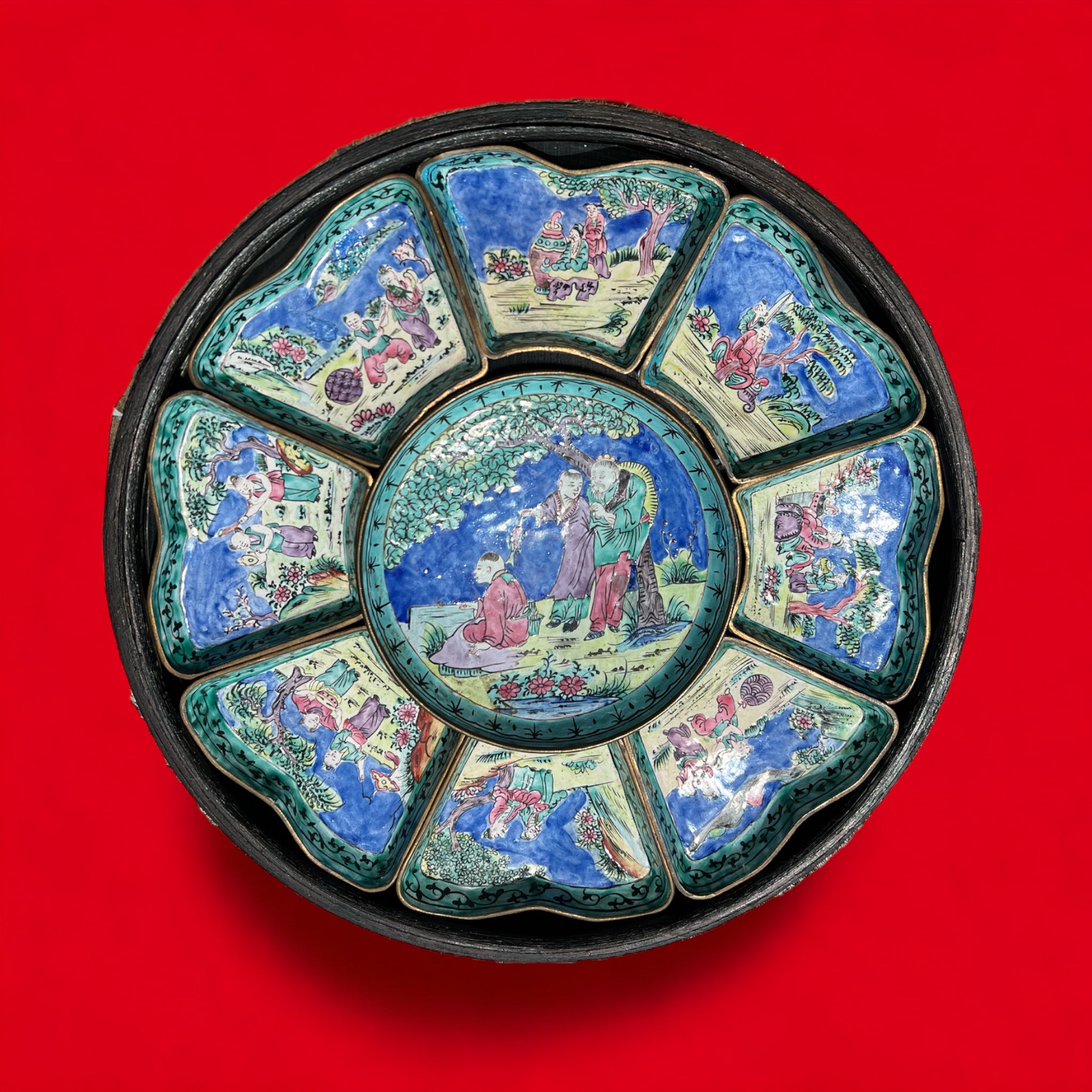
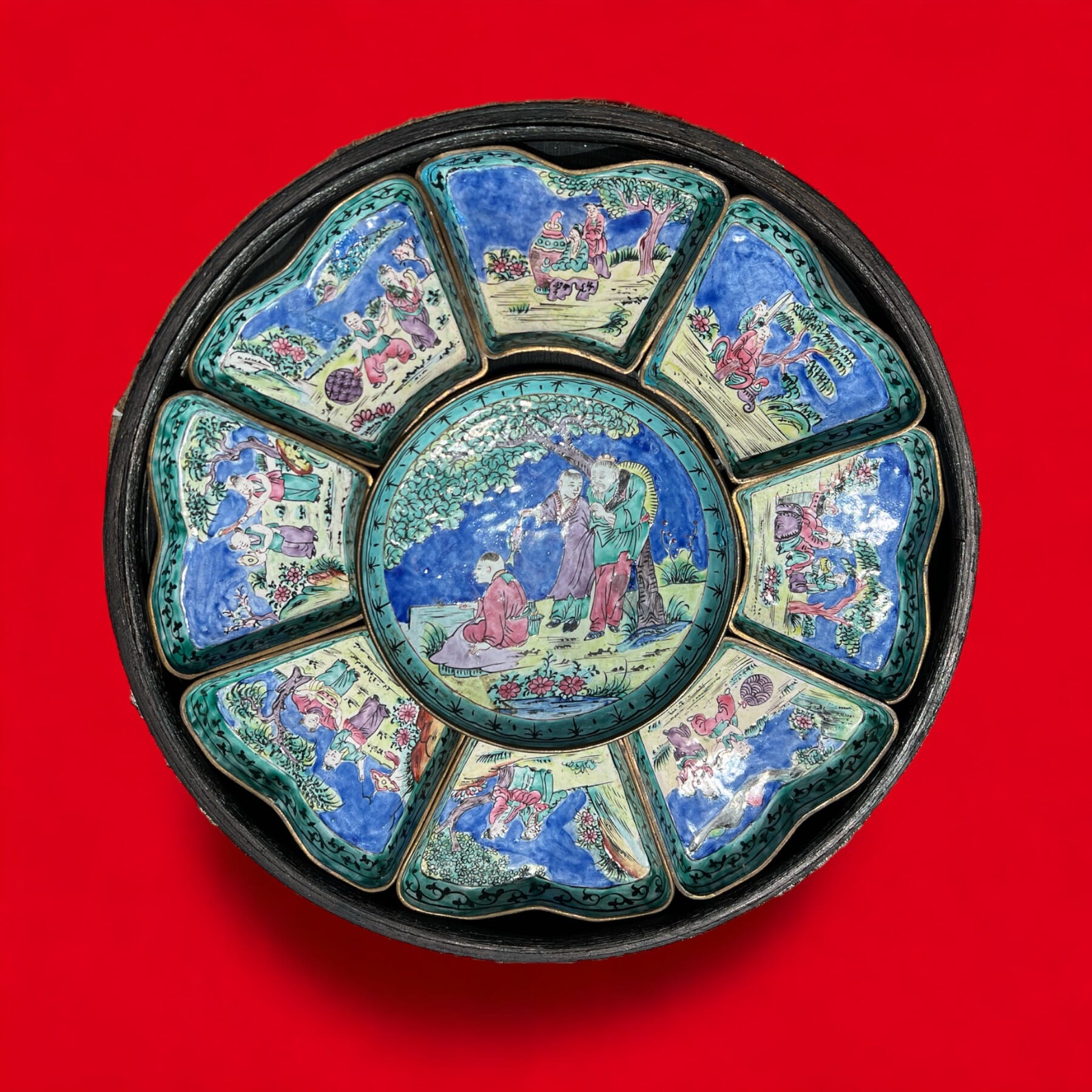
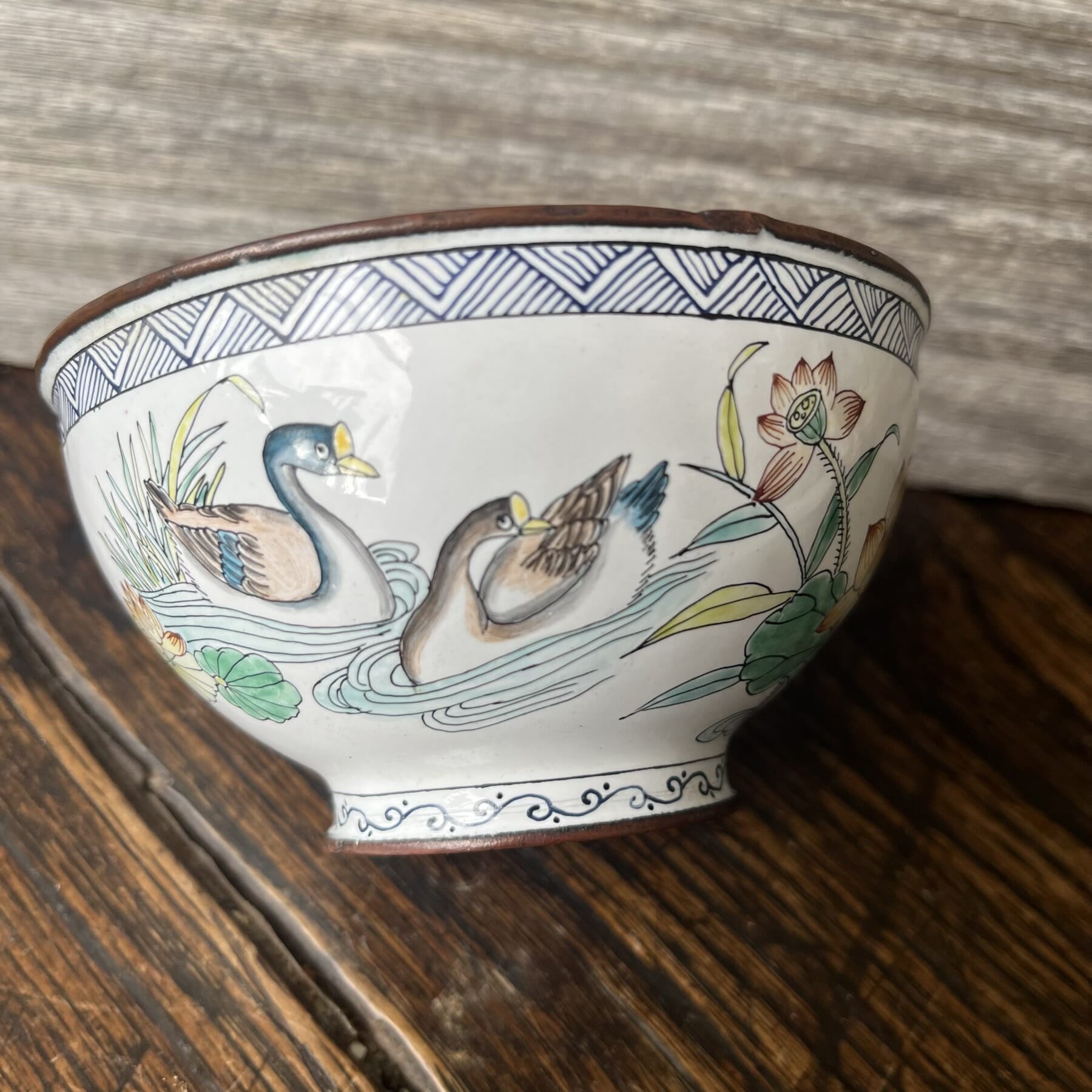
Cantonese Enamel dish set c.1900
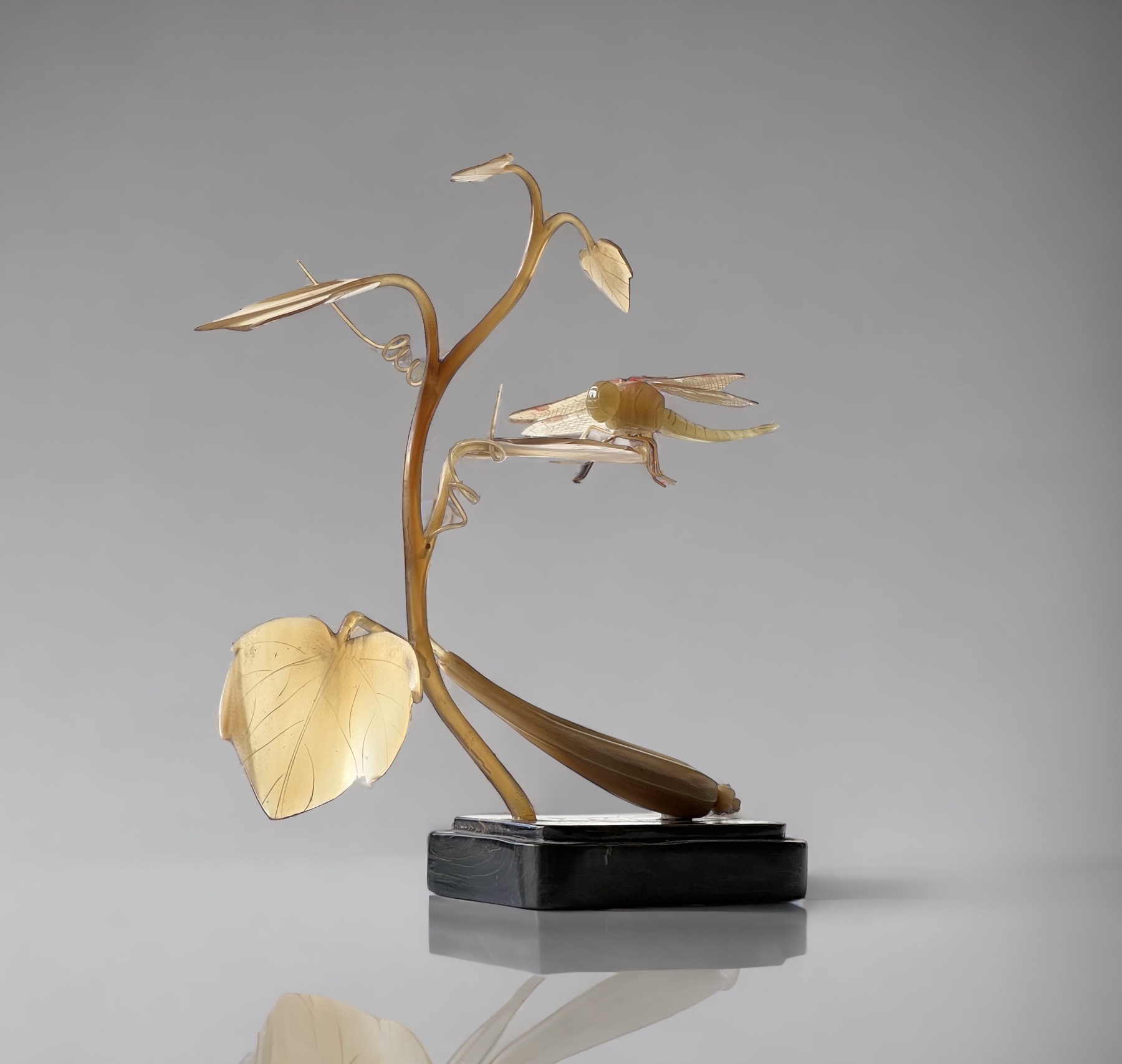
Japanese Horn dragonfly sculpture, Meiji Period
Life-size Japanese Horn dragonfly sculpture, Meiji Period 19th century

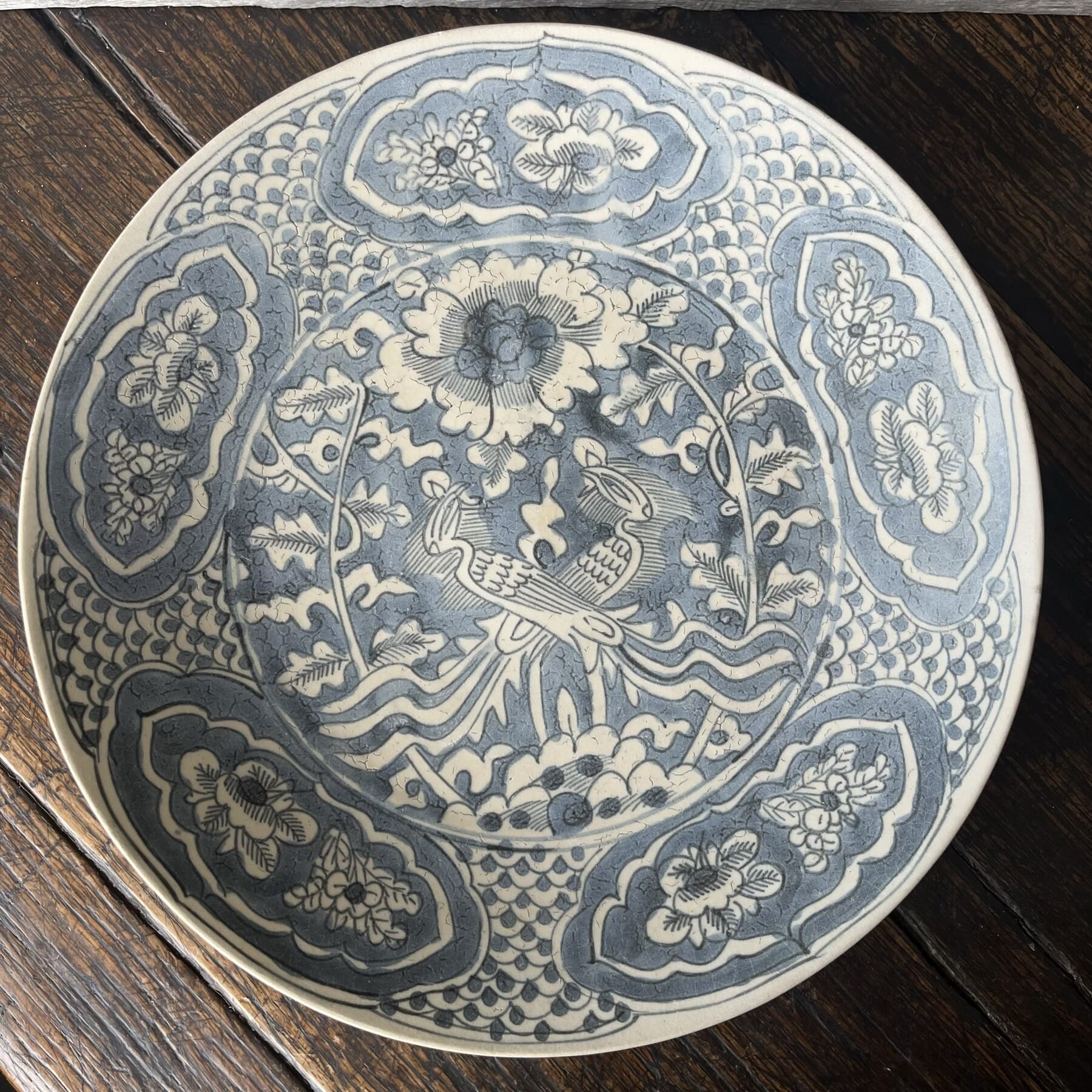
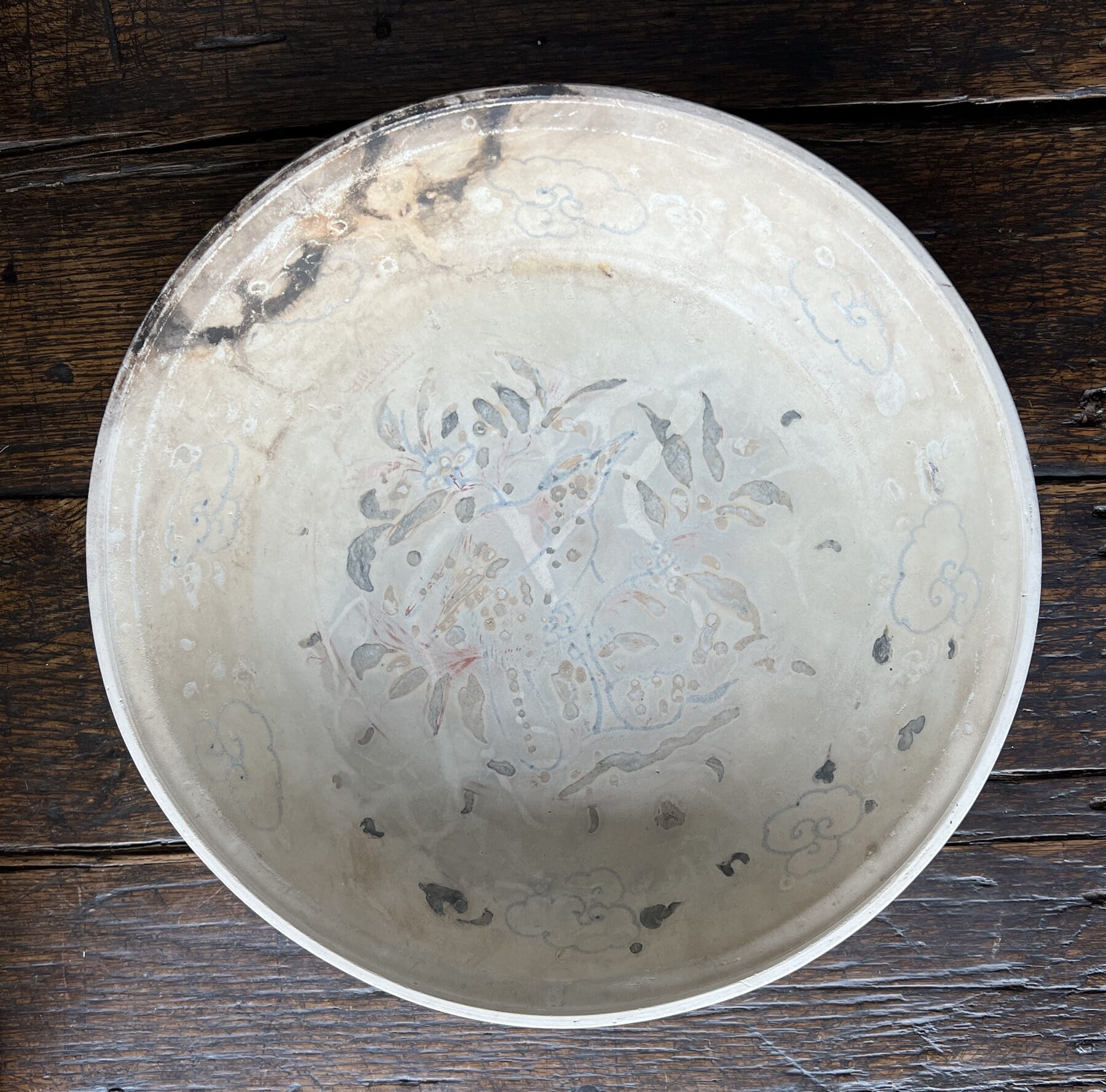
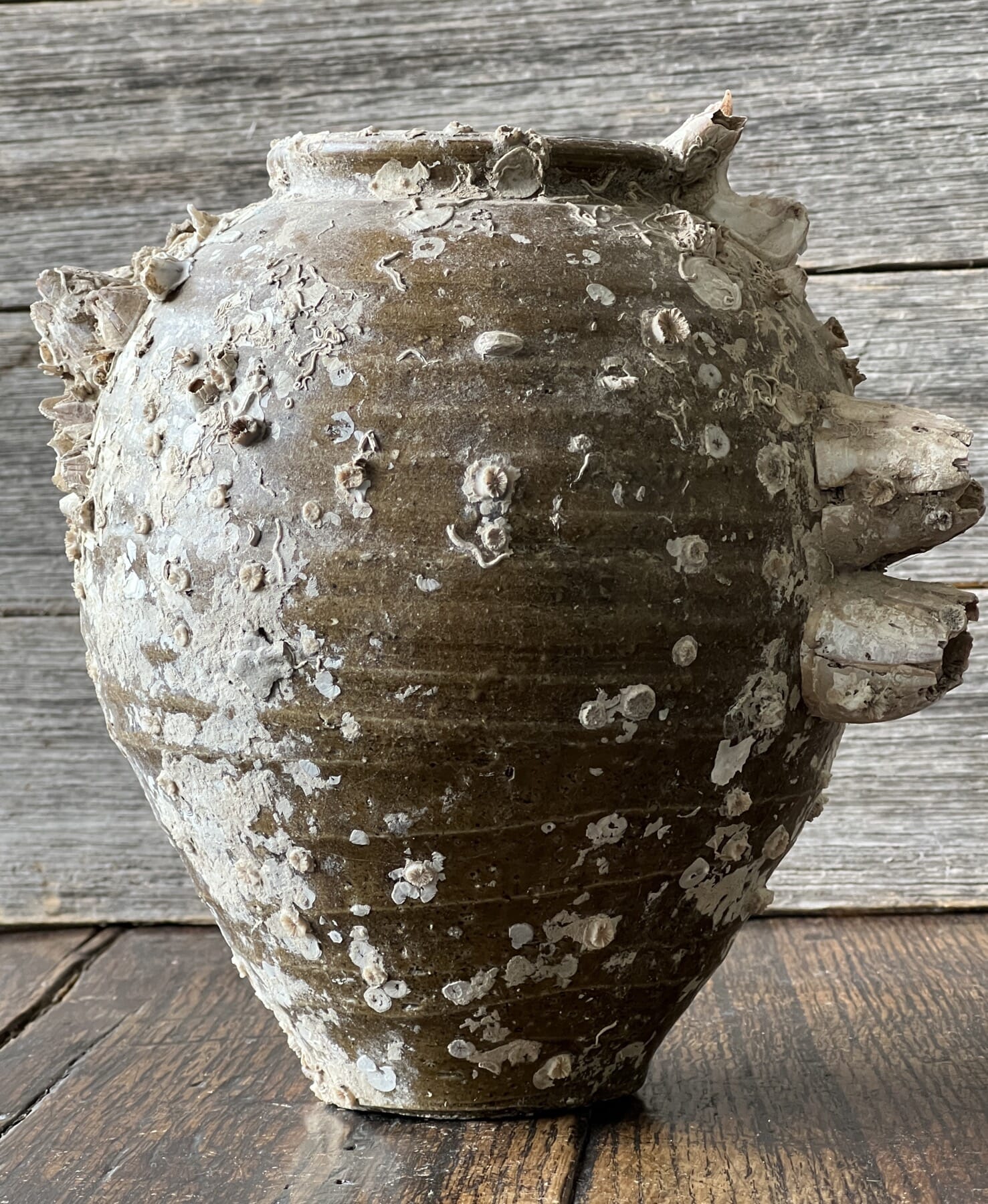
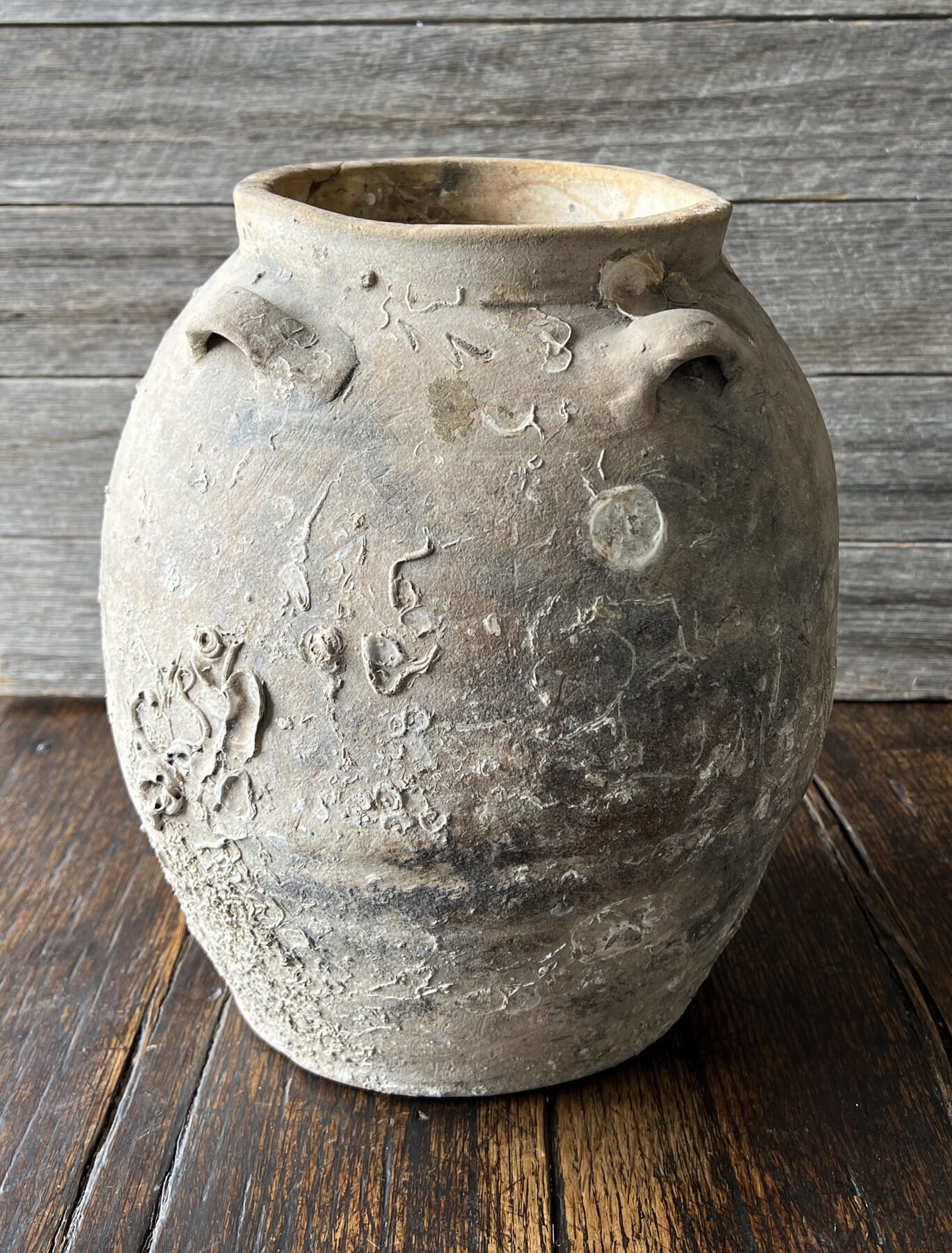
There’s also a selection of interesting Shipwreck items. We’re always looking for these, as they have the allure of being under the sea for hundred of years – and are therefore ‘guaranteed’ to be authentic. Compare this to items that just turn up out of nowhere without a rock-solid provenance like a shipwreck: they’re much harder to be certain about authenticity. We have a selection of pieces & shards from various known & dated shipwrecks as our pieces for direct comparison & learning.

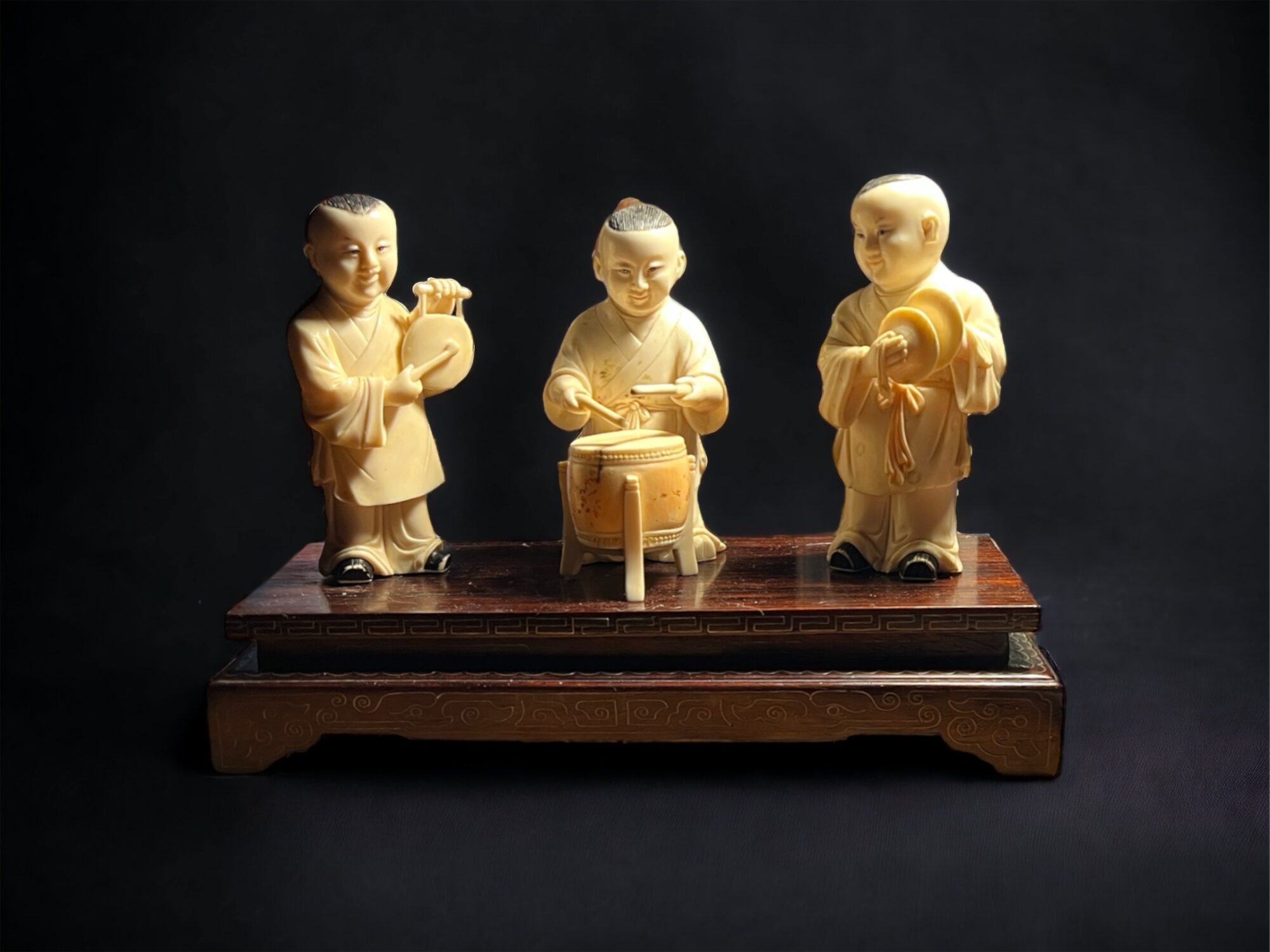
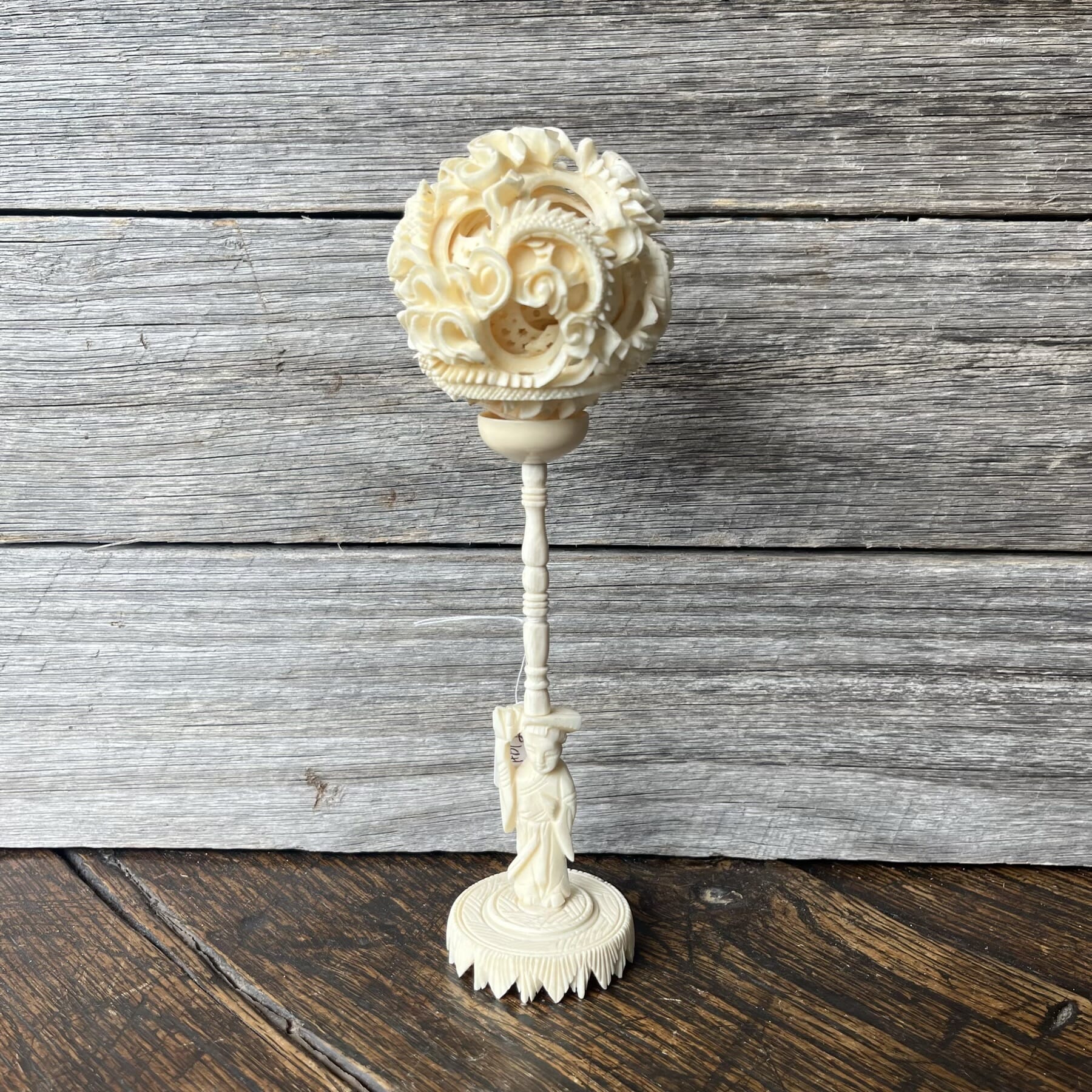
Antique Chinese Ivory Children

Coming Soon!

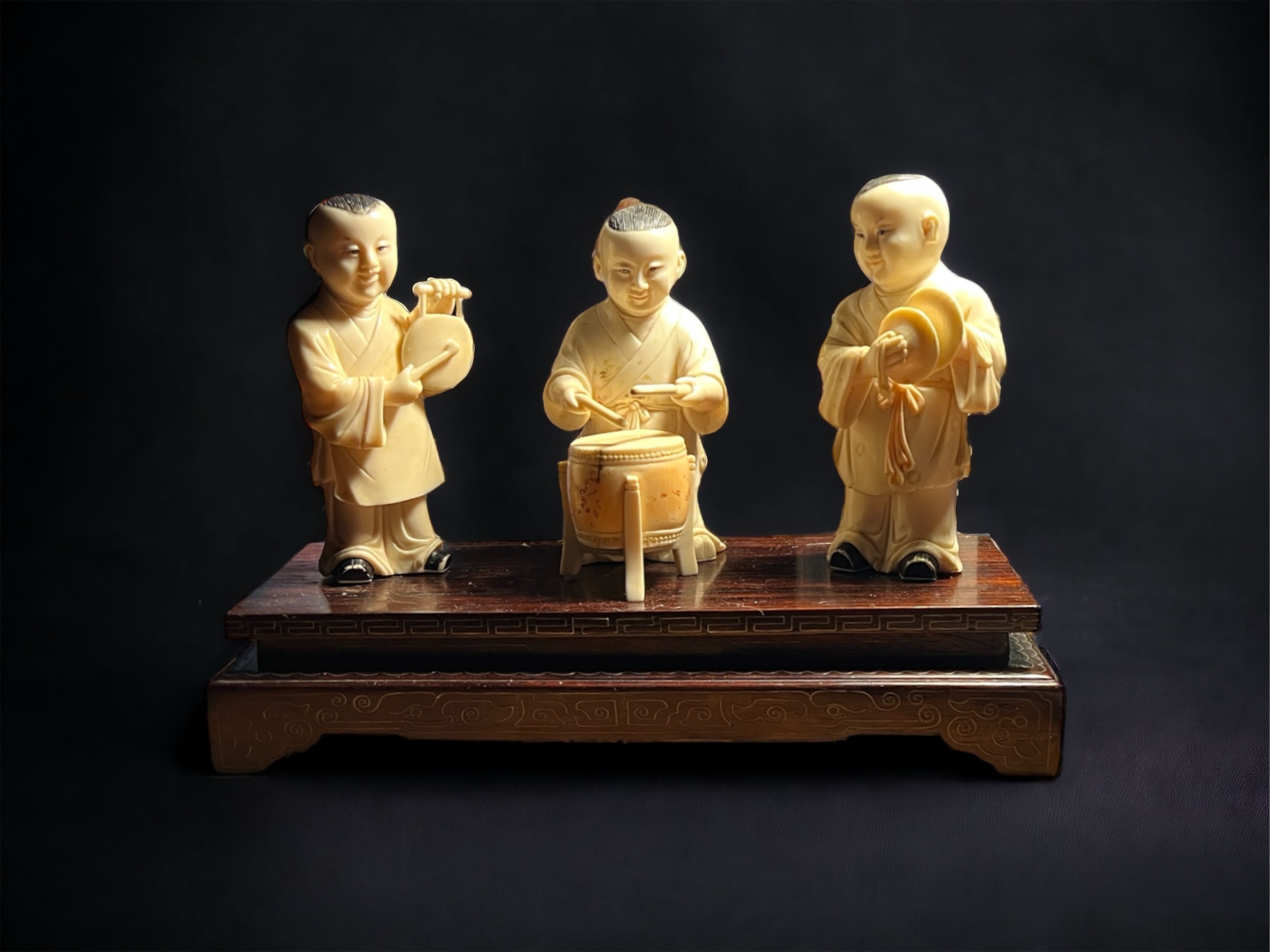
Delightful band of Chinese Musical Children, late Qing Dynasty

Fresh Asian Stock

Posted on

Fresh Stock, 12th May 2023 Mother’s Day

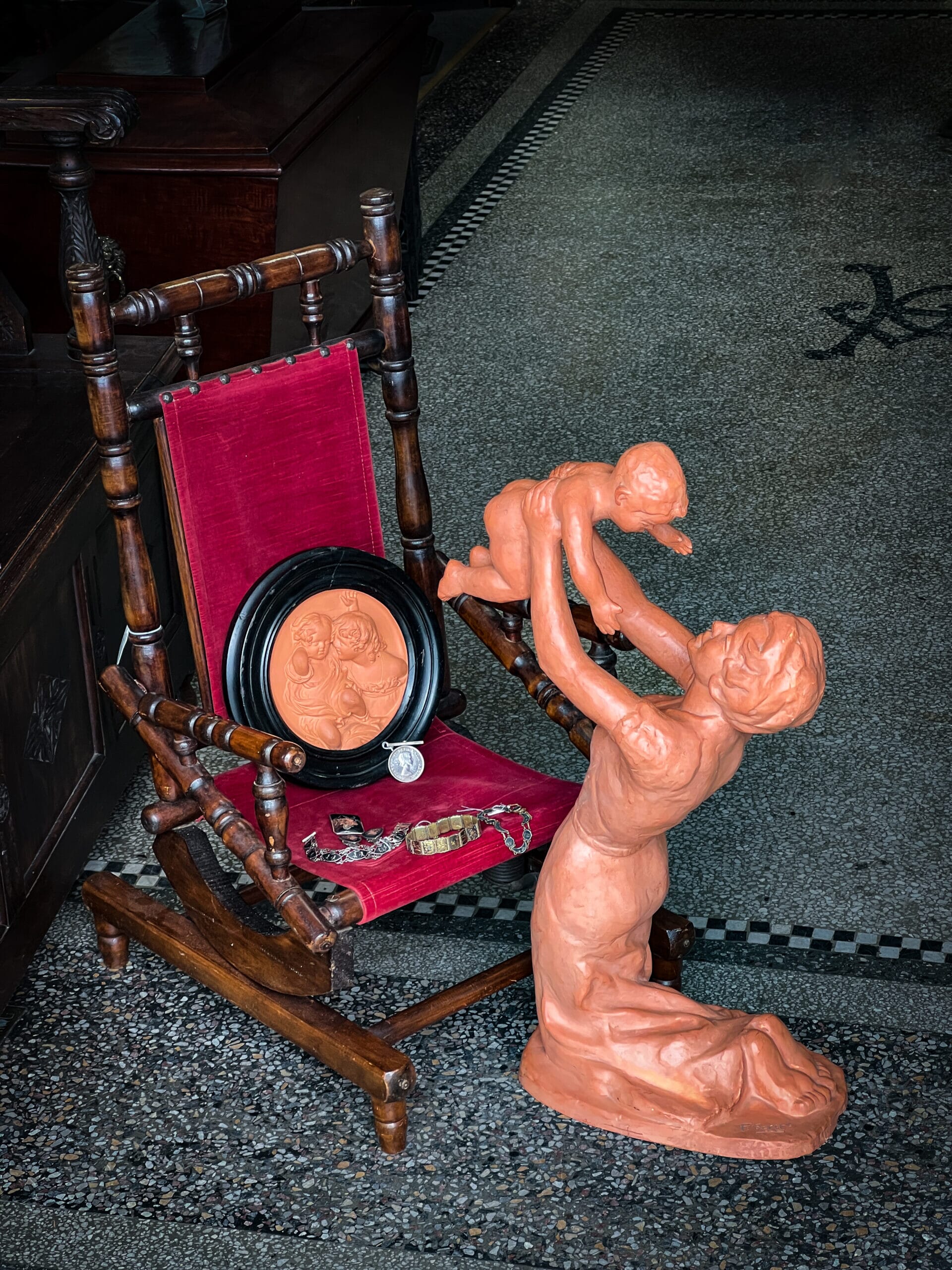
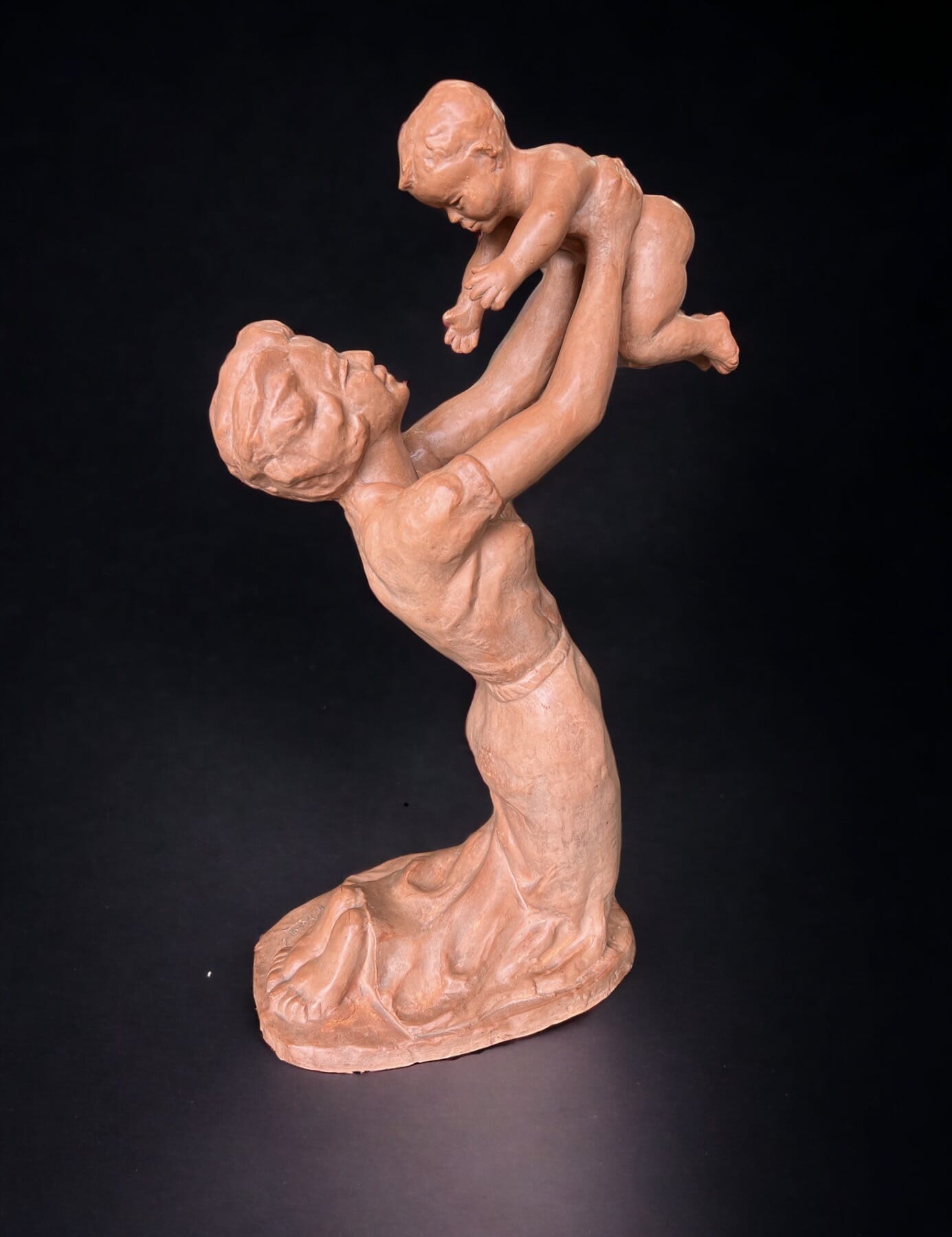
Moorabool Antiques, Geelong Maternité sculpture
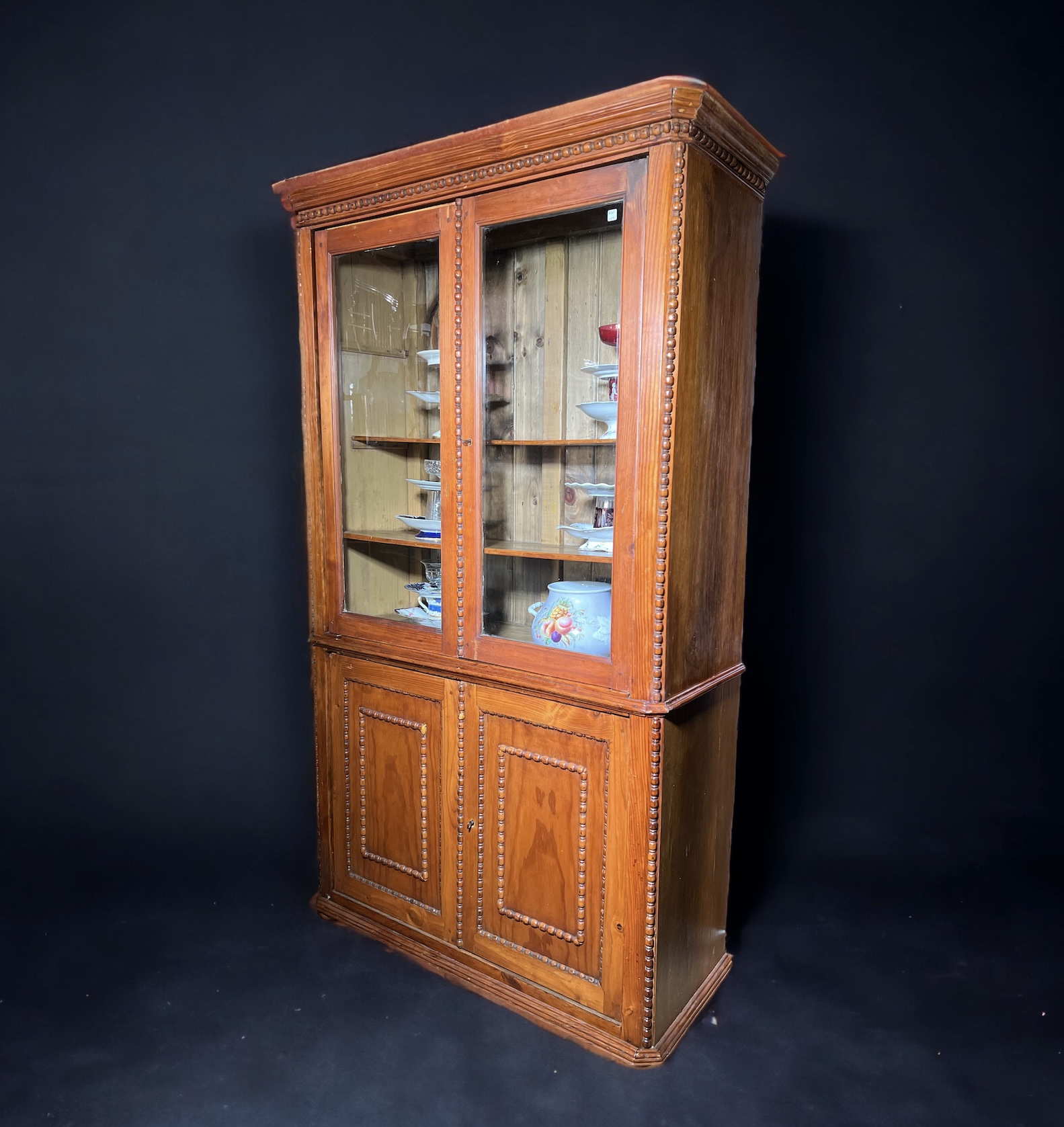
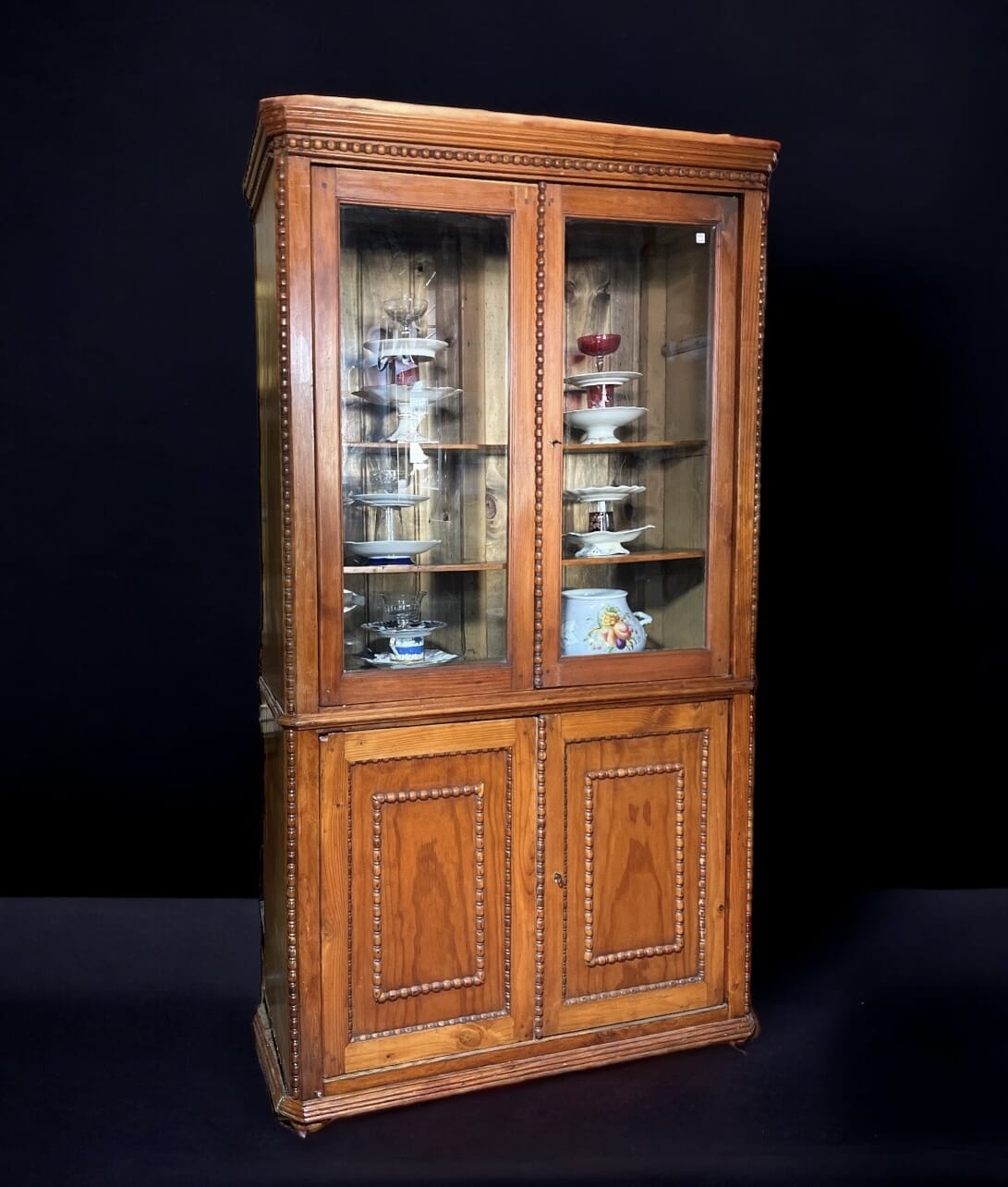
Swedish cabinet, Moorabool Antiques, Geelong
Swedish cabinet, late 19th century. $550
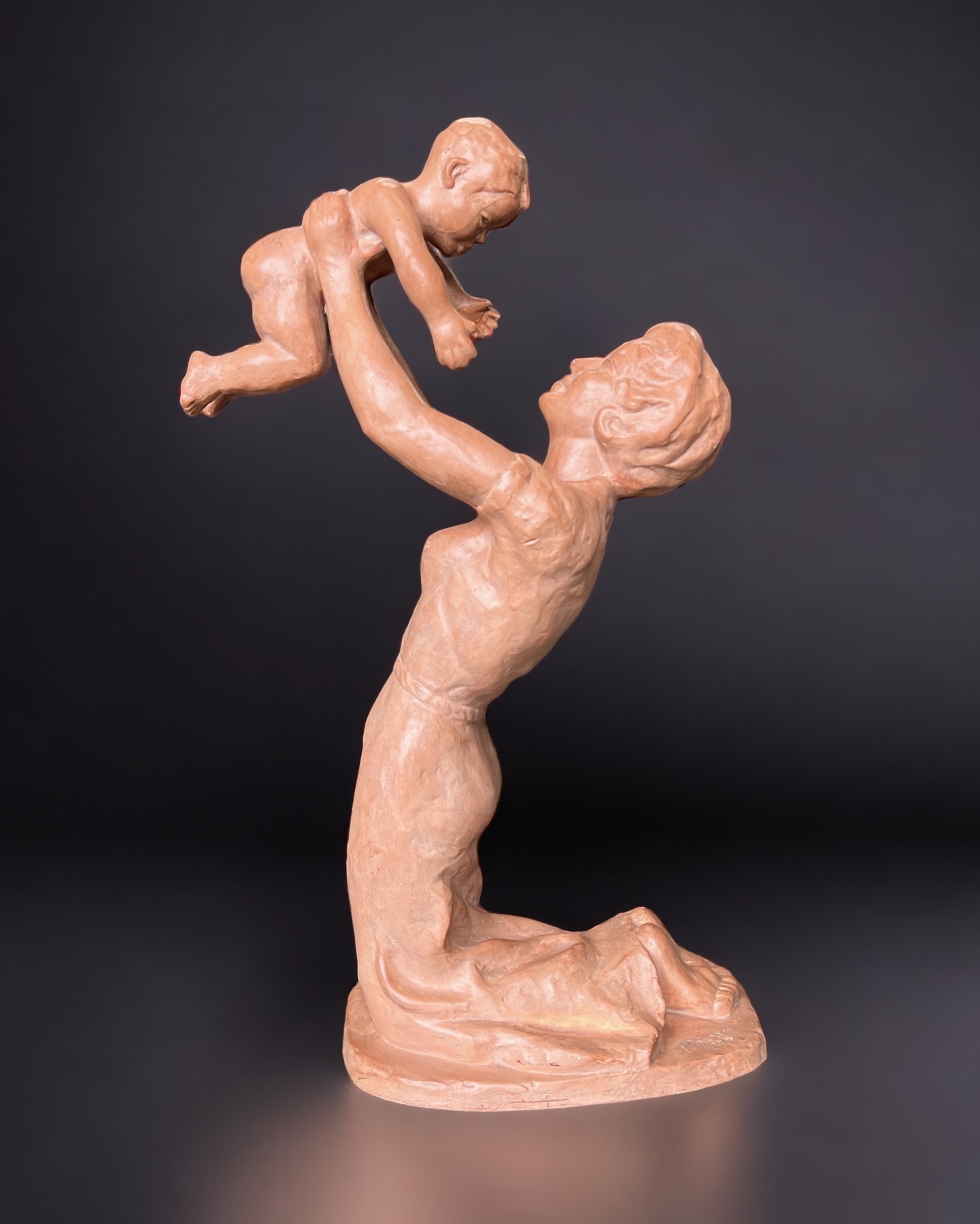
Maternité sculpture
Maternité sculpture, 64cm high. $760

Some Fresh items for you to enjoy…
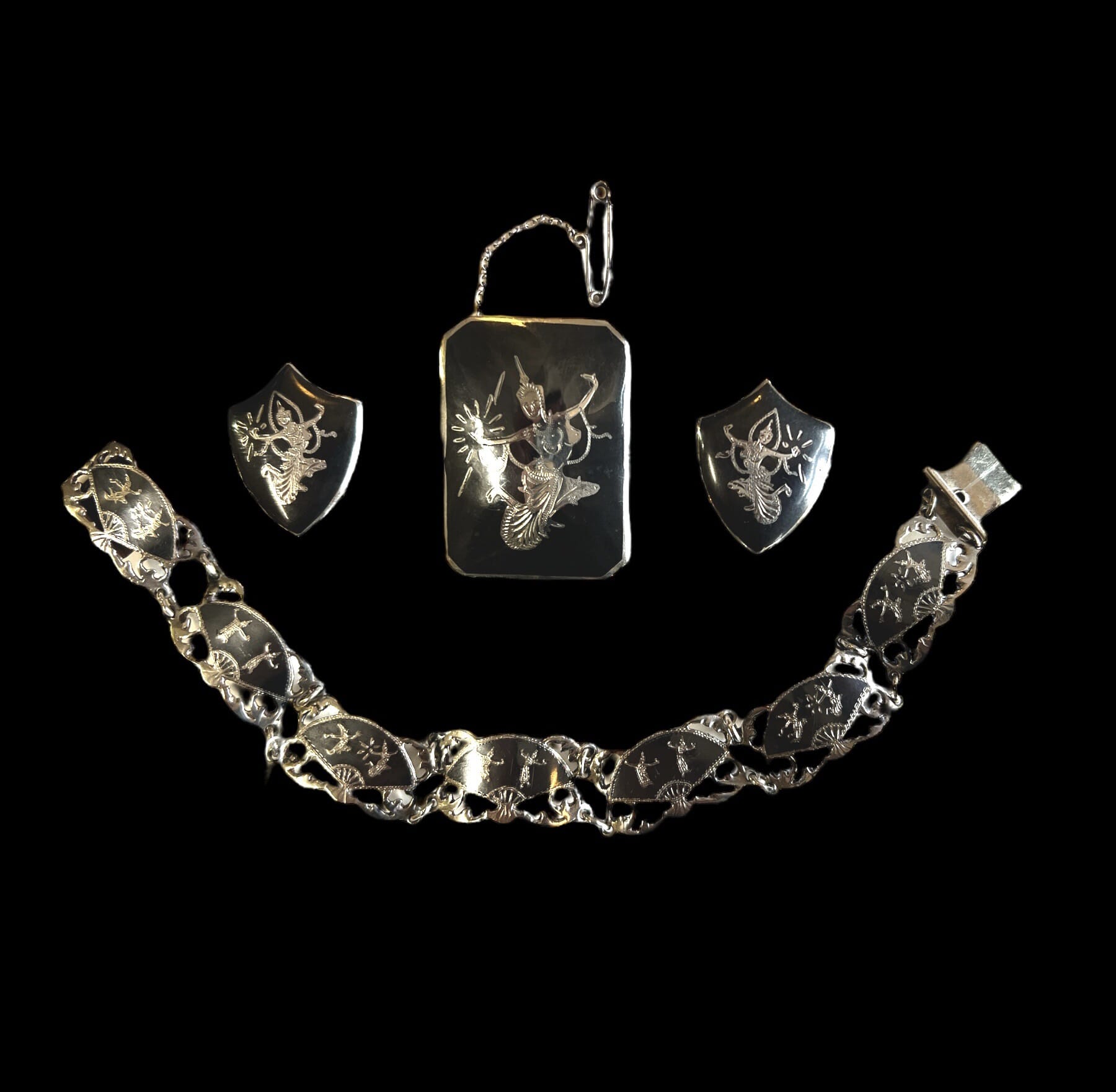
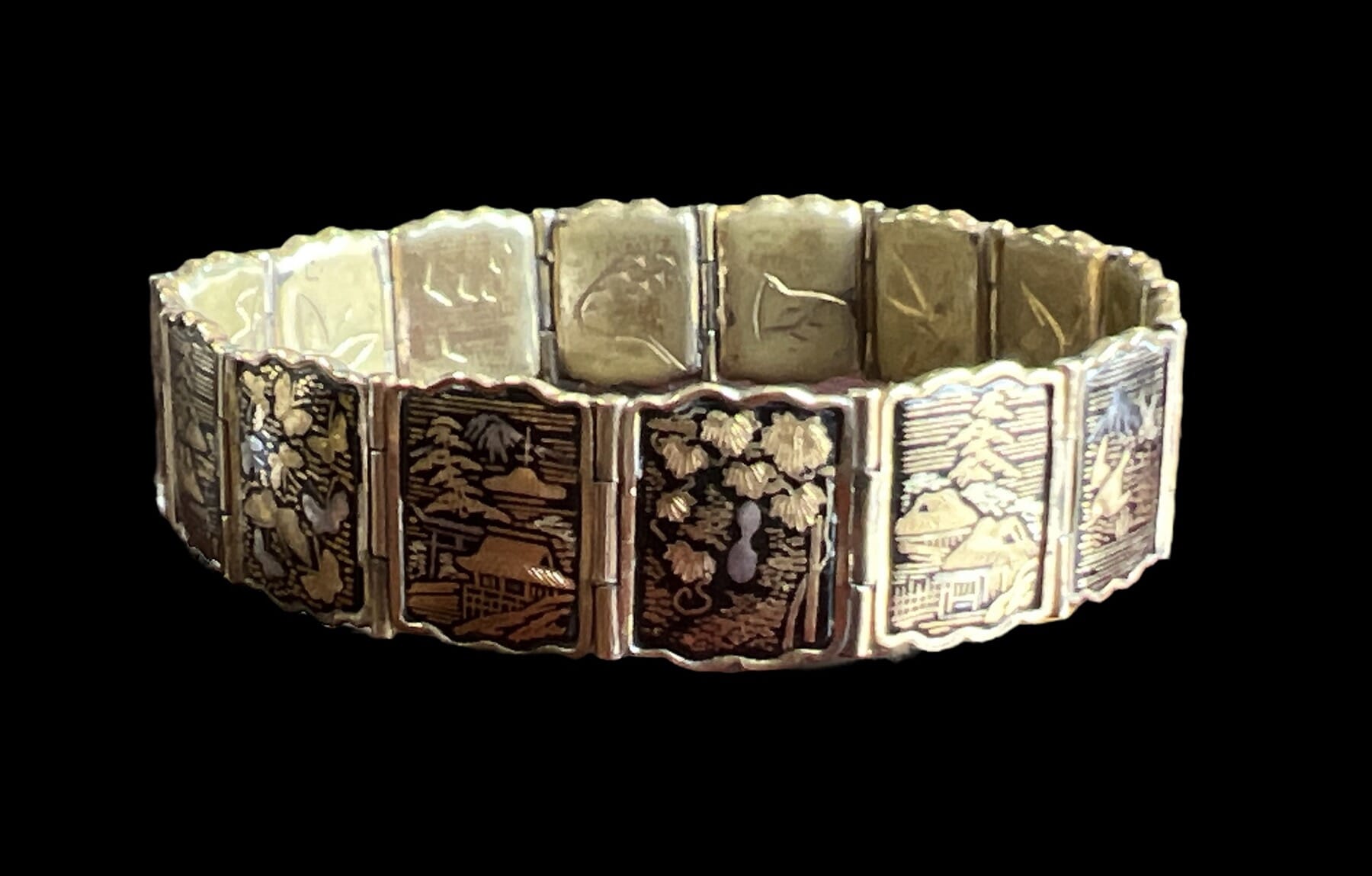
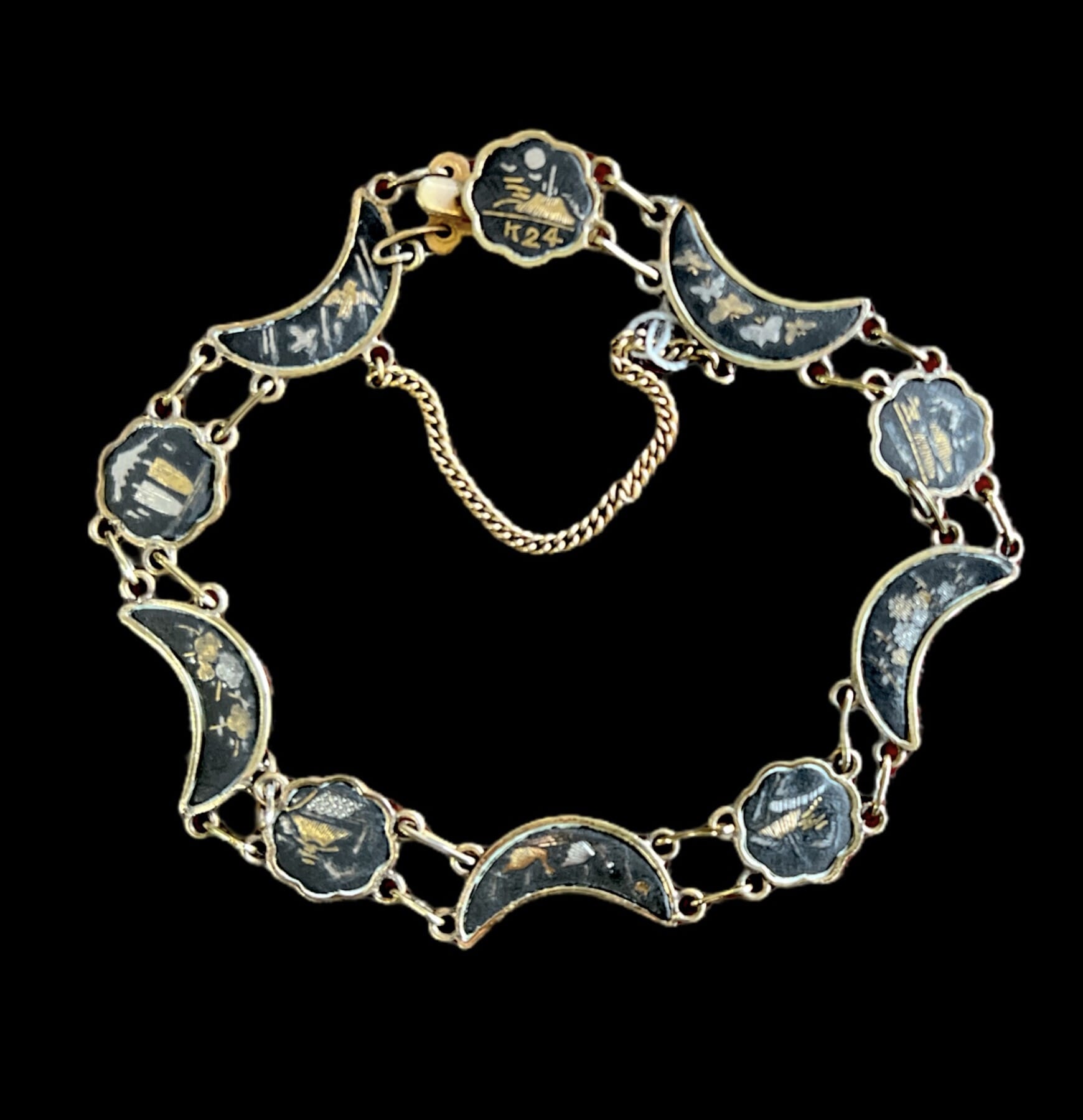
Today, we have quite a variety – from a modernist sculpture to exquisite Japanese jewellery, and a couple of fresh pieces of furniture including a very useful cupboard with glazed doors, probably Swedish.
Don’t miss the scaled-down Victorian platform rocker – actually functional, coming from a family home where the grandkids were often using it!

With Mother’s Day approaching, there are endless ideas…. the Paul Serste sculpture is very appropriate. He was a Belgian sculptor, very active in the mid 20th century. While many of his works were highly stylized human figures, this work is one of his most realistic. The ingenious Z-form of the kneeling mother dynamically balances and supports the infant she has hoisted up high, and he reaches down with his hands towards the safety of his mother. Titled ‘Maternité’ beneath the base, it truly fulfils this name with the depiction of the bond between a mother and her baby.

Posted on

Fresh Stock -Royalty, Armorials, and a Coronation Spoon…

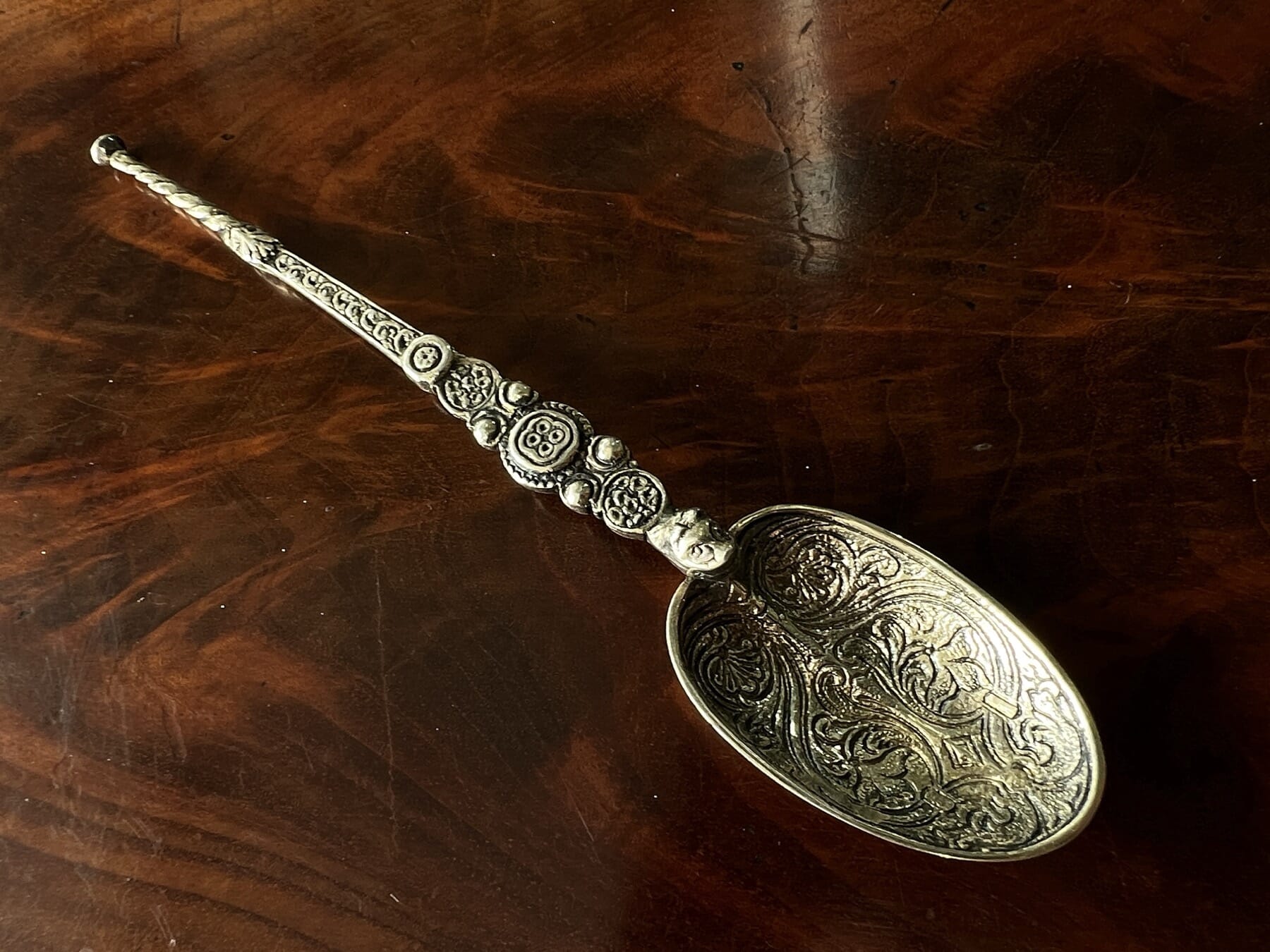
Coronation Spoon 12th century 1937 Sterling Silver version

The historic events of this weekend will be remembered forever in the history books, as King Charles III is coronated amongst the pomp & ceremony of the British Royalty.

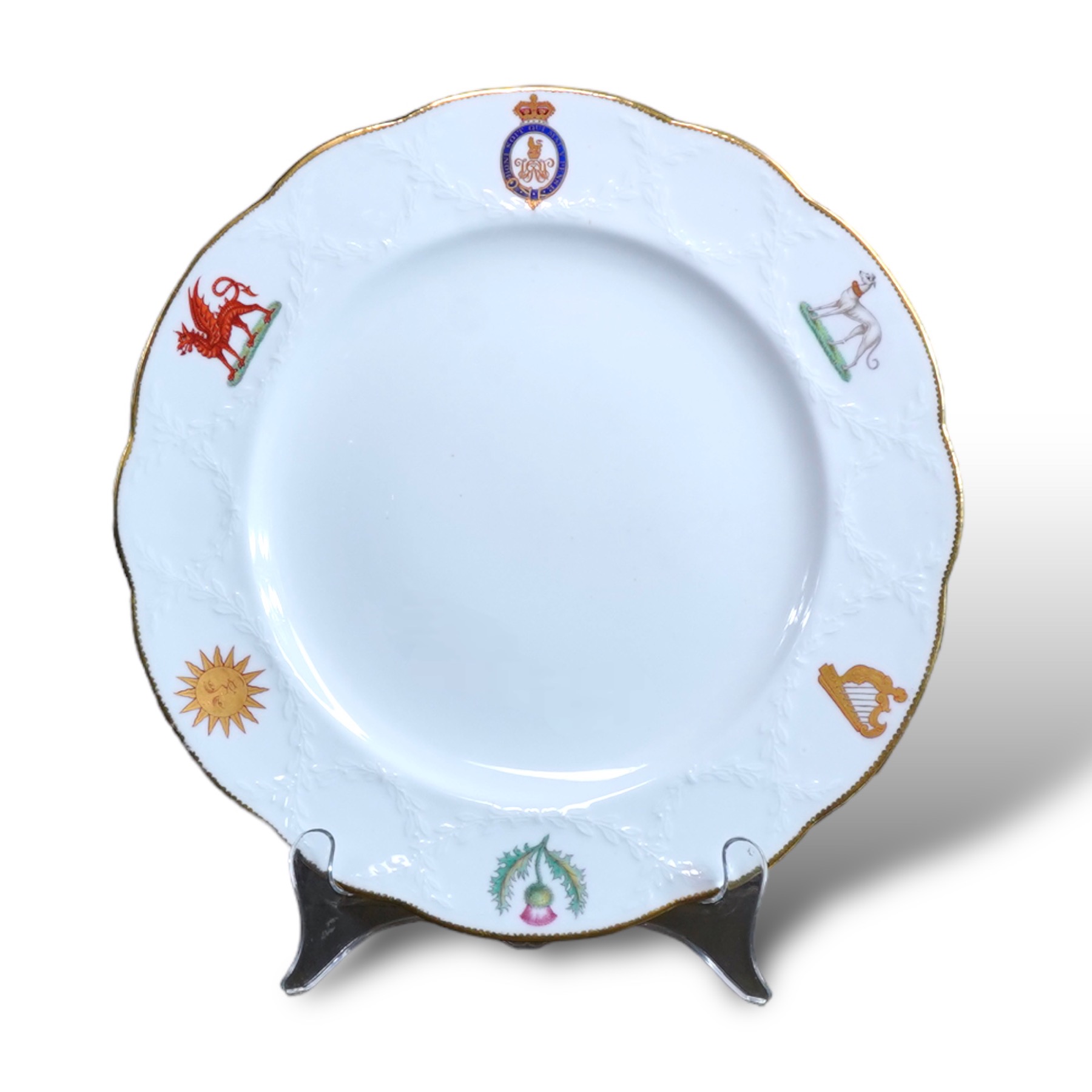
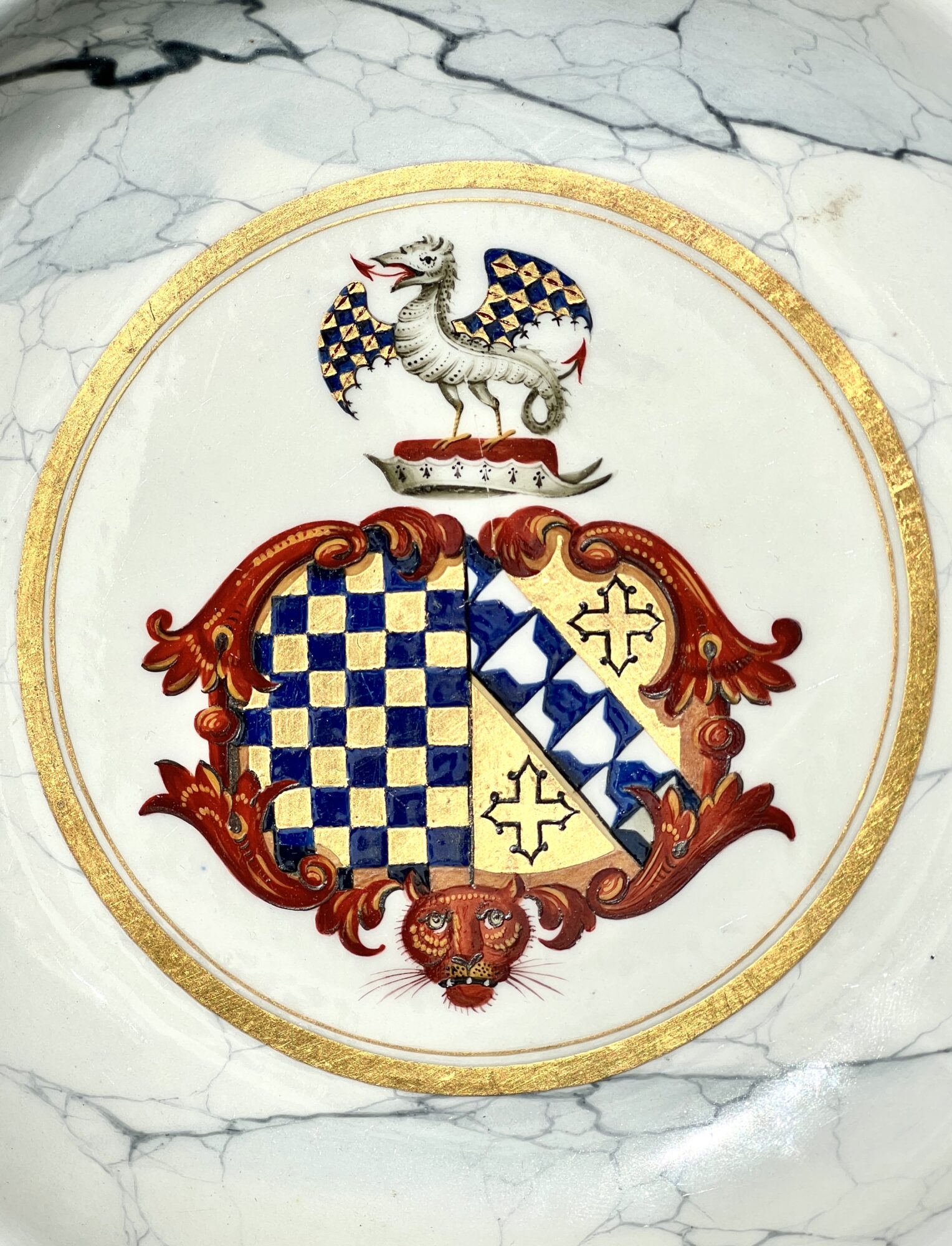
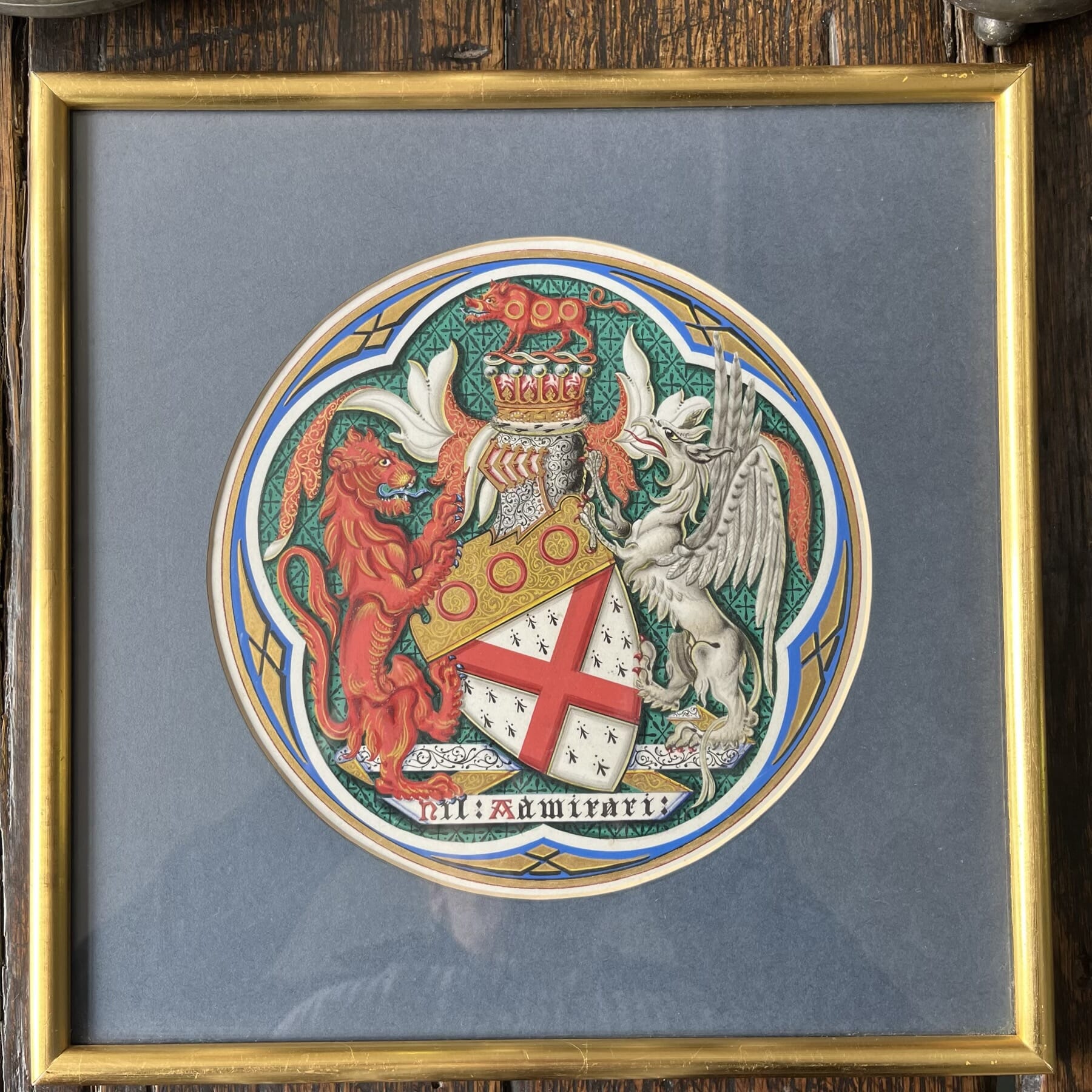
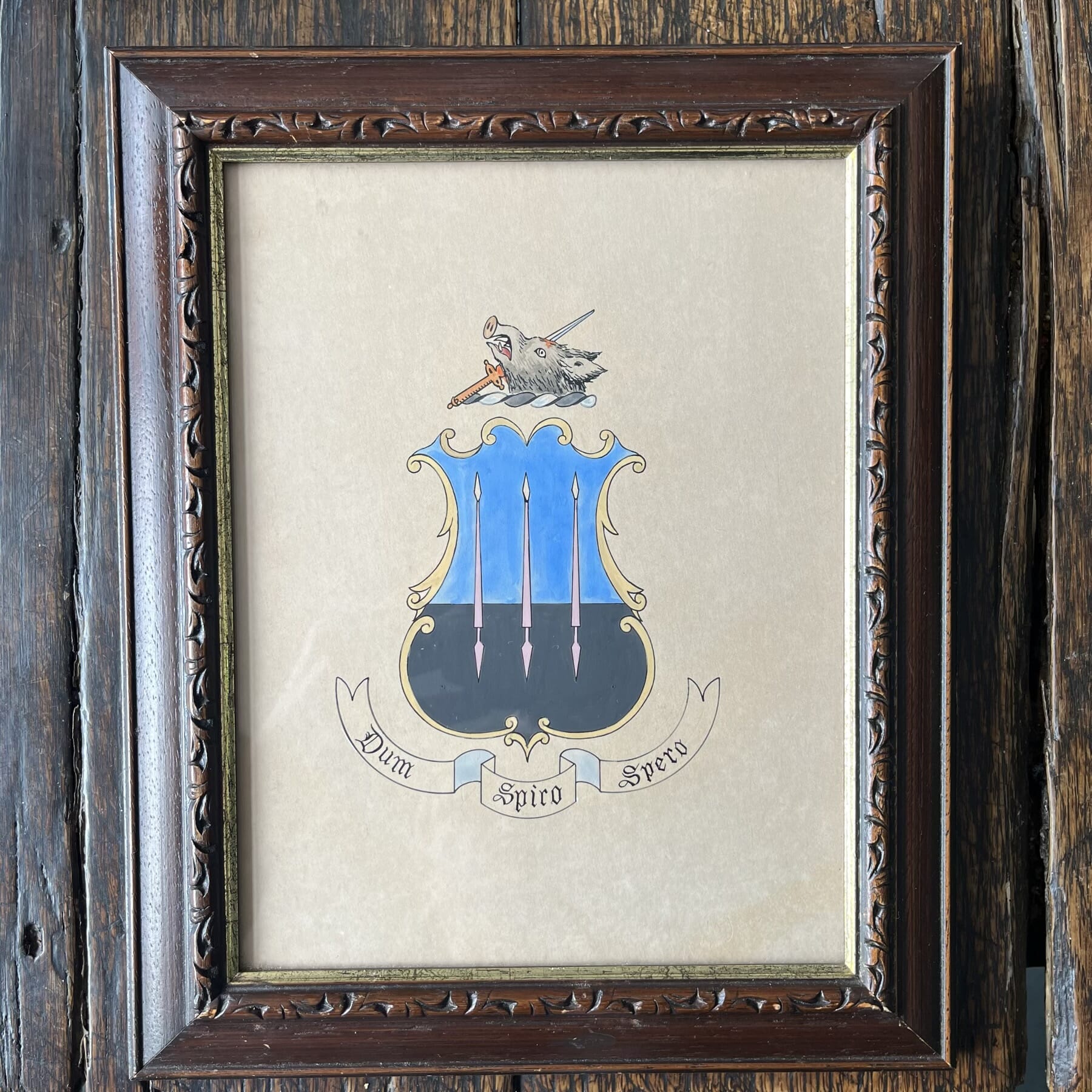
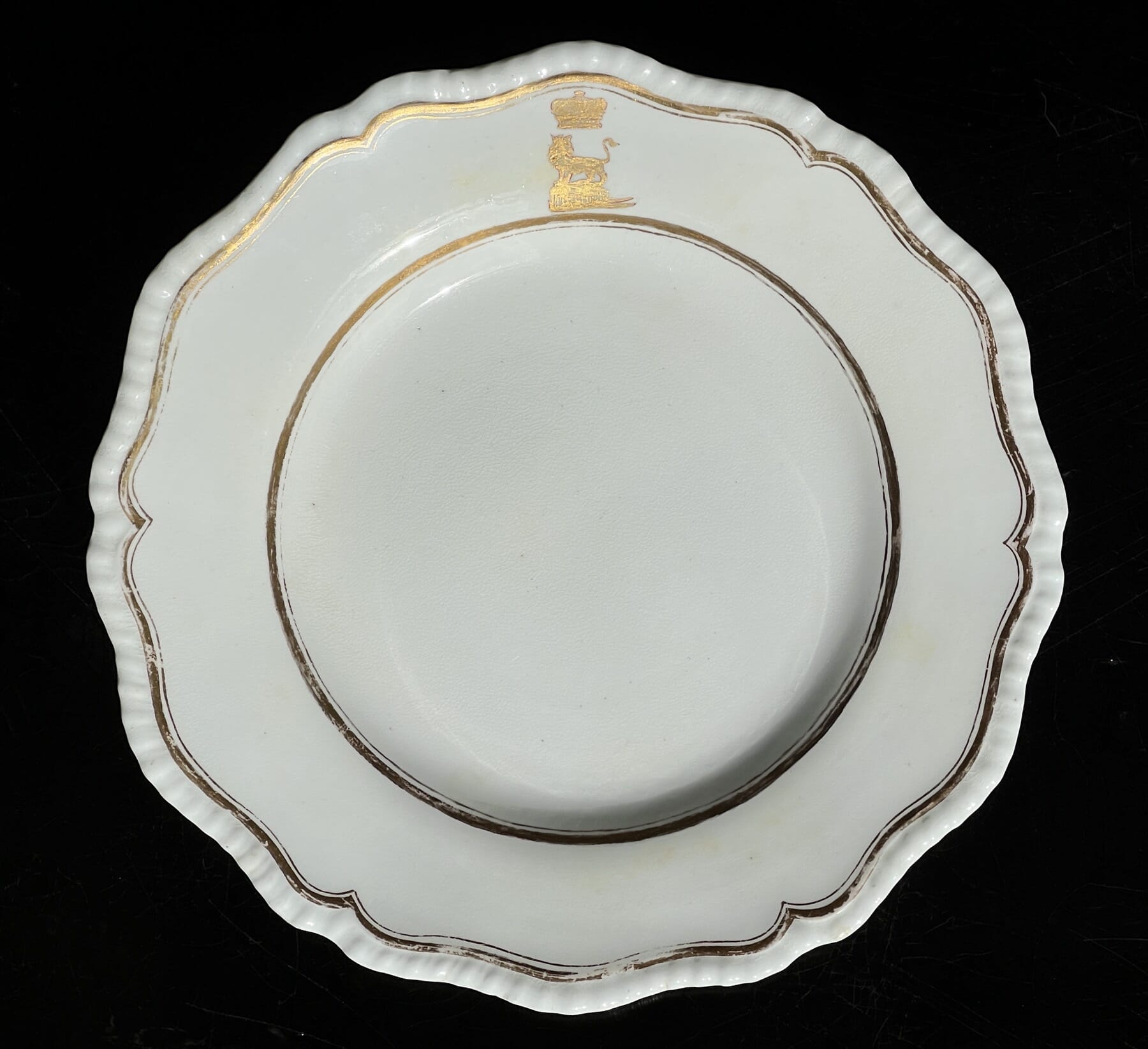
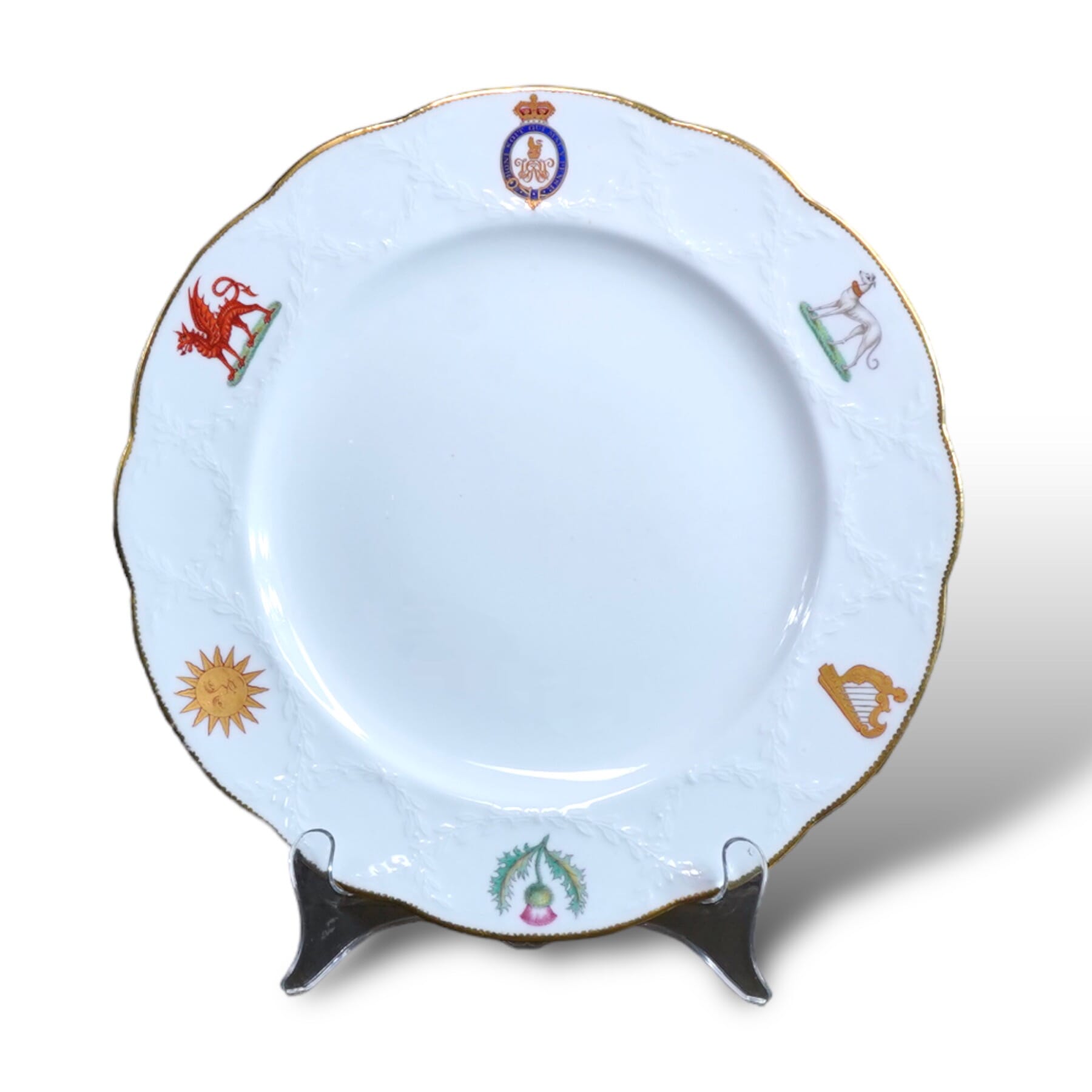
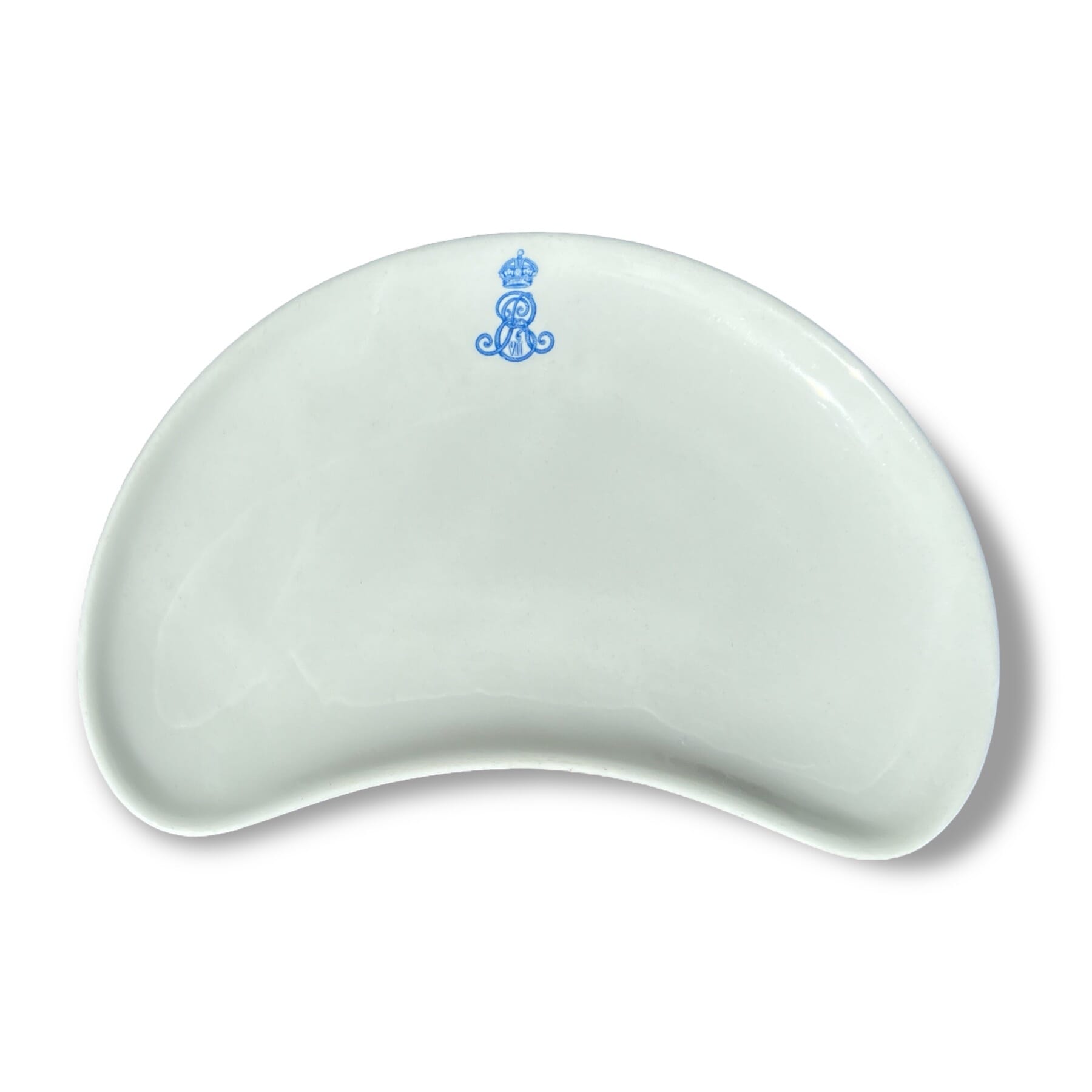
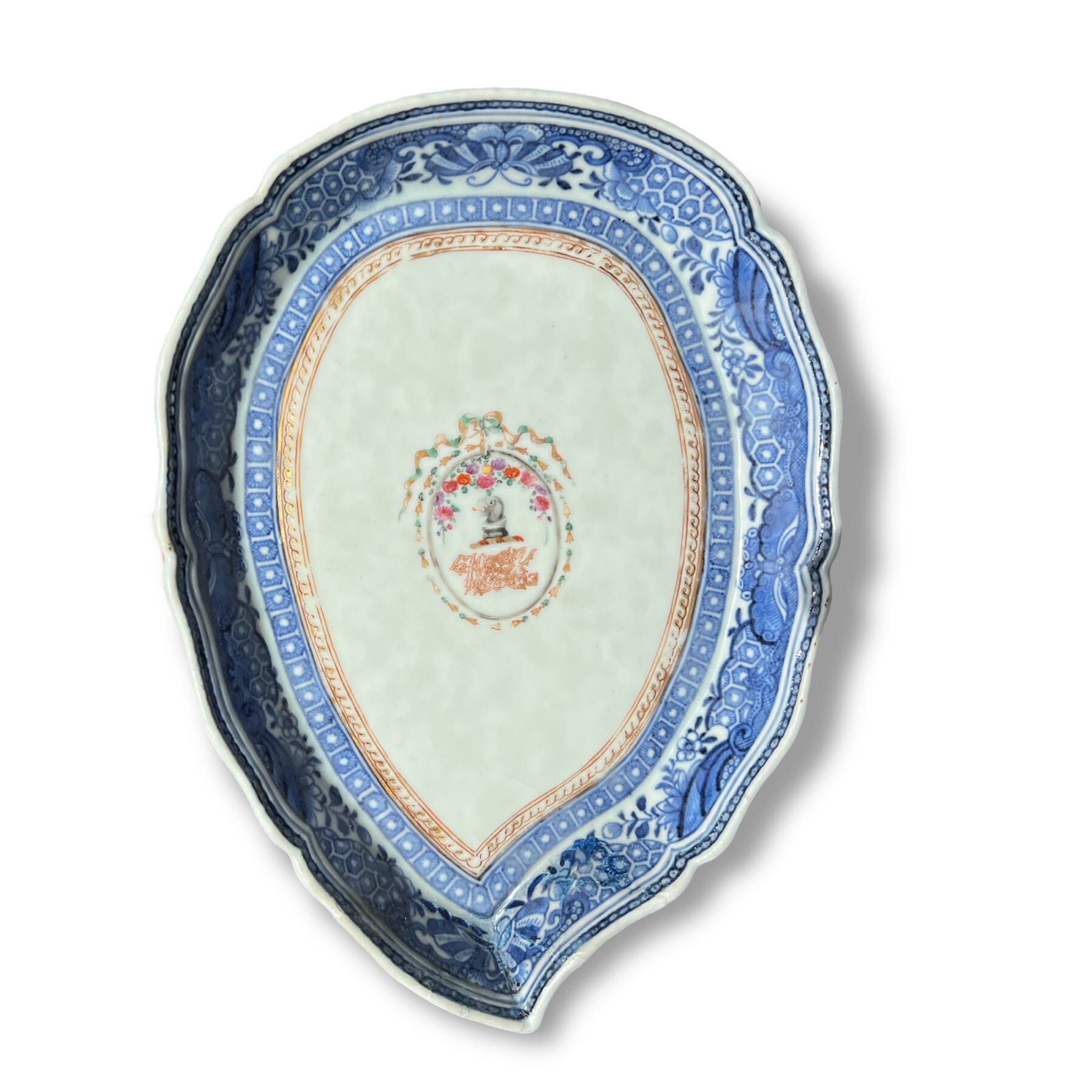
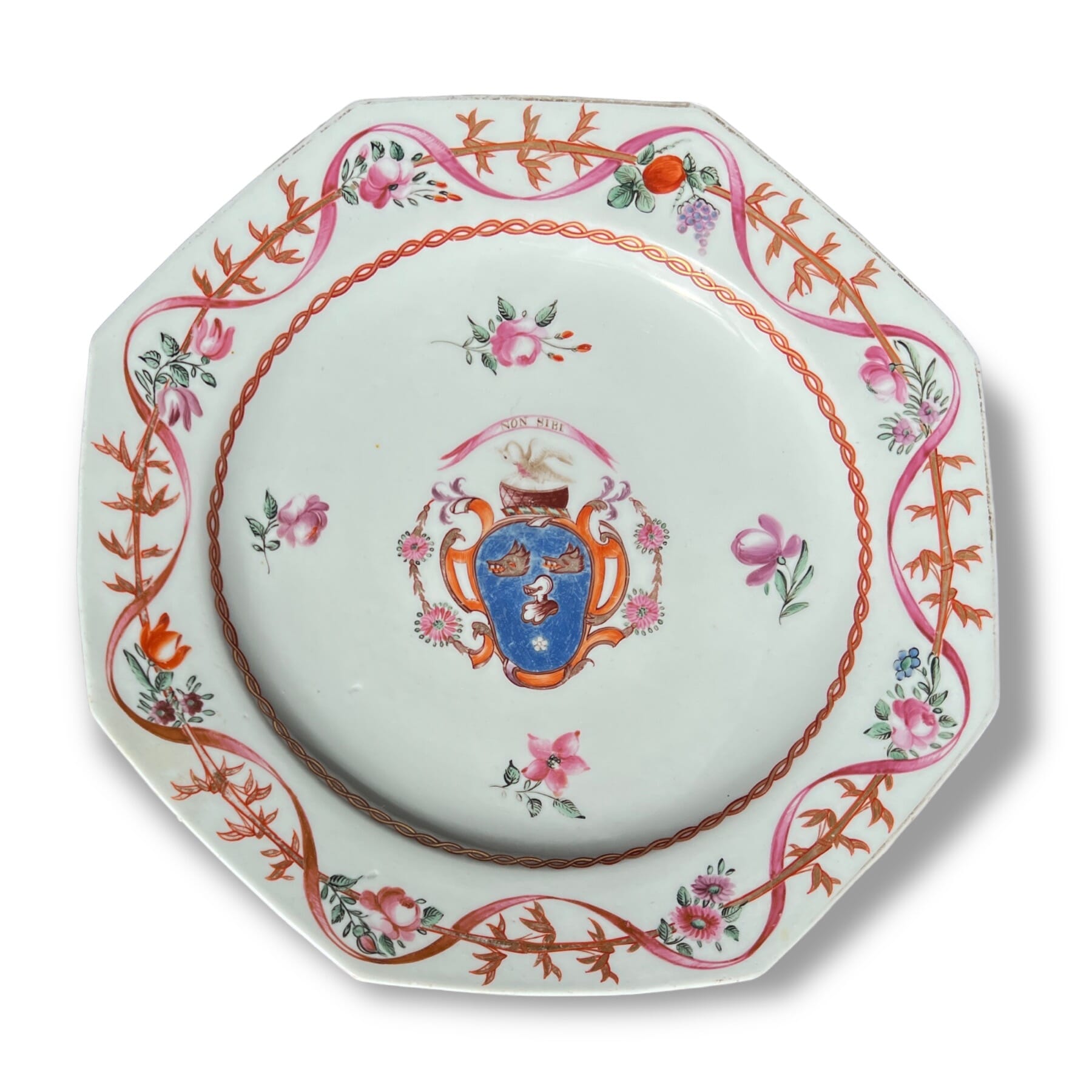
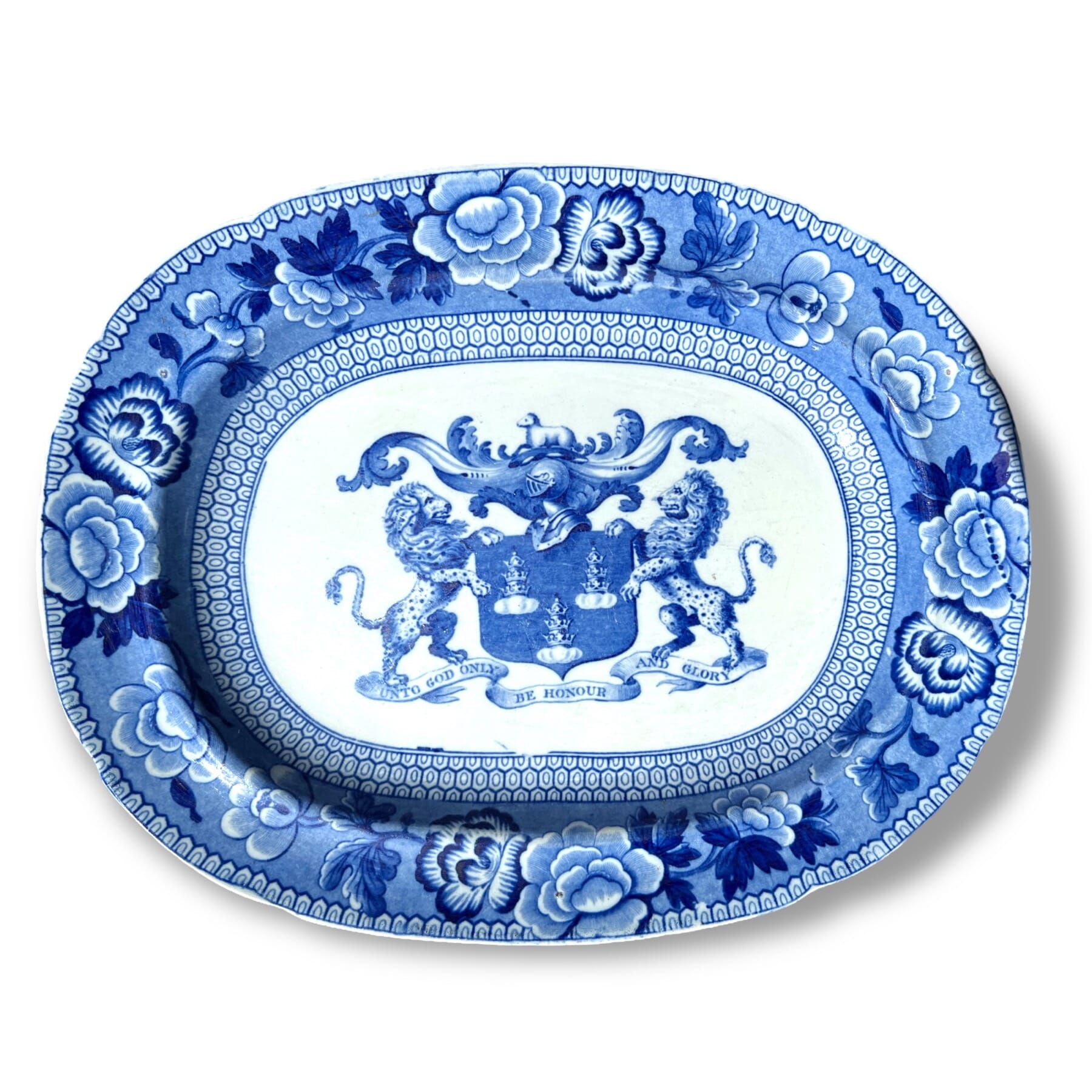
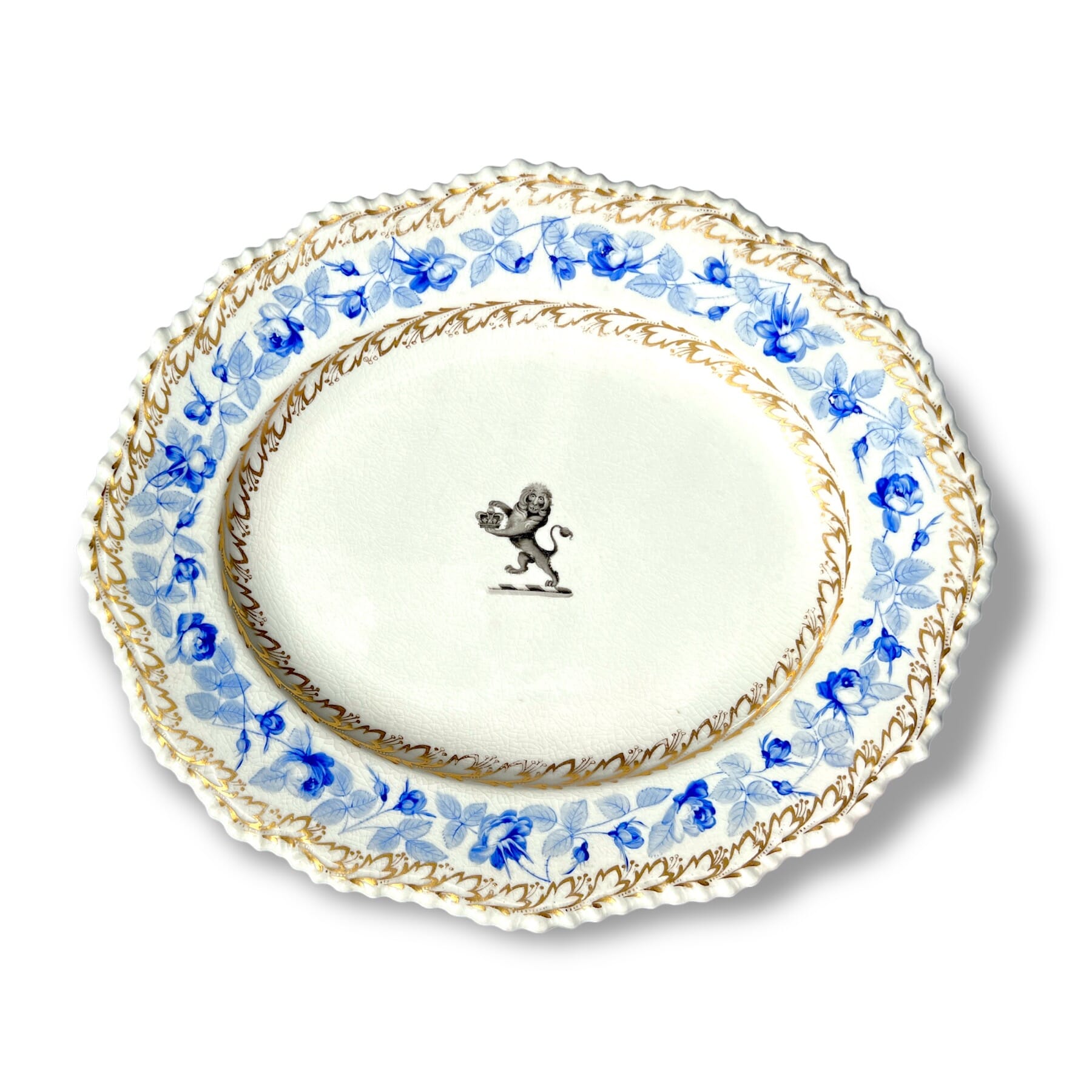
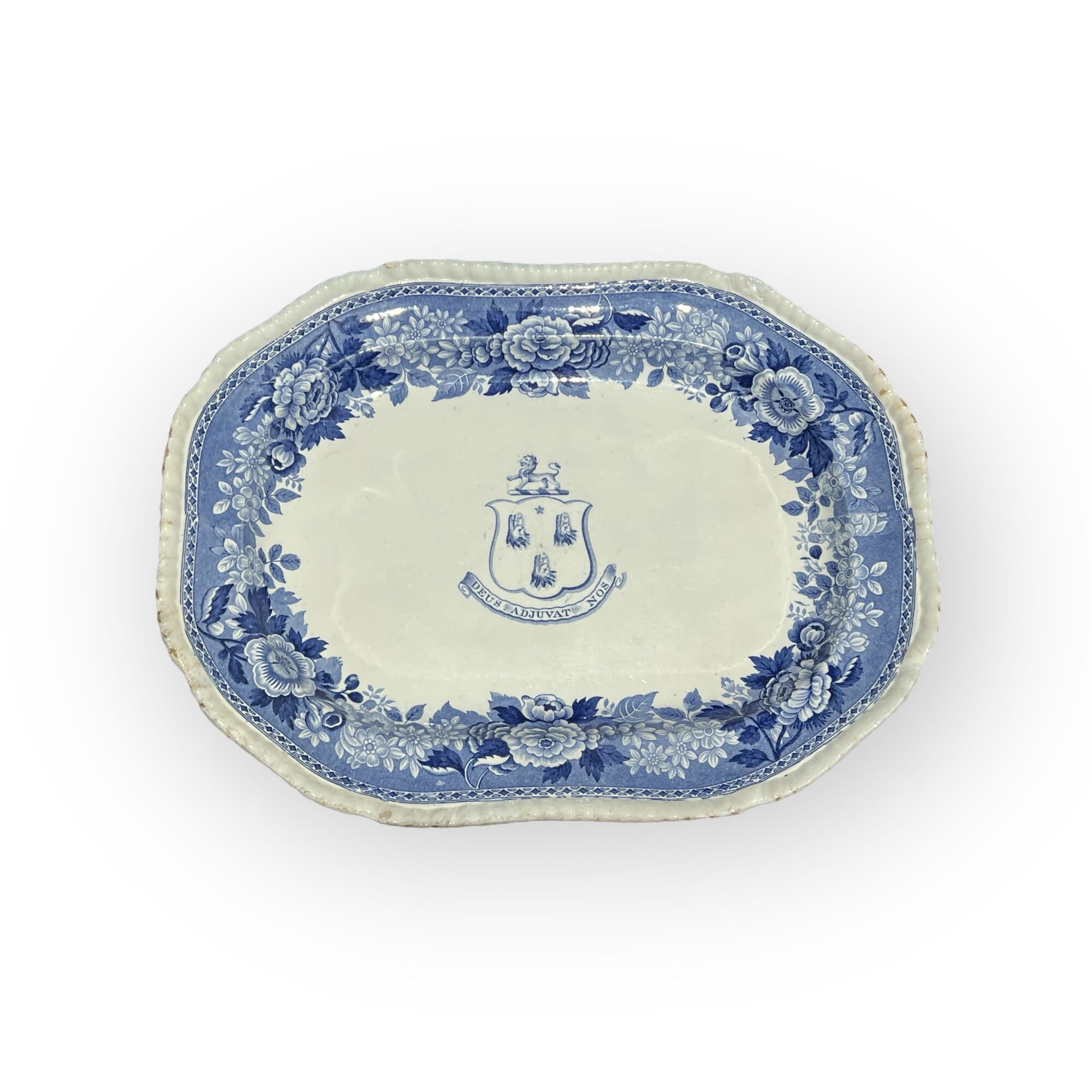
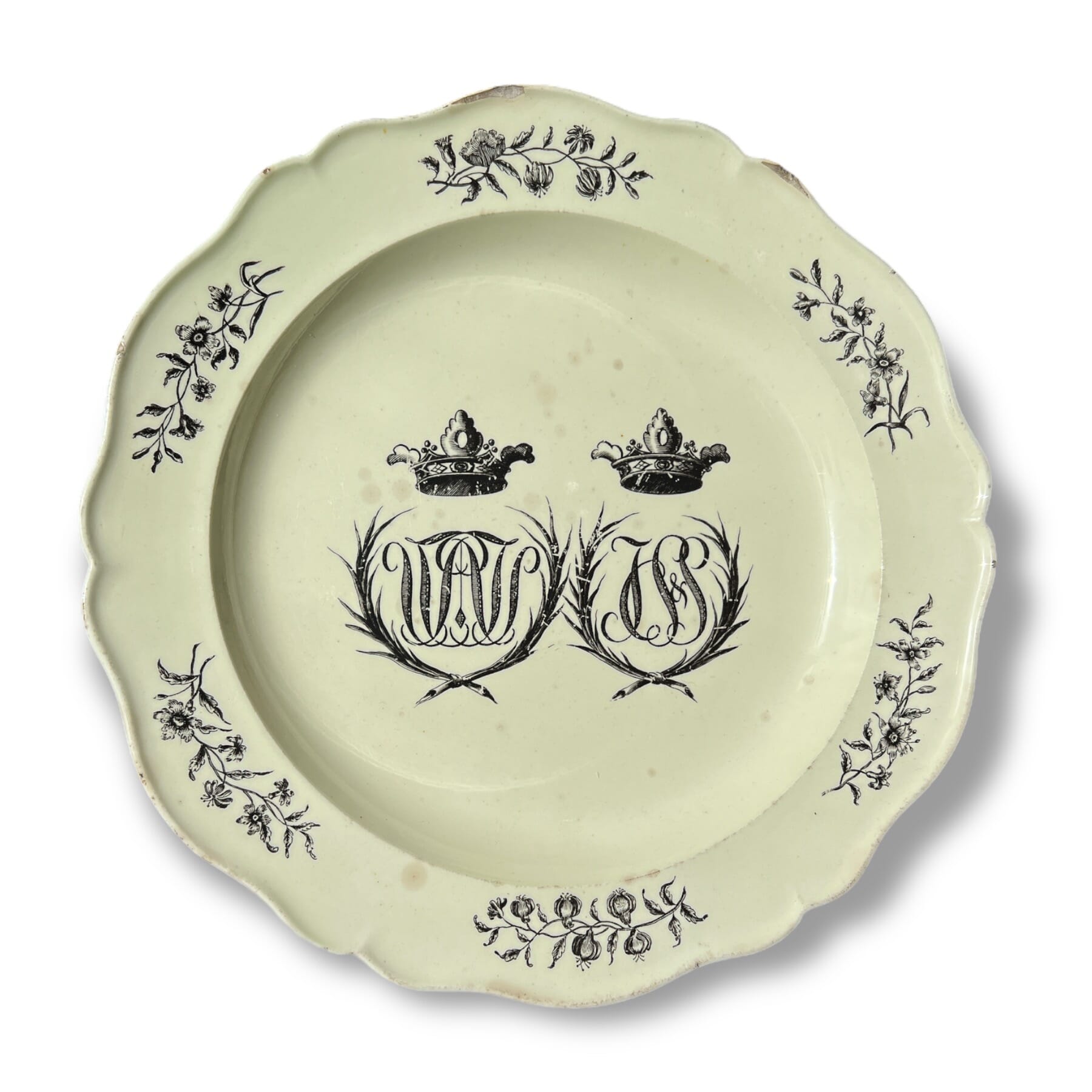
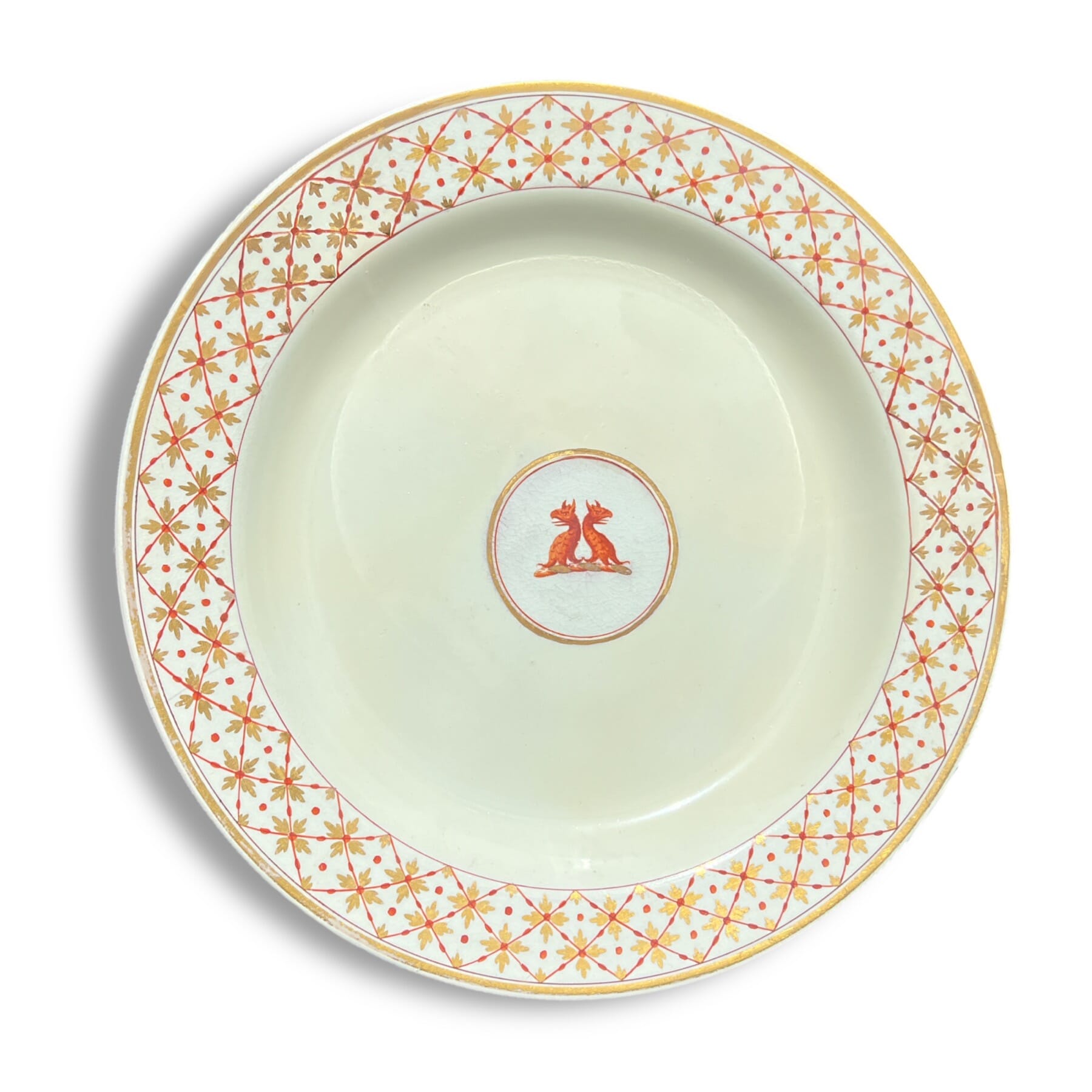
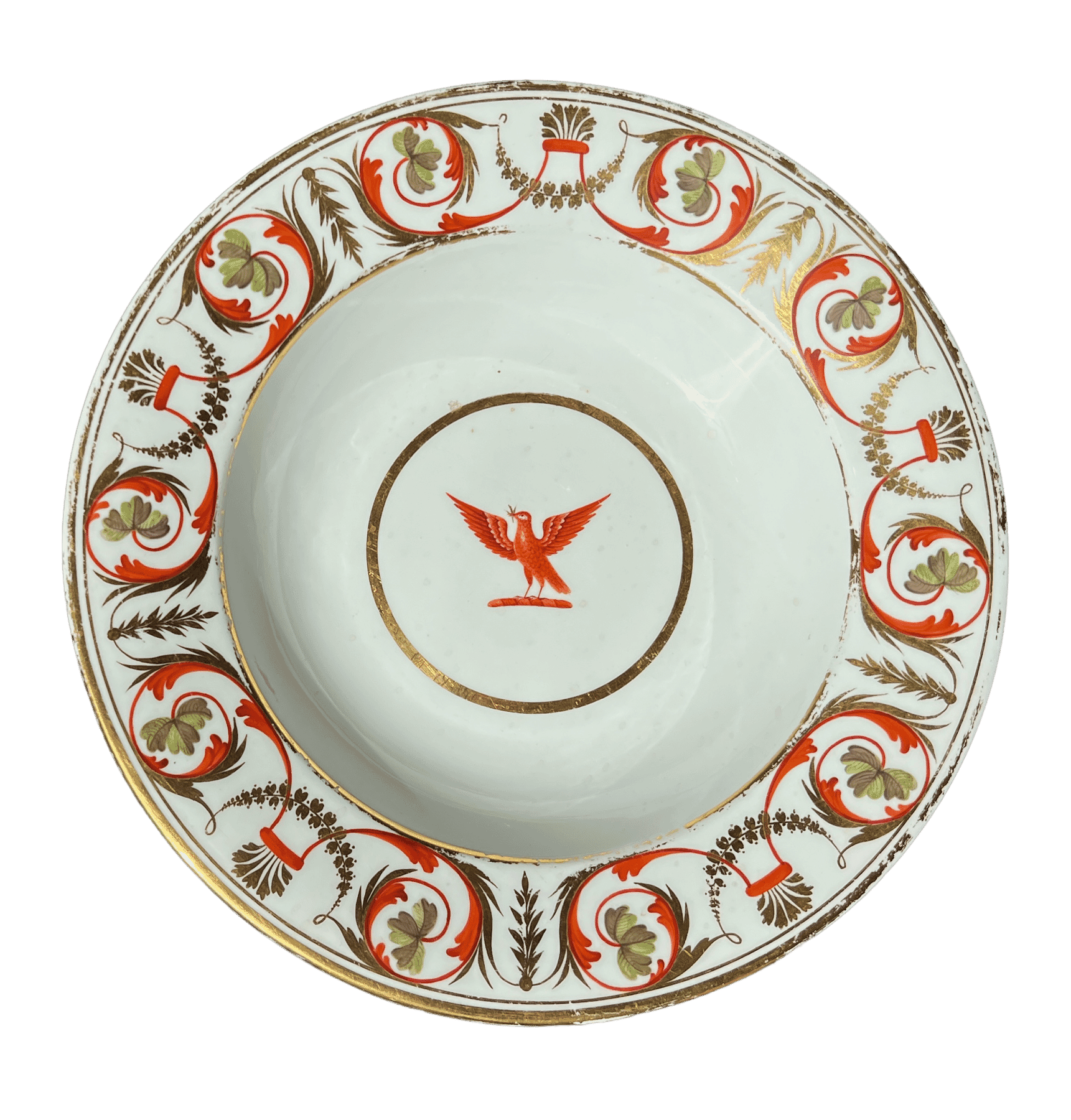
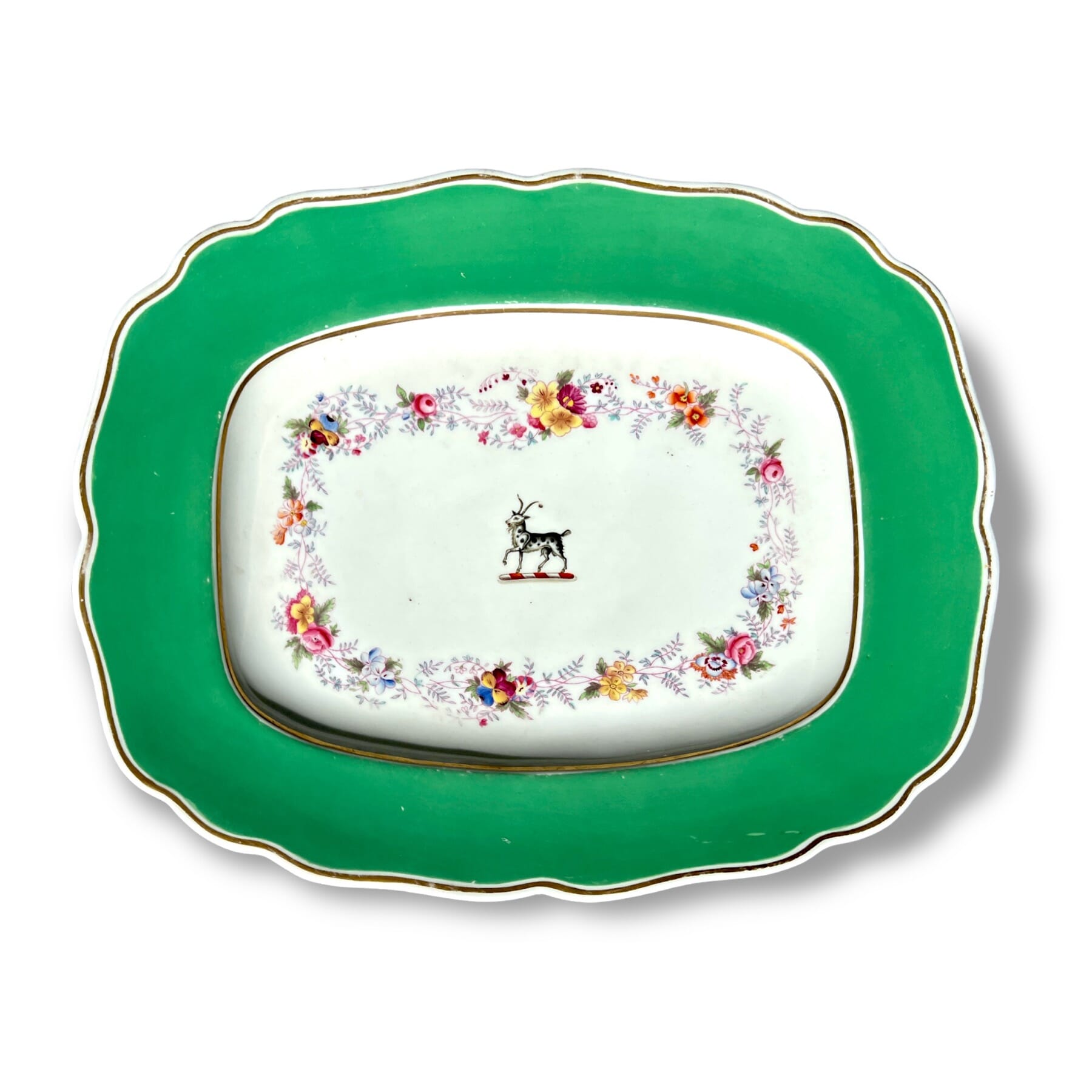
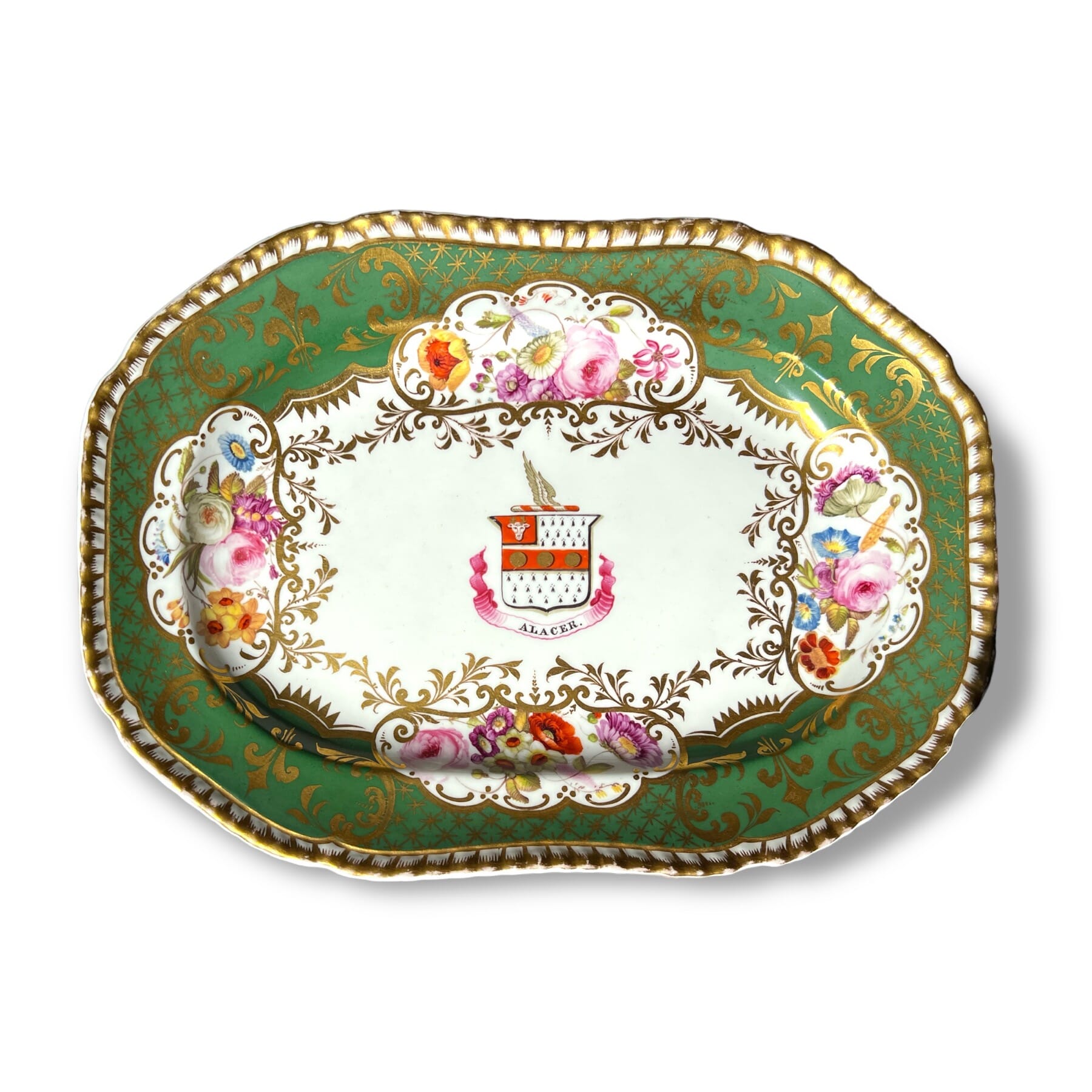
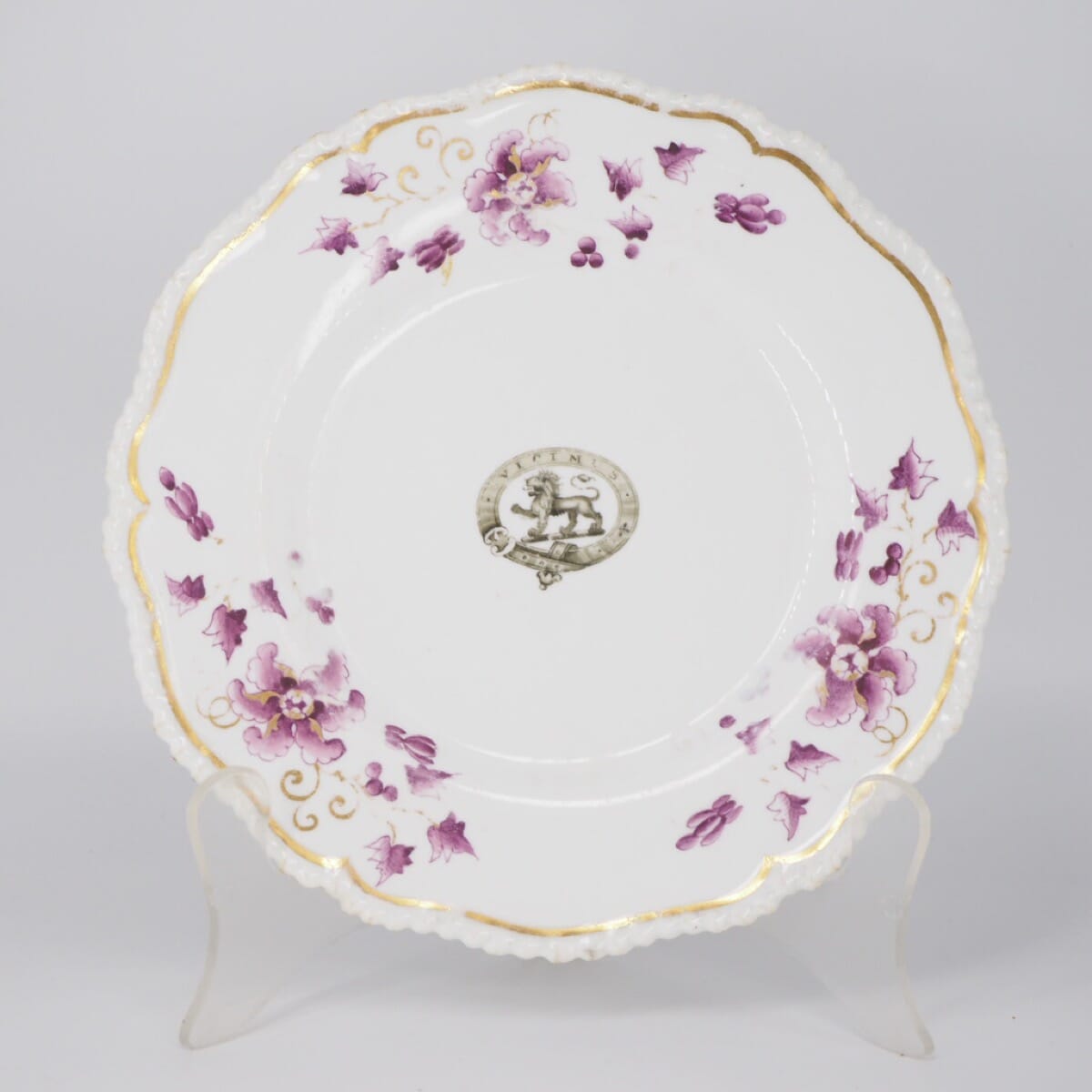
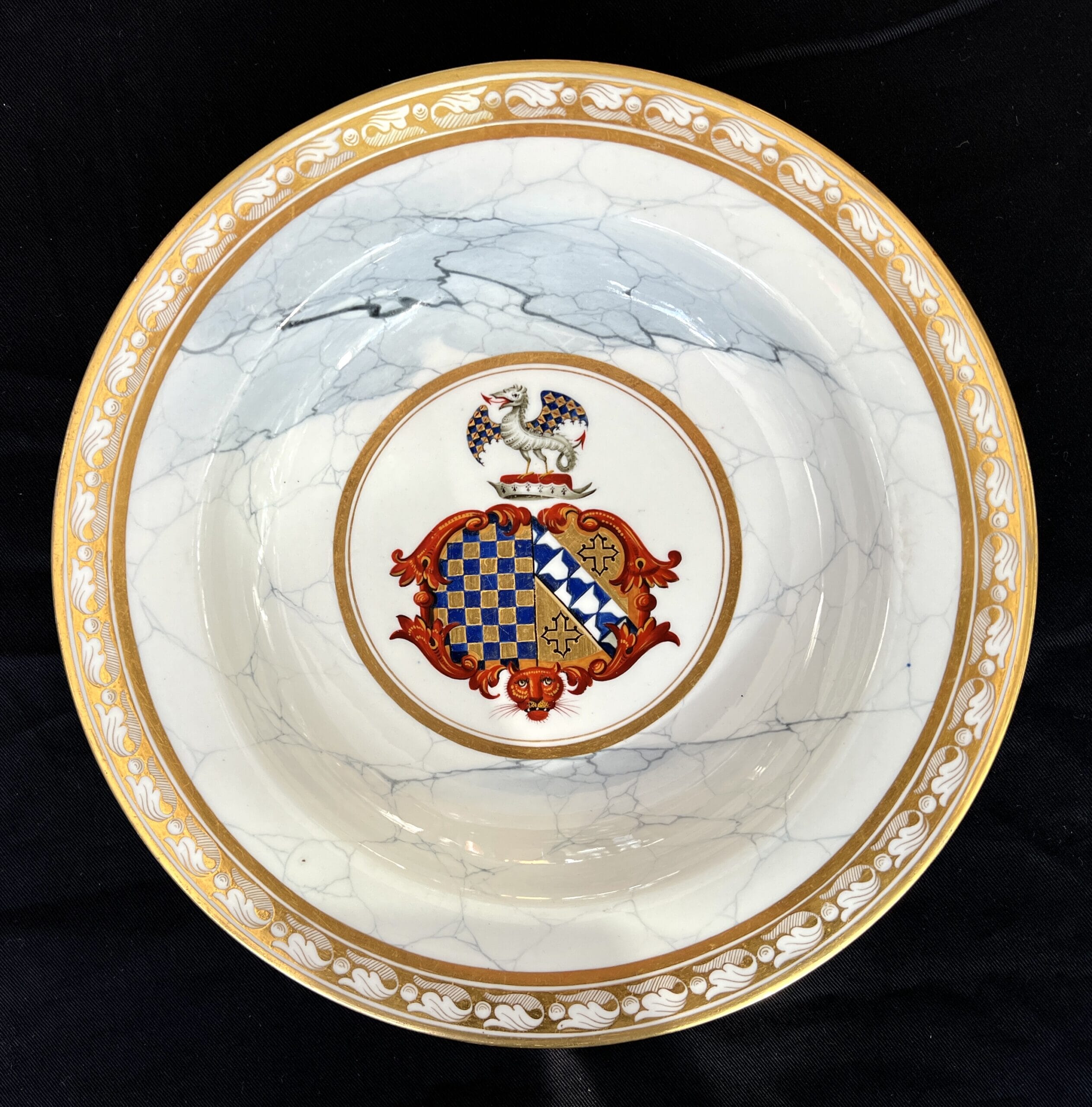
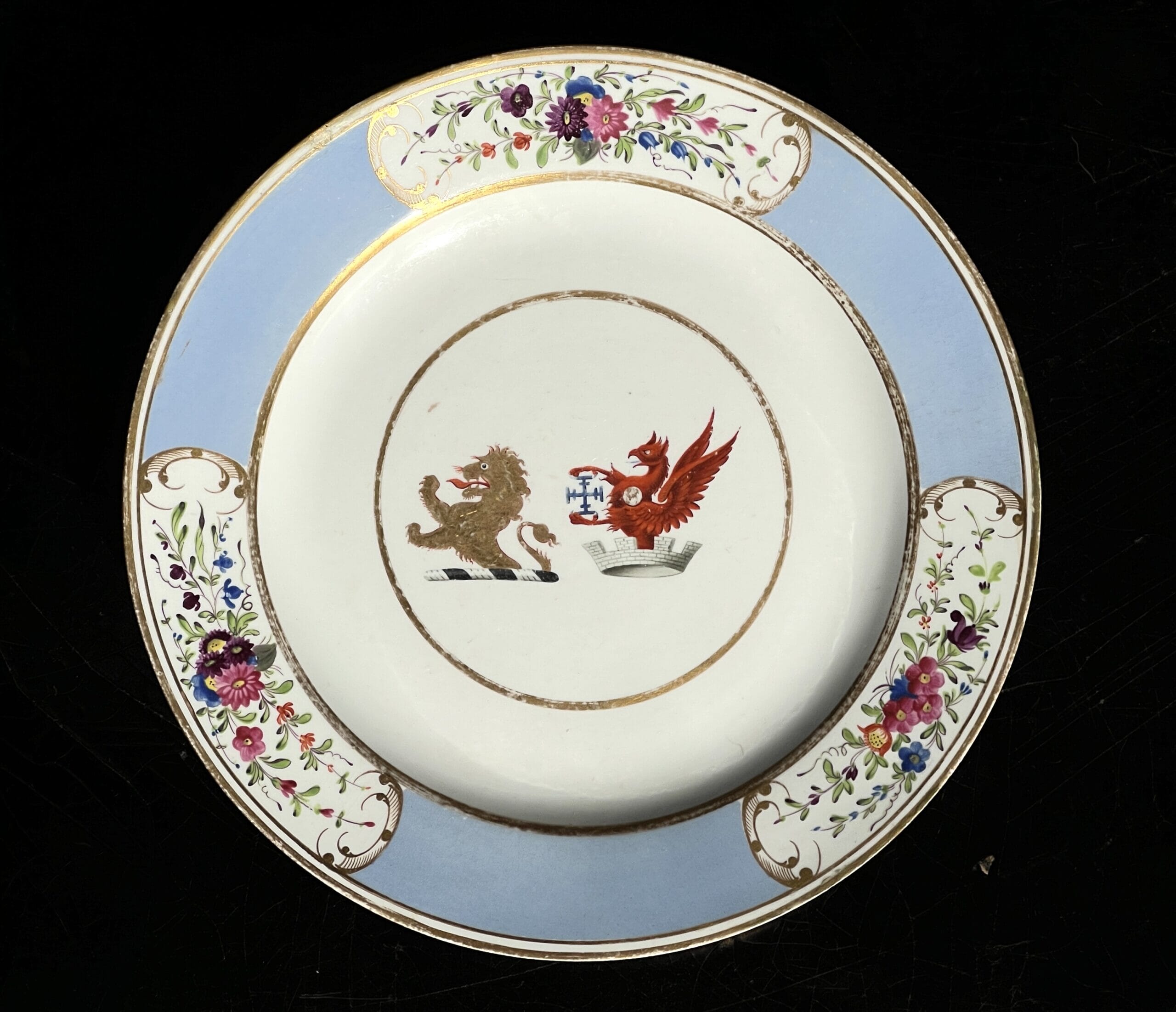
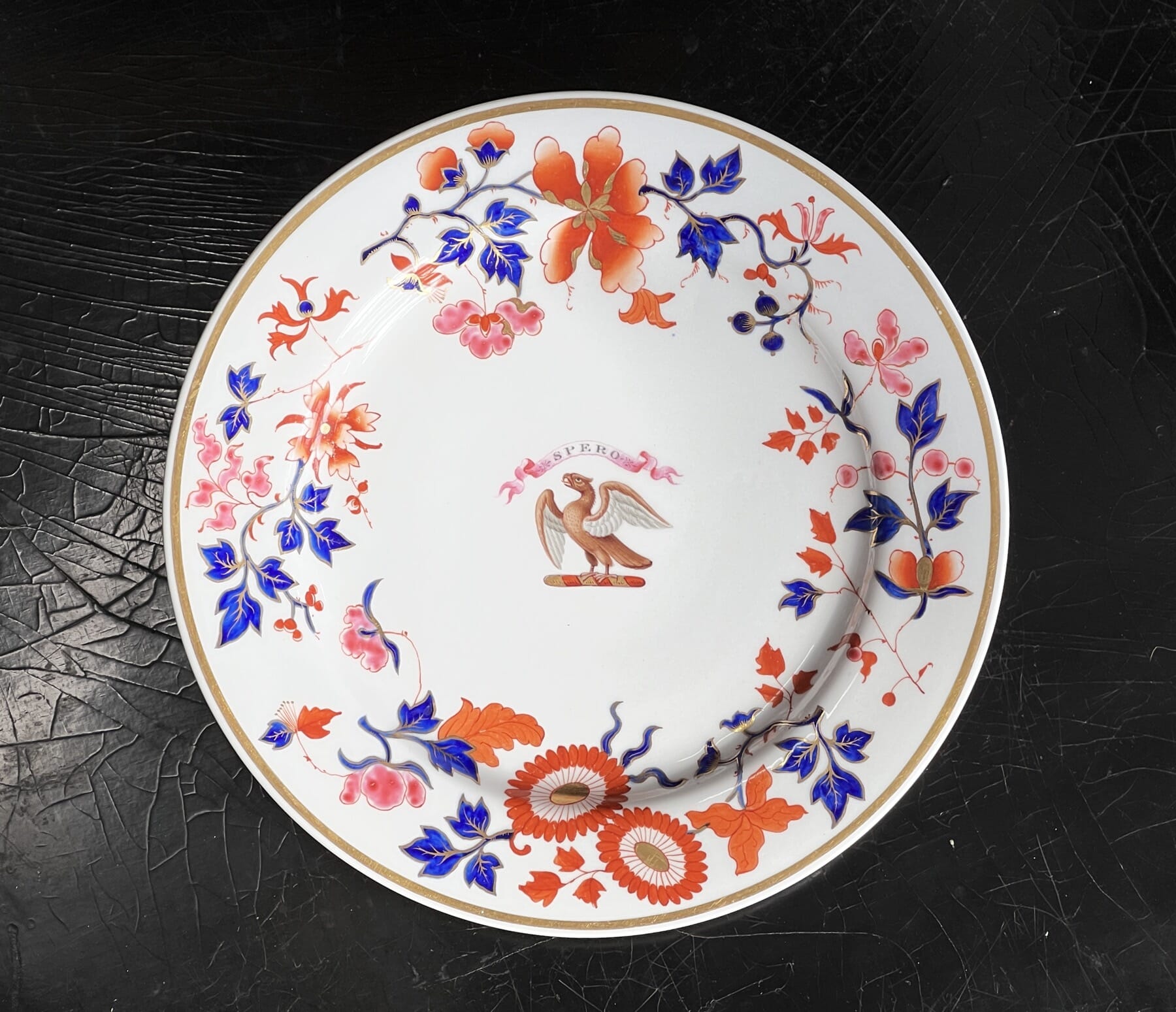
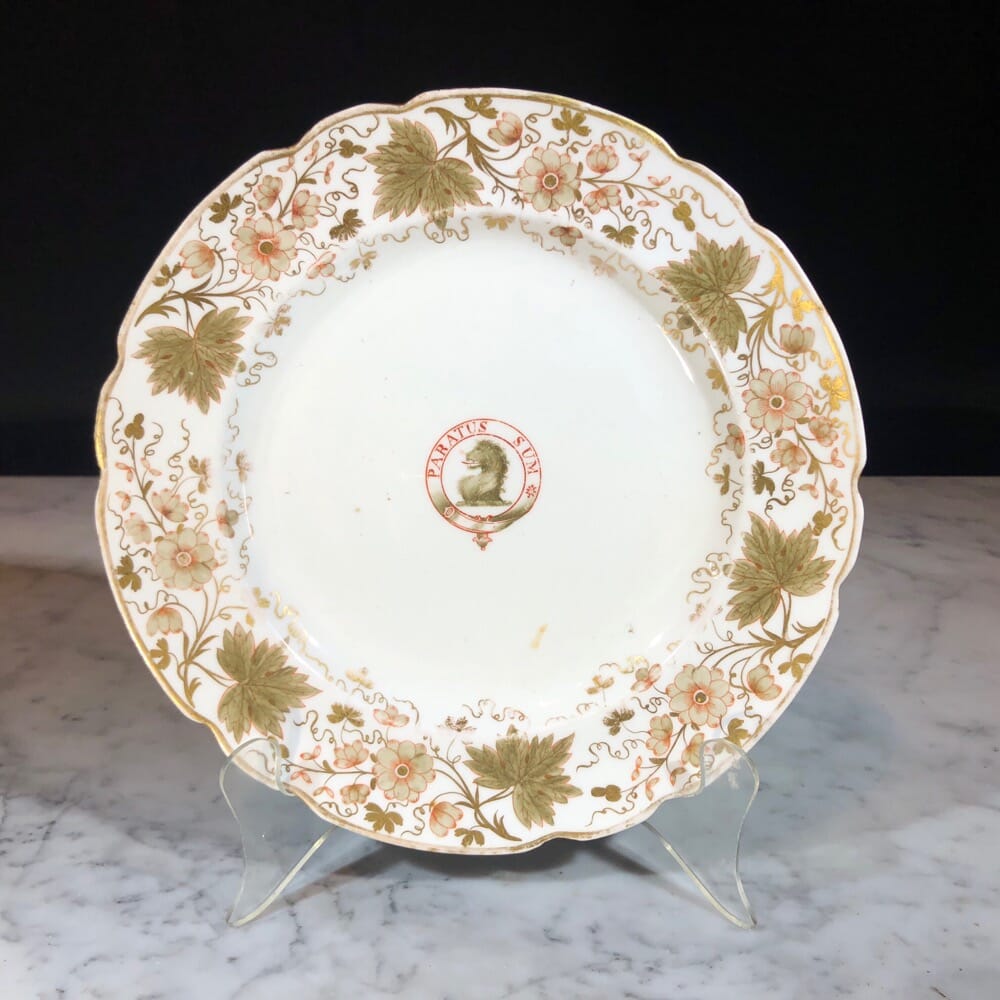
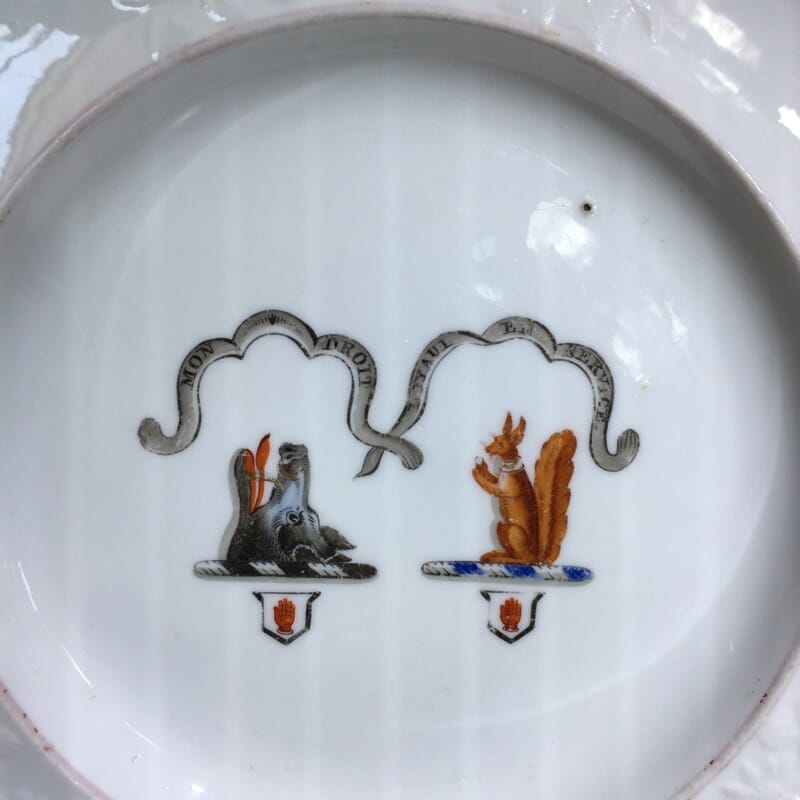
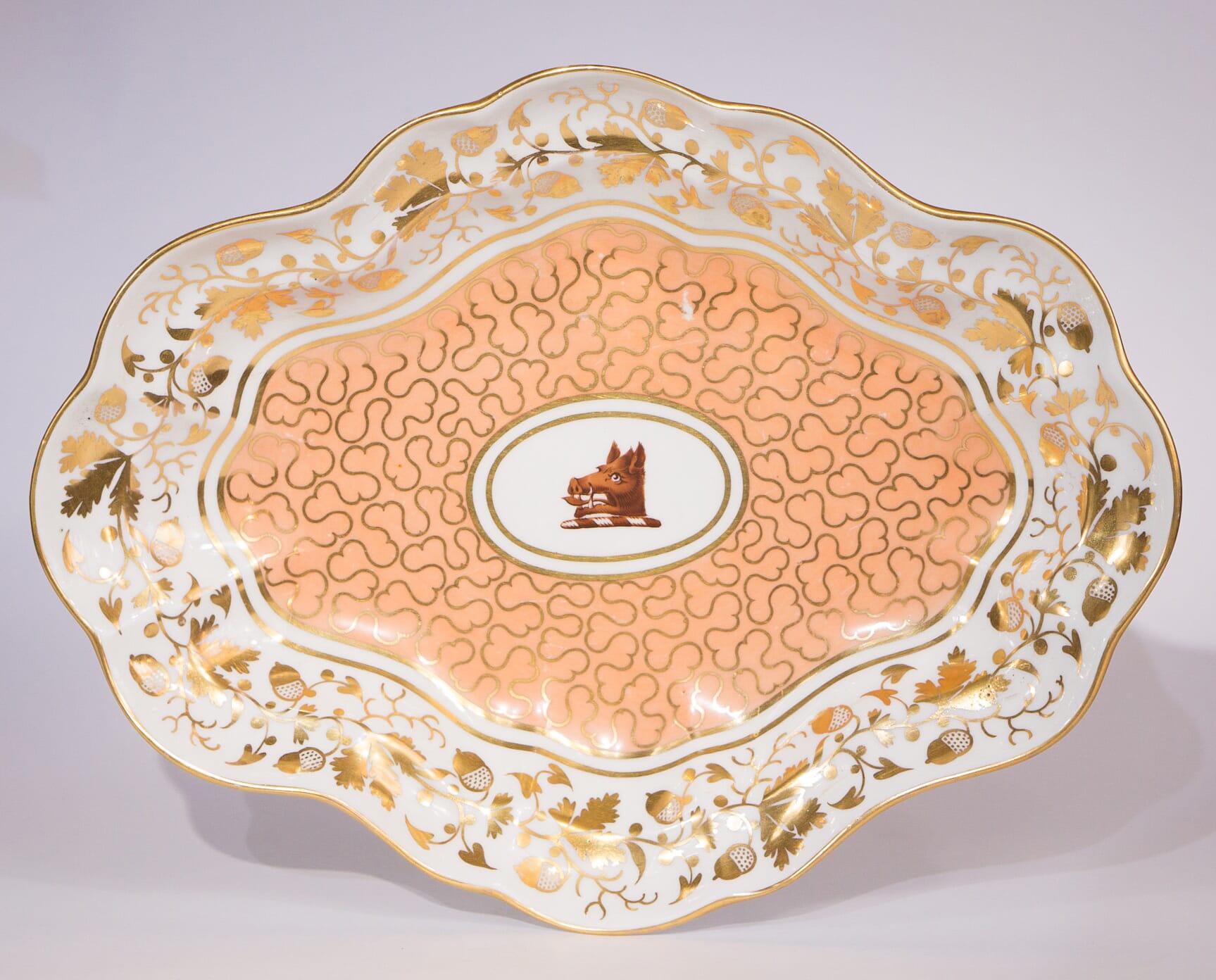
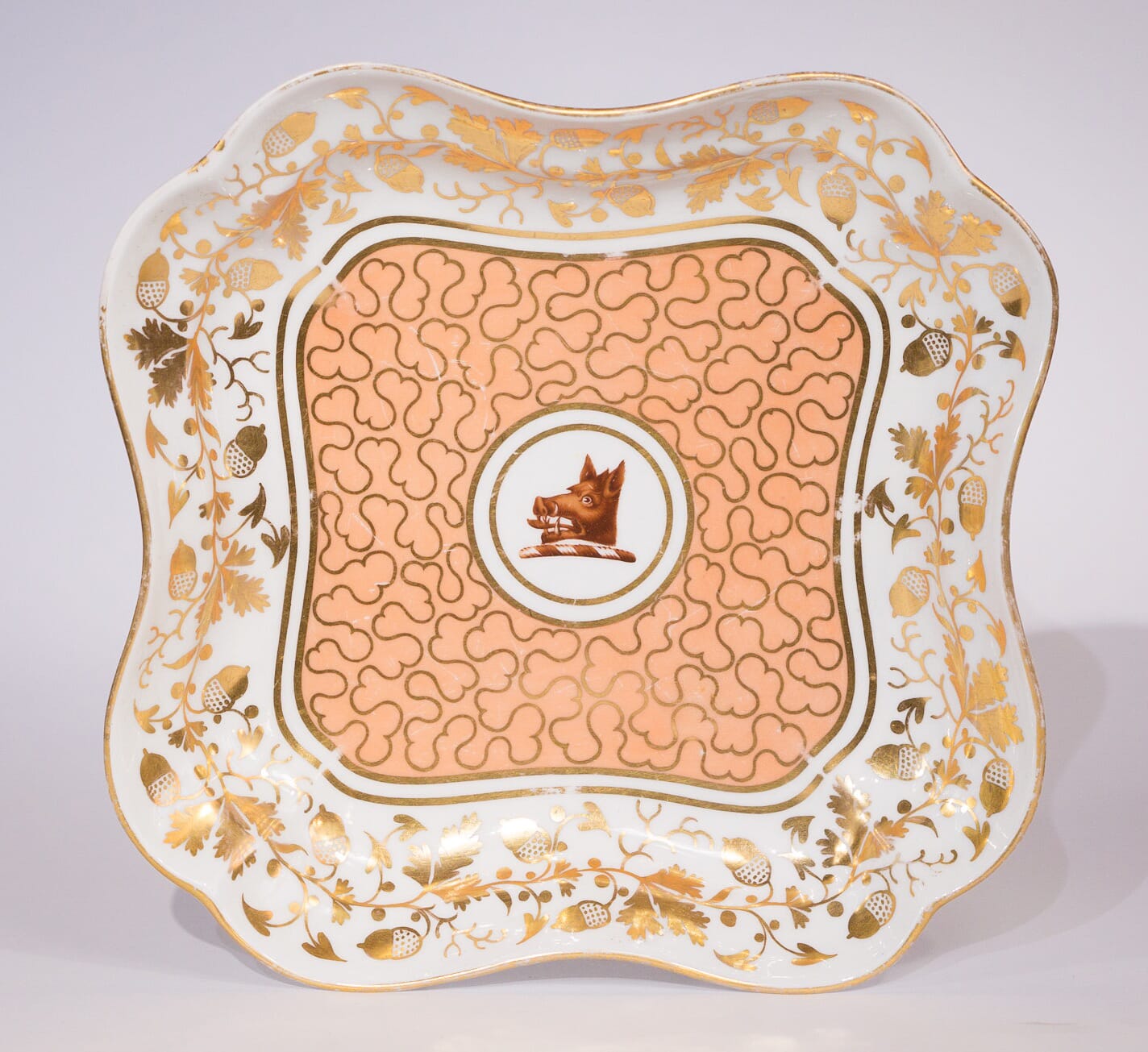
We’re joining in, by releasing a splendid collection of ‘Armorials’, the table-items of the British aristocratic families which bear their coat-of-arms.

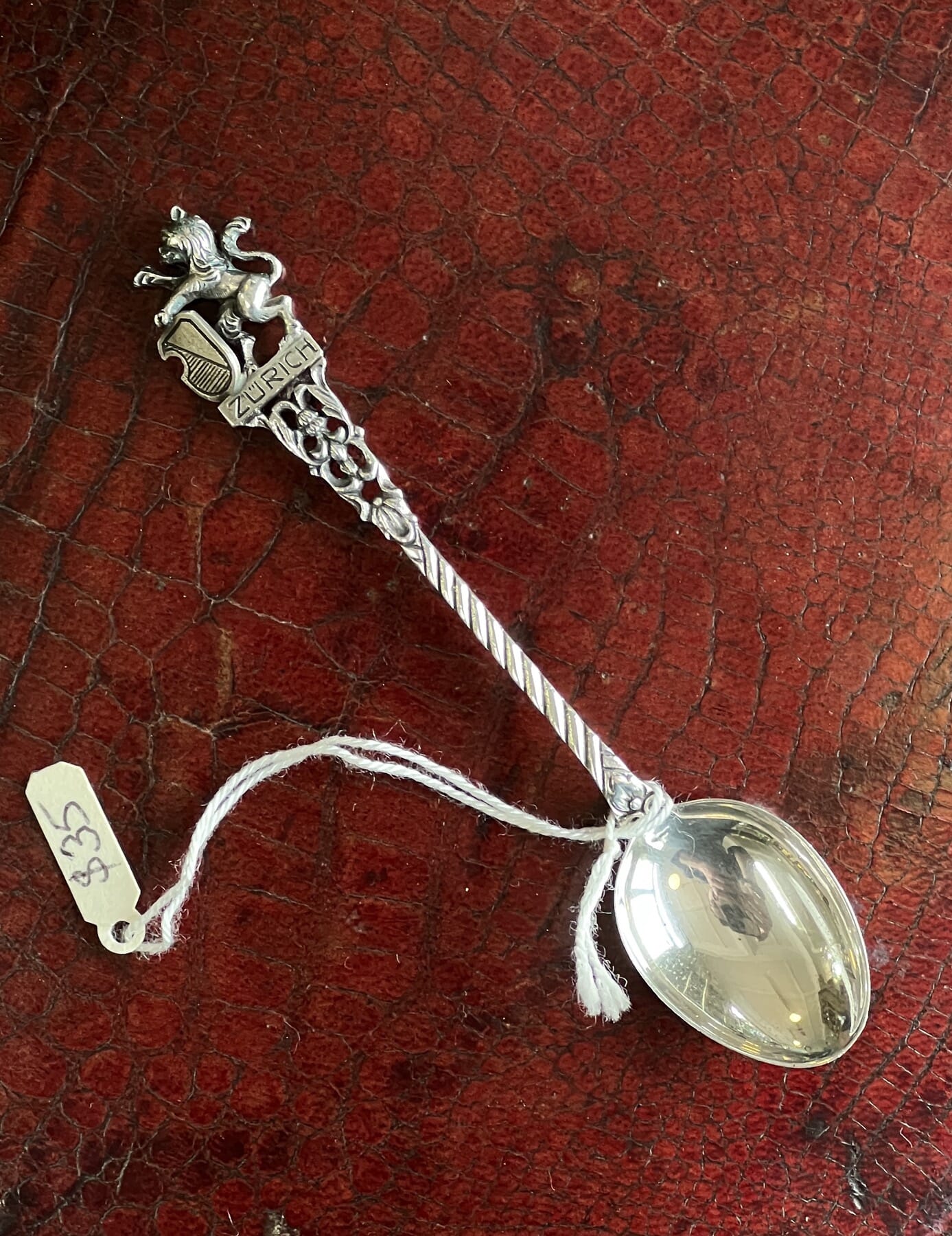
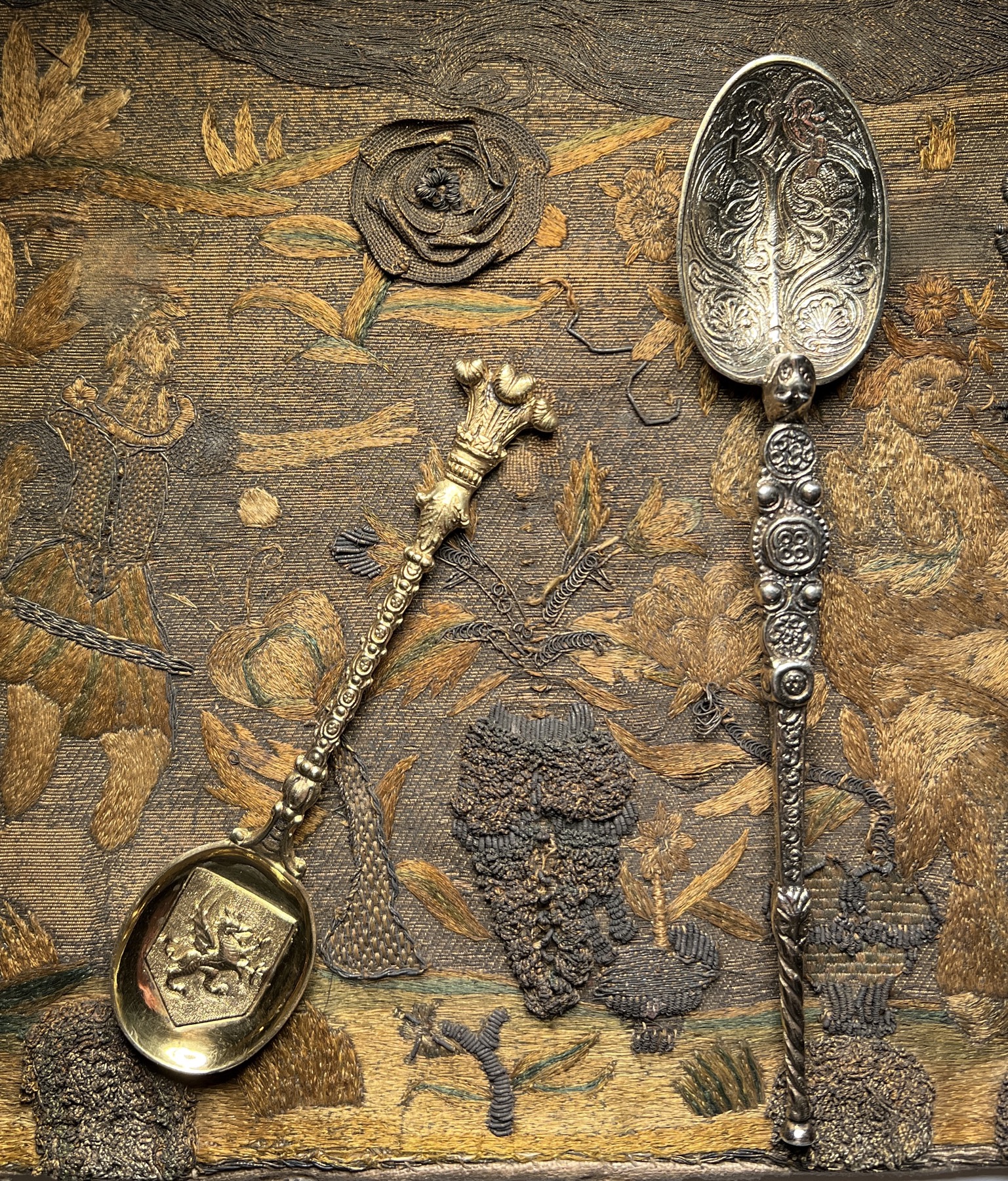
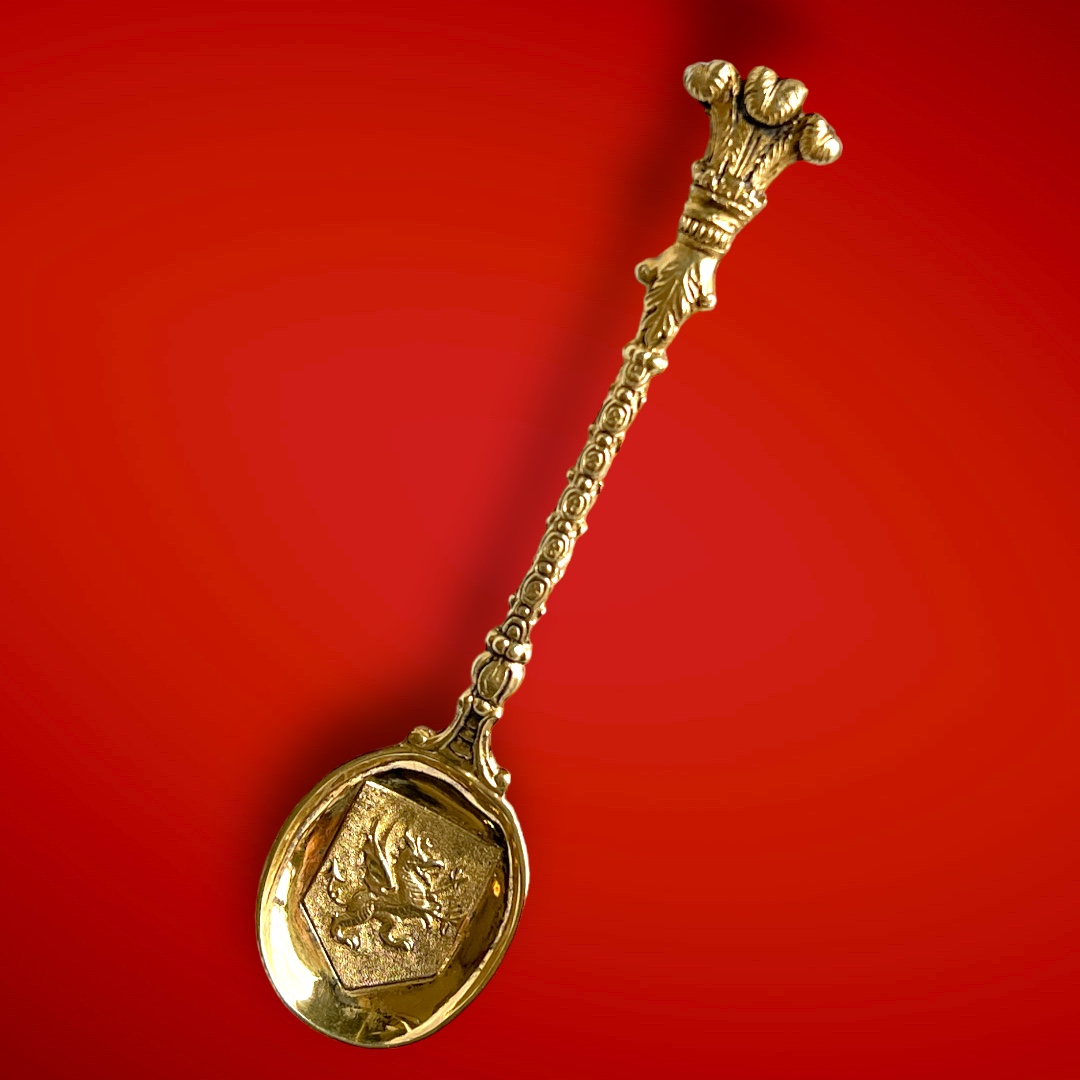
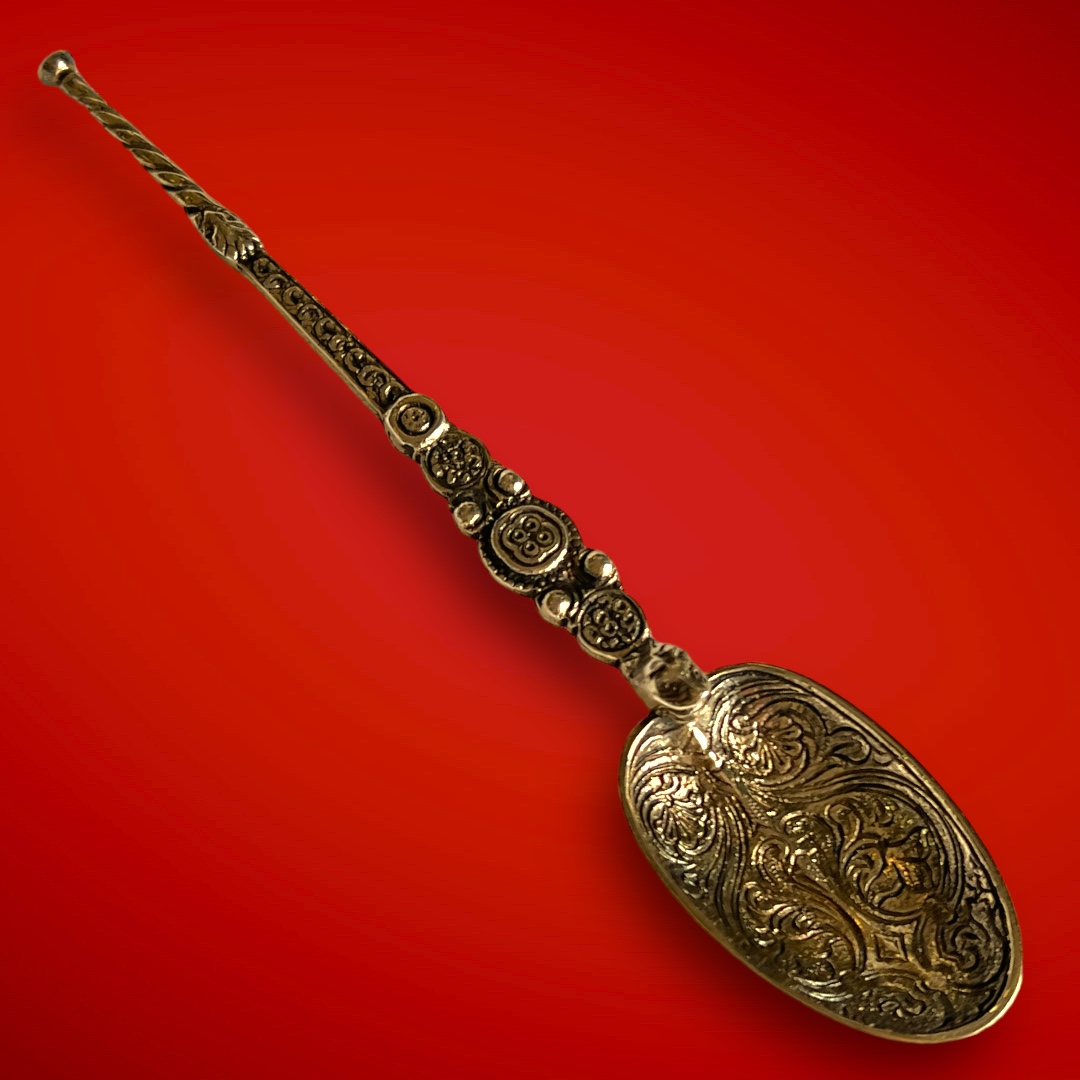
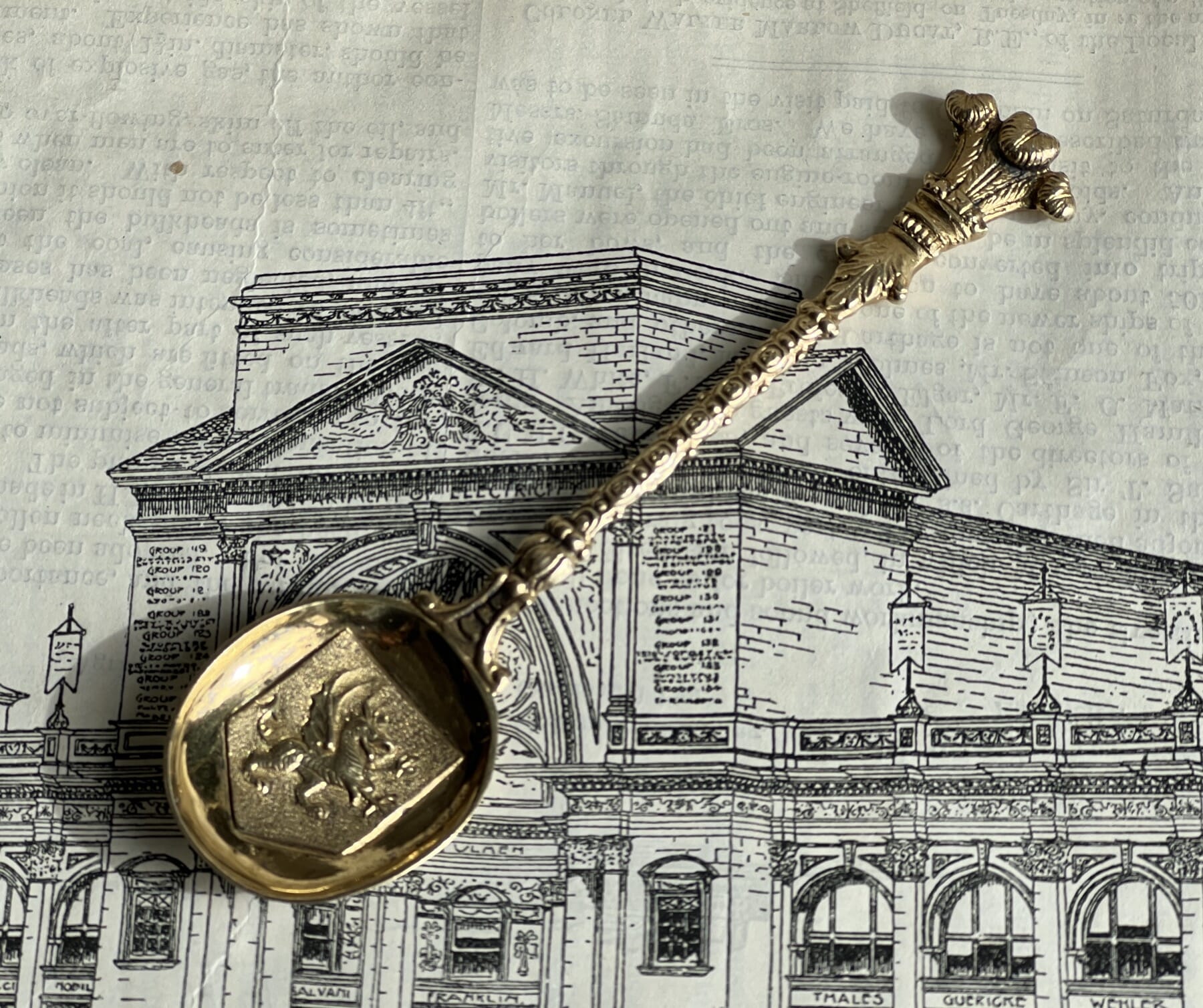
Royal Spoons - Sterling Silver - at Moorabool Antiques, Geelong
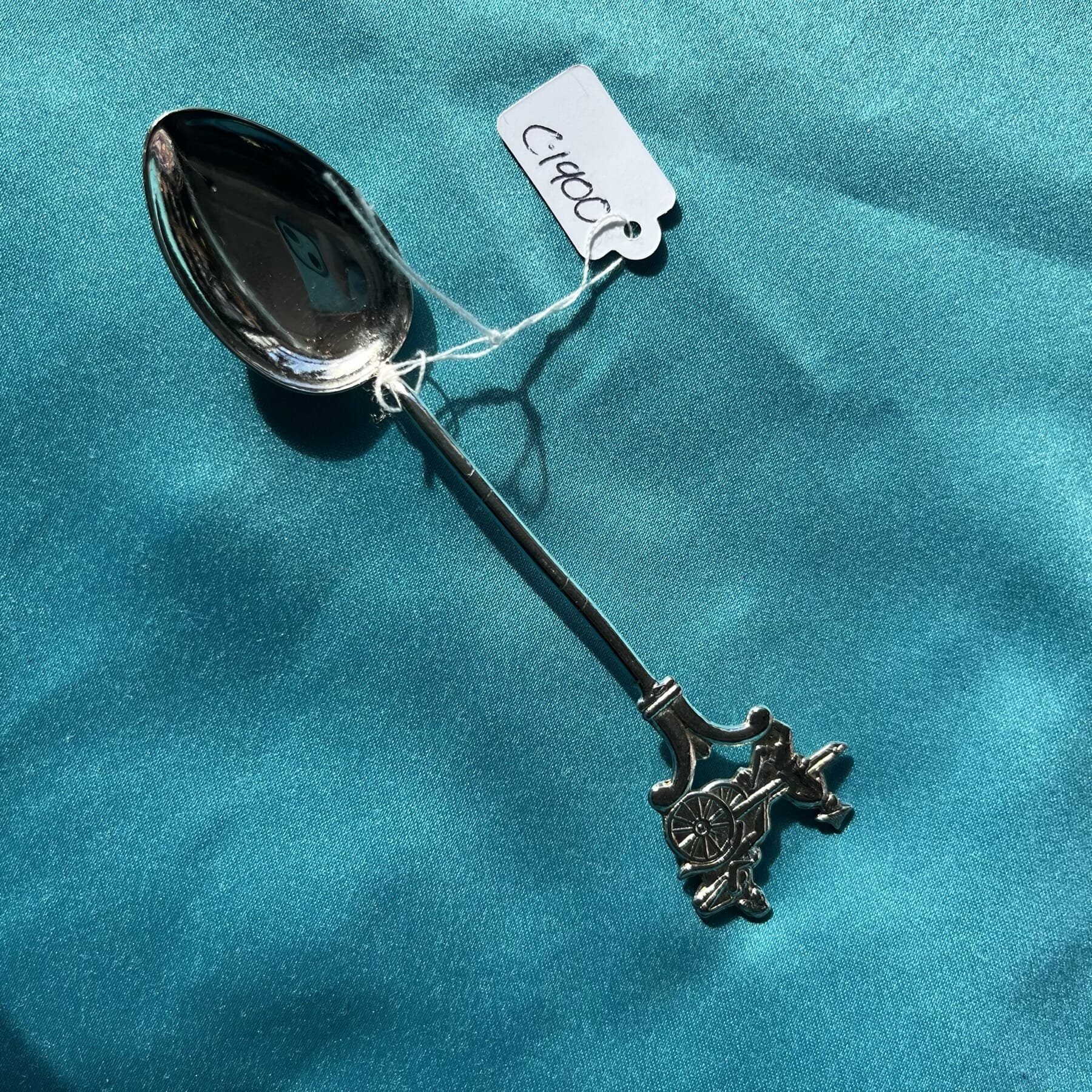
Royal comemmorative spoons – Sterling Silver, 1910 (left) & 1937 (right)
1910 Sterling Silver Prince-of-Wales

As well, there are two special ‘spoons’, both Sterling Silver with gilt wash.
The first is a perfect introduction to the process of Royal ascension. It bears the ‘Prince-of-Wales’ feathers to the end, and a finely detailed heraldic dragon, the symbol of Wales. This has been Prince Charles’s symbol for my entire lifetime; now, he has recently passed the title of ‘Prince-of-Wales’ to his heir apparent, Prince William.
Back in 1910 when this spoon was made, it would have signified the passing of the title from George V as he became King George V, with his son Edward becoming the Prince-of-Wales and heir apparent.

Unfortunately, Mrs Simpson came into the scene, and he never reached the stage of Coronation before his abdication in 1936.

Sterling Silver Coronation Spoon 1937

The second piece we have – another spoon – would have been made with the Coronation of Edward VIII in mind, but was just as suitable for the sudden promotion of George VI to King, who simply took Edward’s place on the same date as planned, the 12th May 1937. This spoon would have been created in anticipation of Edward VIII’s event, but would have been just as suitable for George VI, as it doesn’t bear any names – unlike many other pieces, which were made in anticipation of the coronation that never happened!

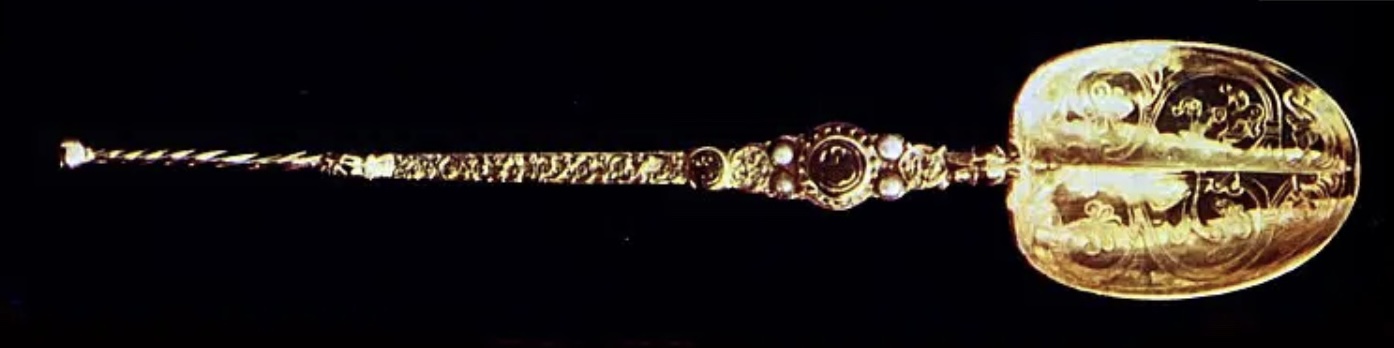
1937 image of the Coronation Spoon
1937 image of the original British Royal Coronation Spoon, 12th century.

This is the Royal Coronation Spoon, a very important part of the coronation of King Charles III in 2023.

The Coronation Spoon is the oldest piece of British Royal regalia to have survived. Stylistically 12th century, it is thought to have been made in the Royal workshops for Henry II (1133-89) or Richard I (1157-99). It is first recorded in the Royal inventory in 1349, described as ‘antique’.

The divided form is unusual, indicating it was not made for eating with, but for ritual; the suggestion is it was for mixing wine and water in a church ritual. James I was the first monarch to use it as a coronation spoon in 1603, and it has been used in every subsequent coronation since.

Queen_Victoria_Receiving_the_Sacrament_at_her_Coronation ion the Royal Collection
Queen Victoria Receiving the Sacrament at her Coronation, 28 June 1838 by Charles Leslie, Royal Collection. source: WikiCommons

The Royal Collection website states the following about the spoon:

“The anointing is the most sacred part of the coronation ceremony, and takes place before the investiture and crowning. The Archbishop pours holy oil from the Ampulla (or vessel) into the spoon, and anoints the sovereign on the hands, breast and head. The tradition goes back to the Old Testament which describes the anointing of Solomon by Zadok the Priest and Nathan the Prophet. Anointing was one of the medieval holy sacraments and it emphasised the spiritual status of the sovereign. Until the seventeenth century the sovereign was considered to be appointed directly by God and this was confirmed by the ceremony of anointing. Although the monarch is no longer considered divine in the same way, the ceremony of Coronation also confirms the monarch as the Supreme Governor of the Church of England.”

This smaller version would have been a luxury ‘souvenir’ of the 1936 coronation of George VI.

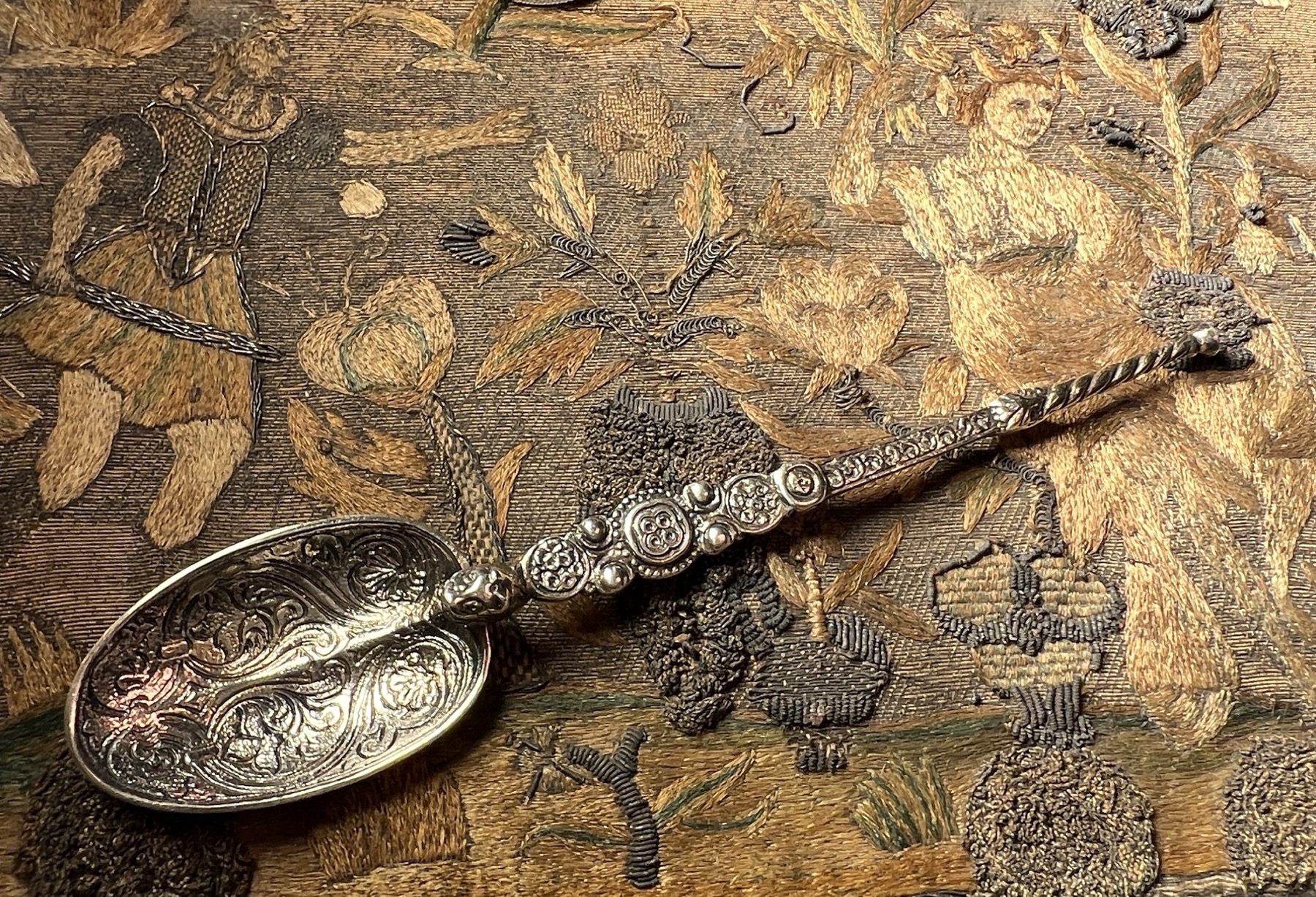
Coronation Spoon 12th century 1937 Sterling Silver version
Coronation Spoon, a 1937 Sterling example after the 12th century original.

Armorials

We have accumulated a large collection of Armorials at Moorabool. They were all ‘bespoke’ products, created for the family whose crest they bear. And this is the reason we have so many waiting patiently to enter stock: the Research of the original owners takes time!

It’s well worth doing. A Royal piece is the ultimate, followed by the ‘Greats’ of British (or European – or Colonial) History, those who achieved something to be remembered by.

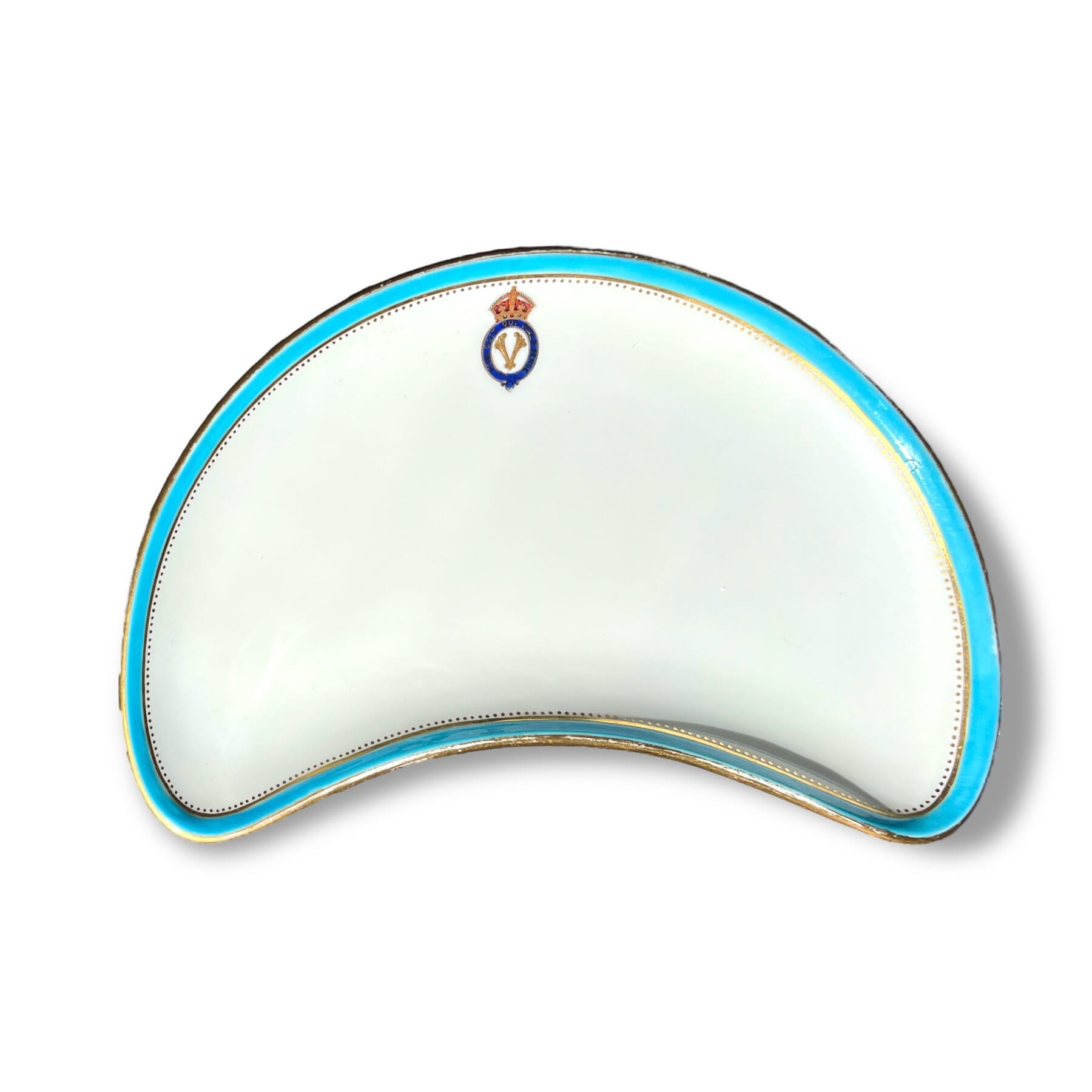
Queen Victoria plate, for Windsor Castle, by Minton 1877, at Moorabool Antiques, Geelong

Others are just splendid works of art which remind us of the pomp of high-society in the 18th and 19th centuries.
Of course, there’s descendants of many of these families all over the world, and once in a while we are thrilled to sell a piece of an ancestral service to a descendent.

Flight Barr Barr Porcelain
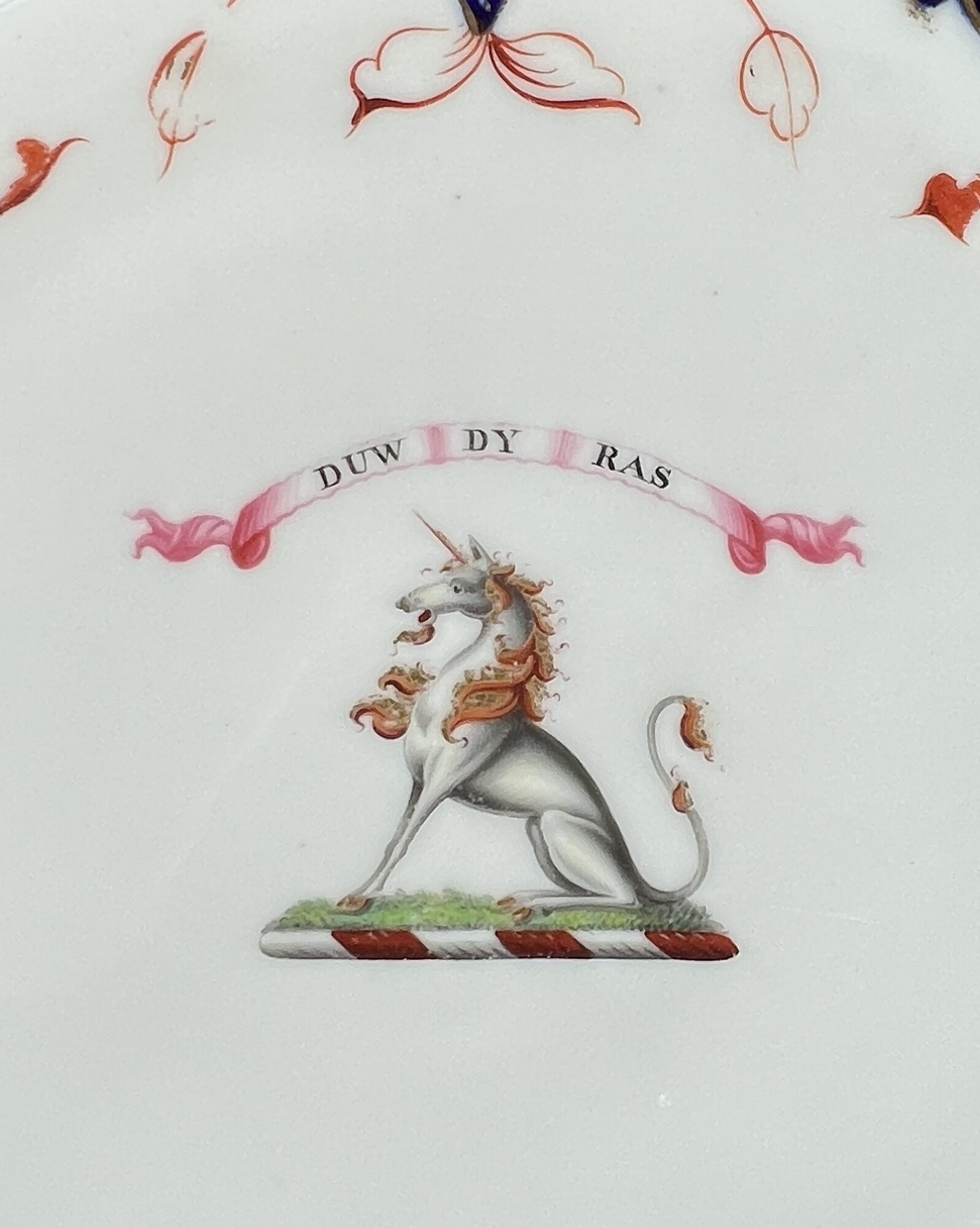
DUW DY RAS
DUW DY RAS
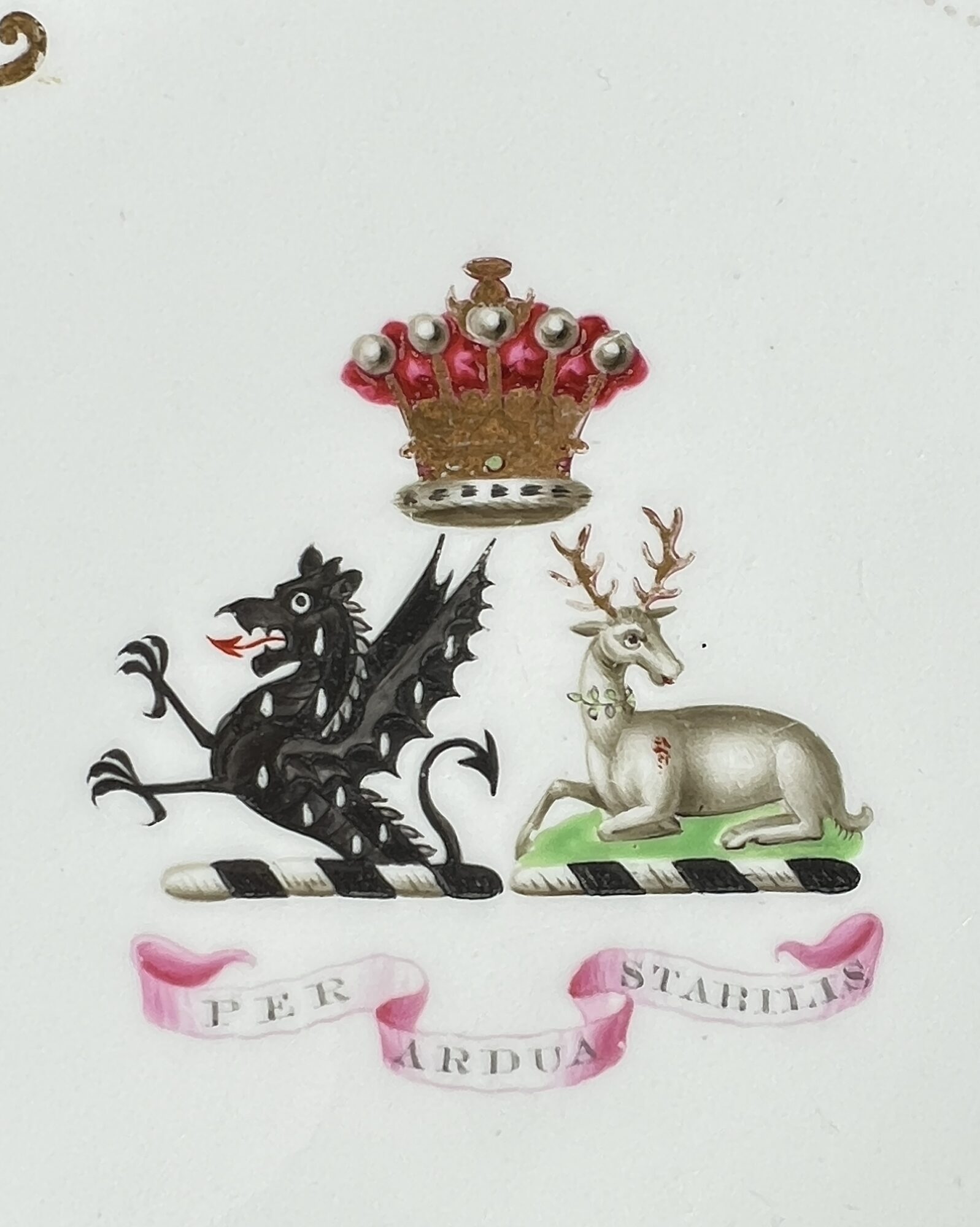
PER ARDUA STABILIS
PER ARDUA STABILIS

Here’s a few of our Armorials – with many more to come.

General ‘Fresh Stock’