Posted on

Fresh…. Marine Art, Australiana, and more!

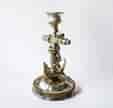
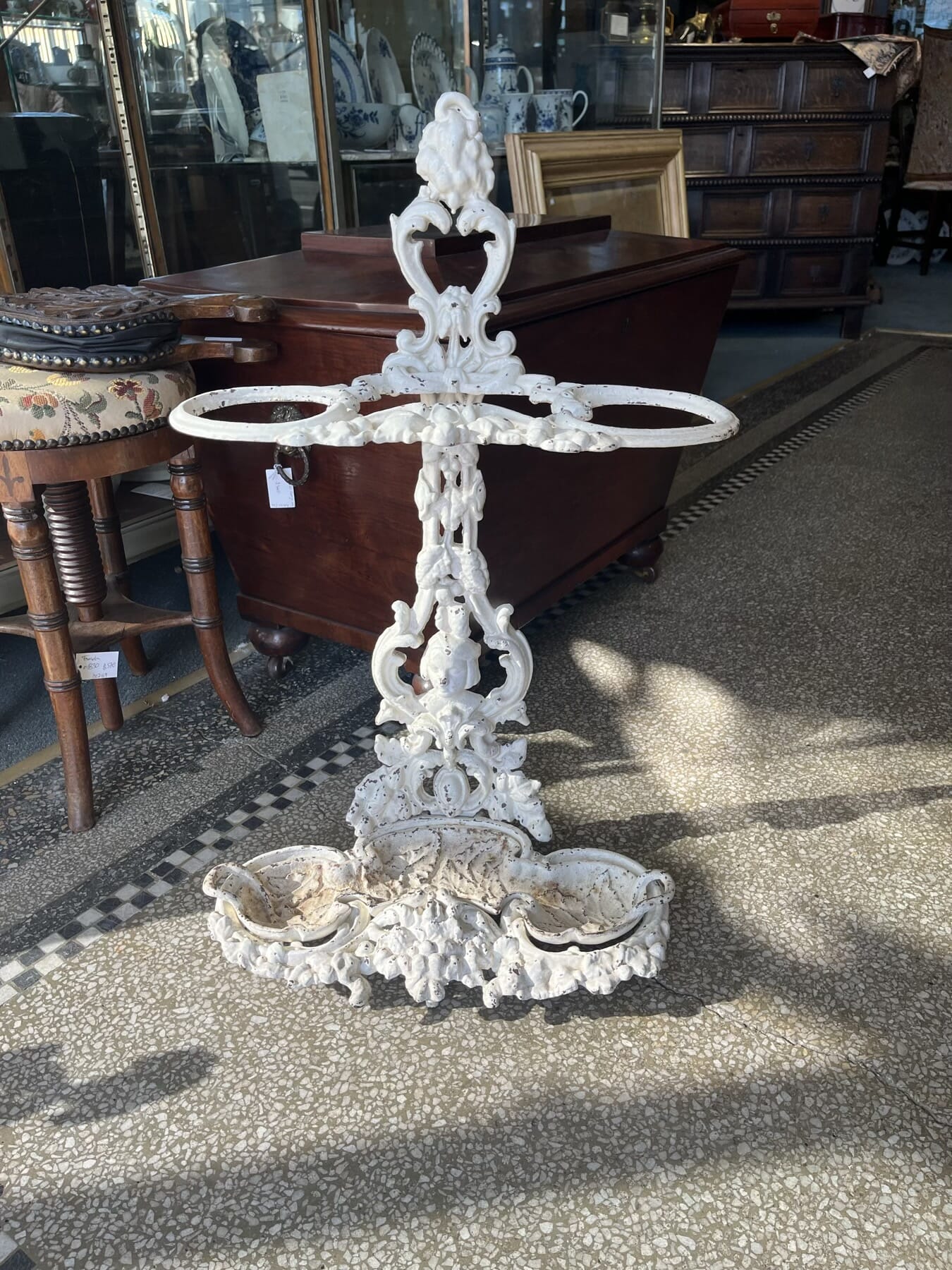
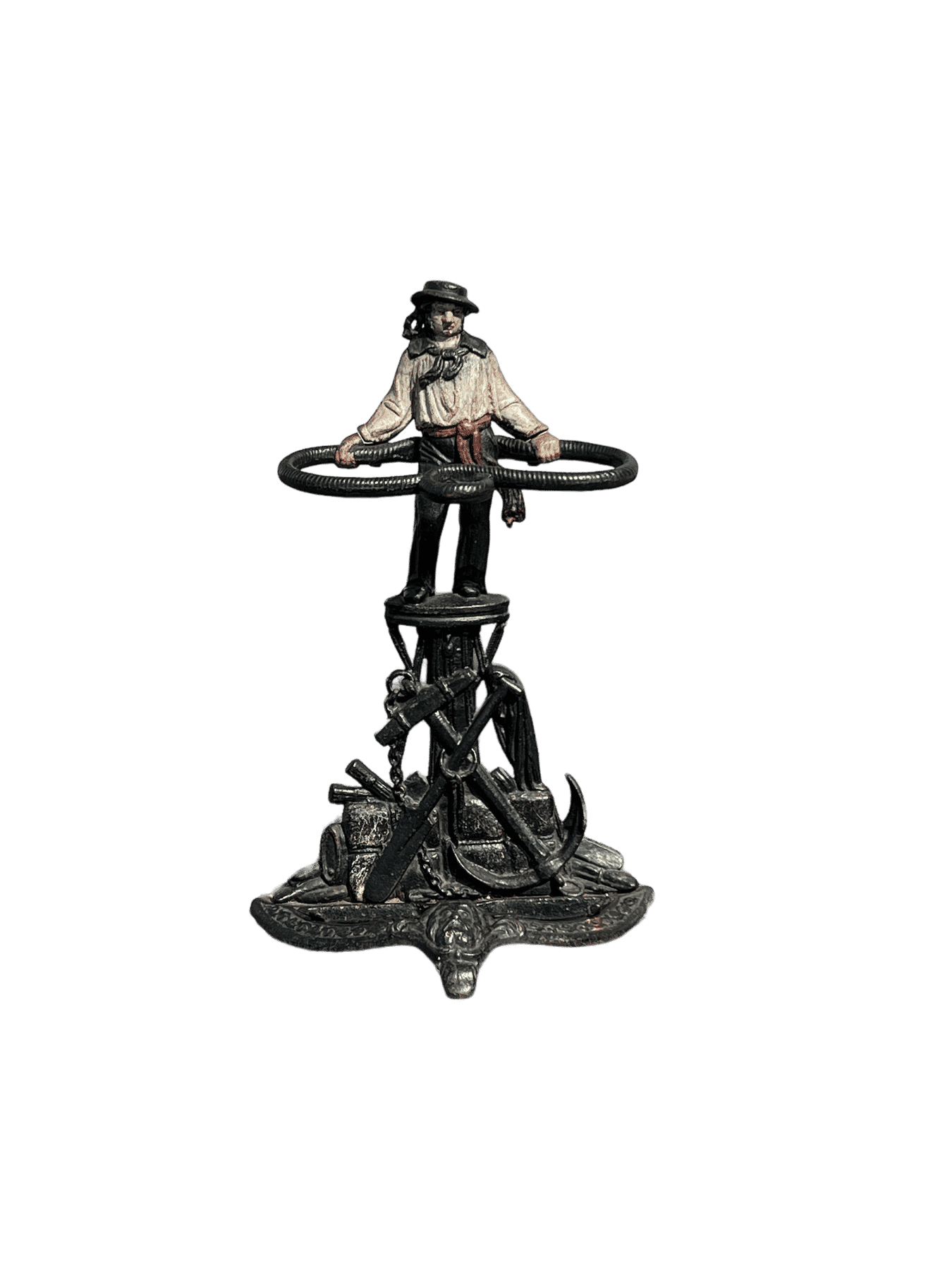
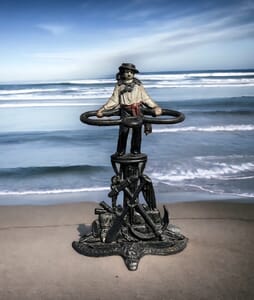
Jack Tar cast iron umbrella stand, c. 1860
Jack Tar Umbrella Stand
‘Jack Tar’ Victorian Umbrella Stand

Ahoy! Moorabool has a definite Marine Theme for you to enjoy, with today’s Fresh Stock featuring the first of a series of interesting Nautical theme collections.

The fantastic umbrella & stick stand shown here sets the scene – a handy ‘Jack’ to have by the front door, handy with a rope which he uses to hold your umbrella and walking stick! He dates to the 1860’s , and is a fine example with original paint in good condition.


Why the curious name?
‘Jack Tar’ was the generic name for any sailor in the Georgian/Victorian era. ‘Jack’ was a place-keeper name for any wiring class man, the ‘John Smith’ of the day. The ‘Tar’ comes from the concept of a tarpaulin: literally a canvas sheet smeared with water-proofing tar, it was used on board all ships, and was turned into waterproof clothing by the sailors.

Early Australiana

Some very early Australiana, Fresh to our stock, relates to the early visits of the French to ‘Nouvelle Holland’, and includes an 1802 view of Sydney, printed in the 1807 publication on the Baudin Expedition.

Marine Art

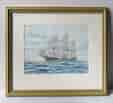
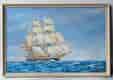
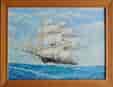
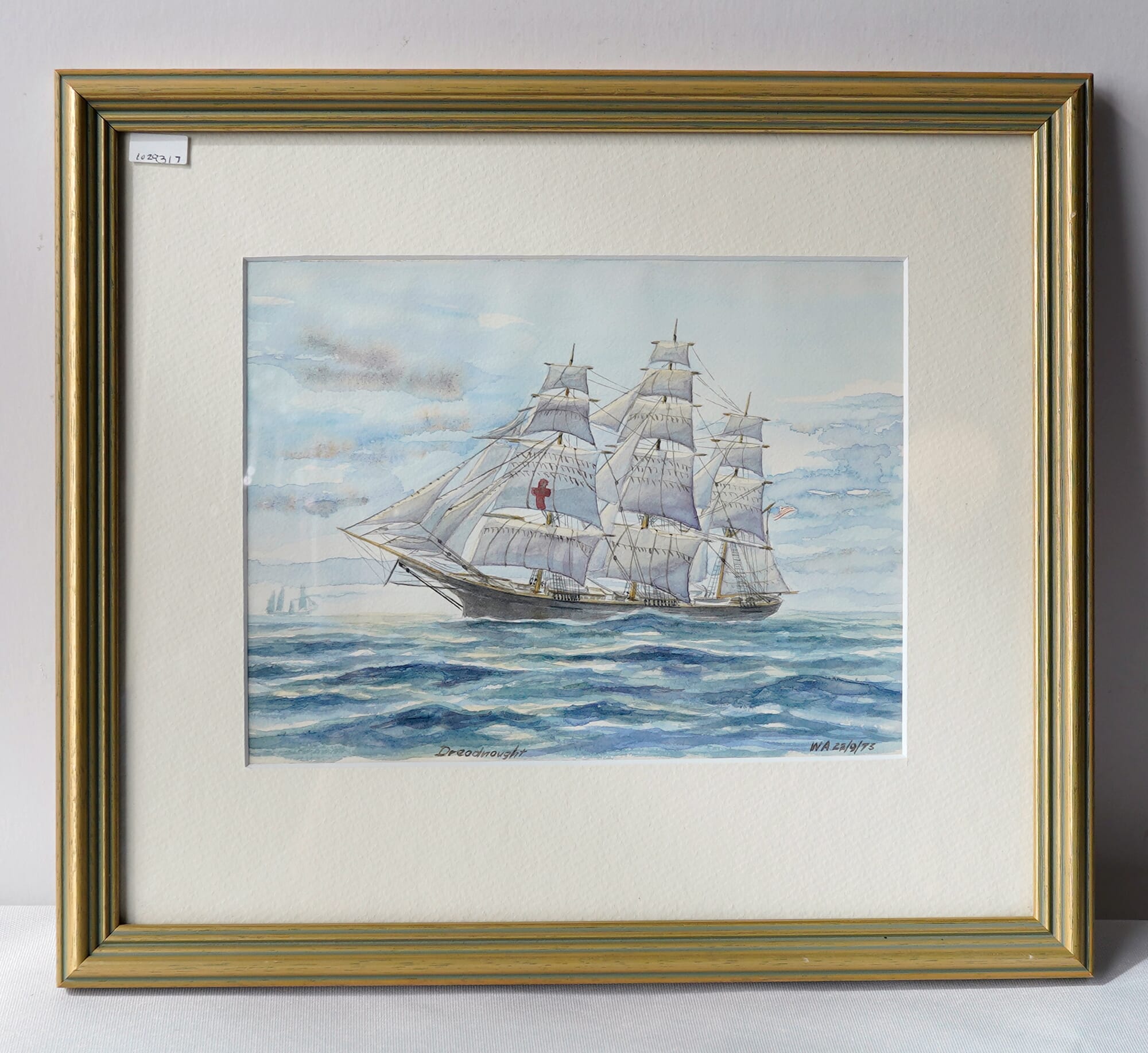
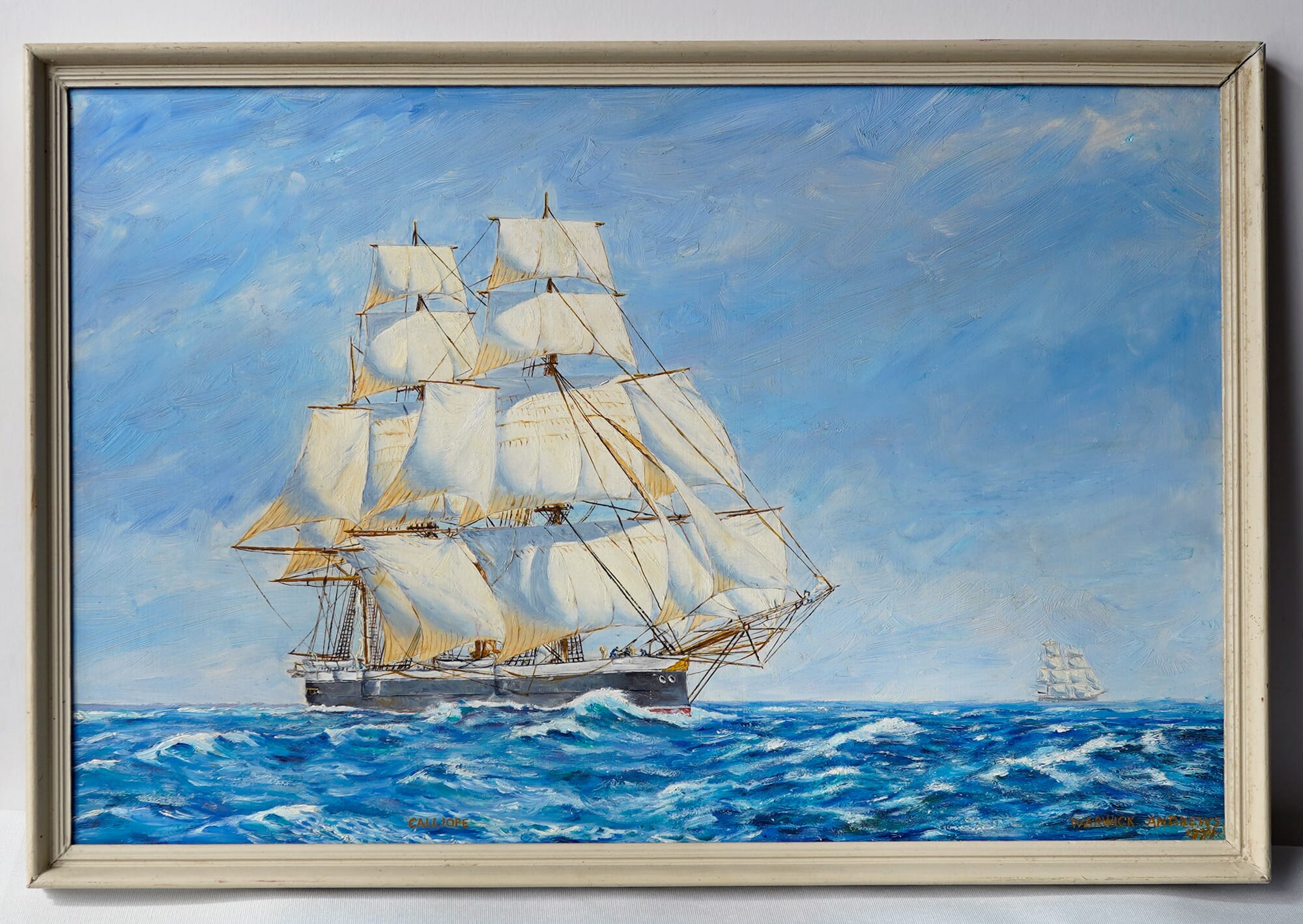
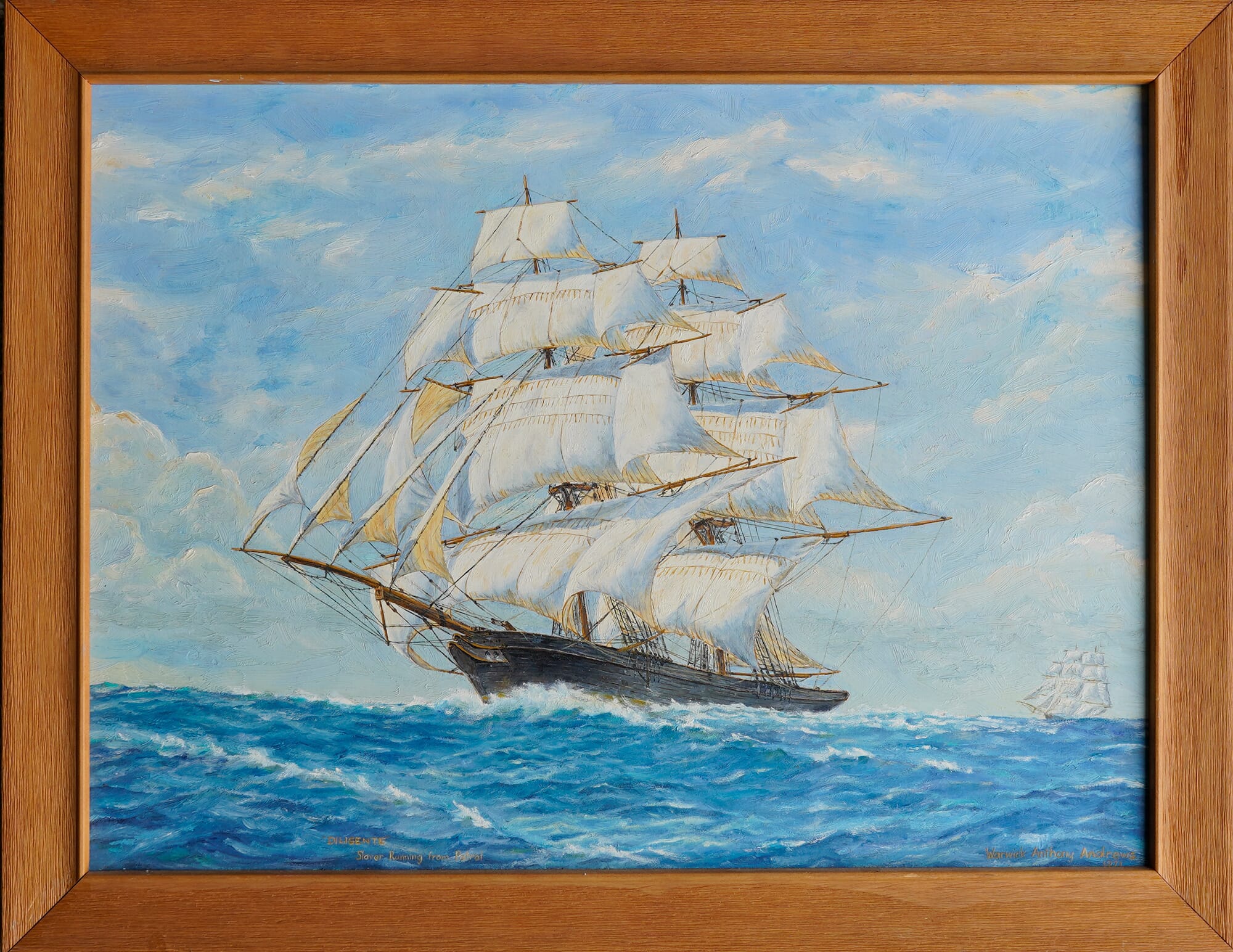
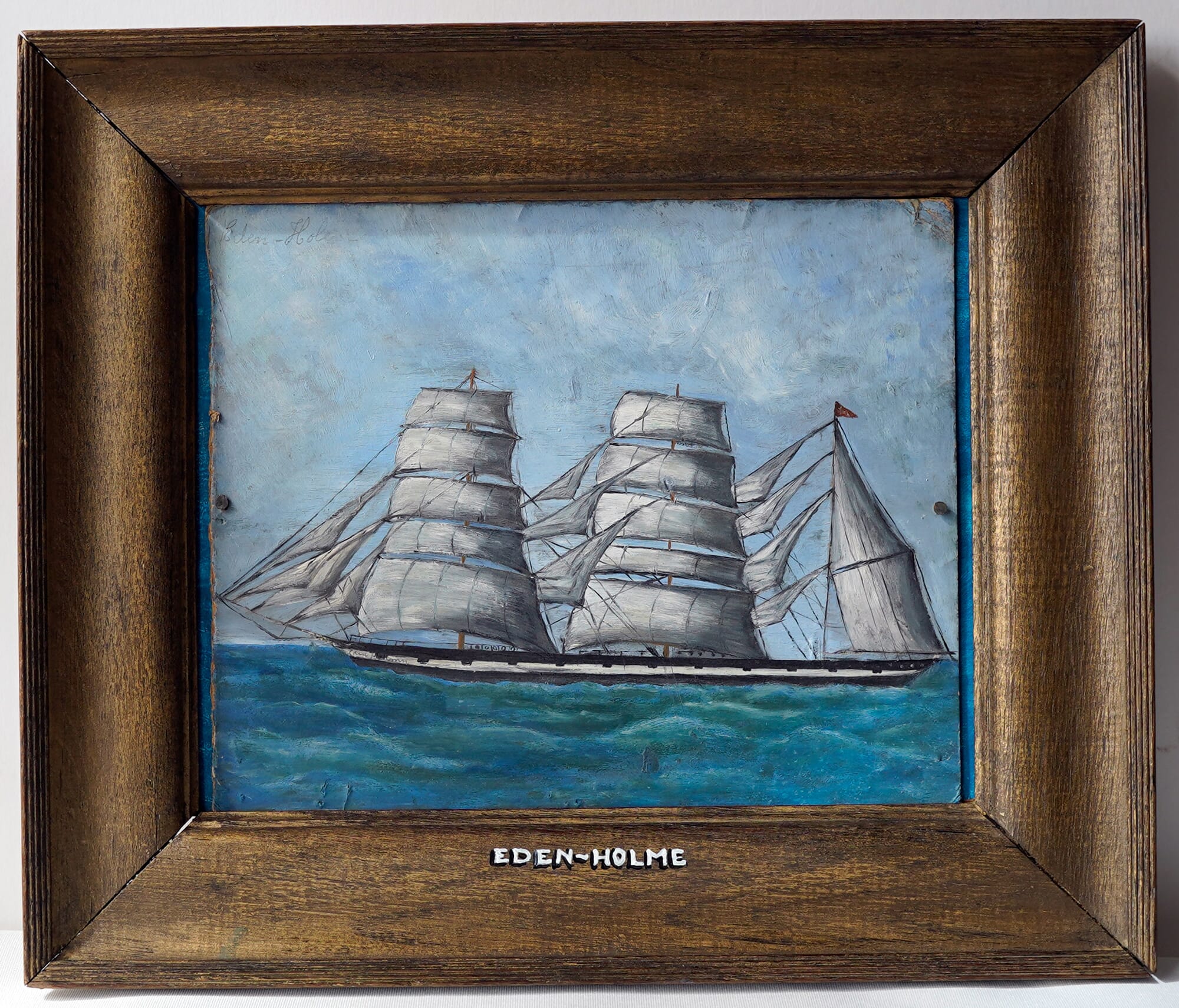
Ships were essential for nearly every aspect of Australia’s development, from the very first European encounters to the gradual colonisation. Once established, they were the life-line to the rest of the world, and therefore are all represented in the world of Art & Antiques. We have an extensive collection of ‘Nautical Antiques’ to offer, starting with this selection.

Australian Marine Artists of the 20th century
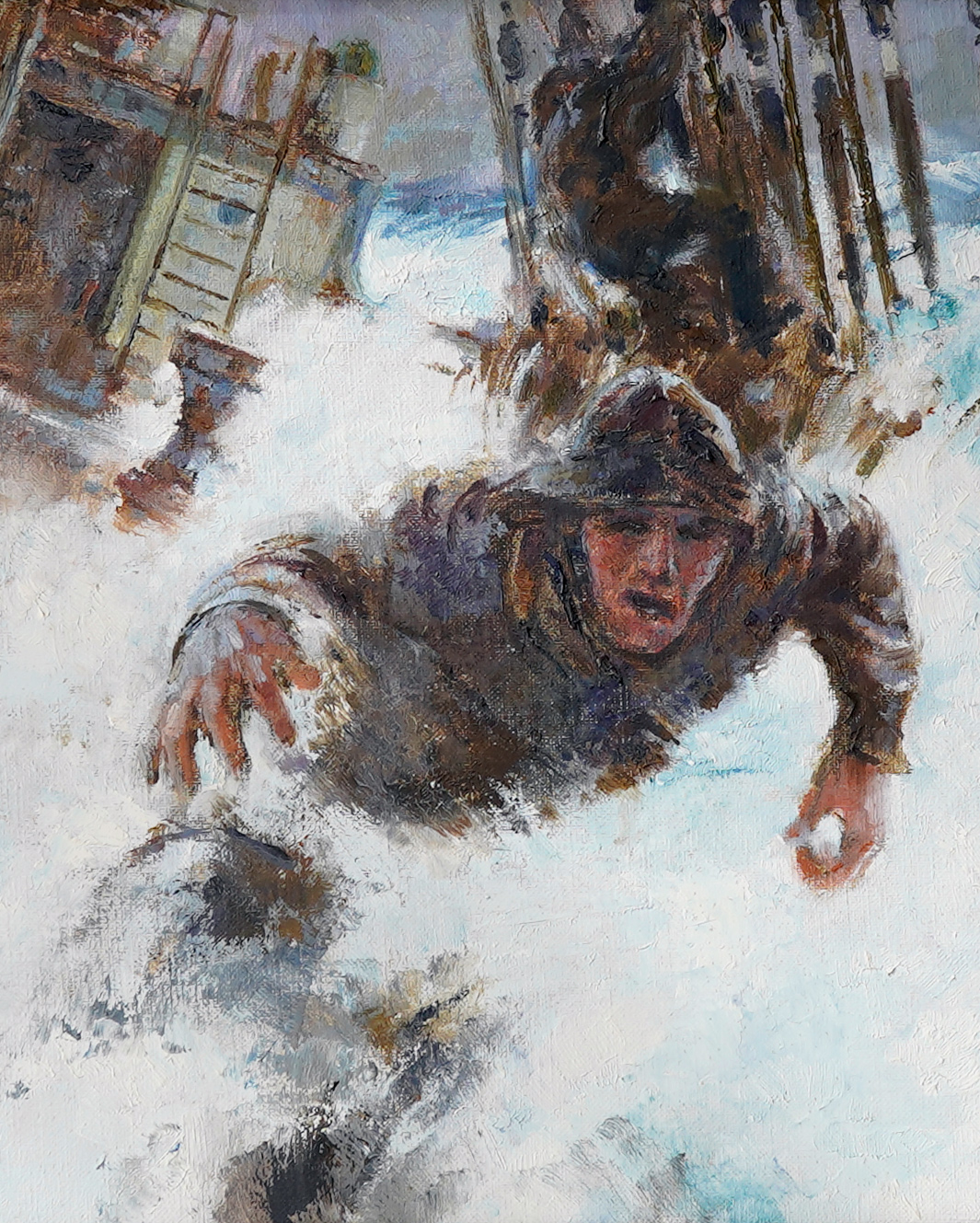
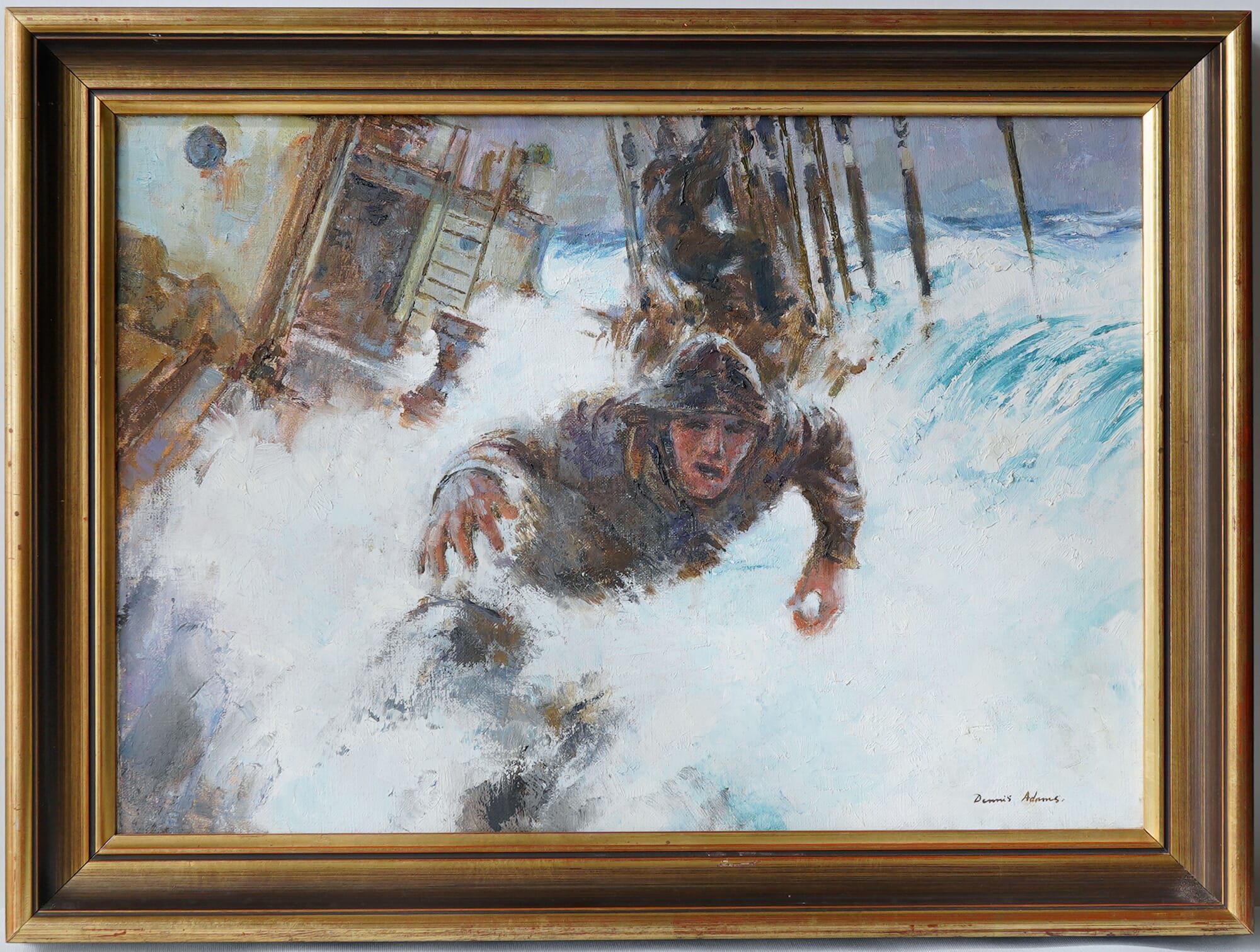
Dennis Adams - Decks Awash - Australian Marine Art

The nostalgia for the Age of Sail has always been strong, originating in the artists who were able to sail on the ‘Last of the Windjammers’ in the earlier 20th century, and continuing into the present.
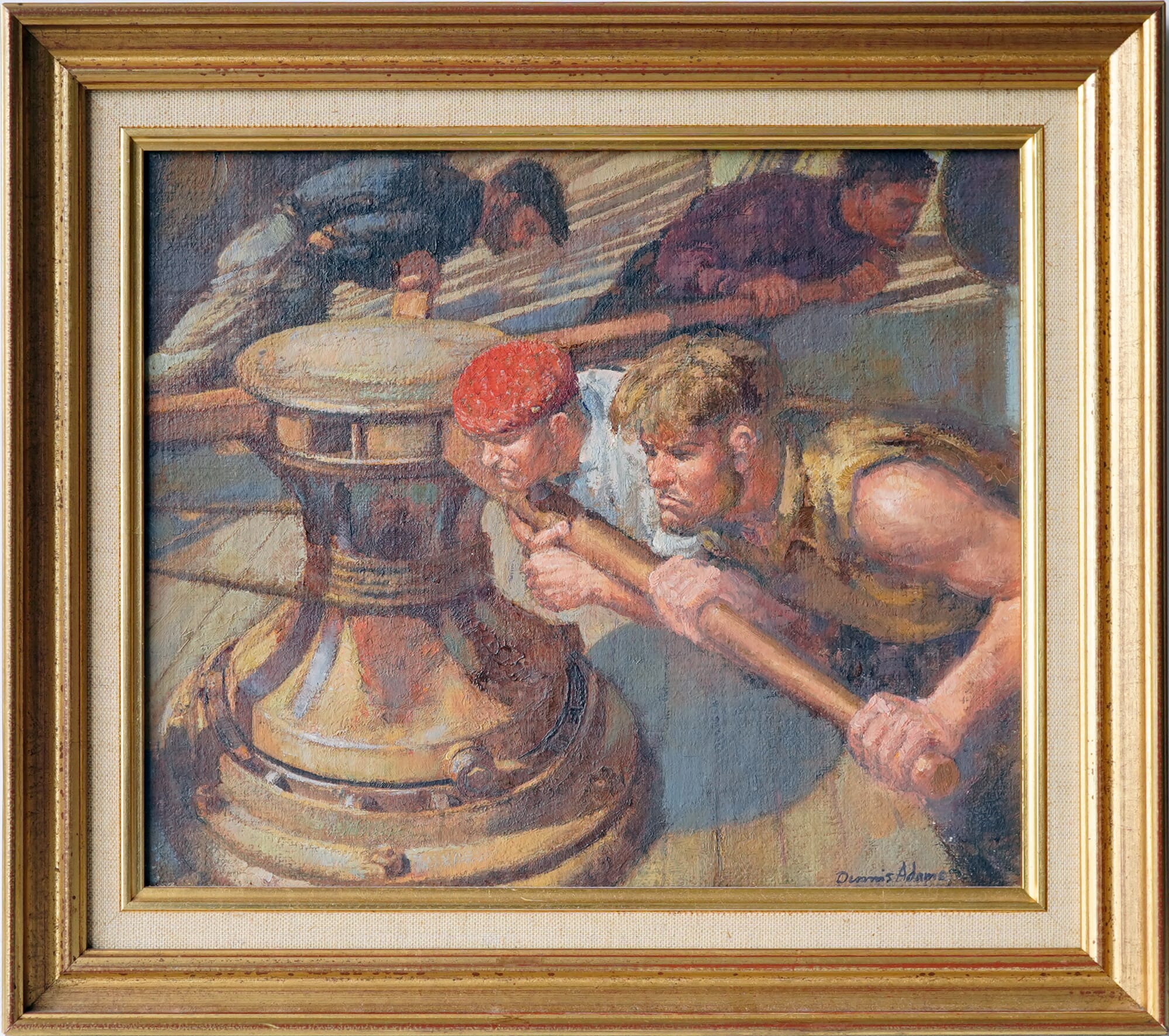
One such sailor-artist was Dennis Adams, featured below. He managed to find a job on one of the few remaining commercial cargo ships, and left Australia in 1935, London-bound. He was able to paint his experiences for posterity, accurately depicting the life of a sailor from actual hands-on experience.

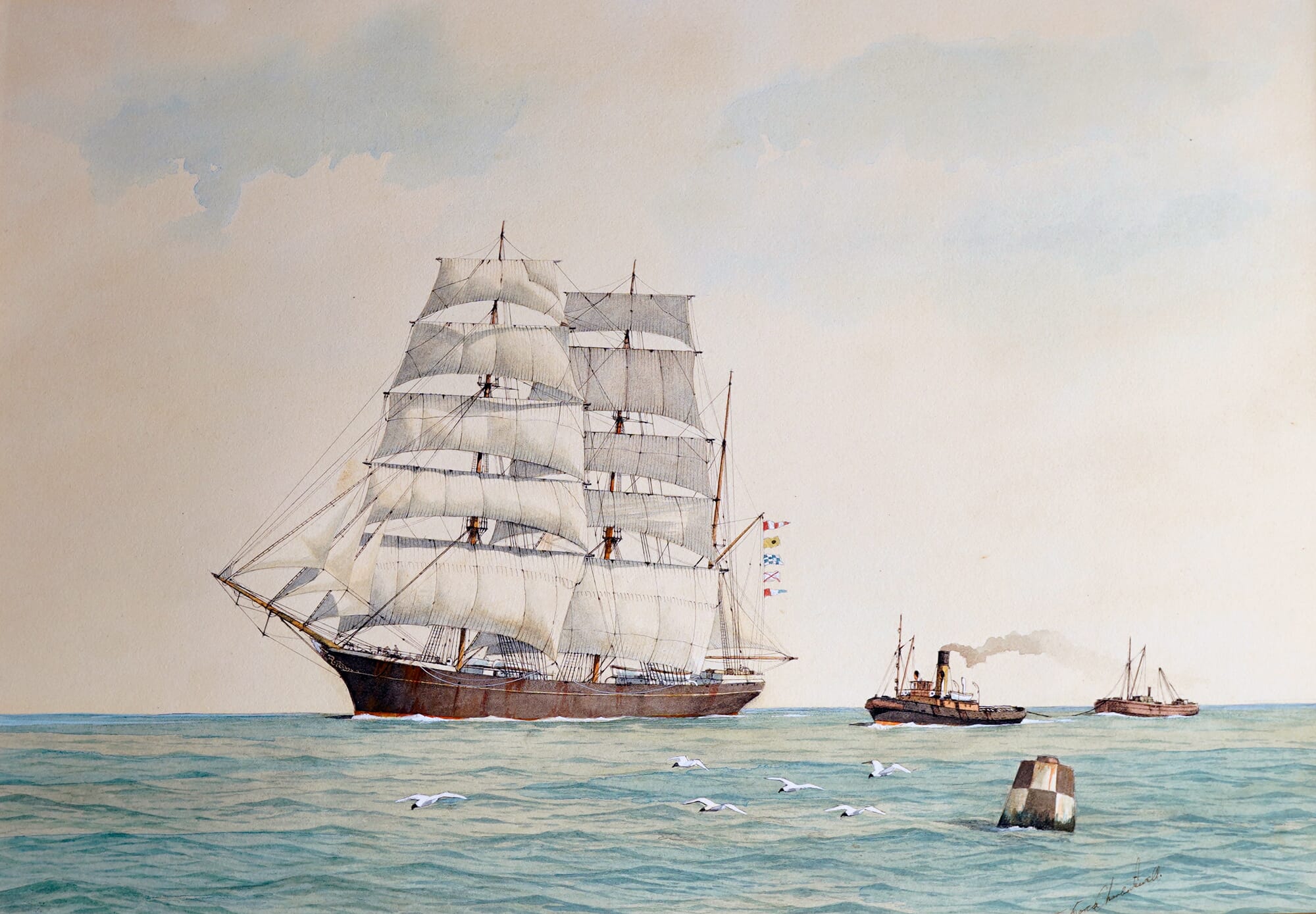
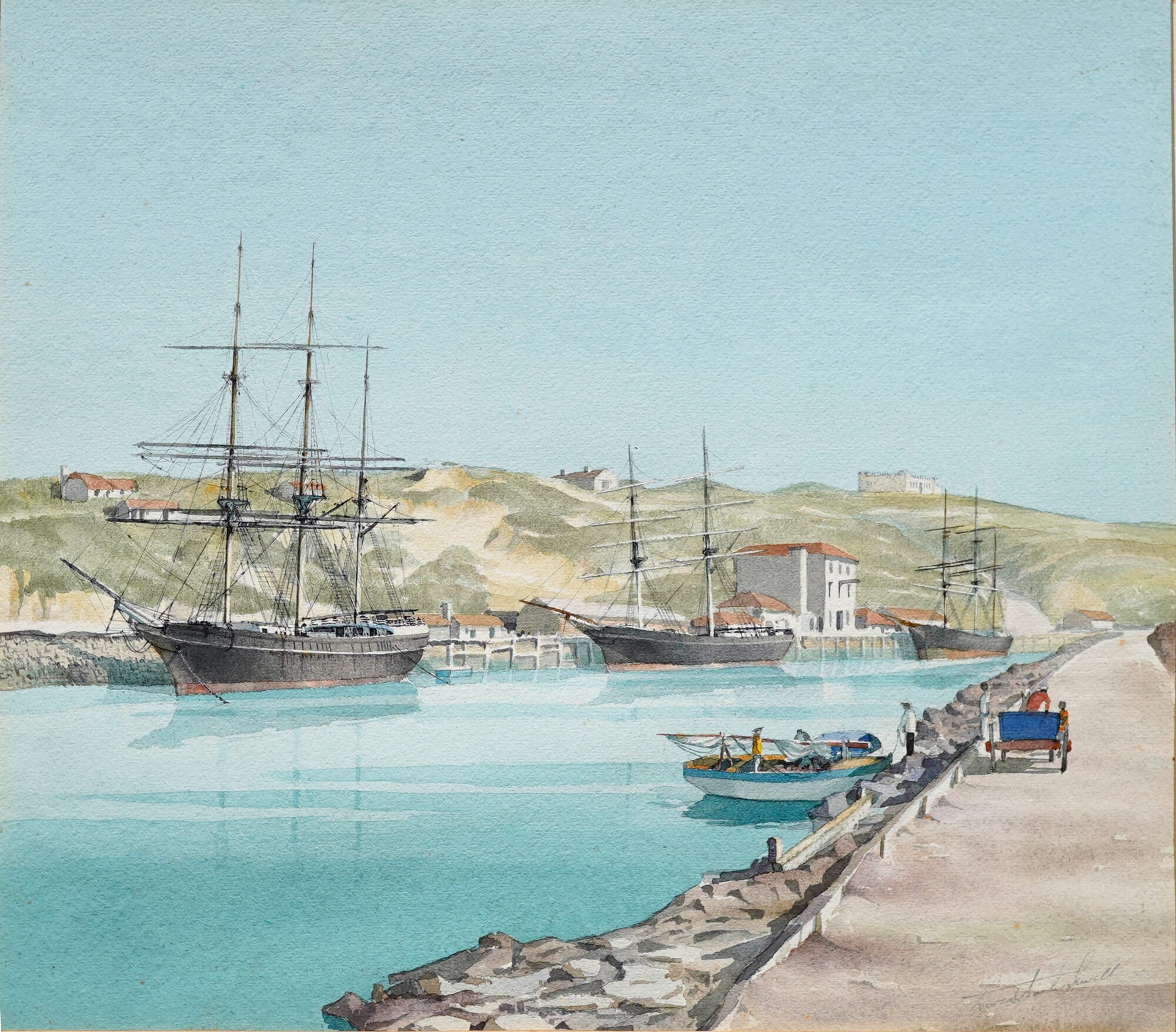
Dorca Charles Sewell (1907-79)

Dorca Charles Sewell was born in London, studied art in London & Paris, and became known for his marine art. He exhibited at the Royal Society of Marine Artists, the British Society of Artists, and the United Society of Artists in London. In around 1939, he migrated to Australia and found a job in the Public Service as an architect. He continued to paint, mostly watercolours, and exhibited in Sydney and Melbourne in the 1970’s.

Dennis Adams (1914-2001)

Dennis Adams was born in Sydney in 1914, where at the docks he watched the few remaining sailing ships pass Sydney Heads for distant ports. His father was a retired seaman, and his head was full of his tales of life on board the ‘Last of the Windjammers’. He studied art at the Julian Ashton Art School in Sydney, and in 1935 headed off to London to study at the Royal Academy of Arts on a sailing ship as a ‘seaman’. This voyage set the theme for his art: for the next 50 years, he painted dramatic scenes of the life of the sailor, not just the ships themselves. He was an official War artist during WWII, and his work in paint & in bronze sculpture is to be found in the Australian War Memorial in Canberra, as well as numerous other state memorials and galleries around Australia.
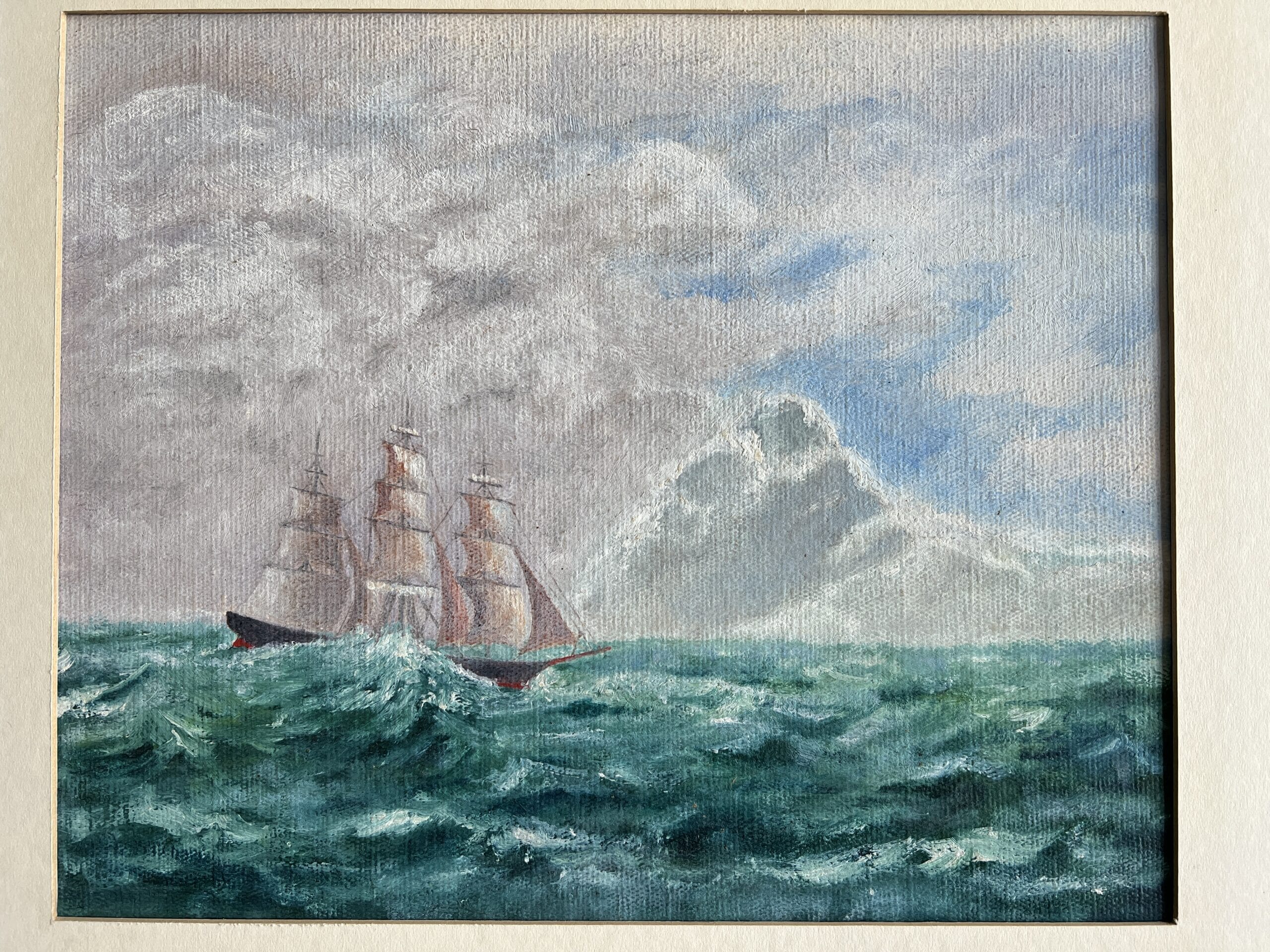
Warwick A Andrews (1930-2021)

Warwick Anthony Andrews was born in Sydney in 1930, and grew up to be a saltwater sailing enthusiast. He joined the Australian Navy Reserve, and later moved to Melbourne where he was involved with the Beaumaris Probus Club and the local arts scene. His works are often historical re-creations, using prints or old photos as a source which he ‘brought to life’ with his distinctive techniques in Oil and Watercolour.

A Krakatoa Curio
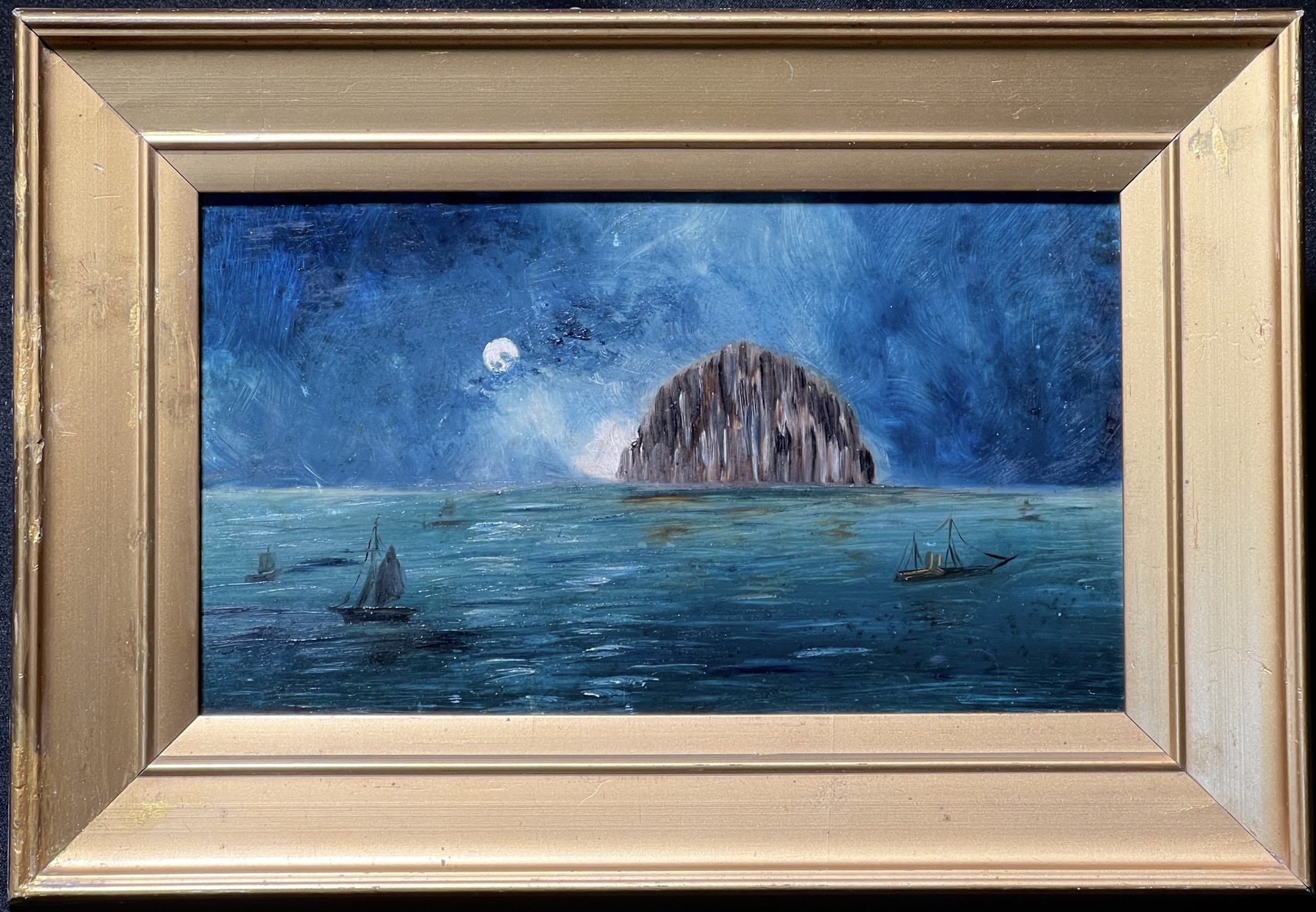
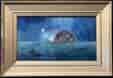
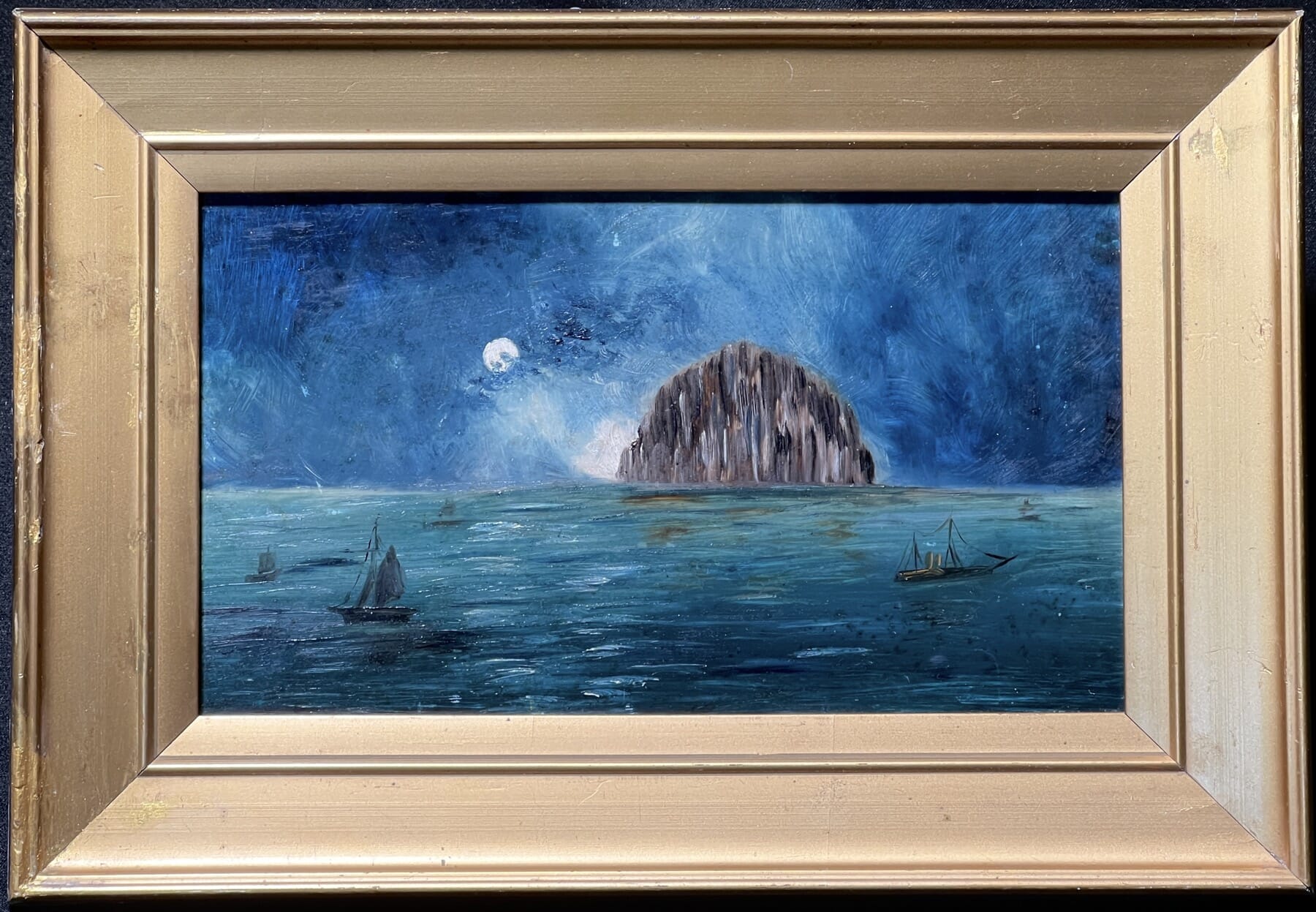
Victorian image of Krakatoa, c. 1883

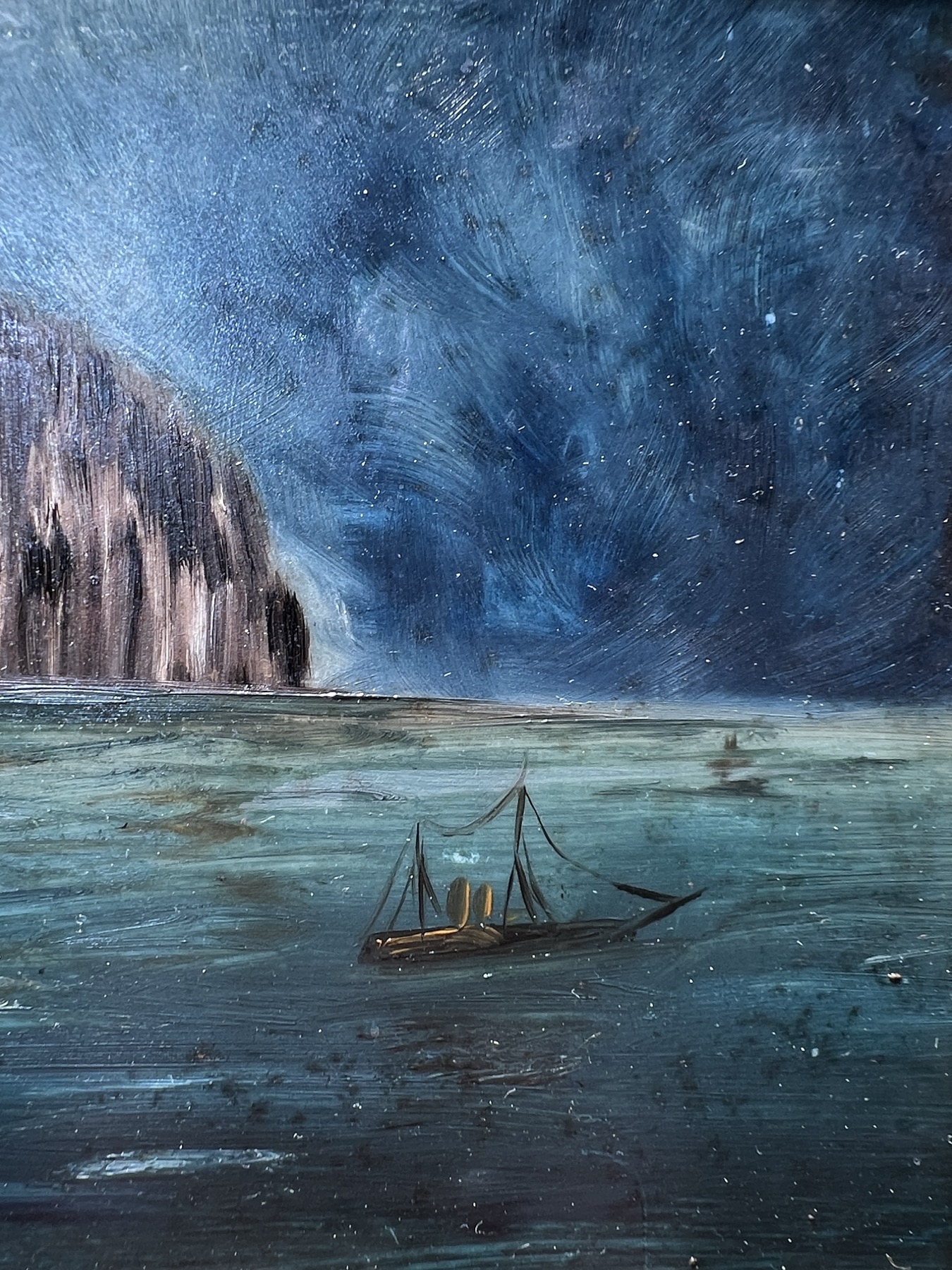
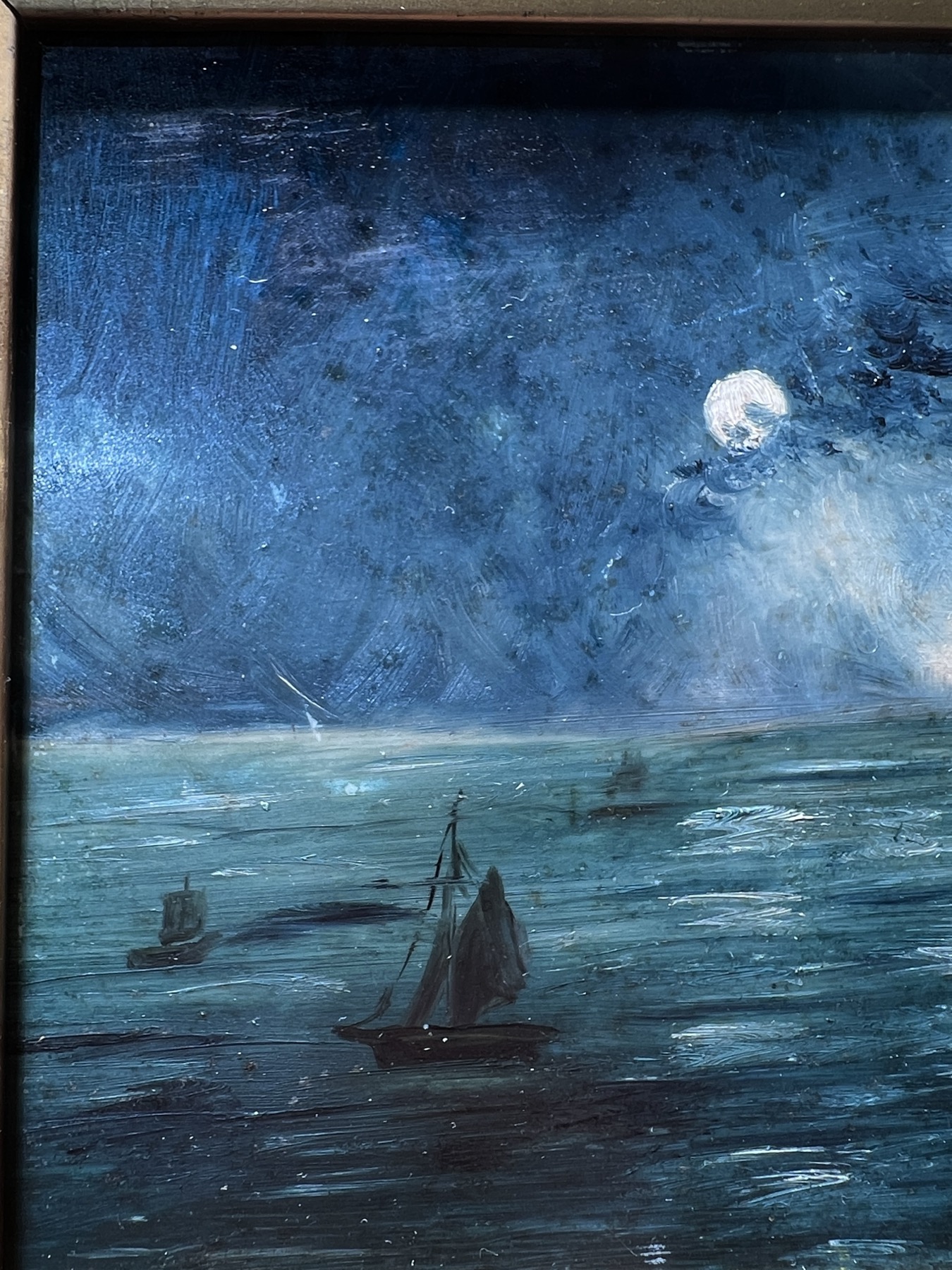
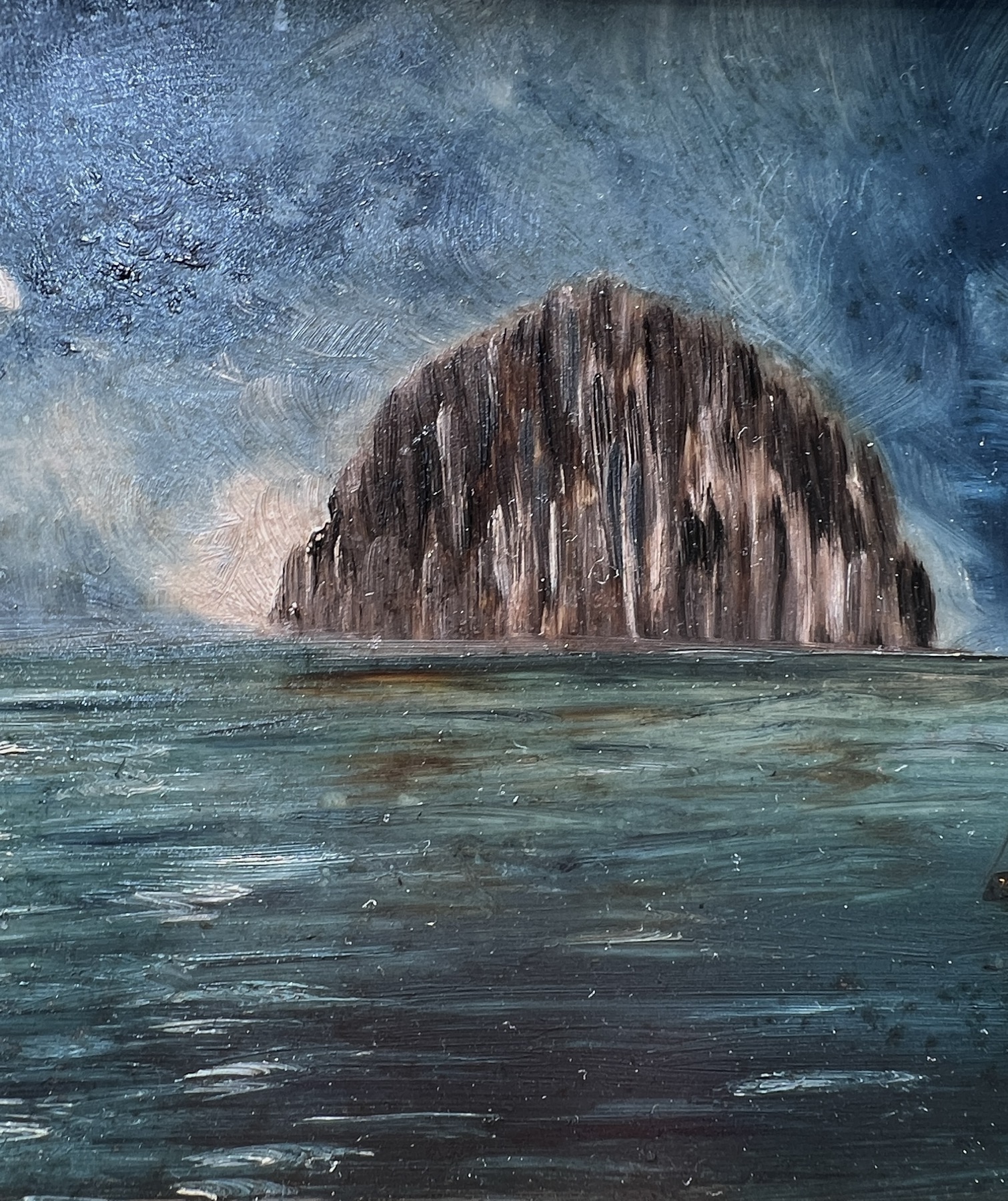
An unusual small Victorian oil painting (painted on a glass panel) depicts a strange, glowing mountain, with ships passing by apparently at nighttime.
We’ve interpreted this as a record of Krakatoa ‘before’ the catastrophic eruption of 1883, a most unusual record of a ship passenger, probably on their way to Australia.

Read more about this interesting image >

An unusual ‘page-turner’, printed both sides with world maps & calendar for 1899, with red lines tracing the remarkable achievement of the Victorian era: the International Telegraphic Cable network, spread all-over the globe by the closing year of the 19th century.
Produced by ‘THE EASTERN EXTENSION TELEGRAPHIC COMPANY’ 1899. The printer, Waterlow & Sons, was the provider of stationary for the company, and produced these curios, shaped like a traditional Chinese or Japanese ‘page turner’, throughout the 1890’s.

The Ocean Liners & Wartime….

The advent of Steam, and internal combustion engines changed the face of sea travel forever. The reliability of a propulsion method that didn’t rely on the weather was gladly adapted, and sails rapidly disappeared in the first decades of the 20th century. Australia’s coastal trade was catered for by coastal steamers, and they became a regular sight often depicted in art of the period. One major change is the rise of the ‘Ocean Liner’ – entire ships built only to take passengers. During WWI, these were re-purposed as troop carriers – and many didn’t make it through.. the ‘SS Otway’ below being a prime example.

SS Otway

The SS Otway was almost brand-new when she was painted by the local amateur ship artist Glanville. Named for the famous cape in Victoria, Australia, which in turn was named in 1800 by Lieutenant James Grant after Vice-Admiral William Albany Otway, a Navy Captain from Nelson’s era. She was built & launched in Glasgow in 1909, an important part of the Orient Line’s fleet of 5 passenger ships that allowed weekly sailings to & from Australia. However, this did not last for long, as the tide of war swept ships such as this before it. Requisitioned by the Royal Navy in 1914, she became the HMS Otway, and once mounted with guns became an Armed Merchant Cruiser. Her service took her to colder climates, spending much of the following year patrolling off the north of England, around Iceland, and across to Norway. Her luck ran out on July 23rd, 1917, when she was torpedoed and sunk by a German u-boat with the loss of 10 lives.


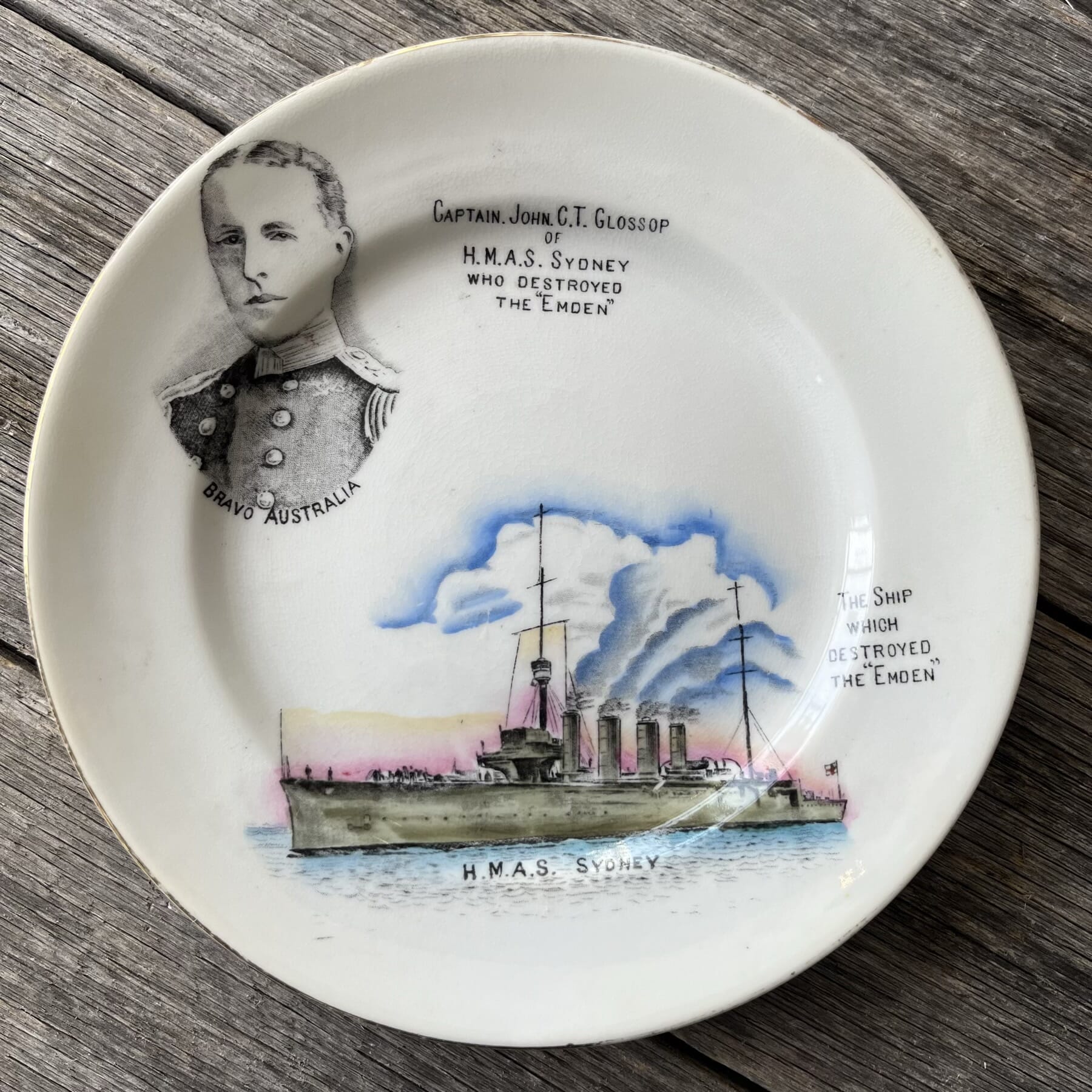
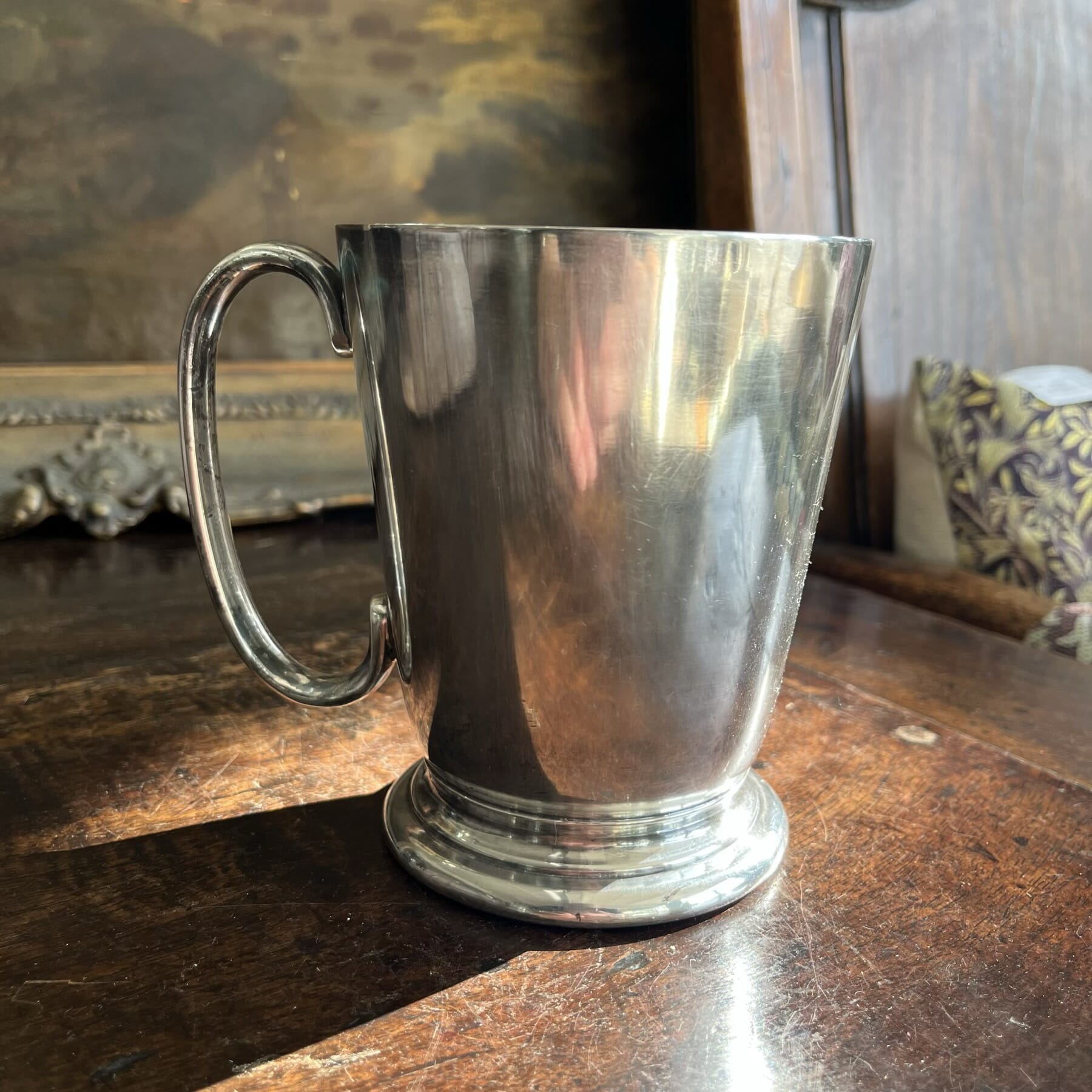
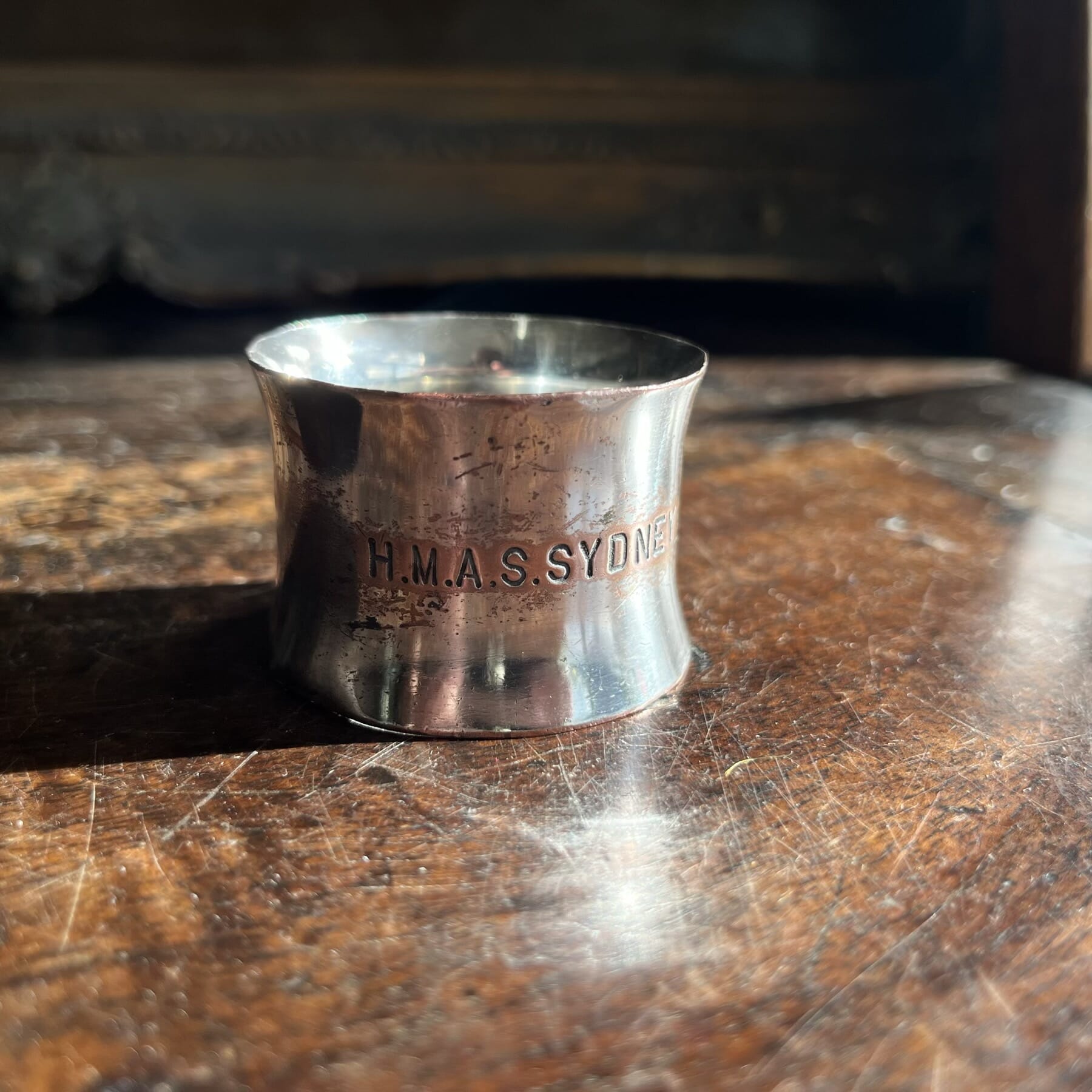
The world’s Navies were also transformed, with mighty floating-fortress ships being seemingly impenetrable. The commemoratives for ‘H.M.A.S. SYDNEY (I) relate to one of Australia’s iconic stories; a light cruiser built in 1912, it was a formidable piece of technology in WWI which became a legend when it destroyed the German cruiser Emden in what is remembered as ‘Australia’s first victory at sea’.
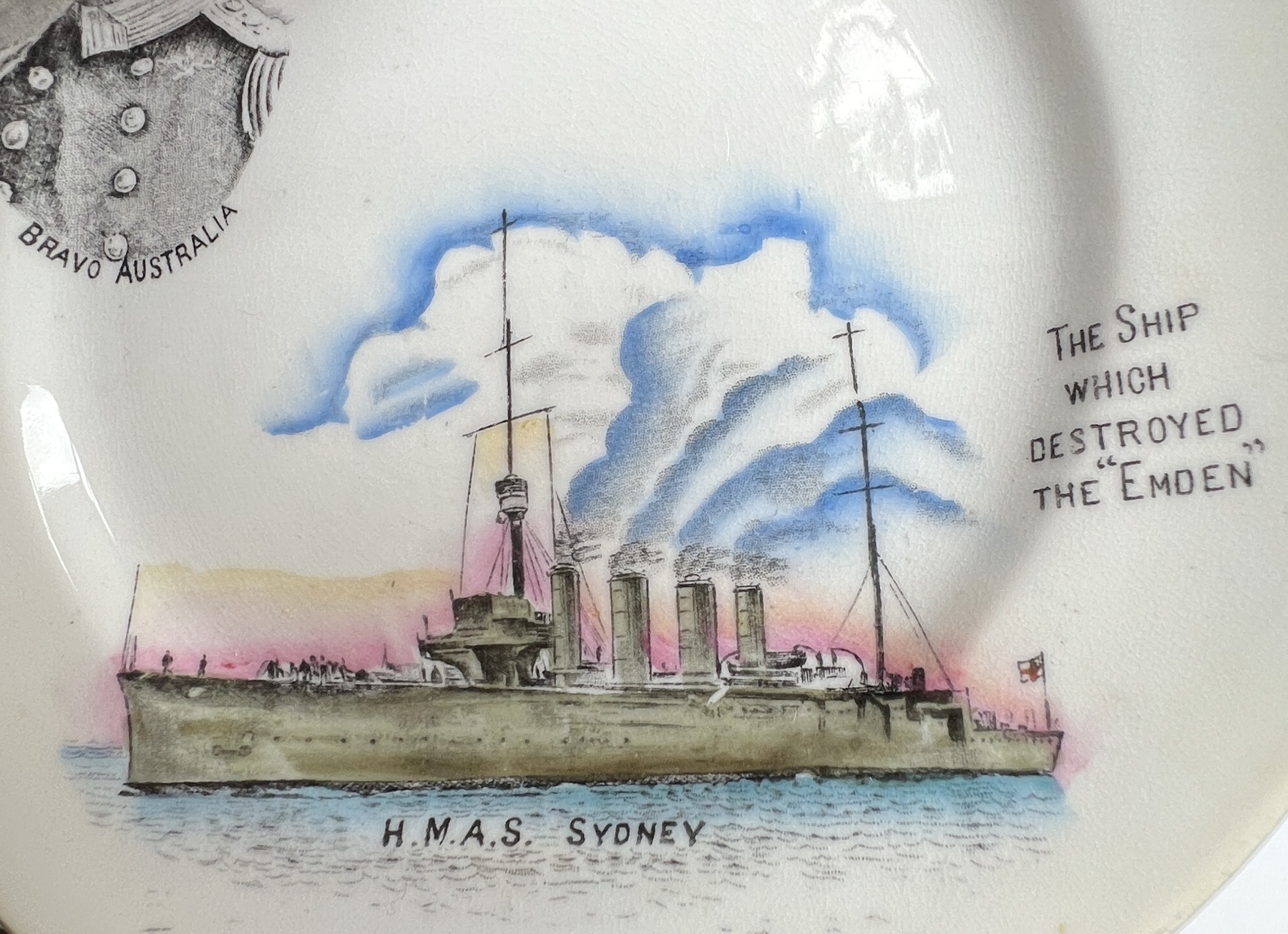
A WWI commemorative HMAS SYDNEY 1914 plate

The German cruiser Emden had been sulking around South-East Asia causing major problems for the Allies, in a short time sinking or capturing 25 allied steamers, a Russian cruiser and a French destroyer. A dozen Allied warships were tied up in the region searching for a German battleship; the Germans had added an extra funnel to the Emden, and were masquerading as an Allied ship! Their next target was the station in the Cocos Islands, housing the all-important cable that connected the Pacific – and Australia- to Europe. On the 9th November, 1914, the Sydney came across the Emden as it closed in on the cable station, and successfully pounded it into submission. There’s a dramatic photograph taken by the staff of the Eastern Extension Telegraph Company (see the ‘page turner’ illustrated above!) on Direction Island watching the ships on the horizon battle it out, before they headed out to rescue survivors of the defeated Emden.
Note: There’s another ‘HMAS SYDNEY’ of great fame in WWII – recorded as the greatest loss in Australian Navy history, and a mystery until 2008 when the remains were discovered and her story re-constructed. But this is the second Navy ship with this name, ironically sharing a similar legendary status, although for polar-opposite reasons…..

‘General’ Fresh Stock:

Coming Soon….

There’s a ship-load of Nautical items on the horizon…

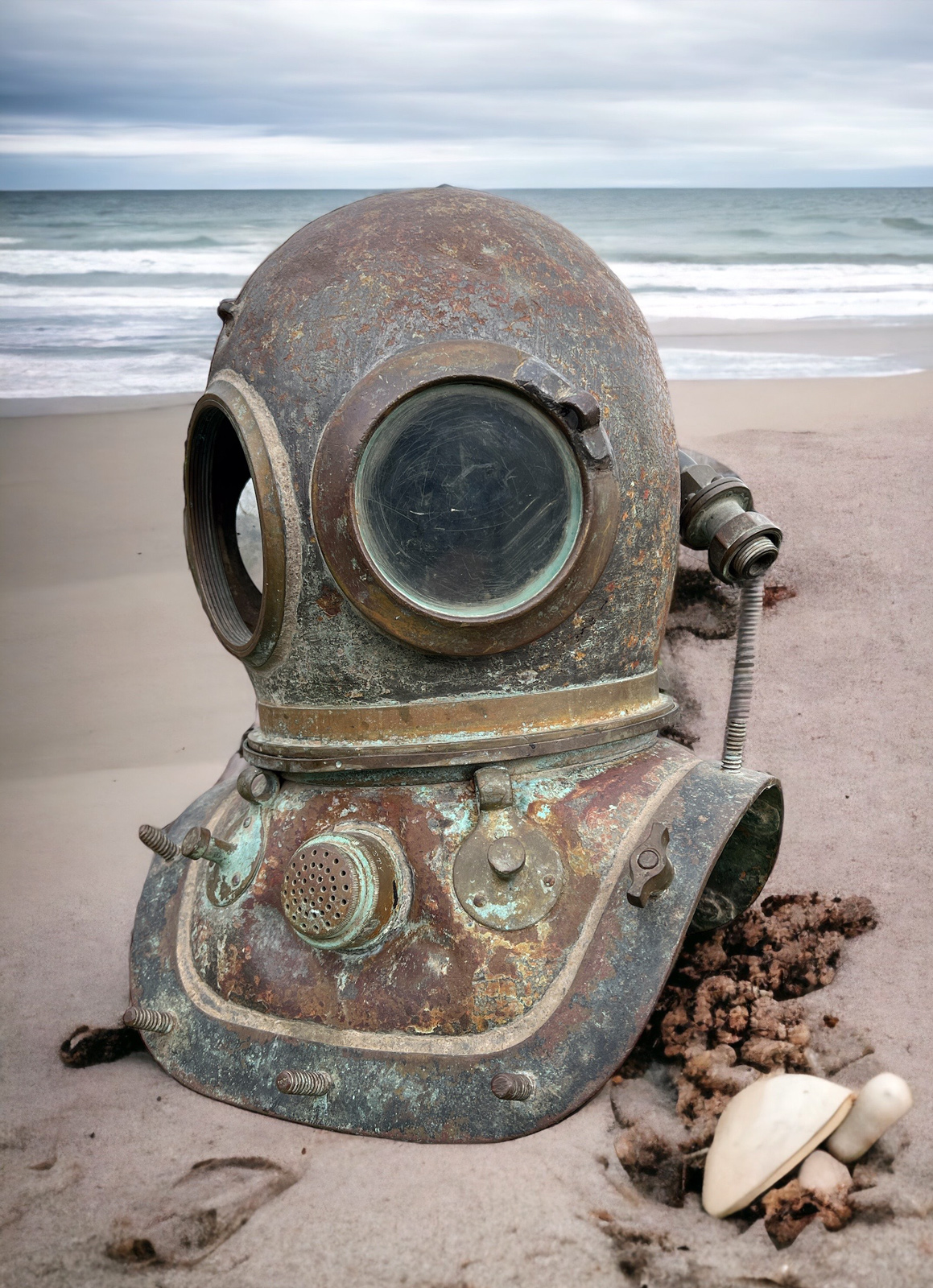
Including this amazing original early 20th century diving helmet: the front glass element is missing, I’m sure there’s a fantastic story about how that happened….?

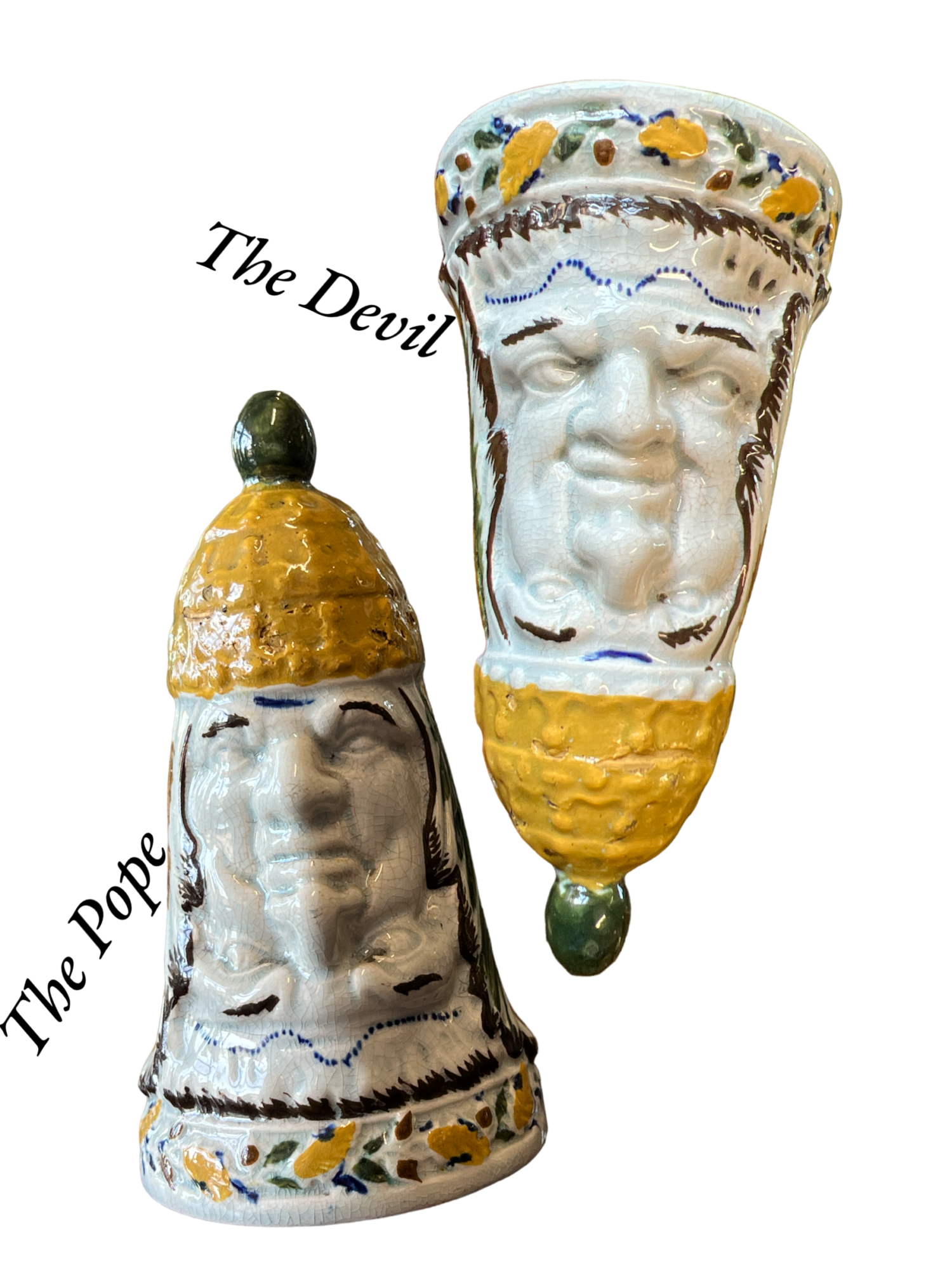
We have some early English rarities coming, including this somewhat controversial ‘Pope & Devil’ stirrup cup. These were used in the classic British Hunt, for a quick dash of rum before heading off on horseback to chase whatever was trying to escape: the devil-side rip holds the drink, the pope simply cannot!
Dating to around 1790, it’s a fine example of Pratt high-fired pottery.
Posted on

A Krakatoa Curio

Victorian image of Krakatoa, c. 1883

This curious oil painting (on a sheet of milk-glass) has been sitting in the Moorabool ‘archives’ for a generation, a puzzle. It’s apparently night-time with a full moon, depicting shipping of the late 19th century, and a distinctive massive rocky protrusion. What on earth does this depict?

Is this Krakatoa?
Is this Krakatoa?

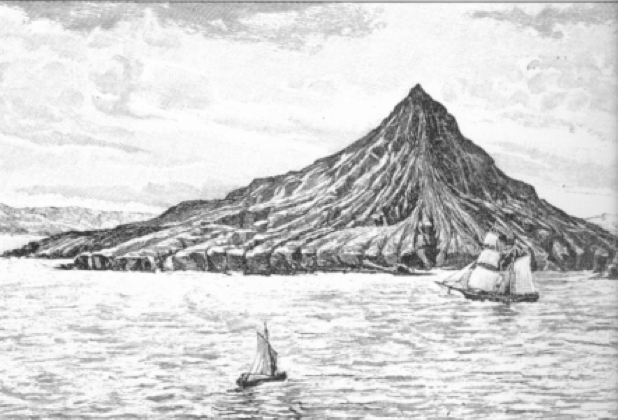
A little brain-storming and searching the internet comes to an interesting conclusion: this is Krakatoa, the mighty volcano of south-east Asia, shown in its pre-1883 eruption appearance.

Mid-19th century appearance of Krakatoa

Why has someone depicted Krakatoa?
It’s the infamous volcano in Indonesia that still grabs headlines, violently active and a very real threat.

Victorian image of Krakatoa, c. 1883
Possibly a sidewheel paddle steamer, not unusual in the region – it was the route from Singapore to Australia.

The shipping depicted in this image is the clue: it was inconveniently placed right in the centre of the Sunda Strait, the most direct route from the South China Sea to the Indian Ocean.

A traveller has been passing by some time in the 1870’s or early 1880’s, and witnessed the awesome sight of the brooding volcano up-close. Was this at night, with dark shadows of ships on an indigo sea, a full moon peeping though the clouds? That’s the initial impression.

But another possibility is the dramatic result of the eruption: the sky was as dark as night for days. This would be a scene with the sun barely piercing the clouds of ash…. Of course the flaw with this idea is the bulk of the volcano is still there in the pre-eruption configuration. If this was the intention of the artist – to show the day turned to night by the eruption – then it could not have been an eyewitness impression, but rather the imagination of a Victorian amateur artist.

The air grew steadily darker and darker, and at 10:30 a.m. we were in total darkness, just the same as on a very dark night. 

Captain Lindeman, Batavian steamship “Gouverneur-General Loudon“, August 28th 1883

The intense blackness above and around us, broken only by the incessant glare of varied kinds of lightning and the continued explosive roars of Krakatoa, made our situation a truly awful one.

Captain W.J. Watson, Irish merchant ship “Charles Bal

Either way, it’s a fascinating depiction of the major event in the natural world for the Victorian era.

Victorian image of Krakatoa, c. 1883
“… just the same as on a very dark night”
Posted on

Fresh Stock – Furniture, Metalwork, Australiana, and more!

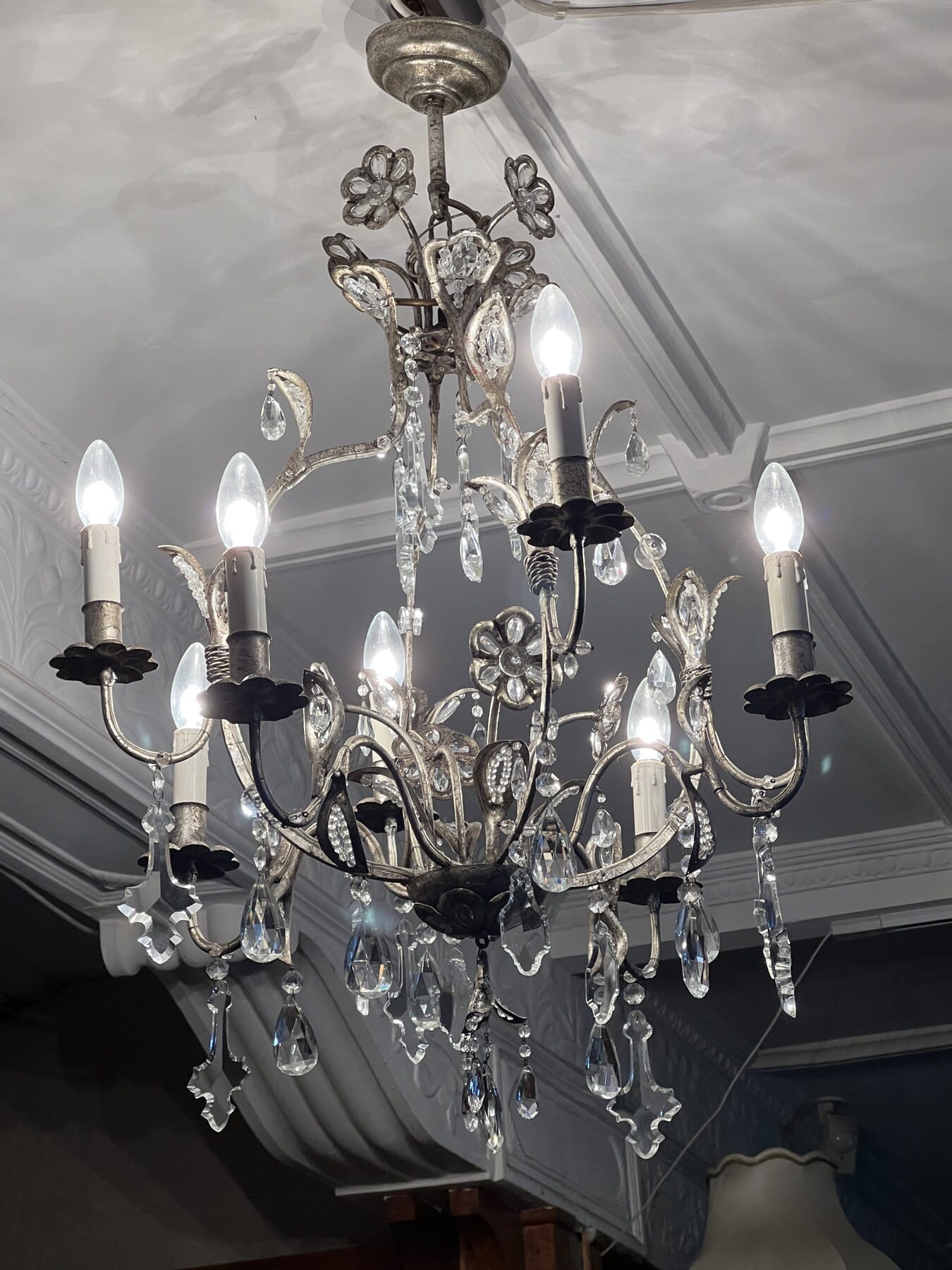
French Chandelier at Moorabool Antiques, Geelong

Welcome to the latest Fresh Stock on Moorabool.com.

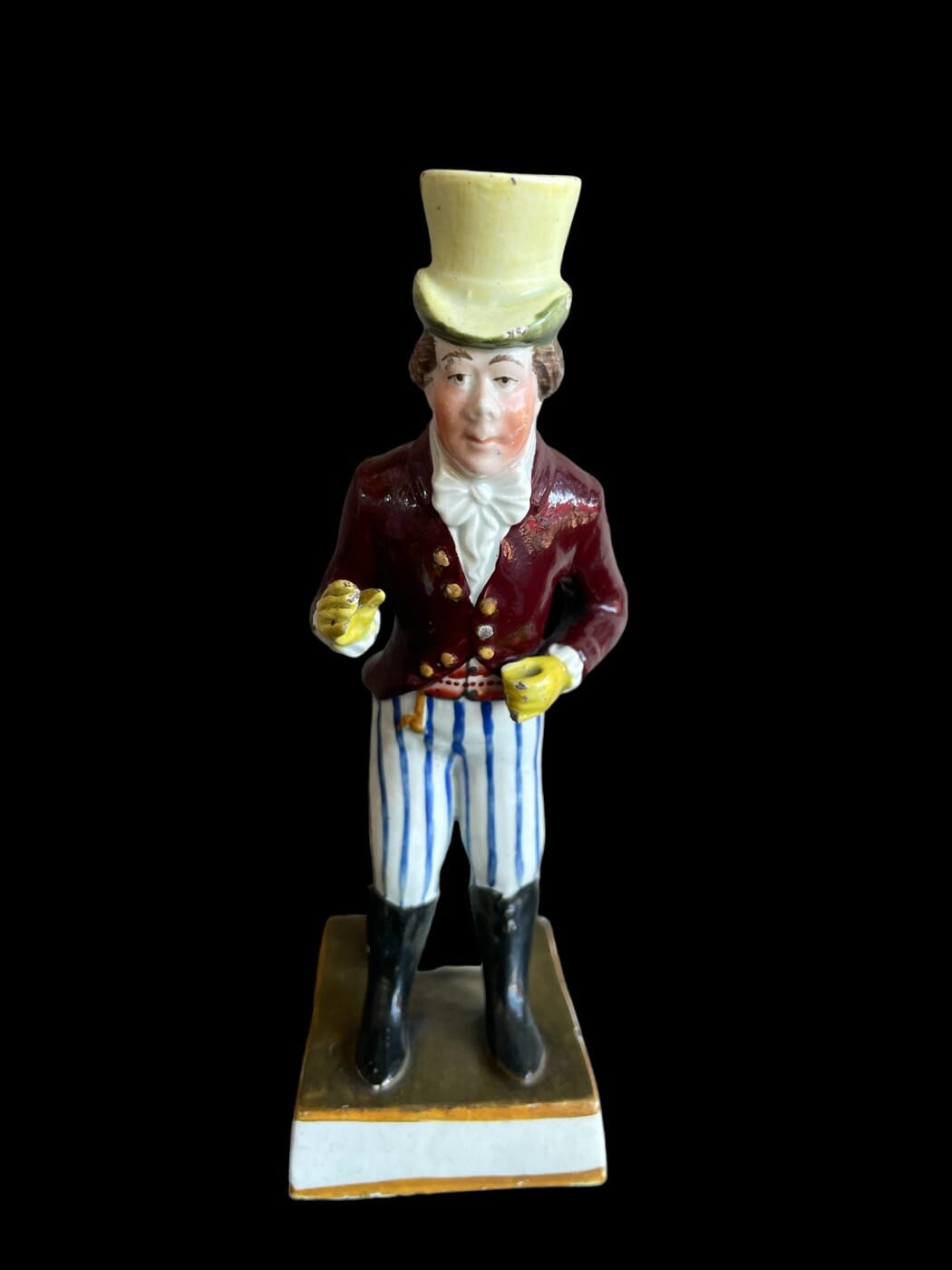
This week there’s a good selection to browse, from a ‘Madam Vestris’ figure to a French Chandelier.

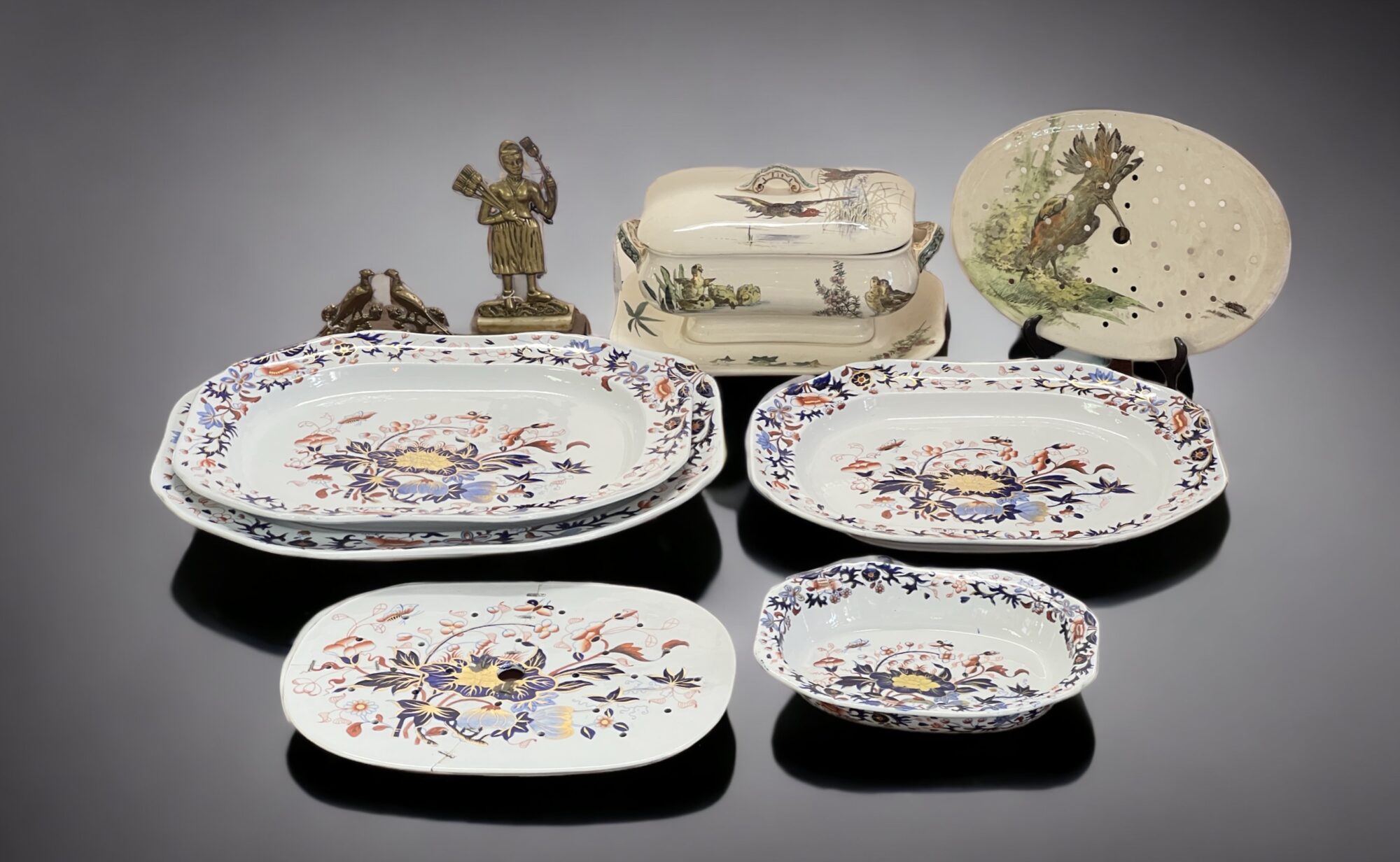
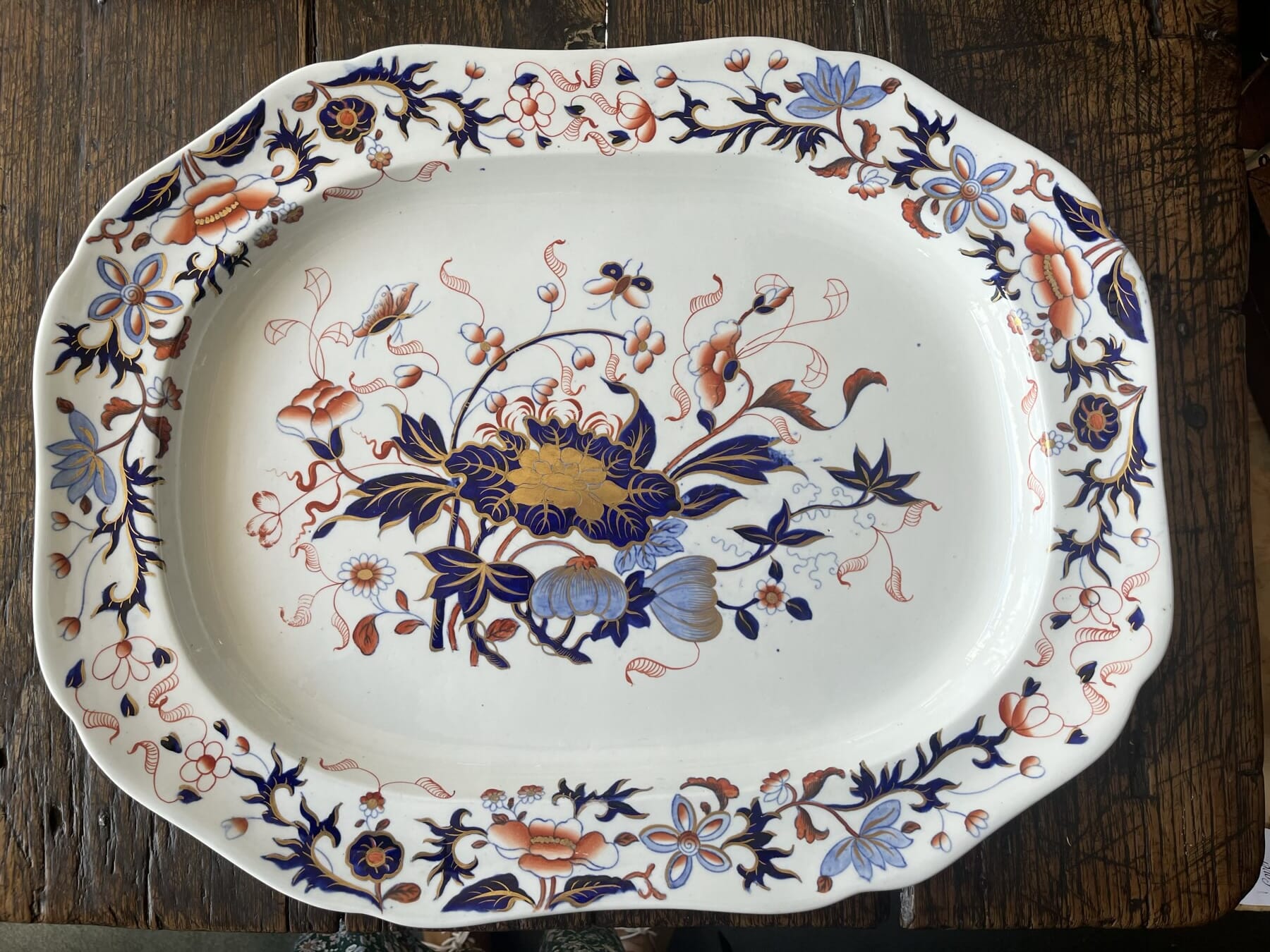
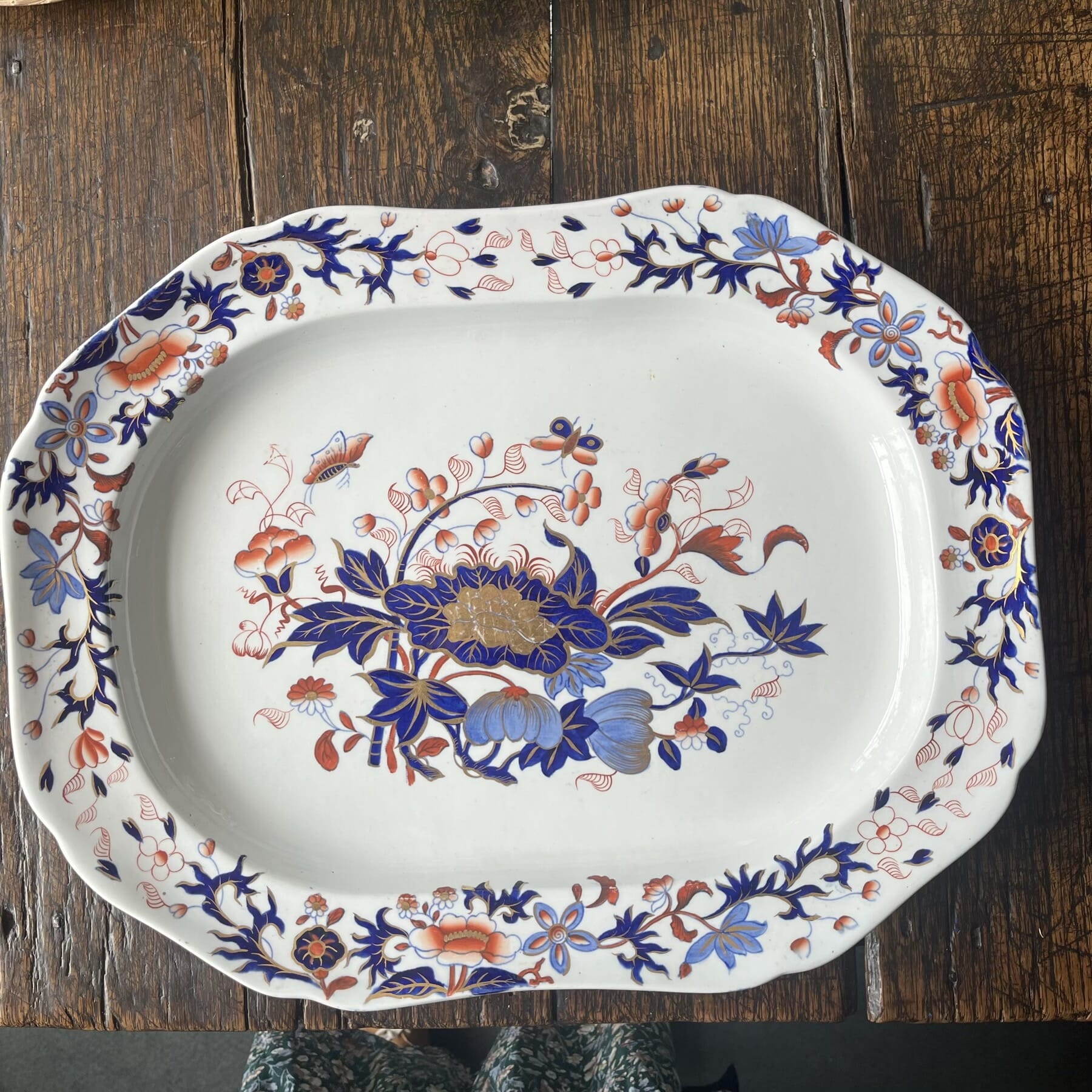
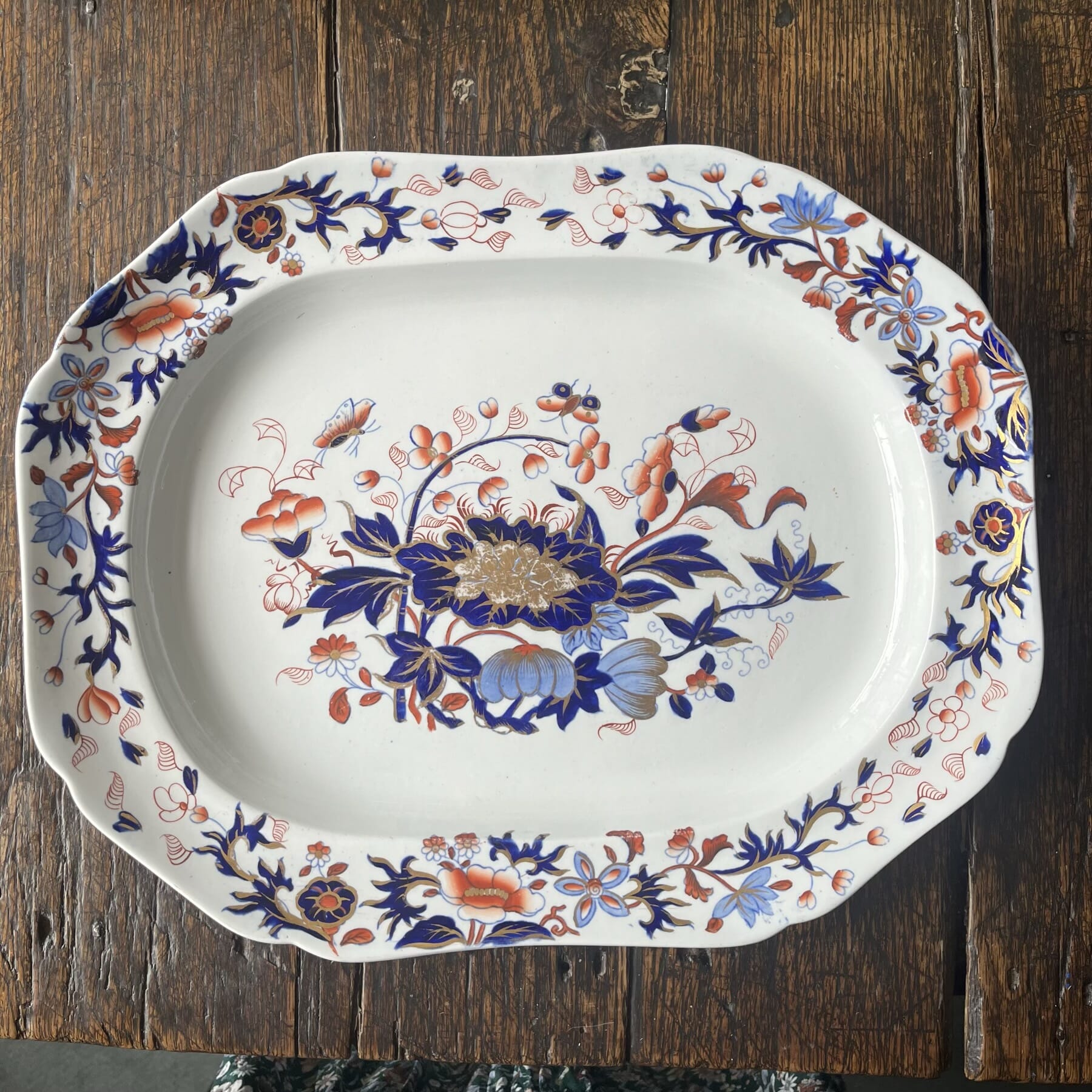
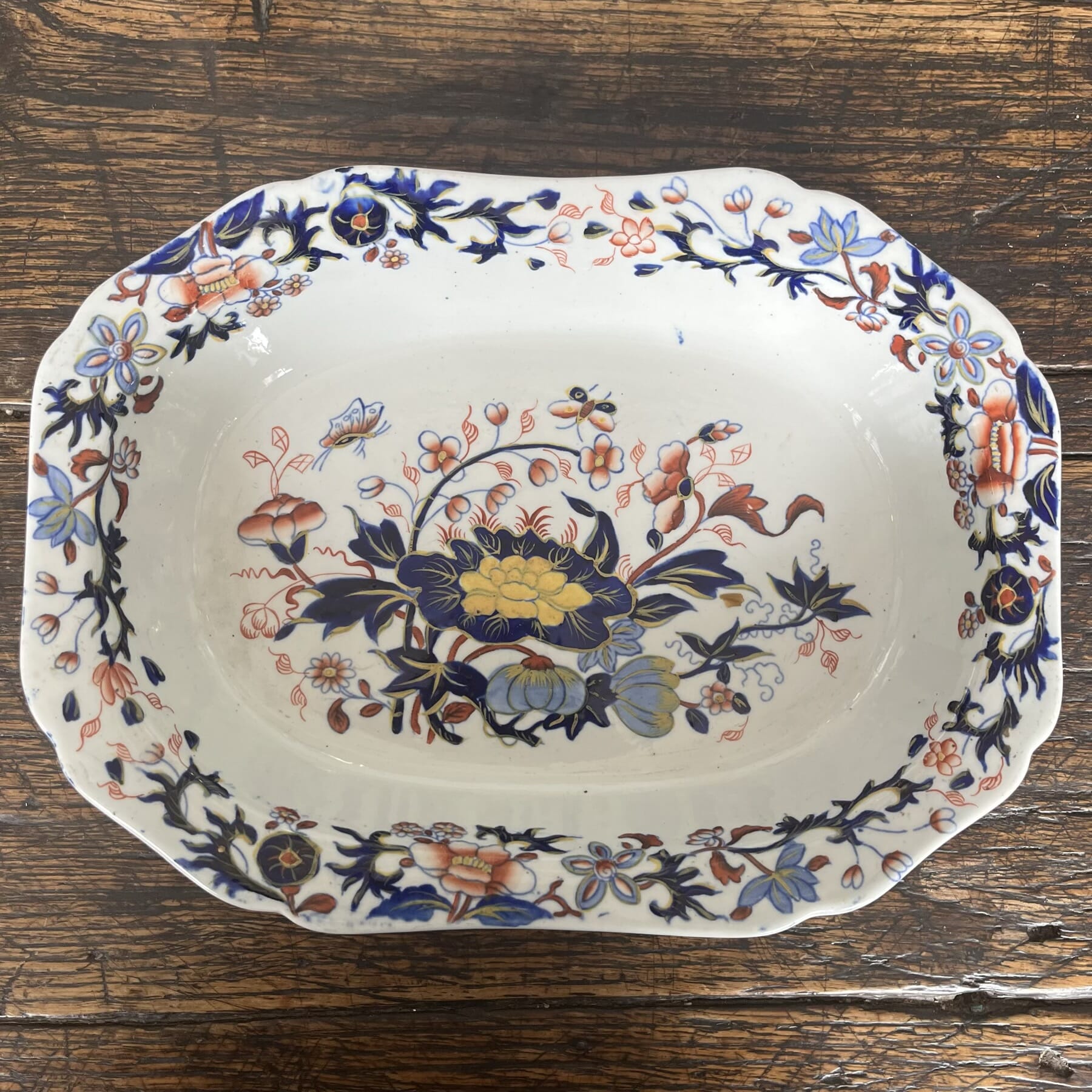
Spode Ironstone Imari Service c. 1815
Spode Ironstone Imari Service c. 1815 & Doulton Burslem with Georges Leonce designs, c. 1885

Australiana

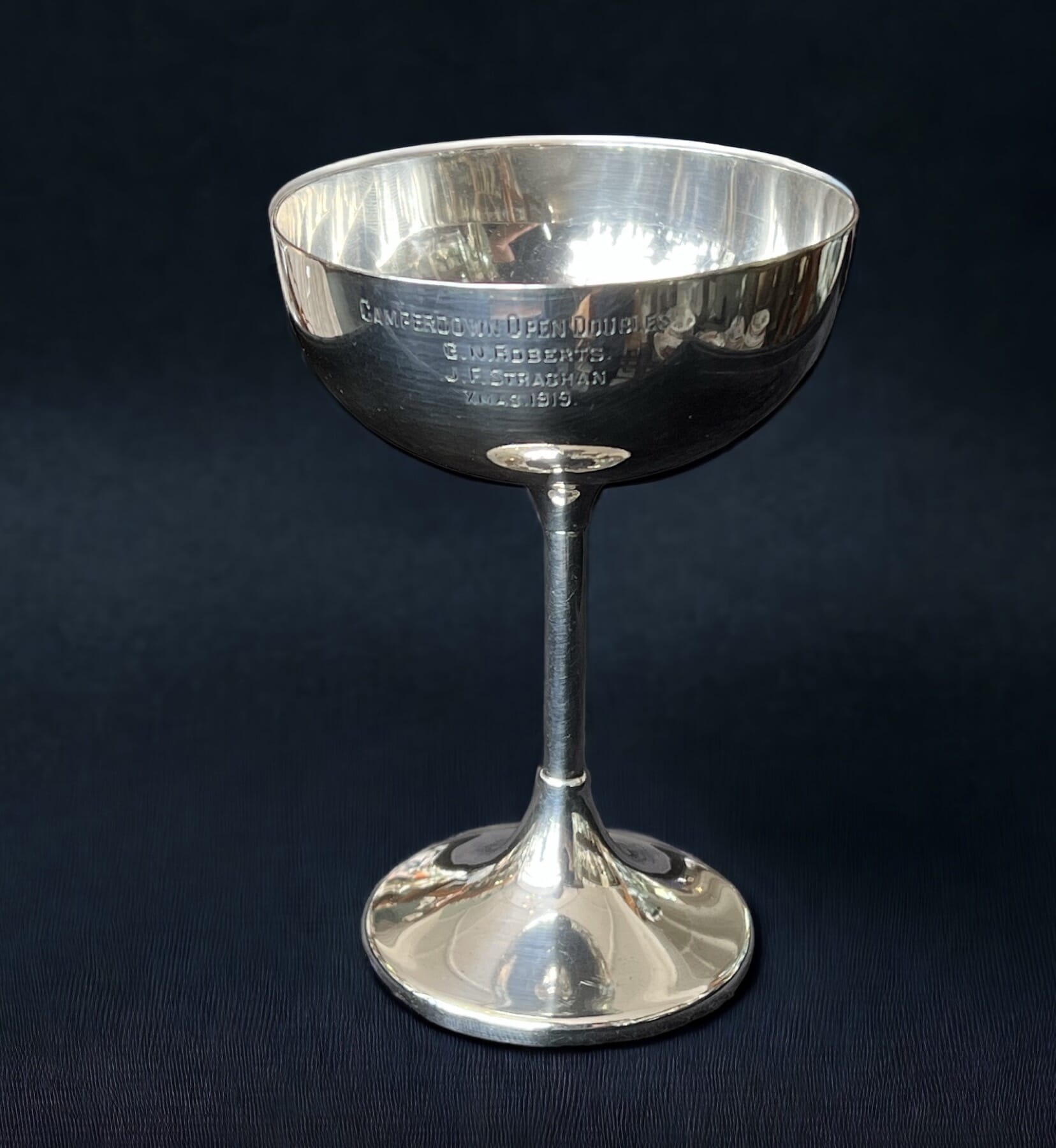
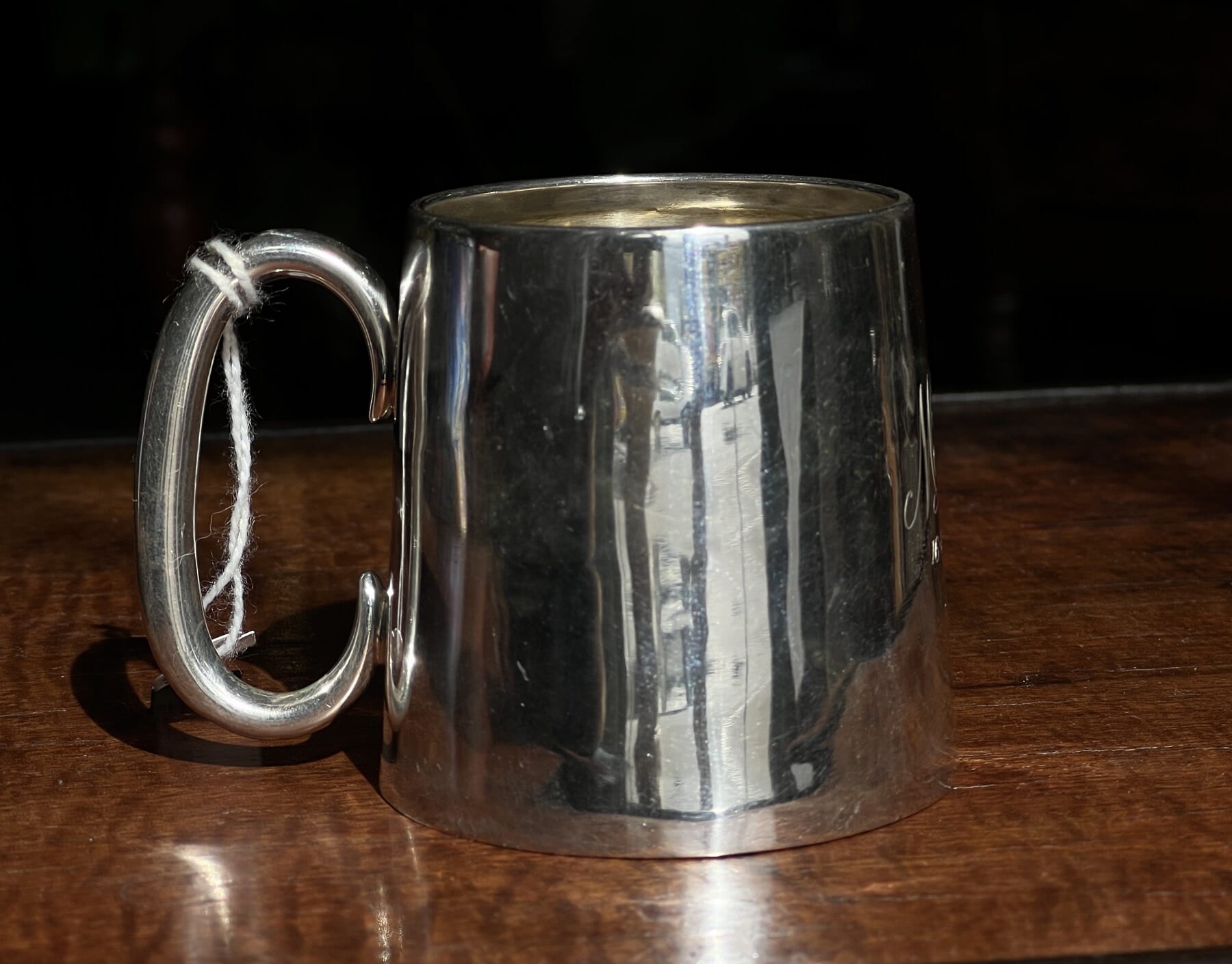
Our ‘Australian’ additions include some more interesting artworks, some silver, and other interesting items with an Australian connection.

Brass & Bronze

Brass and Bronze are basically the same thing; alloys of other metals, including copper, tin, zinc, and lead – mixed at different ratios to produce metals for different purposes.

Marine Art Preview

Our ‘Spring Special’ this year will involve a rolling exhibition of Marine Art & Artefacts.

Australia is a nation built on ships & shipping, and so it is not surprising to find a rich heritage of Ship Art. We’re currently preparing a whole feet of fascinating ship pictures – often with fascinating stories of what they achieved, and what their fate was…..

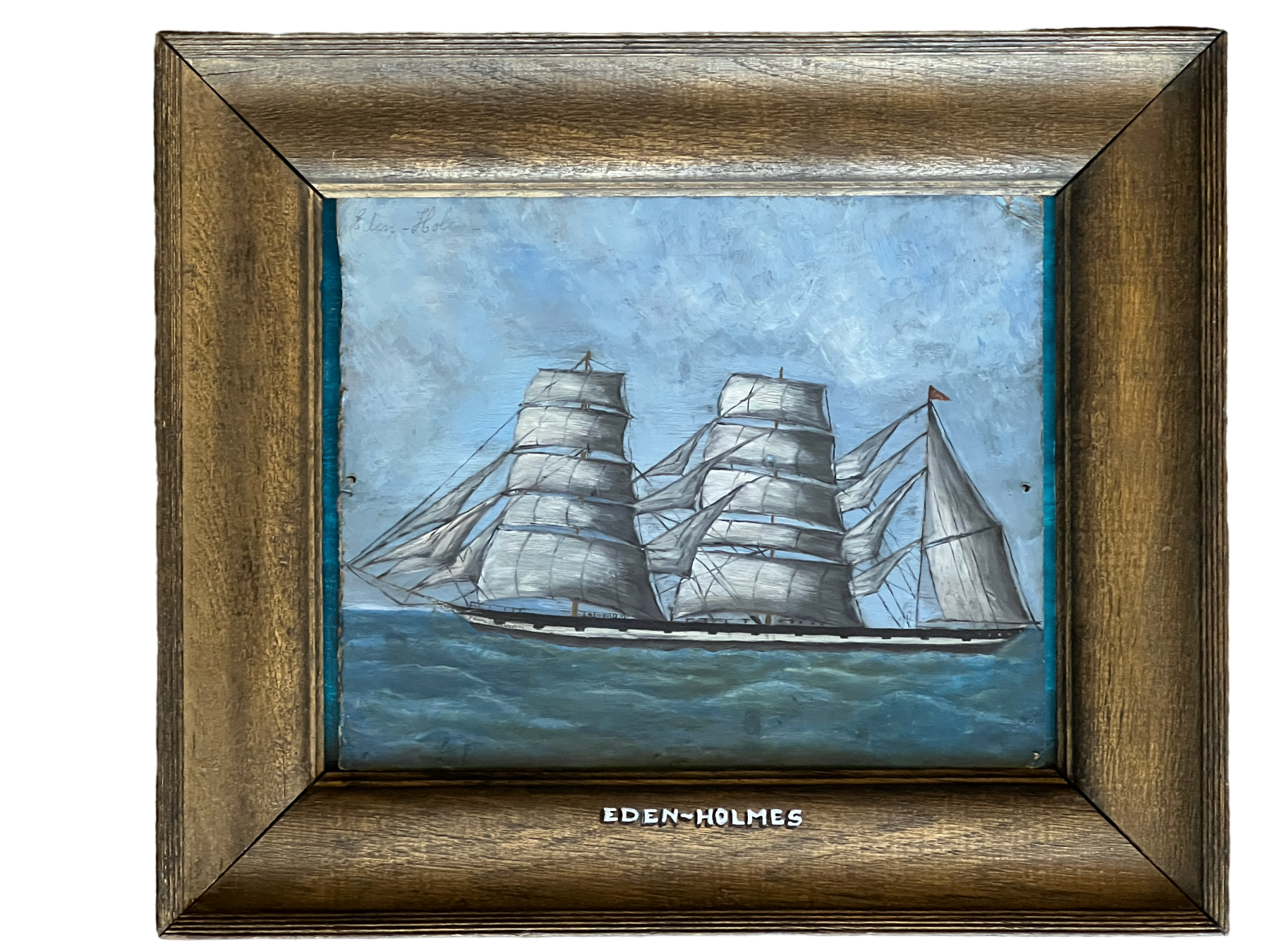
Edith Holmes sailing ship
‘Edith Holmes’ Australian sailing ship, late 19th century

Posted on

Fresh 18th century Porcelain, Venetian Glass, Australian Art + more

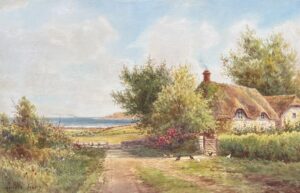
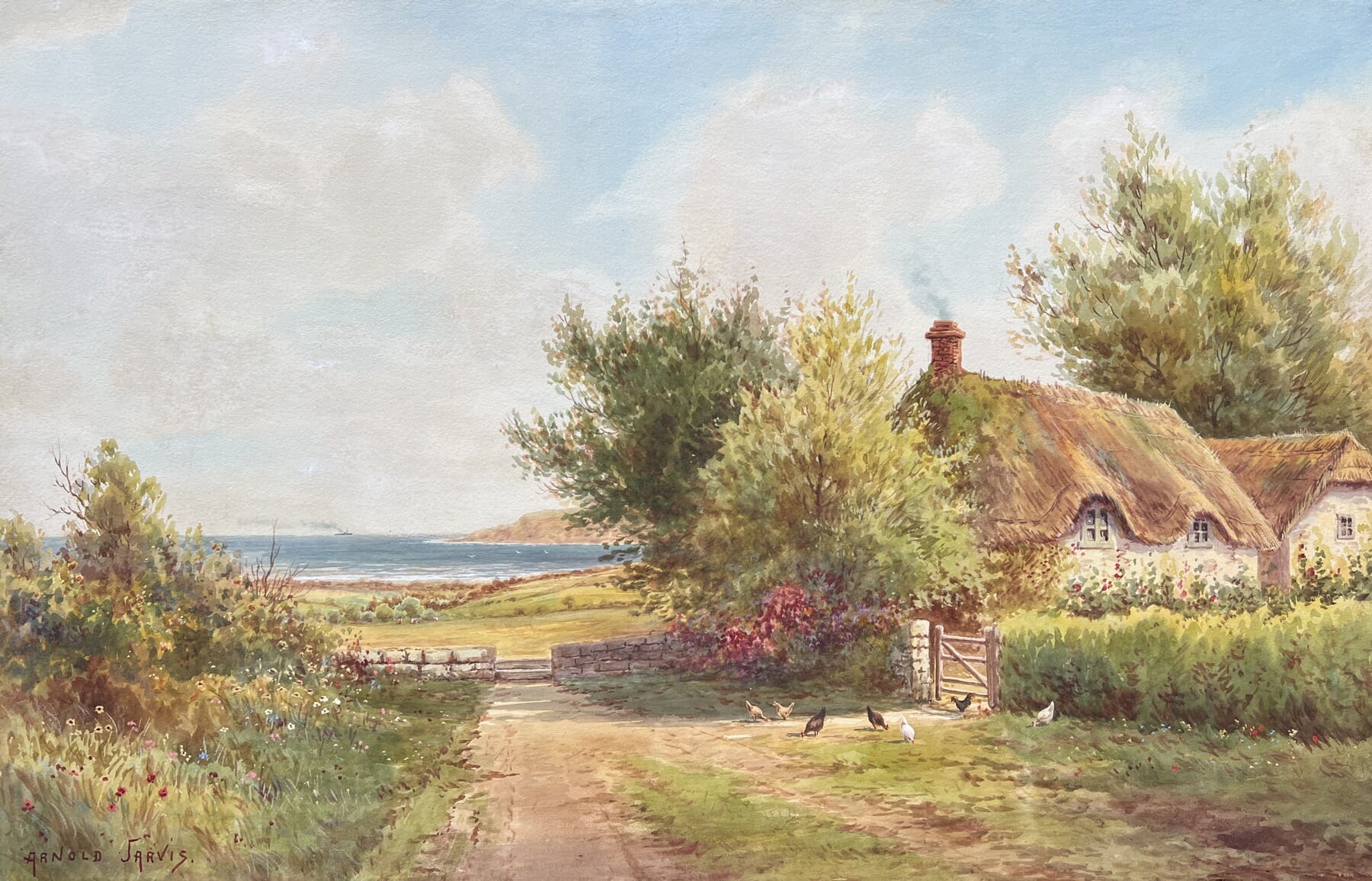
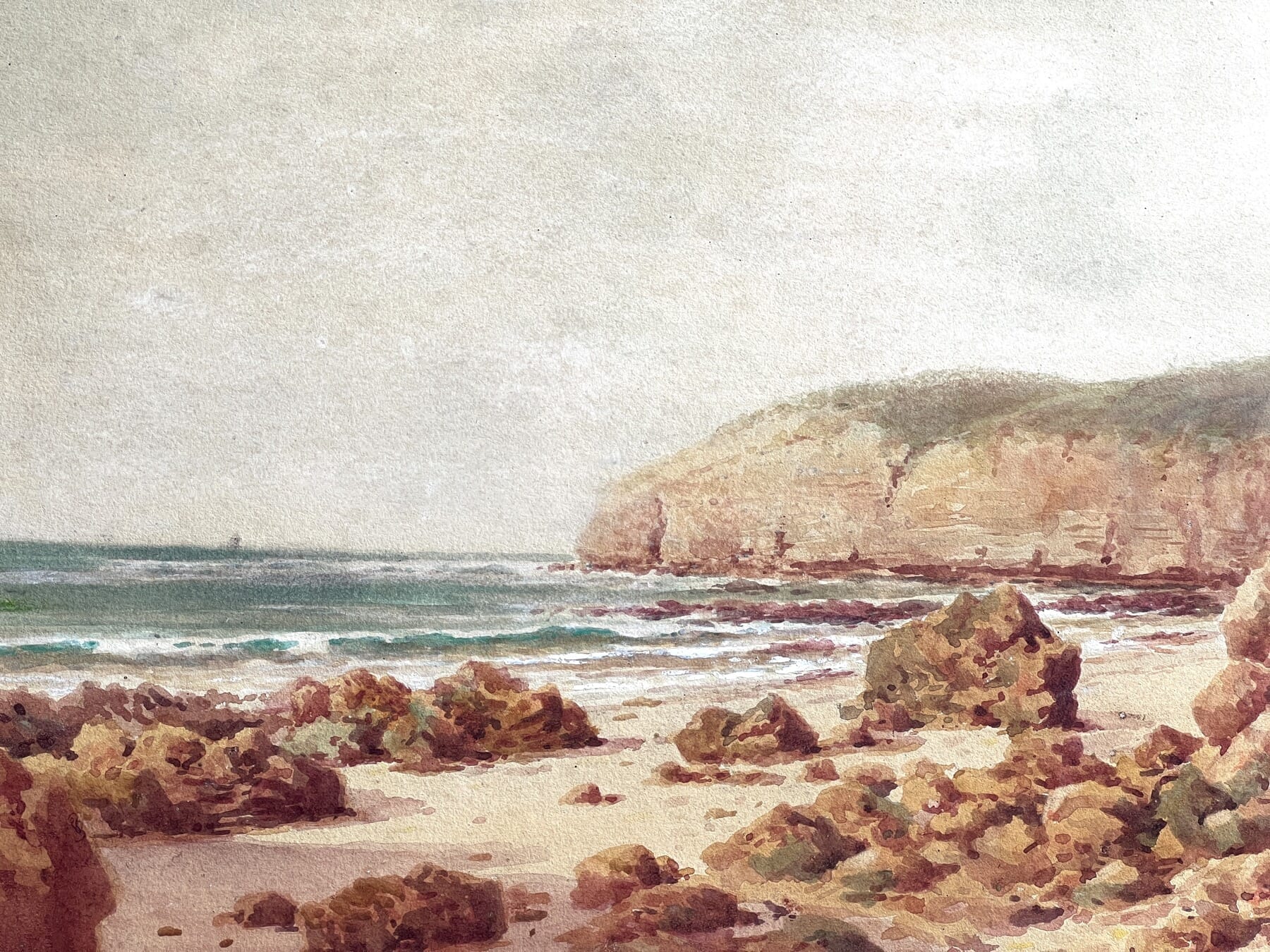
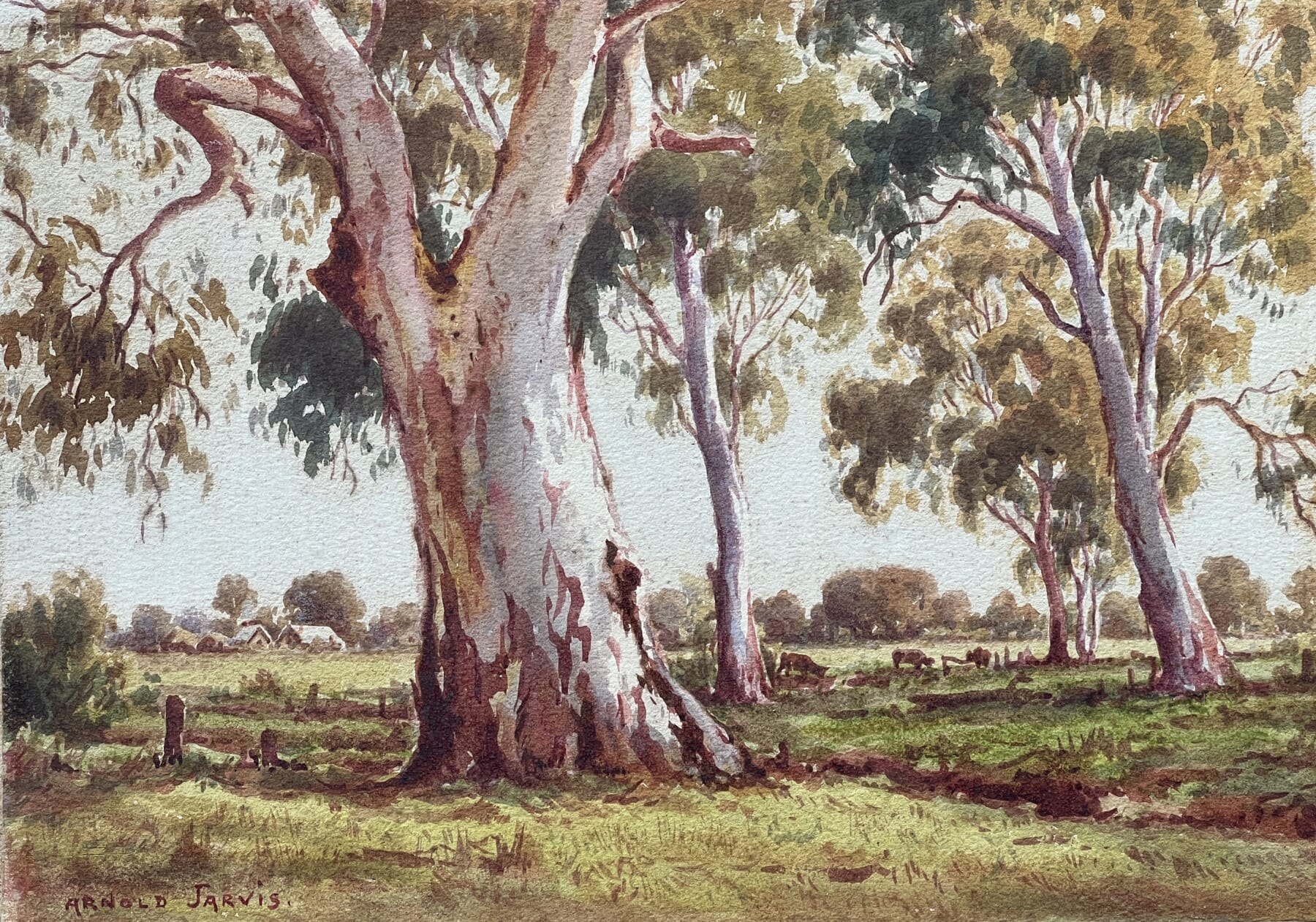
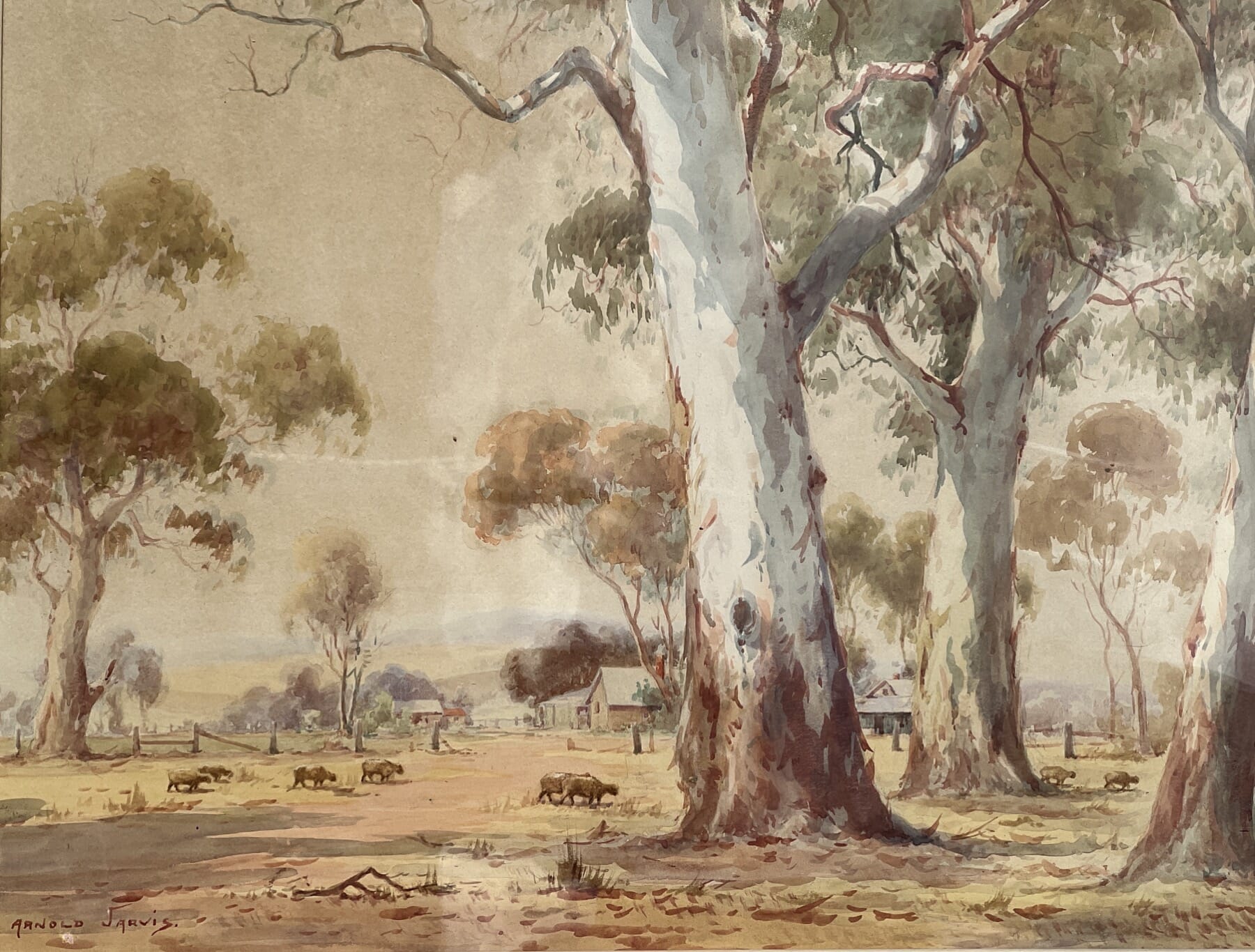
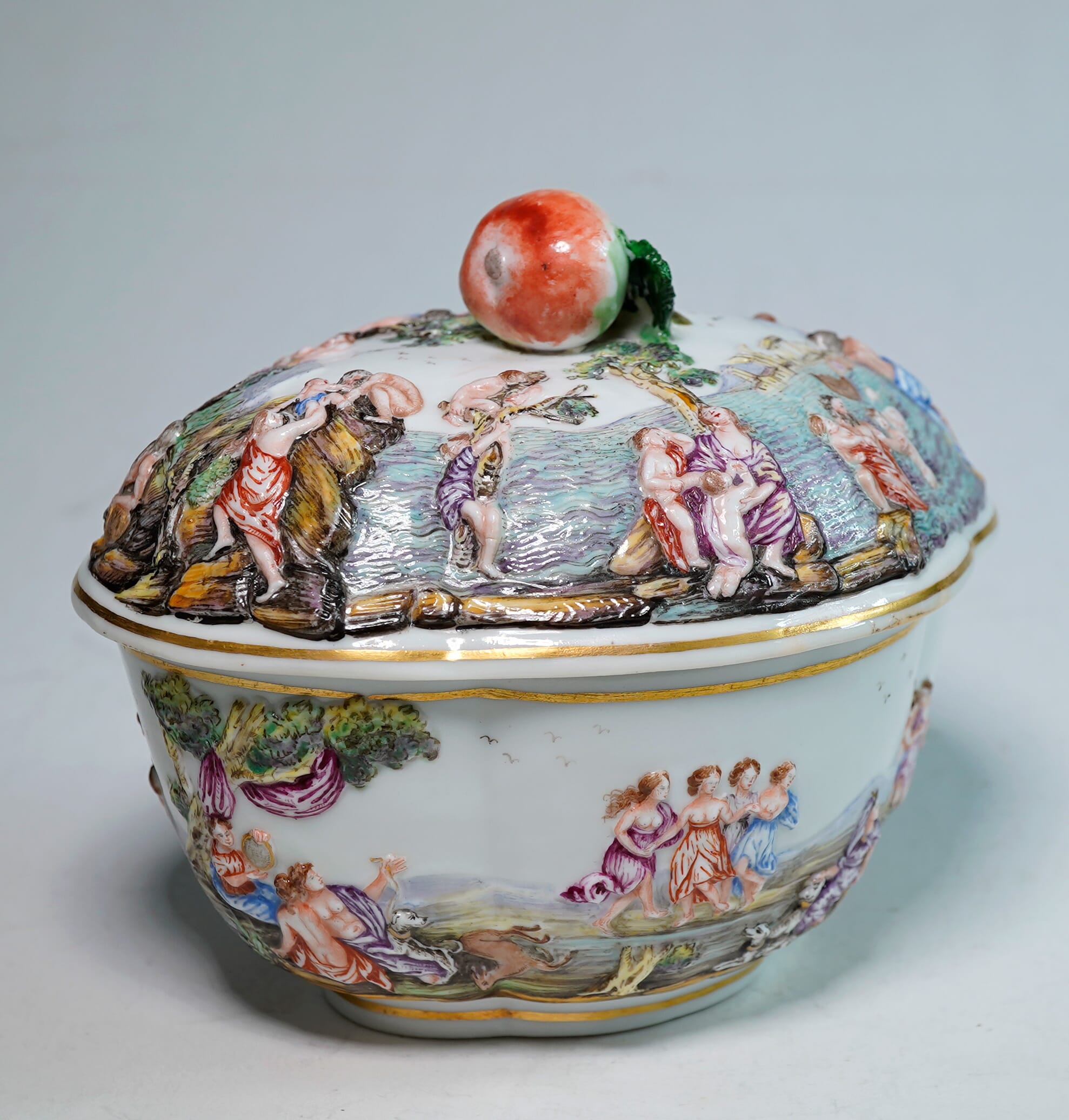
We’re pleased to offer a fine selection of fresh-to-the-market items today, including a stunning micro-carved ivory plaque, an 18th c. enamel egg, and some local watercolours by Arnold Jarvis.

Micro-Carving – a miniature masterpiece

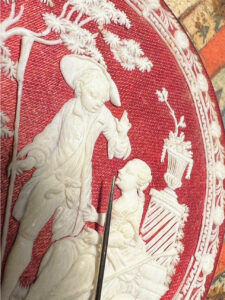
A needle, to compare size....
A needle, to compare size….

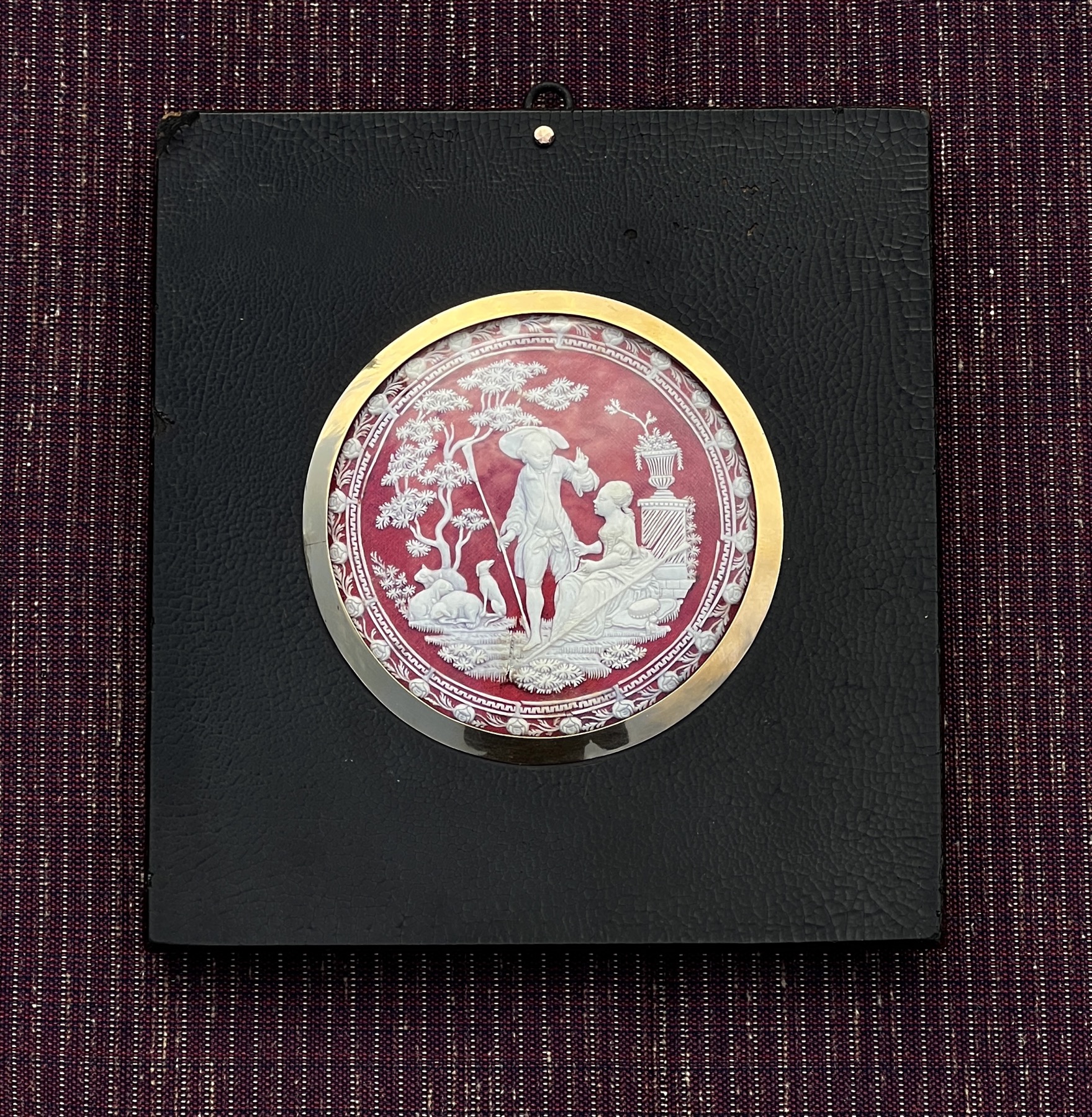
This beautiful little piece is no bigger than the bottom of your tea-cup – and yet the detail is as good as a large sculpture. Set into a very early lacquer & gold mount, probably from new, it is a type sometimes seen mounted as a snuff box lid. Often catalogued as ‘French’, we have attributed it to the English carvers Stephany & Dresch, ‘Carvers in Miniature to his majesty George III’ .

Stephany and Dresch attributed micro carved ivory plaque, circa 1795, Moorabool Antiques Geelong
Stephany and Dresch (attributed) micro-carved ivory plaque, circa 1795, Moorabool Antiques Geelong

A Salviati Aventurine Centerpiece

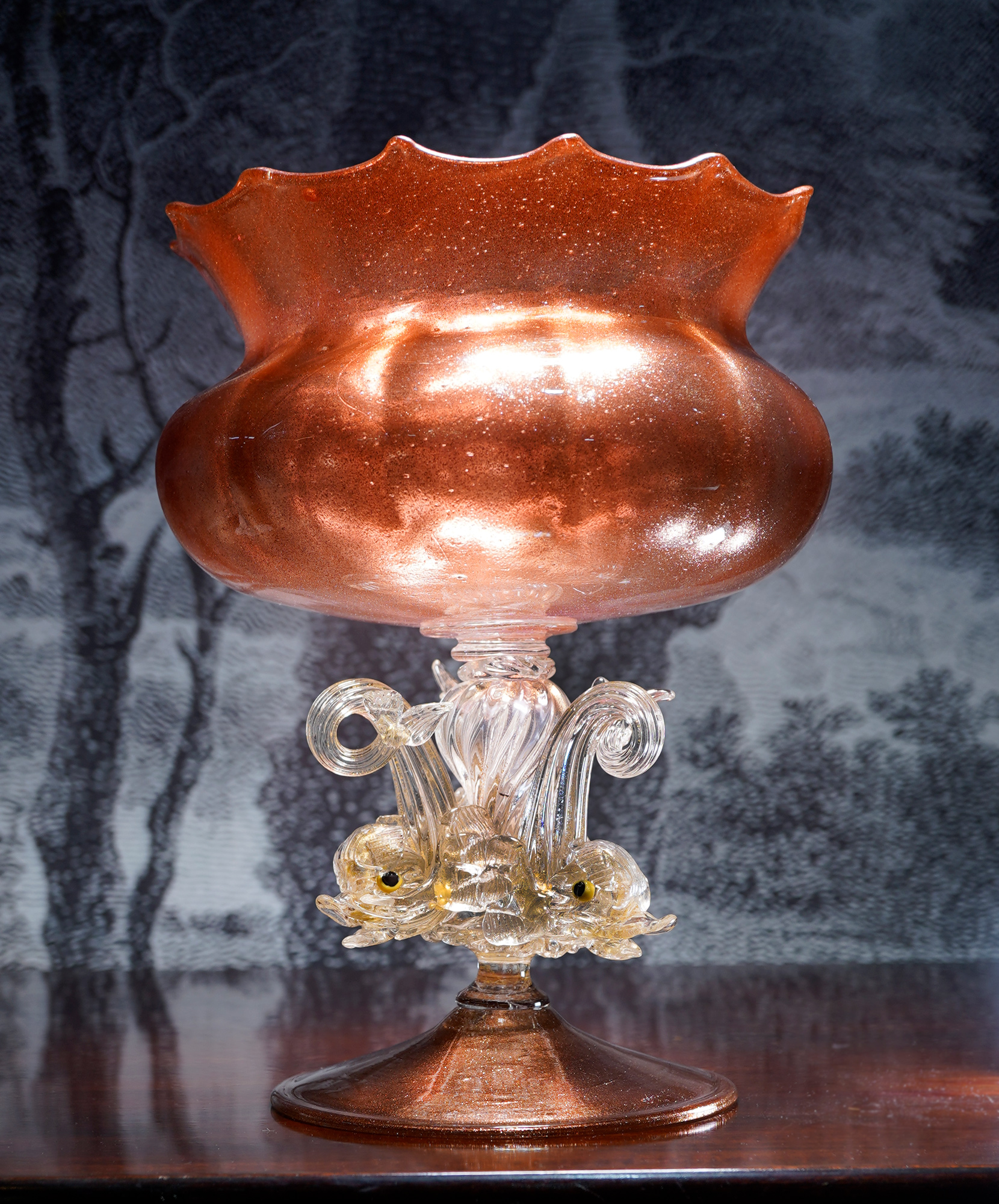
Salviati Murano Venetian glass centrepiece with dolphins, Aventurine, circa 1880
Salviati Murano Venetian glass centrepiece with dolphins, Copper Aventurine, circa 1880

This flamboyant piece of glass is – believe it or not – Italian! Actually a stunning example of an interesting period in the development of the ‘Murano Glass’ we are familiar with, it dates to the later 19th century years when the revival of the Italian Art Glass was just beginning. It comes from the workshop of Antonio Salviati (1816-1890), who paired up with an English archaeologist, Sir Austen H. Layard, M.P. (1817-94).

Salviati’s products, the ‘Compagnia Venezia-Murano’, won the highest prize, a gold medal indicating the First Order of Merit. After the exhibition closed in 1881, 130 pieces were purchased for the Gallery, which still retains a good number of them. At the same time, the impressive wealth in Melbourne meant the top-end department stores were also offering these luxury products for sale. As this piece was sourced in Melbourne generations ago, it is most probably from one of those sources.

We have an article on this splendid centrepiece and the connection with the 1880 International Exhibition in Melbourne.

Arnold Jarvis 1881-1959 – local artist of interest

Arnold Jarvis (1881-1951) watercolour
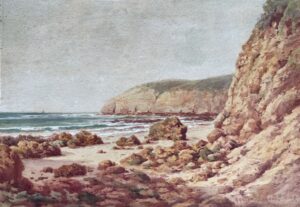
Arnold Jarvis (1881-1951) watercolour – Victorian Southern Coastal Scene

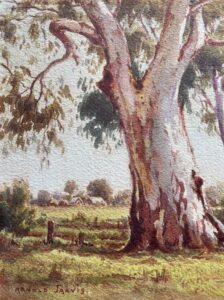
Arnold Jarvis was a prolific artist, specialising in classic Australian vistas with ancient River Redgums, and was once described as ‘The other Hans Heyson’. However, he doesn’t even come close to Hans Heyson’s value today, and his story is somewhat neglected.

He was born in South Australia, and literally ‘joined the circus’ in his teens, travelling as far as Perth to perform on stage. He had balance & tightrope acts – and a ‘speed painting’ show, where he would produce a painting from a blank canvas ready to hang on the wall in under 3 minutes! This was no doubt a brilliant way to refine his brushwork, as they say practice makes perfect, and he certainly perfected his impressions of ancient river redgums. By 1901, he was no longer a juggler, but a full-time artist.

Arnold Jarvis (1881-1951) watercolour
Arnold Jarvis (1881-1959) watercolour, English thatch cottage & steamship, c. 1910


We have a group of four Arnold Jarvis watercolours to show you today, including one remarkable example which includes an English thatched cottage, set on the Victorian coast! We have an interesting interpretation of this work, read more in the blog page dedicated to Arnold Jarvis.

Posted on

Fresh Stock – ‘Drama’ – and Flowers….

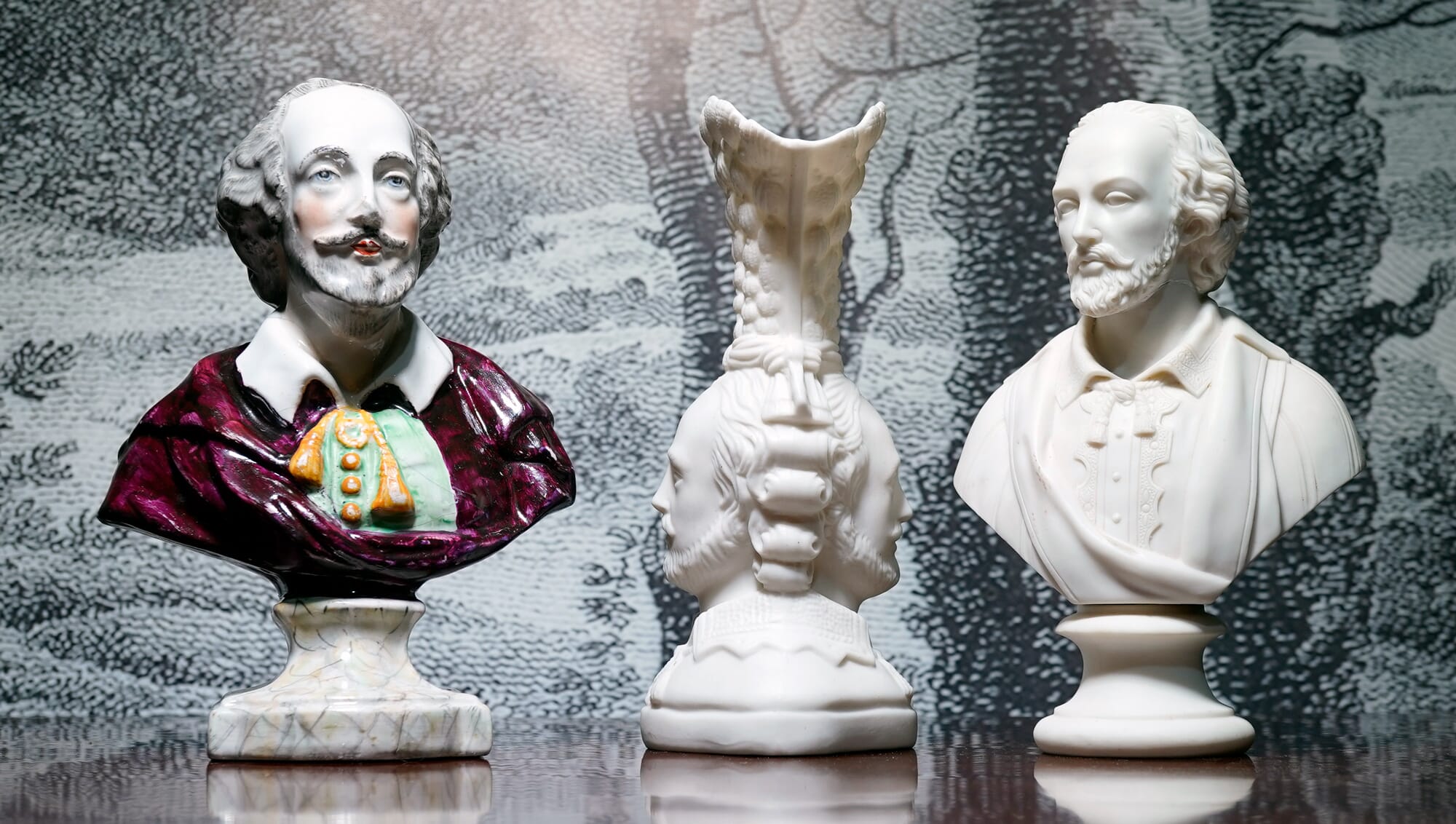
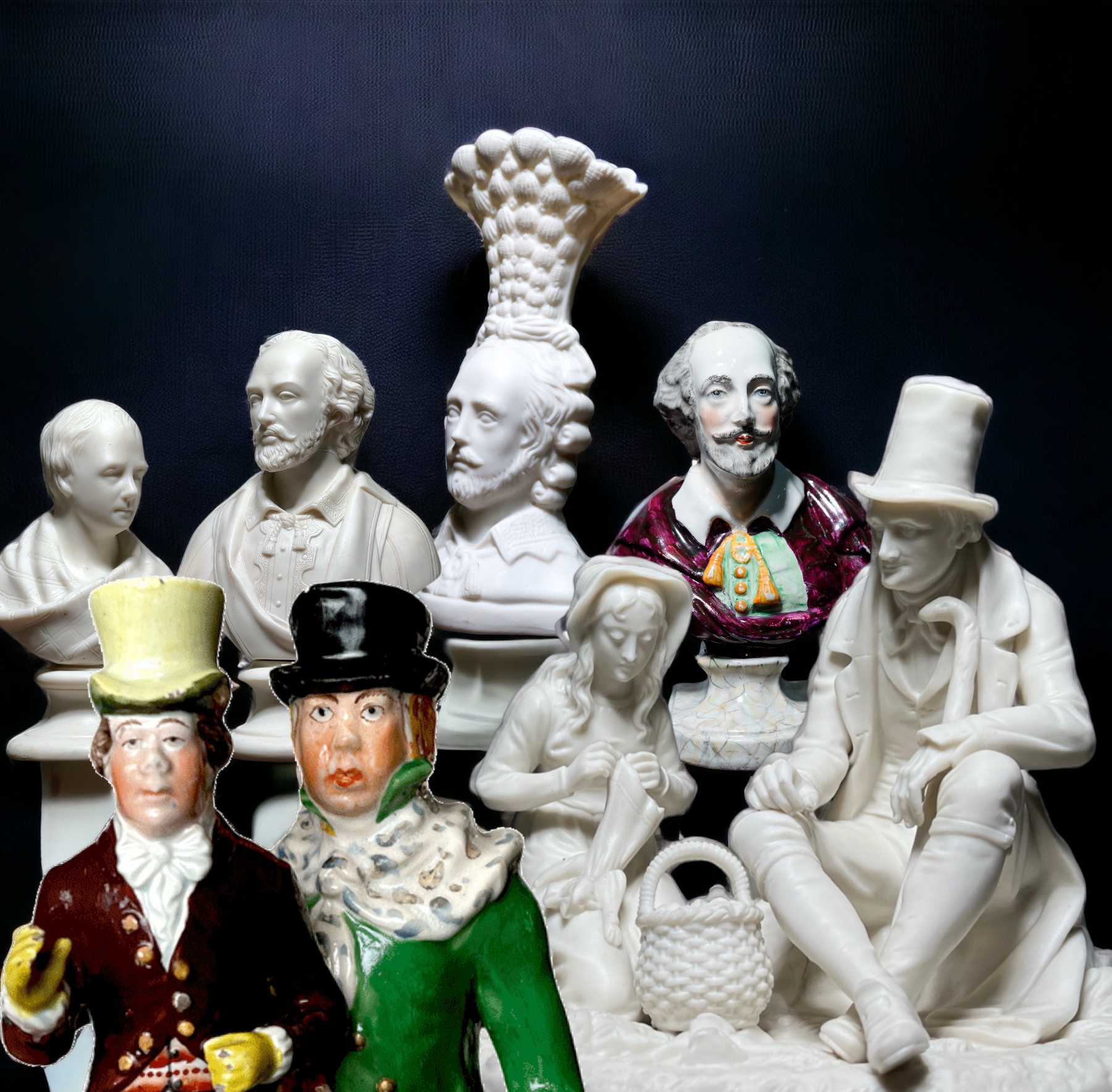
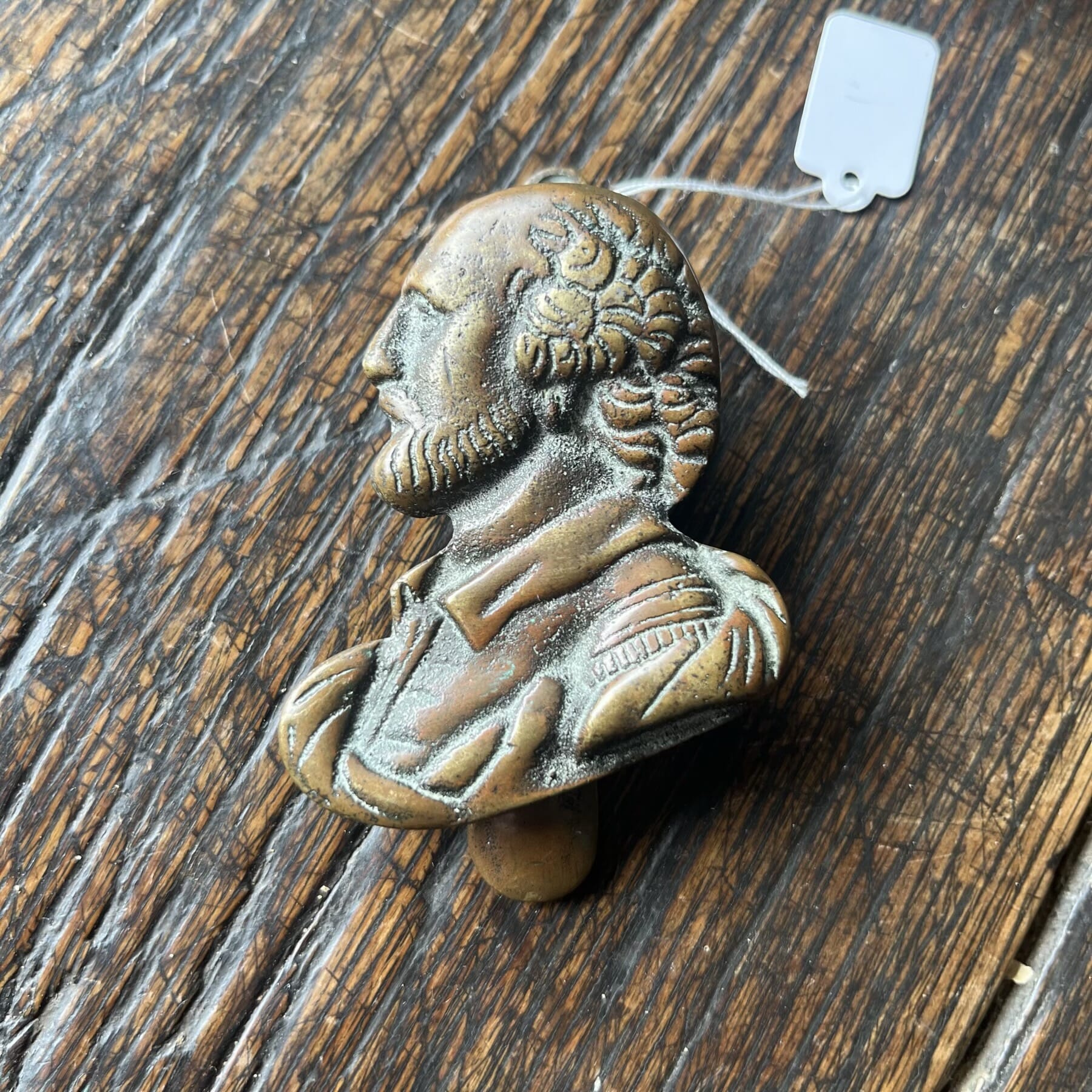
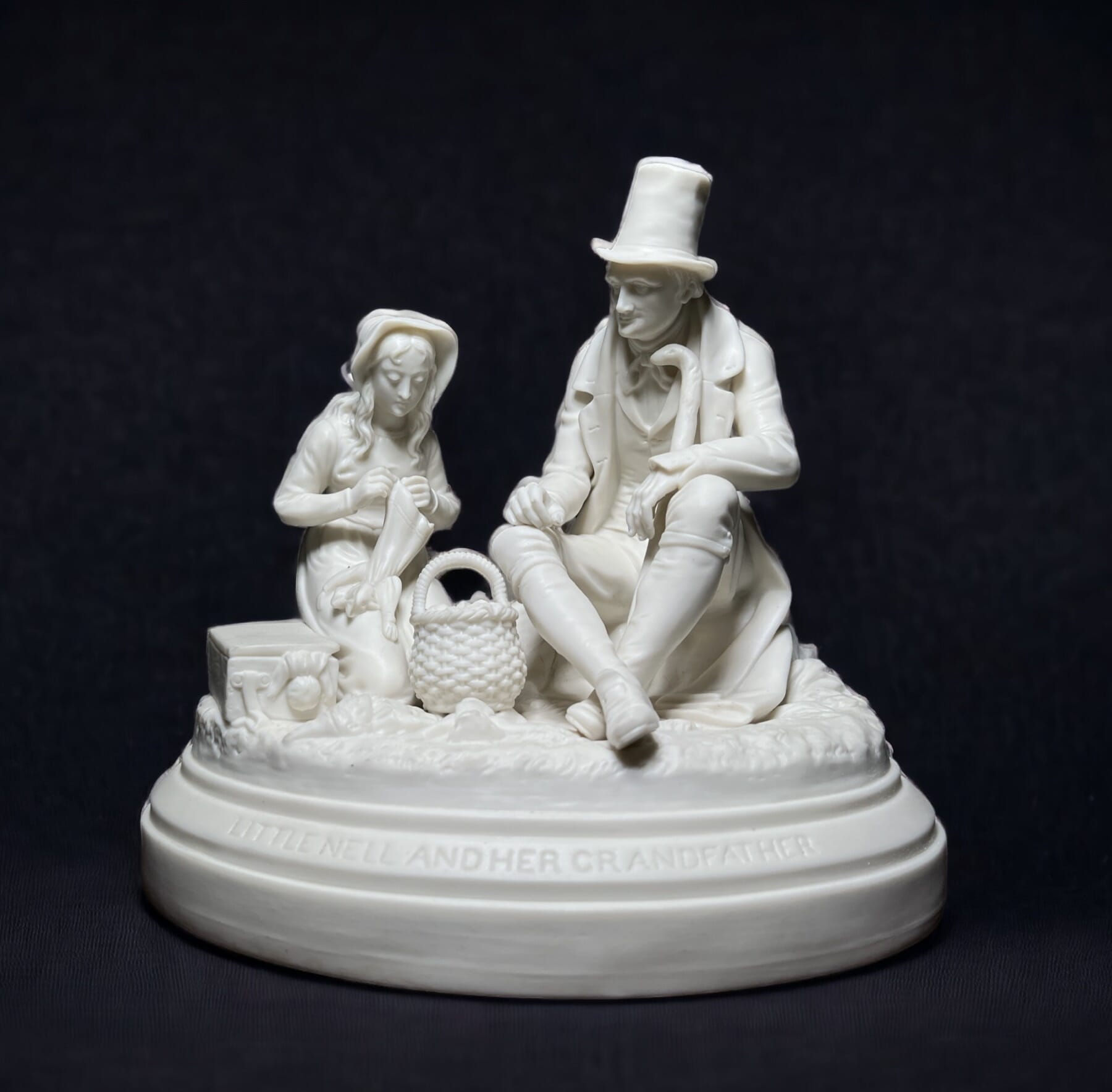
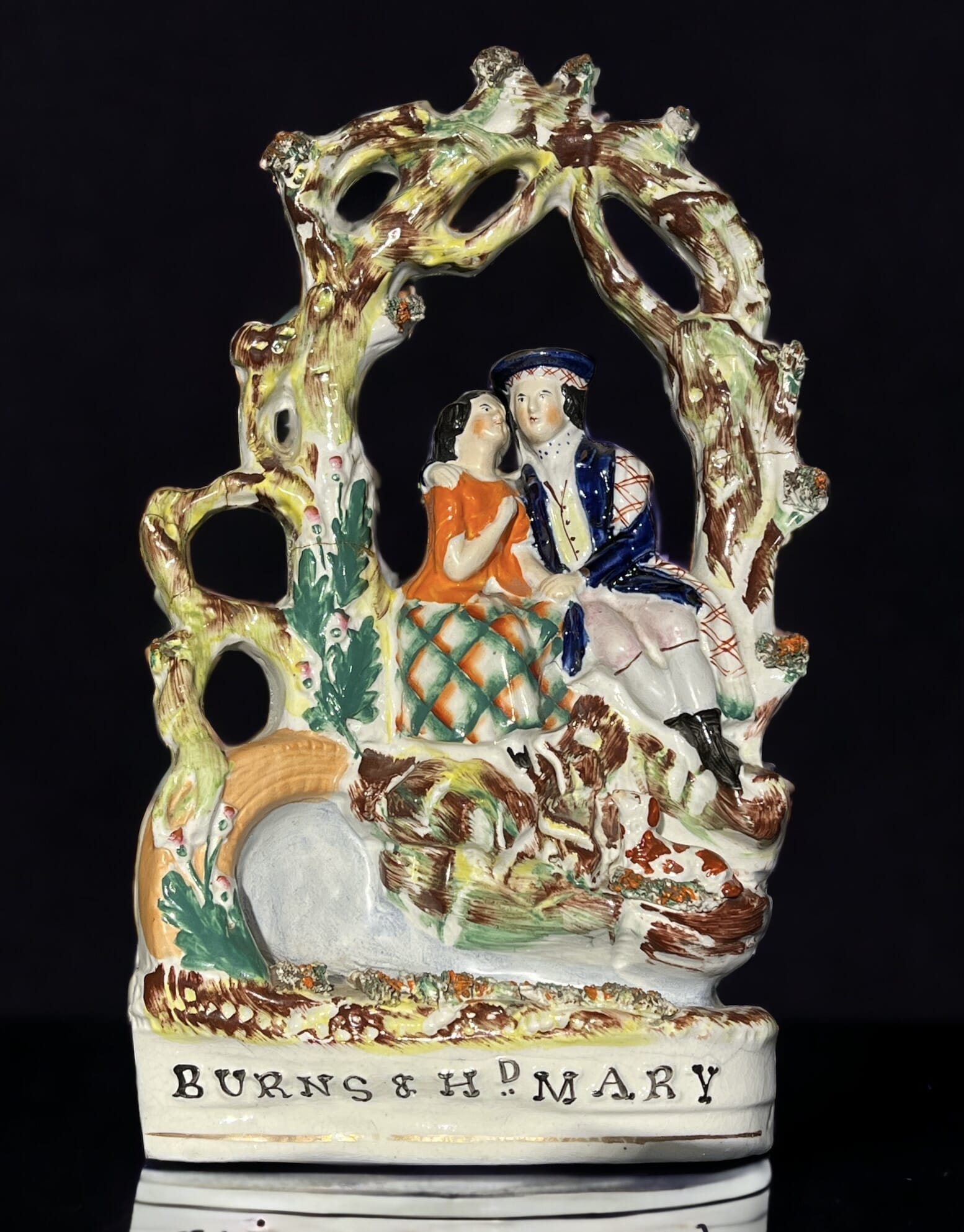
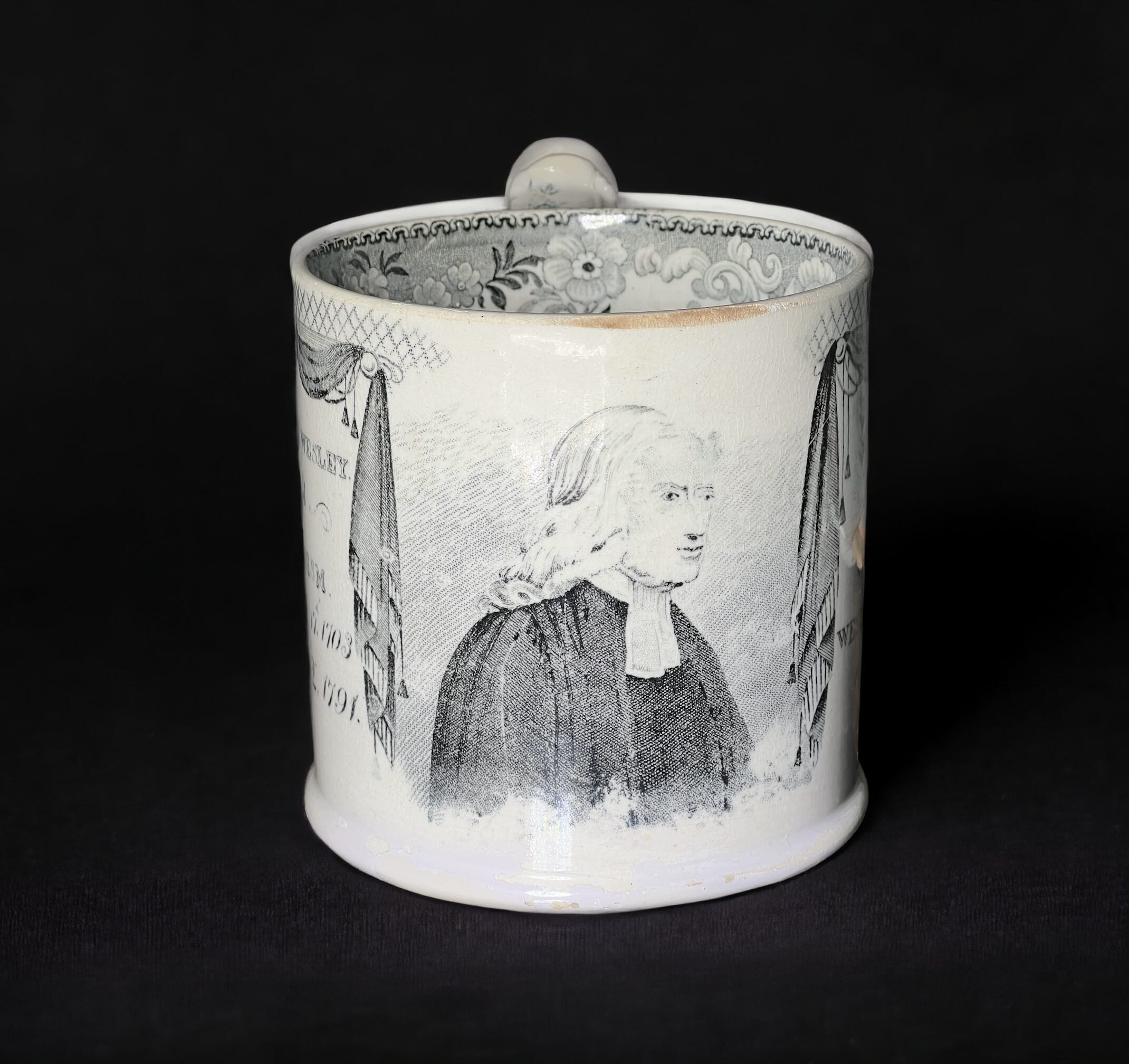
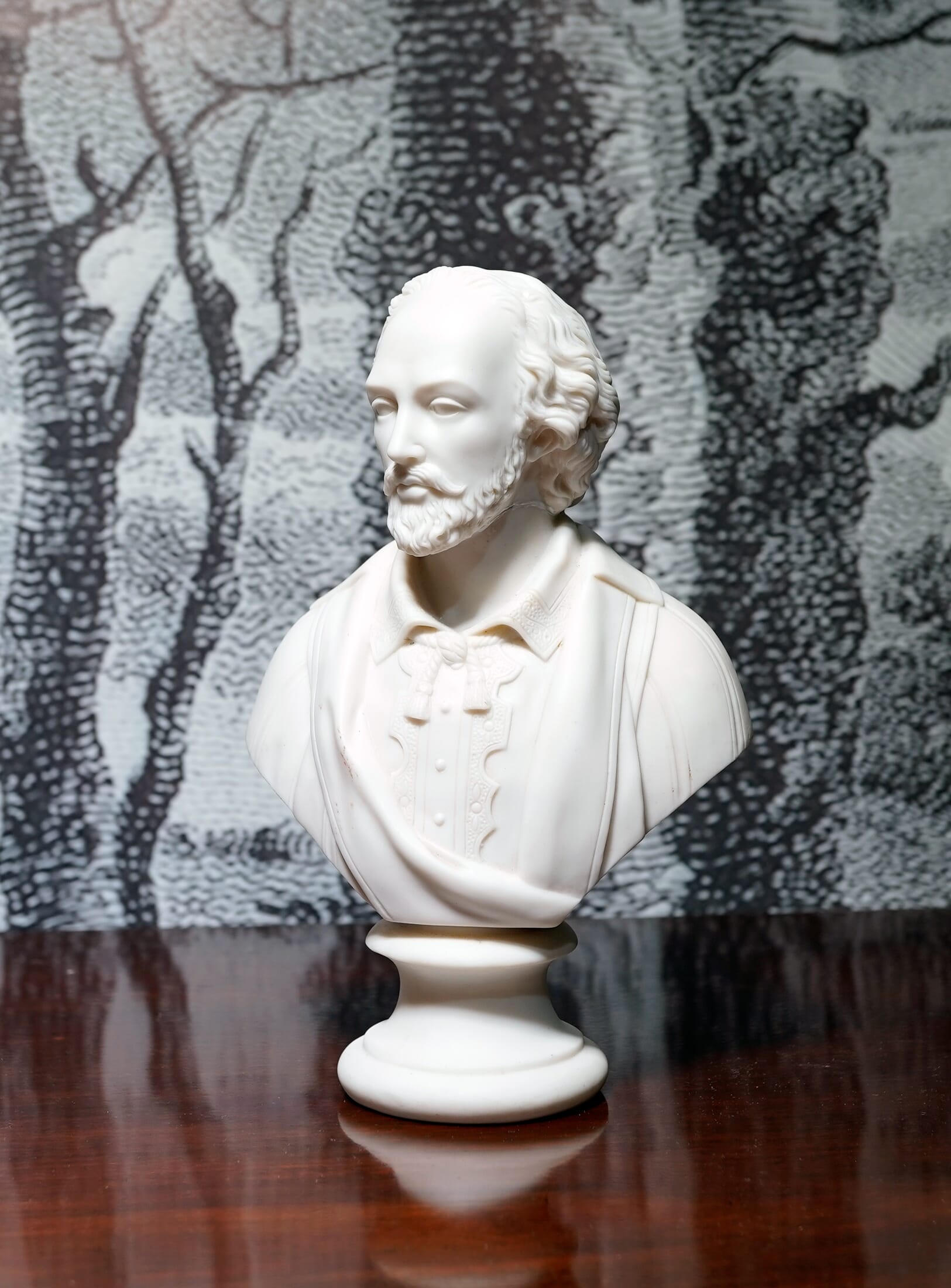
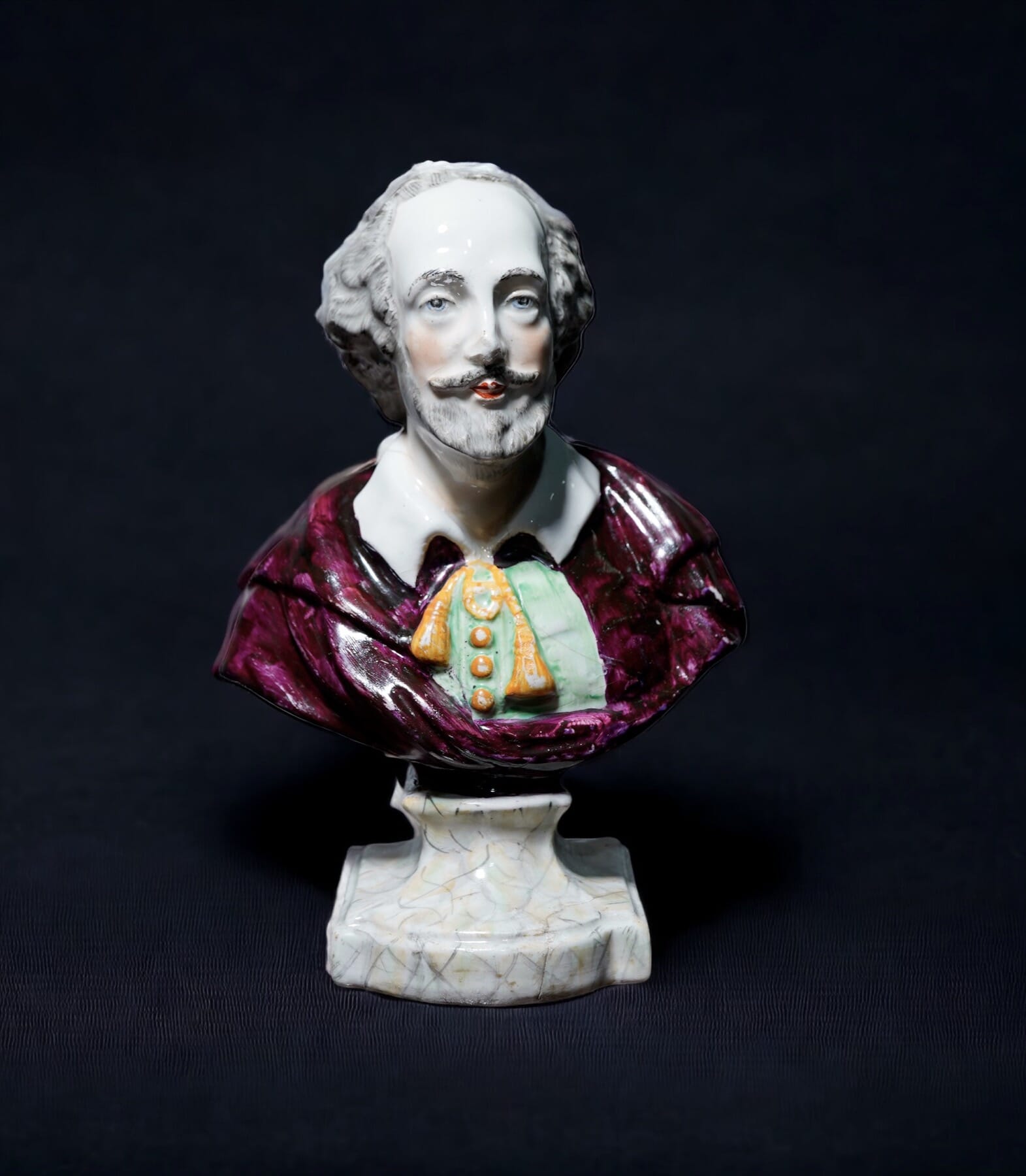
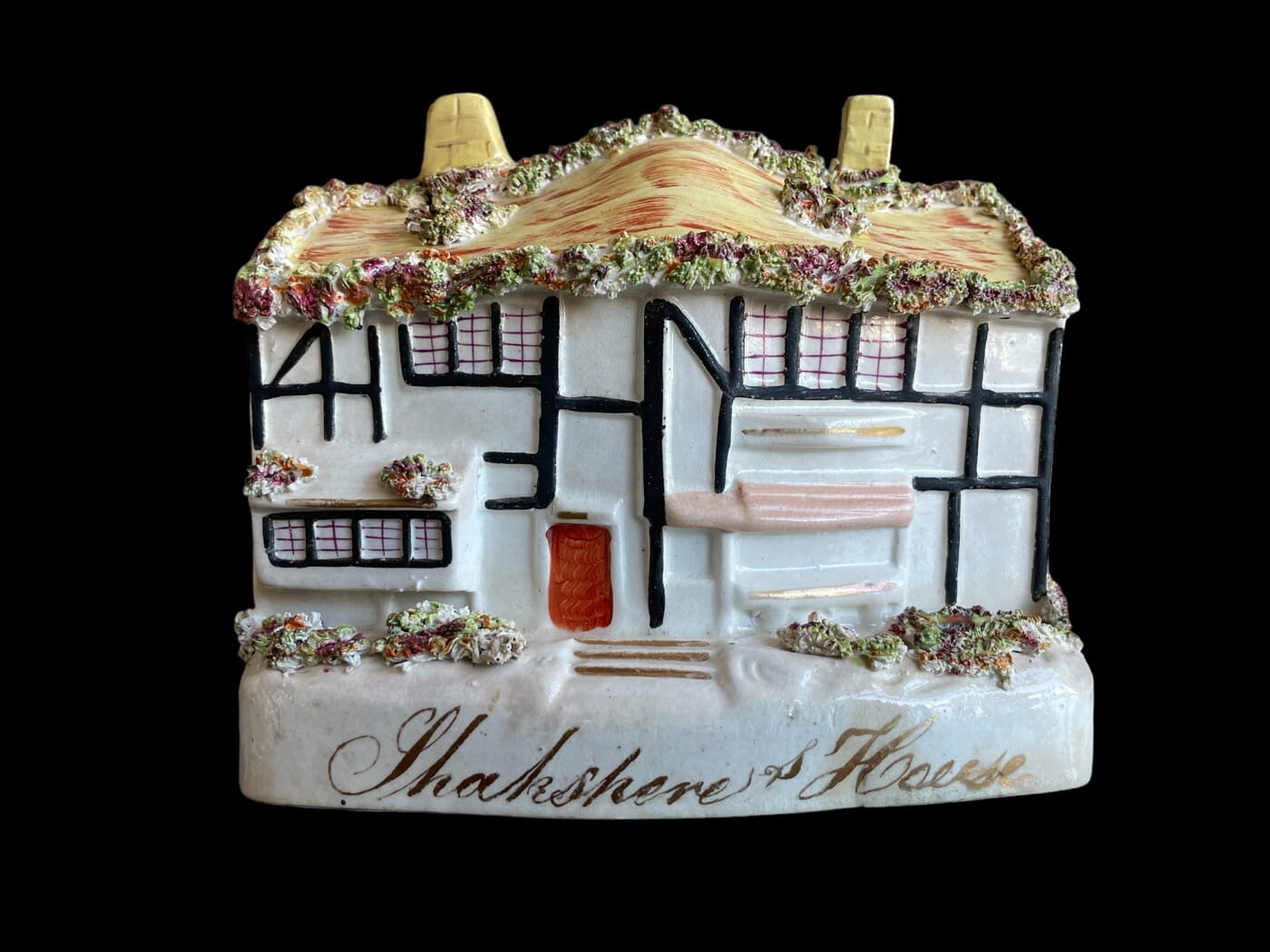
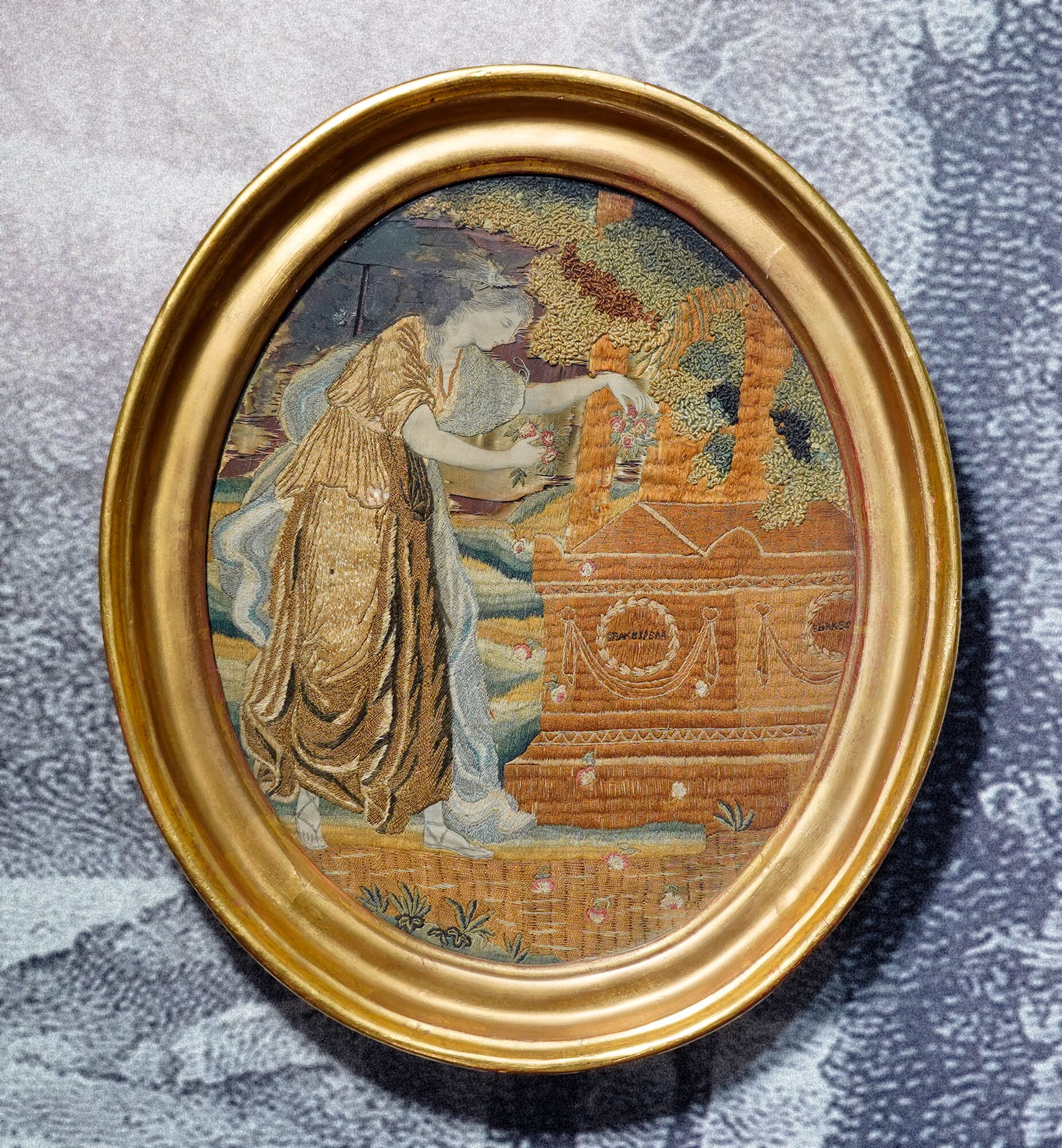
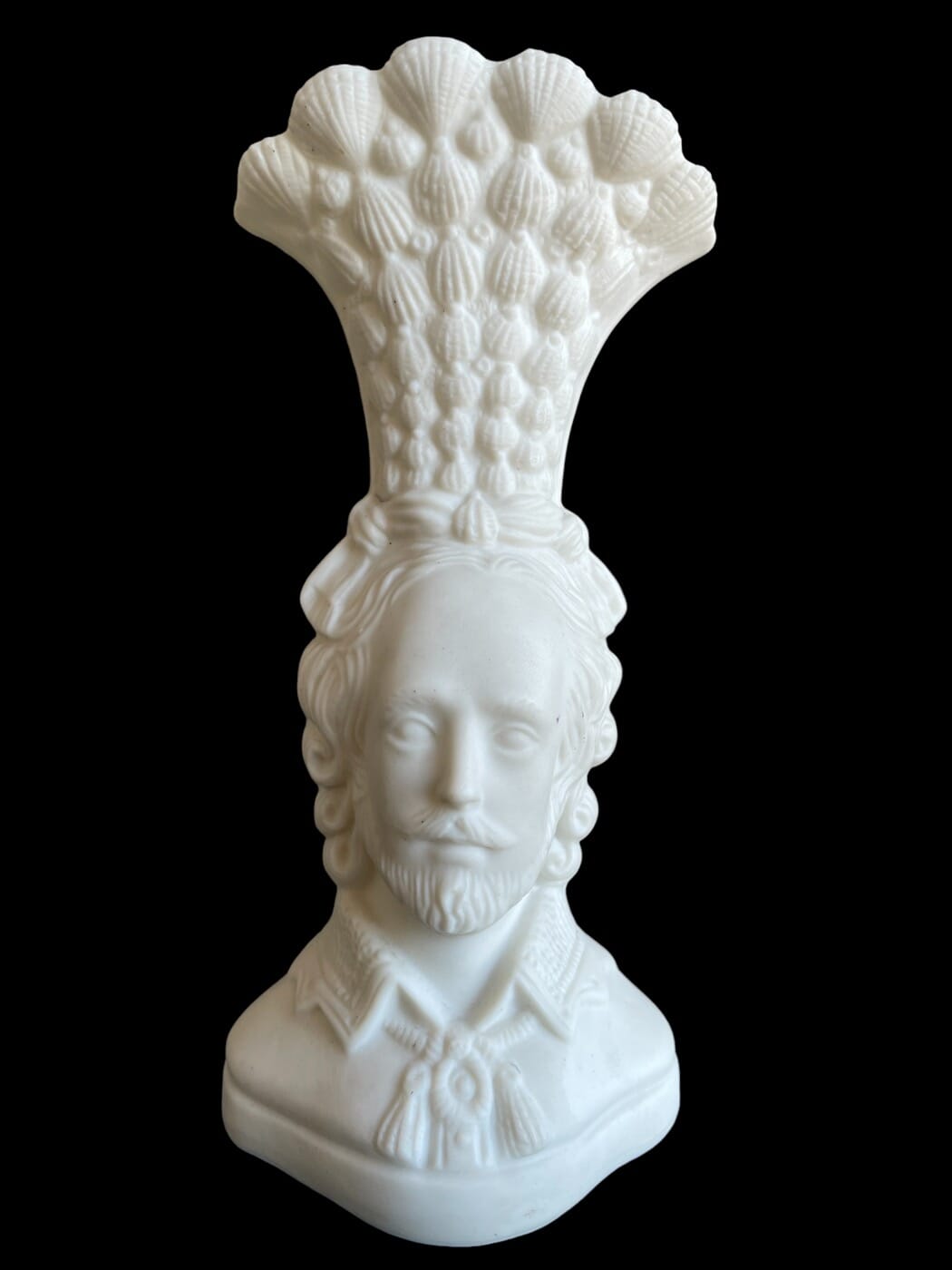
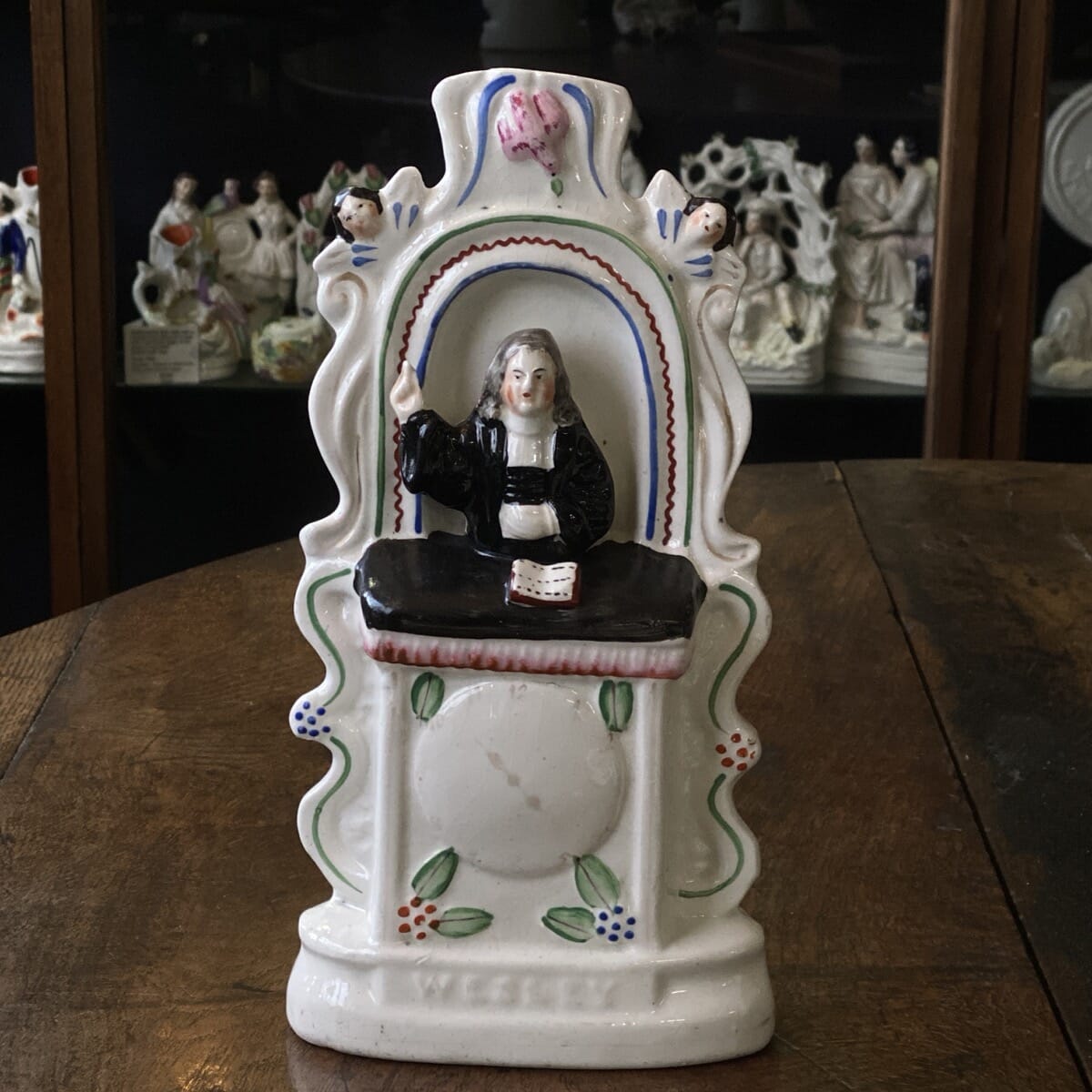
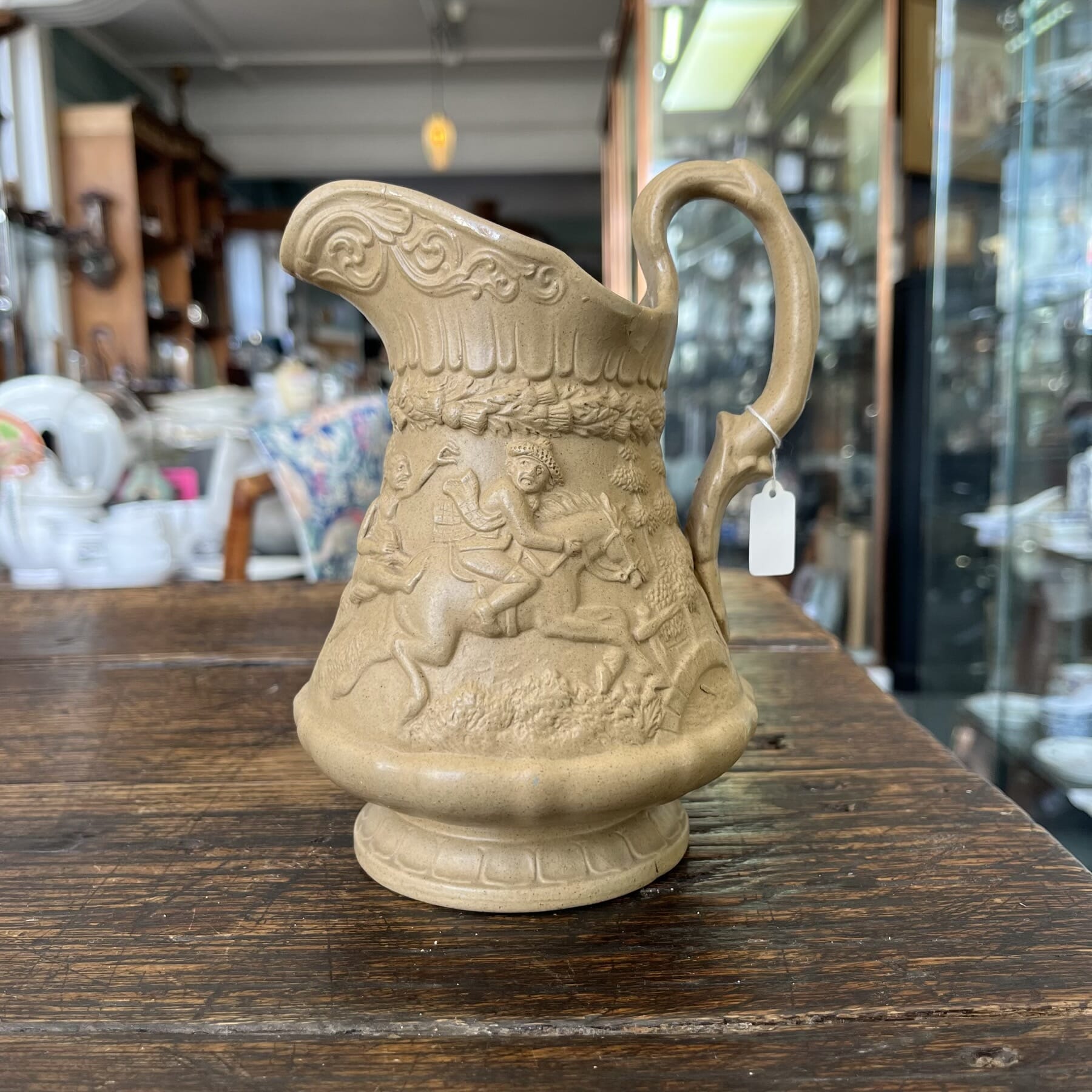
Shakespeare Ceramics
Theatrical Antiques
Theatrical Antiques

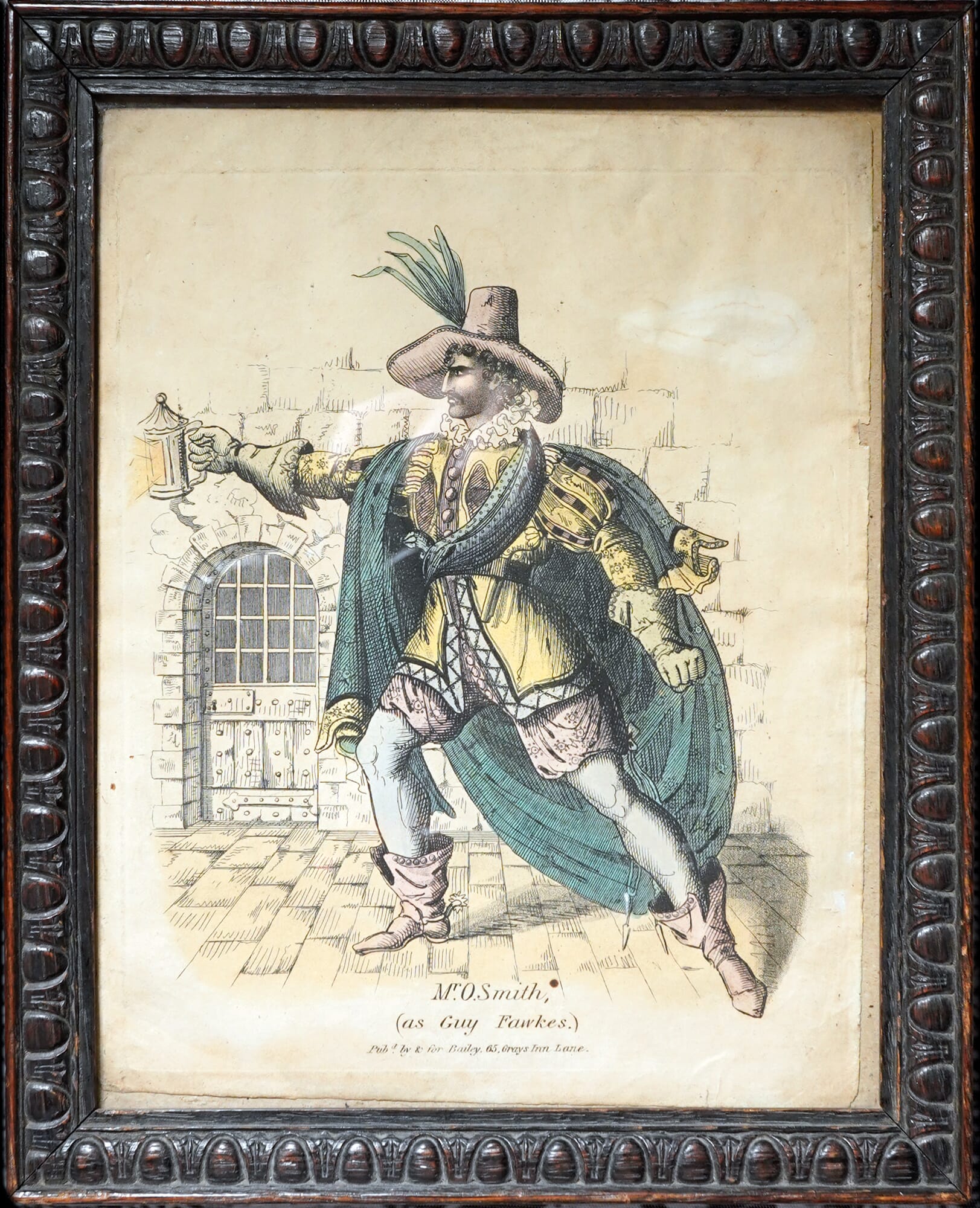
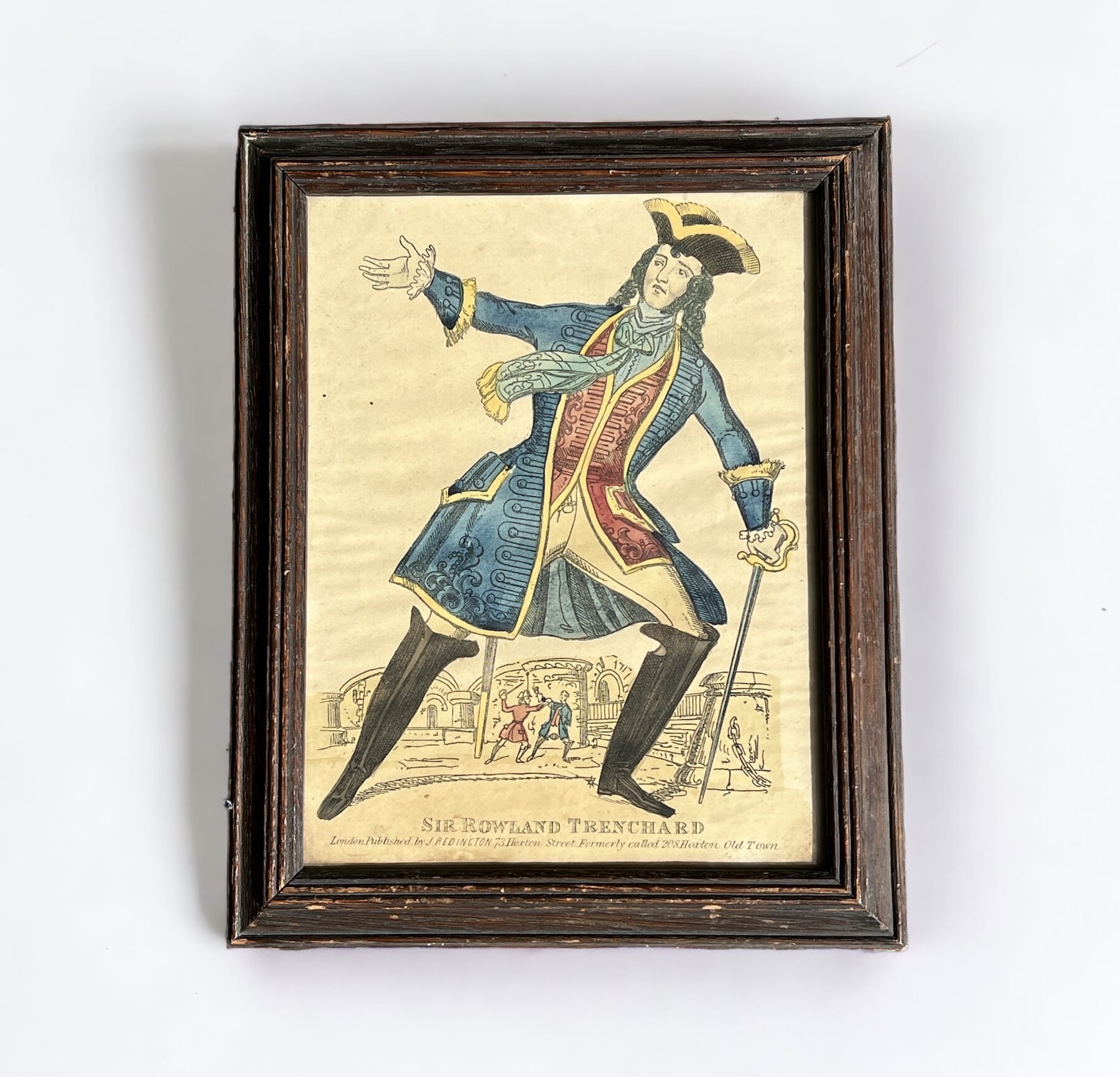
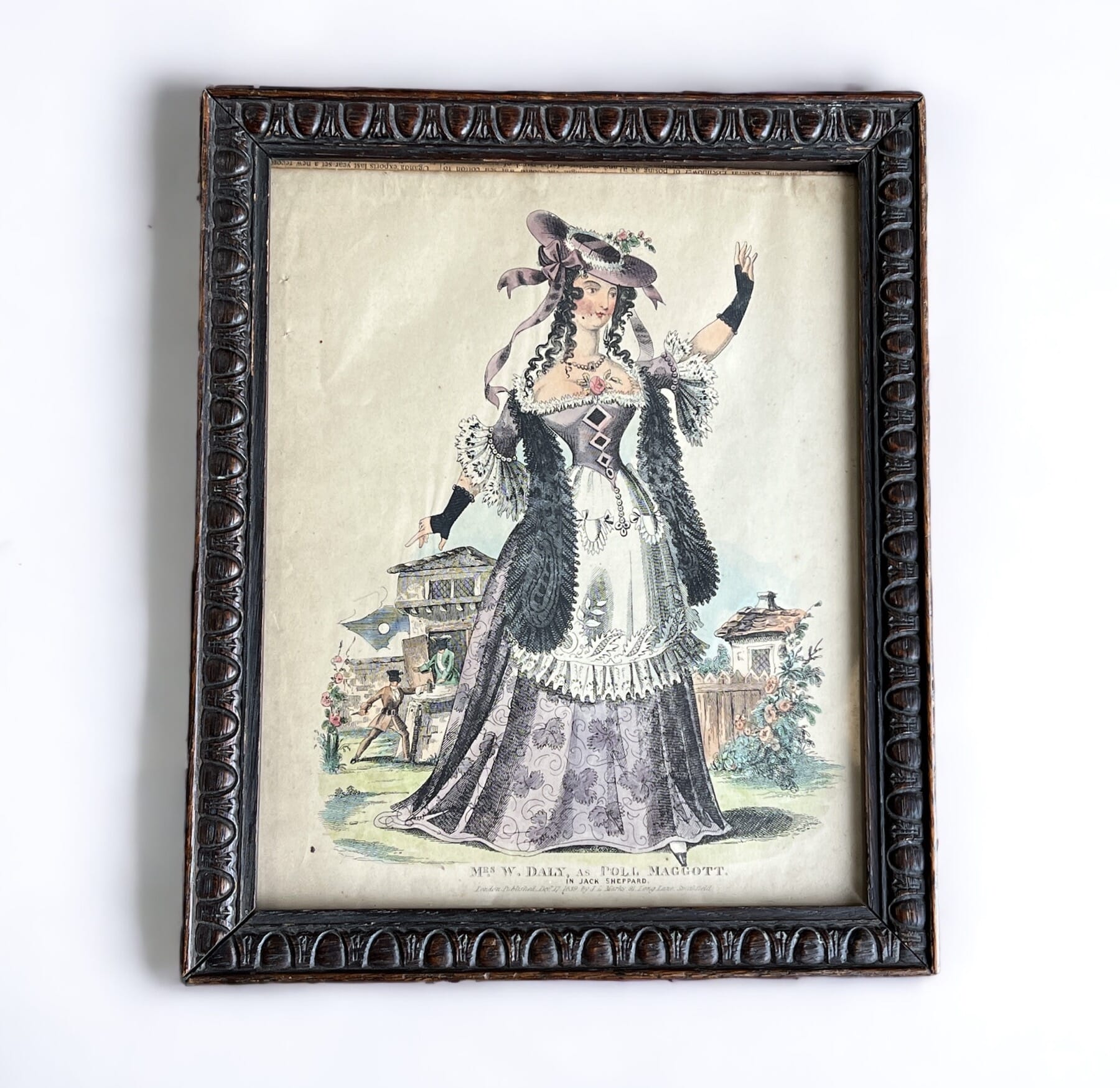
There’s a lot of Drama in today’s ‘Fresh Stock’….. we have a Theatrical special for you!

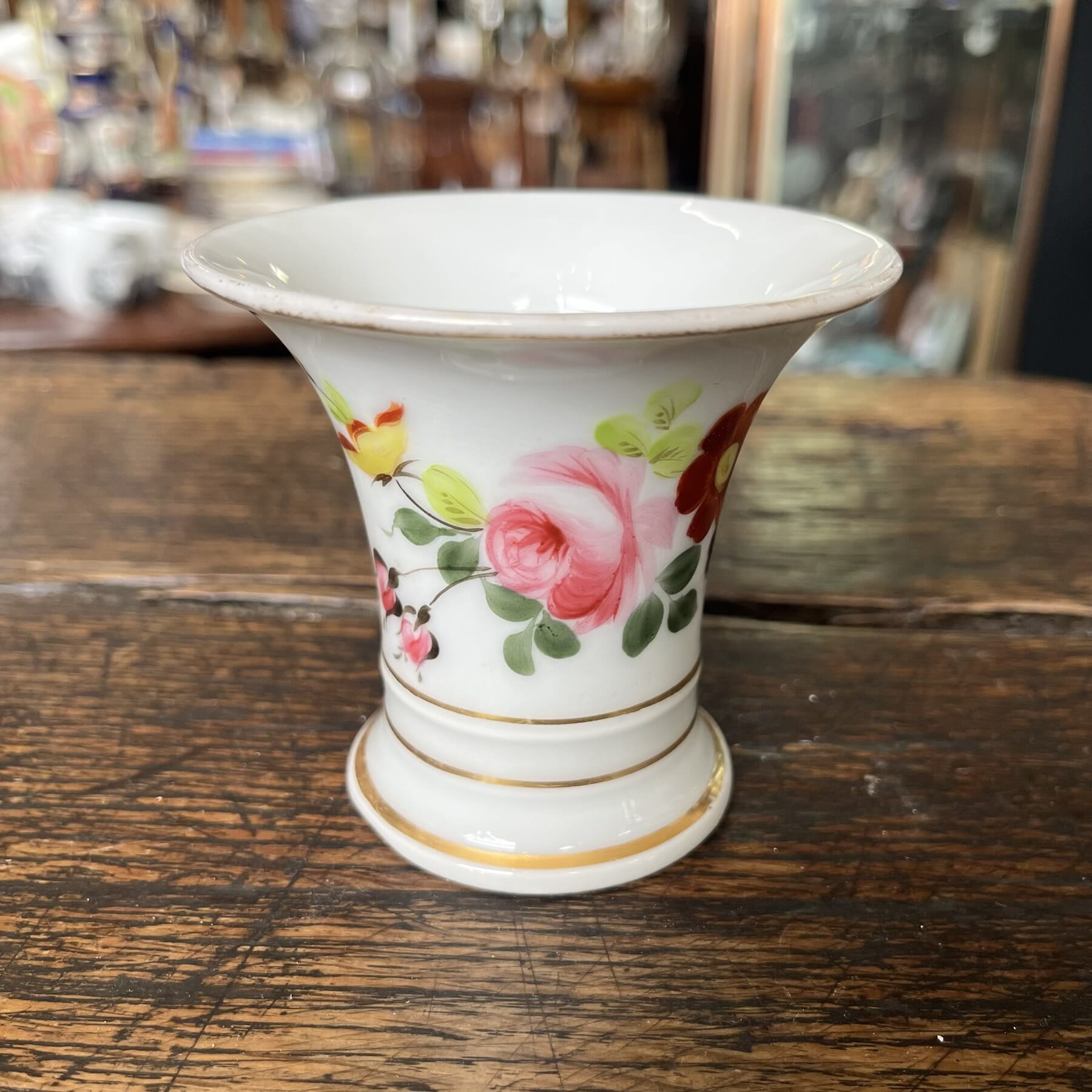
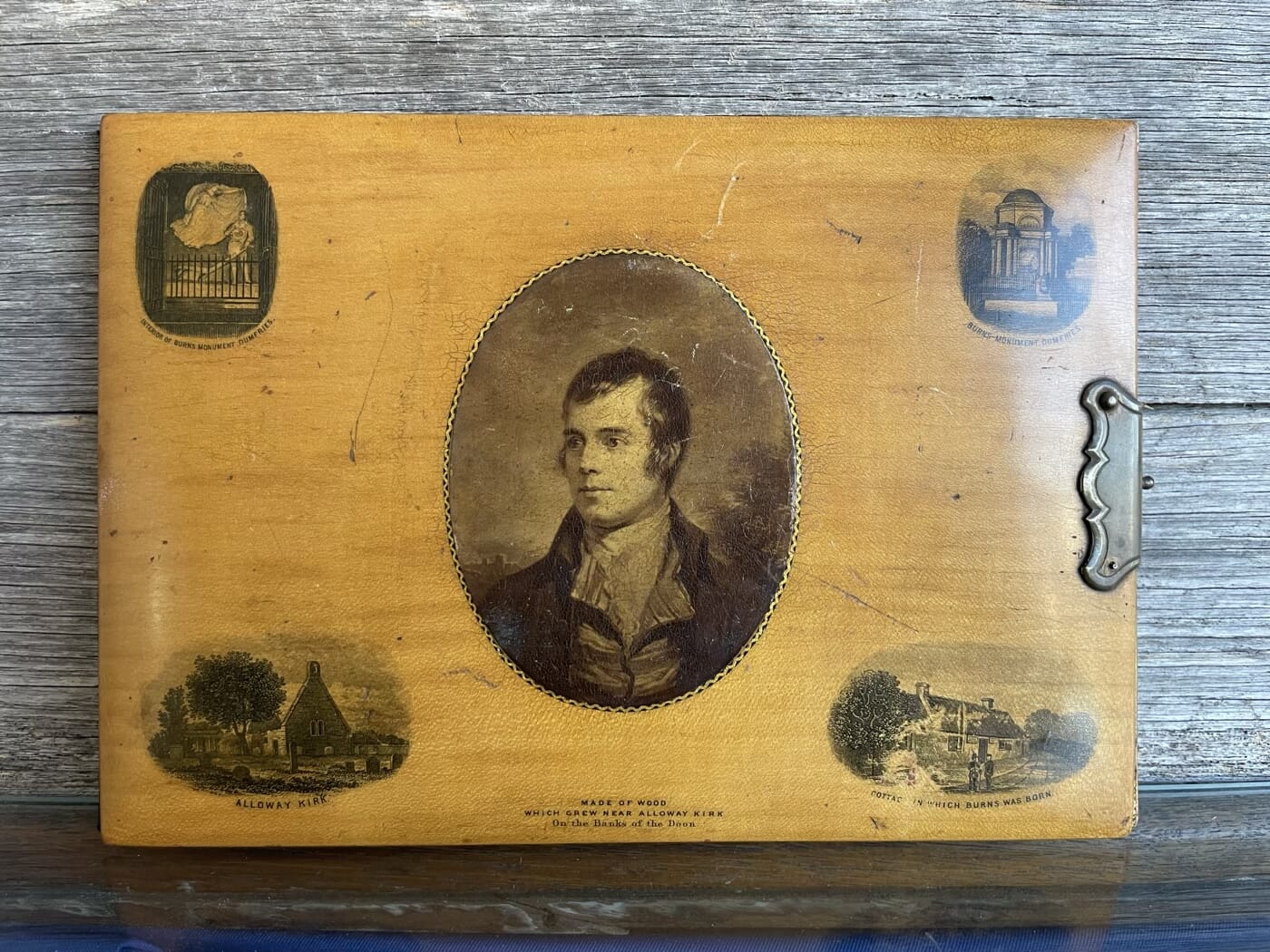
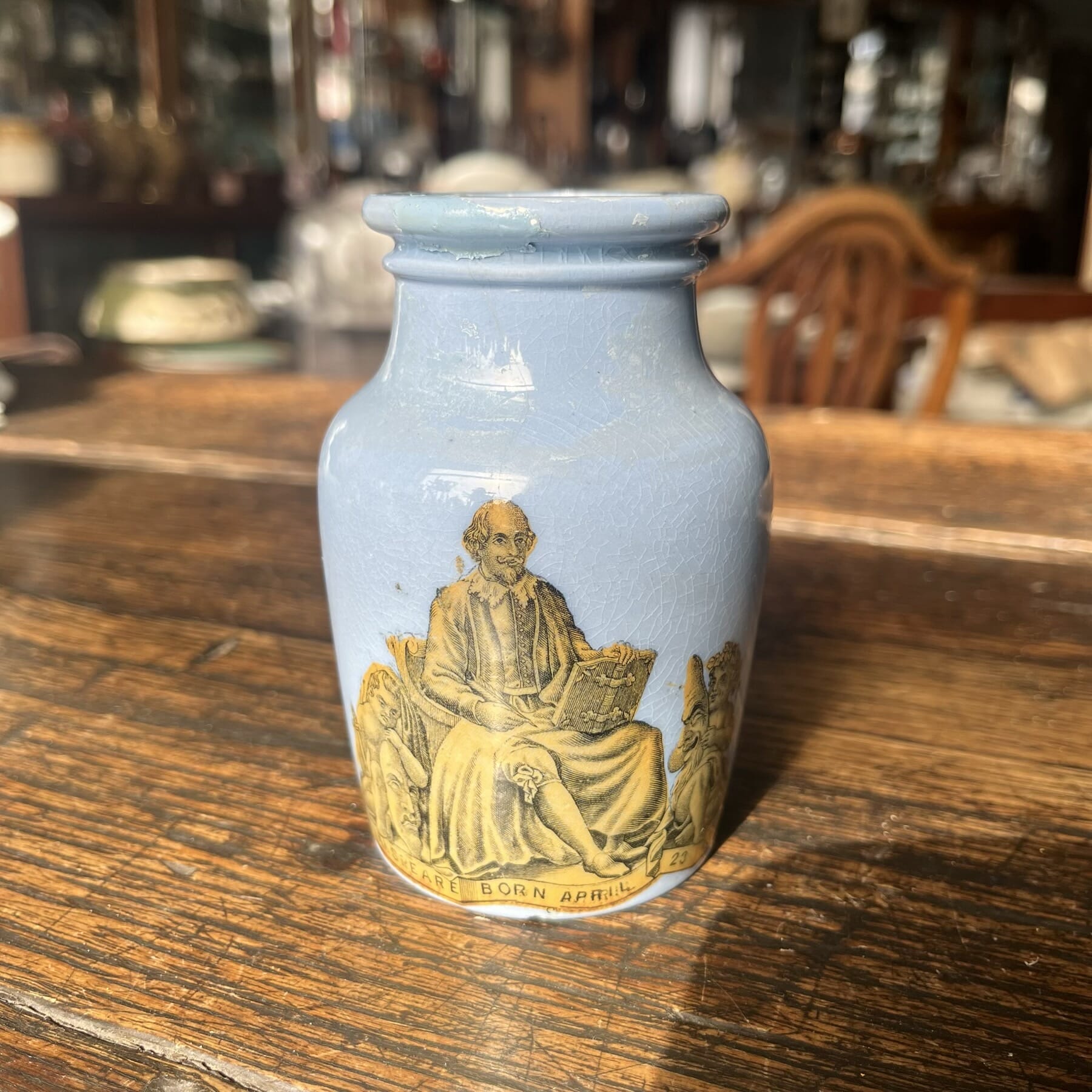
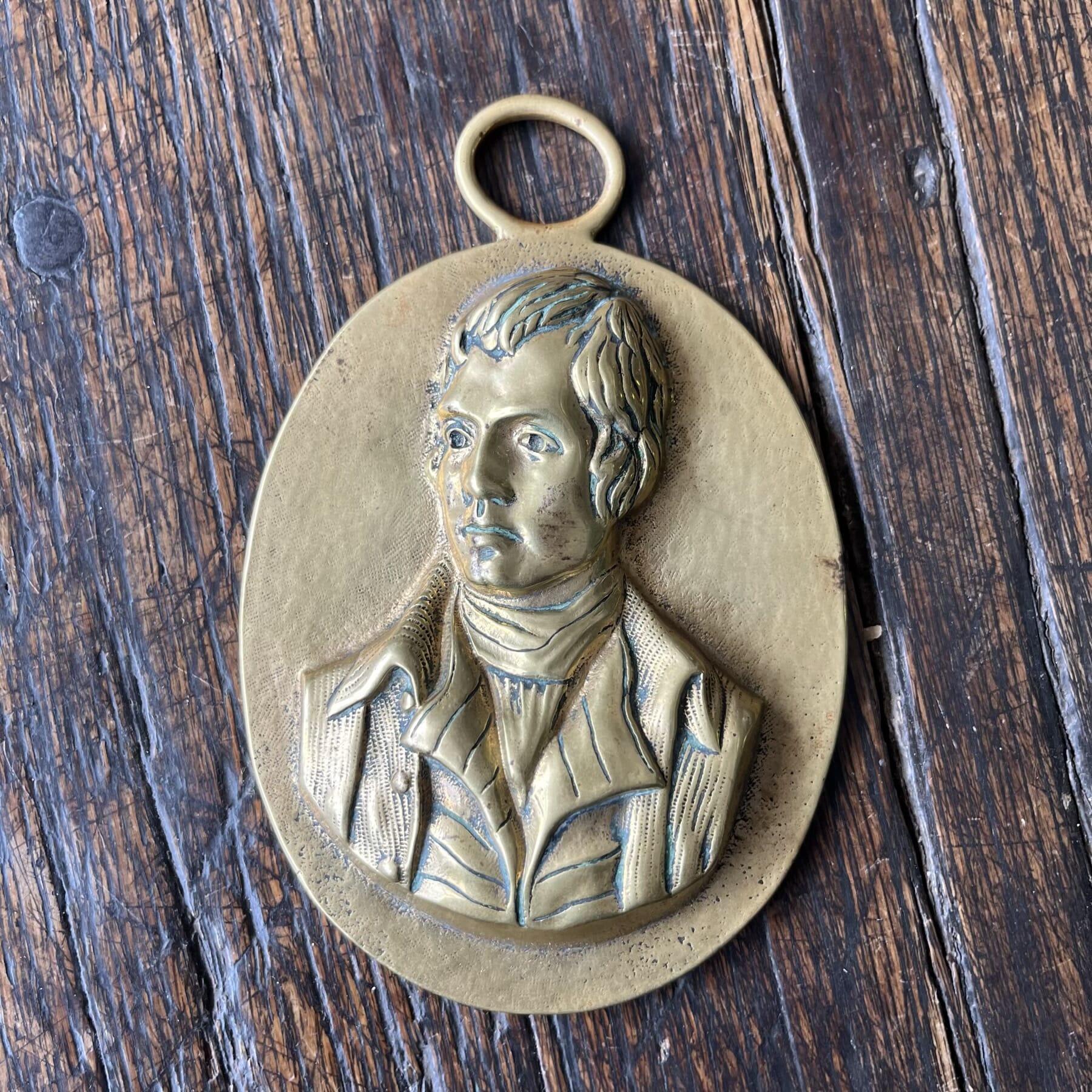
There’s also a NEW ‘Curated Collection’ dedicated to items relating to Literature and The Stage. You’ll find all the usual suspects – Shakespeare, Burns, Dickens – plus some other fascinating aspects of what we now call ‘pop culture’.

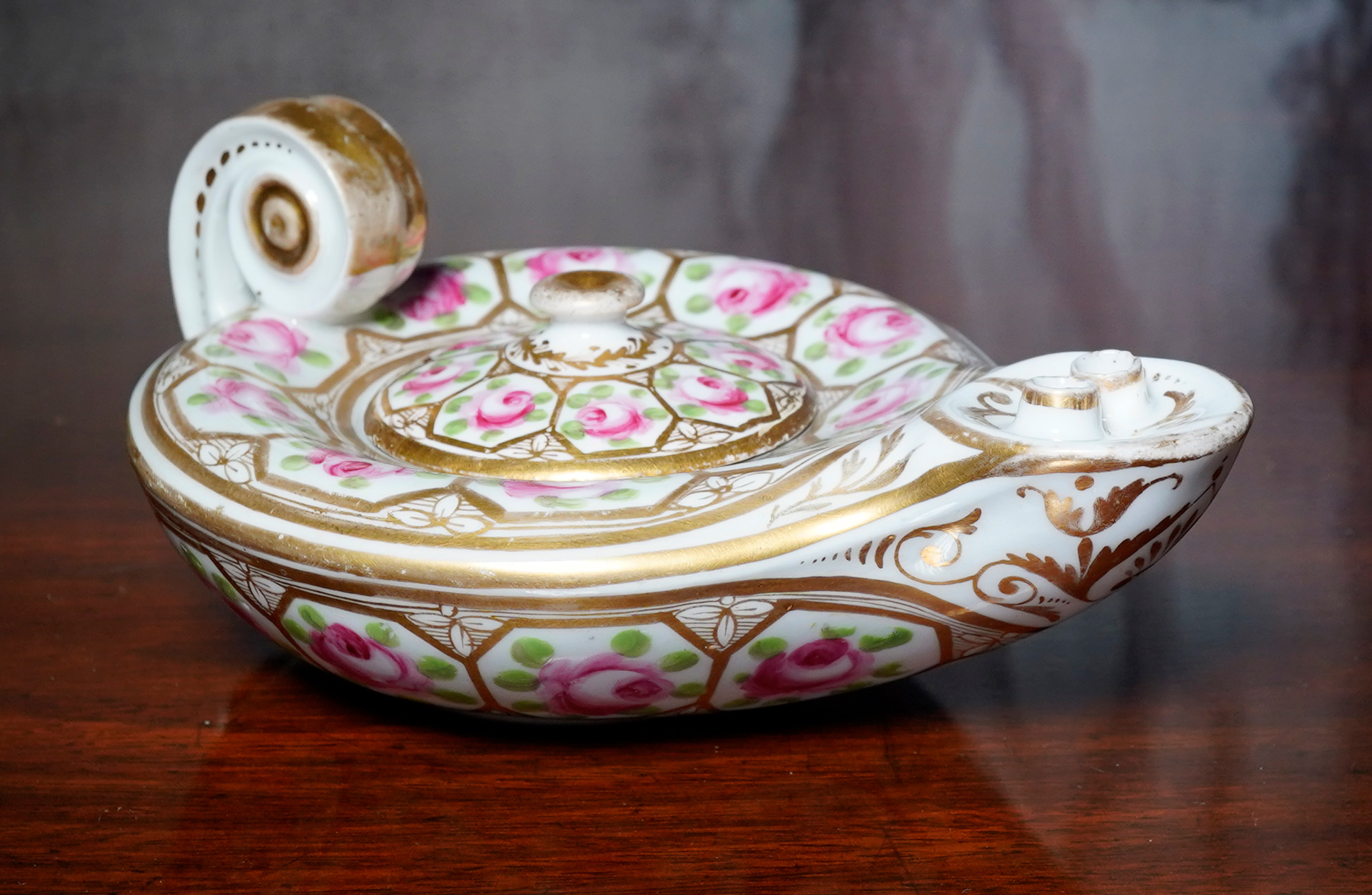
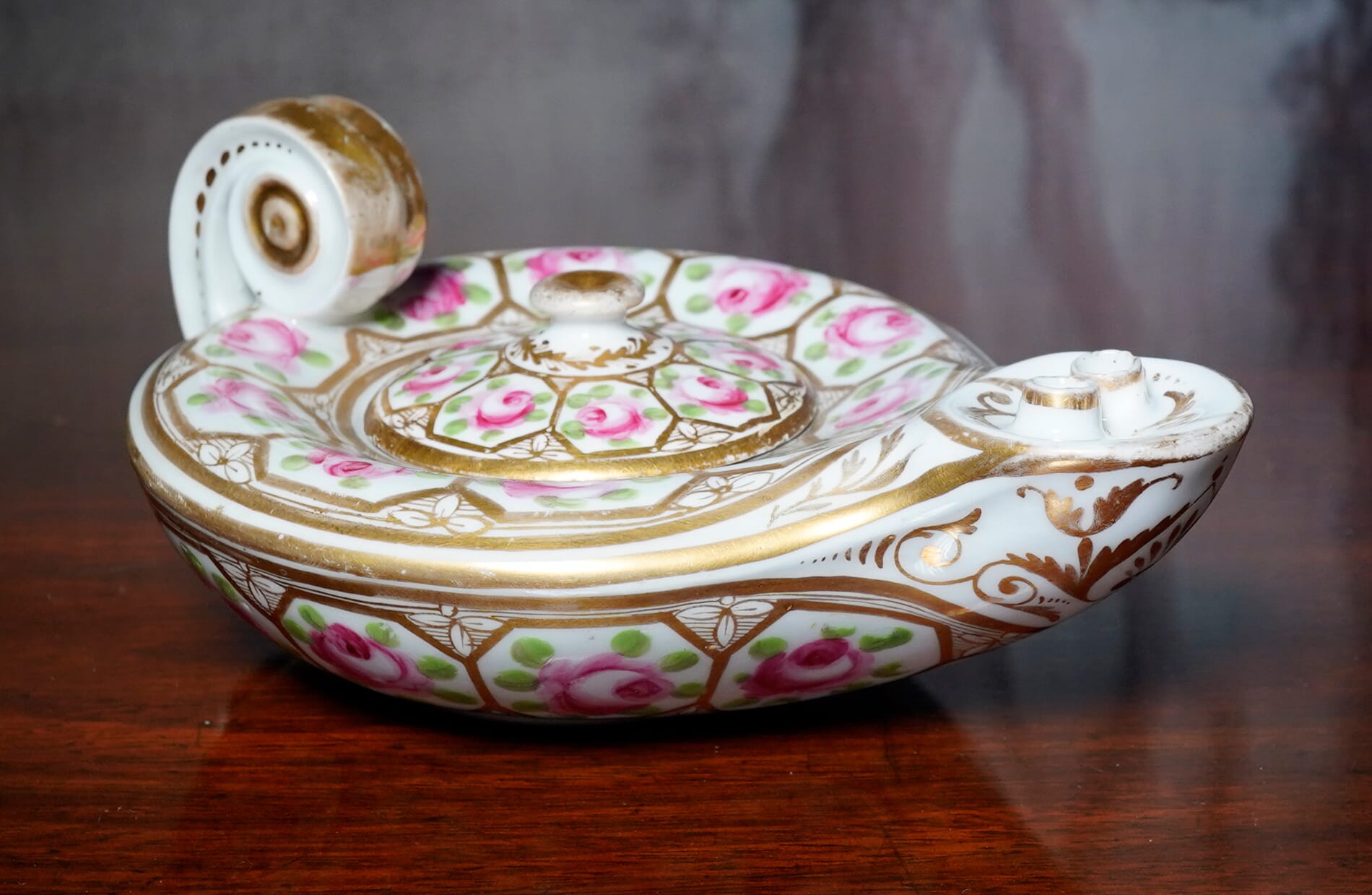
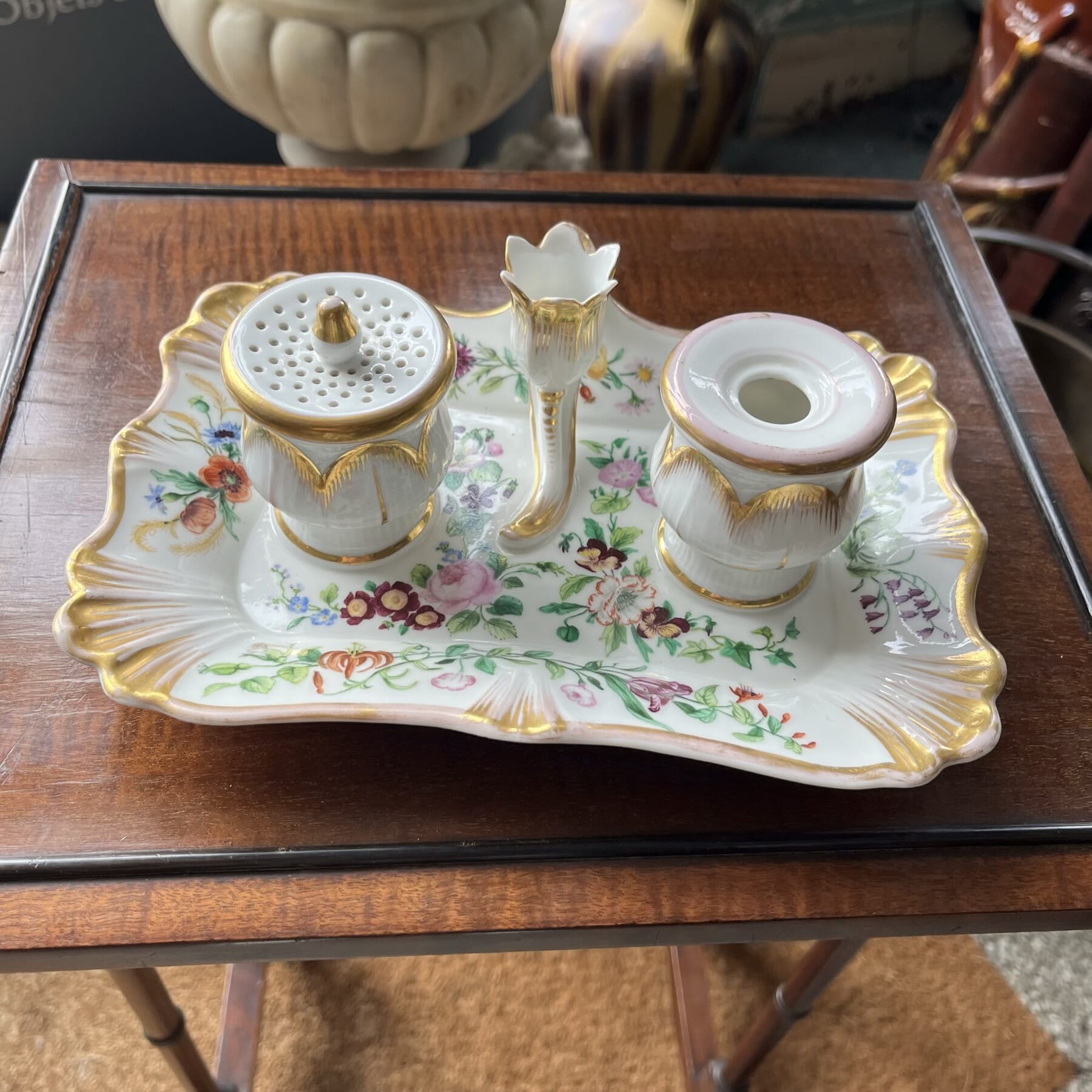
You’ll also find a selection of lovely flower decorated pieces including a remarkable ‘inkwell’, shaped like a Roman oil lamp, covered in flowers & gold…. an oddity, if used as an inkwell the quills unbalance the whole thing. However, we have another explanation that makes perfect sense, especially when considering the decoration of this beautiful example – have a look at the lamp’s page to see what we have worked out –

Coalport Roman Oil Lamp
Coalport ‘Roman’ Oil Lamp, of uncertain usage, circa 1820. Click to see our new idea about how this was used….

Fresh to Stock

Posted on

Fresh Stock – Ceramics, Art, and…. Batons!

It’s an eclectic mix today, with a fine selection of diverse items to browse.


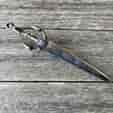
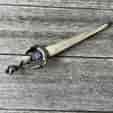
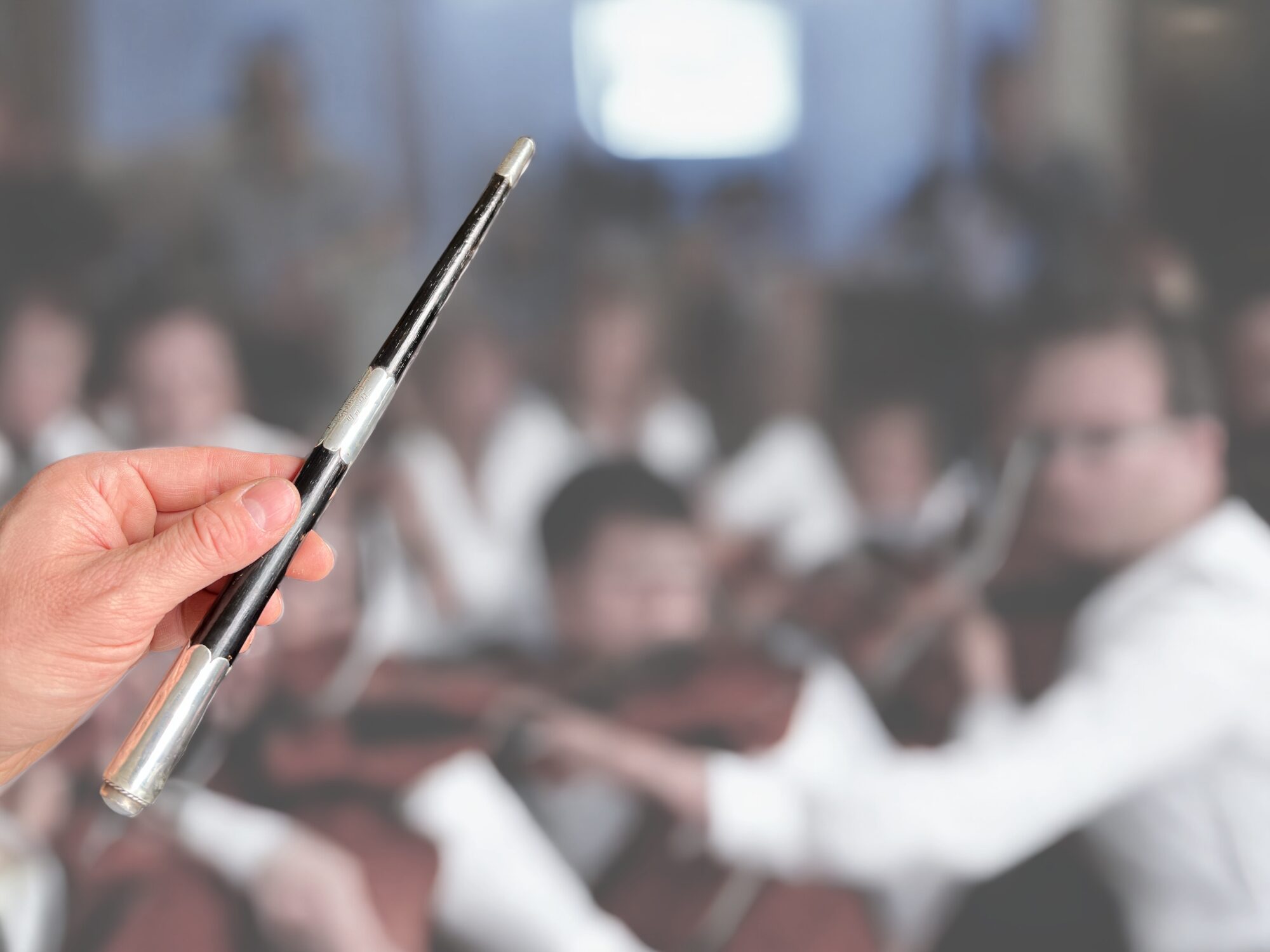
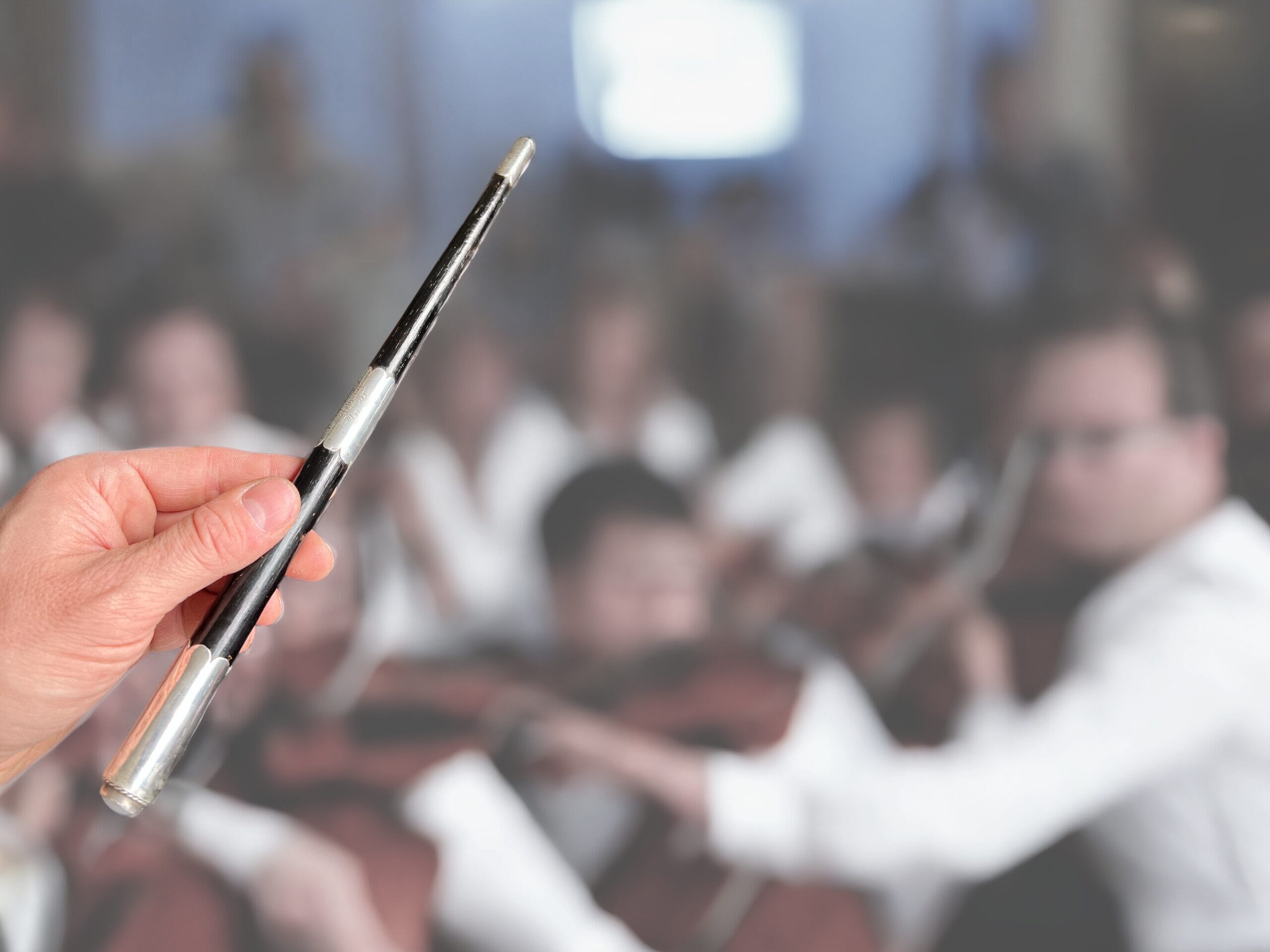
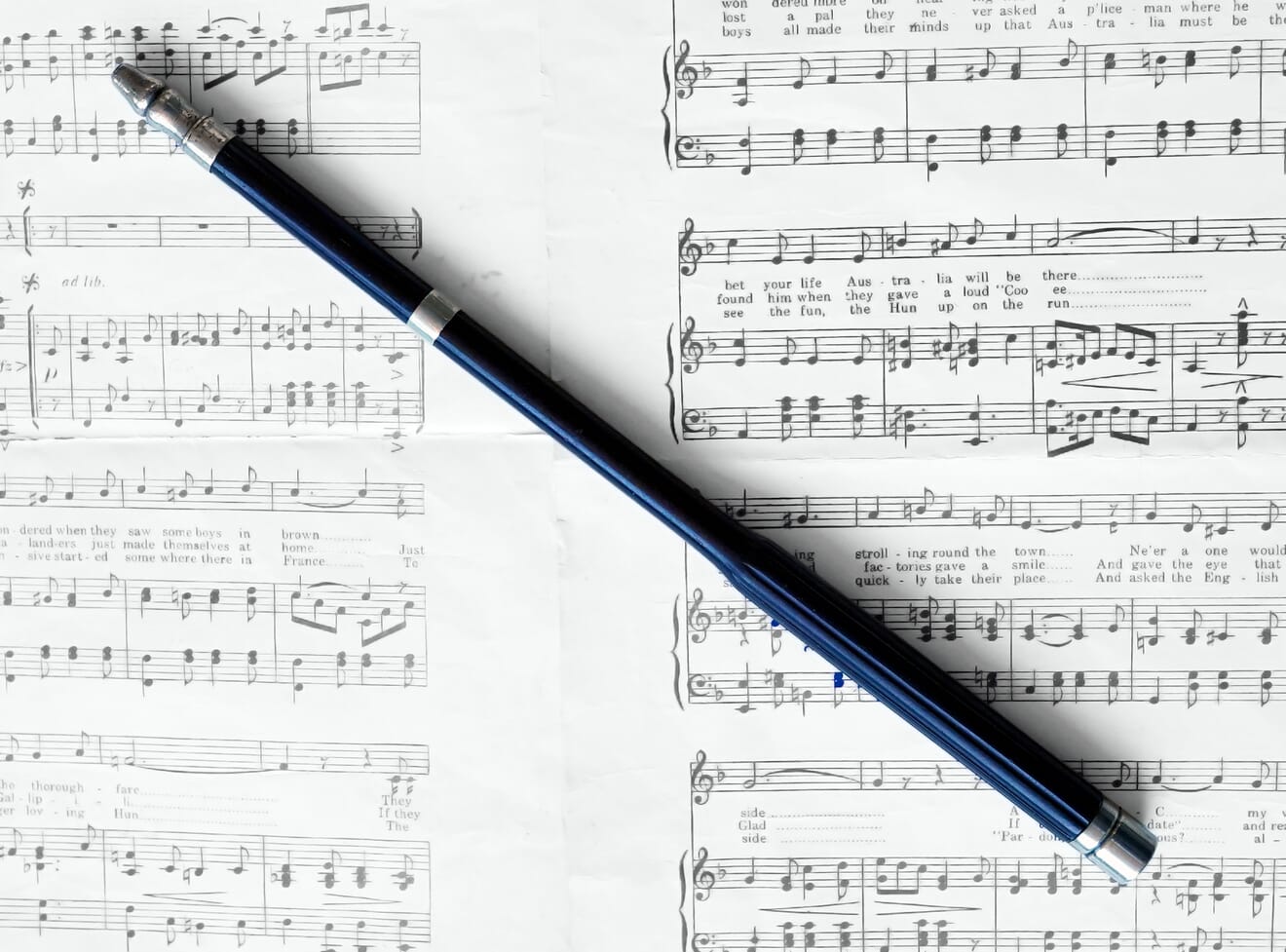
There’s some fascinating ‘Local Music History’ items, in particular conductor’s batons.
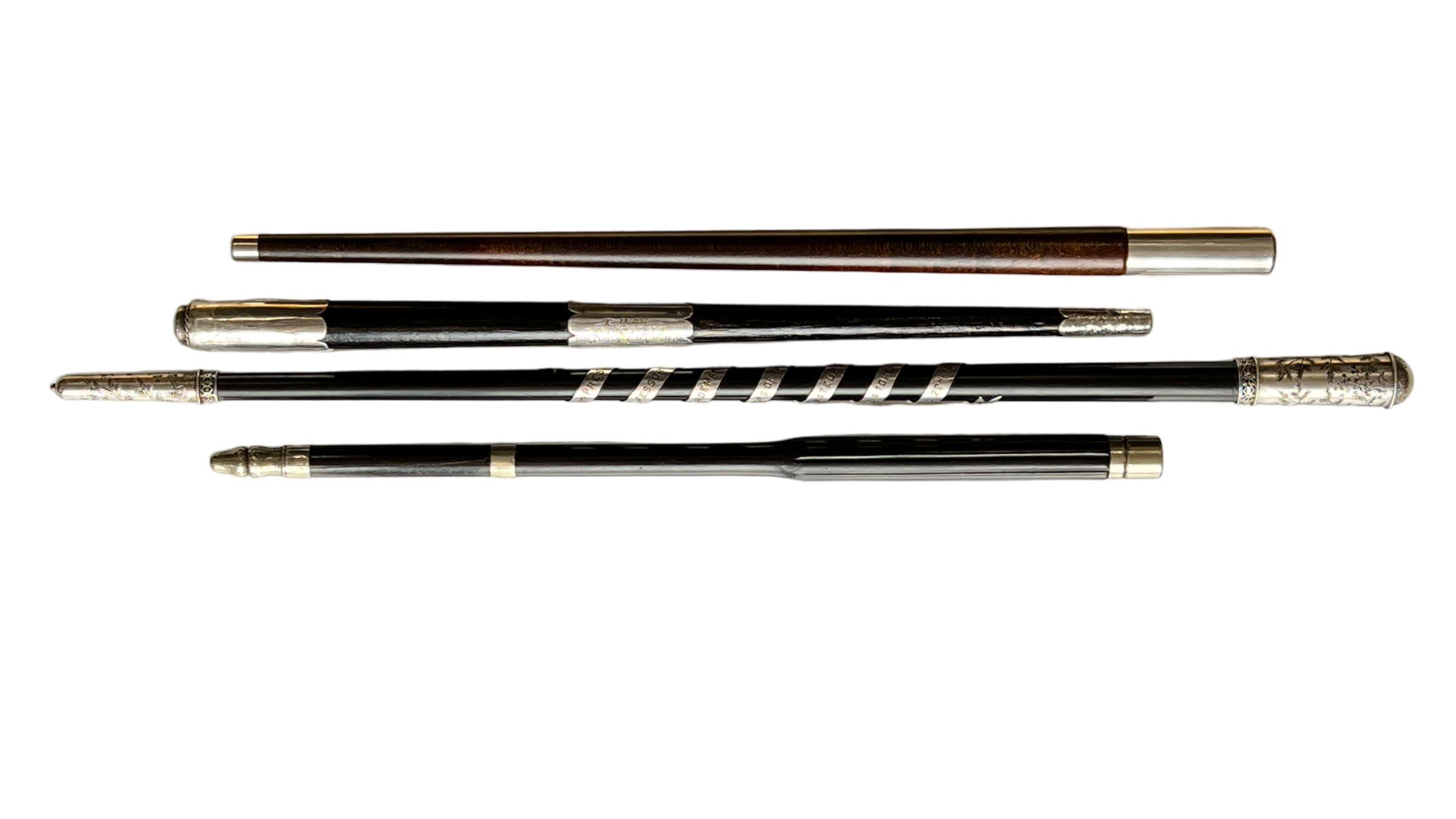
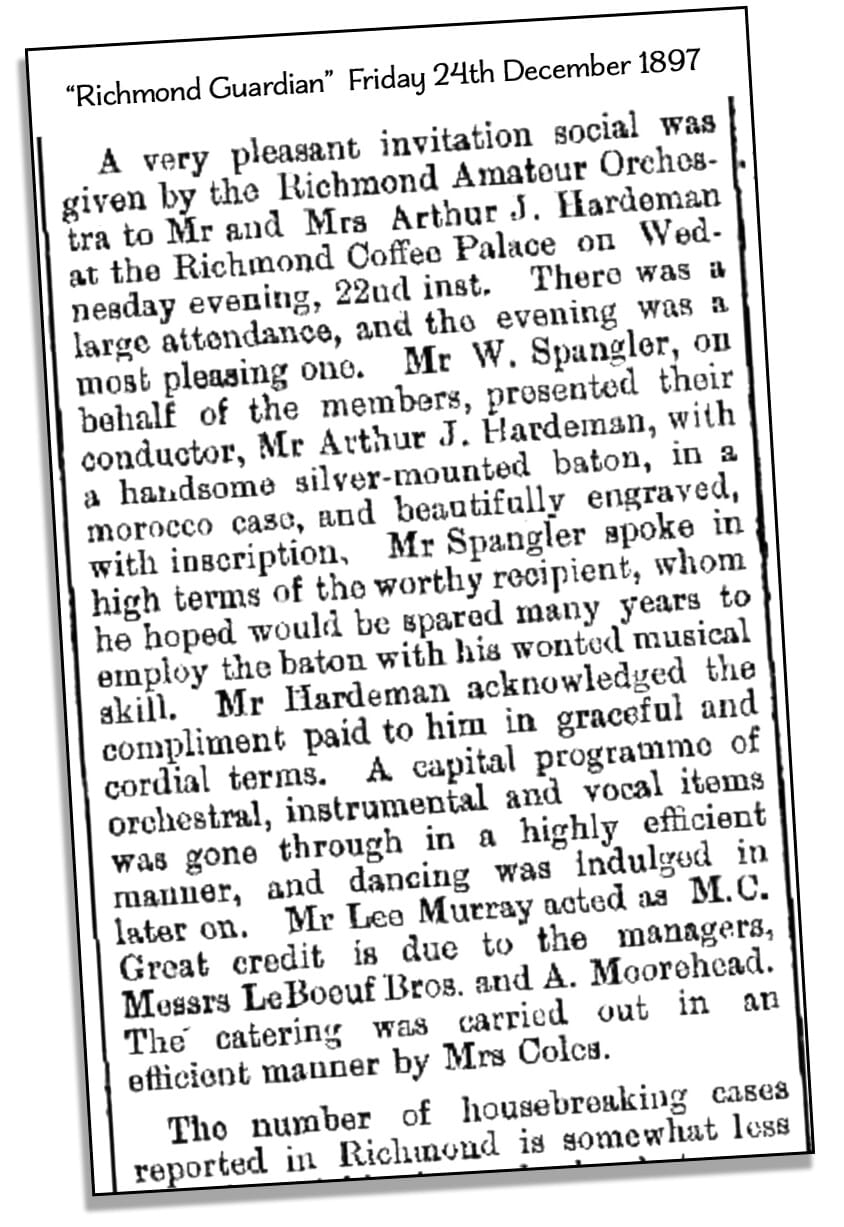
The first is a presentation piece, made in Melbourne and still in its original box, with a lengthy inscription explaining its significance: given to Professor Hardeman in 1897 by the Richmond Amateur Orchestra. This opens up some fascinating research, where we found an 1897 newspaper description of the event which describes the exact baton in great detail!

1897 Australian Silver mounted conductor's baton, Hardeman, Richmond Orchestra

The second is a simpler form, presented to E. Sage by the St Johns Presbyterian Choir, Ballarat. This interesting piece has a moonstone set in the end, and would have been made by a local jeweller.

As well, there are some other batons of a similar period – very useful for anyone considering a career in amateur (or professional) orchestra!

Antique Conductor's Batons - Moorabool Antiques Geelong
Antique Conductor’s Batons
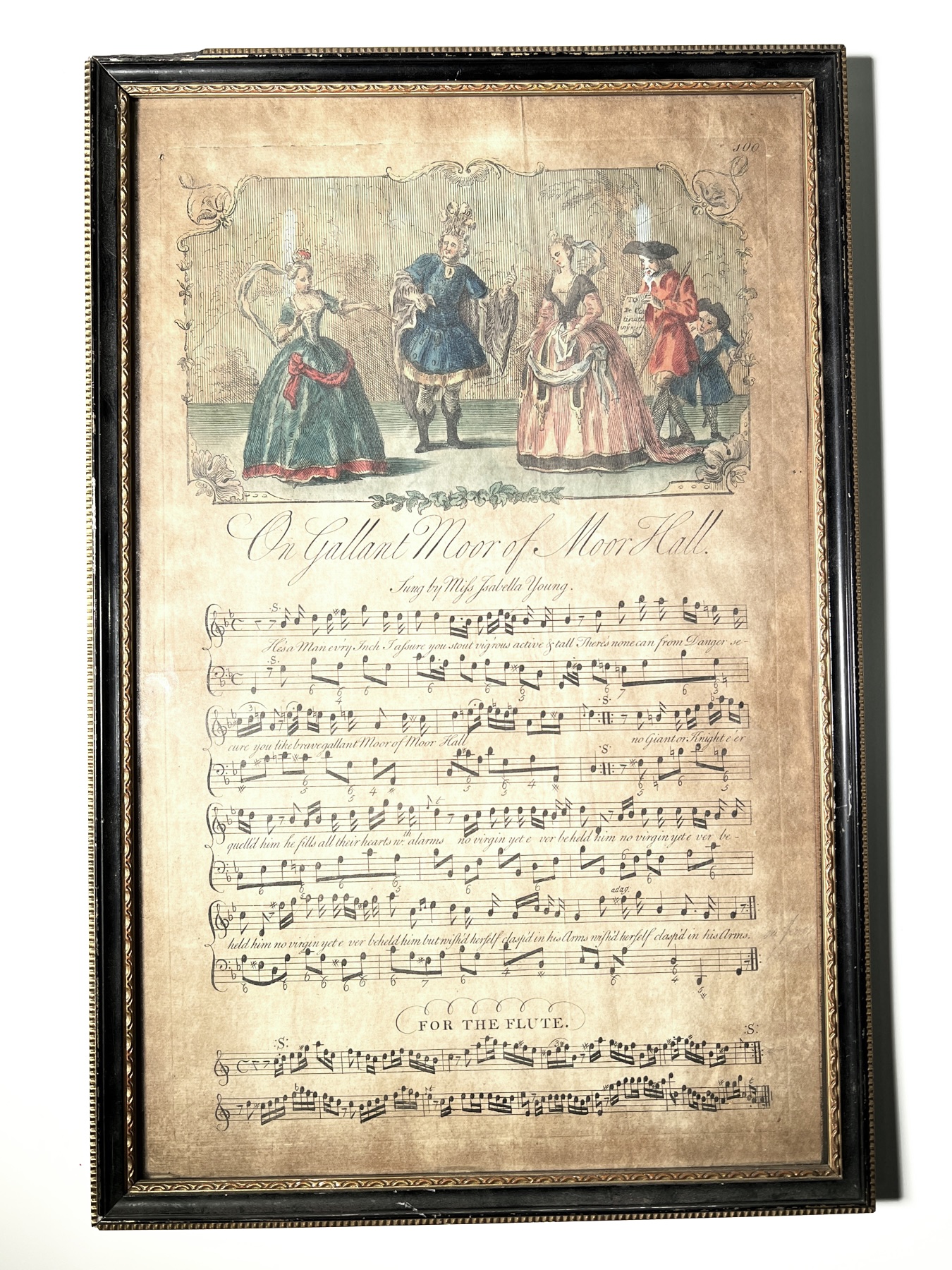
Moor of Moor Hall, c. 1740

This illustrated piece of music was printed in London in 1740.
It’s from a ‘Burlesque Opera’  first performed in 1737,  ‘The Dragon of Wantley‘.

It contains the line: “He’s a Man every inch I assure you, stout vig’rous active & Tall…” !

While on the surface it’s a comic tale for entertainment, the lyurics are open to interpretation – the Dragon perhaps representing the excesses of a corrupt government, and Moore the hero who defends the common people…. a theme still very active in today’s politics and pop-culture….

Fresh Art

Fresh Stock

Posted on

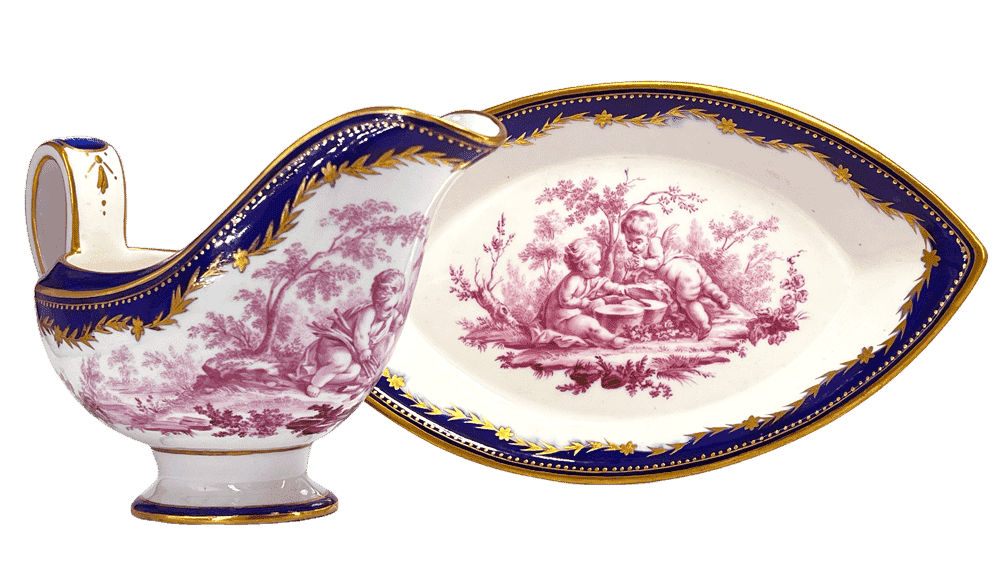
A Tournai Sauceboat

Tournai Sauceboat c.1770

This extraordinary example of Tournai porcelain shows the quality they were able to produce.

Tournai Sauceboat c.1770

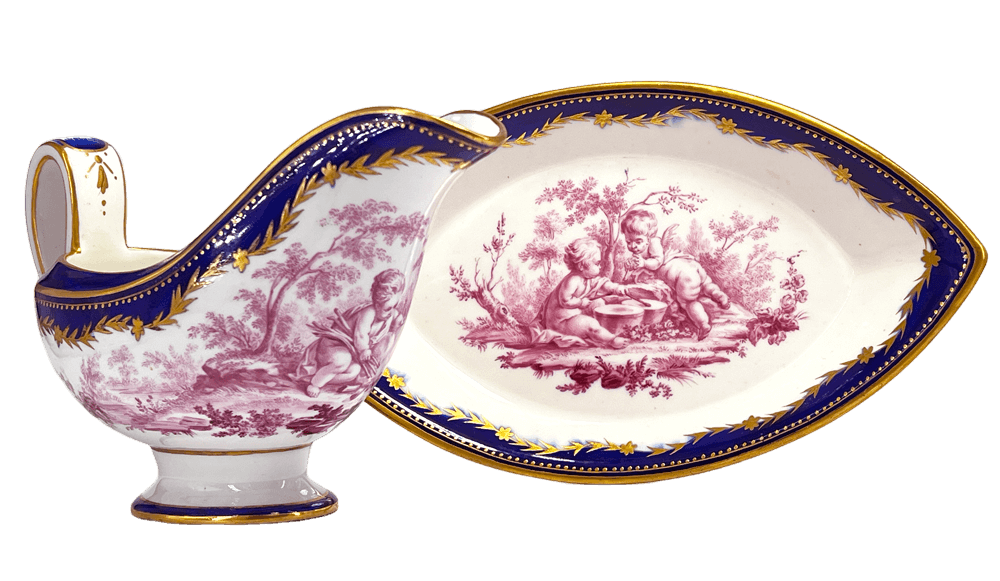
Dating to circa 1770, the elegant form with robust yet stylish handle, and boat-shaped stand, is a premonition of the Neoclassical simplicity which comes to dominate French design in the last decades of the 18th century. While this aspect looks forward, the decoration is the opposite. It is taken from a print published mid 18th century, after a painting by Francois Boucher, and is the essence of the Rococo style.
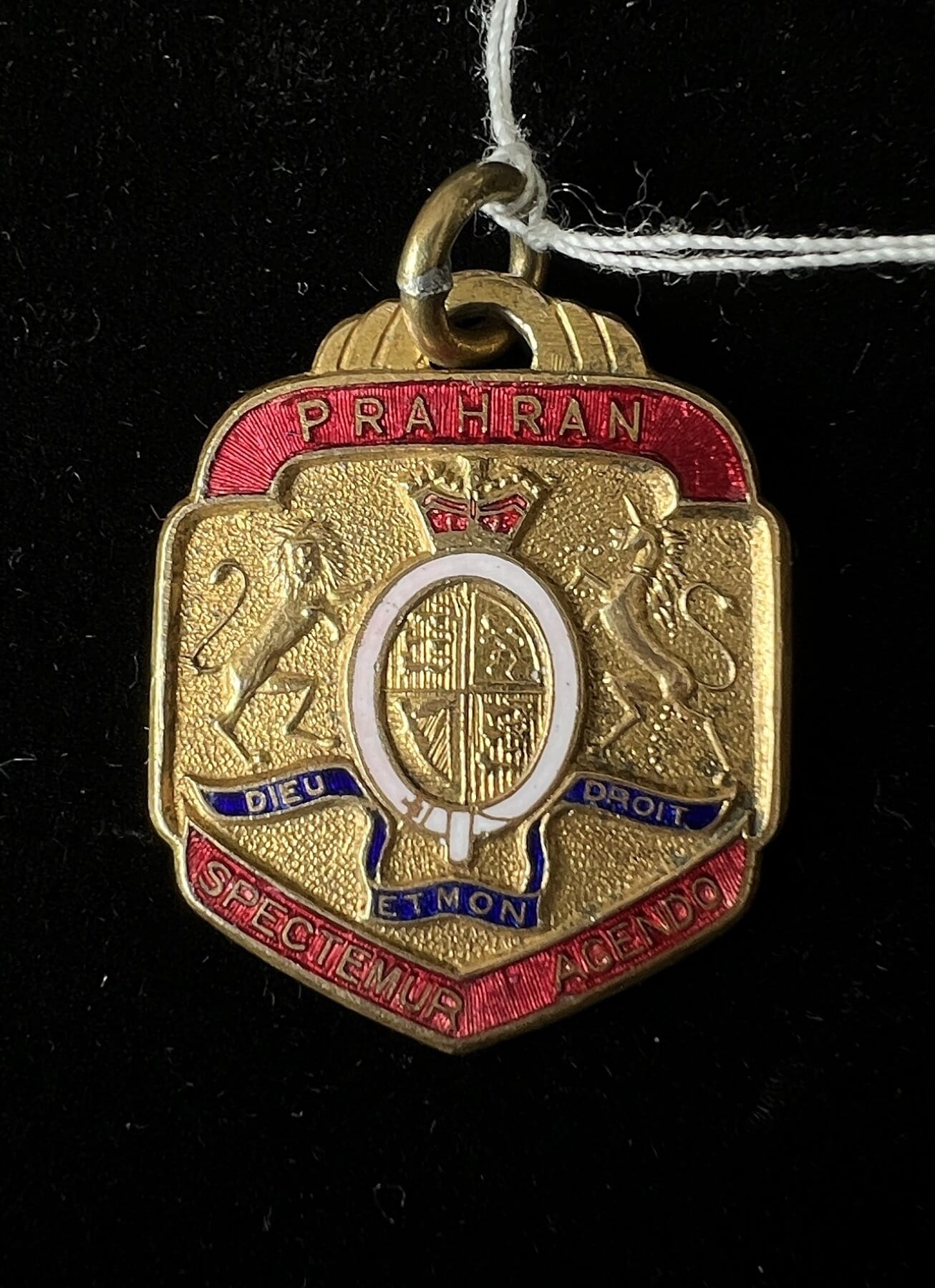
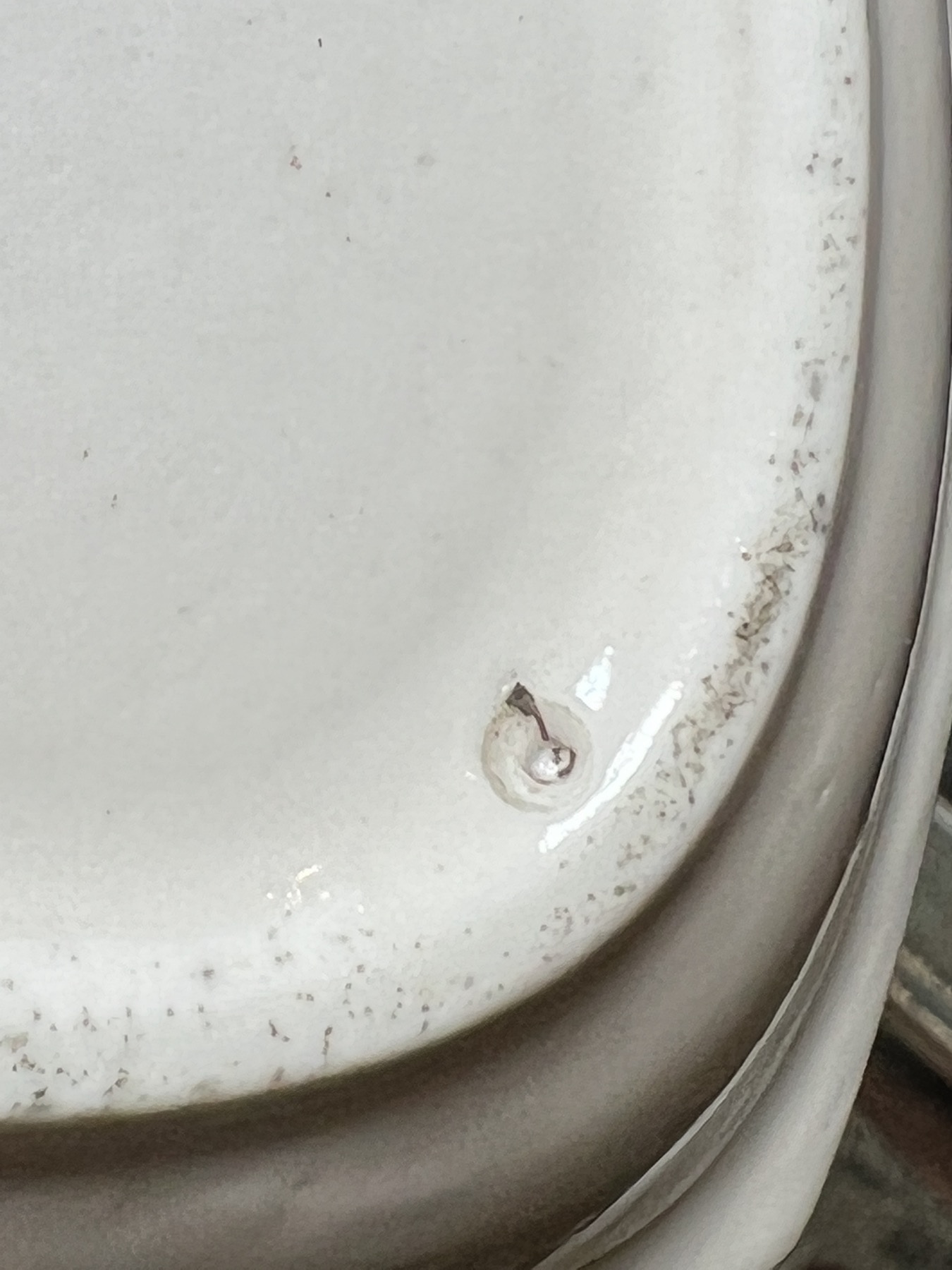
The mark is always misunderstood: ‘crossed swords are Meissen’ is the usual assessment, however this piece is clearly soft-paste porcelain, not the hard-paste of Meissen. As a vast number of other makers ‘borrowed’ crossed swords, it is easily attributed to one of these fraudulent makers, like Samson of Paris.
However…. this mark is well documented on Tournai porcelain. In the underglaze blue & white products, it is not uncommon. Gold on glaze is rare, but does appear on their better decorated pieces, suggesting it was a mark for their ‘premier products’.

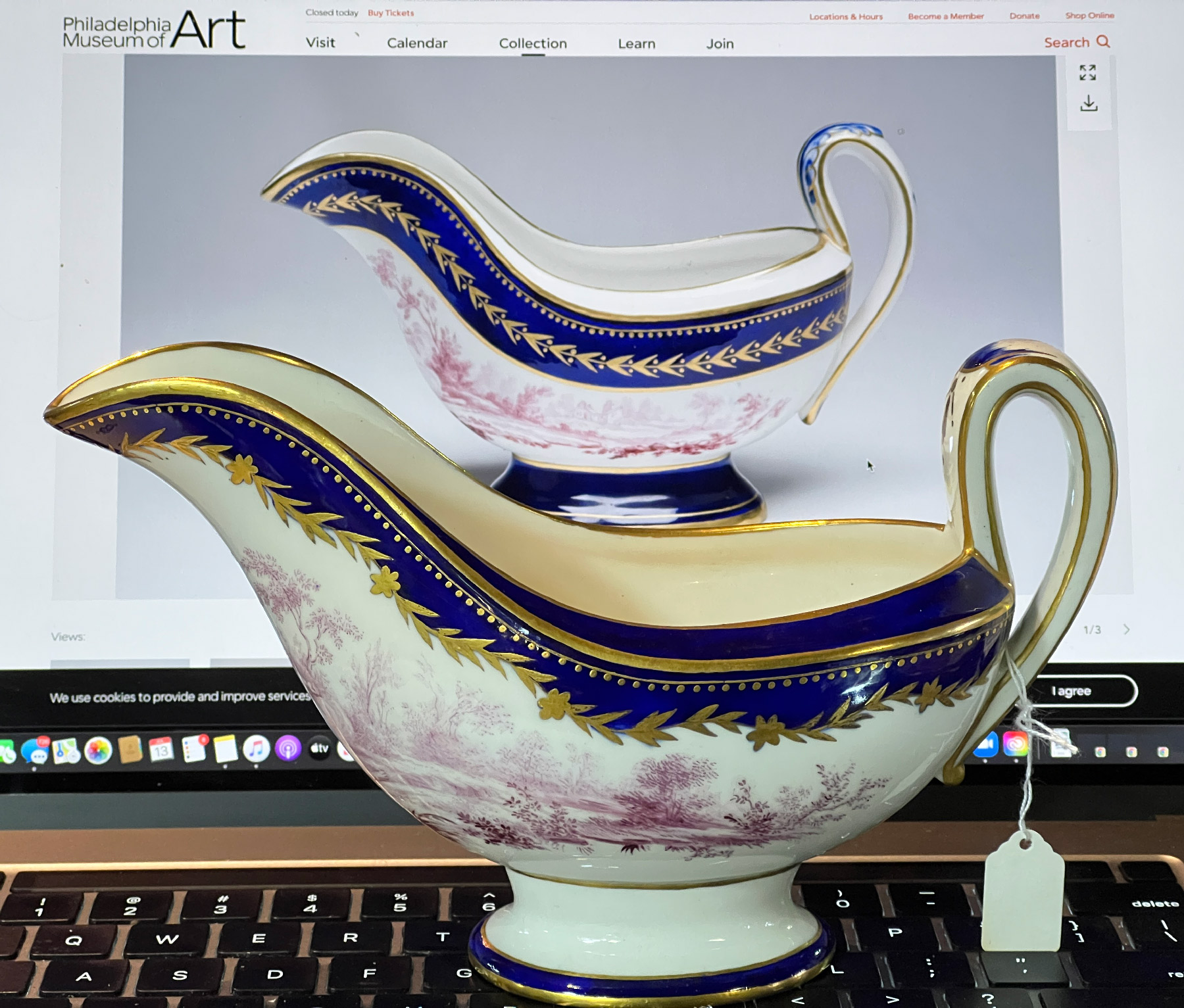
There is a single example in public collections, not published in the literature. This is a sauceboat in the Philadelphia Museum of Art (id=#1968-172-1) , documented on their website. It lacks the stand, but has the same lavish decoration – with a few variations.

A stunning recent discovery shows Tournai porcelain at its best - a Sauceboat & Stand with Cherubs after Boucher, c. 1770
In the fore is our example; the back shows the Philadelphia Museum’s slight variation.
Posted on

Conductor’s Batons

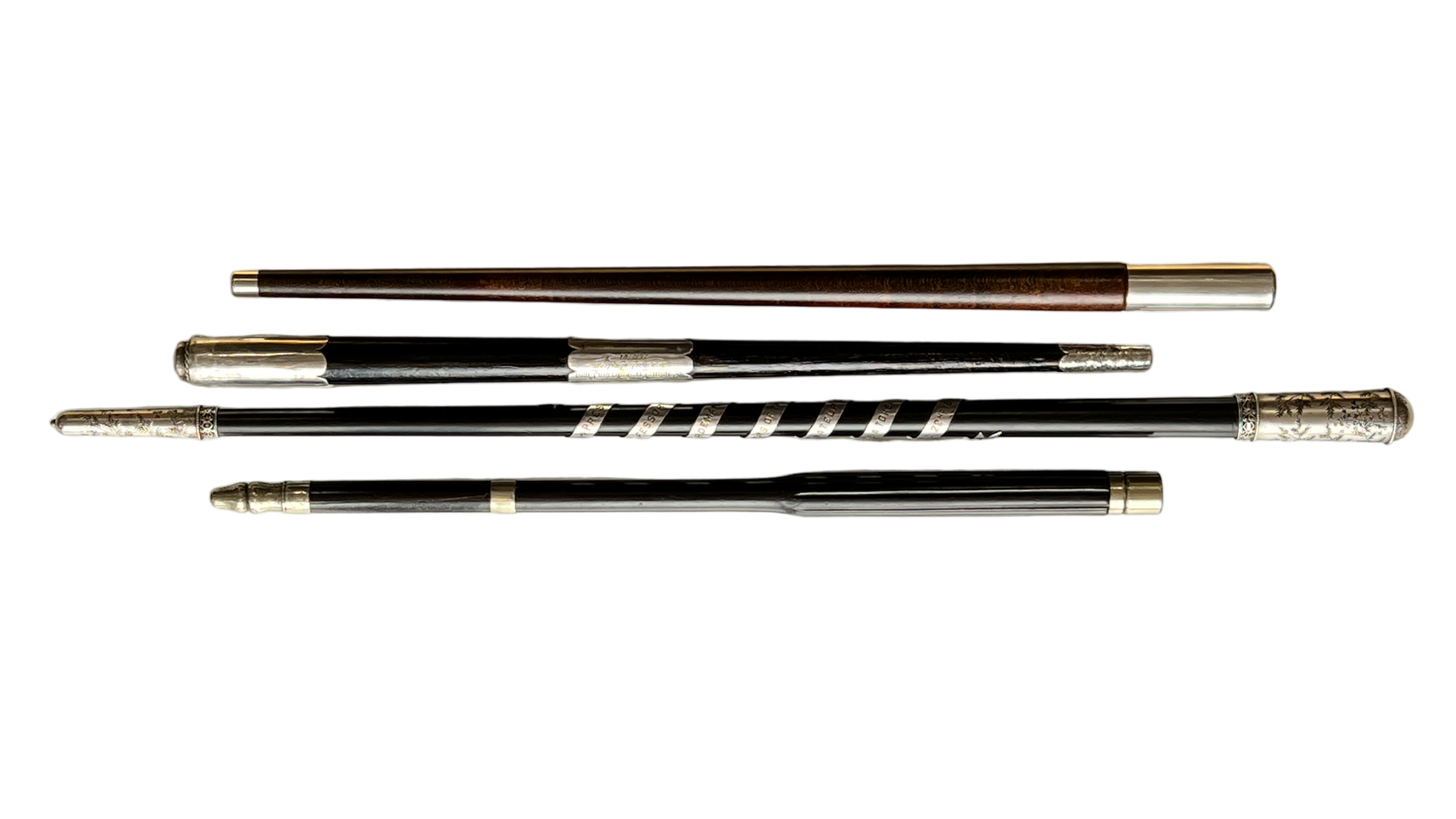
Any conductor needs a few batons – and Moorabool has a few of these rarities ‘fresh to stock’.

They include three with inscriptions – some fascinating records of social history, one just a baffling enigma.

Antique Conductor's Batons - Moorabool Antiques Geelong

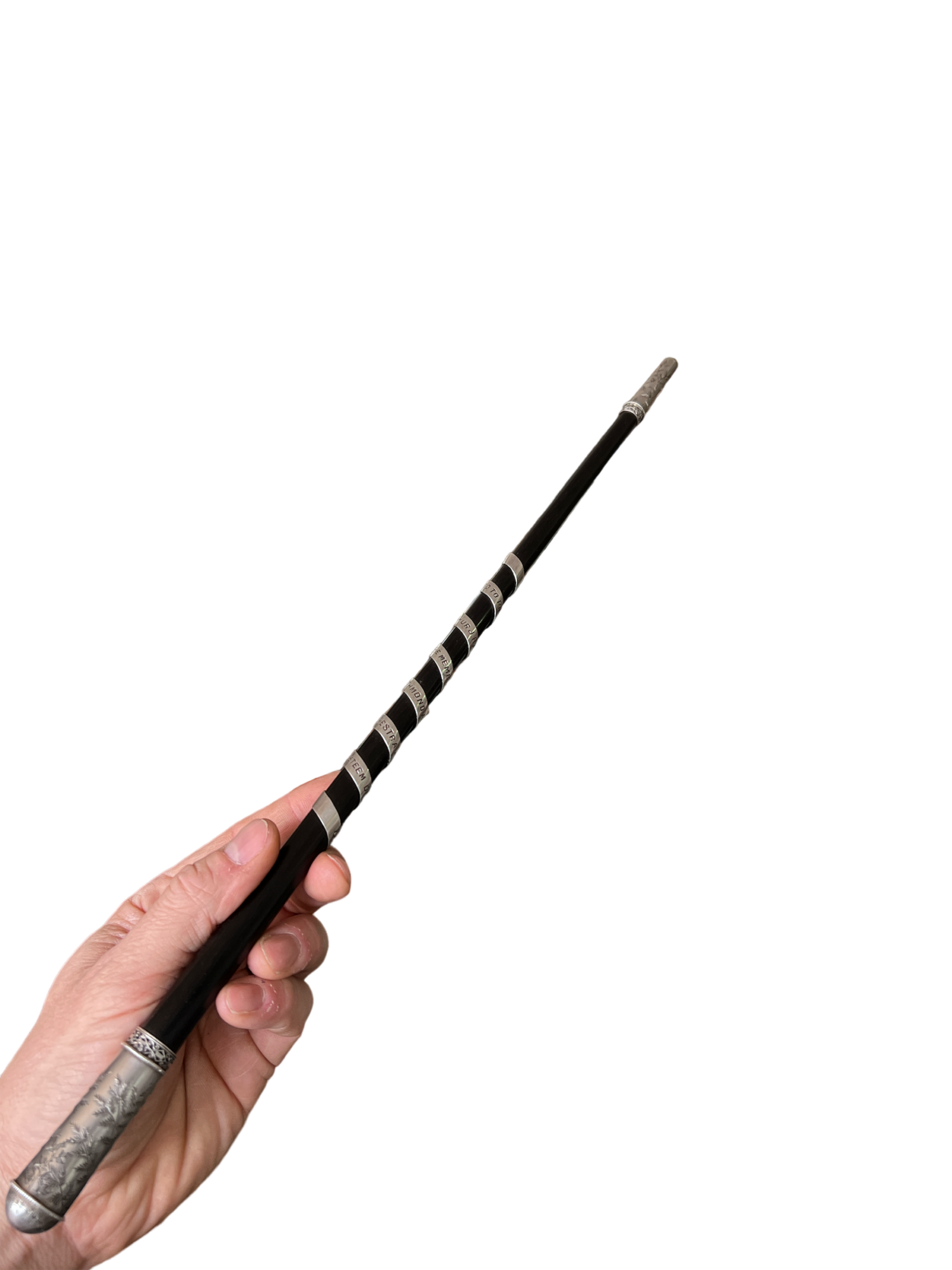
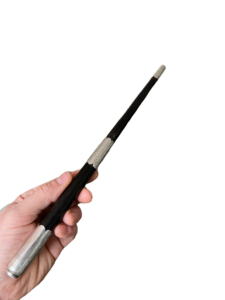
Perhaps you’re needing a baton for your Amateur Orchestra – like ‘Professor’ Arthur Hardeman? He was the recipient of a magnificent ebony example with silver mounts including an inscription winding its way down the shaft on a long silver ribbon: “Presented to Professor Arthur J Hardeman by members of the Richmond Amateur Orchestra as a Token of Esteem, 1897” .

Hardeman was a Melbourne musician, son of a Pianoforte dealer, and seems to have made his living giving lessons and performing with his ‘orchestra’. They gave him this magnificent Melbourne-made baton in 1897… as outlined in the newspaper article of the time:

Professor Hardeman's Presentation Baton, 1897
Professor Hardeman’s Presentation Baton, 1897
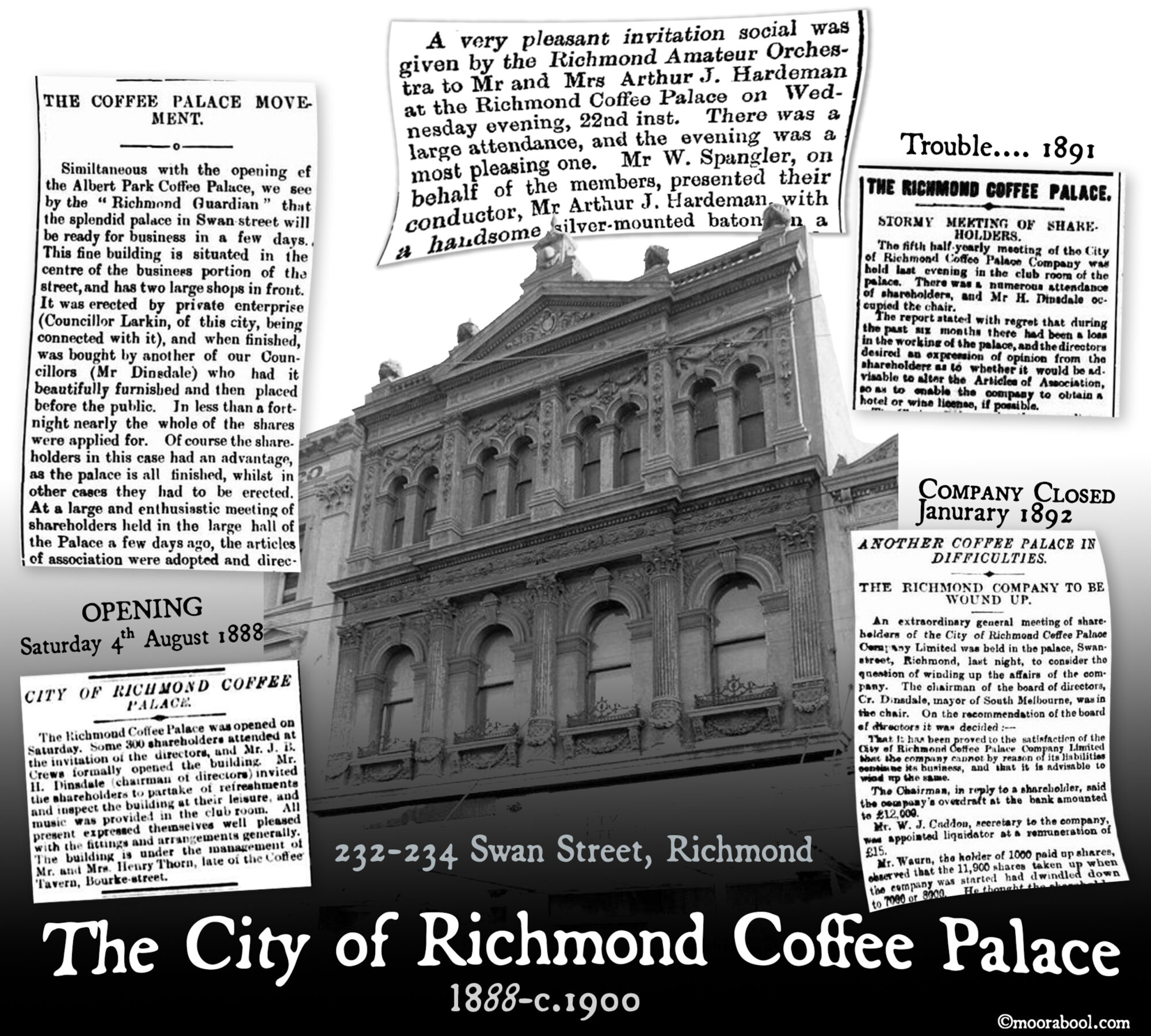
The City Of Richmond Coffee Palace, 232-234 Bridge Road, Richmond, constructed 1888

There’s a wealth of social history to be explored on this subject, including the untold story of the ‘City of Richmond Coffee Palace’, and ‘Professor’ Hardeman’s interesting background.

Read more about the baton & the presentation in our special blogpost on this piece >>

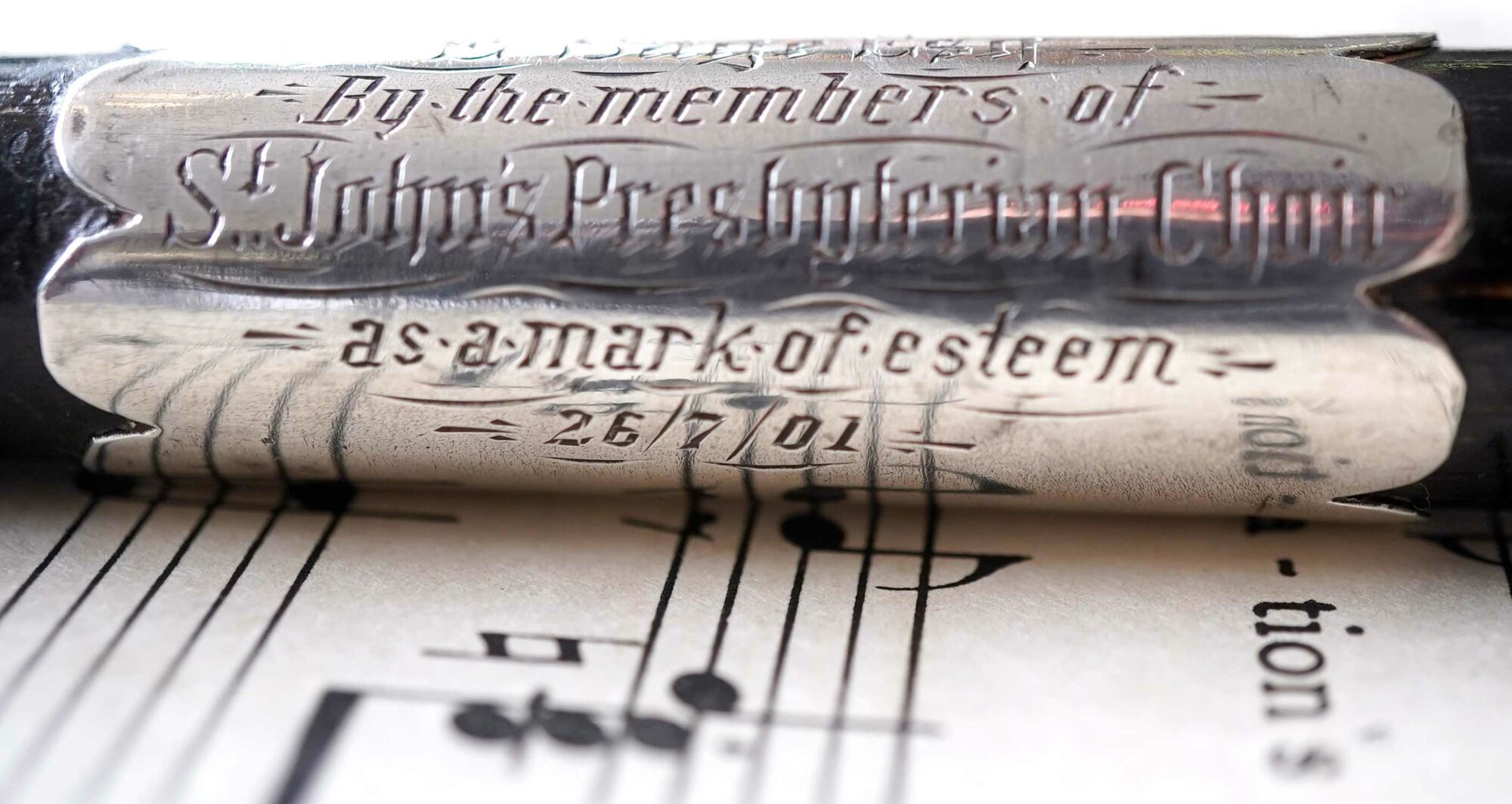
There are several other batons also, all fresh to stock – quite a collection. The other definite Australian example is also ebony, and has a presentation inscription also: “Pres’ted to E. Sage Esquire, by the members of St John’s Presbyterian Choir, as a mark of esteem, 26/07/01”.

E. Sage's Presentation Baton, Ballarat, 1901
E. Sage’s Presentation Baton, Ballarat, 1901
E. Sage's Presentation Baton, Ballarat, 1901
E. Sage’s Presentation Baton, Ballarat, 1901

E. Sage was a Ballarat identity, very active in the musical entertainment world from the 1890’s. He taught piano and voice in Ballarat, and helped form a musical group, called the ‘Curlew Orchestra’, for the ‘purpose of promoting the study of instrumental music and the entertainment of the inmates of the charitable institutions, and generally assisting by concerts in aid of worthy objects’.

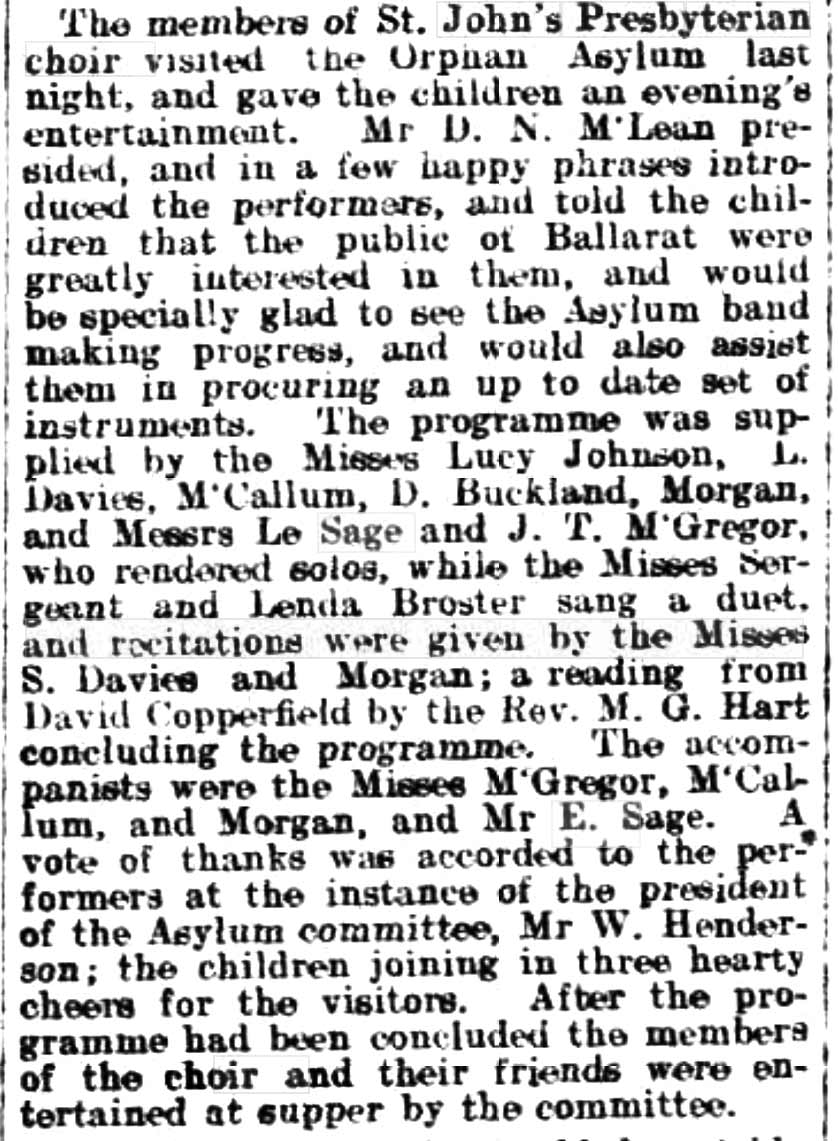
Sage, StJohns Choir, Ballarat Star July 1905

In 1902, for example, there’s a report of an event he presided over: “The members of St John’s Presbyterian choir visited the Orphan Asylum last night, and gave the children an evening’s entertainment. Mr D. N. McLean presided, and in a few happy phrases introduced the performers, and told the children that the public of Ballarat were greatly interested in them, and would be especially glad to see the Asylum band making progress….”

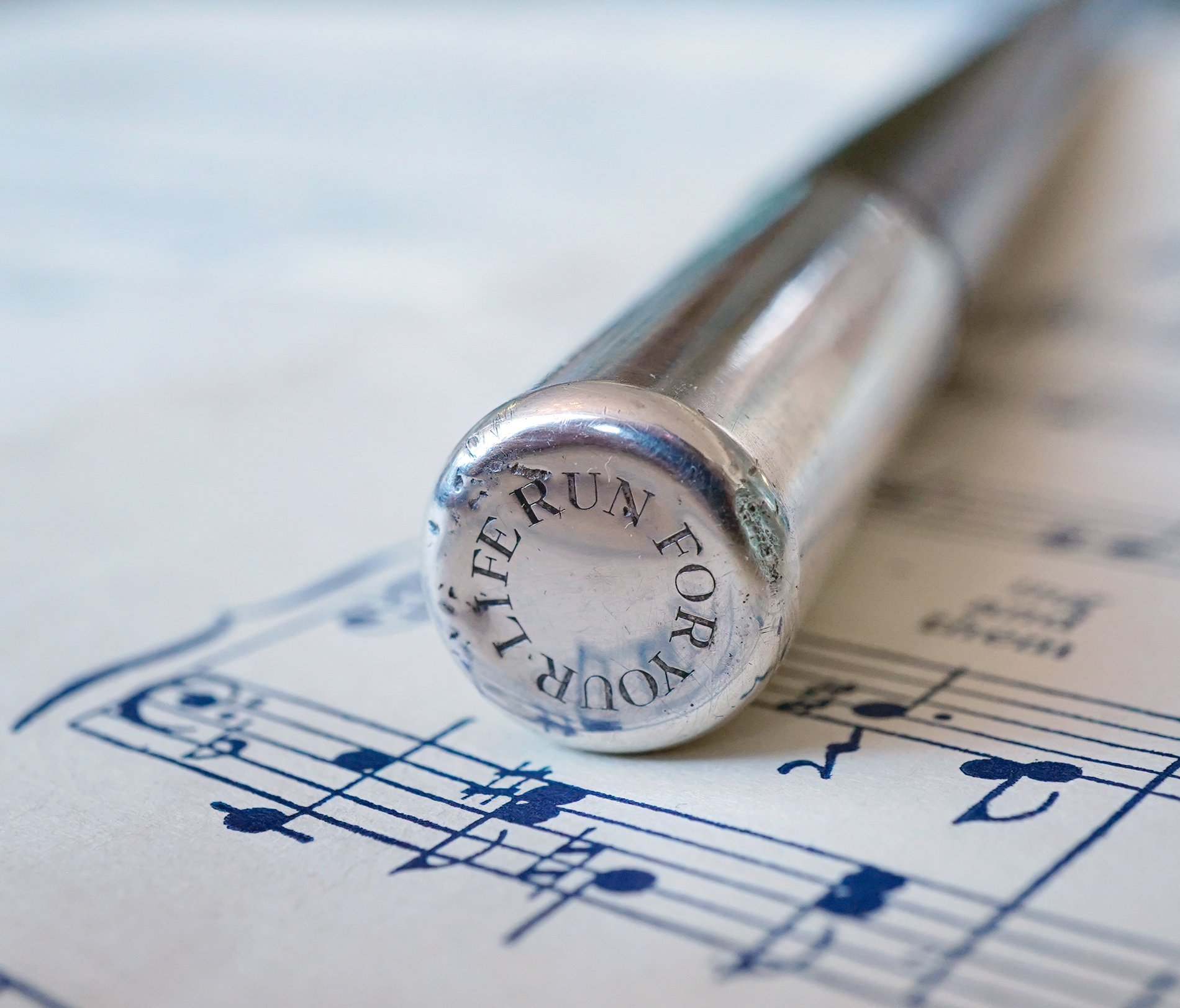
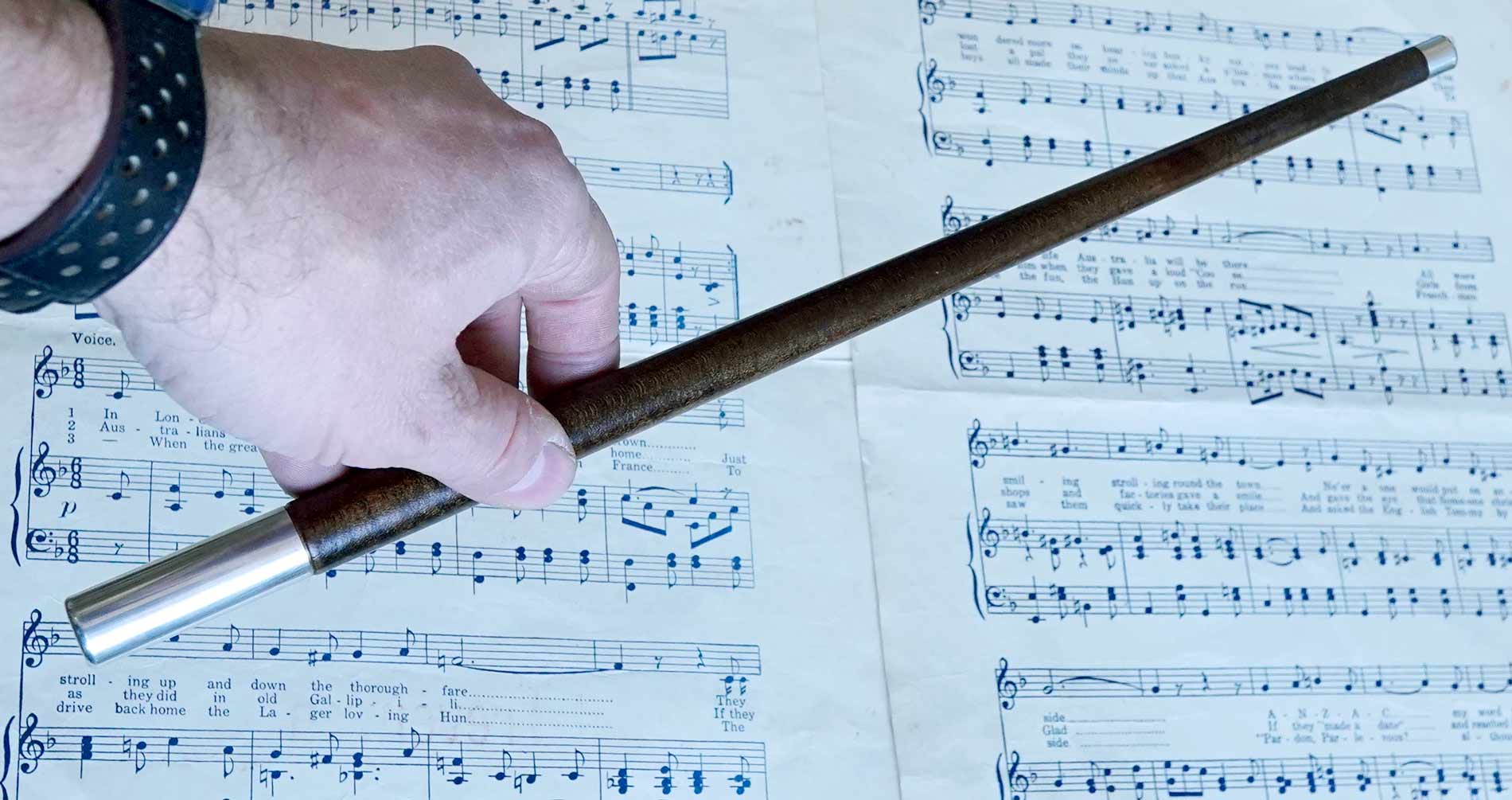
RUN FOR YOUR LIFE American silver & Walnut Baton
RUN FOR YOUR LIFE American silver & walnut conductor’s baton

Another rather puzzling baton has a cryptic message: RUN FOR YOU LIFE ….. is engraved onto the end. This example is American Silver, by Reed & Barton. It dates to the 1910-20 period – but nothing turns up valid to a musical origin when you look for the words inscribed. Maybe someone has an idea of what ‘RUN FOR YOUR LIFE’ might be relating to?
Let us know, if you do!

RUN FOR YOUR LIFE - American Reed & Barton silver mounted baton, c. 1920
RUN FOR YOUR LIFE – American Reed & Barton silver mounted baton, c. 1920
Antique Ebony Conductor's Baton
Antique Ebony Conductor’s Baton

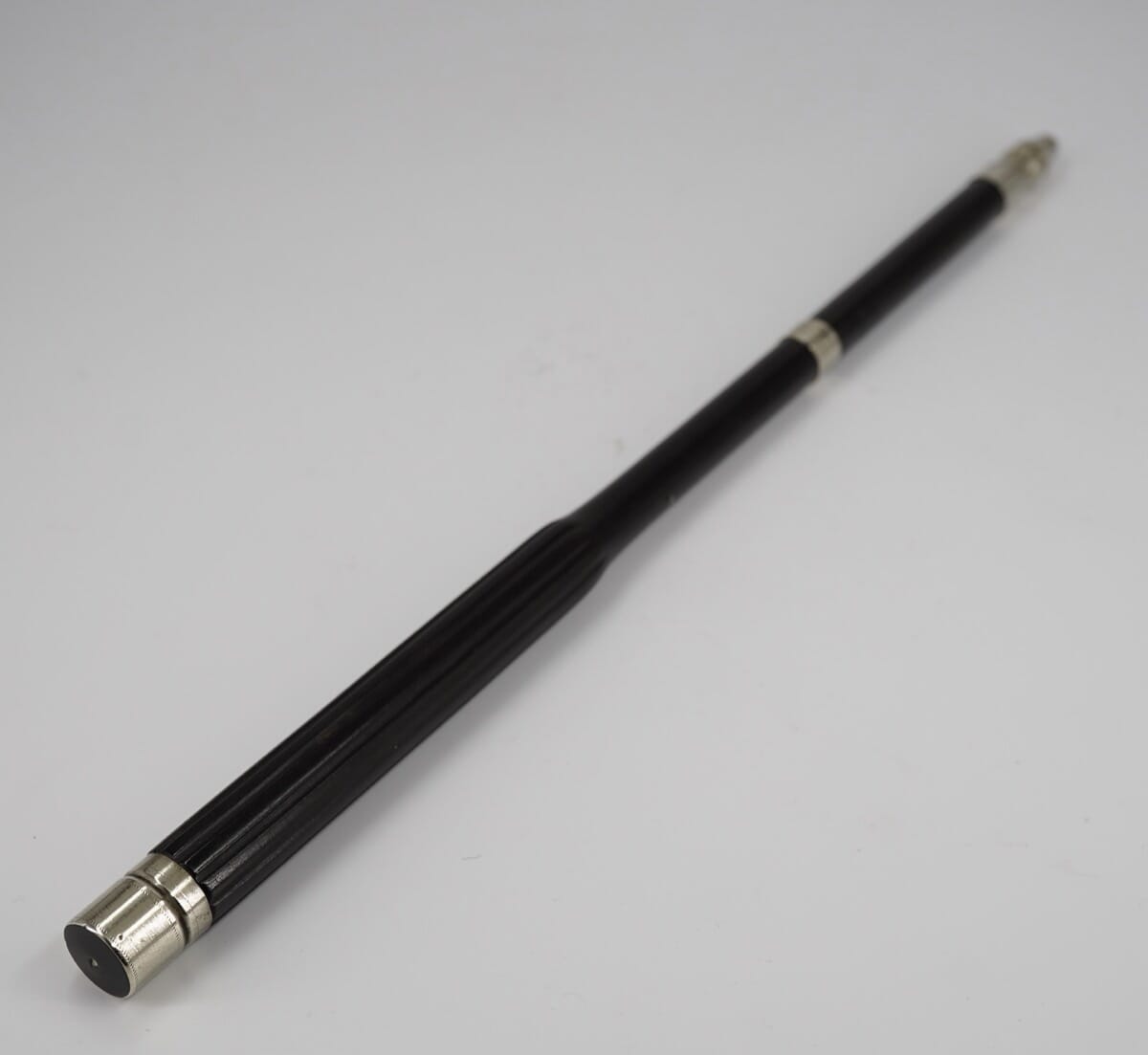
The final one is just a nice baton, no inscriptions. It has a ribbed body, making it much easier to hold. All we need is an orchestra to try it out on……

Posted on

Fresh Stock – Fine Fans, Coffee Cans, Usable Glasses, Vertu…

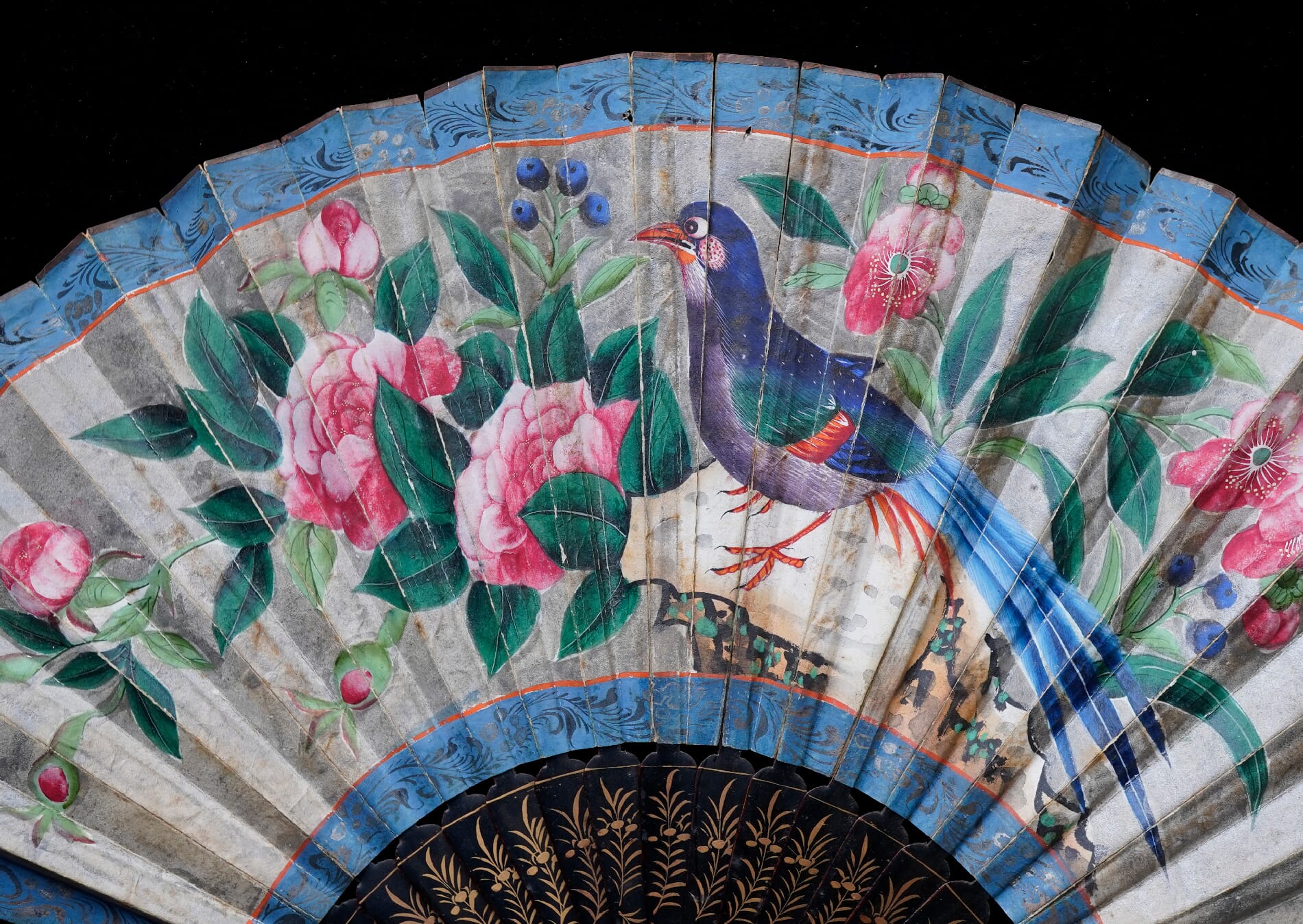
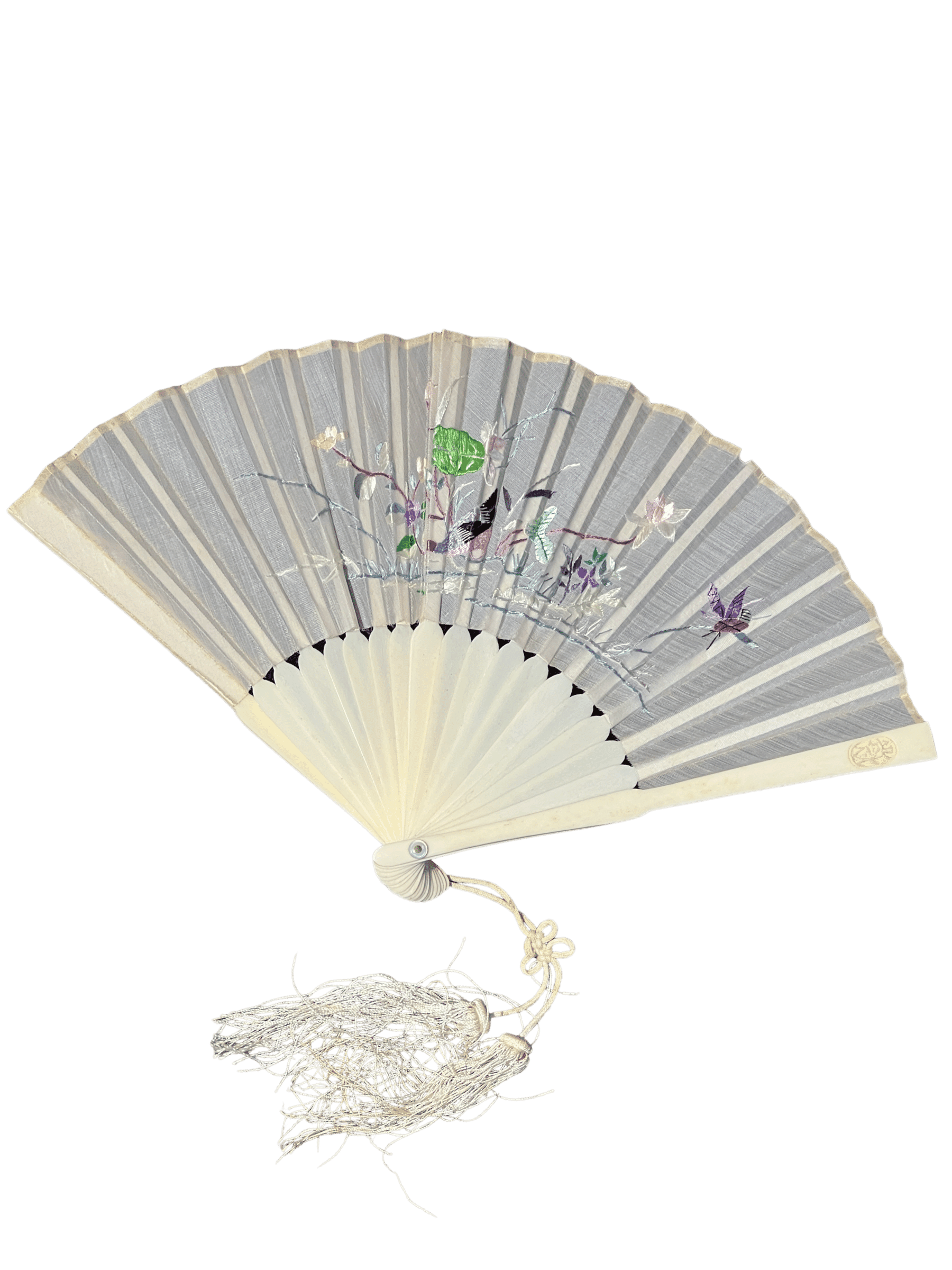
Chinese Export Bird Fan - dertail - c. 1850

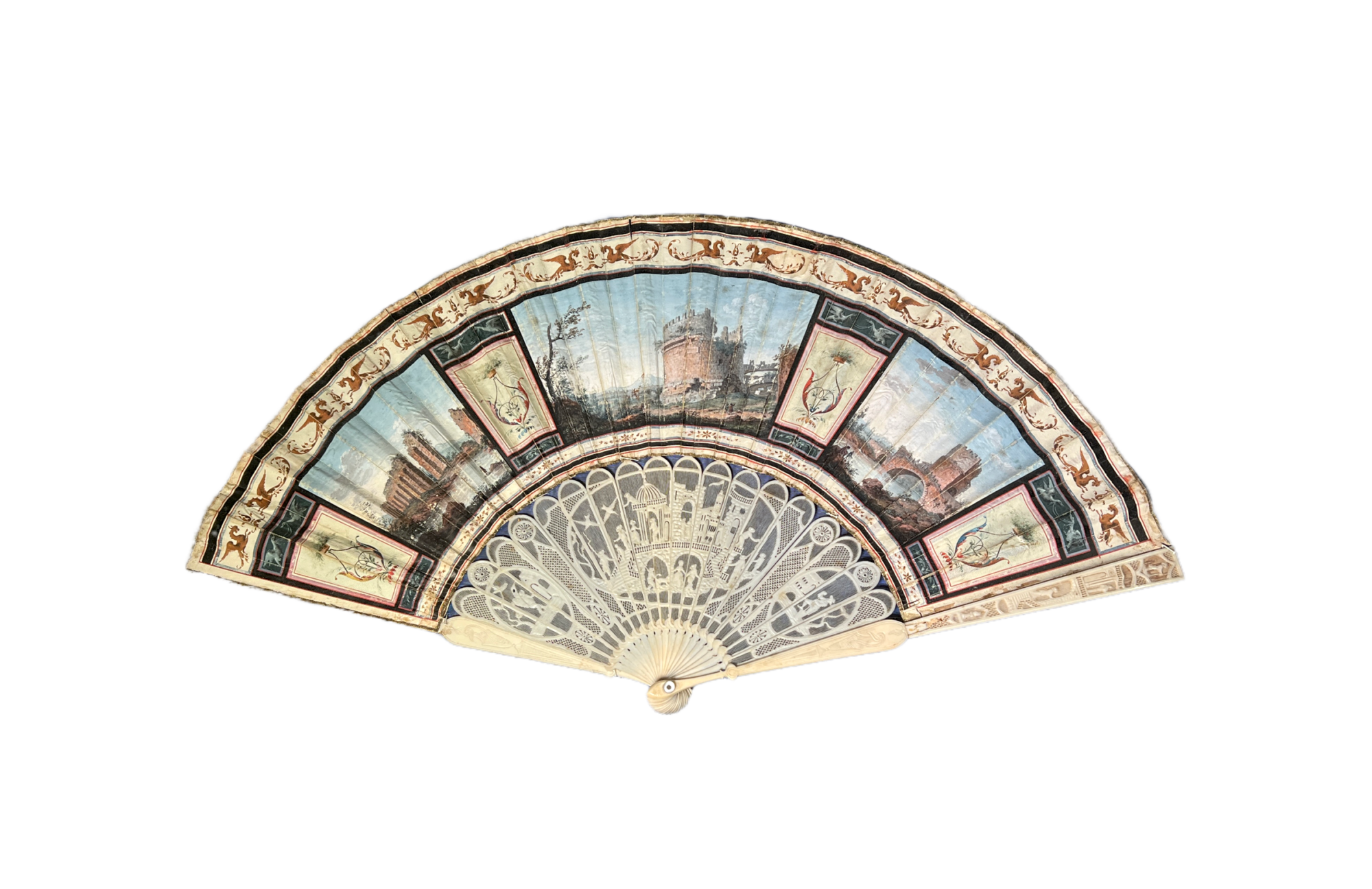
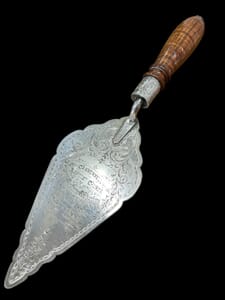
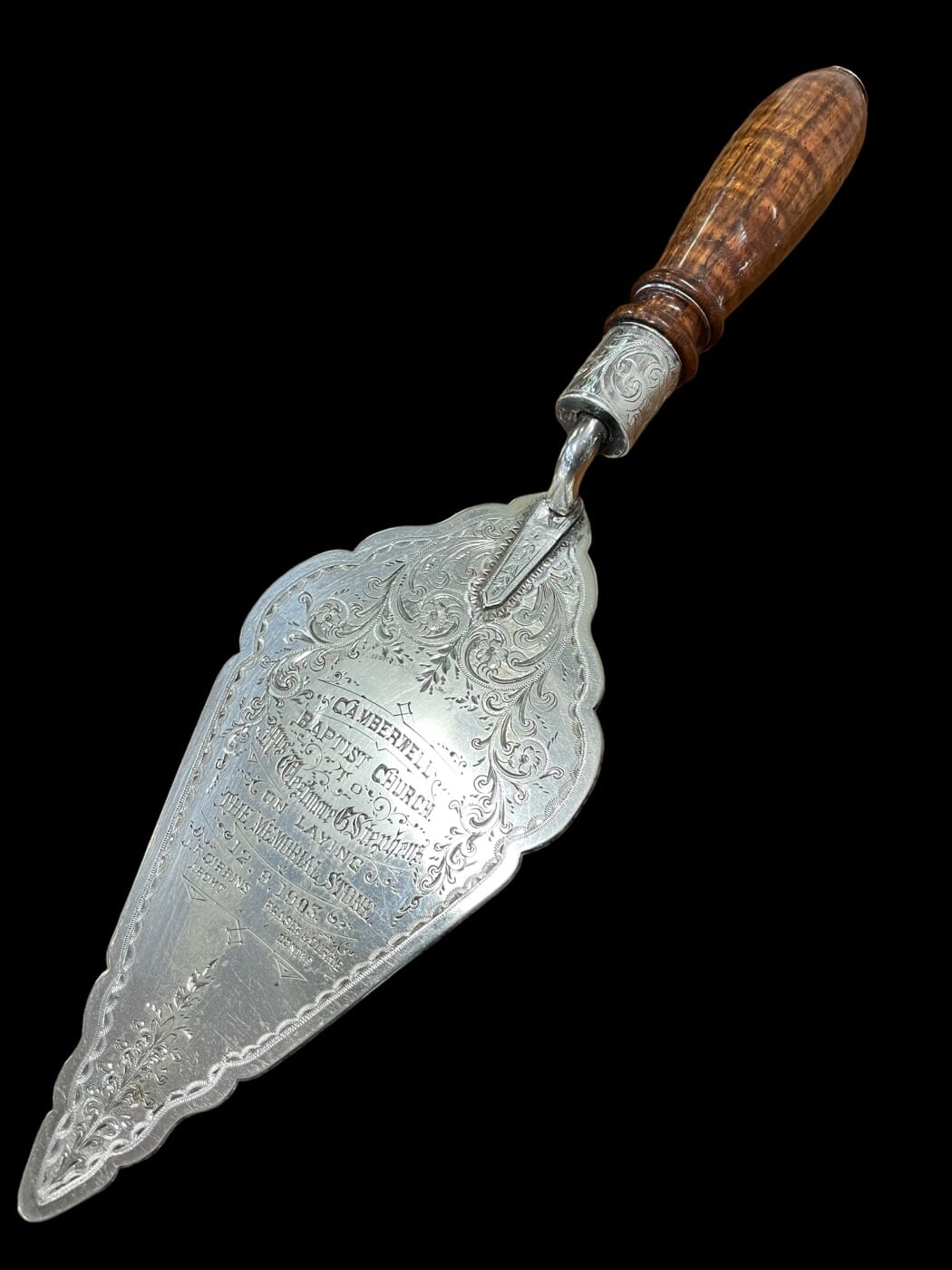
An exciting selection of Fresh items have just been posted on moorabool.com. We have a wide variety of quality items this release, everything from an 18th century fan painted with Roman Ruins, to a Melbourne Silversmith’s presentation trowel for a Camberwell church, made by the President of the Carlton Football Club – who was also a rarely-identified colonial silversmith!

Fans

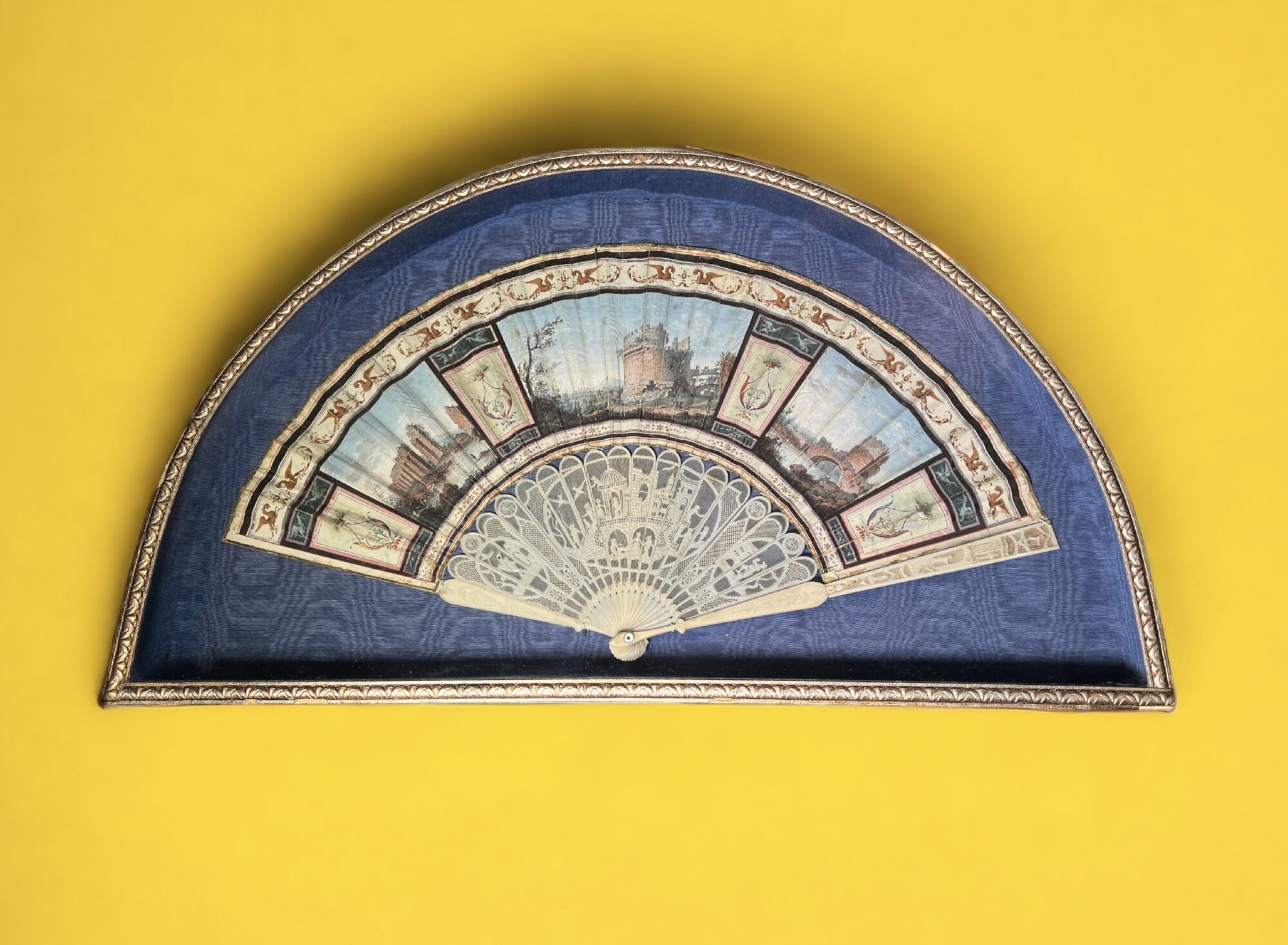
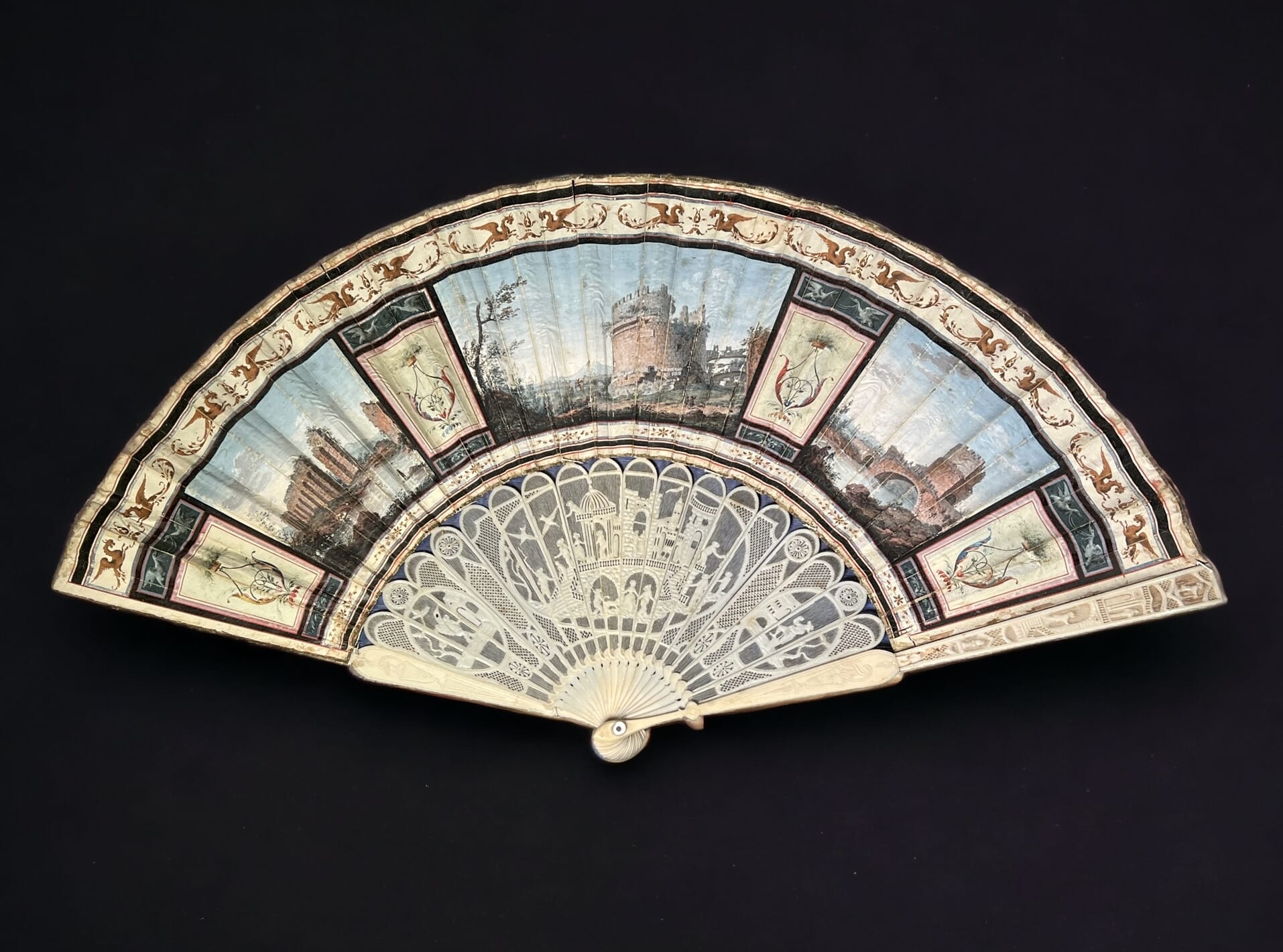
'Grand Tour' fan, Views of Rome, Italian c.1785
‘Grand Tour’ fan, a Masterpiece painted with panels of ‘Views of Rome’, Italian c.1785
Grand Tour fan, Rome, Pompeii, Rococo carved scenic sticks, c. 1785
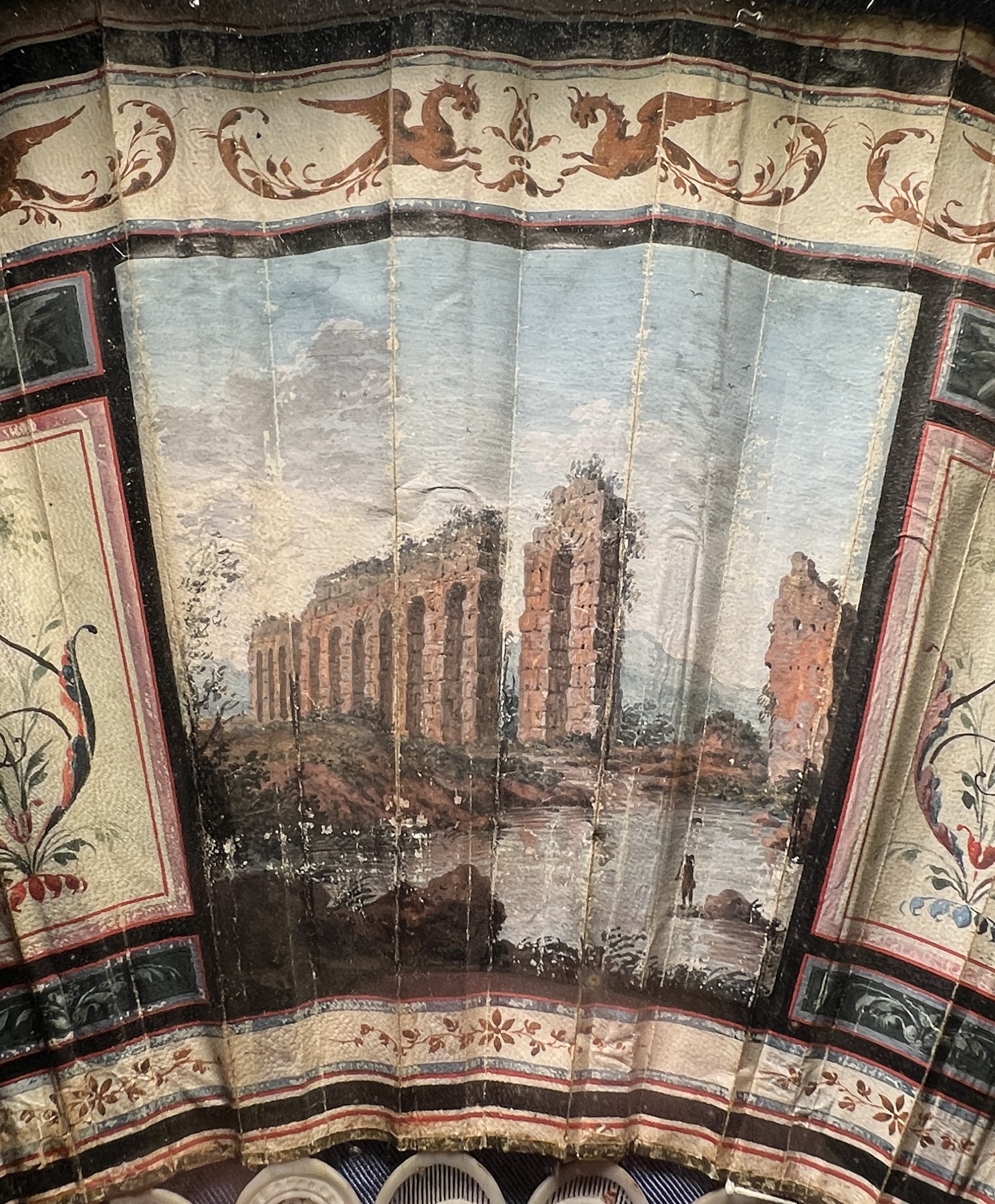
A Roman viaduct painted on the Italian fan, c. 1785

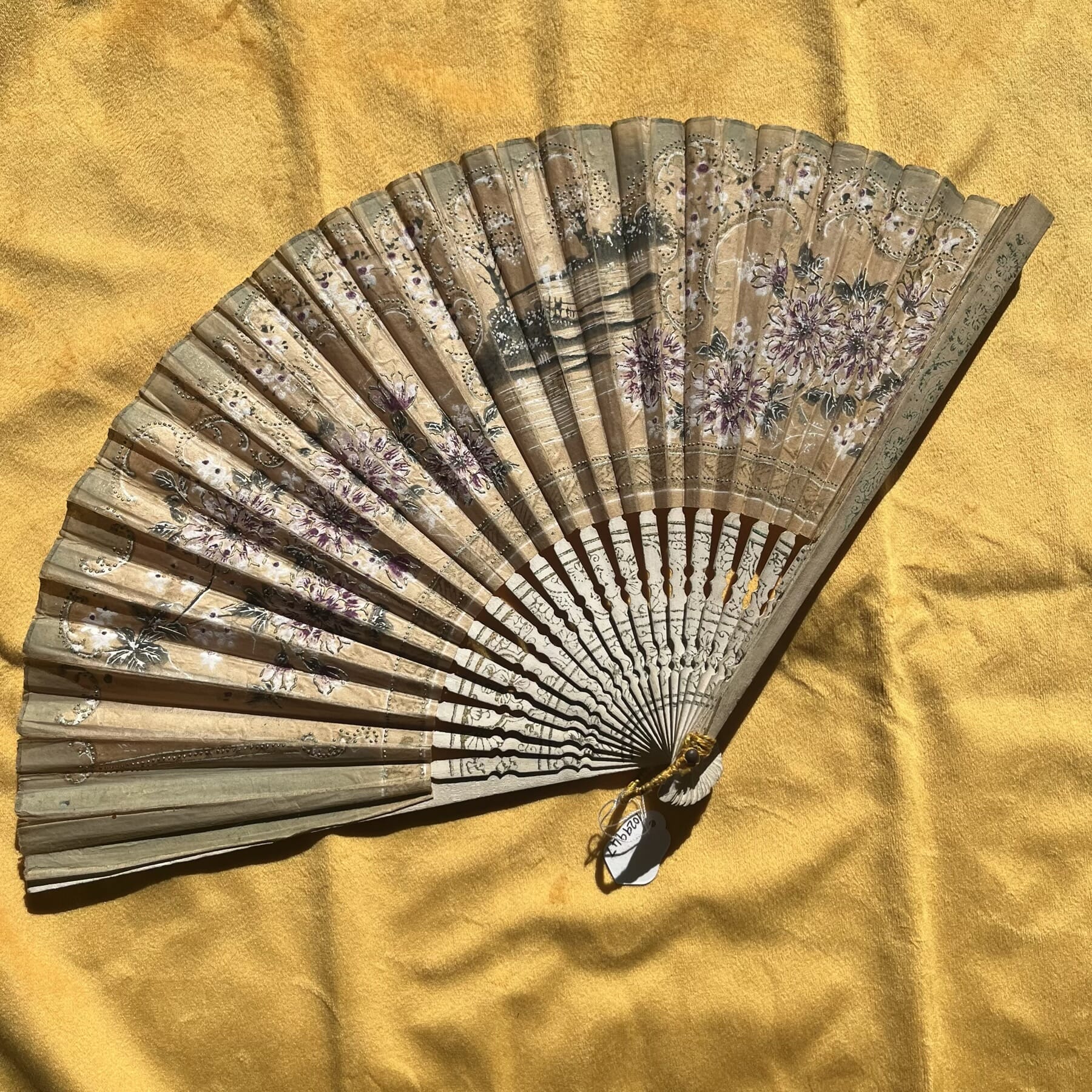
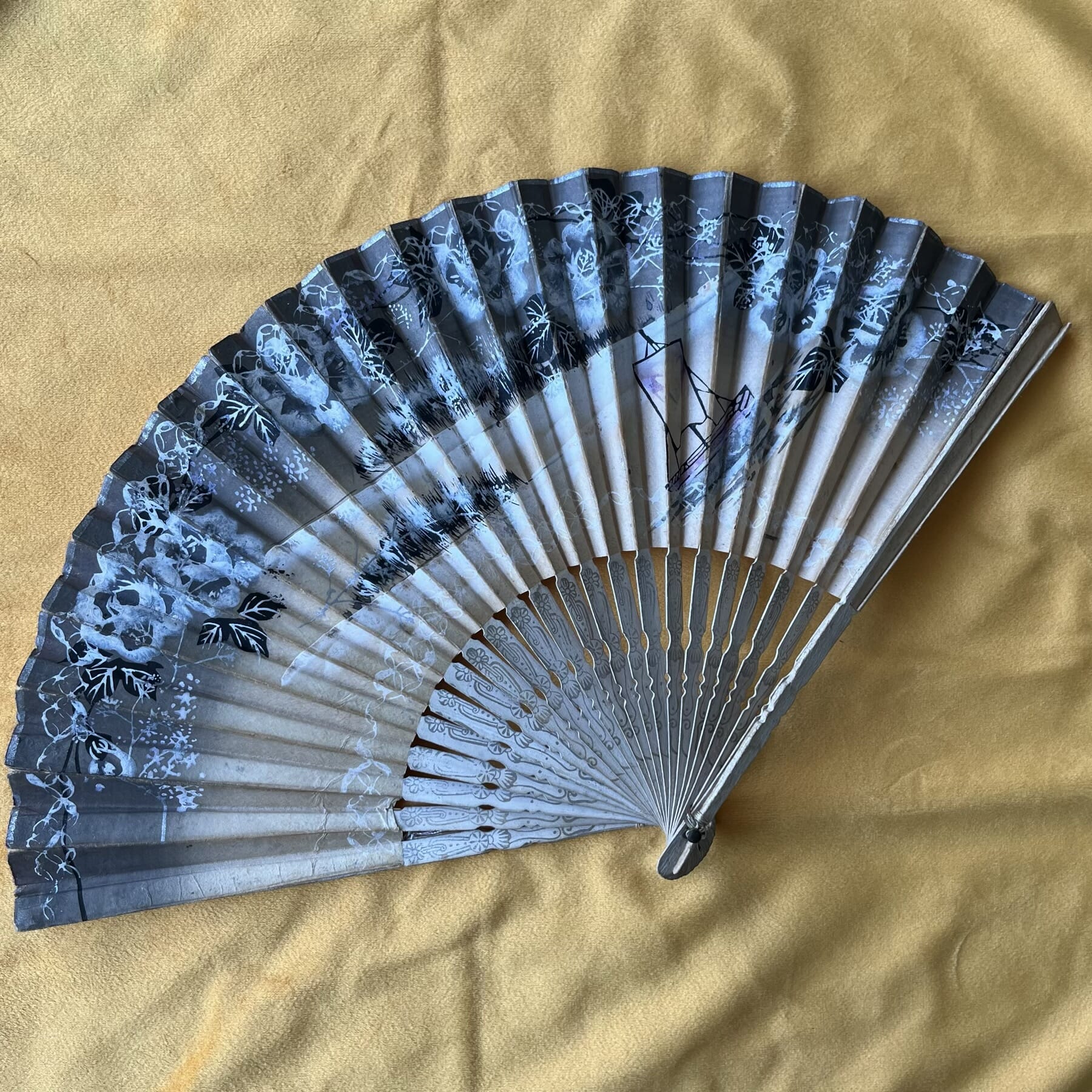
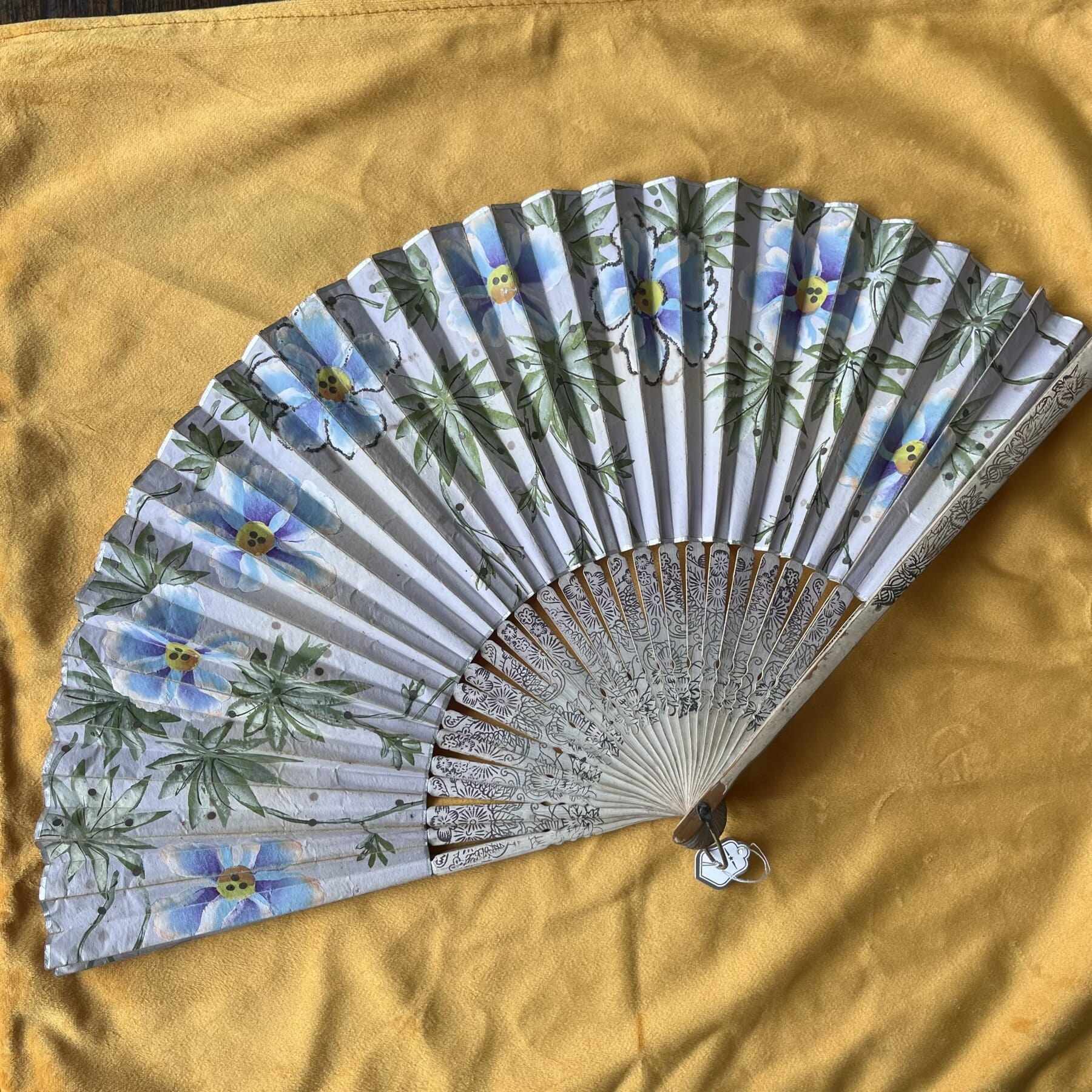
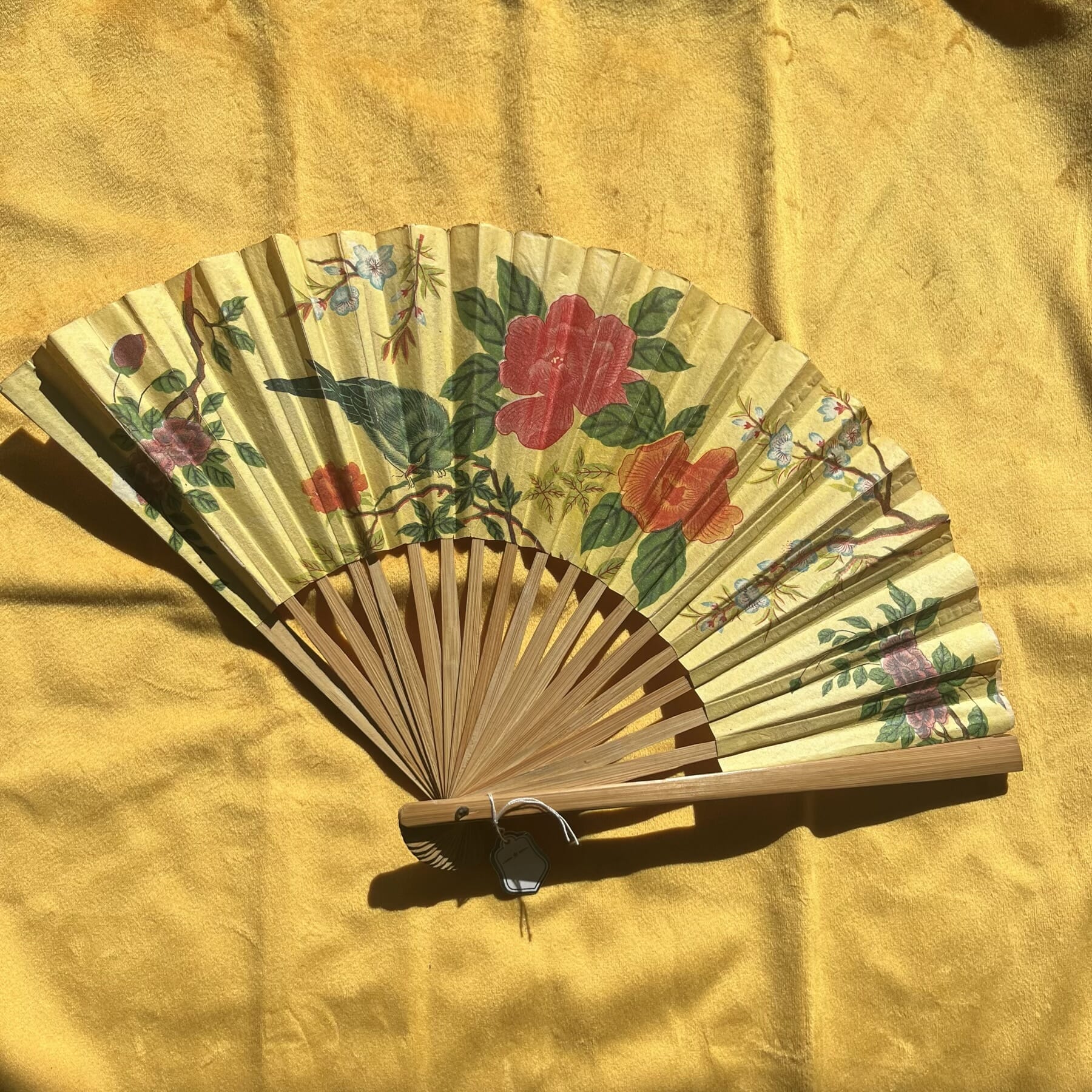
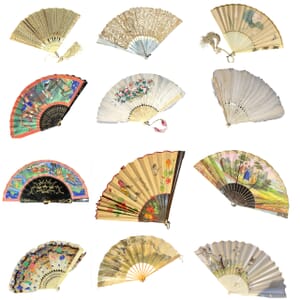
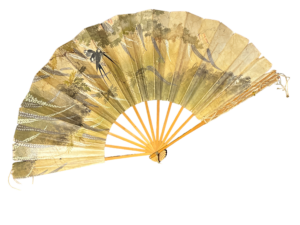
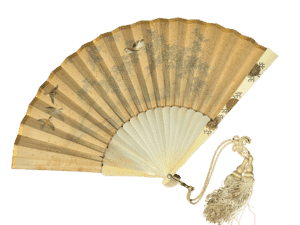
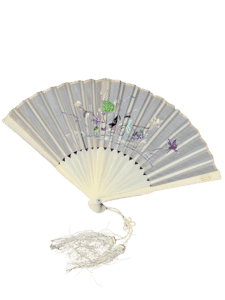
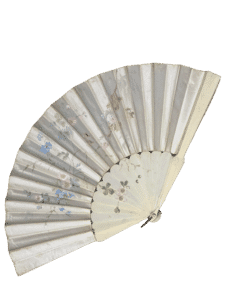
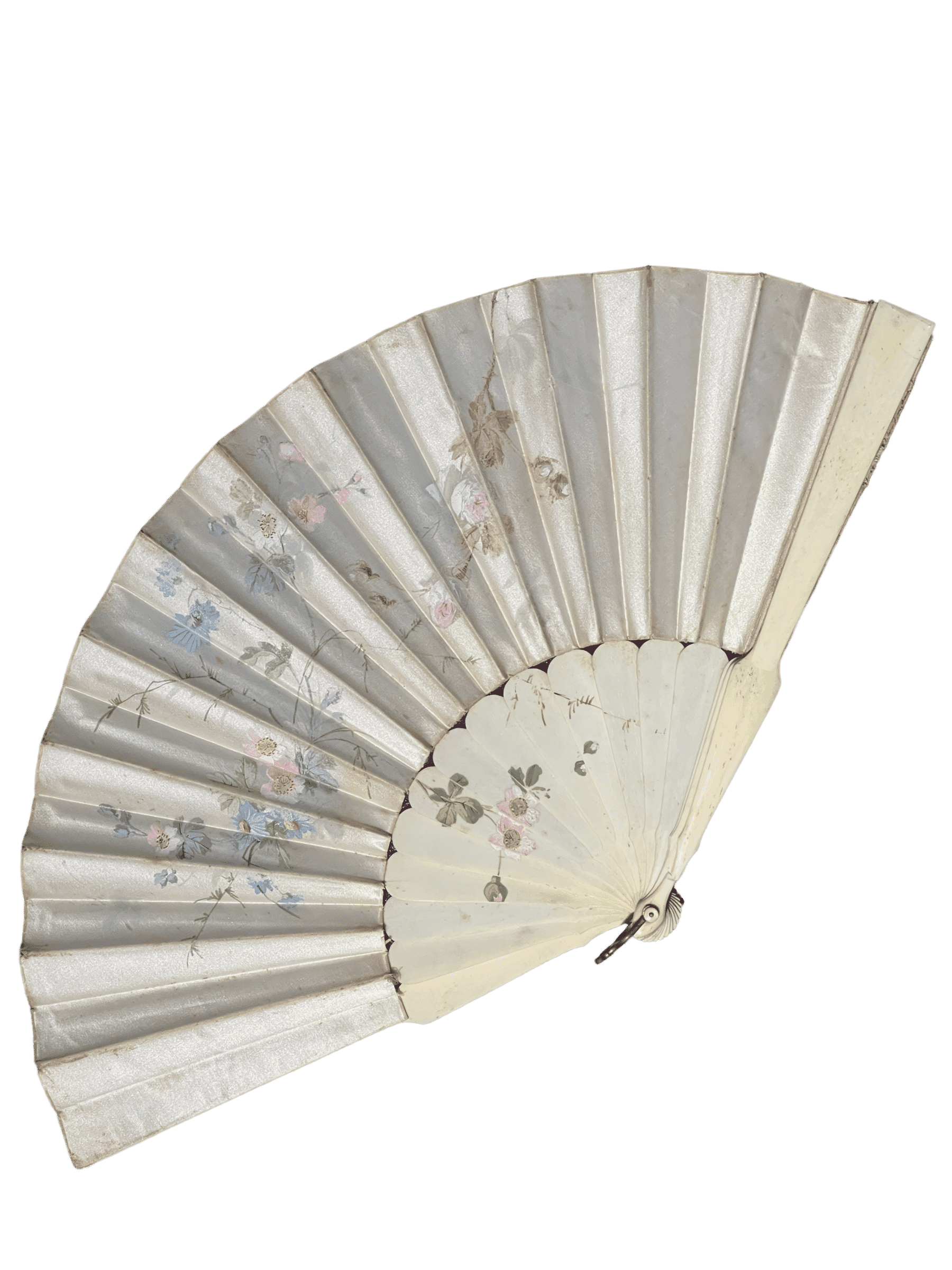
Are you a Fan fan? They were once a social necessity, not for keeping cool, but for hiding behind in social encounters…. at least in a European context. Those Europeans who headed to warmer climates must have been very glad of them though, as they were a handy way of keeping cooler in the hot colonial climates.
We have a fine selection, some of which come from the collection of the late Lorraine Rosenberg. She was the driving force behind Moorabool Antiques from the beginning in the 1960’s, and an avid collector of textiles & fans.


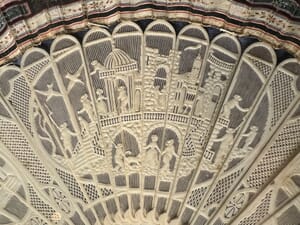
The key piece in today’s release is a French ‘Grand Tour’ fan from the late 18th century: the detail on this is stunning, with hand-painted views of Roman ruins and very finely carved sticks. The lines that make up the background are almost as fine as a hair!

Grand Tour fan, Rome, Pompeii, Rococo carved scenic sticks, c. 1785
A ‘pleasure folly’ with lots of activity, superbly carved to the sticks, with a fine web of cuts making the background. note the size of the pin-head, upper right.
Grand Tour Italian Fan
Grand Tour Italian Fan in wall mounted box-frame.

It is conveniently housed in a custom made ‘fan box’, designed to hang on the wall.


None of the others have this mounting – they are all foldable & unmounted – but we are able to provide a fan shadow-box on request, please ask for a quote.

  • Antique Fans at Moorabool Antiques, Geelong
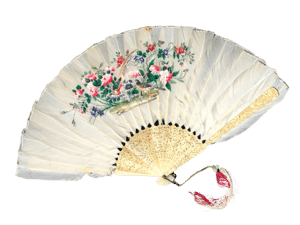
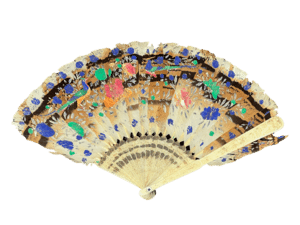
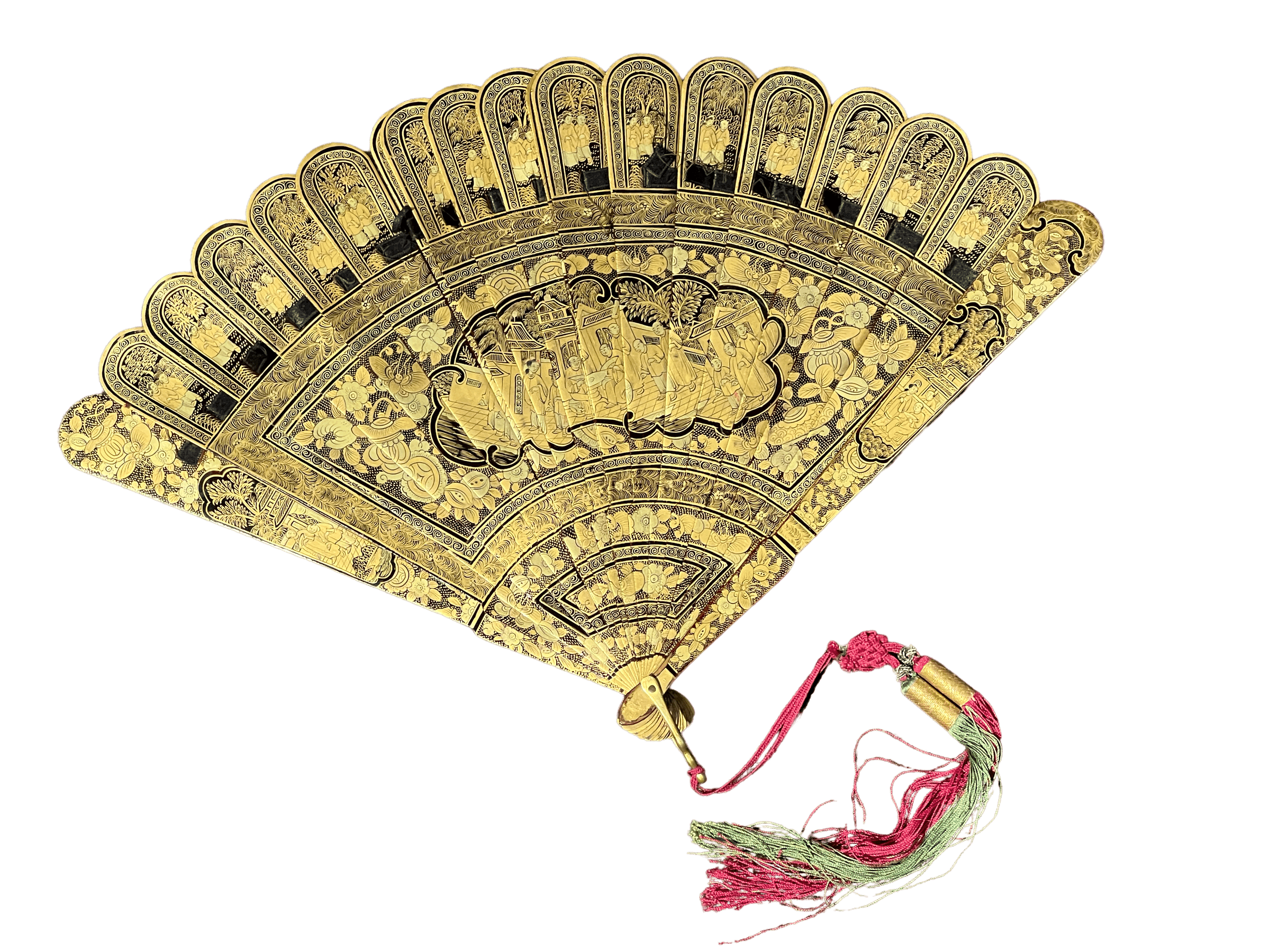
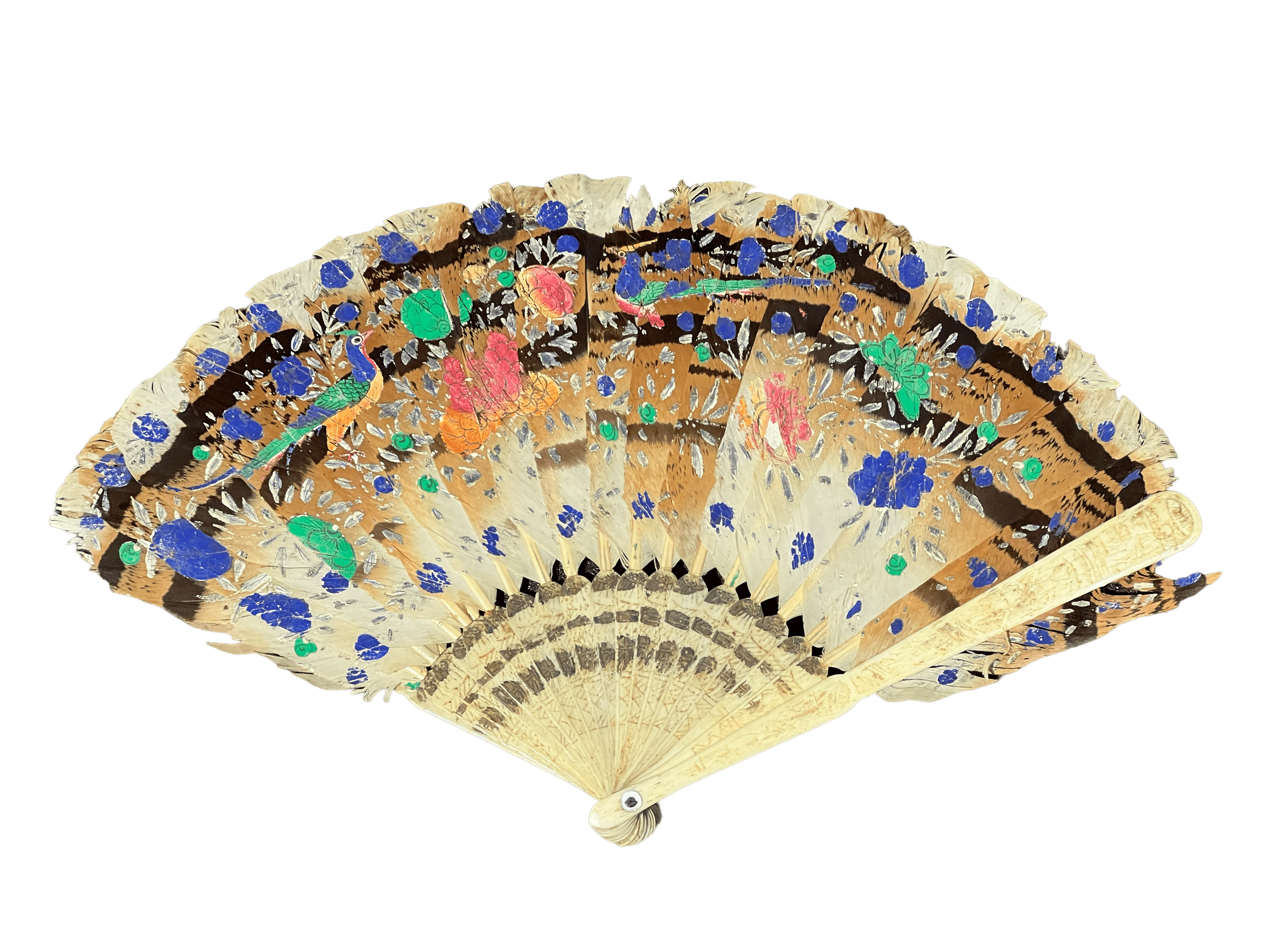
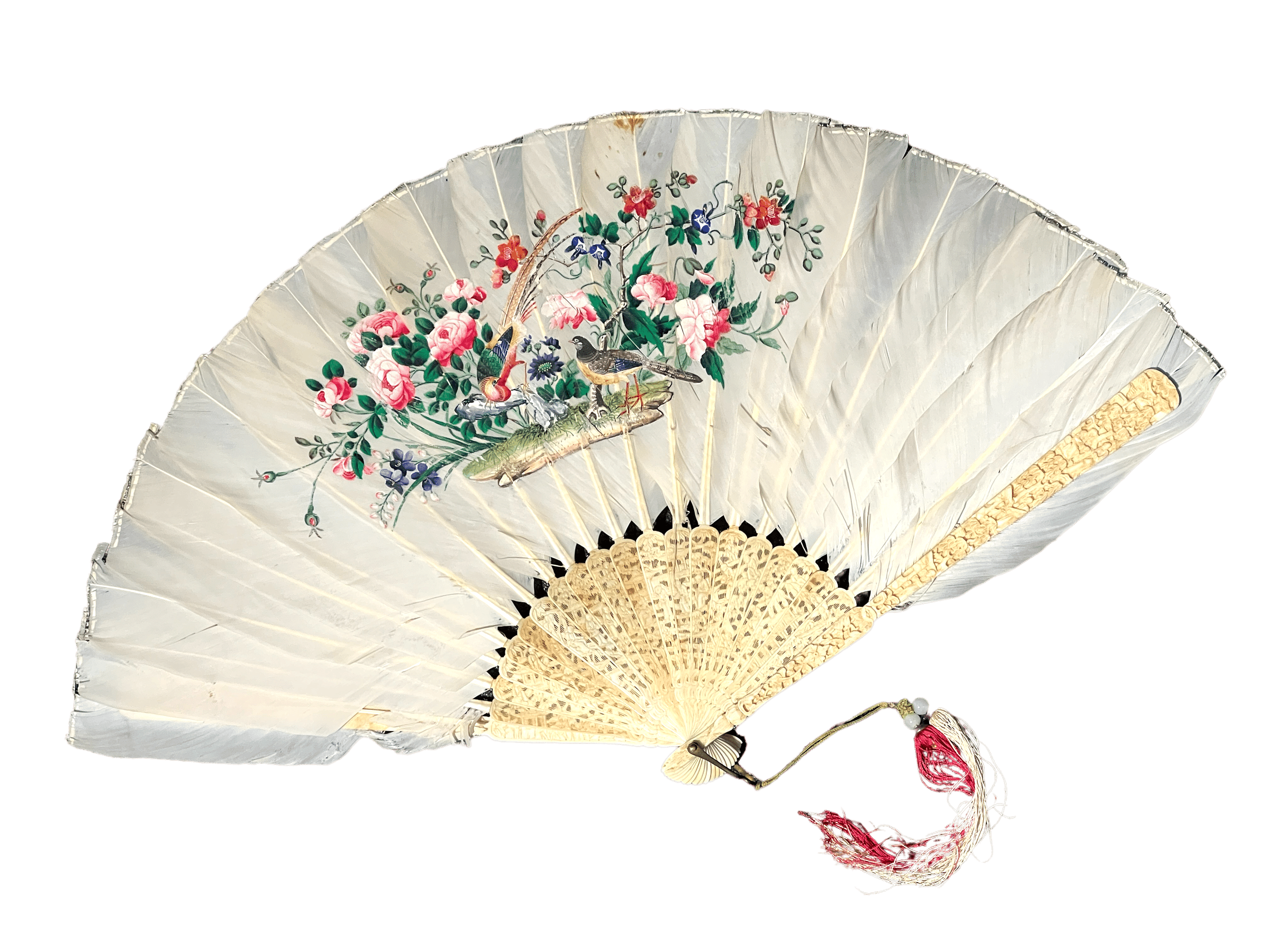
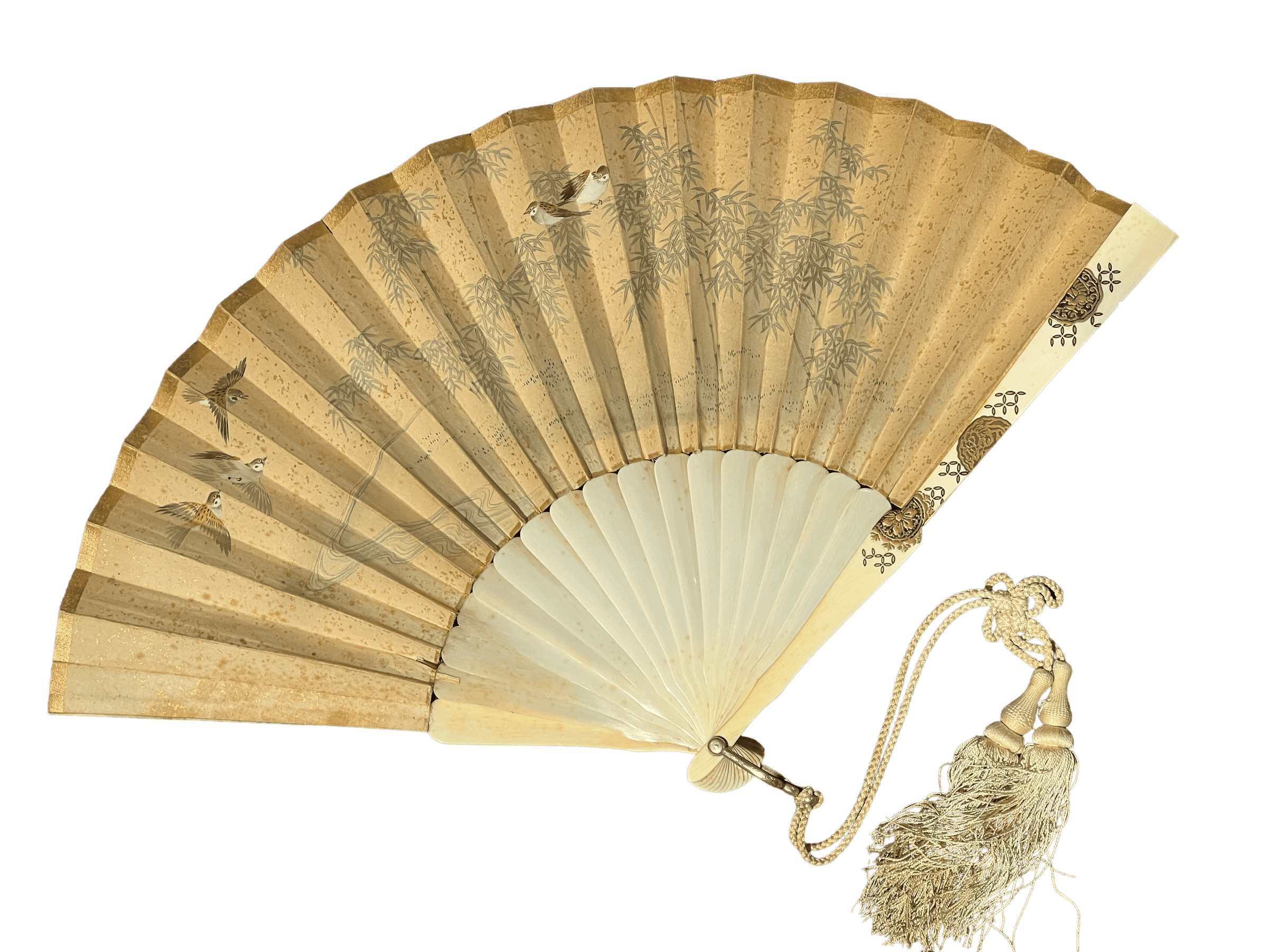
  • Chinese white feather fan, fine Birds & Flowers painting, intricate carved ivory ends, c. 1820
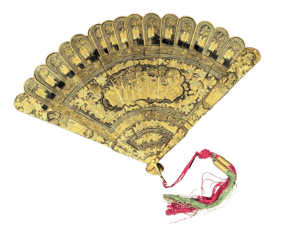
  • Chinese Export brisé black lacquer fan, fine gilt scenes, Canton c. 1840
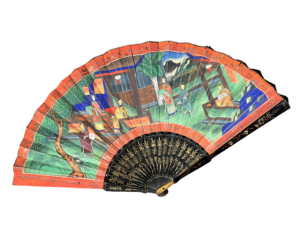
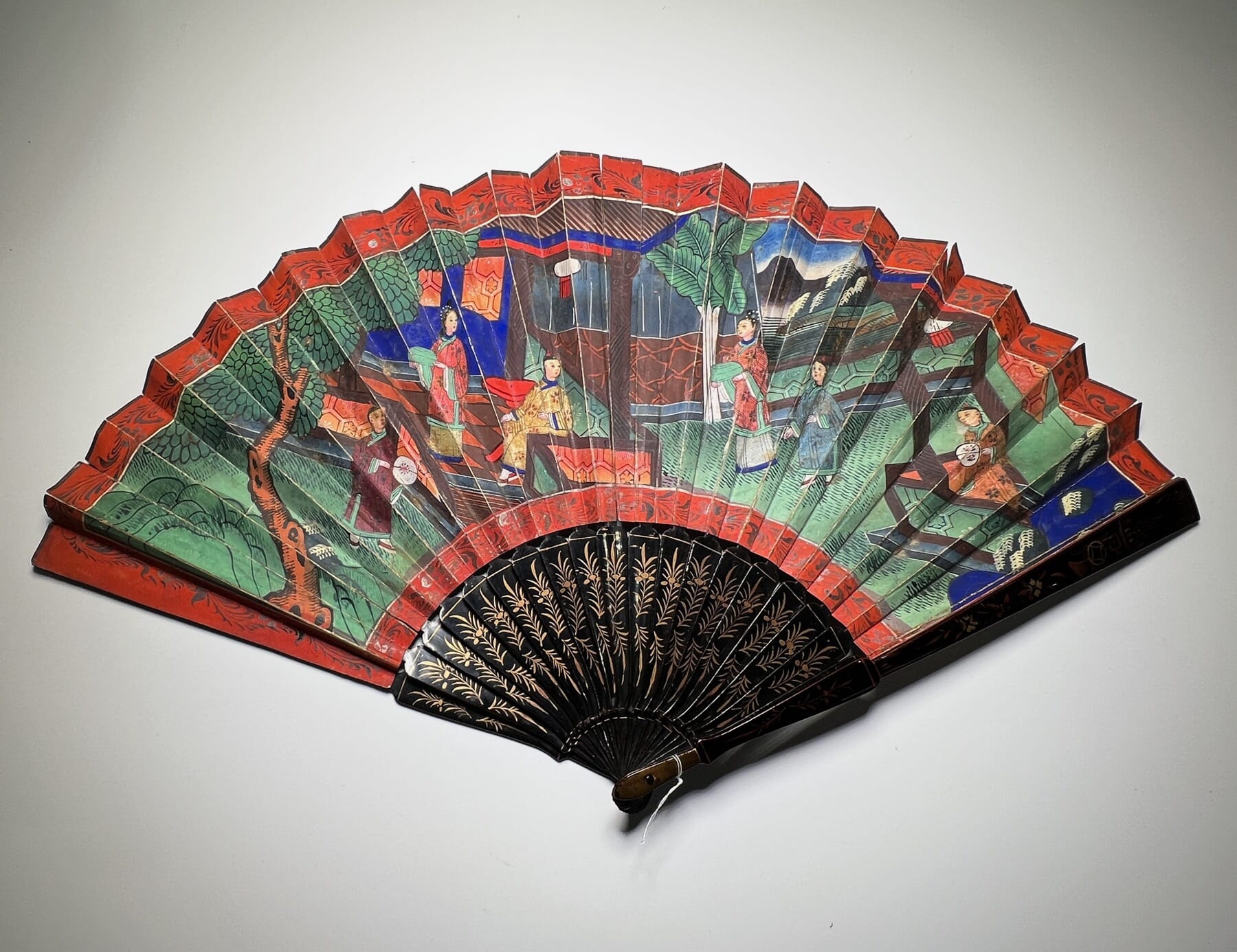
  • Chinese Export Lacquer & Painted Fan c. 1850
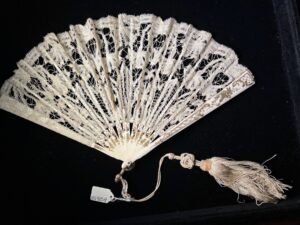
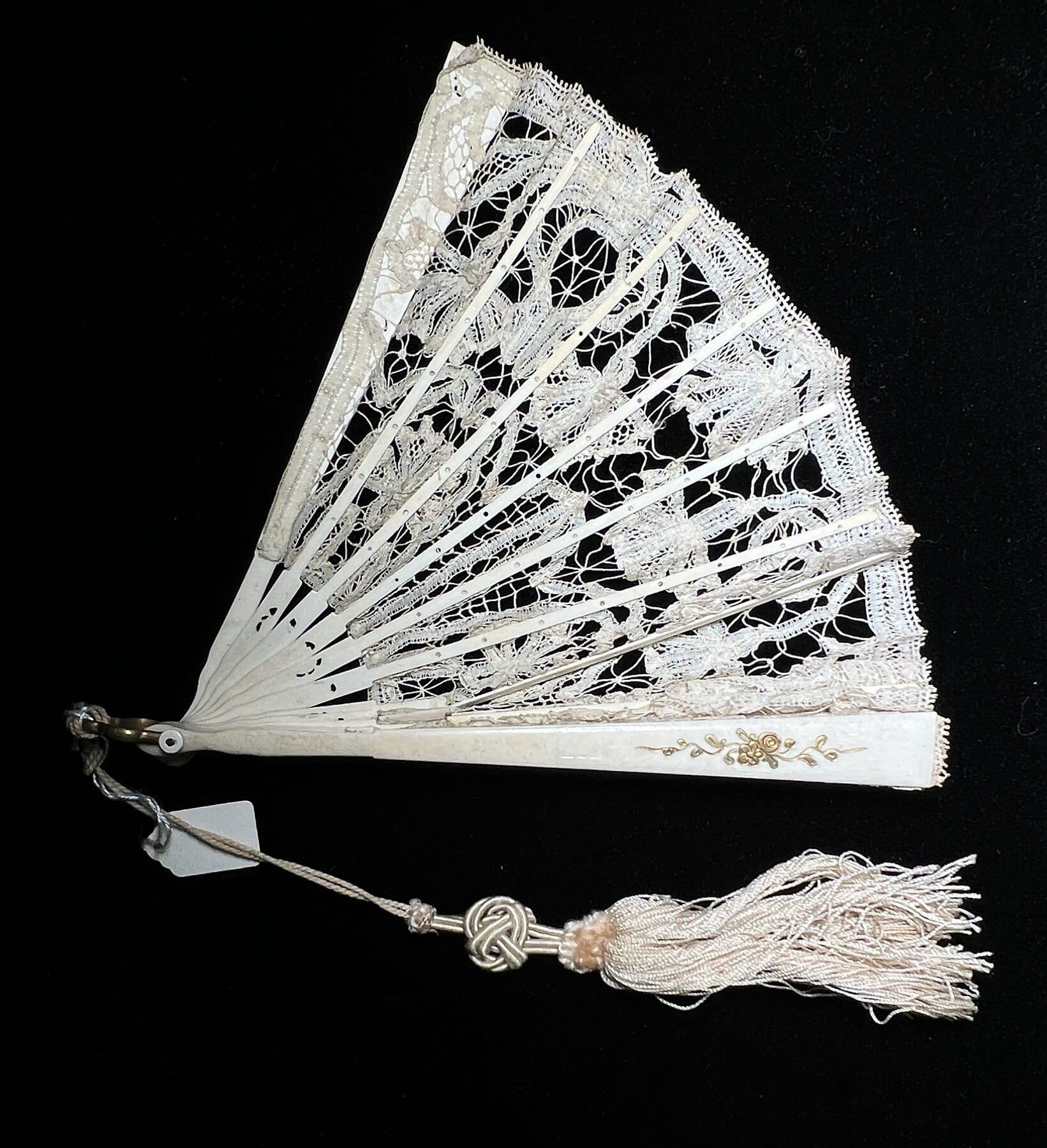
  • Brussels Lace Fan c. 1860

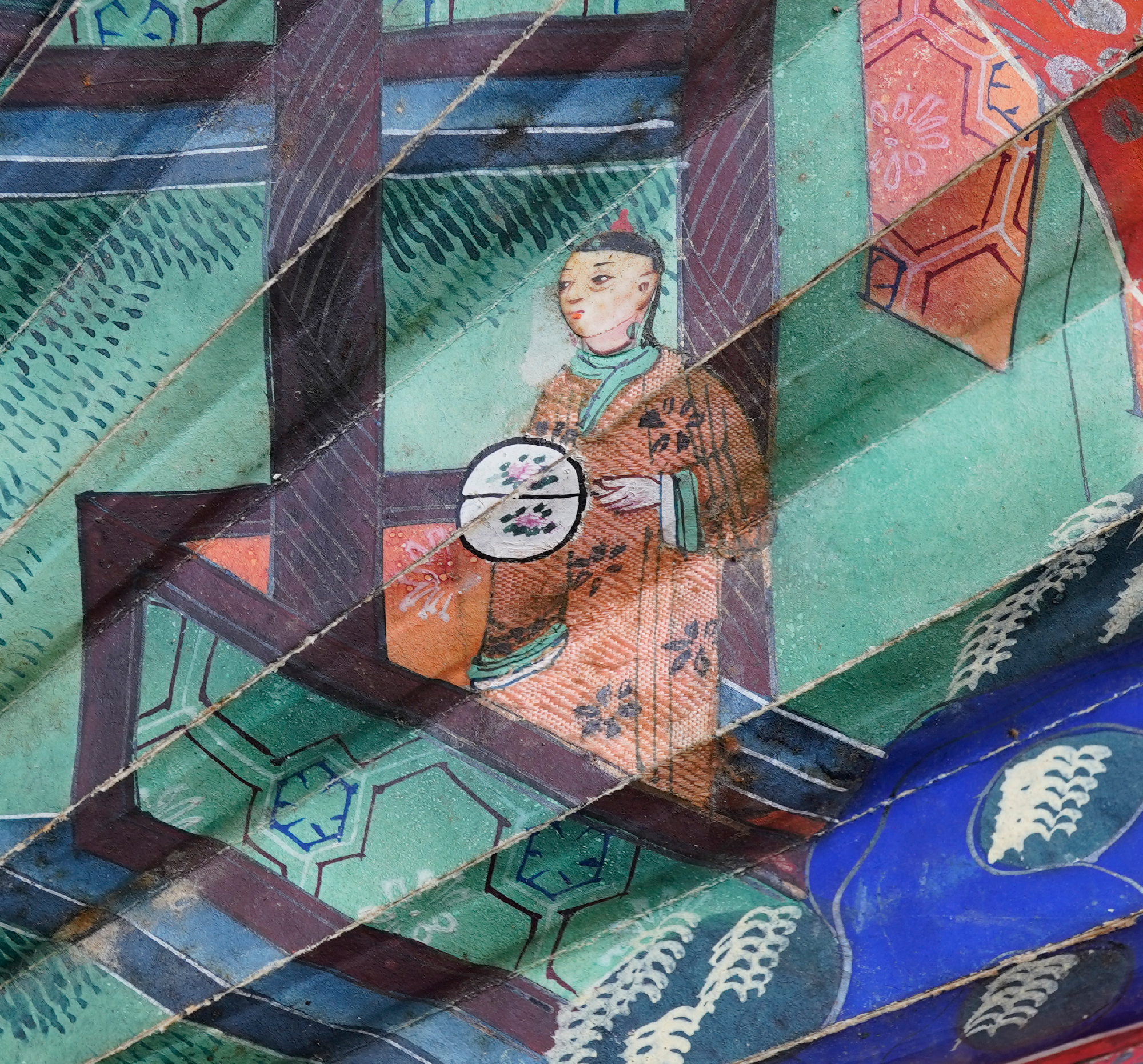
The Chinese Export fan below features applied silk costumes to the inhabitants, and ivory faces beautifully detailed.
In this gent’s hand is a fan – of course!

Dates to circa 1850.

See the fans here…. with more to come shortly.
A Camberwell Rarity

The Melbourne-made presentation trowel in today’s ‘Fresh Stock’ is a terrific piece of Australiana. It has a fiddleback Blackwood handle, and a silver-plate blade, beautifully inscribed:
Australian Silver & Blackwood Trowel, Robertson Silversmith Melbourne 1903

“CAMBERWELL BAPTIST CHURCH / Mrs Westmore G Stephens / ON LAYING / THE MEMORIAL STONE / 12.9.1903. / J.F. Gibbins Archt. / Fraser & Currie Contrs.”

It turns out this was a building built in 1903 on the site of the present building, a brick church constructed in 1940. We tried to find the stone that this trowel was used to ‘lay’ – but no luck, perhaps a Melbourne local may know…. email us if you’re familiar with the church, located right near the Camberwell Junction.
The maker of this trowel is also not very well documented. Robert Robertson came to Melbourne in 1852, and operated as a jeweller throughout the goldfish years, using a rarely seen hallmark ‘RR’. When his son joined the firm, it was ‘Robert Robertson & Son’ – try saying that fast! This piece bears another rarely seen mark, not in the literature – ‘R&S ROBERTSON’.

Robert-Roberston-SIlversmith-Melbourne
Robert Robertson, Silversmith & Footballer – Melbourne, 1887


Research into his career as a silversmith revealed very little documentation – he was a wholesale silversmith, meaning he made pieces for retail jewellers, and they often put their own hallmarks on the pieces they sold. However, he is well documented for a very ‘Melbourne’ reason: Australia Rules Football!

He took up the ‘new’ sport very early, possibly playing in an 1869 match for the Carlton Football Club. He twice captained the team in 1871, was the Carlton Vice President 1871-73, and then from 1874-84 was the Carlton Football Club President!

Beautiful Buckles

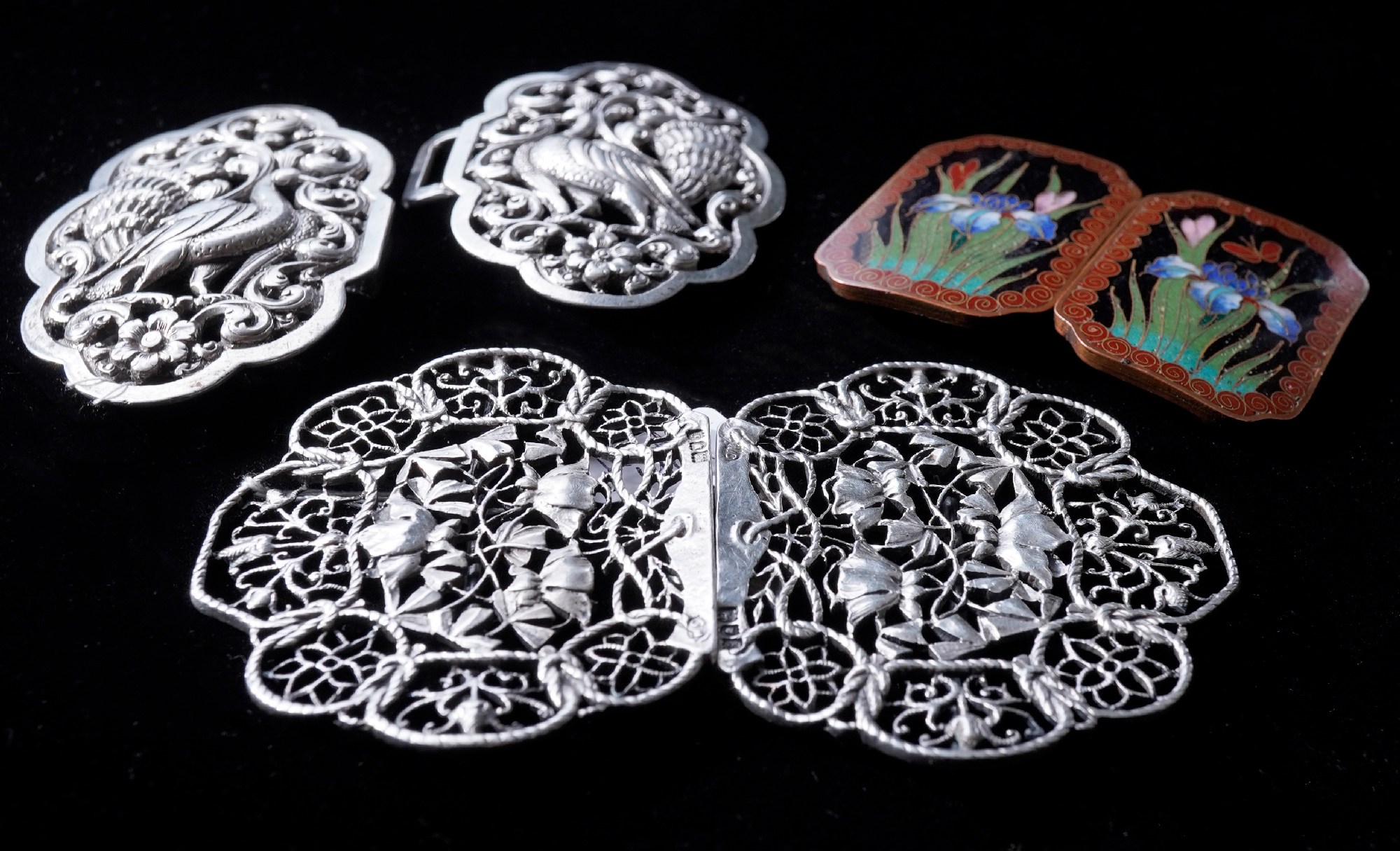
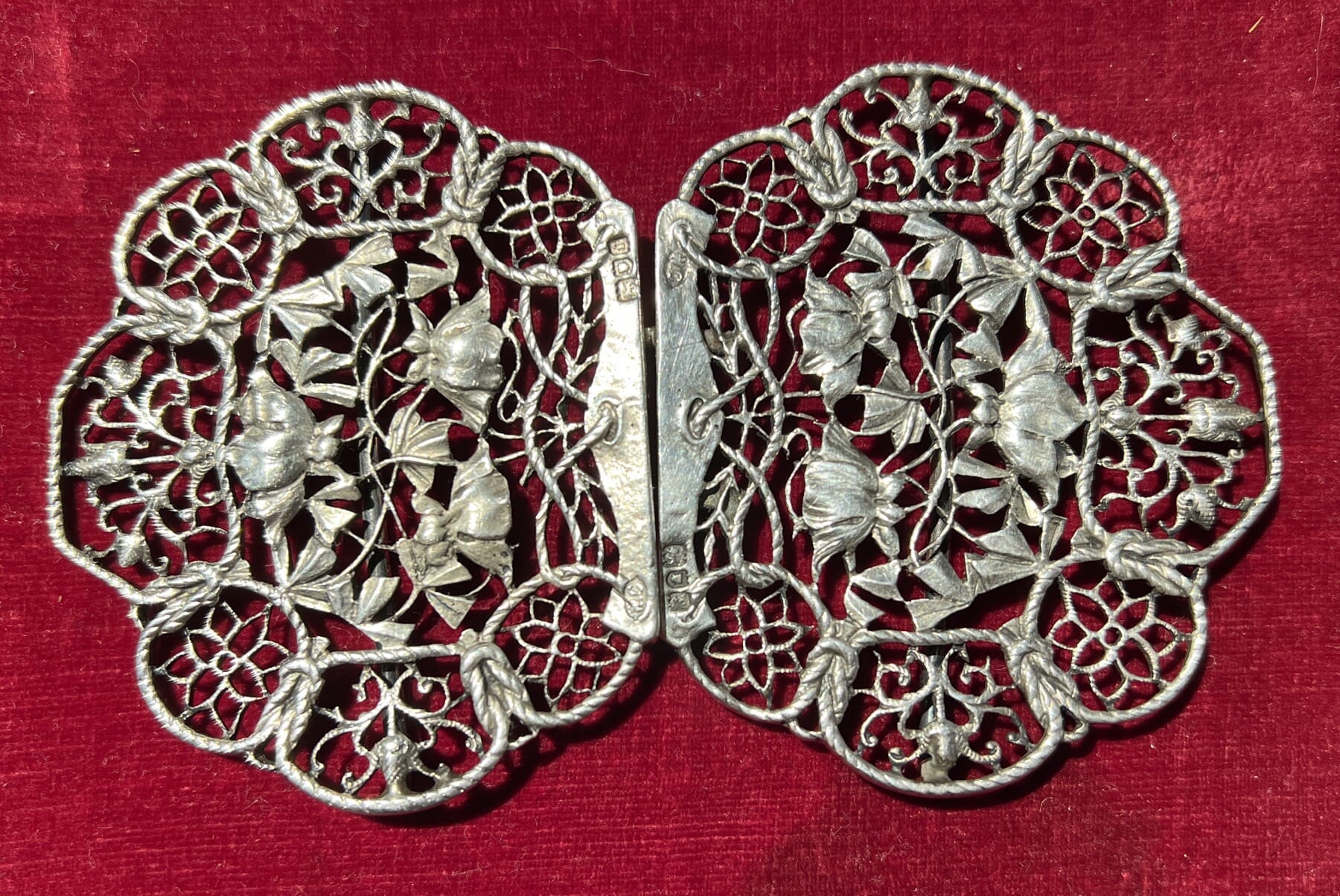
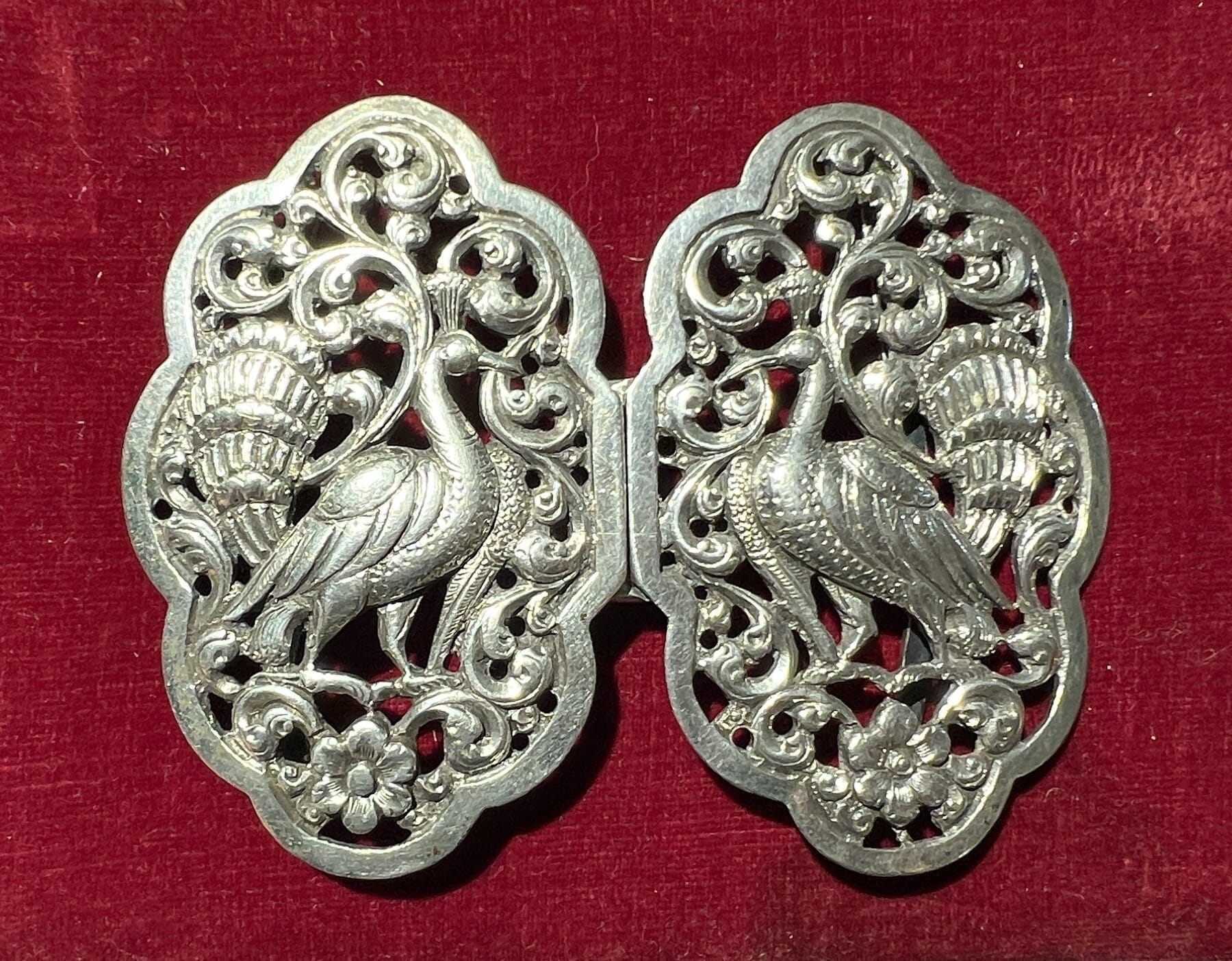
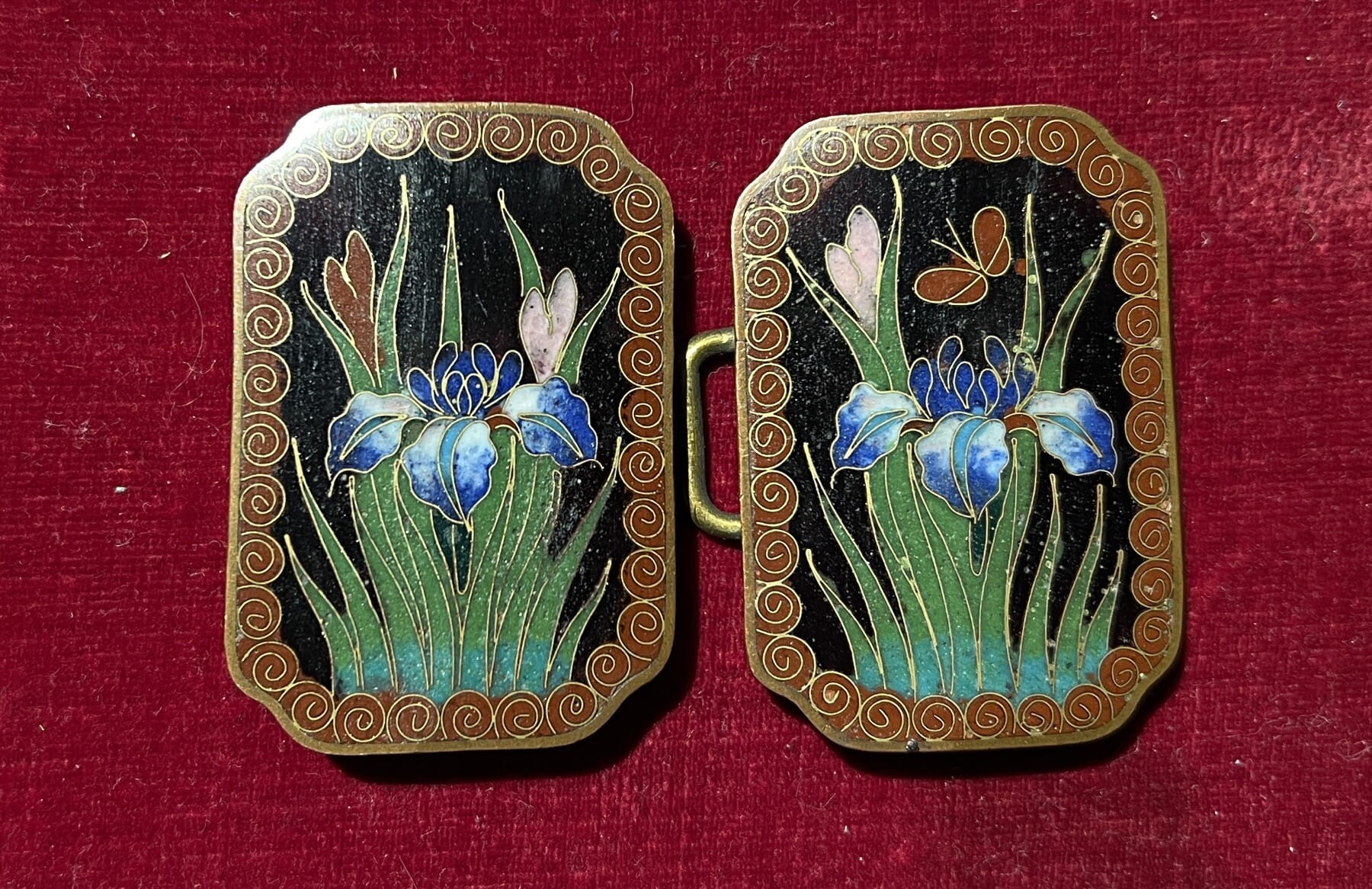
These exquisite items were used by the fashionable Victorian lady to clasp their thin belts they wore at their waist. The Art-Nouveau example in particular is a very fine example.

Early 19th century English Porcelain Coffee Cans at Moorabool Antiques, Geelong

Coffee Cans

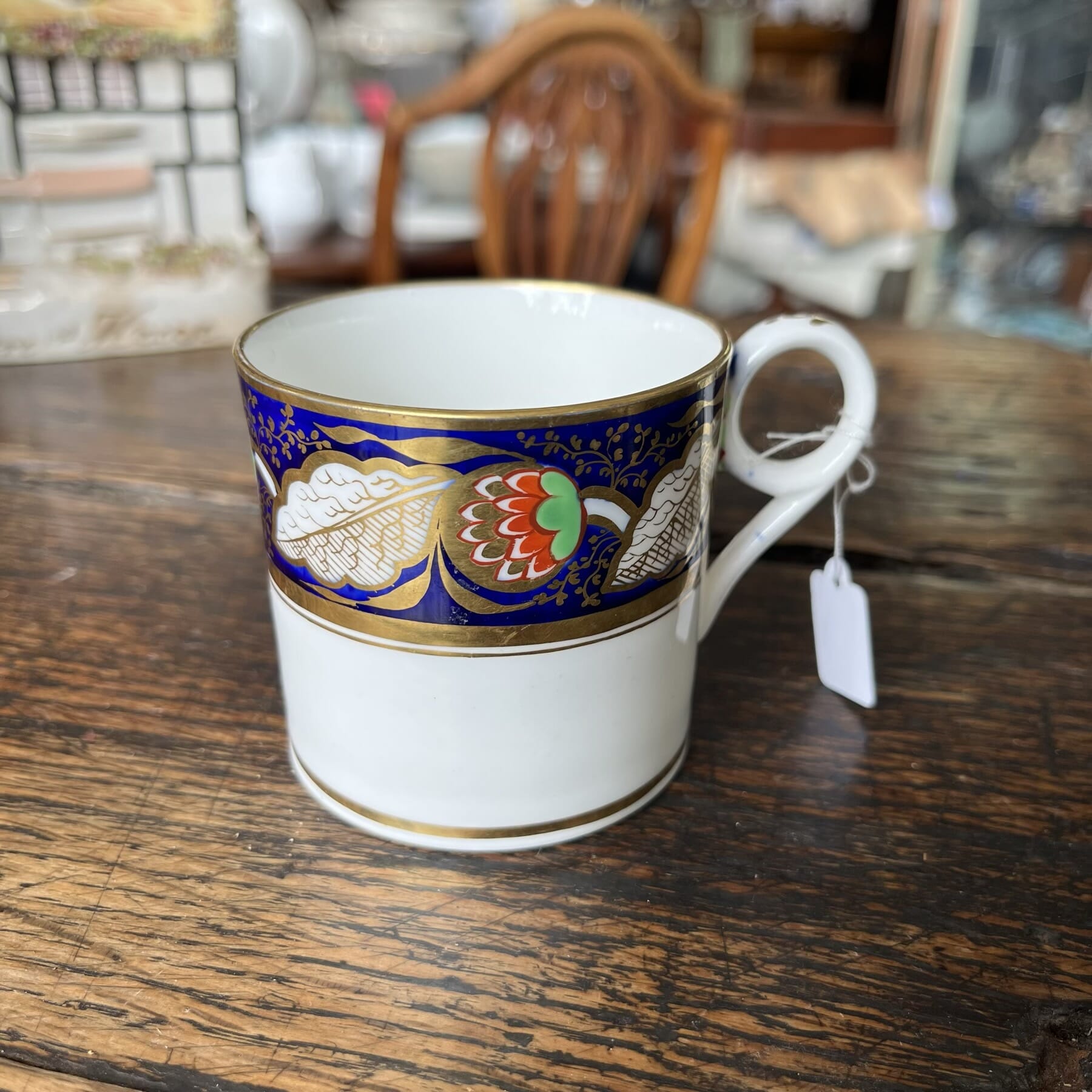
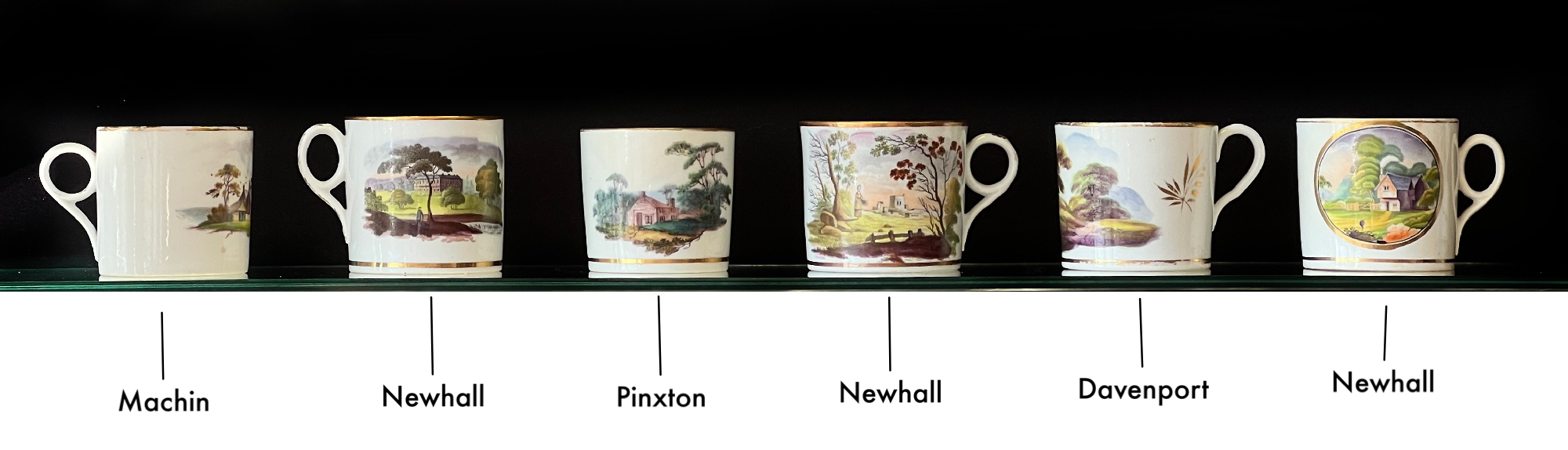
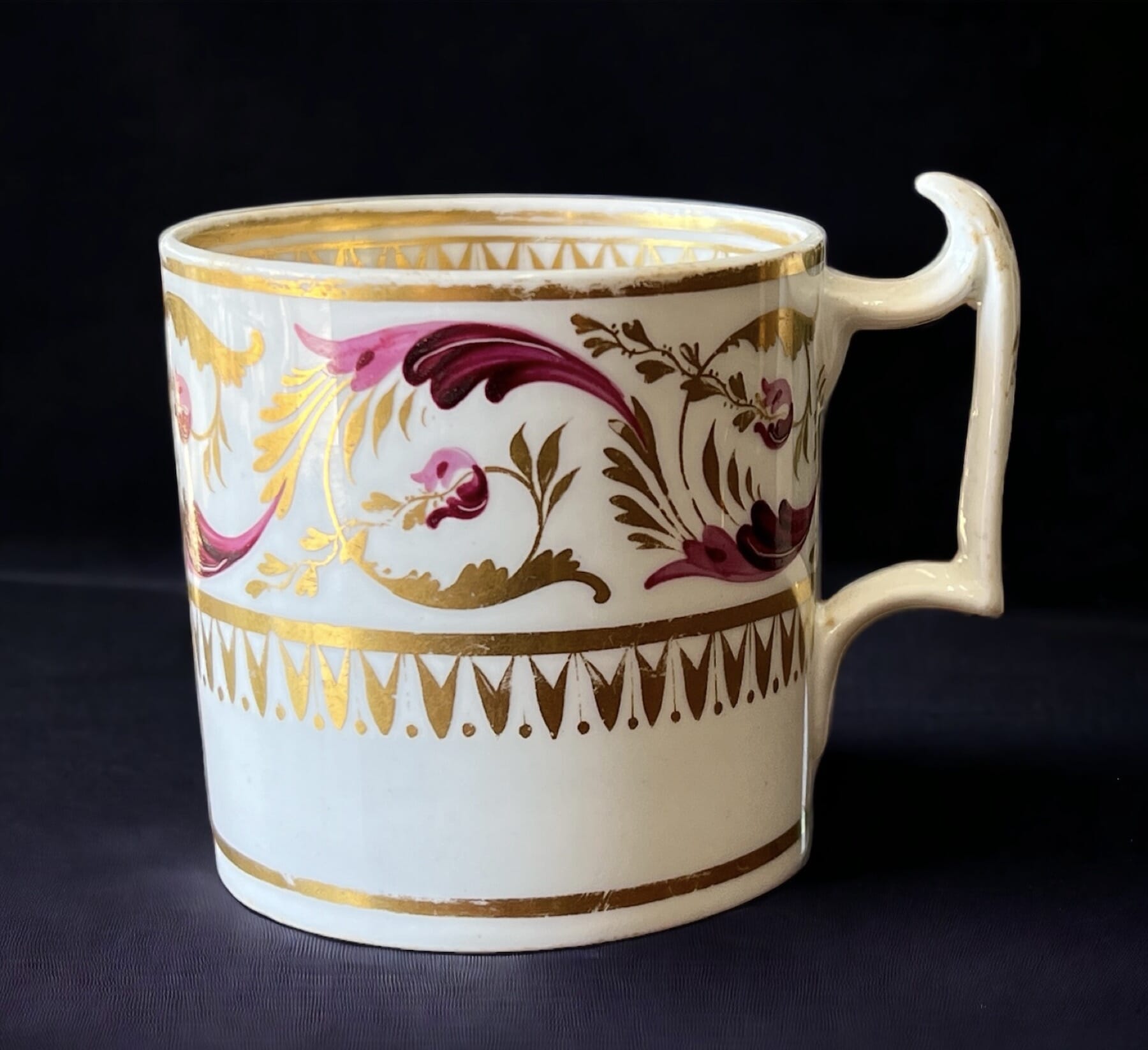
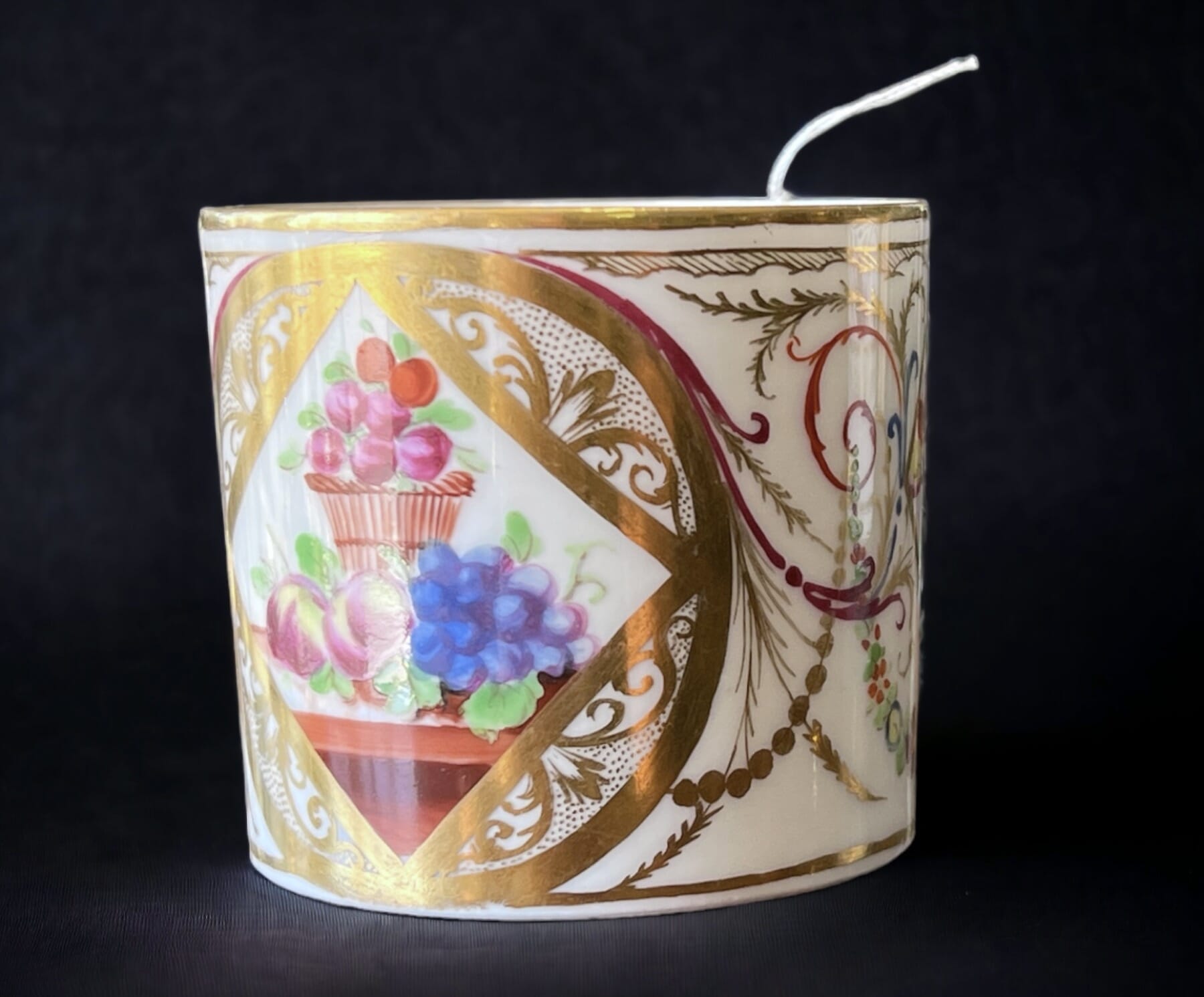
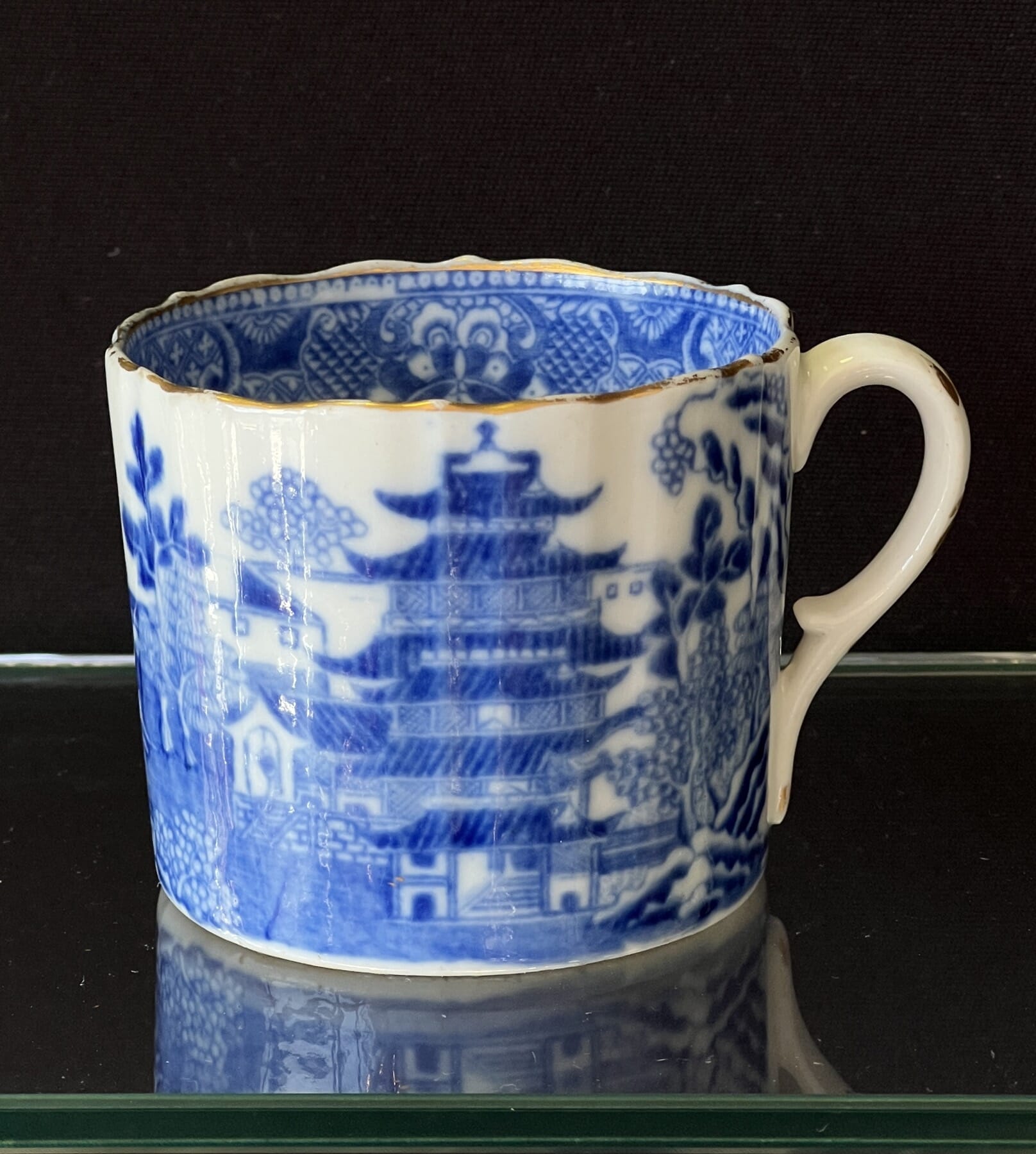
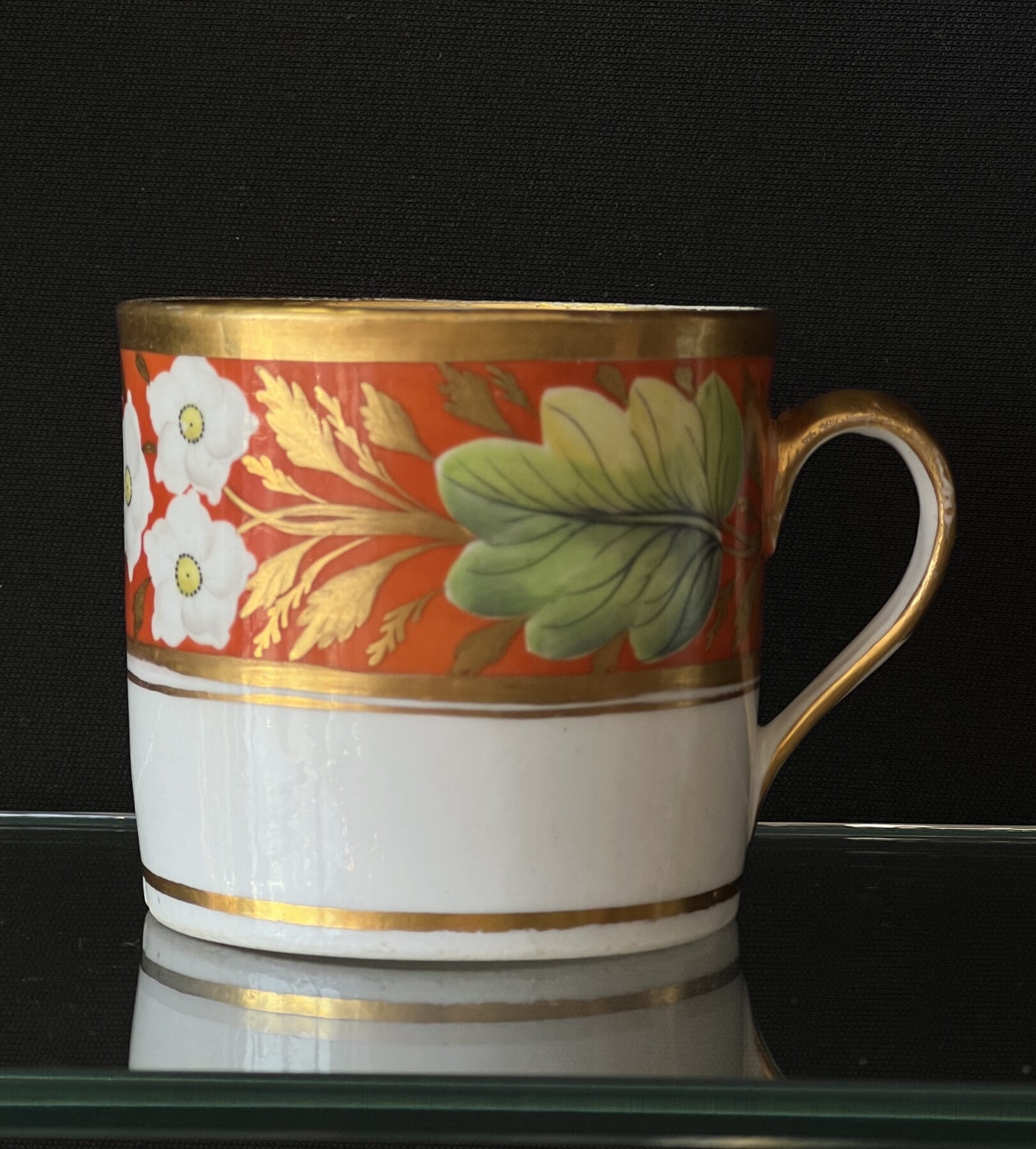
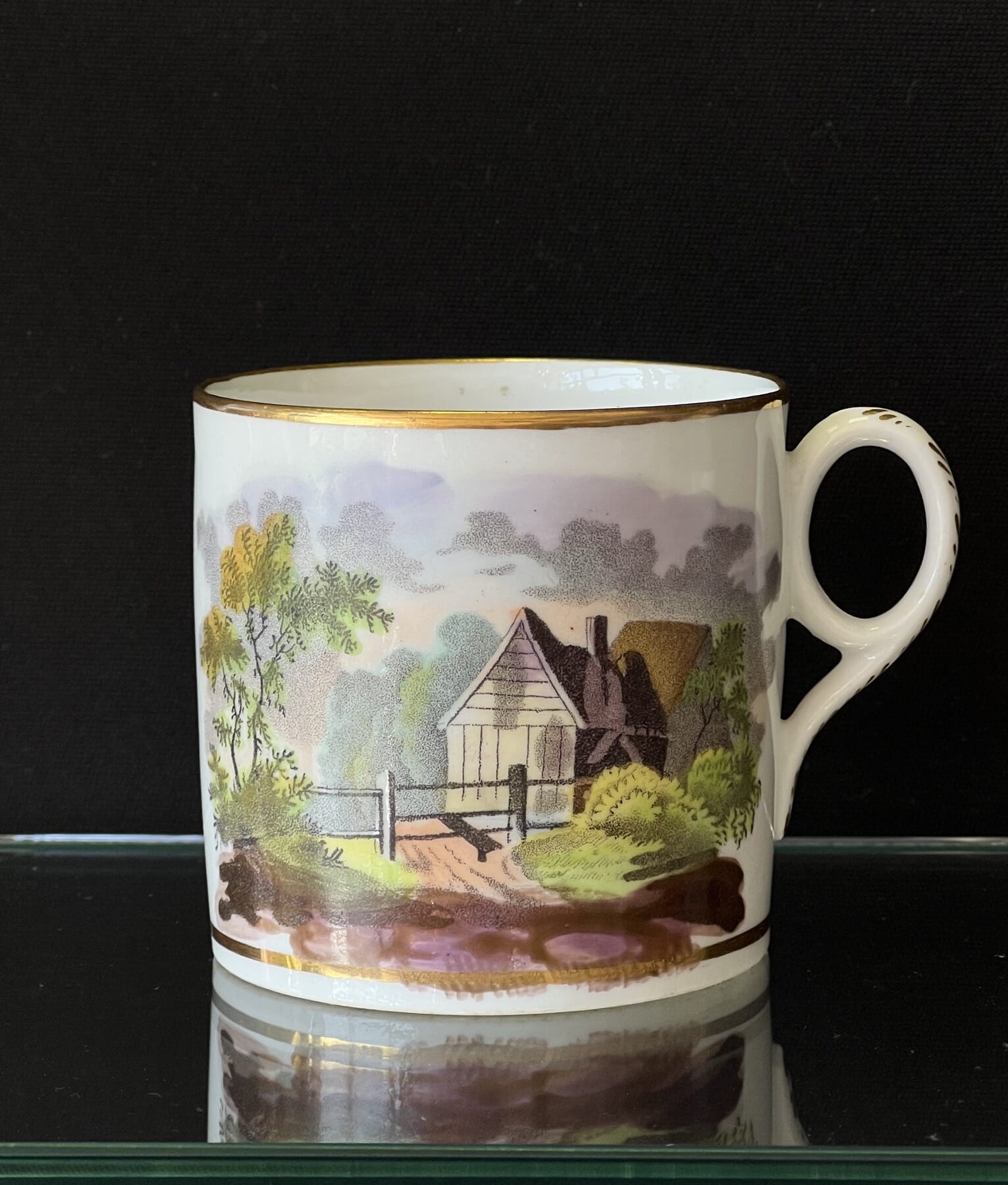
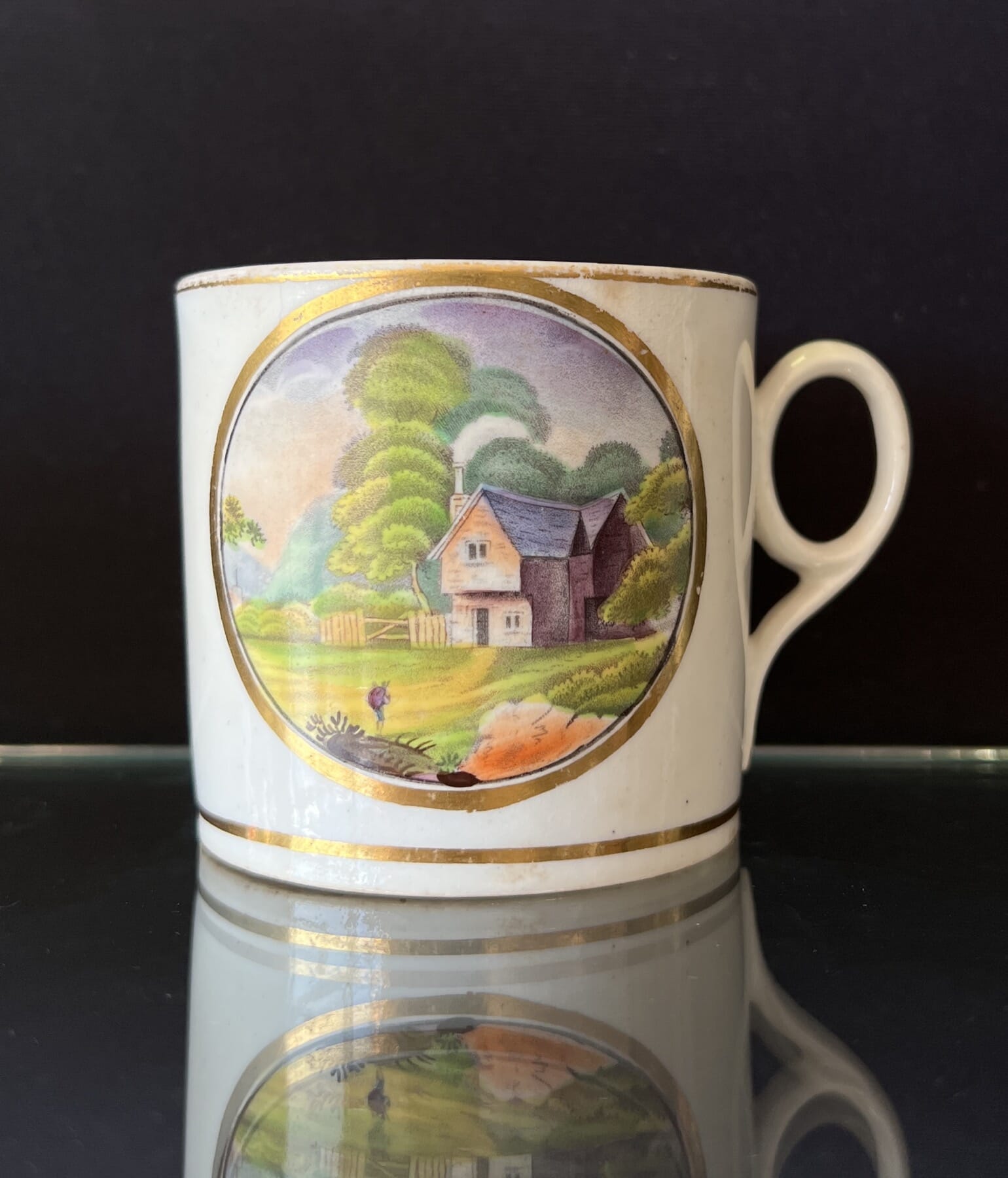
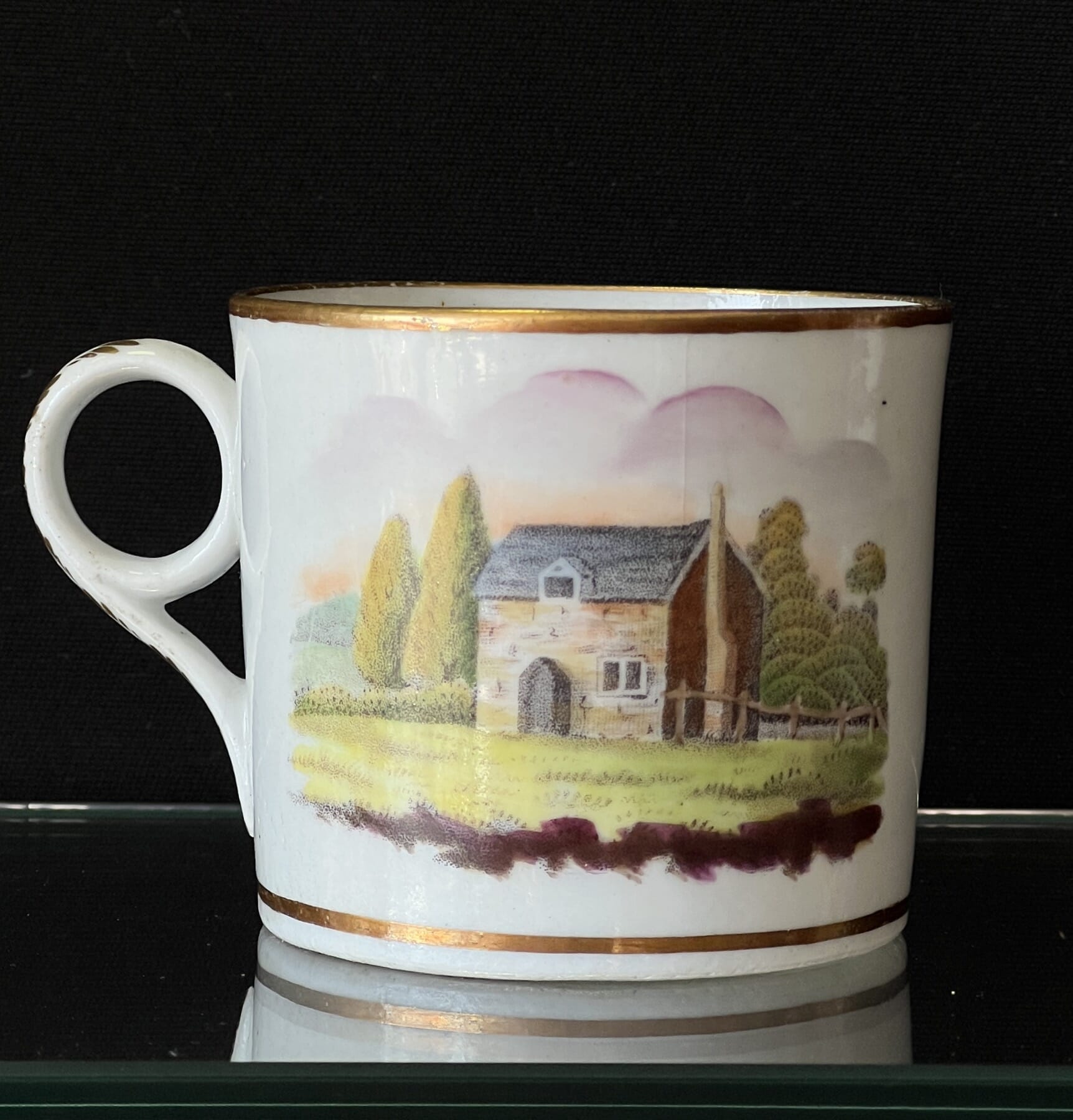
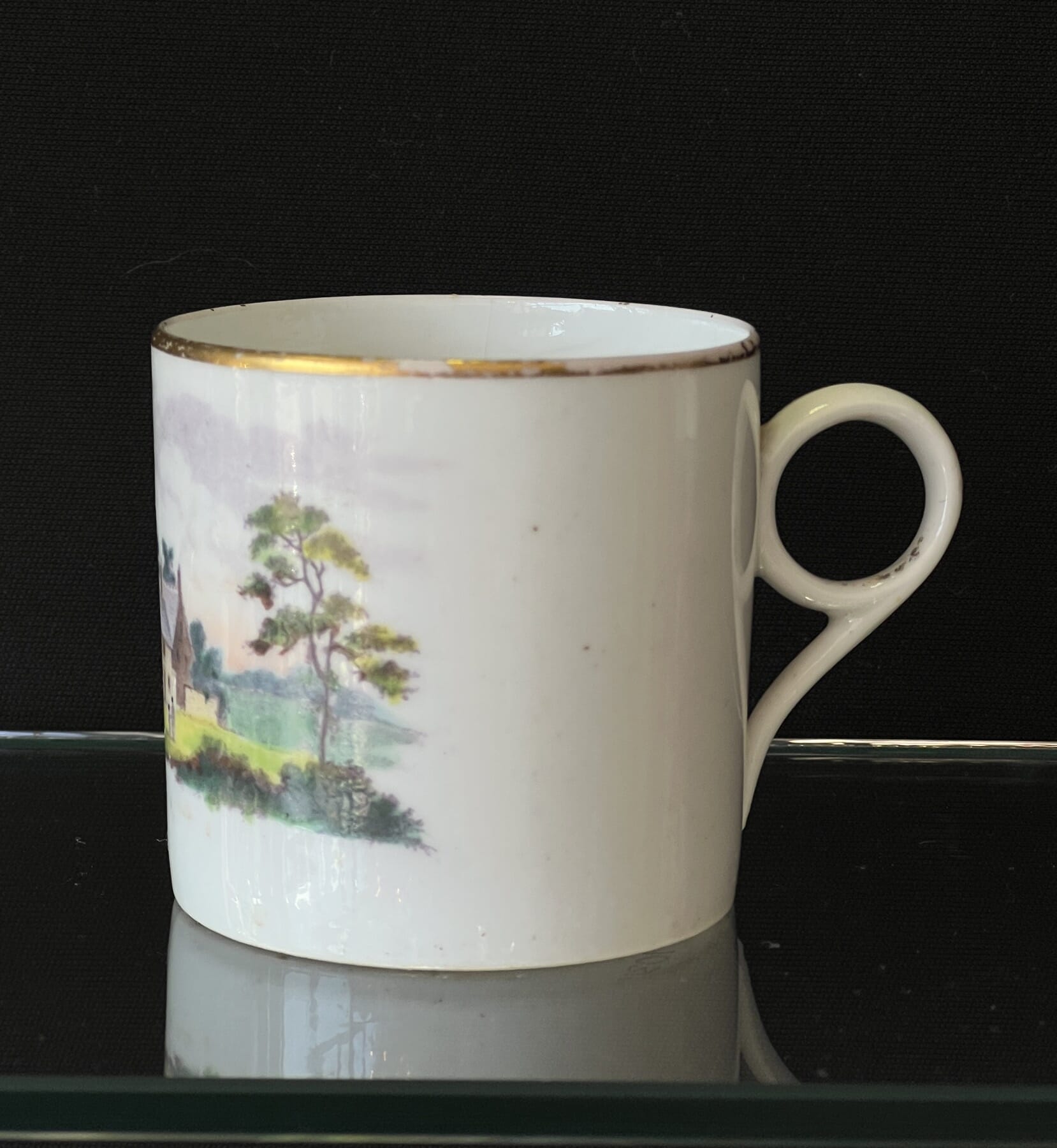
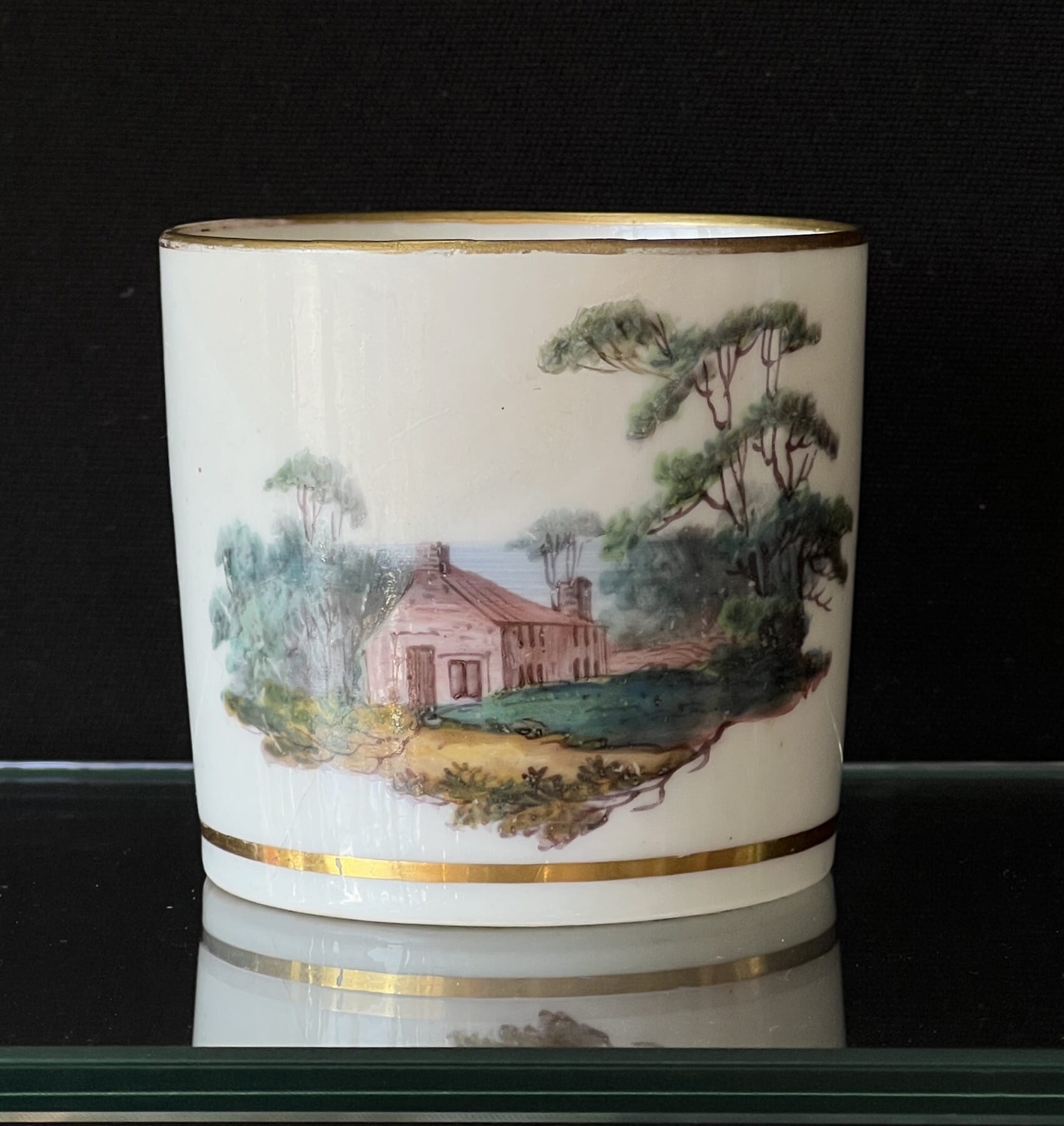
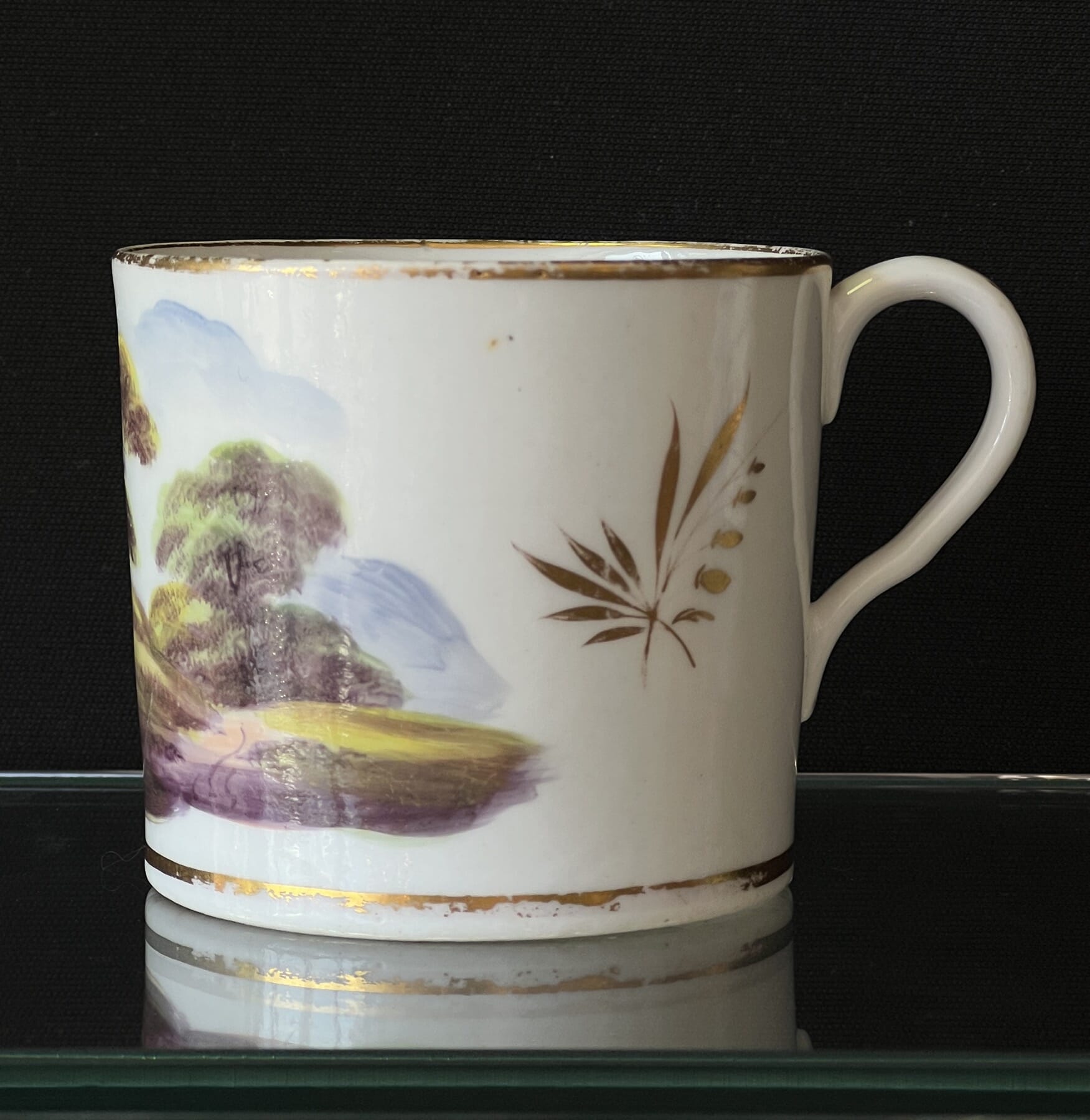
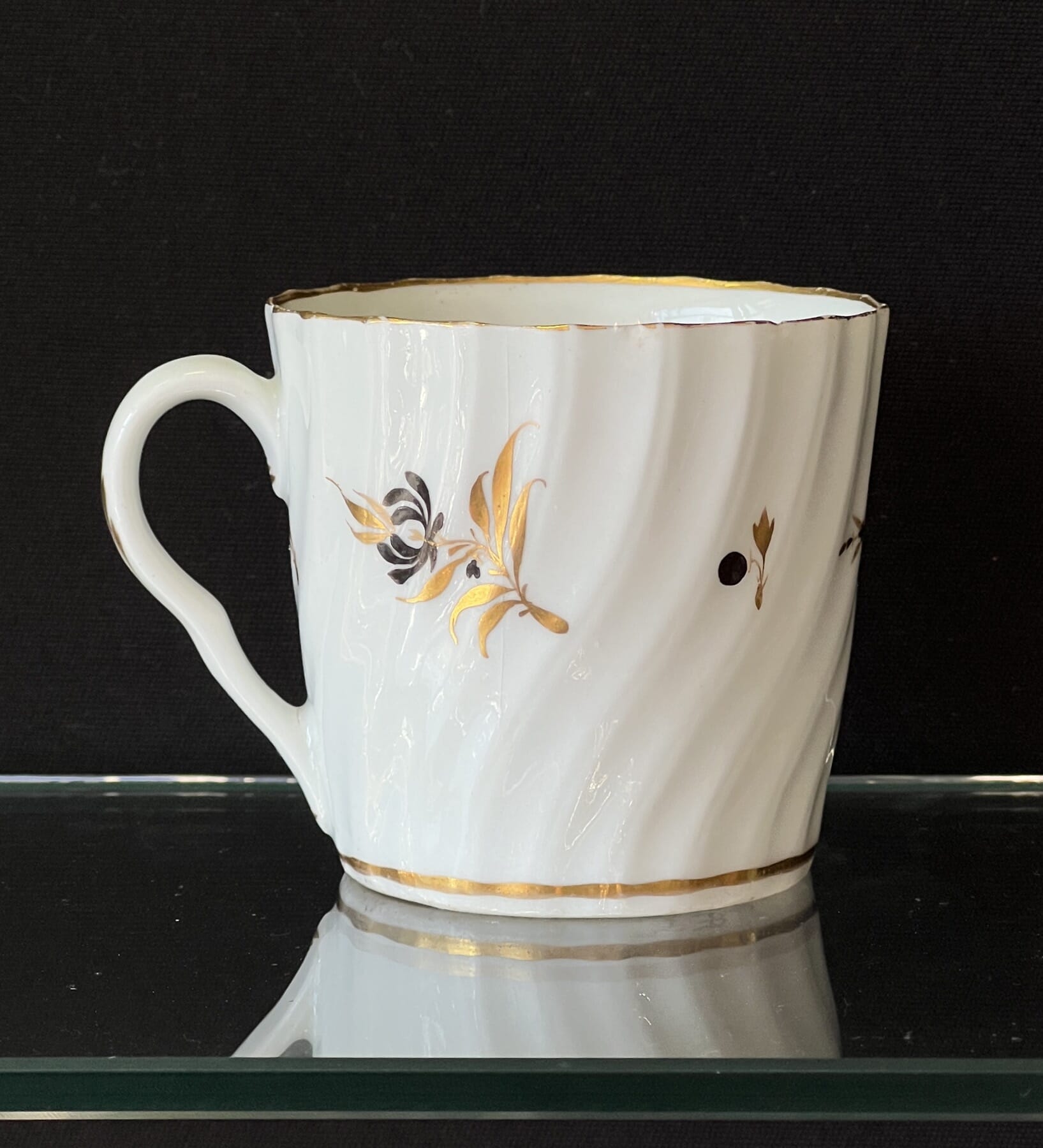
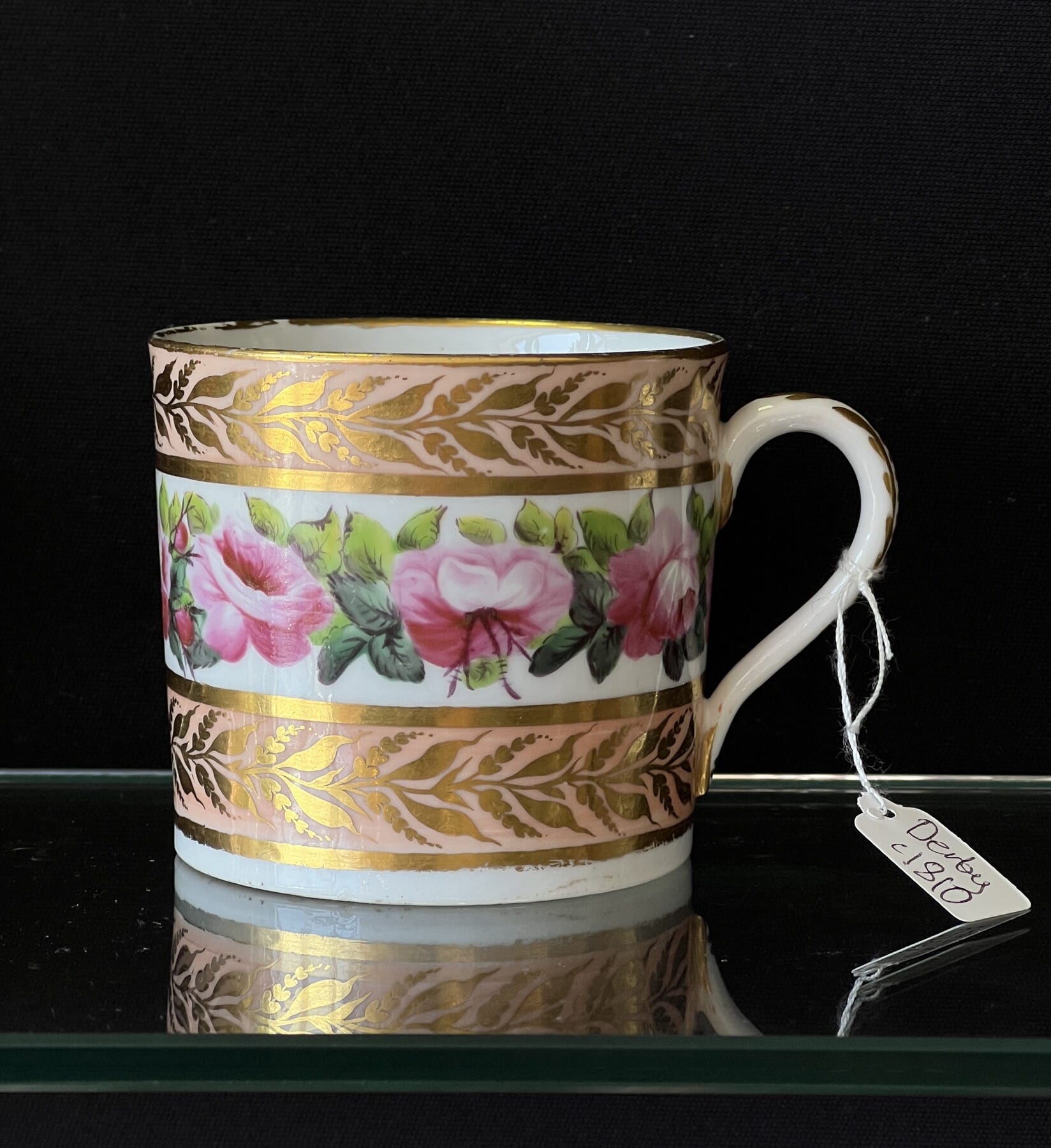
For all Coffee Can Collectors – here’s a gorgeous group of miniature masterpieces, including a selection of landscapes…. plus other early 19th century makers, including Pinxton, Machin, Spode, Derby, Coalport, Flight Worcester, Derby, Coalport, and two fine French examples.

Fresh to Stock

Previews…..

We have some exciting pieces due to be released shortly – have a preview here:

Posted on

Fresh Stock: Arts & Crafts, Ida R. Outhwaite fairy, WMF, + More…

Welcome to the latest offerings from Moorabool Antiques.

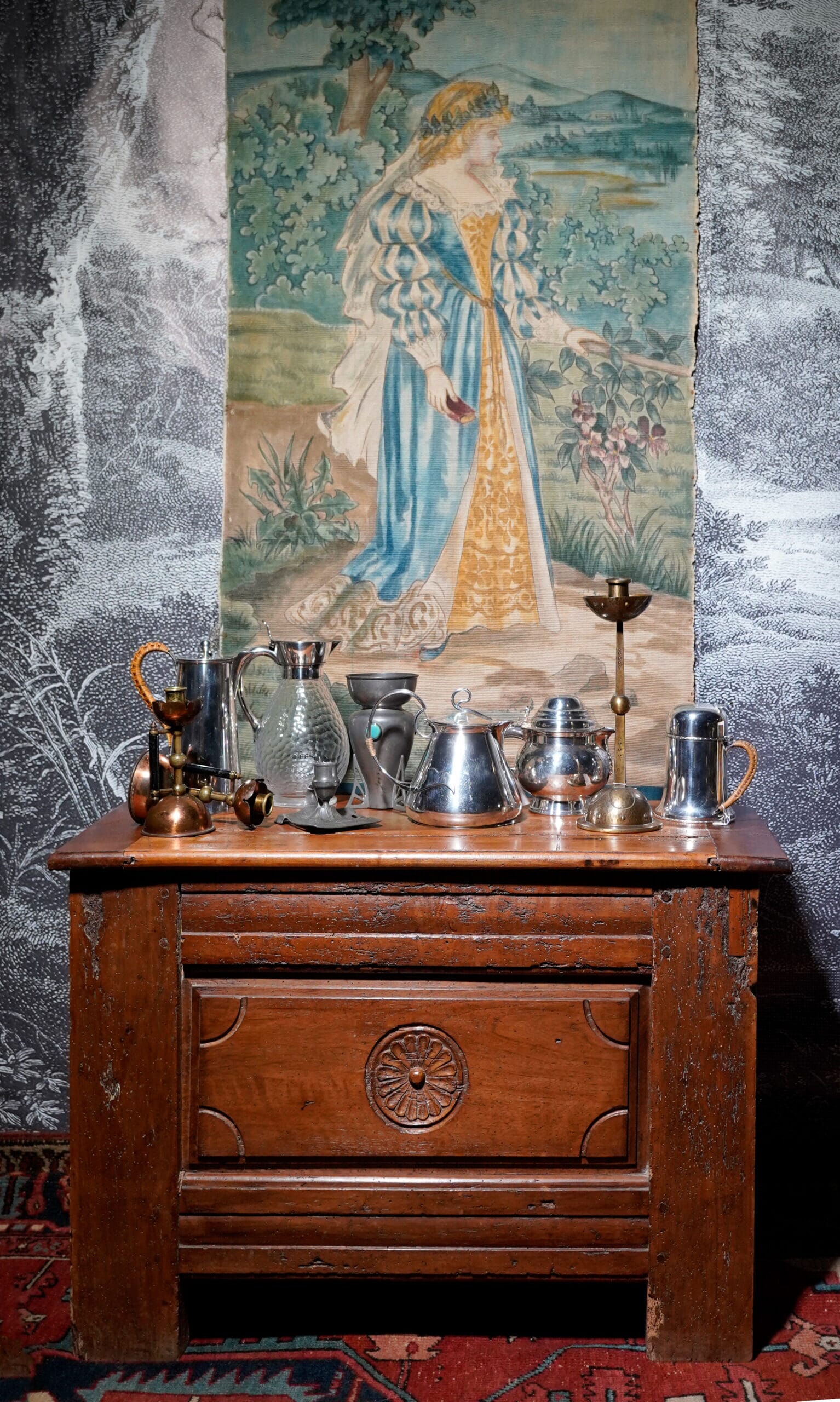
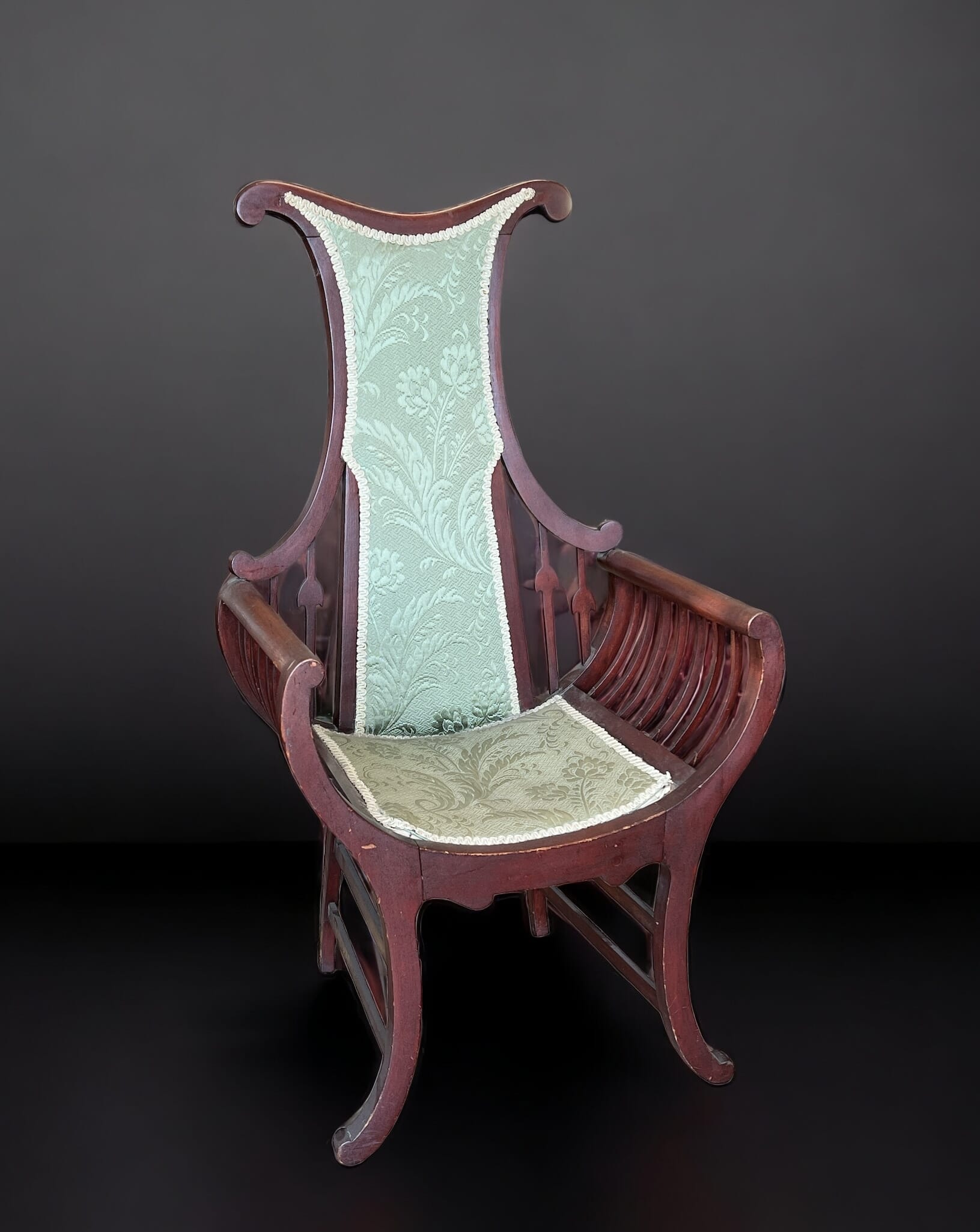
Fresh to stock is a wonderful selection of Furniture, Silver, Pewter, Ceramics & Pottery with one thing in common….. they belong to the fertile artistic period in the late 19th/early 20th century, where styles such as the Pre-Raphaelites, the Arts & Crafts, the Art Nouveau, and the more ‘Modernist’ designs all found their roots.

Fire-screen containing an actual lyre bird’s tail between glass, circa 1900 – ex-Moorabool Antiques stock.

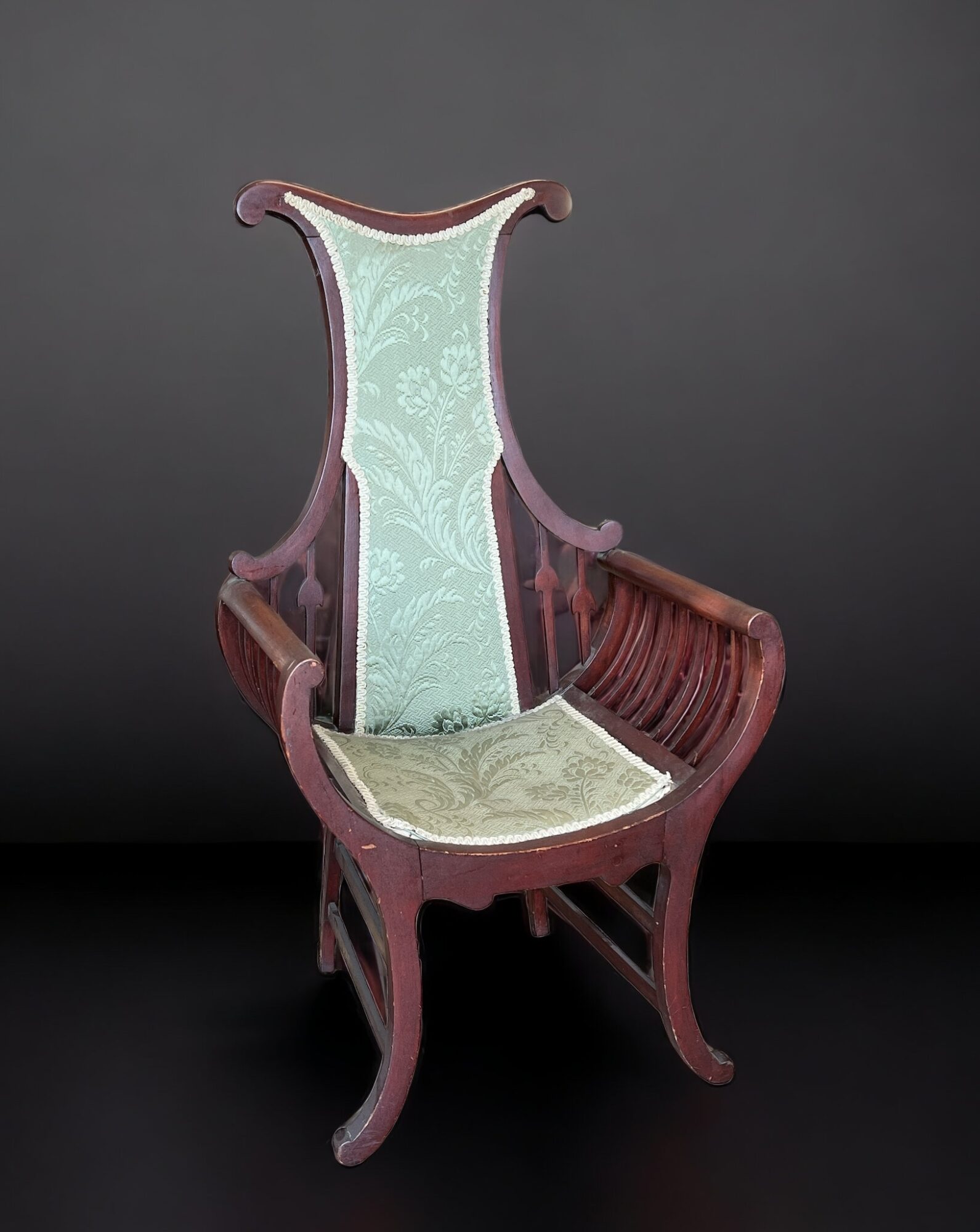
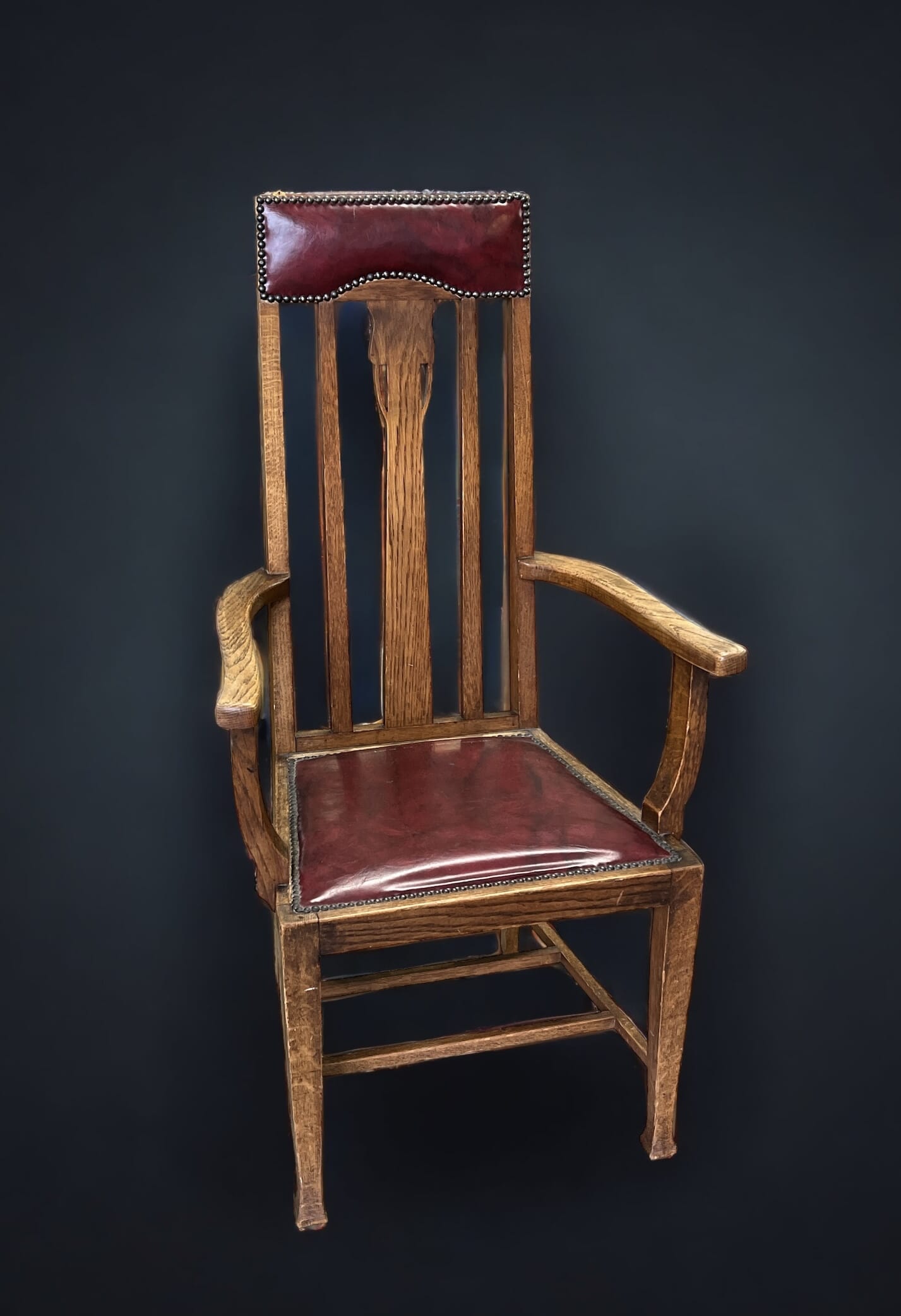
In Australia, the period saw a flourishing group of artists exploring the rest ideas from Europe, but giving them an Australian meaning. The elaborate Art-Nouveau style of the ‘throne chair’ in today’s Fresh Stock is a fine example: made from Australian hardwood, the remarkable design is a complete departure from the Victorian tradition of how a chair should look. The tall, skinny back is rather distinct, taking on the form of a lyre bird’s tail.

Australian Hardwood Art Nouveau chair, Lyre-bird back, c. 1910

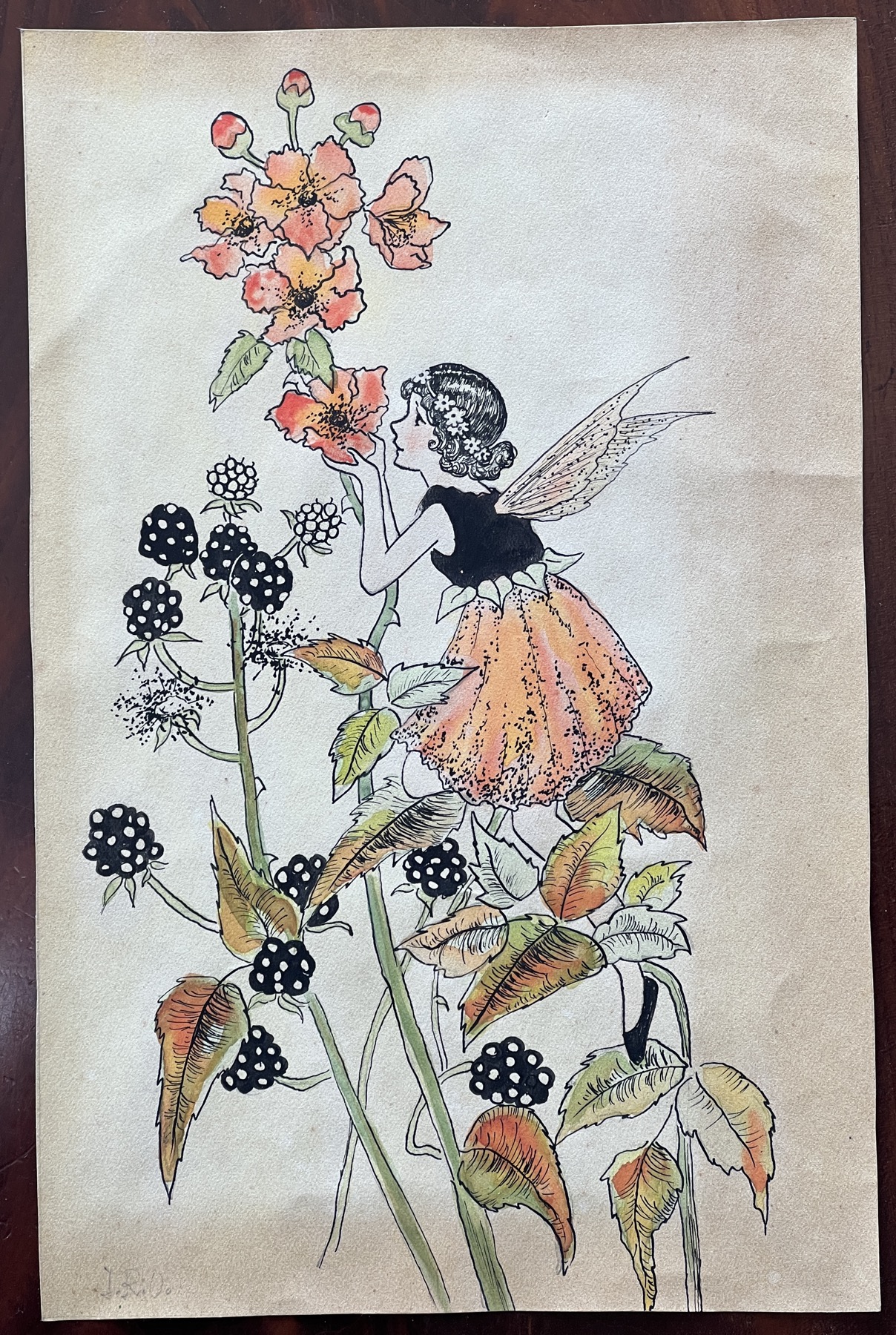
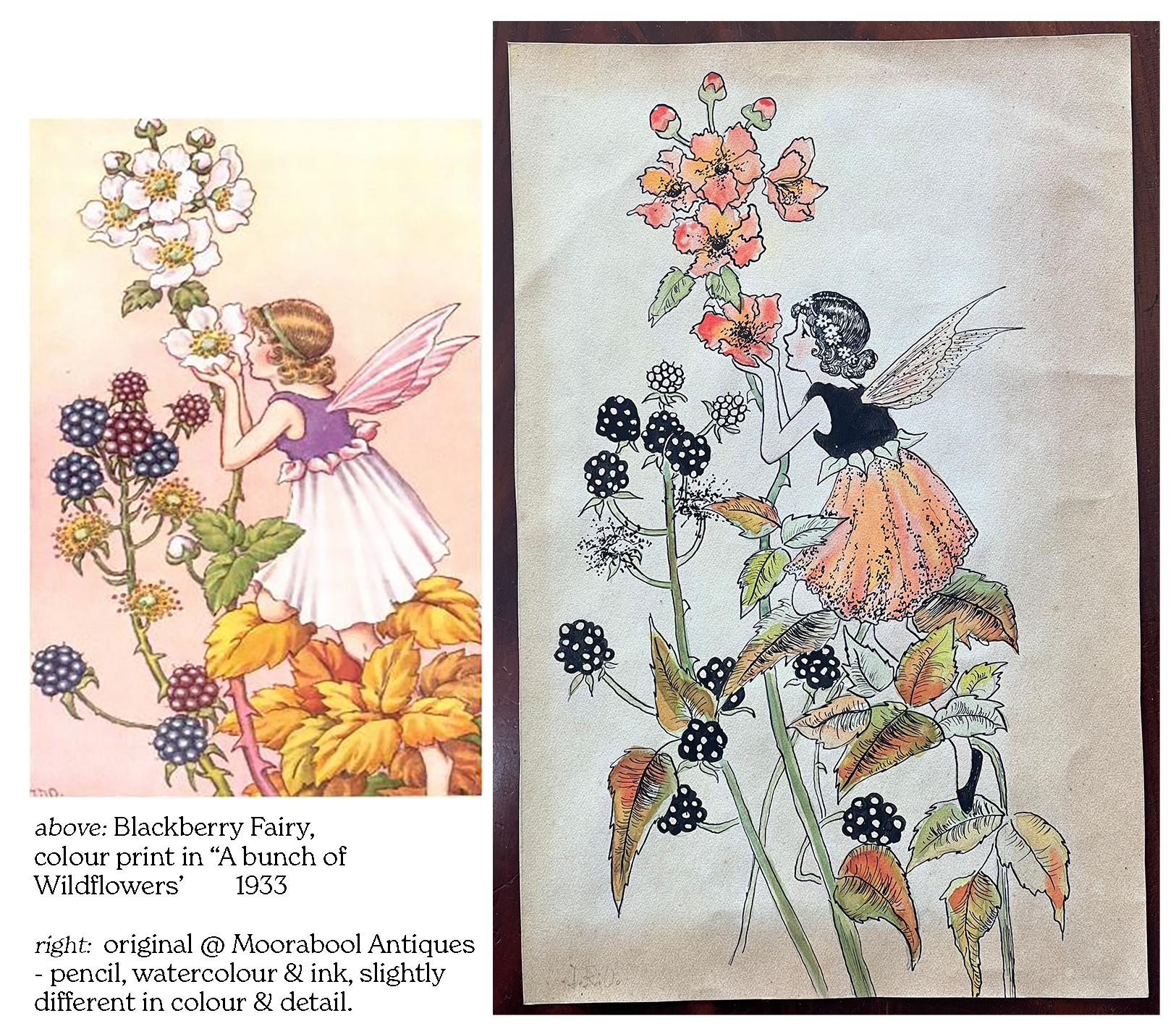
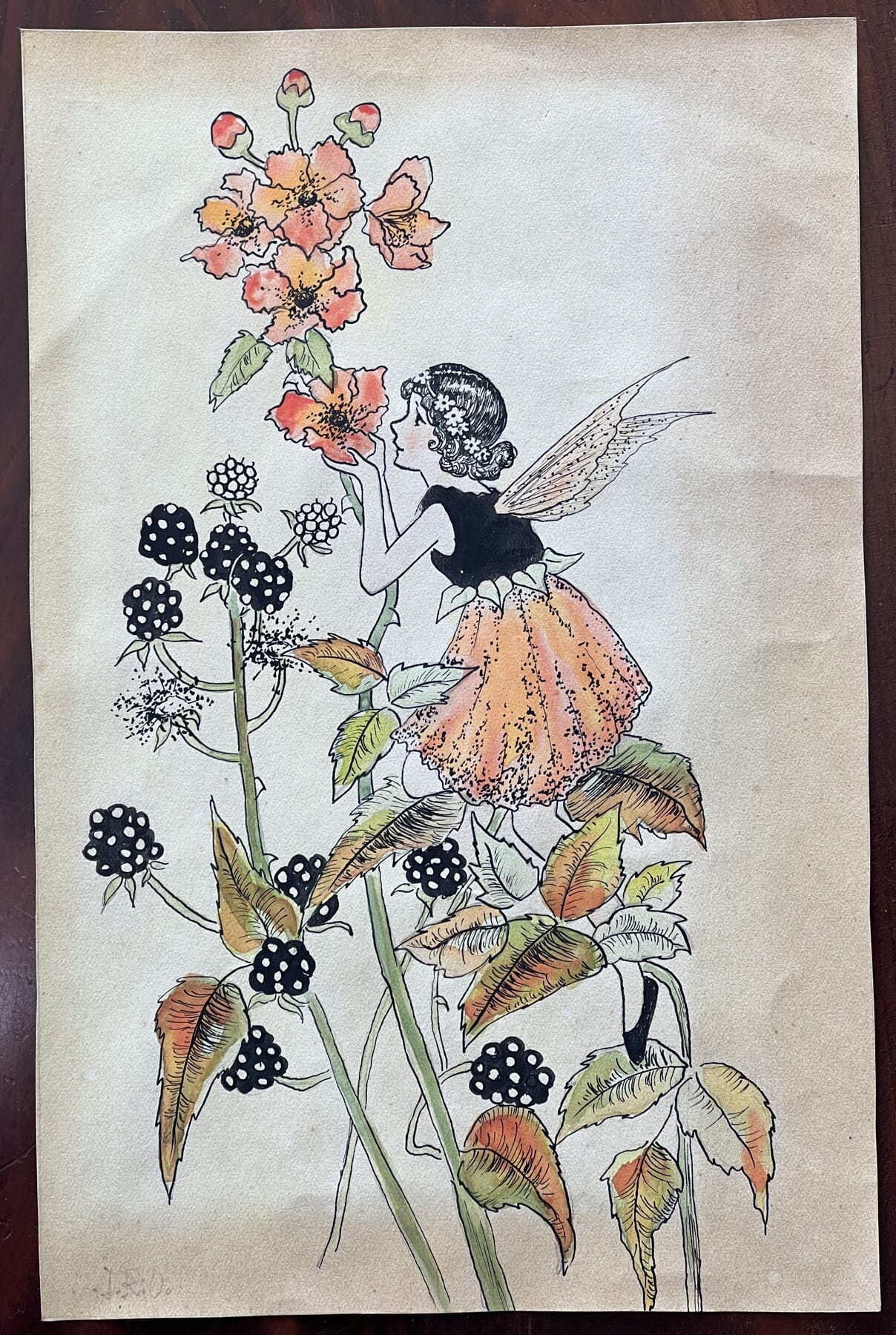
One of the highlights of this year is the watercolour recently identified amongst the many paintings in the collection of the late John Rosenberg. It’s an Ida Rentoul Outhwaite fairy, familiar from the many children’s books she illustrated in the 1920’s-30’s. While her style is borrowing from the overseas greats of book illustration of the time – Beardsley, Rackham and Greenaways – she invents an endless contrast to anything else produced prior by incorporating the Flora & Fauna of Australia.
(This example is not the best to illustrate this theme, as it has nothing Australian in it – the Blackberry being an introduced pest, and therefore also its attendant fairy!)

Ida Rentoul Outhwaite original watercolour, c.1933 at Moorabool Antiques
Ida Rentoul Outhwaite's 'Blackberry Fairy' from 'A bunch of wildflowers' 1933 - with original signed sketch
Spot the Difference!

While many of these are now broken up for their prints, this example isn’t a print: it’s an original pencil sketch, which has been coloured with watercolours & finished with her signature black ink outline and details. It is a prototype sketch for the illustration of ‘The Blackberry Fairy’, one of 6 colour prints included in her 1933 publication ‘A Bunch of Wildflowers’. It was badly framed in such a way that the signature – her initials ‘I.R.A.’ – were covered by the mount! Taking it off & discovering the printed version was quite a thrill: note the differences between our version and the printed version, indicating there must be another with the different details out there, from which the print for the book was made.

Henry Wilkinson and Co, 1892
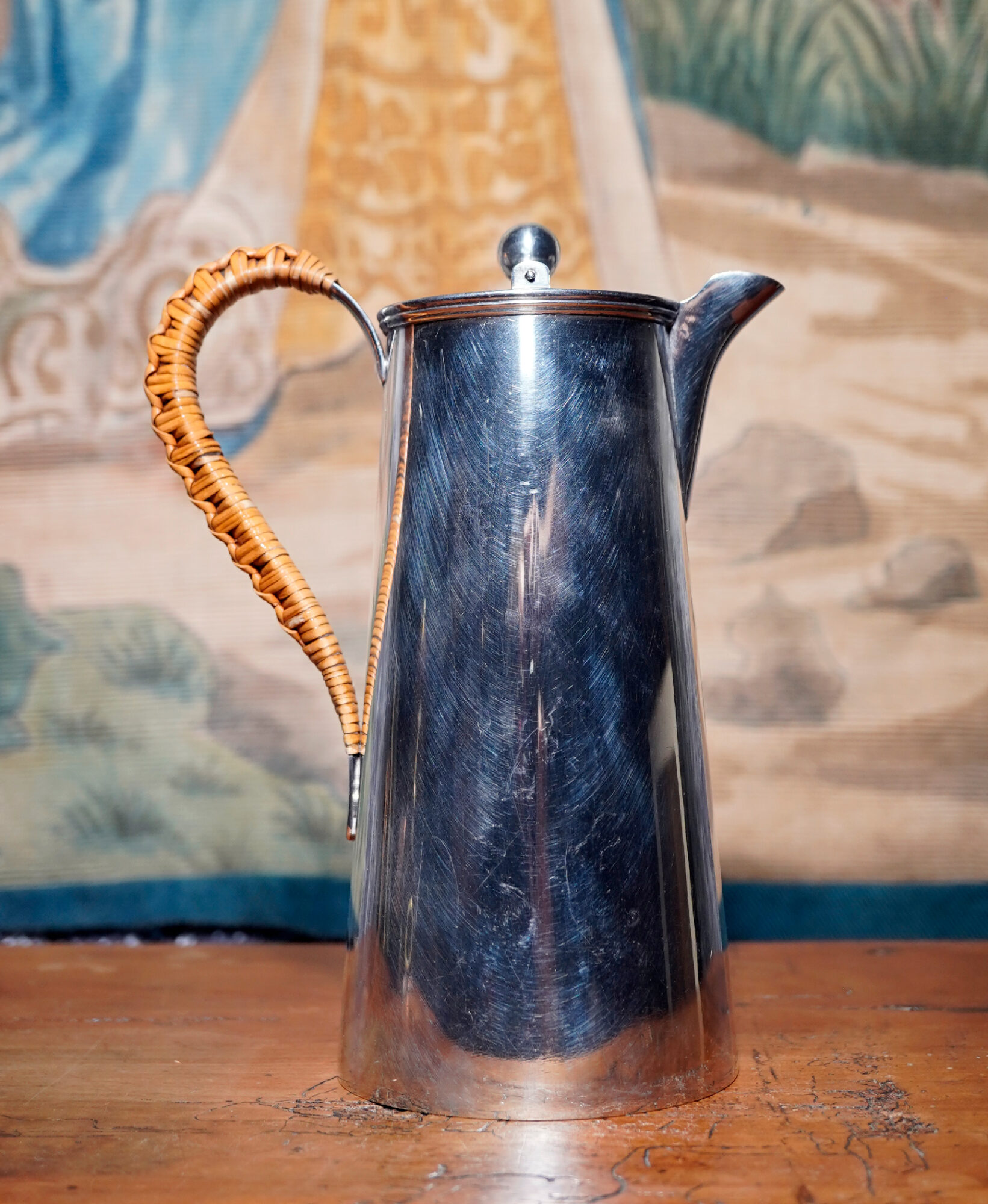
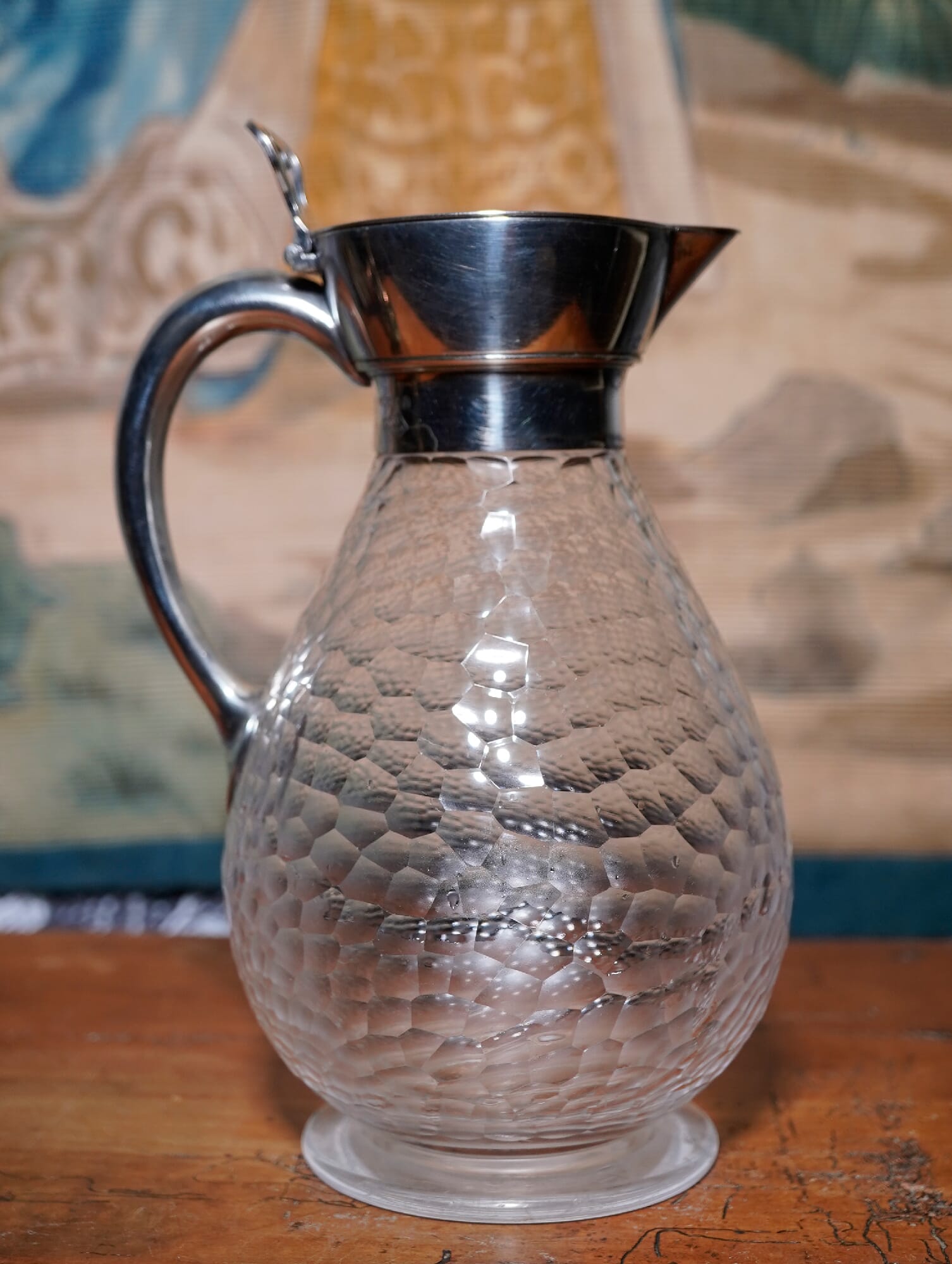
Silverplate jug showing Christopher Dresser influence, Henry Wilkinson and Co, made in 1892. This precise date is possible as the hallmark was only registered that year – and they also sold out & therefore ceased to use it the same year!

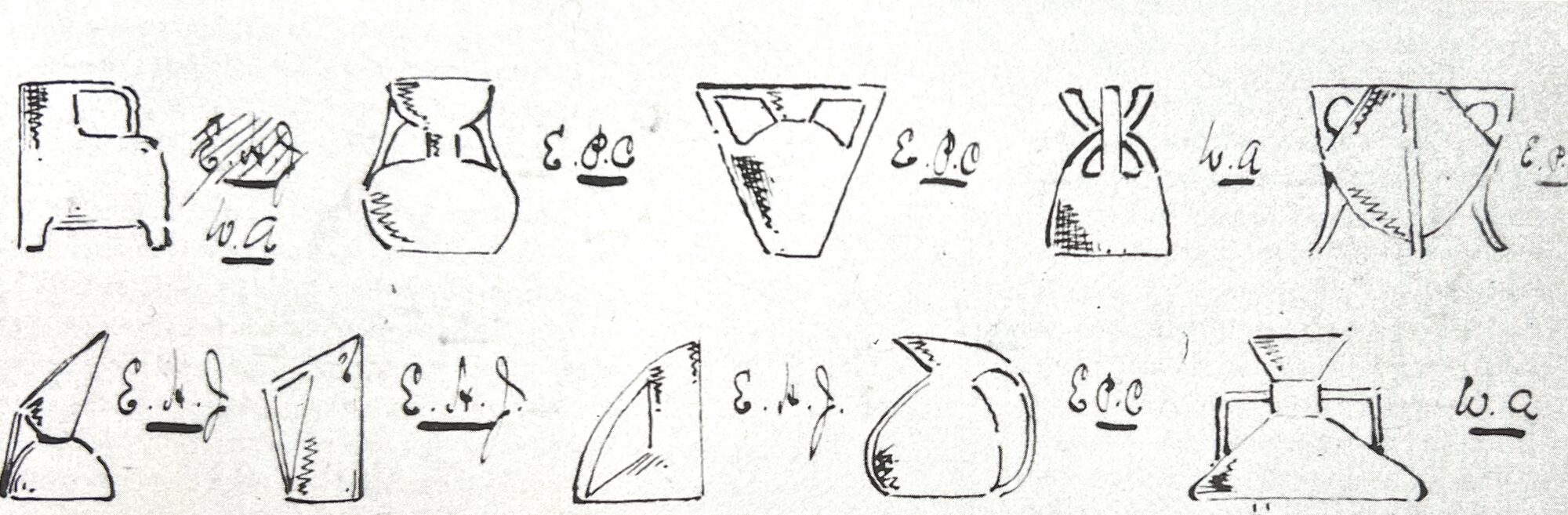
The greatest of the Art & Crafts ‘influencers’ was Dr Christopher Dresser. His design philosophy was radical in the Victorian world, which by the 1870’s was stagnating, repeating earlier designs in ever-more complex convulsions of rococo scrolls and classical columns. Instead, he looked to the East – being the first European to be granted a travel passport in Japan in the 1870’s, where he travelled from end to end, examining Japanese crafts and then bringing the simplicity and elegance of good design back to England. He spent a huge amount of effort influencing manufacturers to create elegant, useful wares. In today’s fresh stock are a number of pieces that look like they should be made well into the 20th century – but are in fact 19th century products. Dresser freely distributed his designs, and published a number of books on the subject; many potters and metal workers used these designs as they caught the attention of the ‘hip-crowd’ of the late 19th century. He was the ‘Social Media Influencer’ of his time!
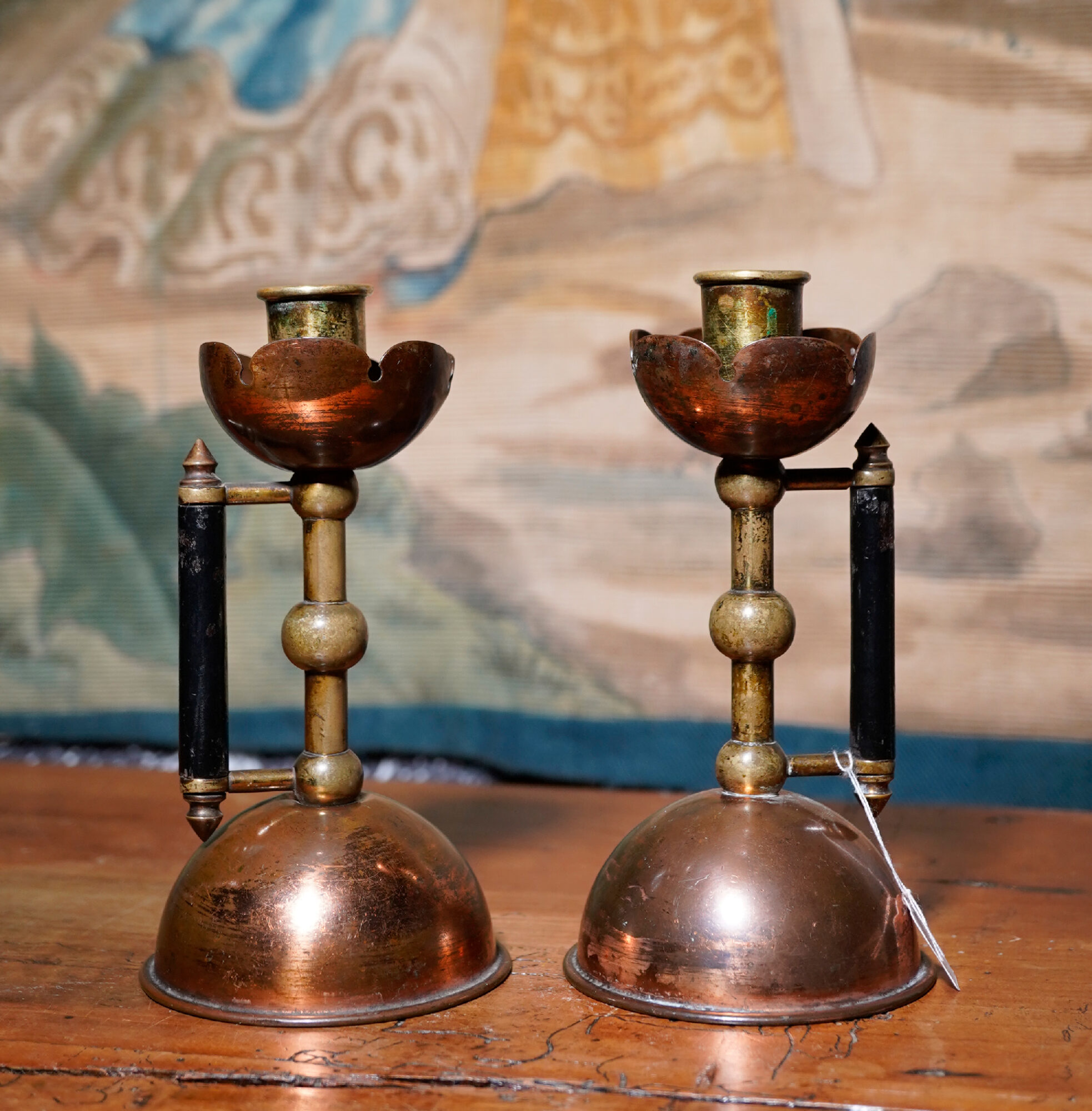
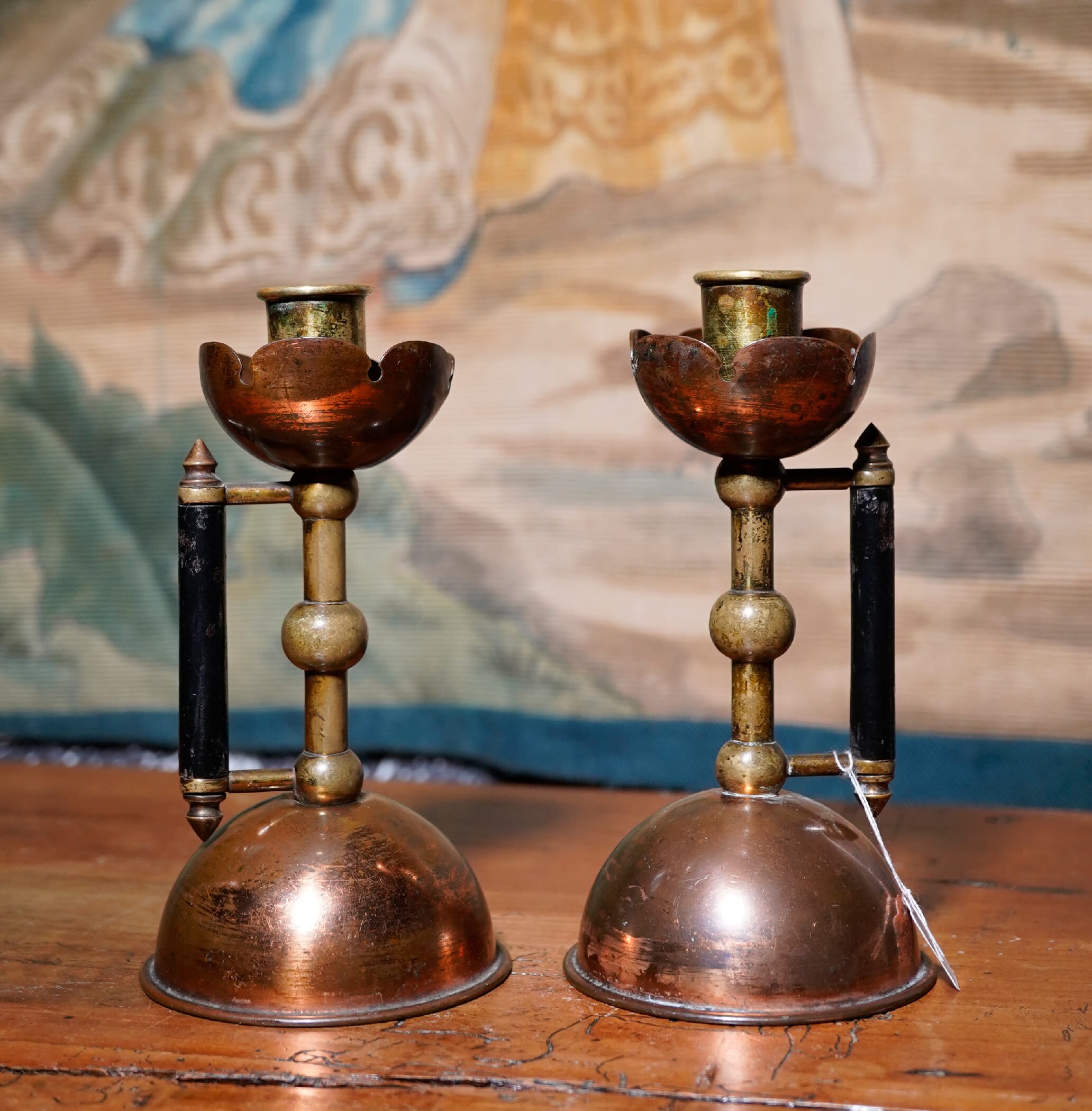
Pair of Christopher Dresser candlesticks, designed & made 1885, probably by Benham & Froud for the Art Furnishers' Alliance, London.
Pair of Christopher Dresser candlesticks, designed & made 1885, probably by Benham & Froud for the Art Furnishers’ Alliance, London.
Designs of Dr Christopher Dresser, from his account book for Linthorpe Art Pottery, 1881. Now in the Getty, LA.
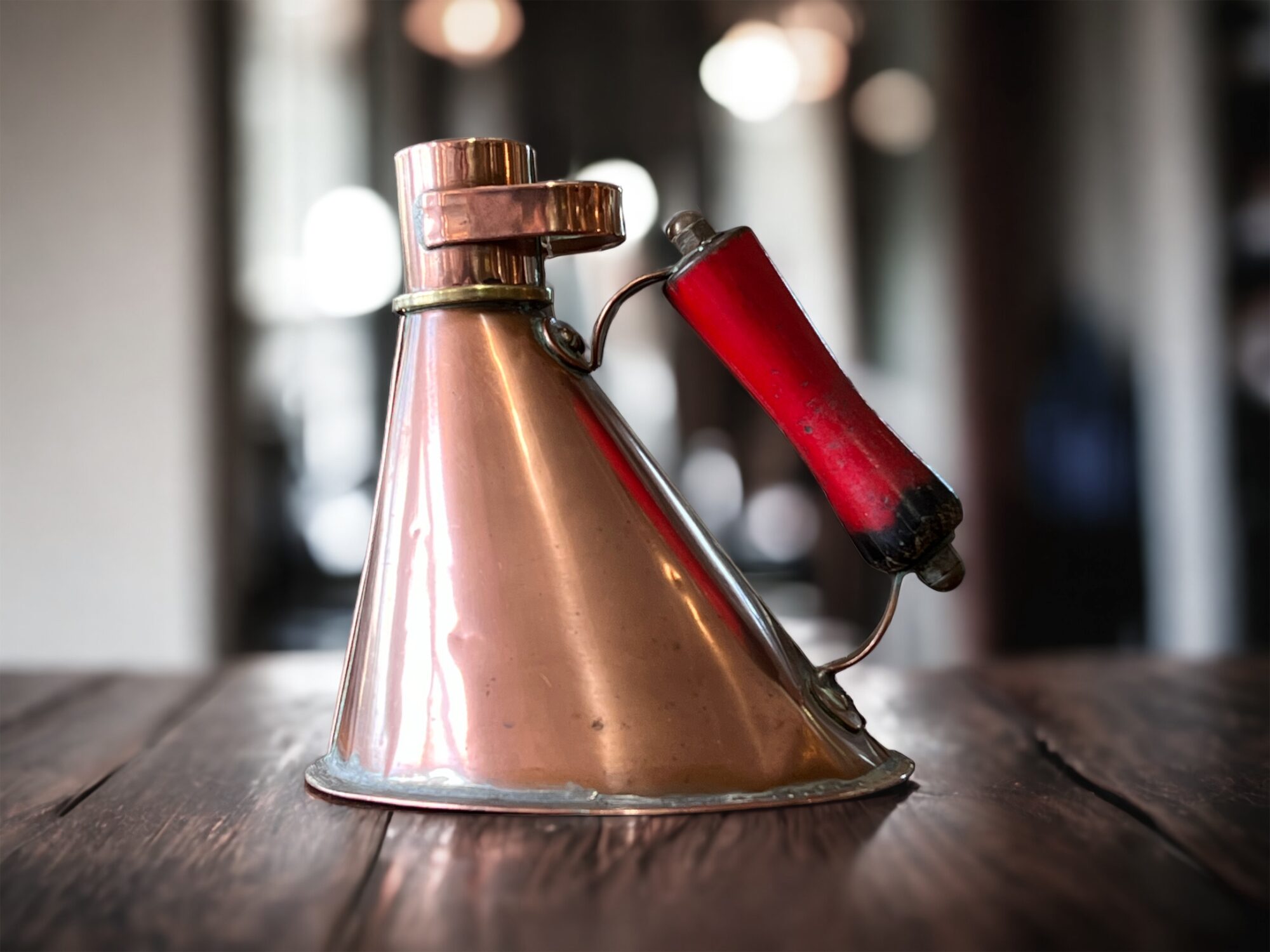
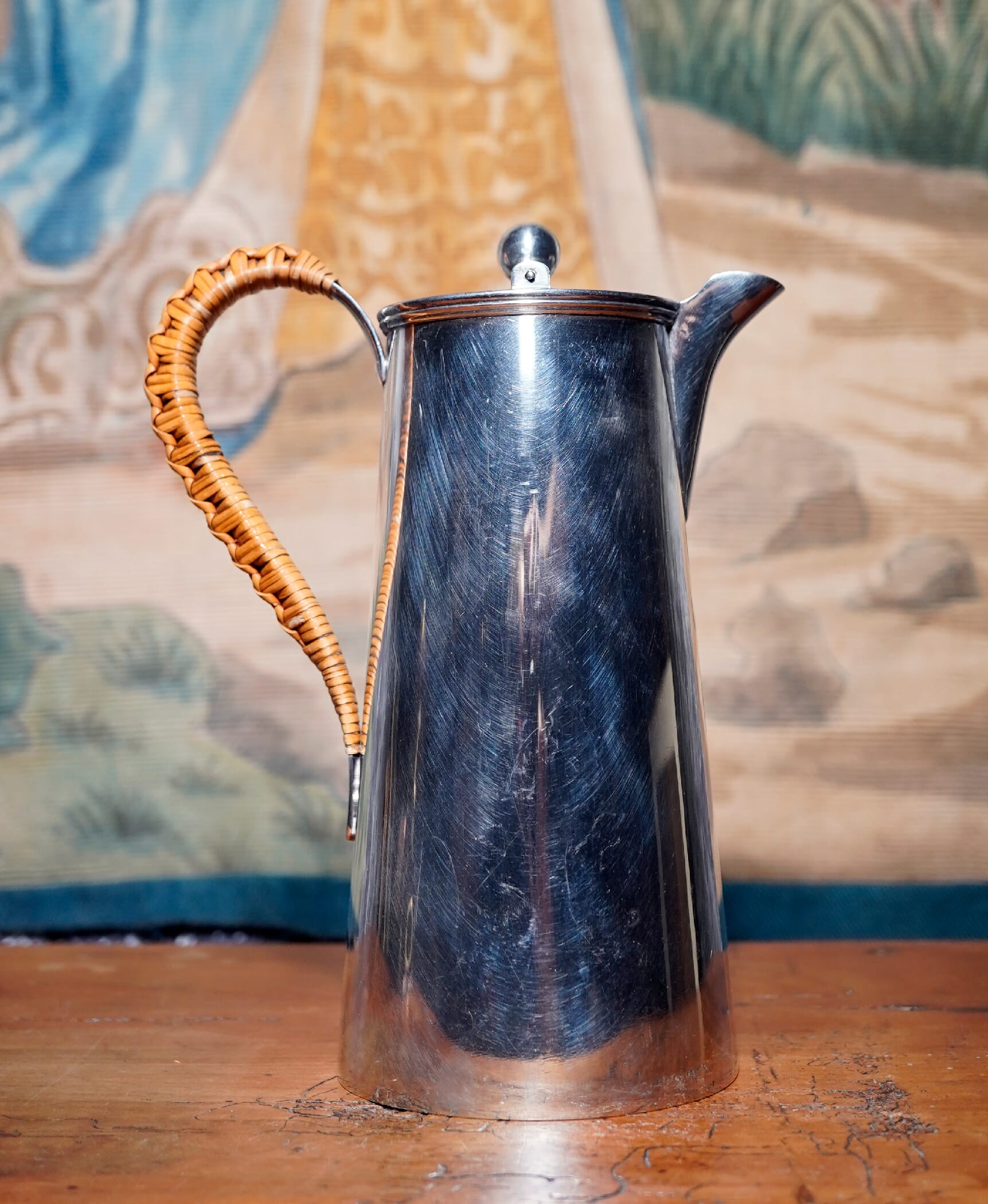
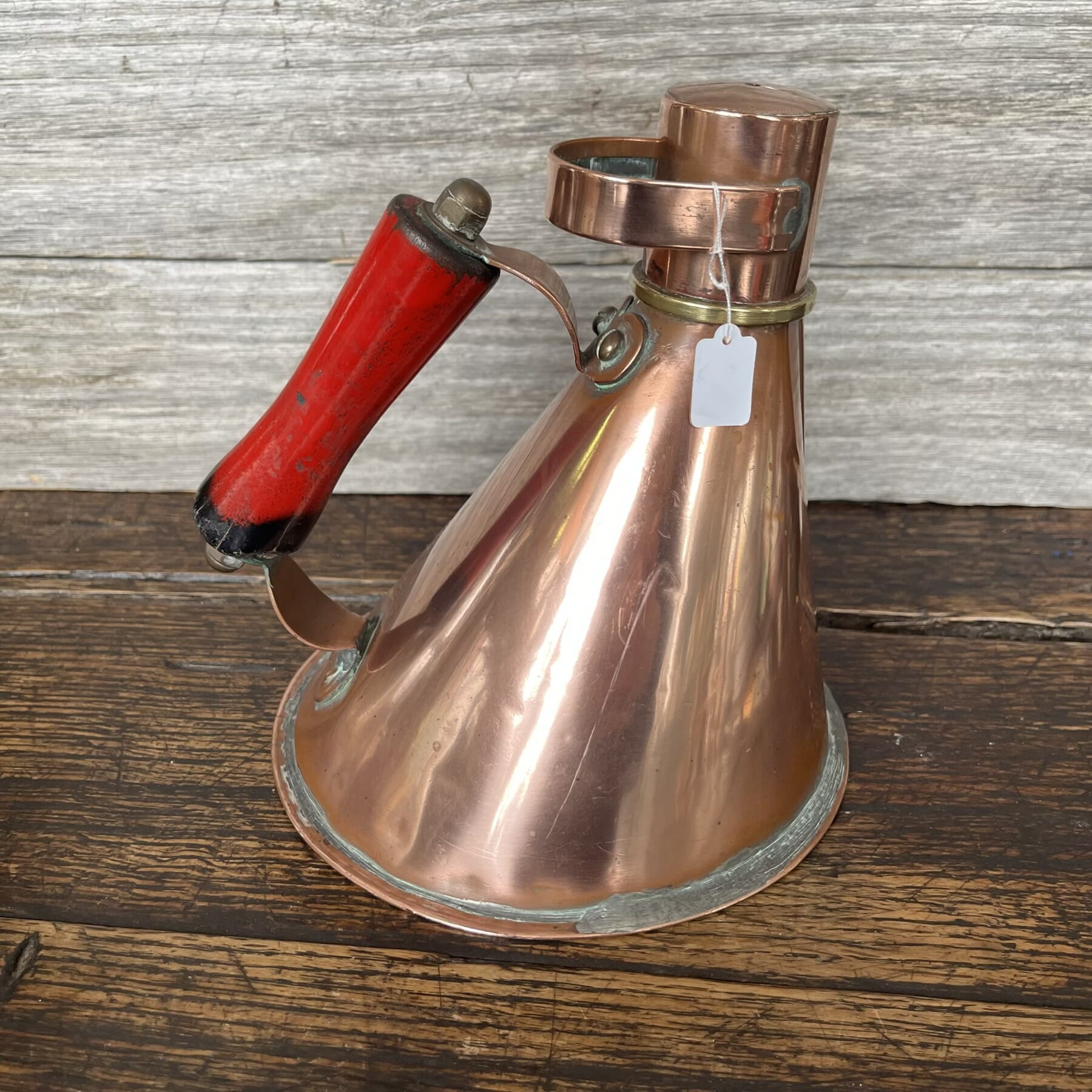
A case of mistaken identity…. this piece looks a lot like a famous Dresser design, and the craftsmanship is very similar to makers of Dresser pieces such as Benham & Froud – however, it is an industrial item, being an oil can from a canal boat!
This reflects Dresser’s own philosophy very closely: form follows function: the broad base is stable in choppy seas, and the form is simple for a metal worker to create from flat sheets. The handle angle ensures steady flow of the contents, in all a very well designed piece, created by a practical industrial mind – just no Christopher Dresser’s.
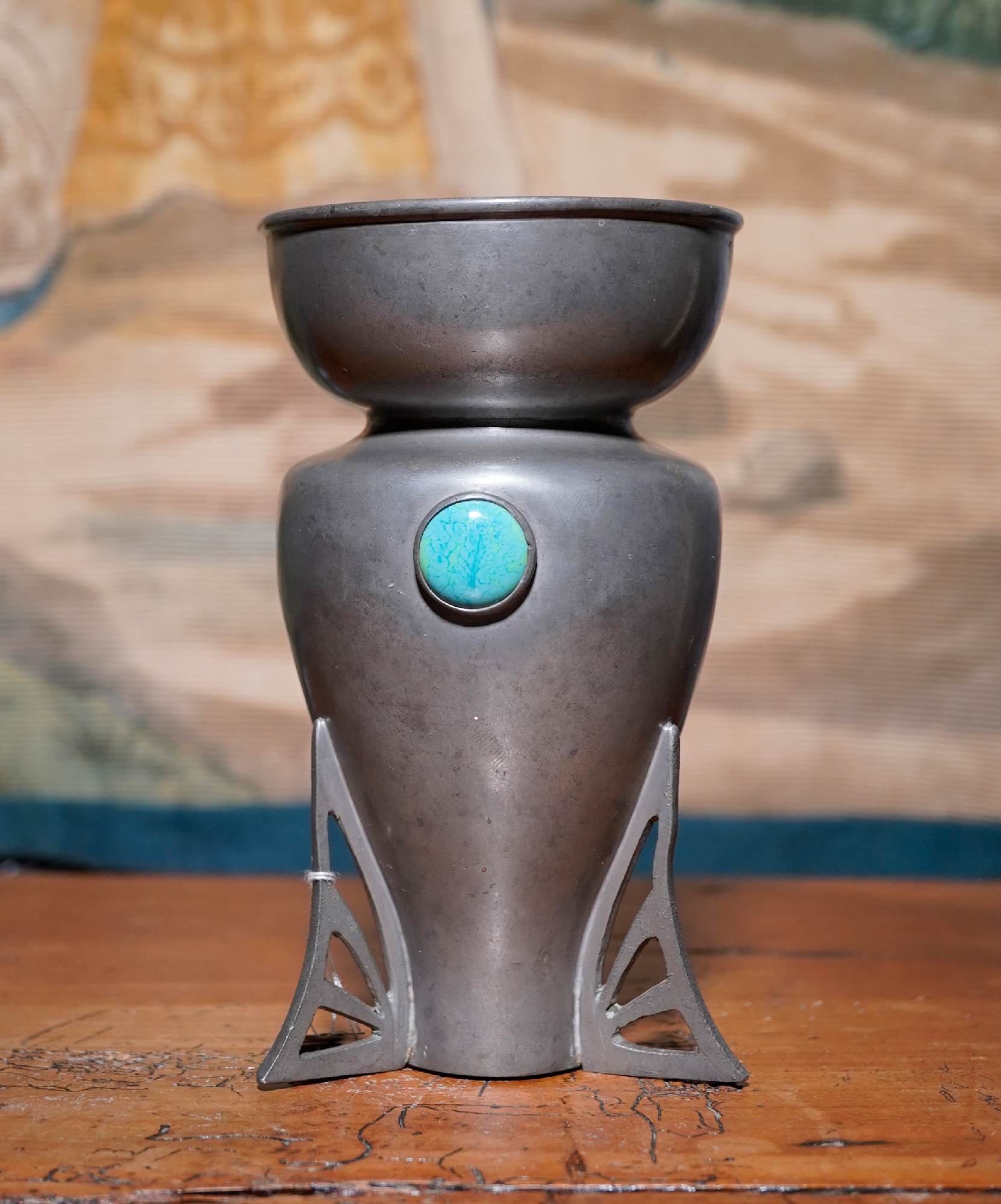
Arts & Crafts vase, Hutton
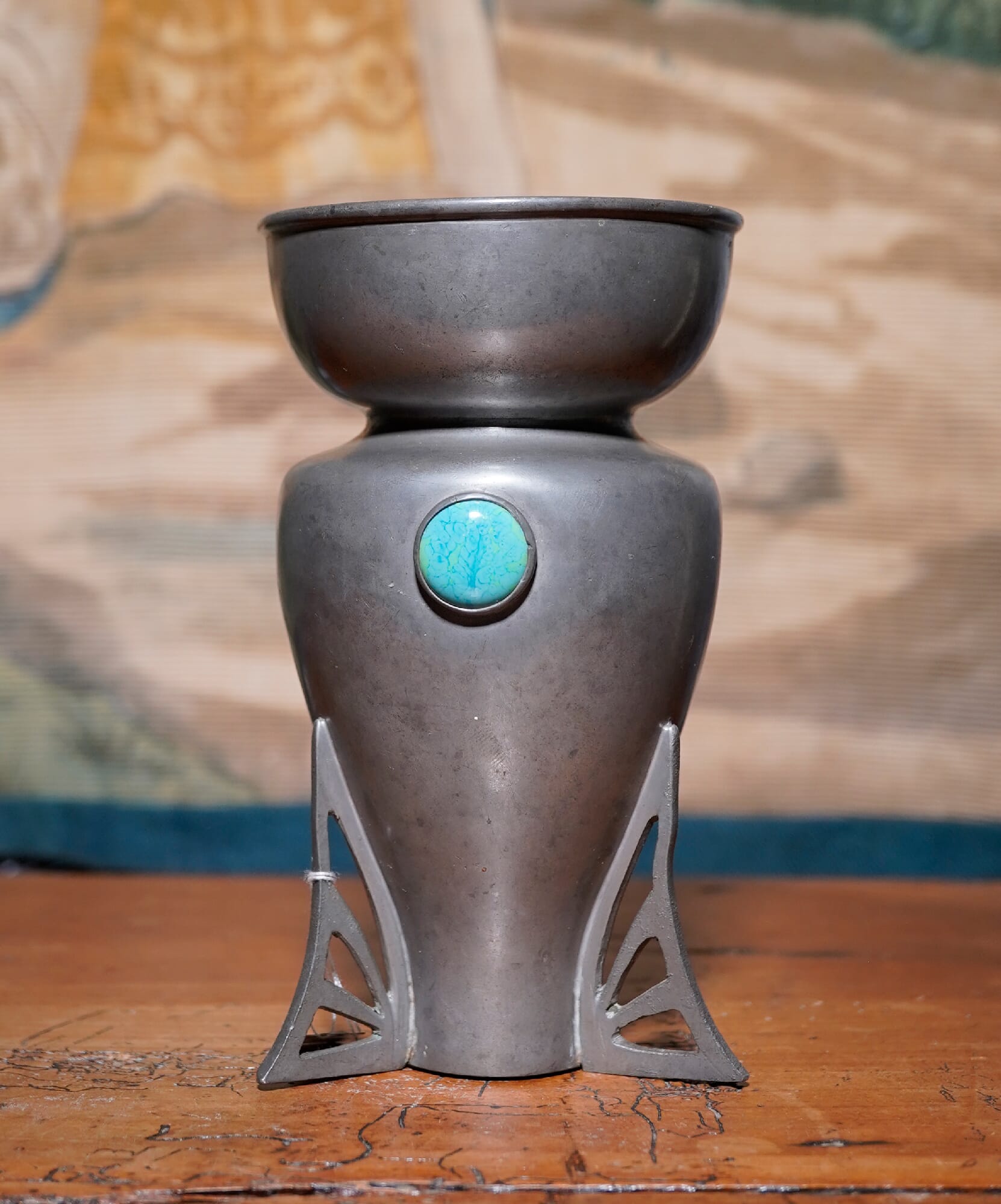
Arts & Crafts Pewter vase, by W. Hutton, Sheffield, c.1905. The inset ceramic plaques are possibly from the Ruskin Pottery in Staffordshire, known to have provided similar pieces to other manufacturers. The design is very similar to those of Archibald Knox, at the same period, circa 1905.
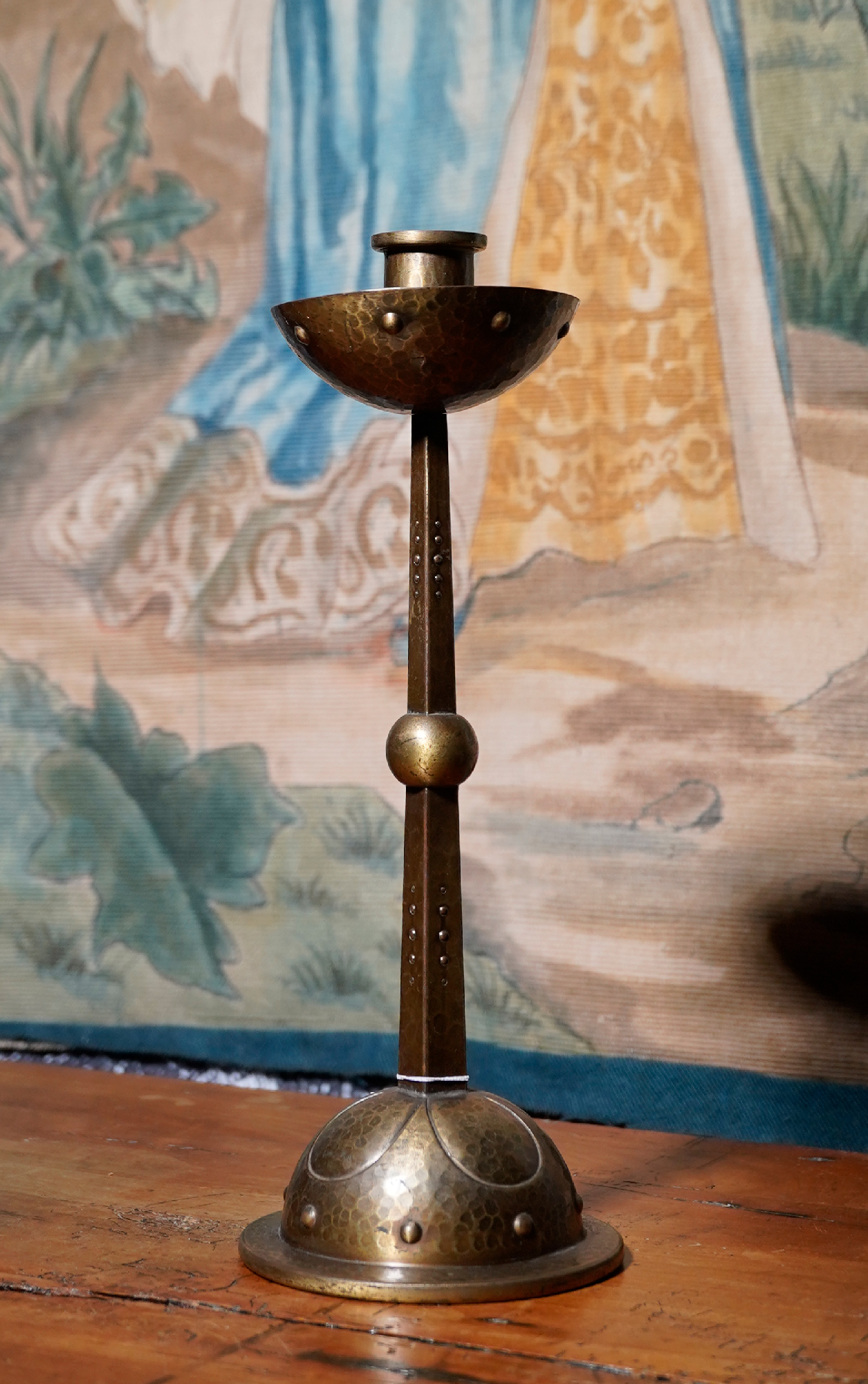
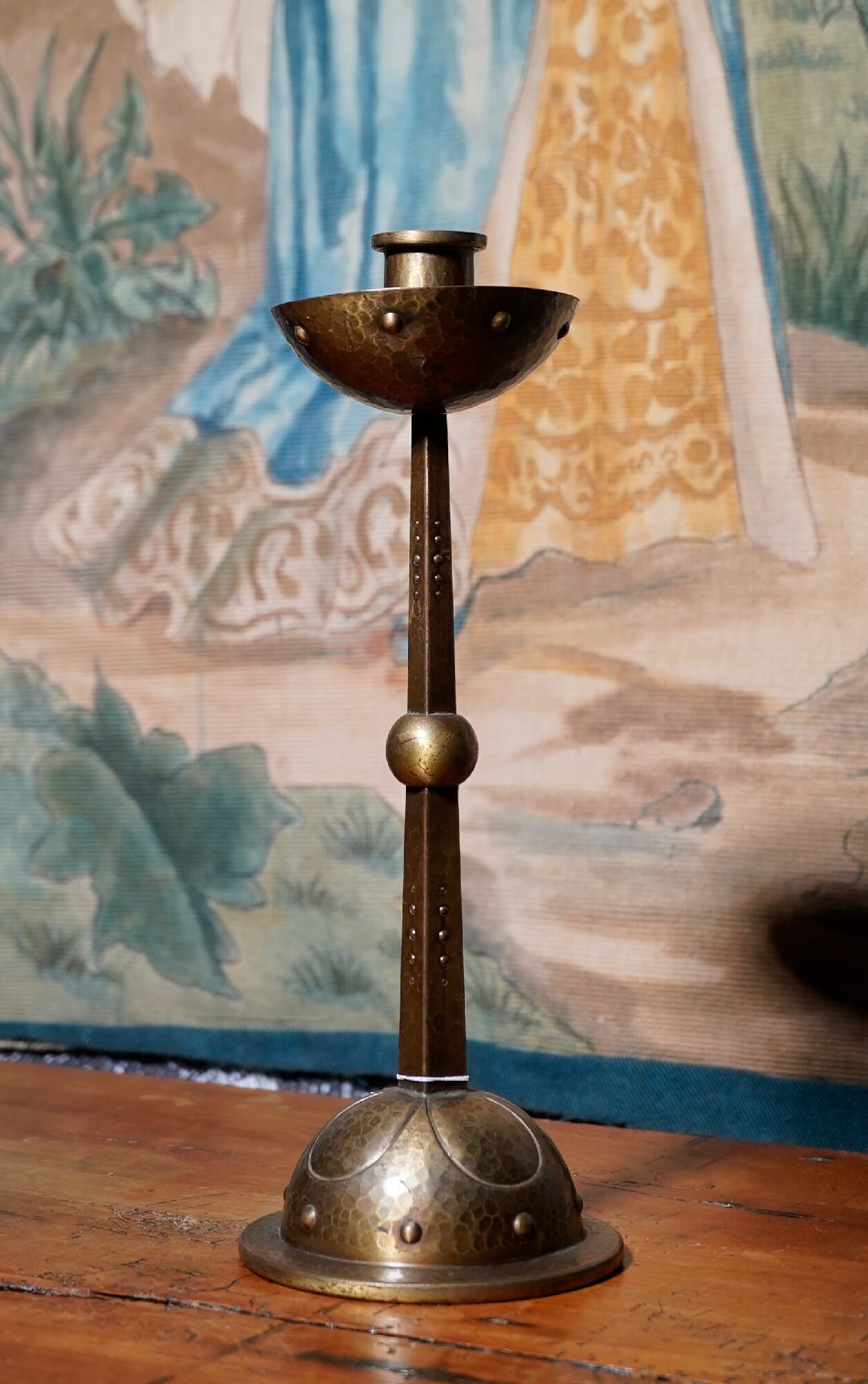
WMF Jugendstil candlestick, circa 1900
WMF (Germany) Jugendstil candlestick, circa 1900

On the Continent, the Arts & Crafts movement took its own direction. In Germany, the Jugendstil , literally translating as ‘Youth Style’, produced some remarkable objects that still appeal to the modern eye due to their ‘sophisticated simplicity’.
The candlestick shown here is WMF, circa 1900, and retains the rare original patinated finish. It has a style that could date to anywhere in the 20th century, but was actually conceived in the last years of the 19th – remarkable.

On a different trajectory was the French designs we know as ‘Art Nouveau’. This style borrowed from the preceding Rococo style, with organic forms that appear to grow – but took it to new extremes.

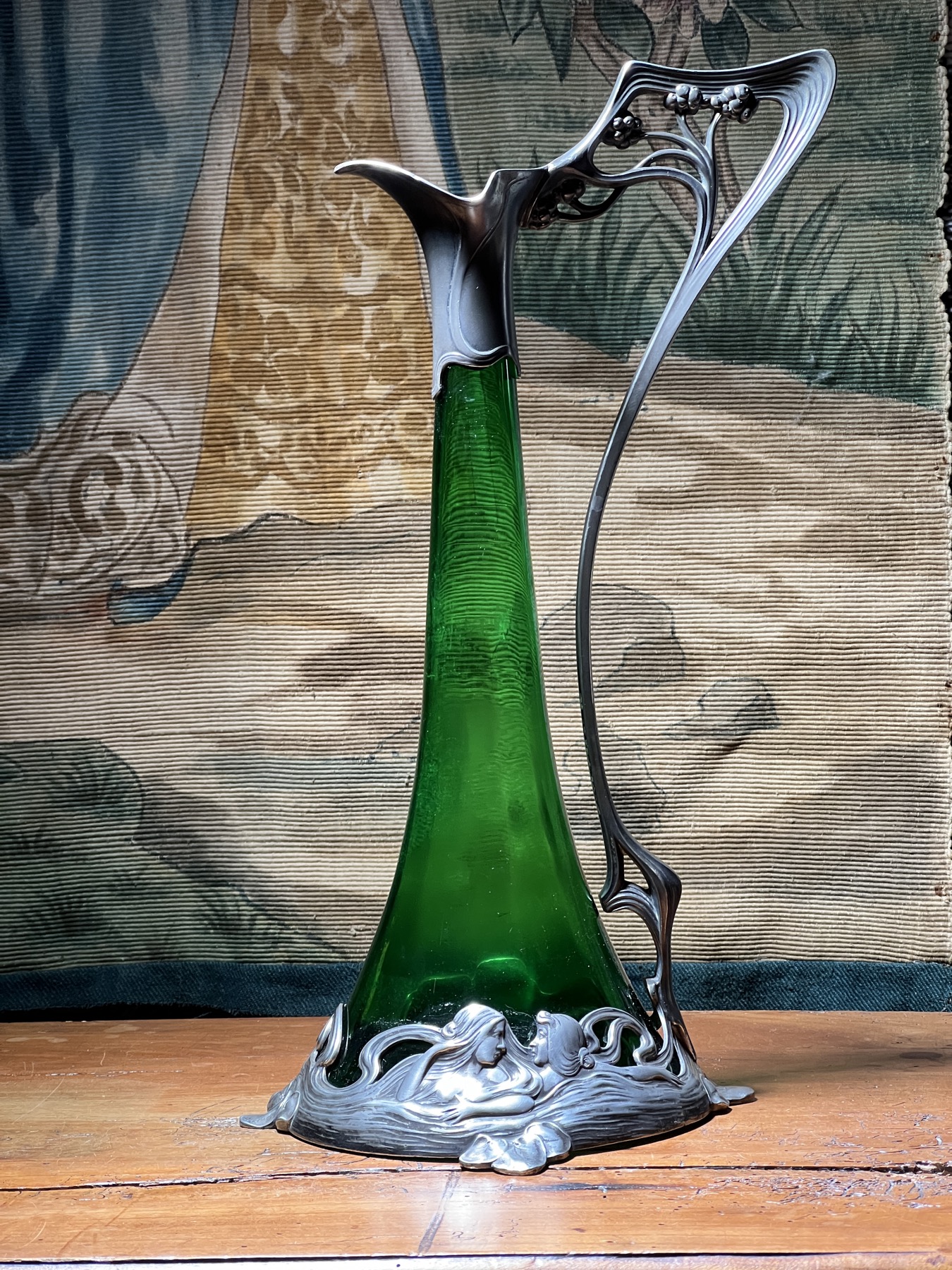
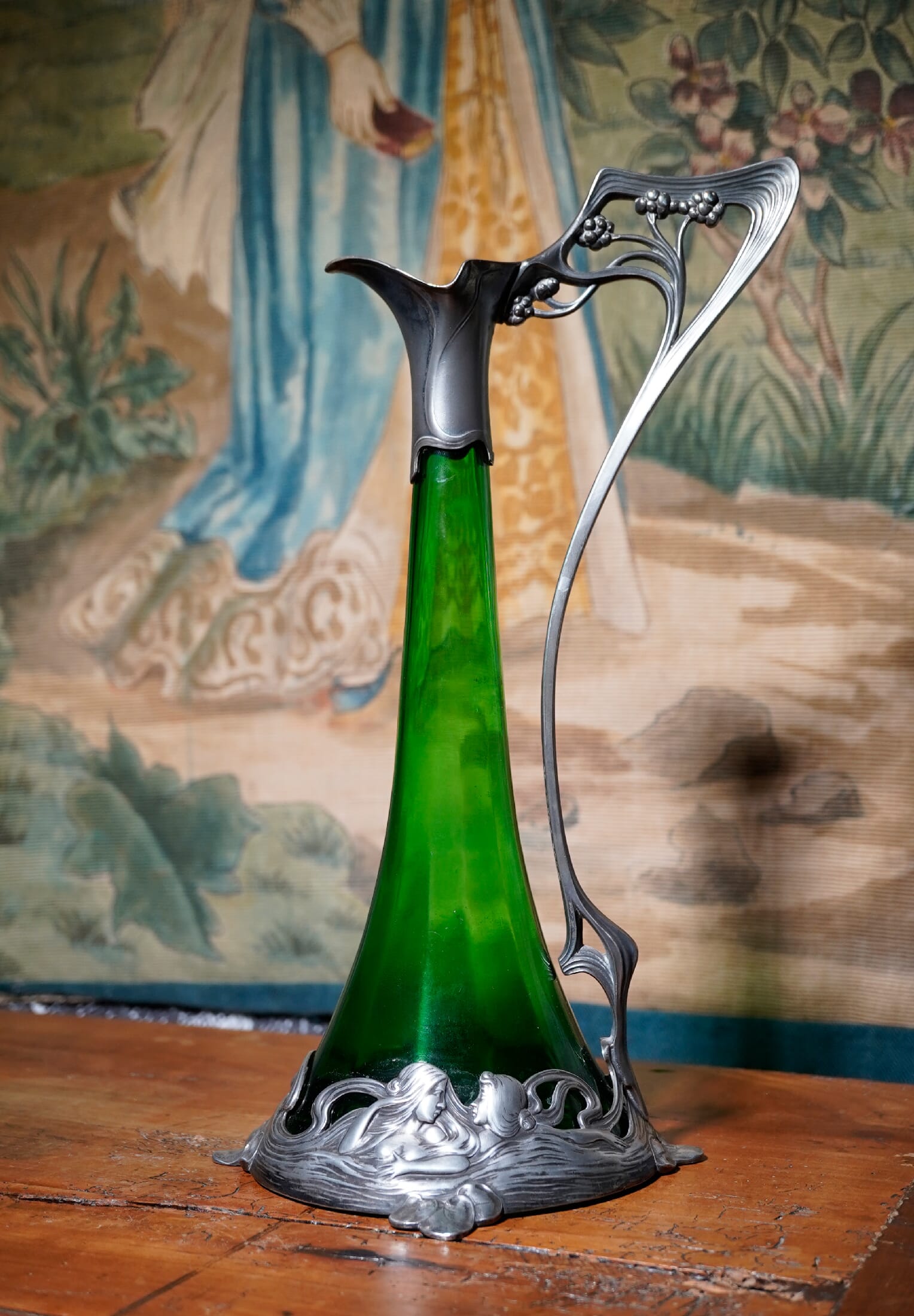
WMF Art Nouveau waternymph claret jug, circa 1900


Also by WMF is this remarkable claret jug. The very tall, skinny sea-green glass vessel is encased & protected by a flowing stream around the foot, from which emerge water-nymphs: the ‘waves’ are actually their long flowing hair. An organic handle that looks like it grew rises up to the pewter mouth, with a beautiful spray of flowers moulded in the round within the protected elbow.

It’s a splendid example of Art Nouveau at its best.

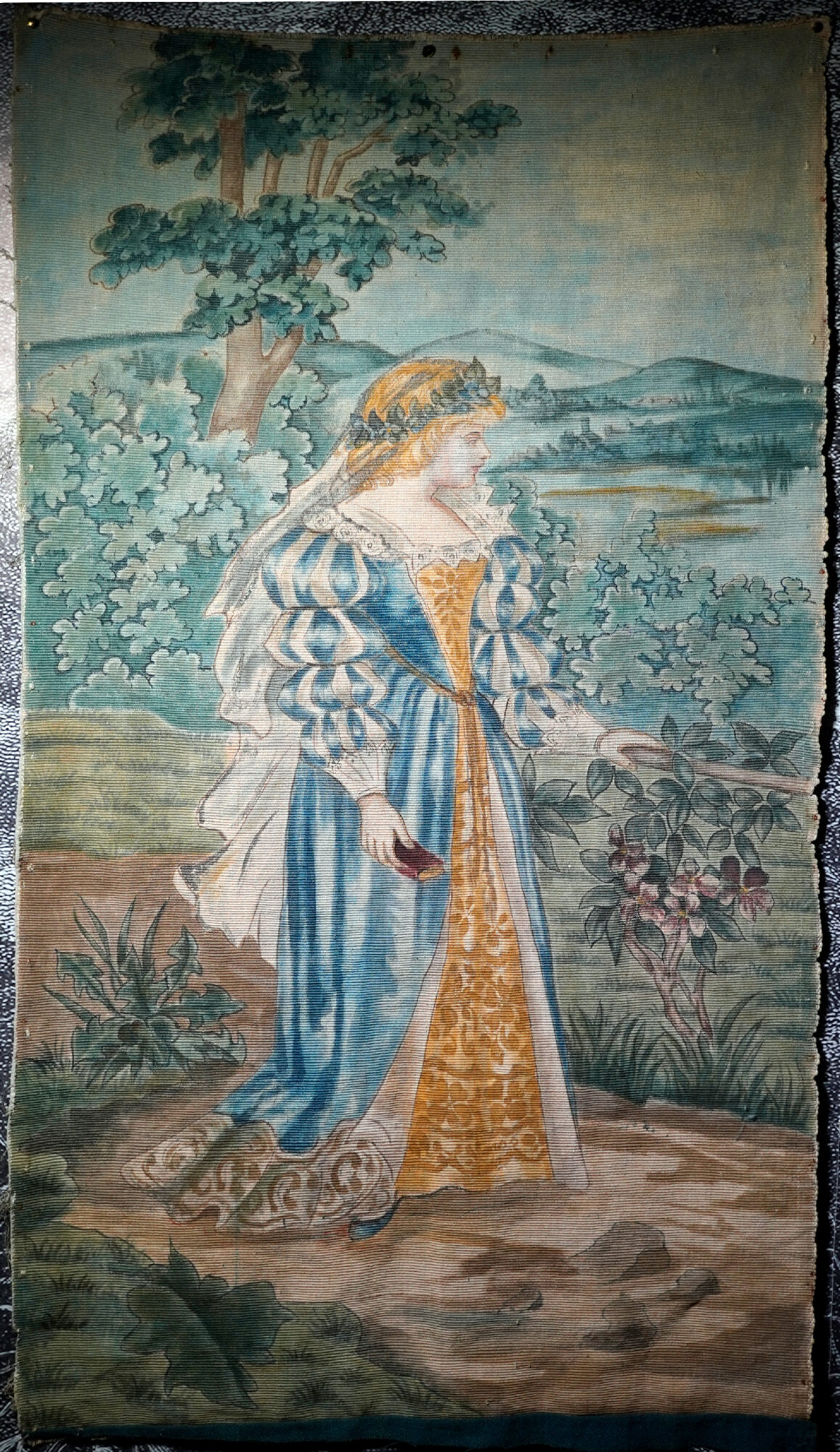
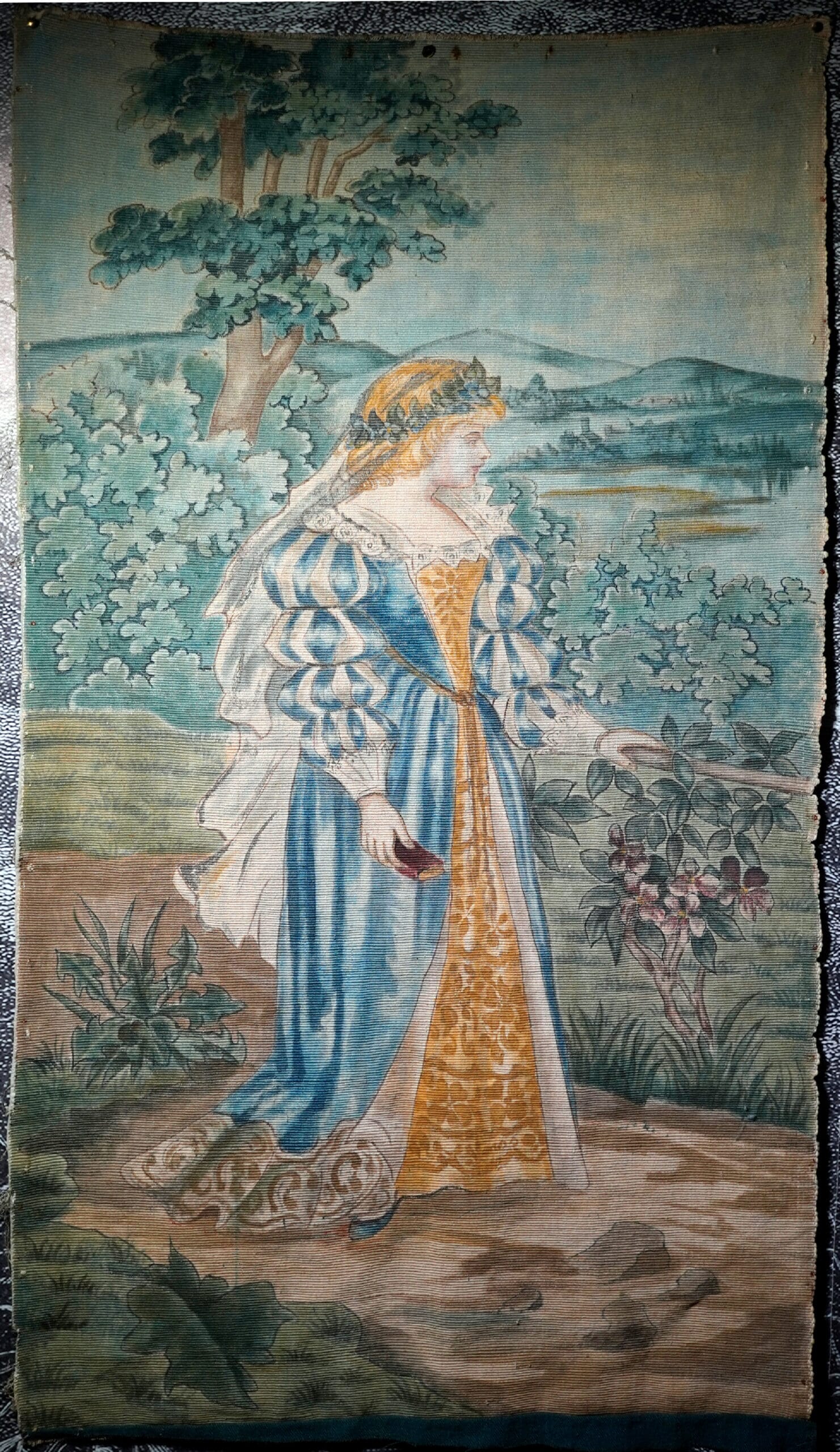
Pre-Raphaelite wall hanging, circa 1880

This large wall hanging is an example of anther closely related style of the period, the Pre-Raphaelites. Formed by mostly painters who sought to break away from the genre painting of the Victorian era, instead of looking for something new, they looked back – deciding that anything from Raphael onwards was not worth looking at, but the earlier artists were more valuable as as influence. This beauty depicted here in watercolour on a heavy fabric (probably upholstery fabric) is a fine example of the ideal; she is splendidly dressed in middle-ages clothing, and holds a book in one hand showing her intellect. Behind her is a landscape containing trees and a distant town amongst hills – the whole very reminiscent of the actual tapestry weavings of William Morris and his wife, May. While this example is ‘only painted’, it is very well done – the paints would have soaked into the fabric quickly, and great skill is shown in the control and tonal variation achieved. It is in fact a cross-over from the Textile Arts to the Fine Arts of painting – unfortunately not signed, but by a very competent artist.
Presently unframed, it was once stretched on a wooden stretcher. It would be fine as a wall hanging as-is (if kept in a dark place) – or to fully respect it, we can have it framed in a UV-resisting glass frame to preserve it for the future.

Please enjoy all the other unmentioned pieces shown below!

Fresh Stock